University of South Florida
Scholar Commons
Graduate Theses and Dissertations Graduate School
11-20-2015
Florida's Bright Futures Scholarship Program: The
Effects of Losing Merit-Based Financial Aid on
Persistence
Robert Laws Liddell
University of South Florida, [email protected]
Follow this and additional works at:http://scholarcommons.usf.edu/etd
Part of theEducational Administration and Supervision Commons
This Dissertation is brought to you for free and open access by the Graduate School at Scholar Commons. It has been accepted for inclusion in Graduate Theses and Dissertations by an authorized administrator of Scholar Commons. For more information, please contact
Scholar Commons Citation
Liddell, Robert Laws, "Florida's Bright Futures Scholarship Program: The Effects of Losing Merit-Based Financial Aid on Persistence" (2015).Graduate Theses and Dissertations.
Florida’s Bright Futures Scholarship Program:
The Effects of Losing Merit-Based Financial Aid on Persistence
by
Robert L. Liddell
A dissertation submitted in partial fulfillment of the requirements for the degree of
Doctor of Philosophy
with a concentration in Higher Education Administration Department of Adult, Career and Higher Education
College of Education University of South Florida
Major Professor: Thomas E. Miller, Ed.D. Donald A. Dellow, Ed.D.
W. Robert Sullins, Ed.D. Alan Balfour, Ph.D.
Date of Approval: November 18, 2015
Keywords: Merit-based Aid, Predictive Modeling, Tinto’s College Student Departure Model, St. John’s College Choice-Persistence Nexus, Student Success, Persistence
DEDICATION
This is by far the easiest page to write, but I saved it for the last. The reason for this is simply the fact that I have needed to return several times to the counsel and companionship offered by Jesus throughout this process. I have needed to keep the promise of Philippians 1:6 especially close by (“[H]e who began a good work in you will be faithful to complete it”). Charles Spurgeon, the famed preacher, has reminded me that “by perseverance the snail reached the ark.”
“I have been crucified with Christ; it is no longer I who live, but Christ lives in me; and the life which I now live in the flesh I live by faith in the Son of God, who loved me and gave Himself for me” (Galatians 2:20). Some will see this moment as a crowning achievement and, likely, as a surprise coming from a student who unceremoniously earned an academic suspension during his first year of college. Should this be a crown, I lay it down at the feet of Jesus; should it be a surprise, I urge you to personally explore what surprising thing(s) God can do in your life when yielded to Him.
ACKNOWLEDGMENTS
I wish to acknowledge several individuals who have been so very generous to me throughout this process. The first thirteen people I have the opportunity to acknowledge are not well known scholars nor are they frequently published practitioners, but they have lent their expertise time and time again. My bride, Carrie, has sacrificially supported this effort in
countless ways. She has graciously navigated the full range of emotions and situations that come with the doctorate and dissertation process. A kind eye, a hug, and additional breathing room all complement her own training as a USF College of Education graduate as we discuss class-based content, ideas, and scholarly arguments. As I have said before, and will again here, she might not be perfect, but she is perfect for me. Our four children (Callie Jane, Graham, Sarah Kate, and Emily Lynn) have been drug through this undertaking as well. As a matter of fact, Callie Jane is the only one who has any experience with a Daddy not in graduate school. They have been patient, interested, and encouraging—I am eagerly anticipating more opportunity to open the world to them with Carrie. Roy & Felicia Liddell, Bill & Lauranne Humphreys, E.L. & Jeanie Lawson and the balance of our extended kinfolk have been a constant source of
encouragement to our “little” family. A great deal of “life” has occurred during these last several years. I have been reminded that relationships and family are what truly matter. In this regard, I have been drafted onto a dream team.
In addition to having a family, I have had the great opportunity to work while pursuing this degree; initially at the University of South Florida and presently at Saint Leo University. I wish to acknowledge the following leaders who not only allowed me to begin, continue, and now
to complete this program, but also the numerous lessons taught both formally and informally about developing one’s talents and skills within a higher education context: Ms. Sandy Lovins, Dr. Holly Schoenherr, Dr. Ralph Wilcox, and Dr. Jennifer Meningall at USF and Ms. Ana DiDonato, Mr. Kenneth Posner, Dr. Edward Dadez, and Dr. Arthur Kirk at Saint Leo. I would like to call additional attention to Dr. Charlene Herreid of the University of South Florida and to Dr. Robert Lucio of Saint Leo University who have both invested generous amounts of time and thought into challenging the design of this study’s research methodology. More important than acquiring some proficiency in statistical analysis, I have won two good friends to whom I am deeply indebted.
Before I specifically acknowledge my committee, I would like to thank my friends who challenged my perspective and invited me to consider a wider range of conclusions when it comes to responding to the challenges facing contemporary higher education administration. Acknowledging the fact that we didn’t have all too much in common at the start, I, for one, am ready to build on this experience and simply enjoy the friendships we’ve all been rewarded with as a result of our crazy decision to seek a doctorate at USF.
Lastly, my doctoral committee has been composed of four All-Stars. My first interaction with USF as a prospective graduate student involved Bob Sullins. Dean Sullins was holding office hours when I walked through the Adult, Career and Higher Education Department while I was on the way to Alan Balfour’s office to discuss a graduate program in leadership. He quickly engaged me in conversation and encouraged my next steps forward—he hasn’t stopped this practice in the decade I’ve known him. Alan’s service on my committee is a bit unexpected, but personally important. I owe a fair bit of my perspective to Alan and the rest of the Management faculty within the USF College of Business. There have been occasions in which I have felt like
the proverbial “canary in the coal mine” as a business student working on a terminal degree in the College of Education, but Alan’s teaching style prepared me to “take all comers” and defend my position while leaving open the chance to expand my view.
For a portion of my degree program, Don Dellow served as my co-major professor. He also was the instructor of record for a good portion of my coursework. I selected the broader term “instructor of record” because Don creates a classroom environment that really facilities learning from multiple perspectives and drawing from multiple frames. By intentionally electing a “first among equals” philosophy, he modelled participatory leadership in a very attractive way. His endorsement has led to my implementation of this approach more times than not throughout my career and interactions with others. Tom Miller serves as my major professor, which, until you have your own, you’ll never adequately appreciate the administrative and interpersonal work required of the role. Like so many other students who begin their studies in one situation and then later, through choice or consequences, find themselves in another, Tom was that steady coach, the landmark, and a friendly nudge to get back out there. When I pitched a dissertation idea that fit comfortably within his own research agenda he politely suggested “Been there, done that. What else you got?” All this time later, I have enormous amounts of respect for you, appreciation for your friendship, and solid footing in an emerging career in student affairs. Thank you, Tom.
TABLE OF CONTENTS
List of Tables ... iv
List of Figures ... vi
Abstract ... vii
Chapter One: Introduction ...1
Statement of the Problem ...3
Need for the Study ...6
Purpose of the Study ...8
Research Questions ...10 Assumptions ...12 Limitations ...13 Delimitations ...14 Definition of Terms...15 Overview of Methodology ...18
Organization of Remaining Chapters...19
Chapter Two: Review of Literature ...20
Theories of Student Departure ...20
Psychological Theories ...21
Societal Theories ...22
Economic Theories ...23
Organizational Theories ...24
Interactional Theories ...25
Tinto’s Theory of College Student Departure ...27
Empirical Support of Tinto ...31
Aggregate Support ...33
Support by Institutional Type ...34
Support by Student Group ...35
Finances and Student Departure ...37
Ability to Pay ...38
College Choice-Persistence Nexus ...40
Variables Impacting Persistence ...44
Pre-Matriculation Variables ...45
Pre-College Academic Ability and Aptitude ...45
Strength of Curriculum ...45
Race and Ethnicity ...46
Socio-Economic Status (SES)...47
Initial Institutional and Goal Commitments ...49
Financial Aid ...51
Post-Enrollment Variables ...53
College Grade Point Average (GPA) ...53
Campus Residency ...54
Fraternity or Sorority Membership ...54
Summary ...56
Chapter Three: Research Methods ...57
Setting and Population ...57
Participants ...59
Procedure ...59
Data Collection ...59
Variables ...60
Pre-Matriculation Academic Variables ...61
Race and Ethnicity ...61
Gender ...61
College Housing the First Academic Major at Drop/Add ...62
Socio-Economic Status (SES)...62
Financial Aid ...64
Post-Enrollment Variables ...63
College GPA and Hours Earned ...63
Bright Futures Retention and Recapture Variables ...64
Campus Residency ...65
Fraternity or Sorority Membership ...66
First-to-Second Year Retention ...67
Analyses ...68
Summary ...70
Chapter Four: Results ...71
Demographics ...72
Analyses Relating to Research Question One ...73
Univariate Analyses ...74
Multicollinearity Diagnostics...77
Multivariate Analyses ...78
Model Interpretation ...79
Summary ...82
Logistic Regression Model Development at Matriculation (Drop/Add); Fall 2009 ...84
Logistic Regression Model Development Following the Fall 2009 Semester; Midpoint ...87
Research Question One Summary ...89
Analyses Relating to Research Question Two ...90
Univariate Analyses ...90
Multicollinearity Diagnostics...92
Summary ...96
Research Question Two Summary...97
Analyses Relating to Research Question Three ...98
Univariate Analyses ...99
Multicollinearity Diagnostics...101
Multivariate Analyses ...102
Model Interpretation ...103
Summary ...105
Research Question Three Summary...106
Chapter Five: Conclusions, Implications, and Recommendations ...107
Research Question One ...107
Summary of Findings ...107
Discussion ...110
Research Question Two ...111
Summary of Findings ...112
Discussion ...113
Research Question Three ...117
Summary of Findings ...118
Discussion ...119
Conclusion ...120
References ...122
Appendices ...137
Appendix A: Florida Bright Futures Breakout of Student Counts and Total Costs ...138
Appendix B: Florida High School Graduates Eligible for Bright Futures...139
Appendix C: Florida Bright Futures Disbursement History by Ethnicity ...140
Appendix D: Florida Bright Futures Students Meeting Renewal Requirements ...141
Appendix E: Florida Bright Futures Postsecondary Enrollment ...144
LIST OF TABLES
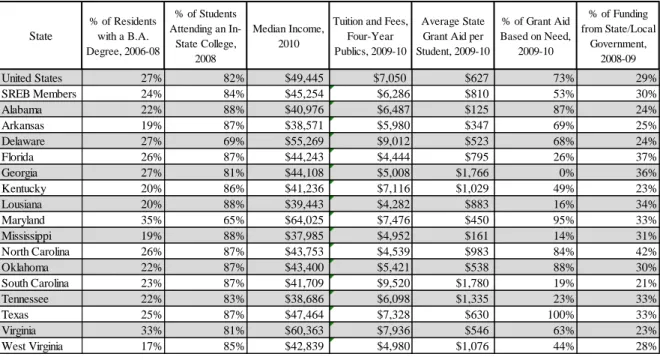
Table 1: FloridaBright Futures Scholarship Disbursement History ...9 Table 2: State-level Data from Southern Region Education Board (SREB) Members ...44 Table 3: Student Retention of Bright Futures Eligibility at the Conclusion of their
First Year of Enrollment by Gender ...74 Table 4: College Membership of Students Retaining their Bright Futures
Scholarship Award at the Conclusion of the First Year of College
Enrollment ...75 Table 5: Bright Futures Retention Following the First Year of Enrollment by Greek
Membership ...76 Table 6: Bright Futures Retention Following the First Year of Enrollment by
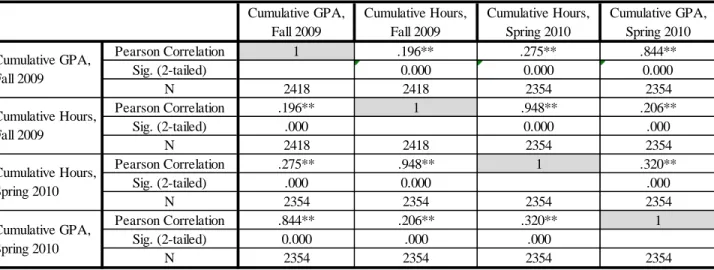
Residential Status ...76 Table 7: Multicollinearity Diagnostics of Potential Variables for Model Building in
Research Question One ...77 Table 8: Group Statistics Comparing those Students Able to Maintain Bright
Futures Scholarship Eligibility from those Students Failing to Meet
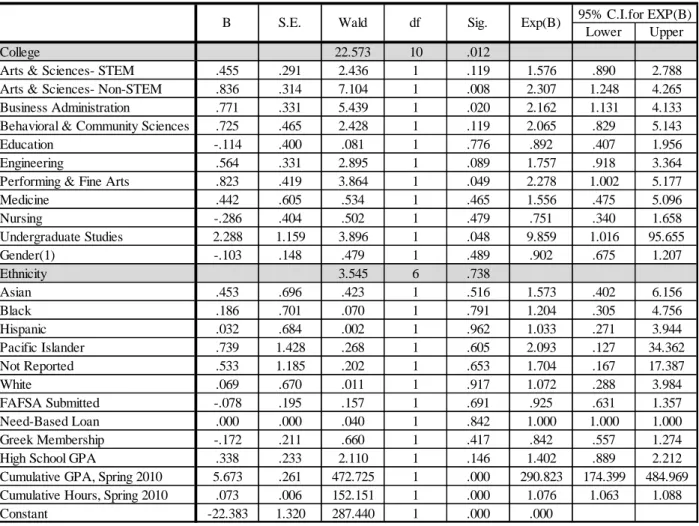
Scholarship Eligibility Criteria Following the First Year of Enrollment ...79 Table 9: Multivariate Model Predicting the Probability of Retaining Bright Futures
Scholarship Eligibility Following the First Year of Enrollment ...84 Table 10: Multivariate Model Predicting the Probability of Retaining Bright Futures
Scholarship Eligibility at the “Drop/Add” Milestone (or at Matriculation) ...86 Table 11: Multivariate Model Predicting the Probability of Retaining Bright Futures
Scholarship Eligibility at the Midpoint of the First Year of Enrollment (or
Following the Fall 2009 Semester) ...89 Table 12: College Membership of Retained Students (Fall 2010 or Second Year of
College Enrollment) After Losing Bright Futures Scholarship Eligibility
Table 13: Group Statistics of Retained Students (Fall 2010 or Second Year of College Enrollment) After Losing Bright Futures Scholarship Eligibility
at the Conclusion of the First Year of College Enrollment ...92 Table 14: Multicollinearity Diagnostics of Potential Variables for Model Building in
Research Question Two ...93 Table 15: Multivariate Model Predicting the Probability of Returning to the
Institution After Losing Bright Futures Following the First Year of
Enrollment ...96 Table 16: Students “Recapturing” Bright Futures in the Third Year of Enrollment,
by College Housing First Major ...100 Table 17: Students “Recapturing” Bright Futures in the Third Year of Enrollment,
by Gender ...100 Table 18: Students “Recapturing” Bright Futures in the Third Year of Enrollment,
by Ethnicity ...101 Table 19: Multicollinearity Diagnostics of Potential Variables for Model Building in
Research Question Three ...102 Table 20: Group Statistics of Study Cohort Entering the Third Year of Enrollment
Subdivided by Bright Futures Scholarship Eligibility (“Recapture” and
“Remained Ineligible”) ...103 Table 21: Multivariate Model Predicting the Probability of Recapturing Bright
Futures Scholarship Eligibility Entering the Third Year of College
LIST OF FIGURES
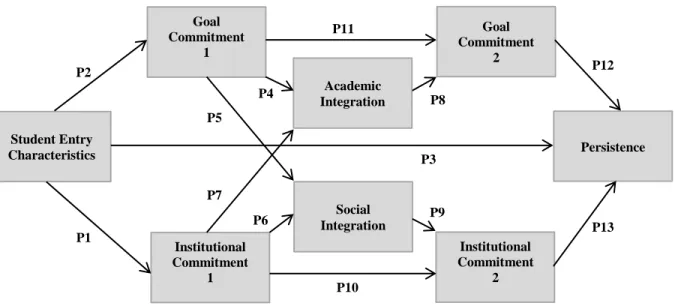
Figure 1: Tinto’s Conceptual Schema for Dropout from College (1975) ...27 Figure 2: Braxton, Sullivan, and Johnson’s Interrelationships among the 13 Primary
ABSTRACT
College completion agendas necessarily presume year-to-year student persistence. Institutional efforts to retain admitted students has emerged for a variety of reasons, some
intrinsic and others extrinsic. Some of these reasons include (1) financial exigency as institutions strive to retain tuition-paying students or meet prescribed enrollment and retention criteria currently used in performance funding strategies; (2) reputation enhancement as institutions attempt to ascend annual publications such as the U.S. News & World Report which rely on retention rates as one of several indicators used to measure institutional quality; (3) gaining a perceived advantage in admissions, marketing, and fundraising as persistence rates have, for better or worse, become a de facto measure of quality undergraduate programs; and (4) mission fulfillment as institutions, especially public institutions, are tasked with contributing towards broadly cast social goals such as access to education, economic competitiveness, and community development. Knowledge about forces that impact student attrition is critical to the development of preventative strategies that seek to improve student persistence rates. One such environmental force that has an impact on student persistence is financial aid and a student’s ability to pay for their college education. While research examining the impact of financial aid on student
persistence has accumulated over the years, little is known about how the loss of certain types of aid, specifically, state-based merit aid, affects students once they enroll in an institution. The majority of studies about financial aid’s impact on student persistence were conducted prior to the establishment of many state-wide merit scholarship programs.
Tinto’s (1975, 1986, 1993) interactional theory of student departure serves as the theoretical framework employed in this study. Tinto (1975) states that entering college students bring with them specific background characteristics and initial commitments that influence the student’s social and academic integration at the institution that, in turn, impact subsequent institutional and goal commitments and, ultimately, persistence. This study intends to examine pre- and post-matriculation data gathered through the admissions and financial aid processes to develop predictive models useful in calculating the probabilities associated with Bright Futures scholarship retention, institutional persistence after losing a Bright Futures scholarship award at the conclusion of a student’s first year of enrollment, and a student’s eligibility to recapture a Bright Futures scholarship award in their third year of enrollment. Data was collected passively from institutional databases on 2,418 students meeting the study criteria for inclusion in the model building process. Findings indicate that the models developed throughout the course of this study hold potential for informing institutional retention initiatives among Bright Futures scholarship award recipients.
CHAPTER ONE: INTRODUCTION
Two important objectives of higher education institutions are to provide access to
postsecondary education and to reduce rates of departure once students are enrolled. Institutional attention to persistence rates has emerged for a variety of reasons, some intrinsic and others extrinsic. Some of these reasons include (1) financial exigency as institutions strive to retain tuition-paying students or meet prescribed enrollment and retention criteria currently used in performance funding strategies; (2) reputation enhancement as institutions attempt to ascend annual publications such as the U.S. News & World Report which rely on retention rates as one of several indicators used to measure institutional quality; (3) gaining a perceived advantage in admissions, marketing, and fundraising as persistence rates have, for better or worse, become a de facto measure of quality undergraduate programs; and (4) mission fulfillment as institutions, especially public institutions, are tasked with contributing towards broadly cast social goals such as access to education, economic competitiveness, and community development (Eckel & King, 2008). Knowledge about forces that impact student attrition is critical to the development of preventative strategies that seek to improve student persistence rates. One such environmental force that has an impact on student persistence is financial aid. Loss of aid and, likewise, loss of an ability to pay, can impact student persistence and contribute to departure (Cabrera et al., 1990, 1992; St. John, 1990; St. John, Paulsen & Starkey, 1996; St. John, Cabrera, Nora & Asker, 2000; Stampen & Cabrera, 1988; Tinto, 1993).
Historically a large share of student aid for postsecondary institutions was need-based with the objective of increasing both access and choice. Merit-based aid constituted a relatively small fraction of total student financial aid, being largely confined to individual institutions’ attempts to attract academically proficient students and those students with differentiated skills and/or attributes. However, since the early 1990s there has been a radical transformation in student financing as many state governments have committed millions of dollars to merit aid (Baum, McPherson & Steele, 2008; McClinton, 2004). These programs, popular with both legislators and voters, provide for half—and in many cases, nearly all—of the tuition costs at participating public institutions for students who become eligible based on academic merit (Borg & Borg, 2007). The Florida Bright Futures Scholarship Program is an example of this shift in the way students finance their higher education. In advocating for Florida’s merit-based
scholarship program, supporters claimed Florida Bright Futures would increase access to higher education for academically talented, low-income students; reward academic achievement; encourage Florida high school students to continue their postsecondary education within the State; and provide an incentive to complete degree programs “on time” (McClinton, 2004; Zhang, 2011; Zhang & Ness, 2010). This Program contains three levels of awards: the Florida Academic Scholars Award (FAS), Florida Medallion Scholars Award (FMS) and the Florida Gold Seal Vocational Scholars Award (GSV). These three awards use different eligibility criteria and provide different levels of financial support. In addition to the three previously mentioned award categories, Florida has designed the Academic Top Scholars (ATS) program, which provides a select number of FAS students ranked highest within their geographic region with a secondary award. High school grades and SAT/ACT scores are used to initially qualify for the Bright Futures Award. Subsequent college grades and credit hours earned are considered
The Florida Bright Futures Scholarship Program, administered by the Office of Student Financial Assistance-Florida Department of Education, accepted initial applications from 65,253 eligible students, funding 53,800 students in 2010-11 (82.5 percent) of which 1,342 (2.5 percent) received GSV awards, 40,957 (76.1 percent) received FMS awards, 11,501 (21.4 percent)
received FAS awards and 65 high performing Florida students received an additional ATS award. Between 2006-07 and 2010-11 the Florida Academic Scholar award program grew 24.3 percent (disbursing more than $127.3 million in 2010-11), the Florida Medallion Scholar award program grew 18.5 percent (disbursing more than $290.9 million in 2010-11) and the Florida Gold Seal Vocational Scholars award program grew at a rate of 95.5 percent (disbursing a little less than $4.7 million in 2010-11). The Florida Bright Futures Scholarship Program has experienced steady growth over the last five years providing merit-based awards to nearly 180,000 students (a 20.5 percent increase when compared against 2006-07 recipients) and disbursing more than $423.27 million (a 22 percent increase when compared against 2006-07 disbursements).
Statement of the Problem
College and university administrators unable to identify students who are likely to leave college before completing a degree risk heightened criticism from constituents who interpret an institution’s retention rate as a measure of success. A student’s inability to pay for college is a matter that concerns students, parents, and government leaders. Without financial aid, many students face either a lack of or limited access to affordable educational or workforce
development opportunities. The introduction of the Florida Bright Futures Scholarship Program in 1997 was welcomed by many as a means to access postsecondary education, to contribute to an array of goals that enhance the State’s competitive position as a significant player in the knowledge economy, and to curb interstate student migration, popularly referred to as a “brain
drain.” The popularity of the State-sponsored program has propelled it to become the second largest merit based program in the Country, following Georgia’s Helping Outstanding Pupils Educationally (HOPE) Scholarship. The Program’s sustained popularity has coincided with a protracted economic downturn causing many to question whether or not the current benefits and award structures are resilient in the face of these challenges (Mckinney, 2009).
During the 2010 Florida Legislative Session the Florida Bright Futures Scholarship Program was amended to incorporate some conservative guidance for the Program now in its fourteenth year in operation. These amendments have the potential to impact the more than 150,000 Florida high school students who graduated in 2010-11; and include:
a. The specification of Florida Bright Futures Scholarship Program award amounts per credit hour (versus a percentage of tuition, as initially designed);
b. The provision of funding for one term of graduate study (not to exceed 15 semester hours) at the undergraduate rate for those Florida Academic Scholars and Florida Medallion Scholars earning a baccalaureate degree within seven semesters or fewer; c. Clarifications about renewing and restoring the Bright Futures award, specifically that
students may receive funding up to 100 percent of the required hours for their program of study, that the only condition under which a lost Bright Futures award could be restored is due to an insufficient grade point average in the first year of funding, and that students would be removed from the scholarship program if the award is lost due to insufficient hours in the first year of funding;
d. The provision and statement of intent to increase SAT/ACT test scores for initial Florida Academic Scholars and Florida Medallion Scholars awards on an incremental basis over the next three years; and
e. The limiting of student eligibility by which they may receive funding through the Bright Futures Program for up to five years after high school graduation instead of seven years.
These amendments continue to reward academic achievement while also providing incentives favoring full-time enrollment, four-year college completion and immediate college entry following high school graduation. In addition to these incentives, the 2010 Legislature expressed its intent to increase the academic eligibility criteria (as it relates to SAT/ACT test scores) and the importance of decoupling the award amount from a percentage of tuition (as it was historically stated) to its current per credit hour increment.
The Florida Bright Futures Scholarship Program was created in the 1990s, alongside as many as twenty-three states similarly implementing or modifying their merit aid programs, when state economies were robust. According to data reported by the National Association of State Student Grant and Aid Program (NASSGAP), there was a nationwide increase in merit-based state financial aid from 2005-06 to 2009-10. However, state budget shortfalls have resulted in cuts to individual merit-based aid programs since 2009-10. Florida’s Bright Futures Program could soon find itself in a similar quandary due to the economic downturn which began in 2008 unless action is taken to curb program costs. In 2009, the Florida Legislature authorized public universities to raise tuition by up to fifteen percent a year in an attempt to close the gap in State support through the appropriation process. This response, unpopular with students, parents and a number of other public constituents, was permitted until the State’s historically low tuition catches up to the national average. As the Florida Legislature and State universities increase tuition, the value of the Bright Futures Scholarship continues to depreciate—covering a smaller
proportion of a student’s costs of attending—placing an increasing number of students at risk of departing college prior to completing their degrees.
The effects of losing merit-based financial aid, such as Florida’s Bright Futures Scholarship program, on student persistence is multi-faceted and reflects a wide diversity of challenges for Florida’s higher education institutions, students and their families and public policy officials. This research reflects the conditions present when the study cohort entered their first year of college in the fall of 2009.
Completing college, a central concern of institutions, government and society, continues to serve as a primary justification for financial aid programs, merit-based financial aid programs included. An additional layer of complexity has been introduced in recent years as state
governments, particularly in Florida, have sought effective means by which they might incent students towards completing degrees in fields such as science, technology, engineering and mathematics (STEM Disciplines). Majors within these disciplines are linked to the emerging careers that are thought to usher in and propel a knowledge economy. As Florida competes for the establishment and relocation of industry, a well-educated citizenry will surely aid these efforts (Hu, 2008; Hickman, 2009).
Need for the Study
A number of student persistence studies have examined the interaction between students and institutions. As the retention rate continues to be viewed as an indicator of institutional success, student satisfaction and, to an extent, the college experience, it is important for higher education practitioners to better understand the forces that impact student persistence. One such environmental force that impacts student persistence is financial aid. Loss of aid and likewise, loss of an ability to pay, can impact student departure (Cabrera et al., 1990; Cabrera et al., 1992;
Dynarski, 2003; Stampen & Cabrera, 1988; Tinto, 1993). A common characteristic of many of these studies is that they divide students into aided versus unaided groups with varying financial backgrounds. Another commonly held belief from the literature is that the weighting of costs of attendance fundamentally shapes a student’s economic orientation toward departure from an institution. Cabrera et al. (1990) asserted this view, stating that a student’s ability to pay constitutes a type of student characteristic that impacts his or her initial commitment to an institution. Initial commitments to the institution affect the student’s perceptions of the institution’s commitment to the student and the opportunities for social involvement at the chosen institution (Braxton et al., 2004). Similarly, ability to pay can help or hinder a student’s capacity to participate in the social communities of his or her institution (Cabrera et al., 1990).
While research examining the impact of financial aid on student persistence has
accumulated over the years, little is known about how the loss of certain types of aid, specifically state-based merit aid, affects students once they enroll in an institution (Henry et al., 2004; Lederman, 2008). The majority of studies about financial aid’s impact on student persistence were conducted prior to the establishment of many state-wide merit aid programs (Cabrera et al., 1990; Cabrera et al., 1992; Stampen & Cabrera, 1988). It is hypothesized that merit-based programs can impact retention rates through their embedded performance requirements or through the financial incentives of the aid itself; however, little is known about what happens to students if they lose their merit award (Henry et al., 2004). This is an important consideration because a large proportion of students, as much as 50 percent in some states, lose their merit awards by the end of their first year of enrollment (Selingo, 2001). For example, in neighboring Georgia with their paradigm-setting HOPE Scholarship Program, as many as 56 percent of first-time freshmen in 2004 lost their merit scholarships after the first 30 hours of study, with only 9.3 percent regaining the award after an additional 30 hours of study across the statewide University
System (University System of Georgia, 2011). To frame this phenomenon at the institutional level, the University of Georgia in Athens boasts a total enrollment of 34,765 including 97 percent of in-state freshmen earning the HOPE Scholarship. The percentage of 2004 University of Georgia first-year students retaining their HOPE Scholarship was 41.9 percent after the first 30 hours of study, with only 8 percent regaining the award after their second 30 hours of study (University System of Georgia, 2011). Financially sensitive students have the most to lose by this disturbing trend, as loss of aid can be enough to prompt transfer to another, less expensive college or to trigger dropping out altogether (Tinto, 1993) because the amount of aid a student receives significantly impacts a student’s schooling decisions (Dynarski, 2003).
Purpose of the Study
Current research and scholarship on the impact of merit-based financial aid on educational outcomes have concentrated around examining the evidence supporting the justifications for creating these programs—specifically, increased access and influencing decisions related to college choice (Cohen-Vogel, Ingle, Albee & Spence, 2008; Doyle, 2010; Dynarski, 2000, 2004; Heller & Marin, 2002; Heller & Rasmussen, 2001; Stranahan & Borg, 2004). When the Florida Bright Futures Scholarship Program was first introduced the State’s economy was quite a bit stronger than it is today. Despite a significant reduction in State revenue, Florida’s Office of Student Financial Assistance disbursed more than $423 million dollars to 179,076 students in support of their higher education enrollment in Academic Year 2010-11.
As conveyed in Table 1: “Florida Bright Futures Scholarship Disbursement History” on page 9, the State of Florida Legislature has invested considerable financial resources to realize the goals and ambitions of this merit-based aid program described above.
This study intended to apply predictive modeling techniques to four conditions students may find themselves as it relates to their merit aid award. These conditions include students who meet the eligibility requirements of either the FAS or FMS award following high school
completion; those students who retain their award after their first year of college enrollment; those students who return to college for their second year of enrollment despite losing either their FAS or FMS award; and finally, those students who become eligible for the reinstatement of their FAS or FMS award for their third year of enrollment. The use of pre-matriculation data, specifically admission and financial aid data, when joined with student post-enrollment variables has been shown as a viable method for explaining a significant amount of the variance between a specified, dichotomous outcome such as persistence (Miller, 2007; Miller & Herreid, 2008; Miller & Tyree, 2009).
Academic Year Total Disbursed Scholarships
% Change from Previous Year
% Change from
1997 Total Disbursed Funds
% Change from Previous Year % Change from 1997 1997-98 42,319 $69,566,969 1998-99 56,065 32% 32% $93,332,570 34% 34% 1999-00 71,005 27% 68% $131,850,932 41% 90% 2000-01 87,056 23% 106% $164,769,347 25% 137% 2001-02 98,294 13% 132% $174,914,917 6% 151% 2002-03 109,868 12% 160% $202,204,806 16% 191% 2003-04 120,637 10% 185% $235,188,754 16% 238% 2004-05 130,597 8% 209% $268,944,369 14% 287% 2005-06 140,049 7% 231% $306,335,218 14% 340% 2006-07 148,631 6% 251% $347,014,439 13% 399% 2007-08 159,170 7% 276% $379,874,911 9% 446% 2008-09 169,366 6% 300% $429,012,109 13% 517% 2009-10 177,612 5% 320% $423,532,776 -1% 509% 2010-11 179,076 1% 323% $423,269,545 0% 508% Total 1,689,475 $3,649,811,662
Source:Florida Department of Education Office of Student Financial Assistance
Research Questions
This study sought to investigate the impact of losing the Florida Bright Futures Scholarship (FAS and FMS) awards on student persistence. Specifically, this study plans on exploring the following research questions:
1. What is the relationship between student background characteristics gathered during the pre-matriculation phase of admissions and financial aid processing and student post-enrollment variables gathered after a student matriculates in
predicting which first-year Bright Futures Scholarship recipients will retain their awards after the first year of enrollment?
2. What is the relationship between student background characteristics gathered during the pre-matriculation phase of admissions and financial aid processing and student post-enrollment variables gathered after a student matriculates in
predicting which first-year Bright Futures Scholarship recipients will be retained for a second year of enrollment, even after losing their awards following the first year of enrollment?
3. What is the relationship between student background characteristics gathered during the pre-matriculation phase of admissions and financial aid processing and student post-enrollment variables gathered after a student matriculates in
predicting which returning students who lose the Bright Futures Scholarship after the first year of enrollment are eligible for reinstatement of Bright Futures after the second year of enrollment?
The research questions for this study center on the influence of student background characteristics and student post-enrollment variables on retaining their Bright Futures
Scholarship award and the subsequent persistence decisions a student makes after the first year of enrollment. Students who lose their Bright Futures Scholarships at the conclusion of their first year have an opportunity for restoring their awards after the second year of enrollment. Students can apply for restoration after completing a minimum of at least 24 semester credit hours if enrolled full time for the entire academic year (or earn at least 12 semester hours if enrolled full time for only one term) with a minimum grade point average of 3.0 (on a unrounded and
unweighted 4-point scale) for the Florida Academic Scholars Award or a minimum grade point average of 2.75 (on an unrounded and unweighted 4-point scale) for the Florida Medallion Scholars Award. Substantial amounts of data are gathered from each student during the
admissions and financial aid phase prior to matriculation. Based on previous research pointing to the effectiveness of using academic, demographic and financial information, as well as post-enrollment information about students to predict the likelihood of persistence, it stands to reason that this same kind of data could help predict which students are in danger of losing their Bright Futures Scholarships prior to enrollment and identify which students are more likely to withdraw from or remain at an institution after losing the award. Similarly, these same background
characteristics and post-enrollment variables may aid in predicting which students are more likely to regain the award by the time they cross over into upper division coursework—roughly at the 60 semester credit hour check point.
The first hypothesis of this study asserts that student background characteristics gathered through the admissions and financial aid process prior to enrollment and student post-enrollment variables can be used to predict the probability of retaining the Bright Futures Scholarship at the end of the student’s first year of enrollment. The second hypothesis states that the same
the probability of a student returning to the institution for a second year of enrollment after losing Bright Futures following the first year. Lastly, the third hypothesis contends that the same background characteristics and post-enrollment variables can be used to predict the probability of Bright Futures reinstatement after the second year of enrollment.
Assumptions
The first assumption of this study concerns the theoretical framework employed by this study. Tinto’s (1975) student departure theory states that entering college students bring with them specific background characteristics and initial commitments that influence the student’s social and academic integration at the institution that, in turn, impact subsequent institutional and goal commitments and, ultimately, persistence. Provided that each construct can be linked to an observable variable, this statement implies that each of these constructs can be measured. Thus, the emphasis of this predictive study assumes that background characteristics are measureable and can be linked, either directly or indirectly, to a student’s future persistence decision.
A second assumption is that Tinto’s model does not seek to explain student departure from a systems or multi-institution perspective. Rather, the model seeks to explain departure as a function of the student interacting with the academic and social structures of a given institution (Tinto, 1993). Persistence studies have pointed to the usefulness of applying the Tinto model in single-institution settings (Braxton, Brier & Hossler, 1988; Cabrera et al., 1992; Iwai &
Churchill, 1982; Pascarella et al., 1983; Pascarella et al., 1986; Pascarella & Terenzini, 1979, 1980; Stage, 1989; Voorhees, 1985). Finally, it is assumed that the constructs within Tinto’s model, such as initial commitments to the institution and to the goal of graduation, may vary according to the type of institution in which they are studied (Pascarella & Chapman, 1983). Thus, students at residential institutions may make their persistence decisions differently from
Limitations
The study’s limitations include the use of extant data from only one institution. The inherent limitation of this type of study prevents generalizing findings to other institutions in the state that serve a different educational mission or to other institutions located in states with large merit scholarship programs. Without testing the resulting model at other institutions, the
applicability of the model is limited. However, one of the primary purposes of this research is to examine student departure decisions on an institutional basis. A second limitation is missing data elements. Although this study sought to examine student departure decisions after having lost a large merit-based scholarship, the data available for this study were not gathered with this specific research objective in mind. Additionally, elements pertaining to student finances will likely be incomplete due to the fact that Bright Futures Scholarship recipients are not required to apply for financial aid. Thus, it is difficult to estimate student ability to pay as a result of losing the scholarship.
A third limitation of this study is the inability to account for direct or indirect effects of social integration as they pertain to subsequent commitments to the institution. Given the emphasis of this study, it is not possible to measure or account for other forms of social
integration or engagement since no instrument that specifically measures these constructs is used in this study. However, these constructs are inferred when feasible by using the University’s student information database to track whether or not students lived in on-campus residence accommodations and whether or not they joined a social fraternity or sorority. A fourth limitation of the study is the homogeneity of the population. The racial makeup of the student body at the study institution is mostly White. Thus, the results of this study may be less generalizable to students of color.
Delimitations
Persistence in higher education is a complex phenomenon influenced by a multitude of variables. The decisions to include certain variables, and exclude other variables, made by the researcher are referred to as delimitations. The first delimitation of the study is the study site. By restricting the study to a single institution, I elected to narrow the parameters of this research to the persistence related decisions made by first-time-in-college students at a single campus who entered with a state-sponsored financial award in the fall semester of 2009. A second
delimitation is the theoretical framework selected as the basis of the study. This study relies on Vincent Tinto’s 1975 College Student Departure Theory. Tinto’s theory has reached near paradigmatic status in persistence related research and the associated propositions have been tested by numerous researchers over the last three decades. An enduring element of persistence studies is the observation that persistence at an institute of higher education is not only dynamic, but that it is also a remarkably personal process. Students interpret stimuli in a number of different ways and differently at subsequent times within their tenure in college.
Another theoretical framework that has been utilized repeatedly in describing college student behavior is Alexander Astin’s Input-Environment-Output Model. Astin’s training as a clinical and counseling psychologist provided him a developmental framework from which to view human behavior. Consequently, when he transitioned to conducting research in educational psychology, he brought this clinical psychologist’s perspective to bear on his studies. During his early research in assessing doctoral productivity, Astin became convinced that “any educational assessment project is incomplete unless it includes data on student inputs, student outcomes, and the education environment to which the student is exposed” (Astin, 1993). The three constructs of Astin’s I-E-O model are inputs, environment and outcomes. Inputs refer to those personal
include demographic information, educational background, political orientation, behavior
patterns, degree aspirations, reasons for selecting an institution, financial status, disability status, career choice, major field of study and life goals. Environment refers to the student’s actual experiences during the educational program. Environmental factors may include the program, personnel, curricula, instructor, facilities, institutional climate, courses, teaching style, friends, roommates, extra-curricular activities and organizational affiliation. Outputs “refer to the ‘talents’ we are trying to develop in our education program” (Astin, 1993, p. 18). Outputs are outcome variables that may include post-tests, consequences or end results. In education, outcome measures have included indicators such as grade point average, exam scores, course performance, degree completion and overall course satisfaction.
The parallels between Tinto’s College Student Departure Theory and Astin’s I-E-O model are apparent. This researcher has elected to follow Tinto’s framework due to the explicit emphasis placed on persistence and the perceived advantages offered by Tinto’s model in conducting secondary data analysis.
Definition of Terms
For the purposes of this study, terms are defined as follows:
First-year students are defined as first-time, full-time students who enroll at an institution in the summer or fall term immediately following graduation from high school.
Student departure is defined as the longitudinal process of making decisions that impact a student’s decision to leave or stay in college (Tinto, 1975, 1986, 1993).
Withdrawal and dropoutare defined as the act of leaving an institution of higher education for any reason (e.g., financial, academic, or personal) and do not constitute a permanent decision to leave higher education altogether. These two terms are used interchangeably.
Persistence and retention are defined as the student act of remaining enrolled in a chosen institution of higher education. These terms include students who continue as part-time or full-time students while completing coursework that leads to bachelor’s degree completion at a given four-year institution. These terms are used interchangeably. Persistence rates and retention rates refer to the rate at which an institution continues to
enroll students in coursework leading to a bachelor’s degree.
Background characteristics are defined as sets of individual attributes and dispositions relevant to student persistence (Tinto, 1975). This includes pre-college student attributes related to socio-economic status, parents’ education level, high school curriculum, standardized test scores, sex, race/ethnicity, as well as the college or school of the student’s first declared major prior to matriculation.
Goal commitment is defined as a student’s psychological orientation level with regard to personal expectations and intensity with which expectations are held by a student (Tinto, 1975). Within this study, goal commitment refers to the goal of college graduation. Institutional commitment is defined as a student’s predisposition toward attending a
specific institution (Tinto, 1975). This may include, but is not limited to, financial and time resources devoted to attending a specific institution, as well as stated preferences or encouragements to attend a specific institution.
Academic integration is defined as the student’s academic performance and level of intellectual development (Tinto, 1975). For the purposes of this study, academic integration is operationalized as the student’s cumulative GPA.
Social integration is defined as the extent and quality of interactions with campus peers and faculty (Tinto, 1975). For the purposes of this study, this construct is inferred, as it
Post-enrollment variables refer to variables that attempt to measure levels of academic and social integration. For the purposes of this study, these variables include semester hours earned, cumulative GPA, on-campus housing status, and social sorority or fraternity membership.
Ability to pay is defined as a combined measure of a student’s satisfaction with the cost of attendance in relation to one’s socioeconomic status (Cabrera et al., 1990). For the purposes of this study, socioeconomic status is operationalized as a student’s estimated family contribution (EFC), which is determined via completion of the Free Application for Federal Student Aid (FAFSA). Students who do not complete the FAFSA will not have an EFC. Thus, it can be assumed that for students with no EFC aid was not requested. Therefore, ability to pay is a measure of the student’s satisfaction with the cost of attendance as evidenced by the absence of a request for aid.
Merit aid is defined as a financial aid that is awarded on the basis of test scores, performance, class rank, grade point average, or other such criteria of achievement (NASSAP, 2011). Such awards do not require demonstrated student need. In this study, merit aid is synonymous with an academic scholarship.
Need-based aid is defined as financial aid in the form of grants or loans that are awarded to students with demonstrated need. Eligibility is based on the student’s estimated family contribution (EFC) as determined via completion of the Free Application for Federal Student Aid (FAFSA). For the purposes of this study, need-based aid includes Pell grant, Supplemental Educational Opportunity Grant (SEOG), subsidized Stafford loans, and Perkins loans.
Overview of Methodology
This study sought to investigate the impact of losing a Florida Bright Futures Scholarship on student persistence. Ultimately, this study investigated the utility of using each of the three processes suggested by the research questions framed earlier in this Chapter: 1) using student background characteristics gathered from admissions and financial aid pre-matriculation data and student post-enrollment variables to predict the probability of retaining the Florida Bright
Futures Scholarship after the first year of enrollment; 2) using student background characteristics gathered from admissions and financial aid pre-matriculation data and student post-enrollment variables to predict the probability of returning to the institution for a second year, even after losing the Florida Bright Futures Scholarship following the first year of enrollment; and 3) using student background characteristics gathered from admissions and financial aid pre-matriculation data and student post-enrollment variables to predict which students will recapture their Florida Bright Futures Scholarship after the second year of enrollment. Considering the three research questions and corresponding hypotheses under study, a logistic regression research design was employed to determine the weightings of independent variables in three separate predictive models. The logistic regression model represents a mathematical attempt to relate the probability of some event occurring, conditional on a vector of explanatory variables (Press & Wilson, 1978).
Organization of Remaining Chapters
Chapter Two provides an overview of the relevant literature pertaining to empirical assessments of the Tinto model, as well as additional studies that have examined the impact of financial aid on persistence. This review of the literature thoroughly grounds the study in theory. Chapter Three describes the method, data, and proposed statistical analyses that will
pursuit of the study’s research questions. Finally, Chapter Five offers conclusions and implications of the study while also identifying recommendations for further exploration and research.
CHAPTER TWO: REVIEW OF LITERATURE
An institution’s retention rate is often regarded as an indicator of student satisfaction and success. These data have assumed a “coin of the realm” status as they wield a tremendous impact on the image and finances of an institution. Poor retention rates negatively affect the stability of institutional budgets, enrollment planning and the public perception of colleges and universities (Braxton, Hirschy, & McClendon, 2004). Understanding factors that impact
retention rates remains a key concern among practitioners who seek to manage their enrollments more effectively (Braxton et al., 2004) and to understand the nature of the college student experience, in general (Braxton et al., 1997). Studies about how students interpret their own college experiences provide an opportunity for practitioners to better understand how students ultimately choose to enroll and remain at a given institution (Braxton et al., 2004).
Theories of Student Departure
To better understand the phenomenon of student departure from institutions of higher education, it is helpful to group theories according to the emphasis they give to different individual and environmental forces that shape student behavior. Tinto’s (1986) overview of major theories of student departure provides the framework for exploring types of theories in this chapter. Such student departure theories can generally be grouped into one of five categories: psychological, societal, economic, organizational and interactional. As the name implies, the psychological theories emphasize the role of individual psychological attributes in the departure process. The second, third and fourth are theories that, in different ways, emphasize the impact
of environmental forces on student behavior. Organizational theories stress the influence of immediate organizational characteristics on student behavior, where societal and economic theories look toward broader social and economic attributes and the impact that external social and economic forces have on the process of student departure. The interactional category is the family of theories that views student behavior as being influenced both by individual attributes and by environmental forces, especially those within the immediate setting of the institution in which students find themselves.
Psychological Theories
Following World War II, psychological theories of student departure were a central focus of the retention literature (Tinto, 1986). At the time, a central tenet of psychological theories was that student departure is a reflection of student attributes, specifically psychological attributes. By sorting students into personality types, researchers sought ways to discern between those who stay and those who leave college by studying specific personality
characteristics of each group. As an example, Heilbrun (1965) argued that non-persisters were more likely to lack maturity, to be more rebellious, and to be less serious and dependable, in general. Rose and Elton (1966) suggested that leaving college was linked to maladjustment and hostility directed toward the institution. The overall theme in studies such as these implied that a student’s inability to persist was representative of a student’s weaknesses or failure to adjust to college life. It was assumed that students would take primary responsibility for their own persistence. The difficulty with these views is that they are not fully explanatory (Tinto, 1986). While it is clear that a student’s psychological characteristics do have some bearing on
persistence, these characteristics do not explain all departure behavior.
To support his argument against the explanatory utility of psychological theories, Tinto (1986) points to research from this theory family conducted by Sharp and Chason (1978). In an
initial study of college student departure, the researchers found differences between persisters and non-persisters when measured by personality scores on the Minnesota Multiphasic Personality Inventory, but when Sharp and Chason attempted to replicate the results on a
subsequent sample of students within the same institution they were unable to do so. As a result, they concluded that the significant relationships found in prior research between broad
personality traits and student persistence was situational and specific to the sample under investigation. For Tinto, because the psychological theories fail to acknowledge the impact that situations may have on student behaviors they do not provide a suitable model of departure. Societal Theories
Representative of an environmental perspective, societal theories of student departure suggest that persistence is merely one part of a larger process of social attainment as it pertains to student involvement and goal commitment (Tinto, 1986). The success or failure a student
experiences is shaped by the same forces that impact social success at large. These forces include various individual, institutional, or societal attributes (e.g., race, social stature,
institutional prestige) that are representative of the student’s and institution’s place in the social hierarchy. For example, some researchers argued that higher education is a type of social institution that seeks to promote an elitist order by maintaining existing patterns of social and educational inequality (Karabel, 1972; Pincus, 1980). Pincus (1980) further argued that the low persistence rates within two-year colleges are representative of some educational organizations’ attempts to restrict educational and social opportunity within specific groups of society. Overall, Tinto (1986) warned that societal theories stress the external forces (e.g., communities and interpersonal influences outside the institution) in student persistence without paying much attention to the influence of institutional forces. Therefore, they fail to account for the impact of
whether conflict theory or structural-functional theory, are useful in aggregating broad trends in retention generally. However, their insensitivity to institutional-specific forces render them inadequate for the purposes of explaining student departure at an institutional level. Examples of these aggregated retention trends can be found in the work of George Kuh who has published several foundational works within the broadly defined student success body of literature. Student Success in College: Creating the Conditions that Matter (2010) describes policies, programs and practices that a diverse set of institutions participating in the Documenting Effective Educational Practice (DEEP) project from the Center for Postsecondary Research at Indiana University have used to enhance student achievement and to create a success-oriented campus culture. Kuh was the lead author on a 2011 ASHE Higher Education Report entitled Piecing Together the Student Success Puzzle: Research, Propositions, and Recommendations, which put forward a definition for student success which included academic achievement, engagement in educationally
purposeful activities, satisfaction, acquisition of desired knowledge, skills and competencies, persistence, and attainment of educational objectives.
Economic Theories
Economic theories attempt to explain how financial factors influence a student’s decision to leave an institution. Largely based upon the economic theory of educational attainment, a student’s decision to leave college is influenced by economic decisions that weigh costs and benefits of pursuing a given academic path while accounting for scarce economic resources (Tinto, 1986, 1993). Thus, students must consider the economic benefits that result from completing one’s education, as well as weigh the value of the financial investment needed to achieve that end (Tinto, 1993).
Over the years, studies have linked the positive impact of ability to pay and financial aid on student persistence (Cabrera, Nora, & Castaneda, 1992; Cabrera, Stampen, & Hansen, 1990;
Stampen & Cabrera, 1988). Other studies have attempted to link students’ post-matriculation assessment of perceived benefits to a reevaluation of perceived financial and human capital costs. However, financial variables are typically not the sole determinant of student persistence, largely because the financial questions of where and whether to attend a particular institution are considered in the pre-matriculation phase of college choice (Manski & Wise, 1983). Tinto (1986, 1993) also noted that students will routinely list financial difficulties among their reasons for leaving when the actual reason may, in fact, be linked to dissatisfaction. This fact simply illustrates Tinto’s (1986, 1993) chief criticism of economic theories. Although economic
theories do account for some institutional forces in the student’s departure decision, they tend not to address social and non-financial sources of influence that occur both inside and outside an institution.
Organizational Theories
Organizational theories are concerned with how an institution’s organizational
environment impacts student behavior (Birnbaum, 1991; Bolman & Deal; 2003; Tinto, 1986, 1993). The strength of the organizational view is its focus on an institution’s formal structure, as a whole, and its influence on student retention. For example, organizational theories of departure such as Bean’s (1983, 1985, 1990), note that student departure is a reflection of the
organization’s impact on socialization and student satisfaction. Student departure, it is argued, is as much a function of institutional behavior as it is of the student’s. Bean’s (1983) study
examined the impact of organizational attributes (e.g., routinization, participation, and
communication) and rewards (e.g., grades, practicality, and development) on student retention. He argued that rates of student retention would improve in institutions where policies promote student participation and reward students for their efforts. Such an example illustrates how an organization’s decisions are bound to impact its constituents, in this case students.
Typically, researchers have looked at the effect of organizational dimensions such as bureaucratic structure, size, faculty-student ratios and institutional resources and goals on the aggregate rates of student institutional departure. For example, Kamens’ multi-institutional study (1971) focused on the impact of organizational size and complexity on student role
socialization and retention. He argued that larger institutions with distinct college “charters” (or ‘brands’) would have lower rates of attrition because of their greater capacity to allocate students to more prestigious positions within society. Such “charters,” Kamens argues, are a reflection not only of institutional resources but also of the links that larger institutions maintain with different occupational and economic groups (Kamens, 1971). The strength of the organizational family of theories, for Tinto, is that they remind the researcher of the impact that the organization of educational institutions—their formal structures, resources and patterns of association—has on student retention. However, Tinto (1986) warned that such theories lack explanatory power because they link student departure to a single source, rather than to the combination of factors that lead to departure. Simply stated, different students leave institutions for different reasons and not always for reasons linked to the organizational structure of an institution.
Interactional Theories
Today’s dominant view of student departure is explained by interactional theories, for they reflect interplay between students and institutional attributes (Tinto, 1986). Not a simple mixing of psychological and organizational theories, interactional theories represent a more thorough view of the student’s total experience within the culture of an institution. The main goals of such theories are to examine the reciprocal interaction between the student and the institution and to explore how departure decisions are influenced by a student’s interpretation of the college experience. Instead of focusing on formal organizations alone, these theories attempt
to account for informal groups in which students participate, including student peer groups and student sub-cultures (Tinto, 1986).
There are several variations of interactional theory that have emerged over the years. The first includes the notion of student-institution fit that regards socialization as an integral part of the retention process. As Rootman (1972) noted, individuals who perceive themselves as closely aligned with a specific role are more likely to stay in that role than leave it. The converse is also true. The greater the discrepancy between one’s sense of self and a given role, the more likely one is to leave that role. Tinto (1986) noted that this approach assumes that all types of departure are the same in terms of type and source, which is now known to be untrue because true interactional theories require more complexity.
Among the most complex of interactional theories are those related to Tinto’s landmark work on student departure theory (1975). Drawn from the theoretical origins of the French sociologist Emile Durkheim and his work examining social communities and individual suicide, Tinto (1975) conjectured that colleges are much like social communities and that the process of persisting within such a community involves establishing community membership. From this understanding, student decisions to leave are seen as directly and indirectly influenced by the individual’s social (personal) and intellectual (normative) experiences in the various
communities that compose the world of the college. Therefore, a student who fails to establish community membership commits what constitutes as a form of social suicide resulting in departure from the community (i.e., the institution). Tinto’s resulting student departure model (1975) and its subsequent revisions (1986, 1993) yielded an inclusive model of the student departure process that is also systematically testable. Over the years, this interactional model has been tested by numerous researchers for its ability to explain student departure from higher
education (Cabrera et al., 1992; Munro, 1981; Pascarella, Duby, & Iverson, 1983; Pascarella & Terenzini, 1980; Stage, 1989), and is discussed in greater detail in the next section.
Tinto’s Theory of College Student Departure
When Tinto (1975) presented his theory of college student departure over 30 years ago, he introduced one of the most enduring paradigms associated with understanding student attrition, and to this day, it is one of the most frequently cited theories in the retention literature (Braxton et al., 2004). Since then, researchers have made considerable progress towards understanding Tinto's college student departure theory with much attention paid to reworking Tinto’s (1975) first model (Braxton, 2000b; Braxton et al., 1997; Braxton et al., 2004; Tinto, 1986, 1993).
In his first model (1975) and in subsequent revisions (1986, 1993), Tinto sought to explain what motivates students to leave an institution before graduating. He regarded departure
Commitments Commitments
Social System Academic
System
as a longitudinal process through which students interact with the formal and informal
dimensions of a given institution (Braxton et al., 1997; Braxton et al., 2004; Tinto, 1986, 1993). Tinto (1988) noted that college students move through a series of stages representing separation from past communities, transition into new communities, and incorporation into academic and social communities of the current institution (Elkins, Braxton & James, 2000). Furthermore, Tinto (1975, 1986, 1993) noted that students come to college with certain individual
characteristics—among them being family background, personal attributes, and pre-college academic experiences—that directly impact one’s departure decision, as well as their initial commitment to the institution and the goal of graduation. Other researchers have also linked background characteristics, such as race (Astin & Oseguera, 2005; Pantages & Creedon, 1978), pre-college academic ability (Astin, 1975; Pantages & Creedon, 1978; Stampen & Cabrera, 1988), socio-economic status (Munro, 1981; Pascarella & Chapman, 1983; Pascarella et al., 1983; Pascarella & Terenzini, 1979; Pascarella, Terenzini, & Wolfe, 1986; Voorhees, 1985), first major (Astin, 1975), and financial aid (Astin, 1975; Henry, Rubenstein, & Bugler, 2004; Iwai & Churchill, 1982; Olivas, 1985; St. John, 1990; St. John, Cabrera, Nora, & Asker, 2000; Stampen & Cabrera, 1988; Voorhees, 1985) to persistence rates. Tinto postulated that initial
commitments to the institution and to the goal of graduation, coupled with the background characteristics that help form these commitments, influence a student’s integration into the academic and social structure of the institution that, in turn, reinforce subsequent goal and institutional commitments.
Tinto (1993) warned that this interactionalist approach does not represent a systems-based or multi-institutional approach to theory, nor does it try to account for individual behavior after departure. Rather, Tinto’s (1993) theory attempts to explain how an individual student