1
“The perceptions and experiences of pre-registration nursing
students with dyslexia of the Objective Structured Clinical
Examination”.
Submitted by Tamzin Jane Dawson to the University of Exeter
as a thesis for the degree of
Doctor of Education in Education
In May 2018
This thesis is available for Library use on the understanding that it is copyright material and that no quotation from the thesis may be published without proper
acknowledgement.
I certify that all material in this thesis which is not my own work has been identified and that no material has previously been submitted and approved for the award of a degree by this or any other University.
2 Abstract
This thesis examines the perceptions and experiences of pre-registration nursing students with dyslexia in one university in relation to one specific assessment: the Objective Structured Clinical Examination (OSCE).
In September 2013, all United Kingdom pre-registration nursing training moved to degree level university programmes. Universities must also ensure that all nursing students meet the fitness to practise criteria laid down by the Nursing and Midwifery Council (NMC, 2015). Current national higher education policy aims to widen participation; this includes those with disabilities. Statistics show that 10% of students attending university in England have a declared disability, the main one being dyslexia. The study university has its own widening
participation policy, with 19% of its children’s nursing students currently registered as having dyslexia.
The Nursing and Midwifery Council (2010) states that all pre-registration nursing programmes should contain a variety of assessment strategies, to ensure
students meet the academic and clinical standards required by the professional nursing and midwifery register. One of the final assessments at the study university, as with many other medical and nursing degrees, is the Objective Structured Clinical Examination, a method of assessment that requires students to perform clinical assessments and answer questions within standardised conditions, within a set time limit. This study aims to explore the ways in which nursing students with dyslexia perceive and experience the OSCE as an assessment method, and to draw conclusions on ways to develop it further.
Using a two-phase mixed methods approach, a purposive sample of 24 nursing students in year 3 of their course, was approached to participate in an online questionnaire, with 12 responding. Six students participated further in object elicitation interviews, which were analysed using a ‘Framework’ method.
The findings highlight the unique OSCE journeys of study participants, the impact of dyslexia on the individual and the OSCE assessment process. The thesis offers discussion and recommendations around the OSCE as an
3
‘inclusive’ teaching and assessment method, considering how the design of curricula and assessments assists in recognising students’ individualism and in reducing potential issues. It is the first study to consider the OSCE with regard to such students and offers an opening for future studies focussing on learning difficulties and OSCE assessments within nursing.
4
Acknowledgements
There are a lot of people who have assisted me throughout this study to whom I will be forever grateful and I thank you.
I am extremely grateful to all the students who took time to participate in this study, without whom this study would not have been possible.
To my supervisors, Hazel and Karen, who have been there from the start and offered “wise words of wisdom and experience” and never stopped believing I would reach the end. Thank you for your belief in me; it has kept me going over the years.
To all my work colleagues who have heard nothing but ‘doctorate” or ‘thesis’ for the last seven years. Thank you for the continuous encouragement and belief I would finish.
To Peter who has supported and encouraged me during the last few months of my journey.
My last big thank you goes to my fantastic mum who has spent hours patiently proof reading and offering encouragement and ideas. With your on-going help, support and the ever-listening ear “I’ve made it to the end”. Thank you.
5 Contents
Page no
ABSTRACT 2
ACKNOWLEDGEMENTS 4
CHAPTER ONE: INTRODUCTION AND OVERVIEW 10
1.1: Introduction 10
1.2: Background 10
1.3: Overview of the thesis 12
CHAPTER TWO: LITERATURE REVIEW 14
2.1: Introduction 14
2.2: Defining and understanding dyslexia 14
2.3: Disability as a concept 19
2.4: Disability legislation 26
2.5: Inclusion in higher education 29
2.6: Inclusion in pre-registration nursing programmes 31 2.7: Issues surrounding inclusion: disclosure, labelling and stigma 33
2.8: The higher education institute 37
2.9: Assessment 39
2.10: What is an Objective Structured Clinical Examination? 42 2.11: Why an Objective Structured Clinical Examination? 43
CHAPTER THREE: METHODOLOGY 49
3.1: Introduction 49
3.2: The study aims and objectives 49
3.3: Methodological positioning 50
3.4: The study design 52
3.5: The study setting 56
3.6: Study participants 56
3.7: Methods of data collection 59
6
2.7.2: The questionnaire design 61
3.7.3: Question types- closed 62
3.7.4: Question types- open-ended 63
3.7.5: The pilot questionnaire 64
3.7.6: Execution of the questionnaire 66
3.7.6: Semi-structured interviews 68
3.7.7: Elicitation techniques 69
3.7.8: The pilot of the object elicitation semi-structured interviews 72
3.7.9: The object elicitation semi-structured interviews 74
3.7.10: Interview questions 74
3.7.11: Execution of the object elicitation semi-structured interview 76
3.8: Data Analysis 79
3.8.1: Questionnaire data analysis 79
3.8.2: Qualitative data analysis - The ‘Framework’ Tool 80
3.9: The analysis process 81
3.9.1: Step 1: Familiarisation 81
3.9.2: Step 2: Identifying a thematic framework and indexing 81
3.9.3: Step 4: Charting 83
3.9.4: Step 5 – Interpreting and mapping 84
3.10: Ethical Considerations 84
3.10.1: Autonomy 85
3.10.2: Beneficence 87
3.10.3: Non- Maleficence 88
3.10.4: Integrity and trustworthiness 88
CHAPTER FOUR: FINDINGS 90
4.1: Introduction 90 4.2: Individual Profiles 91 Pat 91 Frankie 93 Chris 95 Tyler 97 Charlie 100 Paris 102 4.3: Thematic analysis. 104
4.3.1: Theme One: The impact and the response to the impact of dyslexia 105
4.3.1.1: Impact and recognition of diagnosis 105
4.3.1.2: Views and effects of dyslexia 107
4.3.1.3: Support 110
4.3.2: Theme Two – The assessment process 113
4.3.2.1: Learning for the assessment with dyslexia 113
4.3.2.2: The assessors 116
4.3.2.3: Feelings and experiences 119
4.3.3: Theme Three: Recommendations for the future 122
4.3.3.1: Extra learning support 122
4.3.3.2: Support services 123
4.3.3.3: Preparation of students 124
7
CHAPTER FIVE: DISCUSSION, RECOMMENDATIONS AND CONCLUDING
REMARKS 129
5.1: Introduction 129
5.2: The OSCE as an inclusive teaching and assessment method 129 5.3: The OSCE as a high impact assessment 137
5.4: A tension of difference 140
5.5: Strengths and weaknesses of the study 145 5.6: Contribution to knowledge, practice and policy 148
5.6.1: Contribution to policy in higher education 149
5.6.2: Theoretical and practical knowledge 149
5.6.3: Methodological knowledge 151
5.7: Recommendations for the future 152
5.7.1: Recommendations for research 153
5.7.2: Recommendations for practice 153
5.7.3: Recommendations for policy in Higher Education 154
5.8: Concluding comments 156
REFERENCES 159
APPENDIX ONE: Characteristics of dyslexia 186
APPENDIX TWO: Definitions of dyslexia 187
APPENDIX THREE: Research papers used for the questionnaire 189
APPENDIX FOUR: Study questionnaire 191
APPENDIX FIVE: Recruitment email for online questionnaire 194 APPENDIX SIX: Interview check list and schedule 195 APPENDIX SEVEN: Information sheet and consent form for research 199
APPENDIX EIGHT: Data sheet one 203
APPENDIX NINE: Data sheet two 204
APPENDIX TEN: Main themes- after initial analysis 205
APPENDIX ELEVEN: Data sheet three 207
8
APPENDIX THIRTEEN: Interpretation and mapping: changes to themes 211 APPENDIX FOURTEEN: Certificate of ethical approval: Exeter University 212 APPENDIX FIFTEEN: London South Bank University: ethics approval letter 213
9 List of Tables
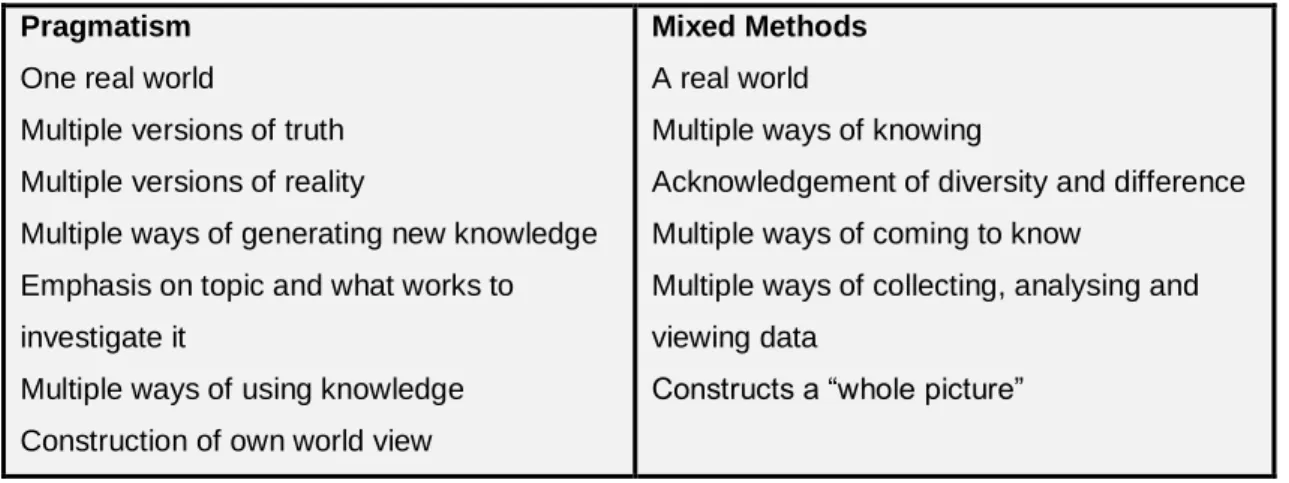
Table 1: Comparison between Pragmatism and Mixed Methods ... 53
Table 2: Number of participants for each stage ... 79
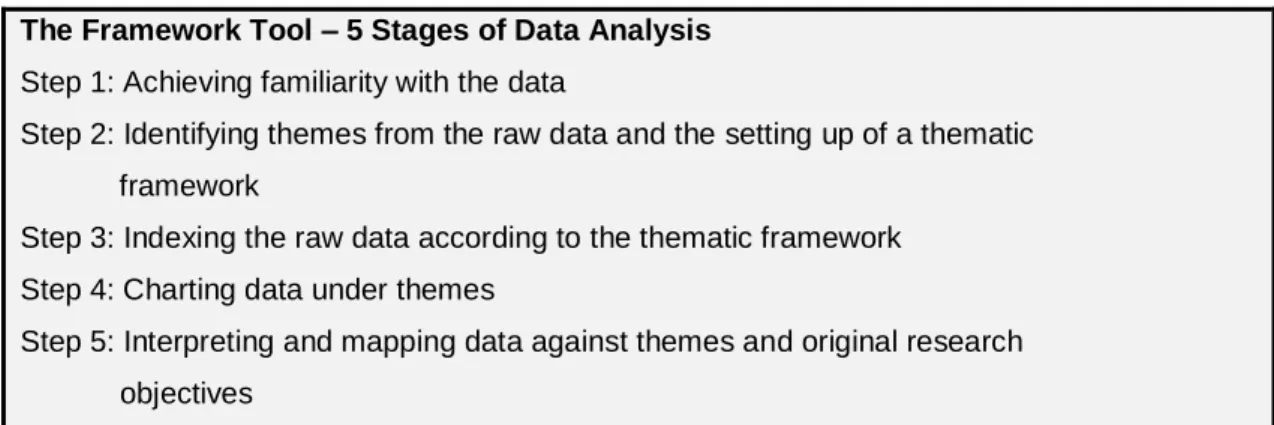
Table 3: The Framework Tool ... 80
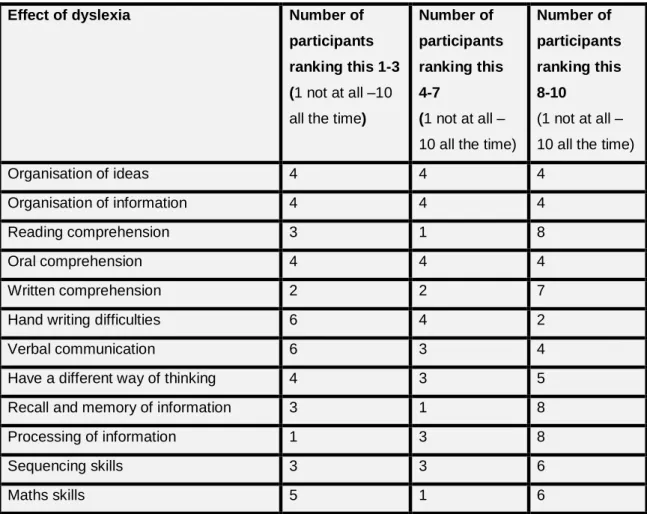
Table 4: Effects of dyslexia ... 108
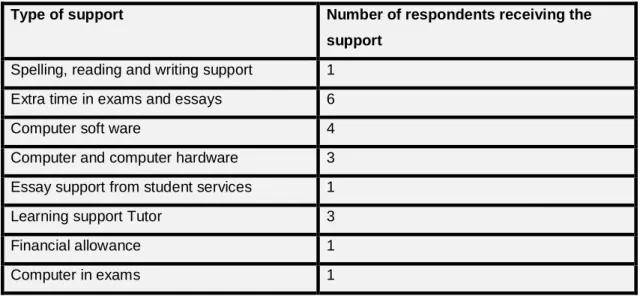
Table 5: Types of support collated from questionnaire data ... 110
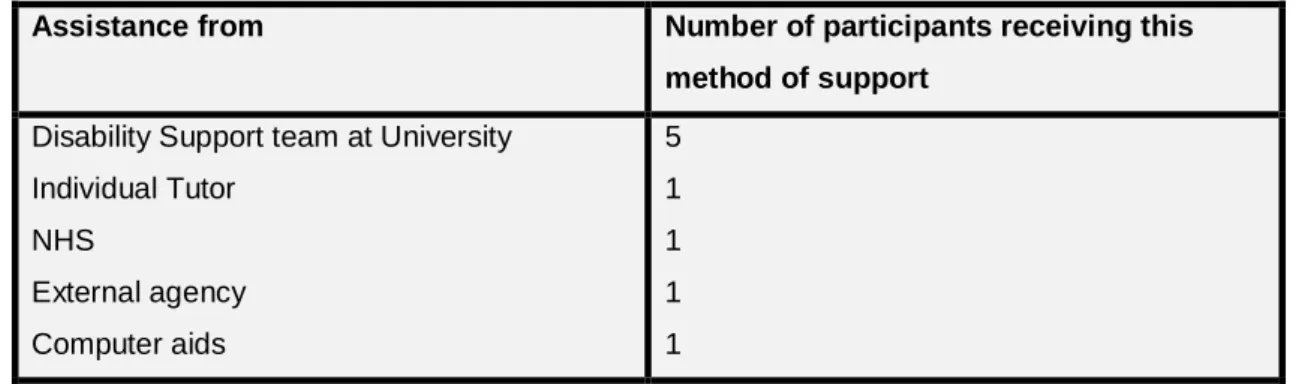
Table 6: Assistance students received collated from questionnaire data ... 111
Table 7: Key feelings and experiences of the OSCE assessment collated from the questionnaire and interview data ... 120
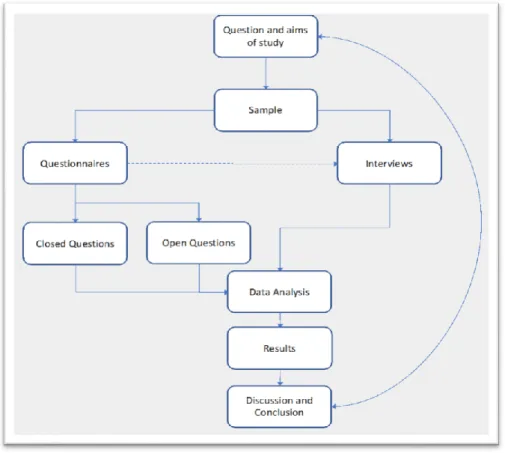
List of figures Figure 1 Study Design ... 55
10
Chapter One: Introduction and Overview 1.1: Introduction
This chapter introduces the reader to this mixed methods study examining the perceptions and experiences of pre-registration nursing students with dyslexia in one university in relation to one specific assessment: the Objective Structured Clinical Examination (OSCE). The OSCE is a clinical and theoretical
examination used within the last year of the undergraduate pre-registration nursing course and is the last assessment undertaken by the students at the study university.
On commencing my role as a senior lecturer in paediatric nursing, I became aware of the large numbers of students with dyslexia registered with the university’s disabilities services. I was also given the role of examiner for the OSCEs and became conscious of the multiple components within the OSCE and the need for all students to be able to recall, memorise, articulate and demonstrate clinical skills, reasoning and knowledge within a set time. This made me wonder whether the OSCE disadvantaged students with dyslexia because of the multiple components and multiple strategies required to complete it. Contact with the Disability Service Manager further highlighted a lack of understanding of the OSCE assessment by staff employed to support students with their learning strategies. Disability support staff are not
necessarily nurses or nurse educators and this appears to raise issues in comprehending the multiple aspects of the pre-registration nurse training that students are undertaking. The complexity of nurse training, assessments and others’ limited understanding of the OSCE assessment have led me, therefore, to undertake this study to explore the perceptions and experiences of pre-registration nursing students with dyslexia in relation to the OSCE as an assessment method used within their programme.
1.2: Background
In September 2013, the pre-registration undergraduate nursing programme changed nationally from an undergraduate diploma to an under-graduate
degree programme, following consultation by the Nursing and Midwifery Council (NMC) within the nursing profession and recommendations in the Willis Report
11
(2012) which suggested that nursing should be become a degree only training. There had previously been an option for those on the undergraduate diploma to complete the final year at degree level, but, from September 2013, there
became only one way of entry into pre-registration nursing. Nursing education now sits within the higher education setting and, as such, has to follow the academic and general regulations of the university whilst meeting the Professional, Statutory and Regulatory Body criteria (NMC, 2015). The widening participation philosophy of higher education is guiding education towards adopting inclusive criteria therefore extending access “to students from disadvantage backgrounds, low income households and other
under-represented groups” (Connell-Smith and Hubble, 2018, p3) which includes students with disabilities. The university in which the study was conducted has a clear widening participation policy and actively encourages the concept of
widening participation when recruiting students for all courses. There is, however, a tension between the widening participation concept within higher education, including the study university, and the strict “fitness to practise” requirements of the professional nursing regulatory body, the NMC (NMC, 2015). The NMC stipulates that, by the end of the pre-registration nurse
training, all students have to meet the required standards for practice set out in The Code (NMC, 2015) regardless of any disability.
Within the standards for pre-registration nursing, the NMC clearly outlines the requirement for multiple methods of assessment of clinical and theoretical knowledge and skills (NMC, 2018). Therefore, within undergraduate degree programmes, multiple strategies are used to assess the students, including the OSCE. The OSCE assessment is the final assessment in the course
programme of the study site and, from talking with the students, it appears to be the assessment that causes them the most anxiety and concern throughout their course.
During my 26 years in clinical practice and five years in nurse education, the nature of nursing has changed. There is now an expectation that nurses should take on extended roles and their accountability and responsibility are greater than ever before. Nurse education programmes, therefore, need to ensure that
12
students learn the required skills and underpinning theoretical knowledge and show their ability to apply this knowledge to practice. It also expected that nursing education assess skills and knowledge alongside clinical practice to demonstrate fitness to practice at the point of registration; it is hoped that the OSCE assessment goes some way to demonstrating this.
1.3: Overview of the thesis
Chapter One introduces the study and sets its context in nursing and nurse education today. It also clarifies the motivation behind the study.
Chapter Two provides an overview of the literature linked to the study,
examining the concepts of disability, dyslexia, inclusion and assessment within nursing and higher education and the OSCE. It ends by identifying the shortage of research around pre-registration nursing students with dyslexia generally and, in particular, in relation to the OSCE assessment.
Chapter Three considers the methodological principles upon which the research study is founded. The position of the researcher is considered alongside a critical discussion around the study setting, the research design, which includes the selection and recruitment process, and the data collection methods. Each stage of the ‘Framework’ model as a data analysis method is presented. The chapter ends with examination of the ethical considerations of conducting this research and details the measures taken to assure confidentiality and
anonymity. The ethics committees consulted for approval of the study are listed.
Chapter Four presents the findings of this study in two ways: as individual participant profiles and through thematic analysis. A rich narrative is offered, combining the words of the participants with interpretation by the researcher.
Chapter Five concludes the thesis by considering the findings of the study in relation to the wider literature and education debates. The relevance of the study to the theoretical, practical and methodological fields of knowledge is discussed, and recommendations for practice, policy and future research are
13
offered. The chapter concludes with a personal reflection on the thesis journey in relation to personal, professional and researcher development.
14
Chapter Two: Literature Review 2.1: Introduction
This chapter provides an overview of the literature reviewed and selected as appropriate for the study. Literature that is linked to the concepts of dyslexia, disability and assessment, specifically around the Objective Structured Clinical Examination (OSCE), is critically discussed. The literature spans the last twenty years in the hope of capturing most of the available studies and includes
international literature published in English. The literature search drew mainly on literature from the United Kingdom (UK), United States of America (USA) and Australia, due to the depth of literature in these countries. It is recognised that this excludes potential research available in other languages, but lengthy and costly translations were not feasible within this study and the study was not a systematic review of dyslexia across countries. Primary research, systematic and practice reviews have been incorporated to ensure inclusivity.
2.2: Defining and understanding dyslexia
Dyslexiais a complex learning disability that is thought to affect 10% of the population (BDA, 2009). Its definition has given rise to much debate within the fields of neurology, psychology, education and health research and practice (Washburn et al, 2013). In order to achieve any comprehension of the issues surrounding those diagnosed with dyslexia, the various meanings, definitions and descriptions of dyslexianeed to be addressed and translated into a working understanding of the term.
Dyslexia,as a term, was first recorded in 1896 by Dr W. Pringle Morgan (Washburn et al, 2013) where it was described as certain severe reading and spelling problems (Gersons-Wolfensberger and Ruijssenaars, 1997). In 1978, Miles (cited in Sanderson-Mann and McCandless, 2006) and, later, Osbourne (1999), identified that there was still no agreement on a single definition of dyslexia. Today, studies by Washburn et al (2013), Morris and Turnbull (2006), Illingworth (2005) and Roberts and Mitchell (2005) highlight the continuing absence of a universally agreed single definition, all suggesting there is still much hypothesising and postulation around a definitive definition, despite the considerable amount of research being carried out into dyslexia.
15
This absence of a single definition has led, therefore, to numerous descriptions and categorisations as a way of trying to come to some form of understanding of dyslexia but it is still difficult to break down the descriptions of dyslexia into specific categories as there are many areas that overlap within the descriptions (see appendix one, for a table illustrating how dyslexia can be variously
characterised). A number of authors Wennas Brante (2013), Dyslexia Rapporteur Group (2008), Sanderson-Mann and McCandless (2006) and Roberts and Mitchell (2005) argue that dyslexia can be seen as a collection of symptoms, a family of difficulties. The Dyslexia Rapporteur Group (2008) also argues, in their report about Dyslexia in Wales, that dyslexia is not a single disability requiring treatment but a collection of deficiencies or symptoms affecting individuals in different ways. Burden and Burdett (2007) further
suggest, in their study on school aged boys’ perceptions of, and views on, their dyslexia using metaphors, that dyslexia is a phenomenon incorporating issues around language, phonological coding, reading, spelling, memory and grammar to exemplify just a few (see appendix one).
Dyslexia can be variously positioned as a condition (Child and Langford, 2011) a disorder (Millward et al, 2005), or a syndrome (Rack, 1997). There is not usually any explanation offered of the terms used and, if terms such as
condition or disorder or syndrome are employed, this perhaps indicates that a medical view of dyslexia is being taken, possibly suggesting that it is treatable or even curable (Lucid research, 2006; Everatt,1997).
According to Rack (1997) and Roberts and Mitchell (2005), there are two main types of dyslexia: developmental and acquired. The latter authors suggest, as do Sanderson-Mann and McCandless (2006) that acquired dyslexia often follows some form of neurological insult such as a head injury or stroke that leads to a loss of literacy skills. On the other hand, Rack (1997) and Millward et al (2005) state that developmental dyslexia derives from an unknown
neurological basis, and, as Sanderson-Mann and McCandless (2006) also suggest, it is a life-long learning condition. Ridely (2011) and Snowling (2013) maintain, too, that dyslexia is neurological in origin with a probable genetic basis.
16
What has become apparent is that there is no consensus around a definition of dyslexia amongst the associations and groups supporting and advocating dyslexia, such as the British Dyslexia Association (BDA) and the International Dyslexia Association (IDA), or professional bodies such as The World
Federation of Neurologists (WFN), the British Psychological Society (BPS) and The Department for Education (DfES) (see appendix two, for these
organisations’ definitions of dyslexia). The IDA (2002) refers to dyslexia as being neurologically based and suggests it is developmental, affecting language acquisition, literacy, phonological processing alongside reading, writing and spelling implying dyslexia is a collection of conditions that respond to
intervention. The BDA (2009) has a similar definition in that it sees dyslexia as developmental, affecting literacy and language related skills but further
considers dyslexia as a collection of symptoms experienced by individuals which can be lessened, but not cured, by interventions.
The WFN (1999 cited in Mortimore and Crozier, 2006) partially adopts a medical perspective in their definition, referring to dyslexia as a disorder, but also recognising the significance/impact of sociocultural influences, a point not considered in other definitions. The BPS (2005) and DfES (2004), however, present dyslexia as a developmental learning difficulty rather than a condition. What is evident is that all these definitions of dyslexia, although different in wording, describe dyslexia as a developmental, a life-long learning, or a specific learning, difficulty (Robinson, 2014; Scalon, 2013; Wray et al, 2012). Scalon (2013) and Lauchlan and Boyle (2007) argue, however, that these definitions are broad, demonstrating that no individual experiences the same collection of difficulties and this needs to be accepted and worked with by professionals when teaching and supporting students.
After reviewing research and theory around dyslexia, Tunmer and Greaney (2010) confronted the existing definitions, offering an alternative and expanded version. They state that dyslexia should be defined in terms of four components: a) persistent literacy difficulties b) in otherwise typically developing children c) despite exposure to high quality evidence-based literacy instruction and intervention, d) an impairment in the phonological processing skills required to
17
learn to read and write (Tunmer and Greaney, 2010, p. 239). This definition could offer a more concrete framework for professionals working with students. It highlights that dyslexia is a collection of persistent learning difficulties
experienced by individuals; however, it does assume that individuals have met ‘normal’ childhood developmental milestones and have received high- level intervention. This definition does not assume that everyone with spelling or reading problems has dyslexia.
Despite these varying definitions of dyslexia, the formal diagnostic categories used by institutions and professionals today are those formulated by The World Health Organisation (WHO); Diagnostic and Statistical Manual of Mental
Disorder (DSM) (2010), and the American Psychiatric Association’s (APA); International Statistical Classification of Disease and Related Health Problems (ICD) (2013). These classification systems consider dyslexia under different categories with the APA (2013) viewing dyslexia as a specific learning disorder whilst the WHO (2010) consider it under behavioural and mental disorders. The APA (2013) and WHO (2010) both consider problems with reading, writing and mathematics as the main assessment criteria for diagnosis but differ in how they refer to dyslexia, with the ICD seeing it as a developmental learning disorder (APA, 2013) and the DSM as a specific learning disorder (DSM) (WHO, 2010). It is these criteria which appear to be the underpinning influence in UK and USA policy and diagnosis of dyslexia (Taymans, 2012; Buttner and Hasselhorn, 2011).
UK legislation, such as the Equality Act (2010), does not refer directly to dyslexia or learning difficulties. A general statement around disability covers them. Healthcare professional bodies in the UK such as the NMC, British Medical Association (BMA), the Royal College of Nursing (RCN) the Health Professions Council (HPC) do not offer, or refer to, a particular definition of dyslexia in their documents nor does widening participation policy within higher education define dyslexia directly, this being left to individual institutions to decide. Consequently, there appear to be differences between institutions, with the study site institution suggesting that they do not follow a set definition but use the results of testing to determine dyslexia. They do say, however, that, for
18
staff training and understanding of dyslexia, they adhere to the International Dyslexia Association’s definition, thus following the neurological/medical stance.
The definitions discussed highlight the many differing aspects of dyslexia, but it is one - the BDA definition - that is the most commonly referred to in UK studies (Washburn et al, 2013; Snowling, 2013; Gerber et al, 2012; Ridley, 2011; Morris and Turnbull, 2007; Illingworth, 2005) despite the WHO (2010) and APA (2013) influencing UK and USA policy. Snowling (2013), Sanderson-Man and
McCandless (2005) and Rack (1997) all argue, however, that an overarching definition, agreed by all to ensure parity in diagnosis and support for those individuals with dyslexia, is what is actually required.
As stated earlier, literature suggests dyslexia is a language-based difficulty affecting an individual’s literacy skills (Washburn et al, 2013). Gerber et al (2012), Ridley (2011) and Illingworth (2005)alsosuggest it is a collection of difficulties experienced differently by the individual, whichposes the question: can dyslexia be accurately defined if it affects individuals in so many different ways and comprises so many different elements? Elliott and Gibbs (2008) argue this point in their philosophical paper on the existence of dyslexia. They postulate that dyslexia is an arbitrarily socially defined construct with no clear-cut scientific basis to differentiate between, or diagnose, those with dyslexia from poor readers; consequently, it has been seen, at times, as a social convenience to label some individuals as having dyslexia. Therefore, a false dichotomy exists between those with dyslexia and those who are poor readers. They further suggest, as do Washburn (2013) and Brandt (2011), that the label dyslexiabe removed and, instead, we assist all those with poor literacy skills according to their individual needs.
The debate around the nature of dyslexia is likely to continue. Whatever the definition, dyslexia can be classed as a disability because a disability is legally defined as a ‘physical or mental impairment’ that has “substantial and long-term negative effect” on your ability to do normal daily activities (Equality Act, 2010). The question now is: how will dyslexia be considered for the purpose of this research? The study site institution does not refer to any set definition. That
19
proffered by the BDA (2009) offers a broad perspective and considers the individual by acknowledging they have other social and cognitive skills. The BDA (2009) defines dyslexia as
“a specific learning difficulty which mainly effects the development of literacy and language related skills. It is likely to be present at birth and to be lifelong in its effects. It is characterized by difficulties in phonological processing, rapid naming, working memory, processing speed and the automatic development of skills that may not match up to an individual’s other cognitive abilities. It tends to be resistant to conventional teaching methods its effects can be mitigated by appropriately specific
intervention, including the application of information technology and supportive counselling” (BDA, 2009, p8)
This definition considers social inclusion, refrains from seeing individuals as curable and suggests there are methods available to lessen the impact of dyslexiaand allow individuals to participate in society. This interpretation aligns with the study institution’s policy on widening participation and the concept of holistic care within the health system and has been chosen, therefore, as the definition to underpin this study.
2.3: Disability as a concept
Disability as a concept has many interpretations and defining it, as when defining dyslexia, is not a neutral task. As Brandt (2011) states, the definition used is determined by the stance being taken or why it is being used. For example, is it being used by governments to produce policy (for example the Equality Act, 2010), or groups of people to change society’s perspective? It is necessary to consider these differing views in order to understand the
complexities encapsulated in the term disability and, in particular, to position the term in relation to dyslexia in nursing, higher education and society.
The traditional or historical view of disabilityis situated within a medical model (Storr et al, 2011; Dale and Aiken, 2007), which considers disability as an impairment and loss of function that involves a medical diagnosis because such impairment is viewed as an illness (Cook et al, 2012; RCN, 2007). Seccombe
20
(2007) suggests this is a model that controls and dictates life courses for those with a disability and sees disability as intellectual or physical impairment that impacts on people’s lives. Seccombe (2007) argues, in addition, that, whilst impairment may be the medical condition, disability is socially constructed as a result of the impairment, a point that will be discussed later on.
Luna (2009) argues that since the medical model is the dominant discourse in relation to disabilities, specifically learning disabilities such as dyslexia, disability is seen to mean a deficit, a lack of specific abilities, with individuals being seen as patients and specialists as experts who aim to remediate such “in-the-individual” disorders. Storr et al (2011) also discuss this point in their literature review on supporting disabled student nurses while Evans (2014) relates to these ideas in his exploratory discursive study on dyslexic nurses’ constructing of identity, arguing that the medical lens uses constructs such as individualised care, impairment and rehabilitation when considering disability and, therefore, disability is seen as a deficit with those affected being seen as deviant or impaired. Bury (2000) states clearly that disability is caused by impairment whether this be caused by a disease, active pathology, genetics or
trauma/accident. Whatever the cause, the medical model considers a person with a disability as impaired and unable to function within the norms of the society in which they live and sees the body as the site of the deficit in the individual and the person as deviant (Cunnah, 2015; Evans, 2014; Macdonald, 2009; Williams, 1999).
This perspective is evident within healthcare from all professionals who are looking at the impairment first and foremost to see what needs to be treated or supported, rather than considering the person per se; in the case of those with dyslexia, their literacy ability (Macdonald, 2009). The RCN (2010) also refers to the social model of disability when discussing dyslexia, viewing disability as a set of socially constructed attitudes that impair the individual’s ability in society, but, when offering a description of dyslexia, they concentrate on the deficits experienced by the individual as
21
“a combination of abilities and difficulties which effect the learning process in one or more of reading, spelling and writing. Accompanying weaknesses may be identified in areas of speed of processing, short- term memory, sequencing, auditory and/or visual perception, spoken language and motor skill” (RCN, 2010, p, 11)
The medical model is contested by individuals with a disability who view disability through the social lens (as referred to in the UK and USA literature), minority model (USA context) or the “environmental model” as it is known in the Nordic countries (Brandt, 2011). As Taymans (2012) and Williams (1999) state, disability, from this perspective, is seen as an outcome of social organisation not pathology. The social model defines disability as a social construct because:
“individual’s attributes cannot be detached from the social, cultural or physical environments that makes them meaningful” (Gallagher et al, 2014, p1124).
If disability is considered through this lens, then the cause of a disability such as dyslexia is considered to be society and society’s structures, rather than a deficit in the individual (Leveroy, 2013; Oliver, 2013; Rowlands et al, 2013; Shakespeare and Watson, 1997). Others, for example, Ryan and Struhs (2004) and Landsman (2005), propose an interactional model where disability is not regarded as an inherent, medically defined feature of an individual but the result of both their mental and physical condition and their interaction with their
environment. They argue that this interaction produces socially constructed environments and attitudes that lead to the disabling of individuals (Ryan and Struhs, 2004) and, as Macdonald (2009) contends, these constructed
environments divert society away from the functional limitations experienced by an individual to obstructions caused by this “disabling environment”, a pertinent point in the development of the social model by Oliver (1983) and Finkelstein (2001a).
22
Luna (2009) supports the notion of disability being a socially constructed concept because, as Denhart (2008) also argues, society has created values that restrict the way our brains or bodies function. As Gallagher et al (2014) argue in their critical analysis of disability, learning difficulties as categories would not exist if cultures did not value literacy and, consequently, label the individual with poor reading skills, as disabled. This highlights the view that disability is a social construct and that, arguably, the definition of disability relates to individual societies or groups of societies, rather than being an overriding worldwide concept (Gallagher et al, 2014; Denhart, 2008).
Cunnah (2015) and Seccombe (2007) assert that the social model of disability refocuses the debate away from individual impairments to society’s oppressive and exclusionary attitudes and practices, liberating those previously labelled disabledunder the medical model (Oliver, 2013; Shakespeare and Watson, 1997). Other social variables such as ethnicity, social class and gender may also add to the barriers encountered by an individual (Cunnah, 2015) since social attitudes such as discrimination and prejudice are what cause a disabling environment (Secoombe, 2007). As Thomas (2004) asserts, it is society,
therefore, that excludes, and treats unequally, those with a disability. Cook et al. (2012) and Thomas (2004) contend such inequality builds barriers to inclusion causing, as Finkelstein (2001a), a disability activist, argues, a society that oppresses those outside the ‘norm’ - those who are disabled.
Although the social model appears to “liberate” the term disabledand those with a disability, critics such as Cunnah (2015) argue that it is flawed. The main argument seems to be that this model avoids any discussion of impairment and its impact on the individual or of disability as a concept, concentrating instead on the barriers imposed by society (Cunnah, 2015). Bury (1988) agrees, adding that, consequently, this model offers an unhelpful and “over socialised” view of disability. Finkelstein (2001b) would go further, arguing that the more radical perspectives of the social model appear to be used to consider inequality rather than to emancipate disabled people. Williams (1999) agrees that, from a critical realist perspective, the social model avoids any discussion of impairments or functional limitations and suggests that the body is a real entity, whether
23
diseased or not, and we have to acknowledge and work with it rather than ignore it. He states that the social model disembodies the notion of disability, contending that it does not challenge impairment but in fact accepts/ ignores it (Williams, 1999). Anastasiou and Kauffman (2011) support this, arguing that the notion that disability is a socially constructed phenomenon, denies the
embodied experiences (e.g. pain, illness and emotion) of those individuals. They assert that ignoring the role of biology as a cause of disability makes disability a simplistic, cultural issue. This view is developed by Thomas (2004), who suggests that the social model over simplifies and has encouraged limited insight into disability, equating it with social barriers or restricted activity.
Thomas’s (2004) view of the social model is exemplified in the way in which the education system and cultures within professions consider individuals with dyslexia and in the issues/barriers (lack of resources and specialist teaching) faced within the education system (Macdonald, 2009). In nursing and medicine, for example, nurses with dyslexia meet barriers to learning or working because of a fear patients might be at risk because those with dyslexia might give the wrong drug or not carry out instructions correctly (Evans, 2014).
Although the medical and social models dominate the literature around disability, other lenses offering alternative views have appeared which either build on, or reject, these dominant views.
Emergent from the social model of disability is ‘disability theory’. This is based on the principle that disability is socially constructed, but sees it as a part of normal human variation, which requires the voices of those labelled to
deconstruct it as a term (Denhart, 2008). Denhart (2008) argues that disability cannot be understood outside the context in which it arises because it is socially constructed within that context. She implies that it is the perceptions of disability adopted by society that disable, which can make someone disabled, even if there are no impairments, while Higgins et al. (2002) maintain that the social construction of disability elevates a singular impairment to the complete
annihilation of an individual’s actual abilities. Higgins et al. (2002) and Denhart (2008) all suggest it is necessary to deconstruct these socially constructed
24
ideas of disability to understand the term accurately and prevent discrimination. Gelzheiser (1990, cited in Luna, 2009), however, contends that the disability model still socially constructs disability and, in fact, highlights the elements of discrimination, implying that legislation or political action is part of the treatment for disability. It is the voice of the disabled that is necessary to deconstruct the ideas formed by society and thus develop new ways of seeing disability
(Higgins et al. 2002). Finkelstein (2007) acknowledges that this voice is required, but he argues, from a radical social model perspective, that disability should be understood and addressed “as a social (comprehensive) and not an individual (personal) phenomenon”(Finkelstein, 2007, p.6) and, therefore, such a voice needs to be generic not personal if society is to be changed.
Neuro-diversity, developed as a concept by those with learning difficulties, has also emerged and continues to challenge the social construction of learning difficulties, moving the focus from learning difficulties being seen as a deficit towards viewing them as normal human diversity (Cooper, no date). This concept contends that it is not the underlying neurological difference that is important but the recognition that differences exist and are part of the individual; that is people with dyslexia, for example, have differences in the way their brains function, but this does not mean they cannot be part of society. Conflict occurs because society has expectations and demands that exclude rather than include individuals and so need to be changed (Cooper, no date). Kapp et al, 2013) argue that the recognition of difference is a form of the social model of disability since it acknowledges the biological condition as well as the social and political restrictions imposed by society, arguably following more of critical realist/socio-medical view. Disability, it is argued, is part of natural human variation that exists in us all and should be celebrated rather than ignored (Kapp et al, 2013). This may need recognising by education institutes.
Further perspectives and contra arguments to the social model and, to an extent, the disability model have been developed and, as Thomas (2004) states from a sociological perspective, there is yet no unitary sociology where disability is concerned and, therefore, no one agreed model. She argues that the
25
social models as it sees disability being caused by illness and impairment as well as by some social disadvantages (Thomas, 2004). This concept, it could be argued, offers a more rounded view of disability rather than seeing it purely from an impairment perspective, an idea supported by disability writers and activists such as Shakespeare and Watson (2002) and Williams (1999). This is possibly the approach that nursing, medicine and allied health professionals should also be adopting.
Williams (1999) clearly sees the body as real, something with its own mind and independent generative structures and casual mechanisms, which we have to work with when well or ill. Shakespeare and Watson (2002) continue this discussion and state that impairments (of any type) cause disability. Williams (1999) argues that, through a critical realist lens, disability is emergent and interplays between biological reality and physiological impairment. Williams (1999) contends that disability is a property that has structural conditioning and social cultural interactions; that is restrictions are produced by interactions between impairment and societal contexts. Shakespeare and Watson (2002) further this and state that individuals are disabled by their physical bodies but also by social barriers, and impairment is socially and culturally determined. Shakespeare and Watson (2002), and later Anastasiou and Kauffman (2011), consider that impairment and disability describe different places on a
continuum, seeing disability as complex idea consisting of biological,
psychological, cultural and social-political factors. If this lens was followed by health professions and education institutions, it could be argued the individual would be enabled rather than disabled by services offered.
Although there are dominant models of disability that underpin society and policy, they are not necessarily the ones to use when considering disability within education. The medical model appears to concentrate on disability as a condition that prevents an individual functioning and can be treated or cured. The social models are concerned with interactions and obstructions created by society but appear to neglect the idea that there may be a concurrent physical reason for the disability. The socio-medical model, it can be argued, offers a more rounded view of disability in that it acknowledges individuals are impaired
26
by their physical bodies as well as disabled by the social barriers of their society and society as a whole. This model allows the voice of the individual with a disability to be heard from both sides of the fence – physical impairment and social impairment – and, when considering dyslexia, this could lead to others acknowledging both the physical problems experienced by those with dyslexia as well as those that are classed as socially constructed. This, therefore, is the model chosen for this study, as it ensures a more rounded view is considered. As Rickinson (2010) argues, the understanding of disability is far from static and continues to evolve and, as such, needs to be considered from multiple stances if its effects on individuals are to be understood.
It has become apparent during the course of this discussion that Brandt’s (2011) statement about defining disability, how it is not a neutral task but is determined by usage, is very pertinent. How disability is perceived is not just influenced by the lens chosen by an individual or institution per se; a country’s underpinning policy and legal system, arguably social constructs of that society, have huge impact on individuals’ lives.
2.4: Disability legislation
Within the UK, policy around disability and, therefore, dyslexia, has developed over the years. The Disability Discrimination Act (DDA) (Disability Discrimination Act, 1995) which made it unlawful to discriminate against people with disabilities came into force in 1995.The original version of this act stated that:
“a person has a disability if he has a physical or mental impairment that has substantial and long term adverse effect on his ability to carry out normal day to day activities” (Disability Discrimination Act,1995, p7).
This act looked at disability within the work place and within schools, making it illegal for disabled people to be substantially disadvantaged in comparison with non-disabled people. Employers and institutions were required to make
reasonable adjustments to accommodate those with a disability. Since this Act, there have been significant changes to national policy and legislation
27
other areas of society. As Cavanagh and Dickinson (2009) argue, this legislation has provided a positive public-sector duty towards those with a disability. One of the most influential Acts in relation to education and
specifically higher education has been the introduction, in 2001, of the Special Education Needs and Disability Act (SENDA) (SENDA, 2001) which was followed, four years later by the Disability Discrimination Act 2005 (Disability Discrimination Act, 2005). These Acts made it obligatory for Higher Education Institutions (HEIs) to ensure they did not subject disabled students to “less favourable treatment” within the education setting and ensured that “reasonable adjustments” were made to policies, provisions and the physical environment to enable rather than disable the individual with any disability (Rickinson, 2010). HEIs were further required, by the Disability Equality Act of 2006 (Equality Act, 2006), to ensure equality of opportunity and fair treatment for disabled people on a par with that available to those without a disability. Although these policies and legislation were proactive, enacting them was complex as there was a need to understand each Act and its implications individually. More recently, the legislation around disability has been condensed into The Equality Act in 2010 (Equality Act, 2010). While the definition of disability remains the same, more guidance is given as to what is classed as a disability; in particular, learning disabilities such as dyslexia are defined explicitly as a disability for the first time.
It is argued by disability activists that the social model has been the underlying influence on such policy and legislation (Finkelstein, 2007; Cavanagh and Dickinson, 2009). Oliver (2013) further suggests that it is the social model
activists, alongside the disabled peoples’ movement, that have influenced policy around discrimination against those with a disability helping to make society more inclusive. This view is supported by Oliver (2013) who argues that the legislation supports the mainstream approach to disability - that is the social model’s view of disability - as the legislation is looking towards the inclusion rather than exclusion of those with disabilities. The Higher Education Funding Council for England (HEFCE) and the Higher Education Funding Council for Wales (HEFCW) support this view and state in their evaluation report (Harrison et al, 2009) that the social model is the underpinning influence on a policy of
28
inclusion as disability is now regarded as an equal opportunity issue rather than the medically related problem it was considered in the past.
Although both the social and the disability models gave a voice to the issue of disability and began influencing policy, the policies themselves appear to emphasise the underlying beliefs of the medical model as to the nature of disability (Harrison et al, 2009). The definition of disability as a physical or mental impairment that is substantial, long term and impacts on an individual’s ability to function (Equality Act, 2010) demonstrates a medical model’s
perception of disability. It can be argued that The Equality Act (2010) also concentrates on the individual’s impairment and difference rather than the barriers still presented by society (Oliver, 2013) and, as Shrewsbury (2015) contends, it positions those with impairments against ‘others’ (those without) and uses terms that are ambiguous such as reasonable adjustments, making it difficult to interpret. As Oliver (2013) and Harrison et al. (2009) state,
interpretations are often based on the individual and their needs rather than considering the overarching barriers; that is the medical model is still the
influencing model when adjustments and support in education, employment and society are being considered, conflicting with social model interpretations which are being acknowledged increasingly in public and official discussions (Harrison et al, 2009).
A similar situation exists in the USA, where the American Disability Act
Amendment Act (2008) has given rights to those with a disability, with dyslexia being cited as a type of learning difficulty (Washburn et al, 2013). Its
terminology is similar to that of the UK’s Equality Act (2010) and again links disability to impairment and function (medical model) rather than considering social restrictions (social model), comparing an individual’s ability to function with the “majority of others” within society (Shrewsbury, 2015). New Zealand and Canada also have policies that follow medical terminology and, although all these countries state they are inclusive, it can be argued that the very fact that disability is defined in law ‘as impairment or loss of function’ removes the
concept of social inclusion they are trying to promote (Gerber, 2012; Seccombe, 2007).
29
Having considered the legislation and policy around how disability is considered within the UK and other Westernised countries, it is now necessary to look at how this legislation and policy influence higher education and nursing. As the legislation is based around enabling rather disabling those with disabilities, the issues around how enablement is achieved need to be considered.
2.5: Inclusion in higher education
The attitudes, perceptions and understanding of disability held by society have an impact on inclusion for those with a disability in higher education and, therefore, on those on pre-registration nursing courses (Seccombe, 2007). Seccombe (2007) suggests that these perceptions are dependent on the social, moral and ethical standpoint of society and, more specifically, of an institution and the values and beliefs of individuals per se. The concept of inclusion is also complex and, as Jahnukainen (2015), in her study on inclusive education
states, it is often misused. She argues that there is often common theoretical understanding but, in practice, there are multiple realities of inclusion, which makes it difficult to implement (Jahnukainen, 2015).
Since the emphasis in legislation (Equality Act, 2010) and policy related to education is on widening participation (following the social model of disability), HEIs are being challenged to extend their access to all (Carey, 2012). With 10% of fulltime students enrolled on first degrees in the UK being diagnosed with a learning disability according to the Higher Education Statistics Agency (HESA) (2013-2014), education providers must offer inclusive curricula reflecting social diversity and meeting the varying needs of participants (Carey, 2012). As May and Bridger (2010), in their research on embedding inclusive policy and practice in higher education argue, HEIs are now subject to a wide range of drivers that span legislation, national policy, funding, regulation and student feedback. All of these together demonstrate how the legal framework has strengthened
provision for disabled students (Rickinson, 2010) in recent years thus enabling, rather than disabling, disabled individuals. Jacklin (2011) and Hoong-Sin and Fong (2008) contend, however, that the discourse of policy tends to be welfare based with individual impairments still being the assessment categories used to
30
give an individual ‘disabled’ status within the HEIs; the domination of the medical model’s influence once again.
Freire (1994, cited in McLaren, 1999) offers us another argument around inclusion and education. Central to his argument is the principle of inclusion for those in ‘oppressed groups’ within a society, as he believes that education is there to assist them to overcome their condition and regain humanity, becoming emancipated from their previous existence through learning new knowledge and skills. This can, arguably, be applied to individuals with disabilities, and, in the case of this study, individuals with dyslexia who, until recently, were under represented within higher education but who could gain knowledge and skills, through completion of an academic programme, which, Freire argues, allows them to gain a sense of humanity and become part of the dominant group of society (Friere, 1994, cited McLaren, 1999).
Freire also suggests that it is the responsibility of the ‘oppressors’, in this case the institutions and educators, when considering inclusion and the participation of sub-groups, to rethink not only their own role within the education system but also their own opinions and position within society. It is paramount they
encourage and include those in the more vulnerable groups and they must constantly examine their position within education, and, ultimately, society, to reduce oppression of groups such as dyslexic students within education systems (Freire, 1994, cited in McLaren, 1999). Ryan and Strums (2004), in their research report, agree with Freire’s underlying principles of inclusion in, and emancipation through, education. They highlight that those with disabilities have become marginalised because of society’s views and barriers and,
consequently, need empowering to enable them to return to education. They state that, as a system, education should not be looking at education from an individual’s perspective (medical model) but at itself and what prevents the inclusion of those with a disability (social model), an issue that nursing programmes and nurse educators should bear in mind when planning future programmes (MacGiolla Phadraig, 2007).
31
Outhred (2012), however, suggests we look at what excludes rather than how to be inclusive. She argues, “it is essential to build a robust understanding of exclusion” (Outhred, 2012, p881) if we are to construct new concepts of inclusion and, therefore, influence participation across the spectrum. Outhred (2012) is arguing that exclusion occurs in education because of curriculum hierarchies, teachers facilitating established methods and structures, historical conceptions of excellence and through the assumptions inherent in policy. She suggests that it is necessary to consider who goes to university, selection processes and the engagement of institutions with local communities and wider groups of potential students if education is to become more inclusive (Outhred, 2012). Reform of all levels of education needs to take place, she contends, if we are to reduce social inequalities and promote true inclusion (Outhred, 2012), a view supported by Osberg and Biesta (2010) who argue that education’s language and beliefs need to change in order to promote full equality and inclusion.
2.6: Inclusion in pre-registration nursing programmes
HEIs are under pressure to ensure equality and widen participation, and the concept of inclusion within pre-registration nursing programmes offers further challenges. As the academic and practice components have equal weighting, specific and pertinent issues arise when considering inclusion. The pre-registration nursing programme is not just a degree; it is also a professional training programme validated by both the HEI and the NMC. That is, it is a degree that is training students to become qualified nurses. Therefore, to achieve their degrees, and also be eligible to register as qualified nurses, students must have completed both the theory and practice elements of the course successfully whether or not they have a disability (Rankin et al, 2010). Consequently, HEIs have to consider a student’s disability in relation to the strict fitness to practice criteria stipulated by the NMC (Carey, 2012; Rankin et al, 2010), alongside the academic and the obligation of the university to allow wider access to education as stipulated by government legislation (Carey, 2012). Griffiths et al. (2010) and Rankin et al. (2010) agree that the tension between disability legislation and the regulations of the professional partner is difficult to resolve, causing both academic and practice providers to struggle to
32
meet the differing demands. As Roberts and Mitchell (2005) discuss, the drawing of nursing training into higher education has widened participation as the very nature of the course - caring for those with an illness or less able than others - attracts those who are under-represented, thereby increasing the potential number of students with learning disabilities. The essential element for inclusion within a nursing programme is an individual’s ability to meet the
learning requirements of the course, as is the case with any programme, but there is then the added requirement that those completing a nursing registration programme must be in good health and be capable of “safe and effective
practice without supervision” (NMC, 2010, p6). As Rankin et al. (2010) argue, in their exploratory qualitative study on clinical placements for nursing students in Australia, the inclusion of anyone with a disability is encouraged but they must be able to perform at the same standard as those without a disability. Although it is unlawful to discriminate against individuals with disabilities (Equality Act, 2010), those accepted on the course must be able to complete the 50% practice and the 50% theory components of the programme, as nursing is not purely academic. Nursing is about caring for others who are unwell or unable to care for themselves and those training to become nurses must be able to deliver this care regardless of their own situation (Wray et al, 2012).
Carroll (2004), however, argues that individuals with a disability should be able to train as nurses and that, as a profession, nursing not only has a legal
obligation to educate those with a disability but also an ethical and moral one. It should be accepted that students with disabilities have the right to access any course they wish to follow. Indeed, Beauchamp- Pryor (2012) suggests it is the moral, political and cultural values of society that influence what is considered normal or abnormal and argues that disability should not actually be a factor in the inclusion, or otherwise, of a student on a course. This is supported by Rankin et al. (2010) who suggest that inclusion of all allows for a well-informed, more effective healthcare system. Carroll (2004) further argues that if we view nurse education as a humanistic training, rather than following a functional model (Carey, 2012), and one that involves caring grounded in nursing knowledge, then those with a disability are more than capable of fulfilling the requirements of the programme. Marks (2007) and Carroll (2004) both suggest
33
individuals with disabilities are not a “homogenous” group and inclusion on a nursing programme should be approached in an individualised way, as it should also be for those with no disability, a point also supported by Carey (2012). White (2007) and Sanderson-Mann and McCandless (2006) argue that those with dyslexia are often extremely intelligent and demonstrate alternative methods of completing tasks.
Marks (2007) believes educators should be considering inclusion of those with disabilities as ‘normal’ rather than ‘abnormal’. She argues that, like gender, race and sexuality, disability is part of the human experience which is no longer concealed but recognised and acknowledged by society, as is evident from the introduction of national policies such as The Equality Act (Equality Act, 2010). She further maintains that a person’s potential worth for a profession should be at the forefront of our minds when considering their place on a programme, irrespective of any disability. Ryan and Struhs (2004) support these ideas, arguing that ‘normative’ assumptions, about the ideal nurse, these being notions of being able-bodied and physically fit, are often seen to influence decisions about accepting those with a disability onto nursing courses. They suggest we need to consider disability through a socio-political model, looking at what there is about the programme that excludes those with a disability rather than following the notion of their disability preventing them from participating (Ryan and Struhs, 2004). Whatever the arguments, the ability of a student to complete the theory and practice elements still has to be considered, but, as Rankin et al. (2010) and Ryan and Struhs (2004) state, not all areas of nursing require the same clinical skills and, therefore, directing students to the field of nursing they may find more appropriate should form part of the educator’s role when advising prospective, or even current students, who may be experiencing difficulties.
2.7: Issues surrounding inclusion: disclosure, labelling and stigma
Although inclusion is a positive aspect of education and professional practice, there are other issues that can influence or hinder the process, for example visibility of the disability or disclosure by the person. Dyslexia is a disability that is potentially invisible whereas a physical disability, for example, is generally
34
more visible to the outsider. Dyslexia is often hidden, strategies possibly having been developed for doing so by the individual and, therefore, unless disclosed can go unnoticed by those involved with the students (White, 2007).
The issue of disclosure with regard to nurse education is complex as it affects the individual both in the HEI and also within the professional practice areas. Under the Equality Act (2010), those with a disability do not have to disclose their disability to either the university or the practice area. The exception is that, if the job places the individual in situations where the disability could present a risk to their own health and safety or of those around them, then disclosure is required. What has become apparent in nurse education is that those with dyslexia often disclose to the university but not to their practice areas (Morris and Turnbull, 2007). Morris and Turnbull’s (2007) literature review found that the figures for disclosure of dyslexia in nurses were extremely low with only fifteen to thirty per cent of those diagnosed with dyslexia disclosing it to their employers/practice areas. Under the Equality Act (Equality Act, 2010), disclosure is the individual’s choice and the university cannot disclose this information to the practice areas nor vice versa. Although all organisations need to anticipate needs, no one has defined what a reasonable adjustment is and, therefore, in practice what the anticipated adjustment for someone with dyslexia may need to be. This raises arguments about a student’s responsibilities when in practice and how practice areas can reasonably support these students or ensure patient safety (an issue currently at the forefront of healthcare practice) if they are not privy to the necessary information (Opie and Taylor, 2008) concerning the needs of the student.
The implications of non-disclosure are arguably the individual’s responsibility and, therefore, if their professional practice is compromised and patient safety becomes an issue, they are open to professional performance management that might have been avoided if disclosure had occurred and adjustments and support had been provided. Within HEIs, reasonable adjustments are in place but specific support for these students can only be provided, as Opie and Taylor (2008) argue, if disclosure has occurred. Hopkins (2011) contends that inclusive criteria should be embedded in the curricula and, therefore, disclosure should
35
not be necessary. The complexity of dyslexia means that individuals are affected differently. It could, therefore, be suggested that, by individuals not disclosing, the support that maybe required cannot be implemented either in the academic setting or the practice areas of the nursing programme (Sanderson – Mann et al, 2012). Inclusion curricula work well for some disabilities but,
arguably, with something as complex as dyslexia, there remains the possibility of exclusion if all individuals are considered to have the same problems and, therefore, individualised support for students with dyslexia, such as assignment extensions, scribes, computer programmes, is paramount if they are to succeed in their studies (Morris and Turnbull, 2006).
The literature around disclosure has demonstrated there are numerous issues such as fear and stress created by a disability, labelling and stigmatisation (Sanderson- Mann et al, 2012; Hopkins, 2011 and Morris and Turnbull, 2006), that affect whether an individual divulges, or not, their disabilities to the
university and practice. Labelling and stigmatisation appear to be the biggest concerns in relation to this (Ridley, 2010). Beauchamp-Pryor (2012) suggests students have concerns around labelling and, consequently, the stigma of being classed as disabled, resulting in the student struggling with their identity and inclusion within their chosen programmes. Beauchamp-Pryor (2012) found that students with disabilities often stated that society has a negative view of
disabilities and that, within the hierarchy of social values, disability is not viewed highly and, at times, equates to exclusion and, therefore, there is no positive outcome from labelling oneself as disabled. If students believe this is how society views them, then self-esteem and self-concept may become
problematic, as White (2007) found in her case study, and disclosure will often not be considered by the students, thus depriving them of appropriate support.
Child and Langford (2011) and White (2007) contend that disclosure can lead to students feeling discriminated against and judged in a negative way and,
therefore, many believed it was easier to cope, and more likely they would be included within the team/group, by not divulging their dyslexia. This is supported by Illingworth (2005) in her interpretative study where she demonstrated that students labelled as having dyslexia often found themselves stigmatised
36
because of poor spelling and writing within nursing as well as their everyday lives. Morris and Turnbull (2007) also argue that the stigma of dyslexia often becomes synonymous with identity and, consequently, perpetuates hostility and the exclusion of the person so labelled, an issue that is apparent with labelling of any description, and can be attributed to the ignorance of others. Such issues need to be at the forefront of educators’ minds if inclusion rather than exclusion is to transpire. Lauchlan and Boyle (2007) further argue that labelling someone as dyslexic can lead to a lack of understanding of the nature of dyslexia, with teachers believing that the issues are common to all and not realising the varied nature of the disorder. They advocate removing the label to avoid further
misinterpretation by educators (Lauchlan and Boyle, 2007). This could prove a challenge to the latter if there is no distinction between students with dyslexia and students who are academically weak but without dyslexia. Anecdotal evidence suggests there is a risk of those with dyslexia, if they are not
classified, being seen as ‘weak performers, stupid or lazy’ and, therefore, they may not receive the available support, resulting in unfair and, arguably,
discriminatory practice by institutions (White, 2007).
Although the majority of literature demonstrates the negative consequences of disclosure, there is evidence to support its positive aspects in aiding inclusion. Ochs et al. (2001) demonstrate, in their study of high functioning children with autism, that positive inclusion, with teachers having knowledge of a child’s learning disability, did in fact lead to that child being included and supported by teachers and their peers rather than being brushed aside, as was the case with the children whose learning disability had not been disclosed to either group. This concept of positive inclusion may be transferrable to all learning situations be it with children in school or adults in higher education.
Studies by Lauchlan and Boyle (2007) and Illingworth (2005) have also
demonstrated that being given a label allowed inclusion, as some students felt liberated, could at last understand why they were having specific problems with reading or writing and felt that the process of sharing this label enabled them to move forward. Lauchlan and Boyle (2007) also argue that the process of