1 Nottingham Trent University
Professional Doctorate
Document 5
Qualitative Research Study
Observing the implementation of a school-based curriculum by teachers of different mind styles: a case study in Hong Kong
Samson Yuen N0441746
Thesis submitted in partial fulfillment of the requirements for the degree of Doctor of Education at Nottingham Trent University
First Submission: November 2016
Revised in: March, 2017
2
This work is the intellectual property of the author. You may copy up to 5% of this work for private study, or personal, non-commercial research. Any re-use of the information contained within this document should be fully referenced, quoting the author, title, university, degree level and pagination. Queries or requests for any other use, or if a more substantial copy is required, should be directed in the owner of the Intellectual Property Rights.
Abstract
Teacher autonomy within Hong Kong’s schools is constrained by a highly bureaucratic system in which their individual teaching styles are compromised. This could be reflected in the former studies on the school-based curriculum development (SBCD) schemes initiated by the Hong Kong government, in which what was supposed to be a bottom-up innovation had turned into a highly centralized initiative. Whereas the aim of SBCD should be to allow teachers to make decisions at the school level to cater for pupils’ needs, the government-initiated SBCD schemes targeted to satisfy bureaucratic requirements instead. At issue is bureaucratisation of school-based innovations, which threatens to usurp teachers’ autonomy to make sensible judgments in response to contextual concerns. To provide a different perspective, this qualitative case study takes an insider approach to examine the implementation of a teacher-initiated school-based curriculum in a Hong Kong secondary school. English lessons delivered by four Secondary 5 (equivalent to Year 11) teachers were observed in 2013. Running logs were used to record how the four teachers delivered the school-based materials in one of their English lessons and were compared. The Gregorc Style Delineator instrument was used to identify the teachers’ mind styles following the classroom observations. The research found that three teachers held the same mind style of Concrete Sequential, and their lesson activities shared many common features. However, the teacher who held the mind style of Abstract Sequential adopted a different approach in her teaching. Coupled with the classroom observations were semi-structured interviews which were designed to elicit the four participants’ attitudes towards the SBCD in this study. Whilst all teachers held positive attitudes towards the curriculum and mentioned some of the benefits of SBCD that were aligned with overseas studies, they also made adaptations to the materials in accordance with their preferred teaching styles. The findings thus contrast sharply with former studies on government-initiated SBCD schemes, in which teachers tended to conform to the official requirements. Finally, this study discusses the extent to which the factor of mind styles should be incorporated into curriculum design, and provides some guidelines for how SBC could be implemented and developed.
3 Declaration
I declare that this thesis represents my own work, except where due acknowledgement is made, and that it has not been previously included in a thesis, dissertation or report submitted to this University or to any other institutions.
Part of the thesis has been presented in the following conferences in the form of a poster or a research paper:
Yuen, S., 2014. A case study on the implementation of a school-based curriculum in a Hong Kong secondary school. Poster presented in: HERSDA 2014 Conference, Hong Kong Baptist University, 7-10 July 2014. p. 142.
Yuen, S., 2015. Implementation of school-based curriculum development by teachers of different beliefs in a Hong Kong secondary school. Paper presented in: eLearning Forum Asia 2015, SIM University, Singapore, 16-19 June 2015.
Yuen, S., 2016. Observing the implementation of a school-based curriculum by teachers of different mind styles: a case study. Paper presented in: The Third International Conference on Open and Flexible Education (ICOFE 2016), The Open University of Hong Kong, 6-8 July 2016. p. 39.
Yuen, S., 2016. A teacher-initiated innovation versus government-led schemes: a case study on school-based curriculum development in Hong Kong. Paper presented in: The 9th International Conference on Psychology, Language and Teaching (ICPLT), Asian Institute of Technology, Bangkok, 28-29 December 2016.
Signed: _________________________________________________ Yuen, Hau Lung Samson
4
Acknowledgements
I would like to thank my fellow teachers, in particular the four participants, for their full support for this case study by sparing me plenty of time for interviews, classroom observations and discussion. I am also grateful for my seniors for entrusting the SBCD work to me so that I could develop a writing curriculum for the senior-form students at my own discretion in a culture where teachers are only supposed to adapt to or tailor an externally prescribed or top-down curriculum instead of creating a totally new curriculum based on their teaching philosophies and experiences.
Also thank my supervisors Dr. Tina Byrom and Dr. Helen Boulton, as well as my former supervisor Dr. Kevin Flint, for their guidance, expertise and challenges.
Most importantly, I would like to dedicate my deepest thanks to my father who himself received little education and yet provided me with the chance to be educated.
5
Table of Contents
Preface
Chapter 1: Contextual Issues in School-Based Curriculum Development Bureaucracy and Hong Kong Education
Previous Studies on Government-Initiated SBCD Schemes Update on SBCD
Aim and Focus of this Inquiry
Chapter 2: Research Context
Research Site
Education Philosophy Reflected in Curriculum Writing Selection of Participants
Researcher’s Involvement Ethical Considerations
Chapter 3: Teaching as an Artful Act
Teaching as Reflective Actions Teaching as Artistry
Analogy between Cooking and Teaching
Mind Styles as Analytical Tool for Teaching Styles
Gregorc Style Delineator Aligned with Aims of Research Limitations of Gregorc’s Model
Administering GSD
Chapter 4: Methodology and Methods
Campaign against a Standardised Test and its Implications Obsession with Methods
Qualitative Methodology as Preferred Approach to Classroom Study Using Case Study to Uncrack “Cocoons”
Reflective Framework for Observation Limitations of Observations Operation of Observations p.8 p.12 p.12 p.16 p.17 p.17 p.20 p.20 p.20 p.24 p.24 p.25 p.28 p.28 p.29 p.32 p.33 p.35 p.36 p.39 p.41 p.41 p.42 p.43 p.45 p.46 p.47 p.49
6
Interview as Additional Tool to Probe into Teachers’ Perception Constructing Meanings through Thematic Analysis
Limitations of the Interview Method Chapter Summary
Chapter 5: Findings and Discussion
Part A: Teachers’ Views on SBCD
1. Teachers Show Positive Attitudes towards SBCD 2. Teachers Emphasise Artistry in Teaching
3. Teachers Incorporate Personal Styles into School-Based Materials Part B: Observing Teachers’ Actions in the Classroom
1. Settling the Classroom Housekeeping 2. Revision of Prior Learning
3. Setting Lesson Targets
4. Applying the Language in Use 5. Presentations
6. Questioning Techniques
7. Offering Guidelines and Assistance to Students 8. Ending the Lesson
Chapter Summary
Chapter 6: Conclusion
Reflection on the Research Project
Contributions to Research on Teachers’ Mind Styles Implications for SBCD
Incorporating the Concept of Teaching Styles into Curriculum Design Further Research
APPENDICES
Appendix 1 – Outline of the school-based curriculum on Workplace Communication Appendix 2 – Sample of Consent Letter to the Participants
Appendix 3 – Observation Instrument
Appendix 4 – Sample of a Running Log with Descriptors
p.51 p.53 p.54 p.54 p.56 p.56 p.56 p.59 p.62 p.64 p.65 p.66 p.67 p.69 p.71 p.72 p.74 p.76 p.77 p.79 p.79 p.81 p.83 p.86 p.90 p.91 P.94 P.96 p.97
7 Appendix 5 – Summary of Running Logs Appendix 6 – Sample of interviewing Scripts Appendix 7 – Summary of Interviews
REFERENCING p.101 p.102 p.110 p.116 List of Tables
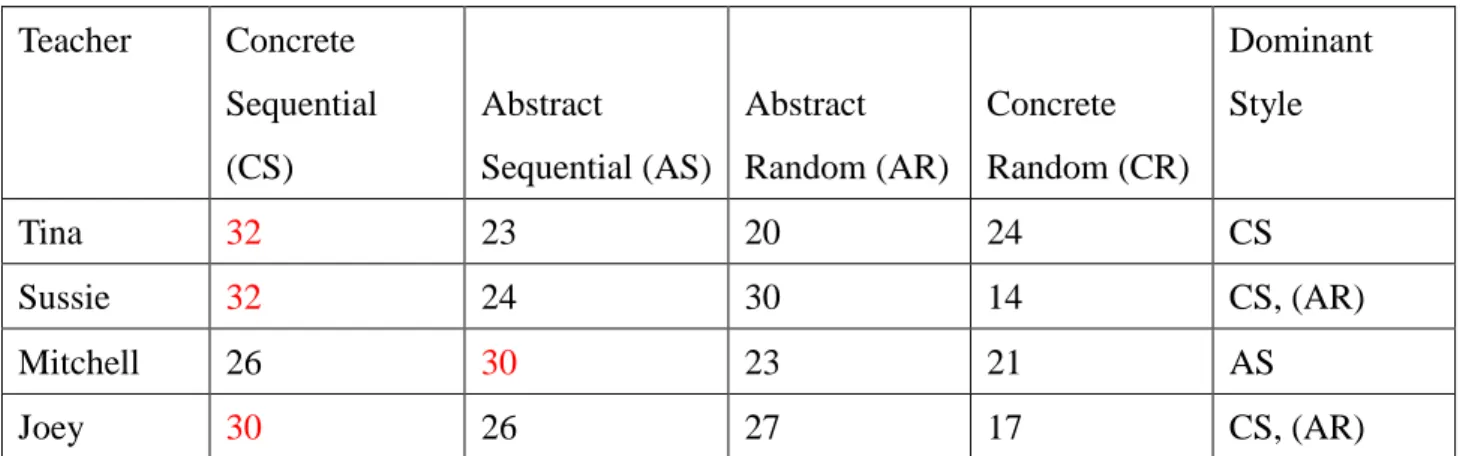
Table 3.1: Four Teachers’ Scores in the GSD Test
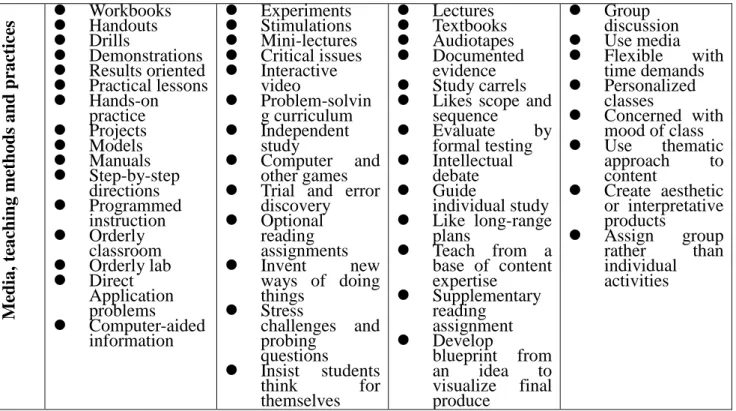
Table 4.1: Effective Educational Methodologies to Match the Different Learning Styles
p.39 p.51
8 Preface
I firstly present an anecdote that happened during a conference regarding the issue of teaching styles, which refers to the “teaching techniques and activities and approaches that a teacher [prefers to employ] in teaching a certain subject in the classroom” (Rahimi & Asadollahi, 2012, p.49). This serves as an initial framing of the study. During an e-learning conference that I attended in 2015, a Taiwanese scholar presented his research about using Video Graphics Array (VGA) games to consolidate students’ learning in Integrated Science. Upon his presentation, another male participant enthusiastically discussed with him where to find some developers of VGA games to save time for potential technical issues. Two female participants, however, raised their eyebrows and responded candidly that they had no idea of how to play the games, and therefore would not use the games in their classrooms.
The above episode illustrates that different teachers may react differently to a curriculum innovation, which is usually embedded in a certain method based on a particular learning or teaching style (Hall, 2005). As such, one should be aware of the hidden agenda in an innovation, as some governments may over-emphasise certain learning styles and incorporate them into their educational innovations in order that students achieve certain skills or attitudes such as “learning to learn” (Hall, 2005, p.49). One example is a recent innovation by the Education Bureau (EDB) in Hong Kong, which has organised numerous workshops and seminars promoting STEM education in the past few months, placing an emphasis on integrated curriculum that espouses Science, Technology, Engineering and Mathematics (Curriculum Development Council, 2015). Here, the embedded method is the use of information technology or e-learning to solve problems in the classroom. I cannot deny that technology can facilitate learning to a certain extent, but the assumption that it can be handled by all teachers or beneficial to all students is problematic. Research finds that e-learning does not necessarily accommodate all learners equally because learners’ styles are different (Ross & Shulz, 1999; Manochehr, 2006). Likewise, teachers themselves have their preferred teaching styles, and as such they may have different responses to an innovation that is based on certain learning or teaching style. Thus, when an innovation is indiscriminately introduced to a classroom, it may create more problems than it intends to solve.
However, in reality, when individual teachers such as the Taiwanese scholar in the anecdote design an innovation, it is difficult for them to accommodate all teaching styles in one innovation. Thus, the key to the development of an innovation is to provide teachers with the autonomy to make
9
sensible decisions and adaptations to it so that they can work in context and look for the optimal way to cater for students’ needs.
One educational initiative that emphasises teachers’ autonomy and allows teachers to work in their preferred teaching style is school-based curriculum development (SBCD), in which teachers can tailor the teaching content in the way they think appropriate to cater for students’ needs. There could be various forms of SBCD, depending on the teachers involved, type of activities and time commitment (Marsh et al., 1990; Brady, 1992). To reduce complexity, SBCD in this study is defined in its narrow sense as “the product of ready-made curriculums developed by school-teachers” (Yeung, 2012, p.61), as well as the planning and implementing processes involved in it (Marsh 2009). It is therefore opposed to a top-down one-for-all formal curriculum (Brady, 1992; Elliot, 1997), which usually advocates a single method and therefore takes little regard for teaching styles. However, initial studies on SBCD in Hong Kong (Lo, 1999; Law, 2001) showed that the SBCD programmes initiated by the government were not much different from the one-for-all formal curriculum as neither of them took teaching styles into consideration.
Wong (2002) argued that the government-led SBCD programmes aim to satisfy the complex bureaucratic requirements such as requiring students to produce up-to-standard outputs for display rather than to construct a school-focused curriculum that caters for the pupils’ needs. Part of the evidence was that teachers were required to attend workshops organized by the government and to receive training to ensure that the school-based curriculum (SBC) they produced addressed government concerns. When teachers implemented the SBC, they were also required to strictly follow the SBC to ensure that all students’ outputs were up-to-standard (ibid) and that the EDB’s concerns were addressed (Lo, 1999; Yeung, 2012). These government-led SBCD programmes, thus, not only disrespect teachers’ autonomy and teaching styles but also distort the original intention of SBCD, which is to allow “major decisions about the design, content, organization and presentation of the curriculum, about pedagogy and about assessment of learning” to be taken at the school level (Skilbeck, 1998, p.130). Despite being under the banner of SBCD, these government-led programmes have been turned into highly centralized innovations and one-off production of standardised classroom materials (Lo, 1999; Wong, 2002; Yeung 2012).
Following the above studies, there have been sporadic case studies over the past decade about medium- to large-scale SBCD projects initiated by local universities, bureaucrats and joint schools (Lam & Yeung, 2010), as well as research relating to SBCD leadership (Lo, 2008). Although there
10
has been evidence showing that the government has taken the role of facilitators in the SBCD initiative in recent years, its supportive means is criticised as a “quality assurance measure in disguise” (ibid, p.78). Meanwhile, there is also a lack of in-depth study, to my current knowledge, about SBCD as an individual effort in the local Hong Kong context. It is therefore worth filling the gap of literature with a case study relating to SBCD practice that is initiated and implemented by teachers themselves with minimal bureaucratic influence and therefore truly reflects a bottom-up implementation process. The case that is to be presented in this thesis is to serve this purpose, and it will offer some new perspectives that former studies do not cover.
One new perspective offered by this case study is that whilst the former studies examined the implementation of SBCD at the school level as an outsider, this case study took an insider approach to explore the issues connected with an SBC that had been designed and implemented at a classroom rather than school-management level. Specifically, the primary purpose of this case study is to examine the implementation of a school-based English curriculum, which has incorporated my curriculum-writing experiences, by four English teachers in a Hong Kong secondary school. Given the differences among the four teachers in terms of their teaching styles and their views on the SBC, this research seeks to: construct a real-life example of how the four teachers respond to the SBC developed by me with minimal bureaucratic influence; investigate how the teachers' teaching styles in terms of Gregorc’s mind styles (Gregorc, 1982) might have affected their classroom actions; and finally draw implications on the SBCD in Hong Kong's context for policy makers and curriculum developers who work in similar settings.
To unfold the real-life scenario, I will first discuss in Chapter 1 the issue that has been identified in former research about the government-initiated SBCD schemes in Hong Kong, specifically bureaucracy. Such discussion will help readers understand the macro-context of my case study, which is located in an education system dominated by a particular bureaucratic style. In this chapter, I will also state my personal interest in the research, the aim(s) of the case study and the specific research questions.
Then in Chapter 2, I will narrow down the context to the research site, the participants and the school-based curriculum in this inquiry. The focus of this chapter is on the curriculum development process which is based on my reflection on my teaching and learning experiences. The ethical concerns arising from the insider research such as the power relationship between the researcher
11
and the researched and the bias involved will also be examined in this chapter.
Chapter 3 outlines the theoretical framework in this inquiry with an argument that teaching is an artful and reflective act rather than a technical or routinised practice. This also leads to the discussion why teaching styles matter. While there are different models and instruments that are used to analyse teaching or learning styles, in this chapter, I will explain my preference for Gregorc Style Delineator (GSD) (Gregorc, 1982), which categorises one’s learning and teaching patterns according to one’s mind style. Here the term ‘mind style” is used by Gregorc (ibid) to refer to the preferred way one perceives and organises things. When applied to teaching styles, it, therefore, refers to the way that a teacher organises lesson activities and constructs learning. For the purpose of this research, I will specify the term “mind style” when referring to Gregorc’s definition. Whereas in other occasions, the word “style” alone is generally defined as the preferred ways of using one’s abilities (Sternberg, 1994).
Following the discussion about teaching styles, I will elucidate how my perspective on teaching leads to my decision on adopting the qualitative methodology and the case study approach in Chapter 4. Then reporting and discussing the findings, Chapter 5 is divided into two parts, with the first half reviewing the teachers’ attitudes towards the school-based curriculum and the second half analysing how teachers who hold different mind styles deliver the SBC in their classrooms. Finally, in Chapter 6, I will conclude the research by: reflecting on the research ethics; specifying its contribution to the existing literature about teaching styles; offering insights into curriculum development; and outlining some important principles of curriculum development.
12 Chapter 1
Contextual Issues in School-Based Curriculum Development (SBCD)
In this chapter, I will elucidate Hong Kong’s education system to highlight the political context where the research is situated. This helps to explain my intention to conduct a qualitative case study that is of a different perspective from that of other SBCD-related studies in Hong Kong.
Bureaucracy and Hong Kong Education
Murphy and Skillen (2013, p.86) contend that the imperatives of bureaucratisation are “threatening to usurp the educational values at the heart of the profession”. Such a threat has loomed over Hong Kong as two initial studies on SBCD (Lo, 1999; Law, 2001) in the city show that the government-led SBCD programmes aim to satisfy complex bureaucratic requirements such as requiring students to produce up-to-standard outputs for displays rather than construct a school-focused curriculum that catered for pupils’ needs (Wong, 2002; Yeung, 2012). It is against this context, which is dominated by a particular bureaucratic style in Hong Kong that this study is constructed to showcase how different the implementation of SBCD can be, when it is developed and implemented at the classroom level with minimal bureaucratic influence.
Weber (1978), as the first sociologist who propounded the concept of bureaucracy, predicted that bureaucracy would become a dominant mode in modern society. One feature of bureaucracy among many others is the “methodical attainment of a definitely given and practical end by means of an increasingly precise calculation of adequate means” (Weber, 2001, p.293). In other words, actors calculate all the possible means and select one that is most efficient or one that can maximize the expected outcomes. Today, it is not difficult to see how this kind of calculation occurs under the banner of cost-effectiveness and efficiency, as Murphy and Skillen (2013, p.84) point out, “It is unsurprising then, that modern governments have developed extensive mechanisms of accountability designed specifically to measure the effectiveness of public service”.
While the word ‘bureaucracy’ is now associated with government operations and public services, new forms of bureaucracy continue to emerge. Ritzer (1998, p.48) for instance equates bureaucracy in Weber’s sense to McDonaldisation, which he defines as the way to optimise “efficiency, predictability, quantifiability (or calculability), control through substituting nonhuman technology for human judgment, and the irrationality of rationality”. Others assign new terms to this
13
phenomenon such as new managerialism (Lynch, 2013), performativity (Ball, 2003) and neoliberalism (Lynch, 2006; Giroux, 2008). Whereas the first two are more of a top-down supervision that aims to assure quality and standard outputs, the latter even aims to set political, educational and ideological standards, as well as quantifiable output measures to establish a self-regulating society in place of a physical government (Barnett, 2000; Olssen & Peters, 2005). No matter what term is used, they all refer to the same type of bureaucratised calculation, which espouses the logic of the market and quantifiable indicators in place of human judgments or of what Weber (1978, p.973) calls “non-mechanical modes of production”.
The features of bureaucracy can be found at all levels of today’s society (Ritzer, 1998; Lipman, 2013), including education. When put in the context of education, bureaucracy is usually translated as maximising learning outcomes through ‘idealised’ or ‘expert-designed’ methods. In view of the intended curriculum for the English subject in Hong Kong, one can easily identify the trace of bureaucratisation, which is embodied in advocated methods. Teachers are constantly reminded to use technology to increase students’ learning efficacy. “McDonaldised” models of curriculum arrangements are shown in the official guidelines (Module -> Unit -> Tasks), and encouraged methods (e.g. the task-based approach) are specified (Curriculum Development Council, 2007). Since the inception of the new senior secondary curriculum in 2009, the Curriculum Development Council has published a number of suggested schemes of work and resource files for English subjects. These models and suggested schemes of work set up standards for schools as means of quality assurance. While I do not contest that these publications are of great help to busy teachers, the above-mentioned resources, which aim to provide 'optimal' models for learning and teaching, have turned into a 'performative' benchmark. Teachers are expected to follow the modules and organise their lessons that are of the same standards as the teaching models or even the suggested schemes of work. Lesson studies are based on the criteria that go with the task-based approach, and among the criteria are group interactions, meaningfulness of tasks and learner-centred teaching (Willis, 2000; Curriculum Development Council, 2007). Teachers who use alternative approaches that deviate from the suggested approach in the English lessons are deemed inappropriate and criticised by the inspectorate of the Education Bureau.
Chiu Wing-tak, former vice-principal of La Salle College, a prestigious secondary school in Hong Kong, revealed that he was once banned from using the grammar-translation approach in his class during a class visit by the Education Bureau inspector (Chan, 2007), thus illustrating that teachers are pressured to comply with the teaching approach recommended in the official documents and to
14
abandon the methods that are deemed ‘ineffective’ by the bureau. Nevertheless, the ‘optimal’ approach recommended by the government usually provides one-size-fits-all solutions that fail to address contextual constraints, as Mr. Chiu shares with the news reporter: [Translated from Chinese]
Nowadays, the Education Bureau has discouraged schools to teach English grammar. While some schools have adopted a closed-door policy [that includes grammar teaching], many schools have already taken out grammar from their syllabus … Compared with my former students who had learned grammar in early years, today’s students are so weak in English that they make a dozen grammar mistakes in one sentence. Worse still, some even are not able to form a complete sentence. The situation is worrying.
(Chan, 2007, Education Column)
While the formal curriculum signifies a preference for a more communicative teaching approach such as task-based learning, what Mr. Chiu’s students needed, however, was grammar lessons that helped them fix their writing problems. However, as Ritzer (1988) mentions, in a society in pursuit of McDonaldisation, human judgment is replaced with nonhuman technology and models that ensure ‘quality assurance’, implying a reductionist approach in education. That the technical decision is superior to humans is also one major feature of bureaucracy:
The decisive reason for the advance of bureaucratic organisation has always been its purely technical superiority over any other form of organisation. The fully developed bureaucratic mechanism compares with other organisations exactly as does the machine with the non-mechanical modes of production.
(Weber, 1978, p.973)
Undeniably, McDonald-style restaurants which are developed under the ‘bureaucratic mechanism’ have thrived under globalization (Andersen & Taylor, 2012). Restaurants that emphasise personalised services and local tastes are, however, struggling to survive under the threat of homogeneity brought about by globalisation (Mak, Lumbers & Eves, 2012). The same is true to education in Hong Kong. A globalised teaching approach that is introduced to Hong Kong under this kind of bureaucratic mechanism takes no regard for the contextual factors. Carless (1997, 1998, 1999, 2002, 2003, 2004, 2007), who examines the implementation of the task-based approach being
15
advocated by the government in Hong Kong, for example, criticises the recommended approach for its failure to address the contextual restraints in Hong Kong:
Task-based teaching has not yet fully established itself and is generally considered—except by younger or more recently trained teachers—to be innovative. Conditions for task-based learning are not particularly favourable. Average class sizes in primary schools are around 36 pupils per class, and classrooms are usually cramped, spartan, and with inadequate storage space. Just as principals and senior teachers may neither fully understand nor support the rationale for task-based learning, traditional pencil and paper tests are not aligned with methods which tend to place more emphasis on speaking, listening, and the communication of meaning.
(Carless, 2002, p.390)
The issue here, as seen in Carless’ study, is that while it is inevitable that the world has to progress with innovations, one cannot overlook the context and more importantly the human factors. Educational innovations, in particular, cannot be introduced as McDonaldised products because what works in one context may not be applicable in another. Sadly, many school-improvement programmes still rely on top-down models that try to get teachers to comply with some expert-designed and research-based solutions to school problems (Little, 1993). Many policymakers and practitioners also have “a naïve belief” that “policies and practices designed in one context can be unproblematically transported elsewhere” (Walker & Dimmock, 2000, p.157). Local scholars such as Morris, Chan and Lo (2003, p.85) thus argued that reforms in Hong Kong are usually initiated by politicians who are “not fully cognizant of the realities of schooling”, or developed by “an overseas team with no experience in the local context”. Such practice could be problematic as Schön (1983, p.10) warns that “some of the solutions advocated by professional experts were seen as having created problems as bad as or worse than those they had been designed to solve”.
This being said, the implementation of school-based curriculum development (SBCD), which is the focus of study for this research, should not be viewed as a standardised, one-size-fits-all initiative developed for the sake of bureaucratic convenience. It must be bound in context and designed to cater for pupils’ learning. Lessons can be drawn from previous studies on government-initiated SBCD programmes which have excessive concerns over bureaucratic requirements instead of the pupils’ needs. In the following section, I will discuss the issues connecting to government-initiated
16
SBCD programmes in Hong Kong by reviewing two early studies.
Previous Studies on Government-Initiated SBCD Schemes
Lo (1999) examined in depth the School-based Curriculum Project Scheme (SBCPS) initiated by the then Education Department in the 1980s in three different schools. She described the scheme as a “centralized promotion of decentralization”, implying that “the goals of the SBCPS had to be achieved by supplementing the existing central curriculum rather than by developing school-based curricula to meet the needs of pupils” (Lo, 1999, p.424). She added that the schools’ motives of joining the scheme were mostly extrinsic, especially when it came to getting more resources and money from the government. “The needs of the pupils appeared not to be a key consideration” in the scheme (ibid, p. 427) because “creating new materials as a long-term plan by a group of teachers” was not evident in the schools studied (ibid, p.426). Moreover, when developing the SBC, teachers in these case studies were required to attend government workshops after a busy day of work to make sure that the course content addresses the formal curriculum concerns. Teachers were also busy preparing written documents for officials’ inspection. Evidently, the SBCPS examined by Lo is full of features of bureaucracy especially in terms of “accumulation of written documents” and “trainings” by experts (Weber, 1978, pp.956-958).
Meanwhile, Law (2001) also conducted a similar case study on the impact of a school based curriculum project on teachers and students in a Hong Kong secondary school – Salesians of Don Bosco Ng SiuMui Technical School. The school-based project he examined was an integrated project, linking Mathematics, English and Chinese together under the same themes with the aims of re-establishing students’ low self-esteem, re-creating an enjoyable environment and promoting teamwork among teachers. Similar to the projects in Lo’s study (1999), the integrated project was initiated by the school administration as a top-down innovation after the government offered some ‘incentives’ to the school. Following the project, he interviewed six teachers, six students and three co-coordinators involved in the school-based project. While both students and the co-coordinators generally held positive attitudes towards the project, not all the teachers welcomed the innovation. Two experienced teachers were against the innovation and one even withdrew from the project. The latter felt “negative about the pressure for change from the administration”, and “recommended a naturalistic approach to change, not a top down from the school administration” (Law, 2001, p.12).
17
From the above examples, one can identify the reasons why the SBCD scheme initiated by the government was not gaining popularity in Hong Kong in the early 2000s. To begin with, the innovation was introduced with little regard for the local context. Teachers merely transplanted expert-designed methods directly to their schools. Second, the way to administer the innovation was contradictory to its original intention. What is considered as a bottom-up approach has become a top-down innovation in which teachers have almost no say about the implementation. Consequently, teachers just followed the instructions from the then Education Department and strived to make their students produce outputs for official display. Many of these government-led SBCD programmes have therefore turned into an “ad hoc” and “discrete initiative” (Morris, Chan & Lo, 2003, p.84).
Update on SBCD
Although the initial research on government-initiated SBCD schemes was conducted in the late 1990s and early 2000s, the situation has not been changed over the past decade. Chan (2010) commented that following the education reforms in Hong Kong in the early 2000s, the formal curriculum in Hong Kong had been transformed from a centralized one to a more decentralized one in the postcolonial era. The latter assumed that “teachers would become active professionals by renewing a teacher’s role through the adoption of various government strategies such as guidelines, recommendations, and the use of school-based curriculum development” (Chan, 2010, p.96). This assumption opened an opportunity for teachers to take an active, autonomous role in developing a school-based curriculum that catered for the pupils’ needs. However, Chan argued that despite the changes, the managerial measures taken by the government such as the School Development and Accountability framework, the External School Reviews and the Territory-wide System Assessment, which aimed to assess students’ competency in Mathematics and languages and subsequently the teaching quality, exerted great pressure on schools and teachers. Consequently, teachers were pressured to comply with “all the indicators and standards set out by the government” in order to “[present] a good public school image in terms of student achievement and school effectiveness” (Chan, 2010, p.99). The accountability mechanism taken by the government is thus described by Kennedy, Chan and Fok (2011, p.52) as ‘hard measures’, which refer to “policy instruments that do not have the force of law but that nevertheless go beyond persuasion to create conditions where compliance is the only viable option”. In other words, although the aim to decentralize the curriculum shifts the accountability of planning and implementation to teachers, the bureaucratic
18 control on SBCD has remained unchanged.
Aims and Focus of this Inquiry
Different from above studies (Lo, 1999; Law 2001) that see a huge bureaucratic influence on the implementation of SBCD, the case study that I present in this thesis examines an SBCD programme that has been initiated and implemented by teachers in a secondary school with minimal bureaucratic influence. In addition, whilst the former cases focus on the operation of the SBCD scheme in the participating schools and on the work dynamics among teachers, this inquiry observes how teachers who hold different mind styles according to the Gregorc Style Delineator (Gregorc, 1982) deliver the school-based materials (SBMs) in their own classrooms. Thus, different from the former studies, this case study examines implementation at the classroom level. Most importantly, the teachers in this case study are not told which teaching methods they should follow, which I believe would enable the teachers to exercise autonomy to a certain extent. Specifically, this case study aims to answer the following research questions:
1. What are the mind styles (Gregorc, 1982) of the four participants in this inquiry?
As mentioned at the beginning of this thesis, this study is framed by the idea that teachers’ teaching styles are different and therefore their response to an innovation, for example SBCD, can be different. It is important to understand the participants’ teaching styles before analysing their response to the SBCD in this inquiry. While there are many tools to assess and frame one’s teaching and learning style, in Chapter 3, I will explain the reason for choosing the GDS in this inquiry.
2. What are the teachers’ attitudes towards the school-based curriculum in this inquiry?
“Teachers are usually the key element in the implementation process because they are the people who will implement, adapt or reject the innovation” (Carless, 1997, p.363). By probing into their attitudes towards the SBCD practice in the researched school, one can better understand why and how teachers would make adaptations to the SBMs.
19
school-based curriculum at the classroom level? To be more specific, do the four teachers teach according to their mind styles (Gregorc, 1982)? What are the similarities and differences among teachers who hold different mind styles (Gregorc, 1982) in terms of their classroom activities?
The verb “implement” here refers to “teachers’ classroom teaching including how they design lessons, organize activities or tasks, teach the four skills of English, use materials and assess students’ performance” (Chen, 2010, p.12). Different from other SBCD studies in Hong Kong, which investigate implementation at the management level, the context of this inquiry will be confined to what teachers do in the classroom.
Before answering the above questions, I will describe the research context, including the details of the research site and the participants in the upcoming chapter. Attention should be drawn to the fact that the SBC under this study was developed and implemented by teachers in a local secondary school with little bureaucratic influence, where no performative guidelines and suggested methods have been imposed on the SBC. The implementation of the SBC, from planning to delivery, also exemplifies a bottom-up innovation process.
20 Chapter 2 Research Context
Having reviewed the nature of bureaucracy in Hong Kong’s education system in Chapter 1, this chapter takes a close look at the micro-context, which is the school where the case study was conducted. In particular, the rationale of the school-based curriculum development in this case study will be explained. Attention should be paid to the development process in which I, as the curriculum writer, attempted to personalise the curriculum rather than indiscriminately follow the official guidelines.
Research Site
The research was conducted in a school where I had worked for eight years by time of undertaking the research. The school under investigation is anonymised as TPSS. TPSS is funded by the government under the direct subsidy scheme (DSS). It is a medium-sized secondary school with a student population of about 700 (Form 1 – Form 6, which is equivalent to Year 7 – Year 12 in the UK). Most of these students first enrolled in TPSS with a low proficiency in English, with the attainment test (a placement test for Form 1) score around 30% on average, compared with the territory-wide average of 69% in 2009-2012 (School Internal Record). In addition, although the socio-economic backgrounds of these students are kept confidential by the school authorities, most students that I am in touch with are from low-income families who live in the Northern New Territories and Shenzhen. English is rarely used in the communities around them.
Different from other government-funded schools or aided schools, DSS schools can flexibly manage their financial resources according to their own needs and therefore have more freedom to allocate their staff as and where needed. Capitalising on the above advantages, TPSS effectively deployed English language teachers and planned activities that created an English-rich language environment for students to learn English. The school also made a bold move in deploying more English teachers to develop school-based curricula and materials for different forms, aged 12-18.
Education Philosophy Reflected in Curriculum Writing
21
curriculum as well as materials for the Workplace Communication elective in Form 5 (equivalent to Year 11 in Britain). I therefore proposed to the subject panel that I write up a new curriculum package in the academic year 2012-2013. At the planning stage, I did not look up the established SBCD models such as Bruner (1966), Hanley (1970), Walker (1971) and Tyler (2013). One reason is that there are no ‘best’ models per se and the strengths of one model are often also its weaknesses (Morris, 1998). As such, one has to consider “a variety of factors including the political environment and on the conceptions or images of schooling of key decision makers” (ibid, p.71).
Another reason is that I consider curriculum writing as a “method of inquiry”, which involves two dimensions, as Richardson (2000, p.926) explains, “First, it directs us to understand ourselves reflexively as a person writing from a particular position at specific times. Second, it frees us from trying to write a single text in which everything is said at once to everyone”.
The SBC that I wrote for the school, therefore, embodied my reflection as a learner and teacher of English who was writing a curriculum specifically for the group of students in a local school. To put it another way, the writing of the curriculum is embedded in my education philosophy, which is defined by Ornstein (2007, p.5) as “a framework for broad issues and tasks, such as determining the goals of education, subject content and its organization, the process of teaching and learning and, in general, what experiences and activities to stress in schools and classrooms”. It also reflects my “life experiences, common sense, social and economic background, education, and general beliefs about people” (ibid, p.5). To be specific, I took the following into consideration when planning the SBC:
1. Most of my students in this study share the same childhood as mine, and they live in a neighborhood where English is rarely spoken. The experience of my primary school days shows that students without enough exposure to the target language can hardly put the language into practical or communicative use (Willis, 2000, p.4). In other words, students should be given opportunities to present and share their ideas with their classmates using the target language. They should be able to get access to authentic materials, which can widen their repertoire of language use.
2. My secondary school experience suggests that learning would lose its meaning if it were all about getting the best answers to outdo other candidates as in the norm-referenced examinations. To
22 put it in Kohn’s terms:
“The best teachers are vitally active and involved, but not in propelling students toward right answers, not in filling them full of facts, not in giving them worksheets that consist of naked numbers, or disconnected sentences in which the point is to circle vowels or verbs.”
(Kohn, cited in Thuermer, 1999, p.96)
Thus, in designing the school-based materials, I provided space for students to think critically and be creative.
3. Learning tasks should be progressive and contextualized. Learners can progress from easier tasks to more difficult tasks under the same context or theme. Teachers should set learning tasks and targets that are achievable. No-one should be considered “doomed to fail” as in the norm-referenced examinations.
4. The success of cram schools (schools that offer tutorial lessons for students to help them succeed in the public examination) in Hong Kong shows that most students’ drive for learning English is instrumental rather than intrinsic. Research indicates that 70% of the students in the last grade of secondary schooling in Hong Kong attend cram schools in preparation for the public examination (Bray, 2013). They attend cram schools for sample questions and model answers that they can look up to in order to get a better grade in the examination. It shows that students continue to be concerned about examinations. Students are eager to learn and listen if they realize that the learning tasks will help them do better in the examination, whether the mode of instruction is lecturing in nature (as in most cram schools) or interactive. Thus, the content of the school-based curriculum should be linked with the public examination.
5. Most students in Hong Kong learn English not for leisure or communication but for examination. Communicative language teaching (CLT) does not entirely fit the context in Hong Kong and adaptations have to be made (Carless, 2007). At times, teachers also need to explicitly teach the language patterns and grammar rules that help realise the target text type (or the final assessment task to be exact). To ask students to work on communicative tasks without scaffolding is like putting a non-swimmer to sea. After all, as long as we teach English in context, it is
23
unavoidable that students should learn about the register in use such as in the case of Workplace Communication.
This does not mean that teachers should test students’ knowledge of grammar. On the contrary, assessment tasks should be communicative in nature to give students greater exposure to the language use. In other words, assessment tasks should not be based on how much a student knows about the rules, but instead on the extent to which students can apply the rules to daily communication. As such, teaching of rules and language patterns is necessary only when they are used as a tool that helps students construct their meaning later on in the assessment tasks.
6. With reference to the hallmark of outcome-based education, teachers should take students’ future needs into account. Teachers should teach not only linguistic knowledge, but also life skills, and in the context of Workplace Communication, it means: understanding the job requirements, getting to know about a company’s culture, and how to spot scams. As Freire (1998, p.67) argues, a teacher cannot separate “the teaching of content from the ethical education of the students”.
7. Considering teaching as an artful act, which will be further discussed in Chapter 3, I do not consider the school-based curriculum as a technical manual with steps that must be followed to achieve the final outcome. Instead, it should provide flexibility for teachers and students to create. That is why students are given different opportunities to share about their dream jobs, and are free to choose a job to present on. Teachers can also get to know their students’ interests and as such alter or reproduce any content to cater for the students’ needs.
With the above reflection based on my teaching and learning experiences, I wrote up the SBC on Workplace Communication for S5 students. It should be noted that in the design of the curriculum I had considered the students’ backgrounds and needs (e.g. points 1, 4 and 5). The course materials had also been reviewed and commented by the participants before being sent out for printing, ensuring that teachers had input to the curriculum design and implementation. Finally, as mentioned in point 7 above, during the implementation, the teachers were given room to exercise their discretion and autonomy to deal with any uncertainties in their classrooms. The outline of the course is attached in Appendix 1. After examining the background of how the SBC was written, the following sub-section describes the participants.
24 Selection of Participants
The four English teachers participating in the research were teaching Form 5 in the academic year of 2013-14. As in previous years, teachers set aside four to six weeks before the final examination to teach the English elective - Workplace Communication and conducted school-based assessment for their students, which formed part of the public examination grade. Since there were only four Form 5 teachers teaching the elective, they represented the total population in the case study. The sampling strategy used in this inquiry is, therefore, comprehensive selection (LeCompte, Preissle & Tesch, 1993). A brief profile of the four participants, whose names are changed into pseudonyms, is listed below:
Ms Sussie is a local teacher who was raised and educated in Hong Kong in her early years. Upon finishing her secondary school, she continued her studies in the U.S., and graduated there with a major in Teaching English as a Second Language. She had eight years of teaching experience by the time the research was conducted. She was teaching the class of the highest ability.
Miss Joey was raised and educated in Hong Kong, but chose to complete her first degree in the U.K. She had six years of teaching experience by the time the research was conducted. She was teaching the lower ability group.
Miss Tina completed her secondary and college education in Hong Kong. Compared to other teachers in the research, Miss Tina, who had only taught English for three years, had the least experience. At the time of the research, she was teaching the lower ability group.
Miss Mitchell was the only expat teacher in the research. Born in Malaysia but raised in Singapore, she completed her primary and secondary education in Singapore, and attended college in the U.S.A. She had eight years of teaching experience, and was teaching the second best group among the four classes under investigation.
Researcher’s Involvement
Besides the four participants above, my involvement in the research, as a researcher and curriculum writer,is also significant because it separates the nature of this inquiry from previous SBDC-related
25
studies in Hong Kong (Lo, 1999; Law 2001), which examine the issues from the outsiders’ perspective. As the researcher in this case study, I was not only the designer of the curriculum under investigation, but also the one who co-constructed and interpreted the implementation of SBCD. I therefore consider myself as an insider-researcher who shares “the characteristic, role, or experience under study with the participants" (Dwyer & Buckle, 2009, p.55). Taking the role of an insider is a two-edged sword, and there are benefits, as well as limitations (Kanuha, 2000; McGinity, 2012).
On the positive side, an insider-researcher can gain an in-depth understanding of the context, get access to the research site easily, elicit genuine answers from the participants, and speak the same insider language (Bonner & Tolhust, 2002; Unluer, 2012). On the negative side, objectivity, reflexivity, and authenticity of a research project are questioned at times because “one knows too much or is too close to the project and may be too similar to those being studied” (Kanuha, 2000, p.444). Researcher subjectivity could harm data analysis and even collection (Dwyer & Buckle, 2009, p.58). This is particularly true in action research, where the primary aim is to evaluate a programme (Burns, 2010). However, since my research here did not encompass any evaluative orientation, there were no norms against which I intended to gauge; therefore action research as a methodological approach was discounted. Instead of evaluating the effectiveness of the SBCD, this research focuses on the question "how" the school-based curriculum is implemented, which therefore avoids the issue of bias to a certain extent.
Ethical Considerations
Despite my attempt to minimize bias, my relationship with the participants raises some ethical issues. Kvale (2002, p.9) warns that the interactions between the researcher and the participants usually involve “asymmetrical power relations”. To minimise such inequality, I opted to conduct the research in a naturalistic setting (vide Duff, 2008; Johnson 1992). To begin with, the curriculum materials were used in a natural setting and as planned within their work schedule and therefore not separate as part of this research project. It is, therefore, different from previous research on SBCD (e.g. Lo, 1999), where the participants were required to carry out a scheme that was ‘super-imposed’ on them. As a researcher in this case study, I was also a member of the same organization and of the same grade as other participants (by the time of the research), and therefore, did not come as an external expert to evaluate their work and the implementation. Before the research, I explained the purpose clearly to the teachers, telling them that I did not come to evaluate their teaching practice
26
but encouraged them to deliver the lessons in their preferred methods. This, I believe, could relieve teachers from the stress of being observed to a certain extent. In spite of this belief, it is still necessary to acknowledge the difference between a closed-door lesson and an observed lesson. In the methodology chapter, I will further explain how my role in the research and my presence in the observations might have impacted this research.
Although the research was conducted in a natural setting and the participants were studied based on their work routine, the dealing with the participants and the procedures had strictly followed the
Ethical Guidelines for Educational Research by the British Educational Research Association (2011). This includes having obtained informed consent from the participants. The aims and the operation of the research have been clearly stated in the letter requesting consent (Appendix 2). Participates were also briefed that they had “the right to refuse to participate in a study, and can withdraw at any time” (Creswell, 2002, p.13) so that they could opt out without feeling that they were compromising their colleague’s research project. Despite having gained the consent from the participants, there is still tension in this research as Cohen, Manion and Morrison (2007, p.60) warn:
Let’s us say that the researcher has been working closely in a school for one or two years; surely that researcher has an obligation to improve the lives of those being researched, rather than simply gathering data instrumentally? To do the latter would be inhumane and deeply disrespectful. The issue is tension ridden: is the research for people and issues or about people and issues? We have to be clear about our answer to the question ‘what will this research do for the participants and the wider community, not just for the researcher?’
While this research project would grant me a doctoral qualification, my colleagues who participated in the research might gain nothing. The research would fall short of integrity if its primary aim were to pursue a personal interest. Thus, just as what Cohen Manion and Morrison (ibid) mention above, I had an obligation to improve the well-being of the respondents such as giving credit to them by acknowledging their assistance in this thesis, reporting the findings unearthed in this research to disseminate good practices both inside and outside of the school; and allowing the participants to read and comment on my work including the findings and analysis, which would be presented in different academic conferences. In all instances, “permission has been requested and obtained from
27
all participants”, and any conference papers that refer to real people “have been given to those people for editing and approval, prior to putting the text into the public domain” (Whitehead & McNiff, 2006, p.78). Again, participants could opt out from the research and request not being named or included in the public domain; thus ensuring the integrity of this research.
To sum up, this chapter provides details about: the development of the SBC based on the curriculum writer’s philosophy; the four participants’ profiles; and the ethical issues connecting with my relationship with the participants. The focus of the chapter, as does this inquiry, is humans and not the programme itself as in other SBCD-related studies. To understand how an SBCD initiative is implemented, one needs to understand how individual teachers think and act differently. The next chapter will, therefore, take a closer look at the act of teaching with an emphasis on teaching styles, which has subsequently formed the theoretical framework of this inquiry.
28 Chapter 3
Teaching as an artful act
Teaching as Reflective Actions
In Chapter 1, examples of “McDonaldised” education initiatives in Hong Kong were given. At issue is that these government initiatives emphasises the technical aspects of implementation such as seeking effective ways to solve classroom problems rather than seeing teaching as a reflective practice imbued with compassion, care and passion (Zeichner, 1994). Teachers in the government-led school-based curriculum projects, for instance, acted like ‘technicians’ who launched the schemes according to a list of official criteria instead of at their own discretion (Lo, 1999). Little has been done at the government level in Hong Kong to examine teachers’ reflective actions in the classroom as the official documents (e.g. Curriculum Development Council, 2007, 2015) refer to the technical aspects of teaching and curriculum implementation. By “reflective”, Dewey (1933, p.215) means that teachers should become involved in action that entails “active and persistent consideration of any belief or supposed form of knowledge in the light of the grounds that support it and the consequences to which it leads”. Teachers, therefore, are not robots that are programmed to follow certain rules and criteria in the implementation of a certain teaching initiative, but they have their own beliefs, teaching philosophies and thinking styles, which is defined by Sternberg (1997, 1988) as one’s preferred ways of government or managing one’s daily activities. All these factors underline teachers’ reactions to an initiative.
In line with Dewey’s thinking, Schön (1983) also calls for a shift from the scientific or technical approach, which he calls Technical Rationality, to the reflective approach when looking at the teachers’ actions in the classroom. What Schön (1983) suggests is that instead of finding out a universal or standard practice (in teaching or SBCD), it is necessary to understand the knowing and the acting of an individual, as well as the individual’s reflection in action. The two entities (knowing and action/ reflection and action), according to Schön (1983), are not separate ideas but an integrated process of knowing-in-action or reflection-in-action. For instance, what I do in SBCD reflects my knowing in second language education, which encompasses my knowledge, experiences and reflection on teaching. Here, the notion of Schön (1983) is different from that of Dewey (1933) in the sense that the former tends to believe that a practitioner’s ‘know-how’ is internalised, which means that a practitioner may not be able to explicitly explain his philosophy and belief, but he or
29
she has the know-how to get things done, as Schön (1983, p.49) explains:
When we go about the spontaneous, intuitive performance of the actions of everyday life, we show ourselves to be knowledgeable in a special way. Often we cannot say what it is that we know. When we try to describe it we find ourselves at a loss, or we produce descriptions that are obviously inappropriate. Our knowing is ordinarily tacit, implicit in our patterns of action and in our feel for the stuff with which we are dealing. It seems right to say that our knowing is in our action.
Despite the difference in explaining teachers’ actions, what Dewey (1933) and Schön (1983) have in common is that both are strongly against routinised, bodily practice (Reckwitz, 2002). Teachers should not just teach from textbooks or comply certain guidelines but should judge and act prudently with their beliefs and discretion (Shulman, 1987).
Besides beliefs, teachers have different teaching styles when they teach. Even when they use the same methods, their presentation and techniques could be different (Rubin, 1983; Entwistle, 2013). Given the variations in teaching methods, I therefore argue that one should not examine classroom practice by using performative indicators showing what teachers and learners should do during the lesson. Against this type of bodily practice (Reckwitz, 2002), I therefore adopted a reflective approach in conducting my research. While I will further explain my research methodology in the next chapter, in the following sub-section, I will concentrate on ‘artistry’ in teaching, which leads to the discussion about the significance of examining teaching styles in this case study.
Teaching as Artistry
Explaining an abstract concept like “artistry” is by no means an easy task. In an attempt to explain the term, Schön (1983, p.32) contrasts “artistry” with Technical Rationality, which he refers to the ways to solve problems or make decision “through the selection, from available means, of the one best suited to established ends”. The selection of means to established ends, as mentioned in Chapter 1, is the hallmark of bureaucracy. According to Schön (1983), this feature can be found everywhere in professional practice. By “practice”, Schön (1983) notes that there are two levels. The first level refers to “performance in a range of professional situations”, whereas the second level refers to “preparation for performance” (ibid, p.56). However, when professionals repeatedly
30
practise the selection of available means for the established ends, it will result in over-learning, in which professionals habitually follow the established methods without regarding the setting and the human needs, thus resulting in the loss of the values they are supposed to promote:
Among younger professionals and students, there are many who find the professions without real interest in the values they are supposed to promote: lawyers have no real interest in justice or compassion; physicians, in the equitable distribution of quality health care; scientists and engineers, in the beneficence and safety of their technologies.
(Schön, 1983, p.12)
What Schön tries to warn against is the danger of Technical Rationality that may turn practice into repetitive production without social values. Education is dealing with humans. Teachers cannot solve problems by just resorting to one-size-fits-all methods repetitively. Tolstoy (1967), thus, argues that teachers should not blindly follow some standardised methods, but judge sensibly what is the best solution to the possible difficulties incurred by a pupil. In short, teaching is “not a method but an art and talent” (ibid, p.58).
The above interpretation by Tolstoy (1967) best illustrates the concept of “artistry” in teaching. Such act of artistry requires ‘sensibility, imagination, technique, and the ability to make judgments” (Eisner, 2005, p.251); “the ability to take skillful advantage of situations and to do whatever is most appropriate” (Rubin, 1983, p.48); and “accumulation of experience, insight, and professional cunning” (ibid, p.49). Summarising the act of artistry, Eisner (1984, p.24) reminds us that "eclecticism [is] not a practical liability but a necessary feature of the deliberative process" and that "deliberation - the exercise of human's highest intellectual powers - was necessary in making decisions that must suit changing contexts riddled with idiosyncrasies". Eisner’s reminder exemplifies Schön’s (1983) notion of reflective practitioners, which criticises the use of scientific and standard models in place of humans’ judgment.
Eclecticism and deliberation, the two major features of artistry, also reflect the real-life scenario in the classroom as opposed to bureaucratised, routine official norms. Olson (2005, p.97) maintains that teachers may not necessarily solve problems according to “official norms” but very often they resort to “a wide variety of ideas”, which are expressed in practice itself.
31
One lively example in Hong Kong’s context is a classroom story unfolded by Lin (1999), in which she examined how an English teacher in a local secondary school attempted to connect with the students’ social habitus by using the students’ first language (L1) to “explain vocabulary, give directions, make the English story texts come alive, explain grammatical points, and interact with students most of the time” (Lin, 1999, p. 401). Whereas the use of L1 might not be aligned with the official norms, the teacher used her creative and discursive efforts to successfully help her students from a Cantonese-dominant working class habitus gain confidence and interest in learning the English language (ibid). The story here indicates that teachers are not robots who follow prescriptive methods stipulated in the official curriculum but at times resort to creative and artful methods to cater for learners’ needs.
Seeing teaching as an artful act, I, therefore, do not intend to view the implementation of the SBC from the Technical Rationality prospective. In other words, the aim is not to check to what extent the teachers follow the official norms or prescriptive methods, but to examine how they adopt “a wide variety of ideas” to teach via their reflective practice. Thus, the implementation of the SBCD in this case study is different from the curriculum tradition in the United States, which is described by Westbury (2000, p.17) as follows:
[The American curriculum’s] overall organisational framework [is] a "curriculum-as-manual," containing them templates for coverage and methods that are seen as guiding, directing, or controlling a school's, or a school system's, day-by-day classroom work… what is essential is the idea that public control of the schools means that, whatever the character of the curriculum that is developed for a school or school system, teachers as employees of the school system have been, and are, expected to "implement" their system's curricula – albeit with verve and spirit – just as a system's business officials are expected to follow their airline's rules governing what they should do.
Instead, the implementation of the SBC in this study is more aligned with the German Didaktik tradition, which “is centered on the forms of reasoning about teaching appropriate for an autonomous professional teacher who has complete freedom within the framework of the Lehrplan
[or curriculum in English] to develop his or her own approaches to teaching” (ibid, p.17). It is therefore based on the “art” of Didaktik that the teachers will be observed how to implement the
32 SBC.
Although teachers use different methods to solve problems and to deal with their students, it is acknowledged that teachers, like students, have their own preferred teaching styles in organising their lessons and solving the problems. Rubin (1983), for example, argues that even with the same materials, teachers may handle them with their distinctive methods, thus producing different results. Thus, it is important to understand the concept of teaching styles, which are explained as follows.
Analogy between Cooking and Teaching
Following Rubin’s line of thinking, Freeman (1988, pp.10-11) uses the analogy of cooking to describe the implementation of curriculum in the classroom:
When you cook from a recipe, the food you produce is always unique in some way. When teachers use exercises from a textbook, they transform each activity from something that exists in a limbo outside of time and place into the concrete messiness of their classrooms and students… This fact is not subversive; it is simply true because teaching and learning are human activities. People teach people who are learning, which creates a human environment in which the abstractions of curriculum, materials, and pedagogy are transformed into actual practice.
What Freeman emphasises is the appreciation of individual differences in delivering the school-based curriculum. Each teacher’s ‘recipe’ is unique. They have their own ways of delivering and organising the school-based materials. By setting a standardised recipe for teachers and asking them to follow the steps one by one, teachers are no difference from a robot and their creativity would be stifled. However, previous studies about the SBCD schemes initiated by the government (e.g. Lo, 1999; and Law, 2001) showed that teachers were required to follow the bureaucratic requirements when designing and delivering the curriculum. Technical Rationality was strictly followed, and features of new managerialism were found in these studies, including “measurement, surveillance, control and regulation” (Lynch, 2013, p.10), which restrict teachers from using their own teaching styles and exercising discretion to solve problems. The lack of respect to individuality led to an implementation that failed to address the individual needs of the pupils who could have different attainment according to their social class as shown in the research by Lin (1999).