Rethinking Construction Safety
by
Eleanor J. Harvey
DOCTORAL THESIS
Submitted in partial fulfilment of the
requirements for the award of
Doctor of Philosophy
of Loughborough University
December 2018
Abstract
Recent human-induced disasters have prompted concerns that conventional risk manage-ment (quantifying and controlling hazards) is not only reaching its limits but introducing vulnerabilities which increase the probability of accidents. These compliance or behaviour-based approaches can obscure risks, suppress data, and detract from major hazards — feeding complacency and reducing resilience as the workforce becomes disfranchised and deskilled. In response to this, emerging constructs favour non-prescriptive methods for managing risk and look to support the human factors which underpin these. This is known as the ‘fifth’ or ‘Adaptive’ age of safety.
Adaptive safety differs from its predecessors in two fundamental ways: Firstly, it re-futes notions of accident causation as predictable and, consequently, it casts doubt on our understanding of the human contribution to accidents. Both these undermine traditional risk management models. Instead, an approach is advocated which accounts for complex systemic interactions and interpersonal aspects of risk management. As yet there is a lack of evidence and guidance to support Adaptive safety in industry.
The construction sector is particularly challenging with respect to safety because of its litigation culture, affinity for traditional safety, project-based network structure, and transient workforce. The emerging Adaptive paradigm could potentially be a valuable op-portunity to improve construction safety: Moving towards engaging workers, drawing on their expertise, increasing vigilance, and enabling a response to the unexpected; however, its applicability to this unique sector is disputed.
This research uses mixed qualitative methods to examine the compatibility of Adaptive safety with construction, theoretically and then in practice. The first part of this thesis ex-plores leadership as a means to foster an Adaptive culture in organisations. A framework for ‘Adaptive safety leadership’ is synthesised from literature on safety leadership, Safety Intelligence, and Adaptive safety, and evaluated against construction practice in an inter-view study. The findings show many safety practitioners and policy-makers in construction recognise the need for systems thinking and relational aspects of leadership, but the struc-ture, pressure, and culture of the industry mean the tendency to blame workers and bureau-cratise risk is difficult to overcome. The relationships between these systemic ‘Originating Influences’ and the ‘Immediate Circumstances’ surrounding accidents are crystallised in an update of Haslam, Hide, Gibb, Gyi, Pavitt, Atkinson and Duff’s (2005) contributing fac-tors in construction accidents (ConCA) model — explaining the challenges to taking an Adaptive approach and demonstrating the value of systems thinking in construction.
The second part of this thesis case studies Adaptive safety in practice, following two pio-neering infrastructure megaprojects as they embrace Dekker’s (2017a) ‘Safety Differently’. Proactivity, relationships, communication, and job-satisfaction are improving as the new philosophy is cultivated and allowed to evolve in collaboration with the workforce. The role of safety leaders in embedding this concept in frontline work and factors contributing
transition, but the sector’s pace of change and persistent culture have been challenging. These insights contribute an improved understanding of the mechanisms of Adaptive safety and the factors which support and hinder its success with a view to its wider im-plementation. However, the work also warns against substituting engagement for safety; questions the ethics of responsibilising workers; and stresses the need for a context-sensitive balance of new and old safety paradigms. It highlights the inadequacies of this construct which need to be resolved before it can be operationalised.
Keywords: Adaptive Safety; Construction; Ergonomics; Health and Safety; Human Fac-tors; Resilience Engineering; Safety Differently
Acknowledgements
This work would not have been possible without the support and generosity of so many people. I would like to thank:
Every construction professional for taking the time to speak to me. Your kindness and honesty have made this worthwhile. I am especially thankful to Laing O’Rourke, Tideway, and the Tideway Tracer Team for granting me to access your projects.
Patrick Waterson and Andy Dainty. It has been a privilege to work under your supervi-sion. I am thankful for your drive, enthusiasm, and unwavering confidence that we would get here.
Friends old and new for countless cups of tea debating the highs and lows of ‘quantum gradnamics’ and my wonderful family for your constant encouragement.
The first Dr Harvey. You are my resilience. Thank you for supporting me emotionally, financially, and technologically, and for loving me just as I am.
Publications
Full journal articles
1. Harvey, E.J.,Waterson, P., and Dainty, A.R.J., 2016. Applying HRO and Resilience
Engineering to Construction: Barriers and Opportunities. Safety Science.
DOI:10.1016/j.ssci.2016.08.019 (In press, corrected proof. Online since August 2016)
2. Harvey, E.J.,Waterson, P., and Dainty, A.R.J., 2018. Beyond ConCA: Rethinking
Causality and Construction Accidents. Applied Ergonomics, 73, pp.108-121. DOI:
10.1016/j.apergo.2018.06.001
Peer-reviewed conference papers
1. Harvey, E.J.,Waterson, P., and Dainty, A.R.J., 2015. Comparing safety intelligence in
air traffic management and construction: A conceptual comparison. In: Raidén, A.B.,
and Aboagye-Nimo, E. (Eds) Proceedings of the 31stAnnual ARCOM Conference, 7-9
September 2015, Lincoln, UK. Association of Researchers in Construction Management, pp. 1115-1124.
2. Harvey, E.J.,Waterson, P., and Dainty, A.R.J., 2016. Towards an alternative approach
to safety in construction. In: Waterson, P., Hubbard, E.M., and Sims, R. (Eds)
Contemporary Ergonomics and Human Factors 2016. 19-21 April 2016, Daventry, UK. Taylor and Francis, UK, pp. 20-24.
3. Harvey, E.J.,Waterson, P., and Dainty, A.R.J., 2018. Impact of the Contributing Factors
in Construction Accidents (ConCA) Model, in: Bagnara, S., Tartaglia, R., Albolino, S.,
Alexander, T., Fujita, Y. (Eds) Proceedings of the 20th Congress of the International
Ergonomics Association, 26-30 August 2018, Florence, Italy. Springer, New York, NY, pp. 310-319.
Presentations
1. Harvey, E.J.,2015. A new way to improve safety among construction workers. At:
Loughborough University Research Conference. 9 November 2015, Loughborough, UK. Loughborough University.
2. Harvey, E.J.,2017. Oblivious, complacent, and rebellious? A systems thinking view of
construction workers’ attitude problem. At: 7thAnnual DesRes Conference 2017. 14
March 2017, Loughborough, UK. Loughborough University.
3. O’Loughlin, M., andHarvey, E.J.,2017. Resilience in safety: A shift and opportunity for
the construction sector. At: 2017 Annual Conference: Transforming Health and Safety
Across the World. 20-21 November 2017, Birmingham, UK. Institute of Occupational Safety and Health.
Poster presentations
1. Harvey, E.J.,2015. Building proactive safety in construction. At: 5thAnnual DesRes
Conference 2015, 1 April 2015, Loughborough, UK. Loughborough University. And at: EHF2015. 13-16 April 2015, Daventry, UK. Chartered Institute of Ergonomics and Human Factors.
2. Harvey, E.J.,2017. Don’t blame the builder. At: Graduate School Summer Showcase.
22 June 2017, Loughborough, UK. Loughborough University. And at: Resilience Conference 2017. 20-21 September 2017, London, UK. Loughborough University London.
Contents
Rethinking Construction Safety iii
Acknowledgements v
List of Publications vii
List of Figures xiii
List of Tables xv
List of Abbreviations xvii
1 Introduction 1
1.1 The landscape of safety 1
1.1.1 Systems safety and ergonomics 2
1.1.2 Understanding causation 3
1.2 The Adaptive age 4
1.3 The challenges of construction 5
1.3.1 Plateauing accident rates 6
1.3.2 The divorce of safety from operations 6
1.3.3 Behavioural safety programmes 7
1.4 Problem statement 8
1.5 Aims and objectives 8
1.6 Thesis overview 8
2 Emerging Concepts in Safety 11
2.1 Introduction 11
2.1.1 The organisation of this chapter 12
2.2 Comparing HRO and RE 12
2.2.1 Origins and traditions 12
2.2.2 Perspectives on core concepts 13
2.2.3 Approach to measurement and validation 13
2.3 Key principles 14
2.3.1 Risk management principles 14
2.3.2 Organisational principles 20 2.3.3 Worker-centred principles 25 2.4 Discussion 30 2.4.1 Summary 33 2.5 Research agenda 34 2.6 Conclusion 35
3 Safety Leadership in Construction 37
3.1 Introduction 37
3.2 Leadership and safety culture 38
3.2.1 Defining leadership 39
3.2.2 Leadership theories over time 40
3.2.3 Safety leadership 46
3.3 A framework for safety leadership 48
3.3.1 Safety Intelligence 49
3.4 Comparing safety leadership between sectors 50
3.4.1 Safety leadership competences in construction 52
3.5 Discussion 55
3.5.1 Adaptive safety leadership for construction 56
3.6 Conclusion 57
4 Methodology 59
4.1 Introduction 59
4.2 A social approach to risk research 60
4.3 Ontology of risk and safety 61
4.4 Epistemology in construction, psychology, and systems ergonomics 63
4.4.1 Organisational research in construction 63
4.4.2 Behavioural psychology and safety 65
4.4.3 Systems ergonomics 66 4.5 Research design 68 4.5.1 Qualitative methods 68 4.5.2 Interview study 69 4.5.3 Case study 73 4.6 Ethical approval 78 4.7 Conclusion 79
5 Safety Leadership for Resilience 81
5.1 Introduction 81
5.1.1 The organisation of this chapter 82
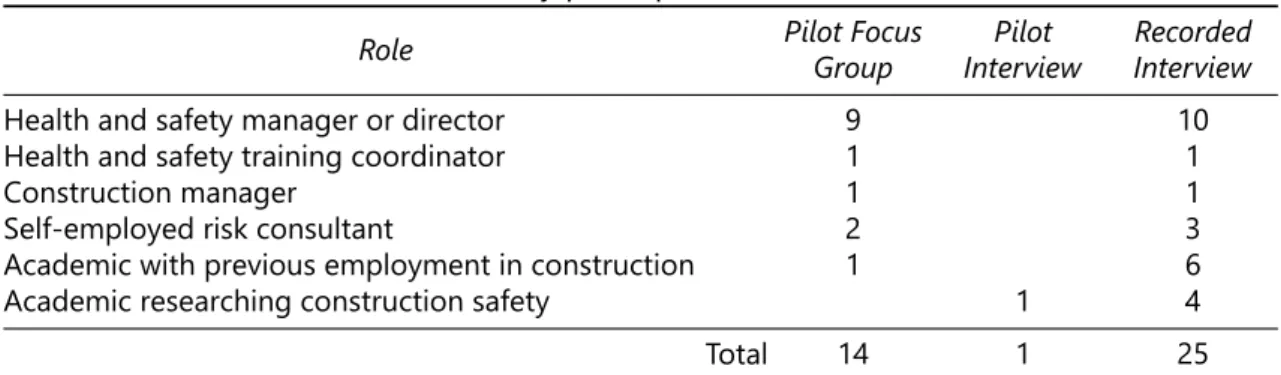
5.2 Method 82 5.2.1 Participants 82 5.2.2 Data collection 83 5.3 Data analysis 83 5.4 Findings 84 5.4.1 Safety leadership 84
5.4.2 Construction workers’ attitudes towards risk 92
5.4.3 A healthy attitude to risk 95
5.4.4 Resilience 98
5.4.5 Freedom 100
5.5 Discussion 102
5.6 Conclusion 105
6 Construction as a Complex System 107
6.1 Introduction 107
6.1.1 Systems thinking in construction 108
Contents xi
6.2 Method 110
6.3 Data analysis 110
6.4 Findings 110
6.4.1 Hazards in construction 110
6.4.2 The wider challenges of managing risk 117
6.5 Discussion 119
6.5.1 Worker traits and their systemic origins 119
6.5.2 Summary of findings 124
6.5.3 Systemic causes of risk in construction 125
6.5.4 Recommendations and future work 128
6.6 Conclusion 129
7 Adaptive Safety in Practice I 131
7.1 Introduction 131
7.1.1 The organisation of this chapter 132
7.2 The projects 132
7.3 The case study 133
7.3.1 Data collection 134
7.4 Data analysis 135
7.5 Findings and discussion 135
7.5.1 Why ‘Safety Differently’? 136
7.5.2 The ‘Next Gear’ vision 138
7.5.3 Impact on the business 147
7.5.4 Enabling factors 149
7.6 Conclusion 151
8 Adaptive Safety in Practice II 153
8.1 Introduction 153
8.1.1 The organisation of this chapter 154
8.2 Frontline operatives 154 8.2.1 Communication 154 8.2.2 Collaboration 156 8.2.3 Trust 157 8.3 Safety leadership 159 8.4 The client 162 8.5 Industry 165 8.5.1 Regulators 165 8.5.2 Structure 166 8.5.3 Culture 169 8.6 Conclusion 170 9 Discussion 171 9.1 Introduction 171
9.2 Challenges and facilitators of Safety Differently 171
9.3 The role of safety leadership 176
9.4 Challenges 176
9.4.1 The ethical concerns 176
9.4.2 The substitution of engagement for safety 177
9.5 Antecedents of Adaptive safety 177
9.6 The interdependence of traditional and Adaptive safety 179
9.7 Conclusion 180
10 Conclusion 181
10.1 Introduction 181
10.2 Summary of thesis findings 181
10.2.1 Adaptive safety and construction 181
10.2.2 Safety leadership to cultivate resilience 182
10.2.3 Compatibility with construction 182
10.2.4 Implementing Safety Differently and its impact 183
10.3 Final conclusion 183
10.3.1 Original contribution 184
10.4 Limitations 184
10.5 Future work 185
Positioning the research 187
Appendices 189
A Coding structure sample 191
B Case study participants 193
Figures
1.1 The ages of safety 2
3.1 Leadership theories through history 41
3.2 Conceptual model of Safety Intelligence 50
4.1 Documents and observations 75
5.1 Traits of safety-conscious leaders 86
5.2 Behaviours of safety-conscious leaders 89
5.3 Risk-tolerance versus risk-awareness of different attitudes 95
5.4 A healthy attitude to risk in construction 96
5.5 Behaviours of a resilient workforce 99
5.6 Safety leadership and culture maturity model 103
6.1 The ConCA model 109
6.2 Tree diagram of the intrinsic hazards of construction processes 111
6.3 Tree diagram of factors which can cause workers to trade-off safety 116
6.4 Factors contributing to construction workers’ lack of engagement 120
6.5 Factors contributing to construction workers’ lack of communication 121
6.6 Factors contributing to construction workers’ low competence levels 122
6.7 Factors contributing to construction workers’ high risk-tolerance 124
6.8 ConCA+ 126
6.9 Tree diagram of the ConCA+ data 127
7.1 The cases and units of analysis in relation to the River Thames 134
7.2 The roles of case study participants 135
7.3 A conceptual framework illustrating how safety strategy influences stakeholders136
9.1 Vicious and virtuous cycles in management and worker attitudes 176
9.2 Industrial and organisational factors that support a resilient frontline response 178
9.3 A continuum between traditional and Adaptive safety 179
Tables
1.1 A comparison of Safety I and Safety II 5
2.1 Barriers and opportunities of Adaptive safety’s management principles 19
2.2 Barriers and opportunities of Adaptive safety’s organisational principles 24
2.3 Barriers and opportunities of Adaptive safety’s worker-centred principles 29
2.4 Contrasts between Adaptive safety and construction 33
2.5 Opportunities for construction from Adaptive safety 35
3.1 Comparison of competences for influencing safety 51
3.2 Comparing Safety Intelligence in ATM and construction 55
4.1 Interview questions 72
4.2 Interview questions 72
4.3 Interview questions 77
5.1 Study participants and their roles 83
5.2 Construction workers’ attitudes to risk 94
6.1 Demographics of the construction workforce seen to exacerbate risk-taking 113
6.2 Originating, shaping, and immediate factors which make managing risk difficult118
9.1 The modified SWOT-TOWS pro forma 173
9.2 The strengths and challenges of Next Gear at LOR 174
B.1 LOR management participants 193
B.2 Crossrail TCR participants 193
Abbreviations
AI appreciative inquiry
ARCOM Association of Researchers in Construction Management
ATM air traffic management
CDM construction design and
management
CEO chief executive officer
CIEHF Chartered Institute of Ergonomics and Human Factors
ConCA contributing factors in construction accidents
CSCS Construction Skills Certification
Scheme
CSO combined sewer overflow
EQ emotional intelligence
ETTO efficiency-thoroughness trade-off
FLO Ferrovial Agroman and Laing
O’Rourke
FSR fatal and severe risk
HF human factors
HFE human factors engineering
HRA human reliability analysis
HTA hierarchical task analysis
HRO high reliability organising
HSE health and safety executive
HSW health and safety at work act
i3P infrastructure industry innovation
platform
IEA International Ergonomics
Association
IOSH Institute of Occupational Safety and
Health
JCS joint cognitive systems
KPI key performance indicator
LMX leader-member exchange
LOR Laing O’Rourke
NAT normal accident theory
NDM naturalistic decision making
NEBOSH National Examination Board in Occupational Health
OSH occupational safety and health
PPE personal protective equipment
PPP public-private partnership
PvA planned versus actual
RCT rational choice theory
RE resilience engineering
RI requisite imagination
SARF social amplification of risk
SMS safety management system
SSM soft systems methodology
STS sociotechnical system
SWOT strengths weaknesses
opportunities threats
TCR Tottenham Court Road station
TTT Thames Tideway Tunnel
UCATT Union of Construction, Allied Trades and Technicians
WYLFIWYF what you look for is what you find
1
Introduction
Contents
1.1 The landscape of safety 1
1.1.1 Systems safety and ergonomics 2
1.1.2 Understanding causation 3
1.2 The Adaptive age 4
1.3 The challenges of construction 5
1.3.1 Plateauing accident rates 6
1.3.2 The divorce of safety from operations 6
1.3.3 Behavioural safety programmes 7
1.4 Problem statement 8
1.5 Aims and objectives 8
1.6 Thesis overview 8
1.1
The landscape of safety
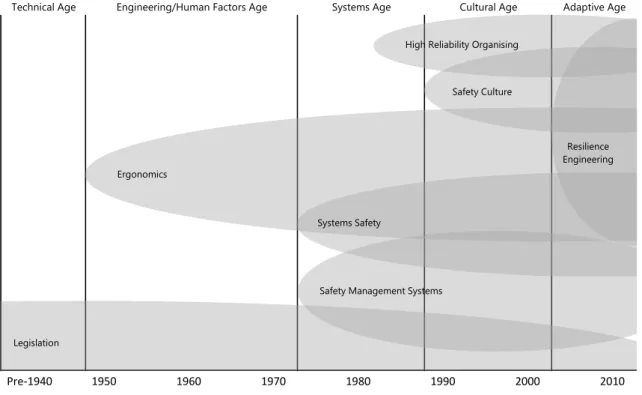
Since the introduction of theHealth and Safety at Work etc. Act (1974, c. 37), the past 45 years have seen the devolution of occupational safety and health (OSH) — shifting responsibility from the government’s factory acts, to organisational safety management systems (SMSs), and to teams within organisations. Safety has been described as pro-gressing through a series of ages, each distinguished by its emphasis on different aspects of the system. There are multiple accounts of these ages: Hale and Hovden (1998) proposed a Technical age, Human Factors age, and Management systems age; while Reason (1997), the Person, Engineering, and Organisational safety models; and Hudson (2007), waves of Technology, Systems, and Culture.
Contemporary safety has been described as the ‘fifth’ or ‘Adaptive’ age of safety (Borys, Else and Leggett 2009). Vincent, Burnett and Carthey (2013, p. 21) describe six conceptual approaches to safety which show how the Adaptive age has evolved from systems safety in the 1970s.
• Safety as defences in depth (James Reason)
• Systems safety (James Reason and Charles Vincent) • High reliability theory and safety (the Berkeley group)
• Safety as collective mindfulness (Karl Weick and Kathleen Sutcliffe) • System dynamics and safety (René Amalberti)
• Safety as resilience (Erik Hollnagel and David Woods)
(Vincent et al. 2013) This era encompasses high reliability organising (HRO) and emerging theories of resilience engineering (RE) and ‘Safety Differently’ (Dekker 2017a). It encourages a holistic view of jobs, work, and systems (Hale and Hovden 1998, Wilson 2014) and a humanistic view — seeing people as a valuable source of responsiveness and resilience rather than a liability to be constrained, and focussing on ensuring safe operations, rather than preventing unsafe ones (Hollnagel 2008, Hollnagel 2014).
The five ages are illustrated alongside the associated safety approaches in the timeline in Figure 1.1.
Technical Age Engineering/Human Factors Age Systems Age Cultural Age Adaptive Age
Legislation
Safety Management Systems Systems Safety
Ergonomics
Safety Culture High Reliability Organising
Resilience Engineering
1950
Pre-1940 1960 1970 1980 1990 2000 2010
Figure 1.1: The ages of safety based on Waterson et al. (2015)
1.1.1 Systems safety and ergonomics
Progress through the ages of safety has been driven by milestone events, the growing com-plexity of sociotechnical systems (STSs) (Reason 1997) and scientific insights into human performance and error. In the early 20thcentury the human factor was defined as“Mental,
physical and moral shortcomings that predispose a person to accident”(Dekker 2015).
Acci-dents of the Industrial Revolution were primarily blamed on accident-proneness or a lack of attention, and factory inspectors were only interested in accidents“with technical causes,
since others could not reasonably be prevented”(Hale and Hovden 1998, p. 129).
The emergence of ergonomics in the 1940s shifted the focus away from so called
1.1. The landscape of safety 3
research regarding human capabilities and limitations to the design of tools, tasks, jobs and environments human error could be mitigated (IEA 2018). Early ergonomics resem-bled scientific management, decomposing tasks using hierarchical task analysis (HTA) and integrating tasks and operators (human factors engineering (HFE)) to improve efficiency.
STS theory developed in the 1950s and originally focussed on the impact of technology at work, but has since been applied to risk, health, safety, and accidents (Waterson et al. 2015). This era introduced naturalistic and contextualised approach to human error“to provide a ‘holistic’ assessment of work–system interfaces and to capture the interaction between
these”(Waterson et al. 2015). Rather than mitigating errors, STS sees humans as assets
and technology as a tool — emphasising quality of life and respect for individual differences (Eason 2008, Read, Salmon, Lenné and Stanton 2015).
There is growing interest in how social processes of organizing, wider socio-cultural considerations, and the situated production of safety can contribute.
(Turner and Gray, 2009, p. 1259) The role of social and cultural factors in accidents, as well as political, economic, leg-islative and regulatory influences, has been recognised for 40 years (Pidgeon and O’Leary 2000, Turner 1978). Fundamental to an STS approach to risk management is the belief that accidents“are not only caused by direct physical events, nor by human errors alone. They have their roots in organisational settings and in the sociotechnical system companies are
ac-tive in”(Swuste 2008). A systems ergonomics approach advocates considering the role of
humans in accidents while taking account of context, interactions, complexity, emergence and alternative perspectives (Wilson 2014). This systemic view has liberated workers from fear of blame and punishment, and the concept of ‘accident-proneness’ is now regarded as politically incorrect, unethical, and legally questionable (Dekker 2015).
1.1.2 Understanding causation
Each of these eras has brought with it a new understanding of accident causation. Hein-rich’s 1931 Domino Theory (Heinrich, Peterson and Roos 1980) conveys a linear chain of events resulting from a root cause. In the 1980s, complex or systemic accident models were introduced: These were based on the theory that accidents were caused by the interaction of multiple failures, some of which lie dormant in the design for many years (Reason 2000). Both these historical perspectives suppose that accidents are caused by technical mal-functions or human failures. Conversely, contemporary perspectives understand accidents as an emergent consequence of performance variability which can interact in unexpected ways with other functions (Hollnagel 2012, Hollnagel 2009). These dynamic, non-linear interactions mean even the ‘safest’ organisations are vulnerable to highly improbably ‘black swan’ (Taleb 2008) events.
Below, Pariès and Amalberti (2000) describe the way in which accident causation is perceived has changed between 1960s and 1990s. This model has been updated with most recent two decades.
• 1960s: Accidents are the result of individual human errors due to a lack of skill
• 1970s: Accidents are the result of individual human errors due to a lack technical proficiency
• 1980s: Accidents are the result of crew errors e.g. ‘team synergy failures’ and poor resource management
• 1990s: Accidents are the result of multiple organisational failures that shape frontline actions
• 2000s: Accidents are the result of complex interactions between organi-sational factors
• 2010s: Accidents are the result of normal performance variation
(Based on Pariès and Amalberti 2000)
1.2
The Adaptive age
As traditional models of accident causality (and thus risk management) are questioned, researchers and practitioners are turning towards methods which emphasise resilience and empowerment over control and compliance. The past ten years have seen growing interest in organisational resilience and how this can be developed within organisations (Hollnagel and Woods 2006).
Safety-critical sectors are seeing important changes in the way safety is managed — moving towards a less calculative approach that no longer depends upon identifying and eliminating a ‘root cause’. This enlightened approach recognises rigid procedures can prime inappropriate responses (Bieder and Bourrier 2013); unrealistic targets such as
‘zero accidents’suppress incident reporting and breed scepticism (Long 2012, Sherratt and
Dainty 2017); and risk aversion or“striving for a utopia”can stifle creativity and learning (Sherratt 2016b, Dekker 2017b, Dekker 2018, Price, Bryman and Dainty 2004).
The move towards Adaptive safety has seen a paradigm shift in our understanding of the aetiology of accidents; the human contribution; and consequently the way in which risk is managed (Pariès and Amalberti 2000, Hollnagel 2008). These changes are described in Table 1.1 (Hollnagel 2014, p. 147).
1.3. The challenges of construction 5
Table 1.1: A comparison of Safety I and Safety II (based on Hollnagel 2014, p. 147)
Safety I Safety II
Definition of safety As few things as possible go
wrong
As many things as possible go right
Safety management principle
Reactive, respond when something happens, or is categorised as an unacceptable
risk
Proactive, continuously trying to anticipate developments and
events
Explanations of accidents Accidents are caused by failures or malfunctions
The purpose of an investigation is to identify causes and
contributory factors
Attitude to the human factor Humans are predominantly seen as a liability or a hazard
Humans are seen as a resource necessary for system flexibility
and resilience
Role of performance variability
Harmful, should be prevented as far as possible
Inevitable but also useful. Should be monitored and managed
The umbrella term ‘Adaptive safety’ is used throughout this thesis to describe this emerg-ing school within safety science which sees safety as created by more than formal rules and bureaucracy. There are many terms used for this age in the literature: HRO or Organisa-tional Resilience (Weick and Sutcliffe 2007), Safety II (Hollnagel, Wears and Braithwaite 2015, Hollnagel 2018), Safety Differently (Dekker 2017a), and Resilience Engineering (Hollnagel and Woods 2006). As well as encompassing these similar theories, Adaptive safety avoids the connotations of engineering as a ‘hard’ approach to systems, rather than a social one.
1.3
The challenges of construction
Construction is a unique industry: It has been characterised as an organic (Lingard and Rowlinson 2005), heterogeneous network of subcontractors who form temporary multiple organisations (TMOs) (Stringer, 1967) to produce unique projects. Employment is frag-mented, plans dynamic, and finances constrained (Lingard and Rowlinson 2005, Sherratt 2016b), and as such it is difficult to develop and invest in a long-term risk management strategy like permanent organisations are able to.
As a result, construction’s approach to risk management is one of control and compli-ance, aligning with a traditional Safety I philosophy (Hollnagel 2014). Research in con-struction safety has focused on technical aspects — accident statistics, causes, and costs (Zhou, Goh and Li 2015) — rather than taking a holistic STS approach (Haslam et al. 2005, Asilian-Mahabadi, Khosravi, Hajizadeh, Hassanzadeh-Rangi, Bastani and Behzadan 2014). In terms of preventing fatal injuries in construction sites, a Cochrane review found most interventions focus on workers’ knowledge, skills, or attitudes and motivation. There is
weak evidence that any of these interventions are effective (van der Molen, Lehtola, Lap-palainen, Hoonakker, Hsiao, Haslam, Hale, Frings-dresen and H 2012, van der Molen, Basnet, Hoonakker, Lehtola, Lappalainen, Frings-Dresen, Haslam and Verbeek 2018).
1.3.1 Plateauing accident rates
Fatality rates in construction are three times higher than the average across all industries — 1.94 per 100,000 workers compared to 0.46 across all sectors in the UK (HSE 2016) and 10.1 compared to 3.4 in the US (Bureau of Labor Statistics 2015). The sector contributes substantially to the total number of occupational fatalities worldwide: 31% in the UK (HSE
2014a), 18.9% in the US (NIOSH 2011), 20.9% in the EU-28 (Eurostat 2016), and 13.6%
in Australia (SWA 2013).
These statistics have improved significantly over the past century, yet progress has stalled in recent years (Bureau of Labor Statistics 2015, HSE 2014a). It remains the second most dangerous industry — recording around 40 fatalities each year and costing the UK economy £1.1 billion (HSE 2014a). Dekker and Pitzer (2016) claim traditional forms of safety will never reduce accidents to zero because the methods themselves overcomplicate matters and draw focus onto trivial risks, leaving organisations vulnerable to catastrophic and unpredictable accidents.
1.3.2 The divorce of safety from operations
SMS have been a significant part of risk management since the Three Mile Island accident in 1979 and have been growing in complexity to keep pace with developing technology ever since (Reason 1997). So-called “safety inflation” (Brown and Krauss 2014, p. 251) has resulted in cynicism: The UK’s liberal economic policies have fostered a strong regula-tory culture whereby sectors are increasingly focussed on“secondary risk management”(p. 59) — avoiding responsibility, blame, and financial penalties — rather than managing the risks of their primary activities (Power 2004). OSH has become about protecting vested interests, shirking responsibility, enhancing company image, and reducing common sense (Brown and Krauss 2014).
Criticism of the bureaucratisation (Bieder and Bourrier 2013, Dekker and Nyce 2014) and professionalisation of safety is growing (Provan, Dekker and Rae 2018). SMS have become “divorced from operations in the field … diverting attention away from what was
actually happening in the practical functioning of the plants”(Dawson and Brooks 1999 p.
200 cited in Smith 2016): They create a false sense of security (Amalberti 2013) and focus on the expected rather than the unexpected (Bieder and Bourrier 2013).
There is a pressing need to change attitudes within construction that safety manage-ment is a “bureaucratic burden”(p. 1333) that detracts from production and that risk is an inherent part of work (Swuste, Frijters and Guldenmund 2012). A discourse of engagement rather than enforcement is needed (Sherratt, Farrell and Noble 2013) to understand the gap between procedure and practice (Dekker 2006, Hollnagel, Woods and Levenson 2006).
1.3. The challenges of construction 7
1.3.3 Behavioural safety programmes
The influence of culture on safety was first recognised following the Chernobyl disaster in 1986 (INSAG 1991). Now, the critical role of safety culture (defined as“the product of individual and group values, attitudes, perceptions, competencies and patterns of behaviour that determine the commitment to, and the style and proficiency of, an organisation’s health
and safety management” (Health and Safety Commission 1993, p. 23)) has been widely
acknowledged in accident prevention (Feng, Teo, Ling and Low 2014). It is considered a validated construct and a robust predictor of outcomes (Zohar 2010) — once advocated as the“the best way to establish an intrinsically motivated workforce” (p. 1), reducing the need for enforcement and rewards to extrinsically motivate compliance (Hudson, Parker, Lawton, Verschuur, van der Graaf and Kalff 2000).
Although safety culture can be credited with bringing a social dimension to risk man-agement — drawing on psychology, sociology, anthropology and manman-agement (Feng et al. 2014) — the lack of a precise definition or clear understanding of culture has led to liberal use of the term, depriving the construct of its utility (Myers, Nyce and Dekker 2014).
It’s become an exasperation to me that culture is now used too extravagantly to explain almost anything. It’s used as a kind of shorthand for saying,“We don’t
know what’s going on, but it’s all about the culture,”as if somehow this is a great
insight.
(Dixon-Woods in Wachter 2017) Hudson (2007) describes an exemplary safety culture as one in which safe working
is “fully internalised” as a value and safe behaviour“fully integrated” into all work
activ-ities. Progression towards this requires increasing trust, accountability, and information flow (Westrum 1991); however,“what remains unclear is how organisations move from one
step on the ladder to another” (Borys et al. 2009). As a result, behavioural safety
pro-grammes aim to manipulate culture, viewing people as simply a“black box” (Geller 1993 in Guldenmund 2010) and tackling only the part of the iceberg above the water — observ-able behaviours, rather than the hidden interpretations, beliefs, assumptions and values beneath (Hall 1976).
Behaviour modification is overtly manipulative, potentially ignores internal needs and intrinsic rewards, and can be seen as a threat to individual dignity and autonomy. It can be viewed as a simplistic and transparent attempt at manipulation.
(Huczynski and Buchanan, 2007, p. 121) Disillusionment with the once promising concept of safety culture is growing (Sileby
2009, Guldenmund 2010, Long 2012, Sherratt and Dainty 2017, Dekker 2017b, Dekker
preventing learning, encouraging fraud, and infantilising workers — blaming and pun-ishing them for injuries and illnesses because of their“failure to practice individual
respon-sibility” (Grey 2009 cited in Dekker 2018). Furthermore, rewarding and reinforcing
be-haviours is resource-intensive; the results vary due to individual differences (Huczynski and Buchanan 2007); and public relations and superficial branding can overtake the real issues of OSH (Sherratt 2016a).
1.4
Problem statement
The plateau in accident rates and doubts raised about the efficacy of Systems and Cul-tural approaches mean construction’s safety strategy is in need of a rethink. New ap-proaches which promise to reduce paperwork and regulation should be welcomed within construction; however, the sector has remained untouched by Adaptive safety, and little is known about generalising this theory outside the safety-critical sectors in which it devel-oped (HSE 2011).
Systems safety research increasingly focusses on ultra-safe high-risk sectors which are vulnerable to rare but catastrophic accidents (such as plane crashes and explosions) and neglects hazardous work like construction. Hence, when translating this new philosophy into an industry like construction — which sees frequent, individual casualties — clashes arise. This growing disconnect between traditional OSH and the emerging ideas of Adaptive safety mean the latest developments in risk management are unsuitable for contexts where the need for innovation is greatest.
1.5
Aims and objectives
The aim of this thesis is to improve safety in construction by exploring how to operationalise Adaptive safety in this sector.
In order to achieve this, the antecedents and mechanisms of organisational resilience need to be understood. With a view to providing guidance on the best way to cultivate resilience, the objectives of this research are as follows:
• To appraise the underlying theory of Adaptive safety through the lens of construction. • To understand the factors which facilitate and hinder an Adaptive response by:
1. Exploring the role of safety leadership
2. Understanding the challenges of construction as a system 3. Observing Safety Differently in practice in construction
1.6
Thesis overview
1.6. Thesis overview 9
Emerging Concepts in Safety
This literature review critiques the principles of the Adaptive age of safety through the lens of the construction industry. There are many barriers which mean this fragmented net-work of litigious stakeholders and temporary organisations is not compatible — explaining why OSH and systems safety have diverged. A research agenda is proposed which empha-sises understanding individual or social aspects of safety.
Chapter 3
Safety Leadership in Construction
The second literature review looks in detail at safety leadership and how this creates resilience in high-risk sectors. Comparing the roles of ‘Safety Intelligent’ leaders from differ-ent industries shows how construction’s approach differs and where there are opportunities to improve. A vision of Adaptive safety leadership is proposed which will be compared with contemporary practice in Chapter 5.
Chapter 4
Methodology
The problems of viewing risk management as an absolute science have become clear. This chapter explains the importance of studying safety as a social process and justifies the use of qualitative methods — a interview study and a case study — to understand the role of leadership in creating resilience and safety.
Chapter 5
Safety Leadership for Resilience
A panel of expert interviewees contributed their views on best-practice safety leader-ship, attitudes to risk, and the potential for resilience (Objective 1). Findings show inter-personal aspects of safety leadership are already recognised as an important part of safety and many of these traits and behaviours — transformational leadership, delegation, trust, worker engagement — align with Adaptive safety.
Chapter 6
Construction as a Complex System
Although managers recognise the value of worker engagement, many aspects of con-struction as a system discourage and obstruct this. Applying a systems thinking approach to the interview data reveals how accidents at the frontline relate to the culture, structure, and governance of the sector (Objective 2). The findings are used to expand Haslam et al.’s (2005) contributing factors in construction accidents (ConCA) framework.
Chapter 7
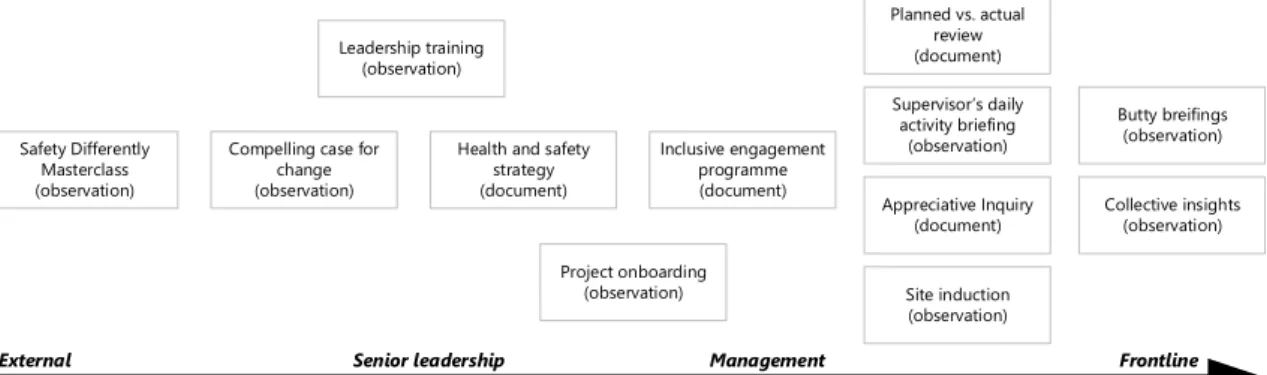
The first part of this case study discusses how Laing O’Rourke have interpreted, adapted, and implemented Dekker’s (2017a) Safety Differently and the rationale behind their deci-sions. Their toolkit of collaborative, streamlined, and flexible procedures is examined; how these have been received; and their impact on the business.
Chapter 8
Adaptive Safety in Practice II
Proactivity, relationships, communication, and job-satisfaction are improving as Safety Differently has been cultivated and allowed to evolve. The second part of this case study dis-cusses the role of stakeholders in diffusing or diluting this innovation (Objective 3). Aspects of the company, project, and London’s megaproject ecology have meant Laing O’Rourke has been uniquely well-equipped to make this transition, but the sector’s pace of change and persistent culture have been challenging.
Chapter 9
Discussion
This chapter reflects back on the Adaptive safety movement and discusses its compati-bility with construction. It questions whether resilience — which relies on organisational learning — is suited to a dynamic network; if empowering workers addresses construction’s blame culture; and the degree to which a more traditional version of safety (procedures, competence, experience, and compliance) is better suited to this sector.
Chapter 10
Conclusion
This thesis contributes an improved understanding of the mechanisms of Adaptive safety and the factors which support and hinder its successful operationalisation. The concluding chapter summarises the its insights into Adaptive safety, limitations, and areas for further research.
2
Emerging Concepts in
Safety
Contents
2.1 Introduction 11
2.1.1 The organisation of this chapter 12
2.2 Comparing HRO and RE 12
2.2.1 Origins and traditions 12
2.2.2 Perspectives on core concepts 13
2.2.3 Approach to measurement and validation 13
2.3 Key principles 14
2.3.1 Risk management principles 14
2.3.2 Organisational principles 20 2.3.3 Worker-centred principles 25 2.4 Discussion 30 2.4.1 Summary 33 2.5 Research agenda 34 2.6 Conclusion 35
2.1
Introduction
This chapter reviews two of the most influential approaches in contemporary safety sci-ence — high reliability organising (HRO) and resilisci-ence engineering (RE). Although these stem from different traditions; use different methods; and take different stances on risk, both HRO and RE share a focus on social aspects of safety and coping with complexity (Haavik, Antonsen, Rosness and Hale 2016). Their principles form the foundation of Borys et al.’s (2009) ‘Adaptive’ safety movement, promising a move away from bureaucracy and a means to manage safety without sacrificing performance.
Efforts to apply these ideas outside the ultra-safe sectors within which they developed have so far been limited (HSE 2011). In this chapter the construction industry is used as a test case to explore the applicability of HRO and RE in a less highly regulated context. Contrasting construction with the environments in which HRO and RE have previously been studied (organisations with permanent, stable structures, and a clear purpose) provides an interesting lens through which to explore their potential and how these theories would need to be adapted to fit another context. This discussion highlights research gaps which have limited the expansion of these approaches in new sectors and perpetuated the disconnect between occupational safety and health (OSH) and systems safety.
There are many aspects of the construction sector — project-based organisations, tran-sient workforce, widespread outsourcing of labour, and financial pressure — which prevent it developing capabilities advocated by HRO and RE; however, there is potential for con-struction to incorporate their principles at an individual or worker-centred level rather than organisational. These opportunities offer a useful perspective for reframing safety debates in construction.
This work has been published as a journal article in Safety Science (Harvey, Water-son and Dainty 2016a) and as a conference paper (Harvey, Waterson and Dainty 2016b) which was presented at the conference of the Chartered Institute of Ergonomics and Human Factors (CIEHF) in Daventry.
2.1.1 The organisation of this chapter
Section 2.2 introduces HRO and RE, unpacking their different philosophies and metrics alongside the current state of safety research in construction to show how these nascent fields have diverged from traditional OSH. Section 2.3 explores implementing HRO and RE in construction to identify opportunities where elements of these concepts — their approach to risk management, organisational principles, and worker-centred principles — could be applied or adapted to improve safety. Section 2.4 draws out key themes, and Section 2.5 proposes a research agenda which highlights the need to extend and adapt aspects of HRO and RE in order to tackle some of the unique characteristics of construction.
2.2
Comparing HRO and RE
2.2.1 Origins and traditions
HRO theory developed in response to normal accident theory (NAT) (Perrow 1984), demon-strating that it is possible for some organisations to avoid “inevitable’ accidents”. By ob-serving organisations which operate successfully in“unforgiving environments”(Weick and Sutcliffe 2007, p. 164) (aircraft carriers, air traffic control, and a nuclear power plant) the qualities of organisational mindfulness, which enable these systems to cope, were identi-fied. Case studies have shown that high reliability organisations are characterised by their capacity to respond, learn, and feedback quickly through accurate communications, and their flexibility to improvise by recombining resources, skills and experience (Weick and Sutcliffe 2007). These traits demonstrate the presence of organisational mindfulness –
“a rich awareness of discriminatory detail and a capacity for action” (Weick, Sutcliffe and
Obstfeld 2008, p. 37) — which enables HROs to notice the unexpected developing, con-tain it, or act resiliently in the face of it. Theoretically, HROs respond to perturbations in ways that strengthen adaptability — increasing learning, flexibility, and experience — rather than reducing it by adding further controls (Sutcliffe and Vogus 2003).
One core principle of HRO is a commitment to“resilience”, a word which has recently appeared with increasing frequency in a variety of contexts — ecological, individual and
2.2. Comparing HRO and RE 13
engineering (Bhamra, Dani and Burnard 2011). RE in relation to safety grew out of ‘or-ganisational resilience’, a term which first appeared 20 years ago (Mallack 1998, Horne and Orr 1998), and described as the ability of an organisation to respond to change con-structively, without introducing regression. RE has been described as the natural next step in OSH following a highly developed ‘Interdependent’ (DuPont 2015) or ‘Generative’ (Westrum 1991) safety culture,“to overcome the limitations of existing approaches”(Woods and Hollnagel 2006, p. 11). Its new perspective — seeing human adaptability as an as-set — has been described as a significant step change (Hollnagel 2008); however, it can also be seen as a continuation of the work of human factors (HF) researchers to design systems around human attributes (Wilson 2014). This emerging field has yet to develop a clear definition of its theory and limits making it difficult to draw comparisons with the clear framework of HRO.
2.2.2 Perspectives on core concepts
In spite of their different origins, there are similarities between HRO and RE. Both emerged in response to the limitations of procedures and regulation to manage safety in complex systems, and both emphasise the human attributes — adaptability, imagination, mindful-ness — which enable people to act resiliently and perform in circumstances where failure is expected. However, attempts to reconcile HRO with other high-risk safety approaches under the umbrella of RE (Hollnagel et al. 2006) have had limited success because of their different philosophical foundations.
One explanation for this disparity is their differing perspectives on what constitutes organisational resilience. In HRO’s model of organisational mindfulness, ‘commitment to resilience’ is categorised as a principle of containment, not anticipation. ‘Firefighting’ (re-acting to emergencies as they arise) in high reliability organisations is seen as a positive trait and evidence of resilience (Weick and Sutcliffe 2007) — something which, in other organisations, is seen as a symptom of poor planning and reactive management. Resilience engineers do refer to the work of HRO-scholars (Hollnagel 2014), incorporating organisa-tional mindfulness, whether or not this is true to Weick’s original concept, as one part of RE’s toolset of safety measures which can“facilitate the emergence of resilience”(Hollnagel and Sundström 2006). Within RE resilience forms part of both anticipation and response — intrinsically linked as organisations adjust“prior to, during, or following changes”(Hollnagel and Fujita 2013, p. 13), whilst in HRO resilience is seen as the reaction to an incident, with a greater emphasis on ‘bouncing back’.
2.2.3 Approach to measurement and validation
In terms of auditing resilience and HRO, measurement scales for HRO have been developed (Vogus and Sutcliffe 2007), but a literature review by the health and safety executive (HSE) (HSE 2011) criticised the lack of quantitative evidence supporting the predictive validity of organising in this way and safety performance. The majority of research was said to
be observational and qualitative, providing rich descriptions of the qualities of these or-ganisations, but lacking a theoretical framework to justify why HROs succeed where other organisations fail.
Similarly for RE, research is needed in terms of real-world empirical methods to vali-date its constructs (Burnard and Bhamra 2011, Sutcliffe and Vogus 2003, Hollnagel 2018). Hollnagel and Woods (2006) state that resilience cannot be measured, only an organi-sation’s capacity for it through variables such as buffering capacity, the flexibility of its structure, awareness of proximity to margins, and tolerances enabling graceful degrada-tion (Woods 2006). The characteristics of a resilient organisadegrada-tion are less well-defined than high reliability organisations, but the RE community believes any organisation can become resilient, with different industries managing stability and flexibility in different ways (McDonald 2006). Therefore, RE could offer valuable opportunities to expand the well-intentioned ideas of HRO to suit other contexts, but as yet further work is needed to understand the factors that facilitate the development of both resilience and mindfulness. The following sections will compare concepts of HRO and RE through the lens of the construction industry, focussing on three areas: Their approach to risk management; char-acteristics of the organisation; and individuals or workers.
2.3
Key principles
2.3.1 Risk management principles
Barriers
Construction accidents
One of the greatest barriers to adopting HRO in new sectors is the belief that HRO is only applicable in safety critical industries. In construction, workers believe that“safety detracts
from the primary production process” (Swuste et al. 2012, p. 1333). This is true in some
sectors such as rail, where unforeseen hazards frequently lead to delays or cancellations
(Hale and Heijer 2006b); however, both RE and HRO emphasise maintaining performance
and safety simultaneously — the key to safe performance without sacrificing reliability is resilience. Reason’s Organisational safety model deliberately blurs the line between quality and safety, as safe operation is an integral part of performance as a whole (Reason 1997). This is particularly true in the safety-critical industries where HRO developed. The synony-mous use of ‘safe’ and ‘reliable’ implies high-reliability is only attainable by organisations where safety is the primary focus — a view which underlies the conceptual barrier to apply-ing this theory elsewhere and one which has kept HRO from integratapply-ing into construction (olde Scholtenhuis and Dorée 2014). However, Weick and Sutcliffe (2007) intend their work as a template for“any institution that wants to better organise for high reliability”.
Neither HRO nor RE promise zero accidents, but rather a reduced probability in terms of the number of encounters. In circumstances where the risks are high, it is possible for an
2.3. Key principles 15
organisation to be described as resilient even if it has accidents (Hollnagel 2014). Similarly, if the risks are low, an organisation may be safe without needing to be resilient (Hale and
Heijer 2006a). The high number and type of accidents faced by construction compared
to ultra-safe organisations may explain one of the differences that prevent HRO and RE being applied more widely. Although construction is high-risk, the concern here is the high level of personal injury incidents, whereas HRO and RE have developed in safety-critical sectors — such as nuclear and aviation — with the potential to cause harm to third parties (Reason 1997). The prevalent causes of death in construction are falls from a height (30%), slips, trips and falls on the level, being struck by a moving vehicle (Haslam et al. 2005) and electrocution (HSE 2014a).
Accidents therefore become intolerable on account of their consequences rather than their frequency … 100 isolated, singular deaths may have far less emo-tional impact than 10 deaths in a single event.
(Amalberti 2006 p. 269) The social amplification of risk (SARF) describes how some risks are amplified by so-cial, psychological, and cultural factors (Kasperson, Renn, Slovic, Brown, Emel, Goble, Kasperson and Ratick 1988). Although the majority of occupational fatalities occur due to construction accidents, they are“isolated” events, so the risk is socially“attenuated” and research has been diverted to focus on sectors with greater risk of harm to the public and which generate more political and media interest. However, construction is not immune to causing collateral deaths: 4 members of the public died in UK construction accidents in 2014 (HSE 2014a), the collapse of the Rana Plaza textile factory in Bangladesh killed 1,134 people (The Guardian 2015), and corners cut in the renovation of Grenfell Tower led to the deaths of 72 people (Grenfell Tower Inquiry 2018). Reason (1997) argues risks to third parties are high across all sectors because, despite differences at the frontline, they are equally threatened by latent problems of planning, scheduling, and budgeting which contribute to major accidents. For HRO and RE to benefit construction, the similarities between accidents in safety critical sectors and those in construction need to be embraced.
Opportunities
Accident causation
Before the age of systems safety, accidents were believed to have a root cause — a technical malfunction or individual failure on which events could be blamed. This simplistic model is emotionally satisfying and has legal and financial benefits (Reason 1997), but can fail to appreciate the complex relationships between causes and consequences. Within con-struction this tendency towards simplifying situations to find a root cause can be seen in contemporary accidents (Clegg and Kreiner 2014). The prominence of the ‘Zero Accidents’ discourse also confirms this model. Using propaganda to manipulate workers’ attitude
to safety demonstrates the belief that accidents could be prevented with more effort or care (Dekker 2015). Swuste et al. (2012) argue a better understanding of causal chains is needed to improve construction safety; however, given the loosely coupled structure of construction organisations, it can be difficult to identify and learn from causal links and to accept a lack of accidents as proof of good practice (Clegg and Kreiner 2014).
Accidents in HRO are described in causal terms, as the result of an unfortunate com-bination of a number of errors; hence, detecting failures as they develop through sensi-tivity to weak signals is advocated (Weick and Sutcliffe 2007). However, this simplistic understanding of accidents has been criticised for endorsing the idea that accidents can be prevented by paying more ‘mindful’ attention to precursor events (HSE 2011). Based on this interpretation, risk analysis depends upon the systematic identification of causal chains and implies safety is a static commodity that can be quantified, not a dynamic pro-cess. Projects, like those in construction, have been described as “drifting environments” (Kreiner 1996, p. 335), where the outcome changes over time, thus RE’s notion of drifting accidents offers a different perspective on accidents investigation (Hollnagel 2009) which could be better suited to loosely coupled systems than exploring causal chains and looking for pivotal failures. For RE, safety is a dynamic process, human behaviour cannot be cate-gorised in a bimodal way and the causes of accidents are far more subtle and complex — nothing worth reporting happens (Hollnagel 2009). Instead, accidents are caused by an undetectable “drift into failure”(Hale and Heijer 2006b, p. 37) which is a natural part of operations in resource-constrained environments.
RE scholars argue a causal model cannot cope with complex relationships (Hollnagel 2009) and unexpected failures (Hollnagel 2014) — only predictable cases where data can be reliably assessed — and is hindered by a form of confirmation bias Lundberg, Rollen-hagen and Hollnagel call what you look for is what you find (WYLFIWYF) (Lundberg, Rollenhagen and Hollnagel 2009). The efficiency-thoroughness trade-off (ETTO) princi-ple (the tendency to sacrifice thoroughness for efficiency) is key to understanding the ‘drift’ that means failure can develop out of normal behaviour. Humans have a natural tendency towards efficiency (Hollnagel 2009). Rational decision-making is also limited by context, subject to social and cultural factors (Perrow 1984), and constrained by finite cognitive re-sources so people“muddle through”making what they perceive to be“sensible adjustments
to cope with current and future situational demands” P.149 (Hollnagel 2014). In many
cases, this performance variability is a positive improvement, enabling more efficient ways of working, but the same variability can also lead to failures (Hollnagel 2009).
RE incorporates the ETTO into its understanding of accident causation, recognising that people instinctively make sacrificing decisions, or trade-offs, to cope with pressure; thoroughness is sacrificed for efficiency, safety is sacrificed for production. Instead, it is proposed that accidents are caused by functional resonance — an unexpected combination of everyday performance variability, or“ETTOing”, the consequences of which are emergent rather than resultant (Hollnagel 2009).
2.3. Key principles 17
Reanalysing construction accidents through the lens of RE’s functional resonance could provide a different perspective. Although trading off safety for production can lead to accidents, understanding that the workforce’s natural adaptability has the potential to strengthen the system, as well as weaken it, highlights the opportunity to harness for the benefit of safety. These theories of drift within performance and its effects, which can reverberate unpredictably throughout a system, present an interesting challenge to con-struction and HRO’s interpretation of accidents. Both these fields subscribe to the notion that accidents can be predicted and therefore prevented by promoting greater attention — or the vision of“zero accidents”in construction. However, according to RE, it is the efficient decisions which prevent accidents and maintain performance every day, as well as cause them when performance drifts outside the acceptable tolerance.
Anticipating accidents
Accidents in high reliability organisations are, by definition, extremely rare. They operate in environments which preclude learning by experimentation because of the dangers they face; therefore, little is said about how they learn from accidents. Instead, mindfulness encourages a focus on the present because — although past experience can be valuable — memory can draw attention away from current events and provoke generalised interpre-tations based on hindsight. This reactive approach to learning from accidents (or precur-sors of accidents), where feedback is immediately acted upon, could be beneficial in an industry like construction where factors needed for long-term learning — leadership, pro-cesses, infrastructure, communication, education and community (Chinowsky, Molenaar and Realph 2007) — are hindered by the dynamic and fragmented nature of temporary multiple organisations (TMOs).
HRO’s principle of ‘preoccupation with failure’ encourages members of the organisation to imagine potential mistakes, elaborate on near misses, and articulate the consequences — however distressing — so mitigations can be expanded (Weick and Sutcliffe 2007). Sim-ilarly, RE advocates the use of ‘Second Stories’ — looking for other potential outcomes of the events to avoid bias, hindsight, and oversimplification caused by knowing the real out-come (Hollnagel 2014). It also warns of the dangers of“distancing through differencing”or
the“it would never happen to us”attitude (Cook and Woods 2006) meaning people fail to
see the similarities between accidents in other organisations and events in their own, and therefore cannot learn from them. Both these theories have potential to enhance safety in construction.
Recently RE has put forward an approach to safety management known as ‘Safety II’ (Hollnagel 2014). Traditionally, safety (‘Safety I’) has focussed on what went wrong fol-lowing an accident; but under Safety II, a greater emphasis on the aspects that contribute to normal performance is encouraged; in order to learn from events they need to be frequent enough to make generalisations. In complete contrast with HRO, which advocates seeing the unique nuances of every event (Weick and Sutcliffe 2007), RE accepts that accidents
are difficult to learn from because they are rare, poorly understood, and difficult to make generalisations about. Instead, investigating everyday successes — such as human adapt-ability and positive performance variadapt-ability — can be seen as an investment in performance rather than safety (Hollnagel 2014).
Accident research in construction, as well as many other sectors, is hindered by a mis-taken belief that “the potential for learning is proportional to the severity of the incident” (Hollnagel 2014, p. 160). Hence, accident investigation is often confined to serious and fa-tal accidents (Hinze, Devenport and Giang 2006). Although it would be difficult to justify a shift in focus away from accidents (as advocated in Safety II) when they are a frequent occurrence, understanding accidents as emergent consequences of adaptations required to cope with pressure could reduce the propensity for blame, creating a just culture as advo-cated by both HRO and RE, and open up opportunities to embrace workers’ flexibility — seeing it as a form of resilience as opposed to disobedience.
Key differences between HRO and RE have been identified in their approach to risk management and their applicability to other contexts. Underpinning these differences is their understanding of the way in which accidents develop. HRO, like construction, takes a view that accidents are the result of a causal chain of errors, thus the precursors to accidents can be detected by paying mindful attention to cues in the present. RE is founded on the belief that accidents emerge from adaptations made to cope with pressure and the“drift” towards failure is unnoticeable. This disparity is reflected in the ways the two schools advocate anticipating accidents.
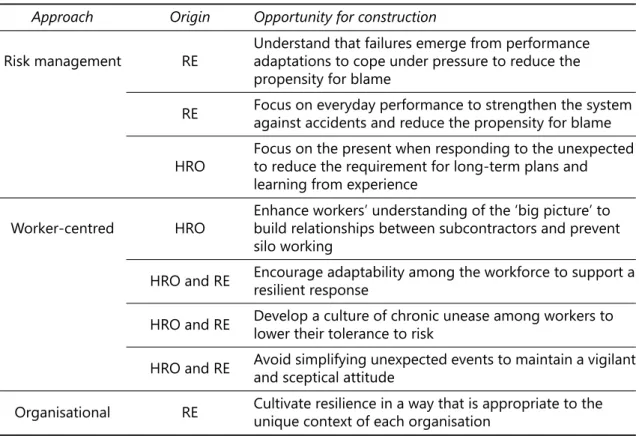
Table 2.1 lists the new concepts for risk management from the Adaptive age, whether they arose from HRO or RE, and summarises the positive and negative points from the evaluation of their potential application in construction.
2.3. Key principles 19 Table 2.1: Barriers and opportunities of Adaptive safety’s management principles Risk management principle Fr om HR O or RE B arrier s to application in construction Oppor tunities for application in construction Applicable to safety-critical industries where accidents are rare but catastrophic HR O Risks in construction are socially attenuated by high frequen cy and low fatalities-per-accident. Understand failures as the undetectable consequence of Functional R esonance (performance variability) RE The zero accident discourse and a culture of blame are prominent in construction, so constructs that challenge this are unlikely to be accepted Could be be tter suited to a loosely coupled industry where causal chains are difficult to identify Could counteract confirmation bias and propensity for blame when analysing accidents Accidents can be predicted and prevented by paying greater attention to precursors HR O Causal chains are difficult to identify in loosely coupled systems Implies workers are lazy, negligent, or careless Could bu ild upon ‘zero accidents’ which is popular in construction Focus on everyday performance RE Difficult to justify when accidents are a frequent occurrence Could prom ote se nsitivity to operations Could enable investment in performance and strengthening the positive aspects of a system, rather than preventive methods Focus on the pres ent when responding to une xpected e vents HR O Could reduce the requireme nt for long-term learning in a temporary organisation
2.3.2 Organisational principles
Barriers
Applicability to construction
As with its theories about risk management, HRO’s ideas about organisations have also meant it has not been readily embraced by construction. The type of organisation HRO is based upon is fundamentally different from construction work. NAT (Perrow 1984) ar-ranges organisations onto two axes, forming 4 quadrants, according to their characteristics.
“Coupling” (originally an engineering term) describes the capacity to absorb shocks and
failures. If an organisation is tightly coupled its processes are time-dependent, sequential and invariable — leaving little slack — so perturbations have a rapid impact. “Complexity” describes the interactions between components. In linear systems it is easier to substitute people and materials because roles are less specialised, information is directly monitored, feedback is local, and control can be decentralised. In complex systems the interactions may be invisible, unpredictable, indirectly measured, and connect multiple subsystems; therefore, perturbations have a widespread impact.
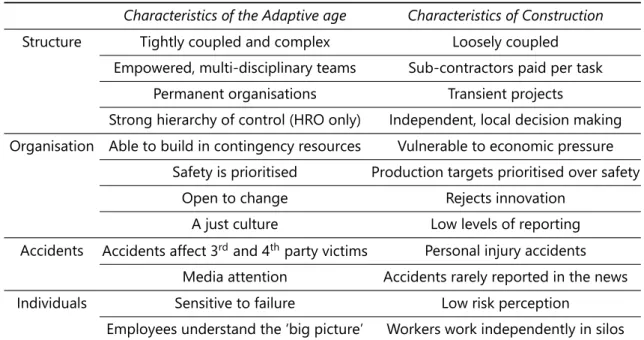
In organisations which are both tightly coupled and complex, failures have a rapid and widespread impact. HRO describes the characteristics needed for safe performance in this type of organisation. According to the NAT framework, construction is low risk because raw materials are assembled, rather than fabricated, and their processes are visible and can be understood; thus there are opportunities to learn from construction accidents. However, the growing popularity of megaprojects as a delivery model for public services (Flyvbjerg 2014) means managers must coordinate numerous subcontractor organisations, work to a tight schedule, and keep agreements with local stakeholders to minimise disruption. For example, details such as the sequence in which deliveries have been loaded onto a lorry can mean a delay of a few hours but have widespread repercussions over several months for multiple other contractors who cannot begin their work until prerequisite stages have been built (Walsh 2015). Although the industry as a whole is loosely coupled, projects and their supply chains have become increasingly tightly coupled and complex — a structure which Dubois and Gadde (2002) describe as a two-layered pattern of coupling. In light of the recent changes to the industry, the applicability of HRO’s principles in construction needs further consideration.
Structure
Under normal conditions high reliability organisations have an extremely hierarchical struc-ture with clear roles and responsibilities; redundancy; high levels of accountability, and expectations for following procedures and performance (Roberts and Rousseau 1989).