Universitas Muslim Maros Vol. 1 No. 1, Desember 2018, pp. 1-9 https://ejournals.umma.ac.id/index.php/seltics [email protected], p-ISSN: 2623-2642, e-ISSN: 2655-5417
THE USE OF PROBLEM BASED LEARNING (PBL) METHOD
IN TEACHING ENGLISH WRITING
Nurul Hidjrah Hairuddin1, Hamzah A. Machmoed2, Ria Rosdiana Jubhari3
1) 2) 3)
English Language Studies, Hasanuddin University, Makassar *1 [email protected] 2 [email protected] 3 [email protected]
ABSTRACT
The Use of Problem Based Learning (PBL) Method in Teaching English Writing at SMAN 5 Makassar. The aims of the research were to: (1) determine whether the use of the Problem Based Learning Method improves students’ writing skill, and (2) disclose the students’ perceptions regarding the implementation of the Problem Based Learning in teaching ‘Writing’. This research employed a quasi- experimental design. The subjects of the research were the eleventh grade students of natural science class and number of the sample was 52 students. The data were collected by utilizing two kinds of instruments, a test and questionnaire. The data were analyzed using SPSS version 20 and disclosed the frequency, mean score, normality test, and nonparametric test (Mann-Whitney U test and Wilcoxon test). The results of this research indicated that the use of the PBL method contributed to the students’ writing performance. The results of the Man-Whitney U test demonstrated a significant difference in terms of the mean score between experimental group treated using PBL method and controlled group without treatmet (14.44 > 10.25). In addition, Wilcoxon test showed the difference between the two groups (14.4 : 9.95). The results confirmed that the implementation of PBL method contributed to the students’ improvement of writing skills.The improvement was concerned with five components of writing, such as content, organization, vocabulary, grammar, and mechanics. Meanwhile, analysis of perceptional questionnaire indicated that the experimental group had positive perception on the use of PBL method.
Key words: PBL, Writing Skill, English Teaching Method
INTRODUCTION
In Indonesia, English language is obliged to be taught since junior high school up to university level. There are four skills that should be learnt by the students. Each of the four
skills: speaking, reading, listening, and writing is divided into verbal communication and written communication. Both of them are important, however, they are different. In written communication, the writer should consider
some aspects such as contents, vocabularies, rhetoric, grammatical structures and mechanics e.g punctuation and capitalization. On the other hand, in verbal communication, the grammatical structure is not necessary as long as the speaker and listener understand each other.
Harmer (2004) stated that writing is one of the most important skills in language learning. Being able to write is a vital skill for speakers of a foreign language as much as for every one using their own first language. Writing in English also becomes one of the most difficult skills to be learnt by students. The difficulty of writing lies not only in organizing ideas but also in translating the ideas into readable text (Richards & Renandya, 2002).
In the context of English language teaching as a foreign language, the teaching methodologies and pedagogies might become one of the important aspects that affect the English language teaching quality, especially in teaching English writing. Therefore, the methodologies and pedagogies in teaching need to be developed and changed continuouly and gradually. The method which provide students with an environment in which they are exposed to meaningful language in a real context are more acceptable, such as communicative learning method, project-based learning method, and the task-based learning method.
In teaching English writing at second grade of SMAN 5 Makassar, one of the basic
competences that should be taught is writing an analytical exposition text. Regarding the analytical exposition text writing, it has been found in the preliminary study that the students have not been aware of the patterns in writing that they have studied in the class. In the students’ writing, the discussion points of the main ideas is rarely given and there are long explanations of the ideas. Moreover, the students cannot conclude their writing in briefly and restate the content with appropriate expressions. Next, since the students have to search information before writing an analytical exposition text, the students will directly translate the the Indonesian texts into English text. As a result, there are some errors and mistakes in their writing. Obviously, every student will make mistakes in terms of both organization of writing and grammar which can lead to a miscommunication since the meanings of the writers cannot be accurately conveyed.
Recently, the Problem-based learning (PBL) method as an alternative and innovative teaching method has been introduced. PBL was first launched in the medical curriculum at McMaster University, Canada, in September 1969 (Rideuut & Carpio, 2001) . It is revolution in curriculum which using problems as stimuli for learning. PBL appears to bridge the gap between the theory and practice. In PBL, the core of learning is the problems. The students are discuss different cases and suggest possible solutions in group. This initiates autonomous learning which helps learners move from the
unconscious performance of a task to fully self-organized and lifelong learning (Gardner &Miller, 1996).
The history of PBL method development shows that this method has been mainly adopted and adapted in medical and other fields of study. In the field of English Language teaching, the use of PBL method study shows that it promotes the students into autonomous learners and enhances the students’ content knowledge while simultaneously fostering the development of communication, problem solving, and critical thinking. Although there are some clear research studies showing that PBL method is appropriate and could be implemented in teaching English as foreign language, it is worth conducting further research to find out whether this method can be used in all level of students, especially in senior high school students. In the present study, PBL has been considered as an innovative and alternative teaching method for language teaching, and it has been implemented in order to solve the problems in students’ writing. It is hoped that the students could acquire more language forms through the method which focuses on the learning process. If the students are involved in their own learning, such as setting their own learning objectives in solving problems, discussing their strengths and weaknesses in their writing with their friends, analyzing their own problems in writing, finding the best solutions to their own problems, and being able to correct their own
mistakes, the new knowledge which acquired in this way will be retained for a long period of time.
Thus, the focus of this research is the use of PBL method to enhance students’ writing skill especially in writing an analytical exposition text. This research aimed to find out whether the use of the PBL method can enhance students’ writing skill and to find out the students’ perceptions toward the implementation of the PBL method in teaching writing.
METHODOLOGY
Location and Research Design
This research applied a quasi-experimental design, consisted of two groups - experimental group with PBL method and controlled group without PBL method. Pretest and posttest were administered to both groups to obtain the data of the research. The PBL method was only implemented to the experimental group, meanwhile the control group was taught by using Task Based Learning method. This research took place at SMAN 5 Makassar, South-Sulawesi.
Population and Sample
The population of this study was the eleventh grade students of SMAN 5 Makassar (216 students). They were from natural-science class (IPA). All classes in the population have an equal chance of being chosen, thus the sample was selected randomly. They were XI IPA 1 and XI IPA 2, XI IPA 1 acted as the experimental
group and the XI IPA 2 was as control group. The number of sample was 52 students.
Method of Collecting Data
Data were collected using two instruments - test and questionnaire. The researcher administered the pretest to both experimental and control group, intended to measure the students’ prior knowledge in writing an analytical exposition text. The PBL method was only implemented in experimental group for four meetings, meanwhile there was no treatment implemented in control group. The posttest was administered after the treatment to both groups and intended to measure the students’ improvement in English writing. At last, the questionnaire was given to the experimental group to find out their perception toward the use of PBL method in learning English writing.
Technique of Analyzing the Data
Students’ writing performance was analyzed using Cohen (1994) writing scale. The students’ writing test was scored based on five aspects namely: content, organization, vocabulary, grammar and mechanics. It is obvious that the issue of being subjective appears in scoring the students’ writing. Therefore, the researcher used three raters who were the English teachers of SMAN 5 Makassar to score both students’ pretest and posttest. The percentage of the students’ score, mean difference between experimental and control group, the standard deviation, and the
significance different between experimental and control group was calculated using SPSS 20. Likert scale measurement was used to analyze the students’ perception toward the implementation of PBL method. The students responded to point scale ranging from the very positive as “Strongly Agree” to very negative response as “Strongly Disagree”
RESULTS
Students’ Pretest Score of Experimental and Control Group
The result of students’ pretest score of experimental and control group showed that the mean of the students’ score in the experimental group was 9.93 with Std. Dev. .77 in which the lowest score was 8.70, and the highest score was 11.70. Most students obtained 10.00. Meanwhile, the mean of students’ score in control group was 10.07 with Std. Dev. .317 in which the lowest score was 9.70, and the highest score was 10.70. Most students obtained 10.00.
Students’ Posttest Score of Experimental and Control Group
The students’ posttest score of experimental and control group result showed that after implementing PBL method in students’ experimental group, the mean of students’ score in experimental group was 14.44 with Std. Dev. 1.87 in which the lowest score was 11.30, and the highest one was 18.70. Most students obtained 14.30. Comparing to control group, the mean of
students’ score was 10.25 with Std. dev.547 in which the lowest score was 9.30, and the highest one was 11.30. Most students obtained 10.00.
Mean Score Difference of posttest between control and experimental group
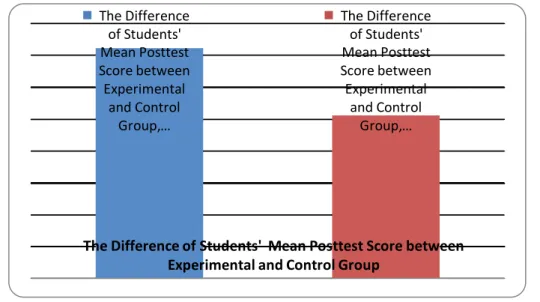
Figure 1 shows that the mean score for the experimental group is 14.44 while the mean score for control group is 10.25. It indicates that the experimental group performed better than that of the control group in terms of posttest. Normality Test
Table 1 shows that probability value (P) of pretest of the experimental and the control group based on Kolmogorov-Smirnov is less than 5% at the level of significance (.011<.05 and .000<.05). It signifies that the data are not distributed normally. Meanwhile, based on Shapiro-wilk in the experimental group, probability value (P) is greater than 5% at the level of significance (.131>.05), meaning that it is normally-distributed data. However, in the control group, probability value (P) is less than 5% at the level of significance indicating that the data are not distributed normally. It can be concluded that pretest data are not distributed normally. Hence, nonparametric is used covering Mann-Whitney U test to analyze for a statistically significant difference between both groups, and Wilcoxon Signed-Rank test to know a statistically significant difference of a pretest and a posttest in each group.
The Result of Mann-Whitney U Test
This test is to compare the mean score of two unrelated groups, the experimental and control group. Based on the result of the pretest of both experimental and control group, it showed that Z value was -1.314, and probability value (P) was greater than 5% at the level of significance (0.189 > 0.05). It signifies that H0 is accepted. In other words, there was
no significant difference of the students’ pretest score between experimental and control group.
The result of Mann-Whitney U test for posttest score of both experimental and control group showed that Z value was -6.205 and probability value (P) is less than 5% at level of significance (0.000 < 0.05). It indicates that H1
was accepted. In other words, there is a difference of posttest score between the experimental and the control groups.
The Result of Wilcoxon Test
This test is used to compare the mean score of the two related groups, that is between the pretest and posttest of the experimental and control group. The result of Wilcoxon test shows that Z value is -4,463 and probability value (P) is 0.000 < 0.05. It signifies that H0 is rejected or H1 is accepted. It means
that there is a significant difference between pretest and posttest of the experimental group. In other words, there is a significant improvement from pretest to posttest of the experimental group after implementation of
output of the test in control group shows that Z value was -1,641and probability value (P) was 0.101 > 0.05. It denotes that H0 is accepted. It
points out that there are no significant difference between pretest and posttest of the control group. In other words, there is no significant improvement from pretest and posttest in the control group.
Students’ perception of the use of PBL method to teach writing skill
The data obtained from the perceptional questionnaire showed that the students in the experimental group had a positive perception of the use of the PBL method to teach writing. The students appeared to be agreed that they performed better in terms of writing when PBL method was applied.
DISCUSSION
This research found that PBL method contributes to the enhancement of students’ writing skill. Specifically, enhancement of students’ writing skill encompasses the five components, such as content, organization, vocabulary, grammar and mechanics. Moreover, the students had a positive perception toward the implementation of PBL method.
The findings are indicated to be in partial accordance with the previous study Maulidiya (2014), which support that PBL method does improve the students’ performance in English writing. Maulidiya (2014) investigated the effects of using PBL method in students’ writing
performance at SMP Islam Sunan Gunung Jati Ngunut. She found that the students were more imaginative and feel free to express their idea into written text. It made them motivated to learn and they could improve their writing skills. The result of her study also showed that most students were quite interested in implementation of PBL method.
The pedagogical value of PBL includes exposing students to real-world challenges, higher order thinking skills, interdisciplinary learning, independent learning, information mining skills, team work and communication. During this self directed learning, students work together, discussing, comparing, reviewing and debating what they have learnt (Patrick, 2009). In the present research, it is found that students are generally interested in the using of PBL method. They analyze the problems, find solution and organize a trip to the site to obtain information for the assignment. As they engage in the activities, students retain information more effectively than studying from the textbook. The PBL method also plays a role in fostering collaborative learning because the students work in small group of four or five. The PBL method provides the complete involvement of the students in learning process. An unstructured problem initiates learning where new knowledge is formulated and constructed through collaborative learning. In this way, new knowledge will be retained in the students’ memory for a long time period. This is in line to what Tan (2003) states that the goals of PBL
method involve content learning, acquisition of process skills and problem solving skills, and lifelong learning.
As has been stated previously, there are many studies showing that PBL method is appropriate and could be implemented in all students’ level in teaching English writing. However, it is worth conducting further research to establish the suitability of this particular method. In the present research, the implementation of PBL method has improved students’ writing performance. Moreover, the researcher would like to admit that preparing the activities had not been as it looks. Some theories have supported this notion that preparing a writing class will consume more time. As cited in Brown (2001), the teacher needs to pay attention more on the writing process, not only concern about the writing that the students can produce but also how the students construct their writing.
In SMAN 5 Makassar, the students did not only learn to write in English, but also other language skill namely: reading, listening and speaking. The researcher only conducted the treatment for four meetings, while in using PBL method the teacher needs to give students more time to search information before discussing in group and write analytical exposition text. This view is not in line with Nunan (1989) who states that writing process as a complex, cognitive process which requires sustained intellectual effort within a period of time.
At last, the data obtain from the perceptional questionnaire strongly suggest that students of the experimental group have a positive perception toward the use of PBL method. Table 2 clearly showed that the biggest number of total score of students’ response which is 534.6 was attained from the students’ response of “Agreed”. This indicated that the students do agree that PBL method promote their writing performance. Each question from the questionnaire was determined to exemplify the second research question which is to find out the students perception toward the implementation of PBL method. The analysis revealed that the experiment method (PBL method) applied has enabled the students to develop a positive perception.
CONCLUSIONS AND SUGGESTIONS
This research has studied the use of PBL method in teaching English writing particularly in writing analytical exposition text. This study has proved that PBL method does improve students’ writing performance. Based on the findings and discussion on earlier part, conclusion and suggestion can be drawn. First, this study strongly suggested that the use of PBL method leads to the improvement of students’ performance in English writing. Second, positive comment that has been addressed by the students to the use of PBL method exaggerated the fact that there is no single method of teaching that is suitable to all types of learners and PBL method is one which
suggestions are given for further research. First, the researcher suggested more participants. The result of the research which was analyzed by utilizing the nonparametric test showed that the data were not normally distributed to only 52 students. Second, the type of the text used in this research is analytical exposition text. The researcher suggested that further replication should be applied in other type of text. At last, the focus of this research is solely on teaching writing and improving students’ writing performance. Further research and investigation is advised to integrate all the skills instead of focusing on one skill only. The result might expand the application of PBL method itself to be used in integrating skill-based classroom.
REFERENCE
Brown H. ( 2001). Teaching by Principles: and
Interactive Approach to Language
Pedagogy. New York: A Pearson
Education Company.
Cohen A. D. (1994). Assessing Language Ability in the classroom, 2nd ed. Boston: Heile and Heinle Publisher.
Gardner & Miller. (1996). Tasks for Independent
Language Learning. Illinois: Teachers of
English to Speakers of Other Languages, Inc.
Harmer. (2004). How to Teach Writing. Essex: Pearson Education Limited.
Maulidiya A. (2014). Using Problem Based Learning to Improve Writing Skillsof the Students of SMP Islam Sunan Gunung
Jati. Unpublish Thesis. Tulungagung. IAIN
Tulungagung.
Nunan D. (1989). Designing Tasks for the
Communicative Classroom. Cambridge:
Cambridge University Press.
Patrick P. (2009). Professional development that fosters classroom application. Modern Language Journal, 93, 280-287. Richards J. C. & Renandya W. A. (2002).
Methodology in Language Teaching:An
Anthology of Current Practice.
Cambridge: Cambridge University Press. Rideout, E. and Carpio, B., The Problem Based
Learning Model of Nursing Education. In:
Rideout, E. (Ed.), Transforming Nursing
Education through PBL. Boston: Jones
and Bartlett Publishers (2001)
Tan O.S. (2003). Problem-based Learning Innovation: Using Problems to Power Learning in the 21st Century. Singapore: Thomson Learning.
Figure 1 the Difference of students’ Mean Post-test Score between
Experimental and Control group
Table 1 Output of Normality Test of Pretest
Tests of Normality
Group Kolmogorov-Smirnova Shapiro-Wilk
Statistic df Sig. Statistic Df Sig.
Pretest Experimental ,197 26 ,011 ,940 26 ,131
Control ,240 26 ,000 ,861 26 ,002
a. Lilliefors Significance Correction
Table 2 The Percentage of students questionnaire
PERCENTAGE OF STUDENTS’ RESPONSES
Q number SA A H NA SNA No.1 30,8 65,4 3,8 0 0 No.2 42,3 57,7 0 0 0 No.3 42,3 50,0 7,7 0 0 No.4 38,5 53,8 7.7 0 0 No.5 26,9 61,5 11,6 0 0 No.6 30,8 69,2 0 0 No.7 42,3 46,2 11,5 0 0 No.8 34,6 50,0 15,4 0 0 No.9 50,0 42,3 7,7 0 0 No.10 57,7 38,5 3,8 0 0 Average 39,6 53,4 6,9 0 0 TOTAL 396,2 534,6 69.2 0 0 The Difference of Students' Mean Posttest Score between Experimental and Control Group, … The Difference of Students' Mean Posttest Score between Experimental and Control Group, …
The Difference of Students' Mean Posttest Score between Experimental and Control Group