Calhoun: The NPS Institutional Archive
Theses and Dissertations Thesis and Dissertation Collection
2016-03
Distance learning: the impact of not being a resident student
Fodor, James N.
Monterey, California: Naval Postgraduate School
NAVAL
POSTGRADUATE
SCHOOL
MONTEREY, CALIFORNIA
THESIS
Approved for public release; distribution is unlimited DISTANCE LEARNING: THE IMPACT OF NOT BEING
A RESIDENT STUDENT
by James N. Fodor
March 2016
Thesis Advisor: Marigee Bacolod
REPORT DOCUMENTATION PAGE Form Approved OMB No. 0704–0188
Public reporting burden for this collection of information is estimated to average 1 hour per response, including the time for reviewing instruction, searching existing data sources, gathering and maintaining the data needed, and completing and reviewing the collection of information. Send comments regarding this burden estimate or any other aspect of this collection of information, including suggestions for reducing this burden, to Washington headquarters Services, Directorate for Information Operations and Reports, 1215 Jefferson Davis Highway, Suite 1204, Arlington, VA 22202–4302, and to the Office of Management and Budget, Paperwork Reduction Project (0704–0188) Washington DC 20503.
1. AGENCY USE ONLY
(Leave blank)
2. REPORT DATE March 2016
3. REPORT TYPE AND DATES COVERED Master’s thesis
4. TITLE AND SUBTITLE
DISTANCE LEARNING: THE IMPACT OF NOT BEING A RESIDENT STUDENT
5. FUNDING NUMBERS
6. AUTHOR(S) James N. Fodor
7. PERFORMING ORGANIZATION NAME(S) AND ADDRESS(ES) Naval Postgraduate School
Monterey, CA 93943–5000
8. PERFORMING
ORGANIZATION REPORT NUMBER
9. SPONSORING /MONITORING AGENCY NAME(S) AND ADDRESS(ES)
N/A
10. SPONSORING / MONITORING AGENCY REPORT NUMBER
11. SUPPLEMENTARY NOTES The views expressed in this thesis are those of the author and do not reflect the official policy or position of the Department of Defense or the U.S. Government. IRB Protocol number ____N/A____.
12a. DISTRIBUTION / AVAILABILITY STATEMENT
Approved for public release; distribution is unlimited
12b. DISTRIBUTION CODE 13. ABSTRACT (maximum 200 words)
The existing literature suggests there are no significant outcome differences between online and traditional degree programs in the civilian sector. Few studies have looked for such differences within military schools and colleges, specifically. Given the growing popularity of online and distance education degree programs, we study the impact of this particular mode of instructional delivery on the academic and subsequent job performance of military officer students enrolled at the Naval Postgraduate School (NPS). Using propensity score matching, we estimate the effects that being a distance learning (DL) student has on four performance outcomes: grade point average, graduation, promotion, and separation. We further subdivide the sample into various subgroups based on military service branch, warfare community, academic preparation, and school within NPS to determine the heterogeneous effects of DL within each subsample. The DL students studied performed significantly worse than equivalent resident students on every measurement. We found NPS students enrolled in DL degree programs obtain GPAs approximately half a letter grade lower, are less likely to graduate, are less likely to promote, and are more likely to separate from military service than their NPS resident student counterparts. Given these results, it is imperative to conduct additional research to ascertain what makes distance learning inferior to residency at the Naval Postgraduate School.
14. SUBJECT TERMS
distance learning, TQPR, graduation, promotion, separation
15. NUMBER OF PAGES 81 16. PRICE CODE 17. SECURITY CLASSIFICATION OF REPORT Unclassified 18. SECURITY CLASSIFICATION OF THIS PAGE Unclassified 19. SECURITY CLASSIFICATION OF ABSTRACT Unclassified 20. LIMITATION OF ABSTRACT UU
NSN 7540–01–280–5500 Standard Form 298 (Rev. 2–89)
Approved for public release; distribution is unlimited
DISTANCE LEARNING: THE IMPACT OF NOT BEING A RESIDENT STUDENT
James N. Fodor
Lieutenant, United States Navy B.S., United States Naval Academy, 2008
Submitted in partial fulfillment of the requirements for the degree of
MASTER OF SCIENCE IN MANAGEMENT
from the
NAVAL POSTGRADUATE SCHOOL March 2016
Approved by: Marigee Bacolod
Thesis Advisor
Latika Hartmann Co-Advisor
William Hatch, Academic Associate School of Business and Public Policy
ABSTRACT
The existing literature suggests there are no significant outcome differences between online and traditional degree programs in the civilian sector. Few studies have looked for such differences within military schools and colleges, specifically. Given the growing popularity of online and distance education degree programs, we study the impact of this particular mode of instructional delivery on the academic and subsequent job performance of military officer students enrolled at the Naval Postgraduate School (NPS). Using propensity score matching, we estimate the effects that being a distance learning (DL) student has on four performance outcomes: grade point average, graduation, promotion, and separation. We further subdivide the sample into various subgroups based on military service branch, warfare community, academic preparation, and school within NPS to determine the heterogeneous effects of DL within each subsample. The DL students studied performed significantly worse than equivalent resident students on every measurement. We found NPS students enrolled in DL degree programs obtain GPAs approximately half a letter grade lower, are less likely to graduate, are less likely to promote, and are more likely to separate from military service than their NPS resident student counterparts. Given these results, it is imperative to conduct additional research to ascertain what makes distance learning inferior to residency at the Naval Postgraduate School.
TABLE OF CONTENTS
I. INTRODUCTION...1
A. SCOPE OF THIS THESIS ...2
B. RESEARCH QUESTIONS ...2
C. ORGANIZATION OF THIS THESIS ...3
II. LITERATURE REVIEW ...5
A. META-ANALYSES ...5 B. OBSERVATIONAL STUDIES ...7 C. RANDOMIZED STUDIES ...10 III. DATA/METHODOLOGY ...13 A. NPS DATA ...13 1. Sample ...13 2. Independent Variables...13 a. Treatment Indicator ...13 b. NPS Institutional Controls ...14 c. Academic Preparation...14
d. Service and Community ...15
3. Dependent Variables ...16 B. DMDC DATA ...16 1. Sample ...16 2. Independent Variables...16 3. Dependent Variables ...16 C. IPEDS DATA ...17 1. Sample ...17 2. Variables ...17 D. DATA SUMMARY ...18 E. METHODOLOGY ...26 1. Stage One ...26 2. Stage Two ...28 IV. RESULTS ...31 A. STAGE ONE ...31 B. STAGE TWO ...32 C. HETEROGENEITY ...35 1. Service ...36
3. Rank ...37
4. APC ...38
5. Sector ...38
6. School ...39
V. SUMMARY AND CONCLUSIONS ...41
A. SUMMARY ...41
B. RECOMMENDATIONS ...41
APPENDIX A. PROPENSITY SCORE MATCHING–LOGIT RESULTS ...43
APPENDIX B. OLS REGRESSION RESULTS FOR THE OUTCOME TQPR ...45
APPENDIX C. LPM REGRESSION RESULTS FOR THE OUTCOME GRADUATE ...47
APPENDIX D. LPM REGRESSION RESULTS FOR THE OUTCOME PROMOTED ...49
APPENDIX E. LPM REGRESSION RESULTS FOR THE OUTCOME SEPARATED ...51
APPENDIX F. OLS REGRESSION RESULTS FOR THE OUTCOME TQPR—HETEROGENEITY ...53
APPENDIX G. LPM REGRESSION RESULTS FOR THE OUTCOME GRADUATE—HETEROGENEITY ...55
APPENDIX H. LPM REGRESSION RESULTS FOR THE OUTCOME PROMOTED—HETEROGENEITY ...57
APPENDIX I. LPM REGRESSION RESULTS FOR THE OUTCOME SEPARATED—HETEROGENEITY ...59
LIST OF REFERENCES ...61
LIST OF FIGURES
Figure 1. Military service branch comparison for DL and residency ...20
Figure 2. Warfare community comparison for DL and residency ...21
Figure 3. Military rank comparison for DL and residency ...21
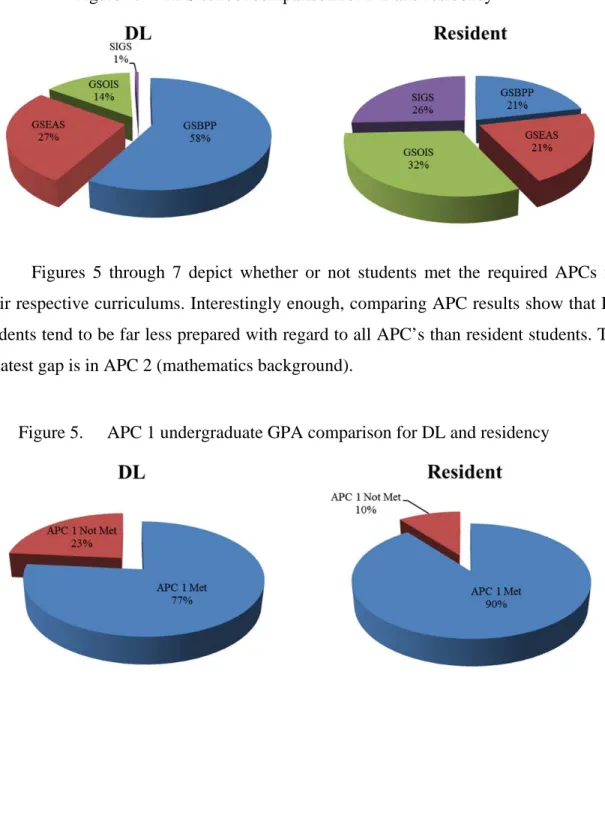
Figure 4. NPS school comparison for DL and residency ...22
Figure 5. APC 1 undergraduate GPA comparison for DL and residency ...22
Figure 6. APC 2 undergraduate mathematics background comparison for DL and residency ...23
Figure 7. APC 3 undergraduate science and technical background comparison for DL and residency ...23
Figure 8. Undergraduate institution sector comparison for DL and residency ...24
Figure 9. Gender comparison for DL and residency ...24
Figure 10. Marital status comparison for DL and residency. ...25
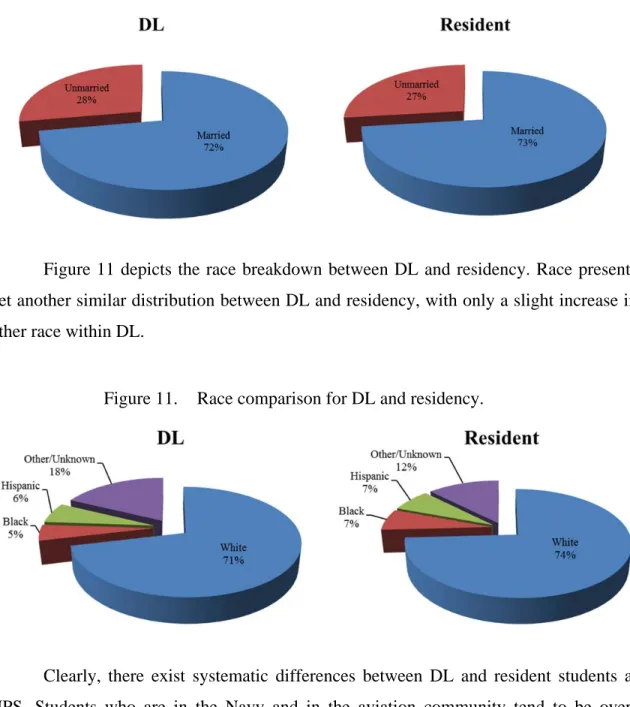
Figure 11. Race comparison for DL and residency. ...25
Figure 12. Example propensity score matching overlay ...27
LIST OF TABLES
Table 1. Service and community breakdown ...15
Table 2. IPEDS sector breakdown ...17
Table 3. Sample summary ...19
Table 4. Independent variables ...27
Table 5. Average treatment effect summary ...33
Table 6. Treatment heterogeneity by service ...36
Table 7. Treatment heterogeneity by community ...37
Table 8. Treatment heterogeneity by rank ...37
Table 9. Treatment heterogeneity by APC ...38
Table 10. Treatment heterogeneity by sector ...39
LIST OF ACRONYMS AND ABBREVIATIONS
APC Academic Profile Code
DL distance learning
DMDC Defense Manpower Data Center
GSBPP Graduate School of Business and Public Policy
GSEAS Graduate School of Engineering and Applied Sciences
GSOIS Graduate School of Operational and Information Sciences
IPEDS Integrated Postsecondary Education Data System
LPM linear probability model
NCES National Center for Education Statistics
NPS Naval Postgraduate School
OLS Original Least Squares
SIGS School of International Graduate Studies
ACKNOWLEDGMENTS
I would like to thank my wife, Amy. She has been nothing but patient, understanding, and supportive throughout this entire process. Without the calm and loving environment, or the occasional redirection—“You’d better get off that couch and get back to writing”—she provided, it’s likely I’d never have finished.
I would also like to thank my two advisors, Dr. Marigee Bacolod and Dr. Latika Hartmann. I cannot even imagine how much worse this process and resulting thesis would have been without their guidance, help, and patience.
I.
INTRODUCTION
The last decade has seen a growing interest in determining the impact of distance or online forms of education on grades and subsequent job performance. Given the lower cost of delivering such degrees, the motivation to move to online based programs has increased substantially in recent years. While these cost savings are certainly relevant in the civilian context, the military recognizes the potential for additional cost savings by not having to relocate personnel for the sole purpose of higher education.
This popularity and cost savings have led to much academic research on the subject. Overall, the findings on the impact of distance or online educational class formats on academic performance show little to no significant difference between online and traditional programs. Although, existing studies do indicate that synchronous distance education formats are inferior to asynchronous formats and that effects tend to be heterogeneous with weaker students performing proportionally worse in distance formats. However, the current research focuses heavily on civilian institutions. This prompts the question: Is the impact of distance education on academic and job performance outcomes similar at military institutions, such as the Naval Postgraduate School (NPS)?
NPS offers several online degree programs that come under the broad umbrella of distance learning (DL) programs. The Graduate School of Operational and Information Sciences (GSOIS) offers six DL master’s programs in computer science related curriculums. The Graduate School of Engineering and Applied Sciences (GSEAS) offers eleven DL master’s programs in engineering related curriculums. The Graduate School of Business and Public Policy (GSBPP) offers four DL master’s programs in business and contract management related curriculums (Naval Postgraduate School, 2016).
In this thesis, I estimate the impact of DL on student performance and subsequent labor market outcomes for NPS military students. To achieve this end, I merge data from three sources—the Institutional Research, Reporting, and Analysis Office at NPS, the Defense Manpower Data Center (DMDC), and the Integrated Postsecondary Education
Data System (IPEDS)—to create a large sample of students with extensive information on their demographics, undergraduate institution, and military career progression. Using propensity score matching, I estimate the impact of DL on four performance outcomes: grade point average, graduation, promotion, and separation. I further subdivide the sample into various subgroups based on military service branch, warfare community, academic preparation, and school within NPS to determine the heterogeneous effects of DL within each subsample.
My findings indicate that DL students at NPS on average have lower grades, are less likely to graduate, are less likely to promote in their subsequent military career, and are more likely to separate from active service. Similar to the literature from the civilian sector, I also find heterogeneous effects of DL. However, at NPS lower-ability DL students do not perform worse compared to higher-ability DL students.
A. SCOPE OF THIS THESIS
This thesis analyzes NPS students in both DL and resident programs with academic year start dates between 2006 and 2013. Data for the years in question and provided by the Institutional Research, Reporting, and Analysis Office at NPS is merged with data from the Defense Manpower Data Center (DMDC) and the Integrated Postsecondary Education Data System (IPEDS) to supplement the range of students with additional demographic, undergraduate institution, and promotion information. The analysis addresses whether or not there is a difference between DL and resident student performance and career progression.
This research is quantitative in nature. I conduct a review and evaluation of relevant literature with a focus on distance education and online programs and their perceived impact on university systems. I also use other literature to provide information relevant to my research topic.
B. RESEARCH QUESTIONS
1. What is the causal impact of distance learning on military officer students’
2. What student characteristics best predict success in distance learning vs. resident learning?
3. Are there systematic differences between distance learning and resident
military officer demographic characteristics, MOS, ability, and/or academic preparation?
C. ORGANIZATION OF THIS THESIS
This thesis consists of five chapters. Chapter I provides a brief introduction to the subject matter and methodology. Chapter II presents a review of relevant literature with a focus on the impact of distance education on performance outcomes. Chapter III delineates the data utilized for analysis, demonstrates difference between DL and resident student bodies, and provides an in depth insight into the methodology behind this thesis. Chapter IV presents and explains the findings of this thesis. Finally, Chapter V provides concluding remarks and preliminary recommendations.
II.
LITERATURE REVIEW
Given the recent growth in distance education degree programs within the U.S. military and beyond, there is an increasing need to better understand the impact of distance education on student learning outcomes. Hence, the large literature on the topic continues to grow more extensive with each passing year. The current literature falls into three categories: meta-analyses, observational studies, and randomized experiments. I summarize the main findings from these categories in order below.
A. META-ANALYSES
Meta-analyses are a quantitative summary of existing studies and present a general picture of the state of research in a particular subject area. I focus on three key and recent studies here that focus on how online and distance education modes of delivery impact outcomes. A U.S. Department of Education meta-analysis conducted by Means, Toyama, Murphy, Bakia, and Jones (2010) looks explicitly at online education versus traditional face-to-face instruction focusing on post-secondary education. Lack (2013) expounds upon Means et al. (2010) and provides additional insight for future studies in this area. Unlike these studies, Bernard et al. (2004) focus explicitly on distance education, separate from online education, and discuss at length the issue of synchronous versus asynchronous delivery methods. Additionally, there are a variety of outcomes used throughout the many smaller studies included in these meta-analyses, including individual course grades, overall grade point average, instructor evaluation surveys, and student evaluation surveys. However, the best and most common outcome chosen is individual student course grade because it allows for a degree of control between different classes and instructors and bypasses the more qualitative nature of surveys.
Means et al. (2010) initially set out to provide information for K-12 students. However, the vast majority of existing studies revolve around secondary and post-secondary education, excluding any significant measures of effect for the intended student body (2010, p. 31). Also, they drop a large number of studies that simply
compare online and traditional students, as they are likely to be biased by a student’s selection into a particular type of course. By screening and eliminating all but 45 from a pool of 1,132 existing studies, Means et al. do provide several significant results relevant to continued education (2010, p. 14). After combining studies and weighting results based on respective sample sizes, they find that the online delivery method is just as effective as face-to-face instruction but not any better (Means et al., 2010, p. 18). Also, the evidence suggests that supplementing classroom instruction with online resources, often known as hybrid delivery, has a positive and significant impact on student performance as measured by grades (p. 19). Further, the types of delivery media among online courses demonstrate no significant effect on average learning outcomes (Means et al., 2010, p. 40). Means et al. (2010) also highlight the wide variation in methods, findings, and effect sizes across studies. The wide variation in methodologies likely contributes to the wide variation in findings. Also, although they eliminated studies based on the level of qualitative analysis and chosen outcome variables and then weighted based on sample size, many studies were severely biased and lacking in good quality control variables (Means et al., 2010, p. 13).
Lack (2013) conducts a meta-analysis similar to that of Means et al. (2010) but with several key differences with regard to her focus. Lack (2013) identifies 30 studies that compare some combination of face-to-face, online, and/or hybrid learning. She also only includes studies with learning outcomes, such a course grades, as dependent variables and precludes studies with student authors (p. 8). Instead of attempting to calculate overall effects, Lack (2013) asserts that the existing literature is inadequate to determine whether or not online or hybrid learning modalities are more or less effective than traditional face-to-face modalities (p. 10). The discussion, in turn, revolves around the shortage of quality studies, small sample sizes, and need for random assignment (Lack, 2013, p. 8). In particular, this study highlights four general problems with the current state of research. First, those studies that achieve random assignment to distance education have very small sample sizes. Second, those studies with large samples often lack sound experimental design and display widely conflicting results. Third, existing observational studies generally fail to account for self-selection bias despite controlling
for background information. And finally, the remaining studies comprise those that neglect relevant controls (Lack, 2013, p. 11–12).
Bernard et al. (2004) conduct yet another meta-analysis, although older than the previous two. This study focuses exclusively on distance education, which can be separate from online education that does not involve geographic separation. Findings include a small yet significant positive effect of distance education on learning outcomes (Bernard et al., 2004, p. 404). However, the standard errors are large, and thus the overall result tends to be more in accordance with Means et al. (2010) of no significant differences in student outcomes across delivery modes. What causes this study to stand out is the emphasis on the effects of synchronous and asynchronous methods of distance education. Synchronous distance education results in a significant negative effect on learning outcomes, while asynchronous distance education results in a significant positive effect on learning outcomes (Bernard et al., 2004, p. 404). Further, all three outcomes measured—achievement, attitude, and retention—yield conflicting results between synchronous and asynchronous formats. With respect to all three outcomes, synchronous formats favor the classroom environment, whereas asynchronous formats favor distance education (Bernard et al., 2004, p. 408).
These large meta-analyses draw on a vast body of observational studies and a smaller body of randomized studies. I discuss each of these in turn next. Randomized experiments account for selection bias, but are often limited in other areas due to difficulty in designing and implementing proper experiments within university systems. Observational studies face difficulty correcting for selection bias or simply do not even attempt to account for it.
B. OBSERVATIONAL STUDIES
Koch (2006) conducted an interesting observational study at Old Dominion University. He utilized data from 1994 to 2001 on all courses with both a distance learning and resident component (p. 24). He utilizes the resulting sample of 20,428 observations to perform OLS regressions of student characteristics on individual course grades (Koch, 2006, p. 25). Koch’s (2006) findings indicate that distance learning has a
very small impact, if any, but demographic characteristics do significantly impact student grades (p.26–28). The incredibly large sample size and diverse set of control variables represent this study’s greatest strengths. However, these strengths may not be enough to balance the potential biases on account of students who selected into the residence and distance learning courses. That said, the study highlights the need to include key demographic variables when analyzing the impact of distance education.
Brown and Liedholm (2002) perform another observational study, but take a more focused approach than Koch (2006). They attempt to compare face-to-face classroom, hybrid, and virtual—their term for completely online class—versions of a Principles of Microeconomics class. All three versions of the class were designed to be very similar and utilize similar resources. The virtual version also gained access to recorded lectures from the face-to-face class with an additional synchronous text based component (Brown & Liedholm, 2002, p. 444). Brown and Liedholm (2002) find that students in the virtual version of class consistently score approximately half a letter grade below students in the face-to-face and hybrid classes (p. 447). Interestingly enough, they designed the study and acquired demographic data as a control, but they made no attempt to correct for selection bias or control for subtle, yet controllable, difference between class versions. For example, different instructors taught the face-to-face and hybrid classes (Brown & Liedholm, 2002, p. 444). Another issue exists in the small and disproportionate sample size. With only 363 face-to-face, 258 hybrid, and 89 virtual student observations, the study lacks substantial power (Brown & Liedholm, 2002, p. 445).
Gratton-Lavoie and Stanley (2009) conduct a study with a slightly different methodology. They observe eight sections of an introductory economics class over four semesters to compare online and hybrid delivery methods (p. 7). Using summary statistics of final exam scores, Gratton-Lavoie and Stanley (2009) conclude that online education has a positive effect on learning outcomes (p. 12). However, this method is problematic because it neglects to consider potential impacts other than delivery mode on exam score. They next use a probit model to estimate the likelihood of selecting online over hybrid. From these likelihood values, they further assert that self-selection bias shifts the positive effect found earlier to an insignificant or negative one, which they do
not quantify (Gratton-Lavoie & Stanley, 2009, p. 20). Despite their attempt to control for selection, their small sample of 149 students lacks sufficient power to estimate the effects of online and hybrid delivery (p. 12). Also, as mentioned above, utilizing summary statistics to compare average final exam scores between online and hybrid courses presents serious limitations as a basis for determining the overall effect of online education on learning outcomes. They should utilize regression analysis when determining effect size to control for additional factors that may impact learning outcomes, such as previous academic performance or demographic information.
Coates, Humphreys, Kane, and Vachris (2004) perform another observational study but with a heavy focus on correcting for any self-selection. They obtain data from three separate universities for introductory microeconomics and macroeconomics courses (Coates et al., 2004, p. 535). Coates et al. (2004) utilize three separate models—OLS, 2SLS, and an endogenous switching equation—in an attempt to ascertain the influence of selection bias on Test of Understanding College Economics (TUCE) scores between online and face-to-face students. They find that selection bias presents a substantial effect and that the direction of the bias points toward zero (Coates et al., 2004, p. 545). The presence of effect estimates biased toward zero when ignoring selection sheds additional light on the multitude of observational studies with findings of “no significant difference” between online and face-to-face modalities (Coates et al. 2004, p. 545). Also of note, Coates et al. (2004) present one of the few studies to address systematic differences between students self-selecting online courses rather than face-to-face offerings. They find that students selecting online or distance options are overwhelmingly employed full or part time in addition to school, have 300 point lower SAT scores on average, and tend to perform better at online courses compared to students selecting face-to-face courses (Coates et al., 2004, p. 545). Despite the lack of any real tangible effect, this study fills a crucial gap in the literature by addressing the importance of handling selection bias when comparing student performance between online and face-to-face courses. However, as with many studies on the topic, Coates et al. (2004) have only a very small sample. Samples for the various models used range from only 59 to 126 observations (p. 537– 544).
Olitsky and Cosgrove (2012) perform a unique observational study attempting to account for self-selection bias. They compare multiple sections of Principles of Microeconomics and Principles of Macroeconomics courses, designing courses with a great deal of control between blended and face-to-face versions (Olitsky & Cosgrove, 2012, p. 19). Utilizing exam scores as outcome variables, they also find no significant difference in effects between blended and face-to-face versions (Olitsky & Cosgrove, 2012, p. 30). This study stands out for its method of correcting for self-selection bias. Olitsky and Cosgrove (2012) determine the average treatment effect of blended learning by utilizing propensity score matching to create a matched sample, mitigating the potential for selection bias (p. 27). It is this same method that we employ in our study to correct for selection bias. As such, Olitsky and Cosgrove (2012) provide a clear precedent for the use of propensity score matching to correct for self-selection bias when unable to randomly assign students between treatment and control groups.
However, despite such methods of correction for selection bias among observational experiments, random assignment of students provides the only true means of completely eliminating such bias. Consequently, the following randomized experiments represent some of the best attempts to determine the effect of distance education within the current field of study.
C. RANDOMIZED STUDIES
Harmon, Alpert, and Lambrinos (2014) design an experiment to emulate random assignment of students. They randomly divide a Principles of Economics class into various portions of online or face-to-face delivery based on chapters. They then compute the likelihood of answering midterm and final exam questions correctly based on whether the associated questions correspond to online or face-to-face portions of the course using a logit model (Harmon et al., 2014, p. 116–118). Harmon et al. (2014) reiterate the “no significant difference” (p. 118) findings of several other studies, yet their approach remains unique. However, this uniqueness coupled with a very small sample of 36 students leads to several issues. The article lacks clarity on many details and leaves the reader unsure as to the validity of the approach. For example, Harmon et al. (2014) make
no mention of the number of sections, and based on sample size a single section is likely. This implies that particular exam questions were only either observed as online or face-to-face when computing estimates. The resulting lack of control among outcome variables suggests the potential for serious bias. Harmon et al. (2014) may eliminate self-selection bias from their sample, but shortcomings elsewhere leave much to be desired.
Bowen, Chingos, Lack, and Nygren (2014) design a randomized experiment spanning six different universities. They compare traditional and hybrid formats for a statistics course and conclude that hybrid formats offer a “no-harm-done” alternative that also results in less time—both for instruction and completion of deliverables—for students (Bowen et al., 2014, p. 107). This otherwise well designed experiment does suffer from a lack of control among instructors, which is openly presented to the reader (Bowen et al., 2014, p. 101). Also, this study uses the largest sample among randomized experiments with 605 participants (Bowen et al., 2014, p. 98).
Perhaps the most widely cited study within the field, Figlio, Rush, and Yin (2010) conduct a randomized experiment comparing exam scores between online and live versions of a Principles of Microeconomics course (p. 766). Figlio et al. (2010) offer students extra credit points in exchange for participating in an experiment. They then randomly assign the 327 students agreeing to participate to either live or online versions of the class (Figlio et al., 2010, p. 767). Figlio et al. (2010) find no statistical difference in outcomes between online and live versions of the class (p. 779). Also of note, the nature of the experiment makes comparison to distance learning difficult. For example, students in the online section still had access to instructor office hours and could schedule individual face-to-face meetings with the instructor (Figlio et al., 2010, p. 766).
Joyce, Crockett, Jaeger, Altindag, and O’Connell (2014) conduct another randomized experiment comparing traditional and hybrid formats. They also offer extra credit points in exchange for participation. They observe the 656 participants spread through eight sections of a Principles of Microeconomics course, and outcome variables include midterm and final exams, Applia coursework, course final grades, and withdrawals (Joyce et al., 2014, p. 6–9). Joyce et al. (2014) find that “traditional does
2.5 percentage points higher on exams than those in hybrid formats (p. 28). Despite the seemingly common small sample size, this study performs exceptionally well. Joyce et al. (2014) manage to control for a multitude of factors such as minimizing differences between classes and resources and including a large set of demographic and academic performance variables.
Alpert, Couch, and Harmon (2015) perform one of the best randomized studies so far. They randomly assign participants, who again were offered extra credit for participation, into either face-to-face, online, or hybrid sections of a microeconomics principles class between Fall of 2012 and Spring of 2014 (Alpert et al., 2015, p. 3–4). Alpert et al. (2015) utilize three stages of OLS regressions—each stage increasing the number of controls—to determine the effects of the three class formats on cumulative final exams scores (p. 4). They find that blended format never yields a significant effect, but online classes result in a significant and consistent decrease of approximately half a letter grade (Alpert et al., 2015, p. 27). The only concern with this study again comes in the form of a relatively small sample size, but this seems to be a pervasive issue among randomized experiments.
The existing literature presents several relevant methodologies as well as many concerns. No studies exist addressing the issue of online or distance education compared to resident education for military officer students. In designing my study I attempt to apply the lessons presented above to a sample of military officer students at NPS. Unfortunately, I am unable to achieve the gold standard of conducting a randomized experiment. However, I instead focus on a methodology derived from both Koch (2006) and Olitsky and Cosgrove (2012). Because Koch (2006) found a large impact of demographics on performance outcomes, I focus on a large sample with robust demographic controls. Also, I utilize propensity score matching, similar to Olitsky and Cosgrove (2012), to mitigate biases resulting from students self-selecting into either distance or resident delivery modes.
III.
DATA/METHODOLOGY
Utilizing several of the strengths spread across studies within the existing literature, I design an observational study to estimate the impact of DL on learning and military performance outcomes. I merge data from three separate sources—the Naval Postgraduate School (NPS), the Defense Manpower Data Center (DMDC), and the Integrated Postsecondary Education Data System (IPEDS)—to create a sample containing the necessary demographic controls. I then use propensity score matching to correct for bias resulting from selection into either DL or residency programs. Finally, I conduct regression analysis to determine the impact of DL on various academic and military performance related dependent variables. This section addresses each of these data sources and methodologies in turn.
A. NPS DATA
1. Sample
The primary data come from a Python extract provided by the Institutional Research, Reporting, and Analysis Office at NPS. These data were used in a master’s thesis by Kyle Alcock at NPS in March 2015, but that study focused only on a sample of Naval officers. The subjects in my study initially consist of the population of 10,882 NPS students—U.S. military officers, civilians, and international students—who began academic programs between the 2006 and 2013 academic years. Civilian and international students are excluded from the analysis sample, as I cannot match DMDC information to them. After dropping all civilian and international students the sample size decreases to 6,754 observations.
2. Independent Variables
a. Treatment Indicator
The NPS data provide the binary variable for DL, where DL equals one for students enrolled in NPS DL degree programs. DL is the indicator of treatment for this study.
b. NPS Institutional Controls
I generate cohort control variables from academic start year and quarter information. Also, school indicators allow control for the four different schools at NPS: the Graduate Schools of Business and Public Policy (GSBPP), the Graduate School of Engineering and Applied Sciences (GSEAS), the Graduate School of Operational and Information Sciences (GSOIS), and the School of International Graduate Studies (SIGS).
c. Academic Preparation
NPS utilizes academic profile codes (APC) as the primary means for determining academic eligibility and student academic preparation prior to admission at NPS. A student’s APC consists of three discrete digits, each representing a different aspect of his or her academic background. The first digit represents undergraduate academic performance based on GPA, the second digit represents mathematics background and/or elapsed time since college level math course completion, and the third digit represents engineering, science, or technical background (Naval Postgraduate School, 2016). To control for student preparation I generate dummy variables for each digit of APC indicating whether each student has met the requisite APC for his or her particular curriculum.
Also, the NPS data include information on both undergraduate school name and time elapsed from completion of an undergraduate degree prior to beginning studies at NPS. Undergraduate school name allows for the merger with IPEDS data from the National Center of Education Statistics (NCES) that indicate the sector—private vs. public and for-profit vs. not-for-profit—of the college of university the military officer graduated from. In addition, I use undergraduate school name to generate an indicator of whether the student attended a service academy. With a completely military sample, attending a service academy also represents a level of academic preparation. Finally, because there is variation in elapsed time between undergraduate and graduate educations among NPS DL and resident students, the inclusion of the continuous variables for years since undergraduate education seems relevant as yet another measure of academic preparation.
d. Service and Community
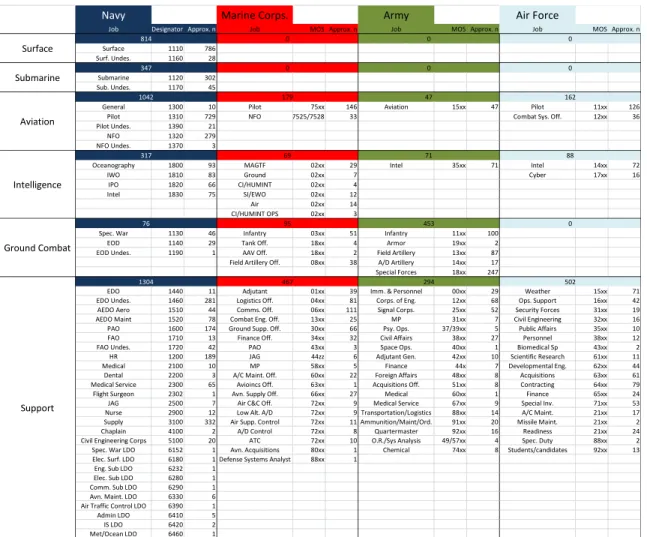
The data provide information on NPS students’ branch of military service as well as designator. Designator or Military Occupational Specialty (MOS) represents the particular job a service member performs. From this information, I generate several community variables and their respective interactions with service branch. Table 1 displays the communities and respective designator/MOS by service. I generate dummy variables for each service, community, and the interactions of each service and community as controls in the analysis performed in Chapter IV.
Table 1. Service and community breakdown
Job Designator Approx. n Job MOS Approx. n Job MOS Approx. n Job MOS Approx. n
Surface 1110 786 Surf. Undes. 1160 28 Submarine 1120 302 Sub. Undes. 1170 45
General 1300 10 Pilot 75xx 146 Aviation 15xx 47 Pilot 11xx 126 Pilot 1310 729 NFO 7525/7528 33 Combat Sys. Off. 12xx 36 Pilot Undes. 1390 21
NFO 1320 279 NFO Undes. 1370 3
Oceanography 1800 93 MAGTF 02xx 29 Intel 35xx 71 Intel 14xx 72 IWO 1810 83 Ground 02xx 7 Cyber 17xx 16 IPO 1820 66 CI/HUMINT 02xx 4
Intel 1830 75 SI/EWO 02xx 12 Air 02xx 14 CI/HUMINT OPS 02xx 3
Spec. War 1130 46 Infantry 03xx 51 Infantry 11xx 100 EOD 1140 29 Tank Off. 18xx 4 Armor 19xx 2 EOD Undes. 1190 1 AAV Off. 18xx 2 Field Artillery 13xx 87 Field Artillery Off. 08xx 38 A/D Artillery 14xx 17 Special Forces 18xx 247
EDO 1440 11 Adjutant 01xx 39 Imm. & Personnel 00xx 29 Weather 15xx 71 EDO Undes. 1460 281 Logistics Off. 04xx 81 Corps. of Eng. 12xx 68 Ops. Support 16xx 42 AEDO Aero 1510 44 Comms. Off. 06xx 111 Signal Corps. 25xx 52 Security Forces 31xx 19 AEDO Maint 1520 78 Combat Eng. Off. 13xx 25 MP 31xx 7 Civil Engineering 32xx 16 PAO 1600 174 Ground Supp. Off. 30xx 66 Psy. Ops. 37/39xx 5 Public Affairs 35xx 10 FAO 1710 13 Finance Off. 34xx 32 Civil Affairs 38xx 27 Personnel 38xx 12 FAO Undes. 1720 42 PAO 43xx 3 Space Ops. 40xx 1 Biomedical Sp 43xx 2 HR 1200 189 JAG 44zz 6 Adjutant Gen. 42xx 10 Scientific Research 61xx 11 Medical 2100 10 MP 58xx 5 Finance 44x 7 Developmental Eng. 62xx 44 Dental 2200 3 A/C Maint. Off. 60xx 22 Foreign Affairs 48xx 8 Acquisitions 63xx 61 Medical Service 2300 65 Avioincs Off. 63xx 1 Acquisitions Off. 51xx 8 Contracting 64xx 79 Flight Surgeon 2302 1 Avn. Supply Off. 66xx 27 Medical 60xx 1 Finance 65xx 24 JAG 2500 7 Air C&C Off. 72xx 9 Medical Service 67xx 9 Special Inv. 71xx 53 Nurse 2900 12 Low Alt. A/D 72xx 9 Transportation/Logistics 88xx 14 A/C Maint. 21xx 17 Supply 3100 332 Air Supp. Control 72xx 11 Ammunition/Maint/Ord. 91xx 20 Missile Maint. 21xx 2 Chaplain 4100 2 A/D Control 72xx 8 Quartermaster 92xx 16 Readiness 21xx 24 Civil Engineering Corps 5100 20 ATC 72xx 10 O.R./Sys Analysis 49/57xx 4 Spec. Duty 88xx 2 Spec. War LDO 6152 1 Avn. Acquisitions 80xx 1 Chemical 74xx 8 Students/candidates 92xx 13 Elec. Surf. LDO 6180 1 Defense Systems Analyst 88xx 1
Eng. Sub LDO 6232 1 Elec. Sub LDO 6280 1 Comm. Sub LDO 6290 1 Avn. Maint. LDO 6330 6 Air Traffic Control LDO 6390 1 Admin LDO 6410 5 IS LDO 6420 2 Met/Ocean LDO 6460 1 467 294 502 Ground Combat Support 1304 453 317 69 71 88 0 76 95 Surface Submarine Aviation 1042 179 0 0 0 0 Intelligence 47 162 347 814 0 0
3. Dependent Variables
The NPS data provide three of the five dependent variables that I analyze. Total quality point rating (TQPR) is essentially a GPA calculated for all courses taken at NPS (Naval Postgraduate School, 2015). I use TQPR as the primary and only continuous outcome variable. It would be advantageous to utilize individual course grades instead of overall TQPR, but this information is currently unavailable for the existing sample. I also include binary outcome of whether a student graduates.
B. DMDC DATA
1. Sample
As Koch (2006) makes clear, sound demographic control variables are necessary when ascertaining the impact of DL. DMDC data provide these important demographic controls for the sample, as well as subsequent career progression of these students upon leaving NPS. Demographic data were requested for the entire sample as of six months prior to beginning their studies at NPS, while work performance data was requested covering the period after leaving NPS. Thus, the sample size remains the same, and forty-seven additional observables are added.
2. Independent Variables
Of the additional observable characteristics added, I focus on key demographic variables including: gender, race, marital status, age, number of dependents, and rank. Race consists of variables for white, black, Hispanic, and other race. Marital status includes two dummy variables, one indicating whether an observation was married during his or her time at NPS and the other indicates if the observations had ever experienced a divorce. Rank indicates the military paygrade of an observation upon beginning enrollment at NPS. The fourteen resulting variables cover the range of demographics typically controlled for.
3. Dependent Variables
who received a promotion after departure from NPS, whether or not they had actually received a degree. Separated indicates those officers that separated from military service for any reason after leaving NPS.
C. IPEDS DATA
1. Sample
IPEDS is a branch of the National Center for Education Statistics (NCES) and provides downloadable and publically available data for accredited schools offering postsecondary education within the United States (National Center for Education Statistics, 2016a). I merge the 2012 IPEDS database, which is the most applicable, to the existing sample based on undergraduate degree institution listed in the NPS data.
2. Variables
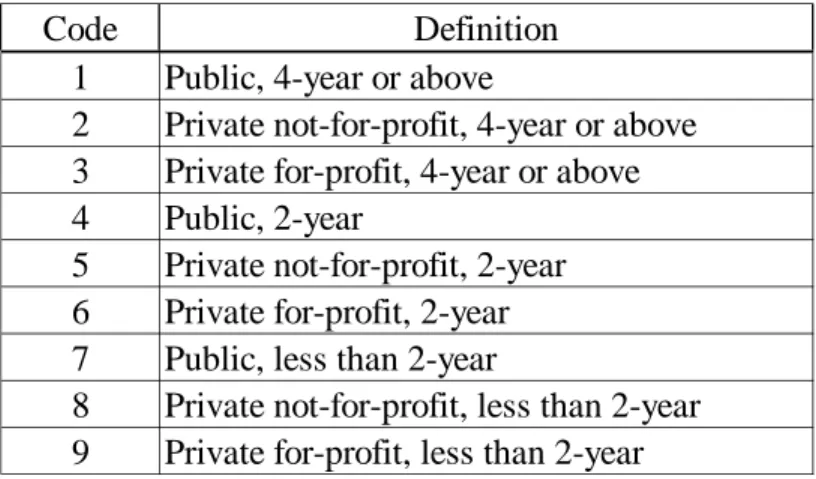
Unlike the several variables DMDC data provide, I only use IPEDS for the addition of the single independent variable “sector.” The IPEDS sector represents a scale of one through nine accounting for both control and level of an institution. Control represents whether the school is public, private not-for-profit, or private for-profit. The level indicates whether a school offers four, two, or less-than-two-year degrees (National Center for Education Statistics, 2016b). Table 2 illustrates the various values for sector as provided by IPEDS (National Center for Education Statistics, 2016c).
Table 2. IPEDS sector breakdown
Code Definition 1 Public, 4-year or above
2 Private not-for-profit, 4-year or above 3 Private for-profit, 4-year or above 4 Public, 2-year
5 Private not-for-profit, 2-year 6 Private for-profit, 2-year 7 Public, less than 2-year
8 Private not-for-profit, less than 2-year 9 Private for-profit, less than 2-year
However, I focus solely on the control classification because commissioned officers overwhelmingly possess four year degrees. As such, I generate three control variables for the entire sample: public, private not-for-profit, and private for-profit. Additionally, I define these three variables so that they are exclusive of Service Academy graduates. Service Academies fall under public category according to IPEDS, however based on selectivity and average student performance prior to postsecondary education they are more akin to private not-for-profit institutions. For this reason, and because a large proportion of NPS students are Service Academy graduates, I utilize the variable “Service Academy” from the NPS data to represent a fourth component of sector.
D. DATA SUMMARY
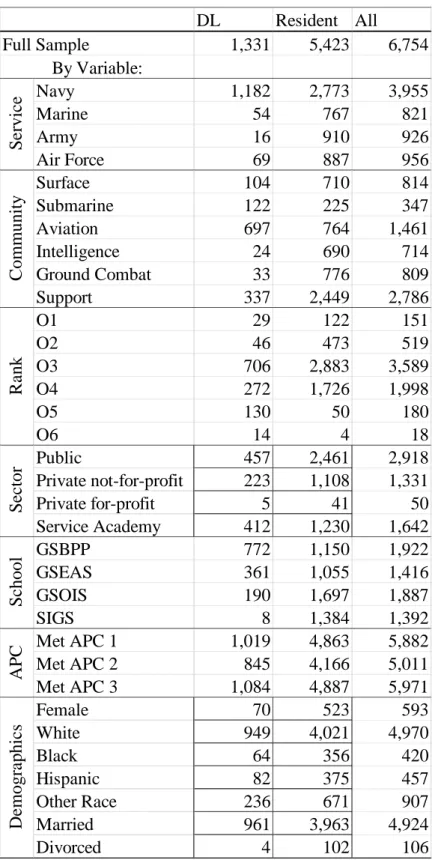
The final merged sample retains the original 6,754 observations, approximately 20 percent of which are for DL students. Table 3 presents a summary of the number of observations within various subgroups of the sample.
Table 3. Sample summary DL Resident All 1,331 5,423 6,754 Navy 1,182 2,773 3,955 Marine 54 767 821 Army 16 910 926 Air Force 69 887 956 Surface 104 710 814 Submarine 122 225 347 Aviation 697 764 1,461 Intelligence 24 690 714 Ground Combat 33 776 809 Support 337 2,449 2,786 O1 29 122 151 O2 46 473 519 O3 706 2,883 3,589 O4 272 1,726 1,998 O5 130 50 180 O6 14 4 18 Public 457 2,461 2,918 Private not-for-profit 223 1,108 1,331 Private for-profit 5 41 50 Service Academy 412 1,230 1,642 GSBPP 772 1,150 1,922 GSEAS 361 1,055 1,416 GSOIS 190 1,697 1,887 SIGS 8 1,384 1,392 Met APC 1 1,019 4,863 5,882 Met APC 2 845 4,166 5,011 Met APC 3 1,084 4,887 5,971 Female 70 523 593 White 949 4,021 4,970 Black 64 356 420 Hispanic 82 375 457 Other Race 236 671 907 Married 961 3,963 4,924 Divorced 4 102 106 AP C De mogr a phic s S e rv ic e C o mmunity Ran k S ect o r S c hool Full Sample By Variable:
There are several systematic differences between DL and resident students. Figures 1 through 11 illustrate the differences between DL and resident students based on the independent variable categories of service, community, rank, school, APC, undergraduate degree institution sector, gender, marital status, and race.
A comparison of services between DL and residency are depicted in Figure 1. Unsurprisingly, Navy students comprise the majority among residents. However, for DL this majority nearly doubles. Marine Corps, Army, and Air Force students comprise only about 10 percent of all DL students at NPS between 2006 and 2013.
Figure 1. Military service branch comparison for DL and residency
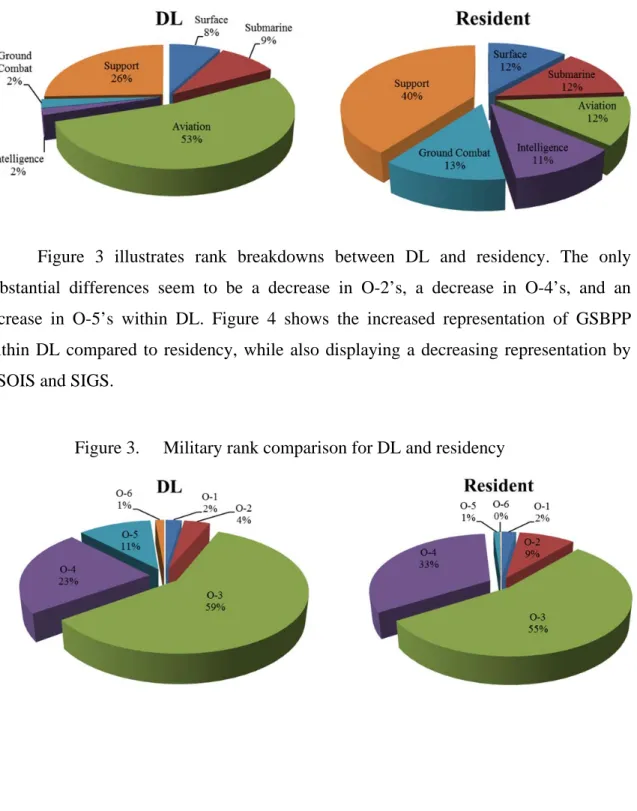
Warfare communities are depicted in Figure 2. The makeup of DL and resident students is quite different. In particular, aviators tend to favor and/or get assigned to DL programs more than other communities. While aviators only make up approximately 12 percent of all resident students between 2006 and 2013, they comprise more than half of the DL students for the same period. The disparities presented only reinforce the need to control for both service and community in assessing student outcomes, and also in order to make an apples-to-apples comparison.
Figure 2. Warfare community comparison for DL and residency
Figure 3 illustrates rank breakdowns between DL and residency. The only substantial differences seem to be a decrease in O-2’s, a decrease in O-4’s, and an increase in O-5’s within DL. Figure 4 shows the increased representation of GSBPP within DL compared to residency, while also displaying a decreasing representation by GSOIS and SIGS.
Figure 4. NPS school comparison for DL and residency
Figures 5 through 7 depict whether or not students met the required APCs for their respective curriculums. Interestingly enough, comparing APC results show that DL students tend to be far less prepared with regard to all APC’s than resident students. The greatest gap is in APC 2 (mathematics background).
Figure 6. APC 2 undergraduate mathematics background comparison for DL and residency
Figure 7. APC 3 undergraduate science and technical background
comparison for DL and residency
Figure 8 depicts the IPEDS sector breakdown. Sector distribution in DL is comparable with the distribution in residency programs, with no difference in overall percentage of private not-for-profit and private for-profit institutions. However, students with undergraduate degrees from public institutions decrease by 10 percentage points within DL compared to residency, while an increase in Service Academy graduates makes up the difference. Gender, shown in Figure 9, also shows only a small difference between DL and residency. There are 4 percentage points fewer females in DL than in residency.
Figure 8. Undergraduate institution sector comparison for DL and residency
Figure 9. Gender comparison for DL and residency
DL and resident military students tend to be similarly distributed with regard to marital status as well. Figure 10 shows that DL students represent only 1 percentage point more unmarried students than their resident counterparts.
Figure 10. Marital status comparison for DL and residency.
Figure 11 depicts the race breakdown between DL and residency. Race presents yet another similar distribution between DL and residency, with only a slight increase in other race within DL.
Figure 11. Race comparison for DL and residency.
Clearly, there exist systematic differences between DL and resident students at NPS. Students who are in the Navy and in the aviation community tend to be over-represented in DL. Also, DL students suffer from being less prepared on average, especially in mathematics, than resident students. These are but a few of the large differences between DL and residency, yet many subtle disparities also exist in the data. Thus, it is imperative to include all of the above categories as controls and to use them for propensity score matching.
E. METHODOLOGY
The method of propensity score matching conceptually involves creating counterfactual outcomes of what would have happened to DL students had they gone through a resident program, and what would have happened to resident students had they been through a DL program.
The matching methodology is broken down into two distinct stages. Stage One involves creating a matched subsample from the existing sample. Stage Two of my analysis then uses the matched sample to conduct regression analysis and determine the impact of DL on performance outcomes. I further discuss the methodology behind these two stages in the next two sections.
1. Stage One
Propensity score matching is a statistical technique that allows for the creation of a matched sample where observations are similar enough between treatment and control groups to efficiently and unbiasedly determine the average effect of the treatment. Also, on can determine the treatment effect on the treated using this method. Matching relies on the key assumption that subjects that are similar based upon observable characteristics are likely also similar on unobservable characteristics (Gertler, 2011). In this study, the variable DL represents treatment. Consequently, within a matched sample, those observations enrolled in DL are similar with respect to observable characteristics, and thus also unobservable characteristics, to those enrolled as resident students. In a sense, this process is simulating a nonexistent control group as a counterfactual for the purposes of examining the effect of DL on learning and job performance outcomes. Thus, the counterfactual match to a DL student is identified by finding a control resident with the same propensity to be in DL and vice versa.
To create this matched sample, I start by determining the probability that each observation is enrolled in DL. Considering DL is a binary variable, a Logit model suits this purpose well. Equation 1 specifies this logit model, where the associated independent variables are defined in Table 4.
0 1 2 3 4 0 1 2 3 4 (DL 1) 1 i i i i i i i i
b b DEMO b ACAD b MIL b CHRT
i b b DEMO b ACAD b MIL b CHRT
e prob e (1)
Table 4. Independent variables
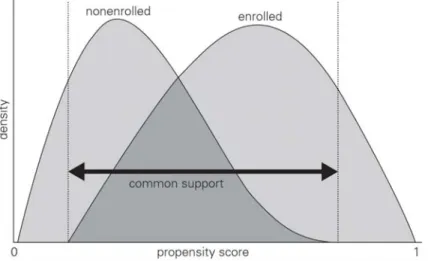
Upon estimating this regression, predicted values of DL are calculated for all observations. I then utilized a kernel density function to plot probability density overlays for both DL=1 and DL=0. This overlay allows for visual inspection of the region of common support, or the region where observations are similar in their propensity for treatment (Gertler, 2011). Ideally the probability distributions do not overlap perfectly, as the goal is to eliminate dissimilar observations at the far left and right ends of the overlay. Figure 12 presents an example overlay plot.
Figure 12. Example propensity score matching overlay
Source: Gertler, 2011, p. 110
Demographic Controls (DEMO) Academic Controls (ACAD) Military Controls (MIL) Cohort Controls (CHRT) Female Years since Undergraduate Degree (Continuous) Service (Navy Reference) School (GSBPP Referece) Race (White Reference) Sector (Public Reference) Community (Support Reference) Cohort Year (2006 Reference) Married Met APC 1, 2, 3 Service Community Interactions Cohort Quarter (Q1 Reference)
Divorced Rank (O-3 Reference)
Age (Continuous)
To achieve a sound probability overlay requires some trial and error. I modified the model in Equation 1 several times to acquire a desirable overlay and satisfy the necessary assumption of common support. I eventually acquire a suitable region of common support by attempting various combinations of independent variables. I then create the final matched sample by eliminating observations that fall outside the region of common support.
2. Stage Two
Stage Two is simply conducting a normal regression analysis using the matched sample. To form unbiased and efficient estimates, I use the inverse of propensity scores generated from the first stage as weights in the second stage regressions. Four outcome variables are evaluated to ascertain the impact of DL. TQPR is the only continuous outcome, while Graduated, Promoted, and Separated are all binary dependent variables. An original least squares (OLS) regression is an obvious choice for TQPR, however the binary dependent variables require some thought.
I initially specify the three binary outcomes as logit models. Upon closer examination, I realize that a Linear Probability Model (LPM) is the superior choice. The logit model derivatives, or marginal effects, for all binary outcomes are nearly identical to the coefficients of a similarly specified LPM. Further, the LPM’s key weakness lies it its ability to produce predicted values less than zero or greater than one, which are not feasible probability values (Woolridge, 2013). I generate predicted values for a LPM regression of each binary outcome and summarize the results. For each outcome, the predicted values fall within the acceptable range between the 5th and 95th percentiles. Also similar to its OLS counterpart, the LPM is the best linear unbiased estimator. Thus, the LPM is both qualitatively and quantitatively the superior choice of model. Equations 2 and 3 depict the specifications for continuous and binary outcomes, respectively.
0 1 2 3 4 5
i i i i i i
y b b DL b DEMO b ACAD b MIL b CHRT (2)
0 1 2 3 4 5
( i 1) i i i i i
Due to the matching process, b1 represents the treatment effect of DL in both
Equations 2 and 3. Under propensity score matching assumptions, this treatment effect is also free of self-selection bias.
The final step involves running several regressions to determine the heterogeneity of DL’s effect within different subgroups of the matched sample. I run a series of 112 separate regressions where each service, community, rank, APC, sector, and school are isolated. Equations 4 and 5 depict the specifications for continuous and binary outcomes,
respectively, where CONTROLj indicates the subgroup being examined in isolation.
0 1 , s.t .CONTROL 1 i i j y b b DEMO (4) 0 1 ( i 1) i,s. t .CONTROL 1 prob y b b DEMO j (5)
These final models allow comparison of DL’s effect between different services, communities, ranks, schools, and among those students that did or did not meet the requisite APC for their curriculum.
IV.
RESULTS
In this chapter, I present the results in three sections. First, I show the first stage results of the matching exercise. Second, I present the second stage results estimating the impact of DL on the four outcome variables, namely TQPR, Graduate, Promoted, and Separated. Finally, I test for heterogeneous effects of DL within subgroups of the matched sample.
A. STAGE ONE
As mentioned in Chapter III, to create a matched sample I first regress observable characteristics of students on an indicator for DL participation using logistic regressions. The key observable factors included in the logit model are demographic characteristics, military service branch, warfare community and its associated interactions with service branch, and military rank. The full results of this regression appear in Appendix A. It is important to note that gender, marital status, time elapsed since undergraduate education, undergraduate university sector, service branch, the support community, and support community and service interactions are all significant predictors of enrolling in DL. Also, the ranks of O-2 and O-3 are significant predictors of selection of DL programs as well.
From the logistic regression, I calculate predicted values for the likelihood of DL enrollment and then plot probability density overlays for different combinations of observable characteristics. Figure 13 shows the probability density functions separately for resident and distance learning students.
Figure 13. Propensity score matching overlay
The x-axis of the plot in Figure 13 represents the propensity score. These values represent the predicted values resulting from the logistic regression. The region of common support exists between approximately 0.1 and 0.3. Observed students falling outside of this range are eliminated from the sample as they are significantly dissimilar to those within the region of common support. Doing so results in a matched sample of 5,289 observations. This reduction of only 1,465 students from the initial sample results in a matched sample that is sufficiently large and robust to provide statistical power to my analysis.
B. STAGE TWO
Table 5 displays the average treatment effect (ATE) of DL for each performance outcome. These results are representative of the entire matched sample. Also, full regression results appear in Appendices B through E.
0 1 2 3 4 5 De n s it y 0 .2 .4 .6 .8 1 Pr(dl)
Table 5. Average treatment effect summary
The first row of Table 5 focuses on the results for TQPR (average GPA). All else equal, the TQPR of students in DL programs is 0.3998 points below resident students. This result is statistically significant at the 1 percent level. This negative impact translates into almost half a letter grade reduction in a DL student’s TQPR compared to an equivalent resident student.
It is also important to note that DL is not the only factor that affects TQPR. Appendix B displays complete regression results for this outcome. Married students on average have higher TQPRs than unmarried students. Marine Corps students have approximately a half a letter grade higher TQPR than Navy students. Surface warfare officers and submariners both have lower TQPRs than support officers, while Naval Aviators have higher TQPRs. Students in GSEAS, GSOIS, and SIGS all have lower TQPRs than students in GSBPP. Finally, service academy graduates have significantly higher TQPRs than students that graduated from public institutions for their undergraduate degree. Interestingly, meeting APC 3 results in a 0.2127 point reduction in TQPR on average.
Based on the existing literature, it appears that NPS students enrolled in DL programs are significantly worse off than their civilian equivalents. These results are somewhat inconsistent with the common overall findings of little to no significant difference between traditional and online class formats. However, they are consistent
0.0562*** [0.0203] ATE of DL Outcome
Robust standard errors in brackets *** p<0.01, ** p<0.05, * p<0.1 TQPR Graduate Promoted Separated -0.3998*** [0.0735] [0.0272] -0.2232*** -0.1253*** [0.0276]
worse than asynchronous equivalents. The NPS DL programs being synchronous support the general finding of lower performance in the synchronous format compared to asynchronous.
The second row of Table 5 shows the results for graduation. All else being equal, I find that DL results in a decrease in the probability of graduating by 22.32 percentage points on average. This negative impact is significant at the 1 percent level. This result implies that even if resident programs achieved a 100 percent graduation rate, that DL equivalents would suffer more than one-fifth of their students failing to complete programs of study. Again, synchronous DL at NPS seems more detrimental than existing literature would suggest.
Similar to TQPR, other factors significantly affect the chances of graduating from NPS. For example, Appendix C shows that on average black students are 11 percentage points less likely to graduate than white students. Also like TQPR, being a surface warfare officer or a submariner results in a negative impact on the probability of graduation. Marine Corps support officers and Air Force support officers are also less likely to graduate. Further, O-5s are less likely to graduate than O-3s and students in SIGS are not significantly less likely to graduate than GSBPP students. Again, meeting APC 3 has a negative impact on the probability of graduation. However, APC 2 shows a 7 percentage point increase in the probability of graduating.
The third row of Table 5 suggests DL students are less likely to promote after NPS. The coefficient on DL indicates they are less likely to promote by 12.53 percentage points on average. This negative impact is significant at the 1 percent level. Considering that many military officers view graduate education as a means of increasing their chance of promotion, this particular effect of DL is noteworthy.
Unlike TQPR and graduation, the impact of DL on promotion is smaller than several other effects. Appendix D shows that NPS Marine Corps officers are 20 percentage points more likely to promote than Navy officers at NPS. Surface warfare officers and Aviators are significantly less likely to promote than support officers. Also, O-4s, O-5s, and O-6s are all significantly less likely to promote after NPS than O-3s.
The fourth row of Table 5 shows the impact of DL on separation. All else equal, I find that DL results in an increase in the probability of separating from the military by 5.62 percentage points on average. This result is significant at the 1 percent level. Although a positive value, separation represents a negative outcome, thus DL provides yet another negative impact on performance at NPS. Although the percentage is small, this negative impact of DL suggests that the military would have a more difficult time obtaining a return on investment for DL graduates.
Appendix E shows the other factors affecting the probability of separating from active service. Similar to promotion results, DL is one of the smaller significant effects on separation. Being Hispanic results in a 6 percentage point decrease in the probability of separating after NPS, while being married results in an 11 percentage point decrease in the probability of separation after NPS. Marine Corps officers are also 11 percentage points less likely to separate than Navy officers. Students graduating from Private for-profit institutions for their undergraduate degrees are also 12 percentage points less likely to separate. Although DL is small in magnitude, it is one of the only characteristics that increase the likelihood of separation after NPS.
C. HETEROGENEITY
An important finding across several studies in the literature is the presence of heterogeneous effects of distance or online instruction on student characteristics. In section B, I estimate an average treatment effect for all types of students. In this section, I split the sample into various subgroups to test for treatment heterogeneity. Specifically I split the sample by service branch, warfare community, rank, APC, sector, and school in the following sections. Each of the following sections represents groupings of these mutually exclusive subgroups. For example, individual services are mutually exclusive, as a student cannot be in both the Navy and Army simultaneously. A student is either in the Navy, the Army, The Marine Corps, or the Air Force.
Appendices F through I show full regression results for the outcomes TQPR, Graduate, Promoted, and Separated, respectively. Within these appended tables each row represents an individual regression for the sample subgroup listed in the first column.
Tables 6 through 11 compile the coefficients for DL within each of the four appended tables of full results. Also, all tables within this section highlight sample subgroups in red to represent small sample sizes of less than 100 students enrolled in DL. These highlighted subgroups indicate results that are considered insignificant as they lack sufficient statistical power to determine the effect of DL.
1. Service
Table 6 represents the treatment effect of DL within each of the four services present within the matched sample. Within the Marine Corps and Army no significant difference exists between DL and resident students with respect to TQPR. However, Marine DL students tend to have lower probabilities of graduating than Marine residents. Army DL students tend to have lower graduation rates, lower promotion rates, and higher separation rates than residents.
Table 6. Treatment heterogeneity by service
Navy DL students have significantly decreased TQPRs, a lower probability of graduation, and a higher probability of promotion after NPS than resident Navy students. DL has no significant effect on separation within the Navy as a whole. Marine Corps, Army, and Air Force students have no significant effect due to insufficient sample size.
2. Community
Table 7 represents the treatment effect of DL within different warfare communities. Due to sample size limitations, only the aviation and support communities are considered significant. Aviators, a numerically important group, show smaller negative effects of DL on TQPR with no significant impact of DL on the probability of
TQPR Graduate=1 Promoted Separated n DL=1
Navy -0.1647*** -0.0778*** 0.0477** -0.0020 3,055 776
MarineCorps -0.2616 -0.2122** -0.0792 0.0410 684 41
Army -0.8085 -0.2611 -0.3940*** 0.2113*** 755 7
AirForce -0.1833*** -0.1644*** -0.3997*** 0.2012*** 754 55