Abstract
— Issues of acid mine drainage (AMD) from mining activities is a lingering phenomenon to the present day developing South Africa as well as in most developed countries around the globe. However, the insistent rise in environmental contamination in South Africa is drastically attracting massive concerns. Vital concerns of AMD in South Africa still remain the threat to soil, surface, subsurface and ground water reserves among others, which are known to consequentially affect human and environmental health. This persistent challenge has given rise to the need for investigating the buffering efficacy of clayey mineral soils for use as natural contaminant barriers to pollutant species from AMD. Also, increasing climatic changes, growing population and depletion of natural resources from mining and related operations have further increased these environmental challenges. However, the constantly growing challenges gave bearing for this study to experimentally outline series of vital tests on three subtropical clayey soils infused with AMD for the determination of their mineral buffering efficacy towards potential use as natural containment liners in areas affected by AMD. Series of dissolution, diffusion and water sampling analysis were initiated herein on the respective soil systems leading to progressive investigations and analysis for decisive interpretations in subsequent studies. In summary, the general outcome was below the accepted criterion specified for clay liner construction in South Africa. However, the tested samples can be incorporated into the design and construction of composite barriers for acid-generating wastes.Keywords—Batch Sorption, Contaminants, Acid Mine Drainage (AMD), Clayey Soils, Diffusion
I. INTRODUCTION
CID mine drainage (AMD) occurs in sulphide-bearing mine waste due to the oxidation of iron sulphides, especially pyrite (FeS2), pyrrhotite (FeS) and marcasite (FeS2)
causing the creation of several soluble hydrous iron sulphates, the generation of acidity and subsequent leaching of metals.
Manuscript received August 9, 2016.
Emmanuel Emem-Obong Agbenyeku is a research student at the University of Johannesburg, South Africa (phone: +27 11 559 6396; e-mail: [email protected]; [email protected]).
Edison Muzenda is a Professor of Chemical and Petroleum Engineering and Head of Department of Chemical, Materials and Metallurgical Engineering, College of Engineering and Technology, Botswana International University of Science and Technology, Private Mail Bag 16, Palapye, Botswana, as well as visiting Professor at the University of Johannesburg, Department of Chemical Engineering, Faculty of Engineering and the Built Environment, Johannesburg, P.O.Box 17011, 2028, South Africa (phone: +27 11 559 6817; e-mail: [email protected]; [email protected]).
Innocent Mandla Msibi is Group Executive of Innovation and Impact, Water Research Commission, Pretoria; Research and Innovation Division, University of Johannesburg, South Africa (phone: +27 12 330 0344; e-mail: [email protected]).
AMD have several negative human and environmental impacts [1-4] which may be alleviated by lining possible acid-generating waste rock or mine tailings impoundments with clayey or composite clayey liners. For the competent performance of these liners, it is important that their properties are not compromised over time when exposed to AMD. As such, assessment of the chemical interaction and compatibility of clay/clayey liners with aggressive AMD is a pertinent consideration in the proper management of potentially acid generating mine waste [5]. These AMD-soil interaction studies may involve dissolution, diffusion, water sampling, percolation testing, contaminant migration analysis and determination of soil chemical transformations. Although, some studies on the interaction of soils from temperate regions with AMD have been conducted [6-8] there still remains however, insufficient data on the interactive outcomes/compatibility of soils from tropical and subtropical regions with AMD. More to this, sufficient outcomes involving some key tests i.e., dissolution, diffusion etc., were not reported in most of these works which nonetheless, created a path for this study to bridge that knowledge gap. AMD usually has high acidity and is rich in sulphate and potentially toxic elements and heavy metals.
The rate of AMD generation in an environment where sulphidic material is exposed to oxygen and water, will be determined by a number of factors. The reactions will proceed rapidly in warm humid environments, while other environmental factors, such as the specific sulphide mineralogy and grain size, and the presence or absence of acid neutralizing minerals, such as carbonates will also influence the rate of AMD production and its eventual environmental impact. The major source of groundwater contamination by mine tailings have been suggested to be AMD [9]. The environmental impact of AMD as reviewed by [10] include; metal toxicity, sedimentation processes and high acidity, which usually have the potential to cause interrelated negative impacts on terrestrial and aquatic life. Since AMD has potential negative impacts on the environment, efforts are made to either prevent or control its generation and migration. As such, several measures and technologies are available as recorded by [11-14] for mitigating the environmental effects of AMD. These include co-disposal of waste rock and mine tailings and the construction of wetlands, base liners or water covers.
Soil covers and liners may also be used as hydraulic barriers for containing AMD leakage at mine sites. When used for this purpose, it is usually pertinent to determine whether the soil liner can buffer contaminants or is compatible with AMD. Consequently, several studies have been conducted on the compatibility of some soils from temperate regions with AMD
Experimental View of the Sub-Tropical
Clayey Soils-Acid Mine Drainage Interactions
Emmanuel Emem-Obong Agbenyeku, Edison Muzenda and Innocent Mandla Msibi, Member, IAENG
[15-18]. However, as earlier pointed out, there is need to investigate the interaction of AMD with tropical/subtropical soils as there is insufficient data and knowledge in this area of AMD-soil compatibility interest whose gap requires bridging. South Africa’s mining history has created vast economic benefits and still plays an important role in safeguarding the country’s position in the global eyes. Despite such benefits, mining sector operations as elsewhere in the world, have resulted in serious environmental consequences, notably in respect of poor environmental and water management and, in the case of the gold mines of the Witwatersrand, AMD. Pyrite (FeS2), sphalerite (ZnS), galena (PbS), arsenopyrite (FeAsS)
and occasionally chalcopyrite (CuFeS2) are associated with
gold mineralization in operating gold mines in South Africa [19-21]. Mining activities and processing from these sulphidic ores have led to several tonnes of mine waste that oxidize and lead to the widespread generation of AMD in and around areas where such operations occur in South Africa.
AMD is known to occur in a number of areas in South Africa, mostly in the Witwatersrand Gold Fields, the country’s various Coal Fields and the O’Kiep Copper District. Thus, potable sources of water in mining areas, some of which are densely populated, are severely at risk due to AMD contamination. The key factors which differentiate the developing problem in South Africa from international scenarios is the degree of interconnection of large voids, the sheer scale of the Witwatersrand operations and the fact that many of the problem areas are located in or close to major urban centres. Most mining centres are also covered by the natural habitats of some rare and endangered species. Bioaccumulation of metals from AMD adversely affects flora and fauna in South Africa and this has led to the loss of food sources and elimination of some sensitive species [22-25]. The surface flow or decant of mine water is also of concern to the environment as the water, in accordance with well-known and researched chemical and geochemical reactions between the mine rock strata, wastes and oxygen, readily becomes acidic, characterized by elevated concentrations of salts, heavy metals and radionuclides. The immediate concern as recorded by [26] is the threat posed by decanting mine water in the Witwatersrand area, which poses potentially severe environmental and safety impacts on the receiving water environment and associated surface areas. In this light, mitigating the effects of AMD contamination of the South African mine environment is imperative. Currently, with the sulphidic ore exploitation in South Africa, mine tailings dams and acid water containment ponds are being constructed for the storage of mine waste being generated from mining operations, and assessment of the suitability of local construction materials is therefore essential. In an earlier stage of this study, the chemical and geotechnical properties, and the mineralogical composition of three sampled soils, prior and subsequent to AMD percolation were determined and the results were presented.
However, the study herein experimentally outlines the clayey soils-AMD interaction with respect to vital or prerequisite approaches in the forms of dissolution, diffusion and water sampling analysis on AMD permeation through three compacted clayey soils sampled around the City of Johannesburg (CoJ), South Africa, where waste disposal
activities occur. To assess the impact of these contaminant migration processes on the buffering efficacy and performance of the respective soils as lining materials, these key tests were prime and are subsequently discussed herein. The outcomes forms part of a larger progressive study towards very decisive analysis and interpretations of the soils-AMD interaction for the determination of their buffering efficacy for potential use as natural earthen lining materials (locally available clayey mineral liners) for the containment of mine waste and associated pollutants.
II.RELATEDBACKGROUND
The contaminant mass transport mechanisms in natural and compacted clayey soils have been extensively investigated by several researchers over time [27-32]. Compacted clays usually have low permeability and as such, groundwater flow through them is usually slow. Consequently, the mass of solute transport by flowing contaminating solutions (advection) is likely minute, whereas it is usually significant in solute transport due to concentration gradients (diffusion). As such, dissolution, diffusion and percolation tests are commonly conducted to determine retardation factors, effective diffusion coefficients and hydraulic conductivities respectively. Hence, the study found the need to experimentally assess the principles involved in dissolution, diffusion and water sampling analysis of the transport mechanisms towards determining the buffering efficacy of the respective sampled subtropical clayey soils.
III . DISCUSSIONOFFINDINGS
A. Dissolution Tests
To determine the dissolution degree, So, or distribution
coefficient, Kd, of potassium, sodium, zinc, nickel, cobalt,
chloride and sulphate the batch sorption test was conducted in conformance to [33]. The dissolutiondegree, So, is a measure
of the extent to which the AMD permeant dissolves contaminant species from the respective soils. However, for speciesthat were sorbed on the soils from the AMD permeant, the distribution coefficient Kd, was then determined from the
batch sorption tests. Before the sorption tests were conducted, representative soil samples were air-dried, disaggregated and passed through the No. 40 sieve.20 mm of AMD was added to 5 g of sieved soil in plastic centrifuge bottles to obtain a soil: AMD ratio of 1:4. The use of AMD in place of single ion solutions was to allow for potential competitive sorption between ions for available soilexchange sites.
of 10 days meant the mixture was agitated for a total period of 32 hours, 16 hours within the initial 5 days and another 16 hours of agitation from day 6 to day 9. Agitation did not take place on day 10 of the interaction time to allow for settlement of the mixture. On expiration of the interaction times, each mixture was centrifuged at 10,000 g for 20 minutes in a high speed centrifuge. The supernatant was then decanted and sampled for chemical analysis. The distribution coefficient,
Kd, of each nominal contaminant species was determined
using the relationship in (1).
(1) Where: Ci = Initial concentration of species in leachate
(mg/L); Cf = Concentration of species in decanted solution at
the expiration of test (mg/L); Vs= Volume of leachate added
to the soil (mL); and Ma = Mass of air-dried soil (g).
The contaminant species retardation factor expression as discussed in a previous study was then used to calculate the retardation factors, R, of the various species. More to this, the relationship expressed in (2) was used to calculate the dissolved amount of a species (dissolutiondegree, So) per unit
area of air-dry mass of soil.
(2) Where: So= Dissolution degree (mL/g).
B. Diffusion Tests
For the soil porewater concentration profiles of the chemical species diffusing through the saturated soils to be obtained, the diffusion test was performed. The diffusion cell used for the study conformed to the bespoke device used by [34] which comprised of a cylindrical stainless steel mould with an internal diameter of 54 mm and a height of 70 mm. It had a stainless steel base plate and top cap fitted tightly together by steel rods and screws. Grooves were created in the top and bottom of the cylinder for placement of O-rings and silicon sealant to keep the top and bottom caps tightly sealed to the cylindrical mould. Two ports were provided in the top cap. The first port held a 9 mm diameter Teflon stirring rod with paddle connected to a low-speed stirrer. While the second port meant for periodic sampling of 1 mL of permeate from the chamber for ion analysis during the test had a diameter of 2 mm closed with a screw cap.
Before the laboratory experimental test, an approximate duration of the test for the nominal ions was determined by using the relevant soil parameters and values of diffusion coefficients based on literature for species of interest inputted in POLLUTEv6, a computer program that implements a solution to the one-dimensional advection-dispersion equation by [35]. Fig. 1 shows the schematic of the bespoke diffusion cell culled from [34]. A Harvard miniature compactor was used to directly compact the soil samples in the diffusion cell. The thickness of the compacted specimen was trimmed to about 40 mm and the height of permeant chamber was 30 mm. A water reservoir was created on top of the compacted soil for a few days to increase the degree of saturation after which the water was then carefully emptied out and replaced with AMD. The duration of the test was 14 days and AMD (source
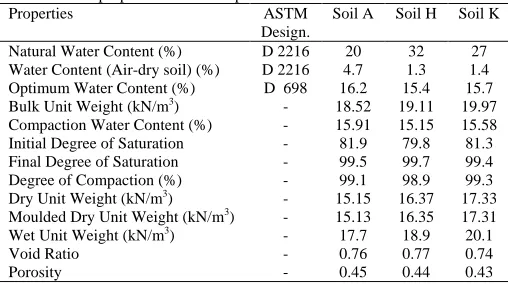
[image:3.612.334.541.98.262.2]solution) was continuously stirred at 5 rev/min throughout the test. Table I summarizes the properties of the compacted soil used for the diffusion tests.
Fig. 1. Schematic of the bespoke diffusion cell
TABLE I
Summarized properties of the compacted soils initiated for the diffusion tests
Properties ASTM
Design.
Soil A Soil H Soil K
Natural Water Content (%) D 2216 20 32 27 Water Content (Air-dry soil) (%) D 2216 4.7 1.3 1.4 Optimum Water Content (%) D 698 16.2 15.4 15.7 Bulk Unit Weight (kN/m3) - 18.52 19.11 19.97
Compaction Water Content (%) - 15.91 15.15 15.58 Initial Degree of Saturation - 81.9 79.8 81.3 Final Degree of Saturation - 99.5 99.7 99.4 Degree of Compaction (%) - 99.1 98.9 99.3 Dry Unit Weight (kN/m3) - 15.15 16.37 17.33
Moulded Dry Unit Weight (kN/m3) - 15.13 16.35 17.31
Wet Unit Weight (kN/m3) - 17.7 18.9 20.1 Void Ratio - 0.76 0.77 0.74
Porosity - 0.45 0.44 0.43
On termination of the diffusion test, the permeant chamber was carefully emptied out of the cell and sampled for ion analysis. The soil sample was then extruded from the mould and sectioned into nine approximately equal thicknesses. The moisture content was determined for each sectioned soil sample. Other portions were then squeezed with a pneumatic porewater squeezer to obtain soil porewater for chemical analysis. In a case where the post-diffusion water content was insufficient to generate enough volume of porewater for chemical analysis, a saturation extract was obtained and the measured concentrations were adjusted for dilution.
C. Analysis of Water Sample
[image:3.612.309.563.311.453.2]reagent or procedural contamination, blanks of reagent and de-ionized water were analyzed with each batch of samples. The pH and electrical conductivity of water samples were measured in triplicate with appropriate probes and the average values were recorded. Chloride and sulphate were the main anions considered during the study. These anions were detected through ion chromatography with Waters IC-Pak A Column using Borate/Glauconate Eluent. The device comprises of stainless steel anion columns that separate and quantify the anions at low (ppb) levels. Pre-test sample preparation included dilution and filtration. Fresh deionized megapure (18 megaohm) water, less than 4 hours old, was drawn and used in the preparation of standards and the dilution of samples before analyzing with the Waters 432 Conductivity Detector. This was to minimize possible contamination due to exposure to atmospheric pollutants in accordance to [36].
To prevent the precipitation of salts in the column due to the injection of samples with high concentrations of ions, proper sample dilution before the injection into the column was done with fresh megapure (18 megaohm) water. Calibrated samplers were used to collect required quantities of test sample and megapure water to obtain the diluted sample for the analysis. The samples were filtered using 0.45 µm pore size plastic syringe filters to prevent clogging of the analytical column system or its peripherals and the excessive build-up of pressure due to the particulates in the samples. The samples were introduced into the Millitrap cartridge via Luer-lock syringes with bulk of the test conforming to test procedures outlined by previous authors [37], [8], [34], [38]. The filter was rinsed at least two times with megapure water and then sequentially, 20 mL of the sample was filtered to waste. In accordance to [36] the samples were then injected at the recommended flow rate of 1.2 mL/min and at a pressure of 2.41 MPa (350 psi) which was in range with the recommended pressure threshold of 6.89 MPa (1000 psi).
IV CONCLUSIONS
The study depicts an experimental view of and assessment of three subtropical clayey soils interacted with AMD towards determining their mineral buffering efficacy for use as natural containment liners in areas under AMD attack. From sequential prolonged testing on the respective soil systems, pertinent tests leading to more decisive interpretations and analysis in succeeding studies were achieved. The species concentrations obtained from either the effluents or the solution and sections of soil samples obtained from dissolution and diffusion tests suggested that the soils-AMD interaction is a complex process. The results of the study suggest that interactions between AMD and the soils plausibly resulted in dissolution of metals from soil grains, desorption of adsorbed contaminant species at the exchangeable sites of the soils and, alteration and dissolution of soil minerals. Hence, in consideration of the general outcomes of the study with further interpretations and analysis in succeeding studies, the three sampled natural subtropical soils were found to be incompatible with AMD which invariably may not be utilized solely as natural clayey mineral lining materials towards AMD containment disposal. However, may be considered for use in
the construction of composite barriers for containing acid-forming waste bodies.
ACKNOWLEDGMENT
The Authors appreciate the University of Johannesburg where the study was done.
REFERENCES
[1] Gray N.F. 1997. Environmental impact and remediation of acid mine drainage: a management problem. Environmental Geology, 30 (4): 62-71.
[2] Manzano, M., Ayora, C., Domenech, C., Navarette, P., Garralon, A., and Turrero, MJ., 1999. The impact of the Aznalcollar mine-tailing spill on groundwater. Science of the Total Environment, 242 (1-3): 189-209. [3] Wates, J.A., and Rykaart, E.M., 1999. The performance of natural soil
covers in rehabilitating opencast mines and waste dumps in South Africa. Research Report 575/1/99, Water Research Commission, Pretoria.
[4] Vermaak, J.J.G., Wates, J.A., Bezuidenhout, N., and Kgwale, D., 2004. The evaluation of soil covers used in the rehabilitation of coal mines. Research Report 1002/1/04, Water Research Commission, Pretoria. [5] Hobbs P. Cobbing J. 2007. A hydrogeological assessment of acid mine
drainage impacts in the West Rand Basin, Gauteng Province. Report no. CSIR/NRE/WR/ER/2007/0097/C. Council for Scientific and Industrial Research. Pretoria.
[6] Yanful, E.K., Shikatani, K.S., and Quirt, D.H., 1995. Hydraulic conductivity of natural soils permeated with acid mine drainage. Canadian Geotechnical Journal, 32: 624-646.
[7] Kashir M. Yanful E.K. 2000. Compatibility of slurry wall backfill soils with acid mine drainage. Advances in Environmental Research, 4: 251-268.
[8] Kashir M. Yanful E.K. 2001. Hydraulic conductivity of bentonite permeated with acid mine drainage. Canadian Geotechnical Journal, 38: 1-15.
[9] Wade P.W. Woodbourne S. Morris W. Vos P. Jarvis N. 2002. Tier 1 risk assessment of radionuclides in selected sediments of the Mooi River, Water Research Commission, WRC Report 1095/1/02, Pretoria: 93 p. [10] Coetzee H. Wade P. Winde F. 2006. An assessment of sources,
pathways, mechanisms and risks of current and future pollution of water and sediments in the Wonderfontein Spruit Catchment, Water Research Commission, WRC Report No. 1214/1/06, Pretoria: 202 p.
[11] Society for Mining, Metallurgy and Exploration, Inc- SME 2000. In Proceedings of the Fifth International Conference on Acid Rock Drainage (ICARD), ICARD 2000, Denver Colorado. SME Inc., Littleton, Colorado. 2: 769-1272.
[12] Coetzee H. Wade P.W. Winde F. 2002. Reliance on existing wetlands for pollution control around the Witwatersrand gold/uranium mines of South Africa. Are they sufficient? In Uranium in the aquatic environment: Uranium Mining and Hydrogeology.
[13] Tutu H. McCarthy T.S. Cukrowska E. 2008. The chemical characteristics of acid mine drainage with particular reference to sources, distribution and remediation: The Witwatersrand Basin, South Africa as a case study. Applied Geochemistry, 23, 3666- 3684. [14] International Network for Acid Prevention (INAP) 2009. Global Acid
Rock Drainage Guide, http://www.gardguide.com.
[15] Martin-Garin A. Gaudet J.P. Charlet L. Vitart X. 2002. A dynamic study of the sorption and the transport processes of cadmium in calcareous sandy soils. Waste Management, 22: 201-207.
[16] Seuntjens P. Mallants D. Simunek J. Patyn J. Jacques D. 2002. Sensitivity analysis of physical and chemical properties affecting field-scale cadmium transport in a heterogeneous soil profile. J. of Hydrol., 264: 185-200.
[17] Amezaga J.M. Younger P.L. 2006. Mine water management in European Environmental Policy: An Assessment of recent legislative developments. In Barnhisel (ed.) Proceedings of the 7th International Conference on Acid Rock Drainage ICARD, March, 26-30, St. Louis, Missouri.
[19] Horstmann U.E. Coetzee H. 2004a. A strategic water management plan for prevention of water ingress into underground workings of the Witwatersrand mining basins-Western Basin Stable Isotope Study-report on project period up to 15 Dec., 2004: Council for Geoscience, Pretoria, Stable Isotope Laboratory Report 2004-06, pp. 16.
[20] Department of Water Affairs and Forestry, DWAF 2008. Integrated Mine Water Management, Best Practice Guideline H1, Directorate: Resource Protection and Waste, Pretoria, 67 pp.
[21] Department of Water Affairs DWA 2010. Projects/Programmes, http://www.dwa.gov.za/projects.aspx (accessed 29 November 2010). [22] Coetzee H. Croukamp L. Venter J. De Wet L. 2005a. Contamination of
the Tweelopie Spruit and environs by water from the Western Basin decant point on Harmony Gold’s property: Council for Geoscience, Pretoria, Report No. 2005-0148, pp. 28.
[23] Coetzee H. Singh M. Roux R. 2008b. Risks related to the flooding of gold mines in the Central Rand, West Rand and KOSH Gold Fields: Department of Minerals and Energy, Pretoria, Council for Geoscience, Report No: 2008-0241, 21 pp.
[24] Netili K.F. Van Tonder D. Coetzee H. Rust U. Yibas B. 2010. Strategic Water Management Project: Proposed way forward prepared by CGS. Council for Geoscience, Pretoria, 21 pp.
[25] Lin L. Hansen R.N. 2010. Mine Flooding, Identification of Decant Site and determination of Environmental Critical Level on the Central Rand Gold Field, Council for Geoscience Report Number 2010-0199, Council for Geoscience, Pretoria, 75 pp.
[26] Yibas B. Pulles W. Nengovhela C. 2010. Kinetic Development of Oxidation Zones in Tailings Dams with specific reference to the Witwatersrand Gold Mine Tailings Dams. Report to the Water Research Commission, WRC Report No. 1554/1/10, 105 pp.
[27] Shackelford C.D. Rowe R.K. 1998. Contaminant transport modeling. In Proceedings of the Third International Congress on Environmental Geotechnics. Lisbon, Portugal. Edited by Seco e Pinto, P.S., Environmental Geotechnics, 1. pp.939-956.
[28] Leite A.L. Paraguassu A.B. Rowe R.K. 2003. Sorption of Cd2+, K+, F,
and Cl- on some tropical soils. Canadian Geotechnical Journal, 40: 629-642.
[29] Chai J.C. Miura N. Hayashi S. 2005. Large-scale tests for leachate flow through composite liner due to geomembrane defects. Geosynthetics International, 12, No. 3, 134-144.
[30] Barroso M. Touze-Foltz N. Maubeuge V.K. Piersond P. 2006. Laboratory investigation of flow rate through composite liners consisting of a geomembrane, a GCL and a soil liner. Geotextiles and Geomembranes 24:139-155.
[31] Akram N.A.P.E. Nima R. 2006. Parametric Study of One-Dimensional Solute Transport in Deformable Porous Media. Journal of Geotech. Geoenviron. Eng. 132:1001-1010.
[32] Celik B. Rowe R.K. Unlu K. 2009. Effect of vadose zone on the steady-state leakage rates from landfill barrier Systems. Journal of Waste Management 29:103-109.
[33] American Society for Testing and Materials (ASTM) 2002. Annual book of ASTM standards. Section 4 Construction-Volume 04.08 Soil and Rock (I): D 420-D 5779. ASTM International, West Conshohocken, PA. 1672pp.
[34] Frempong E. Yanful E. 2007. Tropical Soils-Acid Mine Drainage Interactions: Breakthrough Curves and Some Transport Parameters. Journal of Environ. Eng. 133:7, 733-741.
[35] Rowe R.K. Booker J.R. Fraser M.J. 1994. POLLUTEv6 and POLLUTE-GUI. User’s guide. Distributed by GAEA Environmental Engineering Ltd., London, ON, Canada.
[36] Waters Corporation 1994. Waters IC-Pak column and guard column. Care and use manual. Report # 091064TP, Revision O. Waters Corporation, Milford, MA, USA.
[37] Heckenberg A.L. Alden P.G. Wildman B.J. Krol J. Romano J.P. Jackson P.E. Jandik P. Jones W.R. 1997. Waters innovative methods for ion analysis. Water Chromatography Division, Millipore Corporation. Manual Number 22340, Revision 1.0.
[38] Nguyen T.B. 2011. Comparison of four composite landfill liner systems considering leakage rate and mass flux. Proceedings of 14th Asian