RIVIEW ARTICLE
ACTIVE PACKAGING – AN OVERVIEW
Sukriti Ailavadi and *Gargi Ghoshal
Dr. S.S.Bhatnagar University Institute of Chemical Engineering & Technology, Panjab University,
Chandigarh, India
ARTICLE INFO ABSTRACT
In the past few years there has been a major shift in the driving force for development of new packaging technology. Changing consumer demands for food products that are minimally processed and can prolong for longer time with minimal loss in quality, new regulations for consumer health and safety, need for packages that prevent microbial contamination, rancidity and production of off-odours, gases, off-flavours etc. are some of the driving forces. Moreover, there have been changes in retail, distribution and purchasing of food products such as internet shopping. Henceforth, technologies like active packaging, interactive packaging, smart packaging, intelligent packaging, and modified atmosphere packaging are need of the hour. In this review different aspect of active packaging are discussed.
Copyright © 2016, Sukriti Ailavadi and Gargi Ghoshal. This is an open access article distributed under the Creative Commons Attribution License, which permits
unrestricted use, distribution, and reproduction in any medium, provided the original work is properly cited.
INTRODUCTION
Active Packaging is an innovative technique of packaging of food products that helps in extending shelf life of the food product with minimal loss in quality. It is the type of packaging which ‘changes the condition of packed food to extend shelf life or to improve safety or sensory properties, while maintaining the quality of packaged food (Ahvenainen, 2003). This technique uses incorporation of active components that release or absorb substances from the packaged food or from its surrounding environment. Fig.1 shows example of two such active packages. Legal regulations regarding use of active components have been discussed later.
Classification
There are various classifications for active packaging systems. Broadly they can be classified into:
Scavenging
Oxygen Scavenging
It is necessary to recognise that the environment in hermetically sealed packages might also contain oxygen that
*Corresponding author: Gargi Ghoshal,
Dr. S.S.Bhatnagar University Institute of Chemical Engineering & Technology, Panjab University, Chandigarh, India.
can cause long-term deteriorative effect on food. Further, some package materials such as polyester may contain dissolved oxygen, and expanded polystyrene usually contains trapped oxygen in the cells. Oxidation of food constituents and spoilage by moulds are two major causes of food deterioration. This can be prevented by use of oxygen scavenging system which uses oxidizable substances such as iron powder, enzymes, ascorbic acid, ethyl cellulose etc. Oxygen scavengers react with and therefore reduce the oxygen present in the internal environment of the package. They can be enclosed in sachets and incorporated into the package or can be extruded as a part of the polymeric layers. They are commercially used in packages that have been formerly flushed with inert gas or vaccumised. Advantages:
Oxygen scavengers can be dissolved or dispersed in plastic packaging or the packaging can itself be made of the oxygen scavenger. This technique has economic advantages as well as decreases the risk of consumption either accidentally or due to rupture of sachet.
Oxygen scavenging technique is more economical than MAP.
Prevents growth of aerobic bacteria and moulds which is of utmost importance for dairy and meat products.
Prevents spoilage of cereals during storage due to insect infestation thereby eliminating need for chemicals such as pesticides and insecticides.
ISSN: 0975-833X
International Journal of Current Research Vol. 8, Issue, 03, pp. 28244-28254, March, 2016
INTERNATIONAL JOURNAL OF CURRENT RESEARCH
Article History:
Received 20thDecember, 2015
Received in revised form 25thJanuary, 2016
Accepted 28thFebruary, 2016
Published online 31stMarch, 2016 Key words:
Active packaging, Smart packaging, Intelligent packaging,
Modified atmosphere packaging.
Citation: Sukriti Ailavadi and Gargi Ghoshal, 2016.“Active packaging–An overview”,International Journal of Current Research, 8, (03), 28244-28254.
RIVIEW ARTICLE
ACTIVE PACKAGING – AN OVERVIEW
Sukriti Ailavadi and *Gargi Ghoshal
Dr. S.S.Bhatnagar University Institute of Chemical Engineering & Technology, Panjab University,
Chandigarh, India
ARTICLE INFO ABSTRACT
In the past few years there has been a major shift in the driving force for development of new packaging technology. Changing consumer demands for food products that are minimally processed and can prolong for longer time with minimal loss in quality, new regulations for consumer health and safety, need for packages that prevent microbial contamination, rancidity and production of off-odours, gases, off-flavours etc. are some of the driving forces. Moreover, there have been changes in retail, distribution and purchasing of food products such as internet shopping. Henceforth, technologies like active packaging, interactive packaging, smart packaging, intelligent packaging, and modified atmosphere packaging are need of the hour. In this review different aspect of active packaging are discussed.
Copyright © 2016, Sukriti Ailavadi and Gargi Ghoshal. This is an open access article distributed under the Creative Commons Attribution License, which permits
unrestricted use, distribution, and reproduction in any medium, provided the original work is properly cited.
INTRODUCTION
Active Packaging is an innovative technique of packaging of food products that helps in extending shelf life of the food product with minimal loss in quality. It is the type of packaging which ‘changes the condition of packed food to extend shelf life or to improve safety or sensory properties, while maintaining the quality of packaged food (Ahvenainen, 2003). This technique uses incorporation of active components that release or absorb substances from the packaged food or from its surrounding environment. Fig.1 shows example of two such active packages. Legal regulations regarding use of active components have been discussed later.
Classification
There are various classifications for active packaging systems. Broadly they can be classified into:
Scavenging
Oxygen Scavenging
It is necessary to recognise that the environment in hermetically sealed packages might also contain oxygen that
*Corresponding author: Gargi Ghoshal,
Dr. S.S.Bhatnagar University Institute of Chemical Engineering & Technology, Panjab University, Chandigarh, India.
can cause long-term deteriorative effect on food. Further, some package materials such as polyester may contain dissolved oxygen, and expanded polystyrene usually contains trapped oxygen in the cells. Oxidation of food constituents and spoilage by moulds are two major causes of food deterioration. This can be prevented by use of oxygen scavenging system which uses oxidizable substances such as iron powder, enzymes, ascorbic acid, ethyl cellulose etc. Oxygen scavengers react with and therefore reduce the oxygen present in the internal environment of the package. They can be enclosed in sachets and incorporated into the package or can be extruded as a part of the polymeric layers. They are commercially used in packages that have been formerly flushed with inert gas or vaccumised. Advantages:
Oxygen scavengers can be dissolved or dispersed in plastic packaging or the packaging can itself be made of the oxygen scavenger. This technique has economic advantages as well as decreases the risk of consumption either accidentally or due to rupture of sachet.
Oxygen scavenging technique is more economical than MAP.
Prevents growth of aerobic bacteria and moulds which is of utmost importance for dairy and meat products.
Prevents spoilage of cereals during storage due to insect infestation thereby eliminating need for chemicals such as pesticides and insecticides.
ISSN: 0975-833X
International Journal of Current Research Vol. 8, Issue, 03, pp. 28244-28254, March, 2016
INTERNATIONAL JOURNAL OF CURRENT RESEARCH
Article History:
Received 20thDecember, 2015
Received in revised form 25thJanuary, 2016
Accepted 28thFebruary, 2016
Published online 31stMarch, 2016 Key words:
Active packaging, Smart packaging, Intelligent packaging,
Modified atmosphere packaging.
Citation: Sukriti Ailavadi and Gargi Ghoshal, 2016.“Active packaging–An overview”,International Journal of Current Research, 8, (03), 28244-28254.
RIVIEW ARTICLE
ACTIVE PACKAGING – AN OVERVIEW
Sukriti Ailavadi and *Gargi Ghoshal
Dr. S.S.Bhatnagar University Institute of Chemical Engineering & Technology, Panjab University,
Chandigarh, India
ARTICLE INFO ABSTRACT
In the past few years there has been a major shift in the driving force for development of new packaging technology. Changing consumer demands for food products that are minimally processed and can prolong for longer time with minimal loss in quality, new regulations for consumer health and safety, need for packages that prevent microbial contamination, rancidity and production of off-odours, gases, off-flavours etc. are some of the driving forces. Moreover, there have been changes in retail, distribution and purchasing of food products such as internet shopping. Henceforth, technologies like active packaging, interactive packaging, smart packaging, intelligent packaging, and modified atmosphere packaging are need of the hour. In this review different aspect of active packaging are discussed.
Copyright © 2016, Sukriti Ailavadi and Gargi Ghoshal. This is an open access article distributed under the Creative Commons Attribution License, which permits
unrestricted use, distribution, and reproduction in any medium, provided the original work is properly cited.
INTRODUCTION
Active Packaging is an innovative technique of packaging of food products that helps in extending shelf life of the food product with minimal loss in quality. It is the type of packaging which ‘changes the condition of packed food to extend shelf life or to improve safety or sensory properties, while maintaining the quality of packaged food (Ahvenainen, 2003). This technique uses incorporation of active components that release or absorb substances from the packaged food or from its surrounding environment. Fig.1 shows example of two such active packages. Legal regulations regarding use of active components have been discussed later.
Classification
There are various classifications for active packaging systems. Broadly they can be classified into:
Scavenging
Oxygen Scavenging
It is necessary to recognise that the environment in hermetically sealed packages might also contain oxygen that
*Corresponding author: Gargi Ghoshal,
Dr. S.S.Bhatnagar University Institute of Chemical Engineering & Technology, Panjab University, Chandigarh, India.
can cause long-term deteriorative effect on food. Further, some package materials such as polyester may contain dissolved oxygen, and expanded polystyrene usually contains trapped oxygen in the cells. Oxidation of food constituents and spoilage by moulds are two major causes of food deterioration. This can be prevented by use of oxygen scavenging system which uses oxidizable substances such as iron powder, enzymes, ascorbic acid, ethyl cellulose etc. Oxygen scavengers react with and therefore reduce the oxygen present in the internal environment of the package. They can be enclosed in sachets and incorporated into the package or can be extruded as a part of the polymeric layers. They are commercially used in packages that have been formerly flushed with inert gas or vaccumised. Advantages:
Oxygen scavengers can be dissolved or dispersed in plastic packaging or the packaging can itself be made of the oxygen scavenger. This technique has economic advantages as well as decreases the risk of consumption either accidentally or due to rupture of sachet.
Oxygen scavenging technique is more economical than MAP.
Prevents growth of aerobic bacteria and moulds which is of utmost importance for dairy and meat products.
Prevents spoilage of cereals during storage due to insect infestation thereby eliminating need for chemicals such as pesticides and insecticides.
ISSN: 0975-833X
International Journal of Current Research Vol. 8, Issue, 03, pp. 28244-28254, March, 2016
INTERNATIONAL JOURNAL OF CURRENT RESEARCH
Article History:
Received 20thDecember, 2015
Received in revised form 25thJanuary, 2016
Accepted 28thFebruary, 2016
Published online 31stMarch, 2016 Key words:
Active packaging, Smart packaging, Intelligent packaging,
Modified atmosphere packaging.
Protects oils and fats present in food products, preventing oxidative rancidity.
Preserves plant and muscle pigments (in case of meat products), preventing discoloration.
Minimal loss of nutrients as oxidation causes loss of vitamin C or ascorbic acid (in fruit and vegetable based products).
Prevents production of staling odour in baked products. Prevents enzymatic and non-enzymatic phenolic
[image:2.595.40.285.178.535.2]browning.
Fig. 1. Active Packaging systems available commercially
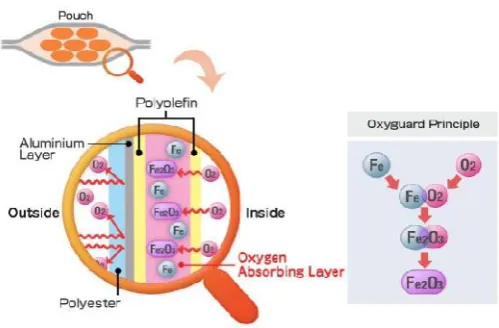
Fig. 2. Iron oxidation in oxygen scavengers
Types of oxygen scavenging systems
Iron Oxidation
Most oxygen scavenging systems use iron powder in sachets such as Ageless® (Mitsubishi Gas Chemical Co., Japan) which can reduce headspace oxygen to less than 0.01%. The chemical reaction, as shown in Fig. 2, is as
follows-Accordingly, 1g of iron consumes 300 ml of oxygen for oxidation. (Smith et al., 1990) Another method is incorporating oxygen scavengers into laminates or films, even though this system has less speed and capacity as compared to that of sachets containing oxygen scavengers. Oxbar™is a system developed by Carnaud-Metal Box (UK) which involves cobalt-catalysed oxidation of a nylon polymer blended especially in PET-bottles for plastic packaging of wine, beer, sauces and other beverages. (Brody et al., 2001) Reduced iron in sachets is widely used in many sectors such as for packing bacon bits, Macedonian nuts, pepperoni chips, bakery goods, beef snacks, peanuts, US military applications etc. (Brody et al., 2001) Recently there has been development of oxygen scavenging labels such as those of Freshmax® (Multisorb technologies, USA) and the ATCO®labels (Standa Industrie, France).
Enzymatic
Some oxygen scavenging systems use enzymes such as glucose oxidase, ethanol oxidase etc. to react with a substrate and reduce the incoming oxygen. For functioning of an enzyme in packaging material it must be immobilized. John Budny tested immobilized enzymes in packaging systems. The reaction of packaging system using glucose oxidase is: (Brody et al., 2001).
2G + 2O2+2H2O 2GO + 2H2O2
where G is the substrate.
Glucose oxidase transfers two hydrogens from the -CHOH group of glucose to oxygen with the formation of glucono-delta-lactone and hydrogen peroxide. The lactone then reacts spontaneously with water to form gluconic acid. Since hydrogen peroxide is oxidising therefore objectionable, catalase is introduced to break it down.
2H2O2+ catalase 2H2O + O2
One mole of glucose consumes one mole of oxygen. To reach zero oxygen in a package with 500 cc headspace needs 0.0043 mole of glucose. Labuza and Breene (1989) analyzed the issues of incorporating glucose oxidase into package materials. They suggested that to counteract the quantity of oxygen passing through a cracked or pinholed aluminium foil lamination, an 28245 Sukriti Ailavadi and Gargi Ghoshal. Active packaging–An overview
Protects oils and fats present in food products, preventing oxidative rancidity.
Preserves plant and muscle pigments (in case of meat products), preventing discoloration.
Minimal loss of nutrients as oxidation causes loss of vitamin C or ascorbic acid (in fruit and vegetable based products).
Prevents production of staling odour in baked products. Prevents enzymatic and non-enzymatic phenolic
[image:2.595.40.290.570.734.2]browning.
Fig. 1. Active Packaging systems available commercially
Fig. 2. Iron oxidation in oxygen scavengers
Types of oxygen scavenging systems
Iron Oxidation
Most oxygen scavenging systems use iron powder in sachets such as Ageless® (Mitsubishi Gas Chemical Co., Japan) which can reduce headspace oxygen to less than 0.01%. The chemical reaction, as shown in Fig. 2, is as
follows-Accordingly, 1g of iron consumes 300 ml of oxygen for oxidation. (Smith et al., 1990) Another method is incorporating oxygen scavengers into laminates or films, even though this system has less speed and capacity as compared to that of sachets containing oxygen scavengers. Oxbar™is a system developed by Carnaud-Metal Box (UK) which involves cobalt-catalysed oxidation of a nylon polymer blended especially in PET-bottles for plastic packaging of wine, beer, sauces and other beverages. (Brody et al., 2001) Reduced iron in sachets is widely used in many sectors such as for packing bacon bits, Macedonian nuts, pepperoni chips, bakery goods, beef snacks, peanuts, US military applications etc. (Brody et al., 2001) Recently there has been development of oxygen scavenging labels such as those of Freshmax® (Multisorb technologies, USA) and the ATCO®labels (Standa Industrie, France).
Enzymatic
Some oxygen scavenging systems use enzymes such as glucose oxidase, ethanol oxidase etc. to react with a substrate and reduce the incoming oxygen. For functioning of an enzyme in packaging material it must be immobilized. John Budny tested immobilized enzymes in packaging systems. The reaction of packaging system using glucose oxidase is: (Brody et al., 2001).
2G + 2O2+2H2O 2GO + 2H2O2
where G is the substrate.
Glucose oxidase transfers two hydrogens from the -CHOH group of glucose to oxygen with the formation of glucono-delta-lactone and hydrogen peroxide. The lactone then reacts spontaneously with water to form gluconic acid. Since hydrogen peroxide is oxidising therefore objectionable, catalase is introduced to break it down.
2H2O2+ catalase 2H2O + O2
One mole of glucose consumes one mole of oxygen. To reach zero oxygen in a package with 500 cc headspace needs 0.0043 mole of glucose. Labuza and Breene (1989) analyzed the issues of incorporating glucose oxidase into package materials. They suggested that to counteract the quantity of oxygen passing through a cracked or pinholed aluminium foil lamination, an 28245 Sukriti Ailavadi and Gargi Ghoshal. Active packaging–An overview
Protects oils and fats present in food products, preventing oxidative rancidity.
Preserves plant and muscle pigments (in case of meat products), preventing discoloration.
Minimal loss of nutrients as oxidation causes loss of vitamin C or ascorbic acid (in fruit and vegetable based products).
Prevents production of staling odour in baked products. Prevents enzymatic and non-enzymatic phenolic
browning.
Fig. 1. Active Packaging systems available commercially
Fig. 2. Iron oxidation in oxygen scavengers
Types of oxygen scavenging systems
Iron Oxidation
Most oxygen scavenging systems use iron powder in sachets such as Ageless® (Mitsubishi Gas Chemical Co., Japan) which can reduce headspace oxygen to less than 0.01%. The chemical reaction, as shown in Fig. 2, is as
follows-Accordingly, 1g of iron consumes 300 ml of oxygen for oxidation. (Smith et al., 1990) Another method is incorporating oxygen scavengers into laminates or films, even though this system has less speed and capacity as compared to that of sachets containing oxygen scavengers. Oxbar™is a system developed by Carnaud-Metal Box (UK) which involves cobalt-catalysed oxidation of a nylon polymer blended especially in PET-bottles for plastic packaging of wine, beer, sauces and other beverages. (Brody et al., 2001) Reduced iron in sachets is widely used in many sectors such as for packing bacon bits, Macedonian nuts, pepperoni chips, bakery goods, beef snacks, peanuts, US military applications etc. (Brody et al., 2001) Recently there has been development of oxygen scavenging labels such as those of Freshmax® (Multisorb technologies, USA) and the ATCO®labels (Standa Industrie, France).
Enzymatic
Some oxygen scavenging systems use enzymes such as glucose oxidase, ethanol oxidase etc. to react with a substrate and reduce the incoming oxygen. For functioning of an enzyme in packaging material it must be immobilized. John Budny tested immobilized enzymes in packaging systems. The reaction of packaging system using glucose oxidase is: (Brody et al., 2001).
2G + 2O2+2H2O 2GO + 2H2O2
where G is the substrate.
Glucose oxidase transfers two hydrogens from the -CHOH group of glucose to oxygen with the formation of glucono-delta-lactone and hydrogen peroxide. The lactone then reacts spontaneously with water to form gluconic acid. Since hydrogen peroxide is oxidising therefore objectionable, catalase is introduced to break it down.
2H2O2+ catalase 2H2O + O2
enzyme surface will have to react with oxygen in the following manner:
Rate of oxygen passage (cc/m2/t) = (permeability) X (area) X (oxygen pressure difference between the outside and inside).
With a pinhole in aluminium foil lamination of the package, there would be a need to scavenge 1ml oxygen/day. At 30 to 40°C, pure glucose oxidase has a rate of oxygen consumption of about 150 mL/hr/mg. Spreading the enzyme at a concentration of 1 mg per m2on a film would be sufficient to react with all the oxygen coming through a film having a very high oxygen permeability of about 18,000 cc/day/m2. (Brody
et al., 2001) Advantage of using enzymatic oxidation system is
that polypropylene and polyethene can immobilise enzymes. Moreover, enzyme has high stability when bound to a film. There are some limitations of using enzymatic oxidation as coupled enzyme systems are sensitive to changes in pH, temperature etc. and they might require addition of water, making it unsuitable for use in low moisture content food products. Another method of oxygen scavenging uses yeast. Gist Brocades, an enzyme manufacturer holds a patent covering the use of immobilized yeast on liner of bottles.
Ascorbic acid
Ascorbic acid can also be used to scavenge oxygen as it reacts with it and gets oxidised to dehydroascorbic acid. Even though it is not as quick as iron and cannot be detected by metal detectors, ascorbic acid and its derivatives based oxygen scavenging systems are second in commercial application after iron. The reaction can be catalysed by using metal ions. Grace’s Daraform® is one of the commercially available systems based on ascorbic acid, which is used in closure lining of plastic bottles. Pillsbury holds patents which were granted to Dr. Ernst Graf, which focuses on acceleration of action of ascorbic acid by the use of copper for complete removal of oxygen within the packet, which was used for many food sauces.
Photo sensitive dyes
CSIRO (Food Science, Australia) have developed Zero2™ which use of photosensitive dyes such as erythrosine which is impregnated into ethyl cellulose film. On exposure to UV, the oxygen in headspace or in the liquid food gets excited to singlet state and becomes more reactive and thus becomes bound oxygen (Brody et al., 2001).
Photon + dye dye*
dye* + O2 dye + O2
O2+ acceptor acceptor oxide
O2* O2
Ligands
Aquanotics/ Advanced oxygen Technologies developed immobilised small molecules to bind or absorb oxygen, called organometallic ‘ligands’ which can be incorporated into plastic and sheet form. They can be used in liners for closures of beer,
flavoured alcoholic beverages, fruit juices, carbonated beverages etc.
Limitations of oxygen scavengers
Premature unwanted chemical reaction.
Limited rate of scavenging due to high oxygen permeability of packaging material.
Migration of compounds, by-products or end products through the packaging material.
Difficult to incorporate if package has narrow opening. Depend upon rate of scavenging and amount of oxygen
scavenger available in the package.
There might be growth of potentially harmful anaerobic bacteria.
Ethylene scavengers
Most fresh fruits and vegetables emit large amount ethylene which is a growth hormone that accelerates ripening, aging and ultimately death. It is closely related to respiration rate in plants. As surrounding ethylene content increases, respiration rate increases leading to post-harvest losses. Even in non-climacteric fruits such as ‘Shamouti’ oranges ethylene has many disadvantageous effects such as increase in the appearance of chilling injury (CI) symptoms, stem-end rot decay, and the content of volatile off-flavours in the juice head space and fruit internal atmosphere (Porat et al., 1999). Therefore, removal of ethylene and/or inhibition of effect of ethylene are important for prolonged shelf life and preventing post-harvest losses.
1-Methylcyclopropane (1-MCP)
Higher concentrations, of 50 and 100 mL 1 : 1 of 1-MCP, were very effective and markedly inhibited ethylene-induced fruit degreening. It has no effect on loss of fruit weight or firmness. But, 1-MCP treated foods exhibit more decay than non-treated control fruits, weaken the tissue and increase the incidence of Cl symptoms, decay development and accumulation of volatile off-flavours) (Porat et al., 1999). Other ethylene blocking technologies include Chrystal AVB® that contains silver thiosulfate and ReTain®containing aminoethoxyvinylglycine.
KMnO4
capacity with ethylene, hence requirement in large amounts and their tendency to bind with moisture.
Adsorption
Many systems have been developed that use activated carbon, charcoal or clay (zeolites) impregnated with metal catalysts or inorganic chemicals to reduce ethylene levels in minimally processed foods such as kiwis, bananas, avocados, spinach etc. Finely dispersed clays or activated earths which are incorporated into polyether films can adsorb ethylene. Pd-based ethylene scavengers have been found out to be suitable for most freshproduce and floral applications under conditions of high humidity and low or room temperature (Smith et al., 2009). ‘Send o Mate’ developed by Mitsubishi uses Pd catalyst on activated carbon. Even though the finely divided bags containing materials such as activated carbon or activated earth adsorb ethylene, but these mineralised bags open pores of the package, making CO2 and O2 transmission easier than polyethylene bags. Moreover, ethylene sorption depends upon the amount of the adsorbent and surface area.
CO2Scavenging
Although CO2 is used in modified atmosphere technique to replace oxygen, it has adverse effects if present in high concentration. Respiring fruits and vegetables can increase CO2 level in the package leading to undesirable biochemical alterations, flavour and aroma changes, food deterioration and package destruction. Commercial examples of CO2scavengers are FreshLock® or Ageless® E. But in some cases such as in meat and poultry products high level of CO2 is useful in extending the shelf life. Thus, CO2generators such as ferrous carbonate or sodium bicarbonate systems are incorporated. A list of CO2generators/absorbers is shown in Table 1.
Moisture Scavenging
Moisture can develop in food while storage or may be trapped during packaging. It causes sweating in fruits and vegetables,
drip loss in meat products, alteration in physico-chemical properties, mould growth and are deleterious for texture, flavour and odour of the product. Desiccants such as silica gel, clay and molecular sieves such as zeolites help to control moisture and relative humidity in a package by absorbing the water and lowering the aw. (Brody et al., 2001) Although they can remove moisture to a large extent but they might alter odours when wet. There are many moisture scavengers available in the market such as Dri® developed by Airsec’s United Desiccants, a Süd-Chemie Performance Packaging subsidiary. (Brody et al., 2001)
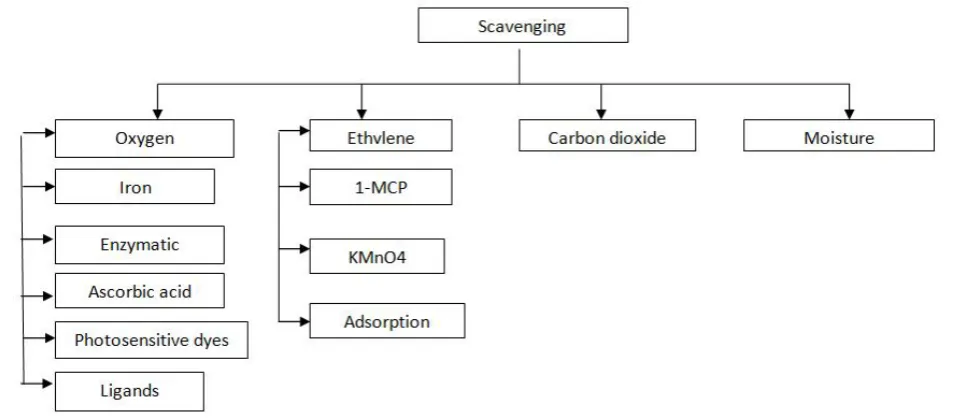
Fig. 3 represents a flowchart of scavenging systems used in active packaging is given in the following line diagram.
Releasing
Anti-microbial release
Anti-microbial packaging is useful in preventing microbial contamination of food product by the use of anti-microbial (AM) agents.
There are of two types of AM (1) those that contain an AM agent that migrates to the surface of the food, and (2) those that are effective against surface growth of micro-organisms without migration.
Some natural AM agents are
[image:4.595.62.539.305.515.2]Bacteriocins: Certain bacteria produce anti-microbial peptides which inhibit other closely related spoilage bacteria and food pathogens. They are non-toxic, commercially available, heat stable and approved as GRAS by FDA. Most common example is nisin which is isolated from L.monocytogenes and is used in packaging of tofu as it targets gram positive bacteria (Appendinia and Hotchkiss, 2002). Organic acids, their salts and anhydrides, they can be either applied directly by spraying/ dipping or can be incorporated into the package. Microbial activity is less in case of direct application as it might react with or diffuse into the food or might evaporate or become
Fig. 3. Different scavenging systems used in active packaging
unstable during food processing. Whereas, in case of incorporation in the package, the shelf life is greatly increased due to direct contact of the AM agent with the food and release of the active components on the food surface. Direct addition of acids into polymer is difficult due to difference in polarity. Hence anhydrides are used as they are stable when dry, thermally stable and in aqueous environment hydrolyse to form free acid .Some common examples are sorbic acid used for packing of beef and benzoic acid used for packing of cheese. Plant extracts: Spices, herbs and essential oils have been approved by FDA as GRAS. They are effective against many gram positive, gram negative bacteria, yeast and fungi. Their activity depends upon their composition, structure and functional groups attached. The only disadvantage is their strong flavour due to which their use is limited in packaging. There are various AM agents available such as cinnamaldehyde which is used in packing of sprouts and linalol for cheese. A study published in Journal of Food Science shows that extracts from pecan shells may be effective in protecting meats from
Listeria growth.
Enzymes: Lysozyme and glucose oxidase are most common commercial examples which inhibit gram positive bacteria. Glucose oxidase produces H2O2which is anti-microbial. Bioka is an AM package that uses glucose oxidase.
Chemical agents: Silver is used as an AM agent in medicine and water treatment. Silver nitrate can be used to produce silver ions having a strong anti-microbial activity by interfering with electron transport system and respiratory system of micro-organisms (Brody et al., 2001). AgIonTMis a silver substituted zeolite used for bulk food storage containers, plastic or paper food wraps and milk containers (Appendinia and Hotchkiss, 2002). Other chemical agents include chlorine dioxide, sorbic acid, fungicides such as benomyl etc. According to food scientists at Penn State and University of California, Davis , ligands of chelating agents like bipyridine, Ferrozine, EDTA and phytic acid bind to metals to inhibit oxidation in case of wine samples. Ethicap® is an example of ethanol releasing system that is used in packaging of cakes and bread.
Chitosan: Chitosan, a linear polysaccharide, is a deacetylated derivate of chitin. It has low oxygen and water permeability, high anti-microbial activity against wide range of micro-organisms, can form blends with other polysaccherides and can be used in edible film coatings (Mohammed, 2010) Irish Agriculture and Food Development Authority Teagasc included 1% chitosan into bread and found that the bread could withstand mould for three days at 3000C compared to just one day for control bread. There was no significant effect on overall quality, acceptance or texture. These AM agents can be immobilized and incorporated into or coated on polymers, or can be used in sachets (Appendinia and Hotchkiss, 2002).
Anti-oxidant release
Anti-oxidants help to prolong shelf life of food especially dried and O2 sensitive products, by preventing oxidation of lipids. BHT can be impregnated in HDPE to provide anti-oxidative effect, but because of its tendency to accumulate in adipose tissue its use is questioned. Natural antioxidants such as Vitamin E and C can be integrated into polymer films as they are very stable under processing conditions.
Biosensors
Over the years there has been a shift in more pathogen testing on-site in food processing plants. The inherent specificity, selectivity, rapidity and adaptability of biosensors make them ideal candidates for use throughout the food industry (Terry
et al., 2005). A biosensor is an analytical device which detects
and transmits information pertaining to biochemical reactions. It has two primary parts, a bioreceptor and a transducer. The bioreceptor, which recognizes the target analyte, is an organic or biological material such as antigen, enzyme, microbe, or nucleic acid. Whereas the transducer, which converts biochemical signals into a quantifiable electrical response, may be optical, amperometric etc (Sangeeta et al., 2013). Time-Temperature Indicators are a type of biosensors based on change in chemical reaction, physical alteration or biological response towards temperature and time. Chemical reactions include melting, polymerisation, acid-base reactions etc. Biological response is based on change in biological activity such as micro-organisms, spores or enzymes towards time and temperature. Most common examples of TTIs include MonitorMarkTMof 3MTMand Fresh-Check® of Life Lines. This technology has many applications in cooling and self-heating packs. Ethanol biosensors can be used to detect low-oxygen injury in modified atmosphere packages of fresh-cut produce. Low oxygen conditions can occur due to improper packaging or unsafe handling. It can lead to production of fermentation volatiles such as ethanol, quality loss and eventually product breakdown and may cause growth of dangerous pathogens, such as Clostridium botulinum. The biosensor contains immobilized alcohol oxidase, peroxidase and a chromagen. In the presence of O2, alcohol oxidase catalyses oxidation of ethanol into acetaldehyde and H2O2. Peroxidase, an H2O2decomposing enzyme, catalyses oxidation of the chromagen causing a colour change. The extent of colour change depends on ethanol concentration, exposure time, and temperature (Smyth et al., 1999).
Many other technologies can be used to indicate freshness of a food product such as:
1. pH sensitive dyes (Pacquit et al., 2006)
2. Chromogenic substrates of enzymes produced by pathogens (DeCicco and Keeven, 1996)
3. Consumption of nutrients by micro-organisms (Kress-Rogers, 1993)
4. Amines (Wallach and Novikov, 1998)
5. Nano-spore silica immobilized with fluorescent dye (Rani and Abraham, 2006; Terry et al., 2004)
6. CO2(Mattila et al., 1990) 7. Ammonia (Horan, 1998)
8. Caged biomolecules (Kuswandi et al., 2011)
9. Conducting polymers (Retama et al., 2005; Ahuja et al., 2007)
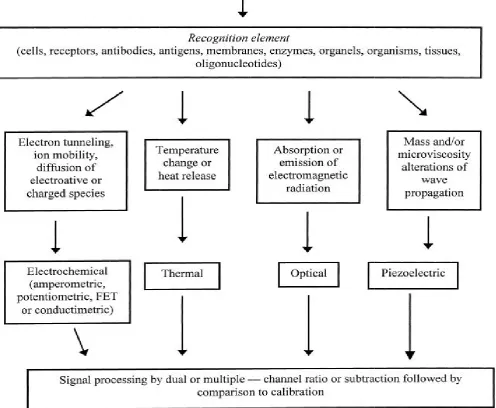
Fig. 4 shows some illustrative examples of bio-component and transducers available commercially.
Fig. 4. Bio-component and transducers
Fig 5. Bio-component and transducers used in Biosensors
[image:6.595.55.552.317.725.2]28249 Sukriti Ailavadi and Gargi Ghoshal. Active packaging–An overview
Fig. 4. Bio-component and transducers
Fig 5. Bio-component and transducers used in Biosensors
28249 Sukriti Ailavadi and Gargi Ghoshal. Active packaging–An overview
Fig. 4. Bio-component and transducers
Fig 5. Bio-component and transducers used in Biosensors
Fig. 6. Types of arrangement for layered silicate clay nano-composites
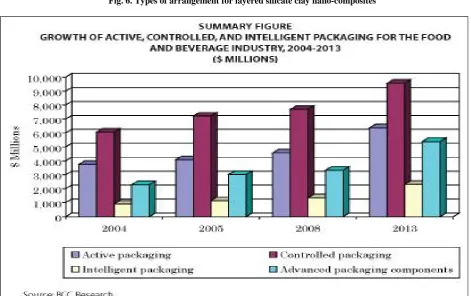
Fig. 7. Growth of active, controlled and intelligent packaging from 2004-2013
Table 1. Commercial CO2-scavengers or CO2-generators with possible O2-scavenging capacity (Vermeiren et al., 1999)
Trade name Company Substances and actions
Freshlock or Ageless E Mitsubishi Gas Chemical (Japan) CO2-scavenging (Ca(OH)2/O2-scavenging (iron powder)
Ageless G Mitsubishi Gas Chemical (Japan) CO2-generating (ascorbic acid)/O2-scavenging
Freshilizer CV Toppan Printing Co (Japan) CO2and O2-scavenging (non-ferrous metal)
Freshilizer C and CW Toppan Printing Co (Japan) CO2-generating/O2-scavenging
Freshpax M Multisorb technologies (USA) CO2-generating/O2-scavenging
Verifrais S.A.R.L. Codimer (France) CO2-generating
Vitalon G Toagosei Chem. Ind. Co. (Japan) CO2-generating/O2-scavenging
Non-intercalated
Polymer does not fit
in between the
layered clay
Microphase
separated final
structure
Intercalated
Polymer fits in
between the layered
clay
Increased inter-layer
spacing
Orderly arrangement
of parallel layers
Exfoliated
Complete separation
of clay platelets
[image:7.595.53.544.667.748.2]Table 2. Applications of Various Anti Microbial (AM) agents
Class AM agent Carrier Main Target Food Application Bacteriocin Nisin Edible films, cellulose, LDPE,
silicon coating, SPI
Gram positive bacteria Culture media Org
acid/anhydride
Propionic, benzoic, sorbic, acetic, lactic etc.
Edible films, EVA, LDPE Moulds Culture media, bread, water
Spices Cinnamic, caffeic acid, horseradish
Nylon/ PE cellulose Moulds, yeast, bacteria -Plant Extracts Grapefruit seed extract,
hinokitiol, bamboo powder, Rheum
palmatum
LDPE, cellulose Moulds, yeast, bacteria Lettuce, soybean, sprouts
Enzymes Lysozyme PVOH, nylon, cellulose acetate etc. Gram positive bacteria Culture media Glucose oxidase Alginate Gram positive bacteria Fish
Chemical agents Silver zeolites Various polyolefins Bacteria Culture media, milk containers Inorganic gases CO2 - Calcium hydroxide
SO2 - Sodium metabisulfite
Moulds, yeast, bacteria Coffee, Grape Fungicides- benomyl,
imazalil
[image:8.595.37.556.297.442.2]LDPE Moulds Culture media, bell pepper, cheese Ethanol vapours Silica gel, Silicon oxide sachet - Culture media, bakery
Table 3. Commercial Biosensors
Companies (country) Biosensors Target compounds Danvers (USA) Apec glucose analyser Glucose Biometra Biomedizinische Analytik
GmbH (Germany)
Biometra Biosensors for HPLC Glucose, ethanol and methanol Eppendorf (Germany) ESAT 6660 Glucose Analyzer Glucose
Solea—Tacussel (France) Glucoprocesseur Glucose and lactate
Universal Sensors (USA) Amperometric Biosensor Detector Glucose, galactose, l-amino acids, ascorbate and ethanol Yellow Springs Instruments (USA) ISI Analysers Glucose, lactose, l-lactate, ethanol, methanol, glutamate and choline Toyo Jozo Biosensors (Japan) Models: PM-1000 and PM-1000 DC (on
line), M-100, AS-200 and PM-1000 DC
Glucose, lactate, l-amino acids, cholesterol, tryglicerides, glycerin, ascorbic acid, alcohol
Oriental Electric (Japan) Oriental Freshness Meter Fish freshness Swedish BIACORE AB (Sweden) BIACORE Bacteria Malthus Instruments (UK) Malthus 2000 Bacteria
Biosensori SpA (Italy) Midas Pro Bacteria
Biotrace (UK) Unilite Bacteria
Table 4. Company making Active packaging materials commercially
Trade Name Manufacturer
Ageless® Mitsubishi Gas Chemical Co. (Japan) FreshPax® Multisorb Technologies Inc. (U.S.A.) ATCO® Standa Industries (France)
Oxbar™ Carnaud-Metal Box (UK) Ethicap® Freund Pharmatec Ltd. (Ireland)
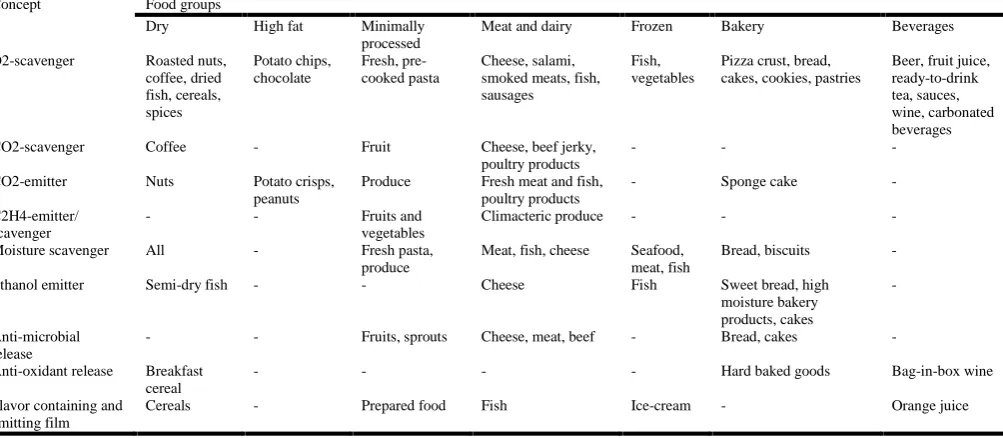
Table 5. Uses of Active Packaging
Concept Food groups
Dry High fat Minimally processed
Meat and dairy Frozen Bakery Beverages
O2-scavenger Roasted nuts, coffee, dried fish, cereals, spices
Potato chips, chocolate
Fresh, pre-cooked pasta
Cheese, salami, smoked meats, fish, sausages
Fish, vegetables
Pizza crust, bread, cakes, cookies, pastries
Beer, fruit juice, ready-to-drink tea, sauces, wine, carbonated beverages CO2-scavenger Coffee - Fruit Cheese, beef jerky,
poultry products
- -
-CO2-emitter Nuts Potato crisps, peanuts
Produce Fresh meat and fish, poultry products
- Sponge cake
-C2H4-emitter/ scavenger
- - Fruits and
vegetables
Climacteric produce - -
-Moisture scavenger All - Fresh pasta, produce
Meat, fish, cheese Seafood, meat, fish
Bread, biscuits
-Ethanol emitter Semi-dry fish - - Cheese Fish Sweet bread, high moisture bakery products, cakes
-Anti-microbial release
- - Fruits, sprouts Cheese, meat, beef - Bread, cakes
-Anti-oxidant release Breakfast cereal
- - - - Hard baked goods Bag-in-box wine
Flavor containing and emitting film
Cereals - Prepared food Fish Ice-cream - Orange juice
[image:8.595.178.417.472.533.2] [image:8.595.50.552.569.788.2]Some of the commercially available biosensors are given in Table 3 (Mello and Kubota, 2002).
Flavour and Odour Absorbers
Loss of volatile flavours and aromatic compounds is a result of mass transfer between the food and packaging material. Some of common types of mass transfer are:
1. Migration–As this involves transfer of substances from the packaging material into the stored food, it is associated with toxicological risk. Global (or total migration) and Specific migration occur mostly in plastic packaging material such as monomers, dimmers, adhesives and anti-oxidants. Rate of migration depends on area of package, composition and polarity of package, polymer morphology (such as glass transition temperature, free volume, and crystallinity), food composition, storage conditions and contact time (Doyle, 2006).
2. Flavour scraping–Due to lipophilic nature of polyethylene, they attract large amount of non-polar components such as flavours and aromatic components especially in case of high fat or vacuum packed foods.
3. Selective permeation and ingredient transfer between heterogeneous components of food -- The same type of mass transfer can be used in absorption of non-polar flavour components to remove undesirable characteristics. Absorption of off-flavour and malodour can be enhanced either by using porous materials (such as zeolites, clay, active carbon) or by using thicker films. Packaging material with acidic ingredients can be used for absorbing and neutralising ammonia and amines and other alkaline chemicals.
Nano-composites
Nano-materials have a vast scope of application in food packaging materials as they are easily available and are easy to fabricate due to the technological advancement such as by biomass reaction, solvent extraction, layer by layer deposition, crystallisation and microbial synthesis (Brody et al., 2008).
1. Nano-composites used in packaging show increased mechanical strength, improved barrier properties, enhanced heat resistance to thermal processes and aid storage (Ray and Okamoto, 2003). Nano-composites provide better barrier properties against migration of oxygen, CO2, water vapour, odour and flavour (Brown and Williams, 2003) Nano-components need to have 1 dimension less than 1nm width. They can have a high aspect ratio (ratio of length to thickness) resulting in high surface area due to large lateral dimension (several micrometers) (Thanh et al., 2012).
There are several types of nano-composites:
1. Biopolymer nano-composites (Avella et al., 2005; Rhim et
al., 2007; Sorrentino et al., 2007; Rhim et al., 2009).
2. Starch based nano-composites (Avella et al., 2005; Park et
al., 2002; Huang et al., 2004; Chen and Evans, 2005;
Yoon and Deng, 2006; Cyras et al., 2008) such as
Starch/ZnO-CMC sodium nano-composites (Yu et al., 2009).
3. Cellulose nano-composites such as hydroxypropyl methylcellulose coated edible films (Burdock, 2007). 4. Protein based nano-composites such as
i) whey TiO2nanocomposite (Zhou et al., 2009). ii) soy nanocomposite (Dean and Yu, 2005)
iii) Zein, a hydrophobic protein found in corn kernels (Winters and Deardorff, 1958)
Three methods of construction of nano-composites are:
1. Solution: In this method clay which has been swollen in a solution and is added to a polymer solution. When the polymer expands between the layers of the filler, then the solvent is evaporated. It is used in forming intercalated and exfoliated materials. At low loading level of 1phr MMT (nano-clay) dispersed well in matrix polymer to form exfoliated state or intercalated state as shown in Fig. 6 (Thanh et al., 2012).
2. In situ: In this case the filler is swollen by absorption of a liquid monomer. As the monomer penetrates in the silicate layer, polymerisation occurs by heat/ radiation/ incorporation of an initiator.
3. Melt method: It includes incorporation of the nano-composite filler into a molten polymer, followed by forming of final material.
Permeability Alteration
Many modified atmosphere packaging and active packaging techniques are effective in reducing the oxygen and moisture content inside the package thereby decreasing enzymatic, microbial (aerobic) and biochemical activity. In such cases when oxygen level reaches zero, undesirable reactions can occur. These include growth of anaerobic bacteria in respiring fruits and vegetables and in low-acid foods. Even during transportation and storage, elevated temperatures may lead to increase in oxygen consumption by the contained food and a decrease in moisture level inside the package, while the permeability level remains constant. To overcome this, temperature sensitive structures are required which can alter their permeability with increasing temperature. One such film was presented by Hirata (1992) which has an oxygen transfer rate (OTR) of 8 ml/m2/day at 200C, 40% R.H. and a water vapour transmission rate (WVTR) of 60g/m2/day at 400C, 90% R.H. The low oxygen permeability helps in colour retention for preserved meat (Rooney, 1995).
In IntellipacTMdeveloped by Landec, the membrane is made by coating a porous substrate with a side chain crystallisable (SCC) polymer (Brody et al., 2001). Alterations can be made to
Increase the size of membrane to allow packing of large quantity of food.
Vary the chain length and hence alter the melting point from 00C to 680C.
Include monomers to change relativity permeability of different gases.
Legal Aspects
Active package is in direct contact with the food and has active components that can migrate into the food. Thus they should comply with the regional legislations such as the directives under European Framework Regulation. According to this, active materials shall not bring about changes in the composition or organoleptic characteristics of the food, for instance by masking the spoilage of food, which could mislead the consumer; they should not transfer components into food that are toxic or bring organoleptic changes; they should have proper labelling (Dainellia et al., 2008). Recently in India, Himachal Pradesh Government is set to ban ethylene as an artificial ripening agent and the use of plastic packs for sale of chips, wafers etc. Such regional regulations are important in deciding the type of packing material to be used.
Current Scenario
Currently North America is the major market for active packaging systems, holding the largest share of aprox 35% of global active and smart packaging market. Followed by North America is Europe, which is the second largest market for active packages. Some of the leading players in the market are listed in Table 4.
Active packaging industry shows a vast growth in terms of its applications. Some of the current and future potential uses of active packages are listed in the Table 5.
Fig. 7. A graph representing the growth of active, controlled and intelligent packaging from 2004-2013 (http://www.plastemart.com/Plastic-Technical-Article.asp? LiteratureID=1679&Paper=global-active-smart-intelligent-packaging-food-beverages-trends-packaging-manufacturers.
Conclusion
Active packaging is gaining interest from researchers as it can greatly enhance the shelf life of food and reduce the risk of microbial contamination. Even so, it is not a substitute for high quality food and good manufacturing processes. There has been recent developments in packaging such as development of polyion-complex hydrogels (Farris et al., 2009), incorporation of nano-composites (Arora and Padua, 2010). Nevertheless, there are limited current developments due to safety regulations, limited availability of anti-microbials and testing techniques. Extensive research is required in the area as there are number of active packaging proposals and commercialisations available. There is a need to find anti-microbials that can be attached or coated to films and rigid containers after forming to avoid high temperature and other processing issues and allow a wide range of compounds to be incorporated into polymers.
REFERENCES
Ahuja, T., Mir, I. A., & Kumar, D. 2007. Biomolecular immobilization on conducting polymers for biosensing applications. Biomaterials, 28(5), 791-805.
Ahvenainen, R. 2003. Active and intelligent packaging: an introduction. Novel food packaging techniques, Woodhead Publishing Ltd., Cambridge, UK. 5–21. Appendinia, P. & Hotchkiss, H.J. 2002. Review of
anti-microbial food packaging. Innovative Food Science &
Emerging Technologies, 3(2), 113-126.
Arora, A., & Padua, G.W. 2010. Review: Nano-composites in Food Packaging. Journal of Food Science, 75(1), R43-R49.
Avella M., De Vlieger J.J., Errico M.E., Fischer S., Vacca P., & Volpe, M.G. 2005. Biodegradable starch/clay nanocomposite films for food packaging applications.
Food Chemistry, 93(3), 467–474.
Brody, A.L., Bugusu, B., Han, J.H., Sand, C.K. & McHugh., T.H. 2008. Innovative Food Packaging Solutions. Journal
of Food Science, 73(8).
Brody, A.L., Strupinsky, E.R. & Kline, L.R. 2001. Active Packaging for Food Applications. 40-163, Washington, CRC Press.
Brown, H., & Williams, J. 2003. Packaged product quality and shelf life. Food packaging technology. Oxford, UK: Blackwell Publishing Ltd. p, 65-94.
Burdock, G. A. 2007. Safety assessment of hydroxypropyl methylcellulose as a food ingredient. Food and Chemical
Toxicology, 45(12), 2341-2351.
Chen, B., & Evans, J. R. 2005. Thermoplastic starch–clay nanocomposites and their characteristics. Carbohydrate
Polymers, 61(4), 455-463.
Cyras, V. P., Manfredi, L. B., Ton-That, M. T., & Vázquez, A. 2008. Physical and mechanical properties of thermoplastic starch/montmorillonite nanocomposite films.
Carbohydrate Polymers, 73(1), 55-63.
Dainellia, D., Gontardb, N., Spyropoulosc, D., Beukend, E.Z-van den & Tobbacke, P. 2008. Active and intelligent food packaging: legal aspects and safety concerns. Trends in
Food Science and Technology, 19(1), S103-S112.
Dean, K., & Yu, L. 2005. Biodegradable protein-nanoparticle composites. Biodegradable polymers for industrial application, 289-309.
DeCicco, B. T., & Keeven, J. 1996. Detection system for microbial contamination in health-care products. Biotechnology Advances, 4(14), 517-518. Doyle, M.E. 2006. Nano-technology: A brief literature review.
Food Research Institute Briefings.
Farris, S., Schaich, K.M., Liu, L., Piergiovanni, L., & Yam, K.L. 2009. Development of polyion-complex hydrogels as an alternative approach for the production of bio-based polymers for food packaging applications: a review.
Trends in Food Science and Technology, 20(8), 316-332.
Horan, T. J. 1998. Method for determining bacteria contamination in food package. U.S. Patent No.
5,753,285. Washington, DC: U.S. Patent and Trademark Office.
http://www.plastemart.com/Plastic-Technical-Article.asp? LiteratureID=1679&Paper=global-active-smart- intelligent-packaging-food-beverages-trends-packaging-manufacturers .
silsesquioxane epoxides. Journal of Materials Chemistry, 14(19), 2858-2863.
Kress-Rogers, E. 1993. Instrumentation and sensors for the food industry. Instrumentation and sensors for the food
industry. 4(3), -154.
Kuswandi, B., Wicaksono, Y., Abdullah, A., Heng, L. Y., & Ahmad, M. 2011. Smart packaging: sensors for monitoring of food quality and safety. Sensing and
Instrumentation for Food Quality and Safety, 5(3-4),
137-146.
Mattila, T., Tawast, J., & Ahvenainen, R. 1990. New possibilities for quality control of aseptic packages: microbiological spoilage and seal defect detection using head-space indicators. Lebensmittel-Wissenschaft und Technologie, 23(3), 246-251.
Mello, L. D., & Kubota, L. T. 2002. Review of the use of biosensors as analytical tools in the food and drink industries. Food chemistry, 77(2), 237-256.
Mohammed, A. 2010. Chitosan application for active bio-based films production and potential in the food industry: Review. LWT - Food Science and Technology, 43(6), 837-842.
Pacquit, A., Lau, K.T., McLaughlin, H., Frisby, J., Quilty, B. & Diamond, D. 2006. Development of a volatile amine sensor for the monitoring offish spoilage. Talanta, 69(2), 515-520.
Park, H. M., Li, X., Jin, C. Z., Park, C. Y., Cho, W. J., & Ha, C. S. 2002. Preparation and properties of biodegradable thermoplastic starch/clay hybrids. Macromolecular Materials and Engineering, 287(8), 553-558.
Porat, R., Weiss B., Cohen L., Daus, A., Goren R. & Droby, S. 1999. Effects of ethylene and 1-methylcyclopropene on the post-harvest qualities of ‘Shamouti’ oranges.
Postharvest Biology and Technology, 15(2), 155-163.
Rani, D.N., & Abraham, T.E. 2006. Kinetic study of a purified anionic peroxidase isolated from Eupatorium odoratum and its novel application as time temperature indicator for food materials. Journal of Food Engineering, 77(3), 594– 600.
Ray, S. S., & Okamoto, M. 2003. Polymer/layered silicate nanocomposites: a review from preparation to processing. Progress in polymer science, 28(11), 1539-1641.
Retama, J. R., Mecerreyes, D., Ruiz, B., & Lopez-Cabarcos, E. 2005. Synthesis and characterization of semiconductingpolypyrrole/polyacrylamide microparticles with GOx for biosensor applications. Colloids and Surfaces A: Physicochemical and Engineering Aspects, 270, 239-244.
Rhim, J. W., Lee, J. H., & Hong, S. I. 2007. Increase in water resistance of paperboard by coating with poly (lactide).
Packaging Technology and Science, 20(6), 393-402.
Rhim, J.W., Hong, S., & Ha, C. 2009. Tensile, water vapor barrier and anti-microbial properties of PLA/nano-clay composite films. LWT – Food Science and Technology,
42(2), 612-617.
Rooney, M.L. 1995. Active packaging in polymer films, M.L. Rooney (Ed.), Active Food Packaging, London, Blackie Academic and Professional.
Sangeeta, S., Chopra, C. S., & Omre, P. K. 2013. Biosensors in food industry. Food Science Research Journal, 4(1), 92-97.
Shukla, R., & Cheryan, M. 2001. Zein: the industrial protein from corn. Industrial crops and products, 13(3), 171-192. Smith, A. W., Poulston, S., Rowsell, L., Terry, L. A., &
Anderson, J. A. 2009. A new palladium-based ethylene scavenger to control ethylene-induced ripening of climacteric fruit. Platinum Metals Review, 53(3), 112-122. Smith, J.P., Ramaswamy, H.S. & Simpson, B.K., 1990. Developments in food packaging technology. Part II. Storage aspects. Trends in Food Science and Technology, 1(5), 111-118.
Smyth, A. B., Talasila, P. C., & Cameron, A. C. 1999. An ethanol biosensor can detect low-oxygen injury in modified atmosphere packages of fresh-cut produce. Postharvest Biology and Technology, 15(2), 127-134.
Sorrentino, A., Gorrasi, G., & Vittoria, V. 2007. Potential perspectives of bio-nanocomposites for food packaging applications. Trends in Food Science & Technology, 18(2), 84-95.
Terry, L. A., White, S. F., & Tigwell, L. J. 2005. The application of biosensors to fresh produce and the wider food industry. Journal of agricultural and food chemistry, 53(5), 1309-1316.
Terry, L.A., Volpe, G., Palleschi, G. & Turner, A.P.F. 2004. Biosensors for the microbial analysis of food. Food Sci.
Technol, 18(4), 22–24.
Thanh, T. D., Mao, N. D., Ngan, N. T. K., Nhan, H. T. C., Huy, H. T., & Grillet, A. C. 2012. Study structure and properties of nanocomposite material based on unsaturated polyester with clay modified by poly (ethylene oxide). Journal of Nanomaterials, 21.
Vermeiren, L., Devlieghere, F., Van Beest, M., De Kruijf, N., & Debevere, J. 1999. Developments in the active packaging of foods. Trends in food science & technology, 10(3), 77-86.
Wallach, D.F.H., & Novikov, A. 1998. Methods and devices for detecting spoilage in food products, WO 98/20337. (Biodetect corporation, Nashua.
Winters, E.P. & Deardorff, D.L. 1958. Zein as a film-type coating for medicinal tablets. Journal of American
Pharmacists Association, 47 (8), 608-612.
Yoon, S. Y., & Deng, Y. 2006. Clay–starch composites and their application in papermaking. Journal of Applied
Polymer Science, 100(2), 1032-1038.
Yu, J., Yang, J., Liu, B., & Ma, X. 2009. Preparation and characterization of glycerol plasticized-pea starch/ZnO– carboxymethylcellulose sodium nanocomposites.
Bioresource Technology, 100(11), 2832-2841.
Zhou, J. J., Wang, S. Y., & Gunasekaran, S. 2009. Preparation and characterization of whey protein film incorporated with TiO2 nanoparticles. Journal of food Science, 74(7), N50-N56.