Biochar is a product of pyrolysis of an organic substance at a temperature of 300−1000°C; prod-ucts are formed, such as oil, synthetic gas and biochar (Gul et al. 2015). Biochar can be used in agriculture to improve the physical, chemical and biological properties of soil (Curaqueo et al. 2014, Prendergast-Miller et al. 2014). Its effect on soil fertility is primarily manifested in higher pH in acidic soils and an increase in organic carbon content (Oleszczuk et al. 2014, Břendová et al. 2015, Gul et al. 2015). The addition of biochar has also been found to have a positive influence on the soil content of N, P, K and Mg, and higher grain yields (Farrell et al. 2014). Nevertheless, biochar can contain contaminants in the form of both heavy metals and polycyclic aromatic
hydrocarbons (Oleszczuk et al. 2013, Kuśmierz et al.2016).
The aim of the present study was to determine the influence of various biochar rates on yield of winter rye grown in monoculture and on the chemical composition of the soil. The experiment assumed that the use of biochar in rye monocul-ture cropping would improve the properties of the crop site and result in an increase in grain yield.
MATERIAL AND METHODS
Characteristics of biochar. Biochar applied to soil was obtained from commercial manufacturer and was produced by pyrolysis where the feedstock
Effect of various biochar rates on winter rye yield and
the concentration of available nutrients in the soil
P. Kraska
1, P. Oleszczuk
2, S. Andruszczak
1, E. Kwiecińska-Poppe
1, K. Różyło
1,
E. Pałys
1, P. Gierasimiuk
1, Z. Michałojć
31
Department of Agricultural Ecology, University of Life Sciences, Lublin, Poland
2Department of Environmental Chemistry, Maria Curie-Skłodowska University,
Lublin, Poland
3
Department of Soil Cultivation and Horticultural Plant Fertilization, University
of Life Sciences, Lublin, Poland
ABSTRACT
From 2012 to 2014 a field experiment was conducted on a podzolic soil. The aim of the study was to evaluate the yield and weed infestation of winter rye canopy depending on three biochar rates (10, 20 and 30 t/ha). The biochar was pyrolyzed from wheat straw at 350–650°C. After 12, 24, and 36 months from biochar incorporation into the soil pH, total carbon (C) and some elements in soil were determined. Additionally phytotoxicity of soil solid phase was assessed by the commercial toxicity bioassay – Phytotoxkit. The addition of biochar had a positive influence on grain yield of winter rye, which was related to the nutrient application in the form of biochar. The highest grain yields were obtained when biochar was applied at the rate of 20 t/ha. The air-dry weight of weeds in the rye crop grown in the biochar-amended plots was lower compared to the control plots. Incorporation of biochar into the soil at the rates of 20 and 30 t/ha caused a significant increase in the soil content of total C as well as of available P, K, Mg, Fe and B, relative to the control treatment. Moreover, the biochar-amended soil had higher pH because of the relatively high concentration in the biochar (pHKCl 9.9). The assessment of substrate toxicity revealed that bio-char applied at the rates of 10 and 20 t/ha had no negative effects on the germination of Lepidium sativum L.
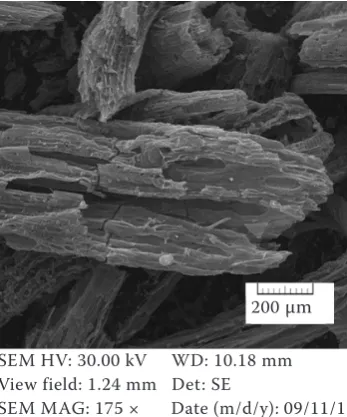
is thermochemically decomposed at a temperature range from 350–650°C in an oxygen-poor atmos-phere (1–2% O2). Biochar was produced from wheat straw and was provided by Mostostal Sp. z o.o. (Wrocław, Poland). The scanning electron microscope (SEM) pictures of biochar are pre-sented in Figure 1. The figures show the porous and complex structure of biochar that determines its properties. The detailed characteristics of biochar used in this experiment are presented in Table 1.
Experimental field site. In the years 2012–2014 the field experiment was conducted in the Bezek Experimental Station, near Chełm, Poland (51°19'N, 23°25'E), on podzolic soil lying on marl substrate with the granulomere composition of loamy sand. The experiment, set up in a randomized block design in three replicates, compared the effects of three biochar rates in the cultivation of winter rye (Secale cereale L., cv. Dańkowskie Diament) cultivated in monoculture. At the beginning of September 2011 biochar at rates of 10 t (BC10); 20 t (BC20); and 30 t (BC30) per hectare was incorpo-rated into the soil. Then the soil was ploughed and winter rye was sown in the fourth week of September
2011. Plots in which no biochar was applied were the control treatment (BC0). The area of a single plot was 18 m2. The spacing between plots fertilized with the different rates of biochar was 2 m.
Seeds were sown at an amount of 5 million seeds per hectare at a spacing of 12 cm. The mineral fertilizers were applied every year of the experi-ment and the rates were as follows: N – 70 kg/ha (ammonium nitrate); P – 26 kg/ha (triple super-phosphate); K – 66 kg/ha (muriate of potash, KCl). Phosphorus and potassium fertilizers as well as 20 kg N/ha were applied before sowing. In spring the remaining portion of the nitrogen rate was applied before plant growth began (30 kg/ha) and at the stem elongation stage (20 kg/ha).
Before harvest of the winter rye crop, plant biomass and the number of productive stems by 1 m2 were determined. The grain yield was determined based on ear samples collected from the central part of each plot in four replicates using a 0.25 m2 quadrat frame. The ears were threshed in a laboratory thresher (LD 180, Wintersteiger). Furthermore, the number of grains per ear, grain weight per ear, and 1000-grain weight were determined. The assessment of weed
[image:2.595.65.239.96.305.2]in-Figure 1. Scanning electron microscope (SEM) pictures of biochar used in the field experiment
Table 1. Physico-chemical properties of biochar (BC) used in the experiment (Oleszczuk et al. 2014)
pHKCl Available forms Elemental composition Ash H/C SBET
P K Mg C H N
9.9 235.6 2344.6 163.2 53.87 1.76 0.91 41.2 0.033 26.3
P, K and Mg — available forms of phosphorous, potassium and magnesium determined according to procedures for soil analysis (van Reeuwijk 1992) (mg/kg); C, H, N – contribution (%) of carbon, hydrogen and nitrogen; Ash – ash content (%); H/C – ratio of hydrogen to carbon; SBET – specific surface area (m2/g)
200 μm 50 μm
SEM HV: 30.00 kV WD: 10.18 mm View field: 1.24 mm Det: SE
SEM MAG: 175 × Date (m/d/y): 09/11/15
SEM HV: 30.00 kV WD: 9.934 mm View field: 214.8 μm Det: SE
[image:2.595.65.535.663.716.2]festation of the crop was carried out at the dough stage (85–87 BBCH) of winter rye and the air-dry weight of the aboveground parts of weeds in each plot was determined.
Soil analyses. The soil from the 0–20 cm layer was sampled after harvest of winter rye at three dates: 12, 24, and 36 months after fertilization. From each plot, soil samples were taken using a soil auger in five randomly selected places. In soil samples, the following parameters were determined: pH (poten-tiometrically in 1 mol/L KCl, PN-ISO 10390, 1997); organic C (Tiurin method, KQ/PB-34); available P and K (Egner-Riehm method KQ/PB-07); available Mg (with AAS method after extraction with 0.0125 mol/L CaCl2 PN-R-04020, 1994). Cu (PN-92R-04017); Zn (PN-92/R-04016); Mn (PN-93/R-04019) and Fe (PN-R-04021, 1994) were determined by AAS; B (extraction with 1 mol/L HCl, determined spectro-photometrically, CLA/ESA/5/2014).
Ecotoxicological assessment (PhytotoxkitTM). To evaluate the effect of biochar-amended soil on plants the test of germination/elongation with Lepidium sativum L. as a test plant was used. Phytotoxicity of soil solid phase was assessed by the commer-cial toxicity bioassay – Phytotoxkit™ (2004). The Phytotoxkit microbiotest measures the decrease (or the absence) of seed germination and of the growth of the young roots after 3 days of exposure of seeds of selected higher plants to contaminated soil in comparison to the controls in a reference soil. A special artificial soil recommended by ISO 11269-1 (2012) was used as a reference soil in the present experiment. It is composed of sand, kaolin, peat and adjusted for pH with calcium carbonate. The analyses and the length measurements were performed using the Image Tool 3.0 for Windows
(UTHSCSA, San Antonio, USA). The bioassays were performed in three replicates.
Data analysis. Obtained results were elabo-rated statistically with the analysis of variance using statistical program ARStat (developed in the Faculty of Applied Mathematics and Information Technology of the University of Life Sciences, Lublin, Poland). The means were compared with the use of the least significant differences based on the Tukey’s test (P ≤ 0.05).
RESULTS AND DISCUSSION
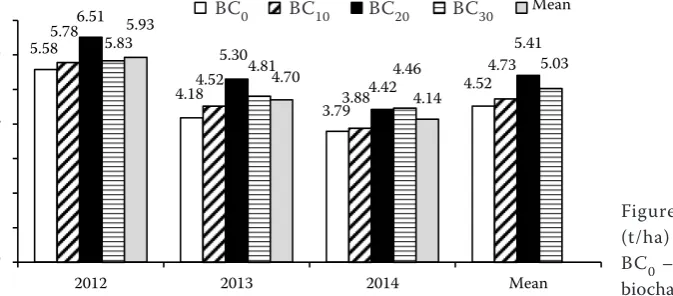
[image:3.595.71.408.593.741.2]In the first and second year of experiment, the highest winter rye grain yield was obtained after biochar application at the rate of 20 t/ha (BC20) (Figure 2). On average over the study period, the grain yield from this treatment was significantly higher than in the control treatment without bio-char (BC0) by 19.7%, and in the plots were the biochar rate applied was 10 t/ha (BC10) by 14.4%. At the same time, the grain yield in the treatment with the biochar rate of 30 t/ha (BC30) was sig-nificantly higher than in the control treatment (on average by 11.3%). Blackwell et al. (2010) and Farrell et al. (2014) confirmed the beneficial effect of biochar amendment on common wheat grain yield. Increased crop yields after biochar applica-tion may result both from an improvement in the soil structure (Lehmann and Joseph 2009) and from reduced nutrient leaching (Yanai et al. 2007). In our experiment, an increase of grain yield could be due to the fact that application of biochar en-riched the soil with high amount of magnesium and potassium. This was especially true for Mg
5.58
4.18
3.79
4.52 5.78
4.52
3.88
4.73 6.51
5.30
4.42
5.41 5.83
4.81 4.46 5.03
5.93
4.70
4.14
0 1 2 3 4 5 6 7
2012 2013 2014 Mean
BC0 BC10 BC20 BC30 Mean
LSD0.05 biochar rates – 0.401; years – 0.314
Figure 2. Yield of winter rye grain (t/ha) depending on biochar rates. BC0 – control treatment (without biochar); BC10 – 10, BC20 – 20, BC30 – 30 t/ha
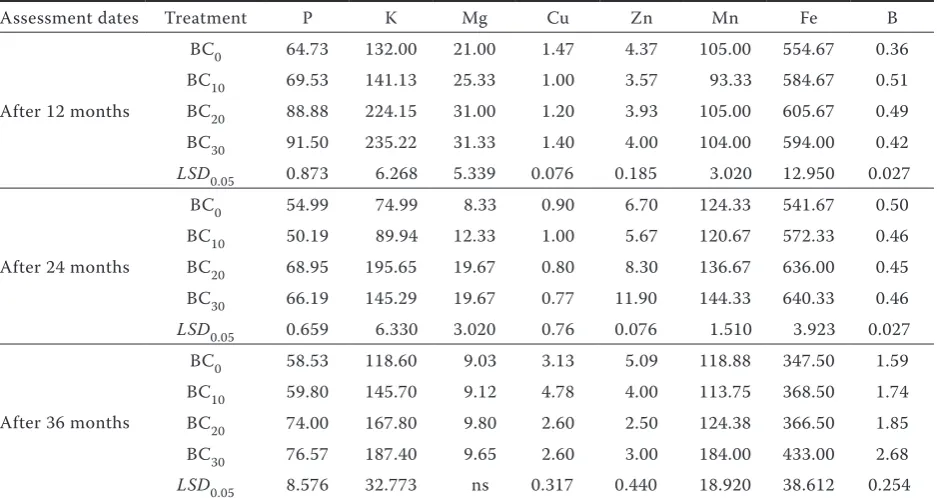
(Tables 1 and 2). It seems that the positive effect of biochar on the grain yield is a nutrient effect or the so-called biochar effect. Moreover, biochar application increases water retention in the soil, which may in turn affect favourably the growth and development of plants during water deficit periods (Chan et al. 2008). Quilliam et al. (2012) did not find any negative effects of the application of increased
biochar rates on plant growth, but Karer et al. (2013) demonstrated a decrease in spring barley, maize and winter wheat yields after biochar application at 72 t/ha. In the opinion of these authors, the main purpose of biochar incorporation into soil is carbon sequestration in the soil.
[image:4.595.64.533.126.375.2]In each successive year of the study, the winter rye grain yield and the number of grains per ear decreased
Table 2. The content of available forms of some elements in soil after 12, 24 and 36 months from biochar in-corporation (mg/kg)
Assessment dates Treatment P K Mg Cu Zn Mn Fe B
After 12 months
BC0 64.73 132.00 21.00 1.47 4.37 105.00 554.67 0.36
BC10 69.53 141.13 25.33 1.00 3.57 93.33 584.67 0.51
BC20 88.88 224.15 31.00 1.20 3.93 105.00 605.67 0.49
BC30 91.50 235.22 31.33 1.40 4.00 104.00 594.00 0.42
LSD0.05 0.873 6.268 5.339 0.076 0.185 3.020 12.950 0.027
After 24 months
BC0 54.99 74.99 8.33 0.90 6.70 124.33 541.67 0.50
BC10 50.19 89.94 12.33 1.00 5.67 120.67 572.33 0.46
BC20 68.95 195.65 19.67 0.80 8.30 136.67 636.00 0.45
BC30 66.19 145.29 19.67 0.77 11.90 144.33 640.33 0.46
LSD0.05 0.659 6.330 3.020 0.76 0.076 1.510 3.923 0.027
After 36 months
BC0 58.53 118.60 9.03 3.13 5.09 118.88 347.50 1.59
BC10 59.80 145.70 9.12 4.78 4.00 113.75 368.50 1.74
BC20 74.00 167.80 9.80 2.60 2.50 124.38 366.50 1.85
BC30 76.57 187.40 9.65 2.60 3.00 184.00 433.00 2.68
LSD0.05 8.576 32.773 ns 0.317 0.440 18.920 38.612 0.254
BC0 – control treatment (without biochar); BC10 – 10, BC20 – 20, BC30 – 30 t/ha; ns – not significant differences
Table 3. Yield components of winter rye and biomass of plants and weeds
Factor Treatment Number of ears
per 1 m2
Weight of 1000 grains
(g)
Weight of grains per ear (g)
Number of grains per
ear
Biomass of winter rye plants (g/m2)
Dry matter of weeds
(g/m2)
Biochar rates (mean for years 2012–2014)
BC0 551 29.5 1.04 27 1113 214.2
BC10 532 29.9 1.09 26 1230 180.6
BC20 584 31.1 1.00 31 1457 150.1
BC30 582 29.7 1.02 28 1313 146.3
LSD0.05 ns ns ns 2.3 201.0 58.91
Year (mean for biochar rates)
2012 569 31.5 1.12 35 1371 49.1
2013 545 28.1 1.35 28 1116 339.6
2014 573 30.4 0.64 21 1349 129.6
LSD0.05 ns 1.80 0.106 1.8 157.6 46.38
[image:4.595.68.533.563.742.2]significantly. This was probably due to the cultivation of rye in monoculture and the higher level of weed infestation of the rye crop in the second and third year of observation (Figure 2, Table 3).
In the biochar-amended plots, winter rye plants produced higher biomass than in the control treat-ment, but significant differences were found only in the treatment where biochar was applied at the rate of 20 t/ha (Table 3). In biochar-amended plots, Kloss et al. (2014) also obtained an increase in the aboveground biomass of spring barley.
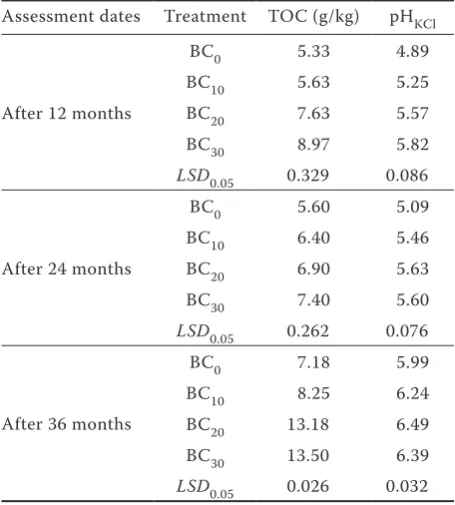
At all assessment dates, the total carbon content in the biochar-amended soil was higher than in the control plots and it significantly increased with an increase in the biochar rate from 10 to 20 and 30 t/ha, respectively (Table 4). Qayyum et al. (2014) and Kloss et al. (2014) found a much higher increase in soil organic carbon content after biochar ap-plication, whereas in the study by Curaqueo et al. (2014) and Abrishamkesh et al. (2015) this content was found to be lower. The distinct increase in carbon content in the third year of the experiment, especially in the treatments with biochar addition at the rates of 20 and 30 t/ha is difficult to explain. A probable reason for this can be a low level of rainfall in July 2014 (44% of mean for 1974–2010), that might have contributed to reducing the degree of mineralization of organic matter and thereby to an increase in its level in the soil. However, this needs to be confirmed in studies conducted over a longer period of time because the changes occur-ring under the influence of biochar are dynamic. According to Lehman (2007) and Gul et al.(2015), biochar stability in the environment is determined by factors such as the type of feedstock used for biochar production, pyrolysis parameters, soil properties and climatic conditions.
The biochar-amended soil after 12, 24 and 36 months from biochar incorporation showed a significantly higher pH value compared to the treatment without biochar. At the first assessment date, the highest increase in pH was found in the BC30 treatment. After 24 months from biochar incorporation, the soil pH in the BC20 and BC30 treatments was at a similar level, whereas after 36 months the pH value in the BC30 treatment decreased significantly in comparison to the BC20 treatment. The obtained results are evidence of the complexity of the processes taking place in the soil as affected by the biochar rates applied. After biochar application, Curaqueo et al. (2014),
[image:5.595.304.532.474.727.2]Břendová et al. (2015) and Gul et al. (2015) also found an increase in soil pH. In turn, Kloss et al. (2015) found a decrease in soil pH after 7 months from incorporation of straw-derived biochar. The researchers reported that the effects of biochar on soil should not be limited only to adjustment of soil pH. According to Gul et al. (2015), the properties of biochar change as a result of its aging in the soil, in particular due to oxidation and accumulation of H+ from the soil solution in the first weeks and months after incorporation of biochar into the soil. Heitkötter and Marschner (2015) demonstrated that the degree of changes is dependent on the properties of biochar itself as well as on soil properties and climatic conditions. Likewise, Kloss et al. (2014) think that the effect associated with the use of biochar is dependent not only on the type of biochar and the rate applied but also on the type of soil in which it is used. In the opinion of Gul et al. (2015), the degree of biochar-induced changes in the soil is dynamic and short-term changes do not need to indicate that such relationships will be maintained in the long term, which has been confirmed by the results of the present study.
Table 4. The organic carbon content and pH of soil after 12, 24 and 36 months from biochar incorporation Assessment dates Treatment TOC (g/kg) pHKCl
After 12 months
BC0 5.33 4.89
BC10 5.63 5.25
BC20 7.63 5.57
BC30 8.97 5.82
LSD0.05 0.329 0.086
After 24 months
BC0 5.60 5.09
BC10 6.40 5.46
BC20 6.90 5.63
BC30 7.40 5.60
LSD0.05 0.262 0.076
After 36 months
BC0 7.18 5.99
BC10 8.25 6.24
BC20 13.18 6.49
BC30 13.50 6.39
LSD0.05 0.026 0.032
At all assessment dates, the biochar-amended soil was generally characterized by a higher con-tent of P, K, Mg and Fe than in the control plots without biochar (Table 2). Prendergast-Miller et al. (2014) and Kloss et al. (2014) also show an increased content of P and K in the soil after bio-char incorporation. This primarily results from the high content of these elements in the used biochar derived from wheat straw. On the other hand, Abrishamkesh et al. (2015), found a decrease in P content and an increase in K content in the soil after biochar application.
At the first assessment date, the largest amount of copper was found in the soil taken from the control plot, whereas at the second and third assessment dates, the soil amended with biochar at 10 t/ha con-tained the most copper. The Zn content in the soil from the biochar-amended plots after 12 and 36 months from biochar incorporation was significantly lower than in the BC0 treatment. After 24 months, in turn, the highest Zn content was determined in the soil from the BC30 treatment, whereas the lowest one in the BC10 treatment. Houben et al. (2013) and Jun and Xu (2013) indicate that biochar incorpora-tion may result in immobilizaincorpora-tion of Cu and Zn in the soil. The obtained results confirm to a certain extent such a relationship.
At all assessment dates, the lowest content of man-ganese was found in the BC10 treatment, but after 24 and 36 months the soil manganese content was found to increase with increasing biochar rate. After 24 months from biochar incorporation, the highest boron content was determined in the BC0 treatment. At the first and third assessment dates, on the other hand, the boron content in the biochar-amended plots was higher than in the control treatment. It should however be stressed that at the third assess-ment time the boron content in the soil was by far highest, which was probably due to the lower absorp-tion of boron by the plants under the condiabsorp-tions of increasing soil pH (Table 3). A similar relationship was found by Hu and Brown (1997), according to whom the availability of boron to plants decreases with increasing soil pH and therefore its soil content increases. Prendergast-Miller et al. (2014) think that biochar added to soil controls the inflow of nutrients to the plant root system – directly, as a source of nutrients, and indirectly, through a change in the nutrient content in the soil, but Schultz et al. (2013) proved that biochar application did not have a direct effect on plant growth and soil fertility.
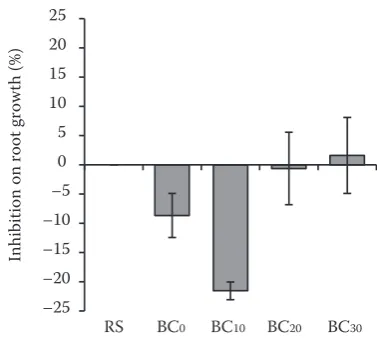
In the experiment to evaluate the phytotoxic-ity of biochar, its inhibitory properties towards plants were used. The negative values mean the stimulation of germination and initial growth of seedlings of the test plant. The study investigating the effect of biochar on root elongation growth of Lepidium sativum L. showed that a slight in-hibition of root growth occurred in the soil with the highest rate of biochar (BC30) relative to the reference soil (RS) (Figure 3). The other biochar rates (BC10 and BC20) and the soil without biochar addition (BC0) stimulated root growth compared to the reference soil. The soil amended with 10 t of biochar per ha was characterized by the high-est level of stimulation. In this case, the roots were longer by 21.6% relative to the reference soil and by 11.9% relative to the soil without biochar (BC0). The obtained results confirm to a certain extent the research by Lehmann et al. (2011) and Rees et al. (2016) which revealed a positive effect of biochar on plant root growth. Abrishamkesh et al. (2015) also found an increase in lentil root biomass with increasing biochar rates.
In conclusion, biochar derived from wheat straw contains high mineral concentrations and an appli-cation to winter rye resulted in an increase of grain yield and plant biomass because of an increase of the soil pH and the P, K and Mg availability. With 30 t biochar from wheat straw per ha 141 kg K/ha are fertilized. Moreover, the biochar-amended soil had higher pH and contained more C as well as P, K, Mg, Fe and B relative to the control treatment.
–25 –20 –15 –10 –5 0 5 10 15 20 25
RS BC0 BC10 BC20 BC30
In
hi
bi
tio
n
on
ro
ot
g
ro
w
th
(%
[image:6.595.321.510.95.264.2])
The results of our field experiments showed that the observed biochar effect on the yield was related to an effect on the bioavailability of P, K, Mg, Cu, Zn, Mn and B and on the soil pH.
REFERENCES
Abrishamkesh S., Gorji M., Asadi H., Bagheri-Marandi G.H., Pourba-baee A.A. (2015): Effects of rice husk biochar application on the properties of alkaline soil and lentil growth. Plant, Soil and Environment, 61: 475–482.
Blackwell P., Krull E., Butler G., Herbert A., Solaiman Z. (2010): Ef-fect of banded biochar on dryland wheat production and fertiliser use in south-western Australia: An agronomic and economic perspective. Australian Journal of Soil Research, 48: 531–545. Břendová K., Tlustoš P., Száková J. (2015): Biochar immobilizes
cadmium and zinc and improves phytoextraction potential of willow plants on extremely contaminated soil. Plant, Soil and Environment, 61: 303–308.
Chan K.Y., Van Zwieten L., Meszaros I., Downie A., Joseph S. (2008): Using poultry litter biochars as soil amendments. Australian Journal of Soil Research, 46: 437–444.
Curaqueo G., Meier S., Khan N., Cea M., Navia R. (2014): Use of biochar on two volcanic soils: Effects on soil properties and barley yield. Journal of Soil Science and Plant Nutrition, 14: 911–924. Farrell M., MacDonald L.M., Butler G., Chirino-Valle I., Condron
L.M. (2014): Biochar and fertiliser applications influence phos-phorus fractionation and wheat yield. Biology and Fertility of Soils, 50: 169–178.
Gul S., Whalen J.K., Thomas B.W., Sachdeva V., Deng H.Y. (2015): Physico-chemical properties and microbial responses in biochar-amended soils: Mechanisms and future directions. Agriculture, Ecosystems and Environment, 206: 46–59.
Heitkötter J., Marschner B. (2015): Interactive effects of biochar ageing in soils related to feedstock, pyrolysis temperature, and historic charcoal production. Geoderma, 245–246: 56–64. Houben D., Evrard L., Sonnet P. (2013): Mobility, bioavailability and
pH dependent leaching of cadmium, zinc and lead in a contami-nated soil amended with biochar. Chemosphere, 92: 1450–1457. Hu H.N., Brown P.H. (1997): Absorption of boron by plant roots.
Plant and Soil, 193: 49–58.
Jun J., Xu R.-K. (2013): Application of crop straw derived biochars to Cu(II) contaminated Ultisol: Evaluating role of alkali and or-ganic functional groups in Cu(II) immobilization. Bioresource Technology, 133: 537–545.
Karer J., Zehetner F., Kloss S., Wimmer B., Soja G. (2013): Biochar application to temperate soils: Effects on nutrient uptake and crop yield under field conditions. Agricultural and Food Science, 22: 390–403.
Kloss S., Zehetner F., Buecker J., Oburger E., Wenzel W.W., Enders A., Lehmann J., Soja G. (2015): Trace element biogeochemistry
in the soil-water-plant system of a temperate agricultural soil amended with different biochars. Environmental Science and Pollution Research, 22: 4513–4526.
Kloss S., Zehetner F., Wimmer B., Buecker J., Rempt F., Soja G. (2014): Biochar application to temperate soils: Effects on soil fertility and crop growth under greenhouse conditions. Journal of Plant Nutrition and Soil Science, 177: 3–15.
Kuśmierz M., Oleszczuk P., Kraska P., Pałys E., Andruszczak S. (2016): Persistence of polycyclic aromatic hydrocarbons (PAHs) in biochar-amended soil. Chemosphere, 146: 272–279. Lehman J. (2007): Bio-energy in the black. Frontiers in Ecology and
the Environment, 5: 381–387.
Lehmann J., Joseph S. (2009): Biochar for Environmental Manage-ment: Science and Technology. London, Sterling, VA: Earthscan. Lehmann J., Rillig M.C., Thies J., Masiello C.A., Hockaday W.C.,
Crowley D. (2011): Biochar effects on soil biota – A review. Soil Biology and Biochemistry, 43: 1812–1836.
Oleszczuk P., Jośko I., Futa B., Pasieczna-Patkowska S., Pałys E., Kraska P. (2014): Effect of pesticides on microorganisms, en-zymatic activity and plant in biochar-amended soil. Geoderma, 214–215: 10–18.
Oleszczuk P., Jośko I., Kuśmierz M. (2013): Biochar properties re-garding to contaminants content and ecotoxicological assessment. Journal of Hazardous Materials, 260: 375–382.
Phytotoxkit™ (2004): Seed Germination and Early Growth
Microbi-otest with Higher Plants, Standard Operation Procedure. Gent, MicroBioTests Inc.
Prendergast-Miller M.T., Duvall M., Sohi S.P. (2014): Biochar-root interactions are mediated by biochar nutrient content and impacts on soil nutrient availability. European Journal of Soil Science, 65: 173–185.
Qayyum M.F., Steffens D., Reisenauer H.P., Schubert S. (2014): Bio-chars influence differential distribution and chemical composition of soil organic matter. Plant, Soil and Environment, 60: 337–343. Quilliam R.S., Marsden K.A., Gertler Ch., Rousk J., DeLuca T.H., Jones D.L. (2012): Nutrient dynamics, microbial growth and weed emergence in biochar amended soil are influenced by time since application and reapplication rate. Agriculture, Ecosystems and Environment, 158: 192–199.
Rees F., Sterckeman T., Morel J.L. (2016): Root development of non-accumulating and hyperaccumulating plants in metal-con-taminated soils amended with biochar. Chemosphere, 142: 48–55. Schulz H., Dunst G., Glaser B. (2013): Positive effects of composted
biochar on plant growth and soil fertility. Agronomy and Sustain-able Development, 33: 817–827.
Van Reeuwijk L.P. (1992): Procedures for Soil Analysis. Wageningen, International Soil Reference and Information Centre.
Yanai Y., Toyota K., Okazaki M. (2007): Effects of charcoal addition
on N2O emissions from soil resulting from rewetting air-dried
soil in short-term laboratory experiments. Soil Science and Plant Nutrition, 53: 181–188.
Received on February 4, 2016 Accepted on October 7, 2016
Corresponding author: