Feature: The New English A Levels 2015 Secondary
“Substantial
changes to
the subject
criteria for
English
Literature
mean that
there is a
great deal of
change in the
new specs
for 2015,
even though
most of the
specs have
maintained
some sense
of continuity
with their
current
versions.”
The whole set of new A Level specifications were not finally accredited by Ofqual until just before Christmas, to everyone’s frustration. The lateness of the accreditation, the complexity of the choices to be made between specs, and the on-going dilemma which centres face in deciding what to do about teaching AS Level, mean that many departments have still not decided which A Level specifications to teach in September. We hope that this guide, in which we attempt to outline some key issues relating to the specs, will help, and may even move some departments to change decisions already made.
A Level English Literature
Substantial changes not only to the structure of A Level generally but also to the subject criteria for English Literature mean that there is a great deal of change in the new specs for 2015, and departments should certainly find it worthwhile looking at all the options and considering all the issues before making a decision – even though most of the specs have maintained some sense of continuity with their current versions.
The generic changes which affect all Literature specs are: the reduction of coursework to 20%, the reduction of the number of set texts from 12 to 8, and the requirement for all specs to have an unseen element in the examination. Each spec is also required
to specify at least 3 pre-1900 texts out of the total of 8, and one of the 8 must be post-2000.
Assessment objectives
There are also new assessment objectives – 5 instead of 4 – although in fact there are only minor changes in wording and arrangement from the current version:
AO1 Articulate informed, personal and creative responses to literary texts, using associated concepts and terminology, and coherent, accurate written expression
AO2 Analyse ways in which meanings are shaped in literary texts
AO3 Demonstrate understanding of the significance and influence of the contexts in which literary texts are written and received AO4 Explore connections across literary texts AO5 Explore literary texts informed by different interpretations
AO1, AO2 and AO3 are worth approximately 25% (Ofqual specifies between 20% and 30%) of the overall grade, whilst AO4 and AO5 together make up the final 25% approximately.
Note that the explicit reference to ‘language, form and structure’ has been removed from AO2, presumably in order to reduce anxiety about having to deal with all
A Guide to the Specs
The New English A Levels 2015
3 aspects in equal measures (although clearly students who do not consider form and structure as well as language will continue to be disadvantaged).
In the objective concerned with interpretation (now AO5), note that the phrase ‘interpretations of other readers’ has been replaced by ‘different interpretations’, which clarifies the intention of this objective significantly. Whilst this allows teachers and students to focus valuably on personal responses to ambiguity and interpretive variety in class discussion, it will of course still be important for students to explore ideas from published literary criticism and theory in parts of the course; some specs (AQA B, Edexcel) have built this into their specs using critical anthologies.
Co-teachability
Many centres will be very concerned about the co-teachability of A Level and the new stand-alone AS Level. This is a complex issue. All A Level specs are required to be co-teachable with AS, but, in Literature, even where the content overlaps with A Level, the AS exams will be different in configuration from the A Level exams and so cannot simply act as a ‘mock’ for the A Level.
The most difficult issue is that, in 3 of the 5 specs (AQA B, OCR and WJEC), the AS exam requires students to answer on 1 (OCR, AQA B) or 2 (WJEC) set texts which are not needed for the A Level exam. In each case, however, these extra set texts could be used as wider reading for coursework, if this is planned carefully into the course.
Another issue is that, in 4 of the 5 specs (AQA A, AQA B, OCR and WJEC), the AS exam requires students to answer on 1 (AQA A, AQA B) or 2 (WJEC, OCR) set texts which, in each case, would be paired with an additional, non-AS, text in the A Level exam. This is likely to mean that departments will need to teach one of each pair of texts for AS and the other one later for A Level, rather than together at the same time. Although at first this might seem awkward, some might feel that this in fact is not a bad way to structure a 2-year linear course in such
a way that students build their knowledge of each topic incrementally, returning in Year 13 to material studied originally in Year 12.
The only spec not to pose either of these problems is Edexcel’s, in which the content and configuration of the AS matches that of the A Level more closely.
Technical issues
Although departments will need to focus on the core content of each spec in making decisions, it is perhaps also worth pointing out some issues to do with technical features of the specs.
Weighting and distribution of assessment objectives
In 3 of the 5 specs, assessment objectives have been distributed in various different combinations around the different questions and papers, depending on the particular emphases of each part of the course, much in the manner of the current specs. However, it’s worth noting that AQA, in both its specs, have taken the bold decision to get rid of this particular numbers game by deciding that the weighting and distribution of the AOs will always be the same in every question or task on the spec. Thus all five AOs will always be tested, and always at the same weighting (AO1 28%, AO2 24%, AO3 24%, AO4/5 24%).
Whilst arguably AQA’s approach places considerable demands on students, it also means that no-one ever has to worry about which AO they should be attending to at any particular moment. It also signifies that, in these specs, knowledge about language, context and interpretation are envisaged as constant and integral aspects of learning about literature.
Closed and open book
Some (like me) will never have been able to see the point of closed book examinations; others will swear that it is the only way. Accordingly, the specs offer a number of different options here. Edexcel offers only open book papers, whilst OCR, as is its wont, offers only closed
book papers. The other 3 specs offer a combination.
Shakespeare (which appears in the exam rather than
AS Level English Literature – Co-teachability
Paper One Paper Two
AQA A Love through the Ages A: 1 Shakespeare B: 1 poetry
Love through the Ages A: unseen prose B: prose – comparative essay on 2 texts
AQA B Tragedy or Comedy: Drama A: 1 Shakespeare B: 1 drama
Tragedy or Comedy: Prose and Poetry A: 1 poetry B: 1 prose
Edexcel Poetry and Drama
A: 1 poetry B: 1 drama
Prose
Comparative essay on 2 texts
OCR Pre-1900
A: 1 Shakespeare B: 1 poetry.
Post-1900
A: 1 drama B: 1 prose
WJEC Eduqas
Prose
A: 1 pre-1900 B: 1 post-1900
Poetry and Drama A: 1 poetry B: 1 play
coursework in all specs) is closed book in all specs apart from Edexcel.
Length and number of papers and examined set texts
Some specs offer 2 exam papers (OCR, AQA), some 3 (Edexcel, WJEC). The total number of hours examined vary from 5 (OCR) to 6 (WJEC), with the others offering 5.5. OCR is the only board to set only 5 texts for the exam and 3 for coursework, instead of 6 for the exam and 2 for the coursework. Hour-for-hour, OCR and WJEC are arguably the most generous in examined hours set against number of texts. Again, departments will have different views about these elements: in any case, these factors will certainly need to be evaluated in the context of the overall structure and content of each spec.
Balance of genres
Finally, of the 8 texts, 3 specs (AQA A and B, Edexcel) have opted for 2 poetry, 2 prose and 2 drama, with a free choice for the other 2. WJEC offers 3 poetry, 3 drama and 2 prose. OCR offers 2 poetry, 3 drama and 3 prose.
Coursework tasks
All the specs have allowed free choice of texts for the coursework element, albeit with some stipulations about genre and period, and all require somewhere in the 2500-3000 word range in total. 3 of the specs (AQA A, Edexcel and WJEC) require just 1 task – a comparative essay based on 2 texts. The other 2 ask for 2 tasks. AQA B incorporates its characteristic focus on literary theory into both of its tasks, each on a different text; one task is allowed to be a piece of re-creative writing. OCR offers a comparative essay on 2 texts, and either re-creative writing or close reading on the third.
Again, departments will evaluate these options differently, some opting for the clarity of 1 comparative task, others going for the variety of the other options (and perhaps also the benefit of being able to split the coursework between 2 teachers, with each teacher taking responsibility for 1 of 2 tasks.)
Unseens
There is considerable variety of approach to the unseens in each spec. Some specs offer 1 task on 1 unseen text only (AQA B, Edexcel, OCR), others 2 tasks covering 2 unseen texts (WJEC) or 3 unseen texts (AQA A). Some offer tasks requiring comment on an unseen text only (AQA A Paper 2, AQA B, OCR, WJEC), whilst others require comparison between 2 texts – either 2 unseen texts (AQA A Paper 1) or 1 unseen text and 1 set text (Edexcel). Some specs offer prose unseen only (OCR), some poetry unseen only (Edexcel), some both prose and poetry (AQA A Paper 2, WJEC), and some leave the genre open (AQA B). The total marks riding on response to unseen texts might also be noted: 13.3% (AQA B), 15% (Edexcel), 20% (OCR, WJEC), 26.7% (AQA A).
In general, a traditional approach to the unseen – a single passage or poem plucked from the literary universe with no relation to any pre-studied text, theme or period – has been rejected, with only WJEC offering that task as one of its 2 unseen questions. In all the other tasks, the unseen passage has been placed in some kind of pre-studied context. This, of course, enables students to anchor their responses in a particular way that might be reassuring for all concerned, but it also
arguably shifts the focus to some extent from the close reading skills that unseens are perhaps most useful for developing. Departments will need to weigh up the various approaches carefully.
Structure and content of specs
In addition to all the above, departments will of course want to consider the way in which the subject is configured in each specification. All the specs are well constructed and offer interesting choices of topic and text. As in the 2008 specs, there are considerable differences here, though, with the 2 AQA specs in particular taking a strongly contextual approach focusing on theme and period (AQA A) or on genre and theory (AQA B). WJEC and Edexcel opt for a clear division into units on poetry, prose and drama, whilst OCR has a different but similarly clear division – pre-1900, post-1900 and cross-period study.
AQA A
This spec, as previously, offers a wide range of interesting and popular texts set within appealing contexts (Love through the Ages, World War One and its aftermath, Modern Times 1945 to the present) – and considerable continuity from the current spec.
AQA B
Again, this spec offers continuity from the current spec (Tragedy/Comedy, Theory), continuing its bold approach to genre and representation. Particularly interesting is the introduction of Crime Writing or Political Writing; note that these do NOT focus on the modern genres of crime and political fiction but range widely in prose, poetry and drama, focusing on the representation of crime and politics in literature from
Hamlet to The Kite Runner. Edexcel
With its open book ethos and its clarity of structure (drama, poetry, prose, coursework), Edexcel’s spec is full of interest, from the appealing texts throughout and the topics offered in the prose paper, to the sharp focus on post-2000 poetry in Section A of the poetry paper, and the critical anthology that accompanies the Shakespeare study.
OCR
The traditionally more conservative approach of OCR is reflected in the structure and closed book ethos of this spec, which will appeal to many. There are many attractive text choices, a particularly appealing choice of texts and topics in Paper 2, and – to be particularly applauded – the opportunity to do re-creative writing for coursework (otherwise only offered by AQA B).
WJEC Eduqas
WJEC offers much continuity with its current spec, and, like Edexcel, a clear vision of genre-based study (poetry, prose, drama, plus unseens). There are some great text choices, and an interesting unseen approach which sets the unseen in the context of a narrow time period – either 1880-1910 or 1918-1939.
NB: A more detailed version of the A Level Literature comparison chart, including the set texts, is available to download on the NATE website.
Gary Snapper
NATE Post-16/Higher Education Committee
“There is
considerable
variety of
approach to
the unseens
in each spec.
In general,
a traditional
approach to
the unseen – a
single passage
or poem
plucked from
the literary
universe with
no relation
to any
pre-studied text,
theme or
period – has
been rejected.”
A Level Literature
Exam Papers Non-exam assessment AQA A 1. Love through the Ages (40%)
3 hours, closed book/open book 3 set texts (1 drama, 1 poetry, 1 prose, 2 pre-1900) + unseen • A: Shakespeare (closed book) • B: Unseen poetry:
Comparative essay on 2 unseen poems • C: Comparative essay
2 set texts (open book) – 1 poetry, 1 prose, 1 pre-1900
2. Texts in Shared Contexts (40%) 2.5 hours, open book, 3 set texts (1 prose, 1 drama, 1 poetry, 1 post-2000) + unseen Choice of 1 topic from 2:
(a) World War One and its aftermath OR (b) Modern Times 1945-Present • A: Essay – 1 set text
• B: Unseen prose extract on chosen topic • C: Comparative essay, linked to unseen
by theme, on 2 set texts
Texts Across Time (20%) 1 essay, 2500 words, 2 texts • Comparative essay – 2 texts
– free choice, any genre, one must be pre-1900
AQA B 1. Literary Genres (40%) (a) Tragedy OR (b) Comedy 2 hours 30 mins, closed book – 3 set texts (2 drama, 1 poetry or prose; 1 Shakespeare, 1 other pre-1900)
• A/B: Shakespeare: passage-based question
and essay
• C: Other 2 texts (1 pre-1900): comparative essay
2: Texts and Genres (40%) (a) Elements of Crime Writing OR (b) Elements of Politics/Social Protest Writing
3 hours, open book – 3 set texts (1 prose, 1 poetry, 1 other any genre, 1 post-2000, 1 pre-1900) + unseen
• A: Unseen on chosen topic (any genre) • B: Essay: 1 set text
• C: Comparative essay: 2 set texts
Theory and Independence (20%)
2 tasks, 2500-3000 words total 2 texts (1 prose, 1 poetry: free choice) + critical anthology Both tasks linked to critical anthology. Each task on a different literary theory. • 1. Essay on text 1
• 2. Essay or re-creative writing on text 2
Edexcel 1. Drama (30%)
2 hours 15 mins, open book 2 set texts + critical anthology Choice of Tragedy or Comedy or both
• A: Shakespeare
1 text with Edexcel critical anthology
• B: Other Drama 1 set text
2. Prose (20%)
1 hour, open book; 2 set texts, 1 pre-1900, 1 post-1900. Choice of 1 topic from 6:
(a) Childhood OR (b) Colonisation and its aftermath
OR (c) Crime and Detection OR (d) Science and Society OR (e) Supernatural OR (f ) Women & Society • One section:
Comparative essay
3. Poetry (30%)
2 hours 15 mins, open book, 2 set texts + unseen
• A: Contemporary Poetry: Comparative essay on post-2000 unseen and 1 poem from set text (Poems of the Decade 2002-11)
• B: Poetry Collections: Essay on 1 set text from chosen period:
Medieval OR Metaphysical OR Romantic OR Victorian OR Modernism OR The Movement
Comparative essay (20%) 2500-3000 words 2 texts, free choice
NB: 1 additional set text on any of papers 1-3 must be pre-1900 as well as the Shakespeare (Paper 1) and pre-1900 prose (Paper 2)
OCR 1. Literature (Drama and Poetry) pre-1900 (40%)
2.5 hours, closed book, 3 set texts • A: Shakespeare
1 set text
• B: Drama and poetry pre-1900 Comparative essay. 1 drama, 1 poetry
2. Comparative and contextual study: Prose (40%)
2.5 hours, closed book, 2 set texts Choice of 1 topic from 5: (a) American Lit 1880-1940 OR (b) Gothic: OR (c) Dystopia OR (d) Women in Literature OR (e) Immigration: • A: Unseen prose passage relating to the topic • B: Comparative essay on 2 texts
Literature post-1900 (20%) 2 tasks, 2500-3000 words 3 post-1900 texts (free choice), 1 prose, 1 poetry, 1 drama, 1 post-2000
• 1. Close reading OR re-creative writing with commentary (1 text) • 2. Comparative essay
(2 texts)
WJEC
Eduqas 1. Poetry (30%)2 hours, open book. 3 set texts • A: Pre-1900
1 set text • B: Post-1900
Comparative essay. 2 set texts
2. Drama (30%)
2 hours, closed book. 3 set texts
• A: Shakespeare 1 set text • B: Drama 2 set texts Comparative essay, 1 pre-1900, 1 post-1900
3. Unseen Texts (20%) 2 hours
• A: Unseen prose from either 1880-1910 or 1918-1939, with short extracts from criticism as stimulus.
• B: Unseen poetry from any period
Prose Study (20%)
One essay, 2500-3000 words, 2 texts
Secondary
A Level English Language
The new A Level specifications in English Language aim to build on the on-going popularity of the subject at post-16 by offering teacher and students a varied diet of text-based analysis, engagement with issues and concepts related to language study and opportunities for independent research and writing tasks. The good news is that much of what made the subject popular on legacy specifications has been retained and awarding bodies have thought carefully about the demands that reform across all key stages have will place on schools and colleges. However, there have also been some interesting additions to content and new some innovative ways of assessing skills and knowledge.
AQA
AQA has historically had the lion’s share of the market with the current specifications having 80% of candidates and specification B alone having 67% based on last year’s entries. The big headline then is the fact that AQA is now to offer a single specification. Given that A and B specifications had distinctive identities and loyal followings, existing AQA schools and colleges will want to look carefully to see which aspects of their current specification have been retained.
Although it might be expected that more elements of specification B be present, the new AQA specification blends parts of A and B into what looks like a cogent and balanced course. Restrictions that were evident in legacy specifications such as the requirement to undertake investigative coursework on spoken language only on specification A and no requirement to study accents and dialects on specification B have disappeared and there is a better balance between exploring data and extended discursive writing. For example, the language development question on paper 1 now requires students to write in response to a statement about children’s language using a short data set as a springboard to their discussion rather than simply commenting solely on it. However, schools and colleges used to the data-driven nature of the current specification B might find this shift less appealing.
The way in which the specification has been set out is logical. The focus on individual uses of language on Paper 1 and the underpinning concepts of audience, purpose, genre, mode, register and representation provide a natural step up to a broader study of diversity, change and language discourses on Paper 2. Equally, while popular topics from the legacy B specification such as power, gender, child language acquisition, and language change have been retained, the return of other complementary areas of study (e.g. accent and dialect, occupation) is very welcome indeed. It’s also worth mentioning that the non-exam assessment is very close to what’s currently on offer on AQA B, offering students the opportunity to both engage in genuine research of their own and write this up as a research project, and to demonstrate their writing abilities with a focused set of choices from ‘The power of persuasion’, ‘The power of storytelling’ or ‘The power of information’.
Edexcel
Edexcel currently has a very small share of the market so it might come as no surprise that their specification offers one element that is a little more radical than anything offered by AQA.
Feature: The New English A Levels 2015
The content of Papers 1 and 2 is straightforward, covering established and popular areas of study. Both papers ask students to undertake a more data-driven analysis of unseen material than on AQA’s specification, and the scope is limited in some cases (the construction of identity on Paper 1 and 0-8 years for child language on Paper 2), but broader in others (the language change topic asks students to explore temporal variation from 1550 onwards).
The stand-out feature of this specification, which teachers are bound either to love or hate, is Paper 3, which, unlike any of the other awarding bodies’ specifications, shifts the personal investigation into an examination unit. In preparation for this paper, students carry out research based on a pre-released focus that year on year will fit inside a broader topic in language study. Their research should explore the development of ideas, and attitudes to and variation within the area of study. Specific advice about what to research as well as a list of print and web-based resources will be offered at the same time as the pre-release sub-topics are made available to schools and colleges. It will be interesting to see how this is received. The sub-topics in the specimen materials look engaging – for example, the gender one is on how texts construct versions of the ‘ideal woman’ – and the resources suggested are good. However, it remains to be seen what teachers and students will think of the fact that research findings cannot be taken into the examination. Equally, the ‘one sub-topic per topic’ constraint might not appeal to those who feel students should have more ownership over what they want to study.
OCR
OCR currently has the smallest share of the A level English language market with just over 400 candidates taking the specification each year. OCR’s specification looks relatively conservative: textual analysis, child language acquisition, language change, language in the media (focusing on language and power, language and gender and language and technology), a personal investigation, and some original writing. Indeed, this specification might to some look remarkably similar to the current AQA specification B in terms of topics, organisation and question types.
An eye-opener on this specification – and I think a very welcome innovation to post- 16 study – is the production of an academic poster, linked to the personal investigation. The poster is well-established and highly valued task in higher education and will no doubt be both engaging and challenging for A Level students. Of course, OCR will need to provide advice to schools and colleges on what is required but this has the potential to be a very useful addition to assessing students’ work at A Level, as well as developing essential communication skills for higher education or the workplace.
Of all the specifications, the OCR offering looks the most straightforward but potential negatives for teachers might be the requirement for students to study language and gender, language and power, and language and technology for the ‘Language in the media’ section on Paper 2 only for the topic to be assessed in the examination. Of course, this additional learning could be used to support other areas of the specification and support preparation for NEA.
WJEC Eduqas
The WJEC Eduqas specification has similar content and focuses on Papers 1 and 2 to other awarding bodies (text analysis, language issues and language change). However, schools and colleges might be attracted to two particular elements: the exclusive focus on spoken language on the first part of Paper 1; and what looks like a very interesting ‘Twenty-first century English’ topic on Paper 2. For the latter, students draw on issues, theories and concepts from the familiar topic of ‘language and technology’ and explore user variation, and the influences of technological advances as meaning-making resources in specific instances of use since the turn of the century. Clearly, there is a great deal here that will interest students, and new and exciting research findings are appearing all the time which will ensure that this component remains fresh and contemporary.
The WJEC/Eduqas specification is the only specification on offer that places original writing on an examination component (Paper 3), here in the form of two separate pieces together with a commentary on one piece. The specification also handles the personal investigation in a unique way. It is similar to Edexcel’s investigation in that areas for study are prescribed, but like the AQA and OCR versions, this forms part of the non-exam assessment.
Overall then, the WJEC Eduqas specification has some interesting selling points but teachers may not find the requirement to complete original writing in examination conditions appealing. Despite what appears to be some restriction in choice on Paper 1 (‘Language Issues’) and the NEA, it is worth noting that students will need to study all of the Paper 1 topics and that the suggested focuses for NEA do still offer a wide range of potential investigation projects.
Assessment Objectives
The assessment objectives for A Level English Language have been reconfigured and there are now five AOs spread in various combinations across individual components. AO5 can only be tested in conjunction with another AO in the same question or across linked questions.
AS Level English Language – Co-teachability
Paper One Paper Two
AQA A Language and the Individual and Society (50%)
• Text variations and representation
Language Varieties (50%)
• Language diversity • Language discourses
Edexcel Language, Context and Identity (60%)
• Language and context • Language and identity
Child Language (40%)
• Original writing • Data analysis
OCR Exploring Language (50%)
• Language in context • Comparing texts
Exploring Contexts (50%)
• Topical language issue • Exploring language in context
(power or gender)
WJEC Eduqas
Analysis of Texts in Context (50%)
• Spoken language • Written language
Using Language (50%)
• Investigating data • Original writing
AO1: Apply appropriate methods of language analysis, using associated terminology and coherent written expression
AO2: Demonstrate critical understanding of concepts and issues relevant to language use AO3: Analyse and evaluate how contextual factors
and language features are associated with the construction of meaning
AO4: Explore connections across texts, informed by linguistic concepts and methods
AO5: Demonstrate expertise and creativity in the use of English to communicate in different ways
Awarding bodies have largely approached the distribution of AOs in a way that should promote more holistic assessment and avoid learning and responses being unnecessarily distorted by one particular ‘AO focus’. Edexcel and OCR have the AOs spread in different combinations across different questions for examinations but on any one question there is no AO that dominates. This isn’t the case for AQA, where there is additional weighting on AO1 and AO3 on Paper 1 and on AO2 on Paper 2 to match the content and demands of each of those papers. Equally, on the WJEC Eduqas specification, there are some slightly different weightings of AOs on Papers 2 and 3.
For non-exam assessment, the distribution is governed by the task focus. So, AQA (investigation and original writing) and OCR (investigation and poster) both have the AOs are distributed fairly evenly. Edexcel (original writing) has more weighting attached to AO5 and WJEC Eduqas (investigation only) has a more heavily weighted AO1.
AS and co-teachability
All of the specifications have approached co-teachability and the standalone specification in a sensible way (see table below). Although all the AS specifications cover textual analysis, there are some subtle differences in the focus each gives to other aspects of language study that schools and colleges will want to consider. Other key questions for teachers might be around whether child language development/acquisition is an attractive option for AS students (offered by Edexcel) and how the different specifications handle original
“Much of what
made A Level
Language
popular
on legacy
specifications
has been
retained, and
awarding
bodies have
thought
carefully
about the
demands that
reform across
all key stages
have will place
on schools
and colleges.”
“Awarding
bodies have
largely
approached
the
writing (linked to a topic on AQA, Edexcel and OCR but a stand-alone task on WJEC Eduqas).
Final thoughts
Whilst not being incredibly innovative, the new A Level specifications appear to offer a good balance between the familiar and the new. Schools and colleges will of course need to decide on which configurations of topics best appeal to their students and fit teachers’ own interests and expertise. Decisions about choice may come down factors such as the attraction of a 4-unit (with shorter exam papers) over a 3-unit course, the advantages and disadvantages of completing investigative work and original writing for an examination, the scope of a topic like child language development or language change, the balance of data-driven and essay-led responses that are required, the potential to explore new assessment tasks, or simply who looks like providing the best resources and support once specifications are up and running.
Undoubtedly schools will also be thinking about how they might best map out a logical and engaging programme of language study from KS3 onwards, building on KS2 knowledge but being mindful of the removal of the spoken language element in GCSE reform. It seems to me that there’s a good opportunity to think about what content and practices might be worth embedding lower down the school as preparation for post-16 study.
Marcello Giovanelli
NATE Post 16/Higher Education Committee
A Level English Language
and Literature
A Level English Language and Literature continues to be a popular choice for students, blending elements from literary and linguistic studies together. It is an important and attractive A Level, offering a good choice for those students who are interested in the bridge between the two disciplines, and those who ‘cannot decide’ between English Language or English Literature and want the best of both worlds. The new specifications retain this attraction, with opportunities for students to study a range of literary styles, texts, genres, to apply knowledge from linguistic, literary and stylistic schools of thought plus conduct independent research and create original writing. Each specification demonstrates how linguistic and literary approaches can relate to and benefit each other.
In terms of student numbers, English Language and Literature has always been the least popular English A Level, behind English Language and English Literature. It has around 16 – 17,000 entries each year (see http://dickhudson.com/trends-in-uk-language-education for detailed statistics).
AQA
The two AQA legacy specifications (A and B) have consistently held the majority of student numbers, with a total of around 10,000 entries each year. The most obvious change from AQA is that there is now only a single specification on offer. The legacy specifications each had their own separate structures and content,
and the new specification is a blend of the two. Existing centres will be interested in which aspects have been retained.
Students are required to study a novel (Frankenstein,
Dracula, The Handmaid’s Tale or The Lovely Bones), an
additional novel at A Level (Into the Wild, The Suspicions
of Mr Whicher, The Great Gatsby or The Kite Runner)
an anthology of poems from one poet (John Donne, Robert Browning, Carol Ann Duffy or Seamus Heaney), an anthology of non-fiction texts (written and spoken) about Paris and a play (Othello, All My Sons, A Streetcar
Named Desire, or The Herd). Creative writing in exams is
retained, through re-casting a given extract from a set prose text. A welcome new addition is the requirement for a linguistic commentary, in which students must justify their own language choices. The inclusion of poetry as an examined topic will be a new addition to those previously following the A specification. Students are required to study a range of modes along the speech-writing continuum.
As expected, and as retained from the A and B legacy specifications, an emphasis is placed on linguistic elements of literary texts. Exam questions focus on the presentation and construction of people, events, locations, time and memories, with specific references to how language is used to do so. There are 2 exams totaling 5.5 hours, covering 6 different sections. Paper 1 is an open book exam, and although an extract is given, students are required to use this as a springboard to discuss events throughout the rest of the novel. Paper 2 is also open book and follows a similar extract-whole novel question format.
The non-exam assessment is an analytical investigation, removing any requirement for creative writing from the legacy specifications. Students are required to draw comparisons between literary and non-literary texts, which builds sensibly on the content and skills for the examined units.
Edexcel
Edexcel has enjoyed a consistent number of students taking the specification since its inception, with over 3,000 students taking the course each year.
Students are required to produce re-creative writing based on non-fiction anthology texts and a novel compared to another novel, drama or poetry, based on a theme (Society and the Individual, Love and Loss,
Encounters or Crossing Boundaries). The range of texts
on offer here is substantial and covers a wide range of styles, voices and cultures. The possibility of comparing a novel with another prose fiction text in such detail is unique to this specification and will no doubt yield some interesting approaches. Students are also required to study a drama text (All My Sons, A Streetcar Named
Desire, Elmina’s Kitchen, Equus, The History Boys, Top Girls or Translations).
The exam questions focus on elements such as how writers use language to create a sense of voice, character, conflict, relationships, perspective, gender and identity. Explicit references to linguistic and literary features, plus knowledge of genre conventions and context are made. There are 2 exams totaling 5 hours, covering 4 different sections. Papers 1 and 2 are open book exams, with a given extract as a starting point to discuss other parts of the text.
A Level Language
Exam Papers Non-exam assessment AQA 1. Language, the Individual and Society
(40%) 2 hrs 30 mins
• Text variations and representation Close analysis of representation and meaning in a text and comparison with another text • Child language development (0-11 years) Essay in response to a statement about children’s language development with some data as a stimulus
2. Language Diversity and Change (40%) 2 hrs 30 mins
• Language diversity
(gender, occupation, ethnicity, accent, dialect) and language change (from 1600).
Essay in response to a statement on an aspect of either language diversity or language change
• Language discourses
2 questions: analysis of how two texts presents ideas and attitudes; opinion writing on attitudes to language for a non-specialist audience
Language in Action (20%) • Language investigation
(2000 words excluding data)
Personal investigation on a language topic
• Original writing and commentary (750 words each)
Original writing on either ‘the power of persuasion’, the power of storytelling’ or ‘the power of information’
Edexcel 1. Language Variation (35%) 2 hrs 15 mins
• Individual variation Comparative analysis of how language use in 2 texts reflects and constructs the identity of the user
• Variation over time
(from 1550)
Comparative analysis of how two texts show evidence of language change over time
2. Child Language (20%) 1 hour
• Spoken language acquisition and the development of writing skills (0-8 years) Analysis of some data with a particular focus (e.g. child directed speech)
3. Investigating Language (25%)
1 hour 45 mins • Topic area for
investigation (one of: global English, language and gender, language and journalism, language and power, language and regional variation), steered by pre-release material
2 questions: analysis unseen data on sub-topic theme; discussion of a statement related to sub-topic theme
Crafting Language (20%) • Original writing and
commentary (1500-2000 words for writing; 1000 words for commentary)
2 pieces of original writing from a chosen genre differentiated by function or audience and commentary
OCR 1. Exploring Language (40%) 2 hrs 30 mins
• Language under the microscope
Analysis of language features of a short text in context
• Writing about a topical language issue Opinion writing on attitudes to language for a non-specialist audience
• Comparing and contrasting texts
Comparative analysis of 2 texts from different modes
2. Dimensions of Linguistic Variation (40%) 2 hrs 30 mins
• Child language acquisition (0-7 years) Analysis of unseen spoken data
• Language in the media
(language and power, language and gender, language and technology)
Analysis of unseen data (only 1 text) • Language change (from 1600)
Comparative analysis of 2 texts exploring evidence of language change over time
Independent Language Research (20%)
• Language Investigation
(2000-2500 words excluding data)
Personal investigation on a language topic • Academic poster
(750-1000 words)
A multimodal poster designed for presentation at an undergraduate conference
WJEC Eduqas
1. Language Concepts and Issues (30%)
2 hours
• Analysis of spoken language Comparative analysis of 2 spoken language texts • Language issues
(standard and non-standard English language and power, language and situation, language acquisition). Essay from choice
of 3 with some data as a stimulus
2. Language Change over Time (30%)
2 hours
• Language change over time (from 1500) Short questions on aspects of lexical, phonological, orthographical, grammatical change and one longer essay question
• English in the twenty-first century
Essay on an aspect of twenty-first century English using supplied data and own learning
3. Creative and Critical Use of Language (20%) 2 hours
• Creative writing 2 pieces of original writing in any genre from stimulus material
• Commentary A commentary on 1 of the texts produced
Language and Identity (20%)
• Language investigation
(2500-3000 words)
Personal investigation on a language topic from 1 of 4 specified areas (language and
self-representation, language and gender, language and culture, language diversity)
“The new
Lang & Lit
specs provide
opportunities
for students
to study a
range of
literary styles,
texts, genres,
and to apply
knowledge
from
The non-exam assessment places a heavy emphasis on creative writing. Students are required to produce two pieces of writing, one fictional and one non-fictional, based on a theme of their own choice. One analytical commentary, reflecting on the writing process, is also required. The freedom and breadth of opportunities for this component will be appealing to teachers and students.
OCR
OCR currently has the smallest share of the market, with an average of 800 students taking the specification each year. The new specification has been developed in partnership with the English and Media Centre, known for their popular range of publications, courses and resources for all GCSE and A Level English courses. This is an exciting new course with many deviations from the legacy specification.
Students are required to study non-fiction written and spoken texts – OCR fulfils this in part through its varied anthology. Students are also expected to produce non-fiction texts (for different purposes) and linguistic commentaries, read a novel (Jane Eyre, The Great Gatsby,
Things Fall Apart, The God of Small Things, Atonement or The Namesake) an anthology of poems from one poet
(William Blake, Emily Dickinson, Seamus Heaney, Eavan Boland, Carol Ann Duffy or Jacob Sam-La Rose). At A Level there is the requirement to study a play (Othello, The Importance of Being Earnest, A Streetcar
Named Desire, Translations, Our Country’s Good or Jerusalem). The list of set texts is bold and adventurous,
offering the opportunity to study a wide range of styles, cultures and voices.
In exam questions, the importance of language in constructing meaning is made explicit throughout, as is the influence and importance of context. A significant feature of the specification is the relationship between reading and writing both in the AS and the A Level examination where creative writing opportunities are linked to reading. There are 3 exams totalling 5 hours, covering 6 different sections. Paper 2 is a closed book exam; Paper 3 is open book.
As in the legacy specification, the non-exam assessment requires both comparative analytical and creative writing. A prescribed list of texts (covering a wide range of styles and forms) is given for the analytical section, and students must choose their own text for comparison. The specification encourages adventurous choices and more unusual text types such as graphic novels and screenplays.
WJEC Eduqas
WJEC Eduqas has grown in popularity over the years, with student numbers now around the 3000 mark. This is a diverse and comprehensive specification, with 3 exams at A Level, like OCR.
Students are required to study a poetry anthology, comparing a poem to a fictional or non-fictional text – an interesting bridge between literary genres. The creative writing opportunities look innovative, and linguistic commentaries are required, including a comparative element. Students are required to study a play (Who’s Afraid of Virginia Woolf, The History Boys,
Translations, Kindertransport or Cat on a Hot Tin Roof)
and a non-literary prose text (Once in a House on Fire, In
Cold Blood, Skating to Antarctica, A Heartbreaking Work of
Staggering Genius or Homage to Catalonia). WJEC Eduqas
make Shakespeare compulsory (Antony and Cleopatra,
King Lear, Much Ado About Nothing, Othello or The Tempest), and the comparison of spoken non-literary
texts is also required.
Exam questions are detailed, focussing on elements such as the construction of place, life and death, thoughts and feelings, character, events, occupations and relationships. Specific references to the integration of literary and linguistic approaches are prevalent, as is the significance and influence of contextual factors. There are 3 exams totaling 6 hours (the longest time given across the 4 specifications), covering 6 different sections.
The non-exam assessment requires both analytical and creative writing. Students must choose a prose genre (Gothic, Science Fiction, Romance, Dystopia, Crime Satire/Comedy, Historical Fiction, War/Conflict, Adventure/Journeys, Life-writing, Journalism, Travel or Identity/The Outsider) and conduct a critical study of a set text and wider reading. The list of set texts is lengthy and represents a varied scope of fiction and non-fiction prose. In addition, students must produce two pieces of creative writing informed by their choice of literary genre. Paper 1 is an open book exam. For Section B (Prose), the question is split into two: one focusing on an extract, the other referring to the novel as a whole. Paper 2 Section A is closed book, with the same two question format: a given extract and the novel as a whole. Section B is also closed book, with no given extract. Paper 3 is closed book but based on a given extract and no requirements to refer to the novel as a whole.
Assessment Objectives
The assessment objectives for English Language and Literature are as follows:
AO1: Apply concepts and methods from integrated linguistic and literary study as appropriate, using associated terminology and coherent written expression
AO2: Analyse ways in which meanings are shaped in texts
AO3: Demonstrate understanding of the significance and influence of the contexts in which texts are produced and received
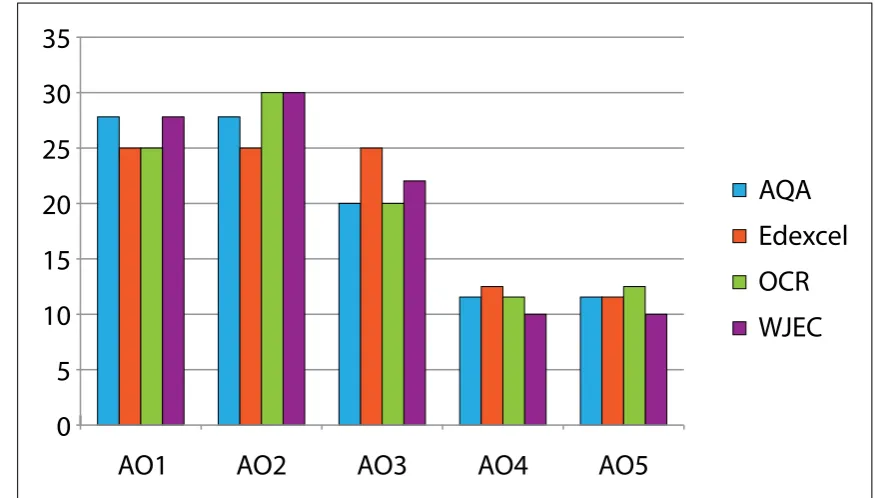
[image:5.1191.36.570.67.778.2]AO4: Explore connections across texts, informed by linguistic and literary concepts and methods AO5: Demonstrate expertise and creativity in the use of English to communicate in different ways. There are now 5 assessment objectives (previously there were 4), with slight changes in wording. The overall simplification and brevity is welcome. The reference to structure and form from the legacy specifications (AO2) has been removed, though this is obviously an important aspect of language and literature and features throughout all the specifications. The separation of the legacy AO3 into the new AO3 and AO4 is another welcome change, placing more emphasis on connections and comparisons across texts.
Figure 1 shows the weightings of each assessment objective across the different specifications, at A Level (where the x-axis represents percentage).
Secondary
Feature: The New English A Levels 2015
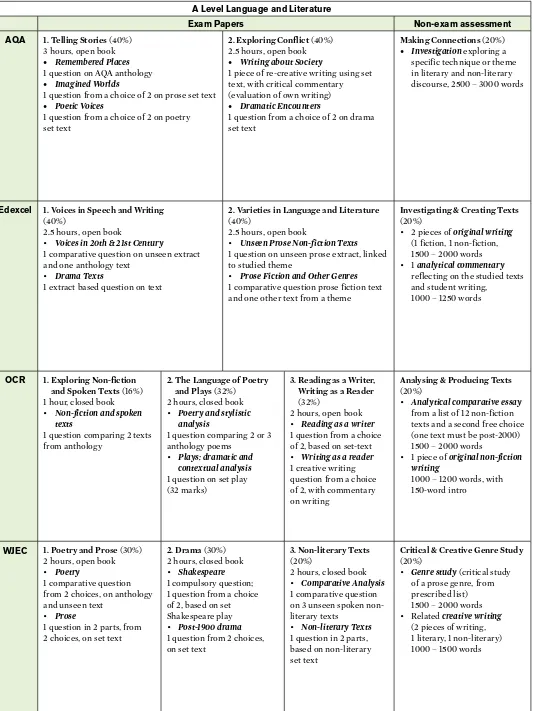
A Level Language and Literature
Exam Papers Non-exam assessment AQA 1. Telling Stories (40%)
3 hours, open book • Remembered Places 1 question on AQA anthology • Imagined Worlds
1 question from a choice of 2 on prose set text • Poetic Voices
1 question from a choice of 2 on poetry set text
2. Exploring Conflict (40%) 2.5 hours, open book • Writing about Society
1 piece of re-creative writing using set text, with critical commentary (evaluation of own writing) • Dramatic Encounters
1 question from a choice of 2 on drama set text
Making Connections (20%) • Investigation exploring a
specific technique or theme in literary and non-literary discourse, 2500 – 3000 words
Edexcel 1. Voices in Speech and Writing (40%)
2.5 hours, open book
• Voices in 20th & 21st Century
1 comparative question on unseen extract and one anthology text
• Drama Texts
1 extract based question on text
2. Varieties in Language and Literature (40%)
2.5 hours, open book
• Unseen Prose Non-fiction Texts 1 question on unseen prose extract, linked to studied theme
• Prose Fiction and Other Genres 1 comparative question prose fiction text and one other text from a theme
Investigating & Creating Texts (20%)
• 2 pieces of original writing (1 fiction, 1 non-fiction, 1500 – 2000 words • 1 analytical commentary
reflecting on the studied texts and student writing,
1000 – 1250 words
OCR 1. Exploring Non-fiction and Spoken Texts (16%) 1 hour, closed book • Non-fiction and spoken
texts
1 question comparing 2 texts from anthology
2. The Language of Poetry and Plays (32%) 2 hours, closed book • Poetry and stylistic
analysis
1 question comparing 2 or 3 anthology poems
• Plays: dramatic and contextual analysis 1 question on set play (32 marks)
3. Reading as a Writer, Writing as a Reader (32%)
2 hours, open book • Reading as a writer 1 question from a choice of 2, based on set-text • Writing as a reader 1 creative writing question from a choice of 2, with commentary on writing
Analysing & Producing Texts (20%)
• Analytical comparative essay from a list of 12 non-fiction texts and a second free choice (one text must be post-2000) 1500 – 2000 words
• 1 piece of original non-fiction writing
1000 – 1200 words, with 150-word intro
WJEC 1. Poetry and Prose (30%) 2 hours, open book • Poetry
1 comparative question from 2 choices, on anthology and unseen text
• Prose
1 question in 2 parts, from 2 choices, on set text
2. Drama (30%) 2 hours, closed book • Shakespeare 1 compulsory question; 1 question from a choice of 2, based on set Shakespeare play • Post-1900 drama 1 question from 2 choices, on set text
3. Non-literary Texts (20%)
2 hours, closed book • Comparative Analysis 1 comparative question on 3 unseen spoken non-literary texts
• Non-literary Texts 1 question in 2 parts, based on non-literary set text
Critical & Creative Genre Study (20%)
• Genre study (critical study of a prose genre, from prescribed list) 1500 – 2000 words • Related creative writing
(2 pieces of writing, 1 literary, 1 non-literary) 1000 – 1500 words
AS Level and co-teachability
All of the specifications have been designed with co-teachability in mind, with obvious structural choices made to help teachers and students out where possible. The AS Level is structured as follows:
Paper One Paper Two
AQA A Views and Voices
• Imagined worlds • Poetic voices
People and Places
• Remembered places
• Re-creative writing; commentary
Edexcel Voices in Speech and Writing
• Creation of voice • Comparing voices
Varieties in Language and Literature
• Prose fiction extract • Exploring text and theme
OCR Non-fiction Written and Spoken Texts
• Reading spoken and written non-fiction • Writing non-fiction
The Language of Literary Texts
• The language of prose • The language of poetry
WJEC Eduqas
Comparative Analysis and Creative Writing
• Comparative analysis of poetry and unseen text • Creative writing; commentary
Drama and non-Literary Texts
• Post-1900 drama • Non-literary text
All of the AS specifications require study of a novel, non-fiction written and spoken texts and creative writing. Edexcel is the only specification that does not include poetry as a compulsory unit. WJEC Eduqas is the only specification that makes a play a compulsory unit.
Final thoughts
The new specifications provide a well-rounded scheme of content for the study of language and literature. Schools and colleges will of course need to take their own personal circumstances and preferences into account. To me, the opportunity to try something new and to develop or adapt existing resources and schemes of work is an exciting one. There is a huge variety of texts on offer to study, and teachers will no doubt have much to think about in which ones they decide to follow. Similarly, students will enjoy the range of texts on offer, and are highly likely to be exposed to genres and styles not previously encountered. This can only be a move in the right direction.
Each specification provides an adequate prerequisite for students wishing to pursue a range of English related degrees in HE. A (celebratory) shift towards contextualised grammar teaching, stylistics and the ‘language of literature’ at KS2, KS3 and KS4 should provide a good platform for this A Level. However, after a steady rise in student numbers between 2003 – 2009, uptake is now on the decline and more work needs to be done in ‘selling’ this important and rewarding A Level to schools, colleges and students.
Ian Cushing
[image:6.595.130.568.67.316.2]Surbiton High School; Linguistics Association of GB, Education Committee
Figure 1: A Level assessment objective weightings