RESEARCH ARTICLE
SENSITIVITY AND UNCERTAINTY ANALYSIS OF THE KEFF DUE TO JENDL4 CROSS SECTIONS
UNCERTAINTIES OF THE
235U AND
238U ISOTOPES IN NUCLEAR REACTORS
*1
Kaddour, M.,
1El Bardouni, T.,
2Boulaich, Y.,
1EL Bakkali, J.,
1EL Ouahdani S.,
1Allaoui O.,
2El Bakkari, B.,
2El Younoussi, C.,
1Azahra, M.,
1Boukhal, H.,
3Chakir, E.
1
Radiations and Nuclear Systems Laboratory, University Abdelmalek Essaadi, Faculty of
Sciences of Tetuan, Morocco
2
CEN-Maamora, CNESTEN, Rabat, Morocco
3
Nuclear Physic Laboratory, Faculty of Sciences of Kenitra, Morocco
ARTICLE INFO ABSTRACT
The main objective of this study is to estimate nuclear data uncertainties on the effective multiplication factor (Keff) related to elastic, inelastic, capture and fission cross sections and the correlations between them. Different rapid and thermal cases of the different IHECSBE benchmarks have been studied by using nuclear data evaluation JENDL4 to calculate the sensitivity vectors for 235
U and238U isotopes and four cases used to validate our sensitivity vectors. These sensitivity vectors are calculated by using the adjoint-weighted perturbation method based on the Kpert card of the Monte Carlo code MCNP6. Thus, the uncertainties induced by nuclear data have been calculated by combining the sensitivity vectors with the covariance matrices that are generated by the ERRORJ module of the recently updated of the nuclear data processing system NJOY99. In this study, we found the four cross sections (elastic, inelastic, capture and fission) of the235U and their covariance matrices Lack the adjustement especially in the rapid energies. Against, the cross sections and covariance matrices of the238U not lack the adjustement especially in the thermal energies.
Copyright © Kaddour, M. et al. This is an open access article distributed under the Creative Commons Attribution License, which permits unrestricted use, distribution, and reproduction in any medium, provided the original work is properly cited.
INTRODUCTION
Since the beginning of the century, the nuclear data evaluation communities are putting more and more attention to the assessment of uncertainties. This increased interest concerns
both basic data (cross section, emission spectrum …) and
calculated quantities for large systems. Such as neutron multiplication factor Keff, reactivity, reaction rate and others. With the large availability of the covariance files, as in the JENDL4 (Shibata et al., 2011) nuclear data evaluation, more and more studies are started using this information to deduce target accuracies for neutronic parameters in future reactors and therefore future priorities for experimental measurements of differential data. Several probabilistic and deterministic codes are made for the analysis of the sensitivity and the uncertainties of the nuclear data on the integral nuclear parameters (SCALE, MCNP, KENO, DRAGON…). Most of these codes used the multigroup adjoint-weighted technique. Except MCNP6 (Pelowitz, 2011) computed the changes in a tally response (such as Keff-eigenvalue) by using the differential operator technique with continuous energy spectrum (McKinney and Iverson, 1996). Now, it compute the changes in reactivity strictly in Keff-eigenvalue problems by using the adjoint-weighted methodology with continuous *Corresponding author: Kaddour, M. Radiations and Nuclear Systems Laboratory, University Abdelmalek Essaadi, Faculty of Sciences of Tetuan, Morocco.
energy spectrum (Kiedrowski and Brown, 2011; Kiedrowski
et al., 2011). The technique of differential operator considered
the source of neutrons unperturbed (Kiedrowski and Brown, 2010). The sensitivity with continuous energy spectrum has no problem of the self shielding effect than the sensitivity with multigroup energy spectrum (LAVILLE, 2011; Williams and Rearden, 2008). For this, we used the adjoint-weighted technique with continuous energy spectrum to calculate the sensitivity profiles in this work. The sensitivity profiles and covariance matrices are combined in order to obtain final uncertainties (IVANOVA, 2011). Several sensitivities and uncertainties analysis for improving and adjusting the cross sections of the important isotopes in nuclear data evaluation JENDL4 and in simple and complex nuclear systems are done by different codes and different perturbation techniques (Augusto Hernández-Solís, 2012; Augusto Hernández-Solís
et al., 2012). But, there are still errors on the integral nuclear
parameters, they due especially to the JENDL4 cross sections uncertainties in the 235U. These errors are detected with the new adjoint-weighted technique of the MCNP6 code. In this work, a sensitivity and uncertainty analysis have been performed for certain cases of the different IHECSBE (International Handbook of Evaluated Criticality Safty Benchmark Experiments) (IHECSBE, 2007) benchmarks by using the MCNP6 and NJOY99 (MacFarlane, 2002) codes. Results of the uncertainty calculated by the adjoint-weighted theory and produced by elastic, inelastic, capture and fission
ISSN: 0975-833X
International Journal of Current Research
Vol. 5, Issue, 12, pp.3682-3690, December, 2013
INTERNATIONAL JOURNAL OF CURRENT RESEARCH
Article History:
Received 10thSeptember, 2013
Received in revised form 28thOctober, 2013
Accepted 19thNovember, 2013 Published online 02ndDecember, 2013
Key words: Cross Section, Sensitivity, Covariance Matrix, Nuclear Uncertainty, MCNP6.
RESEARCH ARTICLE
SENSITIVITY AND UNCERTAINTY ANALYSIS OF THE KEFF DUE TO JENDL4 CROSS SECTIONS
UNCERTAINTIES OF THE
235U AND
238U ISOTOPES IN NUCLEAR REACTORS
*1
Kaddour, M.,
1El Bardouni, T.,
2Boulaich, Y.,
1EL Bakkali, J.,
1EL Ouahdani S.,
1Allaoui O.,
2El Bakkari, B.,
2El Younoussi, C.,
1Azahra, M.,
1Boukhal, H.,
3Chakir, E.
1
Radiations and Nuclear Systems Laboratory, University Abdelmalek Essaadi, Faculty of
Sciences of Tetuan, Morocco
2
CEN-Maamora, CNESTEN, Rabat, Morocco
3
Nuclear Physic Laboratory, Faculty of Sciences of Kenitra, Morocco
ARTICLE INFO ABSTRACT
The main objective of this study is to estimate nuclear data uncertainties on the effective multiplication factor (Keff) related to elastic, inelastic, capture and fission cross sections and the correlations between them. Different rapid and thermal cases of the different IHECSBE benchmarks have been studied by using nuclear data evaluation JENDL4 to calculate the sensitivity vectors for 235
U and238U isotopes and four cases used to validate our sensitivity vectors. These sensitivity vectors are calculated by using the adjoint-weighted perturbation method based on the Kpert card of the Monte Carlo code MCNP6. Thus, the uncertainties induced by nuclear data have been calculated by combining the sensitivity vectors with the covariance matrices that are generated by the ERRORJ module of the recently updated of the nuclear data processing system NJOY99. In this study, we found the four cross sections (elastic, inelastic, capture and fission) of the235U and their covariance matrices Lack the adjustement especially in the rapid energies. Against, the cross sections and covariance matrices of the238U not lack the adjustement especially in the thermal energies.
Copyright © Kaddour, M. et al. This is an open access article distributed under the Creative Commons Attribution License, which permits unrestricted use, distribution, and reproduction in any medium, provided the original work is properly cited.
INTRODUCTION
Since the beginning of the century, the nuclear data evaluation communities are putting more and more attention to the assessment of uncertainties. This increased interest concerns
both basic data (cross section, emission spectrum …) and
calculated quantities for large systems. Such as neutron multiplication factor Keff, reactivity, reaction rate and others. With the large availability of the covariance files, as in the JENDL4 (Shibata et al., 2011) nuclear data evaluation, more and more studies are started using this information to deduce target accuracies for neutronic parameters in future reactors and therefore future priorities for experimental measurements of differential data. Several probabilistic and deterministic codes are made for the analysis of the sensitivity and the uncertainties of the nuclear data on the integral nuclear parameters (SCALE, MCNP, KENO, DRAGON…). Most of these codes used the multigroup adjoint-weighted technique. Except MCNP6 (Pelowitz, 2011) computed the changes in a tally response (such as Keff-eigenvalue) by using the differential operator technique with continuous energy spectrum (McKinney and Iverson, 1996). Now, it compute the changes in reactivity strictly in Keff-eigenvalue problems by using the adjoint-weighted methodology with continuous *Corresponding author: Kaddour, M. Radiations and Nuclear Systems Laboratory, University Abdelmalek Essaadi, Faculty of Sciences of Tetuan, Morocco.
energy spectrum (Kiedrowski and Brown, 2011; Kiedrowski
et al., 2011). The technique of differential operator considered
the source of neutrons unperturbed (Kiedrowski and Brown, 2010). The sensitivity with continuous energy spectrum has no problem of the self shielding effect than the sensitivity with multigroup energy spectrum (LAVILLE, 2011; Williams and Rearden, 2008). For this, we used the adjoint-weighted technique with continuous energy spectrum to calculate the sensitivity profiles in this work. The sensitivity profiles and covariance matrices are combined in order to obtain final uncertainties (IVANOVA, 2011). Several sensitivities and uncertainties analysis for improving and adjusting the cross sections of the important isotopes in nuclear data evaluation JENDL4 and in simple and complex nuclear systems are done by different codes and different perturbation techniques (Augusto Hernández-Solís, 2012; Augusto Hernández-Solís
et al., 2012). But, there are still errors on the integral nuclear
parameters, they due especially to the JENDL4 cross sections uncertainties in the 235U. These errors are detected with the new adjoint-weighted technique of the MCNP6 code. In this work, a sensitivity and uncertainty analysis have been performed for certain cases of the different IHECSBE (International Handbook of Evaluated Criticality Safty Benchmark Experiments) (IHECSBE, 2007) benchmarks by using the MCNP6 and NJOY99 (MacFarlane, 2002) codes. Results of the uncertainty calculated by the adjoint-weighted theory and produced by elastic, inelastic, capture and fission
ISSN: 0975-833X
International Journal of Current Research
Vol. 5, Issue, 12, pp.3682-3690, December, 2013
INTERNATIONAL JOURNAL OF CURRENT RESEARCH
Article History:
Received 10thSeptember, 2013
Received in revised form 28thOctober, 2013
Accepted 19thNovember, 2013 Published online 02ndDecember, 2013
Key words: Cross Section, Sensitivity, Covariance Matrix, Nuclear Uncertainty, MCNP6.
RESEARCH ARTICLE
SENSITIVITY AND UNCERTAINTY ANALYSIS OF THE KEFF DUE TO JENDL4 CROSS SECTIONS
UNCERTAINTIES OF THE
235U AND
238U ISOTOPES IN NUCLEAR REACTORS
*1
Kaddour, M.,
1El Bardouni, T.,
2Boulaich, Y.,
1EL Bakkali, J.,
1EL Ouahdani S.,
1Allaoui O.,
2El Bakkari, B.,
2El Younoussi, C.,
1Azahra, M.,
1Boukhal, H.,
3Chakir, E.
1
Radiations and Nuclear Systems Laboratory, University Abdelmalek Essaadi, Faculty of
Sciences of Tetuan, Morocco
2
CEN-Maamora, CNESTEN, Rabat, Morocco
3
Nuclear Physic Laboratory, Faculty of Sciences of Kenitra, Morocco
ARTICLE INFO ABSTRACT
The main objective of this study is to estimate nuclear data uncertainties on the effective multiplication factor (Keff) related to elastic, inelastic, capture and fission cross sections and the correlations between them. Different rapid and thermal cases of the different IHECSBE benchmarks have been studied by using nuclear data evaluation JENDL4 to calculate the sensitivity vectors for 235
U and238U isotopes and four cases used to validate our sensitivity vectors. These sensitivity vectors are calculated by using the adjoint-weighted perturbation method based on the Kpert card of the Monte Carlo code MCNP6. Thus, the uncertainties induced by nuclear data have been calculated by combining the sensitivity vectors with the covariance matrices that are generated by the ERRORJ module of the recently updated of the nuclear data processing system NJOY99. In this study, we found the four cross sections (elastic, inelastic, capture and fission) of the235U and their covariance matrices Lack the adjustement especially in the rapid energies. Against, the cross sections and covariance matrices of the238U not lack the adjustement especially in the thermal energies.
Copyright © Kaddour, M. et al. This is an open access article distributed under the Creative Commons Attribution License, which permits unrestricted use, distribution, and reproduction in any medium, provided the original work is properly cited.
INTRODUCTION
Since the beginning of the century, the nuclear data evaluation communities are putting more and more attention to the assessment of uncertainties. This increased interest concerns
both basic data (cross section, emission spectrum …) and
calculated quantities for large systems. Such as neutron multiplication factor Keff, reactivity, reaction rate and others. With the large availability of the covariance files, as in the JENDL4 (Shibata et al., 2011) nuclear data evaluation, more and more studies are started using this information to deduce target accuracies for neutronic parameters in future reactors and therefore future priorities for experimental measurements of differential data. Several probabilistic and deterministic codes are made for the analysis of the sensitivity and the uncertainties of the nuclear data on the integral nuclear parameters (SCALE, MCNP, KENO, DRAGON…). Most of these codes used the multigroup adjoint-weighted technique. Except MCNP6 (Pelowitz, 2011) computed the changes in a tally response (such as Keff-eigenvalue) by using the differential operator technique with continuous energy spectrum (McKinney and Iverson, 1996). Now, it compute the changes in reactivity strictly in Keff-eigenvalue problems by using the adjoint-weighted methodology with continuous *Corresponding author: Kaddour, M. Radiations and Nuclear Systems Laboratory, University Abdelmalek Essaadi, Faculty of Sciences of Tetuan, Morocco.
energy spectrum (Kiedrowski and Brown, 2011; Kiedrowski
et al., 2011). The technique of differential operator considered
the source of neutrons unperturbed (Kiedrowski and Brown, 2010). The sensitivity with continuous energy spectrum has no problem of the self shielding effect than the sensitivity with multigroup energy spectrum (LAVILLE, 2011; Williams and Rearden, 2008). For this, we used the adjoint-weighted technique with continuous energy spectrum to calculate the sensitivity profiles in this work. The sensitivity profiles and covariance matrices are combined in order to obtain final uncertainties (IVANOVA, 2011). Several sensitivities and uncertainties analysis for improving and adjusting the cross sections of the important isotopes in nuclear data evaluation JENDL4 and in simple and complex nuclear systems are done by different codes and different perturbation techniques (Augusto Hernández-Solís, 2012; Augusto Hernández-Solís
et al., 2012). But, there are still errors on the integral nuclear
parameters, they due especially to the JENDL4 cross sections uncertainties in the 235U. These errors are detected with the new adjoint-weighted technique of the MCNP6 code. In this work, a sensitivity and uncertainty analysis have been performed for certain cases of the different IHECSBE (International Handbook of Evaluated Criticality Safty Benchmark Experiments) (IHECSBE, 2007) benchmarks by using the MCNP6 and NJOY99 (MacFarlane, 2002) codes. Results of the uncertainty calculated by the adjoint-weighted theory and produced by elastic, inelastic, capture and fission
ISSN: 0975-833X
International Journal of Current Research
Vol. 5, Issue, 12, pp.3682-3690, December, 2013
INTERNATIONAL JOURNAL OF CURRENT RESEARCH
Article History:
Received 10thSeptember, 2013
Received in revised form 28thOctober, 2013
Accepted 19thNovember, 2013 Published online 02ndDecember, 2013
Methodology and Study Approach
Adjoint-weighted Technique
Starting from the nuclear transport equation and applying a first-order perturbation, the following expression for the
change in reactivity ρ can be derived(Kiedrowski and Brown, 2011):
∆ = − ,,′ (1)
The reactivity is related to Keff in the typical way:
=( ) (2)
The angular flux in the unperturbed system isψand its adjoint is denoted by . P is the operator for the perturbation taking the form:
= ∆Ʃ − ∆ − ∆ (3)
The eigenvalueλis:
λ= (4)
And the tree terms in from left to right, are the change in the total cross section, the change in scattering operator, and the
change in the fission multiplication operator. F’ is the
perturbed fission operator. Monte Carlo technique can be used to sample the numerator and the denominator in continuous-energy forward calculation (Kiedrowski and Brown, 2011) and the change in reactivity can be estimated by taking the ratio in (1). We express change in cross section as:
∆ = (5)
We apply the relationship:
∆ = ∆∆ (6)
We compute sensitivity coefficients by:
, ≈
∆
∆ (7)
The quantity ∆ scales linearly with f; can make arbitrarily small until sensitivity becomes sufficiently precise.
Study Approach
During this study:
We have selected different criticality safety cases of IHECSBE (IHECSBE, 2007) benchmarks. We have studied the impact of the cross sections uncertainties for235U, and 238U isotopes on the effective multiplication factor uncertainty in each selected case. The selected isotopes are generally known by their important contribution in the effective multiplication factor calculation.
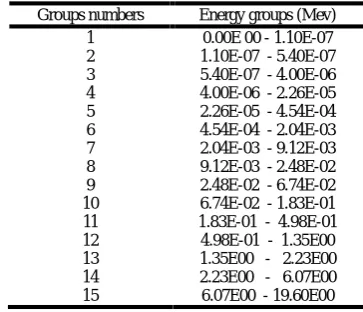
[image:2.595.339.521.121.277.2]are represented in Table 1.
Table 1. Fifteen energy groups used in our sensitivity and uncertainty analysis
Groups numbers Energy groups (Mev) 1 0.00E 00 - 1.10E-07 2 1.10E-07 - 5.40E-07 3 5.40E-07 - 4.00E-06 4 4.00E-06 - 2.26E-05 5 2.26E-05 - 4.54E-04 6 4.54E-04 - 2.04E-03 7 2.04E-03 - 9.12E-03 8 9.12E-03 - 2.48E-02 9 2.48E-02 - 6.74E-02 10 6.74E-02 - 1.83E-01 11 1.83E-01 - 4.98E-01 12 4.98E-01 - 1.35E00
13 1.35E00 - 2.23E00
14 2.23E00 - 6.07E00
15 6.07E00 - 19.60E00
The covariance matrices generated by ERRORJ module of the NJOY99 (MacFarlane, 2002) processing system based on the same discretization of the sensitivity energy. The values of the covariance were computed for fifteen energy groups mentioned above by using a weighting flux that corresponds to the 1 + fission spectrum + thermal maxwellian shape. For all cases, an infinite dilution condition was assumed ( =1 ∙ 10 barns) and the temperature was considered to be 300 K. The steps adopted in this study are presented in Figure 1:
● The perturbation approach is generally based on the NJOY99 processing system, the MCNP6 code and the program for calculating the total uncertainty produced by nuclear data on the Keff (∆Keff-nucl.).
● Inputs are the MCNP6 input file and JENDL4 file containing the matrices of covariances. As shown in figure 1, JENDL4 file is processed by NJOY99 in order to produce cross sections in the ACE format and covariance matrices used by program for calculating on the ∆Keff–
nucl.
● The sensitivity vectors were calculated by using the most commonly used radiation transport code MCNP6. The sensitivity profiles , , are defined as the relative change in a response Keff (the effective multiplication factor) with respect to cross section in a particular energy group g, it is defined as:
, , = , ∆∆ , ≈ ∆∆ (8)
● The sensitivity profile , , is obtained by using the perturbation option of MCNP6 that is defined in Kpert card by using the first-order perturbation of the adjoint-weighted technique.
● The cross sections were perturbed as described in the following steps:
2. Then a material card is created in which the atomic density for the relevant isotope is increased by1%.
3. The Kpert card is then created specifying that: the relevant material is replaced by the perturbed material in each of the cells in which the material is present. Perturbation cards are given for all energy groups.
4. Finally, MCNP6 is run with this modification in the input; and in the output file a table is given with the results of different perturbations and their related statistical uncertainties.
● These sensitivity vectors must be combined with covariances matrices (10) and (11), by using a program calculating Keff uncertainties in similar energy groups.
● The total uncertainty is calculated by using the following equation [9]:
∆
= ∑ ∑ ∑ [∆ ], , (9)
i: index of material : index of reaction cross section g: index of energy group
● The contribution of every nuclide-reaction in ∆ is calculated as follows [5]:
⎩ ⎨
⎧ , , , , , ′ , , ′ (10)
− , , , , , ′ ,
, ′ (11)
If ( , , , , , ′ ,
, ′) ≥ 0) , we have using the equation (10).
If( , , , , , ′ ,
, ′ < 0), we have using the equation (11).
, , : Sensitivity coefficient for Keff due to the neutron cross section , and energy group g.
, , , ′ : Covariance matrix that comprises covariance
data for two cross sections , in the energy groups g and
g’.
Effective Multiplication Factors Calculated by MCNP6
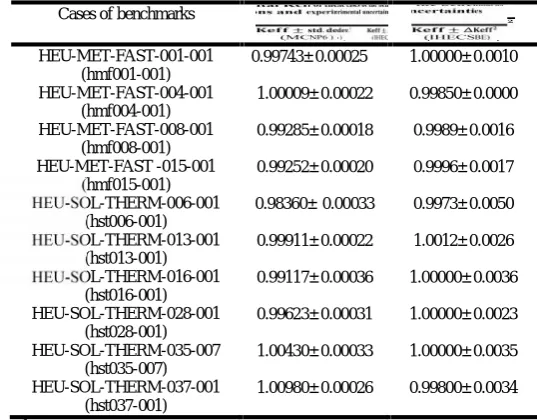
[image:3.595.143.461.47.279.2]The Keff values with their related standard deviations for the cases studied are listed in table 2. The third column represent values from the International Criticality Safty Benchmark experements (IHECSBE). Our results calculated by MCNP6 code and JENDL4 nuclear data evaluation are represented in the second column. We chose these cases because their relative differences between the experimental Keff and the calculated Keff are higher than their experimental uncertainties and their standard deviations.
Table 2. calculated and experimental Keff of the cases of the benchmarks and theirs standard deviations and experimental uncertainties
Cases of benchmarks ± . .1
(MCNP6 )
± ∆
(IHECSBE) HEU-MET-FAST-001-001
(hmf001-001)
0.99743±0.00025 1.00000±0.0010
HEU-MET-FAST-004-001 (hmf004-001)
1.00009±0.00022 0.99850±0.0000
HEU-MET-FAST-008-001 (hmf008-001)
0.99285±0.00018 0.9989±0.0016
HEU-MET-FAST -015-001 (hmf015-001)
0.99252±0.00020 0.9996±0.0017
HEU-SOL-THERM-006-001 (hst006-001)
0.98360±0.00033 0.9973±0.0050
HEU-SOL-THERM-013-001 (hst013-001)
0.99911±0.00022 1.0012±0.0026
HEU-SOL-THERM-016-001 (hst016-001)
0.99117±0.00036 1.00000±0.0036
HEU-SOL-THERM-028-001 (hst028-001)
0.99623±0.00031 1.00000±0.0023
HEU-SOL-THERM-035-007 (hst035-007)
1.00430±0.00033 1.00000±0.0035
HEU-SOL-THERM-037-001 (hst037-001)
1.00980±0.00026 0.99800±0.0034
1this uncertainty means the statistical uncertainty or standard deviation in MCNP6 calculated with the Monte Carlo technique.
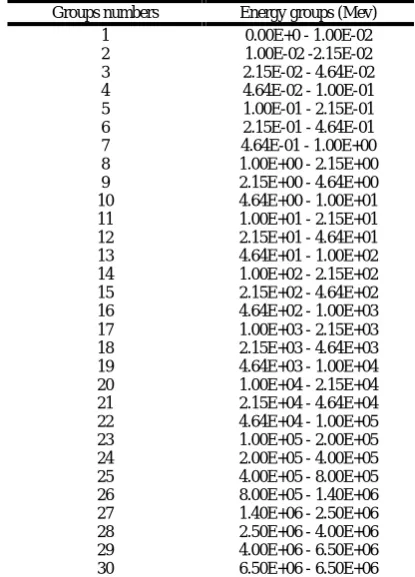
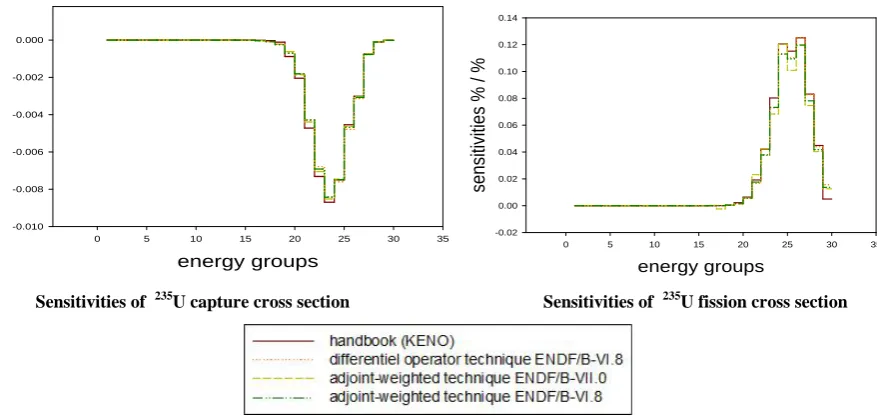
[image:3.595.295.564.475.685.2]weighted technique is new in the code MCNP6; for this, we compared the results of this technique with the results of the old technique in MCNP code (differential operator technique) and with the sensitivities coefficients which are in IHECSBE and calculated by the KENO code. Also, we compared the results of the adjoint-weighted technique between tree nuclear data evaluations ENDFB/VI.8, ENDFB/VII.0 (Chadwick
et al., 2006) and JENDL-4.0. This comparison is used in 30
[image:4.595.57.265.213.502.2]energy groups; they are represented in Table 3.
Table 3. Thirty energy groups used in our sensitivity validation
Groups numbers Energy groups (Mev)
1 0.00E+0 - 1.00E-02
2 1.00E-02 -2.15E-02
3 2.15E-02 - 4.64E-02
4 4.64E-02 - 1.00E-01
5 1.00E-01 - 2.15E-01
6 2.15E-01 - 4.64E-01
7 4.64E-01 - 1.00E+00
8 1.00E+00 - 2.15E+00
9 2.15E+00 - 4.64E+00
10 4.64E+00 - 1.00E+01
11 1.00E+01 - 2.15E+01
12 2.15E+01 - 4.64E+01
13 4.64E+01 - 1.00E+02
14 1.00E+02 - 2.15E+02
15 2.15E+02 - 4.64E+02
16 4.64E+02 - 1.00E+03
17 1.00E+03 - 2.15E+03
18 2.15E+03 - 4.64E+03
19 4.64E+03 - 1.00E+04
20 1.00E+04 - 2.15E+04
21 2.15E+04 - 4.64E+04
22 4.64E+04 - 1.00E+05
23 1.00E+05 - 2.00E+05
24 2.00E+05 - 4.00E+05
25 4.00E+05 - 8.00E+05
26 8.00E+05 - 1.40E+06
27 1.40E+06 - 2.50E+06
28 2.50E+06 - 4.00E+06
29 4.00E+06 - 6.50E+06
30 6.50E+06 - 6.50E+06
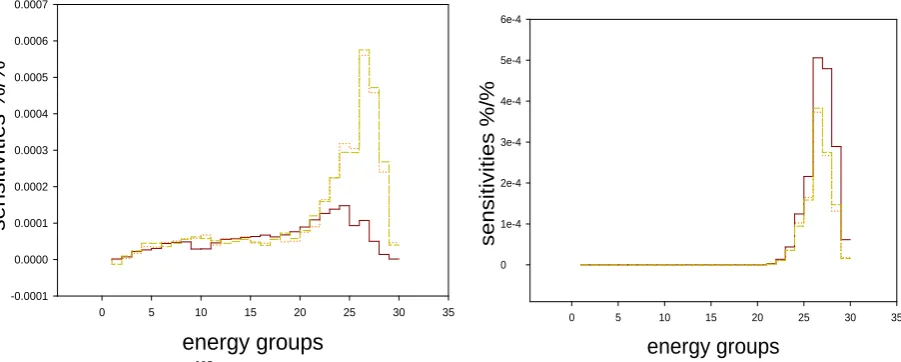
uranium sphere), hmf004-001 and hmf018-001, and in thermal experiment hst001-001; for four reactions: elastic and inelastic scattering, capture and fission.
The differences between the results of sensitivities in the above Figures (2, 3, 4, 5) are due to:
–The difference between the nuclear data evaluation used.
– The difference between the perturbation techniques used: in the differential operator technique, the fundamental eigenfuction (fission distribution) approximated as unperturbed.
– The absence of thermal neutron scattering: ( , ) in the KENO code.
– The difference between the two codes: MCNP6 uses continuous energy, KENO uses multigroup energy. In general, the adjoint-weighted technique has the same allure with other technique. Then, it is validated.
Uncertainty Analysis
Uncertainty on the Keff Produced by the Nuclear Data
Uncertainties of the235U
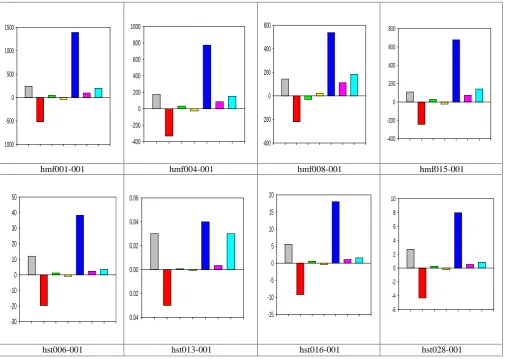
Figure 6 shows the effect of cross sections uncertainties related to 235U isotope on the effictive multiplication factor (nucl. uncert. on Keff or ∆Keff-nucl.) in different nuclear experiences. The uncertainties on the Keff produced by elastic, inelastic scattering, capture and fission cross sections and the effect of the correlation between them are represented by adjoint-weighted technique and by pcm (1pcm = 10-5)
Interpretations and Conclusions on the Results of235U
– The elastic, inelastic, capture and fission cross sections and the correlations between them for 235U in the rapid experiences, they have large contribution of uncertainties in the effective multiplication factor uncertainties (∆Keff-nucl.). Then, these four cross sections and their covariance matrices in 235U require the adjustment in the rapid energies.
Sensitivities of 235U elastic scattering cross section Sensitivities of 235U inelastic scattering cross section
energy groups
0 5 10 15 20 25 30 35
se
n
sitivitie
s %
/ %
-0.02 0.00 0.02 0.04 0.06 0.08 0.10 0.12 0.14
energy groups
0 5 10 15 20 25 30 35
se
n
sit
ivit
ie
s
%
/
%
[image:4.595.181.516.551.710.2]Sensitivities of 235U capture cross section Sensitivities of 235U fission cross section
Fig. 2. Sensitivities of235U elastic and inelastic scattering, capture and fission cross sections in Godiva
Sensitivities of235U elastic scattering cross section Sensitivities of235U inelastic scattering cross section
[image:5.595.303.494.334.472.2]Sensitivities of235U capture cross section Sensitivities of235U fission cross section
Fig. 3. Sensitivities of235U elastic and inelastic scattering, capture and fission cross sections in hmf004-001
energy groups
0 5 10 15 20 25 30 35
se
nsit
ivit
ie
s
%
/
%
-0.010 -0.008 -0.006 -0.004 -0.002 0.000
energy groups
0 5 10 15 20 25 30 35
se
n
sitivitie
s %
/ %
-0.02 0.00 0.02 0.04 0.06 0.08 0.10 0.12 0.14
energy groups
0 5 10 15 20 25 30 35
sensit
ivit
ies
%
/%
-0.005 0.000 0.005 0.010 0.015 0.020 0.025
energy groups
0 5 10 15 20 25 30 35
sensit
ivit
ies
%
/%
-0.002 0.000 0.002 0.004 0.006 0.008 0.010 0.012 0.014 0.016
energy groups
0 5 10 15 20 25 30 35
se
n
sit
ivit
ie
s
%
/%
-0.010 -0.008 -0.006 -0.004 -0.002 0.000
energy groups
0 5 10 15 20 25 30 35
sensit
ivit
ies
%
/%
Sensitivities of235U elastic scattering cross section Sensitivities of235U inelastic scattering cross section
[image:6.595.72.523.560.741.2]Sensitivities of235U capture cross section Sensitivities of235U fission cross section
Fig 4. Sensitivities of235U elastic and inelastic scattering, capture and fission cross sections in hmf018-001
Sensitivities of235U elastic scattering cross section Sensitivities of235U inelastic scattering cross section
energy groups
0 5 10 15 20 25 30 35
se
n
si
ti
vi
ti
e
s
%
/%
-0.005 0.000 0.005 0.010 0.015 0.020 0.025
energy groups
0 5 10 15 20 25 30 35
se
n
sitivitie
s %
/%
-0.005 0.000 0.005 0.010 0.015 0.020
energy groups
0 5 10 15 20 25 30 35
se
n
sitivitie
s %
/%
-0.010 -0.008 -0.006 -0.004 -0.002 0.000
energy groups
0 5 10 15 20 25 30 35
se
n
si
ti
vi
ti
e
s %/%
-0.02 0.00 0.02 0.04 0.06 0.08 0.10 0.12 0.14
energy groups
0 5 10 15 20 25 30 35
sensit
ivit
ies
%
/%
-0.0001 0.0000 0.0001 0.0002 0.0003 0.0004 0.0005 0.0006 0.0007
energy groups
0 5 10 15 20 25 30 35
sensit
ivit
ies
%
/%
Sensitivities of235U capture cross section Sensitivities of235U fission cross section
Fig 5. Sensitivities of235U elastic and inelastic scattering, capture and fission cross sections in hst001-001
-1000 -500 0 500 1000 1500
-400 -200 0 200 400 600 800 1000
-400 -200 0 200 400 600
-400 -200 0 200 400 600 800
hmf001-001 hmf004-001 hmf008-001 hmf015-001
-30 -20 -10 0 10 20 30 40 50
-0.04 -0.02 0.00 0.02 0.04 0.06
-15 -10 -5 0 5 10 15 20
-6 -4 -2 0 2 4 6 8 10
hst006-001 hst013-001 hst016-001 hst028-001
energy groups
0 5 10 15 20 25 30 35
sensit
ivit
ies
%
/%
-0.035 -0.030 -0.025 -0.020 -0.015 -0.010 -0.005 0.000
energy groups
0 5 10 15 20 25 30 35
sensit
ivit
ies
%
/%
-4 -2 0 2 4 6 8
-1.5 -1.0 -0.5 0.0 0.5 1.0
nucl
.
uncer
t
.
on
Kef
f
(
pcm
)
hst035-007 hst037-001 legends
Fig. 6. Uncertainties (pcm) produced by different cross sections of235U for different experiences
-20 -10 0 10 20 30 40
-3 -2 -1 0 1 2 3 4
-15 -10 -5 0 5 10 15 20
-4 -2 0 2 4 6 8 10
hmf001-001 hmf004-001 hmf008-001 hmf-015-001
-1.0 -0.5 0.0 0.5 1.0 1.5
-0.04 -0.02 0.00 0.02 0.04 0.06
-0.8 -0.6 -0.4 -0.2 0.0 0.2 0.4 0.6 0.8 1.0 1.2
-0.3 -0.2 -0.1 0.0 0.1 0.2 0.3 0.4 0.5
hst006-001 hst013-001 hst016-001 hst028-001
-0.4 -0.2 0.0 0.2 0.4 0.6
-0.20 -0.15 -0.10 -0.05 0.00 0.05 0.10 0.15
nucl
.
uncer
t
.
on
Kef
f
(
pcm
)
[image:8.595.54.545.56.784.2]hst035-007 hst037-001 legends
– The elastic, inelastic, capture and fission cross sections uncertainties and the correlations between them for235U in the thermal experiences, they have small contribution of uncertainties in the effective multiplication factor uncertainties (∆Keff-nucl.) than its contribution of uncertainties in ∆ Keff-nucl of the rapid experiences. But, in another study we found ∆Keff-nucl. increases with small increase in the atomic density for 235U in six cases of hst001 (Kaddour et al., 2013). Thus, we cannot assure the accuracy of these cross sections and their covariances matrices in the thermal energies when the 235U atomic density increases.
Uncertainty on the Keff Produced by the Nuclear Data
Uncertainties of the238U
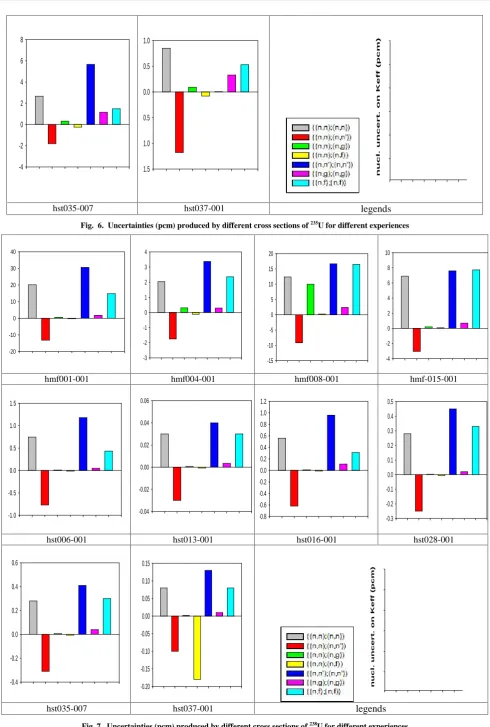
Figure 7 shows the effect of cross sections uncertainties related to 238U isotope on the effictive multiplication factor (nucl. uncert. on Keff or ∆Keff-nucl.) in different nuclear experiences. The uncertainties on the Keff produced by elastic, inelastic scattering, capture and fission cross sections and the effect of the correlation between them are represented by adjoint-weighted technique and by pcm (1pcm = 10-5).
Interpretations and Conclusions on the Results of238U
– The effect of elastic, inelastic, capture and fission cross sections uncertainties related to 238U on the effictive multiplication factor uncertainties is very small in the thermal experiences than the rapid experiences; and that is due to the small contribution of 238U cross sections on the Keff in the thermal energies. Then, in this study, we can conclude that: these cross sections and their covariance matrices do not lack the adjustment in the thermal energies.
– In another study we found ∆Keff-nucl. increases with the increase in the 238U atomic density in six cases of hst001 (Kaddour et al., 2013). Thus, we cannot assure the accuracy of these cross sections and their covariance matrices in the rapid energies when the atomic density of the238U increases.
Conclusion
In this work we have analysed the sensitivities and uncertainties on the effictive multiplication factor (Keff) produced by JENDL4 nuclear data; espicially the elastic and inelastic scattering, capture and fission cross sections and their correlations in the 235U and 238U by the adjoint- weigted technique of the MCNP6 code. Firstly, we validated our perturbation technique in four experiences. After, a series of critical experiences have been studied by using the Monte Carlo code MCNP6 and the ERRORJ module of the last update NJOY99 to calculate the sensitivities vectors and to process the covarionce matrices. In the end, the sensitivity vectors and covariance matrices are combined in order to obtain final uncertainties. As a conclusins:
– The four cross sections (elastic, inelastic, capture and fission) of the 235U and their covariance matrices Lack the adjustment especially in the rapid energies.
– The cross sections and covariance matrices of the 238U not lack the adjustement especially in the thermal energies.
The adjustment of these cross sections and their covariance matrices is our aim in our future works.
REFERENCES
Shibata K. et al. 2011. "JENDL-4.0: A New Library for Nuclear Science and Engineering", Nuclear Science and Technology, Vol. 48 (1), pp. 1-30.
Pelowitz D. B. 2011: MCNP User’s Manuel, Los Alamos National Laboratory, December, LA-CP-11-01708.
McKinney G.W. and J.L. Iverson, 1996.Verification of the
Monte Carlo differential operator technique for MCNP™.
In: Rep. LA-13098, LANL, Los Alamos, NM.
Kiedrowski B. C. and F. B. Brown, 2009.“Adjoint-Weighting for Critical Systems with Continuous Energy Monte
Carlo,” Proceedings of the 2009 Nuclear Criticality Safety
Division (of the American Nuclear Society) Topical Meeting on Realism, Robustness, and the Nuclear Renaissance, Richland, Washington, September 13-17, CD-ROM.
Kiedrowski, B. C. F. B. Brown, and P. P. H. Wilson, 2011.
“Adjoint-Weighted Tallies for k-Eigenvalue Calculations with Continuous-Energy Monte Carlo,” Nuclear Science
and Engineering, 168, 3, 226-241.
Kiedrowski B.C. & F.B. Brown, 2010. “Comparison Of The
Monte Carlo Adjoint-Weighted And Differential Operator
Perturbation Methods”, SNA+MC-2010, Tokyo, Oct 17-20
[also, LA-UR-10-05215].
Laville C., 2011.“Etude de différentes méthodes de calculs de
coefficients de sensibilités du Keff aux données nucléaires’’, Université de Montréal.
Williams M.L., B.T. Rearden, 2008. “SCALE-6 Sensitivity/ Uncertainty Methods and covariance Data”, Science Direct, Nuclear Data sheets 109, 2796-2800.
Ivanova T., I. Duhamel and E. Letang, 2011. Impact of cross section covariance Data on Results of High-confidence criticality validation, Journal of the Korean Physical
Society, Vol. 59, N° 59, August, pp. 1170~1173 .
Augusto Hernández-Solís, “Uncertainty and sensitivity analysis applied to LWR neutronic and thermal-hydraulic calculations”, PhD. thesis, Chalmers University of Technology, Sweden 2012.
Hernández‐Solís A., Demazière C., Ekberg C., Ödegaard– Jensen A. “Statistical uncertainty analysis applied to the
DRAGONv4 code lattice calculations and based on JENDL‐4 covariance data”. On the proceedings of PHYSOR 2012‐Advances in Reactor Physics, Knoxville TN, USA.
International Handbook of Evaluated Criticality Safty Benchmark Experiments, NEA/NSC/DOC (95)03/III, September 2007 Edition.
MacFarlane R. E., 2002, NJOY99 Nuclear Data Processing system. [online] Available: http://t2.lanl.gov/nis/codes/ njoy99/index.html, (July, 2013)
Chadwick, M.B., et al., 2006. ENDF/B-VII.0: Next Generation Evaluated Nuclear Data Library for Nuclear Science and Technology, Nuclear data Sheets, vol. 107, pp.2931–3060. http://www.nndc.bnl.gov/exfor7/endf00.htm. (July, 2013). Kaddour M. et al. 2013. "Impact of the atomic density on the
uncertainties of the effective multiplication factor due to nuclear data uncertainties", International Journal of
Innovation and Applied studies ISSN 2028-9324 Vol. 4
No. 1 sep., pp. 171-181.