Exploring the Theory and Practice of Knowledge
Exchange: intention, context
and characteristics
Jeremy John Davenport
BSc, MSc, MBA
A thesis submitted for the degree of Doctor of Philosophy
Lancaster Institute for the Contemporary Arts, Lancaster University
ABSTRACT
The concept of Knowledge Exchange (KE), increasingly adopted by policy makers and practitioners,1 is used to describe policy, investment and related forms of collaboration between universities and public, private and third sector partners. The concept is inclusive of formal and informal collaborations that extend beyond universities’ traditional roles as centres of research and teaching excellence with a
recognised potential to generate significant social and economic benefits. This enquiry sets out to clarify the concept of KE as a distinct mode of university collaboration and identify important factors that act to shape the effectiveness of KE projects as the basis for exploring how future projects can be supported to maximise effectiveness.
The overall aim is addressed is through a review of relevant literature and a case study analysis incorporating six knowledge exchange projects undertaken within the context of The Creative Exchange, one of four AHRC funded Knowledge Exchange Hubs. Each project focused on addressing opportunities and challenges associated with digital innovation across a variety of social contexts. The study reflects the premise that to design and enable knowledge exchange initiatives effectively, it is necessary to understand the intention, context and characteristics of this mode of collaboration and the factors that shape the delivery of the related projects. Distilled from the case study analysis and elements of the literature review, a typology of three distinct forms of University collaboration is developed (Technology Transfer, Knowledge Transfer and Knowledge Exchange) and an Exploratory Mode of KE identified.
The exploratory mode is situated in the context of a innovation funnel, illustrating how the concept can be integrated in to a wider process of KE project development. Research insights provide a basis for identifying enabling factors that influenced the design and delivery of the selected projects, these insights in turn are used to inform the design of an enabling framework to support future KE projects.
DECLARATION OF AUTHORSHIP
I declare that the work included within this thesis is my own work and has not been submitted in the same form for the award of a higher degree elsewhere. To the best of my knowledge it does not contain materials previously published or written by another person except where due reference is made in the text.
DEDICATION
My thesis is dedicated to my mother who has been unfaltering in her support, encouragement and patience, my North Star,
ACKNOWLEDGEMENTS
I would like to thank and express my appreciation to Professor Rachel Cooper for her support, guidance and wisdom and for always finding time during her hectic schedule to discuss and give much valued feedback. Also, to Professor Leon Cruickshank whose coffee and cake catch-ups are always appreciated.
A particular note of appreciation to my sister Andrea, friends (in particular Hape, Heather, Margi, Andrej, Anita, Niklas and Annika), and colleagues at Lancaster University, especially Pam for tea, coffee and encouragement.
A special thank you to my clinical teams at Royal Preston Hospital (Professor Woywodt, Dr Brady and Sister Jenny Barlow in particular) and Manchester Royal Infirmary, for the care and attention provided to me and to all their patients. A particular thank you to Sister Cathryn Greaves, Sister Anne Hamilton, Heather Hill and all the team at Westmorland Dialysis Unit for their care, encouragement and endless patience, as they kept me up and running.
I would also take this opportunity to voice a special note of gratitude to my
PROLOGUE
The language of exploration provides a useful metaphor in capturing the essence of the researcher's journey in exploring the meaning and practice of knowledge exchange (KE). This emphasis reflecting a convergence between the researcher's orientation towards the process of enquiry and the Creative Exchange, which provided the context within which this study took place.
The Creative Exchange (CX) was one of four UK-based Knowledge Exchange Hubs, implemented between 2013 and 2017, funded by the Arts and Humanities Research Council (AHRC). Their overall aim to explore, identify and design approaches to KE and related methods for connecting academic research and practice to the creative economy to catalyse innovation and generate wider economic and social benefits.
The CX was implemented by a consortium of three universities (Lancaster University, Newcastle University and the Royal College of Art). It integrated both research and practice-based activity focused on the meaning, challenges and opportunities (social and economic) provided by emergent digital technologies and applications associated with the concept of the Digital Public Space (DPS).
TABLE OF CONTENTS
Abstract ii
Declaration of Authorship iii
Dedication iv
Acknowledgements v
Prologue vi
Table of Contents vii
List of Figures ix
List of Tables xiii
Abbreviations and Acronyms xvi
Introduction to Thesis
1Section 1 Research Strategy 6
Introduction 7
Chapter 1 Research Question, Aims and Context 8
Chapter 2 Research Strategy: Epistemology and Theory 25
Chapter 3 Research Strategy: Methodology and Methods 43
Section 2 Framing Knowledge Exchange with Reference to
Existing Theory and Practice 61
Introduction 62
Chapter 4 Insights into Knowledge Exchange from
Innovation Theory and Practice 64
Chapter 5 Insights from the Theory and Practice of
Knowledge Management 84
Chapter 6 The National Innovation System:
Section 3 Case Study and Cross-case Analysis 120
Introduction 121
Chapter 7 The Kendal Project (Case 1) 123
Chapter 8 Cases 2-6 164
Chapter 9 A Cross-case Analysis 246
Section 4 Research Insights and Conclusions 288
Introduction 289
Chapter 10 An Emergent Typology of Knowledge
Exchange 291
Chapter 11 Conclusion 308
Chapter 12 A Reflection on the Research Journey: Limitations, lessons and topics for
further research 327
Appendices 344
List of Figures
Figure 1 Overview of the research journey 3
Figure 2 Dimensions of analysis within the enquiry 9
Figure 3 Dimensions of CX impact (adapted from Creative
Exchange 2017) 13
Figure 4 Knowledge exchange income: England 2004-2016
(HEFCE 2017) 17
Figure 5 Structure of research strategy: epistemology, theory
and methodology 42
Figure 6 Structure of the research strategy: epistemology to
method 44
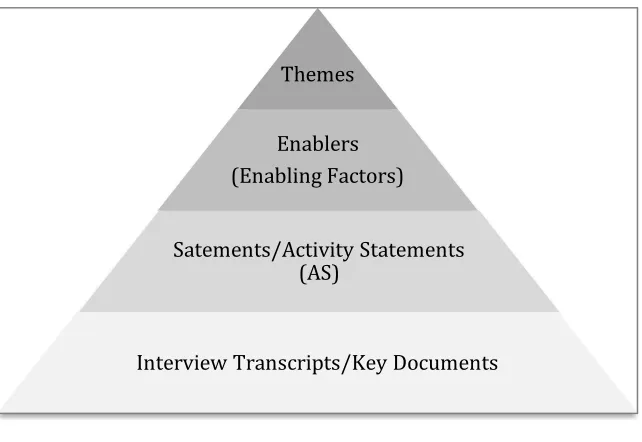
Figure 7 Deriving enabling themes and factors 48
Figure 8 Illustrative example of case study graphic 51
Figure 9 Dimensions of KE explored through the literature review 62
Figure 10 The research-driven linear model of innovation 72
Figure 11 Demand Pull model of innovation 73
Figure 12 Illustration of the open innovation model (Emedia 2015) 74
Figure 13 Chain-linked model of innovation (Kline & Rosenberg
1986) 77
Figure 14 Three Horizons of Growth and the Gartner Hype Cycle
(Kyffin & Gardien 2009 p.59) 80
Figure 15 Routes to navigating the innovation matrix (Kyffin and
Gardien 2009, p.67) 81
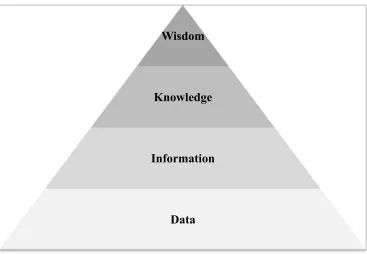
Figure 16 A hierarchical view of data, information and knowledge
(Bernstein 1989, p.69) 89
Figure 17 The Socialization, Externalization, Combination and
Internalization Model (Nonaka & Toyama 2003, p.5) 91
Figure 18 The organisation as an organic configuration
Figure 19 How communities of practice underpin knowledge
processes (adapted from Hislop 2013) 100
Figure 20 The Triple Helix Model of Innovation (adapted from
Etzkowitz & Leydesdorff 2000, p.111) 10
Figure 21 Academic interactions with external organisations
(Lawson et al. 2016, p.57) 114
Figure 22 Example of current format for printing blood test
results (on ward) 126
Figure 23 The Design Double Diamond 129
Figure 24 Mapping shared questions related to blood test results
between dietitian and patient 132
Figure 25 Prototype level 1 137
Figure 26 Prototype level 2 138
Figure 27 Prototype level 3 139
Figure 28 A summary of the Kendal case analysis:
enabling themes and factors 143
Figure 29 A visualization of the LocalNets app. 166
Figure 30 A summary of the Bretton Buzz case analysis:
enabling themes and factors 170
Figure 31 Hybrid Lives exhibition plan 184
Figure 32 A summary of the Hybrid Lives case analysis:
enabling themes and factors 187
Figure 33 A visualization of the Open Planning app. 202
Figure 34 A summary of the Open Planning case analysis:
enabling themes and factors 205
Figure 35 Co-Opera Co. logo 217
Figure 36 A summary of the PPT case analysis:
enabling themes and factors 220
Figure 38 A summary of the T. Dan Smith case analysis:
enabling themes and factors 236
Figure 39 Input-Process-Output framework of team effectiveness
(adapted from Mathieu et al., 2008, p.413) 247
Figure 40 Input-Mediator-Output-Input model of team
effectiveness (adapted from Mathieu et al. 2008, p.413) 249
Figure 41 An ecological framework for analysing team
effectiveness (Sundstrom et al. 1990, p.122) 250
Figure 42 Cross-cutting enabling category: team roles and
responsibilities 253
Figure 43 Cross-cutting enabling category: role of the PhD 256
Figure 44 Cross-cutting enabling category: proactive project
management 259
Figure 45 Cross-cutting enabling category: effective
communication 262
Figure 46 Cross-cutting enabling category: understanding
context 264
Figure 47 Cross-cutting enabling category: effective
communication 266
Figure 48 Cross-cutting enabling category: design-led
methodology 268
Figure 49 Cross-cutting enabling category: the value of
prototyping 270
Figure 50 Cross-cutting enabling category: shared understanding
of context and user needs 274
Figure 51 Cross-cutting enabling category: understanding and
aligning expectations 276
Figure 52 Cross-cutting enabling category: a shared strategy
for Intellectual Property (IP) 278
Figure 53 The wider CX operating environment 280
Figure 54 The I-M-O-I model of team effectiveness
adapted using case study insights 284
Figure 56 Steps taken in identifying characteristics of selected
CX case projects 308
Figure 57 An illustration of the CX project process (adapted
from Newman 2010) 309
Figure 58 The innovation funnel adapted to a process of KE
project development 314
Figure 59 Steps taken in developing a KE enabling framework 315
Figure 60 Enabling framework - categories and themes 319
Figure 61 Situating the KE enabling framework in the context
of the innovation funnel 323
Figure 62 The applied CSF method in stages 345
Figure 63 Analysis of CX project portfolio-phase 1 380
Figure 64 Analysis of CX project portfolio-phase 2 382
List of Tables
Table 1 Research framework template (Crotty 2012, p.5) 7
Table 2 Characteristics of the Digital Public Space (adapted
from Rigby et al. 2016) 16
Table 3 Framework for research strategy (adapted from
Crotty, 2012) 25
Table 4 Three types of collective knowledge (adapted from
Hecker 2012, p.430) 27
Table 5 The principles of pragmatism (Johnson and Onwuegbuzie
2004) 35
Table 6 Characteristics of Appreciative Inquiry (Cooperrider
& Srivastva 1987, p.134) 40
Table 7 Framework for research strategy (adapted from Crotty, 2012) 43
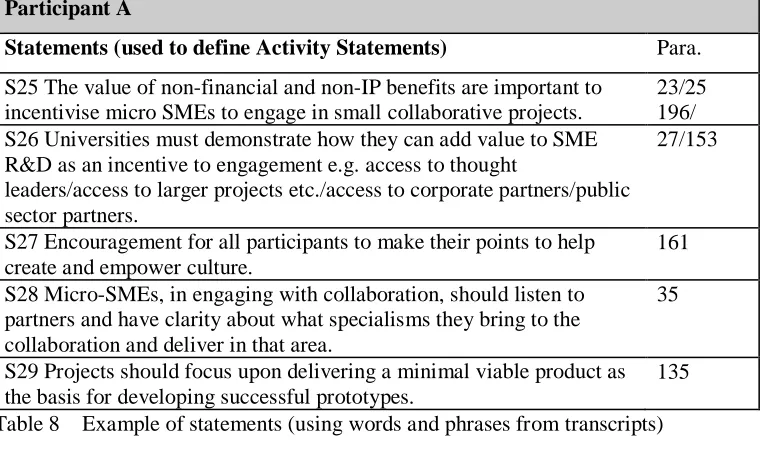
Table 8 Example of statements (using words and phrases from transcripts 50
Table 9 Clustering of activity statements and definition of enabling factor 50
Table 10 Measures to address Guba's criteria for research quality 58
Table 11 Innovation and market impact 65
Table 12 Adapted from Rothwell’s Five Generations of Innovation
(Rothwell 1994) 79
Table 13 Perspectives on knowledge and their operational
implications (adapted from Alavi & Leidner 2001, p.111) 84
Table 14 Ackoff’s knowledge pyramid defined (Rowley 2007, p.166) 90
Table 15 Models of Knowledge Management (adapted from Dalkir
2011 pp.59-96) 95
Table 16 Implementing KM: a comparison of process models (Dalkir
2011, p.33) 97
Table 18 A patient's journey: a personal reflection on the stages
of recovery 127
Table 19 Summary of the characteristics of the Kendal case 156
Table 20 Summary of enabling themes for the Kendal project 157
Table 21 Characteristics of the Bretton Buzz- structure, process and
method 181
Table 22 Summary of enabling themes for Bretton Buzz 181
Table 23 Characteristics of Hybrid Lives- structure, process and method 198
Table 24 Summary of enabling themes for Hybrid Lives 199
Table 25 Characteristics of Open Planning- structure, process and method 214
Table 26 Summary of enabling themes for Open Planning 215
Table 27 Characteristics of PPT- structure, process and method 230
Table 28 Summary of enabling themes for PPT 231
Table 29 Characteristic of T. Dan Smith- structure, process and method 244
Table 30 Summary of enabling themes for T. Dan Smith 245
Table 31 Creative Exchange case project prototypes 271
Table 32 Summary of enabling categories from the cross-case analysis 287
Table 33 The dimensions of technology transfer, knowledge transfer
and knowledge exchange 294
Table 34 Characteristics of Creative Exchange KE case projects 295
Table 35 The Agile Principles 300
Table 36 Ideal conditions for an Agile approach (Rigby et al. 2016) 302
Table 37 Alignment of the case projects with Agile management
principles 303
Table 38 Favourable conditions for Exploratory KE (adapted
from Rigby et al. 2016) 313
Table 40 Enabling framework: measures for the support of KE project
design and delivery 320
Table 41 The alignment of strategy with research question and context 327
Table 42 Summary of actions taken in support of research credibility 331
Table 43 Summary of actions taken in support of research transferability 332
Table 44 Summary of actions taken in support of research dependability 333
Table 45 Summary of actions taken in support of research confirmability 334
Table 46 Possible research theme: typology 338
Table 47 Possible research theme: enabling themes and factors 339
Table 48 Possible research theme: causality 339
Table 49 Possible research theme: enabling framework and measures 340
Table 50 Possible research theme: the role of design as KE enabler 341
Table 51 Example of anonymized transcript analysis 345
Table 52 Example of intermediary iteration where statements are placed
into groups of shared meaning 346
Table 53 Bretton Buzz-data analysis identifying statements, activity
statements and enablers 360
Table 54 Bretton Buzz-data analysis identifying characteristics
of the collaboration 370
Table 55 Selected case projects by CX partner institution 377
Table 56 CX Phase 1: identification of case projects 379
Abbreviations and Acronyms
AA Affinity Analysis
AHRC Arts and Humanities Research Council
AI Appreciative Inquiry
AR Action Research
AS Activity Statements
ASK Appreciative Sharing of Knowledge
AUTM Association of University Technology Managers
CKD Chronic Kidney Disease
COP Communities of Practice
CPD Continuing Professional Development.
CSF Critical Success Factor
CX Creative Exchange
DCLG Department for Communities and Local Government
DIKW Data, Information, Knowledge, Wisdom (pyramid)
DPS Digital Public Space
DUI Doing-Using-Interacting
EF Enabling Framework
FACT Foundation for Art and Creative Technology
GIS Geographic Information System
HEBCI Higher Education Business and Community Interaction
HEFCE Higher Education Funding Council for England
HEI Higher Education Institution
I-M-O-I Input-Mediator-Output-Input
IP Intellectual Property
IT Information Technology
KE Knowledge Exchange
KM Knowledge Management
KT Knowledge Transfer
KTP Knowledge Transfer Partnership
MIT Massachusetts Institute of Technology
MVP Minimum Viable Product
NESTA National Endowment for Science, Technology and the Arts
NHS National Health Service
NICE National Institute for Health and Care Excellence
NIS National Innovation System
OECD The Organisation for Economic Co-operation and Development
OI Open Innovation
PPT Participatory Production Technologies
PREST Policy Research in Engineering, Science and Technology
PSO Public Service Organisation
R&D Research and Development
RAE Research Assessment Exercise
REF Research Excellence Framework
RRT Renal Replacement Therapy
RSA Royal Society for the Encouragement of Arts, Manufacturing and
Commerce
SECI Socialisation, Externalisation, Internalisation and Combination model
SME Small and Medium-sized Enterprise
SMWT Self-Managed Work Teams
SPRU Science Policy Research Unit
STI Science Technology and Innovation
TOR Terms of Reference
TQM Total Quality Management
TT Technology Transfer
UCLAN University of Central Lancashire
Introduction to Thesis
"If you want to manage something you should at least have an idea on the nature of what it is you are managing"(Essers & Schreinemakers, 1997, p.25).
This quote from Essers and Schreinemakers with reference to the discipline of
Knowledge Management (KM), when adapted to Knowledge Exchange (KE), reflects the overall purpose of this enquiry. Namely, that to design and enable knowledge exchange initiatives effectively, it is necessary to understand the intention, context and characteristics of this mode of collaboration and the factors that shape the delivery of the related projects.
The wider aim of this study is to provide a catalyst for further reflection, discussion and research among KE practitioners (academics, managers, policymakers and wider stakeholders) into the concept, policy and practice of knowledge exchange and how it can be designed and managed to maximise it's potential social and economic benefits.
The term ‘knowledge exchange’ can be associated with multiple meanings and is often
used interchangeably with related concepts such as technology and knowledge transfer. It can be used to describe a discrete mode of collaboration, encompassing a wide range of disciplines, methods and outcomes or, alternatively, a continuum of engagement. This continuum spans transfer-based models that are focused on
connecting potential users with university-centred knowledge to projects which place emphasis on the co-creation of knowledge through the act of collaboration beyond the boundaries of the university.
Although the word ‘exchange’ brings with it an emphasis on the transactional and
While the author was principally interested in the design of knowledge exchange, it was considered important at the outset to investigate different modes of KE
collaboration and their underlying assumptions. This reflecting the assumption that clarity in understanding will help to facilitate the design of enabling interventions strongly aligned with the characteristics, needs and social context of specific programmes and projects.
In the context of this enquiry, these issues are explored by addressing the research question:
Can we improve the design and delivery of knowledge exchange through insights
from existing theory identified from the literature review and case study analysis
based on selected projects implemented through the Creative Exchange?
Figure 1 Overview of the research journey
The research strategy presented in Section 1, provides the scaffolding within which the approach to the enquiry was explored, identified and refined. The case study methodology and related methods are aligned with constructionism and the
interpretivist theories which have informed the development of the approach adopted. The strategy is designed to reflect the enquiry’s emphasis on the value of generating insights from the perspective of individual team members actively involved in the selected projects. The approach echoes the assumption that knowledge emerges through the process of team working (and with stakeholders) within the formal project and social context within which they are situated.
Working out from a team-centred perspective, the literature review presented in
Section 2, addresses dimensions of theory identified as important in shaping the concept and practice of knowledge exchange more broadly. This review focuses on the historical development of innovation theory and related models including research and practice related to the concepts of the National Innovation System and Knowledge Management (Chapters 4, 5 and 6). The review identifies relevant theory, models and their underlying assumptions, exploring how they have shaped public and private sector policy and investment aimed at catalysing innovation, including knowledge exchange.
Orientation
CX Projects
Literature Review
Research Strategy
Data Collection Analysis/
Reflection Insights
A further dimension of the literature review was to consider theories and approaches to understanding project-based team dynamics and effectiveness and is presented in
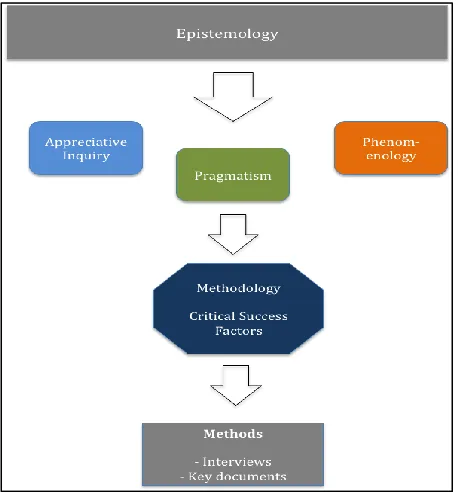
Section 3. These insights are used to support the case and cross-case analysis (Section 3) and provide a scaffolding to structure insights from the six CX cases. The case study methodology, combined with the adapted Critical Success Factor (CSF) method (presented in Chapter 3), provided theframework for data collection and analysis and facilitated different dimensions of meaning associated with project design and
delivery being identified and explored with insights generated from interview transcriptions and key project documents.
Distilled from the analysis and elements of the literature review, Section 4 (Chapters 10,11 and 12) provides the opportunity to reflect on research insights and findings in relation to the research question and overall aims.
Based on the insights from the case study analysis and literature review, an
Exploratory Mode of Knowledge Exchange2 is identified (Ch.12) in relation to the CX where:
Complex interdisciplinary, interorganisational and transient teams act with a high
degree of autonomy and flexibility in exploring and defining opportunities and
challenges associated with emergent technology, applications, market places and
wider social contexts. Where PhDs play an active role in project design and delivery
as an integral part of their own research journeys and where knowledge is shared,
generated and applied through the act of collaboration itself. Creative and design
practice are critical elements of methodology and play a central role in catalysing
knowledge sharing and creation, both within the team and between the team and
wider stakeholders. Where the co-creation of mock-ups and working prototypes are
central in project delivery and outcomes.
2 Collaborative research is defined as "..research projects with public funding from at least one public
Research insights also provided a basis for identifying important factors that
Section 1
Section 1
Introduction
The purpose of Section 1 is to introduce the reader to the research question, aims, context and strategy of this enquiry. It provides the overall framework to orientate the reader in relation to the author's research interests and the approach adopted for the enquiries implementation.
In Chapter 1 the research question and aims of the study are presented along with its wider context. The chapter begins to explore the meaning of knowledge exchange and related concepts. It introduces key elements of existing research theory and practice explored through the literature review and considered relevant to the concept and practice of Knowledge Exchange (KE). The Creative Exchange and the concept of the Digital Public Space (DPS) are introduced as the operational context within which the enquiry has taken place and which has framed the selection of projects for the case study analysis. The scope and boundaries of the study are outlined and justification for the selection of the topic and the author's aspirations in terms of impact provided.
Epistemology Theoretical Perspective
Methodology Methods
Table 1 Research framework template (Crotty, 2012, p.5)
Chapter 1 Research Question, Aims and Context
"We typically start with a real-life issue that needs to be addressed. We plan our research in terms of that issue or problem or question" (Crotty, 2012, p.13).
The aim of Chapter 1 is to introduce the reader to the aims, objectives and context of this research enquiry.3 The chapter concludes with the overall structure of the thesis.
The overarching research question identified:
Can we improve the design and delivery of knowledge exchange through insights
from existing theory identified from the literature review and case study analysis
based on selected projects implemented through the creative exchange?
Two propositions provide focus for the enquiry:
Proposition 1: That key characteristics of selected creative exchange project-based collaborations can be identified and used to support the development of a typology of knowledge exchange.
Proposition 2: Factors that enable and support the delivery of knowledge exchange collaborations can be identified from the case study analysis with insights then used to inform the design of an enabling framework to support the delivery of future
knowledge exchange projects.
The overall aims of the enquiry are:
1. To explore the concept and characteristics of knowledge exchange teams4 in the context of the creative exchange and how these project-based collaborations differ from other modes of university cooperation in support of innovation.
3 In the context of this thesis, the terms enquiry and study are used interchangeably to describe this
2. To improve understanding of the factors that impact on the design and delivery of project-based knowledge exchange collaborations.
3. To explore and identify how insights from the research can be used to design an enabling environment for future knowledge exchange collaborations.
4. To identify themes and priorities for future research into the policy and practice of knowledge exchange.
The wider research context
Knowledge Exchange (n): "A set of policies and practices which enable the efficient and effective exchange and co-creation of knowledge between producers and
users….so that the boundaries between the producers and users (of knowledge)
[image:26.595.107.416.420.646.2]ultimately become merged" (Hagen, 2008, p.113).
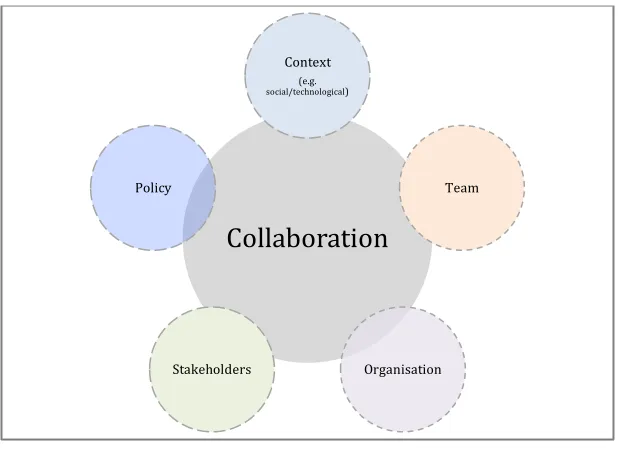
Figure 2 Dimensions of analysis within the enquiry
4 Teams (n): "…a psychological group whose members share a common goal which they pursue
collaboratively. Members can only succeed or fail as a whole, and all share the benefits and costs of collective success or failure" (Buchanan & Huczynksi, 2004, p.338).
Collaboration
Context
(e.g. social/technological)
Team
Organisation Stakeholders
Knowledge exchange is a concept increasingly adopted by government, universities and sponsors to describe policy and practices in support of collaborative projects undertaken between universities and non-university partners (public, private and third sector). Projects that are focused on catalysing innovation through leveraging
expertise and knowledge through team working, where innovation can be defined as:
"… the human effort in teams to develop, support and implement the renewal and
improvement of a product, a service or a process" (Oeij, 2017, p.1).
Figure 2 identifies key dimensions of knowledge exchange explored throughout the thesis, from concept and policy to the character of KE collaborations themselves. These lenses provide different perspectives on the meaning and practice of knowledge exchange, particularly in its role as a catalyst for knowledge sharing, creation and application with the aim of generating benefits for partners and society more widely arising from the development of new products, services and methods.
In the historical context of the European Enlightenment5 and subsequently, with its emphasis on the primacy of reason and the power of the scientific method in driving progress, Harari (2014) identifies a growing recognition by governments of the emergent synergies between investment in research, scientific and technological discoveries and national economic wealth and power. A perceived virtuous cycle where investment and sponsorship had the potential to stimulate a positive impact in securing corporate and national wealth acting to generate increased tax revenue which provides further opportunities for investment and further social and economic
development. Benneworth, drawing on the work of Bender (Bender 1989 cited in Benneworth 2009, p.15), explores the wider civic role played by European
universities from the fourteenth century onwards.
5 The Enlightenment refers to both a specific chronological period in European history during the
While initially perceived as exogenous and beyond study, innovation6 emerged as a central theme of interest for researchers, policy makers and managers throughout the 20th century and remains so today. As models were developed to explore and explain the concept and process of innovation, universities were increasingly identified as playing a central role in generating wider social and economic value beyond teaching and research. This role was manifested in their involvement in different modes of collaboration and engagement with wider society. This engagement took place as part of global, national and regional innovation systems, supported through government and private-sector investment. The investment7 included the creation of enabling infrastructure to facilitate the design and delivery of project-based university
collaborations with external partners (Godin 2009; Freeman 1995; Abreu et al. 2008; Lambert 2003; Sainsbury 2007; Wilson 2012).
Initial emphasis was placed on the role of universities in transferring technologies and knowledge generated from science-based research. Over the last twenty years, a wider range of expertise and non-science-based disciplines have been recognised as having potential to generate significant social and economic value. This was accompanied by an increasing emphasis on the co-creation of new knowledge through the act of collaboration itself (Crossick 2006; Kitagawa & Lightowler 2013; Hagen 2008). The concept of knowledge exchange (as in Hagen's definition), reflects this broader concept including a wider range of methods, disciplines (not least the Arts and Humanities) and forms of knowledge (explicit and tacit). As such, it more accurately reflects a process of innovation which is collaborative, interdisciplinary, non-linear and iterative (Hagen 2008; Crossick 2006; Abreu et al. 2008). A description reflecting this social dimension of knowledge exchange is provided by Cruickshank et al.:
"Every productive workshop you have attended, every good meeting, creative
conversation or even an interesting Twitter exchange is an example of good
knowledge exchange" (Cruickshank et al., 2012, p.1)
6 Innovation: "An important distinction is made between invention and innovation. Invention is the first
occurrence of an idea for a new product or process, while innovation is the first attempt to carry it out in practice" (Fagerberg et al., 2005, p.5).
The various meanings attributed to knowledge exchange reflect underlying
assumptions about the nature of knowledge, innovation and collaboration and will provide a point for reflection throughout the thesis. A central cross-cutting theme for them all is the central role that collaboration and teamwork play in project design and implementation.
The operational context for the enquiry
The operational context for this enquiry is outlined in two dimensions. The Creative Exchange (CX), as the overarching AHRC funded programme within which the study is situated and the Digital Public Space (DPS) as the wider social, economic and technology contexts. This landscape provided a unique opportunity to study the theory and practice of knowledge exchange, exploring and demonstrating an innovative and novel approach to PhD research and multiple micro-projects with a range of partners, stakeholders and operational environments. The CX collaborations also reflected a strong emphasis on the role and value of design-led methodologies and roles for creative practitioners. This context was also strongly aligned with exploring the meaning and practice of KE with reference to emergent and uncertain opportunities and challenges associated with digital technologies.
The Creative Exchange (CX)
The Creative Exchange was a time-bound, knowledge exchange programme
funded by the Arts and Humanities Research Council (AHRC). Implemented between 2012 and 2016, it was delivered by a consortium of three universities (Lancaster University, The Royal College of Art and Newcastle University) and was one of four national knowledge exchange hubs funded by the AHRC at that time. The CX
reflected a number of important characteristics which made it a unique context within which to explore the theory and practice of knowledge exchange.
• The primary purpose of the CX was to facilitate and explore knowledge exchange
• A strong emphasis on design-led methodologies, creative practice and co-creation
of knowledge between partners and user groups.
• Spanning the public and private sectors, CX was designed to catalyse innovative
collaborations between universities, businesses, third sector organisations, communities and government.
• Collaboration in the form of PhD-supported, time-bound small projects exploring
social opportunities and challenges associated with emergent digital technologies and applications.
• Emphasis on exploring and understanding new approaches to KE and research.
The CX projects were embedded into different digital/social contexts addressing a wide range of individual and community needs. At the time of completion, the CX had invested in over ninety projects involving 100 organisations, 150 arts and humanities academics and twenty-one PhD students (Creative Exchange 2017). The author was one of the twenty-one PhDs working as part of the CX programme and the cases selected for inclusion in the Case Study were identified from within the overall portfolio of CX mini-projects implemented (See Section 3 and Appendix 4 for details of case selection).
Figure 3 highlights areas of impact from the CX's programme of work (Creative Exchange 2017, pp.5-7):
Digital Public Space (DPS): The concept of the Digital Public Space was initially explored and interrogated with reference to the BBC and its mission to explore public access to archives. It was then expanded to include a variety of contexts, needs and digital applications
New products/services: New products, services and technologies (apps, games, software, alongside company formation and job creation) in four main areas:
• Heritage
• Citizen participation
• Public service redesign
• Entrepreneurship
Model for PhD: Recruitment and supervision of twenty-one PhD students across three institutions, who engaged in a series of mini-projects as collaborators and facilitators. A new mixed-mode PhD model between theoretical enquiry and real-world application resulting in a new ‘hybrid’ group of researchers in KE who will
help to recalibrate approaches to knowledge exchange across the HEI sector.
New forms of Knowledge Exchange: A recognition that the creative economy requires swift, agile and networked ‘creative exchange’ and not simply a linear ‘tech-transfer’
model of knowledge exchange.
The Digital Public Space (DPS)
"Cyberspace,8 not so long ago, was a specific elsewhere, one we visited periodically, peering into it from the familiar physical world. Now cyberspace has everted. Turned
itself inside out. Colonised the physical" (Gibson 2010, n.p.)
8 Cyberspace (n): "The hypothetical environment in which communication over computer networks
The Digital Public Space was the wider context within which the Creative Exchange and its portfolio of projects were implemented. While initially defined in terms of public access and engagement with the BBC's digital archives, the concept was broadened to include a wide range of contexts, partners, social and individual needs, digital technologies and emergent applications. Rather than arriving at a single and simple definition, the concept of the DPS expanded:
" ..and exposed the plurality concepts that are associated with these new technologies in our public space" (Jacobs and Cooper, 2018, p.8).
From the portfolio of CX projects, four content themes are identified (Creative Exchange, 2017, p.6) :
• Heritage, place and tourism: Novel applications of digital technology were used
to re-envision heritage/tourism offers.
• Citizen participation: Creative digital technologies were adopted to encourage
more open democratic processes in local communities.
• Public service redesign: Open data and other technology resources were co-opted
to improve local services, from transport to health.
• Entrepreneurship: Emphasis on working with hard-to-reach micro businesses.
From this wider perspective, the DPS concept can be framed in terms of the following (Jacobs and Cooper, 2018, pp.23-24):
• Includes digitally stored and shared information.
• Is accessible to the public.
• Is space within which information flows.
• Includes both archives of content and venues for interaction.
• Has temporal aspects: not everything may be persistent, some is time specific.
Complexities in defining the DPS reflects the dynamic and transient process by which people create and share digital content as they move through public and private spheres in both physical and virtual spaces. An overarching characteristic is its dynamic, emergent and hybrid nature. Table 2 identifies key characteristics of the DPS in relation to the development of products and services in an emergent context in terms of needs and market demand (adapted from Rigby et al. 2016).
Dimension Characteristics
Technology Emergent digitally focused technologies and/or applications in relation to potential products and services.
Market/ context
Dynamic and fast changing with emergent demand or no effective demand for untested product/services. Many unknowns with strong emphasis on exploring needs, context, opportunities and challenges (both technical, commercial and social).
Regulatory frameworks
Emergent and potentially contentious e.g. ownership of data, IP etc. Customers/
users
High priority attached to exploring innovative design-led approaches to engaging users and potential customers as partners in exploring and understanding context, needs and in the design process itself. Type of
Innovation
Early stage products/services development with emphasis on development and proof of concept through use of mock-ups and prototypes.
Modularity of work (method)
Iterative and emergent with lessons learnt and applied en route. Cyclical process of user engagement in design and prototyping, getting feedback from potential users/modifying and redeploying. Mistakes Lessons can be integrated into the design process.
Table 2 Characteristics of the Digital Public Space (adapted from Rigby et al. 2016)9
It is the wider concept of the Digital Public Space that has provided the context within which the Creative Exchange was implemented and this enquiry has taken place.
Justification and potential impact
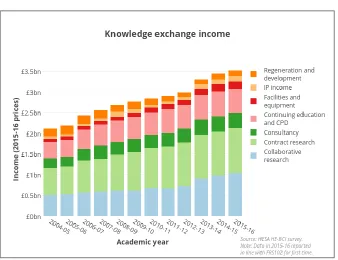
Figure 4 Knowledge exchange income: England 2004-2016 (HEFCE 2017a)
The scale of investment in and income from knowledge exchange activities reflects its role in catalysing economic and social development. In the UK, direct government investment supporting KE amounts to £200 million for 2017-2018. In terms of income, English universities generated £3.5 billion from KE activities in 2015-2016 (Figure 4) and £4,207 billion for the UK as a whole (HEFCE 2017a). Benefits over and above income are identified in relation to academic research and teaching: a range of networking opportunities; insights for further research; new projects; opportunities to evaluate and exploit research outcomes and access to cutting-edge knowledge that can be fed back into curriculum; student-based projects; and follow-up research (HEFCE 2017b).
In essence, this statement frames the problem addressed through this research study with explicit reference to the mode of knowledge exchange manifested through the Creative Exchange and the wider uncertain and emergent technology and social contexts the CX explored. In this context, greater knowledge and insights into i) the modes of collaborations and ii) forces that shape effective team working, particularly in the context of emergent technology, applications and markets where risks and rewards are highly uncertain. Insights generated from the research are aimed to be of value for knowledge exchange practitioners, teams, sponsors and government in catalysing discussion and supporting the design of future KE programmes and projects.
While it has not been possible to identify research evaluating the effectiveness of individual knowledge exchange projects, Castellion and Markham (2013) report a 40% failure rate10 for product innovation teams across both public and private sectors and across a range of industries. In relation to start-up software companies, Bajwa and Wang (2017) reference a failure rate of between 75% to 90% reflecting an uncertain context and a one-project approach, which characterises many small companies associated with this sector (Marmer et al. 2011 cited in Bajwa & Wang 2017, p.2376). Differences in failure rates may also be contingent on industry and market contexts, in part reflecting the agile contexts within which these projects operate. In the
Netherlands, Oeij notes that failure can be found in 'well-managed projects run by experienced managers and supported by highly regarded organizations' (Oeij, 2017, p.1). Thus, stressing interaction between a range of factors including hard
(structures/processes e.g. administration) and soft (team norms and behaviours) in complex projects operating in uncertain environments.
Existing theory as a point of reference
Explored through the literature review (Chapters 4,5,6 & 7), existing theory and research have shaped elements of the research strategy and process:
• Defining scope and questions.
• The development of a framework for data collection and analysis.
• Exploring the relationships between relevant theory, policy and the practice of
Knowledge Exchange.
Management and Organisation Theory: Existing research and theory provided a starting point in identifying a method and framework for data collection and analysis to support the identification of factors (the Critical Success Factor Method) shaping the effectiveness of knowledge exchange teams.
Innovation Theory: The concepts and models of innovation and their underlying assumptions provide a framework to investigate different modes of university collaboration and their underlying assumptions.
Knowledge Management: The nature of tacit and explicit knowledge and related concepts and theories associated with the management of knowledge sharing, creation and application. Emphasis was on exploring models, their assumptions and relevance to knowledge exchange.
The researcher's perspective
"Collaboration is a mutually beneficial and well-defined relationship entered into by
two or more organizations to achieve common goals" (Mattessich et al., 1992, p.11).
My interest in the design and implementation of KE reflects my professional experience11 in supporting external collaborations between universities and public, private and third sector organisations: collaborations aimed at creating economic and social value through knowledge sharing, generation and application focused on catalysing innovation in products, services and solutions. A central insight from this experience was an appreciation of the challenges and opportunities provided through inter-disciplinary teams working to achieve shared goals with limited resources.
11 A career spanning public and private sector roles. Working with UK government, the European
Particularly challenging was the alignment of expectations between partners and team members, formal structures and processes and effective team working in support of positive outcomes, specifically in the context of complex, formal time- and resource-bound projects, and latterly, projects which included partners from the arts and
humanities and the creative economy. A further observation was how little attention is given to understanding the factors that act to support or undermine successful
collaborations as the basis for improving their design and delivery.
A starting point on my research journey was an appreciation that teamworking and collaboration are at the centre of our human journey and key to the success of our species in adapting, overcoming challenges and identifying and taking advantage of opportunities.
"It is human to connect with others, by sharing stories, education, mentoring and
other mechanisms that we have discovered throughout time"
(Thatchenkery & Chowdhry, 2007, p.31).
Archaeological records demonstrate that modern humans (Homo sapiens) emerged in Africa approximately 200,000 years ago.12 Patterns of behaviour associated with the modern human mind became increasingly manifest in the archaeological records between 100,000 and 60,000 years ago (Cook 2013). These demonstrated emergent and increasingly sophisticated material and social culture, reflecting in turn complex cognitive capabilities (Amati & Shallice 2007) not least imagination and creativity. As humans migrated across Europe 40,000 years ago, a social and material revolution took place which has maintained its worldwide momentum to the present (Mithren 1999). The emergence of art, religion and of increasingly sophisticated technologies have been traced to this period, with subsequent centuries marked by an increasing velocity in the generation, accumulation and application of knowledge in all aspects of human life. In this context, our species’ ability to generate, share and apply
knowledge through reflection, problem-solving and collaboration is a defining feature
12 Recent archaeological discoveries in Israel identify human remains from approximately 180,000
of economic and social change. Amati and Shallice (Amati & Shallice 2007, pp. 359-361) identify the unique human capabilities (h-Capacities) that facilitate the
generation and sharing of knowledge in a wider social context:
• Language and communication.
• Tools and instruments: The development and application of tools and instruments
with the purpose to '…amplify, optimise and extend natural capacities'.
• Signs, signals and other homomorphic representations: enabling humans to
visually represent 'aspects of reality'.
• Dynamic concepts. The ability of humans to recognise and understand dynamic
forces in terms of cause and effect.
• Aesthetic sense. " Poetry and literature are generated from language, painting,
sculpture, and plastic arts from schematic representations, music from
vocalisation, dance from action and so on".
• Meta representation. The ability to conceptualise and represent entities beyond the
world that is immediately perceived, ' a second or higher-level interpretation of ‘mental, public or abstract’ entities'.
• Algorithmic capacity. Humans have the capacity to think and act in terms of logic,
'an efficient algorithmic capacity…' which in time '… provides the basis of logical operations, and eventually of arithmetic, geometry, and mathematics'.
• Categorisation and organisation: Ability to organise knowledge e.g. typologies.
• Theory of Mind: "the ability to read the attitudes and intentions of others and
make inferences based upon these perceptions".
• Anticipatory Planning: Planning and acting to achieve a desired future scenario.
Scope and boundaries of the enquiry
The enquiry has taken place within the context of the Creative Exchange's mission to
explore new models for PhD research where a balance was sought between
'..theoretical enquiry and real world application..' (Creative Exchange 2017, p.6). This was manifested by the PhD researcher playing a role in the design and delivery of CX mini-projects, which provided the context for the PhD's own research enquiries. At the centre of this research project is the study of six CX projects (cases) included as part of the Case Study Analysis. In this context, the meaning of the project is aligned with the European Commission's definition where:
"A project is a temporary organisational structure which is set up to create a unique product or service (output) within certain constraints such as time, cost, and quality.
• Temporary means that the project has a well-defined start and end.
• Unique output means that the project’s product or service has not been created
before. It may be similar to another product but there will always be a certain
level of uniqueness.
• A project’s output may be a product (e.g. new application) or a service (e.g. a
consulting service, a conference or a training programme).
• The project is defined, planned and executed under certain external (or
self-imposed) constraints of time, cost, quality, as well as other constraints related to
the project’s organisational environment, capabilities, available capacity, etc."
(European Commission, 2016, p.5)
• Time: Limited time split between the demands of project and thesis.
• Scope of literature review: A need to define the boundaries of the literature
review as KE spans several different academic disciplines and areas of policy and practice.
• Number and selection of cases: The importance of identifying appropriate cases
from the CX portfolio (and related selection criteria).
• Research Strategy: Priority in aligning theoretical assumptions with methodology
and method in relation to question, context and researcher's orientation. The focus was to explore team members’ perceptions of KE in the context of their own
experiences. These insights provided a basis for developing an understanding of characteristics and enabling factors.
• Data collection and analysis: To explore and adapt the Critical Success Factor
method for data collection and analysis (Chapter 3), to the context, time available, and with reference to gaining the necessary insights to address the research
question.
Reflecting the epistemology (constructionism) and theory (interpretivism) within the framework of the case study methodology and CSF method, the enquiry focused on generating a deep insight into the nature of knowledge exchange in the context of the CX cases. While insights are not generalisable, they are focused on exploring the social context within which the meaning and practice of knowledge exchange collaborations take place. They provide a 'thick description'13 of the characteristics and enabling factors reflected within the collaborations studied (Geertz 1973; Lincoln & Guba 1985; Ponterotto 2006).
13 Thick description: "Intensive, small-scale, dense descriptions of social life from observation,
Structure of the thesis
The structure of the thesis reflects a research journey undertaken by the author, explicitly exploring what is meant by knowledge exchange as an area of policy and practice and as a dynamic process of collaboration. Section 1 Research context and strategy: Chapter 1 Introduces the research aims, question, context and strategy for the thesis. This is followed in Chapters 2 and 3 by a detailed presentation of the research strategy. Chapter 2 outlines the underlying epistemological assumptions and related theories that have informed the design of the strategy. This is followed in Chapter 3 by a comprehensive presentation of the related research methodology and methods adopted for data collection and analysis.
Section 2 Framing knowledge exchange with reference to existing theory and
practice: Chapters 4, 5 and 6 explore relevant areas of research theory and practice through the literature review. They study theories, concepts and insights relevant to the different modes of university collaboration and assist in identifying their
underlying assumptions and approaches.
Section 3 Presentation of the case study and cross-case analysis: Chapter 7 presents the Kendal project (Improving the presentation of blood test results for renal patients). The level of detail in the Kendal case reflects the author's direct role in the project design and delivery and the opportunity the project provided to closely explore themes related to the thesis. Chapter 8 presents the five remaining CX cases where data were generated from interviews with team members and relevant documents. Chapter 9 provides a cross-case analysis of identifying enabling themes and factors and begins consolidating insights and identifying patterns.
Chapter 2 Research Strategy: Epistemology and Theory
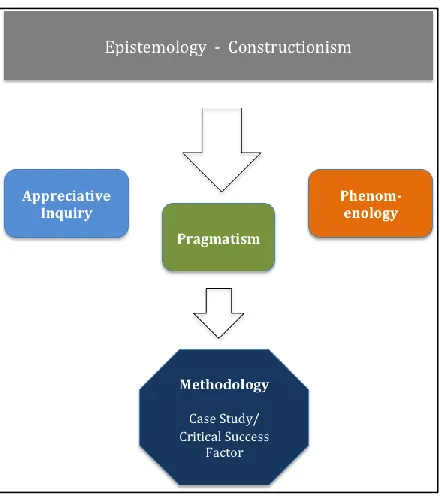
In Chapter 2, the author's underlying epistemological and theoretical assumptions are explored (the first two columns of Crotty's framework in Table 3), both in relation to their alignment with the author’s own perspective on knowledge and its acquisition in
the context of the study, and across the strategy in relation to theory, methodology and method. This analysis is not exhaustive but attempts to capture important guiding principles that have informed the researcher’s own approach to understanding the
nature of knowledge exchange in a social context.
Epistemology Theoretical Perspective
Methodology Methods
Constructionism Interpretivism Pragmatism Phenomenology Appreciative Inquiry
Case Study Critical
Success Factors
Semi-structured Interviews
Project Documents Participant
Observation
Table 3 Framework for research strategy (Adapted from Crotty, 2012)
A working definition of knowledge
" Knowledge (n): Facts, information, and skills acquired through experience or
education; the theoretical or practical understanding of a subject" (Oxford University Press 2016).
This simple and broad definition of knowledge provides a starting point in the
exploration of epistemology and development of the research strategy for this enquiry. Polanyi (Polanyi 1958, 1965) notes a clear distinction between two types of
knowledge; explicit and tacit. He identifies explicit knowledge as being codified and expressed in formal and systematic language reflected in the form of data,
In contrast, tacit knowledge is not formalised and is centred in personal experience (Polanyi 1958; Nonaka & von Krogh 2009; Nonaka et al. 2000):
"Tacit knowledge is deeply rooted in action, procedures, routines, commitment, ideals, values and emotions. It `indwells' in a comprehensive cognizance of the human
mind and body" (Nonaka et al., 2000, p.15).
Sveiby (1997) defined knowledge as either i) object or ii) a subjective social construct which is generated in relation to both the individual and context (Paulin & Suneson 2012). In large part, this reflects the distinction between explicit and tacit knowledge (Polanyi 1958; Spencer 1997; Nonaka et al. 2000; Nonaka & von Krogh 2009).
A further perspective on types of knowledge is captured in a distinction between individual and group knowledge (Hislop 2013):
• Individual knowledge: is generated and resides in the individual. From an
objectivist perspective, individual cognition is the basis for knowledge and understanding.
• Group knowledge: knowledge that exists within the social group and manifests in
shared work practices, understanding and perspectives. It can be both explicit, such as written guidelines, or tacit, group knowledge (e.g. ways of working based on shared memories and experience).
Hecker (2012) identified three dimensions of collective knowledge (Table 4). While different epistemologies and theories of knowledge acknowledge the explicit/tacit distinction, from an objectivist point of view they are mutually
Table 4 Three types of collective knowledge (adapted from Hecker 2012, p. 430).
An epistemological context
"The Enlightenment consisted, in essence, of the belief that the expansion of
knowledge, the application of reason, and dedication to scientific method would result
in the greater progress and happiness of humankind" (Open University, 2016, p.9).
While always central to human endeavour, approaches to the concept of a knowledge and its acquisition have changed through time. A two-level framework to these
theories provides a structure for understanding many of these models (Bonevac 2013). A first, higher tier illustrates how different aspects of reality are manifest to human perception, with a second underlying level used to explore and explain the forces shaping the manifest world. It is at the underlying level that different paradigms reflect different assumptions and explanations as to the forces and the causal
mechanisms at work in shaping the world we experience and how we understand it.
Lincoln and Guba (1985) outline the emergence of different paradigms14 in exploring and explaining the underlying forces shaping the world humans experience and give meaning to. While not being mutually exclusive (in that different approaches co-exist), they prove useful in identifying different theories of knowledge that became dominant at different times.
14 Paradigm (n): "... a world view, a general perspective a way of breaking down the complexity of the
real world…Paradigms tell them (adherents) what is important, legitimate and reasonable" (Patton cited in Guba & Lincoln, p.43, 1989).
Types Definition Locus Relationship to Origins Exploitation
individual knowledge
Shared Held by individuals -collective
Individuals Intersection between individuals
Shared Implicit co-ordination Complementary The division of
expertise within a group Relationship between knowledge sets Interdependencies between sets (individuals) Specialisation. Division of knowledge within groups Combination Integration Co-ordination Embedded Collective artefacts
Artefacts Combination of individual knowledge in an
articulated form
Codificaiton and explication.
In this historical context, the pre-enlightenment mode of thinking (up to the 17th century) was strongly influenced by theology, mysticism, tradition and the claims of religious and secular authority (in the form of the Church and structures of governance and power). While philosophy provided access to reflection and reason in attempting to understand the world and human affairs, it was largely integrated into an
ecclesiastical world view (Russell 1946, p. xiii). In the absence of empirically-based knowledge and reasoned explanations as to the workings of the world, communities invariably turned to personal experience, tradition and the supernatural to aid their understanding of the forces that shaped the world and their own lives.
During the European Enlightenment, this view was increasingly challenged as empiricism emerged as the dominant perspective on the nature of knowledge and knowing (Russell 1946). Empiricism emphasised the ability of humans to acquire a true knowledge of the world and the laws which governed it through the application of reason to their own experience.
" They suggested that the natural world could be explored and understood, and that nature and everything in it was governed by underlying ‘laws’; that there were
rational, universally valid answers to the questions asked by an enquiring mind; that
for every effect there was an identifiable cause, for every natural phenomenon an
explanation, a category and a definition, if only we try hard enough to find it" (Open University 2016, p.11).
Positivism's guiding principles include:
• A reality that exists independently of individual human consciousness as a
separate entity but one that can be observed and understood.
• Knowledge can be objective and mirror the external reality and can be separated
from individual subjectivity (Guba & Lincoln 1989).
• The objective character of knowledge reflects the underlying principles of a
positivist and empirical approach to enquiry. This scientific method can be applied to understanding the social reality and not merely the physical world. Social behaviour (characteristics and patterns) can be identified, observed, quantified and measured as the basis for identifying the objective laws and principles that govern social behaviour;
• Within the positivist framework, priority is attached to objective/explicit
knowledge over tacit knowledge and understanding which is characterised as being difficult to articulate and reflects cultural and personal perspectives (subjective).
An alternative framing of the guiding Enlightenment principles is provided by Bonavec (2013):
• Truth: There are truths that are absolute, independent of any individual mind and thus universal.
• Knowledge: It is possible to have objective knowledge of some of them.
• Reason: Reason is the best way to achieve and justify such knowledge.
• Progress: Acting rationally in response to objective knowledge improves our
chances of achieving our aims.
"Just as with other natural phenomena, Enlightenment thinkers came to the
conclusion as a result of observation that human nature itself was a basic constant. In
other words, it possessed common characteristics and was subject to universal,
Applied to the practice of social research, positivism assumes that social phenomena can be treated and understood by the same methods as the physical world; that explanatory hypotheses are developed, evaluated and tested. In this context, the observer is independent, objective and emotionally detached from the subject of analysis. Patterns and theories can be generated which enable generalisable conclusions to be drawn about the underlying laws at work in shaping a fixed and predictable social reality (Johnson & Onwuegbuzie 2004).
Post-Enlightenment philosophical movements emerged throughout the 20th century (positivism, critical theory and social constructionism, and the catch-all post-modernism etc.) and continue to the present. These alternative perspectives challenge the underlying assumption of objectivism and the empirical approach; explicitly, that an independent and objective reality can be observed, understood, validated and generalised as the basis for true knowledge. The critiques reflect new assumptions ranging from a belief that absolute knowledge can be acquired, to the assumption that knowledge is constructed as humans interact with the world and each other, and to a purely subjective perspective on how to make sense of the world and their place in it.
Exploring my own assumptions
"What then is constructionism? It is the view that all knowledge and therefore all
meaningful reality as such is contingent upon human practices, being constructed in
and out of interaction between human beings and their world, and developed and
transmitted within an essentially social context" (Crotty, 2012, p.42)
The underlying epistemology informing this research strategy is constructionism. This perspective reflects the premise that meaning is created/co-created as humans interact with an independent reality (the world) and with each other. This provides a
perspective that is consistent with the social nature of collaboration and knowledge exchange, whether at the level of the teams working within a wider social and organisational context or individuals who approach team work from their own
This principle places emphasis on the dynamic interaction between subject and object, between consciousness and that of which an individual is conscious (Crotty 2012, pp. 44- 45 citing Brentano 1973, Lyotard 1991). The dynamic interplay between subject and object is the basis upon which meaning is created. This is contrasted with the independent reality of objectivism, where object and subject are separate, and a purely subjective, individual perspective on the creation of meaning.
A distinction between the two related concepts of constructivism and constructionism is defined in the context of the theory and practice of psychology. The distinction is based on the focus on the individual and the internal cognitive processes that shape sense making as they (the individuals) act and react to the world around them (constructivism). This is contrasted with a process of generating meaning through social interaction and involves replacing emphasis on an individual’s constructs, frames of reference and cognition with an interest in the ways in which people interact with each other in terms of communication, discourse and dialogue as they construct a shared meaning (McNamee, 2004). The implication arising from McNamee’s
perspective is that is not possible to define an absolute or objective truth independent of individual human consciousness as it interacts with other humans in a wider culture.15 This is strongly aligned with the context of this enquiry where the focus of research is to gain insights into the meaning that individuals generate on their
collaborative journey, which in turn is embedded and shaped by a wider professional, organisational and social culture (Geertz, 1973, p.44).
The related practice-based perspective of knowledge provides a complementary perspective on knowledge and meaning. Within this context, knowledge is
characterised as 'an epistemology of practice' (Cook & Brown 1999) reflecting the nature of knowledge and knowing as being embedded in the interplay between thinking and doing. Reflecting the principles of interpretivism and pragmatism, knowledge is:
15 Culture: "Culture is the invisible force behind the tangibles and observables in any organization, a