If your communications
are more complex, we've
got a
solution
It's
Varian's 620/f-DC Data-Com-munications System. Remember, as a kid, when your biggest prob-lem in tin-can communications was not letting the string touch anythi ng? Tod ay you're more sophisticated-and your problems more complex. We can hei'p.Va'rian's new 620/f-DC is a total data-communications system that offers economy and speed for munications networks. As a
com-munications preprocessor, it relieves the large computer of
j
mundane tasks by collecting data from ma~y sources and feeding it directly and efficiently into your large computer. The 620/f-DC, asa data concentrator or message switcher, handles up to 64 data lines at higher throughputs than any other system available~
Consider all its capabilities-from speed to modularity to reducing
overhead - and it becomes one of the most economical data commu-nicators available.
Our 620/f-DC won't beat the low
. cost of tin-can and string, but it
will make your communications dollar stretch. Write the Big
'Com-pany in Small Computers.
~varian
~
data machines
The Big Company in Small Computers
U.S. Sales Offices: Downey (213-927-1371). San Diego (714-298-9292), San Francisco (415-%0-9996), Calif./Washington (301-773-6770). D.C./Chicago (312-692-7184). III./Waitham (617-899-6072). Maos.(Detroit (313-645-9950). Mich./Minneapolis (612-926-6571), Minn'/Albuquerque (505-298-5570), N. Mex./New Rochelle (914-636-8118), Syracuse (315-437-6595). N. Y.lFort Washington (215-643-2355), Pa.lD.1l1as (214-231-5145), Houston (713-781-0105), Tex. Other offices worldwide/Varian Dala Machines, a Varian subsidiary, 2722 Michelson Drive, Irvine, California 92664. Telephone 714/833-2400.
An easier keyboard
for your operator ...
An advanced tape station
for your computer
The Tally Datascribe emphasizes simple operation
with your keypunch operator in mind ... and a host
of versatile data handling options for more" efficient
utilization of a key-to-tape recorder.
If
you already
have key-to-tape recording and communications
equipment, you'll be especially interested in
Data-scribe. That's because Datascribe designers took the
time to reflect on the shortcomings of all the earlier
key-to-tape equipment in order to build a better
machine.
The keyboard is virtually identical to the
conven-tional keypunch keyboard. Operation is so simple you
can learn from the manual if you choose. For training
purposes, all data is displayed in English language.
Both the 7 and 9 track units are identical in
opera-tion and features.
The Datascribe system is one basic unit which, with
the addition of appropriate plug-in options, can be
additionally used as a remote data terminal, pooler,
high speed communicator or high speed print station.
The Datascribe offers a unique and highly efficient
data compression feature. In the transmission mode,
one character can be used to represent many when
data is identical to the preceding data or preceding
record. Datascribe operates over dial up telephone
lines. Both supply and take-up for
full10~"reels is
standard.
And this is just the beginning. Call your nearest Tally
regional office or contact us here for full details.
Tally Corporation, 8301 South 180th Street, Kent,
Washington 98031. Phone (206) 251-5500.
Regional Offices:
Chicago: 33 North Addison Road, Addison, Illinois 60101
(312) 279-9200 .
Dallas: 2339 Inwood Plaza, Dallas, Texas 75235 (214) 521-5657
Los Angeles: 501 N. Golden Circle Drive, Santa Ana, Cali-fornia 92705 (714) 542-1196
New York: 45 North Village Avenue, Rockville Centre, Long Island, N.Y. (516) 678-4220
Richmond: 5404 Distributor Drive, Richmond, Virginia 23225 (703) 231-0259
San Francisco: 420 Market Street, San Francisco, California 94111 (415) 989-5375
England: Tally, Ltd., Tally House, 7 Cremyll Road, Reading RG1,8NQ, Berkshire Reading 580-142
TALLY
8Vanguard Series
SUZY'S MARRIED
TO OUR
AD MANAGER
(they fight a lot)
"My husband Clyde?
Oh, he's all right. Good husband,
good manager -
but he
nev~rwants
to say
enoughabout a good thing.
PI's new
1217/19customized
digital recorder, for instance. That's
why we have an occasional spat.
"If it were left to him,
he'd just tell you the
1217/19is
synchronous and incremental, up to
1600 bpi, and features IBM
, compatibility, 7 or 9 channels.
'Never write too much in an ad,'
he says, 'people won't read it.' .
"Phooey!
You're reading this, aren't you?
"The rest of the good news
(with apologies to no one): the
1217/19
also comes in 7 and
~
channels read-read, remotely
selectable. It interfaces with your
existing equipment, and is ideal for
such uses as process control,
off-line data processing, key-to-tape
and tape-to-tape transfer,
minicomputers, and many more.
"Every unit is easily field modified
to meet new
requirements-you simply choose the modular
features you want. Result?
A top-quality
customrecorder at
surprisingly low cost!
"If you'd like more information
'. on the
enchanting 1217/19,call, TWX
or write Clyde or one of the other
boys -
Norv, Ridge or Konrad.
Better yet, if you want the
full
story, call me!"
PRECISION INSTRUMENT
DATAMATllaN®
MARCH
~J ~97~volume 17 number 5
departments
Calendar
7
Letters to the Editor11
Look Ahead
17
Perspective40
News Scene42
. Hardware55
Software59
World Roundup69
People73
Index to Advertisers77
The Forum79
March
1, 1971
ANAGEMENT
20
Campus Computing Management
In six years, there has been a six-fold increase in college and university computing budgets. It's time that presidents and administrators become more aware of how these expensive resources should be managed and allocated.
ENERAL
24
University EDP ... Get It All Together
An integrated computer center for administrative, academic, and research use may be the ideal, but not every university can attain it.
28 A Separatist's View of University EDP
There are considerations other than economies of scale which suggest that centralization of campus computing may be a mistake.
ECHNICAL
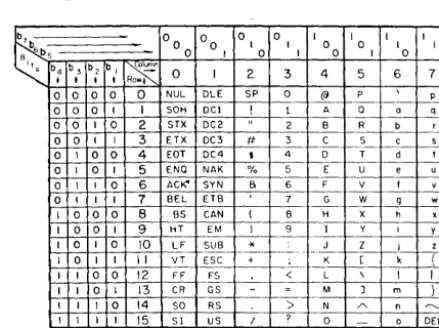
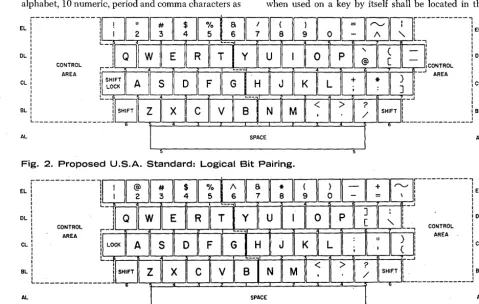
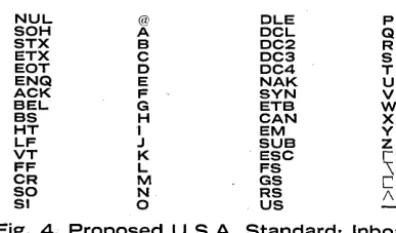
32 At Last: ASCII! OCR Keyboard
Standards
A proposal for voluntary standardization culminates years of effort by ANSI committee.
DMMENTARV
40
Perspective
The once-vaunted market for reservations systems in the airline, hotel and automobile services may still be there but the reccnt difficulties of various firms dedicated to such ap-plications suggest that there may not be room for too many.
A -rcport by the General Accounting Office accuses the Department of Defense of some questionable practices in the planning of the World Wide Military Command and Control System, whose fate is in doubt.
About the Cover
As the computer intrudes, the ~lassic structure crumbles. Roy Lichtenstein's great "Temple of Apollo" state:; the case with impact. Its machine-dot background contrasts with the dying colonnade reminding computer people to utilize their machines with man as well as system management in mind. The painting is reproduced here courtesy of Mr. and Mrs. Robert A. Rowan, Los Angeles.
4
Computer Specialists
Come to England with lCL
International Computers Limited, the large~t computer firm ouside the United States, needs a number of specialists in com. puter applications, programming and software to strengthen its Marketing Support Organisation. We are looking for people who have a minimum of three years' current, inte~si\"e com· puter experience in advanced areas. Areas such as complex operating systems, large.scale programming projects, data base software, communications software and real time applications.
If you qualify, you may work in a consulting capacity with leading British organisations, designing projects for our cus· tomers or guiding on the use of advanced software or imple-_ mentation of projects. Live in or near London and travel to consulting assignments throughout Britain. We want versatile. ambitious people who have current knowledge of the state·of· the-art and who can work effectively under pressure.
Interested? We would like to tell you more. Please write to us, giving particulars of your education and experience. Interviews will beheld in New York City, Chicago, Dallas, San Francisco, Los Angele!', Washington, D.
c.,
during the last two weeks of March. Address your inquiry to our consultant, Mr. J. R. Yelverton at Wilkinson, Sedwick 8; Yel\'erton, Inc., ·125 Battery Street, San Francisco, C~ 9411Llel
CIRCLE 504 ON READER CARDCUSTOMER
ENGINEERS
Commercial Computer Field
CalComp is the world leader in computer graphics. We were first to develop an incre-mental digital plotter and have continued to expand our product line with random access memory disc drives, mini-computers, control-lers, tape units and automated controls for keypunch.
Positions are available in 41 key cities throughout the U.S. for customer engineers with systems field service experience on large scale commercial computers and all related peripheral equipment.
Be a part of this vigorous growth and realize your maximum potential within your career field. You'll need a minimum of 2 years applicable experience.
Write or send resume to request application and/or further information to:
Dave Elling, Dept. D-2
2411 W. La Palma Ave., Anaheim, Ca. 92803
©®Cb>e@®J®
~ CALIFORNIA COMPUTER PRODUCTS,INC.
~ ... An equal opportunity employer ~ ~
~~
CIRCLE 501 ON READER CARD
DATAMATIDN®
MARCH
~, 197~volume 17
number
5
This issue
110,959
copies
EDITOR
ROBERT B. FOREST
EDITORIAL STAFF
Managing EditorSenior Associate Editors Associate Editors
Copy Editor Assistant Editors
Special Features Editor Eastern Editors New England Editor Washington Editor Midwestern Editor European Editor Australian Editor Contributing Editors
Editorial Adviser Technical Consultant
EDWARD K. YASAKI WILLIAM J. ROLPH, TOM McCUSKER AUBREY DAHL, RICHARD A. McLAUGHLIN, EDITH D. MYERS, JOHN T. WATERHOUSE JANET EYLER MICHAEL WILLIAM CASHMAN ALMA O'STEEN ANGELINE PANTAGES JOHN WESSLER, F. BARRY NELSON W. DAVID GARDNER PHIL HIRSCH LAWRENCE RAGAN PEARCE WRIGHT FREDERICK A. BLAND HOWARD BROMBERG, ROBERT V. HEAD, PHILIP H. DORN, LOUIS B. MARIENTHAL, DANIEL D. McCRACKEN, F. G. WITHINGTON, PAUL ARMER, ROBERT P. BIGELOW ROBERT L. PATRICK.
LOWELL AMDAHL
EDITORIAL OFFICES
HEADQUARTERS: 94 S. Los Robles Ave., Pasadena, Calif. 91101, Phone: (213) 681-8486; EASTERN: 35 Mason St., Greenwich, Conn. 06830, (203) 661-5400; 19 Marlborough St., Boston, Mass. 02116, (617) 267·9414; 9805 Singleton Dr., Bethesda, Md. 20034, (301) 365-8671; MIDWESTERN: 407 S. Dearborn St., Chicago. III. 60605, (312) 922-8245. FOREIGN: 65, Hill Road, Chelmsford, Essex, England; 322, Park RegiS, Park St., Sydney, NSW 2000, Australia.
GRAPHIC DESIGN
AND PRODUCTION·
Art & Production Director CLEVE MARIE BOUTELL
Production Manager MARILEE PITMAN
Production Assistants GLORIA J. FASANA, LOUISE T. O'CONNOR
CIRCULATION
35 Mason Street Greenwich, Conn. 06830
Circulation Manager Marketing Research Director
PUBLISHER
GARDNER F. LANDON
ASSISTANT PUBLISHER
JAMES M. MORRIS
Circulation audited by· ~ Business Publications Audit ~
MAE VAN RENNES DOUGLAS DeCARLO
II:.
'--iiAB"'P Member. American
-.~ Business Press, Inc.
tp
DATAMATION is published twice monthly on or about the first and fifteenth day of every month by Technical Publishing Company, 1301 South Grove Ave., Barrington, Illinois 60010; Arthur L. Rice Jr., Presi· dent; Gardner F. landon, Executive Vice President. Executive, Circu-lation and Advertisi ng offices, 35 Mason Street, Greenwich, Conn. 06830 (203) 661-5400. Editorial offices, 94 So. los Robles Avenue, Pasadena, California 91101. Published at Chicago. III.DATAMATION is circulated without charge by name and title to certain qualified individuals who are employed by companies involved with automatic information handling equipment. Available to others by subscription at the rate of $25 annually in the U.S. and Canada. Reduced rate for qualified students. Foreign subscriptions are on a paid basis only at a rate of $38 annually. No subscription agency is authorized by us to solicit or take orders for subscriptions. Controlled circulation paid at Columbus, O. and Form 3579 to be sent to Technical Pub-lishing Company, P.O. Box 2000, GreenWich, Conn. 06830. Copyright 1971, Tech-nical Publishing Company. Microfilm copies of DATAMATION may be obtained from University Microfilms, Inc., 313 No. First St., Ann Aibor, Michigan. Printed by Beslow Associates, Inc.
No one beats a path through
your computer room on
Heugatile Carpet Squares
In the time other carpets are developing bedraggled trails of wear in the heavy traffic lanes, Heugatiles stay fresh and new-two to three times longer.
The secret is rotation. Before Heugatiles are worn by
Noise problems? Heugatiles help silence the 'drum effect' created by vibrations from suspended floors. No static build-up either.
And you don't have to buy Heugatile. You can lease it, heavy traffic, you simply lift them
out and easily move them to light traffic areas.
just as you would lease any
equip-~
- - - ment-with a service contract thatI
~ . " , . . . CORPORATION HEUGATILEI
guarantees continuing satisfaction.And underfloor access needn't
I
HEUGATILEEl' . .
185 Sumner AvenueI
You can lease as little as 200 square Kenilworth, New Jersey 07033I
be a headache. The one floor cov-
I
1m
j Dept. 03-1 yards, too.ering that I icks this problem effi-
I
I
Heugatile's special construction0 Send me more information on Heugatile.
ciently for computer rooms is Heu- 0 This is for a current project.
I
hides soil. Cleans easier. They'reI
0 I'm interested in leasing Heugatile. d b hgatile. Our carpet squares lock sol- 0 Have representative contact me.
I
ma e y t e most experienced man-idly in position by their own vacu-I
Name Title ufacturer of carpet squares in theum. But when you need to get to
I
CompanyI
world.underfloor switches and control ca-
I
Send in the coupon today forI
Addressbles, up they come with no effort - - -
I
more information.I
City State Zip _ _whatsoever. No glue, tape, tack _ _ _ _ _ _ _ _ _ _ _ _ _ • Warehouses and showrooms from
strip or pad is needed, ever. coast to coast.
6
the
DATAFLOW
optical page
reading system
started vvorkingfor
eighteen co
•
this mon
delivery
with the
DATAFLOW system
you achieve
fu lIy-integ rated
Optical Page Reading
Capability
for
Data Processing
Data Conversion
Typesetting
at a far lower cost
than ever before
Eighteen companies received their DATAFLOW systems this month and putthem right to work. r.lowering processing costs (a management considera-tion on any expenditure today)
call or write ... in a matter of days, a datatype representative will show you how to put the DATA-FLOW system to work for you-and 75 days later-the system will bewhereveryou designate-working.
let us hear about your partic-ular application-or problem-now.
IIIII
DATATYPE CORPORATION
1050 N.W. 163rd DRIVE • MIAMI. FLORIDA 33169 • OR CALL (305) 625-2489
DATE EVENT/SPONSOR LOCATION CONTACT COST
*
March 8-9 Impact of Digital Computer Madison, Wis. Univ. of Wisconsin $70
on Fluid Power Systems 725 Extension Bldg.
Madison, Wis. 53706
C
March 8-10 AMA Management Systems New York City American Mgt. Assn. Unknown
~DP Conference 135 W. 50th St.
New York, N.Y. 10020
A
March 9-11 ASM,AMS Tulsa, Okla. A.
o.
Oyler, BEST Free admissionBusiness Equipmen! Box 141 $215, exhibitors
L
Show Tulsa, Okla. 74102
March 10-12 4th Annual Tampa, Fla. Annual Simulation Symp. $85
Simulation P.O. Box 1155
E
Symposium Tampa, Fla. 33601
March 22-24 Numerical Control Anaheim, Calif. NCS $95, members
N
Society's 8th Annual 44 Nassau St. $125, others
Conference Princeton, N.J. 08540
March 22-24 9th Annual Symposium on Houston, Texas Office of the Dean Unknown
0
Biomathematics & Computer Univ. of Tex. Graduate Science in life Sciences School of Biomedical Scs.
Houston, Texas 77025
A
March 23-26 Information Industry lancaster, Pa. IIA $75, members
Association 3rd 1025 15th St. NW $125, others
R
Annual Meeting Washington, D.C. 20005 $25, spouses
March 29- British Computer Society london British Computer Soc. Unknown
April 2 Datafair 71 29 Portland PI.
london, W.1, England
April 1-2 ACM Symposium on College Park, Md. Dr. Jack Minker Unknown
Information Storage University of Maryland
& Retrieval College Park, Md.
April 11-13 COMPSO West los Angeles Computer Expositions, Inc. Free
37 W. 31st St. preregistered New York, N.Y. 10018 $2 at door April 14-15 ISA, IEEE Electronics Cincinnati William Meinders $2 registration
& Instrumentation Husky Products, Inc.
Conference 7405 Industrial Rd.
Florence, Ky. 41042
May 2-5 Assoc. of Business Forms Miami ABFM Unknown
Mfrs. Annual Meeting P.O. Box 5737
Washington, D.C. 20014
May 4-6 SID Int'l. Symposium Philadelphia lewis Winner Unknown
152 W. 42nd St. New York, N.Y. 10036
May 18-20 Spring Joint Atlantic City AFIPS Preregistration
Computer Conference 210 Summit Ave. $20, members
Montv'ale, N.J. 07645 $50, others
May 25-28 20th Annual Convention Washington, D.C. NMA Unknown
National Microfilm Assn. Suite 1101
8728 Colesville Rd. Silver Spring, Md. 20910
June 7-9 Com For (International Chicago Com For Unknown
Computer Forum & Expo) 1211 W. 22nd St. Oak Brook, III. 60521
June 22-25 DPMA Conference & Expo Houston OPMA Unknown
505 Busse Highway Park Ridge, III. 60068
8
LOW PRICE IS
THE POTTER TAF
THERE'S ALSO TI
All 15 models of Potter's "plug-to~plug" Magnetic Tape Unit line are now supplied with our new Hard Coat recording head. The result is a series of tape units which can operate on IBM systems for over 2000 hours without adjustment for wear. This HARD-WARE RELIABILITY insures you of better system
reliability-less down-time.
Then there's Potter's DATA RELIABILITY that assures you 0: error.:free output. Such things as single capstan drive,· retract· able read/write heads and automatic threading all work toware eliminating data drop-outs and errors.
ONLY PART
OF
E
DRIVE STORY •••
IPLE RELIABILITY.
Finally, there's SERVICE RELIABILITY. Potter maintains a nation-wide staff of trained field engineers to give you fast, de-pendable service ... to keep your down-time to an absolute minimum ... to keep your jobs on schedule.
There are more Potter manufactured tape drives in use on
Nlarch
1, 1971
IBM systems 'than any other independent make. For tape drives, disk drives or data terminals, call Potter first.
1:;;:--.,..-_
Potter Instrument Company, Inc.l-.oYiii
532 Broad Hollow Rd., Melville, N. Y. 11746UlI..J
Phone: (516) 694-9000 . ~ ®
Potter. A lot more than less expensive.
~
LETTERS
Been looking everywhere
Sir:
In the Nov. 15, 1970, issue, a book review (p. 209) appeared for a vol-ume (Concepts and Models in Bio-mathematics, Vol. 1) which was
in-deed highly complimentary. Unfor-tunately, my name as editor was spelled with a double error (Hein-netz) -it should be Heinmets.
Since this error may lead to diffi-culty in identifying the book, I would appreciate your printing a correction to that effect.
F. HEINMETS
U. S. Army Natick Laboratorie~
Natick, Massachusetts
Fiction addiction
Sir:
-Reference EDP Professional- the Blurred Image" P. H. Dorn (Jan. 1, p.22). ..
As a computer professional and a science fiction "addict," I take excep-tion to Mr. Dorn's blanket indictment of science fiction: "Unfortunately, the science fiction addicts and popu-lar commentators perpetuated the . widely held myth that giant
electron-ic brains control their environment.
Mr. Dorn reveals himself to have an abysmal ignorance of science fic-tion. Science fiction writers are not uneducated and ignorant of scientific reality; Isaac Asimov, Fred Hoyle, Clifford Simak, and Arthur Clarke are typical science fiction writers. Nor are science fiction addicts lacking in knowledge and education. Science fiction does not appeal to the igno-rant and uneducated; its scientific, political, economic, and sociological concepts are too complex.
Mr. Dorn must think of science fiction as being on the level of (with apologies to Max Schulman) the "Creature that Devoured Cleveland," as he links, through guilt by associ-ation, science fiction with "television comedies, wrong bills from the neighborhood store, and magazine cartoons" in the next sentence of that paragraph.
Overall, science fiction contains few examples of the ignorance of
March
1, 1971
computers and computer people about which Mr. Dorn is writing. He would do well to review his exam-pIes; his subject is relevant, and his examples should have been likewise. J. M. PEARSON
China Lake, California
Mr. Dorn's wife assures us that he is a long-standing science fiction dev-otee, stays up watching the late show whenever "Destination Mqon" is being rerun, travels with "Analog" in his briefcase, but thinks "The For-bin Project" is a lousy movie.
Blurredbrains
Sir:
Philip Dorn's article made for inter-esting reading. However, it made a basic assumption that requires fur-ther discussion. It assumed that edp professionals exist and this implies
that there is an edp profession. I question that. A profession generally requires: 1) a rigorous body of knowledge that distinguishes it from other disciplines; 2) an effective me-dium of distribution of this knowl-edge; 3) ;,l code of ethics; 4) a sense of professionalism; 5) criteria for cer-tifying professionalism; 6) a defini-tion of the purpose of the profession. I do not believe that the edp field satisfies the above. If it did, a great deal of the turmoil found in the field would be lessened. The edp field suffers from a lack, this lack being that it is not, at this time, truly a profession, but rather a hodgepodge. It has many gifted people, such as Phil (with whom I worked at Union Carbide) , scientists, academicians, com'mercial and scientific program-mers, operations personnel, etc. But it is also filled with many charlatans, incompetents and knaves. It does nothing to weed out the latter class of people. To remove the "blur," ~dp must become a profession.
ROBERT MANKIN
New York, New York
Venture spleen
Sir:
In an editorial in the October, 1969, issue (p. 59), you took the time and expended the effort to coupsel
per-sonally the aspiring entrepreneurs in the edp industry. It was a sound, well-motivated, valuable message to those in the industry contemplating a venture on their own. Consider what damage might be done to these ven-"turers by your story "The Viatron
Venture Capital Adventure" (Dec. 15, 1970, p. 61), which is so contra-dictory and unsound when compared to your editorial.
Amerlcan Science Associates is a " venture capital investment banking group which has financed several young companies in the past two years. Because of the naivete and lack of experience in how to ap-proach the raising of capital by most new entrepreneurs, we published a free brochure, "A Guide to Venture Capital Financing," specifically to help these new businessmen under-stand how to approach the financial community. Since March of this year, thousands of copies of this brochure have been distributed. That brochure was inspired by your editorial of Oc-tober, 1969.
To the aspiring entrepreneur who takes Dr. Bennett seriously, both Dr. Bennett and DATAMATION have per-formed a disservice. The executive of a newly formed company, who has left his employer, invested his savings and those of friends and associates, and is undertaking a search for capi-tal according to Dr. Bennett's advice, is courting disaster.
Our business is to evaluate new ideas and new companies and then provide financing for those which offer an intelligent investment oppor-tunity. Honest, sound, forthright presentation of the business is basic to an evaluation by sources of capital. This message should be clear to all would-be entrepreneurs.
CARL W. STURSBERG, JR.
American Science Associates New York, New York
Glad to know that at least one of our editorials was inspirational. The story in question was an item of news cov-erage, not editorial viewpoint.
Get his number
Sir:
The staff at Computer' Corp. of America was delighted to see your story (Look Ahead, Jan. 1) on the infOlmation retrieval system which is helping the directory assistance (in-formation) operators in Oakland,
Good· news! Kodak KOM microfilmers
now give you microfiche.
The microfiche you see above holds 208 pages, plus title, that were recorded from magnetic tape by the Kodak KOM-90 microfilmer in less than thirty seconds. And with remarkable clarity, thanks to the new Kodak Versaform camera.
It lets you convert tape data to 16mm, 35mm, 82.5mm, and 1 05mm film at 24X and 42X reduction ratios. The camera is retrofittable to KOM-90 microfilmers already installed.
Whether your application requirements call for roll, strip, fiche, or tab-card-size formats, all are possible using the Versaform camera. Couple this with one of several available computer-generated indexing systems, and you have one more reason to select ~odak for all your COM needs. .
Find out more about Kodak's total COM systems responsibility. Ask your Kodak systems expert for details or write Eastman Kodak Company, Business Sys-tems Markets Division, Dept.DP
531,
Rochester, N. Y. 14650.Letters ..
ICalif. You pointed out correctly that the system covers 17 exchanges in the San Francisco area (over a mil-lion subscribers), gives virtually in-stantaneous answers to all sorts of complicated queries-even those con-taining incomplete information-and is updated very quickly. In fact, this system may well be the most ad-vanced computerized information re-trieval system running anywhere today, and we were very happy to see it get recognition in the press.
Unfortunately, you failed to men-tion one important point: The soft-ware for the system was designed and implemented by Computer Corp. of America.
THOMAS MARILL, President Computer Corp. of America Cambridge, Massachusetts
Lemieux's vieux
Sir:
I . was greatly encouraged after read-ing Dr. R. R. Johnson's article "Needed: A Measure For Measure" (Dec. 15, 1970, p. 22) since it was only a historical survey of computer performance measurements. My fear that Johnson's Juxtapositions were. about to be added to an already ponderous pile of measures and countermeasures was unfounded. However, his conclusion that more theories of this ilk are needed cannot be commended and could be taken as a sign that even he is confused re: Adams' Charts, Arbuckle's Weights, Grosch's Law, Knight's Formulae, Schneidewind's Models, Solomon's Kernels and God knows what else! JOSEPH H. LEMIEUX
Chelmsford, Massachusetts
Computer got loaded
Sir:
I'd like to clear up a gross misconcep-tion that one of your contributors has concerning the behavior of the on-board computer during the APOLLO 11 landing. Evidence of the misun-derstanding can be found in the Jan. 1, 1971, issue in the article" ... but the Ambivalence Lingers," by Daniel D. McCracken. In his article, he gives the following as an example of "a computer foulup": "The APOLLO 11 computer almost forced an abort of the moon landing, although noth-ing was actually wrong."
March
1, 1971
There definitely was something wrong. It was not the computer or its software. Due to an error in the checklist manual, the rendezvous ra-dar switch was placed in the wrong position. This caused it to send er-roneous signals to the computer. The result was that the computer was be-ing asked to perform all of its normal functions for landing while receiving an extra load of spurious data which used up 15% of its time. The computer (or rather the software in it) was smart enough to recognize that it was being asked to perform more tasks than it should be performing. It then sent out an alarm, which meant to the astronaut, ''I'm overloaded with more tasks than I should be doing at this time and I'm going to keep only the more important tasks; i.e., the ones needed for landing."
To blame the computer for the APOLLO 11 problem is like blaming the person ~ho spots a fire and calls the fire department. Actually, the computer was programmed to do more than recognize error conditions. A complete set of recovery programs was incorporated into the software. The software's action, in this case, was to eliminate lower priority tasks and re-establish the more important ones. The computer, rather than al-most forcing an abort, prevented an abort.
If the computer hadn't recognized this problem and taken recovery ac-tion, I doubt if APOLLO 11 would have been the successful moon land-ing it was.
MARGARET H. HAMILTON
Director of Apollo Flight Computer Programming
M IT Draper Laboratory Cambridge, Massachusetts
Lost women
Sir:
In the past months' issues you have had numerous discussions about edu-ca tion for and shortages of' people in the computer field. I think that sev-eral points need to be emphasized and one seems to have been omitted almost completely.
No articles emphasized the role women could potentially play in the computer world. Since there is a shortage of trained personnel, a little more effort directed toward involving women in computer work would be more than worthwhile. Many college women wjth general scientific
de-grees or liberal arts dede-grees can very easily be trained to do the tasks from coder to senior systems analyst. However, most of these women do not realize that they could find satis-fying and challenging opportunities in edp or that companies would hire them. Once hired, women would be more likely to stay in a job. Even marriage or family raising need riot eliminate these women from the working world. Part-time positions could be filled and the companies would save by not having to provide benefits for these part-time em-ployees. An industrious woman, working from nine to two or on a flexible schedule can do a large amount of work. So let's remember . the woman for edp jobs.
At the present time, edp schools are not providing the type of people needed, nor the quantity needed. Generally these schools are expensive and also time consuming for the in-dividual who is enrolled. I think that the edp industries and organizations should warn potential students that these schools are not always what they seem to be. This warning will not be heard if it. appears only in trade publications. Some type of in-fonnation service (a phone number advertised on the same page as the edp schools) would be easy to estab-lish. Individuals could be guided to reputable schools or even better, to industries with their own training programs. Perhaps, in this way, peo-ple who have turned away from the computer industry because of bad experiences with edp schools woule! not be lost to the field.
PAMELA A. HENLINE
Argonne, Illinois
Besmirch research
Sir:
As a further entry in the sweep-stakes on who went to only magnetic tape input first, I would like to point out that the fourth Univac I system installed at New York University in June of 1953 at the Atomic Energy Commission computillg facility pre-pared all inputs to the system on magnetic tape usillg the Unityper I.
HERBERT B. GOEHTZEL
Rockville, Maryland •
This is
an·
introductory ad.
If you've never seen an ad
quite like this before, it's
because you've never seen
products quite like this before
, in the United States.
While these data systems
are just now being introduced
in this country, they're part of
the entire TEAC line of
instru-mentation products that have
more than made thei r mark in
business and industry around
the world over the past
decade.
So this debut is anything
but presumptuous or
precipi-tate. Irs part of a planned
'program as precise 'and
uncompromising as the
prod-ucts themselves.
TEAC's commitment has
always been to become
thor-oughly involved with our
cus-tomer's problems and needs '
before, during and after the
purchase of our products.
Competent field and factory
service and a comprehensive
parts inventory are a critical
part of this philosophy.
By way of introduction, the
six products shown below
illustrate our Point.
Newest addition to the
TEAC line of data recorders
is the R-70 Cassette Data
Recorder which includes both
FM and direct electronics and
operates from either
self-con-tained power supply or
exter-nal AC/DC.
Flexibility in analog data
There's a good reason
togoTEAC®
R-250 SERIES
CIRCLE 24 ON READER CARD
recording is reflected in the
wide variety of configurations
available in the truly portable
R-200 and the IRIG
compati-ble R-250 as well as the
trans-portable R-410 series.
. , The C-11 0 Real Time
Digi-tal Correlator and the F-100
Spectrum Analyzer team up to
provide rapid signal analysis.
Aswe said in the beginning,
this is an introductory ad. We
can't hope to give all the
de-tails here or anticipate your
questions.
So, if you'd like more details
on the exciting world ofTEAC,
send for our new twelve-page,
four-color brochure. Just write
or call Ken Williamson,
Direc-, tor of MarketingDirec-, Technical
Whats really= new
in
big
computer performance?
B 7700 design test model
16
For Details, Use This Coupon
~---l
I
Burroughs Corporation, Dept. AI
P.O. Box 418I
Detroit, Michigan 48232I want to know more about Burroughs new B 7700!
name
company address
city state
job title
zip
BURROUGHS New B 7700! It offers you:
• Thousands of data communications lines on a
single central system
• Continuous processing
• Fail-soft systems design
• Programmer-independent virtual memory
• Mass random storage with 2- to ,10-ms accessing
• Memory phasing
plusinterleaving for new levels
of performance
• 30-megabyte input/ output capacity .
Burroughs B 7700 Is Really New ...
and Worth Knowing About.
LOOK~AHEAD
CDC IN BUSINESS DP?
A MERGER COULD HELP
IBM MAY DROP 125,
FILL GAP WITH S/3
GIVE INDEPENDENTS A
PEEK, JUSTICE TELLS GSA
Control Data reportedly has selected March 9 to
announce a business-oriented computer series, using
enhanced 6000 and 7000 cpus.
They feature: move,
compare and possibly other new instructions; extended
core storage at no extra cost; a "distributive data
path" that permits access to the ECS without going
through the cpu; and a 10-20% increase in price/
performance.
A PL/I compiler will be introduced in
the 4th quarter, we are told.
A source thinks the move into business dp, which
already has required a multi-megabuck planning
investment, is a big mistake; CDC doesn't have the
marketing power to buck well-established competition.
It might do it through a merger, however, and we hear
this decision may be reached during the summer with
RCA and NCR considered the likeliest partners.
Bill
Norris is said to be encouraging an increase in the
exchange of visits by CDC technicians and their
counterparts in the two other companies.
A 64K version of IBM's System 3 is on the way and may
be followed, we hear, with still another version with
even more memory.
This means that the 125 has been
scrapped--at least for now--and that models of the
S/3 will bridge the gap all the way to the 370/135.
(One source wonders if IBM is planning virtual memory
for the big S/3s as originally considered for the
long-rumored 3.7).
Based on the above, a market expert feels that
the 135 will be the only real concession to DOS users
in the 370 line, which otherwise emphasizes OS.
(Easier to move to the forthcoming NSOS system?) IBM
will push as many 360/25 and 30 users to it as
possible and thus collect more revenues. A 125 would
probably be a direct no gain replacement; lBM's
already having trouble with 360/65 users trading for
155s for no income gain.
Those with small 25s and 308 and large 20s will
not have much choice for economy in the 370 line for
now, unless they're able to cut over to the bigger
S/3s. A source feels the recent 30% purchase price
cut on the small 20s, models 1 through 4, "implies a
certain family of customers IBM doesn't want to
support anymore," since it urges them to ownership
and remoteness from IBM.
But they too could move to
S/3.
If all this is true, it appears IBM is firmly
breaking its products into two more manageable
families.
The question is how and when can you grow
from an S/3 to the 370? Or do you just slap on
communications gear and become part of a "computer
utility"?
The Justice Department's chief trust buster, Richard
McLaren, has sided with independent peripheral makers
in their fight with IBM over the 370 I/O controller.
In a letter to the General Services Administration
LOOK AHEAD
ROOM AT THE INN
AS IBM, HIS VACATE
RUMORS AND
RAW RANDOM DATA
systems which give independents a maximum opportunity
to bid.
He said bidding systems manufacturers should
be required to give independents the data they need
to interface and GSA should, before awarding a system
contract, consider peripherals substitution.
GSA
reportedly fears this would lead to the expense of
system configuring now performed free by bidders and
would force divulgence of proprietary data.
But, GSA
will talk to McLaren's office to "see what can be
done." The Computer Peripheral Manufacturer's
Association (CPMA) has won valuable support.
American Federation of Information Processing
Societies (AFIPS) reports that by February, 160
exhibitors had signed for more than 600 of the 800
available booths at the Spring Joint Computer
Conference, May 18-20.
So there's room for more.
AFIPS is confident the Atlantic City hall will
fill up.
But the shocker is that the No. 1 and 2
attention-getters, Honeywell and IBM, won't be there.
Honeywell is sinking the first six months' promotion
funds into hawking the new 6000 line, but will be
back next fall.
IBM won't.
New emphasis on
marketing and media advertising will keep IBM out of
JCCs and the IEEE, BEMA and DPMA shows in 1971.
Sources say IBM's austerity drive which recently swept
away THINK magazine is the major cause.
RCA has
ordered 15 booths up front and will feature the new
model 3 virtual memory system.
Other big space
buyers include the newly-organized Raytheon Data
Systems with 16 booths, and Friden which we hear will
have a new product line to show.
We hear that an academic committee in New Zealand has
unanimously recommended to the government that the
five universities in the country get one Burroughs
6700 each. The package deal would represent a
quantum jump in computer power for New Zealand--two
of the big machines, for example, would replace 1130s
• • • Rumor has it that IBM will announce a 370/177
with paging hardware before summer.
It will have
twice the speed of the 165 • • • Raytheon is said to
be considering its own attack on the 370 line,
ranging in size from the 135 to the 165 • • .
CompuTerminal, the San Francisco service bureau, last
year placed "the largest commercial computer order
ever" for 40 Burroughs B5500s valued at $60 million,
of which one has been delivered. Last month it was
being pressed by IBM for $20K in back rental for
keypunches and other peripherals • • • We thought
you'd like to know that Computer Nozzle, Inc., of
Rosemead, Calif., is doing marvelously, despite the
March
1, 1971
If you've been leasing data sets along with your telephone service,
you probably made the best choice available.
Until now.Now there's a better way for 2000 bps
dfta
communication.
MODEM 2200/20.
.
This compatible new data set cuts costs
while it increases system flexibility.
Yes, you can buy it, or lease it with a generous
purchase option. You gain either way.
'
Send for details.
International Communications Corporation
7620 N.W. 36th Avenue, Miami, Florida 33147 Telephone 305
+
691-1220In
Europe-a milgo compEurope-any
CIRCLE 45 ON READER CARD
filfJeDii
~
Reading, Barks, England
20
Universities were a big part
of the development of computers
but it's only recently that
their use has affected the
administrative structure
Campus
~
- Because the first computers ever builtG
were on college and university campuses, it is easy to ignore the tremendous and -. very recent impact of computers on educa-tional institutions. From an esoteric research device, the computer became first a useful tool in a number of sciences and has now emerged as a real necessity for a whole spectrum of activities in research, instruction, and administration. The computer center on today's campus is an important and busy focus of activity rivaling the library in the diversity of its users. .The computer generates information, ideas, insight, and documents. It also generates problems at a rate which is impressive even in the context of today's problem-prone campuses. Computing is an expensive and critical resource; its management requires skills which many colleges have never used before.
Administrators with responsibility for computing functions are concerned about the adequacy of their services and are anxious to know whether they are getting the most value for the dollars invested. Ad-ministrators at campuses without computers are con-cerned that their facilities are inadequate in a most important respect. The college president, like the head of any other organization that uses computers, must take a hard look at computing, what it does (or could do) for his institution, and what it costs.
Some figures will elucidate the situation. In the academic year 1962-63, less than $50 million was spent for computing in higher education. This money was spent by the 200 elite institutions that were then leaders in this field. Six vears later, in 1968-69, the figures were more than $.350 million-a six-fold in-cJ"('<lse. This expenditure purchased computing for ahoul 12.50 institutions-ahout half ~f the accredited colleges and universities in the United States.
Naturally, these computers arc not evenly distrih-uled: larger institutions are more likely to have com-puters than are small colleges; almost all doctorate
Computing
level institutions have access to computers, while far fewer bachelor or associate level colleges do; richer colleges are more computer-prone than poorer ones, and public more than private. But as the cost of computation goes down and as the technical capabili-ty to make use of it becomes broader, even the smaller and poorer colleges are making th~ decision that the computer is a necessary tool of education and not merely an academic fad.
The typical college makes a considerable invest-ment to enter the computer era. Once this agonizing decision is made, the innocent administrator may feel that the problem is solved and that he can turn his attention to other matters. Unfortunately, computers are different from centrifuges, microscopes, and li-lwaries. Once the college community (students as well as faculty and staff) is exposed to computation and what it can do, the demand for it goes up at a faster rate, than the co~t of computing comes down. Over the six years cited above, the cost of computa-tion probably decreased by a factor of 10 while the average expenditure per college actually increased by about 12%. Once computing arrives on campus, it seems to demand more and more money and constant administra tive a tten tion.
Purpose and goals
What is .a11 this computer power used for? It is customary to distinguish research, instruction, and administrative use. The use of computers for research purposes conjures up images of data reduction in physics and engineering laboratories. Of cOllsiderable and growing importance, however, are such sophis-ticated applications as the simulation of political and economic systems; experiments in musicology; data file management systems for statistical analysis. A scholar or scientist who hegins using the computer for isolated problems often discovers that he can do more
ManagelTle.nt
research (and do it better and faster) than he hadever thought possible. The computer grea~tly expands the amount of work he can accomplish in his profes-sional lifetime and he is no longer willing to work without.it.
Since the computer has 'become an important tool in all kinds of activities off campus, the student preparing for these activities must become ac-quainted with it. If a student is going to learn the trade of doing chemistry or highway engineering or statistics, he must learn to use the computer to solve the kinds of problems chemists, engineers, and statis-ticians now face. If the college conscientiously at-tempts to train students for the work they will have to do over the next 30 years, it is hard to say that they will never need to know about computers or how to use them. In addition, some computer-ajded peda-gogical techniques are becoming important in college-level teaching. Simulation and games, for instance, can teach the student to understand the functioning of such complex, systems as business management, economics, and social organizations more thorough-ly and more graphicalthorough-ly than any other, known technique.
With swelling enrollments and more complex and expensive '. facilities and with ever-growing require-ments for the documentation of everything, the col-lege administrator-like administrators everywhere -finds the computer to be the only hope for keeping abreast of his job. Students may complain that the use of computers for admissions, registration, and the maintenance of records is impersonal; but the fact: is that without the computer, registration lines would be longer, admissions would be slower, and the student's range of alternatives would be smaller. It is not the computer that makes the system impersonal; it is simply the growing size and complexity of our institu-tions which tax our ability to devise workable and humane administrative bureaucracies.
March' 1, 1971
by Charles Mosm~nn and Einar Stefferud
Thus, at a time when money for higher education is extremely tight, the computer seems to absorb a larg-er and disproportionate share of the available funds. The student needs the computer for his education; the professor needs it for his research, his teaching, and his administrative duties; the administrator needs it to keep track of a large, challenging, and changing enterprise.
Managing .a resource which
IS
used by such a wide and growidg spectrum of campus personnel is often more of a headache than a challenge. The president and hi~ aides, whose background and experience may be in fields far removed from computing, soon come to realize that the computer is a new and special kind of resource on the campus. It seerps to require more of them in the way of understanding, guidance, and leadership than any other kind of resource.To avoid chaos
To bring computing onto the campus, the president may make the first commitment without knowing much about the field; he will trust experts on his faculty or from elsewhere. But he soon learns that, because of the very generality of the computer and the fact that usage is so dispersed across the campus, its availability creates conflicts which can only be resolved at the highest level: in his own office. He therefore has this choice: he can allow computing affairs to become a chaotic and inefficient jungle or he must learn something about the management of com-puting. Then, if he decides against chaos, he learns that there are a few established rules or principles that he can use to bring order out of chaos. The remainder of this article is an attempt to show how computing looks from the top; how the president and those around him view the problems and issues gen-erated by the presence of computing power on the
22
Campus Computer Management . . .
campus.
When he first expresses real interest and concern, the president may find that his technical experts will involve him in considerations of the cost per bit of alternative memory systems or the merits of BASIC and
FORTRAN IV as instructional tools. One exasperated university executive told his computer management consultant, "When you talk politics, I understand you; when you talk hardware or software, I don't!" He understood the situation very well. The president properly views computing affairs as political or organi-zational and never as technical. From his perspec-tive, once the organizational· and political problems are solved, the technical issues will be handled by the technical managers in the organization.
In attempting to sort out the political and organi-zational problems, the president's first task is to dis-tinguish the dramatis personae. They may not wear black or white hats, but they do fall into categories with their own attitudes and particular interests. When the president understands how the people he talks to represent different interests and points of view, he will find it easier to understand what they are saying. There are on the campus facility manag-ers, custommanag-ers, and users of computing services.
The facility manager acts as a vendor, who offers
services that he hopes will be attractive to customers. His customers are the academic departments and
administrative offices which consume the services; they are represented by the deans, department heads, and administrative officers who agree to the commit-ment of funds to computing. The users are generally
not the customers. The users are the students, profes-sors, and administrative analysts and programmers who do, work for the customers and thus interact with the staff of the computer facility which provides computer support to the customers' activities. Users tend to seek more resources without much concern for value.
Needs and objectives
Each of these groups has its own needs, objectives, and incentives and each must have a mechanism for expressing its needs and for controlling its resources. The president will make certain that his organiza-tional mechanism enables these groups to 'get their. jo bs done and to work together toward the common, community-wide objectives that are the president's real concern.
In attempting to establish the appropriate level of his interest, the president will distinguish between policies and procedures. Just as he regards technical questions in terms of organizational issues, he will deal with procedural questions in terms of policy. Policy has to do with the establishment of rules to allocate resources among users, to resolve potential conflicts, and to allow work to flow smoothly and without crisis. Procedu,res have to do with the specific mechanisms users must employ to get the system to work for them. Policy is designed to make the system as a whole work for everybody; procedures embody specific applications of policy to expedite the work.
As an example, consider the question of resource allocation. Having only recently installed its first small computer, College X finds it is sufficient to establish a simple procedure for access: "If you want
to use the computer, stand in line until it is free-first come, first served." This works very well for perhaps a year. By then, there are enough users to absorb all of the time and the lines grow very long and the users become impatient. Dr. A, whose research is impeded, complains that Professor B's students take too much time doing trivial and unimportant problems. B com-plains that the root of the problem is the comptroller, C, who insists on running his reports during the peak hours of student use. Thus the procedure for access becomes inadequate and conflicts arise that-since they involve deans and professors and comptrollers-cannot be resolved by the facility manager, the users, or the customers. They must percolate up to the president's office.
Policy decisions
When the problem becomes bad enough, the presi-dent of College X must see to the establishment of a new policy for the allocation of computer resources so that conflicts can be resolved or averted by reference to policy:-'yithout the president becoming involved in crises of recrimination, hard feelings, and letters of resigna tion.
The new mechanism will usually involve a commit-tee on which the major customers and the facility manager will sit. Important members of the power structure are included to aggregate sufficient power in the committee to enable it to formulate policy that will stick. The committee will work out policies which are fair to all classes of users and will encourage the best use of computing resources from the point of view of the college as a whole. They may give the facility manager authority to place time limits on jobs to be run at peak load times; they may establish a user's committee for airing grievances and discussion of mutual problems; rules may be set up for what constitutes proper student use; etc.
Within the policies set by this committee, the facil-itymanager, who is responsible for operating the computer, can establish procedures and the different classes of users can get their work done with a mini-mum of friction. The facility manager is included in the committee deliberations so that he will acquire an in-depth understanding of the intention of the poli-cies he will implement. His role is also to educate the administration about the full range of the problems of computer management; he must educate them to solve the problems rather than attempt to shield them.
One important policy area with which the presi-dent will want to become involved has to do with the products and services to be provided by the computer facility. At first glance, this question appears to be technical rather than organizational. IIowever, the nature of computer facility products and services is so important in determining the success of computing on his campus that the president will be willing to explore these technical issues in terms of their organi-zational implications. He will be interested ill the products of computing, not in their own terms, hut in terms of the value they have to customers: research reports written, students instructed in various 'sub-jects, reports generated, payrolls processed. These are things that are of value to the customers and for which they are willing to commit funds to computing.
vVhat kinds of computer services can the users make use of in order to generate value for the custom-ers? It is important to note that raw computation-mere access to a computer-is important and useful to only a small segment of any college or ui1iversity. For most users, more user-oriented services are required. Users need advice and assistance in designing and testing programs. Some will need special languages,
libr~ries, and programs. It is not clear that all services
need stem from one computer or that the computer
needs to be on the campus. Both academic and administrative users can often purchase the services they need most economically off campus. The key
cOlicept underlying the services of the computer facil-ity is support: the products and services offered must
support the activities of the customers. Thus, it is an important policy matter to decide what products and services will be made available and what the custom-ers and uscustom-ers can do if the services they need are not provided by the campus computing facility. Unless the president understands this and policy regulates it, unused capacity and unsatisfied customers will ap-pear simultaneously and paradoxically.
Resource control
There is a further complexity in the relationship between the computer facility and its customers which the president must take into account to assure himself that computing really serves the objectives of the institution-and not vice versa. The divisions, departments, and offices using computers must have sufficient control over their resources if they are to be held responsible for their own functions. Otherwise they can, and will, blame their failures on agencies outside their control. This principle applies to all segments of the campus, although administrative areas bear the brunt of the arguments because the issues are more sharply drawn for the administrative offices.
, It may seem obvious that the registrar of a college or university is solely responsible for the registration function, but at any number of institutions he is dependent on a computer facility over which he has little control; he is thus not accountable for the suc-cess or failure of his own enterprise. It is not unusual for some agency outside the registrar's control to design a new registration system without involving the registrar at all; after all, he is too busy coping with current operational problems and he doesn't understand the new technology! When the system is installed and it fails to work, he handily uses the excuse which must have been invented the first day a computer was put to useful work: "Don't blame me, the computer did it!" In the meantime, while the buck is being passed, the registration function is out of control on the campus.
Administrative data processing and' academic computing have often resisted consolidation f()}" these reasons of accountability. Unless both are protected by policies which regulate control of computer use, they lose their authority over the resources needed to do th('ir jobs and thus are forced to abdicate their respollsihilities. (There are interesting discussions of this issue in the articles by Anthony Halston and
~Iichael Hoberts in this issue.)
The manager of the computer facility will also
~March
1, 1971
resist any reduction of his authority as strongly as will his customers, but he must avoid becoming a scape-goat. Absolute authority entails absolute responsibili-ty: whoever controls the resources of others will be-come the scapegoat for" their failures. Proper organi-zation of computing requires that the responsible parties agree to the settlement of questions of respon-sibility, authority, and accountability in such a way as to eliminate this buckpassing potential.
In the wider context of the president's office, where the rules and principles of computer management on campus are seen to be· emerging, it is clear that computing is liable to cause significant changes in the way the institution manages itself. Computing, if seriously applied to the work of the college or
univer-sity, will eventually cause profound changes in the traditionally complex way in which decisions are made and in the way in which work is done and goals are realized. The wa\' administrative and academic work gets done chan·ges when the computer is
in-trodllCed. These changes cause shifts in the power structure which in turn require adjustments in the organization of the institution. People come to de-pend upon each other in new ways. The policies for computing affairs which are established lead to the emergence of new and innovative organizational forms. In this context, the president sees his job as one
of guiding the 10ng-telID evolution of his institution's organizational structure to accommodate the exploita-tion of computing in support of the instituexploita-tion's real
goals. •
Dr. Mosmann is a consul-tant specializing in the ap-plication of computers in educational institutions. He is co-author of Computers on Campus, a book on the management of academic computing resources, pub-lished by the American Council on Education. He has a PhD from Columbia Univ. and has been active in the. computer f,eld since 1955.
Mr. Stefferud is a computer management consultant in santa Monica, Calif. and has had contracts with the l)niv. of New MexiCO, the Clare-mont Colleges, the Califor-nia State Colleges, and the Univ. of Michigan. He was previously manager of the computation center at Car-negie-Mellon Univ. and has a BS and MBA from UCLA.