warwick.ac.uk/lib-publications
A Thesis Submitted for the Degree of PhD at the University of Warwick
Permanent WRAP URL:
http://wrap.warwick.ac.uk/125870
Copyright and reuse:
This thesis is made available online and is protected by original copyright. Please scroll down to view the document itself.
Please refer to the repository record for this item for information to help you to cite it. Our policy information is available from the repository home page.
Improving ELT Teacher Training
Practices through Planning,
Design and Implementation of an
ICT-supported INSET Programme
An Action Research Study in Qatar
by
Mohammad Manasreh
A thesis submitted in partial fulfilment of the requirements
for the degree of Doctor of Philosophy in Applied
Linguistics
The Centre for Applied Linguistics UNIVERSITY OF WARWICK
Table of Contents
Table of Contents ...4
List of Figures ...7
List of Tables ...8
List of Abbreviations ...9
Acknowledgements ... 10
Declaration ... 11
Abstract ... 12
Chapter One: Overview ... 13
1.1 Introduction ... 13
1.2 Structure of the study ... 16
1.3 Purpose of the study ... 17
1.4 Research questions ... 18
1.5 Motivation for the study ... 19
1.6 Significance of the study ... 22
1.7 Preliminary work ... 23
1.8 Results of the preliminary fieldwork ... 24
Chapter Two: Background and Context ... 27
2.1 An overview of the current Qatari educational context ... 27
2.2 English language in the Qatari context... 30
2.3 English language teachers in Qatar ... 31
2.4 Teacher training in the Qatari context ... 34
2.5 ICT in Qatar ... 36
2.6 Research in Qatar ... 37
Chapter Three: Literature Review ... 38
3.1 Defining INSET ... 38
3.2 Teacher training and teacher education ... 40
3.3 The intersection of AR and INSET in this study ... 41
3.4 Good practice in INSET ... 43
3.5 INSET models ... 45
3.6 Programme design models ... 46
3.6.1 Programme design principles ... 48
3.7 Reflective practice ... 51
3.7.1 Dewey’s views and their implications for INSET ... 51
3.7.2 Other views and models on reflective practice ... 54
3.7.3 Sample reflective tools for teacher trainers ... 60
3.8 Previous action research studies in INSET ... 62
3.9 Conclusion ... 67
Chapter Four: Research Methodology ... 68
Introduction ... 68
4.1 Action research methodology... 69
4.1.1 Definition and rationale ... 69
4.1.2 Situating action research in a paradigm ... 73
4.1.3 Main characteristics of action research ... 76
4.1.4 Action research processes and models ... 78
4.1.5 Validity and reliability ... 80
4.2 Research methods ... 85
4.2.1 Interviews ... 86
4.2.2 Focus groups ... 87
4.2.3 Survey ... 88
4.2.4 Research journal ... 89
4.3 Ethical issues ... 90
4.3.1 Confidentiality and anonymity ... 91
4.3.2 Role of the researcher ... 92
4.3.4 Sampling ... 93
4.4 Data analysis ... 94
4.4.1 Overview of data analysis procedures ... 95
4.4.2 Qualitative data analysis ... 97
4.4.2.1 Interviews and focus groups ... 99
4.4.2.2 Field notes and observations ... 100
4.4.2.3 Journals ... 101
4.4.3 Quantitative data analysis... 102
4.5 Study participants ... 103
4.5.1 Participants’ affiliation ... 103
4.5.2 Participants’ details ... 104
4.6 Conclusion ... 105
Chapter Five: Needs Analysis ... 106
5.1 Introduction ... 106
5.2 Survey ... 106
5.2.1 Survey design and procedure ... 106
5.2.2 Pilot survey ... 108
5.2.3 Survey results ... 109
5.2.3.1 Background information ... 109
5.2.3.2 Items related to INSET planning and delivery ... 111
5.2.3.3 Further information ... 118
5.3 Focus groups ... 121
5.3.1 Procedures ... 121
5.3.2 Design of the focus groups ... 122
5.3.3 Ethical procedures in focus groups ... 125
5.3.4 Pilot focus groups ... 125
5.3.5 Focus groups results ... 126
5.4 Conclusion and insights for the first cycle ... 132
Chapter Six: Cycle One ... 134
6.1 Introduction ... 134
6.2 Context and structure of the cycle one ... 135
6.3 Participants in the first cycle ... 138
6.4 Data collection ... 138
6.5 Reflective practice in the first cycle ... 139
6.6 Journaling in the first cycle ... 139
6.7 Cycle one results ... 140
6.7.1 Findings based on the journal entries ... 140
6.7.2 Reflective assignment findings ... 143
6.8 Conclusion and insights for the second cycle... 145
Chapter Seven: Cycle Two ... 147
7.1 Introduction ... 147
7.2 Context and structure of the cycle two ... 149
7.3 Participants in the second cycle ... 151
7.4 Cycle two results ... 152
7.4.1 Survey design ... 152
7.4.2 Answers to the survey’s final open-ended question ... 155
7.5 Conclusions and insights for the third cycle ... 159
Chapter Eight: Cycle Three ... 161
8.1 Introduction ... 161
8.2 Structure of the cycle three... 163
8.2.1 Online forum ... 165
8.3 Participants in the third cycle ... 167
8.4 Cycle three results ... 168
8.4.1 Focus groups design ... 168
8.5 Delivery of the training ... 172
8.5.1 Workshop one ... 172
8.5.2 Workshop two ... 174
8.5.3 Workshop three ... 177
8.5.4 Demo lesson ... 180
8.5.5 Overall evaluation of the third cycle in the reflection assignment ... 182
8.5.6 Overall evaluation of the third cycle based on interview comments ... 185
8.6 Conclusion and insights for future INSET ... 190
Chapter Nine: Reflective Discussion ... 192
9.1 Introduction ... 192
9.2 Stage one questions ... 193
9.2.1 RQ1: What do teachers perceive as advantages and problems of the INSET offered to them? ... 193
9.2.2 RQ2: What are perceived by teachers as the main factors affecting the success and impact of INSET in Qatar? ... 194
9.2.3 RQ3: What training themes do teachers recommend for future INSET? ... 195
9.3 Stage two questions (AR cycles) ... 196
9.3.1 RQ4: From the perspectives of those involved in the AR cycles: ... 196
9.3.2 RQ5: What does the feedback by participants reveal about the role of the trainer in the success of the INSET? ... 198
9.3.3 RQ6: As a teacher trainer, how can I measure the impact of the changes I introduced in the different cycles on teachers’ classroom practices? ... 201
9.3.4 RQ7: How has my AR journey helped me improve my practice as a teacher trainer in Qatar? ... 202
9.4 Emergent themes ... 203
9.4.1 Reflective practice ... 204
9.5 Study limitations ... 208
9.6 Future research ideas: what remains unanswered? ... 210
9.7 Contributions of my study ... 212
9.8 Conclusion ... 215
Chapter Ten: Proposed Framework for INSET ... 216
10.1 Introduction ... 216
10.2 Structure and theoretical underpinnings of the proposed framework ... 218
10.3 Conclusion ... 224
11. Afterword ... 225
References ... 228
Appendices ... 259
Appendix 1: World Education Ranking (2009) ... 259
Appendix 2: Ethical Approval and Consent by the Supreme Education Council ... 261
Appendix 3: Ethical Approval from Qatar University ... 262
Appendix 4: Informed Consent Forms ... 263
Appendix 5: Overview of the Training Programme in the First Cycle ... 267
Appendix 6: Overview of the Training Programme in the Third Cycle ... 269
Appendix 7: Needs Analysis Survey (Administered Online via SurveyMonkey) ... 271
Appendix 8A: Sample Workshop Evaluation Form the Third Cycle ... 276
Appendix 8B: Sample Workshop Evaluation Form from the First Cycle ... 277
Appendix 9: Sample Analysis of Participant Reflection on a Demo Lesson ... 278
Appendix 10: Sample Assignment from the First Cycle ... 279
Appendix 11: Sample Thematic Map from the First Cycle (See Braun & Clarke, 2006) ... 282
Appendix 12: Sample Text Analysis from the First Cycle ... 283
Appendix 13: SampleTranscriptions of from the Needs Analysis Focus Groups ... 284
Appendix 14: Sample Interview Transcription ... 288
List of Figures
Page Figure 3.1: Reeves’s design model (2006, p. 59) 46 Figure 3.2: Dewey’s main attitudes to the RP (as cited in Farrell, 2014,
p. 2)
52
Figure 3.3: Kolb’s experiential learning theory (Konal et al., 2014, p. 13)
56
Figure 3.4: Reflective cycle model (Gibbs, 1988) 58 Figure 3.5: Borton’s reflective model (as cited in Stonehouse, 2011, p.
300)
59
Figure 4.1: Kemmis and McTaggart’s model (2000, p. 278) 79 Figure 4.2: Screenshot of the study’s website 84
Figure 4.3: Overall study design 85
Figure 4.4: Qualitative data analysis framework (Creswell, 2009, p. 185)
98
Figure 6.1: Participants of the first cycle gather at the end of the training
145
Figure 7.2: Demo lesson 159
Figure 8.1: Homepage of the online forum 165 Figure 8.2: Discussion threads inside the ‘General Discussion’ tab 165 Figure 8.3: An example of a discussion thread 166
Figure 8.4: Replying to a thread 167
Figure 8.5: Brainstorming activity to identify challenges in teaching reading in the local context
172
Figure 8.6: Discussing Qatari students’ results in international reading assessments
173
Figure 8.7: Paired-reading activity 175
Figure 8.8: Jigsaw reading activity 175
Figure 8.9: Tallest free-standing paper tower activity (assessment of reading through application)
178
Figure 8.10: Tallest free-standing paper tower activity (assessment of reading through application)
178
List of Tables
Page Table 1.1: Options for thesis structure relevant to this study 17 Table 1.2: Summary of the preliminary work prior to the study commencement 23 Table 1.3: Summary of data collection in the needs analysis fieldwork phase 24 Table 2.1: Overall numbers of schools, teachers and students in Qatar 27 Table 2.2: Nationalities of school teachers in Qatar 31 Table 2.3: Gender distribution of school teachers in Qatar 32 Table 2.4: Qatari and non-Qatari teachers in Qatar 32
Table 3.1: Programme design principles 49
Table 3.2: Applications of experiential learning theory 57
Table 3.3: REFLECT Model 58
Table 4.1: Overview of the study 68
Table 4.2: Data analysis procedures across the whole study 95 Table 4.3: Overview of the study participants 104 Table 5.1: Dimensions of the INSET needs analysis survey 107 Table 5.2: Outline of the needs analysis pilot survey 108 Table 5.3: Number of teachers who have agreed to participate in this study 110 Table 5.4: Descriptive analysis of the number of years of teaching experience 110 Table 5.5: Number of professional sessions that the teachers have attended over the
past three years
110
Table 5.6: Statistical analysis of INSET sessions in the last three years 111 Table 5.7: Teachers’ satisfaction with the INSET they have attended 111 Table 5.8: Statistical analysis of teacher satisfaction with INSET 112 Table 5.9: How valuable INSET topics would be to English teachers 112
Table 5.10: INSET expected outcomes 114
Table 5.11: Preferred INSET delivery methods 115
Table 5.12: Teachers’ responses on INSET success factors 116 Table 5.13: How teachers agree or disagree with statements concerning INSET 117 Table 5.14: Assessment tools preferred by teachers 118 Table 5.15: Number of respondents who answered the open-ended item 119 Table 5.16: Answers to the open-ended item and their categories 119 Table 6.1: Overview of emerging insights from needs analysis that informed
subsequent cycle one
134
Table 6.2: Steps of the first cycle. 136
Table 7.1: Overview of emerging insights from cycle one that informed subsequent cycle two
148
Table 7.2: Design of the INSET programme in the second cycle 149 Table 7.3: Answers to the statement questions in the final survey 153 Table 8.1: Overview of emerging insights from cycle two that informed subsequent
cycle three
162
Table 8.2: Overview of the third cycle 163
Table 8.3: Summary of session one evaluation 173
Table 8.4: Summary of session two evaluation 176
List of Abbreviations
ACET The Association for Educational Communications and Technology CfBT Education Trust (formerly the Centre for British Teachers)
CPD Continuing professional development
DfES The British Department for Education and Skills ELT English language teaching
EFL English as a foreign language ESL English as a second language
ICDL International Computer Driving License ICT Information and communication technology
ictQatar The Supreme Council of Information & Communication Technology IELTS International English Language Testing System
INSET In-service education and training LMS Learning management system
MoE Ministry of Education and Higher Education (Qatar) NILE Norwich Institute for Language Education
NPS National Professional Standards (Qatar)
OECD Organisation for Economic, Co-operation and Development
OFSTED Office for Standards in Education, Children's Services and Skills (Britain) PIRLS Progress in International Reading Literacy Study
PISA Program for International Student Assessment PRESET Pre-service teacher training and education QNRF Qatar National Research Fund
SEC Supreme Education Council of Qatar
TESOL Teaching English to speakers of other languages TIMSS Trends in International Mathematics and Science Study TOEFL Test of English as a Foreign language
Acknowledgements
I would like to express my deepest gratitude to Dr Steve Mann of the University of Warwick for his understanding, support, patience, and confidence in me over the past seven years. I am also indebted to Dr Keith Richards and Dr Ema Ushioda who were my second supervisors at certain stages over the course of my study. In
addition, I am grateful to the Administrative Office staff of the Center for Applied Linguistics for their commendable work in facilitating logistics and admin work for me and other PhD students. I am honoured to have had the opportunity to pursue my academic aspirations at the University of Warwick. I appreciate the supportive academic atmosphere, which had been conducive to learning. I offer my sincerest appreciation to my colleagues who participated in the different stages of this study. Their honest feedback and willingness to share their experiences informed my progress and made it possible to accomplish this study.
Finally, I would like to thank my family for their understanding and outstanding support; my parents for their everlasting love and being by my side; my wife and children for continuing to support me throughout these years; and my late
grandmother who did not forget to ask about the progress of my studies in the United Kingdom in our last meeting almost two years ago. Their encouragement gave me strength to carry on and stay the course.
Declaration
This thesis is submitted to the University of Warwick in support of my application for the degree of Doctor of Philosophy in Applied Linguistics. I declare that this thesis represents my own work and has been composed by myself, except where due acknowledgement is made. It has not been submitted in any previous
Abstract
This study investigates in-service teacher education and training (INSET) practices in Qatar, and employs action research (AR) as an investigative methodology. It is an attempt to improve the researcher’s practice as a teacher trainer by exploring the local INSET setting and investigating an interventionist training programme. It had its origins in personal observation that local INSET is struggling to provide
effective learning opportunities to teachers who generally engage in the minimal required INSET.
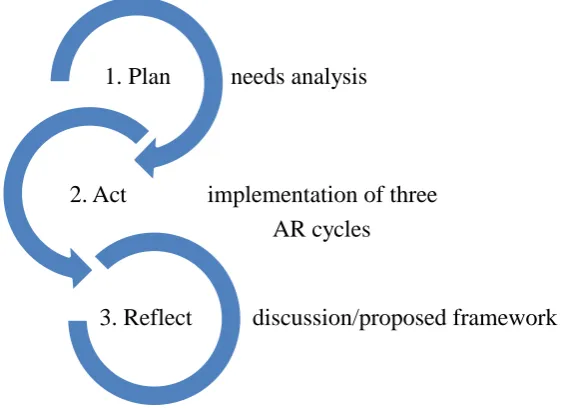
This study was conducted over a five-year period in three stages, with three different cohorts of in-service teachers of English language teaching (ELT). The three stages were needs analysis, implementation and reflection. The needs analysis stage aimed at gathering context information to inform the INSET design and delivery in the succeeding stages. The implementation stage consisted of three AR cycles. In the first cycle, the three-month INSET delivery involved 12
sessions, comprising 48 hours of face-to-face training. The second cycle involved around 25 INSET events for over one and a half months. In the third cycle, each of the three sessions and a demo lesson was delivered every other two weeks to allow for training input implementation and online collective discussion by trainees.
The quantitative and qualitative data were collected by means of multiple methods. Quantitative data were statistically analysed while qualitative data were
thematically analysed. The findings of the study provided insights on the teachers’ attitudes towards INSET, main challenges, perceived success factors, preferred training themes, engagement, and trainer role.
This study contributes to understandings of INSET in the Qatari context. It was conducted at a time of major reforms where INSET is seen as one of the main tools to address policy makers’ concerns about the educational system. Albeit, minimal academic research has been conducted on the effectiveness of the teacher training programmes offered to TESOL practitioners in Qatar. The findings provide ways to improve INSET, shed light on how the role of a trainer can contribute to its success, explain why teachers in Qatar may not be motivated to take part in
Chapter One: Overview
This chapter outlines the study as a whole to orient the reader. It provides contextual information to set up the study including what was gained from
preliminary interviews and school visits in helping focus the study. It also reviews previous experience of the INSET environment that the researcher had been working in. Finally, it introduces the reasonsfor investigating teacher education in Qatar, and outlines the design, purpose, and potential contribution of this study.
1.1 Introduction
Qatar is an Arabian Gulf State with a population that stands at 2.69 million and is going through unprecedented changes. Although a small peninsula state of 11,500 square kilometres, Qatar has massive gas and oil reserves which provided the necessary finances to support the reform initiative. The World Economic Forum ranks Qatar as the most competitive Arab economy, placing it 16th globally (Schwab, 2015) with the highest gross domestic product (GDP) per capita in the world
(McGann, 2019). Education is seen by the leadership of the country as key to Qatar’s economic and social progress (Gonzalez, 2008). Long concerned that the national education system was not producing high-quality outcomes (Kamrava, 2015) and was ‘rigid, outdated and resistant to reform’ (Brewer et al., 2006, p. 3), the State of Qatar declared education reform a national priority and launched a comprehensive
education reform initiative in 2001 (SEC, 2006, p. 11) which focused on English language and teacher education and was branded ‘Education for a new era’ (Palmer et al., 2016; SEC, 2006).
The reform declared education a national priority and launched an overhaul for public schools supervised by the RAND Corporation of America (Glasser, 2003; Palmer et al., 2016; Zimmerman et al., 2017). It aspired to create a modern, world-class educational system (Brewer et al., 2006; Nasser, 2017; www.sec.gov.qa) that is predicated on four main principles of autonomy, accountability, variety and choice (MacLeod & Abou-El-Kheir, 2017).
overseeing the implementation of reform initiatives. It was established in 1956 as the primary authority on education policy in Qatar. Qatari government schools operated under the supervision and financial support of the Supreme Education Council of Qatar until 2015 when the SEC was renamed Ministry of Education and Higher Education. The SEC had a Professional Development Office which was in charge of INSET in Qatari schools. The MoE PD Office is now affiliated with the MoE and is still the leading authority on the national teacher education programs. It is also in charge of teacher licensure and certification of English language teachers. Who take around 60 hours of mandatory INSET during their first year in service. Among others, this training tackles issues relative to teaching methodologies, ICT, reading, classroom management and teaching mixed ability classes.
The growing focus on INSET in educational reform initiatives is not unique to the Qatari context. There has been a burgeoning literature on teacher education around the world in recent years (Darling-Hammond, 2012; Lunenburg et al., 2014; Roberts, 2016; Russell & Korthagen, 2013). However, although many research studies are published every year, most of them have produced a ‘marginal’
improvement in the quality of professional development in schools (Sparks, 2002, p. 7). The unclear pathways in the education and licensure of teacher trainers coupled with the limited research on the impact of teacher education have led to a professional development system of teachers that is ‘by all accounts, broken’ in most contexts around the world (Hill, 2009, p. 471). Although research articles ‘trumpeting’ the success of a specific method or programme appear practically monthly, and practitioner magazines are full of accounts of the phenomenal improvements in teacher knowledge and skills, still ‘most teachers engage in only the minimum professional learning required by their institutions’ (Hill, 2009, p. 471). Teachers fail to see the impact of INSET because it fails to ‘connect with the essential moral purposes that are at the heart of their professionalism’ (Day, 1999, p. 49). Further research is needed to identify the reasons for this phenomenon and most importantly to bring about change.
research has been conducted on the effectiveness of teacher training programmes offered to practitioners in Teaching English to speakers of other languages (TESOL). Ellili-Cherif et al. (2012, p. 471) is among the few studies that investigated teacher education and licensure in Qatari schools. They reported problematic issues in the system, and concluded that relevant policies ‘use ambiguous terminology and procedures, ignore local educators’ input, provide unrealistic expectations of society, lack consistency, and created resistance on the part of educators’. Their study was mainly descriptive and did not attempt to test actionable recommendations. These concerns remain unsolved nowadays.
INSET programmes are one way in which the skills and knowledge of teachers may be revitalised through enhancing their skills and knowledge on specific aspects. INSET courses are common in many countries where English is taught. Among the incessant calls is to capitalise on the potential of information and communication technology (ICT) in supporting the design and facilitating the delivery of INSET courses. Most countries in the world have developed policies to embrace technology in education and provided ICT teacher training in a variety of forms and degrees (Jung, 2005). In Qatar, there is also an increasing pressure from all parties to use ICT effectively in INSET and in the classroom to ‘upskill’ the future workforce.
Qatar’s programme of education reform is at a critical stage in its development. On the one hand great progress has been made in agreeing new priorities, both in terms of teaching methods and attainment targets, but on the other hand, the lingering presence of outdated methodologies and practices in the classroom is holding students back from achieving the best possible outcomes. English was made
compulsory throughout Qatari schools, colleges and universities, and there has been an increasing emphasis on providing subject specific tuition in English as well as pure English language classes. Very recently, however, there has been a partial revision of this policy, with a new ministry decree encouraging some university courses to revert back to Arabic, and the likelihood that schools may follow suit (Fenton, 2012). There appears to be an on-going debate at the highest level in Qatar about the effectiveness of its English language provision, and its place in the
should include the reasons why these problems remain, and potential solutions for addressing any deficiencies.
Action research was chosen as the investigative methodology for this study. This methodology has gained popularity in recent years (Strand, 2009) as a tool for critical investigation (Taylor & Medina, 2013), which usually results in impact on the area studied (Elliot, 1991). It provides teachers with an opportunity to reflect on their own practice to be the ‘energy force’ for change (Hansen & Nalder-Godfrey, 2004, p. 45). It puts the practitioner at the heart of the research process, enables an insider view of an appropriate methodology, and has a greater potential for a lasting impact. Because of its flexibility, AR can capture the complexity of teaching and learning (Poon, 2008).
This study was an investigation of the various dynamics involved in teacher education, its challenges, changes and implications in the context of the State of Qatar. It endeavoured to provide an in-depth examination of teacher training along with other related features. Since it is centred on Qatar, this study was significant because the Arab country has embarked on a revolutionary journey in education. As a result, several changes have been witnessed in the country’s education system since the changes took effect. Far from a general exemplification of education in the oil rich country, the study provided real data on the changes incepted along with their results. Through this research, was possible to obtain information on the trends in education in Qatar, this is considered strategically important not just to me as a researcher but also to other players including government of Qatar, stakeholders in education, general public, students and the international community.
1.2 Structure of the study
There have been two structural approaches in theses that employed AR
methodology. First, a narrative summary of each AR cycle along with the results of that cycle are presented together in a separate chapter for each cycle, and in
chronological order, usually between the chapters on research methods and
Edwards, 2013; Kimhachandra, 2010; Spinola, 2014). Table 1.1 illustrates the two options I considered for presentation of this study.
Table 1.1: Options for thesis structure relevant to this study
Option 1 Option 2
Chapter 1 Overview Overview
Chapter 2 Background and context Background and context
Chapter 3 Literature review Literature review
Chapter 4 Research methodology Research methodology
Chapter 5 Narrative Summary of AR stages
and cycles ==========
Chapter 6 (or a separate chapter
for each cycle/stage)
Results
AR stage one results (needs analysis)
AR stage one summary and results (needs analysis)
AR stage two results (implementation)
AR stage two summary and results (implementation)
- First cycle results - First cycle summary and results - Second cycle results - Second cycle summary and results - Third cycle results - Third cycle summary and results
Chapter 7 (or 6) Discussion Discussion
Option 2 was adopted for clarity purposes. The structure of the thesis will be as follows: Chapter 1 provides a general overview for the study, followed by an outline of the context and background of the study in chapter 2. Chapter 3 presents the literature review of the main topics related to teacher education and reflective practice. Chapter 4 outlines the design and methodology of the study. Chapter 5 reports on the needs analysis stage. Chapter 6 demonstrates cycle 1 while Chapters 7 and 8 present cycles 2 and 3 respectively. Chapter 9 outlines my answers to the study questions along with its limitations and contributions. Chapter 10 is an important chapter that concludes the study with a proposed framework for INSET design and delivery.
1.3 Purpose of the study
The purpose of this AR study is to explore the INSET practices in Qatar. After that, I will use the findings from the exploratory needs analysis stage to improve my own INSET planning, design, and implementation through a three-cycle AR project.
Therefore, the main goals of this study are:
To improve my practices in INSET planning, design, and delivery.
To provide a set of clear guidelines and principles for good INSET in a form of a framework informed by teachers’ feedback.
To evaluate the impact of a 3-cycle AR INSET project in terms of addressing current challenges and improving training practices.
1.4 Research questions
This study was conducted in three stages and informed by AR methodology. Each stage attempted to answer certain research questions.
These questions are slightly different from the ones submitted at the beginning of the study. Because of the iterative and emergent nature of AR, it was difficult to predict the precise nature of key research questions. Therefore, initial questions were indicative and represented the range of possibilities rather than any precise anticipation of sequential order. The final questions were informed by the implementation and progress of the study.
Stage one (needs analysis)
RQ1: What do teachers perceive as advantages and problems of the INSET offered to them?
RQ2: What are perceived by teachers as the main factors affecting the success and impact of INSET in Qatar?
RQ3: What training themes do teachers recommend for future INSET? For the first stage, the research questions were intended to explore and describe the INSET practices in Qatar. RQ1 examined the attitudes and perceived values of INSET among TESOL teachers in Qatar, and their perception of the current issues. RQ2 and RQ3 identified possible success factors, strategies, and INSET themes to inform the design of interventionist INSET programmes in the second stage.
Stage two (AR cycles)
RQ4: From the perspectives of those involved in the AR cycles:
- To what extent are the INSET programmes in these cycles successful?
RQ5: What does the feedback by participants reveal about the role of the trainer in the success of INSET?
RQ6: As a teacher trainer, how can I measure the impact of the changes I introduced in the different cycles on teachers’ classroom practices?
The second stage involved the use of the findings from stage one to improve
planning and delivery of INSET programmes. An INSET programme was delivered in each cycle. RQ4 evaluated the effectiveness of these programmes to avoid
undesired problems in the design of the next cycle. RQ5 examined the role of the trainer in the success of INSET, which was among the main themes in the second cycle. RQ6 identified ways to assess training impact during and after the training.
Stage three (discussion and reflection)
RQ7: How has my AR journey helped me to improve my practice as a teacher trainer in Qatar?
In this stage, I discussed and evaluated the whole INSET AR project after
conducting the three cycles. Once the data analysis was completed and the findings were clear, I identified the main emerging themes across the whole study. Then I examined whether this study contributed to the enhancement of INSET practice in Qatar, and if so, how effective my role was in delivering such contributions. RQ7 also helped identify the key principles of a good INSET within the Qatari context.
1.5 Motivation for the study
This study was mainly motivated by my previous experience of the INSET
National Professional Standards, which I had been training teachers on. These developments bring extra pressure on teachers to reach the standards that have been set down as targets and teacher training provision is slowly gearing up to fit these new demands. One factor that may be affecting the quality of teacher education and by extension the quality of the teaching provision in Qatar is the relatively low level of awareness in schools of the importance of INSET (Nasser and Romanowski, 2011). Teachers view INSET as an appraisal requirement rather than a professional development opportunity. On occasions, teachers have such opportunities, and they take part enthusiastically in training, but there appears to be a problem with focus as noted by Nasser and Romanowski (2011):
Teachers are more concerned with mastering and refining teaching
methodologies than with developing the thinking processes needed at times to understand the theory required to sustain real educational reform. (p. 166).
In effect, the lack of skills among teachers is what prevents the reforms from being as successful as they should be. I predisposed that the acquisition of skills is not sufficient to deliver reform, but that there is a need for teachers to become agents of change by embracing deeper theoretical and critical reflection skills. They need to know why INSET is important, and exactly how it can enhance their own and their student’s learning. If teacher training can rise to the challenge of answering these questions, then Qatari teachers will be able lead reform from the inside of schools, rather than just follow directives from the government. INSET has an important role in improving the teaching and learning experience. However, local teachers’
dissatisfaction with content, style, and timing, amongst other sorts of issues could impede the success of INSET implementation. I have always wanted to understand the situation better and, hopefully, provide possible solutions.
15,000 teachers in Qatar, but only 16 teachers achieved the goals and obtained the licence by the end of the third year. The project failed and was discontinued (Ellili-Cherif et al., 2012). Another example was Moodle training given to a number of schools but was adopted by none of them.
When I became a teacher trainer for the Supreme Education Council of Qatar (SEC) in 2008 (now Ministry of Education), I wanted my trainees to have a better INSET experience than mine. I used to train teachers on several pedagogical topics, such as critical thinking, student autonomy, classroom management, teaching mixed-ability classes, learning styles, curriculum design, motivation, teaching reading, and ICT. While teaching these courses, I became interested in ways to make my training more effective and increase trainees’ buy-in. I used a number of methods to achieve this goal, namely, games, group work, ice-breakers, pre- and post-tests, the six thinking hats, team building activities, individual and group competitions, trainee journals, alternative assessment exercises, personalised worksheets, social
networking, blogs, forums, and other ICT tools. However, these efforts lacked underlying research or rigour.
When I became a teacher again in 2012, now in a university, my years of
In addition, I have seen the value that technology can bring to INSET. If trainers fail to utilise ICT effectively, they will not be able to speak to teachers in the language of their age. Teachers in many contexts are attached to their mobile
gadgets, which provide a myriad of professional development opportunities, such as webinars. Social media channels, e.g. Facebook, Twitter, Snapchat, and Instagram, have taken over traditional ways of communication. Teachers in many contexts have their own online networks where they exchange news and professional ideas. Blended teaching is another effect of technology that has become a popular teaching mode in recent years (Bonk & Graham, 2012) and is increasingly seen as ‘one of the most important vehicles for education reform today’ (Picciano et al., 2013, i). If trainers lack proper skills to integrate ICT in their INSET, trainee motivation will be adversely affected. Hence, I aimed at using ICT as much as I could ‘to support’ the delivery of my AR cycles.
To sum up, my interest in exploring INSET stems from my experience as a teacher and a teacher trainer with a desire to improve my practice and learn how to make INSET more effective in my context. In addition, it stems from my belief that good INSET results in good teaching and trainers are responsible to make this happen.
1.6 Significance of the study
Qatar has embarked on a revolutionary journey in education. Several changes have been witnessed in the country’s education system since the reforms took effect. Among others, teacher training, English language and the utilisation of ICT were affected by this change (Alghazo, 2006). This study is strategic in the sense that it was conducted at a time of major reforms and on an important aspect of this reform, i.e. INSET. In addition to the contextual analysis, the findings recommend how INSET can be improved and explain, to an extent, why teachers in Qatar are not motivated to take part in INSET. However, far from a general exemplification of the INSET scene in the country, the study provides data on the changes incepted throughout the cycles, along with their results. In other words, the trends in INSET in Qatar are identified, which is considered strategically important. A clear
To date, little research has focused on the evaluation of INSET programmes from the perspective of the trainee participants in Qatar. Thus, my study informs the local INSET context but might also contribute to a better understanding of the
effectiveness of INSET training in general, such as by pointing out the aspects of INSET training perceived to be more beneficial. Such an understanding would be invaluable to future designers of INSET programmes and teacher trainers. On a methodological level, this study includes a number of improvements over previous works. For example, previous studies used researcher diaries to gather data from the researcher’s perspective on INSET training, whereas my research utilises data from trainee journals to explore the current INSET context in Qatar. Using journals in this manner allowed me to capture attitudes and opinions on local INSET. This perspective has been missing in previous research.
1.7 Preliminary work
Prior to commencing this study, a preliminary work was carried out and reported in the first panel report (see Table 1.2). The purpose of this step was to determine the context and potential participants before commencing the study.
Table 1.2: Summary of the preliminary work prior to the study commencement
Phase
Data collection
methods
Occur-rences (n) Participants
Date/ period
Preliminary work
Interviews Two
School principals from government and private schools
Two days 1 May 2013 10 June 2013
School visits Two
Staff members and faculty members of grammar and average government schools
Two days 25 April 2013 4 June 2013
Focus group One Teachers from an international school
1.5 hours 6 June 2013 Informal
interviews and dialogues
Ten
Staff members, subject coordinators, trainers, teachers
4 days
expertise, that is, experts and insiders. Viswanathan (2005, p. 391) argued that preliminary work is essential and can provide the basis to interpret the results and lead to an improved design. For Viswanathan, ignoring preliminary work is similar to putting all your eggs into one basket. The preliminary phase of this study had four main objectives: 1) to explore the context and understand the cultural and social phenomena in their natural setting; 2) to identify possible individual and school participants; 3) to build trust and confidence with practitioners; and 4) to validate further the research process through researching the phenomena in different phases of the project.
1.8 Results of the preliminary fieldwork
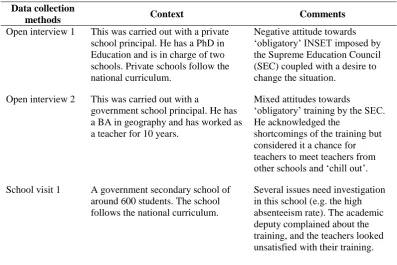
[image:23.595.117.515.492.757.2]As seen in section 1.2 above the study consisted of a needs analysis stage to explore the local context. The needs analysis stage involved a brief preliminary fieldwork phase, which employed two school visits, two interviews, and a focus group. The interviews were conducted during the visits with school principals and teachers. The preliminary fieldwork helped in shedding light on INSET practices in Qatar and informed the main needs analysis stage. The fieldwork data were not analysed formally. Table 1.3 provides a summary of the fieldwork’s findings.
Table 1.3: Summary of data collection in the needs analysis fieldwork phase
Data collection
methods Context Comments
Open interview 1 This was carried out with a private school principal. He has a PhD in Education and is in charge of two schools. Private schools follow the national curriculum.
Negative attitude towards ‘obligatory’ INSET imposed by the Supreme Education Council (SEC) coupled with a desire to change the situation.
Open interview 2 This was carried out with a
government school principal. He has a BA in geography and has worked as a teacher for 10 years.
Mixed attitudes towards
‘obligatory’ training by the SEC. He acknowledged the
shortcomings of the training but considered it a chance for teachers to meet teachers from other schools and ‘chill out’.
School visit 1 A government secondary school of around 600 students. The school follows the national curriculum.
Interviewing school principals was conducted to explore how the school leadership views INSET. Interviews with principals were constructive and helpful in this regard. The principals seemed to share common concerns over training being too demanding and unstructured. The first school that I visited was a private school that follows the national curriculum. The principal of the private school seemed more frustrated with the situation; he said he encourages his teachers to avoid attending INSET offered by the Supreme Education Council of Qatar (SEC) whenever possible. As a teacher trainer, I understand the principal’s attitudes. This is because private school teachers must pay for the training and attend in the evenings, whereas teachers from government schools attend the training during working hours for free. The other school principal seemed less negative towards the mandatory INSET. Although he admitted that it was not a perfect situation, he complimented the networking opportunity it provides to his teachers.
The two visits to schools were helpful. The first school was a secondary
government school. The staff seemed busy with end-of-year tasks; around half of the students were absent even though only two weeks were left until the school year would end. The academic deputy talked about INSET and educational reform in general. The other school was a military boarding school for cadets, which had an impressive level of organisation. The school had a total of 130 students, including students from other Gulf countries. Although the staff and faculty were from different cultural backgrounds, they looked happy and had a team spirit. Examples of my notes during these visits include: ‘English is the medium of communication between staff and students during day and night simply because a few of the staff speak Arabic’; the ‘staff wake student up and take them to classes’; and the ‘school has a dedicated CPD (Continuing Professional Development) room equipped with [an] interactive whiteboard, wireless connection, computers, and teleconferencing
School visit 2 A government military school. The school follows the national curriculum but with some modifications.
Positive feedback on INSET.
Focus group Six teachers from an international school. The school follows the British curriculum and most teachers are from the United Kingdom.
tools’. The teachers in this school are paid three times the average salary of other teachers in the country.
The last fieldwork method was focus group. I selected an international school for this purpose, and met with six teachers and coordinators. The teachers in this school seemed satisfied with the INSET they receive, as they seemed to have an influence on the way and when their professional development training is carried out. In Qatar, government and private schools share almost the same INSET calendar and must attend similar programmes offered by the SEC. The other categories are international and community schools, which have their own professional
development plans. They only share plans with the government school programmes for Arabic and Islamic studies teachers.
Chapter Two: Background and Context
Understanding the context is vital in education research (Gibson & Asthana, 1998). This chapter describes the context in which this study was carried out. It introduces the setting of my investigation and sheds light on the main features of the Qatari context relative to ELT, INSET, the current role of ICT, and AR.
2.1 An overview of the current Qatari educational context
Independent schools are autonomous institutions financed by the government and operated by a Qatari principal. Currently, there are nearly 178 independent schools in Qatar after all the governmental schools were transformed into independent schools in the academic year 2010/2011. Table 2.1 below gives a summary of how the K-12 education picture in Qatar was in 2012.
Note. Source: Supreme Education Council-School and Schooling in Qatar, 2011/2012 Report, (2013, p. 1)
The curriculum standards and the professional standards lie at the heart of the educational reform; The National Professional Standards (NPS) for Teachers and School Leaders aim at creating benchmarks for learning and teaching. They describe the knowledge and abilities, which teachers and school leaders need to develop during their careers, to provide high-quality instruction and support
improved student learning in the independent schools (NPS, 2007). The NPS aim at training teachers on how to implement the curriculum standards and ensure that teachers have mastery over their subjects and the school principals have the capacity to lead their educational institutions (Romanowski & Amatullah, 2014; Romanowski, 2014).
The ‘Centre for British Teachers’ CfBT developed the national curriculum standards in 2003 which are designed to serve as the academic goals and expectations for each grade level. The standards provide details about the language content and what knowledge should students demonstrate by the end of a certain grade (SEC, 2006). The quote below illustrates the overall aim of the national curriculum standards:
The overall aim of the English standards is to enable students to develop skills in English that commensurate with requirements for further or higher studies or join a workplace where English is the medium of communication or instruction. (CfBT, 2004, p. 12)
The standards are focused largely on achieving skills and functional outcomes. The English standards are structured around developing word knowledge, listening and speaking, reading and writing. Systematic vocabulary development is an essential part of the standards. The standards also contain a guide to the number of active words students should acquire for each of grade. By the end of Grade 9, students should draw on a repertoire of at least 2600 key words. There is also an emphasis that teaching of language structures should be contextualised. Listening standards focus on comprehension, developing strategies for guessing and inferring meanings and responding appropriately to interact or demonstrate understanding. There is also a strong and increasing emphasis on literacy development across the grades. The Education Institute, a MoE Department, has developed curriculum standards in most school subjects.
The higher education scene in Qatar has also witnessed rapid changes in recent years. Many elite international universities have opened satellite campuses in the country. The Education City in Doha has several campuses for renowned universities. Among others, Weill Cornell, Carnegie Mellon, Virginia Commonwealth University and Texas A&M University. However, Qatar University remains the only national university in the country and it usually enrols the majority of public schools’
graduates. It comprises eight colleges: Arts and Sciences; Business and Economics; Education; Engineering; Law; Pharmacy; Sharia and Islamic Studies; and Medicine. The university has added a wide range of new programmes over the years that are aligned with the growing needs of the labour market and the aspirations of the society it serves. It currently boasts a population of over 19,000 students and an alumni body of over 30,000. Qatar University’s Foundation Programme is an academic bridge programme which aims at developing students’ English language proficiency skills to a level that will allow them to succeed in the academic programmes of Qatar
University. The Foundation Programme offers both Math and English courses to serve this purpose and employs approximately 145 ELT teachers. It offers several reading courses which introduce the reading skills with a step-by-step approach. Further reading outside class is encouraged through a graded reader programme, as well as optional timed readings and an online reading component.
Moreover, the outcomes of the reform initiative have not yet met the nation’s expectations. Qatar’s decision to participate in international educational evaluation studies like TIMSS, PIRLS and PISA has raised several questions. Qatar’s results were disappointing. Although most of these studies assess numeracy and literacy skills, they are indicators of the general education quality in Qatar. For example, PISA 2009 results showed that Qatar had the fifth lowest levels in mathematics science and reading in relation to other participating countries (see Appendix 1).
Qatar’s results on PISA and other international studies have lead experts to question some of the strategies in the educational reform including INSET offerings, albeit these results have underscored the urgent need for reform. After years of huge financial investment in education, the results have shown little if no improvement. Qatar’s students did not reach the average compared with other countries. In some cases, the results were embarrassing like the 2006 results of PISA where Qatar was just one place from the bottom of the list.
2.2 English language in the Qatari context
Reform initiatives in Qatar have linked Educational development to English, as it is the international lingua franca of research and science. It is seen by policy makers as door to modern world-class education. English is one of four core subjects along with science, math and Arabic at independent schools. It also has been the medium of instruction for Math and Science for the past ten years. This policy is undergoing serious revision to go back to the Arabic language medium after the low Qatari results on TIMSS (Trends in International Mathematics and Science Study). English language is taught as a foreign language in Qatar (EFL). It is the medium of
instruction in international schools, and a compulsory school subject at independent schools from grades 1-12 where it is allocated more than 200 teaching hours for each grade per year. By grade 12, students are expected to have developed English
language skills equivalent to the International English Language Testing System (IELTS) Competent User level 6. (English Curriculum Standards, 2004, pp. 12-13).
However, science students are still required to achieve IELTS 5.5 as an entry requirement.
2.3 English language teachers in Qatar
Qatar is a popular destination for English language teachers in both K-12 and tertiary institutions. Teachers are intrigued by the competitive tax-free salaries, free
accommodation, airfare, long vacations and the welcoming Qatari culture. The TESOL Community is mainly compromised of expatriates from all around the world. Table 2.2 below provides an overview of nationalities of English language teachers in Qatar according to their school type. This information is mainly anecdotal due to the lack of official data in this regard.
Table 2.2 Nationalities of school teachers in Qatar
School Type Co-Education Teacher nationalities
Independent (Government)
No Qataris + Arab Nationalities (Egyptians, Jordanians, Tunisians, Syrians…etc.)
Private Arabic No Arab Nationalities (Egyptians, Jordanians, Tunisians, Syrians..etc.)
International Yes Mainly westerners (British, Americans, South African, Indians…etc.)
Community Yes Teachers from the country of the curriculum followed by schools (e.g. Egyptian Schools employee mainly Egyptian teachers)
Table 2.3 Gender distribution of school teachers in Qatar
Teaching staff 2011/2012 2012/2013 2013/2014
Primary education
male 1020 1377 1488
female 9546 9300 8990
Preparatory education
male 1797 1948 1905
female 2254 2246 2506
Secondary education
male 1759 1828 2041
female 2089 2147 2246
Total male 4576 5153 5434
female 13889 13693 13742
Note. Source: Qatar Statistics Authority, Qatar in Figures (2015, pp. 20-22).
The gender gap illustrated in table 2.3 above is applicable to language teachers. For example, 100% of Qatari language teachers in schools are female. There is a dearth of male Qatari language teachers in Qatar to the extent that Qatar University closed its English department on the male campus in 1997. Table 2.3 below shows the distribution of Qatari and not Qatari teachers in schools in the 2014/2015 academic year.
Table 2.4 Qatari and non-Qatari teachers in Qatar
Teaching staff 2014/2015
Primary education Qatari 2246 (20%)
Non-Qatari 8975 (80%)
Preparatory education Qatari 660 (14%)
Non-Qatari 3900 (86%)
Secondary education Qatari 428 (10%)
Non-Qatari 3953 (90%)
Total 20162 Qatari 3334 (16%)
Non-Qatari 16828 (84%)
Note. Source: Qatar Ministry of Development Planning and Statistics, Education in Qatar statistical profile
(2017, pp. 28-43).
As seen in table 2.4 above, Qatari teachers are just 16% of the overall number of
teachers in schools. In Higher education, the situation is also similar in most
subjects and even more severe in TESOL departments. There are three main
TESOL tertiary departments in Qatar, Qatar University’s Foundation Program
Education City’s Academic Bridge. None of these departments has Qatari
English language teachers.
With regards to qualifications teachers are expected to have to work in schools,
the requirements vary according to school type. Community schools usually
adopt the same requirements in the country of the curriculum they follow. In
most Arab countries, the minimum requirement is an undergraduate degree.
International schools are English medium of instruction and they require a first
degree and/or a practical qualification like DELTA. There are two main
curricula in these schools, International Baccalaureate (IB) and International
General Certificate of Secondary Education (IGCSE). Government schools have
an Arabic medium of instruction and require a minimum of a first degree in
English language or literature for English language teachers. As most teachers in
these schools are expatriate form other Arab countries, they are usually graduates from literature departments. Teachers with a master’s or a
postgraduate degree in education are shortlisted first. All undergraduate and
postgraduate degrees have to be attested and articulated by the Ministry of
Education and Higher Education.
Expatriate teachers are expected to have 3-5 years of teaching experience and
they usually have had several national licensure INSET programmes in their
home countries. Nonetheless, they still have to obtain the Qatari national
teaching license within 3 years in government and private schools that follow the
national curriculum. Community and international schools have their own
INSET pathways for new hires so do tertiary education institutions.
In higher education, a minimum of a master’s degree in TESOL (or a related
field) is required for a lecturer rank. Online and part-time degrees are not
accredited by most higher education institutions including Qatar University. A
minimum of three years of tertiary experience is also required by many
2.4 Teacher training in the Qatari context
Teacher education in Qatar is given importance by both educators and policy makers. Both parties realise the role it could play in the education reform. The PD Office at the MoE is overseeing INSET in all Qatari schools including private and international schools in the country. Private schools and international schools can do their own INSET without approval from the MoE. As for independent (i.e. government) schools, any INSET course should be approved by the PD Office in advance in order to cover the cost. There are certain INSET courses offered by the PD Office that should be taken by all teachers in the country regardless of their school type, e.g. ICDL and curriculum standards courses.
TESOL teachers in private and government schools Qatar have to take two curriculum standards courses; the Entry Curriculum Standards and the Proficient Curriculum Standards. Each one consists of 60 contact hours. The Entry Curriculum Standards programme should be taken in the first year while the Proficient
Curriculum Standards course can be taken in later years. Both courses consist of 15 sessions of 4 hours each. The topics that are covered in these courses range from basic induction modules to advanced critical thinking modules. I started in 2008 as a trainer for the entry course, and in 2009 I moved to the proficient course. When the PD Office decided to recruit local trainers, I was in charge of this process and trained the first cohort of trainers in 2010 through a ‘Train the Trainer’ Programme.
TESOL teachers have other forms of INSET that are not organised by the MoE. These INSET opportunities include school conferences, departmental PD days, distinguished speaker events and visit exchanges. One of the main INSET events in Qatar is the annual QatarTESOL conference. It usually takes place in March and it attracts participants from schools, universities, training centres and other TESOL institutions in the country. Many teachers in Qatar go to another regional
conference in Dubai called TESOL Arabia. In many institutions in Qatar, teachers can get conference sponsorship if they are presenting at an international conference.
The PD Office at the MoE considers ICT as an important element of teacher
English language teachers have to take ICDL training like other teachers in addition to many other specialised courses. Some of these courses include topics like using ICT to support standards, TESOL online resources and LMS training (Learning Management Systems).
Despite the efforts by the MoE to promote INSET in schools across the country, many teachers complain about INSET in Qatar. Anecdotally speaking, some of teachers’ complaints include unsuitable content, timing and strategies. Much of the training used to take place in the evenings after working hours, which is
unfavourable time for teachers. Teachers also complain that many of the training topics like Bloom’s taxonomies, classroom management and differentiation are repetitive. Others criticise the traditional training methodology of little interaction and much lecturing. Teachers usually prefer hands-on training with practical samples and model lessons. On the other hand, the trainers blame teachers for lack of interest, dedication or innovative attempts to develop their methodologies. On several occasions, courses were cancelled because of the low turnout. It is hard to validate any of the claims above because of the lack of research studies in this field and most of this summary is based on anecdotal evidence.
Perhaps one of the main contributing factors to the claims above is the absence of teachers’ voices in the planning, design and implementation of INSET in Qatar. Ellili-Cherif et al. (2012) conducted a questionnaire with 74 school leaders about teacher licensing. Probably one of the striking findings is that the reform is imposed on educators and that policymakers ‘fail to take into account the input of
stakeholders such as teachers, parents, school coordinators and even administrators’ (p. 475). This is because policymakers in Qatar ‘generally fail to consider the importance of educators as professionals capable of making decisions’, according to the study (Ellili-Cherif et al., 2012, p. 475). Listening to teachers is valuable in program design (Roberts, 1998). However, negligence of teacher voice in INSET is an issue in other contexts. Gándara et al. (2005, p. 2) report that ‘seldom are
teachers invited to share their experiences and their concerns with those who shape
parents. In short, the situation described above in addition to my personal involvement in INSET in Qatar have encouraged me to conduct this academic endeavour in hope to bring about change that meliorates the INSET scene in Qatar.
2.5 ICT in Qatar
The Arab world is usually classified relatively low when it comes to ICT in education. Despite the ‘digital divide’ which exists among the oil producing Arab countries in the Gulf area and the other Arab countries in Levant and Northern Africa (Jemni et al., 2016; Bontis, 2004), most Arab countries have launched a national strategy for ICT use (Dutta, 2003). Arab countries also have similar government support for ICT (Kaba & Said, 2014).
Qatar is one of the affluent Gulf states where ICT use is promoted in schools and universities by the government and through many initiatives. ICT use witnessed a rapid growth in recent years after the establishment of the Supreme Information and Communication Council (ictQatar) in 2004 where ICT is seen as a key to world-class education. According to published statistics by ictQatar, Qatari schools have an average of 12.7 PCs per 100 students. This is considered the highest in the Arab world and significantly higher than the European average of 12.1 (ictQatar, 2009).
Educational policy makers have invested heavily in ICT. The MoE aspires to make ICT an integral part of the Qatari education system hoping to encourage students to become motivated learners. Government support is visible through the various e-Learning projects that MoE runs in Qatari schools. Among others, a national LMS, a one-to-one initiative and a national e-Content.
As seen in the Qatari results in international assessments, these large investments have not come to the aspired academic fruition yet. Anecdotal evidence suggests that teachers are still reluctant to incorporate technology in classrooms and students use technology mainly for communication and sharing files. Most educational institutions lack long-term ICT plans and visions and there does not seem to be a culture of innovation and integrating ICT related initiative into a coherent
international private vendors, where the commercial imperative might encourage them to claim success without empirical evidence. The way these projects are implemented in schools could also be one area to be investigated; parents might not be adequately involved and school administrations may not have the encouraging culture or appropriate buy-in.
2.6 Research in Qatar
One of the declared national priorities in Qatar is promoting a research culture among students and practitioners. This is demonstrated through the allocation of 2.8% of the country’s national income to research (AlJa’am et al., 2009). Research is also an integral dimension in Qatar 2030 vision. The establishment of The Qatar National Research Fund (QNRF) in 2006 further consolidated the country’s support for research. For an overview of the research funding programmes by QNRF and a list of the projects sponsored in previous cycles, see www.QNRF.org.qa.
AR is also being promoted at school and university levels where it is seen a key element of the educational reform. School professional development encourages the adoption of AR among teachers in a simple, level-appropriate way (Allen, 2008). This includes a 2008 agreement with the Open University in the United Kingdom to train teachers and students in all governmental schools on how to conduct AR projects (Gulf Times, 9 April 2008). MoE also hosts an annual AR conference. This conference is one of the channels which will be considered to disseminate the findings of my research.
This chapter presented the context of the study. It began by giving some
background information about Qatar followed by an account of ELT, INSET, ICT and AR in the local context. This chapter forms a strong foundation for
Chapter Three: Literature Review
This chapter provides a review of literature on in-service teacher education and training (INSET), with a focus on information and communication technology (ICT) as a supporting tool. It also reviews two of the themes that emerged in the implementation stage, that is, reading and reflective practice. Where relevant, I also point out how various bodies of literature shaped the nature of my AR innovation.
As noted above, the content and structure of the literature review chapter reflects not only the theoretical principles that shaped the design of this study but also key issues that emerged locally as I engaged with the teachers during the needs analysis and implementation phases. Due to the generative nature of AR, it was not possible to predict all literature themes at the outset of the study (e.g. reading
comprehension). Therefore, this chapter was updated continuously as the study progressed.
3.1 Defining INSET
In recent years, the realm of education has seen a considerable change in all aspects. Educational policy makers in many countries have strived to cope with this change in every possible way. Among the main strategies policymakers have implemented is training teachers to keep them updated in the fast-growing world of education. INSET is considered among the main factors that affect the education process (Burns, 2010; Wallace, 1991). The British Board of Education’s (1944) report is among the oldest documents tackling INSET; the report concluded that teacher training in the United Kingdom was not planned systematically, and majority of the schoolteachers had not pursued any course of professional training. Although there had been limited research on INSET until the early 1990s (Williams, 1991), it has recently gained a significant place in academic research (Hill, 2009), and has become an industry with its own providers and considerable financial turnover. The provision of INSET is an important element of quality education (Chediel, 2013), and an essential and a productive element in professional development of
top 10 thematic emphases of INSET research from 2000 to 2010. Although
programme design is not on the list, these themes are related in a way or another to
programme design and implementation.
Several terms have been used to refer to INSET, including teacher training,
professional development, continuing professional development, refresher courses, and teacher education. However, Dean argued that these terms tend to be used interchangeably (as cited in Kshir, 1999, p. 41). Henderson (1978) defined INSET as ‘structured activities designed, exclusively or primarily, to improve professional performance’ (p. 12). Day’s definition of INSET emphasised the authentic element and its impact on other stakeholders:
Professional development consists of all natural learning experiences and those conscious and planned activities, which are intended to be of direct or indirect benefit to the individual, group, or school and which contribute through these to the quality of education in the classroom. (1999, p. 12)
Wallace (1991) viewed INSET in TESOL as a process of exploration of the ways in which a reflective approach can be applied to a variety of areas of teacher education programme. These areas include, but are not limited to, microteaching and
classroom. Unfortunately, the praised value of reflective practice (RP) in INSET is not always visible or consistent. Mann and Walsh pointed out the current challenges of reflective practice in INSET:
3.2 Teacher training and teacher education
It is hard to identify clear delineation in literature between the terms teacher training and teacher education as the they overlap and are often used interchangeably
because of the direct juxtaposition of the terms ‘training’ and ‘education’. In the local Qatari context, the term teacher training is more common and used to refer to almost all INSET offered by the MoE while teacher education is used to refer to pre-service academic teacher programmes by Qatar University. MoE INSET is usually short and tackles issues like ICT skills. In contrast, Qatar University offers bachelor and master’s degrees in education. Teacher training, as the term implies, is the training or skill development of teachers. According to Widdowson (1983), training refers to the ‘imposition of conformity to the widely accepted and
established behavioural patterns’, whereas education ‘seeks to provide for
creativity, whereby what is learned is a set of schemata and procedures for adapting them to cope with problems, which do not have a ready-made, formulaic solution’ (p. 19). The discussion above, along with anecdotal data, support my understanding that teacher training is more practical and skill-based INSET that is specific to classrooms real life issues, while teacher education is more academic and aims to develop teachers’ abstract attitudes and knowledge. Therefore, teacher training is more relevant to this study since the proposed design calls for practical hands-on and transferable input. Teacher development is the development of a sense of strengths and weaknesses in a teacher, in a way that the resulting improved self-awareness helps the teacher identify better ways to teach others. Training and education are both means of teacher development. However, teacher development should not be confused with the general term of professional development that is used in teaching and non-teaching professions. Mann argued that teacher
development is different in its nature from both teacher training and teacher education.