A three alarm
fire
A CONTENT ANALYSIS ON THE PREVALENCE OF
FRAMES IN THE CASE OF THE SCHIPHOL FIRE
Kim Hartmann| S1014374
First Supervisor: Dr. I. van der Molen Second Supervisor: Dr. H.G.M. Oosterwijk
Bachelor Thesis | European Public Administration 12 January 2017
Abstract
This bachelor thesis will assess the representation of facts regarding the Schiphol fire in 2005. The goal of this research is to determine the effect of new information on the prevalence of frames, established immediately after the event, through which the media present the news. The research question of this thesis is ‘What are the differences in framing between de Telegraaf and NRC
Handelsblad about the Schiphol fire and what are the effects of new information on the framing of the Schiphol fire by these two newspapers?’
In this research, there will be attention for two major newspapers in the Netherlands, namely de Telegraaf and NRC Handelsblad, and their reporting regarding the Schiphol fire and the subsequent events. A comparison is made between the frames used by de Telegraaf and NRC Handelsblad at two different moments in time, being the actual Schiphol fire on October 27th, 2005,
and the publishing of the research findings report by the Dutch Safety Board on September 21st, 2006.
In this research, all news articles by NRC Handelsblad and de Telegraaf regarding the Schiphol fire are used in a content analysis, determining the dominant frames regarding the incident and the differences between both newspapers. The frames after both incidents are compared in order to elaborate on the possible difference in frame prevalence after the second event.
Index
ABSTRACT ... 2
INDEX ... 3
1. INTRODUCTION ... 5
1.1THE SCHIPHOL FIRE ... 5
1.2PROBLEM DEFINITION ... 7
1.3RESEARCH QUESTIONS ... 8
1.4METHODOLOGY AND RESEARCH DESIGN ... 9
1.4.1 Towards a research design ... 10
1.4.2 Coding ... 11
1.4.3 Selection of newspapers ... 13
1.5OUTLINE ... 14
2. THEORETICAL FRAMEWORK ... 15
2.1FRAMING ... 15
2.2IDENTIFYING FRAMES ... 18
Conflict frame ...18
Human Interest frame ...19
Economic Consequences frame ...19
Morality frame ...19
Attribution of Responsibility frame ...19
2.3SUMMARY ... 21
3. THE EFFECT OF THE NEWSPAPER ON THE PREVALENCE OF FRAMES ... 22
3.1GENERAL INFORMATION ... 22
3.2FRAMES PER NEWSPAPER ... 25
Attribution of Responsibility ...26
Conflict ...26
Human Interest ...26
Morality ...26
Economic Consequences ...27
4. THE EFFECT OF EVENTS ON THE PREVALENCE OF FRAMES. ... 28
4.1FRAME PER EVENT ... 29
Attribution of Responsibility ...29
Conflict ...30
Human Interest ...30
Morality ...30
Economic Consequences ...30
4.2SUMMARY OF THE ANALYSIS PER EVENT ... 31
4.3FRAMES PER NEWSPAPER PER EVENT ... 31
Attribution of Responsibility ...32
Conflict ...33
Human Interest ...33
Morality ...34
Economic Consequences ...34
5. DISCUSSION OF RESEARCH FINDINGS ... 35
Attribution of Responsibility ...35
Conflict ...36
Human Interest ...36
Morality ...37
Economic Consequences ...38
6. CONCLUSION ... 39
5
1. Introduction
1.1 The Schiphol fire
On the night of October 26th of 2005, 268 detainees were situated at the
detention center "Schiphol Oost". These detainees can be divided in three categories:
1. Suspects of committing a crime at Schiphol airport
2. Drug smugglers
3. Foreigners detained under article 6 or article 59a of the Aliens Act (Vreemdelingenwet 2000, 2000).
6
Board [DSB], 2006). One of the detainees later suggested that guards underestimated the fire, unwilling to believe the detainees when they tried to warn the guards about the smell of smoke (Algemeen Dagblad, 27 October, 2005). In the end, 11 detainees of K-wing were killed in the fire.
This crisis was widely broadcast in the media. The Dutch Safety Board, a research board founded with the main aim of the improvement of safety in the Netherlands in situations in which civilians are dependent on the government, companies, or organizations for their safety (DSB, 2005), started an investigation into the causes of the fire.
But the crisis was not yet over. New problems quickly arose, proving that the Schiphol fire was more complex than a regular fire. From the reassignment and aftercare of the detainees to the new destination of the remaining complex, everything had to be taken care of. This new information ensured repeated interest for the fire and the subsequent events in the media.
Different newspapers have different approaches to calamities, accidents, and crisis situations. As one newspaper puts the emphasis on the personal consequences for those involved, another newspaper may put the emphasis on the question of responsibility. According to Ghavamnia and Dastjerdi, “newspapers will try to construct a text which is in line with what they think are the opinions, attitudes and feelings of their readers” (M. Ghavamnia, H. Dastjerdi 2013, p.455).
7
Newspapers frame the news. This is done in different ways, varying from stating the news as objectively as possible to taking a political point of view. According to Entman (1993), both author and reader of a message make conscious and subconscious choices in interpreting the message. Frames help guide both author and reader.
In the case of the Schiphol fire, a specific moment in time can be pinpointed when a lot of new information was published, which might influence the attitudes of both the general public and politicians regarding the Schiphol fire. When the Dutch Safety Board published their research findings on the 21st of
September 2006, new information could have shifted the public opinions and attitudes and therefore caused reframing to occur. This research will clarify the differences in the original frame prevalence and will elaborate on the possible shift in frame prevalence.
1.2 Problem definition
According to Van de Beek (2013), to be able to report truthfully, journalists should be as objective as possible. Their articles should not be subjective, influenced by the opinions of the journalist. In practice, however, objectivity is an ideal that is impossible. The Dutch code for journalists therefore speaks of "the pursuit of journalistic objectivity" (Nederlandse Vereniging van Journalisten [NVJ], 2008)
8
opinions in the public are greatly polarized, conflicts can arise, creating more problems.
This research will focus on the case of the Schiphol fire and the subsequent events. The subsequent events of this crisis did not only entail the discussion on responsibility of the detention center, but also involved the aftercare of the detainees that were in the building when the fire occurred. This makes the Schiphol fire a complex case that can be seen from different perspectives. The new information becoming available after the publication of the report by the Dutch Safety Board could also influence the prevalence of frames, and with that the opinions in society.
1.3 Research questions
This thesis focuses on the following research question:
What are the differences in framing between de Telegraaf and NRC Handelsblad about the Schiphol fire and what are the effects of new information on the framing of the Schiphol fire by these two newspapers?
With this research question, the objective is twofold. The first objective of this study is identify the frame prevalence in both de Telegraaf and the NRC
Handelsblad and analyze the differences in framing. Therefore, the following
sub-questions are used:
1. What frames did NRC Handelsblad use regarding the Schiphol fire and the subsequent events?
2. What frames did de Telegraaf use regarding the Schiphol fire and the subsequent events?
9
The second objective of this study is to find out if there is any difference in frame prevalence, caused by the publishing of the Dutch Safety Boards research findings. To examine this, the following sub questions are stated:
4. What frames were used after the initial event of the Schiphol fire?
5. What frames were used after the publishing of the DSB-report?
6. What are the differences in frame prevalence between the two newspapers after both events?
7. Is there a significant change noticeable in the framing of the Schiphol fire?
1.4 Methodology and research design
This research can be defined as descriptive research, describing the different frames and the occurrence of the frames in Dutch media when reporting on a crisis or accident. For this research, content analysis was selected as the method of research. This method contains the analysis of all news articles regarding the Schiphol fire and the incidents that followed, focusing on the messages in the articles.
Discourse analysis would not have been a suitable method for this particular research. As Neuendorf explains: ‘A discourse analysis is more focused on the manifest language and word use. […] The focus is on the researcher as competent language user” (2002, p. 5).
In this case, the research is a content analysis based on 205 articles from 2 newspapers, de Telegraaf and NRC Handelsblad. The articles are divided into two time periods. The first group contains all the articles that were published after the initial event of the Schiphol fire, between October 27th, 2005 and
September 20th, 2006. The second group contains all the articles that were
10
2006. These articles are coded by two coders, following the steps of the research design, which will be explained below.
1.4.1 Towards a research design
Chong and Druckman (2007, p.107) discuss five different steps in a research design researching media frames. The first step is to identify an issue or event. Entman (2004, pp.23-24) states that a frame in communication can be defined only in relation to a specific issue, event or political actor. In this research, the Schiphol fire and the events that are related are the issue.
Secondly, the focus of the research should be clear. In this research, focus will be on the frames used by two major Dutch newspapers, at two moments in time: (a) immediately after the Schiphol fire; and (b) immediately after the publication of the report by the Dutch Safety Board on the Schiphol fire.
The third step is to identify an initial set of frames. Chong and Druckman explain that prior work in the academic and popular literatures serves as a good starting point. The frames selected for this research are the frames that are found by Neuman, Just, and Crigler (1992) and further researched and described by Semetko and Valkenburg in their 2000 content analysis of press and television news. Semetko and Valkenburg state “a further literature review of U.S. and European news confirmed that the aforementioned frames largely account for all the frames that have been found in the news” (Semetko and Valkenburg, 2000, p. 95)
The fourth step is to select sources for the content analysis. This content can consist of different sources, but in this particular research, the two major Dutch newspapers, NRC Handelsblad and de Telegraaf, will be analyzed. This analysis includes 205 articles regarding the Schiphol fire and aftermath, from two different newspapers in the period from the occurrence of the fire on October 26th of 2005 to December 31st of 2006. These articles will be examined
11
identified in earlier research by Semetko and Valkenburg (2000). The previously identified frames are: Attribution of Responsibility, Conflict, Economic
Consequences, Human Interest, and Morality. These frames will be discussed in
Chapter 2.
According to Chong and Druckman (2007, p107) the final step is for coders to analyze a sample, identifying the presence or absence of the predefined frames in the story or article.
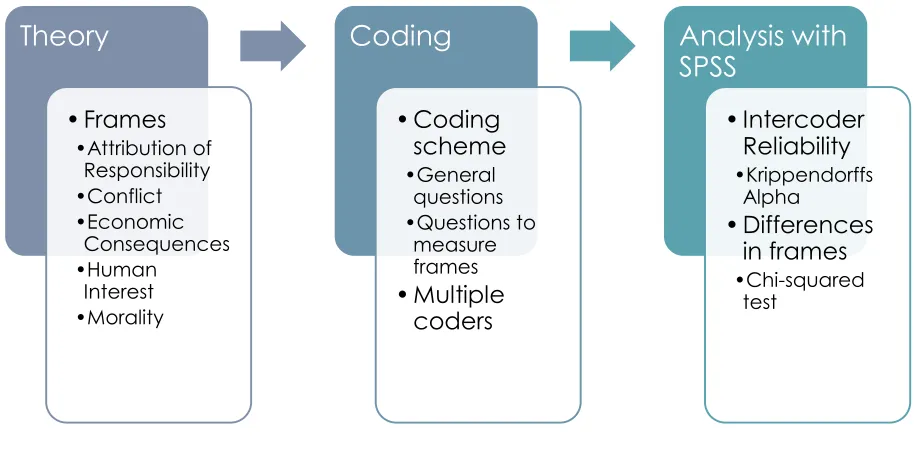
[image:11.595.71.528.301.528.2]Figure 1.1 shows a basic representation of the subsequent steps in this research.
Figure 1. 1 Research design
1.4.2 Coding
The articles are coded by human coders, using the coding scheme adapted from Semetko and Valkenburg (2000). In this analysis, parts of the coding scheme by Semetko and Valkenburg (2000) were combined with some other questions to create a coding scheme that fitted the research questions of this research. This coding scheme contained two types of questions. The first set of questions contained 6 general questions regarding, among other things, the publishing date, which newspaper and type of article. The second set of
12
questions contained 17 framing questions, with a yes/no answer, measuring the prevalence of the frames. These are listed in section 2.2. In total, the coding scheme therefore contained 23 questions. This binary coding method was selected by Semetko and Valkenburg (2000) and initially contained 20 questions. After a thorough testing process, the researchers selected 18 questions that had enough face validity to be used in the research. In this research, one question was omitted because of the absence of visual information to accompany the articles.
As Neuendorf (2002) explains, a coding scheme contains a codebook, where all variable measures are fully explained, and a coding form. These coding forms are used to code each article. According to Neuendorf (2002), at least two coders must be used in order to establish intercoder reliability. This research therefore used two coders. A pilot was conducted with both coders to train the codes as well as test the coding scheme. As a result from this pilot, slight changes were made to the codebook to establish a set of unambiguous concepts. After that, the coding was done with a 15% overlap to test reliability.
To test this intercoder reliability, a Krippendorff's Alpha test was used. According to Neuendorf (2002), this test is suited to test the intercoder reliability and the outcome should be above .80 to prove reliability. (2002, p.143) The ALPHA test of this research resulted in an intercoder reliability of .82, and therefore can be seen as reliably coded.
13
1.4.3 Selection of newspapers
For the research, a sample of two newspapers is selected, being NRC
Handelsblad and de Telegraaf. NRC Handelsblad and de Telegraaf are large
national circulation newspapers, property of different companies. The similarities and differences between the selected newspapers are discussed below.
NRC Handelsblad is known as a quality newspaper with a liberal view. With a
daily circulation of 148,455 in the second half of 2015, it is the fourth-largest newspaper in the Netherlands (Nationaal onderzoek Media, 2016). This is roughly 5% of the total amount of newspapers distributed. NRC Handelsblad is an evening newspaper, delivery is usually around 6:30 in the evening. According to van Dijk, Duijns, Mos, and Ruiz (2008, p.72) NRC Handelsblad is a national and liberal evening newspaper with no relation to political and religious parties. It is one of the most serious newspapers in the Netherlands, having little attention for popular stories. Semetko and Valkenburg refer to this newspaper as “the Dutch very serious equivalent to The New York Times” (2000, p.97). It is published by NRCMedia.
De Telegraaf is known as a more sensationalist newspaper, though not as
sensational as the German Bild or British the Sun, according to Semetko and Valkenburg (2000). They also state that ‘de Telegraaf contains a great deal of financial news and is widely read by businesspeople as well as by those with lower levels of education’ (2000, p.97). It is currently the largest newspaper in the Netherlands, with a daily circulation of 452,628 in the second half of 2015 (Nationaal onderzoek Media, 2016) This is about 15% of the total amount of newspapers distributed. According to van Dijk, Duijns, Mos, and Ruiz (2008, p.72), de Telegraaf is “not related with any political or religious party”. de
Telegraaf is a morning newspaper, with delivery before 7 AM. De Telegraaf is
14
1.5 Outline
This thesis started with a short introduction of the case as well as the research. It also contained a description of the research method to determine the prevalence of each frame. In chapter 2, the concept of framing will be described by different theories. The concept of reframing will also be clarified, and the most prominent frames according to literature will be defined and described. Chapter 2 will conclude with the description of the frames used in this research.
Chapter 3 will describe the analysis of the frames in both newspapers. What frame was used most by each newspaper? Are there any differences in frame prevalence?
Chapter 4 will describe the analysis of the frames after both events. Did new information influence the prevalence of frames in the news? Furthermore, this chapter contains the analysis of the prevalence of frames in both newspapers after the first and second event.
After that, the research findings will be discussed in chapter 5. What are the differences, do they support earlier research findings? Can these findings be explained by the literature?
15
2. Theoretical framework
In his research on Media effects (1999), Dietram Scheufele states that “Research on framing is characterized by theoretical and empirical vagueness. This is due, in part, to the lack of a commonly shared theoretical model underlying framing research” (p.103). In this chapter, different theories will be discussed in order to decrease the vagueness mentioned by Scheufele (1999), and establish the definitions used in this research. Section 2.2 contains the frames under investigation in this research as well as findings from earlier research regarding these frames in Dutch and international media. Section 2.3 describes the research method used in this research.
2.1 Framing
Framing is a concept broadly used by a range of sciences, where different terms are used by different disciplines. The original concept is believed to originate from Social Psychology. The process of using frames, schemas or scripts is described as “on the basis of one’s experience of the world in a given culture (or combination of cultures), one organizes knowledge about the world and uses this knowledge to predict interpretations and relationships regarding new information, events and experiences” (D. Tannen, p.16 1993).
16
framework of the participants was used to process the story. The schemas as described by Bartlett can be seen as individual frames.
Chong and Druckman (2007) state that “The major premise of framing theory is that an issue can be viewed from a variety of perspectives and be construed as having implications for multiple values or considerations. Framing refers to the process by which people develop a particular conceptualization of an issue or reorient their thinking about an issue” (2007, p.105). The definition by Chong and Druckman (2007) is the starting point of the conceptualization of framing as used in this research. However, it is important to differentiate media frames from the individual frames or schemas discussed above. “Individual frames are schemas or knowledge structures that guide individuals' information processing” (Shen and Edwards, 2004, p.402). In order to define the term framing more clearly for the needs of this research, the role of the media in the process of framing needs to be included.
Frames are used in every field where information is processed, and this is no different for the media. A lot of research has been done on framing by the media, resulting in different definitions of framing. An often used definition in framing research is the one Entman (1993) created: “to frame is to select some aspects of a perceived reality and make them more salient in a communicating context” (1993, p.52) This definition is easily applicable due to its broad nature.
Semetko and Valkenburg (2000) constructed a definition of framing from definitions by different researchers. That constructed definition perfectly illustrates the similar characteristics of framing and how hard it is to create a clear and univocal definition.
17
salience “in such a way as to promote a particular problem definition, causal interpretation, moral evaluation, and/or treatment recommendation” (Entman, 1993, p. 53). Frames are to help audiences “locate, perceive, identify, and label” the flow of information around them (Goffman, 1974, p. 21) and to “narrow the available political alternatives” (Tuchman, 1978, p. 156).” (quoted
by Semetko and Valkenburg, 2000, p. 94)
From this constructed definition, some characteristics can be derived. Frames can be seen as a set of parameters, they help the audience cope with a flow of information, and create a perspective.
Other researchers describe framing as “a dynamic, circumstantially bound process of opinion formation in which the prevailing modes of presentation in elite rhetoric and news media coverage shape mass opinion” (Iyengar 1991; Scheufele 1999; Scheufele and Iyengar, 2012) Van Gorp and van der Goot (2009) state that framing can be seen as “the way the citizens and the media present a certain topic” (p. 304). This implies that framing is not an action done solely by the media, but also by citizens, influencing each other. For this research however, the focus will be on framing by the media and not involve the inter-citizen influences.
18
All these definitions contain the same premise of a process in which the media influences the public opinion by the way they present certain issues or events.
Taking all of this into consideration, we can define a frame for the purposes of this research as the following: a set of parameters connected to a specific issue or event, created by the media to influence the public perspective. Additionally, framing is defined in this research as the process of depicting a perceived reality in a way as to promote certain aspects and influence citizens’ perspectives and attitudes.
Another focus in this research is the effect of new information on the frames used in the media. As Chong and Druckman (2007) suggest, “the same issue at different times may invoke alternative frames” (2007, p106).
2.2 Identifying frames
The frames selected for this research are the frames that are provided by Neuman, Just and Crigler (1992) and further researched and described by Semetko and Valkenburg (2000) in their analysis of press and television news. Semetko and Valkenburg state “a further literature review of U.S. and European news confirmed that the aforementioned frames largely account for all the frames that have been found in the news” (Semetko and Valkenburg, 2000, p. 95)
The frames previously defined by literature and selected for this research are the following:
Conflict frame.With this frame, conflict is used to captivate the audience and
19
substantive political debate to overly simplistic conflict. Presidential election campaign news, for example, is framed largely in terms of conflict (Patterson, 1993)” (Semetko & Valkenburg, 2000, p.95).
Human Interest frame. This frame gives the story an emotional point of view. It’s what gives an event or issue a face, someone people can relate to. Neuman et al. (1992) found the ‘human impact’ frame to be a commonly used frame in the news. According to Bennett (1995) the human interest point of view is a way to capture and retain audience interest. This frame is to achieve this goal by making the story ‘hit home’. Semetko and Valkenburg (2000) found that this frame is significantly more common specifically in de Telegraaf.
Economic Consequences frame. For this frame, the emphasis is on the Economic Consequences of an event or issue. This can be on an individual level, but also on a larger scale — regional or countrywide. Neuman et al. (1992) found this was a common frame in the news, Semetko and Valkenburg confirm this by identifying it as the third most predominant frame. Furthermore, Semetko and Valkenburg (2000) elaborate on their findings by stating that the use of this frame is significantly higher for the more serious and sober newspapers.
Morality frame. This frame puts the event, problem, or issue in the context of
religious tenets or moral prescriptions. Because of the professional norm of objectivity, journalists often make reference to moral frames indirectly— through quotation or inference, for instance—by having someone else raise the question (Neuman et al., 1992). A newspaper could, for example, use the views of an interest group to raise questions about sexually transmitted diseases. Such a story may contain moral messages or offer specific social prescriptions about how to behave. Although Neuman et al. (1992, p. 75) found this frame to be more common in the minds of audiences than in the content of news, they nevertheless identified this frame as among the several used in reporting.
20
individual or group. The issue or problem is presented in a way that suggests someone or something can be held accountable for said issue or problem. This frame was not identified by Neuman et al. (1992), but added by Semetko and Valkenburg in their research, based on other literature. Semetko and Valkenburg (2000) found this to be the most common frame in Dutch news and responsibility to be mostly attributed to the government. The NRC is the newspaper to use this frame most frequently according to that research.
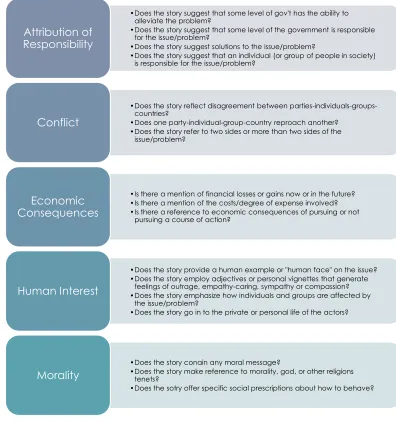
[image:20.595.95.491.266.688.2]The questions belonging to these 5 frames are provided below.
Figure 2. 2 questions per frame
•Does the story suggest that some level of gov't has the ability to alleviate the problem?
•Does the story suggest that some level of the government is responsible for the issue/problem?
•Does the story suggest solutions to the issue/problem?
•Does the story suggest that an individual (or group of people in society) is responsible for the issue/problem?
Attribution of Responsibility
•Does the story reflect disagreement between parties-individuals-groups-countries?
•Does one party-individual-group-country reproach another? •Does the story refer to two sides or more than two sides of the
issue/problem?
Conflict
•Is there a mention of financial losses or gains now or in the future? •Is there a mention of the costs/degree of expense involved? •Is there a reference to economic consequences of pursuing or not
pursuing a course of action?
Economic Consequences
•Does the story provide a human example or "human face" on the issue? •Does the story employ adjectives or personal vignettes that generate
feelings of outrage, empathy-caring, sympathy or compassion? •Does the story emphasize how individuals and groups are affected by
the issue/problem?
•Does the story go in to the private or personal life of the actors?
Human Interest
•Does the story conain any moral message?
•Does the story make reference to morality, god, or other religions tenets?
•Does the sotry offer specific social prescriptions about how to behave?
21
2.3 Summary
This thesis focuses on the prevalence of frames in different newspapers after different events, regarding the Schiphol fire and the subsequent events. In this research, a frame is therefore defined as a set of parameters connected to a specific issue or event, created by the media to influence the public perspective. Additionally, framing is defined in this research as the process of depicting a perceived reality in a way as to promote certain aspects and influence citizens’ perspectives and attitudes.
22
3. The effect of the newspaper on the
prevalence of frames
This chapter presents the main results of the analysis of the first sub-questions.
“What frames did NRC Handelsblad use regarding the Schiphol fire and the subsequent events?”, “What frames did de Telegraaf use regarding the Schiphol fire and the subsequent events?” and “What are the differences in the frame prevalence between de Telegraaf and NRC Handelsblad?”.
The first section is based on the general data, in order to give an idea of the data and the research involved. Section 3.2 contains the analysis of the prevalence of frames per newspaper, answering the sub-questions.
3.1 General information
For this analysis, this research used a dataset containing all articles regarding the Schiphol fire or the subsequent events in the time period from October 27th
of 2005 until the 31st of December 2006. This dataset consisted of 205 articles in
total, 133 NRC Handelsblad articles and 72 articles published by de
23
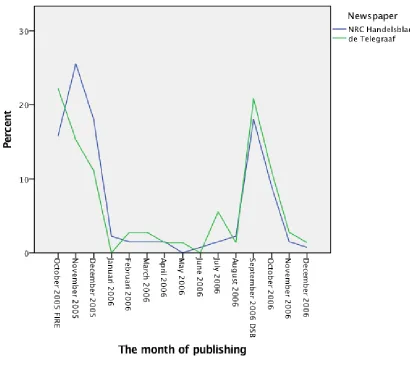
Figure 3. 1 Spread of articles by publishing month (from research in SPSS)
Figure 3.1 shows that there are two peaks in publishing, one right after the event of the Schiphol fire and one at the second event; the publication of the Dutch Safety Boards research findings. Most of the articles were published in the first two months after the Schiphol fire. As the curve shows, the subject never really disappeared.
24
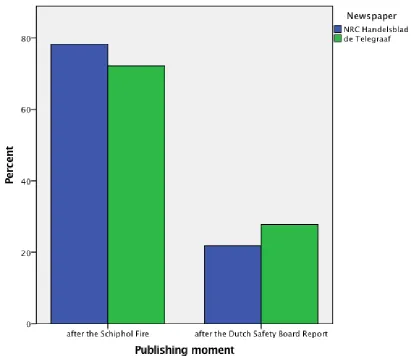
[image:24.595.78.489.121.483.2]Figure 3.2 gives a better view of the differences in published articles before and after the second event.
Figure 3. 2 percentage of articles per moment (research, SPSS)
As for the prevalence of frames, the data was coded in such a way that when any of the underlying questions were answered with a positive, the entire corresponding frame can be seen as prevalent.
Frames Number of articles Percentage
Attribution of Responsibility 142 69%
Conflict 133 65%
Human Interest 98 48%
Morality 22 11%
Economic Consequences 6 3%
[image:24.595.77.479.589.748.2]Total 205 X (1)
25
(1. The percentage total cannot be measured since the frames are not mutually exclusive)
The prevalence of frames over the total dataset shows that the most commonly used frame is the Attribution of Responsibility frame, which was used in 69% of all articles. The Conflict frame was used in 65% of the articles, and the Human Interest frame was the third most used frame with a prevalence percentage of 48%. The Morality frame is used in merely 11% of the overall articles, which means this frame is not commonly used. With only 3%, the Economic Consequences frame is the least used frame in this case.
3.2 Frames per newspaper
The first research questions of this thesis focus on the differences in framing between de Telegraaf and NRC Handelsblad. From the initial analysis described in subsection 3.1, we have a total score for each frame. In the table, we will sort by order of most prevalent to least prevalent according to the total scores.
NRC Handelsblad de Telegraaf Total
Attribution of Responsibility 75% 60% 69%
Conflict 68% 60% 65%
Human Interest 46% 51% 48%
Morality 8% 15% 11%
Economic Consequences 3% 3% 3%
[image:25.595.70.573.424.582.2]N 112 73 205
[image:25.595.65.563.426.583.2]Figure 3. 2 Frame prevalence per newspaper
26 Attribution of Responsibility
The cross tabulation shows that the quality newspaper, NRC Handelsblad, used this frame most frequently (75%). This frame was also the most common frame for de Telegraaf, with a prevalence percentage of 60%. That is a difference of 15%, which seems significant.
This difference is tested with a Chi-squared test, resulting in the following scores: χ2 = 4.751, df = 1, P = 0.03. This test allows us to say that the difference is in fact significant and that NRC Handelsblad makes significantly more use of the Attribution of Responsibility frame than de Telegraaf.
Conflict
Similar to for the Attribution of Responsibility frame, NRC Handelsblad has a higher prevalence percentage for the Conflict frame too. With a percentage score of 68%, the Conflict frame is 8 percentage points more prevalent in NRC
Handelsblad than in de Telegraaf, which has a prevalence percentage of 60%.
The Chi-squared test reveals that with χ2 = 1.295, df = 1, P = 0.255, there is no significant difference in the prevalence of the Conflict frame between the two newspapers.
Human Interest
The Human Interest frame is skewed the other way. While the Human Interest frame is the third most used frame for both NRC Handelsblad and de Telegraaf, the prevalence percentage for de Telegraaf is 51%, where the prevalence percentage for NRC Handelsblad is 46%.
The Chi-squared test showed that with a score of χ2 = 0.571, df = 1, P = 0.45, there is no significant prevalence difference between NRC Handelsblad en de
Telegraaf for the Human Interest frame.
Morality
27
for de Telegraaf, it suggests that de Telegraaf uses the Morality frame almost twice as much.
However, the Chi-squared test (χ2 = 2.394, df = 1, p = 0.12) reveals that there is no significant difference regarding the prevalence of the Morality frame between the two newspapers, and that they are equally likely to use this frame.
Economic Consequences
The Economic Consequences frame is the frame that is least prevalent of all the frames with a percentage of 3% for both newspapers. Since the prevalence of this frame is so low, the requirements for a Chi-squared test are not met. The alternative for the Chi-squared test is the Fisher’s Exact test. The Fisher’s Exact test resulted in a p-value of 0.65, which can be seen as a non-significant result. The test concurs with the percentages and states that there is no significant difference between the prevalence of the Economic Consequences frame between NRC Handelsblad and de Telegraaf.
3.3 Summary of the analysis per newspaper
As this part of the research shows, there are differences in framing between
NRC Handelsblad and de Telegraaf. However, these differences are mostly
28
4. The effect of events on the prevalence of
frames.
This chapter presents the main results of the analysis of the second part of the sub-questions regarding the differences in frame prevalence between the Schiphol fire and the publication of the Dutch Safety Board report. As stated earlier, the two periods used in this research. The first period is the period of the initial event of the Schiphol fire, containing all the articles published between October 27th, 2005 and September 20th, 2006. The second period is the period
of the event of the publication of the research findings by the Dutch Safety Board, containing all the articles published between September 21st, 2006 and
December 31st, 2006.
Section 4.1 focuses on the second set of sub-questions “What frames were
used after the initial event of the Schiphol fire?” and “What frames were used after the publishing of the DSB-report?”
After that, in section 4.3, the focus will be on the framing differences between newspapers per event, answering the last research questions “What are the
29
4.1 Frame per event
After the Schiphol fire
After the Dutch Safety Board
report
Total
Attribution of Responsibility 63% 90% 69%
Conflict 66% 61% 65%
Human Interest 49% 45% 48%
Morality 10% 14% 11%
Economic Consequences 3% 2% 3%
[image:29.595.71.538.94.298.2]N 156 49 205
Figure 4. 1 Frame prevalence percentage per event
Figure 4.1 shows that unlike with the newspapers, when the prevalence of frames is compared by publishing moment, the order of frames actually does differ between the first and second event. The most prevalent frame after the initial event of the Schiphol fire was the Conflict frame, with a prevalence percentage of 66%. However, this changed after the second event. After the publication of the Dutch Safety Board report, the most prevalent frame was the Attribution of Responsibility frame, with a prevalence percentage of 90%. The differences in prevalence of frames between the two events are tested with Chi-squared tests, with α = 0.05.
Attribution of Responsibility
Table 4.1 shows that the Attribution of Responsibility frame was prevalent after the Schiphol fire. It was the second most used frame with a prevalence percentage of 63%. After the publication of the Dutch Safety Board report, this percentage rose to 90%.
30 Conflict
The Conflict frame was the most prevalent frame right after the Schiphol fire, with a prevalence percentage of 66%. This percentage goes down slightly after the publication of the Dutch Safety Board, resulting in a prevalence percentage of 61%.
The Chi-squared test reveals that with χ2 = 0.377, df = 1, P = 0.539, there is no significant difference between the two events regarding the prevalence of the Conflict frame.
Human Interest
As shown in table 4.1, the Human Interest frame is the third most prevalent frame for both events. With a prevalence percentage of 49% after the first event and a percentage of 45%, the Human Interest frame is used the least of the three high-percentage frames.
After a Chi-squared test with a result of χ2 = 0.218, df = 1, P = 0.64, we can state that there is no significant difference in prevalence of the Human Interest frame between the two events.
Morality
The Morality frame is more spread between the two events then it was between the newspapers. After the Schiphol fire, the prevalence percentage of the Morality frame was 10%. After the Dutch Safety Board report was published, the prevalence percentage of the Morality frame rose to 14%.
The Chi-squared test (χ2 = 0.849, df = 1, p = 0.36) shows that the 4 percentage points are not seen as a significant difference, and the prevalence of the Morality frame can be seen as equal.
Economic Consequences
31
As discussed previously, the prevalence of this frame is too low to meet the requirements for a Chi-squared test. The Fisher's Exact test, which was done instead, resulted in a p-value of 0.56. This outcome is consistent with the percentages from the cross tabulation and further confirms the suspicion that there is no significant difference between the prevalence of the Economic Consequences frame between the initial event of the Schiphol fire and the second event of the Dutch Safety Board publication.
4.2 Summary of the analysis per event
As this part of the research shows, there are some differences in frame prevalence between the event of the Schiphol fire and the event of the publication of the Dutch Safety Board report. Where the Conflict frame was the biggest frame after the initial event, the focus shifted after the publication, making Attribution of Responsibility the biggest frame. This is due to the significant increase of the prevalence of the Attribution of Responsibility frame. The prevalence of other frames does not significantly differ between the two events. Again, the tests show that the Economic Consequences frame is used in too little articles to do a statistical test on.
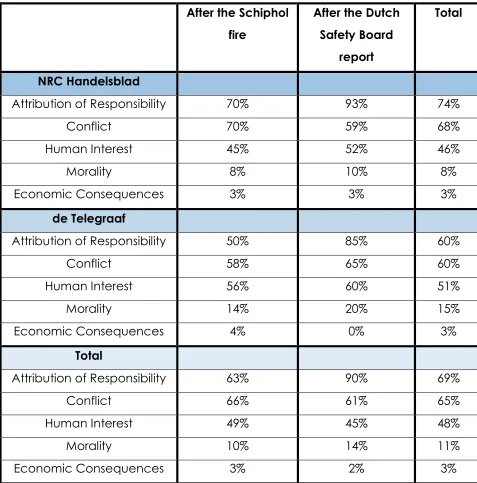
4.3 Frames per newspaper per event
32
After the Schiphol fire
After the Dutch Safety Board
report
Total
NRC Handelsblad
Attribution of Responsibility 70% 93% 74%
Conflict 70% 59% 68%
Human Interest 45% 52% 46%
Morality 8% 10% 8%
Economic Consequences 3% 3% 3%
de Telegraaf
Attribution of Responsibility 50% 85% 60%
Conflict 58% 65% 60%
Human Interest 56% 60% 51%
Morality 14% 20% 15%
Economic Consequences 4% 0% 3%
Total
Attribution of Responsibility 63% 90% 69%
Conflict 66% 61% 65%
Human Interest 49% 45% 48%
Morality 10% 14% 11%
[image:32.595.72.549.69.552.2]Economic Consequences 3% 2% 3%
Figure 4. 2 Frame prevalence percentage per newspaper per event
These percentages give an indication of the differences between the prevalence of the frames per newspaper per moment.
Attribution of Responsibility
33
For NRC Handelsblad, the prevalence percentage after the initial event is 70%. After the publication of the Dutch Safety Board report, the prevalence percentage rises to 93%. The Chi-squared test confirms with χ² = 6.792, df = 1, p = 0.009 that this is a significant difference and that NRC Handelsblad made significantly more use of the Attribution of Responsibility frame after the second event.
When we compare the two moments specifically for de Telegraaf, the prevalence percentage after the first event (50%) and the second event (85%) are very different. The Chi-squared test results (χ² = 7.356, df = 1, p = 0.007) prove that the prevalence of the Attribution of Responsibility frame significantly differs for de Telegraaf as well.
Conflict
The Conflict frame for NRC Handelsblad had a prevalence percentage of 70% after the Schiphol fire. This percentage decreases to 59% after the second event. A Chi-squared test (χ² =1.388 df = 1, p= 0.239) shows that this decrease is not statistically significant.
For de Telegraaf, the prevalence percentage increased between the first and second event, from 58% to 65%. According to the Chi-squared test (χ² = 0.321, df = 1, p = 0.571) this is not a significant increase of prevalence percentage.
Human Interest
The prevalence percentage differences for the Human Interest frame are rather small. For NRC Handelsblad, the percentage increased from 45% after the Schiphol fire to 48% after the publication of the Dutch Safety Board report. The conducted Chi-squared test shows that with the outcome χ² = 0.87, df = 1, p = 0.768, the increase in frame prevalence is not significant.
34
Morality
The Morality frame previously showed some particular results with big percentage point differences yet no significance. When the articles are divided by newspaper and then compared by moment, the differences are
less visible.
NRC Handelsblad has a prevalence percentage of 8% after the initial event
and a 10% after the second event. Since the number of articles containing the Morality frame is so low, a Chi-squared test could not be conducted. The substitute Fisher's Exact test resulted in p = 0.445, indicating there are no significant differences between the first and second event for the prevalence of the Morality frame in NRC Handelsblad.
De Telegraaf had an overall higher percentage of Morality frame prevalence.
After the Schiphol fire, the Morality frame was prevalent in 14% of the articles by de Telegraaf. After the second event, the Morality frame was prevalent in 20% of the articles. Again, the number of articles is too low for a Chi-squared test, but the substitute Fisher's Exact test (p = 0.360) proves that there is no significant difference for de Telegraaf.
Economic Consequences
The Economic Consequences frame is the least prevalent frame in this research. The number of articles containing the Economic Consequences frame is small, leaving insufficient data for a Chi-squared test. Here, Fisher's
Exact tests are conducted to give a reliable outcome.
NRC Handelsblad had an Economic Consequences prevalence percentage
of 3% after the initial event as well as the second event. There is no difference between these values. The Fisher's Exact test (p = 0.631) concurs with this statement and shows that there is not a significant difference.
The prevalence percentage of the Economic Consequences frame for de
Telegraaf was 4% after the Schiphol fire, decreasing to 0% after the publication
35
5. Discussion of research findings
Attribution of Responsibility
In this research we found that overall, the Attribution of Responsibility frame is the most prevalent frame. This concurs with the research findings by Semetko and Valkenburg, who found that this frame was the most dominant frame across all newspapers. The high overall prevalence of the Attribution of Responsibility frame can be explained by a theory by Semetko and Valkenburg (2000). The theory suggested by Semetko and Valkenburg is that since Holland has a strong social welfare state, the government is expected to provide answers to social problems. However, in the case of the Schiphol fire, it is not just a perceived responsibility. The government has an actual responsibility for the judicial system and the care for detainees in the Netherlands. This could have an effect on the frame prevalence.
Semetko and Valkenburg (2000) also stated that NRC Handelsblad has the greatest prevalence of this frame, which this research confirms. This research found a significant difference in prevalence of the Attribution of Responsibility frame between NRC Handelsblad and de Telegraaf, which can be explained by the earlier findings by Semetko and Valkenburg, that the more serious outlets present more political and economic news than the less serious outlets. The higher number of articles for NRC Handelsblad regarding the subsequent events after the Schiphol fire - which were mostly political - supports this theory.
36
complex on the 27th of October 2005. It also contained information like the
agencies that were responsible for the safety of the complex and the detainees, and the mistakes that were made in the care for the victims of the Schiphol fire. This is a logical explanation for the significant increase in frame prevalence and it supports the main research question regarding the influence of new information on the prevalence of frames.
Conflict
The Conflict frame is the second most common frame in this research, which supports the conclusion by Semetko and Valkenburg that it is the second most common news frame in Dutch news.
When the frame prevalence was tested per newspaper, the research reveals that the Conflict frame is also the second most used frame by both NRC
Handelsblad and de Telegraaf. The prevalence percentages show some
differences in prevalence of this frame, but there is no significant difference between the more serious newspaper NRC Handelsblad and the more sensationalist newspaper, de Telegraaf. The suspicions that Semetko and Valkenburg have after their research regarding the influence of the sensationalist or serious nature of the media outlet on the prevalence of certain frames can therefore not be confirmed for this frame.
The Conflict frame is the frame with the highest prevalence percentage after the Schiphol fire, and tests show that its percentage does not significantly decrease after the publication of the Dutch Safety Board report. The significant increase of the Attribution of Responsibility frame can explain why the Conflict frame becomes the second most used frame.
Human Interest
37
of this frame in the articles by de Telegraaf and the articles by NRC
Handelsblad. One explanation for this difference could be that the subject
covered in the articles in this research were more susceptible to the Human Interest frame and therefore NRC Handelsblad made more use of this frame as well. However, further research into the influence of the topic incidents, accidents, and crises on the use of the Human Interest frame should be conducted in order to make more scientifically founded statements on this matter.
There is also no significant difference between moments regarding the Human Interest frame.
Morality
As with the research by Semetko and Valkenburg, there was little evidence of the Morality frame in the articles by de Telegraaf and NRC Handelsblad. Testing showed that there was no significant difference in the prevalence of this frame between the newspapers, even though the prevalence percentage of de
Telegraaf was double the prevalence percentage of NRC Handelsblad. The
small number of articles containing the Morality frame could be an explanation for this phenomenon.
The differences in frame prevalence between the two moments are also not significant, which was to be expected since the number of articles is so low.
38
Economic Consequences
6. Conclusion
The first aim of this research was to identify the frame prevalence for each newspaper and assess the differences. For both NRC Handelsblad and de
Telegraaf, the frames had the same order of predominance, being Attribution
of Responsibility, Conflict, Human Interest, Morality and Economic Consequences. However, there were differences in prevalence percentages. These differences, although they might seem interesting at first glance, were all but one proven to be statistically insignificant. The prevalence of the Attribution of Responsibility frame significantly differs between newspapers, with a higher percentage for the more serious newspaper NRC Handelsblad.
The second aim of this research was to describe the frame prevalence per moment and the differences between these moments. There were two moments that were selected to see if they influenced the prevalence of frames, the Schiphol fire and the publishing of the Dutch Safety Board report. After the first event, the frames were prevalent in the following order: Conflict, Attribution of Responsibility, Human Interest, Morality, and Economic Consequences. After the publication of the Dutch Safety Board report, this order changed slightly into the following order: Attribution of Responsibility, Conflict, Human Interest, Morality, and Economic Consequences. When tested, the only significant difference in prevalence was once again the Attribution of Responsibility frame. This explains the difference in the predominance order since the Attribution of Responsibility frame is the most predominant frame after the second event.
The main focus of this thesis was the following research question:
40
The analysis showed that there are few differences regarding the framing of the Schiphol fire and its subsequent events. As the research shows, only the Attribution of Responsibility frame significantly differs. However, this frame does support the idea that new information leads to the use of different frames. The information in the report by the Dutch Safety Board included a lot of information regarding the agencies responsible for the care of detainees and detention centers. Before this publication, there was no certainty on the responsibility of the Schiphol fire. This also resulted in a lot of conflicts between actors, explaining the height of the prevalence percentage for the Conflict frame. The report by the Dutch Safety Board gave conclusive evidence that there were mistakes made by the government, or at least parts of the government, and that they were responsible for the fatal outcome of the fire.
All in all, this research can only prove a significant difference between a serious and sensationalist newspaper in Dutch media for one frame; the Attribution of Responsibility frame. The previously worded suspicions by Semetko and Valkenburg (2000) regarding the influence of the type of newspaper on the prevalence of frames. can only be partly confirmed. The effect of new information on the prevalence of frames can also be proven for the Attribution of Responsibility frame, but with the side note that this particular new information contained mostly responsibility-related information.
41
Literature
Bartlett, F. C. (1932). Remembering: An experimental and social study.
Cambridge: Cambridge University.
Bennett, W. L. (1995). News: The politics of illusion. New York: Longman.
Chong, D., and Druckman, J. N. (2007). Framing theory. Annu. Rev. Polit. Sci.,
10, 103-126.
Code voor de Journalistiek (2008). Retrieved September 8, 2016, https://www.nvj.nl/ethiek/ethiek/code-journalistiek.
Van Dijk, J. G., Duijns, S., Mos, J., and Ruiz, M. U. MULTIFORMITY AT RISK IN DUTCH NEWSPAPERS?.
Dutch Safety Board (2006). Fire at the detention center Schiphol-Oost. The Hague, 21st September 2005.
Entman, R. M. (1993). Framing: Toward clarification of a fractured paradigm.
Journal of communication, 43(4), 51-58.
Entman, R. M. (2004). Projections of power: Framing news, public opinion, and
US foreign policy. University of Chicago Press.
Ghavamnia, M., & Dastjerdi, H. V. (2013). Evaluation in media discourse: Contrasts among journalists in reporting an event. Procedia-Social and
Behavioral Sciences, 70, 447-457.
Gitlin, T. (1980). The whole world is watching: Mass media in the making and
unmaking of the New Left. Berkeley: University of California Press.
42
Van Gorp, B., & van der Goot, M. (2009). Van Frankenstein tot de Goede Moeder: de inzet van frames in de strategische communicatie over duurzaamheid. Tijdschrift voor Communicatiewetenschap, 37(4), 303-316.
Iyengar, S. (1991). Is anyone responsible? How television frames political issues. Chicago: University of Chicago Press.
Nationaal onderzoek Media (2016), retrieved September 11, 2016 from https://dundas.reports.nl/NOM/Dashboard/Dashboard?guidinput=80751c1f-ff99-45af-8edc-598bf6543ee3
Neuendorf, Kimberly A. The content analysis guidebook. Sage, 2002.
Neuman, W. R., Just, M. R., & Crigler, A. N. (1992). Common knowledge: News
and the construction of political meaning. University of Chicago Press.
Price, V., Tewksbury, D., & Powers, E. (1997). Switching trains of thought the impact of news frames on readers' cognitive responses. Communication
research, 24(5), 481-506.
Scheufele, D. A. (1999). Framing as a theory of media effects. Journal of
communication, 49(1), 103-122.
Scheufele, D. A., & Iyengar, S. (2012). The state of framing research: A call for new directions. The Oxford Handbook of Political Communication Theories. Nueva York: Oxford University Press, 1-26.
Semetko, H. A., & Valkenburg, P. M. (2000). Framing European politics: A content analysis of press and television news. Journal of communication, 50(2), 93-109.
Shen, F. (2004). Effects of news frames and schemas on individuals' issue interpretations and attitudes. Journalism & Mass Communication Quarterly,
43
Shen, F., & Edwards, H. H. (2005). Economic Individualism, Humanitarianism, and Welfare Reform: A Value‐Based Account of Framing Effects. Journal of Communication, 55(4), 795-809.
Tannen, D. (1993). What’s in a frame? Surface evidence for underlying expectations. Framing in discourse, 14, 56.
Tuchman, G. (1978). Making news. New York: Free Press
Vreemdelingenwet 2000. (2000, 23 November). Retrieved on September 6th, 2016, from http://wetten.overheid.nl/BWBR0011823/2015-07-20
de Vreese, H., Peter, J., Semetko, H. A. (2001). Framing politics at the launch of the Euro: A cross-national comparative study of frames in the news. Political