University of Warwick institutional repository: http://go.warwick.ac.uk/wrap
This paper is made available online in accordance with publisher policies. Please scroll down to view the document itself. Please refer to the repository record for this item and our policy information available from the repository home page for further information.
To see the final version of this paper please visit the publisher’s website. Access to the published version may require a subscription.
Author(s): Robert Leech and Dennis Leech
Article Title: Testing for spatial heterogeneity in functional MRI using the multivariate general linear model
Year of publication: 2010 Link to published article:
http://www2.warwick.ac.uk/fac/soc/economics/research/workingpapers/ 2010/twerp_938.pdf
Testing for spatial heterogeneity in functional MRI using the
multivariate general linear model
Robert Leech and Dennis Leech
No 938
WARWICK ECONOMIC RESEARCH PAPERS
Testing for spatial heterogeneity in functional
MRI using the multivariate general linear model
Robert Leech
1and Dennis Leech
21
The Computational, Cognitive and Clinical Neuroimaging
Laboratory, The Division of Experimental Medicine, Imperial
College London, Hammersmith Hospital Campus, Du Cane
Road, London, W12 0NN, UK
2
Department of Economics, University of Warwick, Coventry,
1
Abstract
Much current research in functional MRI employs multivariate machine
learn-ing approaches (e.g., support vector machines) to detect fine-scale spatial
pat-terns from the temporal fluctuations of the neural signal. The aim of many
studies is not classification, however, but investigation of multivariate spatial
patterns, which pattern classifiers detect only indirectly. Here we propose a
direct statistical measure for the existence of fine-scale spatial patterns (or
spatial heterogeneity) applicable for fMRI datasets. We extend the univariate
general linear model (typically used in fMRI analysis) to a multivariate case.
We demonstrate that contrasting maximum likelihood estimations of
differ-ent restrictions on this multivariate model can be used to estimate the extdiffer-ent
of spatial heterogeneity in fMRI data. Under asymptotic assumptions
infer-ence can be made with referinfer-ence to the χ2 distribution. The test statistic is
then assessed using simulated timecourses derived from real fMRI data. This
demonstrates the utility of the proposed measure of heterogeneity as well as
considerations in its application. Measuring spatial heterogeneity in fMRI has
important theoretical implications in its own right and has potential uses for
better characterising neurological conditions such as stroke and Alzheimer’s
Key wordsNeuroimaging, Multivariate pattern analysis, Maximum
likeli-hood estimation, Seemingly unrelated regression.
2
Introduction
The traditional approach to quantifying changes in brain activation with
func-tional magnetic resonance imaging (fMRI) is massively univariate; a separate
general linear model is fitted to the time series of each of the many tens of
thousands of spatially distinct measurement locations (voxels). Given the
rel-atively poor signal-to-noise of the measurable signal, Gaussian spatial
smooth-ing across neighborsmooth-ing voxels is normally applied. However, this smoothsmooth-ing
assumes that the detectable neural signal is spatially homogeneous (i.e.,
ap-proximately the same general linear model should fit adjacent voxels). This
assumption has been the subject of intense recent debate (de Beeck and Hans
2009, Kamitani and Sawahata 2009, de Beeck and Hans 2010). Some
multi-voxel analysis techniques indicate that brain regions may be highly
heteroge-neous (Haxby et al. 2001, Kamitani and Tong 2005, Haynes et al. 2007) and
uni-variate approach. Furthermore, whether areas of the brain are highly
heteroge-neous (with find-scale spatial pattern information) is important theoretically
for understanding the roles of regions of cortex, with potential implications
for better understanding neurological conditions such as Alzheimer’s disease
or stroke. However, the multivariate pattern classification techniques used to
date (e.g., support vector machines and linear discriminant analysis) are
indi-rect ways to measure the heterogeneity of the fMRI signal across brain regions.
In this paper, we propose a framework and test statistic to directly measure
the extent to which there is a heterogeneous pattern of activation across
neigh-boring voxels. The proposal takes as it’s starting point the information-based
approach of Kriegeskorte and colleagues (Kriegeskorte et al. 2006a). Instead
of using multivoxel pattern classifiers to decode which state the brain is in
as a proxy for the amount of information available in a region,
Kriegesko-rte and colleagues proposed using a variant on the Mahalanobis Distance to
provide a measure of the amount of information available across voxels in a
patch of cortex. The Mahalanobis distance statistic wasshown to be
substan-tially more sensitive at detecting signals than standard univariate t-statistics
suc-cessfully in several fMRI experiments within the visual domain (Kriegeskorte
et al. 2006a, Serences and Boynton 2007a;b, Stokes et al. 2009).
The Mahalanobis distance (Mahalanobis 1936) is a multivoxel similarity
measurement that unlike Euclidean distance is scale invariant and controls
for covariance across datapoints. In fMRI datasets, the Mahalanobis distance
can calculate the similarity between different experiment conditions, e.g., how
dissimilar are visual and auditory processing for a given set of voxels. This
statistic controls for error covariance across voxels; spatially correlated error is
expected in fMRI datasets given spatial patterns of sources of noise affecting
the BOLD signal, such as vasculature, movement artifacts etc. To calculate
the Mahalanobis distance, Kriegeskorte et al. (2006b) fitted a separate GLM
analysis to the unsmoothed functional data for each voxel. The Mahalanobis
distance was then calculated using the resulting vectors of beta weights and
the residual error covariance matrix across voxels
with two types of stimuli andΣˆ is the error covariance matrix.
In this paper we start by demonstrating how the Mahalanobis distance
re-lates to the mulrivariate general linear model. We then set up different
restric-tions on the GLM to compare models under an assumption of spatial
homo-geneity and spatial hetereogenity resulting in a chi-square statistic measuring
the heterogeneity in a patch of cortex. This statistic explains the amount of
fine-scale information available across a number of voxels. The statistic is then
assessed with synthetic data derived from fMRI datasets to demonstrate its
utility and to explore limitations in its application.
3
Theory
3.1
The statistical model
We start with the GLM as applied to fMRI datasets (Friston et al. 1994).
We assume the response by each voxel can be modelled by a linear regression
yit= k !
h=1
βhixht+uit (2)
where i is the voxel subscript, i = 1, ..., n, and t is the time subscript, t =
1, ..., T. βhi represents the response of voxel i to the stimulus measured by
regressor h.
This can be written using matrix algebra as,
yi =Xβi +ui (3)
where yi is the T element observation vector for voxel i, X the Txk input
matrix, ui the T element error vector, and βi the k element coefficient
vec-tor. There is a different regression model for each voxel but all models have a
common regressor matrix.
The error for each voxel equation is assumed to have zero mean, be
seri-ally independent and homoscedastic, but correlated across equations. That is,
E(ui) =0 for all i and E(uiu!j) = σijIT for all i and j.
This system of equations can be written more compactly as:
where y= y1 y2 ... yn
, u =
u1 u2 ... un
, β=
β1 β2 ... βn
, Z =
X 0 . . . 0
0 X . . . 0
... ... ... ...
0 0 . . . X
=In⊗X,
Ω=
σ11IT σ12IT . . . σ1nIT σ12IT σ22IT . . . σ2nIT
... ... . .. ...
σ1nIT σ2nIT . . . σnnIT
=Σ⊗IT, and Σ=
σ11 σ12 · · · σ1n
σ12 σ22 · · · σ2n
... ... ... ...
σ1n σ2n · · · σnn .
It is well known (for example (Zellner 1962, Greene 2003)) that, when there
is a common set of regressors, the correlation of the errors in different equations
is irrelevant to coefficient estimation. The efficient estimator, equivalent to
generalized least squares, is ordinary least squares applied to each equation
separately. That is, the efficient estimator of the complete system is written:
ˆ
βi =(X!X)−1X!yi, for all i, and thereforeβˆ=(Z!Z)−1Z!y. (5)
The covariance matrix of βˆcan be shown to be
Noting that
Z!Z = [In⊗X!][In⊗X] =In⊗X!X, and hence that (Z!Z)−1 =In⊗(X!X)−1,
and that
Z!ΩZ = [In⊗X!][Σ⊗IT][In⊗X] =Σ⊗(X!X),
we can rewrite (6) as
V(βˆ) = [In⊗(X!X)−1][Σ⊗(X!X)][In⊗(X!X)−1] =Σ⊗(X!X)−1. (7)
This gives a simple expression for the covariance between any pair of
esti-mated coefficients. Letting W = (X!X)−1, we can write
Cov( ˆβgi,βˆhj) = σijwgh (8)
for all pairs of voxels i, j = 1, ..., n, and all pairs of regression coefficients
g, h= 1, ..., k.
All this assumes that the covariance matrix of equation errors,Σ, is known.
In practice it must be estimated consistently from the residuals, using,
ˆ
σij = (yi−Xβˆi)!(yj −Xβˆj)/T, (9)
(or, ˆσij = (yi−Xβˆi)!(yj−Xβˆj)/(T−k)) and Σreplaced with ˆΣthroughout
3.2
Inference
Our focus is on testing a set of linear restrictions on coefficients across the
separate voxel equations. We assume there are g restrictions written in the
form Rβ= 0 where R is a g×nk matrix of given constants of rank g. (We do not need to consider inhomogeneous restrictions here because units of
mea-surement are arbitrary in the context.)
This framework allows us to devise tests for heterogeneity versus
homo-geneity (that is, constancy) of the effects of different stimulae across voxels,
as well as to test if stimulae are significantly different from zero.
If the equation errors uit are Gaussian then the efficient estimator of β
given in equation (5) is normally distributed and the well known (see for
ex-ample Rao 1973) inferential procedures for generalized linear regression models
are available based on the covariance matrix in equation (6), (7) or (8). These
hold asymptotically if Σis estimated consistently.
general type
H0 :Rβ= 0. (10)
which can be approached in various ways, for example by a Wald or LR
prin-ciple.
Letting Rβ = δ the null hypothesis of interest becomes H0 : δ = 0.
Now define δˆ = Rβˆ. Then δˆ is asymptotically normally distributed with expectationE(δˆ) = 0and covariance matrixV(δˆ) =RV( ˆβ)R!. We call the test statistic ∆, given by
∆ =δˆ![RV( ˆβ)R!]−1δˆ (11) which has an asymptoticχ2distribution withg degrees of freedom ifH
0 is true.
Alternatively we employ the likelihood principle and LR tests based on the
loglikelihood function
lnL=−T n
2 ln(2π)−
T
2ln|Ω| − 1
2Q (12)
whereQ is the appropriate generalized sum of squared residuals,
We can specify a LR test of a null hypothesis in the form of (10) as twice the
difference between the maximized value of (12) under the null and alternate
hypotheses, LR=−2(lnL0−lnL1). The test statistic is then
LR=Q0−Q1, (14)
whereQ0is the minimum of (13) underH0andQ1the unconstrained minimum
(or, the minimum under the alternateH1). This assumesΣto be known or the
same estimate of it used under both the null and alternate. Standard theory
gives the statistic (14) an asymptotic chi-squared distribution with g degrees
of freedom. (See (Greene 2003).)
3.3
Testing heterogeneity across voxels
We now describe tests of spatial characteristics of the multivariate signal across
voxels. In particular, we are interested in investigating heterogeneity of
re-sponse coefficients. We describe a procedure for comparing the unrestricted
model, allowing heterogeneity between voxels, with a restricted model, which
we say has homogeneity between voxels.
We characterize the null hypothesis of homogeneity in terms of a linear
r!β
i for suitable constants r! = (r1, r2,· · · , rk). The null hypothesis states
thatr!β
i is constant for alli. That is,r!βi =r!βj for alli$=j. Therefore, we
can write the restrictions to be tested in the form: H0 :Rβ=0
with R=
r! −r! 0! · · · 0!
r! 0! −r! · · · 0!
... ... ... ... ...
r! 0! 0! · · · −r!
.
An important case is where interest centers on the difference between two
effects. If the two effects are assumed to be the first two coefficients, then
r!βi =β1i−β2i and r! = (1,−1,0,· · ·0).
Let the common difference be θ. Then the restricted model can be written
H0 :β1i−β2i =θ, constant for all i.
βs). Under the restrictions inH0 there are nk−n+ 1 coefficients (thenk β’s
less the n β2’s plus θ). Therefore the number of parameter restrictions under
H0 is n−1.
The LR test requires estimating the model, and evaluating the log
likeli-hood, separately underH1andH0. We proceed as ifΣis known; it is estimated
from the residuals of the unrestricted model. The unrestricted model is
effi-ciently estimated as a set of ordinary least squares regressions. The restricted
model can be estimated using a simple reparameterization as follows.
Write β1i =β2i+ (β1i−β2i). Under H0, this becomes β1i =β2i +θ.
Substituting into (2) and collecting terms in β2i gives the restricted set of
equations,
yit =θx1t+β2i(x1t+x2t) + k !
h=3
βhixht+uit (15)
The system of equations (15) is a set of seemingly unrelated regressions
with a common set of regressors (a multivariate regression) with cross-equation
y =θx˜+ ˜Zγ+u, (16) where we define
γ= γ1 γ2 ... γn
,γi =
β2i
β3i
... βki
, i= 1, ..., n, and ˜Z =
˜
X 0 . . . 0
0 X˜ . . . 0
... ... ... ...
0 0 . . . X˜
=In⊗X˜,
˜
X is the T(k −1) matrix, ˜X = [x1 +x2,x3, . . . ,xk], where xi is the ith
column of the design matrixX,
and ˜x=
x1 x1 ... x1
=ιn⊗x1,where =ιn= 1 1 ... 1 .
We can rewrite the system
y−θx˜ = ˜Zγ+u, (17) which can also be written,
a system with common regressor set for given θ, and therefore the γis are
estimated efficiently by OLS applied separately to each equation.
This is equivalent to estimating (17) by ordinary least squares giving,
ˆ
γ= ( ˜Z!Z˜)−1Z˜!(y−θx˜). (18) which is the maximum likelihood estimator of γ conditional on θ.
The likelihood function (12) is maximized when the generalized least squares
criterion (13) is minimized. Write,
Q(θ,γ) = u!Ω−1u= (y−θx˜−Zγ˜ )!Ω−1(y−θx˜−Zγ˜ ).
Substituting (18) forγ in this, we concentrate the generalized sum of squared residuals function (13) with respect to γ and obtain a function of θ only, say
Q∗(θ):
Q∗(θ) = [y−θx˜−Z˜( ˜Z!Z˜)−1Z˜!y−θZ˜( ˜Z!Z˜)−1Z˜!x˜]!Ω−1[. . .].
If we writeM =I−Z˜( ˜Z!Z˜)−1Z˜!, we can define yr =M y, and ˜xr =Mx˜
Hence,
Q∗(θ) = [yr−θx˜r]!Ω−1[yr−θx˜r], (19) which is minimized by the maximum likelihood estimator.
The estimator ofθ, which minimizes (19), and is also the ML estimator, is
easily shown to be found by a bivariate generalized least squares regression of
yr on ˜xr, giving:
ˆ
θ= x˜
r!Ω−1yr
˜
xr!Ω−1x˜r. (20)
The LR criterion (14) is then simply evaluated.
4
Simulations
To test the proposed log-likelihood-ratio measure of heterogenity, we applied
it to simulated data generated from an fMRI dataset. Using synthetic data
allowed us to: (1) systematically vary the spatial characteristics of the
sig-nal; (2) test the validity of the asymptotic chi-square distribution of the test
statistic under different conditions (i.e., with different numbers of voxels and
timepoints); and (3) investigate violations of the assumptions of the GLM, i.e.,
FMRI data was taken from a 32-year-old neurologically healthy male
par-ticipant who provided informed consent according to local ethics procedures.
Two-hundred and seventy-six echoplanar images of resting data (i.e., the
par-ticipant lay in the scanner doing nothing) were acquired (i.e., 276 timepoints
at each voxel) with a resolution of 2.19× 2.19×4.0 mm. The covariance
ma-trix across neighboring voxels (chosen from within superior temporal cortex)
was calculated. This covariance matrix was used to generate random noise
sampled from a multivariate normal distribution.
4.1
Simulating spatial heterogeneity
In the first set of simulations, we demonstrate that the test statistic has power
with respect to multivariate heterogeneity. A design matrix was constructed
with three columns (k=3), consisting of two dichotomous variablesx1t andx2t
and a constant x3t. At each timepoint either x1t= 1 (and x2t= 0) or x2t= 1
(and x1t = 0). For a third of timepoints, both x1t = 0 and x2t = 0. In the
first case, seven timeseries (this corresponds to a central voxel and adjacent
voxels) were generated by drawing 276 timepoints from a multivariate normal
β values was added to the random noise. In the homogeneous case, all seven timeseries had the same signal (i.e., the betas associated with experimental
condition one were either positive in all voxels or negative in all voxels). In
the heterogenous case, half of the timeseries had positive β) values for condi-tion one and half had negative beta values. Note the overall signal was the
same in all situations (i.e., the absolute difference between condition 1 and
condition 2 was constant).
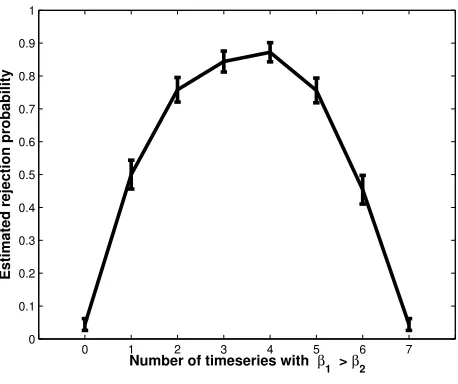
Figure 1 shows the results of 500 simulations with different covariance
ma-trices and randomly generated timeseries. The x-axis represents the number
of timeseries with homogeneous signals. As the number of timeseries with
β1 positive and β2 negative increases the heterogeneity across the timeseries
increases. This is reflected in the increase in the estimated rejection
proba-bility. As such, the test statistic reflects the degree of heterogeneity in the β
coefficients across the timeseries.
4.2
Asymptotic
χ
2assumption
The χ2 properties of the test statistic only hold asymptotically, and previous
0 1 2 3 4 5 6 7 0
0.1 0.2 0.3 0.4 0.5 0.6 0.7 0.8 0.9 1
Estimated rejection probability
[image:22.612.171.400.175.367.2]Number of timeseries with β 1 > β2
Figure 1: Varying heterogeneity across the seven timeseries. At the extreme
values of the x-axis all timeseries (voxels) have the same β) coefficients: the homogeneous cases. In the center of the x-axis, half the voxels have β1) >
β2) and half the reverse. The y-axis is the log-likelihood ratio comparing
the unrestricted and restricted models. The dotted line marks the χ2 value of
p<0.05. Mean and standard error of the estimated rejection probability across
as the covariance matrix increases in size, this assumption becomes untenable
except with very large numbers of timepoints. With smaller numbers of
time-points, overrejection of the null hypothesis becomes an issue.
We investigated the validity of theχ2 assumption in two situations: 1) one
with 7 timeseries (equivalent to a sphere of 1 voxel radius around a central
voxel); and 2) one with 33 timeseries (equivalent to a sphere of 2 voxel radius).
In both situations, multivariate random noise was generated with a real
co-variance structure. Since we are interested in the assessing the overrejection
rate of estimated χ2 values, no signal was inserted into the background noise.
The number of timepoints was varied in from 50 to 1500, and a hundred
sim-ulations and models were fitted with each number of timepoints.
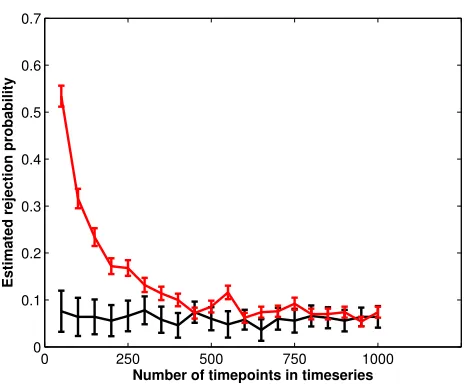
Figure 2 shows the proportion of models that are judged to be significant
at a p<0.05 significance level. Given the absence of signal, this value should
be approximately 0.05. We see that for the seven timeseries case, there is not
substantial overrejection of the null hypothesis, even with only 50 timepoints.
However, for the larger 33 timeseries scenario, incorrect overrejection of the
0 250 500 750 1000 0
0.1 0.2 0.3 0.4 0.5 0.6 0.7
Number of timepoints in timeseries
[image:24.612.168.401.101.293.2]Estimated rejection probability
Figure 2: The proportion of models that incorrectly reject the null hypothesis
assuming the difference in log likelihoods isχ2distributed for different numbers
of timepoints. The red line is the case with 33 timeseries and the blue line
with 7 timeseries. Values are the mean and standard error of 500 simulations.
null occurs half the time. Only after approximately 500 timepoints does the
rejection rate approximate that expected given the null hypothesis. This
find-ing highlights the problem of accurately estimatfind-ing large covariance matrices
without large numbers of datapoints. In these situations, the log-likelihood
4.3
Autocorrelation of the residuals
One common problem in applying the GLM to fMRI timeseries is the presence
of autocorrelation in the residuals. In general, this can lead to underestimation
of the error variance and inefficient model estimation. We conducted
simula-tions to investigate the effects of error autocorrelation on the proposed
log-likelihood ratio statistic. Fifteen-order autocorrelation estimates were
calcu-lated using standard analysis software fsl (Woolrich et al. 2001). Multivariate
normally-distributed random data was then filtered using these
autocorrela-tion estimates to simulate realistic autocorrelaautocorrela-tion in an fMRI dataset. Two
situations were considered: one with a rapidly varying design matrix (with
timepoints assigned to either condition one or condition two intermixed at
random; equivalent to an event-related fMRI experimental design). The
sec-ond was equivalent to a blocked fMRI design, with a continuous sequence of
timepoints (one third of the total) corresponding to one condition, followed by
another third corresponding to the other condition.
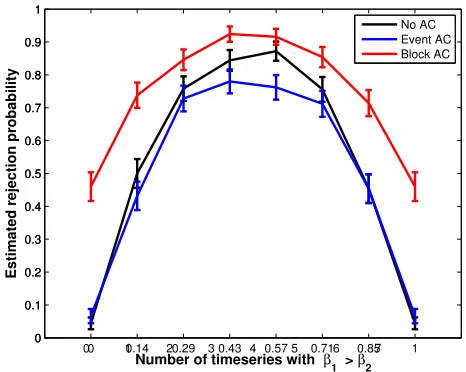
Figure 3 shows the performance of the blocked and the event-related
ex-perimental design in the presence of autocorrelation of the residuals. Inflation
design was similar (slightly more conservative) than a model with no
autocor-relation. This result highlights that correction of autocorrelated noise is an
important step for the proposed statistic (as for many fMRI analyses),
espe-cially for blocked experimental designs. Standard techniques for prewhitening
(Woolrich et al. 2001) non-white noise can be used in conjunction with the
statistics proposed here.
5
Discussion
In this paper, we have presented a measure of multivariate heterogeneity across
multiple timeseries, that is designed to be able to assess the amount of
mul-tivoxel information available in functional MRI datasets. We extended the
univariate GLM to a multivariate case, an example of seemingly unrelated
re-gression, equivalent to a Mahalanobis distance measure previously used with
fMRI. An unrestricted version of the multivariate GLM provides the maximum
likelihood model across timeseries (allowing β values to be different for each timeseries). A restricted model assessed the homogeneous case that all
0 1 2 3 4 5 6 7 0
0.1 0.2 0.3 0.4 0.5 0.6 0.7 0.8 0.9 1
0 0.14 0.29 0.43 0.57 0.71 0.85 1 0
0.1 0.2 0.3 0.4 0.5 0.6 0.7 0.8 0.9 1
Number of timeseries with β 1 > β2
Estimated rejection probability
[image:27.612.168.401.190.376.2]No AC Event AC Block AC
Figure 3: The effects of autocorrelated residuals on the log-likelihood ratio
statistics. The three lines correspond to either the situation with no
autocor-relation of the residuals, or else realistic error autocorautocor-relation, but with two
different design matrices corresponding to standard experimental paradigms.
Values are the mean estimated rejection probability and standard error of 500
and unrestricted cases measures the amount of heterogeneity across timeseries
and is asymptotically χ2 distributed.
Many recent and high-profile fMRI studies (Kay et al. 2008, Mitchell et al.
2008, Kriegeskorte et al. 2008) have taken advantage of multivariate pattern
analysis techniques, however, until now, no specific statistical measure has
been formulated to assess whether such approaches are picking up fine-scale
(or distributed) spatial patterns across voxels. The measure of heterogeneity
proposed here fulfils this role, providing a statistically well-grounded
quan-tification of multivoxel spatial heterogeneity. This measure is intended to be
applied in a searchlight approach, whereby patches of cortex (e.g,. spheres
of voxels) are considered in turn, and the spatial heterogeneity of the neural
pattern mapped out. The statistic could also be used to consider
heterogene-ity across multiple peak voxels within a single cluster of activation, to assess
whether it is truly a single cluster.
The spatial distribution of patterns of neural activation has important
the-oretical implications in its own right. Spatially-distributed patterns of
Highly spatially homogeneous patterns of activation suggest underlying
pro-cessing dedicated to a specific task or modality; this feeds into long-standing
debates in cognitive neuroscience about regional neural specialization for a
given task. The proposed heterogeneity statistic is also relevant for better
understanding various neurological conditions. Changing spatial
heterogene-ity may be a hallmark of changing neural processing following neurological
insult (e.g., stroke) or in Alzheimer’s disease and could be useful in
diagno-sis and monitoring of disease and recovery from disease. Spatial heterogenity
may provide a measure of redundancy in a given cortical region, which may in
turn predict resilience from neurological insult. The proposed statistic is
use-ful in conjunction with other multivariate analysis techniques, by providing
evidence for useful heterogeneity across voxels that can be taken advantage
of with, for example, subsequent pattern classification. Finally, the proposed
technique, although designed for functional neuroimaging, may have
applica-tions in other domains where heterogeneity across timeseries (or equivalent) is
important. For example, in economics, it may be important to assess whether
different countries GDP responds to external events in a homogeneous way or
The proposed approach is computationally efficient and potentially
pow-erful; however, as demonstrated in the simulations, there are several potential
limitations to asymptotic use of the log-likelihood ratio measure of
hetero-geneity for inference. First, the presence of autocorrelation of the errors may
result in overrejection of the null hypothesis and/or lack of sensitivity.
How-ever, well-known techniques (e.g., prewhitening) can be used to address this
problem. The increase in the over-rejection rate when estimating larger
covari-ance matrices is a more serious problem. For the 33 voxel case, the number of
timepoints necessary for the log-likelihood ratio statistic to approximate the
chi-square distribution is unrealistically large for many fMRI designs (that
typ-ically have fewer than 500 timepoints). This problem is known in the literature
on multivariate regression with finite sample size and has been addressed using
parametric boostrapping to assess significance (Dufour and Khalaf 2000). An
alternative approach is to use the log-likelihood ratio measure of heterogeneity
as a surrogate descriptive statistic to make comparisons across multiple
par-ticipants, rather than to make formal inference. For example, data from two
groups (patients and controls) could be transformed into a standard space,
and the log-likelihood ratio at a given location could be calculated for each
statistics. This approach is feasible for many fMRI designs and has been used
previously for statistics whose distribution is not known (Filippini et al. 2009).
References
de Beeck, O. and Hans, P. (2009). Probing the mysterious underpinnings of
multi-voxel fMRI analyses. NeuroImage.
de Beeck, O. and Hans, P. (2010). Against hyperacuity in brain reading:
Spatial smoothing does not hurt multivariate fMRI analyses? NeuroImage,
49(3):1943–1948.
Dufour, J. and Khalaf, L. (2000).Simulation-based finite and large sample tests
in multivariate regressions. Universit´e de Montr´eal, Centre de recherche et
d´eveloppement en ´economique.
Filippini, N., MacIntosh, B., Hough, M., Goodwin, G., Frisoni, G., Smith, S.,
Matthews, P., Beckmann, C., and Mackay, C. (2009). Distinct patterns of
brain activity in young carriers of the APOE-ε4 allele. Proceedings of the
National Academy of Sciences, 106(17):7209.
et al. (1994). Statistical parametric maps in functional imaging: a general
linear approach. Human Brain Mapping, 2(4):189–210.
Greene, W. (2003). Econometric analysis. prentice Hall Upper Saddle River,
NJ.
Haxby, J., Gobbini, M., Furey, M., Ishai, A., Schouten, J., and Pietrini, P.
(2001). Distributed and overlapping representations of faces and objects in
ventral temporal cortex. Science, 293(5539):2425–2430.
Haynes, J., Sakai, K., Rees, G., Gilbert, S., Frith, C., and Passingham, R.
(2007). Reading hidden intentions in the human brain. Current Biology,
17(4):323–328.
Kamitani, Y. and Sawahata, Y. (2009). Spatial smoothing hurts localization
but not information: Pitfalls for brain mappers. NeuroImage.
Kamitani, Y. and Tong, F. (2005). Decoding the visual and subjective contents
of the human brain. Nature Neuroscience, 8(5):679–685.
Kay, K., Naselaris, T., Prenger, R., and Gallant, J. (2008). Identifying natural
images from human brain activity. Nature, 452(7185):352–355.
functional brain mapping. Proceedings of the National Academy of Sciences,
103(10):3863.
Kriegeskorte, N., Goebel, R., and Bandettini, P. (2006b). Information-based
functional brain mapping. Proceedings of the National Academy of Sciences,
103(10):3863.
Kriegeskorte, N., Mur, M., Ruff, D., Kiani, R., Bodurka, J., Esteky, H.,
Tanaka, K., and Bandettini, P. (2008). Matching categorical object
represen-tations in inferior temporal cortex of man and monkey. Neuron, 60(6):1126–
1141.
Mahalanobis, P. (1936). On the generalized distance in statistics. 12(1):49–55.
Mitchell, T., Shinkareva, S., Carlson, A., Chang, K., Malave, V., Mason, R.,
and Just, M. (2008). Predicting human brain activity associated with the
meanings of nouns. science, 320(5880):1191.
Rao, C. (1973). Linear statistical inference and its applications.
Serences, J. and Boynton, G. (2007a). Feature-based attentional modulations
Serences, J. and Boynton, G. (2007b). The representation of behavioral choice
for motion in human visual cortex. Journal of Neuroscience, 27(47):12893.
Stokes, M., Thompson, R., Cusack, R., and Duncan, J. (2009). Top-Down
Ac-tivation of Shape-Specific Population Codes in Visual Cortex during Mental
Imagery. Journal of Neuroscience, 29(5):1565.
Woolrich, M., Ripley, B., Brady, M., and Smith, S. (2001). Temporal
au-tocorrelation in univariate linear modeling of FMRI data. Neuroimage,
14(6):1370–1386.
Zellner, A. (1962). An efficient method of estimating seemingly unrelated
re-gressions and tests for aggregation bias. Journal of the American Statistical