Development of a prototype-centred co-design process with
autistic people to support semi-independent living
Keywords:
co-design, embodied empowerment, Research-through-Design,
Creative Technology Design Process
Bachelor Thesis
Johannes Cornelis van Huizen
S1719408
Supervisor
Jelle van Dijk
Critical Observer
Wendy Oude Nijeweme-d’Hollosy
Abstract
As of March, 2018, the first hi-fi prototype of MyDayLight was realized: an interactive light system designed to support people with Autism Spectrum Disorder (ASD) with attention and organization for semi-independent living. Taking an iterative co-design approach, the motivation of this research was to investigate how users decided to appropriate MyDayLight in practice and what further redesigned interaction with the system should be possible to facilitate such appropriation. Furthermore, it was wondered how MyDayLight was
appreciated for its purpose in the first place and what conclusions could be drawn on the co-design approach adhered to throughout this research.
To answer these questions, MyDayLight has been subject to a co-design procedure with three young adults with autism, advisors and supervisors, encompassing changing phases of prototype deployment, reflection and prototyping. As a result, it has been identified that MyDayLight has mainly been used as a notification system to combat personal
challenges caused by autism. Regarding redesign interactions, it has become aware that MyDayLight lacked noticeability and subsequent design explorations have seen the successful inclusion of a personalizable sound system in response. Regarding the appreciation, it can be concluded that MyDayLight has been perceived positively overall. Lastly, the co-design procedure itself has proven to be effective and fruitful, but problems with communication and planning caused by autism have prompted the researcher to be pragmatic and flexible, and to take the role as a supervisor as well aside solely functioning as a researcher and a designer. Throughout this procedure, the input of supervisors and
Preface
As a token of appreciation, I would like to take this opportunity to thank a number of people that have been of paramount importance to me for conducting this research. The first person on this list is my graduation project supervisor Jelle van Dijk. I would like to thank Mr Van Dijk for guiding me throughout this graduation semester in the incredibly pleasant way he has done this. Furthermore, Mr Van Dijk has provided me with numerous interesting papers, talks and brainstorm session to make me academically-prepared for the assignment given.
Secondly, I wish to thank Shireen van Rosmalen from Karakter, centre of psychiatry for children and young adults. Mrs. Van Rosmalen has definitely been of equal importance to me. Firstly, Mrs. Van Rosmalen has provided me during numerous times with valuable
insights during interviews and conversations, but she has also accompanied me with meeting one of the users. Next to this, Mrs Van Rosmalen has worked beyond the extent of
expectation to facilitate the right network that I needed in order to get this research rolling. However, maybe most importantly for myself, Mrs Van Rosmalen has been of personal support throughout this research, something that I truly appreciate.
Thirdly, I wish to give thanks to Wendy Oude Nijeweme – d’Hollosy, the critical observer of this research. Ms Oude Nijeweme – d’Hollosy has volunteered with great enthusiasm to be a part of this project. I cannot be more thankful for this, as the road to finding a critical observer had been quite problematic before the participation of Ms Oude Nijeweme – d’Hollosy.
Naturally, I would like to give many thanks as well to all the participants: Toby, Adam and Gerd. Without them, I truly would not even have a research to conduct. During several intensive weeks, they have proven to be determined and willing to generate interesting results out of the prototype deployment-, reflection- and prototyping phases.
Table of Contents
1. Introduction 5
2. State-of-the-Art 7
2.1. Autism Spectrum Disorder 7
2.2. MyDayLight Design 8
2.3. Similar Applications 10
3. Literature Review 14
3.1. Co-design 14
3.2. Co-design Exclusion 17 3.3. Embodied Being-in-the-world and Embodied Empowerment 17 3.3.1. Embodiment and Interaction Design 18 3.3.2. Designing for Sensorimotor Couplings 19 3.3.3. Embodiment and MyDayLight 20
3.4. Summary 22
4. Research Methodology 23 4.1. Co-design Procedure 23 4.2. Data Collection- and Analysis 27 4.3. Research-through-Design 28 4.4. The Creative Technology Design Process 28 5. Context Mapping Results 31
5.1. Parties Involved 31
5.2. PACT Analyses 33
5.3. Current Usage of Technology 36 6. Iteration 1 Results 37 7. Iteration 2 Results 43 8. Iteration 3 Results 48
9. Discussion 53
9.1. Findings 53
9.2. Limitations 55
9.3. Implications 56
9.4. Summary 57
10. Conclusion 58
11. Future Research 59
12. References 60
1. Introduction
In 2015, economists succeeded for the first in mapping the American societal costs for treatments for Autism Spectrum Disorder (ASD), which was followed up by a simple yet ominous conclusion: already astronomical costs will continue to rise unless things change. The economists estimated that for medical-, non-medical- and productivity losses associated with the disorder, autism will cost 461 billion dollars for 2025. However, the researchers said these projections are conservative and if the prevalence of autism continues to increase at the current rates, the costs could reach 1 trillion in the next decade (Welch, 2015). Due to such high treatment costs, it is often decided to invest money in newly-diagnosed children and their parents, causing loneliness, depression and other mental health problem to be common for adults with autism (Vaillancourt, 2016). A negative consequence of this is that adults with autism are often forced to live without support, causing a lower life expectancy compared to adults without autism. The demand for a solution for high treatment costs is especially high since the number of (Dutch) children diagnosed with autism, which is
currently representing 3% of the population, has seen an increase of at least 16 times since the 70’s. This increase can largely be explained by the broadening of the diagnostic criteria and the inclusion of Asperger and PDD-NOS in the autism spectrum, as well as better recognition- and awareness of autism (Nederlands Jeugdinstituut, n.d.).
To combat high treatments costs for people with autism, a Manchester-based semi-independent residency for people with autism successfully designed a living environment to help resident live fuller, more independent lives with the help of technological integration (Turner, 2015). Due to the reduction of caretakers, the total costs of two individual’s annual care- and support packages in the residency was cut from almost 500,000 British pounds to 240,000 British pounds. Thus, the usage of semi-independent living conditions for adults that are diagnosed with autism might be an appropriate solution for reducing rising treatment costs and potentially improving the mental well-being of adults with autism thereafter.
coordination of cognitive resources: planning and organization, flexible and abstract thinking, short-term- and working memory, initiating appropriate actions and inhibiting inappropriate actions (Autism Speaks Inc. (a), 2012). MyDayLight, being a prototype that has been finalized very recently, is an agile design that so far has been co-designed by people with autism. The next stage in the project is to test the finalized prototype with users that have autism. That is, people with autism that are willing to evaluate if the system would support them with semi-independent living, with the main objective being to find out how these users appropriate MyDayLight in their daily lives (“Graduation Project Proposal”, 2017). To achieve this objective, there is a number of sub-questions that need to be answered as well.
This thesis starts with a description of the state-of-the-art on the MyDayLight project as it is now and on similar applications that serve the same purpose as MyDayLight and/or make use of similar-like technology. Subsequently, a literature review is given that provides in-depth information on co-design and embodied being-in-the-world, two integral aspects of this research. Furthermore, the research methodology is discussed, followed by an iterated process description involving co-design. This thesis concludes with a discussion, a
conclusion and recommendations for future research.
Research Questions
1. Main question: how do people with autism appropriate MyDayLight to support them in attention and organization for semi-independent living?
2. What further design explorations with the system should be possible to facilitate such appropriation?
3. What co-design approaches should be used to evaluate MyDayLight with people that have autism?
4. Is MyDayLight appreciated for its purpose?
Collaboration with Karakter
2. State-of-the-Art
In this chapter, a state-of-the-art review is given on the current state of the
MyDayLight project. It will be elaborated upon what the system currently looks like and what functionalities it offers. On top of this, similar applications are discussed that serve the same purpose as MyDayLight and/or use the same technology. Inspiration is taken from these applications, but moreover, it is tried to identify what is different from MyDayLight and should be avoided when designing further interaction with MyDayLight.
2.1. Autism Spectrum Disorder
Before discussing MyDayLight in detail, it is important to understand the need for a light system such as MyDayLight and what existing problem prompted the creation of this light system. At the roots of this problem, one can find the challenges that come along with Autism Spectrum Disorder - more known as autism. Autism Spectrum Disorder is a range of conditions that are classified as neurodevelopmental disorders (American Psychiatric
Association, n.d.). Individuals that are diagnosed with autism present with two types of symptoms: problems in social communication and social interaction, and restricted, repetitive patterns of behaviour, interests or activities. As stated in the introduction, one symptom that MyDayLight aims to address is having difficulties with organization and attention, for many of the tasks of executive function are notably disordered in autism. In practice, this can result in an autistic person not executing a task that they is supposed to do. On top of this, this person is even aware of the fact that they is supposed to do this, however, due to being on the autism spectrum, something goes wrong between knowing what task to do and actually executing this task.
Since the MyDayLight system is designed to support high-functioning,
completely on their own. By comparison, nearly 66% of their peers with an intellectual disability have ever lived completely on their own.
Secondly, the biggest group involved aside the parents are the therapists and doctors (Autism Speaks (b), n.d.). There is a number of conventional interventions that are currently used to treat people with autism – specifically children, such as the Pivotal Response Treatment and the Early Start Denver Model. All are based on Applied Behavioural Analysis (ABA), which is a treatment to teach children with autism communication, play, social-, academic-, self-care-, work- and community living skills. It must be mentioned though, that ABA is morally questionable, largely because of a fiercely articulate and vocal community of adults with autism that says that the therapy is harmful (Devita-Raeburn, 2016). This
community contends that ABA is based on a cruel premise: of trying to make people with autism normal, a goal articulated in the 1960s. As stated in Chapter 1: Introduction, this has been one of the reasons that had prompted the start of the MyDayLight project in the first place.
Fortunately, there already exist a number of alternative intervention options for people with autism that are focused on enabling semi-independent living, rather than trying to cure autism. A total of 8 different semi-independent options can be distinguished that are included as Appendix A. However, the three users in this research are primarily all living according to the description of Supervised Living. Supervised living offers direct and intensive structure supports available. Functional life skills, such as banking and shopping, are taught and supported by staff.
2.2. MyDayLight Design
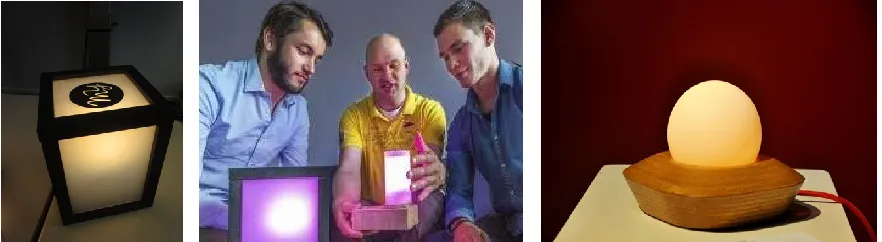
As of 2018, MyDayLight has seen several prototypes:
[image:9.595.89.509.273.587.2]Figure 1 shows the first three MyDayLight prototypes in subsequent order. Figure 2 shows one of the MyDayLight lights as it is now. In total, there are seven lights, connected to a user interface over a wireless local area network (LAN). As of today, the system’s design offers the users two functionalities: task management and mood setting. Through a special interface, the user can plan an activity at a certain time for one for the seven lights. When it is time, the light will turn on using the colours of the rainbow. It will do this for a couple of
Figure 1: Three First Prototypes of MyDayLight (Van Dijk, n.d.)
seconds after which it will return to the pre-set default colour. Compatible with the default colour is the brightness and, naturally, the colour that is being used.
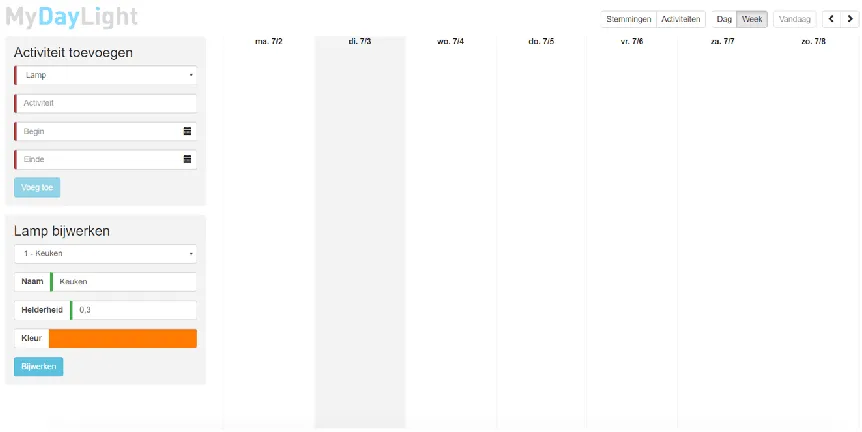
Regarding the mood setting, the user can spin the plastic case of the light and change the colour while doing this. If the spinning is paused long enough, the colour that is shown at that moment will be saved in a database and shown in the interface. The colour represents the mood of the user at the moment of doing a specific activity. Together with someone else, for example, a supervisor or family member, the user can reflect back upon that activity using the colours as a guideline. The interface, in which activities can be
planned, settings can be changed and colours for feedback are depicted, is shown in Figure 3.
2.3. Similar Applications
In this section, five similar applications will be discussed that support the same objective as MyDayLight: to support a person with autism in attention and organization. Special attention will be given to the two functionalities that are currently offered by
[image:10.595.82.513.280.496.2]MyDayLight: task management and mood setting. For each similar application, it is described what it offers, what exactly is similar to the MyDayLight system and what MyDayLight can offer that this application can not. The applications are arbitrarily ordered.
Cosmo by Filisia
The first application is Cosmo by Felisia, which is a light system that changes the way in which early-year learners and young people with special
educational needs train their physical, cognitive and communication skills (Figure 4) (Fisilia, n.d.). If the button on a light is pressed, the colour of the light will change.
Although Cosmo does not per se support the same objective as MyDayLight – nor the same target group - its
aesthetics are quite resembling. As well as MyDayLight does Cosmo work with a light system in which the colours of the lights can be adjusted. The buttons are smart and dynamic,
connected to fun games on a tablet that are based on the child’s curriculum. Furthermore, the system allows interaction with the entire classroom. If Cosmo could be relevant for MyDayLight, it would be through its design and its aesthetics. However, the application does not offer the needed functionalities to the needing users and is therefore incomparable to MyDayLight when it comes to high-functioning people with autism in semi-independent living.
First Then Visual Schedule HD by Good Karma Applications The second application is a mobile application
called First Then Visual Schedule by Good Karma Applications, which is a mobile support tool that helps people with autism to conduct their daily tasks (Figure 5) (Good Karma Applications, n.d.).
Naturally, this application supports the same objective as MyDayLight: it supports a user with autism in attention and organization. It offers a checklist, choice boards and video models.
The biggest difference with MyDayLight is the
[image:11.595.352.525.95.219.2]absence of hardware. Where MyDayLight is a combination of a web interface and seven physical lights, this application is solely software. Nevertheless, this application offers an interesting user interface where icons are used to represent the daily activity. Moreover, this application offers choice boards and video models as well but fails to enable any form of feedback opportunities. In short, the application is not as assistive as MyDayLight and offers no feedback.
Figure 4: Cosmo
My Daily Tasks by Ablevox
The first application that offers the user opportunities for feedback is My Daily Tasks by Ablevox, which is a mobile application that visualises a daily schedule and a reward system, as well as video- and audio models (Figure 6) (Ablevox, n.d.). However, most interesting is the notes system for the teachers and caregivers in which they can provide feedback on the execution of a certain task.
As well as MyDayLight, this application offers the user to reflect back upon his executed daily task to discuss the execution with his teacher or caretaker. However, despite this valuable functionality, there is no hardware to assist and push the user to actually execute the planned tasks.
AutiPlan
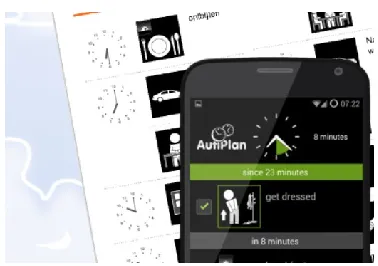
AutiPlan is a mobile application that can help people with autism with planning daily activities with the use of pictograms (Figure 7) (AutiPlan, n.d.). The planning can be printed or used directly on a
computer, tablet or mobile phone. The application states to be unique by offering structure, its easy- and intuitive use and by saving a significant amount of time. The application also offers an assistive side: the application can read out loud which activity the user is
supposed to be doing. By doing this, the user can keep its attention on the allocated activity. Thus, this application offers assistance in keeping attention and organization in the daily life of the user. On top of this, the interface provided on the computer screen is particularly similar to that of MyDayLight. However, the application is noticeably made for the users, instead of with the users; although the daily activities that can be chosen in the interface are changeable for each user, the application is not open to feedback by the user that might wish to appropriate the system in a totally different way. Lastly, the application fails to offer
[image:12.595.273.521.81.211.2]opportunities for feedback and uses no assistive hardware other than the device on which the application is shown.
[image:12.595.345.534.350.483.2]Figure 6: My Daily Tasks
Social CheckIn
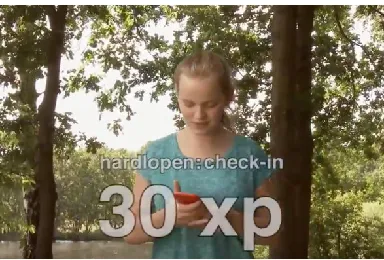
Social CheckIn is an application that supports the user with getting off the sofa and execute more daily (outside) activities (Figure 8) (Autismeplein, n.d.). Social CheckIn is part of the Wonen Autisme Toolkit, a project in which Dr. Leo Kannerhuis, Pluryn and software developer NoXqs work on the
development of E-health products that support young adults with autism in independent living.
With Social Checkin, the user can map their own
goals and prove themself that they can truly execute that particular activity. If the user has executed a particular task, they receives points for this. Furthermore, the user can ask friends and family to support the activity by receiving likes on Facebook.
[image:13.595.348.540.89.219.2]The Social CheckIn application, which is available on the Google Play Store, offers an interface in which activities can be planned. The use of explicit gamification is an interesting technique that it uses to push the user to become active. Naturally, the users of MyDayLight can use the system as a game for themselves as well, but there is no explicit game element implemented in the system as it is now. For this particular application, it is the question whether or not it will work: there is no explicit assistive technology pushing the users to execute the daily tasks aside from the game effect and the application also does not offer the user opportunities for feedback.
3. Literature Review
At this moment, MyDayLight has been presented along with some similar
applications. In this literature review, special attention is paid to two elements of MyDayLight that are of value for MyDayLight’s development and design: co-design and embodied being-in-the-world. Those terms will remain to be important throughout this research. Firstly, whereas co-design has proven to be valuable in developing MyDayLight prior to its finished prototype, it is worth continuing with this methodology as it might prove to be useful and even result in new insights in using co-design in user studies, rather than solely in design
development trajectories. Therefore, in this chapter, the concept of co-design will be explored to fully understand it.
Secondly, a design perspective specifically adhered to while designing the already existing interaction with the system is that of embodied being-in-the-world. Throughout this research, prototyping phases will be introduced to explore the further interaction
opportunities and, while doing this, designing for embodied being-in-the-world need to be reconsidered as well. Therefore, this literature review will explore design for embodied being-in-the-world in depth to fully understand it. When the feedback is given by the users during this research, it is the responsibility of the researcher to connect the proposed design opportunities with this design perspective.
3.1. Co-design
In this section, the concept of co-design is elaborated upon. As it has become apparent in Chapter 1: Introduction, co-design has been the leading design methodology towards the creation of MyDayLight as it is now and will be re-used in this research. To start with, co-design is deconstructed into two concepts that it encompasses: participatory design and co-evaluation. Secondly, it is discussed why co-design with people with autism has mostly been avoided, and why some researchers find this a missed opportunity.
To start with, participatory design started from the simple standpoint that those affected by a design should have a say in the process as well (Ehn, 2008), and it falls in the category of human-centred design (Sanders & Stappers, 2008). Another design technique that falls within this category is the well-consolidated user-centred design, which remains to be widely-used in the industrial practise and education. User-centred design, in which design is practised from an expert perspective, is the opposite of participatory design. In
The concept of participatory design is not defined by one clear definition. Sanders (2006, p. 5) refers to participatory design as “design in which the researchers or designers invite users who will benefit from the design as partners in the process”. Ehn (2008)
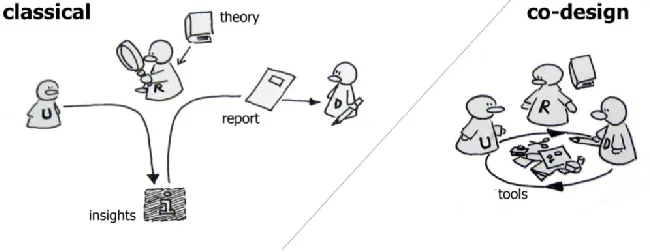
broadens this definition by saying that any person involved can function as co-designer in the design process. Trischer et al. (2018, p. 5) seem to put emphasis on the interaction between the user and many parties involved from the expert side, as they describe participatory design as ‘’design in which participants are invited to cooperate with designers, researchers and developers during an innovation process’’. Noticeably, in all three definitions, it is clearly defined that the user takes an active role in the design process. In short, it appears that the biggest difference between participatory design and classical design is the fact that in the latter the user has only a passive role in the design process, but receives an active role in the design process in participatory design. The difference between classical design and co-design/participatory design is visualized in Figure 9.
Interconnected with participatory design is co-evaluation. A definition of co-evaluation is given by Spiel, Malinervi, Good and Frauenberger (2017, p. 3). They name it, however, participatory evaluation: “a way in which researchers will be able to include autistic children in dedicated evaluation phases of participatory design through the co-definition of goals and methods, joint processes of data gathering and the co-interpretation of results”. It must be noted that this definition addresses co-evaluation with children with autism, but in this research, this definition will address young adults with autism.
[image:15.595.137.462.342.468.2]Noticeably, in participatory design, the researcher and the designer may be the same person and is therefore undeniably leading a process in which design and evaluation are interconnected as co-design. Given the interconnected nature of this process, co-design approaches involve both designing and evaluating. Techniques for co-design, therefore, cannot clearly be divided between a design part and an evaluation part, but must be
addressed holistically where valuable insights are gained precisely by the combination of designing and evaluating. For example, in regard to MyDayLight, it could be the case that a user would like to see the rainbow light going the other way around for a specific reason – at this moment, the rainbow light is turning clockwise while brightening up. The only way to find out if this works for him is by actually implementing this design opportunity and evaluating it once more afterwards, asking the question if this has helped.
So far, co-design has primarily served product development trajectories that, on contrary with this research, started from ground zero with a development goal in mind. This research, however, starts with a fully developed prototype and co-design is used in the context of a user study – aside developing new interactions. Having said this, already developed co-design approaches should be kept in mind as they can be useful nonetheless. For example, Van Rijn en Stappers (2008) present with an idea that stimulation of
psychological ownership can act a factor for motivation, an argument built upon research conducted by Beggan (1992) which states that a user is more willing to participate if they feels respected or trusts the intentions of the designers. Sleeswijk Visser et al. (2005) and Sanders and Stappers (2005), on the contrary, emphasize the practical aspects of a successful co-design approach, rather than on a psychological aspect. They suggest that contextmapping techniques can be useful for information and inspiration about the context of product use. Sanders and Stappers (2014) present probes, toolkits and prototypes as
prominent approaches in the practice of participatory design. Most interestingly is their trust in prototypes. According to them, prototypes can play a number of roles in the participatory design process: to evoke a forced discussion in a team, to test a hypothesis and to confront theories. Iterative prototyping can be viewed as growing early conceptual designs through prototypes into mature products.
3.2. Co-design Exclusion
The characteristics of autism often cause people with autism to be excluded from the design process, where a deficit in social communication is one of the core features of autism that can cause such exclusion. Individuals that have autism with additional learning
disabilities are often excluded as well (Lowe, Gaudion, McGinley & Knew, 2014; Grawemeyer et al, 2012).
It can be argued that such an exclusion is unjust. A first protest is presented in the proposal by Powertools (2015), a collective of institutions that works on participatory design methods for people with cognitive disabilities. In the proposal, it is stated that the majority of current assistive technologies are solely covering the technology’s perspective, rather than the perspective of the users and caretakers. However, forced and imposed technologies requires the learning of a new behaviour, something that is specifically difficult for people that have a cognitive disability. By involving both the caretakers as the users in the design
process through participatory design methods, the chance of long-term success increases. Merter and Harırcı (2016) share the same positive opinion on co-design with people with autism. In their opinion, co-design, as a democratic and empowering approach, provides the opportunity to learn more about special user groups and design for them. The involvement of individuals with autism in design does not only increase their well-being and quality of life, but also draws attention to their presence in the society, their potentials and capabilities.
In conclusion, it is widely acknowledged that participatory approaches to designing technology are particularly valuable in an autism context, not only in terms of creating meaningful technology, but also for the enriching and empowering experiences of the participants in the design process (Keay-Bright, 2007) (Rijn, Sleeswijk Visser & Stappers, 2009) (Benton & Johnson, 2014) (Parsons, Yuill, Brosnan & Good, 2015).
3.3. Embodied Being-in-the-world and Embodied Empowerment
Aside co-design, embodied being-in-the-world has been another important element throughout the development of MyDayLight and will yet be important throughout this
research. As a matter of clarity, the distinction between embodied being-in-the-world must be clearly explained before diving into the theory. Firstly, embodied empowerment is a goal towards is worked in the design of MyDayLight. Embodied being-in-the-world, on the other hand, is the phenomenological viewpoint of how a human lives in this world, and, thereby, forms the fundament for designing for embodied empowerment.
for MyDayLight is discussed and it is explained how this theory is brought into practice for MyDayLight. In the latter, the concept of embodied empowerment is discussed.
3.3.1. Embodiment and Interaction Design
Embodiment does not immediately has to refer to a complex and philosophical concept, as it can also simply refer to something that it is attached to the body or measuring bodily signals (Van Dijk, 2018). In Merleau-Ponty’s vision, however, embodiment is a concept that finds itself in the disciplinary field of philosophy that is called phenomenology. To define phenomenology: “phenomenology is the study of the development of human consciousness and self-awareness as a preface to- or a part of philosophy” (Merriam-Webster, n.d.). In other words, phenomenology is concerned with the way we experience things and how we are aware of this experience. To understand embodiment in a phenomenological viewing point, it is helpful to explain the underlying anthropological assumptions that Merleau-Ponty takes as the truth. Merleau-Ponty, namely, wishes to reject any clear distinction between the physical body on one hand, and the non-physical mind on the other hand, a Cartesian distinction that is taken as truth quite commonly (Van Dijk, 2018). Therefore, Merleau-Ponty (1962) introduces the term lived body to appoint what he believes a human really is: a unification of the body and mind as one; and it through this lived body that a human experiences the world.
The lived body, a unification that is contrary to Cartesian dualism, took some time for philosophers and cognitive scientists to be acknowledged (Hermans, 2002). According to Gallagher (1995), the Cartesian dualism is still not that easy to escape. Even at this point, there are many cognitive scientists that reduce mental events to brain processes, a view in which the body is reduced to a mental process. Gallagher recalls the image of the brain in the vat as a good example of such disembodiment: a disembodied brain, sustained in a chemical bath, seems perfectly capable of experience and cognition as long as the correct information inputs are provided. Merleau-Ponty, supported by Gallagher, supports the claim that cognition depends on experience that is informed with various perceptual and motor capacities. In other words, Merleau-Ponty emphasises that we need both a body and a mind in order to experience things. The body and the mind do not solely interact with each other, where one of the two could be replaced by an equivalent element, but they are unified. Both are necessary elements that form one whole in order to experience things. In the lived body, it would be impossible to replace the body for a virtual body in a virtual world – as is done in, for example, the movie The Matrix: cognition depends on the body and cannot go without.
phenomenology, situated cognition and pragmatism as main sources, respecting the unification of the body and mind as a lived body as it has been described by Merleau-Ponty (Dijk & Hummels, 2017). Van Dijk even explains that designing for embodied theories promises to open up a theoretically informed, largely unexplored design space, which can help designers to utilize the full power of [interactive] technologies (Van Dijk, 2018).
Most recently, Van Dijk (2018) critically analysed the concept of embodiment in the design of interactive products in which he gives a criterion for- and exemplifies when he believes an interactive product has successfully been designed for embodiment. Van Dijk argues that a product has successfully been designed for embodiment when it has become part of the lived body; when it exists next to the mind and the body in unity. A simple example he gives is a blind man’s cane. The cane has become an extension of the body and he does not consciously think about it while using it. It is just there, being part of the lived body.
In conclusion, Van Dijk shows that embodiment can function as a mere goal towards one can work whilst designing an interactive product; ensuring that a design is a part of the lived body. The latter is an essential notion in this article. It is one of the effects strived after in the design of MyDayLight.
3.3.2. Designing for Sensorimotor Couplings
To ensure that an interactive product succeeds in design for embodied being-in-the-world, adhering to the criterion provided by Van Dijk (2018), there are three design theories that can help in doing this. The first one is called designing distributed representations, the second one is called designing for social situatedness and the third one is called designing for sensorimotor couplings. The design theory that has been relevant for MyDayLight has primarily been the last one, which will be explained and exemplified.
To start with, an explanation on what a sensorimotor coupling is would make this theory more understandable: a sensorimotor coupling describes the way by which the lived body continuously self-organizes into coordinating patterns in response to perturbations, where the coordination is established between the formation of couplings between perception (the activity of our senses) and action (the activity of our ‘motor’-system). Subsequently, these sensorimotor couplings lead to behavioural patterns that fit the given situation (Beer, 2008). To elaborate on that: the development of a sensorimotor coupling produces a grip on the world that is continuously re-established in response to changes in the relation between the lived body and the world. Therefore, the development of a
sensorimotor coupling can be seen as the development of a skill, as it is a successful way of doing things that is stable enough to pop up when needed.
calculating the goal position and running speed to catch the ball. However, the outfielder simply starts running instead while making sure that the ball maintains a straight horizontal line in his visual field. This is a sensorimotor coupling. Firstly, the outfielder perceives that they needs to catch a ball. Secondly, the outfielder responds to that perception with an action: they starts running. After catching the ball multiple times, the outfielder has come to the understanding that to simply start running after knowing that they needs to catch a ball is the most successful pattern in this situation; it results in catching the ball the most times. By now, the outfielder has developed the skill of catching the ball and each time they needs to re-do this, the outfielder will almost intuitively start running.
It could be argued that, when a product is part of such an intuitive sensorimotor coupling, it has become part of one’s lived body. A product that would have been
successfully designed for embodiment – once again according to the criterion given by Van Dijk – is the concept study of F.E.E.L. (Bergamaschi, Rampino & Dijk, 2017). The design goal of this concept was to reduce shower time and save water thereafter. Instead of simply reminding the users of a shower to save water or shutting off the water supply, the
developers of F.E.E.L. decided to “intervene in the sensorimotor couplings that underlie the gradual build-up towards that familiar moment one just feels one is finished and quits voluntarily” (Van Dijk, 2018, p. 11). Therefore, the F.E.E.L. concept proposes an interactive floor that physically stimulates the feet in a certain massage, with the temporal structure of the massage always being the same for each shower session. The system first measures the average shower time of the user, adapts the massage rhythm to it, and at the end of a
specific period of time, the user is accustomed to the rhythm and thereby will implicitly associate the temporal structure of the massage with the normal shower routine. After several days, the pattern will gradually reduce its length over a period of weeks, while retaining the same overall massage choreography. Clearly, the idea is that, along with this reduction, the user will unconsciously adjust their embodied routine with the effect that one feels one is done showering arrives sooner. As Van Dijk puts it (2018, p. 11), “the user will save water, while not being forced, and not having to decide consciously: he will just feel like it”.
3.3.3. Embodiment and MyDayLight
been adhered to? And has its design for embodiment been successful according to the criterion given by Van Dijk?
However, before diving into those questions, another term must be introduced: the lifeworld. Simply put, the lifeworld is the world in which the lived body lives (Van Dijk, 2018). Phenomenologically speaking, though, the lifeworld is the world how it shows up for us, how the spatial settings, the people and the social settings show up; it is the world in which our lived body operates. Therefore, one could say that the someone’s lifeworld is a
phenomenological description of their world (Van Dijk, 2018). MyDayLight, being a system designed for embodiment, is especially focused on adding to a person’s lifeworld.
As stated at the start of this article, MyDayLight is an interactive light system that would be designed to support high-functioning, semi-independent living for people with autism that experience problems with attention and organization in their own lives and in their own home. Speaking of design for embodiment, designing for sensorimotor couplings have been the red line in MyDayLight’s design, as the system aims to help to create the right sorts of sensorimotor couplings: those that hold the user’s attention at activities that they wishes to conduct. For example, a young, semi-independent man with autism called Simon could have troubles with cleaning the dirty dishes because nothing is triggering him to do so. Persuasive supervisors and intrusive mobile applications have appeared not to have any effect on his behaviour. Subsequently, Simon receives MyDayLight as a potential solution to his problem. As MyDayLight’s design allows, it is not pre-set how the system should be used as it is designed in such a way the user can discover his own unique way of dealing with his
challenges in organization and attention. Simon finds out that he succeeds in doing the dirty dishes when he puts the light on top of the extractor brightening up just before 6 o’clock, where he is not being disturbed by intrusive supervisors and annoying buzzers coming from his phone. After following this pattern for a couple of weeks, the man almost instinctively starts to do the dirty dishes when the light brightens up.
At least, the latter is the desired outcome. The light becomes a part of the user’s lived body as it functions as an essential reminder to do something. Being part of the lived body, it can be stated that the system has succeeded in being designed for embodiment. The reason why embodiment has been such a prominent element in MyDayLight’s design has to do with the effect that it can bring about. By making it embodied, the system can gradually transform the user’s lifeworld. The set of lights create a supporting structure for gradually developing new routines in dealing with the world (Van Dijk, 2018). To elaborate on this, MyDayLight invites the user to reorganize their daily environment around the lights such that the world has an increasingly better fit into the user’s routine. In the user’s own unique way and
empowerment finally steps into the scene. If a user is finding their own unique way of dealing with his challenges, they is not only combatting these challenges whilst building upon the premise that autism is a curable illness, it also allows the user to become fully who they is as they does not need to change who they is whilst combatting the challenges caused by autism. This effect is what is called embodied empowerment.
3.4. Summary
This literature review has discussed elaborate descriptions of co-design and embodied being-in-the-world, with both of them becoming yet prominent concepts in this research. Firstly, to recall the novelty of this research, this will be the first time that MyDayLight is being tested with actual users after the completion of a hi-fi prototype.
Therefore, it is of importance that the idea behind co-design is well-understood. Furthermore, it is important that the dynamics between the user and the researcher are clear, as well as the role that the researcher should adopt. The role of embodied being-in-the-world will, foremost, be relevant for the co-design phase where design opportunities are discussed and realized, as MyDayLight’s interaction with the user must be designed for embodied
empowerment. The future interactions must comply as much as possible to this concept, and should definitely not oppose it – by, for example, making the system too persuasive.
Lastly, it should be noted that the inclusion of co-design and embodied being-in-the-world in this research are not solely included to facilitate an effective and efficient research. Gathering insights about their inclusion in a user study after the completion of MyDayLight is also part of this research. For example, how effective is co-design in a user study? And what roles must the researcher adopt in the user study? Or, in regard to embodied empowerment, are there any design opportunities mentioned by the users that are not complying with the idea behind embodied empowerment? And how must the researcher make sure to
4. Research Methodology
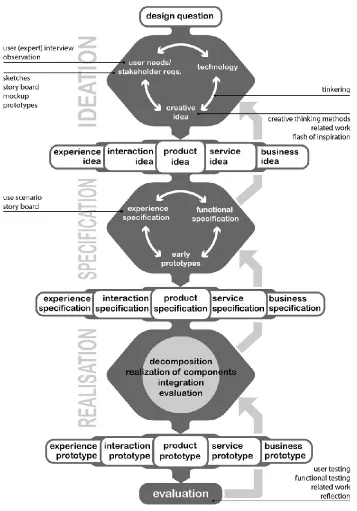
In this chapter, the research methodology is presented. Firstly, the concrete co-design process is presented elaborately. Secondly, Research-through-Design as the underlying research methodology is discussed. Thirdly, the Creative Technology Design Process is introduced, which forms the fundament of the Bachelor Program of Creative Technology. It also forms the fundament of the co-design process for this research.
In order to retrieve approval for this research methodology from the Ethical
Committee, a number of documents had been sent to a representative of the committee. This consisted of a formal approval request, an informed consent form, an information brochure explaining the research, a data management plan (included as Appendix B), an ethics checklist, and an example interview. This research was given the green light after it was considered standard research in a fast-track procedure. In the database of the ethical committee, the research approval is referenced to as file number RP 2018-14.
4.1. Co-design Procedure
1 2 3 4 5 6 7 8 9 10 11 12
Initiation Prototype Deployment
Reflection Prototyping
Week: Starting Date: Ending Date:
1 26-03-2018 01-04-2018
2 02-04-2018 08-04-2018
3 09-04-2018 15-04-2018
4 16-04-2018 22-04-2018
5 23-04-2018 29-04-2018
6 30-04-2018 06-05-2018
7 07-05-2018 13-05-2018
8 14-05-2018 20-05-2018
9 21-05-2018 27-05-2018
10 28-05-2018 03-06-2018
11 04-06-2018 10-06-2018
12 11-06-2018 17-06-2018
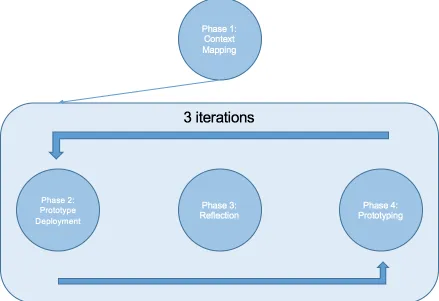
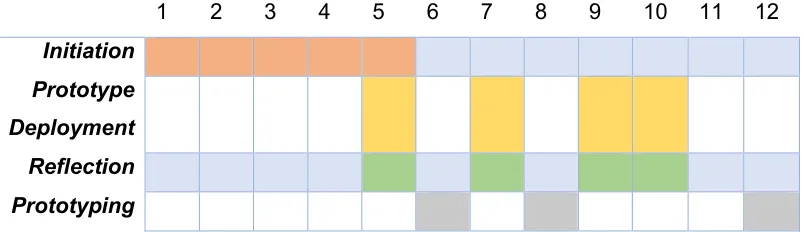
The entire co-design process consists of 12 weeks, as can be seen in Table 1. Clearly, some of the phases overlap each other due to time- and organizational constraints. In Table 2, the accompanying dates are presented. The first phase, which is the Context Mapping phase, consists of several tasks: meeting the users, establishing contact with the advisors and supervisors, agreeing on communication- and time schedule preferences and initiating the ethical procedure. Meeting the potential users is the primary and most important task, as it is the goal of the researcher to understand the user’s challenges caused by autism and their context in advance to know what he needs to pay special attention at whilst
collecting data and gaining insights. Topics to be discussed are not only related to autism and the user’s context, but also about the user’s hobbies and aspirations. Since the
[image:25.595.99.501.72.192.2] [image:25.595.80.528.120.512.2]researcher and the user are going to work together closely, good chemistry between them is Table 1: Week Overview
of paramount importance; also for the sake of academic outcomes, as bad chemistry could prevent the user to give full disclosure. Once the researcher has established contact with all the (potential) users and has collected data thereafter, the researcher will conduct PACT-analyses to make descriptions of the users. A PACT (People, Activities, Contexts and Technologies) analysis means that identifications of the different activities that people conduct in different contexts using different technologies are made (Reinius, 2011).
Noticeably, MyDayLight has not yet been installed at the user’s places in the context mapping phase, but it has been merely introduced. However, in the Prototype Deployment phase, MyDayLight is going to be tested. Throughout testing the system, a phase that will be crossed three times in total, it is the goal to identify usage appropriation and redesign
opportunities thereafter. The testing method depends on the user: it could be that a user wishes to test the system completely on his own, but it could also be that user expresses the presence of the researcher as a condition. Both methods have advantages and
disadvantages. An advantage of having the user test MyDayLight individually is that the user will test the system in their natural context; the influence of the researcher on the system’s usage can be excluded. A disadvantage is a probability that the user will use the system less intensively, as they might be more scared to use it in case of calamities. Furthermore, if the user has a preliminary feeling that the system might not be of value to them, there will be no researcher present to push the user into finding potential value nevertheless. An advantage of testing MyDayLight together with the user is the fact that such a push factor actually is present. On top of this, the user will feel less scared and less careful to use the system. Furthermore, if the researcher is present during the testing of the system, he will be able to capture a lot more insights, such as facial expressions and usage of the system that the user would otherwise forget to mention to the researcher.
After the prototype deployment phase, the researcher sits down with the user and the advisors and supervisors – collaboratively or apart from each other – and reflects on
MyDayLight for the Reflection phase. It will be discussed how the user has been appropriating MyDayLight and if they has appreciated it. Regarding MyDayLight’s
phase is a phase of reframing, which means that the usage of the system as it might have been anticipated beforehand, changes to new uses, both mentally as physically.
If the third phase has proceeded successfully, the last phase of the iteration is initiated: the Prototyping phase. At the end of the reflection phase, the ideas on design opportunities have been well-documented and transformed into concrete requirements for a prototype. Together with the user, the researcher will now start realizing the prototype – of course, to the extent of which this is possible. Anticipating what design opportunities could be mentioned by the users allows the researcher to already prepare the prototyping sessions to a certain extent. What will not be done at all is shoving MyDayLight completely away if one of the user’s expresses to not find it effective in supporting them in attention and organization. Instead, if such a situation occurs, it is the responsibility of the researcher to find out why the user is saying this and collaboratively exploring usage opportunities in making MyDayLight effective nevertheless.
4.2. Data Collection and -Analysis
As has been presented in Chapter 3: Co-design, a number of co-design approaches have already been developed that aim to collect data and gain insights through a number of techniques. However, since this research has the nature of a user study and it is conducted together with young adults, the primary collection method is an interview. At the start, the sessions will be guided with the help of a semi-structured interview, but it is expected that the interviews can become unstructured as the co-design process proceeds. In the latter, the interviews are simply steered by the researcher’s notes, rather than by pre-set questions. The interviews will be conducted in the context mapping phase, as well as the reflection phase. During the prototype deployment phase, the researcher and the user share data over WhatsApp if MyDayLight is being tested at the user’s house with the researcher being absent.
Throughout this entire research, the researcher will also write down his insights in a confidential logbook, as not all insights are gained from the mere interviews. Facial
The data analysis follows a pattern throughout this research. First of all, after the interviews have been recorded, the researcher goes over every recording and writes down in a document how the conversation proceeded, what topics were discussed and what has been said. In the same document, the researcher also writes down interesting points - if needed - that reflect on insights previously gained. From these interview analyses, the researcher tries to find statements made by interviewees that are representative of the story that had been told. Subsequently, the interesting points and statements are included in the logbook and/or in the HWNMs if they concern design opportunities. Subsequently, the HWNMs are subject of discussion in the follow-up reflection interviews.
4.3. Research-through-Design
Research-through-Design is one of the research methodologies leading this research, which is a concept that describes a research approach where the design process in itself becomes a way to acquire new knowledge (“What is Research”, n.d.). By taking this
approach, Research-through-Design distinguishes itself from Research-and-Design, where design activities create tools or stimuli on specifications (Stappers & Giaccardi, n.d.). Naturally, the Research-through-Design methodology in this research will be generating information that can be used in answering the research questions that were introduced in Chapter 1: Introduction. The fact that Research-through-Design is the leading research methodology is also the primary reason why there is no clear hypothesis about what the answers to the research questions could be; as unclear as it is which insights will be identified throughout this research, as unclear it is what the outcomes will be.
To exemplify Research-through-Design one more time, the situation described in Chapter 3: Co-design is recalled. It could be that the user wishes to have the rainbow light turn the other way around. The underlying thought behind this is that by changing the rotation of the rainbow, the user believes the system is working more effectively for themselves. By applying this feedback, realizing it and re-testing it in a next iteration, it can either be confirmed or rejected that this is indeed working more effectively for them.
4.4. Creative Technology Design Process
phase starts when a design concept is decided upon. At the end of the specification phase, certain usability and user- experience requirements for the design concept are set that are realized in the subsequent realisation phase. The last phase is the evaluation phase, in which functional prototype deployment is included, as well as a test to determine whether or not all the original requirements from the specification phase are met in the service or product.
5. Context Mapping Results
In this chapter, the context mapping outcomes are presented. The context mapping phase has consisted primarily of PACT analyses in order to make precise descriptions of the users. These descriptions can help to place data provided by the user in their context, as well as presuming with arguments how MyDayLight could be appropriated by this user – if not appreciated.
5.1. Parties Involved
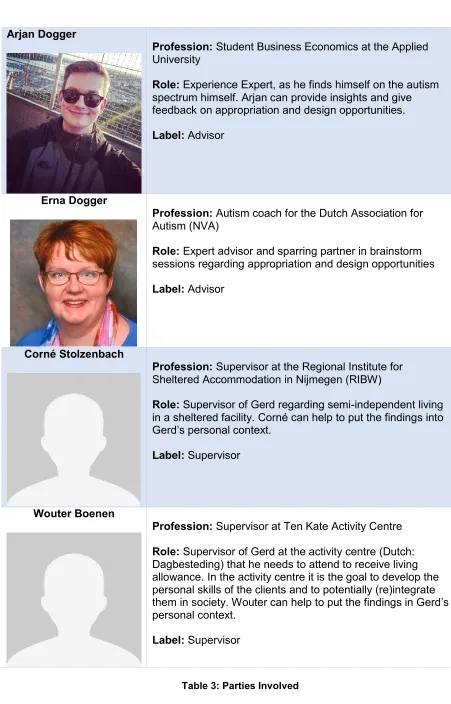
The most prominent participants in this research are the users and they will be presented elaborately in the next section. However, since this research is following a co-design trajectory, advisors and supervisors are equally important to this research. In Table 3, all parties involved are presented, including the researcher who will from now on present the findings in the first-person perspective. It must be noted that the advisors and supervisors are labeled either as advisor or supervisor for matters of simplicity. Of course, their
contribution has gone beyond the level of giving mere advice, as almost all parties have been asked to be actively involved in brainstorming about design opportunities as well.
Profession and role: Johannes Cornelis van
Huizen Profession: Student Creative Technology
Role: Researcher and Designer who is conducting this research. Johannes Cornelis will actively be involved in discussing appropriation and design opportunities, as he has a deepened understanding of design requirements and technical possibilities.
Label: Researcher
Shireen van Rosmalen
Profession: Manager of innovation at Karakter, centre of psychiatry for children and young adults
Role: Advisor, facilitator and sparring partner in brainstorm sessions regarding appropriation and design opportunities
Arjan Dogger
Profession: Student Business Economics at the Applied University
Role: Experience Expert, as he finds himself on the autism spectrum himself. Arjan can provide insights and give feedback on appropriation and design opportunities.
Label: Advisor
Erna Dogger
Profession: Autism coach for the Dutch Association for Autism (NVA)
Role: Expert advisor and sparring partner in brainstorm sessions regarding appropriation and design opportunities
Label: Advisor
Corné Stolzenbach
Profession: Supervisor at the Regional Institute for Sheltered Accommodation in Nijmegen (RIBW)
Role: Supervisor of Gerd regarding semi-independent living in a sheltered facility. Corné can help to put the findings into Gerd’s personal context.
Label: Supervisor
Wouter Boenen
Profession: Supervisor at Ten Kate Activity Centre
Role: Supervisor of Gerd at the activity centre (Dutch: Dagbesteding) that he needs to attend to receive living allowance. In the activity centre it is the goal to develop the personal skills of the clients and to potentially (re)integrate them in society. Wouter can help to put the findings in Gerd’s personal context.
[image:32.595.70.521.44.748.2]Label: Supervisor
5.2. PACT Analyses
As stated in the previous chapter, PACT analyses are used to construct descriptions of the users. By constructing them in a similar format, it is possible to compare the
participants holistically and better understand the outcomes of this research. The first description describes Gerd, the principal and most participating user. The second one describes Adam and the third one describes Toby. Naturally, all three names are
pseudonyms. Toby, unfortunately, has not been a great part of this project due to personal circumstances. However, he has been part of this Context Mapping Procedure extensively in which he has shared details about autism and the personal challenges brought along that could be interesting to reflect on potential usage of MyDayLight for his context. It must be noted that not all information given in the following sections was collected solely in the context mapping phase. This co-design process is a continuous process of gaining new insights about the users, their activities and their contexts. Having said this, the context mapping interviews did provide most parts of the following three sections, of which analyses are included as Appendices C.1-4.
Gerd
The first user is Gerd, who is 24-year old young adults with autism that can be described as kind, soft, and helpful. Gerd also appears to show some negative character traits that may or may not have to do with autism, as experienced by myself as well, but also by Gerd’s supervisors Corné and Wouter. First of all, Gerd is not always honouring existing commitments. Specifically, it appears that Gerd has problems with showing up at
appointments in the morning. This is due to the fact that Gerd has troubles with sleeping before 3 or 4 o’ clock in the morning due to personal reasons, after which he needs an incredibly persuasive alarm clock to wake him up in the morning. The dishonouring of
existing commitments does not stop at showing up at appointments, but it also obstructs him from adhering to agreements made and prioritizing, which appears to be a recurring deficit in Gerd’s behaviour.
machine with the other residents, but he has his own bedroom, living room and sink. It is Gerd’s personal aspiration to live completely independent one day.
From all users, referring to Gerd, Adam and Toby, Gerd is the only one living in a facility for a sheltered accommodation and seems to be the only user that is limited by autism in his life choices. To elaborate on this: Toby has a profession and Adam is able to study, regardless of having autism. Gerd, on the contrary, is clearly not able to catch up with Toby and Adam on this level of professional development. Gerd also seems to be struggling with cognitive deficiencies in a way that Toby and Adam are clearly not. Lastly, in comparison to Toby and Adam, who only experience challenges in attention and organization, Gerd also seems to show challenges in social interaction. That is, Gerd showed at the start of the context mapping phase that he failed to grasp the appropriateness of the social context, as one of the first things he shared with me – accompanied by advisor Shireen – that he felt bad about not being able to flirt with girls and not having lost his virginity yet, which is not
something one would normally share during a first meeting.
Adam
The second user is Adam, who is a young adult at the start of his twenties. Adam could be described as kind, helpful and intelligent and he shows no signs of challenges in social interaction. Regarding autism, Adam explains that the most affecting challenge caused by autism is the fact that he keeps on planning activities until there is no more leisure time and his daily schedule is entirely occupied, where a great number of activities planned are related to his study program at the applied university and his job where he does not hold back in dotting the I’s. The second challenge is the fact that he can be immersed in an activity to the extent where he needs quite some persuasion to draw his attention, a
phenomenon also referred to by Toby as hyperfocus, who experiences the same challenge. In regard to Adam’s living condition, he does not yet live independently, but he lives with his parents. It is clear that, in comparison to Gerd, Adam’s living conditions are not limited by autism. Adam has never been in need of supervised living and it is clear that he will also never need such supervision. Moreover, Adam is also not in need of apprenticeships or a developmental program at an activity centre. The only supervision that Adam receives is from his parents, that focusses slightly on him having autism. For example, Adam expressed that it is often his mother that confronts him with his overly-occupied schedule and advises him, subsequently, to plan more time for relaxation amidst the other activities.
detailed, reflective and critical way on an intellectual level; there are no apparent challenges in communication and social interaction.
Toby
Lastly, the third user is Toby. For his description, information is taken from the
logbook and from the interviews, but permission has been given as well that I was allowed to look into a confidential interview conducted on 13-07-2017 by Shireen van Rosmalen and Jelle van Dijk. Toby is a young adult at the start of his twenties who can be described as opinionated, assertive, reflective, smart, critical, ambitious and sincere. Toby also has
Attention Deficit Hyperactivity Disorder (ADHD) aside autism. Regarding autism, one primary challenge caused by autism is the fact that Toby cannot neglect to do an activity he has already started, as he will not pick it up again. This can go as far as an escalation. To exemplify this challenge, Toby told me that he had already collected eight trash bags on his balcony, as he had forgotten to throw the first one away. After this, it becomes virtually
impossible for Toby to re-continue with throwing away the trash bags and he simply lets them pile up. In the past, doing the dishes has escalated in a similar way, which ended up in him piling up all the dirty plates until he was out of clean plates and wanted to buy a completely new set of tableware. This process can also be seen as a negative spiral: the longer he would neglect an activity, the more the situation escalates and the higher the threshold becomes to restart with the activity. The challenge described above was also causing Toby to have difficulties with reading letters: he does not like to open envelopes, and as the letters pile up in his mailbox, the threshold for opening the letters is only getting higher. Another challenge caused by autism, as explained by Toby, is the fact that he can be overly
immersed in an activity, such as working on the computer at night, which has frequently led to Toby not getting a proper amount of sleep or even not getting enough nutrition. In regard to Toby’s living conditions, he does not live at a sheltered accommodation, but he does receive support from a personal, ambulatory supervisor. The supervisor helps toby with finances, setting the day format and going through the mail. The supervisor does not come automatically, though. In a self-reliance form, Toby has declared to adhere to his
responsibilities independently, but he can contact the supervisor when he feels this is needed. Toby and his supervisor meet once a week, but he sees her as well at the buurtcirkel, which is an initiative that connects people who are living alone in the same neighbourhood.
In comparison to Gerd, Toby only receives ambulatory supervision, while Gerd stays at a sheltered accommodation. In the past, Toby has also lived at a sheltered
same level as Adam. However, whereas Adam is steadily following the same educational program, Toby shows a history of starting and quitting a number of educational programs thereafter. A job has also appeared to be a problematic aspect of his life, as it is too exhausting for him. Currently, Toby works - with great pleasure - at an ice skating rink, though. Lastly, it should also be stated that Toby does not experience autism as a deficit. In his opinion, it is only an enriching aspect of his life as it helps him to organize excellently. He also expresses that autism is not something that defines him, but merely something that he has. He is perfectly able to live with it, as it does not affect the aspirations he has, nor the ambition he shows.
5.3. Current Usage of Technology
6. Iteration 1 Results
In this chapter, the results of the first co-design iteration are presented that started on the 23rd of April, after the context mapping phase had ended the week before. In total, 3
iterations have been realized, all consisting of phases of prototype deployment, reflecting and prototyping. In this and in the following two chapters, it will be presented how the
prototype deployment phases have proceeded, what insights were gained from the reflection phases and how this has affected the prototyping choices. Throughout these chapters, information and insights are collected from the interview analyses and the logbook. It must be noted that the contents of these chapters are recapitulatory of nature. To get a holistic understanding, it is strongly recommended to have a look at the interview analyses.
Prototype Deployment
The first iteration was conducted with Gerd at his apartment in a facility from the RIBW for sheltered accommodation, where MyDayLight was being tested in its original state. The system was installed on the 24th of April and was de-installed on the 30th of April, 6 days
later. Throughout these days, Gerd and I have had contact through WhatsApp. Noticeably, Gerd had only been using the system twice after the I had left the apartment on the 24th of
April. This suggested that a more intensive prototype deployment session together with me could be more effective for the next prototype deployment phase, which was also confirmed by supervisor Corné. After all, most of the usage insights were collected in my presence, even though this was not the most natural context for Gerd.
Reflection
The reflection phase started on Thursday the 26th of April with an interview with
advisor Shireen, of which an analysis is included as Appendix C.5. In this interview, the initial feedback already provided by Gerd in the previous two days was discussed, as Gerd had already expressed some concerns and desires. Moreover, an interview was conducted on the 8th of May with advisor Arjan, of which the analysis is included as Appendix C.6. In this
interview, the focus was put on reflecting on the way Gerd had been appropriating
MyDayLight. Furthermore, based on Gerd’s feedback, Arjan suggested design opportunities that would be more elaborately used in the second prototyping iteration.
Noticeably, however, there has never been a reflection conversation with Gerd himself until the 25th of May, even though this was scheduled on the 30th of April.
Sunday the 13th of May until contact was re-established after I reached out to him once
again. In the meantime, however, the second co-design iteration had already started with the second user, Adam.
Means Location Mental Framing
Leaving the house on time At the location of the to be conducted activity
Notification system
Doing dirty dishes on time On top of the pile of dirty laundry
Alarm clock Within the field of view
The way Gerd had been using MyDayLight in physically had already been revealed in my presence in the first prototype deployment week, which is summarized in Table 3.
Regarding the means for which Gerd was using MyDayLight, it appeared mostly that he had been using the system for activities that were related to the personal challenges caused by autism, referring to the problems with showing up on time, adhering to agreements made and prioritizing activities. During the meeting on the 25th of May, Gerd also seemed to be willing
to have MyDayLight function as an alarm clock, as he was explicitly comparing the system to the alarm clock on his phone. Regarding the locations of the lights, he seemed to be placing the lights at the location where the activity was set to happen. The most interesting scene was where he put one of the lights on the big pile of dirty laundry. He put it on there and made the light part of that pile. However, when he noticed that he was not able to spot the rainbow light brightening up when it was out of his field of view, he decided to place the light in front of him on the salon table. Another question to answer regarding the appropriation of MyDayLight, is how Gerd had been using MyDayLight mentally. That is, had he been using it solely as a notification system, or was he perceiving it as a reward system, etc. However, during the conversation on the 25th of May, Gerd emphasised that MyDayLight had been
[image:38.595.72.525.148.225.2]functioning solely as a notification system, for which he used at most three lights only. The last question to answer regarding the appropriation of MyDayLight is Gerd’s appreciation of the system. However, as there had not been an official reflection conversation with Gerd in this first iteration, there was not yet an answer to this question for now.
Figure 12: Gerd put one of the lights on top of the pile of dirty laundry. This photograph is staged though, as Gerd preferred not to have any pictures taken at his
apartment.
[image:39.595.156.439.423.636.2]