5295
Improving Open Information Extraction
via Iterative Rank-Aware Learning
Zhengbao Jiang, Pengcheng Yin, Graham Neubig Language Technologies Institute
Carnegie Mellon University
{zhengbaj, pcyin, gneubig}@cs.cmu.edu
Abstract
Open information extraction (IE) is the task of extracting open-domain assertions from natu-ral language sentences. A key step in open IE is confidence modeling, ranking the ex-tractions based on their estimated quality to adjust precision and recall of extracted asser-tions. We found that the extraction likelihood, a confidence measure used by current super-vised open IE systems, is not well calibrated when comparing the quality of assertions ex-tracted fromdifferentsentences. We propose an additional binary classification loss to cal-ibrate the likelihood to make it more globally comparable, and an iterative learning process, where extractions generated by the open IE model are incrementally included as training samples to help the model learn from trial and error. Experiments on OIE2016 demonstrate the effectiveness of our method.1
1 Introduction
Open information extraction (IE, Sekine (2006); Banko et al.(2007)) aims to extract open-domain assertions represented in the form of n-tuples (e.g.,was born in; Barack Obama; Hawaii) from natural language sentences (e.g., Barack Obama was born in Hawaii). Open IE started from rule-based (Fader et al.,2011) and syntax-driven sys-tems (Mausam et al., 2012; Corro and Gemulla, 2013), and recently has used neural networks for supervised learning (Stanovsky et al., 2018; Cui et al.,2018;Sun et al.,2018;Duh et al.,2017;Jia et al.,2018).
A key step in open IE is confidence model-ing, which ranks a list of candidate extractions based on their estimated quality. This is impor-tant for downstream tasks, which rely on trade-offs between the precision and recall of extracted
1Code and data are available at https://github.
com/jzbjyb/oie_rank
generate
model t
extractions extractions
up to t
merge
minimize binary classification loss
model t+1
[image:1.595.308.526.222.288.2]extractions up to t+1
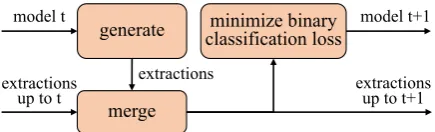
Figure 1: Iterative rank-aware learning.
assertions. For instance, an open IE-powered medical question answering (QA) system may re-quire its assertions in higher precision (and conse-quently lower recall) than QA systems for other domains. For supervised open IE systems, the confidence score of an assertion is typically com-puted based on its extraction likelihood given by the model (Stanovsky et al., 2018; Sun et al., 2018). However, we observe that this often yields sub-optimal ranking results, with incorrect extrac-tions of one sentence having higher likelihood than correct extractions of another sentence. We hypothesize this is due to the issue of a disconnect between training and test-time objectives. Specif-ically, the system is trained solely to raise like-lihood of gold-standard extractions, and during training the model is not aware of its test-time be-havior of ranking a set of system-generated asser-tions across sentences that potentially include in-correct extractions.
iter-ative learning procedure that gradually improves the model by incrementally adding extractions to the training data. Experiments on the OIE2016 dataset (Stanovsky and Dagan,2016) indicate that our method significantly outperforms both neural and non-neural models.
2 Neural Models for Open IE
We briefly revisit the formulation of open IE and the neural network model used in our paper.
2.1 Problem Formulation
Given sentences = (w1, w2, ..., wn), the goal of
open IE is to extract assertions in the form of tu-ples r = (p,a1,a2, ...,am), composed of a
sin-gle predicate and m arguments. Generally, these components inrneed not to be contiguous, but to simplify the problem we assume they are contigu-ous spans of words fromsand there is no overlap between them.
Methods to solve this problem have recently been formulated as sequence-to-sequence gener-ation (Cui et al., 2018; Sun et al., 2018; Duh et al.,2017) or sequence labeling (Stanovsky et al., 2018;Jia et al.,2018). We adopt the second for-mulation because it is simple and can take ad-vantage of the fact that assertions only consist of words from the sentence. Within this framework, an assertion r can be mapped to a unique BIO (Stanovsky et al.,2018) label sequence y by as-signingO to the words not contained inr,Bp/Ip
to the words inp, andBai/Iai to the words inai respectively, depending on whether the word is at the beginning or inside of the span.
The label prediction yˆ is made by the model given a sentence associated with a predicate of in-terest (s, v). At test time, we first identify verbs in the sentence as candidate predicates. Each sen-tence/predicate pair is fed to the model and extrac-tions are generated from the label sequence.
2.2 Model Architecture and Decoding
Our training method in § 3 could potentially be used with any probabilistic open IE model, since we make no assumptions about the model and only the likelihood of the extraction is re-quired for iterative rank-aware learning. As a concrete instantiation in our experiments, we use RnnOIE (Stanovsky et al., 2018; He et al., 2017), a stacked BiLSTM with highway con-nections (Zhang et al., 2016; Srivastava et al.,
2015) and recurrent dropout (Gal and Ghahra-mani, 2016). Input of the model is the concate-nation of word embedding and another embedding indicating whether this word is predicate:
xt= [Wemb(wt),Wmask(wt=v)].
The probability of the label at each position is cal-culated independently using a softmax function:
P(yt|s, v)∝exp(Wlabelht+blabel),
whereht is the hidden state of the last layer. At
decoding time, we use the Viterbi algorithm to re-ject invalid label transitions (He et al.,2017), such asBa2 followed byIa1.
2
We use average log probability of the label se-quence (Sun et al.,2018) as its confidence:3
c(s, v,yˆ) =
P|s|
t=1logP( ˆyt|s, v)
|s| . (1)
The probability is trained with maximum likeli-hood estimation (MLE) of the gold extractions. This formulation lacks an explicit concept of cross-sentence comparison, and thus incorrect ex-tractions of one sentence could have higher confi-dence than correct extractions of another sentence.
3 Iterative Rank-Aware Learning
In this section, we describe our proposed binary classification loss and iterative learning procedure.
3.1 Binary Classification Loss
To alleviate the problem of incomparable confi-dences across sentences, we propose a simple bi-nary classification loss to calibrate confidences to be globally comparable. Given a modelθ0 trained with MLE, beam search is performed to generate assertions with the highest probabilities for each predicate. Assertions are annotated as either posi-tive or negaposi-tive with respect to the gold standard, and are used as training samples to minimize the hinge loss:
ˆ
θ= arg min θ
E s∈D v,yˆ∈gθ0(s)
max (0,1−t·cθ(s, v,yˆ)), (2)
2This formulation cannot easily handle coordination,
where multiple instances of an argument are extracted for a single predicate, so we use a heuristic of keeping only the first instance of an argument.
3The log probability is normalized by the length of the
Input:training dataD, initial modelθ(0)
Output:model after convergenceθ t←0# iteration
E ← ∅# generated extractions
whilenot convergedo
E ← E ∪ {(s, v,yˆ)|v,yˆ∈gθ(t)(s),∀s∈ D}
θ(t+1)←arg min
θ (s,v,Eyˆ)∈Emax (0,1−t·cθ(s, v,yˆ)) t←t+ 1;
end
Algorithm 1: Iterative learning.
Train Dev. Test
# sentence 1 688 560 641
# extraction 3 040 971 1 729
Table 1: Dataset statistics.
where D is the training sentence collection, gθ0 represents the candidate generation process, and
t ∈ {1,−1}is the binary annotation. cθ(s, v,yˆ)
is the confidence score calculated by average log probability of the label sequence.
The binary classification loss distinguishes pos-itive extractions from negative ones generated across different sentences, potentially leading to a more reliable confidence measure and better rank-ing performance.
3.2 Iterative Learning
Compared to using external models for confidence modeling, an advantage of the proposed method is that the base model does not change: the binary classification loss just provides additional supervi-sion. Ideally, the resulting model after one-round of training becomes better not only at confidence modeling, but also at assertion generation, sug-gesting that extractions of higher quality can be added as training samples to continue this training process iteratively. The resulting iterative learning procedure (Alg. 1) incrementally includes extrac-tions generated by the current model as training samples to optimize the binary classification loss to obtain a better model, and this procedure is con-tinued until convergence.
4 Experiments
4.1 Experimental Settings
Dataset We use the OIE2016 dataset (Stanovsky and Dagan,2016) to evaluate our method, which only contains verbal predicates. OIE2016 is au-tomatically generated from the QA-SRL dataset (He et al.,2015), and to remove noise, we remove
extractions without predicates, with less than two arguments, and with multiple instances of an ar-gument. The statistics of the resulting dataset are summarized inTab. 1.
Evaluation Metrics We follow the evalua-tion metrics described by Stanovsky and Da-gan(2016): area under the precision-recall curve (AUC) and F1 score. An extraction is judged as correct if the predicate and arguments include the syntactic head of the gold standard counterparts.4
Baselines We compare our method with both competitive neural and non-neural models, includ-ing RnnOIE (Stanovsky et al., 2018), OpenIE4,5 ClausIE (Corro and Gemulla, 2013), and PropS (Stanovsky et al.,2016).
Implementation Details Our implementation is based on AllenNLP (Gardner et al., 2018) by adding binary classification loss function on the implementation of RnnOIE.6 The network con-sists of 4 BiLSTM layers (2 forward and 2 back-ward) with 64-dimensional hidden units. ELMo (Peters et al.,2018) is used to map words into con-textualized embeddings, which are concatenated with a 100-dimensional predicate indicator em-bedding. The recurrent dropout probability is set to 0.1. Adadelta (Zeiler,2012) with= 10−6 and
ρ = 0.95and mini-batches of size 80 are used to optimize the parameters. Beam search size is 5.
4.2 Evaluation Results
Tab. 4lists the evaluation results. Our base model (RnnOIE, § 2) performs better than non-neural systems, confirming the advantage of supervised training under the sequence labeling setting. To test if the binary classification loss (E.q. 2, § 3) could yield better-calibrated confidence, we per-form one round of fine-tuning of the base model with the hinge loss (+Binary loss in Tab. 4). We show both the results of using the confidence (E.q. 1) of the fine-tuned model to rerank the extractions of the base model (Rerank Only), and the end-to-end performance of the fine-tuned model in assertion generation (Generate). We
4
The absolute performance reported in our paper is much lower than the original paper because the authors use a more lenient lexical overlap metric in their released code: https://github.com/gabrielStanovsky/ oie-benchmark.
5
https://github.com/dair-iitd/ OpenIE-standalone
6https://allennlp.org/models#
sentence old new label
rank rank
A CEN forms an important but small part of a Local Strategic Partnership . 3 1 3
An animal that cares for its young but shows no other sociality traits is said
to be “ subsocial” .
2 2 7
A casting director at the time told Scott that he had wished that he’d met
him a week before ; he was casting for the “G.I. Joe” cartoon.
[image:4.595.109.489.64.176.2]1 3 7
Table 2: Case study of reranking effectiveness. Red for predicate and blue for arguments.
sentence label
A Democrat , he became the youngest mayor in Pittsburgh’s history in September
2006 at the age of 26 .
3
A motorcycle speedway long-track meeting , one of the few held in the UK, was staged at Ammanford.
[image:4.595.318.515.329.447.2]7
Table 3: Case study of generation effectiveness. Red for predicate and blue for arguments.
0.06 0.08 0.1 0.12 0.14 0.16
1 2 3 4 5 6 7 8 9 10
AUC
rerank generate
pos rerank pos generate
0.24 0.27 0.3 0.33 0.36
1 2 3 4 5 6 7 8 9 10
F1
rerank
generate pos generatepos rerank
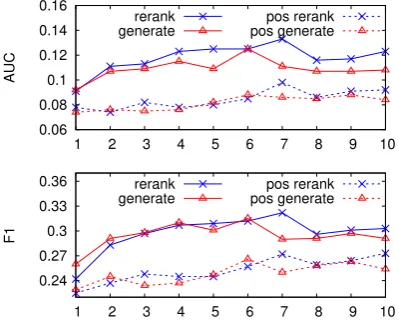
Figure 2: AUC and F1 at different iterations.
found both settings lead to improved performance compared to the base model, which demonstrates that calibrating confidence using binary classifi-cation loss can improve the performance of both reranking and assertion generation. Finally, our proposed iterative learning approach (Alg. 1,§3) significantly outperforms non-iterative settings.
We also investigate the performance of our iter-ative learning algorithm with respect to the num-ber of iterations inFig. 2. The model obtained at each iteration is used to both rerank the extractions generated by the previous model and generate new extractions. We also report results of using only positive samples for optimization. We observe the AUC and F1 of both reranking and generation in-creases simultaneously for the first 6 iterations and converges after that, which demonstrates the
effec-System AUC F1
Non-neural Systems
PropS .006 .065
ClausIE .026 .144
OpenIE4 .034 .164
Neural Systems
Base Model (RnnOIE) .050 .204
+Binary loss (§3.1), Rerank Only .091 .225
+Binary loss (§3.1), Generate .092 .260
+Iterative Learning (§3.2) .125 .315
Table 4: AUC and F1 on OIE2016.
tiveness of iterative training. The best performing iteration achieves AUC of 0.125 and F1 of 0.315, outperforming all the baselines by a large margin. Meanwhile, using both positive and negative sam-ples consistently outperforms only using positive samples, which indicates the necessity of exposure to the errors made by the system.
[image:4.595.73.273.330.493.2]overgenerated wrong missing
predicate argument argument
41% 38% 21%
Table 5: Proportions of three errors.
Error Analysis Why is the performance still rel-atively low? We randomly sample 50 extractions generated at the best performing iteration and con-duct an error analysis to answer this question. To count as a correct extraction, the number and or-der of the arguments should be exactly the same as the ground truth and syntactic heads must be in-cluded, which is challenging considering that the OIE2016 dataset has complex syntactic structures and multiple arguments per predicate.
We classify the errors into three categories and summarize their proportions inTab. 5. “Overgen-erated predicate” is where predicates not included in ground truth are overgenerated, because all the verbs are used as candidate predicates. An ef-fective mechanism should be designed to reject useless candidates. “Wrong argument” is where extracted arguments do not coincide with ground truth, which is mainly caused by merging multi-ple arguments in ground truth into one. “Missing argument” is where the model fails to recognize arguments. These two errors usually happen when the structure of the sentence is complicated and coreference is involved. More linguistic informa-tion should be introduced to solve these problems.
5 Conclusion
We propose a binary classification loss function to calibrate confidences in open IE. Iteratively op-timizing the loss function enables the model to incrementally learn from trial and error, yielding substantial improvement. An error analysis is per-formed to shed light on possible future directions.
Acknowledgements
This work was supported in part by gifts from Bosch Research, and the Carnegie Bosch Institute.
References
Michele Banko, Michael J. Cafarella, Stephen Soder-land, Matthew Broadhead, and Oren Etzioni. 2007. Open information extraction from the web. In Pro-ceedings of the 20th International Joint Conference on Artificial Intelligence, pages 2670–2676.
Luciano Del Corro and Rainer Gemulla. 2013.Clausie: clause-based open information extraction. In22nd International World Wide Web Conference, pages 355–366.
Lei Cui, Furu Wei, and Ming Zhou. 2018. Neural open information extraction. InProceedings of the 56th Annual Meeting of the Association for Compu-tational Linguistics, pages 407–413.
Kevin Duh, Benjamin Van Durme, and Sheng Zhang. 2017. MT/IE: cross-lingual open information ex-traction with neural sequence-to-sequence models. InProceedings of the 15th Conference of the Euro-pean Chapter of the Association for Computational Linguistics, pages 64–70.
Anthony Fader, Stephen Soderland, and Oren Etzioni. 2011.Identifying relations for open information ex-traction. InProceedings of the 2011 Conference on Empirical Methods in Natural Language Process-ing, pages 1535–1545.
Yarin Gal and Zoubin Ghahramani. 2016. A theoret-ically grounded application of dropout in recurrent neural networks. InAdvances in Neural Informa-tion Processing Systems 29: Annual Conference on Neural Information Processing Systems 2016, pages 1019–1027.
Matt Gardner, Joel Grus, Mark Neumann, Oyvind Tafjord, Pradeep Dasigi, Nelson F. Liu, Matthew E. Peters, Michael Schmitz, and Luke Zettlemoyer. 2018. Allennlp: A deep semantic natural language processing platform. CoRR, abs/1803.07640.
Luheng He, Kenton Lee, Mike Lewis, and Luke Zettle-moyer. 2017. Deep semantic role labeling: What works and what’s next. InProceedings of the 55th Annual Meeting of the Association for Computa-tional Linguistics, pages 473–483.
Luheng He, Mike Lewis, and Luke Zettlemoyer. 2015. Question-answer driven semantic role labeling: Us-ing natural language to annotate natural language. In Proceedings of the 2015 Conference on Empiri-cal Methods in Natural Language Processing, pages 643–653.
Shengbin Jia, Yang Xiang, and Xiaojun Chen. 2018. Supervised neural models revitalize the open rela-tion extracrela-tion.CoRR, abs/1809.09408.
Mausam, Michael Schmitz, Stephen Soderland, Robert Bart, and Oren Etzioni. 2012. Open language learn-ing for information extraction. In Proceedings of the 2012 Joint Conference on Empirical Methods in Natural Language Processing and Computational Natural Language Learning, pages 523–534.
Satoshi Sekine. 2006. On-demand information extrac-tion. InACL 2006, 21st International Conference on Computational Linguistics and 44th Annual Meet-ing of the Association for Computational LMeet-inguis- Linguis-tics, Proceedings of the Conference, Sydney, Aus-tralia, 17-21 July 2006.
Rupesh Kumar Srivastava, Klaus Greff, and J¨urgen Schmidhuber. 2015. Training very deep networks. InAdvances in Neural Information Processing Sys-tems 28: Annual Conference on Neural Information Processing Systems 2015, pages 2377–2385.
Gabriel Stanovsky and Ido Dagan. 2016. Creating a large benchmark for open information extraction. In Proceedings of the 2016 Conference on Empiri-cal Methods in Natural Language Processing, pages 2300–2305.
Gabriel Stanovsky, Jessica Ficler, Ido Dagan, and Yoav Goldberg. 2016. Getting more out of syntax with props.CoRR, abs/1603.01648.
Gabriel Stanovsky, Julian Michael, Luke Zettlemoyer, and Ido Dagan. 2018. Supervised open information extraction. InProceedings of the 2018 Conference of the North American Chapter of the Association for Computational Linguistics: Human Language Technologies, pages 885–895.
Mingming Sun, Xu Li, Xin Wang, Miao Fan, Yue Feng, and Ping Li. 2018. Logician: A unified end-to-end neural approach for open-domain information ex-traction. InProceedings of the Eleventh ACM Inter-national Conference on Web Search and Data Min-ing, pages 556–564.
Matthew D. Zeiler. 2012. ADADELTA: an adaptive learning rate method.CoRR, abs/1212.5701.