Munich Personal RePEc Archive
An Improved IS-LM Model To Explain
Quantitative Easing
Hiermeyer, Martin
26 February 2019
Online at
https://mpra.ub.uni-muenchen.de/92394/
An Improved IS-LM Model To
Explain Quantitative Easing
ByMARTIN HIERMEYER*
The paper combines the IS-LM model with a Tobin-style
analysis of the banking system. As suggested by Krugman,
the resulting model has great predictive power. It can explain
quantitative easing and its effect on the economy, helicopter
money and money creation by banks. Also, it is free of the
normal shortcomings of the IS-LM model.
* German Ministry of Finance, Wilhelmstr. 97, 10117 Berlin (e-mail: [email protected]).
I’m grateful to C.A.E. Goodhart and Peter Howells for many helpful comments.
I. Introduction
The IS-LM model has largely disappeared from research and, to some
extent, also from teaching. This is understandable given the shortcomings
of the model. It is also regrettable given the predictive power of the model.
Krugman (2018) argues that the IS-LM model is in many ways the best
model in all of economics. After all, it was the IS-LM model which
cor-rectly predicted that there would be no surge in inflation when the
Bernanke Fed embarked on quantitative easing and expanded
high-pow-ered money by a factor of almost five. And it was the IS-LM model which
correctly predicted that the 2009 Obama White House fiscal stimulus
would not drive up interest rates. Which other economic model, Krugman
asks, provides such strong, counterintuitive and successful predictions?
Krugman suggests that it takes “IS-LM-with-Tobin” to fully leverage the
IS-LM model’s potential. This paper offers just that. It combines the
IS-LM model with a Tobin (1963)-style analysis of the banking system to
ex-plain quantitative easing, helicopter money and money creation by banks.
2
II. Improved IS-LM Model
The improved IS-LM model is based on three accounting identities and
five plausible assumptions. The accounting identities are given by
equa-tions (1) to (3) while the assumpequa-tions are given by equaequa-tions (4) to (8).
(1) Y C + I + G
(2) HPM CHP + ER + RR
(3) RR rrD, with rr ≥ 0
(4) I = I(lbi), with I’(bli) < 0
(5) HPM = HPM(ffr), with HPM’(ffr) < 0
(6) CHP = CHP(bli), with CHP’(bli) < 0
(7) ER = ER(bli), with ER’(bli) < 0
(8) D = D(Y), with D’(Y) > 0
The variables are:
Y: Output ER: Excess reserves
C: Consumption spending RR: Required reserves
I: Investment spending rr: Reserve ratio
G: Government spending D: Demand deposits
HPM: High-powered money bli: Bank loan interest rate
CHP: Currency held by the public ffr: Federal funds rate
Equation (1) is the national income identity for a closed economy.
Equa-tion (2) defines the components of high-powered money. EquaEqua-tion (3)
de-fines the reserve ratio.
Equation (4) assumes that investment spending decreases with the bank
loan interest rate. This is plausible as a higher bank loan interest rate means
that some investment projects are no longer profitable.
Equation (5) assumes that demand for high-powered money decreases
3
interest rate which banks pay when they borrow high-powered money from
the Fed.
Equation (6) assumes that the amount of currency held by the public
de-creases with the bank loan interest rate. This is plausible as a higher bank
loan interest rate generally comes with a higher savings accounts interest
rate which makes it more attractive for the public (i.e. households and
firms) to reduce currency balances by paying some currency into savings
accounts.
Equation (7) assumes that the amount of excess reserves held by banks
decrease with the bank loan interest rate. This is plausible as the bank loan
interest rate reflects banks’ opportunity cost of holding excess reserves
in-stead of making loans.
Equation (8) assumes that demand deposits increase with output. This is
plausible as additional output implies additional transactions. Additional
transactions imply additional demand deposits, as payment with check,
di-rect debit or bank wire transfer is generally the main method of payment.
The improved IS-LM model consists of an improved IS curve and an
improved LM curve.
The improved IS curve is obtained by combining equations (1) and (4).
(I-IS) Y = C + I(bli) + G, with I’(bli) < 0
Combining equations (2), (3) and (5) to (8) yields the improved LM curve.
(I-LM) HPM(ffr) = CHP(bli) + ER(bli) + rrD(Y),
with HPM’(ffr) < 0, CHP’(bli) < 0, ER’(bli) < 0 and D’(Y) > 0
III. Improved IS-LM Model Versus IS-LM Model
The improved IS-LM model is similar to the IS-LM model. Developed
by Hicks (1937) and Hansen (1953), the IS-LM model consists of an IS
curve and an LM curve.
4
(LM) M = L(i, Y), with L’(i) < 0 and L’(Y) > 0
The variables, if not already defined, are:
i: Interest rate L: Liquidity demand
M: Money supply
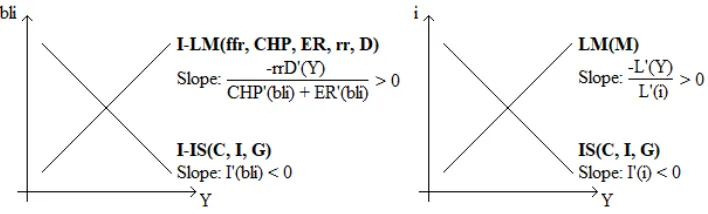
Figure 1 compares the improved IS-LM model to the IS-LM model. As can
be seen, the improved IS-LM operates in output-bank loan interest rate
space rather than in output-interest rate space. Also, the improved LM
curve has four endogenous variables more than the LM curve. The
im-proved IS curve and the IS curve have the same slope if I’(i) = I’(bli) holds.
The improved LM curve and the LM curve have the same slope if L’(Y) =
rrD’(Y) and L’(i) = CHP’(bli) + ER’(bli) holds.
FIGURE 1.IMPROVED IS-LMMODEL VERSUS IS-LMMODEL.
IV. How The Improved IS-LM Model Works
To understand how the improved IS-LM model works, consider a
mon-etary expansion in the model. For HPM’(ffr)=-4, I’(bli)=-20, CHP’(bli)=
-1, ER’(bli)=-1, rr=0.1 and D’(Y)=1, a 1 percentage point cut in the federal funds rate leads to a $20 increase in output, as shown by equation (9).
(9) 𝑑𝑌
𝑑𝑓𝑓𝑟 =
𝐻𝑃𝑀′(𝑓𝑓𝑟) 𝐼′(𝑏𝑙𝑖)
𝐶𝐻𝑃′(𝑏𝑙𝑖) + 𝐸𝑅′(𝑏𝑙𝑖) + 𝑟𝑟𝐷′(𝑌) 𝐼′(𝑏𝑙𝑖) =
80 −4 = -20
Figure 2 shows this graphically, assuming arbitrary initial values for the
federal funds rate, output and the bank loan interest rate. As can be seen,
the 1 percentage point reduction in the federal funds rate from 2% to 1%
[image:5.612.130.484.318.425.2]5
FIGURE 2.REDUCTION IN THE FEDERAL FUNDS RATE IN THE IMPROVED IS-LMMODEL.
Table 1 compares point C – the initial equilibrium – to point A – the new
equilibrium – and shows how the variables in equations (I-IS) and (I-LM)
change. Several things can be seen.
TABLE 1—CHANGE IN THE INVOLVED VARIABLES:POINT CVERSUS POINT AOF FIGURE 2 (1) Change in the federal funds rate (ffr) -1 percentage point (2) Change in high-powered money (HPM)
+$4 (3) Change in the bank loan interest rate (bli) -1 percentage point (4) Change in currency held by the public (CHP) +$1 (5) Change in excess reserves (ER) +$1 (6) Change in the bank loan supply +$20 (7) Change in demand deposits (D) +$20 (8) Change in required reserves (RR) +$2 (9) Change in bank loan demand +$20 (10) Change in investment (I) +$20 (11) Change in output (Y) +$20
Line 2: The 1 percentage point cut in the federal funds rate comes with a
$4 increase in high-powered money as the Fed’s New York traders lend an
additional $4 of high-powered money to banks to implement the Federal
Open Market Committee’s decision regarding the federal funds rate. Line 3: The reduction in the federal funds rate comes with a 1 percentage
point reduction in the bank loan interest rate.
Lines 4 and 5: The lower bank loan interest rate makes it more attractive
for the public to hoard currency by withdrawing currency from savings
ac-counts and makes it more attractive for banks to hoard excess reserves. Of
the $4 increase in high-powered money, $1 is absorbed into currency held
by the public and $1 into excess reserves. This leaves $2 of high-powered
money to hit the real economy.
Lines 6, 7 and 8: Those $2 of high-powered money that hit the real
[image:6.612.241.369.53.169.2] [image:6.612.131.472.278.397.2]6
making loans. When banks make loans, they credit the demand deposit
ac-counts of the firms with a demand deposit of the size of the loan so that the
firms can use the money. Thus, both bank loan supply and demand deposits
are up by $20. Since the reserve ratio is assumed to be 0.1, required reserves
are up by $2.
Lines 9, 10 and 11: Like the bank loan supply, bank loan demand is up
by $20 as the lower bank loan interest rate makes firms borrow and invest
$20 more. When the firms spend the additionally borrowed $20, output
in-creases by $20 as prices are assumed to be fixed in the short run.
A. Monetary Policy Is Partly Self-Defeating
Figure 2 shows that monetary policy is partly self-defeating. The increase
in output would be greater if the bank loan interest rate would not decline
so that none of the additional high-powered money is absorbed into idle
currency held by the public and excess reserves. Such a happy “state of affairs” is the case at point B of Figure 2. However, as Table 2 shows, point
B is no equilibrium as bank loan supply (line 6) exceeds bank loan demand
(line 9) by $40 there.
TABLE 2—CHANGE IN THE INVOLVED VARIABLES:POINT BVERSUS POINT AOF FIGURE 2 (1) Change in the federal funds rate (ffr) -1 percentage point (2) Change in high-powered money (HPM) +$4 (3) Change in the bank loan interest rate (bli) Unchanged (4) Change in currency held by the public (CHP) Unchanged (5) Change in excess reserves (ER) Unchanged (6) Change in the bank loan supply +$40 (7) Change in demand deposits (D) +$40 (8) Change in required reserves (RR) +$4 (9) Change in bank loan demand Unchanged
B. Bonds Instead Of Bank Loans
The aforesaid assumes that banks create demand deposits by making
loans and crediting the proceeds to the borrower’s demand deposits
ac-count. However, banks might just as well create demand deposits by
pur-chasing bonds and crediting the proceeds to the bond issuer’s demand
7
In this case, the following replacements are necessary in Tables 1 and 2:
“bond market interest rate” instead of “bank loan interest rate” in line (3),
“bond demand” instead of “bank loan supply” in line (6), and “bond
sup-ply” instead of “bank loan demand” in line (9).
It is also conceivable that banks create additional demand deposits partly
through loans and partly through bonds. In this case, the appropriate terms
are “credit market interest rate”, “credit supply” and “credit demand”.
V. Improved IS-LM Model And Quantitative Easing
Equation (9) shows that monetary policy becomes ineffective under
cer-tain conditions. Those conditions are summarized in Table 3.
TABLE 3—CONDITIONS WHICH RENDER MONETARY POLICY INEFFECTIVE
Condition Effect on curve Economic intuition
ER’(bli)→∞ Horizontal improved LM curve Banks are unwilling to make loans and rather hoard excess reserves
I’(bli)=0 Vertical improved IS curve Firms are unwilling to borrow
HPM’(ffr)=0 Horizontal improved LM curve Banks are unwilling to borrow high-powered money from the Fed
CHP’(bli)→∞ Horizontal improved LM curve The public hoards as much currency as possible
D’(Y)→∞ Horizontal improved LM curve Firms are unwilling to spend borrowed money rr→∞ Horizontal improved LM curve The Fed sets an extremely high reserve ratio
If one of those conditions holds, or nearly holds, the effectiveness of
monetary policy is hampered, and the Fed may undershoot its inflation
tar-get. In response, the Fed may drive the federal funds rate down to zero.
Once there, the Fed may wish to resort to quantitative easing if inflation is
still too low.
In quantitative easing, the Fed purchases financial assets from banks with
high-powered money. Despite the additional high-powered money, the
fed-eral funds rate does not go any lower as it has already reached its zero lower
bound.
The improved IS-LM model can show quantitative easing. For
HPM’(ffr)=0, high-powered money becomes exogenous and the Fed can increase it directly. Equation (10) shows the effect of such a direct increase
8
(10) 𝑑𝐻𝑃𝑀𝑑𝑌 = 𝐶𝐻𝑃′ 𝐼′(𝑏𝑙𝑖)
(𝑏𝑙𝑖) + 𝐸𝑅′(𝑏𝑙𝑖) + 𝑟𝑟𝐷′(𝑌) 𝐼′(𝑏𝑙𝑖)
Equation (10) is equal to equation (7) with the only exception that the term
HPM’(ffr) no longer appears. Given the similarity of both equations, it follows that if the efficiency of conventional monetary policy is restricted
by an unfavorable parameter other than HPM’(ffr), quantitative easing is
suffering, too.
If quantitative easing is more effective than conventional monetary
pol-icy, then only because of scale. In quantitative easing, the Fed can increase
high-powered money quite drastically. For example, following the
finan-cial crisis, the Fed increased high-powered money by a factor of almost
five.
A. LM Channel of Quantitative Easing
If the improved LM curve is minimally upward sloping rather than flat
and if the improved IS curve is not vertical, sheer mass may make
quanti-tative easing somewhat effective. A small portion of the flood of
high-pow-ered money may trickle into the real economy, leading to some increase in
bank loans, demand deposits, required reserves and output. The remainder
of the additional high-powered money ends up idly as currency held by the
public and/or excess reserves.
B. IS Channel of Quantitative Easing
There is also the possibility that the flood of high-powered money shifts
the improved IS curve to the right. This is not modelled here, yet it is
con-ceivable. In this case, output will increase if the improved LM curve is not
vertical which most likely it isn’t as otherwise monetary policy would be
highly effective and there would be no need to resort to quantitative easing
in the first place.
The ratio of the increase in high-powered money to the prompted shift in
the improved IS curve will probably be large, so that most of the additional
9
excess reserves. Again, a small portion may however trickle into the real
economy as some firms are willing to borrow and spend additional money
because of quantitative easing and its effect on credit conditions.
Then Fed chairman Ben Bernanke emphasized the “IS channel” in 2009
when the Fed embarked on quantitative easing. Bernanke went so far as to
make a distinction between “pure” quantitative easing as employed by the Bank of Japan from 2001 to 2006 and the Fed’s approach (Bernanke 2009).
While he admitted that both approaches involve an expansion of the
cen-tral bank’s balance sheet, he argued that in pure quantitative easing, the
focus of policy is the quantity of bank reserves, which are liabilities of the
central bank; at the same time, the composition of loans and securities on
the asset side of the central bank’s balance sheet is only incidental.
In contrast, according to Bernanke, the Fed’s credit easing approach
fo-cused on the mix of loans and securities that it holds and on how this
com-position of assets affects credit conditions for households and businesses.
Bernanke even tried to call the Fed’s new policies “credit easing” to distin-guish it from pure quantitative easing. However, as Blinder (2010) notes,
the label did not stick.
C. Predictive Power Of The Improved IS-LM Model
Irrespective of whether quantitative easing works through the IS channel
or the LM channel, the improved IS-LM model suggests that even very
large increases in high-powered money affect output (and/or prices if the
latter are flexible) only modestly if quantitative easing is employed in a
situation where unfavorable parameters hamper conventional monetary
policy. Instead, only currency held by the public and/or excess reserves go
through the roof.
This is a good prediction. US quantitative easing increased output and
prices by only 26% between January 2008 and December 2015. At the
same time, it increased excess reserves by 140,000% (Federal Reserve
10
but apparently also a counterintuitive one as there were many people who
predicted that quantitative easing would lead to high inflation.
If it is a flat improved LM curve that gives rise to quantitative easing, the
improved IS-LM model suggests furthermore that fiscal stimulus does not
drive up interest rates when employed alongside quantitative easing. As
Krugman (2018) notes, this is another counterintuitive IS-LM prediction
which came true recently.
VI. Improved IS-LM Model And Helicopter Money
From the aforesaid it follows that quantitative easing does not work if (a)
the improved LM curve is horizontal and if (b) the improved IS curve does
not react to quantitative easing.
In such a case, the Fed may want to attack the IS curve directly. This is
called helicopter money.
In helicopter money, the Fed uses newly created high-powered money to
acquire demand deposits at banks. The Fed then gifts the demand deposits
to households or, alternatively, to the government. While it is not clear
whether households will spend the money so received, it seems certain that
the government would agree to do so if this is necessary to combat
defla-tion. If helicopter money is distributed to the government, the process is
also known as government debt monetization.
This mechanism is very powerful as both the improved LM curve and
the improved IS curve shift to the right here. In fact, this is the very
mech-anism through which all past hyperinflations came about.
VII. Improved IS-LM Model And Money Creation By Banks
As McLeay et al. (2014) note: In the modern economy, most money takes
the form of demand deposits and is created endogenously by banks. The
improved IS-LM model reflects that. This is a major step forward when
compared to the IS-LM model which assumes that all money is created by
11
A. Tobin’s (1963) Analysis Of The Banking System
The improved IS-LM model also drives home a point made by Tobin
(1963), namely that banks do not possess a “widow’s cruse”. There are
limits to the banking systems’ capability to create money as “Marshall’s
scissors of supply and demand” apply also to the output of the banking
industry (i.e. to bank loans and demand deposits). If demand deposits are
excessive relative to public preferences, Tobin argued, they will tend to
decline, and banks cannot do anything about it.
The improved LM and IS curves reflect Marshall’s scissors of supply and
demand. Banks can create additional demand deposits only subject to
pub-lic preferences. If there is no demand for loans, that is, if the improved IS
curve is vertical, banks cannot create additional demand deposits at all.
For a non-vertical improved IS curve, banks can create additional
de-mand deposits (a) because they themselves choose to do so by exogenously
decreasing excess reserves, or (b) because the Fed, households, firms or the
government curve induce them to do so.
B. Fed- And Non-Fed-Induced Money Creation By Banks
How the Fed can induce banks to create additional demand deposits was
described in chapter IV. There, a 1 percentage point reduction in the federal
funds rate made banks create $20 in additional demand deposits. The
pro-cess is governed by equation (11).
(11) 𝑑𝐷
𝑑𝑓𝑓𝑟 =
𝐻𝑃𝑀′(𝑓𝑓𝑟) 𝐼′(𝑏𝑙𝑖) 𝐷′(𝑌)
𝐶𝐻𝑃′(𝑏𝑙𝑖) + 𝐸𝑅′(𝑏𝑙𝑖) + 𝑟𝑟𝐷′(𝑌) 𝐼′(𝑏𝑙𝑖) =
80 −4 = -20
Next to the Fed, households, firms and the government can induce banks
to create additional demand deposits. Equation (12) shows how a $1
increase in, here, consumption spending makes banks create $0.5 in
additional demand deposits for the parameters from chapter IV.
(12) 𝑑𝐷
𝑑𝐶 =
𝐶𝐻𝑃′(𝑏𝑙𝑖) 𝐷′(𝑌) + 𝐸𝑅′(𝑏𝑙𝑖) 𝐷′(𝑌)
𝐶𝐻𝑃′(𝑏𝑙𝑖) + 𝐸𝑅′(𝑏𝑙𝑖) + 𝑟𝑟𝐷′(𝑌) 𝐼′(𝑏𝑙𝑖) =
12
The same expression holds for an increase in investment or government
spending. Equation (12) drives home the point of Goodhart (2017) that
banking is a service industry which sets the terms and conditions whereby
the private and government sector can create additional money for itself.
VIII. Eliminated Shortcomings Of The IS-LM Model
As a welcome side-effect, the improved IS-LM model eliminates all the
shortcomings of the standard IS-LM model.
A. Unlike The IS-LM Model, The Improved IS-LM Model Does Not
Assume That The Fed Targets Money
The IS-LM model assumes wrongly that the Fed targets money, and more
specifically the money supply M. In principle, the Fed might do so by
set-ting a target path for M or by explicitly changing M from time to time, for
example after a Federal Open Market Committee (FOMC) meeting.
This is, however, not how the Fed conducts monetary policy today.
Ra-ther, the Fed targets the federal funds rate: The FOMC from time to time
decides upon a change in the federal funds rate and the Fed’s New York
traders continuously adjust a measure of the money supply (high-powered
money) as necessary to keep the federal funds rate as close as possible to
the FOMC’s target. The improved IS-LM model fully reflects that.
B. Unlike The IS-LM Model, The Improved IS-LM Model Is Clear
About Its Money Measures
The IS-LM model is unclear about the LM curve’s money measures M
and L. Very few authors are willing to take a stance whether M and L
re-flect high-powered money, M1 money or some entirely different money
measure.
In contrast, the improved LM curve is clear about its money measures
which are: High-powered money, currency held by the public, excess
13
High-powered money gives the Fed’s leverage over the economy: Banks
need it because the public demands currency and/or because the Fed
de-mands required reserves; at the same time, only the Fed can create it.
Demand deposits underlie transactions which in turn underlie additional
output. Equation (4) assumed that all transactions are settled cashless
through demand deposits as output is not related to currency held by the
public. For added realism, one could also allow for cash transactions. In
this case, in equation (4), the demand for currency held by the public would
depend not only negatively on the bank loan interest rate but also positively
on output.
C. Unlike The IS-LM Model, The Improved IS-LM Model Is Clear
About Its Interest Rate
The IS-LM model is unclear about its interest rate i. Very few authors
are willing to take a stance whether i reflects the federal funds rate, the
bank loan interest rate or some entirely different interest rate.
In contrast, the improved IS-LM model is clear about its interest rates
which are the federal funds rate and the bank loan interest rate.
The federal funds rate is the Fed’s policy rate and the Fed manipulates
high-powered money as necessary to achieve its target for the federal funds
rate. The bank loan interest rate matches demand and supply for bank loans.
As discussed in section IV B, the interest rate can be generalized to a bond
market interest rate or a credit market interest rate.
IX. Conclusion
The improved IS-LM model puts flesh on the bones of the IS-LM model.
While it maintains the IS-LM model’s basic structure, it is more precise
14
TABLE 4—THE IMPROVED IS-LMMODEL PUTS FLESH ON THE BONES OF THE IS-LMMODEL
Variables of the IS-LM Model Variables of the Improved IS-LM Model
Output (Y) Output (Y) Interest rate (i) Bank loan interest rate (bli)
Federal funds rate (ffr)
Consumption spending (C) Consumption spending (C) Investment spending (I) Investment spending (I) Government spending (G) Government spending (G)
Money (M) High-powered money (HPM) Liquidity (L) Currency held by the public (CHP)
Excess reserves (ER) Demand deposits (D)
This paper is not the first attempt to improve the IS-LM model in general
and the LM curve in particular.
Bernanke and Blinder (1988) suggest a modified LM curve which
in-cludes bank reserves to analyze the relative merits of bank assets and bank
liabilities as indicators and targets of monetary policy. Since Bernanke and
Blinder were not interested in quantitative easing or helicopter money, their
LM curve does however not include high-powered money as an entity
sep-arate from reserves. Nor does it include excess reserves or the federal funds
rate to distinguish quantitative easing from conventional monetary policy.
More recently, Mierau and Mink (2018) suggest a modified LM curve
which includes bank equity to analyze the role of capital requirements in
the transmission of monetary policy. Like Bernanke and Blinder, Mierau
and Mink do not attempt to explain quantitative easing and helicopter
money and so their model doesn’t include high-powered money or excess reserves.
Many other authors have discarded the LM curve all together. Following
Clarida et al. (1999), interest rate rules have displaced the LM curve in
most research.
In teaching, the LM curve has held its ground better. Mankiw (2006)
gives detailed reasons why, for teaching, he continuous to prefer the LM
curve to an interest rate rule. Next to Mankiw (2016), other textbook
au-thors who uphold the IS-LM model include Abel, Bernanke and Croushore
2017, Blanchard 2017, Dwivedi 2015, Froyen 2013 or Heijdra 2017.
15
Allsopp and Vines (2000), Taylor (2000), Walsh (2002), Carlin and
Soskice (2005) or Bofinger et al. (2006) have suggested simple models that
replace the LM curve with an interest rate rule.
The aforesaid sketches the competition and the environment which the
improved IS-LM model faces. Naturally, for the improved IS-LM model
to succeed, it must be superior to the other models, at least for some
appli-cations. Table 5 provides a comparison on which the improved IS-LM
model might stake its claim.
TABLE 5—IMPROVED IS-LMMODEL VERSUS OTHER MODELS
Improved IS-LM Model
Standard IS-LM Model
Interest Rate Rule
Bernanke/ Blinder Mierau/Mink Assumes that the Fed targets the federal
funds rate in conventional monetary ✓ ✓
policy?
Shows how the Fed targets the federal
funds rate by manipulating high- ✓ powered money?
Is clear about its money measure(s) (if
any are included in the model) and its ✓ ✓ ✓
interest rate(s)?
Recognizes that most of today’s broad
broad money is created by banks and not ✓ ✓
by the Fed?
Can explain quantitative easing and
helicopter money (including government ✓
16 REFERENCES
Abel, Andrew B., Ben S. Bernanke, and Dean Croushore. 2017. “Macroe-conomics”, 9th ed. Boston: Pearson Education, Inc.
Allsopp, Christopher and David Vines. 2000. “The Assessment:
Macroe-conomic Policy”. Oxford Review of Economic Policy 16(4): 1-32.
Blanchard, Olivier. 2017. “Macroeconomics”, 7th ed. Upper Saddle River, New Jersey: Pearson Education, Inc.
Bernanke, Ben and Alan Blinder. 1988. “Credit, money and aggregate
de-mand.” American Economic Review, 78(2):435–39.
Bernanke, Ben S. 2009. “The Crisis and the Policy Response”, At the Stamp Lecture, London School of Economics, London, England.
Blinder, Alan S. 2010. “Quantitative Easing: Entrance and Exit Strategies”, Federal Reserve Bank of St. Louis Review, November/December 2010,
92(6): 465-79.
Bofinger, Peter, Eric Mayer and Timo Wollmershäuser. 2006. “The BMW
Model: A New Framework for Teaching Monetary Economics. The
Jour-nal of Economic Education, vol. 37(1).
Carlin Wendy & Soskice David, 2005. “The 3-Equation New Keynesian
Model – A Graphical Exposition”. The B.E. Journal of Macroeconomics,
vol. 5(1), 1-38.
Clarida, Richard, Jordi Gali, and Mark Gertler. 1999. “The Science of
Monetary Policy: A New Keynesian Perspective.” Journal of Economic
Literature, vol. 37 (4): 1661-1707.
Dwivedi, D.N.. 2015. “Macroeconomics – Theory and Policy”, 4th ed.
New York: McGraw-Hill Irwin.
Federal Reserve. 2018. “St. Louis Adjusted Monetary Base”, “Excess Re-serves of Depository Institutions” and “Gross Domestic Product”,
re-trieved from FRED, Federal Reserve Bank of St. Louis.
Froyen, Richard T.. 2013. “Macroeconomics”, 10th ed. Upper Saddle River, New Jersey: Pearson Education, Inc.
Goodhart, C.A.E.. 2017. “The Determination of the Money Supply:
17
Hansen, Alvin H.. 1953. “A Guide to Keynes”. New York: McGraw Hill.
Heijdra, Ben J.. 2017. “Foundations of Modern Macroeconomics”, 3rd ed.
Oxford University Press.
Hicks, John R. 1937. “Mr. Keynes and the 'Classics': A Suggested
Inter-pretation”. In Econometrica 5 (2). 147-159.
Krugman, Paul. 2018. “What Do We Actually Know About the Economy?” Opinion. New York Times.
https://www.nytimes.com/2018/09/16/opin-ion/what-do-we-actually-know-about-the-economy-wonkish.html
Mankiw, N. Gregory. 2006. “The IS-LM Model”. http://gregmankiw.blog-spot.com/2006/05/is-lm-model.html
Mankiw, N. Gregory. 2016. “Macroeconomics”, 9th ed. New York: Worth Publishers.
McLeay, Michael, Radia, Amar, and Ryland Thomas. 2014. “Money crea-tion in the modern economy.” Bank of England Quarterly Bulletin.
Mierau, Jochen O. and Mark Mink. 2018. “A Descriptive Model of
Bank-ing and Aggregate Demand”, De Economist 166. 207–237.
Romer, David, H.. 2000. “Keynesian Macroeconomics without the LM Curve.” In Journal of Economic Perspectives, 14(2): 149-169.
Taylor, John B. 2000. “Teaching Modern Macroeconomics at the
Princi-ples Level”. American Economic Review Papers and Proceedings 90(2),
90-94.
Tobin, James. 1963. “Commercial banks as creators of money”. Cowles
Foundation Discussion Papers 159, Cowles Foundation for Research in
Economics, Yale University.