Abstract—Deposition of large particles such as colloidal or
bio-particles on a solid surface is usually modeled by the random sequential adsorption (RSA). The model was previously described by the integral-equation theory whose validity was proved by Monte Carlo simulation. This research generalized the model to include the concentration effect of added particles on the surface. The fraction of particles inserted was varied by the number density of 0.05, 0.1, and 0.2. It was found that the modified integral-equation theory yielded the results in good accordance with the simulation. When the fraction of particles added was increased, the radial distribution function has higher peak, due to the cooperative and entropic effects. This work could bridge the gap between equilibrium adsorption, where all particles may be considered moving and RSA, where there is no moving particles.
Index Terms—Colloid, Deposition, Integral Equation Theory,
Monolayer Films.
I. INTRODUCTION
To understand the onset of irreversibility, it is very useful to generalize the adsorption model by considering the time scales that characterize its various steps. Thus, the generalized adsorption process will depend on at least three distinct characteristic times, assuming that the activation energies for desorption are much higher than for the other processes. Those times are a surface relaxation or diffusion time (τd) measuring time for moving one step, a reaction time (τr) measuring the time for irreversible attachment to the surface, and an adsorption time (τa) measuring the separation between two consecutive adsorption events. The relative magnitude of the three times defined above lead to very different physical situations.
In the equilibrium case there is no reaction with the surface and the adsorbed molecules equilibrate rapidly between successive additions such thatτr >>τa >>τd . In another limiting case, Random Sequential Adsorption (RSA), the adsorbed molecules react with the surface instantaneously but not diffuse, so that τd >>τa >>τr . In the third limit,
Manuscript received December 28, 2007. This work was financially supported by the office of National Research Council of Thailand in the fiscal year 2008.
Panu Danwanichakul is with the Department of Chemical Engineering, Faculty of Engineering, Thammasat University, 99 Moo 18 Paholyothin Rd., Khlong Nung, Khlong Luang, Pathumthani, 12120 Thailand(e-mail: [email protected]).
Sequential Quenching, the separation in the characteristic times such thatτa >>τr >>τd. A similar discussion about relative magnitude of the characteristic times was also given by Schaaf and Talbot [1].
Usually, the adsorption of large particles such as colloidal particles and proteins on a surface is irreversible. Feder and Giaever [2] reported that the monolayer structures of adsorbed ferritin on carbon surface could be explained by the model of random sequential adsorption (RSA). Onoda and Liniger [3] also found that the configurations of polystyrene spheres on a glass surface finally reached the jamming limit of RSA. However, there have been many indirect and direct evidences showing that among the immobile particles there exists mobile fraction of particles. Reports of surface coverages significantly greater than the RSA jamming limit provide indirect evidence for lateral diffusion [4]. An early study of surface diffusion of adsorbed proteins was carried out by Michaeli et al. in 1980 [5]. In their experiment the distribution of bovine serum albumin (BSA) adsorbed on glass was imaged by autoradiography. They saw no evidence of desorption and noticed that a protein front migrated over distances proportional to the square root of time, as expected for diffusion. Later, Burghardt and Axelrod [6] published a quantitative study of BSA surface diffusion on quartz. They used an elliptical spot fluorescence recovery after photobleaching (FRAP) in a total internal reflection configuration to measure simultaneous surface diffusion and exchange between adsorbed and dissolved proteins in solution. They found that adsorbed BSA exists in three distinct states: irreversible, slowly reversible and rapidly reversible.
Tilton et al. [7], [8] used FRAPP based on interference of two coherent beams in total internal reflection at a solid-liquid interface. In their studies, BSA was adsorbed on polymer surfaces: spin-cast polymethyl-methacrylate (PMMA) films and cross-linked spin-cast films of polydimethylsiloxane (PDMS). They found coexistence of a mobile and an immobile population of BSA. Tilton et al. [8] also found that the mobile fraction does not depend on surface concentration. The coexistence of mobile and apparently immobile proteins appears to result not from aggregation of adsorbed BSA but from a change in conformation or orientation of the adsorbed protein. Other experiments on protein adsorption, such as that of DNA oligonucleotides on APTES glass [9] and of BSA on silica-titania surfaces [10], have also revealed surface diffusion in the adsorbed state. If the protein-protein interactions are favorable, surface diffusion will lead to clustering[11], [12].
Radial Distribution Functions of the
S
tructures
B
uilt through Fractional Deposition of Hard
Spherical Particles
The model of sequential quenching (SQ) has been studied to describe the effect of surface diffusion in irreversible adsorption on monolayer structures [13], [14]. Nonetheless, only one particles moving at one time is an idealistic situation. In this work, the effect of mobile fraction of hard particles moving among the immobile ones on the surface was investigated in the process called fractional deposition. We varied the number of added particles at each time and they are allowed to diffuse under the effect of other previously adsorbed particles. In Section II, the detail of simulation method is provided and the simulation results together with the discussion are given in Section III. The article is then concluded in Section IV.
II. AN INTEGRAL-EQUATION THEORY FOR FRACTIONAL DEPOSITION
A. Adsorption within Disordered Matrices
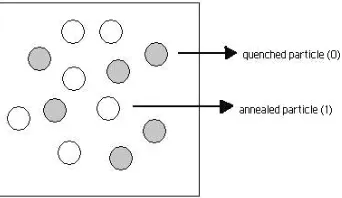
[image:2.595.95.266.344.443.2]A fluid within in a disordered porous matrix can be viewed as a binary mixture of quenched particles (component 0) and equilibrated or annealed particles (component 1), as shown in Figure 1.
Fig 1: Fluid particles (1) are adsorbed within a quenched matrix (0)
Let (2) 00 ( )r
ρ denote pair density function of the quenched
structure, let (2) 2
00( ) 00 ( ) / 0
g r =ρ r ρ be its pair correlation function and let h00( )r =g00( ) 1r − be the residual or total correlation function between two particles separated by a fixed distance r. Similar correlations may be defined for 0-1 and 1-1 pairs. The Replica Ornstein-Zernike equations according to Madden and Glandt [15] and later modified by Given and Stell [16] for such a system are
00 00 0 00 00
01 01 0 00 01 1 01 11
10 10 0 10 00 1 11 10
11 11 0 10 01 1 11 11
1 11 11
11 11
( ) ( ) ( ) ( )
( ) ( ) ( ) ( ) ( ) ( )
( ) ( ) ( ) ( ) ( ) ( )
( ) ( ) ( ) ( ) ( ) ( )
( ) ( )
( ) ( )
c c
c
b c
c c
h r c r c r h r
h r c r c r h r c r h r h r c r c r h r c r h r h r c r c r h r c r h r
c r h r h r c r
ρ
ρ ρ
ρ ρ
ρ ρ
ρ
= + ⊗
= + ⊗ + ⊗
= + ⊗ + ⊗
= + ⊗ + ⊗
+ ⊗
= +ρ1cc11( )r ⊗hc11( )r
(1)
where the symbol
⊗
denotes a convolution integral. The ( )c r in the above equations are the direct correlation functions, i.e. the sums of all coefficients (“diagrams” or “cluster integrals”) in the density expansions of the
corresponding total correlation functions ( )h r which are free from nodal points. These cluster integrals are best represented in graphical form; a review of graphical notation can be found in classical references [17]. The sub-indices c and b denote the so-called connected and blocking parts of the 1-1 correlations, distinguishing whether all paths between the roots in their graphical representation pass through a matrix particle or not.
B. Binary-Mixture Approximation
An evolving sequentially or differentially quenched system can be viewed as a binary mixture of the previously quenched particles (denoted by the index 0) and the (infinitely dilute) newly added particles (denoted by 1), of number densities ρ and dρ, respectively as shown in Fig 1. The set of equations in (1) becomes
00 00 00 00
01 01 00 01 01 11
10 10 10 00 11 10
11 11 10 01 11 11
11 11
11 11 1
( ) ( ) ( ) ( )
( ) ( ) ( ) ( ) ( ) ( )
( ) ( ) ( ) ( ) ( ) ( )
( ) ( ) ( ) ( ) ( ) ( )
( ) ( )
( ) ( )
c c
c
b c
c c
h r c r c r h r
h r c r c r h r d c r h r h r c r c r h r d c r h r h r c r c r h r d c r h r
d c r h r h r c r c
ρ
ρ ρ
ρ ρ
ρ ρ
ρ
ρ
= + ⊗
= + ⊗ + ⊗
= + ⊗ + ⊗
= + ⊗ + ⊗
+ ⊗
= + c11( )r ⊗hc11( )r
(2)
These must be supplemented with an approximate closure such as the Percus-Yevick (PY) relations
[
]
[
]
[
]
[
]
[
]
[
]
01 01
11 11
11 11
( ) 1 ( ) ( ) 1 ( )
( ) 1 ( ) ( ) 1 ( )
( ) 1 c ( ) c ( ) 1 ( )
f r h r c r f r f r h r c r f r f r h r c r f r
+ = +
+ = +
+ = +
(3)
or any alternatives, where f(r) is the Mayer function which is 12
exp(−u r( ) /kT) -1, ( )u r is the pair interaction which in this work is hard sphere potential, k is the Boltzmann constant, and T is the temperature. In fractional deposition, when the total density of the system increases from ρ toρ+dρ, a balance of particle pairs yields the change in the pair density function
2 2
00 00
2
01 11
( ) ( ; ) ( ; )
2 ( ; ) ( ) ( ; )
d g r d g r d g r d g r
ρ ρ ρ ρ ρ ρ
ρ ρ ρ ρ ρ
+ + =
+ + (4)
00( ; 0) 1 00( ; 0) exp( ( ))
g r ρ = = −h r ρ = = −βu r (5) Equation (5) and its PY closure, must be solved for
01( )
g r and g11( )r at each density in order to compute g00( )r
through integration of the differential equation.
C. Numerical Integration
The structure evolves as the density of the system increases, which we denote asρi . On taking the Fourier transform on both sides of (2) and using the fact that total correlation function, h(r), is composed of direct part, c(r), and indirect part, b(r), i.e. h(r)= c(r)+ b(r), we obtain algebraic relations,
(
)
2 11 11
11
00 00 01
01
11
11 01
11
2 2
01 11 01 01
11
( ; ) ( ; )
ˆ
1 ( ; )
( ; ) ( ; ) ( ; )
( ; )
ˆ
1 ( ; )
( ; ) ( ; )
ˆ
1 ( ; )
( ; ) ( ; ) ( ; ) ( ;
( ; )
c i
c i
c i
i i i i
i
c i
c i i
c i
i i c i i i i
i
h k
b k
h k
h k b k h k
b k
h k
h k h k
h k
h k h k h k b k
b k ∆ = + ∆ − = + ∆ ∆ + + ∆ − ∆ − = % % % % % % % % % % % % % ρ ρ ρ ρ ρ
ρ ρ ρ ρ
ρ
ρ ρ
ρ ρ ρ
ρ ρ
ρ ρ ρ ρ ρ ρ ρ
ρ
11
11 11 11 11 11
11
) ˆ
1 ( ; )
2 ( ; ) ( ; ) ( ; ) ( ; ) ( ; )
ˆ
1 ( ; )
c i
c i i c i c i i
c i
h k
h k h k b k h k h k
h k + + ∆ ∆ + ∆ − + ∆ % % % % % ρ ρ
ρ ρ ρ ρ ρ ρ ρ
ρ ρ
(6) We used the initial condition to obtain the first h%00( )r . This andh%c11( )r , together with appropriate PY approximation (3) yielded the value of h%01( )r . Subsequently,h%01( )r and h%c11( )r , together with PY approximation yielded the value of h%11( )r . In each calculation, Picard iteration algorithm was applied to convergence. The inverse Fourier transforms were then applied to obtain h01( )r and h11( )r , from which the pair correlationsg01( )r and g11( )r were calculated. Each set of
01( )
g r and g11( )r was then used to compute the next g00( )r from (4), written in discretized form as (7).
( )
2 200 01 11
00 1 2
1
( ; ) 2 ( ; ) ( ; )
( ; i ) i i i i i
i
g r g r g r
g r ρ ρ ρ ρ ρ ρ ρ ρ
ρ + + + ∆ + ∆ = (7) The computation is repeated at successively larger values of the density, with ∆ρ=0.05, 0.10, or 0.20, i.e. ρi+1 =ρi + ∆ρ , until the required density is reached.
III. MONTE CARLO SIMULATION
We performed Monte Carlo simulations to verify the accuracy of the numerical results from the Ornstein-Zernike equations. The calculation of the radial distribution function
(i / 2)
g r+ ∆r is, as customary, based on a histogram for small increments of width∆r. The averaged distribution function is then trivially obtained as the ratio between number of
pairsNi collected from n configurations, at the separation ranging from ri and ri + ∆r from the average particle to the corresponding number in a system of randomly placed particles. ( ) 2 i i i N r g r
r r N n
π ρ
∆
+ =
∆ (8)
where, Ni is the number of particles in the increment ri + ∆r,
N is the total number of particle in the system, and ρis the number density of the system. To make it dimensionless, the reduced number density is defined as * 2
d ρ =ρ .
The details of the simulations are as the following. Particles are added one by one onto a 20d x 20d surface, where d is the hard-core diameter. The number of particles added is 20, 40, or 80 corresponding to ∆ρ*=0.05, 0.10, or 0.20, respectively. If the added particles overlap with previously quenched particles, they are removed and new additions are attempted until the insertion is successful. This step is followed by classical Metropolis displacement steps, allowing the particles to reach equilibrium under the effect of all other particles. The Markov generates a random walk such that the probability of visiting a particular point ris proportional to the particle’s Boltzmann factor at that location, exp(−βU( ))r . Thus, the move from r to r′ was accepted with probability
{
}
acc( ) min(1, exp ( )' ( )
r r
o→n = −βU −U (9)
Each particle performs a minimum of 1000 accepted moves with a maximum displacement of 0.5d before it is quenched in place. The periodic boundary condition is also applied. Our final results, averaged over 100 realizations, are presented in the following section.
IV. RESULTS AND DISCUSSIONS
Fig 2: The radial distribution function for the system reduced density of 0.2 generated by depositing a fraction of particles whose added density is 0.1. The theoretical results are compared with the simulation ones.
Fig 3: Similar to Fig.2, but the comparison of the results at the reduced number density of 0.3 is made.
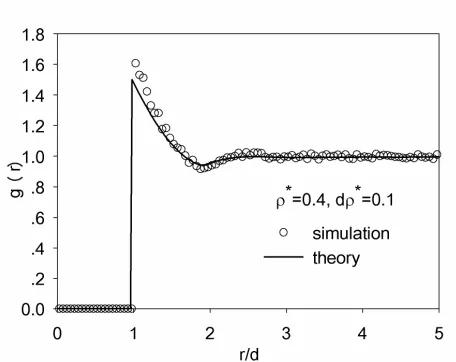
Fig 4: Similar to Fig.2, but the comparison of the results at the reduced number density of 0.4 is made.
Fig 5: The radial distribution functions from the integral-equation theory, showing the increase of short-ranged order with increasingdρ*.
More deviations are observed when the system density increases. This is attributable to the PY approximations, in which some diagrams of higher order of density are neglected. However, the consistency between those is acceptable. This proves the validity of the integral-equation theory in explaining the evolution of structures built through fractional deposition.
Since the interaction between a pair of particles is from a simple hard sphere model, the structure of the radial distribution function shows only the short-ranged interaction, represented by only one prominent peak. This peak is clearly seen higher when the system density increases, resulting from the effect of particle packing on the surface, i.e. in a later addition, the particles will be deposited closer to one another. Normally, the deposition flux depends on the particle concentration in suspension and the available space on the surface. Therefore, the flux during the monolayer growth should not be assumed constant as has been done in this work. However, Tilton et al. [8] found that the self-diffusivity of BSA adsorbed on PMMA was strongly dependent on surface concentration and that between 15 min. and 7 h. it was independent of adsorption time. Conversely, the mobile fraction does not depend on surface concentration but does depend on adsorption time. The coexistence of mobile and apparently immobile proteins appears to result not from aggregation of adsorbed BSA but from a change in conformation or orientation of the adsorbed protein.
[image:4.595.59.285.328.497.2] [image:4.595.58.286.556.737.2]If the deposition continues, the irreversible nature of adsorbed particles would lead to the jamming, where there is no available space on the surface to accommodate a particle. The jamming coverage for the adsorption for different added mobile fraction will be different and it could be determined from Monte Carlo simulations. The values should be greater than jamming coverage for RSA and less than the saturation coverage of equilibrium adsorption. Thereby, the fractional deposition could be a simple model for bridging the gap between totally irreversible as in RSA and completely reversible as in equilibrium.
V. CONCLUSION
This work proposed the integral-equation theory based on the Ornstein-Zernike equations to describe the growth of monolayer structures by fractional deposition. The theoretical results are in good agreement with the simulation results. Moreover, the theory is superior to Monte Carlo simulation since the calculation is faster. However, to determine the jamming coverage, the integral-equation theory fail to predict such high density as was discussed before. The Monte Carlo simulation would then be the helpful tool.
The integral-equation theory is amenable to include the variation of dρ* along the growing process instead of fixing the same number of added particle at one time as was done in this study. It is also flexible to use with any types of intermolecular potentials, either attractive or repulsive ones.
REFERENCES
[1] P. Schaaf and J. Talbot, “Surface Exclusion Effects in Adsorption Processes,” J. Chem. Phys., vol. 91, 1989, pp. 4401-4409 [2] J. Feder and I. Giaever, “Adsorption of ferritin,” J. Colloid
Interface Sci., vol. 78, Nov. 1980, pp. 144-154
[3] G. Y. Onoda and E. G. Liniger, “Experimental determination of the random-parking limit in two dimensions,” Phys. Rev. A, vol. 33, 1986, 715-716
[4] W. Norde and J. Lyklema, “The adsorption of human plasma albumin and bovine pancreas ribonuclease at negatively charged polystyrene surfaces: I. Adsorption isotherms. Effects of charge, ionic strength, and temperature,” J. Colloid Interface Sci., vol. 66, Sep. 1978, 257-265
[5] I. Michaeli, D. R. Absolom, and C. J. van Oss, “Diffusion of adsorbed protein within the plane of adsorption,” J. Colloid Interface Sci., vol. 77, Oct. 1980, 586-587
[6] T. P. Burghardt and D. Axelrod, “Total internal reflection/fluorescence photobleaching recovery study of serum albumin adsorption dynamics,” Biophys. J., vol. 33, Mar. 1981, 455-468
[7] R. D. Tilton, C. R. Robertson, and A. P. Gast, “Lateral diffusion of bovine serum albumin adsorbed at the solid-liquid interface,” J.
Colloid Interface Sci., vol. 137, Jun. 1990, 192-203
[8] R. D. Tilton, A. C. Gast, and C. R. Robertson, “Surface Diffusion of Interacting Proteins: Effect of Concentration on the Lateral Mobility of Adsorbed Bovine Serum Albumin,” Biophys. J., vol.58, 1990, 1321-1326
[9] V. Chan, D. J. Grave, P. Fortina, and S. E. Mckenzie, “Adsorption and surface diffusion of DNA oligonucleotides at liquid/solid interfaces,” Langmuir, vol. 13, 1997, 320-329
[10] R. Kurrat, J. E. Prenosil and J. J. Ramsden, “Kinetics of Human and Bovine Serum Albumin Adsorption at Silica–Titania Surfaces,” J. Colloid Interface Sci. vol. 185, 1997, 1-8
[11] C. T. Shibata and A. M. Lenholf, “TIRF of salt and surface effects on protein adsorption : I. Equilibrium,” J. Colloid Interface Sci. vol.148, 1992, 469-484
[12] J. J. Ramsden, G. I. Bachmanova, and A. I. Archakov, “Kinetic evidence for protein clustering at a surface,” Phys. Rev. E. vol. 50, 1994, 5072-5076
[13] P. Danwanichakul and E. D. Glandt, “Sub-Monolayer Growth by Sequential Deposition of Particles,” J. Colloid Interface Sci. vol. 294, 2006, 38-46
[14] P. Danwanichakul and E. D. Glandt, “Continuity Between Order and Disorder in the Sequential Deposition of Particles,” Chemical
Engineering Communications. vol. 192, 2005, 1-19
[15] W. G. Madden and E. D. Glandt, “Distribution functions for fluids in random media,” J. Stat. Phys., vol. 51, 1988, 537-558 [16] J. A. Given and G. Stell, “Comment on: Fluid distributions in
two-phase random media: Arbitrary matrices,” J. Chem. Phys., vol. 97, Sep. 1992, 4573-4574
[17] J. P. Hansen and I. R. McDonald, “Theory of Simple Liquids” (Academic, New York, 1986)
[18] P. Danwanichakul, “Reversibility in Particle Deposition: The Effect of Mobile Fraction of Particles on Monolayer Structures,” J.