the School Health Nurse
By Joan C. Jacobs
A paper presented to the faculty of The University of North Carolina at Chapel Hill in partial fulfillment of the requirements for the
degree of Master of (Master of Science in) Public Health in the Department of Public Health.
Chapel Hill, N.C.
(December 2013)
Approved by:
_____________________________________
Anna Schenck, PhD, MSPH Advisor _____________________________________
Date
_____________________________________
Lisa Watson, MSN, CPNP Reader
IMPACT OF SCHOOL-BASED INTERVENTIONS ON BMI AND ROLE OF THE SCHOOL HEALTH NURSE
_____________________________________
Date ACKNOWLEDGEMENTS
I would like to thank Dr. Anne Schenck for her insight and expertise and Mellayne Lackey for her guidance and advice. I would also like to thank my family, friends, and colleagues for supporting me through this process. A special thank you to my husband that has shown love, patience and ‘a lot’ of financial support to make this dream become a reality.
Abstract
Childhood obesity has become a national epidemic and has gained notoriety as a public health issue. The treatment and prevention of childhood obesity has become a health priority due to the impact of obesity on acute and chronic disease, general health, development and overall well-being of children. The school environment is an ideal setting for implementation of obesity prevention programs where children and adolescents can learn healthy eating and engage in physical activity. However, many school-based programs have been found to have minimal or no impact on the adiposity of children.
This paper examines the literature of school-based obesity prevention programs and the role that the school nurse has in the implementation of these school-based programs. There is an abundance of programs designed to decrease or prevent weight gain in children and adolescents.
These include: (a) cardiovascular disease prevention programs that target obesity along with other risk factors for cardiovascular disease, (b) programs that focus on the prevention of obesity and weight gain, (c) interventions designed to increase physical activity, and (d) eating disorder prevention programs that promote healthy eating and weight management skills (Stice, Shaw &
Marti, 2006).
This review examines new evidence published in the last ten years with a specific look at school nurse-directed obesity prevention interventions. Key findings from the review include (1) schools face a challenging task implementing activities that have a meaningful impact on child and adolescent obesity trends; (2) adoption of current, evidence-based approaches pose
IMPACT OF SCHOOL-BASED INTERVENTIONS ON BMI AND ROLE OF THE SCHOOL HEALTH NURSE
challenges to the schools in time, resources, and training; and (3) there is insufficient evidence to know the full impact of school nurse directed obesity prevention programs.
Tackling this issue will require a dedicated and coordinated effort that includes the school, family, and community involvement. Acknowledging this growing public health problem will require schools to identify those students at risk for overweight and obesity and
identification will require annual body measurements to include BMI. The school nurse is positioned to provide the coordination needed to make positive changes in childhood obesity.
The schools will also need to have resources available to provide referrals for follow-up health- care services for those identified children and the school nurse will need to adopt the role of the liaison between the family and the health care community.
Keywords: child, childhood, youth, obesity, overweight, school nurse, school health nurse, and evaluation
Introduction and Background
Obesity, defined as a body mass index (BMI) equal to or greater than 95th percentile for age and sex, has become the most common health problem in children and adolescents today (Center for Disease Control and Prevention, 2011). In the past 30 years, the prevalence of childhood obesity has more than doubled among children ages 2 to 5, and nearly tripled among youth ages 6 to 19. One in 6 adolescents are obese (United States Department of Health and Human Services, 2013a). Overweight and obese children will suffer from preventable chronic diseases and many will have shorter life spans than their parents (McCrindle, 2006). Children need a healthy diet and regular physical activity to support optimal growth and brain
development. The lifestyles of children today contribute to the high rates of childhood obesity.
The poor diets of many children do not meet national nutritional recommendations. Only one in five high school children eat the recommended five serving of fruits and vegetables a day.
Fast food and soda consumption has steadily increased. One-third of children ages 4 to 19 eat fast food everyday. Children ages 11 to 14 spend an average of 12 hours per day watching television, on the computer or playing video games (Children’s Defense Fund, 2012).
Minority and low-income children are disproportionately affected by childhood obesity.
Compared with White children, Hispanic children and Black children are more likely to be overweight or obese (Children’s Defense Fund, 2012). Obesity related chronic diseases
primarily found only in adults, such as hypertension and osteoarthritis, are appearing in minority children (Stevens, 2010).
IMPACT OF SCHOOL-BASED INTERVENTIONS ON BMI AND ROLE OF THE SCHOOL HEALTH NURSE
The increasing childhood obesity epidemic is projected to be an economic burden for the nation. Obesity interferes with children’s daily activities and education, contributing to
substantial direct and indirect financial costs. Obesity is linked with higher risk for several serious health conditions, which leads to an increase in direct medical spending on diagnosis and treatment of these conditions. Current levels of adolescent obesity will result in close to $45 billion in direct medical costs over this period, affecting young as well as middle-aged adults (Hammond and Levine, 2010). In addition to direct medical costs, a number of more indirect costs will also contribute to the overall economic impact of obesity. Of these, effects on productivity, which include absenteeism and disability, play the largest role. Hammond &
Levine suggest total annual economic costs associated with obesity exceeds $215 billion (2010).
Childhood obesity defined
Body Mass Index (BMI) is the accepted standard measure of overweight and obesity for children two years of age and older and is calculated from a child’s height and weight. The BMI number is plotted on the CDC BMI-for-age growth charts (for either girls or boys) to obtain a percentile ranking. Percentiles are the most commonly used indicator to assess the size and growth patterns of individual children in the United States. The percentile indicates the relative position of the child's BMI number among children of the same sex and age. The growth charts show the weight status categories used with children and teens (underweight, healthy weight, overweight, and obese). BMI-for-age weight status categories and the corresponding percentiles are shown in the Figure 1 (CDC, 2011). Obesity is therefore defined as children that have a BMI in the 95th percentile or greater.
Figure 1: BMI-for-age weight status categories and the corresponding percentiles
A successful obesity prevention program is one that results in significantly more weight loss among participants than observed in a control group. Body mass index (BMI) is a proxy measurement of body fat. Because it is easy to measure, shows high reliability, is inexpensive, and correlates with health risk markers, it is considered the measurement of choice for large- scale studies (Dietz and Robinson, 1998).
In 2005, the United States Preventive Services Task Force (USPSTF) recommended overweight children be identified using BMI measurement. However, evidence for effective interventions for weight management in childhood was inadequate. In 2010, the USPSTF revised their recommendation after finding adequate evidence that comprehensive moderate- to high-intensity programs that include dietary, physical activity, and behavioral counseling components can result in improvement in weight status among obese children aged 6 and older who complete the programs (USPSTF, 2010).
Weight Status Category Percentile Range Underweight Less than the 5th percentile
Healthy weight 5th percentile to less than the 85th percentile Overweight 85th to less than the 95th percentile
Obese Equal to or greater than the 95th percentile
IMPACT OF SCHOOL-BASED INTERVENTIONS ON BMI AND ROLE OF THE SCHOOL HEALTH NURSE
Complications of childhood obesity
Childhood obesity is a multisystem disease with potentially devastating consequences (Ebbeling, Pawlak, and Ludwig, 2002). Obese children are developing cardiovascular risk factors, commonly found only in adults, such as hypertension, hyperlipidemia and diabetes. In a sample of obese children ages 5-17 years, 70% had at least one cardiovascular risk factor (e.g.
high cholesterol or triglyceride level, high blood pressure, or high insulin level (Freedman, Srinivasan, Berenson and Dietz, 2007). Some other medical conditions that are seen in obese children compared to normal weight children are early maturation, advanced bone age, glucose intolerance and steatohepatitis or fatty liver disease (Dietz, 1998). Childhood obesity may also contribute to psychosocial issues of stigmatization, low self-esteem, suicidal behaviors, poor peer relationships and body dissatisfaction (Moreno, Pigeot and Ahren, 2009)
Causes of childhood obesity
The causes of this increase in childhood obesity are not clearly understood because obesity is a multifaceted condition that can be the result of interactions between biological, psychological and environmental forces. Although an underlying genetic, hormonal, or metabolic condition can cause childhood obesity, the vast majority of cases of childhood and adolescent obesity are caused by an energy imbalance between the calories consumed and the calories expended. Food intake, rather than intake based on energy needs, is influenced by external cues, such as the amount of food presented or the type food presented (Fisher, Rolls and Birch, 2003). Children and adolescents in the United States are exposed to environments that
promote increased consumption of less healthy food and physical inactivity. It can be difficult for children to make healthy food choices and get enough physical activity in their home, child care center, school, or community, if those environments do not promote healthy living (CDC, 2013). In a cross-sectional study conducted in the United States, it was found that children who engaged in the least vigorous physical activity or the most television viewing tended to be the most overweight (Anderson, Crespo, Bartlett, Cheskin, and Pratt, 1998). Many of these children are minorities and low socioeconomic status. According to Kumanyika and Grier (2006), obesity rates are higher for African American and Hispanic children and adolescents than for their white peers and rates among African Americans girls are particularly high, although the disparity varies by age and socioeconomic status. Hispanic boys seem to be at particularly high risk for obesity and American Indian children obesity rates appear to be comparable or higher than those for African American children. Vieweg et al. (2007) assert socioeconomic status is a powerful determinant of obesity among children and adolescents in the United States. Vieweg et al.
proposed that this disparity has been perpetuated by the conditions such as reduced access to safe playgrounds, sources of fresh and healthy foods and food marketing targeting minority youth.
Role of the Schools Environment
Students spend over half of their day in school and it can be argued that schools play a vital role in curbing the obesity epidemic. In 2013, it is estimated that approximately 50.1 million students attend public elementary and secondary schools. Of these, 35.3 million are in prekindergarten through 8th grade and 14.8 million are in grades 9 through 12. An additional 5.2 million students attend private schools (United States Department of Education, 2013).
IMPACT OF SCHOOL-BASED INTERVENTIONS ON BMI AND ROLE OF THE SCHOOL HEALTH NURSE
The school environment presents opportunities for students to learn healthy living, practice healthful eating behaviors and engage in regular physical activity. Evidence suggests efforts to improve nutrition and increase physical activity in school may have the benefit of reducing obesity and also improving the academic performance of all children, whether they are at risk of obesity or not (Story, Kaphingst & French, 2006).
School programs can be delivered at low cost or no cost to families and can provide access to low-income and urban children who otherwise may not be identified for treatment. The 2005 Institute of Medicine (IOM) report, Preventing Childhood Obesity: Health in the Balance recommends schools provide a consistent environment conducive to healthful eating behaviors and regular physical activity. Parents view schools as having a greater responsibility to reduce obesity compared with the health care system and the government (Evans, Finkelstein,
Kamerow, and Renaud, 2005).
There are many obstacles schools encounter in the implementation of obesity prevention programs with the intensity sufficient to bring significant weight reduction changes. In 2001, the No Child Left Behind Act forced many schools to focus their attention on achieving certain standards of academic performance or risk losing federal funding (United States Department of Education, 2001). This increasing emphasis on academic achievement resulted in schools decreasing health related activities, physical education requirements and the length of recess periods (Bilello and Zymunt-Fillwalk, 2005). Concurrently, the availability of school cafeterias and vending machines offering high fat, high-calorie,salty food also increased (Clark and Slemmons, 2008).
The vast majority of schools nationwide participate in the National School Lunch Program and more than three-quarters of these schools also offer the School Breakfast Program (Peterson & Fox, 2007). In 2004, the Child Nutrition and WIC Reauthorization Act mandated school districts participating in any federally reimbursed school meal programs develop a local school wellness policy by the 2006-2007 school year. This tasked school districts to establish nutritional guideline for all foods available on the school ground; assure federally reimbursable school meals meet minimum U.S. Department of Agriculture (USDA) standards; and establish goals for nutrition education and physical education. However, a 2009 Robert Wood Johnson Foundation report found many of the school districts set weak standards which resulted in many of their schools not achieving much needed wellness goals established by the USDA (Belansky, Chriqui, and Schwartz, 2009).
In 2003, The Guide to Community Preventive Service published a review of 14 school- based programs (USA.gov, 2003). A wide variation was seen in:
o Combinations of components (activities)
o Length of study (< 3 months to 60 months)
o Age of study population (K–12, median age 9.3 years; most students were in grades 3–5)
o Length of follow-up period (55% immediate follow-up to 2% at 48 months).
The report concluded there was insufficient evidence to determine the effectiveness of school- based programs to prevent or reduce overweight and obesity among children and adolescents because interventions varied and reported outcomes were not comparable.
IMPACT OF SCHOOL-BASED INTERVENTIONS ON BMI AND ROLE OF THE SCHOOL HEALTH NURSE
Role of the Registered Professional School Nurse
The registered professional school nurse, commonly referred to as the school nurse, has the knowledge and expertise to promote the prevention of overweight and obesity and address the needs of overweight and obese youth in schools (National Association of School Nurses, 2013a). School nurses have access to a large number of youths representing all levels of socioeconomic status. The school nurse is trained to deliver care in an inclusive, collaborative manner that embraces diversity. Working in the schools, the nurse can collaborate with students, families, school personnel, and health care providers. They can act as a liaison between the school community and the health care community by identifying the children at risk for obesity related diseases. According to Wright et al. (2012), strategies that engage stakeholders across the contexts of school, home and the environment have more promise of delivering an effective response to the obesity epidemic than efforts made by a single entity. A school nurse can coordinate this effort and be an educator to promote healthy lifestyle for all students and advocate for policy to change existing non-healthy practices within the school.
As the primary health professional in the school setting, nurses working in underserved communities, are tasked with the additional responsibility of caring for children that have unmet dental, medical and medication needs. Because of this, school nurses are heavily involved in caring for individual student health requirements with limited time and resources to provide wellness initiative. Many schools have decreased or eliminated the funding that ensures a dedicated school nurse in every school. Healthy People 2020 objective ECBP-5 is to “increase the proportion of elementary, middle, and senior high schools that have a full-time registered
school nurse-to-student ratio of at least 1:750”. In 2006, only 33.5% high schools, 43.9% of middle schools and 41.4% of elementary schools had a nurse-to-student ratio of at least 1:750 (USDHHS, 2013b). The National Association of School Nurses (NASN) reports that a quarter of schools (25.3%) do not have a nurse full time or part time (2007).
Methods
This review examined the impact of school-based interventions on BMI and the role of the school health nurse. A systematic literature search of peer-reviewed, English-language studies was undertaken on social science, medical, allied health, and education databases including Cumulative Index to Nursing and Allied Health Literature (CINAHL) plus with Full Text, PubMed and Google Scholar. The three databases were searched to include clinical research, systematic reviews, and randomized clinical-trials. The search focused on identifying school-based obesity prevention programs and the school health nurses role.
CINAHL plus with Full Text was selected because it is an excellent source of literature related to the disciplines of nursing and allied health. PubMed was selected because it is a repository for clinical research recently published in addition to archived work. Google Scholar was used for it wide search ability and accessibility to publications.
In addition to the above databases, the Robert Wood Johnson Foundation (RWJF) website was searched for childhood obesity publications, reports, and projects. RWJF is a philanthropy dedicated to improve public health by providing financial support for projects that build evidence, produce and distribute knowledge, new ideas, and expertise (RWJF, 2013). The website was reviewed for content using the search word childhood obesity.
IMPACT OF SCHOOL-BASED INTERVENTIONS ON BMI AND ROLE OF THE SCHOOL HEALTH NURSE
The National Association of School Nurses (NASN) website was also searched for childhood obesity publication, reports, and projects. NASN is a professional organization representing school nurses. Position papers and issue briefs provide informational reports on school nurse health issues impacting children and/or schools.
Three resources provided significant information, summaries of current research and data on current trends. These include the IOM Report, “Progress in Preventing Childhood Obesity:
How Do We Measure Up? (IOM, 2007)”, “The Future of Children” (Princeton University, 2006) and “Healthy Schools For Healthy Kids (RWJF, 2003). These citations provide
recommendations for research, intervention strategies, and current efforts in treating childhood obesity and provide evidence base for conclusions and suggestions for future action.
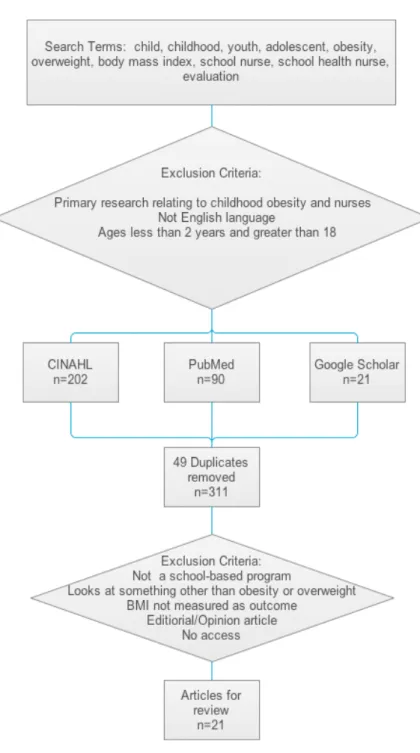
A literature review was conduced from August 2013 through September 2013 for meta- analyses and original research on school-based interventions to reduce childhood overweight and obesity. Of the 21 articles reviewed, 17 used Body Mass Index and 1 used body fat (Bayne- Smith, 2004) as an outcome measurement. Four studies reported behavioral outcomes and did not report BMI findings and thus were excluded from the discussion (Beam et al., 2012; Gellar et al., 2012; Weepie, et al., 2002; Schetzina et al., 2011).
Keywords used were child, childhood, youth, obesity, overweight, school nurse, school health nursing, school health, and evaluation. The search limits were filtered for studies
conducted between years 2003-2013, written in the English language and child ages 2 to 18 years. See Figure 2, Studies published 2003-2013 on School-Based or Nurse-Directed Childhood Obesity Programs.
Figure 2: Studies published 2003-2013 on School-Based or Nurse- Directed Childhood Obesity Programs
IMPACT OF SCHOOL-BASED INTERVENTIONS ON BMI AND ROLE OF THE SCHOOL HEALTH NURSE
Results
The literature review identified 21 childhood obesity intervention studies. Of these 12 were school-based obesity programs and 5 were school-based, nurse-directed obesity
intervention programs. All intervention studies reviewed used BMI as the outcome measurement.
Four studies reported behavioral outcomes and did not report BMI findings and were excluded.
School-Based Obesity Programs Review of Evidence:
Reversing the trend of increasing weight in children has proven difficult. The basic structures of obesity management are interventions that increase energy expenditure and reduce energy intake. School–based obesity prevention programs over the years have included some type of dietary and/or physical activity component with the aim of reducing dietary fat intake, increasing fresh fruit and vegetable consumption, and increasing physical activity during school time and afterschool. The school has the potential to provide an environment where adherence with interventions can be improved and therefore has come into focus for further research.
However, the school-based interventions reviewed have shown mixed results at reducing the average body weight or adiposity of school children and adolescents.
Seven articles, 2 systematic reviews, and 1 meta-analysis were included in the review.
The IOM also evaluated the effectiveness of school-based programs. Of the programs reviewed 3 showed a significant decrease in BMI (Foster et al., 2010; Johnston et al., 2013; RWJF, 2013b); 1 showed no increase in BMI (Hollar et al., 2010); and 3 did not show a significant decrease in the BMI of the study participants (Harris et al., 2009; Caballero et al., 2003; Resnick et al., 2009). A systematic review of 7 school-based intervention programs reported “some
benefits in anthropometric measurements” (Johnson, 2012). In another systematic review using school-based Internet obesity prevention programs only 4 of 12 studies reported effect of the programs on BMI (Whittemore, 2013). Only 1 demonstrated a significant decrease in BMI (Long
& Stevens, 2004) and 1 reported a significant increase in BMI (Casazza and Ciccazzom, 2007).
A meta-analysis of 64 obesity prevention programs conducted by Stice, Shaw & Marti (2006) concluded that “most interventions do not produce the hypothesized weight gain prevention effects and overall average intervention effect was small”. See Table 1: Description and outcomes of school-based obesity prevention studies using BMI outcome measurement, for a summary of the studies.
IMPACT OF SCHOOL-BASED INTERVENTIONS ON BMI AND ROLE OF THE SCHOOL HEALTH NURSE
Table 1. Description and outcomes of school-based obesity prevention studies using BMI outcome measurement
Author /year Purpose Demographics Study Design Intervention Conclusions Limitations Johnson,
2012.The Travis County Coordinated approach to child health (Catch) Trial 2010
To compare the impact of two version of CATCH (CATCH Basic Plus and CATCH Basic Plus Community on overweight children over a 3 year period.
Children (4th grade). 15 CATCH BP schools and 15 CATCH BPC schools (n=1107).
Hispanic-61%;
Black- 14%.
Case Control Study
Nutrition education to include social marketing, teacher-led activity breaks, food service curriculum.
CATCH BPC includes community partnerships and school health assessment.
Greater than 12 week
intervention
Children with BMI > 85th percentile decreased by 1.3% compared to an 8.3% decrease in CATCH BPC.
Only seven articles met their search criteria.
No true control group. Review looked at various outcome variables.
Foster, G.
HEALTHY 2010
To decrease the risk factor for Type 2 diabetes of a 3-year period.
Children
(middle school) with > 50% on free/reduced lunch. 21 intervention schools (n=873)
Case Control
Study School food
service optimization;
physical education (mandatory);
social
Children with BMI > 85th percentile in intervention schools had significant reduction in BMI z score, fasting insulin and prevalence of obesity.
Decrease in prevalence of
Study cannot be generalized, sample is predominately Black and Hispanic.
Author /year Purpose Demographics Study Design Intervention Conclusions Limitations and 21 control
schools (n=863).
Greater than 50% students at a school Black or Hispanic.
marketing;
classroom and family
activities
overweight in both intervention and control.
Johnston, C 2013
To evaluate a school-based intervention using health professionals to assist teacher with the
integration of healthy messages into the school curriculum
Children (7 – 9 years) from diverse ethnic backgrounds. 7 schools
randomized into professional- facilitate intervention (PFI, n=4) or self-help (SH, n=3). Students enrolled PFI, n=509; SH, n=326. White- 28.3%; Asian- 25.3%; Black- 23.3%,
Hispanic-23.1%.
Case control study
Nutrition education;
health education;
family involvement
Overweight and obese student in the PFI group significantly reduced their BMI z score compared to students in the SH group
Recruitment of school was self- selecting. No standardized way of measuring physical activity or improvements in diet.
RWJF, Healthy Schools Program
Assessing the impact of improving school’
Elementary, middle and high schools living in 37 U.S. states.
Case study Nutrition and health
education;
school menu
Students average BMI declined between 2007- 2008 and 2009-2010 school years.
Does not give detailed
information about program or the
IMPACT OF SCHOOL-BASED INTERVENTIONS ON BMI AND ROLE OF THE SCHOOL HEALTH NURSE Author /year Purpose Demographics Study Design Intervention Conclusions Limitations
2013 policies and
practices
Black, Hispanic, American Indian, Asian/Pacific Island.
optimization;
physical education (increasing time, intensity and duration)
results.
Whittemore, R. 2013
To evaluate the
effectiveness of school- based Internet obesity prevention programs for adolescents
12 studies (n = 103 to 1,800 participants);
adolescents 12 – 18 years. 28% to 87% non-white.
Systematic review
Nutrition education;
health education
One study reported a significant decrease in BMI (nutrition and physical activity education)
BMI only reported in 4 out of 12 studies.
Stice, E.
2006
To evaluate the
effectiveness of obesity prevention programs
64 different obesity prevention programs focused on males and females. 84%
school-based.
Meta-analytic review
Varies 21% prevention programs produced significant weight gain prevention efforts. Intensive programs (average 40 hrs). Weight gain prevention effects disappear by 3-year follow –up.
Review not exclusive to school-based obesity prevention programs
Hollar, D.
Healthier Option for Public School
To compare the effect of a multi-
component intervention
Children (6-13 years, qualifying for free lunch from four intervention
Case control study; quasi- experimental design
Nutrition education;
Physical education;
School food
Children in intervention schools were more likely to maintain ideal BMI, and obese children were more likely to reduce
Small sample size (6 schools). Study population not selected randomly.
Can only be
Author /year Purpose Demographics Study Design Intervention Conclusions Limitations Children
(HOPS) 2010
program on BMI and academic performance over a 2-year period
schools (n=974) and one control (n=199).
Hispanic-68%;
Black-9%;
White-15%;
Other-8%.
service optimization
BMI but this did not reach statistical significance.
generalized to children receiving free/reduced lunch, eating most meals at school.
Resnick, E.
CHEER Study 2009
To assess the use of an easy-to-use parent outreach model
Parents (n=46) of a child (grades K-5) with a BMI at or above the 85th percentile, placed in either enrolled in one of the two study schools
(Material Group or Material plus Personal
Encounters Group).
White-82 %;
Black-4.7%;
Asian- 13.1%.
Case control study
Nutrition education;
health education;
Modest (not significantly significant) reductions in BMI in both groups at 1 year. No differences in the reduction of BMI between the two groups.
No true control group. Small sample size.
Trevino, R.
Bienestar Health Program
Evaluate the effectiveness of a Type 2 diabetes
Children (4th grade) inner city San Antonio, TX public
Case control study
Health class;
physical education (curriculum);
No significant difference in BMI or % body fat between control and intervention schools.
Outcome data only collected on students that completed consent.
IMPACT OF SCHOOL-BASED INTERVENTIONS ON BMI AND ROLE OF THE SCHOOL HEALTH NURSE Author /year Purpose Demographics Study Design Intervention Conclusions Limitations
2004 prevention
program in low-income elementary school children
schools. 713 intervention and 706 control students.
school food cafeteria program; after school program
Caballero, B.
Pathways 2003
To evaluate the
effectiveness of a four component, 3-year intervention to reduce percentage of body fat in American Indian third to fifth graders.
Children (3rd – 5th grade). 41 schools
(n=1,704). 90%
American Indian.
RCT Classroom
curriculum;
school menu optimization;
physical education (increased time); family involvement
No significant reduction in BMI. Baseline % of children with BMIs > 85th percentile:
Control: 48%
Intervention 47%.
Follow up % of children with BMIs > 85th
percentile:
Control: 56%
Intervention 53%.
Results were obtained by self- reporting.
Harris, K.
2009
To determine the effect of school-based physical activity interventions on BMI in children in studies ranging from
18 studies (n=18,141 children)
Systematic review; Meta- analytic review
Physical education; 15 of the studies had some type of co-
intervention
BMI change was not significantly different between children who received a school-based physical activity
intervention and those in the control group.
Most studies had small sample population and made it difficult to detect significant changes.
Author /year Purpose Demographics Study Design Intervention Conclusions Limitations 6 months to 3
years.
Bayne-Smith, M. The Physical Activity and Teenage Health (PATH) Program) 2004
To evaluate the
effectiveness of a program lasting 12 weeks designed to increase physical activity and promote healthy dietary habits among adolescents
Adolescent girls 14-19 years inner city. Girls participating in PATH (n=310) and girls participating physical education classes only (n=132). Black- 46%; Hispanic- 29%; Asian- 15%; White 10%.
Case control
study Nutrition
education;
Health education;
Physical education (vigorous).
BMI change was not significantly different between the two groups.
Girls participating in PATH showed a greater reduction in body fat (- 1.2%) than girls
participating in physical education classes only (- 0.4%).
Not a true random sampling;
sampling by class not by individual.
IMPACT OF SCHOOL-BASED INTERVENTIONS ON BMI AND ROLE OF THE SCHOOL HEALTH NURSE
Foster et al. (2010) examined the effects of a multi-component, school-based program addressing risk factors for diabetes among children whose race or ethnic group and
socioeconomic status placed them at high risk for obesity and type 2 diabetes. The program consisted of four integrated components: nutrition, physical activity, behavioral knowledge and skills, and communications and social marketing. The nutrition component optimized the quantity and nutritional quality of foods and beverages that were served throughout the school environment (cafeteria, vending machines, a la carte options, snack bars, school stores,
fundraisers, and classroom celebrations). The physical education component sought to increase the amount of time students spent in moderate-to-vigorous physical activity.
Behavioral knowledge and skills were communicated with the use of a classroom-based program, FLASH (Fun Learning Activities for Student Health), targeting self-awareness, knowledge, behavioral skills (e.g., self-monitoring and goal setting), and peer involvement for behavioral change. Communication strategies and social marketing were also integrated into the program. The study found a decrease in the primary outcome of prevalence of overweight and obesity in both the intervention and control schools. The intervention schools had greater reductions in the secondary outcomes of BMI z score, percentage of students with waist
circumference at or above the 90th percentile, fasting insulin levels (P=0.04 for all comparisons), and prevalence of obesity (P=0.05).
Johnston et al. (2013) evaluated a school-based obesity program where health professionals assisted teachers with the integration of healthy messages into the school
curriculum. Elementary schools were randomized into a professional-facilitated intervention of a self-help condition. Integrated lessons taught core subject material but incorporated a physical activity or nutrition related health message. Activities reinforced the concepts taught in the integrated lessons. The health professional helped the schools develop activities such as family health nights and health education material information to be sent home. The teachers were given specialized training the summer prior to the initiation of the study. After 2 years, the children considered overweight/obese in the intervention group significantly reduce their BMI compared to the children in the self-help group.
The Healthy Schools Program funded by the RWJF (2006) was an initiative to make children healthier by improving the schools through policies and practices. The two priorities were (1) to ensure that all foods and beverages served and sold in schools meet or exceed the Dietary Guidelines for Americans and (2) increase the time, intensity and duration of physical activity during the school day and during after school programs. By January 2010, the number of participating schools had increased from 230 schools in 13 states to 3,091schools in 30 states.
The Healthy Schools Program staff works with teachers and administrators and provides online resources to help schools assess their environments and make healthy changes. Of the 1,313 schools that have enrolled in the program prior to September 2009, three-quarters made at least one improvement in on of the eight-targeted areas. In regards to BMI, early results show that in 21 Healthy Schools Program students’ average BMI declined between the 2007-2008 and 2009- 2010 school years.
IMPACT OF SCHOOL-BASED INTERVENTIONS ON BMI AND ROLE OF THE SCHOOL HEALTH NURSE
Hollar et al. (2010), in a case control study, specifically looked at the effects of a school- based prevention intervention that included dietary, curricula, and physical activity components on BMI. The intervention program used, called Healthier Option for Public School Children (HOPS) assessed both weight and academic performance of low-income elementary school age children. A significant finding was that more children in the intervention school than the control school stayed within normal BMI. Although not statistically significant, an encouraging
observation was that more obese children in the intervention school showed a reduction in BMI compared to obese children in the control school (7.5% versus 4.4%, respectively). Academic performance scores also improved in the intervention schools.
Harris, Kuramoto, Schulzer and Retallack (2009) conducted a meta-analysis to look at the effect of school-based physical activity, lasting a minimum of 6 months, on BMI. The type, duration and frequency of the physical activity varied among the eighteen studies. Three of the studies consisted of exercise only and 15 studies included other type co-intervention such as nutrition education or family involvement. Their conclusion after review of 15 of the 18 studies was that the BMI of elementary school age study participants was not statistically different between children who received a school-based physical activity intervention and those in the control group. The study found tthe quantity of physical activity in the intervention or the adherence of individual children to the intervention was insufficient to improve BMI.
The study concluded physical activity interventions are unlikely to have a significant effect on the increasing prevalence of childhood obesity.
Pathways, a randomized controlled trial (RCT), implemented over a 3-year time period was designed to evaluate the effectiveness of a school-based, multi-component intervention for reducing percentage body fat in American Indian 3rd -5th grade school children. A 4-component program consisting of (1) change in dietary intake, (2) increase in physical activity, (3) a
classroom curriculum focused on healthy eating and lifestyle, and (4) a family-involvement program. All 41 schools completed the study. Eighty-three percent of children screened at baseline were measured at the end of the 12 week intervention period. There were no significant differences between the intervention and control groups in any of the anthropometric variables including BMI. However, the study did find significant reductions in the fat content of school menu and dietary fat intake of children could be achieved by training food service staff. It also found that teacher training can achieve significant health-related knowledge and behaviors of 7- 10 year olds with the use of culturally appropriate classroom curriculum (Caballero et al., 2003).
A school-based, parent –directed program Communicating about Health, Exercising, and Eating Right (CHEER) study compared an easy-to-use parent outreach model and assessed changes in both parents’ and children’s dietary and activity behaviors in two different groups.
(Resnick and Bishop, 2009). In this case control study, parents from two schools were randomly selected to participate in one of two study groups. These were (a) materials group and (b)
materials plus personal encounter from a trained community health worker. The study hoped to improve communication between the parent and children in areas of nutrition, physical activity, weight and health. The study found modest reduction of children’s BMI measured 1 year after program launch. No differences in the reduction of BMI were found between the two groups,
IMPACT OF SCHOOL-BASED INTERVENTIONS ON BMI AND ROLE OF THE SCHOOL HEALTH NURSE
those receiving educational material and those receiving education material and a community health worker encounter.
Johnson, Weed and Touger-Decker (2012) conducted a systematic review of research that looked at multi-component school-based interventions that focus on childhood overweight and obesity in minority elementary school age children. Of the seven articles reviewed, 2 studies reported a significant positive benefit on overweight and/or adiposity (Foster et al., 2010;
Hoelscher et al., 2010); 1 study showed that the intervention group of children maintained their BMI (Hollar et al., 2010); and 4 studies did not result in significant BMI reductions (Caballero et al., 2003; Coleman, 2005; Donnelly et al., 1996; Trevino, 2004). Johnson et al. point out the difficulty in obtaining a reliable, accurate measurement of fat mass in children but conclude that multifaceted programs including nutrition education, improvement of school food, and physical activity, may yield significant changes in anthropometric variable among minority populations.
One of the two studies that reported a significant positive benefit the Coordinated Approach to Child Care Basic Plus (CATCH BP) by Hoelscher et al. (2010) included nutrition education, optimization of physical education and the school food environment and school social marketing, and teacher-led activity breaks. CATCH BASIC Plus Community (CATCH BPC) added
community partnerships and school health assessments. This resulted in an 8.3% decrease in BMI students in the CATCH BPC program considered overweight or obese compared to the CATCH BP students where the percentage of overweight and obese student decreased by only 1.3%. The other study by Foster et al. (2010) looked at a school-based intervention called HEALTHY Study Group in minority, low-income schools. This intervention used a combination
of physical activity optimization, school food environment improvement, nutrition education, and social marketing. Those students in the HEALTHY Study Group showed significant decreases in prevalence of obesity, BMI, waist circumference, and fasting insulin levels compared to the control school.
Whittemore et al. (2013) conducted a systematic review to evaluate the effectiveness of school-based Internet obesity prevention programs. Twelve programs met their inclusion criteria with 4 reporting BMI outcomes. Two programs resulted in no effect on BMI (Ezendam, 2007;
Whittemore, 2012), 1 showed a significant decrease in BMI (Casazza et al, 2007); and 1 showed an increase in BMI (Long & Stevens, 2004). The author notes that the result may be due to the challenges of evaluating BMI in a short (< 3month) duration, which may not take into
consideration the normal growth and development of adolescents. The review found that
computer-based intervention was more effective in changing health behaviors in a diverse group of adolescents compared to traditional methods but a multi-component program may be needed to have an effect on adolescent weight and BMI.
Stice, Shaw and Marti (2006) conducted a meta-analytic review of obesity prevention programs for children and adolescents. Their review consisted of 64 prevention programs that sought to produce weight gain prevention effects. The programs were not specifically school- based but could be applicable to the school setting. They found interventions with a relatively shorter duration (in weeks) produced significantly larger effect than those that were longer in duration. The duration timeframe was not specified in the study. Also, interventions that focused solely on obesity prevention only rather than obesity plus other additional health behavior
IMPACT OF SCHOOL-BASED INTERVENTIONS ON BMI AND ROLE OF THE SCHOOL HEALTH NURSE
showed significantly larger effects. The authors concluded message complexity could decrease the effectiveness of the program results. The review found a number of factors thought to be successful in obesity prevention programs were not significantly related to a larger effect. These included factors such as mandated improvements in diet and exercise; sedentary behavior reduction; parental involvement; and delivery by a trained professional versus a teacher.
The Community Preventive Services Task Force found insufficient evidence to determine the effectiveness of school-based programs to prevent or reduce overweight and obesity among children and adolescents because interventions varied and reported outcomes that were not comparable. Of the 14 school-based obesity prevention programs reviewed in the 2003 Guide to Community Preventive Services only 3 used body fat measurements to determine the impact of the intervention. The majority of these school-based program interventions measured behavioral outcomes including changes in intake of fruit and vegetables, fat, and saturated fat and amount of physical activity (USA.gov, 2003). The Planet Health Program and PATH Program
specifically used BMI measurement. The Plant Health Program provided middle school
academic, physical education, and health education teachers a complete curriculum that includes nutritional and physical education. The Planet Health Program showed significant reductions in obesity prevalence, defined by a combination of BMI and triceps-skinfold thickness. The largest intervention effect was found in African-American girls. This program had no significant effect among boys (Peterson & Fox, 2007). The Physical Activity and Teenage Health (PATH) Program used body fat measurement (Bayne-Smith et al. 2004). PATH consisted of a personal wellness course, lasting 12 weeks, designed to increase physical activity and promote healthy
dietary habits among adolescents. Participants attended a 30-minutes class 5 days per week followed by 20 to 25 minutes of vigorous physical activity. There was no significant difference in BMI between the two groups. The percentage body fat between PATH and control
participants was small but significant. A case control study by Trevino et al. (2004) looked at the effectiveness of a culturally tailored school-based diabetes mellitus prevention program. The Bienestar Health Program, consisted of four components: 1) health and physical education classes, 2) an afterschool health club, 3) family activities, and 4) a food service component.
Bienestar was delivered over a 7-month period but showed no statistically significant differences in body fat between the groups.
Nurse Implemented Obesity Programs Review of Evidence
Healthy People 2020 identified specific goals to achieve and promote maintenance healthy body weights (US Department of Health and Human Services, 2011). Identified in these goals was the role of the school nurse in providing the essential leadership to help students maintain healthy body weight, decrease their burden or illness, and increase their quality of life.
The RWJF Report, Healthy Schools Healthy Kids found schools without a strong program leader or cohesive planning teams have greater problems with implementation (2003). This review found a paucity of evidence-based studies that actually assessed school nurse-directed childhood obesity programs.
The 5 nurse-directed intervention studies found in the literature review showed mixed reviews on BMI outcome. One program utilizing nurse-directed structured nutrition education and physical activity resulted in a significant decrease in BMI in girls 8 to 12 years of age only
IMPACT OF SCHOOL-BASED INTERVENTIONS ON BMI AND ROLE OF THE SCHOOL HEALTH NURSE
(Wright, Giger, Norris and Suro, 2012); 1 study found a decrease in BMI resulting from a BMI screening program combined with other obesity prevention intervention programs (Soto and White, 2012); 1 program consisting of a school nurse-delivered counseling intervention showed a modest decrease in BMI, although not statistically significant (Pbert et al., 2013); 1 program where girls received nurse counseling plus a structured after-school physical activity did not result in a significant decrease in BMI in the intervention group versus the control group (Robbins, Pfeiffer, Maier, Lo & Wesolek, 2012). Three unpublished studies currently in
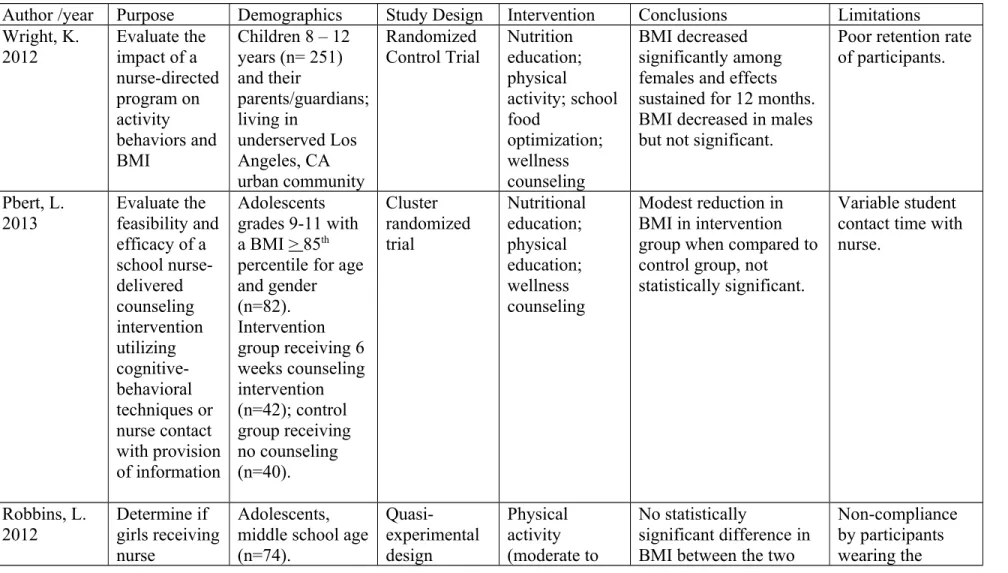
progress were also reviewed (Clinical Trials.gov, 2013; University of Minnesota, 2013; Robbins et al., 2013). Table 2: Description and outcomes of nurse-directed school-based obesity
prevention studies using BMI outcome measurement, summarizes the reviewed articles.
Table 2. Description and outcomes of nurse-directed school-based obesity prevention studies using BMI outcome measurement Author /year Purpose Demographics Study Design Intervention Conclusions Limitations Wright, K.
2012
Evaluate the impact of a nurse-directed program on activity behaviors and BMI
Children 8 – 12 years (n= 251) and their
parents/guardians;
living in
underserved Los Angeles, CA urban community
Randomized Control Trial
Nutrition education;
physical
activity; school food
optimization;
wellness counseling
BMI decreased significantly among females and effects sustained for 12 months.
BMI decreased in males but not significant.
Poor retention rate of participants.
Pbert, L.
2013
Evaluate the feasibility and efficacy of a school nurse- delivered counseling intervention utilizing cognitive- behavioral techniques or nurse contact with provision of information
Adolescents grades 9-11 with a BMI > 85th percentile for age and gender (n=82).
Intervention group receiving 6 weeks counseling intervention (n=42); control group receiving no counseling (n=40).
Cluster randomized trial
Nutritional education;
physical education;
wellness counseling
Modest reduction in BMI in intervention group when compared to control group, not statistically significant.
Variable student contact time with nurse.
Robbins, L.
2012
Determine if girls receiving nurse
Adolescents, middle school age (n=74).
Quasi- experimental design
Physical activity (moderate to
No statistically
significant difference in BMI between the two
Non-compliance by participants wearing the
IMPACT OF SCHOOL-BASED INTERVENTIONS ON BMI AND ROLE OF THE SCHOOL HEALTH NURSE Author /year Purpose Demographics Study Design Intervention Conclusions Limitations
counseling plus and after- school
program (6 month program) show greater improvement in physical activity, cardiovascular fitness, and body
composition
Intervention school (n=28), attention control school (n=29).
White-13%;
Black-11%;
Hispanic (White- 4%; Hispanic (Black) 2%;
Other-2%.
vigorous);
wellness counseling
groups. accelerometers
that monitor physical activity.
Soto, C.
2010
Explore the impact of mandated BMI
screening and obesity prevention.
Arkansas school- age children
Case study BMI screening Over 4 year time period the percentage of overweight and at risk for being overweight did not increase.
Does not take into account other components that could have contributed to the results.
DiNapoli, P.
2008 Assess current levels of overweight and fitness among school students
Children ages 6 to 14 years
(n=6,511)
Case study Physical
activity BMI is significantly negatively correlated with performance on all FITNESSGRAM testing
Data collected by school and could be flawed
Wright, Giger, Norris and Suro (2012) conducted a RCT to evaluate the impact of a nurse directed, coordinated, culturally sensitive, school-based, family centered lifestyle program on activity behaviors and body mass index. The target population was children, ages 8 – 12 from elementary schools living in urban, low-income neighborhoods in Los Angeles, California. The intervention included Kids N Fitness, a 6-week physical activity program that met each week combined with a 45-minute nutrition education class for the children and their parents. School- wide activity programs, health and counseling services, a parental education newsletter and professional staff development in health promotion were all included in the intervention.
Program evaluation was by pre and post intervention questionnaires and anthropometric measurements. Questionnaires measured physical activity behavior including daily physical activity, team sport participation, physical education attendance, and TV viewing.
Anthropometric measurements were collected at baseline, at 4 months (completion of intervention phase) and 12-month post-intervention. The study found BMI decreased significantly among females from baseline to 4 months and the effects were sustained at 12 months. Girls also increased their daily physical activity and physical education class attendance. This finding was not present in males but there was a significant decreased television viewing.
A cluster-randomized controlled trial conducted by Pbert et al. (2013) evaluated the feasibility and efficacy of a school nurse-delivered intervention in improving diet and activity and reducing BMI among overweight and obese adolescents. Six high schools were randomized to either a 6-session school nurse contact and nurse-delivered counseling intervention group or a
IMPACT OF SCHOOL-BASED INTERVENTIONS ON BMI AND ROLE OF THE SCHOOL HEALTH NURSE
nurse contact, information pamphlets given and no nurse-delivered counseling group. Follow-up was at 2 and 6 months. The counseling session used behavioral techniques to facilitate change in self-management behaviors by increasing health knowledge and positive outcome expectations, self-control, and behavioral capacity skills. Students in the intervention group compared to control showed small, more favorable changes in various physiologic measures (waist circumference, systolic blood pressure) at 6 months. Although, not statistically significant, students in intervention schools experienced modest favorable improvement in their BMI when compared to students in control schools. Also, although not statistically significant, students in the counseling intervention schools showed modest reductions in BMI when compared to students in the control group.
Robbins, Pfeiffer, Maier, Lo and Wesolek (2012) conducted a group randomized trial to determine whether urban, middle school girls in one school receiving nurse counseling plus a structured after-school physical activity club showed greater improvement in physical activity, cardiovascular fitness, and body composition than urban, middle schoolgirls assigned to a control group in another school. The intervention group attended a 90 minute after school workshop once a month for 6 months and a face-to-face session with school nurse during school day every other month focusing on two health-related topics. Although not statistically significant,
differences in BMI in the intervention and control groups were found at 6 months with the intervention group showing a reduction in BMI. The intervention group also showed trend toward greater improvement in the physical activity, cardiovascular fitness and body composition.
A case study by Soto and White (2010), evaluated the results of the Arkansas Initiative that examined the impact of BMI surveillance and screening conducted by the school nurse.
BMI screening in the schools has been controversial due to its potential negative impact on children, confidentiality issues and concerns of the parents. In 2004, the IOM recommended implementation of a health “report card” to give parents their child’s weight-status information.
Many uninsured or underinsured children do not have access to routine healthcare visits and the parents of these children often do not recognize when their child is overweight or obese.
Although controversial, the IOM committee believes weighing children annually and tracking their measurements could detect increases in gender and age-specific BMI percentiles. That same year Arkansas mandated BMI screening conducted in the schools by the school nurse. Over a 4-year time period it was found that the percentage of those overweight and those at risk for being overweight did not increase. Although other obesity related programs were implemented during this time, Soto and White concluded that BMI screening was successful toward
preventing obesity by providing parents with information that increased awareness (2010).
Kubik, Fulkerson, Story and Rieland, in a 2006 study, found considerable parental support for school-based BMI screening and parent notification programs. They concluded that BMI screening programs might be a useful overweight prevention tool for children.
DiNapoli and Lewis (2008) assessed an obesity prevention program that used a school- based action research team. This action team consisted of a physical education teacher, a school nurse and school administrator. The action teams collected BMI and fitness measurements in 35 of 162 New Hampshire school districts. Fitness levels were determined by the student’s ability to
IMPACT OF SCHOOL-BASED INTERVENTIONS ON BMI AND ROLE OF THE SCHOOL HEALTH NURSE
pass the Cooper Institute’s FITNESSGRAM tests. These tests consisted of students’ age 6 to 9 years completing five tests: push-ups, trunk-lift, curl-up, and back-saver sit and reach. More than 38% of the students (ages 6-9 years) were either overweight or at risk for being overweight. It was found that students are at their maximum fitness levels at age 6 years, with a steady decline in fitness among boys and girls until the age of 14. The correlation between BMI and fitness was studied to determine if BMI could be used as a predictor for fitness level among children. BMI was significantly negatively correlated with performance on all tests, confirming BMI is a valid proxy measure for fitness levels.
Discussion
Obesity is a serious health threat to children and increasing at an alarming rate in minority children and lower socioeconomic status. Many of the obesity intervention programs reviewed utilized some aspect of behavioral modification designed to change unhealthy behaviors by increasing health and nutrition knowledge and/or increasing physical activity.
Although some school-based interventions showed a decrease in BMI, only three showed a significant effect of a school-based intervention on children with BMI > 85th percentile.
However, this is a notable finding given the sociodemographic characteristics of minority children and numerous challenges that these children and their families face (Foster, 2010). It is unclear what intervention has the most profound effect in an obesity prevention program. All of the studies reviewed utilized a muti-component type programs rather than a single interventions.
Harris et al. (2009) postulated that multiple interventions that target different aspects in the causal pathway might be more successful in improving children’s body composition. The largest
intervention effect was found in more comprehensive, moderate-to-high intensity weight management programs that included a structured exercise program and were conducted within specialty clinics to include the school nurse office (Pbert, 2013; Robbins, 2012; Wright, 2013).
In addition, Foster et al. (2010) asserted that healthy lifestyle interventions given to both obese or overweight and non-overweight children in the school setting is less stigmatizing thus resulting in significant reduction in obesity among the students overweight or obese.
Although few programs utilized wellness counseling and the school health nurse, BMI reduction was significant in all studies that included counseling.Pbert et al. (2013) concluded that a program with more intensive school nurse intervention has the potential for a significant impact on BMI. The study by Wright et al. (2013) highlighted the positive effects that an effective culturally and gender specific, nurse-directed, community-based model can have on combating childhood obesity. Students in counseling intervention schools experienced modest favorable improvements in their BMI when compared to students in the control schools. The study by Pbert et al. (2013) found that weight management counseling interventions are feasible for school nurses to deliver in the school setting and are acceptable to overweight and obese adolescents and produce reductions in BMI.
Research in progress will evaluate the efficacy of nurse-directed intervention programs. A RCT, completed in July 2013, tested the feasibility and ability of a school-based intervention, consisting of school nurse counseling and a school-based exercise program, to reduce BMI and improve dietary quality, physical activity, and sedentary behaviors in
overweight and obese adolescents (Clinical Trials.gov, 2013). The results of the School Nurse
IMPACT OF SCHOOL-BASED INTERVENTIONS ON BMI AND ROLE OF THE SCHOOL HEALTH NURSE
Intervention and After School Exercise Program for Overweight Teens study have not been published. Another study, currently scheduled to begin in 2014, is collaboration between The University of Minnesota School of Nursing and the National Institutes of Health. The five-year research project will investigate how school nurses can help address the childhood obesity epidemic. The nine-month after-school program will include twice monthly small group sessions for the students, a once-monthly support group for parents and quarterly one-on-one coaching sessions with the school nurse, parent and child (University of Minnesota, 2013). “Girls on the Move” is a RCT to evaluate the efficacy of a comprehensive 17-week school-based intervention in increasing girls’ minutes of moderate to vigorous physical activity and improving
cardiovascular fitness, BMI, and percent body fat immediately post-intervention at 17 weeks and at 9 months follow-up (Robbins et al., 2013). Tailored counseling sessions with the school nurse is integrated into the program as well as an after school physical activity club. The multi-
component approach is expected to improve girls’ activity level and overall physical outcome.
BMI screening is one intervention that has shown success in a complex process of addressing childhood obesity (Soto, 2010). As the literature shows, BMI screening has to be used cautiously to avoid issues with confidentiality and the potential to subject children to teasing and body image concerns. For this reason BMI screening programs need to include and educational component for the child and parent regarding dieting and restrictive eating (Soto, 2010). The IOM committee urged the CDC and other federal, state, and local agencies to develop guidelines to assist schools in developing protocols that maintain sensitivity and confidentiality. The National Association of School Nurses (NASN) published a statement in
support of school nurses stating they have the knowledge and expertise to offer health education, support programs, counseling services, physician referrals, follow up and support to those
children identified as overweight or obese (NASN Position Statement, 2002).
BMI screening is one intervention that has shown success in a complex process of addressing childhood obesity (Soto, 2010).
Conclusions
Single school-based interventions have yet to yield conclusive data on their impact on BMI and childhood obesity. The Robert Wood Johnson Foundation found school-based physical activity and nutrition programs alone cannot solve the childhood obesity epidemic but such programs can foster long-term healthy habits in children and contribute significantly to prevention (RWJF, 2003). The efficacy of multi-faceted school-based obesity program interventions is promising and the role of the school nurse in these programs has shown promising results. It is the position of the NASN that school nurses will be instrumental in the success of childhood obesity prevention programs (2013b).
The school nurse traditionally has had an individual or family focus assisting students and families with healthy food selections, the benefits of increased physical activity, and the consequences of poor choices. Going forward, the school nurse will also need to address school, family and community variables that contribute to childhood obesity and bridge the gap between school wellness policies and the actual implementation of programs (Johnson et al., 2012). A study by Kubik, Fulkerson, Story and Rieland (2006) looked at the acceptability and safety of school-based BMI screening and parent notification programs. They found that for parents with
IMPACT OF SCHOOL-BASED INTERVENTIONS ON BMI AND ROLE OF THE SCHOOL HEALTH NURSE
limited access to health care the BMI screening and parental notification program may represent an opportunity to relay health information to the parents along with guidance regarding healthy lifestyle practices from a health professional (e.g. the school nurse). Therefore, BMI reporting, using culturally sensitive guidelines, will give the school nurse the opportunity to further discuss the growth and health of the child with the parents/guardians.
In order to implement these interventions, a stronger school-nursing workforce will be needed to improve the health of the nation’s school children. Recent national reports indicate only 45 percent of public schools have a school nurse all day, every day, while another 30 percent of schools have a school nurse who works part time in one or more schools (NASN, 2013c). Wide disparities in the number of school nurses in schools exist from state to state, within states and school districts, and between urban and rural schools. In an effort to increase the presence of school nurses, lawmakers have introduced a bill in Congress to reduce the student-to-school nurse ratio in public schools. The Student-to-School Nurse Ratio
Improvement Act of 2013 would provide competitive demonstration grants through the U.S.
Department of Education to eligible local educational agencies to lower the ratio of students to school nurses, using a formula-based approach and taking into consideration acuity (NASN, 2013c).
Reflections on Leadership
Leaders in the health profession go by many names: medical director, doctor, director of nursing, supervisor, nurse manager, and project manager. What they have in common is their power or authority over those they manage. What differentiated them is their style of leadership
and their ability to react to adaptive challenges and their effectiveness to lead. Leadership
appears to come naturally to some, but I believe that competent and effective leaders have a clear moral purpose, genuine respect for those that they lead and the ability to inspire and motivate.
This paper focused on the challenges and difficulty in preventing and reducing childhood obesity. One of the common themes I saw in many of the conclusions was a successful
intervention requires a dedicated and sustainable team that coordinates and monitors the program and works with the children to provide motivation and follow-up. This is an area I have
identified where effective leadership skills will be needed. The school nurse, by de facto, is positioned to be the team leader in school-based obesity prevention programs. However, school nurses are burdened with heavy workloads and wellness programs are not a top priority. They also find themselves caught between the demands of the county health department and those of the school district.
School nurses need to become advocates for these children struggling with overweight and obesity. Policy changes to improve the school environment will only come about at the insistence from a leader with a strong and persistent voice. Therefore, school nurses must create one voice that speaks loudly. Implementation of school-based obesity programs is not going to be readily accepted by the school district and administration. The school nurse will have a stronger argument if the programs are evidence based and the nurse has the competence and educational level to argue their effectiveness. Working with the strong national organizations such as the NASN, change can happen. I have learned from the MPH Leadership program that in order to implement change; flexibility, adaptation, open-mindedness and perseverance are
IMPACT OF SCHOOL-BASED INTERVENTIONS ON BMI AND ROLE OF THE SCHOOL HEALTH NURSE
necessary traits needed in leaders. Results are obtained through hard work and the ability to prioritize, organize and remain on task. Although it will not be easy, school nurses will need to actively pursue a leading role.