http://wrap.warwick.ac.uk
Original citation:Lu, Dawei, Ertek, Gurdal and Betts, Alan. (2014) Modelling the supply chain perception gaps. The International Journal of Advanced Manufacturing Technology, Volume 71 (Number 1-4). pp. 731-751. ISSN 0268-3768
Permanent WRAP url:
http://wrap.warwick.ac.uk/59916
Copyright and reuse:
The Warwick Research Archive Portal (WRAP) makes this work by researchers of the University of Warwick available open access under the following conditions. Copyright © and all moral rights to the version of the paper presented here belong to the individual author(s) and/or other copyright owners. To the extent reasonable and practicable the material made available in WRAP has been checked for eligibility before being made available.
Copies of full items can be used for personal research or study, educational, or not-for profit purposes without prior permission or charge. Provided that the authors, title and full bibliographic details are credited, a hyperlink and/or URL is given for the original metadata page and the content is not changed in any way.
Publisher’s statement:
The final publication is available at http://link.springer.com/article/10.1007%2Fs00170-013-5504-x ”.
A note on versions:
The version presented here may differ from the published version or, version of record, if you wish to cite this item you are advised to consult the publisher’s version. Please see the ‘permanent WRAP url’ above for details on accessing the published version and note that access may require a subscription.
Modelling the supply chain perception gaps
Dawei Lu
WMG, University of Warwick, Coventry, UK
Gurdal Ertek1
Faculty of Engineering and Natural Sciences, Sabancı University,
Istanbul, Turkey
Alan Betts
HT2 Ltd., Wheatley, Oxfordshire, UK
Abstract This study applies the research of perception gap analysis to supply chain
integration and develops a generic model, the 3-Level Gaps Model, with the goal of
contributing to harmonization and integration in the supply chain. The model suggests
that significant perception gaps may exist among supply chain members with regards
to the importance of different performance criteria. The concept of the model is
conceived through an empirical and inductive approach, com-bining the research
discipline of supply chain relationship and perception gap analysis. First hand data has
been collected through a survey across a key buyer in the motor insurance industry and
its eight suppliers. Rigorous statistical analysis testified the research hypotheses, which
in turn verified the validity and relevance of the developed 3-Level Gaps Model. The
research reveals the significant existence of supply chain perception gaps at all three
levels as defined, which could be the root causes to underperformed supply chain.
Keywords: 3-Level Gaps Model; perception gaps; supply chain management; supply
chain integration; supplier evaluation.
1
1. Introduction
Over the last two decades, supply chain integration (SCI) has become increasingly important
across all industrial sectors [1]. However, delivering and sustaining it in a real-world supply
chain turns out to be a serious management challenge [2,3]. Integration across the supply
chain has also been seen as the driver towards better performance and a source of competitive
advantage [4-7]. Nevertheless, increased supply chain complexity, market dynamics, and
technological disruptiveness have made it a challenging endeavour [8].
One of the major impediments in SCI is the perception gap – predominantly the underlying
differences of views and expectations between supplier and buyer towards key performance
criteria. Perception gap is not immediately visible and has not been measured so far in the
literature. Perception gap exists where different parties see the world differently[9]. In the
context of supply chain management (SCM), it often results in and is commonly exhibited as
the expectations differences. It represents the differences of tacit knowledge between different
people or groups of people on the same object. The persistent presence of the perception gaps
can severely undermine the business relationships and the products/services delivery
standards of a supply chain. Since perception gaps between supplier(s) and buyer(s) are often
the root cause to many problems, they must be made explicitly visible and subject to the
management scrutiny [10].
The fundamental research problem therefore can be identified as follows: We know a
notional and plausible existence of perception gaps arising within a supply chain but do not
necessarily know the precise degree of severity of its existence, nor are we clear about the
different types of the gaps. Furthermore, not knowing precisely the where-about of its
existence has made it impossible for supply chain managers to take effective measures to
mitigate the potential negative impacts of the perception gap. This becomes a legitimate
problem because perception gap self-evidently relates to supply chain performance and
especially the level of cohesiveness and integration. Performance measurement is an essential
concept in SCM, and is used not only for supplier evaluation, but also for supplier selection
[11-14]. However, there does not exist a research that frames and measures the perception gap
regarding the importance of the various performance criteria.
Perception gap and its behaviour are not new concepts, but their implications with regards
to understanding the supply chain relationships and SCI have not been thoroughly explored
[15,16]. Even strategic information exchange, which is much simpler than SCI, can enhance
information exchange, and one would expect better supply chain performance when
perception gaps are eliminated. Slack et al. [9] identified the operational principle that
“unsatisfactory supplier relationships can be caused by requirements and fulfilment perception
gaps”. The main model describing the differing perceptions across the dyadic supply chain, as
described by Slack et al. [9], is illustrated in Figure 1. Perceptions can play not only a direct,
but also an indirect role on the performance of the supply chains, through the attitudes and
actions that the managers take based on their perceptions. Ho et al. [18] illustrate this
phenomenon for the case of SCM system adoption in enterprises.
It might seem that the model can be applied to all the dyadic links in a supply chain, with
specific focus on the requirements perception gaps and the fulfilment perception gaps. Yet,
fundamental research questions (RQ) still remain to be answered:
RQ1. Could significant levels of perception gaps exist in supply chains?
RQ2. Would it be helpful to identify them theoretically with a model, in order to reveal the
root causes of the problems in SCM?
RQ3. Could the understanding and the measurement of the perception gaps provide
guidance to the strategic supply chain performance improvement?
[image:4.595.92.516.460.699.2]In this paper, we carry out thorough statistical hypothesis testing using real-world case
data, for addressing research question RQ1. Yet, before that, we present an extensive
exploratory discussion, engaging relevant body of literatures, to propose a conceptual
framework that integrates the supply chain perception gaps into the 3-Level Gaps Model,
which in effect addresses RQ2. RQ3 will be left for a more extrapolated discussion at the end
of the paper. Part of RQ3 is meant to be provocative and may not be fully answered, and thus
may have to be left for future research.
Thekey objective of this paper, therefore, is to ascertain the significance of perception
gaps from a SCM perspective and to develop a conceptual model. The developed model will
frame the three types of perception gaps and their relevance in the context of improving SCI.
The remainder of the paper is organized as follows: Section 2 presents a literature review
on supply chain relationships, integration and provides theoretical background on perception
and expectation. Section 3 introduces the 3-Level Gaps Model and its hypotheses. Section 4
explains how the data were collected and how the statistical methods were employed for the
data analysis regarding a major Motor-Insurer company. Section 5 presents further analysis,
results, and the managerial implications. Finally, Section 6 summarizes the key conclusions
and outlines further work.
2. Literature review
The purpose of the literature review here is to establish the relevance of the concept of
perception gaps and the highly concerned SCM issues including relationships, integration, and
performance. This will then lead to a better understanding of why it is necessary to have a
framework of perception gaps before any of those issues can be addressed more effectively.
Furthermore, the review also shows a gap in the literature where the topic could be more
extensively discussed in the context of SCM.
Starting with the issue of SCI, over the last few decades the importance of supply
relationships has been discussed extensively amongst the academics and practitioners alike.
Those discussions have led to converged findings on the critical success factors for
developing an appropriate portfolio of supply relationships [19-21]. More in-depth
explorations were also seen to be carried out on the interaction of those factors [22-25].
Somewhat conclusively, those researches have all pointed out the significant implication of
gaps between the suppliers and buyer as a negative factor has been highlighted in some of the
mentioned studies, but only implicitly.
The nature of the supplier buyer relationship plays a pivotal role in SCI. Some researchers
[26,27] further underpin the strategic decision-making role of relationship in SCI in terms of
supply chain design and configuration. Other researchers discuss the critical role that supply
relations played in obtaining competitive advantage in today’s fast changing business
environment [28,29].
As a broad development trend, it can be observed that over the years, the main focus of
relationship management has shifted away from predominantly discrete transaction-based
exchanges towards continuous relationship-based exchanges [30,31]. This trend was also seen
to be alongside with the shift from operational to process-oriented SCI. However,
buyer-supplier relationship development is not the ultimate objective for SCI. It is only the means to
achieve better SCI and better supply chain performance. Lee [32] suggests three primary
dimensions of SCI: organisational relationship linkages, information integration, and
co-ordination & resource sharing. Handfield and Nicols [33] define the three principal elements
of SCI as relationship management, information systems, and management of material flows.
Van Donk and van der Vaart [34] also propose similar concepts of SCI. Thus, relationship
management delivers the implementation-end of SCI, whilst SCI is the extent that
organisations are integrated with their supply chain [35]. To this end, it is safe to observe that
the issues of perception gaps in the context of SCM are deeply intertwined in the concept and
practice of SCI and supply chain relationship management.
Given the increasing trend of global supply chain competition, integration is regarded as
one of the key prerequisites for sustained supply chain success [36,37]. The underlying
concept of SCI originated from a system perspective, in which the optimised whole will
always have more value-adding than any sub-systems. SCI can be characterised by
cooperation, collaboration, information sharing, trust, partnerships, joint new product
introduction, process alignment, as well as other traits [38]. Benefits and advantages of
integration have long been demonstrated via its impact on supply chain performance
[39,40,41,42]. It is therefore also logical to make extrapolated causal links from perception
gaps to supply chain performances, although how significant this causal link might be is a
very much a research agenda. Thus understanding perception gaps is important due to its
potential impact on supply chain performance.
Customer behaviour theories (including relationship marketing, personalized marketing,
perception, expectation, motivation, attitude, and belief play pivotal role in determining the
level of satisfaction, preferences and the associated consequential behaviours such as
purchasing decisions and loyalty [43,44]. Customer behaviour theories also stipulate that
understanding and cultivating the right customer expectation is the centre piece for achieving
customer satisfaction and effective supply chain intermediation [45,46,47]. One can
understand that the buyer’s perception is based on its evaluation of the product or service
received. When perceived performances are lower than expectations, it is a sign of poor
service or product quality by the suppliers; and the reverse indicates good quality and service
standard. The perception or the perceived quality is an overall judgment on the supplied
products or services. However, prior to their service experience, buyers create expectations
against which the supplier’s performance is evaluated [48]. Consequently, the images of
perception involves the subjective responses of people and are therefore highly likely
inconsistent with the reality or with each other [49]. All these observations from the literature
serve as the empirical evidences of the undeniable existence of “perception gaps” and their
implications to SCI.
Customer perceptions and expectations are central to supply relationship. Studies by Oliver
& DeSarbo [50] and Andreassen [51] found a theoretical support for the effects of perception
on the customer satisfaction or dissatisfaction. They stated that the perception-based
expectations cause an assimilation effect, while discrepancy between perception and reality
results in a contrast effect. According to the assimilation theory, people tend to respond
according to their expectations because they are reluctant to admit wide discrepancies [52].
Our literature review clearly shows that some limited theories on perception gaps may
have already been documented. Yet, studies in how do they affect the SCM and supply chain
performance remain scarce. This vacuum in the literature is one of the main motivations for
the research.
3. Three-Level Gaps Model
Based on the literature review in the field of perception gaps and the general knowledge of
SCM, we take a view that the perception gaps in the supply chain can occur at three different
levels. At each level the perception gaps are formed from very different factors and can have
very different managerial implications. To theorize the perception gaps and their managerial
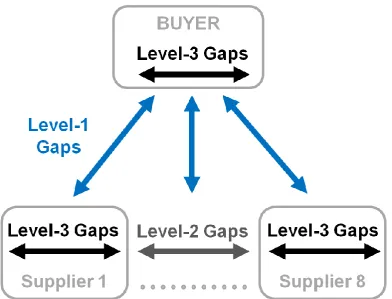
implications, we frame and propose a conceptual model—“3-Level Gaps Model” as shown in
Figure 2. The model illustrates the positions and the inter-relations of all possible perception
idea will only be accepted methodologically as a meaningful contribution to the body of
knowledge if it is tested and verified using appropriate methods. Thus, as a research approach,
we propose three hypotheses regarding each of the specific perception gaps, and then apply
the appropriate statistical methods to test them. The data collection described in Section 4 and
data analysis in Section 5 are intended to show that the perception gaps not only do exist at all
three different levels in the Motor-Insurer’s supply chain case, but also with a convincing
statistical significance.
Fig. 2 Perception gaps between stages (Level-1), within a single stage (Level-2), and within each of the entities
in a stage (Level-3).
Logically and structurally there are three levels in the supply chain, where the perceptions
can be compared: between two companies of the two adjacent tiers; between companies
within the same (supplier or buyer) tier; between individual people within any firm of the
supply chain.
The Level-1 gaps are the perception differences between the two adjacent tiers of a supply
chain, and reflect the gaps between the suppliers and buyer’s perceptions as a collective view
of the organisation on the performance criteria (or fulfilment standards). Level-1 gaps
[image:8.595.105.498.237.536.2]model [9]. Level-1 perception gaps often imply the need for organizational level
communication, openness in sharing information across supply chain (between organisations)
[53], closer alliances in setting strategic goals [54], supplier development [55], and defining
market positioning. Furthermore, Level-1 gaps may also suggest the need for coordination
mechanisms, such as the appropriate design of the contracts between the buyer and supplier
[56,57] or coordinated inventory planning [58], which can significantly increase supply chain
performance.
Hypothesis 1: Level-1 perception gaps exist at a significant level between the buyer and its
suppliers; and the contents and significance of the perception gaps varies with different
suppliers.
The Level-2 gaps are the perception variations, also with a collective view of organisation,
but between the different suppliers (or buyers) within the same tier. These variations reflect
the unique business nature of specific suppliers and how they might factor-in to the
understanding of the performance objectives for the buyer. Level-2 gaps analysis often
implies that there is a need to manage and coordinate with different types of suppliers in a
customized way in order to achieve consistent performance across the supply base. “One-size
fit all” approach to different suppliers could be the cause of the Level-2 perception gaps.
Hypothesis 2: Level-2 perception gaps do exist at a significant level between the suppliers
in the same tier. For each supplier-supplier pair the gaps may differ for each performance
criteria for which the perceptions are measured.
The Level-3 gaps are the perception gaps between the individual people or functions
within one supplier or buyer, which is mainly due to the different views between the
individual respondents. If a high degree of variance is in presence, it could be the result of a
lack internal communication or the lack of the processes of doing it. The lack of internal
coherence of views within an organization is surely a critical but negative measure of
capability. The cause could be down to the ways the employees are trained. It may also relate
to the organizational culture. The Level-3 gaps could be a source of motivation or lack of it
for improving the company’s personnel management and employee training. Our analysis in
Hypothesis 3: Level-3 perception gaps (within a supplier or a buyer) do exist at a
significant level between the individuals, who may have different views in connection with
their roles or positions in the company. The significance of this gap may vary for each
[image:10.595.73.521.231.441.2]supplier or buyer.
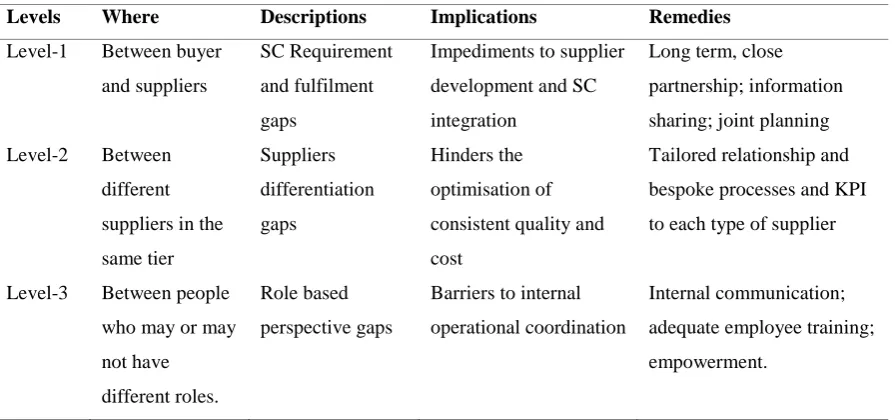
Table 1 The 3-Level Gaps Model and its implications
Levels Where Descriptions Implications Remedies
Level-1 Between buyer
and suppliers
SC Requirement
and fulfilment
gaps
Impediments to supplier
development and SC
integration
Long term, close
partnership; information
sharing; joint planning
Level-2 Between
different
suppliers in the
same tier Suppliers differentiation gaps Hinders the optimisation of
consistent quality and
cost
Tailored relationship and
bespoke processes and KPI
to each type of supplier
Level-3 Between people
who may or may
not have
different roles.
Role based
perspective gaps
Barriers to internal
operational coordination
Internal communication;
adequate employee training;
empowerment.
The above model has hopefully advanced our understanding of the perception gaps beyond
the scope covered by the current literatures. The quantitative measures of those gaps can be
observed through proper data collection and data analysis. The result can be used separately to
guide the specific management effort in different levels, which hopefully may harmonize the
understanding of performance objectives and consequently help managing the resources to
tackle the areas that are most in need. Looking across the three different levels together, the
comparison of the measures can reveal a pattern of “gaps profile”. This profile offers a brief
overview and can be used to guide the managers to tackle the most needed levels in terms of
“action economy”. In conjunction with the diagramming model shown in Figure 2 above, a
summary of the 3-Level Gaps Model can also be given in Table 1 with more emphasis on
their managerial implications and remedies.
In order to argue the validity of the above model, one must first verify the significance of
the existence of the three gaps, not just their existence, which may be taken as obvious.
independence between the gaps at the three levels, and consequently each of them may impact
upon entirely different aspects of the supply chain measures.
In answering the RQ2, it becomes evident that the above model described in Table 1 is
theoretically helpful in identifying the three independent perception gaps embedded in a
supply chain, because it helps to map out each perception gap with the problems often
encountered in SCM. This model, thus, can serve as look-up table for managers to identify the
possible root causes of the problem. Knowing full well that the problems listed in the model
may have more-than-one causes, but it is arguable that the model does give managers a clear
guidance for streamlining the problems to their different categories of perception gaps as an
additional theoretical dimension to already existed ones. It can also be argued that each of the
causal linkages mapped out in the model between the perception gap and the possible
problems it caused is not necessarily counterintuitive as such, but putting them together
[image:11.595.70.212.379.535.2]symmetrically as a framework does elevate our understanding at a higher theoretical level.
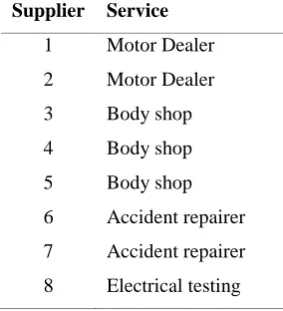
Table 2 The suppliers and the services they provide
Supplier Service
1 Motor Dealer
2 Motor Dealer
3 Body shop
4 Body shop
5 Body shop
6 Accident repairer
7 Accident repairer
8 Electrical testing
4. Verifying the model
4.1. Survey and data collection
Working with the senior management team of the Motor-Insurer, we identified a group of
eight key suppliers plus the buyer (the Motor-Insurer itself) as the respondent-base. The
suppliers are coded as Supplier 1,…,8 to mask their real identity. The services and products
provided by the suppliers are listed in Table 2. These suppliers were selected based on the
highest relevance and appropriateness for the research questions: following a Pareto pattern
[59], their size and relationship to the buyer made them the crucial first tier suppliers.
Our key contacts at the eight suppliers and the buyer were asked to instruct their staff at all
participants from the eight suppliers and 87 respondents from the buyer were identified and
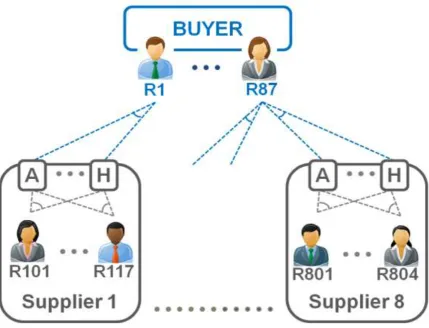
they all dutifully responded to the questionnaire. The respondents are coded as illustrated in
Figure 3. All the participants were asked to identify their role in the company being one of the
front line staff, team leaders, managers, senior managers or others. The purpose for this
stratification was to allow for in-depth investigation into the connections between the roles
they play internally and the views they behold.
Fig. 3 Perception of the respondents at the suppliers and the buyer regarding the performance measures
The first question in the survey is the key question analysed in this paper (other survey
questions are used in separate researches). It asked the respondents to allocate 100 points
between the eight performance criteria (coded from ‘A’ to ‘H’) below in terms of the
importance to Motor-Insurer’s business:
A. Service with a real "wow" factor being prepared to go the extra mile
B. Innovative products or services
C. Low price/charges
[image:12.595.86.516.216.544.2]E. Being on time
F. Not making mistakes
G. Personal touch
H. Dealing well with problems and queries
This question represents the suppliers’ and buyer’s perceived weight or priorities of the
importance on those eight criteria of the supplier’s performance measures. These criteria were
developed through the synthesis of the five performance objectives (quality, speed,
dependability, flexibility and cost) identified by Slack et al. [9] and the model of Service
Excellence by Johnston & Clark [60], which identified four factors of service (deliver the
promise, deal with problems and queries, provide a personal touch and go the extra mile).
Since it is not the main interest of this paper to determine how appropriate this set of supplier
performance criteria is, we will not extend the discussion of the criteria in this paper.
Understandably, the content coverage of these performance criteria may have the effect on the
performance management, but will not affect the methodological validity for testing the
hypotheses.
The correctness of the data has been systematically achieved based on the taxonomy of
dirty data by [61]. The supplier names, the buyer name, and the names of the respondents in
each company have been masked with unique identifying codes. When needed, the codes can
[image:13.595.67.479.521.711.2]be tracked back to their originals through lookup tables.
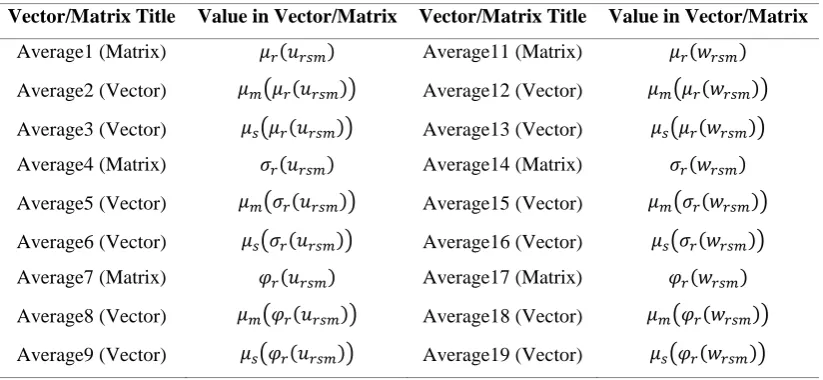
Table 3 The vectors/matrices and the mathematical expressions
Vector/Matrix Title Value in Vector/Matrix Vector/Matrix Title Value in Vector/Matrix
Average1 (Matrix) ( ) Average11 (Matrix) ( )
Average2 (Vector) ( ( )) Average12 (Vector) ( ( ))
Average3 (Vector) ( ( )) Average13 (Vector) ( ( ))
Average4 (Matrix) ( ) Average14 (Matrix) ( )
Average5 (Vector) ( ( )) Average15 (Vector) ( ( ))
Average6 (Vector) ( ( )) Average16 (Vector) ( ( ))
Average7 (Matrix) ( ) Average17 (Matrix) ( )
Average8 (Vector) ( ( )) Average18 (Vector) ( ( ))
4.2. Mathematical formalism
In this section, we introduce a mathematical notation to represent the collected data and
analysed results. This notation is essential for the succinct calculations used in the summary
tables, and for easy communication of the statistical analysis. The notation consists of the sets,
parameters, and functions. The vectors and matrices in the summary tables are then expressed
in terms of this notation. Table 3 presents the titles for the vectors/matrices presented
throughout the paper and in the supplement [62].
We also define the following:
Sets
: set of suppliers
: set of respondents; ( )
: set of respondents at the buyer (who can weigh the performance measures for more than
one supplier)
: set of respondents at supplier (who can weigh the performance measures only for their
company)
: set of performance measures/criteria (same for all suppliers)
Parameters
: weight given by respondent at the buyer for performance measure of supplier
: weight given by respondent at supplier for performance measure of supplier
Functions
( ): average of values over the values of index , where is matrix
( ): standard deviation of values over the values of index , where is matrix
( ): coefficient of variation (CV) of values over the values of index , where
is matrix; ( ) ( ) ( )
4.3. Statistical analysis
Summary statistics computed for the data include the average, standard deviation (stdev) and
coefficient of variation (stdev/mean) for the subsamples. Sample average is an estimate of the
population mean, which is a measure of central tendency in data. While standard deviation
latter is a more reliable measure, since it scales the variability with respect the magnitude of
the central value (average).
Throughout the study, perception gaps have been identified and tested through repeated
application of formal statistical tests, whose references are given in Appendix H of the
supplement [62]. A fundamental issue is the selection of the appropriate statistical tests for
measuring the statistical significance of the hypothesized differences in the weight values
[63]. The most basic decision to be made is whether parametric (t-test, ANOVA) or
nonparametric tests (Mann-Whitney, Kruskal-Wallis) should be applied. When applicable,
parametric tests are preferred due to their power, that is, their requirement for smaller sample
sizes to draw conclusions with the same degree of confidence. However, parametric tests are
applicable only when the data follows parameterized distributions, such as the requirement of
normal distribution for the t-test. Nonparametric test such as Mann-Whitney and
Kruskal-Wallis, on the other hand, use the rank data to compute the test statistics, and do not require
the data to come from a particular distribution [63].
For deciding on the selection of the test type (parametric vs. nonparametric) Shapiro-Wilk
test has been applied to test normality of data subsamples. The parametric t-test has been
applied for comparing differences among two random samples that both follow normal
distribution. When any of the distributions were not following normal distribution, the
nonparametric Mann-Whitney test has been applied instead of the t-test to test differences
between two samples. The nonparametric Kruskal-Wallis test has been applied for comparing
differences among three or more samples. The parametric ANOVA test would have been
applied for comparing differences among three or more samples if all followed normal
distribution [63]; however, the conditions for the application of this test were not satisfied in
the study.
5. Results and implications
5.1. Survey and data collection
One of the goals of this paper is to identify whether perception gap exists with respect to the
importance of SC performance criteria. Table 4 presents the averages of the weights for each
performance criterion (‘A’ through ‘H’) for each supplier, as perceived the suppliers. Table 5
presents the same averages as perceived by the buyer. The differences in value suggest the
existence of perception gaps, and that will have to be investigated and tested through
Table 4 Matrix Average1 of averages of the weights for each performance criterion (A through H) for each
supplier, as perceived from the supplier’s side
Average1
Supplier A B C D E F G H Average2 Count
1 13.41 7.59 28.29 9.24 12.24 7.12 6.65 15.47 12.50 17
2 10.39 9.61 14.50 9.67 14.28 12.56 11.11 17.89 12.50 18
3 9.39 9.89 22.61 10.00 7.83 10.61 6.22 23.44 12.50 18
4 27.86 10.05 8.77 13.55 8.55 7.86 13.09 10.27 12.50 22
5 28.26 8.54 11.49 11.17 10.66 9.20 8.94 11.74 12.50 35
6 11.67 8.33 18.00 12.00 2.00 20.00 9.00 19.00 12.50 3
7 24.00 13.00 13.00 10.67 9.67 9.67 9.67 10.33 12.50 3
8 34.25 5.25 17.00 10.00 14.00 8.00 4.00 7.50 12.50 4
[image:16.595.69.528.366.557.2]Average3 20.25 9.04 15.88 10.90 10.48 9.62 9.15 14.68 Total: 120
Table 5 Matrix Average11 of averages of the weights for each performance criterion (A through H) for each
supplier, as perceived by the buyer
Average11
Supplier A B C D E F G H Average12 Count
1 16.46 4.63 15.04 15.21 11.00 10.71 6.33 20.63 12.50 24
2 13.57 3.00 5.71 12.57 12.71 14.00 7.14 31.29 12.50 7
3 20.38 1.88 6.25 18.00 13.25 10.13 7.38 22.75 12.50 8
4 11.69 3.88 12.19 12.75 11.38 14.81 7.06 26.25 12.50 16
5 17.88 1.76 9.20 13.20 8.72 15.76 7.56 25.92 12.50 25
6 18.63 3.37 8.00 12.96 13.04 12.30 9.41 22.30 12.50 27
7 8.00 4.00 6.00 10.00 10.00 5.00 3.00 54.00 12.50 5
8 16.52 4.29 8.38 13.29 10.29 12.62 10.38 24.24 12.50 21
Average13 16.37 3.41 9.76 13.61 11.11 12.70 7.89 25.15 Total: 133
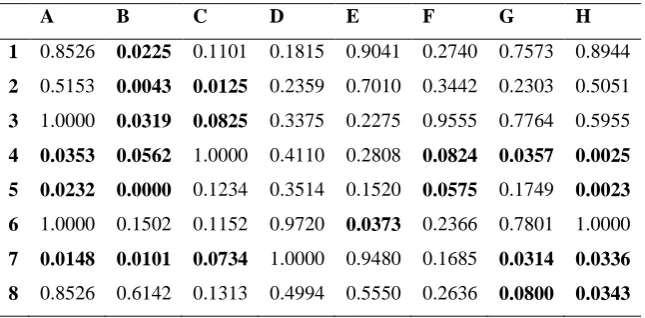
Table 6p-values for the Level-1 gaps for each (supplier, criterion) pair for each of the performance
criterion
A B C D E F G H
1 0.8526 0.0225 0.1101 0.1815 0.9041 0.2740 0.7573 0.8944
2 0.5153 0.0043 0.0125 0.2359 0.7010 0.3442 0.2303 0.5051
3 1.0000 0.0319 0.0825 0.3375 0.2275 0.9555 0.7764 0.5955
4 0.0353 0.0562 1.0000 0.4110 0.2808 0.0824 0.0357 0.0025
5 0.0232 0.0000 0.1234 0.3514 0.1520 0.0575 0.1749 0.0023
6 1.0000 0.1502 0.1152 0.9720 0.0373 0.2366 0.7801 1.0000
7 0.0148 0.0101 0.0734 1.0000 0.9480 0.1685 0.0314 0.0336
[image:16.595.72.395.607.766.2]Table 7p-values for the Level-1 gaps for each criterion, over all suppliers
First Vector Second Vector Test Employed p-value Test Result
Average1.A Average11.A Wilcoxon 0.3828
Average1.B Average11.B Wilcoxon 0.0078 *
Average1.C Average11.C Wilcoxon 0.9453
Average1.D Average11.D Wilcoxon 0.0391 *
Average1.E Average11.E Wilcoxon 0.7422
Average1.F Average11.F Sign test 0.7266
Average1.G Average11.G Wilcoxon 0.4609
Average1.H Average11.H Sign test 0.0703 *
5.2. Level-1 gaps
The first sets of statistical tests are aimed at revealing the Level-1 gaps between two
neighbouring supply chain tiers. These gaps are revealed through the identification of
statistically significant differences in the means of the weight values. To this end, the
parametric t-test and the nonparametric Mann-Whitney test have been applied for measuring
the significance of the differences between the means of two random samples: The weight
values of the supplier and the buyer, regarding each (supplier, buyer) pair. The selection of
the appropriate test on each mean of the weight value depends on the normality of the
samples’ distribution, and the process of the selection is documented in Appendix B of the
supplement (Supplement). Table 6 presents the p-values (whose lower values denote higher
statistical significance) for the Level-1 gaps for each (supplier, criterion) pair. The statistically
significant differences for p0=0.10 are shown in bold.
Having observed the existence of the Level-1 gaps for “supplier- criterion” pairs, the next
question is whether the gaps for at least some of the criteria are statistically significant
enough. To this end, Wilcoxon test and sign test were applied to compare the means of two
paired samples: the average weight values of the supplier (Average1) against that of the buyer
(Average11) for each criterion. The selection of the appropriate test methods again depends
on the normality of the samples, and this information is given in Appendix B of the
supplement [62].
Table 7 presents the p-values, whose smaller values denote higher statistical significance)
for the Level-1 gaps for each criterion between two neighbouring supply chain tiers. The
results in Table 6 and 7 support Hypothesis 1, showing that perception gaps exist for criteria
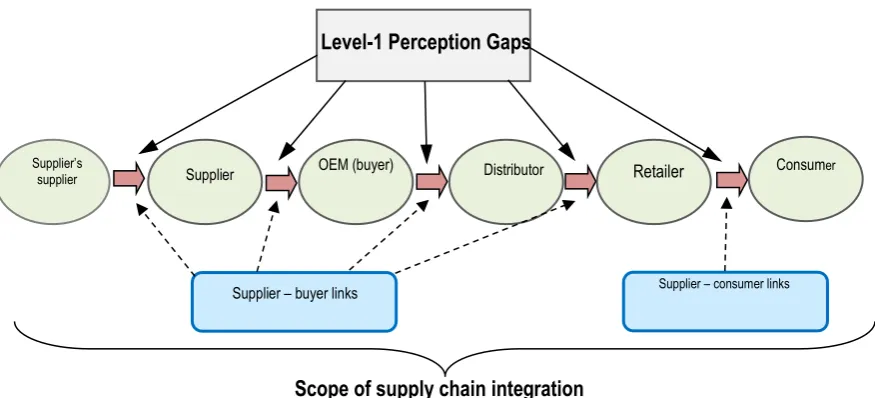
Fig. 4 Implication of Level-1 perception gaps
The implication of the Level-1 gaps can be profound to SCI. To begin with, the literature
on the key success factors fall short of addressing the existence and critical role the
perceptions gaps play in achieving seamlessly integrated supply chain in terms of information
flow and material value-adding flow. The model has been verified from a supplier to buyer
link, but it could also be extrapolated to the supply chain to consumer link (or supplier to
consumer link). Notwithstanding that it has not been explicitly tested as such in this research,
empirical experiences and many studies have already alluded that the perceptions gaps or
expectation discrepancies also exist in the supplier-consumer link. Theoretically the authors
do admit that the measures of the Level-1 perception gaps in the supplier-buyer link are
different to those in the supplier-consumer links. In fact every link is different in their
measures for perception gaps. However, it remains the authors’ proposition that the model of
Level-1 gaps do cover the entire supply chain theoretically as shown in Figure 4.
The Level-1 perception gaps are thus a generalised theoretical concept that covers all the
supply-buyer It can be observed that:
Both gaps are in the same flow direction as shown in the Figure 4
Both gaps are at the highest supply chain level, not within a specific tier or within an
organisation
Both gaps address the discrepancies on the measures of supply and demand.
Although this research is based on the case of supplier-buyer perception gaps, studies
show strong evidence of similar cases between suppliers and consumers [16,64]. Hence, a
conjectural implication would be that the Level-1 perception gap not only models the
Supplier’s
supplier Supplier OEM (buyer) Distributor Retailer Consumer
Level-1 Perception Gaps
Supplier – buyer links Supplier – consumer links
[image:18.595.73.511.66.265.2]supplier-buyer integration but also the supply chain–consumer integration. In other words,
understanding the perceptions gaps throughout the supply chain not only helps the better
integration of within the supply chain but also beyond the supply chain to
consumer-integration; the impact of the perception gaps is as critical to the buyer-supplier as to the
supply chain–consumer. Nevertheless, the actions to narrow down the perception gaps may
have to be very different due to the difference of purchasing behaviour differences.
5.3. Level-2 gaps
This type of gap is within a supply chain tier. As in the Level-1 gaps, the parametric t-test and
the nonparametric Mann-Whitney test have been applied for measuring the significance of the
differences between the means of two random samples. This time, however, the samples were
the weight values of two suppliers, which (without loss of generality) we will refer to as
First-Supplier and Second-First-Supplier for each criterion.
Table 8 Statistically significant Level-2 gaps (marked with T)
Supplier Pair A B C D E F G H Count of T
1-2 T T T F T T T T 7
1-3 T T T F T T F T 6
… … … … … … … … … …
7-8 F F F F F F T F 1
Count of T 17 14 15 7 20 17 19 19 Total: 128
Table 8 presents a summary of the statistical significance of the Level-2 gaps, and the full
Table is given in Appendix C of the supplement (Supplement). In Table 8, T (True) denotes
that the difference is statistically significant at p=0.10 (one-sided), whereas F (False) denotes
that the difference is not significant. A considerable percentage (57%) of the table cells
contains the value T, thus proving the Hypothesis 2.
When the number of gaps are observed for each criterion (the bottom row in Table 8),
criteria E, G, and H have the highest values, suggesting that significant gaps exist among an
overwhelming percentage of the supplier pairs for these criteria. The selection of the
appropriate test depends on the normality of the samples, and the process is documented in
Table 5 of the supplement (Supplement). The results for Level-2 gaps also suggest that the
gaps within the supplier tier is largely independent to that of the Level-1 as shown in criteria
5.4. Level-3 gaps
The Level-3 gaps are within a supplier or buyer. Tables 9 displays the coefficient of variations
(CV) of the weights for each (supplier, performance criterion) pair, as perceived by the
supplier. Table 10 presents the same statistics for the weights perceived by the buyer. The
values in these tables are obtained through the division of the standard deviation values (in
[image:20.595.71.483.287.481.2]Appendix A of the supplement) by the average values in Tables 4 and 5.
Table 9 Matrix (Average7) of coefficient of variations (CV) of the weights for each performance criterion (A
through H) for each supplier, as perceived at the supplier tier (the highest three and lowest two values in the
matrix are shown in bold)
Average7
Supplier A B C D E F G H Average8 Count
1 0.76 0.75 1.23 0.71 0.72 0.63 0.67 0.73 0.78 17
2 0.49 0.47 0.83 0.66 0.33 0.46 0.40 0.45 0.51 18
3 0.82 1.04 1.16 0.86 0.74 0.97 0.84 1.21 0.95 18
4 0.86 1.45 1.41 1.53 0.80 0.94 0.77 0.98 1.09 22
5 0.95 0.74 0.86 0.81 0.56 0.62 0.71 0.60 0.73 35
6 0.78 0.80 0.59 0.52 0.87 0.50 0.87 0.61 0.69 3
7 0.08 0.20 0.08 0.11 0.16 0.16 0.16 0.06 0.13 3
8 1.29 1.18 0.70 0.82 0.78 0.78 0.74 0.77 0.88 4
Average9 0.75 0.83 0.86 0.75 0.62 0.63 0.64 0.68 0.72 Total: 120
These matrices Average 7 and Average 17 in Tables 9 and 10 suggest that coefficient of
variability are not uniform. The highest CV on the supplier side (Table 8) is observed within
Supplier 4, especially regarding criteria D (CV=1.53), B (CV=1.45), and C (CV=1.41),
indicating a large Level-3 perception gap. This means that the weights given by the 22
respondents within Supplier 4 for D, B, and C have the highest variability when compared
with other (supplier, criterion) pairs. The lowest CV values on the supplier side are observed
for Supplier 7. Since the number of respondents for Suppliers 6, 7, and 8 are very few, we
focus on the other suppliers, and observe that Supplier 2 has the least CV values overall,
especially regarding E (CV=0.33) and G (CV=0.40). This means that the weights given by the
18 respondents within Supplier 2 are very consistent, indicating low levels of the Level-3
perception gaps.
On the buyer side, highest CV values is for (Supplier 5, B) with CV=2.47, which is much
(Motor-Insurer) have great variability with respect to how much weight they give to criterion
B for Supplier 5. The smallest CV value on the buyer side is with regards to the importance of
D for Supplier 8 (CV=0.58).
A formal statistical test has been carried out (Appendix D of the supplement), yielding
statistically significant Level-3 gaps within all the suppliers. Hence Hypothesis 3 has been
[image:21.595.72.495.269.459.2]tested positive.
Table 10 Matrix (Average17) of coefficient of variations (CV) of the weights for each performance criterion (A
through H) for each supplier, as perceived at the buyer (the highest and lowest values in the matrix are shown in
bold)
Average17
Supplier A B C D E F G H Average18 Count
1 0.94 1.91 1.44 0.94 0.85 0.99 0.96 1.31 1.17 24
2 0.87 1.22 1.90 0.75 0.78 1.36 1.06 1.01 1.12 7
3 1.44 1.79 0.88 0.95 0.86 0.69 1.00 1.43 1.13 8
4 0.71 1.52 1.69 0.67 0.74 0.90 0.89 0.87 1.00 16
5 1.27 2.47 1.36 0.74 1.13 0.87 1.23 1.00 1.26 25
6 1.42 1.29 1.06 0.91 0.69 0.84 0.75 0.81 0.97 27
7 1.14 1.05 1.09 1.06 1.06 1.22 0.91 0.78 1.04 5
8 0.67 1.60 0.98 0.58 0.67 0.74 0.79 0.92 0.87 21
Average19 1.06 1.60 1.30 0.83 0.85 0.95 0.95 1.02 1.07 Total: 133
The next analysis is to establish the positioning of the individual respondents with respect
to each other, and to identify the subgroups of consistent respondents. For this purpose,
hierarchical clustering and multi-dimensional scaling methods from the machine learning
discipline [65] have been employed. The resulting analysis gives us the clue to what can be
done to close the Level-3 perception gap, and to achieve consistency throughout the company.
These results are provided in the Appendices E, F, and G of the Supplement [62].
5.5. Findings and discussion
As has started above, close range research of the perception gaps and their impact on SCI is a
rich, sophisticated and penetrating exploration of epistemological issues concerning the deep
rooted causes of many management shortfalls. Thus, it pushes one step further towards
making some fundamental claims regarding to academic understanding of roles of perception
gaps in SCM and empirical guidance to deliver some tangible benefits.
Learned from the above analysis and results, we are now in a lot more confident position to
address the research questions set forth in Section 1.
For the RQ1, statistical analysis of the survey data reveals the statistical significance of
perception gaps between the collective views of supplier-buyer pairs and supplier-supplier
pairs, as well as within groups of individual respondents. Thus the answer becomes clearly
straightforward that the perceptions gaps do exist at all three levels at a significant level in a
supply chain. The consequence of dissatisfaction from both buyers and customers, or even the
complete broken down supply chain intermediation function can now be approached from a
perception gaps’ perspective.
For the RQ2, as a conceptual framework discussed in Table 1, the 3-Level Gaps Model can
be helpful in identifying not only the sources but also the locations of the perception gaps.
The statistical data analysis and hypotheses testing have demonstrated the independence of
the three types of perception gaps, thus verified the category validity of the model. This shows
that the gap profile against defined measures can vary from one level to another.
Theoretically, each perception gap at a specific level has now been related to a corresponding
supply chain problem. The model basically defined the three categorised sources of
perception gaps and mapped them to their corresponding SCM problems, namely: Level-1
gaps are linked to buyer supplier coordination; Level-2 gaps are linked to the rationalisation
within a single supply base – achieving consistency and harmony in between suppliers
horizontally; Level-3 gaps links to the participating organisation’s internal congruence and
communication effectiveness. In a reverse direction, the model provided guidance from
problems to the possible root causes arising from perception gaps. In short, the answer to RQ2
is that the model developed in this research is helpful to identify the types of perception gaps
in order to track down the root causes of SCM problems, albeit they may not be the only root
causes.
For RQ3, as discussed in Section 1, part of RQ3 is meant to be provocative and may not be
fully answered. Surely a better understanding of the perception gaps will aid the supply chain
strategic decision making in the context of improving SCM to achieve better performances. In
fact the hidden question could be that “has the developed model provided any such better understanding?”. To answer this, there are three positive arguments we can draw.
First, the data analysis shows a significant level of the perception gaps in existence,
providing a new quantitative understanding on the severity of the perception gaps. Second,
moving from a terminology to a defined framework revealing all the relevant perception gaps
understanding in terms of their portfolio and embedding structure in a supply chain. Third, the
model enables a possible causal relation from the perception gaps to some of the SCM
problems, adding a new understanding of its managerial relevance and implication of the
issue. Hence, the answer is that the model will help supply chain performance improvement.
In another words, the model is theoretically helpful in categorising and streamlining the
performance delivery “mechanisms”.
Supply chain performances can only be delivered, measured and improved through a
specific “mechanism”. The Level-1 pair of supplier-buyer is one of the mechanisms that deliver the “supplier performance” in the eyes of the buyer. The Level-2 is the mechanism
that delivers the supplier base capabilities, including reliable standard and potential synergy of
the supply network. Toyota’s Keiretsu system is precisely the mechanism that delivers such
performance. Level-3 is the mechanism that embodies the performance capability at the
individual “cells” level. The participating organisation’s internal performances such as
capacity, flexibility, knowledge management, skill training are examples. Now that, with the
3-Level Gaps model, the performances are now dovetailed to their delivery mechanism, and
consequently the perception gaps become the ratchet within, that help or hamper the function
of the mechanism.
Managerial implications
Not to overstate any promising practical benefits, we believe a further research may be
required to investigate explicitly the impact of perception gaps on the supply chain
performances. But for now, some practical implications may still be plausible.
First practical implication is that it puts new measures into the supply chain’s
health-check. Measures of perception gaps do not always appear on the measurement list, nor
do they replace any existing ones, but only to add-on and to complement them. The
measures can be coded as: PG-1, PG-2 and PG-3, corresponding to the perception gaps
at each of the 3 levels.
Secondly, when the supply chain performance falls short of what is expected, with the
3-Level Gaps Model, managers can map-out from the performance measures to the
delivery mechanisms and finally to the specific perception gaps.
To summarise, there are three key practical implications of the perception gaps to the
SCM. First, understanding and measuring the Level-1 gaps facilitates the SCI by making sure
what suppliers deliver is what buyers really want; closing the Level-2 gaps will help to
harmonise the consistency in quality and cost across the supplier base; managing the Level-3
6. Conclusions
Overall, the research reviewed the literature on the perception gaps in the context of SCM.
Our first hand data collection and subsequent thorough statistical analysis on the perception
gaps revealed a significant level of existence in the chosen supply chain case. The research
finds that the perception gaps do exist at the three defined levels of a supply chain, instead of
the one level (Level-1) as suggested in Slack’s model. The perception gaps at the Level-2 and
Level-3 as defined in the 3-Level Gaps Model have also shown some distinct implications to
the supply chain performance management over and above what has been discovered at the
Level-1. The 3-Level Gaps Model has been created to represent and map out the co-existence
of the three types of perception differences. It could be suggested to the future researchers that
despite the abundance of literature, supply chain integration (SCI) could have taken a
completely different but perhaps more effective approach, starting from discovering the
perception gaps as one of the underlying causes to many performance shortfalls.
Further research could involve the mapping of inter-connections of the perception gaps
with many operational factors in order to understand their influence on the supply chain
relationship and supply chain performances. It is the authors’ planned next research to look
into the perception gaps and their direct impact on supply chain performances by using
statistical techniques on the text data gathered in the survey.
[image:24.595.72.515.552.716.2]Appendix A. Standard deviations of the weight values
Table 1 Matrix Average4 of standard deviations of the weights for each of the performance criterion (A through H) for each supplier, as perceived at the supplier stage.
Average4
Supplier A B C D E F G H Average5 Count
1 10.25 5.68 34.90 6.57 8.76 4.50 4.49 11.29 15.48 17
2 5.10 4.51 11.99 6.34 4.76 5.80 4.48 8.02 7.18 18
3 7.74 10.28 26.14 8.56 5.78 10.30 5.20 28.48 16.27 18
4 23.91 14.56 12.39 20.66 6.86 7.38 10.04 10.09 15.42 22
5 26.77 6.32 9.83 9.09 5.92 5.73 6.34 7.02 13.04 35
6 9.07 6.66 10.58 6.24 1.73 10.00 7.81 11.53 9.23 3
7 2.00 2.65 1.00 1.15 1.53 1.53 1.53 0.58 4.83 3
8 44.18 6.18 11.94 8.21 10.98 6.27 2.94 5.74 17.87 4
Average6 21.45 8.64 19.66 11.20 6.81 7.08 6.82 14.12 Total: 120
Table 2 Matrix Average14 of standard deviations of the weights for each of the performance criterion (A through H) for each supplier, as perceived at the buyer stage.
Supplier A B C D E F G H Average15 Count
1 15.55 8.85 21.65 14.24 9.30 10.57 6.06 26.93 16.13 24
2 11.86 3.65 10.87 9.47 9.91 19.10 7.56 31.57 16.47 7
3 29.39 3.36 5.52 17.09 11.37 6.96 7.41 32.54 18.03 8
4 8.36 5.89 20.54 8.59 8.47 13.28 6.30 22.93 14.31 16
5 22.75 4.34 12.49 9.81 9.82 13.65 9.30 25.86 16.39 25
6 26.36 4.33 8.45 11.83 8.95 10.36 7.05 18.14 14.54 27
7 9.08 4.18 6.52 10.61 10.61 6.12 2.74 42.04 21.96 5
8 11.03 6.86 8.19 7.77 6.92 9.34 8.22 22.26 12.26 21
Appendix B. Selecting the statistical test for Level-1 Gaps
Table 3 p-values obtained in the Shapiro-Wilk normality tests at the Supplier stage. The tests analyze whether the weights given by each supplierfor each criterion show normal
distribution or not. p-values less than 0.10 (shown in bold) suggest statistical evidence that the underlying distribution is not normal.
A B C D E F G H
1 0.0989 0.4565 0.0000 0.1242 0.2169 0.2800 0.3138 0.4685
2 0.1578 0.8146 0.0000 0.0001 0.9431 0.8310 0.8051 0.9020
3 0.0914 0.0197 0.0008 0.0998 0.2217 0.0361 0.0020 0.0000
4 0.0046 0.0000 0.0000 0.0000 0.1027 0.0320 0.0684 0.0039
5 0.0000 0.0271 0.0005 0.0000 0.1423 0.0129 0.2451 0.1677
6 0.3172 0.1436 0.3631 0.4633 0.0000 1.0000 0.1224 0.8564
7 1.0000 0.3631 1.0000 0.0000 0.6369 0.6369 0.6369 0.0000
8 0.0272 0.3954 0.2793 0.9086 0.8027 0.9571 0.7335 0.2725
Table 4 p-values obtained in the Shapiro-Wilk normality tests at the Buyer stage. The tests analyze whether the weights given by the buyer for each supplier-criterioncombination show normal distribution or not. p-values less than 0.10 (shown in bold) suggest statistical evidence that the underlying distribution is not normal.
A B C D E F G H
1 0.0115 0.0000 0.0000 0.0043 0.0116 0.0005 0.0063 0.0000
2 0.5714 0.0878 0.0003 0.2940 0.3391 0.0102 0.1074 0.0038
3 0.0105 0.0007 0.3393 0.2515 0.0264 0.7821 0.1283 0.0014
4 0.0907 0.0003 0.0000 0.1699 0.1269 0.0919 0.0925 0.0005
5 0.0000 0.0000 0.0000 0.3084 0.0015 0.0107 0.0002 0.0000
6 0.0000 0.0001 0.0005 0.0000 0.1439 0.0266 0.0398 0.0000
7 0.2538 0.3140 0.4211 0.4677 0.4677 0.1458 0.0065 0.0148
[image:26.595.94.435.346.471.2]Table 5 The statistical test that should be selected to test the statistical significance of the
Level 1 gapsfor each supplier-criterion combination. The parametric t-test (t) is selected if both samples (supplier weights and buyer weights for this combination) follow normal distribution. The non-parametric Mann-Whitney test (M-W) is selected if one or both the samples do not follow normal distribution.
A B C D E F G H
1 M-W M-W M-W M-W M-W M-W M-W M-W
2 t M-W M-W M-W t M-W t M-W
3 M-W M-W M-W M-W M-W M-W M-W M-W
4 M-W M-W M-W M-W t M-W M-W M-W
5 M-W M-W M-W M-W M-W M-W M-W M-W
6 M-W M-W M-W M-W M-W M-W M-W M-W
7 t t t M-W t t M-W M-W
8 M-W M-W M-W t t t M-W M-W
Table 6 The results of the Shapiro-Wilk normality tests for the vectors in Tables 2-7. Under p=0.10, the vectors marked with * and the columns/rows whose names are written next to the matrices are not normally distributed (the Shapiro-Wilk p-value is less than the threshold p=0.10). Cells with denote normally distributed vectors; empty cells indicate the irrelevancy of the test.
Vector/Matrix Normality Test Result Vector/Matrix Normality Test Result
Average1 (Matrix) Column F
Rows 1, 3, 4, 5, 7, 8
Appendix C. Level-2 Gaps
Table 7 Statistical significance of Level-2 gaps
Supplier Pair A B C D E F G H Count of T
1-2 T T T F T T T T 7
1-3 T T T F T T F T 6
1-4 T F T T T T T T 7
1-5 T T T T F T T T 7
1-6 F F F T T T T T 5
1-7 T T F F T T T T 6
1-8 T T F F T F T T 5
2-3 F T F F T T T T 5
2-4 T T T T T T F T 7
2-5 T T T T T T T T 8
2-6 F F T T T T F F 4
2-7 T T F T T T F T 6
2-8 T T F F F T T T 5
3-4 T F T F F F T T 4
3-5 T F T F T F T T 5
3-6 F F F F T T T F 3
3-7 T T F F F F T T 4
3-8 T T F F T F T T 5
4-5 F F T F T T T T 5
4-6 T F T F T T F T 5
4-7 F T T F F F F F 2
4-8 F F T F T F T F 3
5-6 T F T F T T F T 5
5-7 F T F F F F F F 1
5-8 F F T F F F T F 2
6-7 T F F F T F F F 2
6-8 F F F F T T T F 3
7-8 F F F F F F T F 1
Appendix D. Level-3 Gaps Analysis
Table 8 Statistical significance of Level-3 gaps
Organization p
Appendix E. Machine learning model
Machine learning is the sub branch of artificial intelligence within computer science,
concerned with the design and development of algorithms that allow computers to learn
autonomously from empirical data, either supervised to model input-output relations, or
unsupervised to model only input data (Alpaydın, 2009). The unsupervised machine learning
methods employed in this study are distance maps, based on correlation, dendrograms that
visualize the results of hierarchical clustering, and multi-dimensional scaling (MDS) graphs
that visualize the proximity of a set of observations on a 2-D plane based on their similarities.
A machine learning model was constructed in the Orange data mining software for
unsupervised learning (Figure 1). The unsupervised machine learning model aims at
identifying subgroups of similar respondents and subsets of similarly weighted performance
measures (questions). The model incorporates distance calculation based on Pearson
correlation, distance map visualization superimposed with hierarchical clustering, and
multi-dimensional scaling graph. Given the perceived weights for a given set of performance
measures and for a group of respondents, the model initially computes the distances between
the respondents. Then, distance map and the dendrogram are drawn based on the distance
matrix. In Figure 2, the distances are computed based on Pearson correlation between
perceived weight vectors for Supplier 1. Next, a multi-dimensional scaling is carried out, and
the respondents are mapped with respect to each other (Figure 3).
Figures 2 and 3 help us to answer a fundamental question: Which respondents’ weights are
similar? Dendrogram (Figure 2) and MDS graph (Figure 3) both give us the proximity
information, but in different ways: Dendrogram gives the proximity information in a
hierarchical context, whereas MDS gives it in a geographical context. In the dendrogram
(Figure 2), the respondents are connected under the same umbrella, such as respondent R108
and R104 and R112 and R116, whilst the MDS graph (Figure 3) represents the respondents
that are close to each other in the map. The two mentioned pairs of respondents are close to
each other in Figure 3, where the point (respondent) pairs that behave similarly (closes to each
other) are linked by lines. In Figure 3, the colors of the points denote the roles of the
respondents within that company. It shows that the Senior Managers are closer to each other,
The above analysis may have given us the clue to what can be done to close the Level-3
perception gap, and to achieve consistency throughout the company. One possible solution
can be to first match the consistent individuals with each other to enable them to understand
why they behave similarly, and then group them with the subgroups and individuals farthest
from them. This way, the reasons for the largest gaps can be revealed through group meetings,
and consistency can be improved.
Figures 2 and 3 can be drawn for a supplier not only based on the evaluation on the supplier
side, but also based on the evaluations on the buyer side. Yet another analysis for each
supplier could be the visualization of the respondents from the supplier and buyer combined.
Such visualization would reveal not only Level-3 gaps, but also Level-2 gaps. Hence,
regarding the weights of the criteria for each supplier, three dendrograms and three MDS
graphs can be created, totaling to 48 graphs for the 8 suppliers. In this paper, the
visualizations are given only for Supplier 1, based on the weights given at the supplier
(Supplier 1). The same analysis was carried out based on the weights given by the respondents
at the buyer and at both. These additional analyses are presented in the Appendices F and G of
the supplement (Supplement).
It is evident that the analysis in Figures 2 and 3 can lead to identify the gaps between
individuals for not only Level-3 analysis, but also for Level-1 and Level-2 analysis. For
example, the combined analysis of the data for respondents for two suppliers through
dendrogram and MDS graph can help in identifying the gaps at the much more detailed
individual level, as opposed to the gaps at the company level.
Cross-communication is an indispensable part of remedy to close the gaps, and the machine
learning techniques, as employed in the analysis, demonstrate how and where such
Figure 1 Unsupervised machine learning model for identifying subgroups of similar
Appendix F. Level-3 Gaps at the buyer, regarding the weights for Supplier 1
Appendix G. Combined analysis of Level-1 and Level-3 Gaps, regarding the weights for Supplier 1
Figure 6 Dendrogram and distance map for the respondents at the supplier and buyers stages
Figure 7 Multi-dimensional scaling graph (MDS) of the respondents at the supplier and buyer
stages combined
References
1. Richey Jr RG, Chen H., Upreti R, Fawcett SE, Adams FG (2009) The moderating role of
barriers on the relationship between drivers to supply chain integration and firm
performance. International Journal of Physical Distribution & Logistics Management,
39(10):826-840.
2. Power D (2005) Supply chain management integration and implementation: a literature