Games
Chuah Soo Cheng1*, Keshminder Singh Jit Singh 2
1 Faculty of Business and Management, Universiti Teknologi MARA Puncak Alam Campus, 42300
Puncak Alam, Selangor, Malaysia
Authors’ Email Address: * [email protected], 2[email protected]
Received Date: 23 April 2020 Accepted Date: 10 July 2020 Published Date: 31 July 2020
ABSTRACT
The challenge for business analytics course is that it requires students to revisit prior statistical knowledge and have a basic understanding of Microsoft Excel in order to master this course. Therefore, educational games have the potential to address the above-mentioned challenge since games are typically regarded as an effective tool to help learners master certain concepts and reinforce their development and skills. This paper explored the challenges faced by lecturers when engaging their students in assessments related to business analytics and how they could use educational games to promote active learning in the classroom. A mixed methods approach, by using an online survey and face-to-face semi-structured interviews with lecturers from the Faculty of Business and Management, UiTM was employed for data collection. The study thus found that the major challenges faced by lecturers included students not revising their prior learned statistical knowledge, displaying a lack of understanding of the subject matter, and weakness in decision-making skills. Lecturers agreed that educational games posed their potential to increase student participation in the classroom, improve their understanding, promote teamwork, and infuse creativity. Hence, this study proposes that the academics should develop educational games to proliferate active learning in the classrooms for the purpose of solving shortcomings related to the business analytics course.
Keywords: Business Analytics, Educational Games, Active Learning, Decision-Making, Board Game
INTRODUCTION
However, a specific challenge encountered in the business analytics course is teaching the students the applications of statistics by using analytic tools via various software utilisation available in the market. On top of this, the students must be taught to make effective decisions based on the results obtained from the analysis. Following this, they are required to incorporate their prior statistical knowledge in this course and merge this knowledge with analytic tools available. The transfer process of prior statistical knowledge by these students into the business analytics course is undoubtedly crucial for an effective teaching and learning process. Additionally, this course is highly dependent on their prior knowledge, which may lead to the students experiencing low learning motivation and engagement if they are unable to recall such information. Therefore, when they are unclear of what they are learning, this will contribute to deteriorating learning interest, performance, and problem-solving skills (Reis et al., 2013).
Previous studies have shown that educational games are touted to successfully aid the transfer process of prior concepts and knowledge learned (Luchi, Montrezor, & Marcondes, 2017) and highly increase the level of student motivation for their participation in classroom activities (Braghirolli, Ribeiro, Weise, & Pizzolato, 2016). Here, educational games or serious games are defined as games designed to primarily achieve an educational objective. Furthermore, they are able to guide these individuals on certain concepts and reinforce their development and skills (Battistella & von Wangenheim, 2016). Besides, the characteristics associated with the games such as the rules, winning, and pay-offs make learning more interesting and increase its effectiveness (De Freitas, 2006; Kirriemuir & McFarlane, 2004). There are no specific games for business analytics, however, despite digital games related to learning statistics and mathematics having gained substantial popularity (Lekka et al., 2017). To help the students towards better learning and improving their analytics skills, these games need to be linked with business simulation games.
A look into history reveals that educational games have always been present to aid the process of teaching and learning; however, it gained popularity in the 1990s when technology was utilised for the enhancement of these games. Today, the term “educational games” have become so prevalent that a Google search executed using this keyword will yield about 4,660,000,000 results (search conducted on 28 July 2019). Moreover, such games have become a necessity nowadays to aid the teaching and learning process (Braghirolli et al., 2016).
Unfortunately, innovation in teaching is rapidly changing and taking its toll on the educators. Concurrently, teaching methods are becoming obsolete extremely rapidly, while the learners are constantly demanding for an exciting yet convenient way to acquire knowledge. Even though it is challenging for the educators as they have to frequently design new learning processes so as to match the shifting education landscape, it can also be seen as a blessing. This is attributable to the different innovative ways that educators can use to facilitate the learning environment and various tools such as educational games to force learners to take a self-determined route towards acquiring knowledge (Mohammad, Mamat, & Isa, 2012).
lecturers and gather more precise information related to the themes generated in the prior stage. The data obtained are analysed manually using the exercise of categorisation.
The significance of the study is proposing a suitable learning design for the business analytics course and developing educational games that can assist the lecturers in promoting active learning in the classroom. The rest of the paper is organised as follows: Section 2.0 looks into the literature in the field of educational games, Section 3.0 describes the methodology employed in this research, Section 4.0 presents the results and discussion, and finally, Section 5.0 concludes the study.
LITERATURE REVIEW
From a broad perspective and according to game designers Michael and Chen (2005), educational games or serious games are primarily geared towards achieving specific academic goals while the entertainment aspect is merely secondary. The academic part, in particular, encompasses a rigorous pedagogical approach by taking into consideration the teaching and learning theories, assessments, and feedback. On the other hand, the entertainment aspect consists of game characteristics, such as competition and goals, rules, challenges, choices, and fantasy (Cornillie, Clarebout, & Desmet, 2012; Sawyer, 2007). The outcome of such games has to be purely intended for knowledge attainment (Connolly, Boyle, MacArthur, Hainey, & Boyle, 2012). Over the years, educational games have evolved with technology and become more sophisticated and user friendly. Besides, they are touted as an effective tool to aid the teaching and learning process (Coil, Ettinger, & Eisen, 2017).
Furthermore, game-based learning is developed based on the constructivist learning theory underpinning the notions of situated learning, experiential learning, and activity learning. Constructivism specifically emphasises the importance of providing the students with basic and essential learning mechanism so that they can solve a problem by developing the learning procedures themselves. This is a participatory process in which the students interact with the environment and respond to it by solving any arising problems in the context of the learning environment that they are presently in (Inhelder & Piaget, 1969; Lameras et al., 2017).
To investigate the effectiveness of educational games utilisation as a teaching aid, Luchi et al. (2017) have conducted a study on the physiology course that engages students with educational games so as to assess the concepts of the membrane. Accordingly, they found that the application of educational games promoted active learning, whereby the students were enthusiastic and fully involved in the learning process. On the course performance front, these researchers compared the performance of the two groups of students further characterised as a control group versus one group infused with educational games. The results thus indicated that students in the game group made fewer mistakes in their assessments compared to the control group when it came to testing the concepts of the membrane. As such, Luchi et al. (2017) have concluded that implementing educational games are thus an effective method to reinforce theories and concepts related to a particular subject matter.
Besides, many other studies are in tandem with the aforementioned findings with regard to the beneficial properties of educational games. To recapitulate, such games increase student motivation and engagement during the learning process (Boyle, Connolly, & Hainey, 2011; Erhel & Jamet, 2013). Moreover, they are effective in promoting one’s intrinsic motivation at a higher level compared to traditional teaching and learning methods (Lave & Wenger, 1991; Vos, Van Der Meijden, & Denessen, 2011). Furthermore, through games, learning becomes much more meaningful to the students as they are able to manifest higher levels of inquisitiveness (Lave & Wenger, 1991) and intrinsic motivation (Lameras et al., 2017).
Concurrently, past studies as discussed earlier have also strongly indicated that educational games promote the highest level of motivation among students during a learning activity. Here, learning activity is defined as a “specific interaction of students with others using specific tools and resources, oriented towards specific outcomes” (Beetham, 2008, p.28). Educational game, on the other hand, embraces learning activity as “a specific interaction of students with others or individually using specific game mechanics and dynamics, orientated towards specific outcomes” (Lameras et al., 2017, p.980). Therefore, it is obvious that the merging of educational games in learning activities will increase the level of motivation among students. This can be specifically attributed to their role in incorporating different learning attributes, such as mental (i.e. exploration of new knowledge), game (i.e. narrative, resources, and scoring mechanism), and physical (i.e. scientific tool, laboratory) elements. The amalgamation of these attributes brings about information transmissions, collaborations, discussions, and argumentations in the learning process.
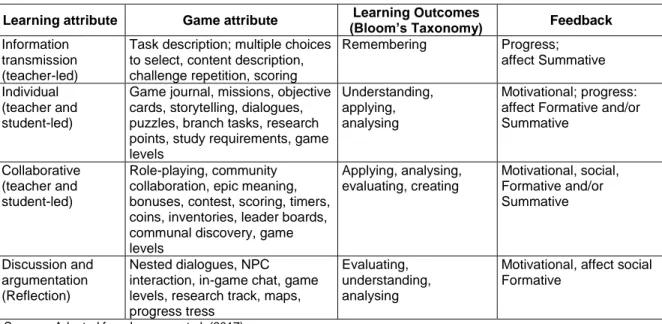
Besides increasing the students’ motivation, educational games are effective in achieving specific learning outcomes. According to Lameras et al. (2017), the resulting learning outcomes are mapped with three Bloom’s taxonomy domains, which are cognitive, affective, and psychomotor. Specifically, the cognitive domain geared towards advancing learning is strongly embedded in game learning activities. In lieu of this, educational games are designed according to the six cognitive learning outcomes in Bloom’s taxonomy, namely knowledge, comprehension, application, analysis, synthesis, and evaluation. Additionally, Lameras et al. (2017) have provided a guide for learning designers on how to design, develop, and apply games in delivering the learning outcomes for a specific topic. The mapping of learning attributes with game attributes, learning outcomes, and feedback is provided in Table 1.
Table 1: Relating Learning Attributes and Game Attributes, Learning Outcomes, Feedback and Roles
Learning attribute Game attribute (Bloom’s Taxonomy) Learning Outcomes Feedback
Information transmission (teacher-led)
Task description; multiple choices to select, content description, challenge repetition, scoring
Remembering Progress; affect Summative
Individual (teacher and student-led)
Game journal, missions, objective cards, storytelling, dialogues, puzzles, branch tasks, research points, study requirements, game levels
Understanding, applying, analysing
Motivational; progress: affect Formative and/or Summative
Collaborative (teacher and student-led)
Role-playing, community collaboration, epic meaning, bonuses, contest, scoring, timers, coins, inventories, leader boards, communal discovery, game levels Applying, analysing, evaluating, creating Motivational, social, Formative and/or Summative Discussion and argumentation (Reflection)
Nested dialogues, NPC interaction, in-game chat, game levels, research track, maps, progress tress
Evaluating, understanding, analysing
Motivational, affect social Formative
METHODOLOGY
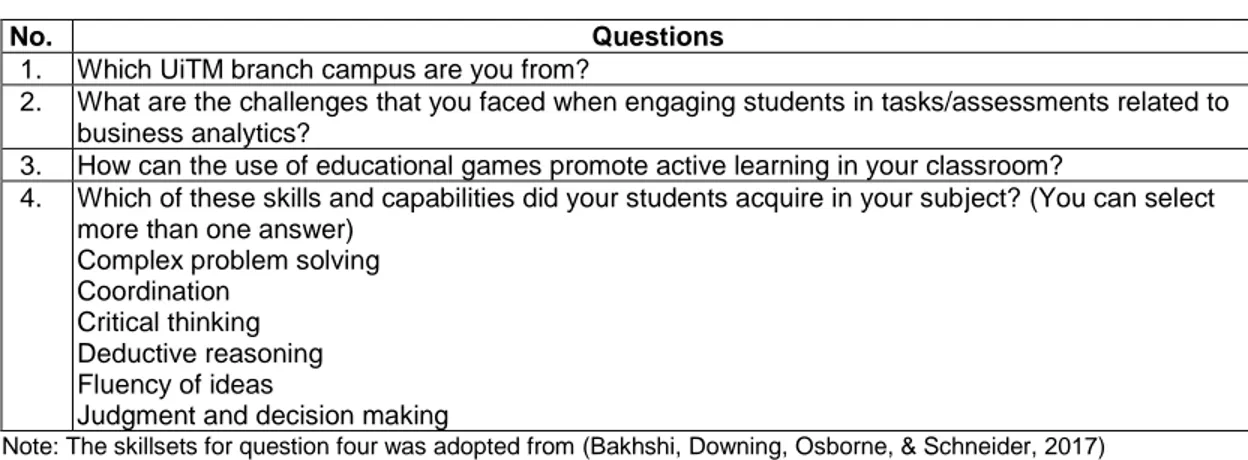
A mixed methods approach was used to obtain data in this study in which it was suitable due to the business analytics course being newly-introduced in the FBM, UiTM. Therefore, no solid data was then available to assess the teaching and learning process of the course. Furthermore, an exploratory treatment was required to determine the challenges faced by lecturers and how educational games could assist in enhancing the teaching and learning process (Yin, 2011). Moreover, the participants of the study were among the lecturers who taught the business analytics course in March 2019 semester. Accordingly, the research design was split into two stages. For the first stage, its main purpose was to determine the challenges that participants faced when engaging their students in tasks or assessments related to business analytics. This stage was implemented to identify the list of challenges and group them into major themes. Here, data collection was carried out using an online survey, which consisted of four questions: one demographic-related question, two open-ended questions, and one question with a selection of multiple responses (see Table 2).
Table 2: Online Survey
No. Questions
1. Which UiTM branch campus are you from?
2. What are the challenges that you faced when engaging students in tasks/assessments related to business analytics?
3. How can the use of educational games promote active learning in your classroom?
4. Which of these skills and capabilities did your students acquire in your subject? (You can select more than one answer)
Complex problem solving Coordination
Critical thinking Deductive reasoning Fluency of ideas
Judgment and decision making
Note: The skillsets for question four was adopted from (Bakhshi, Downing, Osborne, & Schneider, 2017)
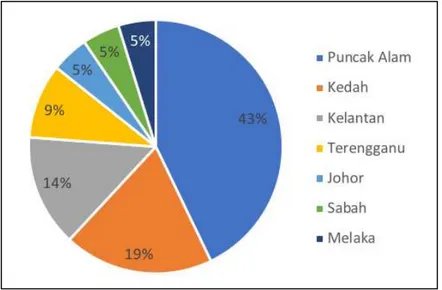
Figure 1: Distribution of Online Survey Participants Based on UiTM Branch Campuses Source: Online survey
Meanwhile, the second stage of data collection geared towards further validation of the themes generated in stage one and obtaining more insights from the participants. In this stage, the case study approach was utilised by taking into consideration of the study’s exploratory nature (Anderson, 2010; Yin, 2009). Therefore, the face-to-face interview method was employed at this stage by using semi-structured interview questions (Questions 3 and 4, see Table 2). Accordingly, the convenient sampling method was used to select the participants for interviews. From the same list of participants used in stage one, only participants from FBM, UiTM Puncak Alam campus were approached for their involvement in the interview session. Those who gave their consent first were interviewed in which each interview session was kept short and lasted between 15 and 20 minutes only. Since the themes were generated earlier, the interview sessions were more focused in nature and probing was directly done based on the themes. The interview process was halted by the fourth participant as the saturation point was successfully reached (Yin, 2009). In of protecting the identity of the participants, it was ensured by referring them as A1, A2, A3, and A4. For both stages, the data were analysed using thematic analysis wherein the text was coded and categories were generated accordingly. A manual data categorisation process was thus implemented since the data were not overwhelmingly abundant in amount.
FINDING AND DISCUSSION
Challenges in Assessing Student Assessments
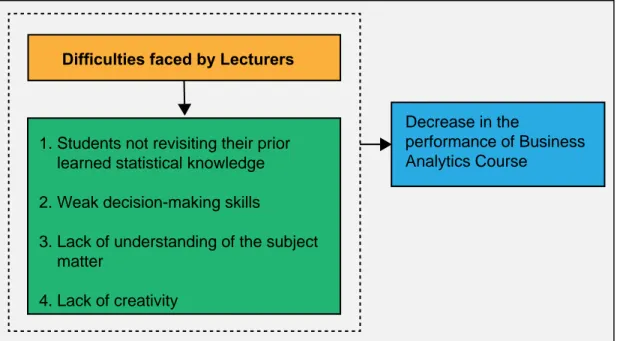
Figure 2: Challenges Faced by Participants Teaching Business Analytics Course Source: Author’s elaboration
Based on the participant feedback, students who were enrolled in the business analytics course did not revisit their prior learned statistical knowledge. This course expected the students to be exposed to the tools available in Microsoft Excel for data analysis and learn how analysis was to be performed. They were then assumed to integrate the prior knowledge they had acquired in their statistical course with the Microsoft Excel analytic tools for an effective decision-making. However, the participants were unable to achieve this goal immediately; first, they had to refresh the students’ statistical knowledge already acquired earlier before these participants could expose them to the analytic tools available in Microsoft Excel. Furthermore, they further emphasised that learning statistics required practice, thereby the students were unable to recall such knowledge within a short span of time. However, this could have been made possible with the condition that the students regularly practised their statistics knowledge independently without relying on their lecturers to spoon-feed them during the lectures. However, once the participants polished the students’ statistical knowledge, they were actually good at utilising such component. This showed that the students had the knowledge but required a form of force in order for them to revise and refresh it. On the other hand, when it came to Microsoft Excel, they were fast to grasp the knowledge. Besides, only a small number of students exhibited low competency in the program, which is as explained by the participants below:
“Students do not revise the statistical knowledge that they have learned during their diploma years or in their earlier semesters during degree before enrolling into business analytics… some of the students also exhibit low competency in Microsoft Excel.” Participant A1
“I have to take some time to polish their knowledge on basic statistics first before I get into hypothesis testing… it takes time to cover the topics in business analytics…but once they have refreshed their statistics, they are fine; in fact, they are good at analysing.” Participant A2
Difficulties faced by Lecturers
1. Students not revisiting their prior learned statistical knowledge
2. Weak decision-making skills
3. Lack of understanding of the subject matter
4. Lack of creativity
Decrease in the
“Students have to practice statistics on their own… with regular practice, they will be able to master it…but knowing the students, they never take the extra effort and just depend on their lecturers to provide them with the knowledge and solve any complexities related to statistics.” Participant A3
Due to the issue discussed earlier, participants indicated that it was a challenge to teach business analytics. As a result, the students ended up having a lack of understanding of the subject matter. They were unable to grasp the content taught in the classroom straight away and the participants would frequently have to repeat the lectures or give special attention to those who have an extremely poor understanding of the topic. This directly erodes the quality of their assessments as explained by the participant below:
“When their statistics is not solid, it takes time for them to learn business analytics. At times, I have to repeat the steps on how to analyse data in Microsoft Excel to make them understand…also provide special classes to the weaker ones… they need to know the properties in statistics”. Participant A2
The prime objective of business analytics was to enable the students acquiring decision-making skills. However, they were unable to make sound decisions in their assessments. In essence, the weak decision-making skills were not only due to poor knowledge pertaining to the subject matter but also the attitude of the students themselves. They displayed a limited scope of learning to only learning the information provided by their lecturers in the classroom. Extra efforts would not be taken by them, including reading additional materials especially related to current issues in their field of studies spanning economics, marketing, finance, and others. Furthermore, the students did not engage in active discussion among their peers on important issues taking place locally or globally in the context of business and the socio-economic environment. This information is undoubtedly essential for effective decision-making. Accordingly, the participants regarded these students as good technicians but poor decision-makers; fundamentally, they could work well with the data in Microsoft Excel and produce the output. However, they would be unable to interpret the output obtained by making good suggestions, which is as explained by the participants as follows:
“Students are able to work with Microsoft Excel; they are good technicians but when it comes to interpreting the results, then they fall short.” Participant A1
“… they need to explore beyond classes and textbooks; only then they can justify the findings and provide good suggestions. They have to know what is happening in the business arena or at least in their field of study… they have to regularly discuss current issues with their friends.” Participant A4
The unwillingness displayed by the students to explore beyond what was taught in the classroom contributed to a lack of creativity. No uniqueness could be perceived in the answers provided by them in the tasks given, whereby they would be commonly lifted from textbooks. Moreover, the answers would always be similar from one student to another, as well as the students failing to infuse ideas from other emerging fields in business. This is a huge loss as business analytics is supposed to take advantage of exploding data (i.e. Big Data) by churning raw data into ground-breaking business strategies, whereby ground-breaking will only happen with creative minds as explained by the participants as follows:
“The answers for the assessments are always common and predictable, nothing new… similar from one student to another, so the data is not of much use.” Participant A4
From the discussion above, it is apparent that students are too dependent on their lecturers and unwilling to go the extra mile to enhance their analytic skills. They would have acquired the knowledge on statistics prior to taking the business analytics course but did not refresh such knowledge on their own and assuming that the lecturers would teach it again. Furthermore, they were not spending enough time on reading other materials that could enhance their knowledge pertaining to current issues. If the students are able to solve these shortcomings, then learning business analytics will become more meaningful to them. This will lead to a high possibility for them to be established as a good business analyst in the near future.
Using Educational Games as Assessments
According to the participants, even though the course was labelled as difficult, it is still not preventing the students from liking the course. They indicated that the students were extremely excited and keen to learn business analytics, as well as always looking forward to assessments that required them to analyse data. They acknowledged that the course was difficult but it was not stressful since business analytics was a subject where they did not have to understand any theory or memorise any hard facts. They enjoyed exploring tools that Microsoft Excel offered. Besides, an element that kept them wanting to learn this course despite the challenges was that they knew it was going to be useful to them once they started working, which is as explained by the participants as follows:
“Students always complain that this course is difficult but they are always excited; they like it when lab assignments are given to them. They like to work with data that is provided to them.” Participant A2
“This subject is something different for them because they do not have to memorise facts or understand theories, so they are happy. They like when real-life situations are given to them and they have to analyse them.” Participant A3
“Students mentioned that this subject was difficult but it was less stressful; they like to explore Microsoft Excel and learn new things.” Participant A4
From the findings above Based on the above findings, it is apparent that business analytics is an enjoyable course and it possesses an interesting element that excites the students. It can be prominently attributed to the nature of the course itself that requires them to engage in active learning when in the classroom as they have to complete a number of lab assignments by using Microsoft Excel. Besides this program, the students were also introduced to Tableau, a data visualisation software, whereby they were required to present their findings using this software. In a nutshell, the interesting amalgamation of exploring new software and active learning in the classroom has intrigued students to like this course despite its difficulty level.
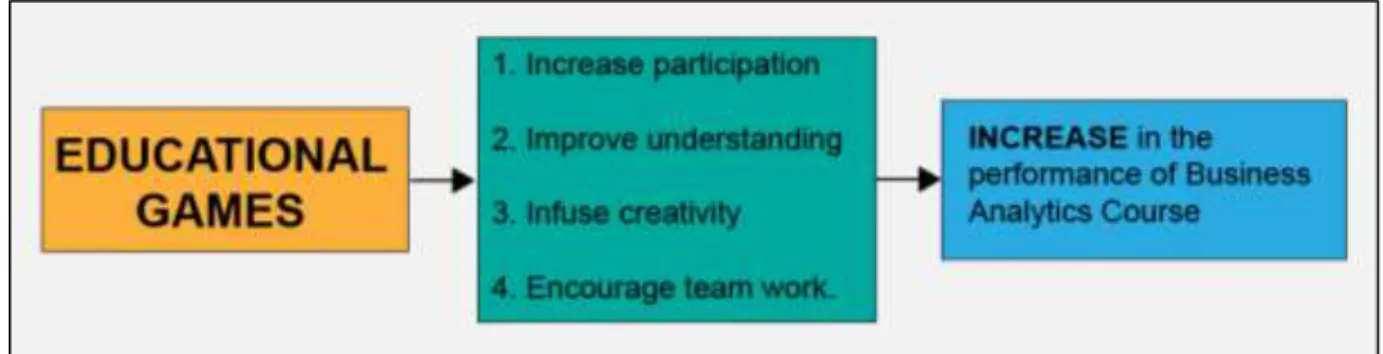
Figure 3. The Beneficial Properties of Educational Games Source: Author’s own elaboration
In general, getting the students to actively participate in class discussions is always a challenge for lecturers. Similarly, the participants indicated that a handful of students were passive and unwilling to contribute anything. These discussions were important as they were usually rooted in and related to current issues and managerial decision-making. Therefore, the participants felt that active discussions were important to stimulate thinking skills. Since Google (the search engine) has made everything easy for the students, they can get everything from the platform. Therefore, the participants suggested that interactive games such as board games would be a good start to increase student participation as explained by the participants below:
“It is a challenge for me to receive full participation from the students and to actively discuss in class… some students are passive… the discussions are on current issues and about managerial decision-making… games may encourage them to participate more in class…we have to make them think; nowadays, they get everything from Google.” Participant A2
“Some students just keep quiet… Interactive games such as board games can increase their participation in class. We can start with board games.” Participant A3
The participants implied that educational games would help their students to improve their understanding of the course. Most of the participants preferred that educational games for business analytics would focus on forcing the students to revisit their prior learned statistical knowledge and encouraging them to read up on current issues. The current curriculum design, according to the participants, did not force the students to revisit knowledge learned previously despite being essential for business analytics. Therefore, the educational games should be designed in such a way that a force mechanism is perceived and requires the students to do their revisions before attending the lectures and start playing the games. Besides, the participants felt that educational games displayed a potential towards allowing the students to understand the course better. They also emphasised for the games to be in the form of online applications so that it could be updated from time to time and directly linked to current issues. Additionally, such games should facilitate the transfer process, whereby students would be able to transfer their prior learned statistical knowledge into business analytics as explained by the participants below:
“Curriculum design does force them to revisit what they have learned in their previous semesters.” Participant A2
“Design the educational games to suit the subject matter…use apps so that it can be updated from time to time…by using educational apps, we can force the students to read on current issues. Students will understand better with games and it can be part of their assessments.” Participant A4
Besides enhancing the learning process, educational games can further help the students to be creative and encourage teamwork. According to the participants, universities would soon be receiving millennials and this particular group of students were a totally different breed. In general, they are highly technology-dependent and unafraid to question. To cater for these students, the lecturers have to become learning designers too, whereby they should design the learning environment with the capabilities to infuse the highest sense of creativity among such students. According to the participants, the heutagogy approach to learning must be adopted wherein students would be placed in a highly autonomous and self-determined learning environment so as to be creative. This could be made possible through educational games as explained by the following participant:
“Place the students in a competitive environment…winning a game automatically makes them creative…Lecturers now have to shift roles; they have to become learning designers… design how students can creatively learn… use the heutagogy approach in whcih we place the students in a highly autonomous and self-determined learning environment… we will be receiving millennials, so it is going to be more challenging.” Participant A2
The spirit of winning also has the potential to encourage teamwork. Based on the participants, some students in the class were just followers wherein they would speak and do the minimal and most of their ideas were based on their friends (i.e. free riders). This behaviour could be altered via educational games as such games incite competition and they would have to work together to win, which is as explained by the participant below:
“The winning spirit will help in shaping the teamwork; usually, some students will just follow what others are doing and take things for granted… but when it is games, they have to be involved to help their team to win.” Participant A4
Figure 4: Skills That Students Acquire in Business Analytics Course Source: Online Survey
The next set of skills that followed included fluency of ideas, deductive reasoning, and complex problem solving with a response rate of 42.9%, 38.1%, and 23.8% accordingly. Among this group of skill sets, fluency of ideas was the highest valued possibly due to these students required to report their findings for all lab assignments and write a self-reflection paper as part of the assessment in the course. In contrast, deductive reasoning and complex problem-solving skills scored the lowest among the participants potentially due to the nature of the course itself, which required the students to perform an analysis by using Microsoft Excel, a program that is not too complex. Additionally, data visualisation for the purpose of this course was executed using the Tableau software, which was extremely user friendly too.
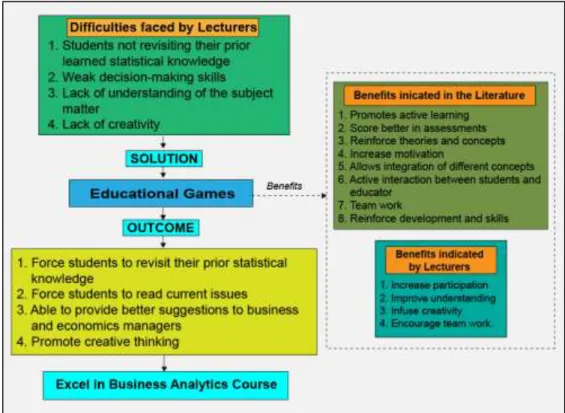
From the findings of this study, a framework to assist the students in excelling in the business analytics course was developed accordingly (see Figure 5). The framework technically summarised the entire findings. The two major issues faced by participants consisted of students not revisiting their prior learned statistics knowledge and their weak decision-making skills. From the literature and participant feedback, it was found that active learning via educational games could encourage the students to be more thoughtful and critical, which were the gist for good decision-making (Cezar et al., 2010). Furthermore, such games also had the power to force students into revisiting and reinforcing prior theories and concepts and the concepts that they had learned (Battistella & von Wangenheim, 2016). Therefore, educational games are suitable for solving shortcomings related to teaching and assessing business analytics. Besides, they can be designed in such a way that it requires the students to revisit their prior leaned knowledge and current issues concurrently. Lastly, educational games can keep the students highly motivated (Braghirolli et al., 2016). In the context of business analytics, the students were already excited for this course; thus, educational games would keep them intrigued and allow the active learning momentum to soar up until its completion.
CONCLUSION
Business analytics is a challenging course to be taught as it requires a strong foundation in statistics and some exposure to analytic tools such as Microsoft Excel. However, educational games have offered specific properties geared to overcome these challenges. To investigate the challenges faced by lecturers teaching business analytics and how educational games could assist in promoting active learning, a qualitative approach with two-stage data collection method was deployed. First, an online survey with open-ended questions was utilised to gather data and generate themes, following which the second stage included face-to-face interviews being conducted to gather specific information related to the themes generated in the earlier stage.
The study found that the major challenges faced by lecturers included students not taking the effort to revise their prior learned statistical knowledge, which was essential for the business analytics course. Besides, they exhibited a lack of creativity and weak decision-making skills, thus contributing to their poor understanding of the course. Lecturers responded that educational games would be a well-fit solution for these challenges as they could increase the students’ participation in the classroom, improve their understanding, infuse creativity, and encourage teamwork. These findings can be calibrated with past studies carried out in a similar vein.
Based on the findings, it is suggested for educational games to be designed in a way wherein students are required to revisit their prior learned statistical knowledge and they are forced to read up on current issues. Besides, these games can be used as part of the assessments as this will proliferate the winning spirit and further encourage them to strengthen their prior knowledge. For a start, lecturers can design board games to tackle the issues mentioned in the beginning and then slowly venture into converting these board games into online applications.
coordination skills, and critical thinking skills. The development of these skills is effective when educational games are used.
Future research in this area should look into student feedback regarding how educational games can assist them in mastering the business analytics course. Henceforth, the studies should shift from the qualitative research type to quantitative research type in order to specifically determine the features of educational games that are significant for the course. However, the findings may suffer from certain limitations such as observer error and observer bias since the current study is extremely dependent on qualitative data. However, such limitations were curbed to a large extent by the use of the two-stage approach during data collection. In particular, the online survey yielded information that was further validated through face-to-face interviews.
ACKNOWLEDGEMENTS
We thank the Faculty of Business and Management, Universiti Teknologi MARA for supporting us to execute this research to further enhance the teaching and learning of business analytics (MGT555).
REFERENCES
Anderson, C. (2010). Presenting and evaluating qualitative research. American Journal of Pharmaceutical Education, 74(8), 1–7. https://doi.org/10.5688/aj7408141
Bakhshi, H., Downing, J. M., Osborne, M. A., & Schneider, P. (2017). The future of skills: Employment in 2030. Pearson London.
Battistella, P., & von Wangenheim, C. G. (2016). Games for teaching computing in higher education–a systematic review. IEEE Technology and Engineering Education, 9(1), 8–30.
Beetham, H. (2008). Review: Design for Learning programme phase 2. JISC Commissioned Report, Available Online at Doc, Last Accessed 2nd July 2019.
Boyle, E., Connolly, T. M., & Hainey, T. (2011). The role of psychology in understanding the impact of computer games. Entertainment Computing, 2(2), 69–74.
Braghirolli, L. F., Ribeiro, J. L. D., Weise, A. D., & Pizzolato, M. (2016). Benefits of educational games as an introductory activity in industrial engineering education. Computers in Human Behavior, 58, 315–324.
Cezar, P. H. N., Guimarães, F. T., Gomes, A. P., Rôças, G., & Siqueira-Batista, R. (2010). Paradigm shifts in medical education: a constructivist view of problem-based learning. Revista Brasileira de Educação Médica, 34(2), 298–303.
Coil, D. A., Ettinger, C. L., & Eisen, J. A. (2017). Gut Check: The evolution of an educational board game. PLoS Biology, 15(4), e2001984.
Connolly, T. M., Boyle, E. A., MacArthur, E., Hainey, T., & Boyle, J. M. (2012). A systematic literature review of empirical evidence on computer games and serious games. Computers & Education, 59(2), 661–686.
Cornillie, F., Clarebout, G., & Desmet, P. (2012). The role of feedback in foreign language learning through digital role playing games. Procedia-Social and Behavioral Sciences, 34, 49–53.
Daniel, B. (2015). B ig D ata and analytics in higher education: Opportunities and challenges. British Journal of Educational Technology, 46(5), 904–920.
Erhel, S., & Jamet, E. (2013). Digital game-based learning: Impact of instructions and feedback on motivation and learning effectiveness. Computers & Education, 67, 156–167.
Inhelder, B., & Piaget, J. (1969). The psychology of the child. New York: Basic Books.
Kirriemuir, J., & McFarlane, A. (2004). Literature review in games and learning: A report for NESTA Futurelab. Retrived from http://www.nestafuturelab.org/research/reviews/08_01.htm
Lameras, P., Arnab, S., Dunwell, I., Stewart, C., Clarke, S., & Petridis, P. (2017). Essential features of serious games design in higher education: Linking learning attributes to game mechanics. British Journal of Educational Technology, 48(4), 972–994.
Lave, J., & Wenger, E. (1991). Situated learning: Legitimate peripheral participation. Cambridge University Press.
Lekka, A., Toki, E., Tsolakidis, C., & Pange, J. (2017). Literature review on educational games for learning statistics. IEEE Global Engineering Education Conference, EDUCON, August 2018 (pp. 844–847). https://doi.org/10.1109/EDUCON.2017.7942945
Luchi, K. C. G., Montrezor, L. H., & Marcondes, F. K. (2017). Effect of an educational game on university students’ learning about action potentials. Advances in Physiology Education, 41(2), 222–230. Michael, D. R., & Chen, S. L. (2005). Serious games: Games that educate, train, and inform. Muska &
Lipman/Premier-Trade.
Mohammad, N. M. N., Mamat, M. N., & Isa, P. M. (2012). M-learning in Malaysia: Challenges and strategies. Procedia-Social and Behavioral Sciences, 67, 393–401.
Phelps, A. L., & Szabat, K. A. (2017). The current landscape of teaching analytics to business students at institutions of higher education: who is teaching what? The American Statistician, 71(2), 155–161. Reis, C., Martins, M. de M., Mendes, R. A. F., Gonçalves, L. B., Sampaio Filho, H. C., Morais, M. R.,
Guimarães, A. L. S. (2013). Evaluation of how medical students perceive anatomical study. Revista Brasileira de Educação Médica, 37(3), 350–358.
Roy-Singh, R. (1991). Education for the twenty-first century: Asia-Pacific perspectives. Unesco Principal Regional Office for Asia and the Pacific.
Sawyer, B. (2007). Serious games: Broadening games impact beyond entertainment. Computer Graphics Forum, 26(3), xviii–xviii. doi:10.1111/j.1467-8659.2007.01044.x
Shahroom, A., & Hussin, N. (2018). Industrial revolution 4.0 and education. International Journal of Academic Research in Business and Social Sciences, 8(9), 314–319.
Vos, N., Van Der Meijden, H., & Denessen, E. (2011). Effects of constructing versus playing an educational game on student motivation and deep learning strategy use. Computers & Education, 56(1), 127–137. Yin, R. K. (2009). Case Study Research: Design and Methods. Essential guide to qualitative methods in
organizational research (Vol. 5). Thousand Oaks, CA: Sage https://doi.org/10.1097/ FCH.0b013e31822dda9e
Yin, R. K. (2011). Qualitative research from start to finish. The Guilford Press