Practice Guidelines for Preoperative Fasting and the Use
of Pharmacologic Agents to Reduce the Risk of
Pulmonary Aspiration: Application to Healthy Patients
Undergoing Elective Procedures
An Updated Report by the American Society of Anesthesiologists
Committee on Standards and Practice Parameters
P
RACTICE Guidelinesare systematically developed rec-ommendations that assist the practitioner and patient in making decisions about health care. These recommenda-tions may be adopted, modified, or rejected according to clinical needs and constraints and are not intended to replace local institutional policies. In addition, Practice Guidelines developed by the American Society of Anesthesiologists (ASA) are not intended as standards or absoluterequire-ments, and their use cannot guarantee any specific outcome. Practice Guidelines are subject to revision as warranted by the evolution of medical knowledge, technology, and prac-tice. They provide basic recommendations that are sup-ported by a synthesis and analysis of the current literature, expert and practitioner opinion, open forum commentary, and clinical feasibility data.
This update includes data published since the Practice Guidelines for Preoperative Fasting and the Use of Pharma-cologic Agents to Reduce the Risk of Pulmonary Aspiration were adopted by the ASA in 1998 and published in 1999.* Methodology
Definition of Preoperative Fasting and Pulmonary Aspiration
For these Guidelines, preoperative fasting is defined as a prescribed period of time before a procedure when patients are not allowed the oral intake of liquids or solids. Perioper-ative pulmonary aspiration is defined as aspiration of gastric contents occurring after induction of anesthesia, during a procedure, or in the immediate period after surgery.
Purposes of the Guidelines
The purposes of these Guidelines are to (1) enhance the quality and efficiency of anesthesia care, (2) stimulate evalu-ation of clinical practices, and (3) reduce the severity of com-plications related to perioperative pulmonary aspiration of gastric contents.
Enhancements in the quality and efficiency of anesthesia care include, but are not limited to, the cost-effective use of perioperative preventive medication, increased patient satis-faction, avoidance of delays and cancellations, decreased risk
Updated by the American Society of Anesthesiologists (ASA) Com-mittee on Standards and Practice Parameters, Jeffrey L. Apfelbaum, M.D. (Chair), Chicago, Illinois; Robert A. Caplan, M.D., Seattle, Wash-ington; Richard T. Connis, Ph.D., Woodinville, WashWash-ington; Burton S. Epstein, M.D., Washington, D.C.; David G. Nickinovich, Ph.D., Belle-vue, Washington; and Mark A. Warner, M.D., Rochester, Minnesota. Originally developed by the ASA Task Force on Preoperative Fasting and the Use of Pharmacologic Agents to Reduce the Risk of Pulmonary Aspiration: Mark A. Warner, M.D. (Chair), Rochester, Minnesota; Rob-ert A. Caplan, M.D., Seattle, Washington; Burton S. Epstein, M.D., Washington, D.C.; Charles P. Gibbs, M.D., Denver, Colorado; Candace E. Keller, M.D., M.P.H., Hattiesburg, Mississippi; Jessie A. Leak, M.D., Fayetteville, North Carolina; Roger Maltby, M.B.B.S., Calgary, Alberta; David G. Nickinovich, Ph.D., Bellevue, Washington; Mark S. Schreiner, M.D., Philadelphia, Pennsylvania; and Chris M. Weinlander, M.D., Appleton, Wisconsin.
Received from the American Society of Anesthesiologists, Park Ridge, Illinois. Submitted for publication October 21, 2010. Ac-cepted for publication October 21, 2010. Supported by the Ameri-can Society of Anesthesiologists and developed under the direction of the Committee on Standards and Practice Parameters, Jeffrey L. Apfelbaum, M.D. (Chair). Approved by the House of Delegates on October 20, 2010. A complete bibliography used to develop these updated Guidelines, arranged alphabetically by author, is available as Supplemental Digital Content 1, http://links.lww.com/ALN/A660. Address correspondence to the American Society of Anesthesi-ologists: 520 N. Northwest Highway, Park Ridge, Illinois 60068-2573. These Practice Guidelines, as well as all published ASA Prac-tice Parameters, may be obtained at no cost through the Journal Web site, www.anesthesiology.org.
* American Society of Anesthesiologists: Practice guidelines for pre-operative fasting and the use of pharmacologic agents to reduce the risk of pulmonary aspiration: Application to healthy patients undergo-ing elective procedures–a report by the American Society of Anesthe-siologists Task Force on Preoperative Fasting. ANESTHESIOLOGY1999; 90:896 –905
Copyright © 2011, the American Society of Anesthesiologists, Inc. Lippincott Williams & Wilkins.Anesthesiology 2011; 114: 495–511
Supplemental digital content is available for this article. Direct URL citations appear in the printed text and are available in both the HTML and PDF versions of this article. Links to the digital files are provided in the HTML text of this article on the Journal’s Web site (www.anesthesiology.org).
of dehydration or hypoglycemia from prolonged fasting, and the minimization of perioperative morbidity.
Clinical practices include, but are not limited to, with-holding solids and liquids for specified time periods before surgery, and prescribing pharmacologic agents to reduce gas-tric volume and acidity.
Complications of aspiration include, but are not limited to, aspiration pneumonia, respiratory disabilities, and related morbidities.
Focus
These Guidelines focus on preoperative fasting recom-mendations, as well as recommendations regarding the administration of pharmacologic agents to modify the volume and acidity of gastric contents during procedures in which upper airway protective reflexes may be im-paired. Prevention of perioperative pulmonary aspiration is part of the larger process of preoperative evaluation and preparation of the patient.
Airway management techniques that are intended to re-duce the occurrence of pulmonary aspiration are not the focus of these Guidelines. For example, a rapid-sequence induction/tracheal intubation technique or an awake tra-cheal intubation technique may be useful to prevent this problem during the delivery of anesthesia care. In addition, these Guidelines do not address the selection of anesthetic technique.
The intended patient population for these Guidelines is lim-ited to healthy patients of all ages undergoing elective proce-dures. These Guidelines do not apply to patients who undergo procedures with no anesthesia or only local anesthesia when upper airway protective reflexes are not impaired, and when no risk factors for pulmonary aspiration are apparent. These Guidelines are also not intended for women in labor.
These Guidelines may not apply to, or may need to be modified for (1) patients with coexisting diseases or condi-tions that can affect gastric emptying or fluid volume (e.g., pregnancy, obesity, diabetes, hiatal hernia, gastroesophageal reflux disease, ileus or bowel obstruction, emergency care, enteral tube feeding) and (2) patients in whom airway magement might be difficult. Anesthesiologists and other an-esthesia providers should recognize that these conditions can increase the likelihood of regurgitation and pulmonary aspi-ration. Additional or alternative preventive strategies may be appropriate for such patients.
Application
These Guidelines are intended for use by anesthesiologists and other anesthesia providers. They also may serve as a resource for other health care professionals who advise or care for patients who receive anesthesia care during procedures. Anesthesia care during procedures refers to general anesthe-sia, regional anestheanesthe-sia, or sedation/analgesia (i.e., monitored
anesthesia care). Throughout these Guidelines, preoperative should be considered synonymous with preprocedural, as the latter term is often used to describe procedures that are not considered operations.
Task Force Members and Consultants
The original Guidelines were developed by a Task Force of 10 members, including anesthesiologists in both private and aca-demic practice from various geographic areas of North America, and a consulting methodologist from the ASA Committee on Standards and Practice Parameters.
The Task Force developed the original Guidelines by means of a six-step process. First, they reached consensus on the criteria for evidence. Second, original published research studies from peer-reviewed journals relevant to preoperative fasting were re-viewed and evaluated. Third, expert consultants were asked (1) to participate in opinion surveys on the effectiveness of various preoperative fasting management recommendations and (2) to review and comment on a draft of the Guidelines. Fourth, the Task Force held open forums at a national meeting† to solicit input on the draft recommendations. Fifth, expert consultants were surveyed to assess their opinions on the feasibility of im-plementing the Guidelines. Sixth, all available information was used to build consensus within the Task Force to finalize the Guideline recommendations (appendix 1).
In 2009, the ASA Committee on Standards and Practice Parameters requested that scientific evidence for these Guide-lines be updated. This update consists of an evaluation of liter-ature that includes new studies obtained after publication of the original Guidelines, new surveys of expert consultants, and a survey of a randomly selected sample of active ASA members.
Availability and Strength of Evidence
Preparation of this update used the same methodologic pro-cess as was used in the original Guidelines to obtain new evidence from two principal sources: scientific evidence and opinion-based evidence (appendix 2). The protocol for re-porting each source of evidence is described below.
Scientific Evidence
Study findings from published scientific literature were aggre-gated and are reported in summary form by evidence category, as described below. All literature (e.g., randomized controlled trials, observational studies, case reports) relevant to each topic was considered when evaluating the findings. However, for re-porting purposes in this document, only the highest level of evidence (i.e., level 1, 2, or 3 within category A, B, or C) is included in the summary.
Category A: Supportive Literature
Randomized controlled trials report statistically significant (P⬍ 0.01) differences between clinical interventions for a specified clinical outcome.
† 12th Annual Meeting of the Society for Ambulatory Anesthesia, Orlando, Florida, May 2, 1997.
Level 1. The literature contains multiple randomized controlled trials. Aggregated findings are supported by meta-analysis.‡
Level 2. The literature contains multiple randomized trolled trials, but there is an insufficient number of studies to con-duct a viable meta-analysis for the purpose of these Guidelines.
Level 3. The literature contains a single randomized con-trolled trial.
Category B: Suggestive Literature
Information from observational studies permits inference of beneficial or harmful relationships among clinical interven-tions and clinical outcomes.
Level 1. The literature contains observational comparisons (e.g., cohort, case-control research designs) of clinical interven-tions or condiinterven-tions and indicates statistically significant differences between clinical interventions for a specified clinical outcome.
Level 2. The literature contains noncomparative observa-tional studies with associative (e.g., relative risk, correlation) or descriptive statistics.
Level 3. The literature contains case reports.
Category C: Equivocal Literature
The literature cannot determine whether there are beneficial or harmful relationships among clinical interventions and clinical outcomes.
Level 1. Meta-analysis did not find significant differences among groups or conditions.
Level 2. The number of studies is insufficient to conduct meta-analysis, and (1) randomized controlled trials have not found significant differences among groups or conditions, or (2) randomized controlled trials report inconsistent findings. Level 3. Observational studies report inconsistent findings or do not permit inference of beneficial or harmful relationships.
Category D: Insufficient Evidence from Literature
The lack of scientific evidence in the literature is described using the terms defined below.
Silent. No identified studies address the specified rela-tionships among interventions and outcomes.
Inadequate. The available literature cannot be used to assess relationships among clinical interventions and clinical out-comes. The literature either does not meet the criteria for con-tent as defined in the “Focus” of the Guidelines or does not permit a clear interpretation of findings due to methodological concerns (e.g., confounding in study design or implementation).
Opinion-based Evidence
All opinion-based evidence relevant to each topic (e.g., survey data, open-forum testimony, Internet-based comments, let-ters, editorials) was considered in the development of the original Guidelines. New opinion surveys were developed to address each clinical intervention identified in the docu-ment, and identical surveys were distributed to both expert consultants and a random sample of active ASA members.
Category A: Expert Opinion
Survey responses from Task Force–appointed expert consul-tants are reported in summary form in the text. A complete listing of consultant survey responses reported in a table in ap-pendix 2.
Category B: Membership Opinion
Survey responses from active ASA members are reported in summary form in the text. A complete listing of ASA mem-ber survey responses reported in appendix 2.
Survey responses are recorded using a 5-point scale and summarized based on median values.§
Strongly Agree. Median score of 5 (at least 50% of re-sponses are 5).
Agree. Median score of 4 (at least 50% of responses are 4 [or 4 and 5]).
Equivocal. Median score of 3 (at least 50% of responses are 3— or no other response category or combination of similar categories contain at least 50% of responses).
Disagree. Median score of 2 (at least 50% of responses are 2 [or 1 and 2]).
Strongly Disagree. Median score of 1 (at least 50% of responses are 1).
Category C: Informal Opinion
Open-forum testimony, Internet-based comments, let-ters, and editorials were all informally evaluated and dis-cussed during the development of the original Guideline recommendations.
Guidelines
Preoperative Assessment
No controlled trials were found that address the impact of conducting a preoperative assessment (e.g., history, physical examination, survey/interview) on the frequency or severity of pulmonary aspiration of gastric contents during the peri-operative period (Category D evidence). Studies with observa-tional findings suggest that certain predisposing conditions (e.g., age, comorbid disease) may be associated with the risk of perioperative aspiration (Category B2 evidence).1,2
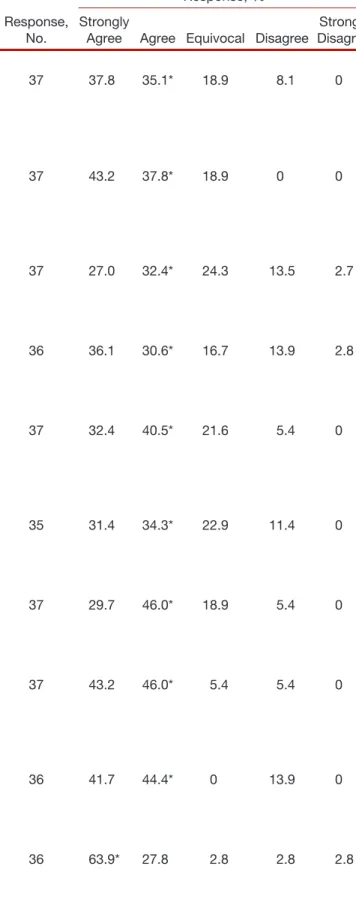
The consultants and ASA members strongly agree that a review of pertinent medical records, a physical examination, and patient survey or interview should be performed as part of preoperative evaluation. They also strongly agree that pa-tients should be informed of fasting requirements, and the
‡ All meta-analyses are conducted by the ASA methodology group. Meta-analyses from other sources are reviewed but not included as evidence in this document.
§When an equal number of categorically distinct responses are obtained, the median value is determined by calculating the arith-metic mean of the two middle values. Ties are calculated by a predetermined formula.
reasons for them, sufficiently in advance of their procedures. In addition, both the consultants and ASA members strongly agree that verification of patient compliance with fasting re-quirements should be assessed at the time of the procedure.
Recommendations for Preoperative Assessment. A re-view of pertinent medical records, a physical examination, and patient survey or interview should be performed as part of preoperative evaluation. The history, examination, and interview should include pertinent assessment of gastro-esophageal reflux disease, dysphagia symptoms, or other gas-trointestinal motility disorders, potential for difficult air-way management, and metabolic disorders (e.g., diabetes mellitus) that may increase the risk of regurgitation and pulmonary aspiration. Patients should be informed of fasting requirements, and the reasons for them, suffi-ciently in advance of their procedures. Verification of pa-tient compliance with fasting requirements should be as-sessed at the time of the procedures. When the fasting recommendations in these Guidelines are not followed, the practitioner should compare the risks and benefits of proceeding, with consideration given to the amount and type of liquids or solids ingested.
Preoperative Fasting Status: Clear Liquids
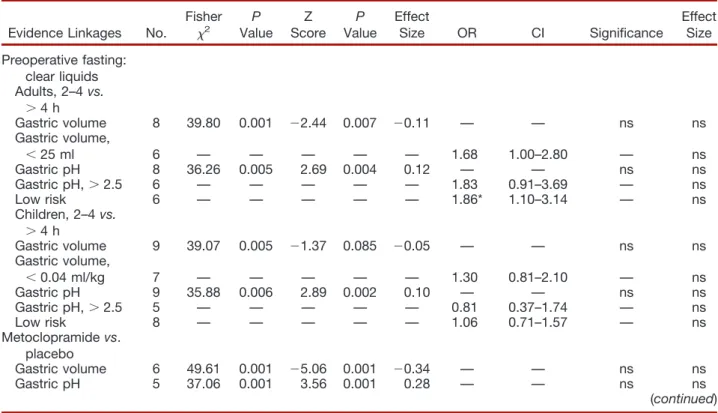
Meta-analysis of randomized controlled trials3–10comparing fasting times of 2– 4 hversusmore than 4 h report smaller gastric volumes and higher gastric pH values in adult patients given clear liquids 2– 4 h before a procedure (Category A1 evidence); findings for gastric pH values more than 2.5 are equivocal (Category C1 evidence).3–7,9Meta-analysis of
ran-domized controlled trials11–19report higher gastric pH val-ues (Category A1 evidence) and equivocal findings regarding differences in gastric volume for children given clear liquids 2– 4 h before a procedureversusfasting for more than 4 h before a procedure (Category C1 evidence).11–19Ingested vol-umes of clear liquids in the above studies range from 100 ml to unrestricted amounts for adults, and 2 ml/kg to unre-stricted amounts for children. Published clinical evidence is insufficient to address the relationship between fasting times for clear liquids and the risk of emesis/reflux or pulmonary aspiration (Category D evidence).
Both the consultants and ASA members strongly agree that for otherwise healthy infants (younger than 2 yr), chil-dren (2–16 yr), and adults, fasting from the intake of clear liquids at least 2 h before elective procedures requiring gen-eral anesthesia, regional anesthesia, or sedation/analgesia (i.e., monitored anesthesia care) should be maintained.
Recommendations for Clear Liquids.It is appropriate to fast from intake of clear liquids at least 2 h before elective procedures requiring general anesthesia, regional anesthesia, or sedation/analgesia (i.e., monitored anesthesia care). Exam-ples of clear liquids include, but are not limited to, water, fruit juices without pulp, carbonated beverages, clear tea, and black coffee. These liquids should not include alcohol. The
volume of liquid ingested is less important than the type of liquid ingested.
Preoperative Fasting Status: Breast Milk
Studies with observational findings are equivocal regarding the impact of ingesting breast milk 4 h before a procedure on the risk of higher volumes or lower pH levels of gastric contents during a procedure (Category C3 evidence).20 –22 The literature is insufficient to evaluate the effect of the timing of ingestion of breast milk and the perioperative incidence of emesis/reflux or pulmonary aspiration (Cat-egory D evidence).
The consultants agree and the ASA members strongly agree that for otherwise healthy neonates (younger than 44 gestational weeks) and infants, fasting from the intake of breast milk at least 4 h before elective procedures requiring general anesthesia, regional anesthesia, or sedation/analgesia (i.e., monitored anesthesia care) should be maintained.
Recommendations for Breast Milk.It is appropriate to fast from intake of breast milk at least 4 h before elective procedures requiring general anesthesia, regional anesthesia, or sedation/anal-gesia (i.e., monitored anesthesia care).
Preoperative Fasting Status: Infant Formula
A study with observational findings is equivocal regarding the impact of ingesting infant formula 4 h before a procedure on the risk of higher volumes or lower pH levels of gastric contents during a procedure (Category C3 evidence).23The literature is
insufficient to evaluate the effect of the timing of inges-tion of infant formula and the perioperative incidence of emesis/reflux or pulmonary aspiration (Category D evidence). Both the consultants and ASA members agree that for neonates and infants, fasting from the intake of infant for-mula at least 6 h before elective procedures requiring general anesthesia, regional anesthesia, or sedation/analgesia (i.e., monitored anesthesia care) should be maintained. The con-sultants agree and the ASA members strongly agree that for children, fasting from the intake of infant formula at least 6 h before elective procedures requiring general anesthesia, re-gional anesthesia, or sedation/analgesia (i.e., monitored an-esthesia care) should be maintained.
Recommendations for Infant Formula.It is appropriate to fast from intake of infant formula at least 6 h before elec-tive procedures requiring general anesthesia, regional anes-thesia, or sedation/analgesia (i.e., monitored anesthesia care).
Preoperative Fasting Status: Solids and Nonhuman Milk
A randomized controlled trial comparing a light breakfast con-sumed an average of less than 4 h before a procedure with over-night fasting reports equivocal findings regarding gastric volume and pH levels for adults (Category C2 evidence).24Studies with nonrandomized comparative findings for children given non-human milk 4 h or less before a procedureversus children who fasted for more than 4 h report higher gastric volumes (Category B2 evidence) and equivocal gastric pH (Category C3
evi-dence).21,25,26A study with observational findings suggests that
fasting for more than 8 h may be associated with hypoglycemia in children (Category B2 evidence).26The literature is insufficient to evaluate the effect of the timing of ingestion of solids and nonhuman milk and the perioperative incidence of emesis/re-flux or pulmonary aspiration (Category D evidence).
The consultants agree and the ASA members strongly agree that fasting from the intake of a light meal (e.g., toast and a clear liquid) 6 h or more before elective procedures requiring general anesthesia, regional anesthesia, or sedation/analgesia (i.e., mon-itored anesthesia care) should be maintained. Both the consul-tants and ASA members strongly agree that fasting from the intake of a meal that includes fried or fatty foods 8 h or more before elective procedures requiring general anesthesia, regional anesthesia, or sedation/analgesia (i.e., monitored anesthesia care) should be maintained.
Both the consultants and ASA members agree that for in-fants, fasting from the intake of nonhuman milk 6 h or more before elective procedures requiring general anesthesia, regional anesthesia, or sedation/analgesia (i.e., monitored anesthesia care) should be maintained. The consultants agree and the ASA members strongly agree that for children and adults, fasting from the intake of nonhuman milk 6 h or more before elective procedures requiring general anesthesia, regional anesthesia, or sedation/analgesia (i.e., monitored anesthesia care) should be maintained.
Recommendations for Solids and Nonhuman Milk.It is appropriate to fast from intake of a light meal or nonhuman milk 6 h or more before elective procedures requiring general anesthesia, regional anesthesia, or sedation/analgesia (i.e., mon-itored anesthesia care). The Task Force notes that intake of fried or fatty foods or meat may prolong gastric emptying time. Ad-ditional fasting time (e.g.,8 h or more) may be needed in these cases. Both the amount and type of food ingested must be con-sidered when determining an appropriate fasting period. Be-cause nonhuman milk is similar to solids in gastric emptying time, the amount ingested must be considered when determin-ing an appropriate fastdetermin-ing period.
Preoperative Gastrointestinal Stimulants
Meta-analysis of randomized placebo-controlled trials8 –32 supports the efficacy of metoclopramide to reduce gastric volume (Category A1 evidence)2and is equivocal regarding
the effect of metoclopramide on gastric acidity (Category C1 evidence)28 –32during the perioperative period. The literature is insufficient to evaluate the effect of administering gastro-intestinal stimulants on the perioperative incidence of eme-sis/reflux or pulmonary aspiration (Category D evidence).
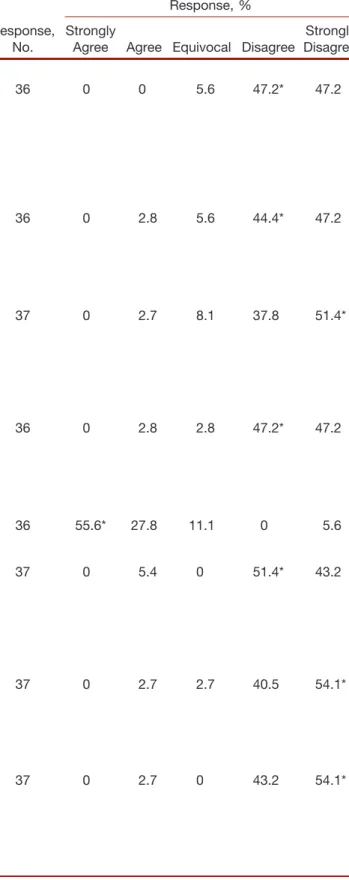
Both the consultants and ASA members disagree that gas-trointestinal stimulants should be routinely administered be-fore elective procedures requiring general anesthesia, regional anesthesia, or sedation/analgesia (i.e., monitored anesthesia care) in patients who have no apparent increased risk for pulmonary aspiration.
Recommendations for Gastrointestinal Stimulants.The routine preoperative use of gastrointestinal stimulants to de-crease the risk of pulmonary aspiration in patients who have no apparent increased risk for pulmonary aspiration is not recommended.
Preoperative Pharmacologic Blockade of Gastric Acid Secretion
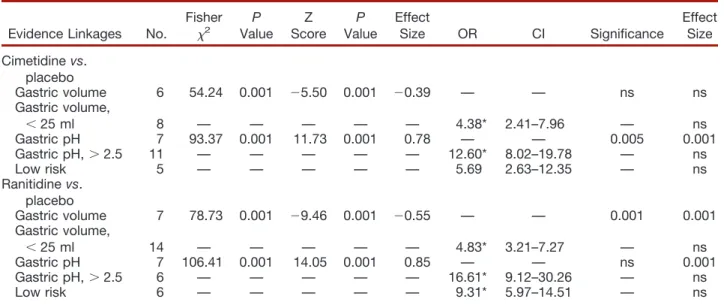
Histamine-2 receptor antagonists: Meta-analysis of double-blind randomized placebo-controlled trials support the efficacy of cimetidine to reduce gastric volume31–36and acidity31–37 during the perioperative period (Category A1 evidence). Meta-analysis of double-blind randomized pla-cebo-controlled trials35,38 – 43also supports the efficacy of ranitidine to reduce gastric volume and acidity during the perioperative period (Category A1 evidence). Randomized placebo-controlled trials indicate that famotidine is effec-tive in reducing gastric volume and acidity (Category A2 evidence).39,44,45
Proton pump inhibitors: Randomized controlled trials support the efficacy of omeprazole in reducing gastric volume and acidity (Category A2 evidence),41,46 – 48 with similar findings reported for lansoprazole (Category A2 evidence).41,42,49,50
The literature is insufficient to evaluate the effect of admin-istering either histamine-2 receptor antagonists or proton pump inhibitors on the perioperative incidence of emesis/reflux or pul-monary aspiration (Category D evidence).
Both the consultants and ASA members disagree that hista-mine-2 receptor antagonists should be routinely administered before elective procedures requiring general anesthesia, regional anesthesia, or sedation/analgesia (i.e., monitored anesthesia care) in patients who have no apparent increased risk for pul-monary aspiration. The ASA members disagree and the consul-tants strongly disagree that proton pump inhibitors should be routinely administered before elective procedures requiring gen-eral anesthesia, regional anesthesia, or sedation/analgesia (i.e., monitored anesthesia care) in patients who have no apparent increased risk for pulmonary aspiration.
Recommendations for Preoperative Pharmacologic Blockade of Gastric Acid Secretion.The routine preop-erative use of medications that block gastric acid secretion to decrease the risks of pulmonary aspiration in patients who have no apparent increased risk for pulmonary aspi-ration is not recommended.
Preoperative Antacids
Randomized controlled trials indicate that preoperative ant-acids (e.g., sodium citrate, magnesium trisilicate) increase gastric pH during the perioperative period (Category A2 evi-dence),29,51–54with equivocal findings regarding gastric vol-ume (Category C2 evidence). The literature does not sufficiently examine the relationship between reduced gastric acidity and the frequency of pulmonary aspiration or emesis in humans; nor does the literature sufficiently examine whether reduced gastric
acidity or volume is associated with decreased morbidity or mor-tality in patients given preoperative antacids who have aspirated gastric contents (Category D evidence).
The consultants and ASA members both disagree that pre-operative antacids should be routinely administered before elec-tive procedures requiring general anesthesia, regional anesthesia, or sedation/analgesia (i.e., monitored anesthesia care) in patients who have no apparent increased risk for pulmonary aspiration. The consultants and ASA members both strongly agree that only nonparticulate antacids should be used when antacids are indicated for selected patients.
Recommendations for Preoperative Antacids.The rou-tine preoperative use of antacids to decrease the risks of pulmonary aspiration in patients who have no apparent increased risk for pulmonary aspiration is not recommended. Only nonparticulate antacids should be used when antacids are indicated for selected patients for purposes other than reducing the risk of pulmonary aspiration.
Preoperative Antiemetics
Randomized controlled trials indicate that the preoperative administration of droperidol55–57and ondansetron58 – 60are
effective in reducing nausea and vomiting during the period after surgery (Category A2 evidence). The literature does not sufficiently examine the relationship between the preopera-tive use of antiemetics and the frequency of pulmonary aspi-ration (Category D evidence).
The consultants and ASA members both disagree that preoperative antiemetics should be routinely administered before elective procedures requiring general anesthesia, re-gional anesthesia, or sedation/analgesia (i.e., monitored an-esthesia care) in patients who have no apparent increased risk for pulmonary aspiration.
Recommendations for Preoperative Antiemetics.储 The routine preoperative use of antiemetics to reduce the risks of pulmonary aspiration in patients who have no apparent in-creased risk for pulmonary aspiration is not recommended.
Preoperative Anticholinergics
Randomized placebo-controlled trials are equivocal regard-ing the efficacy of atropine61and glycopyrrolate62– 65to re-duce gastric volume or acidity (Category C2 evidence).
The ASA members disagree and the consultants strongly disagree that preoperative anticholinergics should be rou-tinely administered before elective procedures requiring gen-eral anesthesia, regional anesthesia, or sedation/analgesia (i.e., monitored anesthesia care) to decrease the risk of pul-monary aspiration.
Recommendations for Preoperative Anticholinergics.The use of anticholinergics to decrease the risks of pulmonary aspiration is not recommended.
Preoperative Multiple Agents
Randomized controlled trials indicate that, when hista-mine-2 receptor antagonists (i.e., cimetidine, ranitidine) are combined with gastrointestinal stimulants (i.e., metoclopra-mide), the combined influence of the two drugs is effective in reducing both gastric volume and acidity (Category A2 evi-dence).28,30 –32,66 – 68Therefore, when histamine-2 receptor
an-tagonists combined with gastrointestinal stimulants are com-pared to histamine-2 receptor antagonists alone, comparable reductions in gastric acidity are reported. Similarly, when the combined drugs are compared to gastrointestinal stimulants alone as the single-drug comparison, equivocal findings for gas-tric volume are reported.28,30 –32,66 – 68Randomized controlled
trials comparing other drug combinations versussingle drugs alone report inconsistent findings regarding gastric volume and pH outcomes (Category C2 evidence).29,57,65,69 –71
The ASA members disagree and the consultants strongly disagree that preoperative multiple agents should be rou-tinely administered before elective procedures requiring gen-eral anesthesia, regional anesthesia, or sedation/analgesia (i.e., monitored anesthesia care) in patients who have no apparent risk for pulmonary aspiration.
Recommendations for Preoperative Multiple Agents.The routine preoperative use of multiple agents in patients who have no apparent increased risk for pulmonary aspiration is not recommended.
Appendix 1: Summary of Fasting and Pharmacologic Recommendations Summary of Fasting Recommendations
Ingested Material Minimum Fasting Period
Clear liquids 2 h
Breast milk 4 h
Infant formula 6 h
Nonhuman milk 6 h
Light meal 6 h
These recommendations apply to healthy patients who are undergoing elective procedures. They are not intended for women in labor. Following the Guidelines does not guar-antee complete gastric emptying. The fasting periods noted above apply to patients of all ages.
Examples of clear liquids include water, fruit juices with-out pulp, carbonated beverages, clear tea, and black coffee. Because nonhuman milk is similar to solids in gastric emp-tying time, the amount ingested must be considered when determining an appropriate fasting period.
A light meal typically consists of toast and clear liquids. Meals that include fried or fatty foods or meat may prolong gastric emptying time. Additional fasting time (e.g., 8 h or more) may be needed in these cases. Both the amount and
储These Guidelines do not address the use of antiemetics during the extended period after surgery when the upper airway protective reflexes are no longer impaired.
type of food ingested must be considered when determining an appropriate fasting period.
Pharmacologic Recommendations
These recommendations are listed by medication type with common examples. In addition, combinations of the medi-cations listed are not recommended for routine use. Gastrointestinal Stimulants
Metoclopramide: No routine use Gastric Acid Secretion Blockers
Cimetidine: No routine use Famotidine: No routine use Ranitidine: No routine use Omeprazole: No routine use Lansoprazole: No routine use Antacids
Sodium citrate: No routine use Sodium bicarbonate: No routine use Magnesium trisilicate: No routine use Antiemetics
Droperidol: No routine use Ondansetron: No routine use Anticholinergics
Atropine: No use Scopolamine: No use Glycopyrrolate: No use Multiple Agents
No routine use
Appendix 2: Methods and Analyses State of the Literature
For these Guidelines, a literature review is used in combina-tion with opinions obtained from expert consultants and other sources (e.g., American Society of Anesthesiologists members, open forums, Internet postings). Both the litera-ture review and opinion data are based on evidence linkages, or statements regarding potential relationships between clin-ical interventions and outcomes. The interventions listed be-low were examined to assess their impact on pulmonary as-piration and other outcomes. Outcomes for the listed interventions include, but are not limited to, pulmonary as-piration, volume and acidity of gastric contents, adverse ef-fects (e.g., thirst, hunger, nausea, vomiting), adverse out-comes (e.g., pneumonitis, mortality), and other outcomes (e.g.,length of stay in hospital, costs).
Preoperative Assessment
1. Medical record review or patient condition 2. Physical examination
3. Patient survey/questionnaire Preoperative Fasting Status
1. Adults: Clear liquids between 2 and 4 h versus more than 4 h
2. Children: Clear liquids between 2 and 4 hversusmore than 4 h
3. Breast milk between 2 and 4 hversusmore than 4 h 4. Infant formula between 2 and 4 h versus more than
4 h
5. Solids or nonhuman milk less than 4 h versus more than 4 h
6. Solids or nonhuman milk between 4 and 8 hversusmore than 8 h
Preoperative Pharmacologic Interventions
1. Gastrointestinal stimulants (e.g., metoclopramide, cisap-ride)
2. Blockage of gastric acid secretion
a. Histamine-2 receptor antagonists (e.g., cimetidine, ra-nitidine, famotidine)
b. Proton pump inhibitors (e.g., omeprazole, lansoprazole) 3. Antacids (e.g., sodium citrate, magnesium trisilicate) 4. Antiemetics (e.g., ondansetron, droperidol)
5. Anticholinergics (e.g., atropine, glycopyrrolate) 6. Multiple agents/drugsversussingle agents/drugs For the literature review, potentially relevant clinical stud-ies were identifiedviaelectronic and manual searches of the literature. For the original Guidelines, electronic and manual searches covered a 57-yr period from 1940 through 1996. The literature search for this update cov-ered the 15-yr period from 1996 through 2010 and in-cluded review of 1,223 nonoverlapping articles that ad-dressed topics related to the evidence linkages. After review of the articles, 1,065 studies did not provide direct evidence and were subsequently eliminated. A total of 158 articles contained findings directly related to at least one of the evidence linkages listed above. No evidence linkage contained sufficient literature with well-defined experi-mental designs and statistical information to conduct an analysis of aggregated studies (i.e., meta-analysis). A com-plete bibliography used to develop these updated Guide-lines, organized by section, is available as Supplemental Digital Content 2, http://links.lww.com/ALN/A661.
The literature is categorized according to the proximity or directness of the outcome to the intervention. To appropriately evaluate an outcome, a study should either evaluate a direct comparison or institute methodological controls (e.g., control for intervening variables). For these Guidelines, the primary outcomes of interest are pulmonary aspiration and its adverse consequences. Therefore, these Guidelines focus on assessing the causal relationship between a preoperative interven-tion and the frequency of pulmonary aspirainterven-tion, and as-sessing the causal relationship between a preoperative in-tervention and the frequency or severity of an adverse consequence associated with aspiration (e.g., pneumoni-tis). However, the literature is insufficient to evaluate such relationships. The literature reveals four types of analytic relationships between preoperative interventions and
out-comes of interest. These types of relationships are referred to as first-, second-, third-, or fourth-order comparisons. A first-order comparison represents a direct comparison ei-ther between an intervention (e.g., antacid administration) and a clinical outcome, or between two outcomes (e.g., gastric volume and emesis). In the studies reviewed with first-order compari-sons, the relationship between one of the identified interven-tions in the Guidelines and the incidence of pulmonary aspira-tion was not assessed. Therefore, a cause-and-effect relaaspira-tionship between an intervention of interest and pulmonary aspiration cannot be shown. Although some outcomes (e.g., gastric vol-ume, pH) were considered by the authors to be representative of a predicted risk of pulmonary aspiration, results of such com-parisons are not sufficient to provide methodologically accept-able evidence.
Levels 2 through 4 represent comparisons that must first control for an intermediate outcome. For example, to examine the effectiveness of a histamine-2 receptor antagonist on pulmo-nary aspiration, the effect of the histamine-2 receptor antagonist on gastric content as well as the occurrence of emesis must be methodologically controlled. Gastric content and emesis “out-comes” are intervening steps between the intervention and pul-monary aspiration. This example would be considered a third-order comparison.
Level 2 represents a comparison in which one step, or inter-mediate outcome, exists between the intervention and the out-come of interest. However, level 2 relationships do not examine the association between an intervention of interest and the oc-currence of pulmonary aspiration.
Level 3 contains one relationship of interest to the Guide-lines (i.e., intervention/pulmonary aspiration). Level 4 con-tains the other relationship of interest to the Guidelines (i.e., association between an intervention and clinical conse-quences from pulmonary aspiration).
Table 1 indicates that outcomes related to preoperative fasting and the administration of pharmacologic agents were insufficient to evaluate cause-and-effect relation-ships that link the interventions of interest in these Guide-lines with the occurrence of pulmonary aspiration or the clinical consequences from pulmonary aspiration.
Although the literature was not sufficient for causal assessment related to pulmonary aspiration, findings for each intervention of interest regarding intermediate out-comes is reported. Initially, each pertinent outcome re-ported in a study is classified as supporting an evidence linkage, refuting a linkage, or equivocal. These results are then summarized to obtain a directional assessment for each evidence linkage before conducting a formal meta-analysis. The literature relating to five evidence linkages contained enough studies with well-defined experimental designs and statistical information to conduct formal meta-analyses. These five evidence linkages are: (1) pre-operative fasting status of liquids between 2 and 4 h for adults, (2) preoperative fasting status of liquids between 2 and 4 h for children, (3) preoperative metoclopramide, (4)
preoperative cimetidine, and (5) preoperative ranitidine. Meta-analysis was limited to gastric volume and acidity outcomes (table 2).
General variance-based effect-size estimates or com-bined probability tests are obtained for continuous out-come measures. Mantel-Haenszel odds ratios are obtained for dichotomous outcome measures. Two combined probability tests are used as follows: (1) the Fisher com-bined test, producing chi-square values based on logarith-mic transformations of the reported P values from the independent studies, and (2) the Stouffer combined test, providing weighted representations of the studies by weighting each of the standard normal deviates by the size of the sample. An odds-ratio procedure based on the Man-tel-Haenszel method for combining study results using 2⫻2 tables is used with outcome frequency information. An acceptable significance level is set at aPvalue of less than 0.01 (one-tailed). Tests for heterogeneity of the in-dependent studies are conducted to ensure consistency among study results. DerSimonian-Laird random-effects odds ratios are obtained when significant heterogeneity is found (P ⬍ 0.01). To control for potential publishing bias, a “fail-safe n value” is calculated. No search for un-published studies was conducted; no reliability tests for locating research results were done. To be accepted as significant findings, Mantel-Haenszel odds ratios must agree with combined test results whenever both types of data are assessed. In the absence of Mantel-Haenszel odds ratios, findings from the Fisher and weighted Stouffer combined tests must agree with each other to be consid-ered statistically significant.
For the original Guidelines, interobserver agreement among Task Force members and two methodologists was established by interrater reliability testing. Agreement levels using astatistic for two-rater agreement pairs are as follows: (1) type of study design,⫽0.75– 0.95; (2) type of analysis,
⫽0.54 – 0.85; (3) evidence linkage assignment,⫽0.68 – 0.82; and (4) literature inclusion for database, ⫽ 0.64 – 0.78. Three-rater chance-corrected agreement values are: (1) design, Sav⫽0.81, Var (Sav)⫽0.006; (2) analysis, Sav⫽ 0.66, Var (Sav)⫽0.014; (3) linkage identification, Sav⫽ 0.75, Var (Sav)⫽0.005; (4) literature database inclusion, Sav⫽0.67, Var (Sav)⫽0.050. These values represent mod-erate to high levels of agreement.
Consensus-based Evidence
Consensus was obtained from multiple sources, including: (1) survey opinion from consultants who were selected based on their knowledge or expertise in preoperative fasting and preven-tion of pulmonary aspirapreven-tion, (2) survey opinions solicited from active members of the American Society of Anesthesiologists, (3) testimony from attendees of a publicly held open forum for the original Guidelines held at a national anesthesia meeting, (4) Internet commentary, and (5) Task Force opinion and interpre-tation. The survey rate of return was 59.7% (37 of 62) for the
consultants (table 3); 471 responses were received from active American Society of Anesthesiologists members (table 4).
For the original Guidelines, an additional survey was sent to the consultants asking them to indicate which, if any, of the evidence linkages would change their clinical practices if the Guidelines were instituted. The percent of consultants expect-ing no change associated with each linkage were as follows: pre-operative assessment, 95%; prepre-operative fasting of solids, 75%; preoperative fasting of liquids, 67%; preoperative fasting of breast milk, 78%; gastrointestinal stimulants, 95%;
pharmacologic blockage of gastric secretion, 91%; antac-ids, 100%; antiemetics, 98%, anticholinergics, 100%, and multiple agents, 98%. Ninety-six percent of respon-dents indicated that the Guidelines would have no effect on the amount of time spent on a typical case. For all respondents, the mean increase in the amount of time spent on a typical case was 2.4 min. Two respondents reported that the Guidelines would increase the amount of time spent per case. The anticipated time increase for these two respondents was 5 and 120 min, respectively.
Table 1. Summary of First-, Second-, Third-, and Fourth-order Comparisons of Outcomes Related to Fasting and Pharmaceutical Interventions
Fasting or Pharmaceutical Intervention Studies, No.
First-order comparisons
Intervention - gastric outcomes 132
Gastric volume or pH - emesis/reflux 1
Emesis/reflux - pulmonary aspiration 0
Pulmonary aspiration - adverse outcomes 3
Second-order comparisons
Intervention - emesis/reflux 15
Gastric volume or pH - pulmonary aspiration 1
Emesis/reflux - adverse outcomes 0
Third-order comparisons
Intervention - pulmonary aspiration 3
Gastric volume or pH - adverse outcomes 0
Fourth-order Comparisons
Intervention - adverse outcomes 0
Table 2. Meta-analysis Summary
Evidence Linkages No.
Fisher 2
P
Value Z Score
P
Value
Effect
Size OR CI Significance
Effect Size Preoperative fasting:
clear liquids Adults, 2–4vs.
⬎4 h
Gastric volume 8 39.80 0.001 ⫺2.44 0.007 ⫺0.11 — — ns ns Gastric volume,
⬍25 ml 6 — — — — — 1.68 1.00–2.80 — ns
Gastric pH 8 36.26 0.005 2.69 0.004 0.12 — — ns ns
Gastric pH,⬎2.5 6 — — — — — 1.83 0.91–3.69 — ns
Low risk 6 — — — — — 1.86* 1.10–3.14 — ns
Children, 2–4vs.
⬎4 h
Gastric volume 9 39.07 0.005 ⫺1.37 0.085 ⫺0.05 — — ns ns Gastric volume,
⬍0.04 ml/kg 7 — — — — — 1.30 0.81–2.10 — ns
Gastric pH 9 35.88 0.006 2.89 0.002 0.10 — — ns ns
Gastric pH,⬎2.5 5 — — — — — 0.81 0.37–1.74 — ns
Low risk 8 — — — — — 1.06 0.71–1.57 — ns
Metoclopramidevs. placebo
Gastric volume 6 49.61 0.001 ⫺5.06 0.001 ⫺0.34 — — ns ns
Gastric pH 5 37.06 0.001 3.56 0.001 0.28 — — ns ns
Table 2. Continued
Evidence Linkages No.
Fisher 2
P
Value Z Score
P
Value
Effect
Size OR CI Significance
Effect Size Cimetidinevs.
placebo
Gastric volume 6 54.24 0.001 ⫺5.50 0.001 ⫺0.39 — — ns ns Gastric volume,
⬍25 ml 8 — — — — — 4.38* 2.41–7.96 — ns
Gastric pH 7 93.37 0.001 11.73 0.001 0.78 — — 0.005 0.001
Gastric pH,⬎2.5 11 — — — — — 12.60* 8.02–19.78 — ns
Low risk 5 — — — — — 5.69 2.63–12.35 — ns
Ranitidinevs. placebo
Gastric volume 7 78.73 0.001 ⫺9.46 0.001 ⫺0.55 — — 0.001 0.001 Gastric volume,
⬍25 ml 14 — — — — — 4.83* 3.21–7.27 — ns
Gastric pH 7 106.41 0.001 14.05 0.001 0.85 — — ns 0.001
Gastric pH,⬎2.5 6 — — — — — 16.61* 9.12–30.26 — ns
Low risk 6 — — — — — 9.31* 5.97–14.51 — ns
* Odds ratios from double-blind studies.
CI⫽confidence interval; low risk⫽patients with gastric volume⬍25 ml and pH⬎2.5; ns⫽nonsignificant (P⬎0.01); OR⫽odds ratio;
2⫽chi-square test.
Table 3. Consultant Responses per Survey Item (N⫽37)
Response, No.
Response, % Strongly
Agree Agree Equivocal Disagree
Strongly Disagree Preoperative Assessment
1. A review of pertinent records, a physical examination, and patient survey or interview should be performed as part of the preoperative evaluation
37 86.5* 13.5 0 0 0
2. Patients should be informed of fasting
requirements and the reasons for them sufficiently in advance of their procedures
37 97.3* 2.7 0 0 0
3. Verification of patient compliance with the fasting requirements should be assessed immediately prior to the time of the procedure
36 94.4* 5.6 0 0 0
Preoperative NPO Status Clear liquids
4a. For otherwise healthyinfants(⬍2 yr of age), fasting from the intake of clear liquids for2 or more hoursbefore elective procedures requiring general anesthesia, regional anesthesia, or sedation/analgesia (i.e., monitored anesthesia care) should be maintained
37 59.5* 27.0 10.8 0 2.7
4b. For otherwise healthychildren(2 to 16 yr of age), fasting from the intake of clear liquids for2 or more hoursbefore elective procedures requiring general anesthesia, regional anesthesia, or sedation/analgesia (i.e., monitored anesthesia care) should be maintained
37 54.1* 32.4 10.8 2.7 0
4c. For otherwise healthyadults, fasting from the intake of clear liquids for2 or more hoursbefore elective procedures requiring general anesthesia, regional anesthesia, or sedation/analgesia (i.e., monitored anesthesia care) should be maintained
37 56.8* 40.5 2.7 0 0
Table 3. Continued
Response, No.
Response, % Strongly
Agree Agree Equivocal Disagree
Strongly Disagree Breast milk
5a. For otherwise healthyneonates(⬍44 gestational weeks), fasting from the intake of breast milk for4 or more hoursbefore elective procedures
requiring general anesthesia, regional anesthesia, or sedation/analgesia (i.e., monitored anesthesia care) should be maintained
37 37.8 35.1* 18.9 8.1 0
5b. For otherwise healthyinfants, fasting from the intake of breast milk for4 or more hoursbefore elective procedures requiring general anesthesia, regional anesthesia, or sedation/analgesia (i.e., monitored anesthesia care) should be maintained
37 43.2 37.8* 18.9 0 0
Infant formula
6a. Forneonates, fasting from the intake of infant formula for6 or more hoursbefore elective procedures requiring general anesthesia, regional anesthesia, or sedation/analgesia (i.e., monitored anesthesia care) should be maintained
37 27.0 32.4* 24.3 13.5 2.7
6b. For infants, fasting from the intake of infant formula for6 or more hoursbefore elective procedures requiring general anesthesia, regional anesthesia, or sedation/analgesia (i.e., monitored anesthesia care) should be maintained
36 36.1 30.6* 16.7 13.9 2.8
6c. For children, fasting from the intake of infant formula for6 or more hoursbefore elective procedures requiring general anesthesia, regional anesthesia, or sedation/analgesia (i.e., monitored anesthesia care) should be maintained
37 32.4 40.5* 21.6 5.4 0
Nonhuman milk
7a. For infants, fasting from the intake of non-human milk for6 or more hoursbefore elective
procedures requiring general anesthesia, regional anesthesia, or sedation/analgesia (i.e., monitored anesthesia care) should be maintained
35 31.4 34.3* 22.9 11.4 0
7b. For children, fasting from the intake of non-human milk for6 or more hoursbefore elective procedures requiring general anesthesia, regional anesthesia, or sedation/analgesia (i.e., monitored anesthesia care) should be maintained
37 29.7 46.0* 18.9 5.4 0
7c. For adults, fasting from the intake of non-human milk for6 or more hoursbefore elective
procedures requiring general anesthesia, regional anesthesia, or sedation/analgesia (i.e., monitored anesthesia care) should be maintained
37 43.2 46.0* 5.4 5.4 0
Solids
8. Fasting from the intake of alight meal(e.g., toast and a clear liquid) for6 or more hoursbefore elective procedures requiring general anesthesia, regional anesthesia, or sedation/analgesia (i.e., monitored anesthesia care) should be maintained
36 41.7 44.4* 0 13.9 0
9. Fasting from the intake of a meal that includes
fried or fatty foodsfor8 or more hoursbefore elective procedures requiring general anesthesia, regional anesthesia, or sedation/analgesia (i.e., monitored anesthesia care) should be maintained
36 63.9* 27.8 2.8 2.8 2.8
Table 3. Continued
Response, No.
Response, % Strongly
Agree Agree Equivocal Disagree
Strongly Disagree Preoperative Gastrointestinal Stimulants
10. Gastrointestinal stimulants should be routinely administered before elective procedures requiring general anesthesia, regional anesthesia, or sedation/analgesia (i.e., monitored anesthesia care) in patients who haveno apparentincreased risk for pulmonary aspiration
36 0 0 5.6 47.2* 47.2
Preoperative Pharmacologic Blockade of Gastric Acid Secretion
11. Histamine-2 receptor antagonists should be routinely administered before elective procedures requiring general anesthesia, regional anesthesia, or sedation/analgesia (i.e., monitored anesthesia care) in patients who haveno apparentincreased risk for pulmonary aspiration
36 0 2.8 5.6 44.4* 47.2
12. Proton pump inhibitors should be routinely administered before elective procedures requiring general anesthesia, regional anesthesia, or sedation/analgesia (i.e., monitored anesthesia care) in patients who haveno apparentincreased risk for pulmonary aspiration
37 0 2.7 8.1 37.8 51.4*
Preoperative Antacids
13a. Preoperative antacids should be routinely administered before elective procedures requiring general anesthesia, regional anesthesia, or sedation/analgesia (i.e., monitored anesthesia care) in patients who haveno apparentincreased risk for pulmonary aspiration
36 0 2.8 2.8 47.2* 47.2
13b. When antacids are indicated for selected patients, only non-particulate antacids should be used
36 55.6* 27.8 11.1 0 5.6
Preoperative Antiemetics
14. Preoperative antiemetics should be routinely administered before elective procedures requiring general anesthesia, regional anesthesia, or sedation/analgesia (i.e., monitored anesthesia care) in patients who haveno apparentincreased risk for pulmonary aspiration
37 0 5.4 0 51.4* 43.2
Preoperative Anticholinergics
15. Preoperative anticholinergics should be routinely administered before elective procedures requiring general anesthesia, regional anesthesia, or sedation/analgesia (i.e., monitored anesthesia care) to decrease the risk of pulmonary aspiration
37 0 2.7 2.7 40.5 54.1*
Preoperative Multiple Agents
16. Preoperative multiple agents should be routinely administered before elective procedures requiring general anesthesia, regional anesthesia, or sedation/analgesia (i.e., monitored anesthesia care) in patients who haveno apparentincreased risk for pulmonary aspiration
37 0 2.7 0 43.2 54.1*
Survey rate of return was 59.7% (37 of 62) for consultants. * Median response.
Table 4. American Society of Anesthesiologists Members Responses per Survey Item (N⫽471)
Response, No.
Response, % Strongly
Agree Agree Equivocal Disagree
Strongly Disagree Preoperative Assessment
1. A review of pertinent records, a physical examination, and patient survey or interview should be performed as part of the preoperative evaluation
470 93.2* 6.0 0.4 0.2 0.2
2. Patients should be informed of fasting
requirements and the reasons for them sufficiently in advance of their procedures
470 93.4* 6.4 0 0 0.2
3. Verification of patient compliance with the fasting requirements should be assessed immediately prior to the time of the procedure
468 88.5* 9.6 1.3 0.2 0.4
Preoperative NPO Status Clear liquids
4a. For otherwise healthyinfants(⬍2 yr of age), fasting from the intake of clear liquids for2 or more hoursbefore elective procedures requiring general anesthesia, regional anesthesia, or sedation/analgesia (i.e., monitored anesthesia care) should be maintained
471 66.9* 25.1 5.7 2.1 0.2
4b. For otherwise healthychildren(2 to 16 yr of age), fasting from the intake of clear liquids for2 or more hoursbefore elective procedures requiring general anesthesia, regional anesthesia, or sedation/analgesia (i.e., monitored anesthesia care) should be maintained
467 67.0* 23.3 5.6 3.6 0.4
4c. For otherwise healthyadults, fasting from the intake of clear liquids for2 or more hoursbefore elective procedures requiring general anesthesia, regional anesthesia, or sedation/analgesia (i.e., monitored anesthesia care) should be maintained
465 64.5* 21.5 6.0 6.5 1.5
Breast milk
5a. For otherwise healthyneonates(⬍44 gestational weeks), fasting from the intake of breast milk for4 or more hoursbefore elective procedures
requiring general anesthesia, regional anesthesia, or sedation/analgesia (i.e., monitored anesthesia care) should be maintained
465 53.6* 29.5 13.1 3.0 0.9
5b. For otherwise healthyinfants, fasting from the intake of breast milk for4 or more hoursbefore elective procedures requiring general anesthesia, regional anesthesia, or sedation/analgesia (i.e., monitored anesthesia care) should be maintained
466 55.6* 32.4 8.6 2.8 0.6
Infant formula
6a. Forneonates, fasting from the intake of infant formula for6 or more hoursbefore elective procedures requiring general anesthesia, regional anesthesia, or sedation/analgesia (i.e., monitored anesthesia care) should be maintained
455 45.7 30.1* 16.9 5.9 1.3
6b. For infants, fasting from the intake of infant formula for6 or more hoursbefore elective procedures requiring general anesthesia, regional anesthesia, or sedation/analgesia (i.e., monitored anesthesia care) should be maintained
459 47.9 33.8* 12.4 4.8 1.1
Table 4. Continued
Response, No.
Response, % Strongly
Agree Agree Equivocal Disagree
Strongly Disagree 6c. For children, fasting from the intake of infant
formula for6 or more hoursbefore elective procedures requiring general anesthesia, regional anesthesia, or sedation/analgesia (i.e., monitored anesthesia care) should be maintained
456 52.6* 32.5 10.5 3.3 1.1
Nonhuman milk
7a. For infants, fasting from the intake of non-human milk for6 or more hoursbefore elective
procedures requiring general anesthesia, regional anesthesia, or sedation/analgesia (i.e., monitored anesthesia care) should be maintained
458 47.6 33.4* 12.5 5.0 1.5
7b. For children, fasting from the intake of non-human milk for6 or more hoursbefore elective procedures requiring general anesthesia, regional anesthesia, or sedation/analgesia (i.e., monitored anesthesia care) should be maintained
460 51.1* 34.4 8.4 4.8 1.3
7c. For adults, fasting from the intake of non-human milk for6 or more hoursbefore elective
procedures requiring general anesthesia, regional anesthesia, or sedation/analgesia (i.e., monitored anesthesia care) should be maintained
462 55.6* 33.3 5.0 4.8 1.3
Solids
8. Fasting from the intake of alight meal(e.g., toast and a clear liquid) for6 or more hoursbefore elective procedures requiring general anesthesia, regional anesthesia, or sedation/analgesia (i.e., monitored anesthesia care) should be maintained
468 59.0* 29.7 4.1 6.2 1.1
9. Fasting from the intake of a meal that includes
fried or fatty foodsfor8 or more hoursbefore elective procedures requiring general anesthesia, regional anesthesia, or sedation/analgesia (i.e., monitored anesthesia care) should be maintained
470 68.5* 22.6 4.7 3.6 0.6
Preoperative Gastrointestinal Stimulants
10. Gastrointestinal stimulants should be routinely administered before elective procedures requiring general anesthesia, regional anesthesia, or sedation/analgesia (i.e., monitored anesthesia care) in patients who haveno apparentincreased risk for pulmonary aspiration
468 1.9 4.5 8.3 48.8* 36.5
Preoperative Pharmacologic Blockade of Gastric Acid Secretion
11. Histamine-2 receptor antagonists should be routinely administered before elective procedures requiring general anesthesia, regional anesthesia, or sedation/analgesia (i.e., monitored anesthesia care) in patients who haveno apparentincreased risk for pulmonary aspiration
470 4.0 7.9 9.2 44.7* 34.2
12. Proton pump inhibitors should be routinely administered before elective procedures requiring general anesthesia, regional anesthesia, or sedation/analgesia (i.e., monitored anesthesia care) in patients who haveno apparentincreased risk for pulmonary aspiration
470 1.3 3.6 11.9 46.8* 36.4
References
1. Tiret L, Desmonts JM, Hatton F, Vourc’h G: Complications associated with anaesthesia—a prospective survey in France. Can Anaesth Soc J 1986; 33:336 – 44
2. Warner MA, Warner ME, Weber JG: Clinical significance of pulmonary aspiration during the perioperative period. ANES
-THESIOLOGY1993; 78:56 – 62
3. Agarwal A, Chari P, Singh H: Fluid deprivation before oper-ation. The effect of a small drink. Anaesthesia 1989; 44: 632– 4
4. Hutchinson A, Maltby JR, Reid CR: Gastric fluid volume and pH in elective inpatients. Part I: Coffee or orange juice versus overnight fast. Can J Anaesth 1988; 35:12–5
5. Maltby JR, Sutherland AD, Sale JP, Shaffer EA: Preoperative oral fluids: Is a five-hour fast justified prior to elective sur-gery? Anesth Analg 1986; 65:1112– 6
6. McGrady EM, Macdonald AG: Effect of the preoperative ad-ministration of water on gastric volume and pH. Br J Anaesth 1988; 60:803–5
7. Phillips S, Hutchinson S, Davidson T: Preoperative drinking does not affect gastric contents. Br J Anaesth 1993; 70:6 –9 8. Read MS, Vaughan RS: Allowing pre-operative patients to drink: Effects on patients’ safety and comfort of unlimited
oral water until 2 hours before anaesthesia. Acta Anaesth Scand 1991; 35:591–5
9. Sutherland AD, Maltby JR, Sale JP, Reid CR: The effect of preoperative oral fluid and ranitidine on gastric fluid volume and pH. Can J Anaesth 1987; 34:117–21
10. Yagci G, Can MF, Ozturk E, Dag B, Ozgurtas T, Cosar A, Tufan T: Effects of preoperative carbohydrate loading on glucose metabolism and gastric contents in patients under-going moderate surgery: A randomized, controlled trial. Nu-trition 2008; 24:212– 6
11. Gombar S, Dureja J, Kiran S, Gombar K, Chhabra B: The effect of pre-operative intake of oral water and ranitidine on gastric fluid volume and pH in children undergoing elective surgery. J Indian Med Assoc 1997; 95:166 – 8
12. Maekawa N, Mikawa K, Yaku H, Nishina K, Obara H: Effects of 2-, 4- and 12-hour fasting intervals on preoperative gastric fluid pH and volume, and plasma glucose and lipid homeostasis in children. Acta Anaesthesiol Scand 1993; 37:783–7
13. Miller BR, Tharp JA, Issacs WB: Gastric residual volume in infants and children following a 3-hour fast. J Clin Anesth 1990; 2:301–5
14. Nicolson SC, Dorsey AT, Schreiner MS: Shortened preanes-thetic fasting interval in pediatric cardiac surgical patients. Anesth Analg 1992; 74:694 –7
Table 4. Continued
Response, No.
Response, % Strongly
Agree Agree Equivocal Disagree
Strongly Disagree Preoperative Antacids
13a. Preoperative antacids should be routinely administered before elective procedures requiring general anesthesia, regional anesthesia, or sedation/analgesia (i.e., monitored anesthesia care) in patients who haveno apparentincreased risk for pulmonary aspiration
467 0.6 2.8 6.6 52.0* 37.9
13b. When antacids are indicated for selected patients, only non-particulate antacids should be used
466 65.2* 28.5 4.5 1.5 0.2
Preoperative Antiemetics
14. Preoperative antiemetics should be routinely administered before elective procedures requiring general anesthesia, regional anesthesia, or sedation/analgesia (i.e., monitored anesthesia care) in patients who haveno apparentincreased risk for pulmonary aspiration
461 4.3 11.9 8.5 49.9* 25.4
Preoperative Anticholinergics
15. Preoperative anticholinergics should be routinely administered before elective procedures requiring general anesthesia, regional anesthesia, or sedation/analgesia (i.e., monitored anesthesia care) to decrease the risk of pulmonary aspiration
466 1.3 1.7 7.6 53.4* 36.1
Preoperative Multiple Agents
16. Preoperative multiple agents should be routinely administered before elective procedures requiring general anesthesia, regional anesthesia, or sedation/analgesia (i.e., monitored anesthesia care) in patients who haveno apparentincreased risk for pulmonary aspiration
470 2.3 4.7 7.9 44.3* 40.9
* Median response.
15. Schreiner MS, Triebwasser A, Keon TP: Ingestion of liquids compared with preoperative fasting in pediatric outpatients. ANESTHESIOLOGY1990; 72:593–7
16. Splinter WM, Schaefer JD, Zunder IH: Clear fluids three hours before surgery do not affect the gastric fluid contents of children. Can J Anaesth 1990; 37:498 –501
17. Splinter WM, Schaefer JD: Ingestion of clear fluids is safe for adolescents up to 3 h before anaesthesia. Br J Anaesth 1991; 66:48 –52
18. Splinter WM, Stewart JA, Muir JG: Large volumes of apple juice preoperatively do not affect gastric pH and volume in children. Can J Anaesth 1990; 37:36 –9
19. Splinter WM, Stewart JA, Muir JG: The effect of preoperative apple juice on gastric contents, thirst, and hunger in chil-dren. Can J Anaesth 1989; 36:55– 8
20. Litman RS, Wu CL, Quinlivan JK: Gastric volume and pH in infants fed clear liquids and breast milk prior to surgery. Anesth Analg 1994; 79:482–5
21. Sethi AK, Chatterji C, Bhargava SK, Narang P, Tyagi A: Safe pre-operative fasting times after milk or clear fluid in chil-dren. A preliminary study using real-time ultrasound. Anaes-thesia 1999; 54:51–9
22. van der Walt JH, Foate JA, Murrell D, Jacob R, Bentley M: A study of preoperative fasting in infants aged less than three months. Anaesth Intensive Care 1990; 18:527–31
23. Cook-Sather SD, Harris KA, Chiavacci R, Gallagher PR, Schreiner MS: A liberalized fasting guideline for formula-fed infants does not increase average gastric fluid volume before elective surgery. Anesth Analg 2003; 96:965–9
24. Miller M, Wishart HY, Nimmo WS: Gastric contents at induc-tion of anaesthesia. Is a 4-hour fast necessary? Br J Anaesth 1983; 55:1185– 8
25. Meakin G, Dingwall AE, Addison GM: Effects of fasting and oral premedication on the pH and volume of gastric aspirate in children. Br J Anaesth 1987; 59:678 – 82
26. Thomas DK: Hypoglycaemia in children before operation: Its incidence and prevention. Br J Anaesth 1974; 46:66 – 8 27. Jellish WS, Kartha V, Fluder E, Slogoff S: Effect of
metoclo-pramide on gastric fluid volumes in diabetic patients who have fasted before elective surgery. ANESTHESIOLOGY 2005; 102:904 –9
28. Manchikanti L, Colliver JA, Marrero TC, Roush JR: Ranitidine and metoclopramide for prophylaxis of aspiration pneumonitis in elective surgery. Anesth Analg 1984; 63:903–10
29. Manchikanti L, Grow JB, Colliver JA, Hadley CH, Hohlbein LJ: Bicitra (sodium citrate) and metoclopramide in outpatient anesthesia for prophylaxis against aspiration pneumonitis. ANESTHESIOLOGY1985; 63:378 – 84
30. Manchikanti L, Marrero TC, Roush JR: Preanesthetic cimeti-dine and metoclopramide for acid aspiration prophylaxis in elective surgery. ANESTHESIOLOGY1984; 61:48 –54
31. Pandit SK, Kothary SP, Pandit UA, Mirakhur RK: Premedication with cimetidine and metoclopramide. Effect on the risk factors of acid aspiration. Anaesthesia 1986; 41:486 –92
32. Solanki DR, Suresh M, Ethridge HC: The effects of intrave-nous cimetidine and metoclopramide on gastric volume and pH. Anesth Analg 1984; 63:599 – 602
33. Callander P, Humphrey D, Brock-Utne JG: The use of gas-trozepin as a prophylaxis against pulmonary acid aspiration: A new muscarinic receptor antagonist. Eur J Anaesthesiol 1987;4:149 –53
34. Gonzalez ER, Kallar SK, Dunnavant BW: Single-dose intrave-nous H2 blocker prophylaxis against aspiration pneumonitis: Assessment of drug concentration in gastric aspirate. AANA J 1989; 57:238 – 43
35. Morison DH, Dunn GL, Fargas-Babjak AM, Moudgil GC, Smed-stad K, Woo J: A double-blind comparison of cimetidine and ranitidine as prophylaxis against gastric aspiration syndrome. Anesth Analg 1982; 61:988 –92
36. Salmenpera¨ M, Korttila K, Kalima T: Reduction of the risk of acid pulmonary aspiration in anaesthetized patients after cimetidine premedication. Acta Anaesthesiol Scand 1980; 24:25–30
37. Barnes PJ, Havill JH: Preoperative cimetidine— effects on gastric fluid. Anaesth Intens Care 1980; 8:464 – 8
38. Andrews AD, Brock-Utne JG, Downing JW: Protection against pulmonary acid aspiration with ranitidine. A new histamine H2-receptor antagonist. Anaesthesia 1982; 37: 22–5
39. Escolano F, Castan˜o J, Pares N, Bisbe E, Monterde J: Com-parison of the effects of famotidine and ranitidine on gastric secretion in patients undergoing elective surgery. Anaesthe-sia 1989; 44:212–5
40. Francis RN, Kwik RS: Oral ranitidine for prophylaxis against Mendelson’s syndrome. Anesth Analg 1982; 61:130 –2 41. Nishina K, Mikawa K, Maekawa N, Takao Y, Shiga M, Obara H:
A comparison of lansoprazole, omeprazole, and ranitidine for reducing preoperative gastric secretion in adult patients under-going elective surgery. Anesth Analg 1996; 82:832– 6 42. Nishina K, Mikawa K, Takao Y, Shiga M, Maekawa N, Obara H:
A comparison of rabeprazole, lansoprazole, and ranitidine for improving preoperative gastric fluid property in adults under-going elective surgery. Anesth Analg 2000; 90:717–21 43. O’Connor TA, Basak J, Parker S: The effect of three different
ranitidine dosage regimens on reducing gastric acidity and volume in ambulatory surgical patients. Pharmacotherapy 1995; 15:170 –5
44. Abe K, Shibata M, Demizu A, Hazano S, Sumikawa K, Eno-moto H, Mashimo T, Tashiro C, Yoshiya I: Effect of oral and intramuscular famotidine on pH and volume of gastric con-tents. Anesth Analg 1989; 68:541– 4
45. Enoki T, Hatano Y, Tsujimura Y, Nomura R: Attenuation of gastric effects of famotidine by preoperative administration of intravenous fluids. Anesth Analg 1992; 74:68 –71 46. Cruickshank RH, Morrison DA, Bamber PA, Nimmo WS:
Effect of i.v. omeprazole on the pH and volume of gastric contents before surgery. Br J Anaesth 1989; 63:536 – 40 47. Gouda BB, Lydon AM, Badhe A, Shorten GD: A comparison of
the effects of ranitidine and omeprazole on volume and pH of gastric contents in elective surgical patients. Eur J Anaesth 2004; 21:260 – 4
48. Haskins DA, Jahr JS, Texidor M, Ramadhyani U: Single-dose oral omeprazole for reduction of gastric residual acidity in adults for outpatient surgery. Acta Anaesth Scan 1992; 36: 513–5
49. Hett DA, Scott RC, Risdall JE: Lansoprazole in the prophy-laxis of acid aspiration during elective surgery. Br J Anaesth 1995; 74:614 –5
50. Mikawa K, Nishina K, Maekawa N, Asano M, Obara H: Lan-soprazole reduces preoperative gastric fluid acidity and vol-ume in children. Can J Anaesth 1995; 42:467–72
51. Foulkes E, Jenkins LC: A comparative evaluation of cimeti-dine and sodium citrate to decrease gastric acidity: Effective-ness at the time of induction of anaesthesia. Can Anaesth Soc J 1981; 28:29 –32
52. Henderson JM, Spence DG, Clarke WN, Bonn GG, Noel LP: Sodium citrate in paediatric outpatients. Can J Anaesth 1987; 34:560 –2
53. Hutchinson BR: Preoperative magnesium trisilicate in in-fants. Anaesth Intensive Care 1976; 4:192–5
54. Viegas OJ, Ravindran RS, Shumacker CA: Gastric fluid pH in patients receiving sodium citrate. Anesth Analg 1981; 60: 521–3
55. Patton CM, Jr., Moon MR, Dannemiller FJ: The prophylactic antiemetic effect of droperidol. Anesth Analg 1974; 53: 361– 4
56. Paxton LD, McKay AC, Mirakhur RK: Prevention of nausea and vomiting after day case gynaecological laparoscopy. A