seco-acyclo-N- AND -S- NUCLEOSIDE ANALOGUES FROM
CINNAMIC ACID: SYNTHESIS, CHARACTERIZATION AND
BIOLOGICAL ACTIVITY
Mostafa Rahmouni
[a,b]and Adil A. Othman
[a]⃰
Keywords: 1,3,4-Oxadiazole-5-thione; 1,2,4-triazole-5-thiol; 1,2,4-4H aminotriazole-5-thiol; cinnamic acid; synthesis; antibacterial activity, nucleoside analogues
Three seco-acyclo-N- and -S- nucleosides analogues, namely 2-phenyl-1,3-dioxan-5-yl 5-[(E)-2-phenylethenyl]-1,3,4-oxadiazole-2-sulfenate, 4-[(2-phenyl-1,3-dioxan-5-yl)amino]-5-[(E)-2-phenylethenyl]-4H-1,2,4-triazole-3-thiol and 2-[(2-phenyl-1,3-dioxan-5-yl)sulfanyl]-5-[(E)-2-phenylethenyl]-1,3,4-thiadiazole have been synthesized from cinnamic acid via a common synthetic pathway. Treatment of (2E)-3-phenylprop-2-enehydrazide with CS2 under different conditions led to oxadiazole and thiadiazole derivatives on
oxadiazole on treatment with hydrazine hydrate gave N-aminotriazole derivative. These diazolethiols gave the nucleoside analogues when treatment with freshly prepared 2-phenyl-1,3-dioxan-5-yl 4-methylbenzenesulfonate. All reaction intermediates and final products where characterized by IR, 1H- and 13C NMR spectroscopy. The antibacterial activities assessed against Gram-positive bacteria, Staphylococcus
aureus, Bacillus cereus, and Gram-negative bacteria, Escherichia coli and Pseudomonas aeruginosa. Some of the synthetic compounds showed promising activity against microorganisms under test in comparison to commercially available antibiotics Gentamycin.
* Corresponding Authors Fax:
E-Mail: [email protected]
[a] Laboratoire de Synthèse Organique Bioactive, Département de Chimie Organique Industrielle, Faculté de Chimie, Université des Sciences et de la Technologie d’Oran, Mohamed Boudiaf-USTO-MB, BP. 1505, El-M’naouer, 31003 Oran, Algérie.
[b] Laboratoire des Ressources Naturelles Saharienne, Département des Hydrocarbures et des Énergies
Renouvelables, Faculté des sciences et de la Technologie, Université Ahmed Draia, Adrar, Algeria.
INTRODUCTION
Cis- and trans-cinnamic acid moiety is present in some important phenylpropanoid natural products such as lignins, naringenine chalcone (A), flavone (B) and coumarine (C).1
Figure 1. Chemical structures of some phenylpropanoids (cinnamic acid) natural products.
Cinnamic acid derivatives have been utilized in a wide range of biological activities such as anticancer,2,3
antioxidant,3,4 anti-inflammatory,5 antibacterial,1,4,6
antifungal,7-9 antiviral,10 dietary11 and as a fragrance
ingredient in many fragrance formulations.12
Cinnamic acid has the tendency to form metallic complexes13 and various derivatives concerning their phenyl
group and side chain moieties, those have shown pharmaceutical activity.14 The natural piperidine derivative
of cinnamic acid showed anticonvulsive effect.15
To our knowledge, there are only few cases where carboxylic group have been modified to heterocycles. The synthesis of N-(3-aryl-1,2,4-triazo-5-yl)cinnamide derivative and 2-[(E )-2-phenyethenyl]-4,5-dihydro-1,3-oxazole derivatives have been reported.16,17 In this work we
report first, the conversion of some modified cinnamic acid to 1,3,4-oxadiazolethiol, 1,3,4-thiadiazolethiol and N-amino-1,2,4-triazolethiol derivatives. The second stage of work concerns with the synthesis of sugar analogue molecule followed by the third stage to form seco-acyclo nucleoside analogues. All the compounds including starting material, intermediates and final nucleoside analogues were tested for biological activity.
EXPERIMENTAL
All reactions were monitored by TLC analysis (silica gel for TLC supplied by MERCK), iodine was used for visualization. The melting points were measured with a BÜCHI 540 melting point apparatus and are uncorrected. The IR spectra (v cm-1) were recorded using KBr discs in a
JASCO V-530 spectrophotometer and a Bruker-Alpha (Platinium-ATR). The 1H NMR and 13C NMR were
recorded on a Bruker AC 300 MHz spectrometer in
DMSO-d6 and expressed as δ (ppm) with reference to TMS.
Microorganisms in this study were supplied by the University Hospital of Oran and identified in our laboratory. The Mueller Hinton medium was supplied by Difco.
OH
OH
O HO
CH3
O
O
O O
A B
Syntheses
Methyl cinnamate (2)
The cinnamic acid 1 (1g, 6.75 mmol) and methanol (30 mL) in presence of concentrated sulfuric acid (1 mL) were refluxed for 6 h at 80 °C. The excess methanol was distilled out and the contents were cooled to a room temperature. The reaction mixture was diluted with 50 mL water and extracted by dichloromethane. The product was isolated in 90 % yield, m.p. 37 °C. The compound 2 was characterized by IR spectrum which showed absorption at 1717.3, 1278.57 and 1574.59 cm-1 for (C=O), (C-O) and (C=C) respectively.
(2E)-3-phenylprop-2-ene hydrazide( 3)
The methyl cinnamate 2 (1 g, 6.17 mol) is dissolved in 30 mL methanol and hydrazine hydrate 99 % (5 mL) was added to it. The solution was refluxed for 10 h. After evaporating the solvent under reduced pressure, a solid appeared. This was recrystallized form ethanol to afford compound 3. The product was isolated in 65 % yield, m.p. 98 °C. Its IR spectrum exhibited bands at 3293.82 and 3229.62 cm-1 for
(NH) and (NH2) respectively.
5-[(E)-2-Phenylethenyl]-1,3,4-oxadiazole-2-thione/thiol (4)
A mixture of compound 3 (4.9 mmol in 20 mL ethanol) and 17.8 mmol of KOH in 10 mL ethanol was agitated continuously for a period of 30 min. To this, carbon disulfide (3 mL) was added dropwise. The mixture was refluxed for 14 h. The reaction mixture was then acidified with HCl (37 %) to pH 5 to give a yellow precipitate, which was filtered off, washed with ethyl acetate and recrystallized from ethanol. The product was isolated in 57 % yield, m.p. 158 °C. The IR spectrum showed the characteristic bands at 3423.03, 1622.8, 1051.98 and 1402.63 1687.41 cm-1 for
(NH), (C=N), (C-O-C) and (C=S) respectively. 1H NMR δ =
4.26, 4.97 (s, 2H, HC=CH), 7.45(s, 1H, NH), 8.46, 8.48, 8.52, 8.54, 8.56 (m, 5H, Harom). 13C NMR, δ = 111.4, 164.5
(C=C), 129.1, 129.2, 129.3, 129.5, 129.7, 140 (Carom), 165.7
(N=CO), 179.6 (NC2=S).
4-Amino-5-[(E)-2-phenylethenyl]-4H-1,2,4-triazole-3-thiol (5)
To a solution of 3.9 mmol of compound 4 in 20 mL of ethanol, 4 mL of hydrazine hydrate 99 % was added and the reaction mixture was refluxed for 14 h. After cooling, the mixture was filtered and washed by ethyl acetate. The product was isolated in 74 % yield, m.p. 215 °C. The IR spectrum showed absorption at 1637.27, 3242.72 and 3143.4 cm-1 for (C=N), (NH
2) and (NH) respectively. 1H NMR δ =
2.98 (s, 2H, NH2), 5.16, 5.32 (s, 2H, HC=CH), 6.83, 6.84, 6.85, 6.87 (m, 5H, Harom), 13.04(s, H, SH). 13C NMR δ =
128.10, 128.31, 128.34, 140.3, (6Carom), 126.16, 125.75 (2C,
C=C), 151.4 (C1, N=CN), 165.8 (N=CSH).
5-[(E)-2-Phenylethenyl]-1,3,4-thiadiazole-2(3H)-thione/thiol (6)
KOH (5.8 mmol) was dissolved in ethanol (5 mL) and carbon disulfide (1.5 mL) was added drop-wise with stirring at 0 °C during 40 min. To this, 3 mmol of compound 3 in 20
mL of ethanol was added. After that, the mixture was refluxed for 10 h. After cooling the reaction mixture was acidified with H2SO4 to pH 2 to give a brown precipitate,
which was filtered off, washed with ethyl acetate and recrystallized from ethanol. Yield 70 %. The IR spectrum showed the characteristic bands at 1620.88 and 649.89 cm-1 for (C=N) and (C-S-C). 1H NMR δ = 5.91, 5.93 (s, 2H,
C=C), 6.51, 6.54, 6.58, 6.73, 6.77 (m, 5H, Harom), 13.66 (s,
H, SH). 13C NMR δ = 126.62, 1267.71 (2C, C=C), 128.51,
128.64, 128.76, 128.85, 129.09, 139.66 (6Carom), 163.72
(N=CS), 177.9 (C-SH).
2-Phenyl-1,3-dioxan-5-ol (9)
A mixture of solution of glycerol (97 mmol) in chloroform (15 mL) and a solution of benzaldehyde (2 mol) in chloroform (10 mL) in presence of p-toluenesulfonic acid was refluxed for 6 h with magnetic stirring at 50-60 °C. After cooling to room temperature the product was extracted with dichloromethane and washed with NaHCO3, then dried
over MgSO4 and filtered. Yield 50 %. The IR spectrum
showed the characteristic bands at 3311.18, 2977.55 and 1600 cm-1 for (OH), (CH
aromatic) and (C =C) respectively.
2-Phenyl-1,3-dioxan-5-yl 4-methylbenzenesulfonate (10)
The compound 9 (22 mmol) was added to tosyl chloride (18 mmol) in the presence of pyridine. The mixture was refluxed for 6 h with magnetic stirring at 80 °C. After cooling to room temperature the product was extracted with dichloromethane and washed with NaHCO3, then dried over
MgSO4 and filtered. Yield 60 %. The IR spectrum showed
absorption at 1654.96 and 1080.62 cm-1 for (C=C) and
(C-O-C).
Seco-acyclo glycosides and nucleosides
Treatment of compounds 4, 5, 6 with the equivalent amount of compound 10 in DMF (4 mL), in presence of dimethylamine (DEA) (2 mL), under reflux for 48 h and extraction with dichloromethane led to the formation of the desired compounds 11, 12 and 13.
2-Phenyl-1,3-dioxan-5-yl-5-[(E)-2-phenylethenyl]-1,3,4-oxadiazole-2-sulfenate (11)
Yield 35 %. IR (KBr): 1656.27 (C=N, Ph), 1062.47 (C-S-C) cm-1. 1H NMR δ = 1.14 (m, H, H-CS), 2.43, 2.7, 3.04,
3.23 (d, 4H, 2CH2), 3.83(s, H, H-CO2), 6.44-6.49 (m, 2H,
HC=CH), 7.29-8.19 (m, 10H, Harom). 13C NMR δ = 37(C,
H-C-S), 41.99 (2C, CH2), 101(C, Ph-C-H), 125.8-126.1 (2C,
C=C); 127-142 (10C, Caromatic),165( C, N=C-S), 170(C,
N=C-C).
4-[(2-Phenyl-1,3-dioxan-5-yl)amino]-5-[(E)-2-phenylethenyl]-4H-1,2,4-triazole-3-thiol (12)
Yield 35 %. IR (KBr): 1656,27 (C=N, Ph) cm-1. 1H NMR δ = 2.18 (m, H, H-CNH), 2.86, 2.96 (d, 4H, 2CH2), 3.4 (s, H,
H-CO2), 3.92 (s, H, H-NC), 5.55, 8.3 (d, 2H, HC=CH),
7.35-7.98 (m, 10H, Harom), 10.55 (s, H, NH). 13C NMR δ =
127-134.4 (10C,Caromatic), 126.1, 143.9(2C, C=C); 162.9 (C,
N=C-C), 173.7(C, N-C=S).
2-[(2-Phenyl-1,3-dioxan-5-yl)sulfanyl]-5-[(E)-2-phenylethenyl]-1,3,4-thiadiazole (13)
Yield 40 %. IR (KBr): 1631.19 (C=N, Ph), 1096.68 (C-S-C) cm-1. 1H NMR δ = 1.21 (m, H, H-CS); 2.93-3.48 (d, 4H,
2CH2), 4.40, 4.42 (m, 2H, HC=CH), 5.30 (s, H, H-CO2),
7.20-8.05 (m, 10H, Harom). 13C NMR δ = 38.2 (C, H-C-S),
43.3-45.5 (2C, CH2), 106 (C, Ph-C-H); 126.1, 129 (2C,
C=C), 126.4-141.4 (10C, Caromatic), 155.8(C, N=C-S), 172.3
(C, S-C-S).
Antibacterial evaluation
Antibacterial activity was determined by diffusion method on two strains of bacteria. The tests were carried out on Gram negative bacteria Escherichia coli (ATCC- 25924) and Pseudomonas aeruginosa (ATCC-27853), and Gram positive bacteria Staphylococcus aureus (ATCC-25923) sensitive and Staphyloccocus aureus resistant strains.
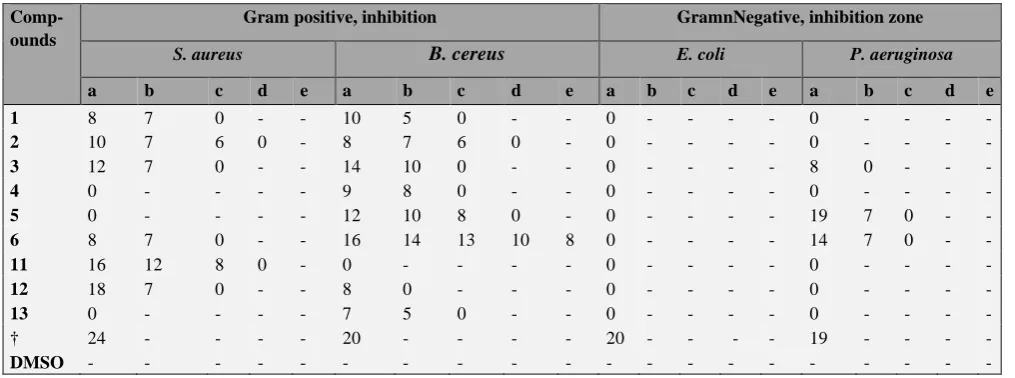
Table 1. Antibacterial activity of compounds 1-6 and 11-13.
Comp-ounds
Gram positive, inhibition GramnNegative, inhibition zone
S. aureus B. cereus E. coli P. aeruginosa
a b c d e a b c d e a b c d e a b c d e
1 8 7 0 - - 10 5 0 - - 0 - - - - 0 - - - -
2 10 7 6 0 - 8 7 6 0 - 0 - - - - 0 - - - -
3 12 7 0 - - 14 10 0 - - 0 - - - - 8 0 - - -
4 0 - - - - 9 8 0 - - 0 - - - - 0 - - - -
5 0 - - - - 12 10 8 0 - 0 - - - - 19 7 0 - -
6 8 7 0 - - 16 14 13 10 8 0 - - - - 14 7 0 - -
11 16 12 8 0 - 0 - - - - 0 - - - - 0 - - - -
12 18 7 0 - - 8 0 - - - 0 - - - - 0 - - - -
13 0 - - - - 7 5 0 - - 0 - - - - 0 - - - -
† 24 - - - - 20 - - - - 20 - - - - 19 - - - -
DMSO - - - -
a, b, c, d, e: concentrations:(10, 10/2, 10/4, 10/8, 10/16) mg mL-1, respectively; † Gentamycine; Key to the inhibition zones
activities: Highly active = Inhibition zone > 15 mm, Moderately active = Inhibition zone 15-10 mm, Slightly active = Inhibition zone 9-6 mm, Inactive = Inhibition zone < 6 mm., O = not active, - = not tested.
The synthesized compounds were dissolved in DMSO to obtain a concentration of 30 mg mL-1. A standard inoculum
(105-107 c.f.u. mL-1, 0.5 McFarland standards) was
introduced on to the surface of sterile agar plates and a sterile glass spreader was used for even distribution of the inoculum. The discs measuring 5 mm in diameter were prepared and sterilized by dry heat at 140°C for 1 h. The sterile discs previously soaked in known concentrations of the test compounds were placed in Mueller Hinton agar medium. The inhibition zones were measured in mm at the end of an incubation period of 24 h at 37 °C and compared with the positive control (Gentamycin) and negative control DMSO, (Table 1). Compounds that showed good antibacterial activity tested by the diffusion method were further tested by dilution, when different concentrations of the tested compounds were prepared (15, 7.50, 3.75 and 1.80 mg mL-1 from 30 mg mL-1 in DMSO). After the
incubation for 24 h, the last plate with no growth of microorganisms was taken to represent minimum inhibitory concentration (MIC) expressed in mg mL-1. (Table 1).
RESULTS AND DISCUSSION
Synthesis of diazole thiols 4-6, and seco-acyclo N- and S- nucleosides analogues 11-13, from cinnamic acid has been accompalished by a common synthetic pathway as described
in Scheme 1 divided into three stages. All steps were monitored by TLC and products characterized were spectrally by IR, 1H- and 13C-NMR.
The key intermediate hydrazide 3 was obtained by classical procedures.18,19 When 3 was refluxed with
alcoholic solution of KOH and CS2 for 14 h and finally
treated by HCl, it gave the oxadiazole 4, which on treatment with hydrazine hydrate yielded the N-amino triazole 5.20 On
the other hand, when 3 was refluxed with alcoholic solution of KOH and CS2 for 10 h and finally acidified by H2SO4
thiadiazole 6 was obtained.21
Synthesis of 2-phenyl-1,3-dioxan-5-yl 4-methylbenzenesulfonate (10): Glycerol as a mimic for acyclic sugar molecule may be selectively protected to leave the desired OH group for further reactions. Glycerol was reacted with bezaldehyde to give a moderate yield of 2-phenyl-1,3-dioxan-5-ol (9).21 Treating 9 with p-toluene
sulphonyl chloride yielded p-toluenesulphonate 10. IR spectrum showed a reduction of OH absorption with the appearance of S=O absorption at 1373 cm-1.
Scheme 1 : Summary of synthesis; stage 1(left) : synthesis of 4,5,6 ; stage 2(middle) : synthesis of tosylate 10 and stage 3(right) : synthesis of seco-acyclo glycosides 11, 12, 13.
Antibacterial activity
Starting compound cinnamic acid 1, synthetic intermediates 2-6 and final compounds 11-13 were assayed in vitro using the paper disk diffusion method for their antibacterial activities against Gram-positive bacteria, S. aureus, and B. cereus, and Gram-negative bacteria, E. coli
and P. aeruginosa. In primary screening a concentration of 10 𝜇𝜇g. mL-1 was maintained. Only compounds found active
in this primary screening were further tested in a second set of concentration 5 𝜇𝜇g mL-1 and lower against susceptible
microorganisms as shown in Table 1.
Data in Table 1 showed that compounds under consideration (1-6 and 11-13) exhibited their effect mostly against Gram-positive bacteria S. aureus, B. cereus, and to less extent against Gram-negative P. aeruginosa, but non against E. coli. Gram-positive S. aureus is affected by compounds 1, 2, 3, 6, 11, 12 and 13. The significant effect was exerted by seco-acyclo oxadiazole 11 and seco-acyclo amino triazole 12 and to less extent by 2 and 3, whereas B.
cereus was mostly affected by 6 and to a less extent by 1, 3
and 5. Gram negative E. coli was affected by none of the compounds under consideration
.
P. aeruginosa was highly affected by heterocyclic clycon amino triazole 5 and to a lesser extent by 6.CONCLUSION
The three nucleobases: 5-[(E )-2-phenylethenyl]-1,3,4-oxadiazole-2-thione/thiol (4), 4-amino-5-[(E )-2-phenylethenyl]-4H-1,2,4-triazole-3-thiol (5) and 5-[(E )-2-phenylethenyl]-1,3,4-thiadiazole-2(3H)-thione/thiol (6) were successfully prepared from cinnamic acid and structures were confirmed by IR, 1H-NMR and 13C-NMR spectroscopy.
The seco-acyclo nucleoside analogues 11, 12 and 13 were synthesized by two steps. First step concerned with the
synthesis of 2-phenyl-1,3-dioxan-5-yl-4-methylbenzene-sulfonate (10). The second step including treatment of the latter with the nucleobases 4, 5 and 6. The substitution reactions were monitored by TLC and structure of the products were determined spectrally.
Biological evaluation between nucleobases 4, 5 and 6
themselves and with their corresponding seco-acyclo nucleoside analogues revealed the following:
The 1,3,4-oxadiazole 4 exerted less biological effect upon both G(+) and G(-) bacteria under consideration. When 4-amino-1,2,4-triazole showed more antibacterial effect upon G(+) b.cereus and G(-)
p.
aeruginosa.
While the thiadiazole 6 showed a wider spectrum effect upon G(+) S. aureus, B. cereus and G(-) P. aeruginosa.The nucleobases 4, 5 and 6, generally showed an more appreciable effect than their corresponding nucleosides analogues 11, 12 and 13 did. Relatively, nucleosides 11 and
12 showed better biological effect than 13 as shown on G(+)
s.
aureus while 13 showed no antibacterial effect upon all bacteria under consideration.REFERENCES
1Noda,S., Mizaki, T., Miyoshi, T., Miya, M., Okai, N., Tanaka, T.,
Ogino, C., Kondo, A., Cinnamic acid production using Streptomyces lividans expressing phenylalanine ammonia lyase, J. Ind. Microbiol. Biotechnol., 2011, 38, 643-648.
2De, P., Baltas, M., Bedos-Belval, F., Cinnamic acid derivatives as
anticancer agents - a review, Curr. Med. Chem., 2011, 18(11), 1672-703.
3Yen, G., Chen, Y., Sun, F., Chiang, Y., Lu, S., Weng, C., A
comparative study on the effectiveness of cis- and trans- form of cinnamic acid treatments for inhibiting invasive activity of human lung adenocarcinoma cells, Eur. J. Pharm. Sci., 2011, 44, 281-267.
Ph C H CH
i) EtO H, KO H, C S2, 0° C
ii) H2S O4 R N
H O
NH2
i) EtO H, KO H
ii ) HC l O R N N S H 4 R S N N S H 6 R N N N S H NH2 5 EtO H NH2NH2 C S2
R O
O
CH3
4Patra, K., Bose, S., Sarkar, S., Rakshit, J., Jana, S., Mukherjee, A.,
Roy, A., Mandal, D. P., Bahattacharjee, S., Amelioration of cyclophosphamide induced myelosuppression and oxidative stress by cinnamic acid, Chem. Biol. Interact., 2012, 195, 231-239.
5Godoy, M E., Rotelli, A., Pelzer, L., and Tonn C E.,
Anti-inflammatory Activity of Cinnamic Acid Esters, Molecules,
2000, 5, 547-548.
6Guzman, J D., Natural Cinnamic Acids, Synthetic Derivatives and
Hybrids with Antimicrobial Activity, Molecules, 2014, 19, 19292-19349.
7Ekmekcioglu, C., Feyertag, J., Marktl, W., Cinnamic acid inhibits
proliferation and modulates brush border membrane enzyme activities in Caco-2 cells, Cancer Lett, 1998, 128, 137-144.
8Jakovetic, S. M., Jugovic, B. Z., Gvozdenovic, M. M., Bezbradica,
D. I., Antov, M. G., Dusan, Z. M., Knezevic-Jugovic, Z . D., Synthesis of Aliphatic Esters of Cinnamic Acid as Potential Lipophilic Antioxidants Catalyzed by Lipase B from Candida antarctica, Appl. Biochem. Biotechnol., 2013, 170(7), 1560-1573, DOI 10.1007/s12010-0294-z.
9Li, J., Li, H., Ji, S., Chen, T., Tian, S., Qin, G., Enhancement of
biocontrol efficacy ofCryptococcus laurentiiby cinnamicacid againstPenicillium italicumin citrus fruit, Postharvest Biol. Tech., 2019, 140, 42-49.
DOI.org/10.1016/j.postharvbio.2018.11.018
10Gravina, H. D., Tafuri, N. F., Junior, A. S., Fietto, J. L. R.,
Oliveira, T, T., Diaz, M. A. N., Almeida, M. R., In vitro assessment of the antiviral potential of trans-cinnamic acid, quercetin and morin against equid herpesvirus 1, Res. Vet. Sci., 2011, 91, e158-e162.
11Yalmaz, S., Ergün, S., Trans-cinnamic acid application for
rainbow trout (Oncorhynchus mykiss): I. Effects on haematological, serum biochemical, non-specific immune and head kidney gene expression responses, Fish
Shellfish Immun., 2018, 78, 140-157.
DOI.org/10.1016/j.fsi.2018.04.034
12Letizia, C .S., Cocchiara, J., Lapczynski, A., Lalko, J., Api, A
M., Fragrance material review on cinnamic acid, Food Chem. Toxicol., 2005, 43, 925-943.
13Kalinowaska, M., Swisłocka, R., Lewandowski, W., Zn(II),
Cd(II) and Hg(I) complexes of cinnamic acid: IR, FT-Raman,1H and 13C NMR studies, J. Mol. Struct., 2011, 993,
404-409.
14Nong, W., Zhao, A., Wei, J., Lin, X., Wang, L., Lin, C.,
Synthesis and biological evaluation of a new series of cinnamic acid amide derivatives as potent haemostatic agents containing a 2-aminothiazole substructure, Bioorg. Med.
Chem. Lett., 2017, 27, 4506-4511.
DOI.org/10.1016/j.bmcl.2017.07.058
15Yan, H., Yang, H., Lu, L., Liu, D., Rong, G., Mao, J.,
Copper-catalyzed synthesis of α,β-unsaturated acylamides via direct
amidation from cinnamic acids and N-substituted formamides, Tetrahedron, 2013, 69, 7258-7263.
16Kakwania, M. D., Desai, N. H. P., Lele, A. C., Ray, M., Rajanb,
M. G. R.., Degani, M .S., Synthesis and preliminary biological evaluation of novel N-(3-aryl-1,2,4-triazol-5-yl) cinnamamide derivatives as potential antimycobacterial agents: An operational Topliss Tree approach, Bioorg. Med. Chem. Lett. 2011, 21, 6523-6526.
17Kronek, J., Nedelcev, T., Mikulec, M., Kleinova, A., Luston, J.,
Synthesis of cinnamic acid-derived 4,5-dihydrooxazoles, Chem. Papers, 2013, 67(11), 1424-1432, DOI. 10.2478/s 11696-013-0405-x.
18Chergui, Y., Othman A., A.,Synthesis and antimacrobial activity
of some new l-lysine glycoside derivatives, Eur. Chem. Bull, 2016, 5(8), 330-334.
19Belkhadem, F., Othman A, A., Synthesis and antibacterial evaluation of new N- and S-glycosidesanalogues with dinitrophenyl-substituted heterocyclic bases, Mol. Divers,
2017, 21,115–124. DOI 10.1007/s11030-016-9704-9.
20Amarouche, L., Taieb Brahimi, F., Othman A, A., Synthesis of
Azole Derivatives of l-Proline and their Antibacterial Activity, J. Chem. Pharm. Res., 2016, 8(4), 896-900.
21Boulerba, D., Othman A. A., Taouti, M. B., Synthesis of [Oxa-,
Thia-diazoles- and Triazole]-Thiols Derived from Butyric Acid: Conductivity Property, Complex Formation with Fe (II), Hg (II), and Synthesis of seco-acyclo-S-Glycosides . Chem. Sci. Inter. J., 2017, 18(4), 1-9. DOI.org/10.9734/CSJI/2017/32468