SYNTHESIS OF NOVEL
SUBSTITUTED-BENZO[d]THIAZOLE-2,4-DICARBOXAMIDES HAVING KINASE INHIBITION AND
ANTI-PROLIFERATIVE ACTIVITY
Dattatraya D. Gaikwad,
[a]Chandrakant D. Pawar,
[b]Dattatraya N. Pansare,
[a]Sadhana L. Chavan,
[a]Umakant D. Pawar,
[c]Rohini N. Shelke,
[a]Santosh L.
Chavan,
[d]Rajendra P. Pawar,
[a]Ashok M. Zine*
[a]Keywords: Benzo[d]thiazoles; carboxamides; anticancer activity; kinase inhibitors.
A series of novel derivatives containing N4-(4-fluorophenyl)-N2-substitured-benzo[d]thiazole-2,4-dicarboxamides were synthesized via an
efficient, mild and convenient multistep reaction protocol with excellent yields. The structure of the synthesize compounds were confirmed by IR, 1H NMR, 13C NMR, 19F NMR, mass spectra, elemental analysis and purity was checked by HPLC. All synthesized compounds were
screened for anticancer activity against A-549 and Du-145 cancer cell lines by MTT assay. The preliminary bioassay suggests that most of the compounds show anti-proliferation with different degrees. The synthesized compound shows IC50 values in the range of 1.52-17.18 µM
in both cell lines. The compounds having electron donating groups had higher anticancer activity compared compounds with electron withdrawing substitutions.
* Corresponding Authors Fax: +91 0240-2400413
E-Mail: [email protected]
[a] Department of Chemistry, Deogiri College, Aurangabad, 431005 (MS), India
[b] Department of Chemical Technology, Dr. Babasaheb Ambedkar Marathwada University, Aurangabad, 431004 (MS), India
[c] Regional Forensic Science Laboratories, Aurangabad, 431004(MS), India
[d] Maharashtra Pollution Control Board, Aurangabad, 431004(MS), India
INTRODUCTION
The kinases plays important role in cell functioning. There are over 500 kinases comprising in the human kinome, and all are associated with the functioning of cells.1 Different
types of kinases are responsible for different functioning of cells, some kinases are target of rapamycin (TOR) signaling for cell growth.2, 3 Some are protein tyrosine kinase
inhibitors. By considering the importance of kinases we need to develop new kinase inhibitors with diversified activity.
In present work we have chosen substituted thiazol nuclei and its derivatives for cell line and kinases study. Substituted benzothiazole are known for diversified biological activities like anti-tubercular,4 MAP kinase
inhibitors.5 Kinases plays key role in cancer initiation and
progression.6,7 Thiazoyl-sulfonamides act as carbonic
anhydrase inhibitors8 and anticancer.9 Some derivatives
comprising thiophene nuclei acts as anti-proliferative agents.10-12 Neural precursor cell expressed, developmentally
down-regulated 8 (NEDD8) activating small molecule-drug conjugates enzymes inhibitors,13 Raf kinase inhibitor protein
(RKIP),14 poly-ADP-ribose polymerases (PARP) and
topoisomerase (TOPO) inhibitors.15 Some benzthiazole
forms key building block of some of the biologically active derivatives.16-17 By considering the diversified biological
activity of benzo[d]thiazol and continuation of our research
work,18-20 we have synthesized a series of substituted
-benzo[d]thiazole derivatives and all the synthesized compounds were tested for their biological activity in cell line and enzymatic study.
RESULTS AND DISCUSSION
We have synthesized a series N4-(4-fluorophenyl)-N2
-substitured-benzo[d]thiazole-2,4-dicarboxamidey (10a-10l) starting from easily available 2-amino-3-chlorobenzonitrile (1).
a=Me, b=Et, c=n-Pr, d=CH2CH2OMe,
e=CH2CH2OH, f=CH2CH2C(CH3)3
g=CH2NMe2, h=CH2CH2NMe2,
i=CH2CH2CH2NMe2, j=CH2NH2,
k=CH2CH2NH2, l=CH2CH2COOH
Scheme 1. Synthesis of N4-(4-fluorophenyl)-N2-substitured-benzo[d]thiazole-2,4-dicarboxamide (10a-10l) :
Cl NH2
CN
N
S SH CN
N
S Cl CN
N
S Cl
O OH
N
S Cl O NH
F
N
S CN O NH
F N
S O NH
F O
OH
N
S O
NH
F
O
NH R1
NH2
F
R1
NH2
1 2 3
4
5
(a) (b) (c)
6
(d)
(e)
(f)
(g)
7 8
9a-9l
We have optimized the entire step to get good yield, neat reaction profile, less harsh condition. The optimized steps are depicted in Scheme 1. Reagents and conditions: (a): N-methylpiperidinone, 150 °C, 1 h, potassium O-ethyl carbodithioate, DMF, 180 °C, 12 h; (b): POCl3, 100 °C, 2 h;
(c): NaOH, THF, H2O, 12 h; (d): 4-fluoroaniline (5),
1-ethyl-3-(3-dimethylaminopropyl)carbodiimide (EDCI), N,N-diisopropylethylamine (DIPEA), DMF, 0 °C- room temperature, 12 h ; (e): NaCN, MeOH, 12 h ; (f): NaOH, 100 °C, 2 h; (g): SOCl2, 100 °C, 0.5h, substituted amines
(9a-9l), 0 °C- room temperature, 12 h.
2-Mercaptobenzo[d]thiazole-4-carbonitrile (2) has already been prepared in DMF and N-methyl piperidione at high temperature.21,22 We have used readily available
2-amino-3-chlorobenzonitrile (1) as a staring material. We have optimized step a by heating the compound 1 with N-methylpiperidinone at 150 °C for 1 h and adding the potassium ethylxanthate in DMF. The N-methylpiperidinone acts as base as well as high boiling solvent as higher temperature is required for the reaction to proceed. We heated that reaction mixture at 180 °C for 12 h to get >96 % yield. We have used mixture of solvents for solubility of compound and it helps in clean isolation of pure compound. The compound 2 was characterized as it shows clear S-C and S-H bonds in the IR spectrum at 730 cm-1 and 2560 cm-1,
respectively and in 1H NMR the NH
2 protons were vanished.
In step b the compound 2 was chlorinated by using POCl3
in 2 h at 100 °C to obtain crude compound with quantitative recovery, and the crude compound 3 was hydrolysed. The presence of compound 3 was confirmed with IR spectroscopy, the bands for C-S and C-H bonds were disappeared.
Compound 3 was hydrolyzed by using 20 % aqueous NaOH for 12 h at room temperature and later a routine acid-base treatment was used to isolate compound 4 with 90% isolated yield.23 It has been used further without purification.
Compound 4 was characterized by TLC and 1H NMR as in
TLC it shows trailing spot at base and in NMR it shows an acidic peaks at δ 12.2 ppm.
In step d compound 4 reacted with 4-fluoroaniline (5) by using peptide coupling condition to obtain compound 6 with 90 % yield. Formation of Compound 6 was confirmed with TLC, mass and 1H NMR spectra, as its aromatic region
shows A2-B2 pattern of peaks.
In step e we have done displacement reaction on compound 6 by using sodium cyanide in methanol to obtain compound 7 with 85 % yield. The presence of compound 7 conformed from IR spectrum as it shows distinct band at 2200 cm-1 for nitrile group.
The compound 7 was subjected to hydrolysis to get compound 8. Using basic hydrolysis conditions led to quantitative yield of compound 8. The compound 8 is a key intermediate for the synthesis of desired compounds 10a-10j.
The compound 8 was converted to its acid chloride and lateer reacted with different amines 9a-9j without base to obtain all the final compounds 10a-10j with >80 % yields for all the derivatives. For the compounds 2 to 8 we have purified all the compounds by washing with different
solvent combinations and avoided column purifications. For final compounds 10a-10j we have used column purification to get required compounds with >95 % purity. The detailed experimental procedure and characterization of final compounds and key intermediates were given in experimental section.
EXPERIMENTAL SECTION
All chemicals, unless otherwise specified, were purchased from commercial sources and were used without further purification. The major chemicals were purchased from Sigma Aldrich and Avra labs. The development of reactions was monitored by thin layer chromatography (TLC) analysis on Merck pre-coated silica gel 60 F254 aluminum sheets, visualized by UV light. Melting points were recorded on SRS Optimelt, melting point apparatus and are uncorrected. The 1H NMR spectra were recorded on a 400 MHz Varian
NMR spectrometer. The 13C were recorded on a 100 MHz
Varian NMR spectrometer. The chemical shifts are reported
as NMR spectra δ (ppm) units and standard is
tetramethylsilane (TMS). The following abbreviations are used; singlet (s), doublet (d), triplet (t), quartet (q), multiplet (m) and broad (br s). LC-MS mass spectra were taken with Micromass-QUATTRO-II of WATER mass spectrometer.
Experimental procedure for the synthesis of containing N4 -(4-fluorophenyl)-N2 -substitured-benzo[d]thiazole-2,4-dicarbox-amides (10a-10l)
Step-a: Synthesis of 2-mercaptobenzo[d]thiazole-4-carbonitrile (2)
In the reaction mixture of compound 1 (1.52 g, 0.01 mol) in N-methylpiperidinone (15 mL) was heated for 1 h at 150 °C. Potassium ethylxanthate (3.2 g, 0.02 mol) dissolved in DMF (7 mL) was added dropwise and the reaction mixture was stirred at 180° C for 12 h. Progress of reaction was monitored by TLC and LCMS. After completion the reaction, the reaction mixture was cooled to room temperature and poured into cold H2O (15 mL). The reaction
mixture was acidified by using 4 M aq. HCl solution up to pH 4, when a solid was precipitated. The formed precipite was filtered in vacuo, washed with cold water (15 mL) and diethyl ether (10 mL) to afford 2-mercaptobenzo[d ]thiazole-4-carbonitrile (2, 1.85 g, crude)as a brown solid. The crude obtained was used further for the next reaction without purification.
Step-b: Synthesis of 2-chlorobenzo[d]thiazole-4-carbonitrile (3):
To the reaction mixture of compound 2 (1.92 g, 0.01 mol) in a round bottom flask, POCl3 (1.9 mL) was added slowly
Step-c: Synthesis of 2-chlorobenzo[d]thiazole-4-carboxylic acid (4):
To a stirred solution of compound 3 (2.50 g) in a round bottom flask. 20 % aq NaOH solution (25 mL) was added at room temperature. The reaction mixture was stirred at room temperature for 12 h. Progress of reaction was monitored by TLC and LCMS.
The reaction mixture was poured into cold H2O (10 mL)
and extracted with DCM (15 mL). The aqueous layer was collected and acidified by using 4 M aq. HCl solution up to pH 3, when a solid was precipitated out. The formed precipitate was filtered off in vacuo, washed with water (25 mL), brine (20 mL) and diethyl ether (25 mL) to afford 2-chlorobenzo[d]thiazole-4-carboxylic acid (4, 2.52g, crude) as a white solid. The crude obtained was used further for the next reaction without purification.
Step-d: Synthesis of 2-chloro-N-(4-fluorophenyl)benzo[d]thia-zole-4-carboxamide (6):
To a stirred solution of compound 4 ( 2.13 g, 0.01 mol) in DMF (10 mL) 1-ethyl-3-(3-dimethylaminopropyl)carbodiimide (EDCI) (2.89 g, 0.015 mol) and N,N-diisopropylethylamine (DIPEA) (5.23 mL, 0.03 mol) were added at 0 °C. Compound 5 (1.66 g, 0.015 mol) was added at 0 °C and the reaction mixture was stirred at room temperature for 12 h. Progress of the reaction was monitored by TLC and LCMS. The reaction mixture was diluted with cold water (10 mL) and extracted with DCM (2 × 25 mL). The organic layer was separated, washed with 2 M aq. cold HCl (10 mL), brine (20 mL), dried over anhydrous Na2SO4 and concentrated in vacuo. The crude
product obtained was purified by washing with 25:75 of EtOAc:hexane (50 mL), cold diethyl ether (20 mL) and cold pentane (20 mL) to afford 2-chloro-N-(4-fluorophenyl)benzo[d]thiazole-4-carboxamide (6, 2.75 g, 90 %) as an off white solid.
Step-e: Synthesis of 2-cyano-N-(4-fluorophenyl)benzo[d]thia-zole-4-carboxamide (7):
To a stirred solution of compound 6 (3.06 g, 1.0 mmol) in MeOH (25 mL) was carefully added NaCN (0.98 g, 2.0 mmol) at room temperature. The reaction mixture was stirred at room temperature for 12 h. Progress of reaction was monitored by TLC and LCMS. The reaction mixture was poured into cold H2O (30 mL) and extracted with DCM
(2 × 15 mL). The organic layer was separated, washed with H2O (15 mL) and brine (10 mL), dried over anhydrous
Na2SO4 and concentrated in vacuo to afford
2-cyano-N-(4-fluorophenyl)benzo[d]thiazole-4-carboxamide (7, 2.68 g, crude) as off white solid.The crude obtained was used further for the next reaction without purification.
Step-f: Synthesis of 4-(4-fluorophenylcarbamoyl)benzo[d]thia-zole-2-carboxylic acid (8):
To a stirred solution of compound 7 (2.97 g) in a round bottom flask. 20 % aq. NaOH solution (25 mL) was added at room temperature. The reaction mixture was heated at 100 °C for 2 h. Progress of reaction was monitored by TLC
and LCMS. The reaction mixture was poured in cold H2O
(10 mL) and extracted with DCM (15 mL), the aqueous layer was collected and acidified by using 2 M aq. HCl solution up to pH 3. A solid was precipitated out . The formed precipitate was filtered off in vacuo, washed with water (25 mL), brine (20 mL) and diethyl ether (25 mL) to afford 4-(4-fluorophenylcarbamoyl)benzo[d ]thiazole-2-car-boxylic acid (8, 2.85 g, crude)as a white solid. The crude product obtained was used further for the next reaction without purification.
Step-g: Synthesis of N4-(4-fluorophenyl)-N2 -substituted-benzo[d]thiazole-2,4-dicarboxamide (10a-10l):
To a stirred solution of compound 8 (0.01 mmol) in DCM (5 mL) SOCl2 (0.15 mmol) was added at 0 °C. The reaction
mixture was heated at 100 °C for 0.5 h. In another round bottom flask the amine (9a-9l) (0.015 mmol) and DCM (5 mL) were mixed at 0 °C. The content of the flask one was added to the amine flask under inert atmosphere and the reaction mixture was stirred at room temperature for 12 h. Progress of the reaction was monitored by TLC and LCMS. The reaction mixture was diluted with cold water (5 mL) and extracted with DCM (2 × 10 mL). The organic layer was separated, washed with H2O (5 mL) and brine (5 mL),
dried over anhydrous Na2SO4 and concentrated in vacuo.
The crude product obtained was purified by silica gel (230-400 mesh, 5-35: 95-65 % of DCM:hexane) column chromatography to afford N4-(4-fluorophenyl)-N2
-substitured-benzo[d]thiazole-2,4-dicarboxamide derivatives (10a-10l, 81-88 %) as a solids.
Spectral Data
N4-(4-Fluorophenyl)-N2 -methylbenzo[d]thiazole-2,4-dicarbox-amide (10a):
Yellow solid; M.p. 172-173 °C; Yield: 83 %; IR (KBr)
(νmax, cm-1): 1627 (C=O), 1582 and 1520 (Ar); Anal. calc.
for C16H12FN3O2S: C, 58.35; H, 3.67; N, 12.76; Found: C,
58.32; H, 3.70; N, 12.79. LC-MS m/z (%): 330.3 (M+H); HPLC-98.9 % RT-8.22 min; 1H NMR (400 MHz, DMSO-d
6,
ppm)= δ 12.8 (s, 1H, NH), 10.36 (s, 1H, NH), 8.23 (d, J = 8.2 Hz, 2H, ArH), 7.97 (d, J = 8.2 Hz, 2H, ArH), 7.66 (d, J
= 7.6 Hz, 1H, ArH), 7.56 (d, J = 7.2 Hz, 1H, ArH), 7.24 (t, J
= 8.4, 4.2 Hz, 1H, ArH), 2.68 (s, 3H, NH-CH3). 13C NMR
(CDCl3, 100 MHz, ppm)= δ 25.6, 115.2, 123.2, 123.4, 125.2,
126.4, 127.2, 131.2, 135.2, 158.4, 159.2, 162.4, 164.8, 168.3.
N2-Ethyl-N4 -(4-fluorophenyl)benzo[d]thiazole-2,4-dicarbox-amide (10b):
Yellow solid; M.p. 189-190 °C; Yield: 84 %; IR (KBr)
(νmax, cm-1): 1622 (C=O), 1580 and 1524 (Ar); Anal. calc.
for C17H14FN3O2S: C, 59.46; H, 4.11; N, 12.24; Found: C,
59.48; H, 4.10; N, 12.23. LC-MS m/z (%): 344.2 (M+H); HPLC-98.8 % RT-8.12 min.; 1H NMR (400 MHz, MeOD,
ppm)= δ 8.23 (d, J = 7.2 Hz, 1H, ArH), 8.21 (d, J = 8.0 Hz, 2H, ArH), 7.88 (d, J = 8.0 Hz, 2H, ArH), 7.68 (d, J = 7.2 Hz, 1H, ArH), 7.37 (t, J = 7.6 Hz, 1H, ArH), 2.58 (q, J = 15.2, 7.6 Hz, 2H, NH-CH2), 1.24 (t, J = 8.4 Hz, 3H, CH2-CH3). 13C NMR (CDCl
123.3, 123.4, 125.5, 126.6, 127.2, 131.3, 135.5, 158.4, 159.4, 162.2, 164.8, 168.3.
N4-(4-Fluorophenyl)-N2-propylbenzo[d]thiazole-2,4-dicarbox-amide (10c):
Yellow solid; M.p. 197-198 °C; Yield: 86 %; IR (KBr)
(νmax, cm-1): 1630 (C=O), 1570 and 1525 (Ar); Anal. calc.
for C18H16FN3O2S: C, 60.49; H, 4.51; N, 11.76; Found: C,
60.48; H, 4.53; N, 11.78. LC-MS m/z (%): 358.3 (M+H); HPLC-98.3 %, RT-8.45 min; 1H NMR (400 MHz,
DMSO-d6, ppm)= δ 8.23 (d, J = 8.4 Hz, 2H, ArH), 7.92 (d, J = 8.4
Hz, 2H, ArH), 7.84-7.76 (m, 2H, ArH), 7.36 (t, J = 7.2 Hz, 1H, ArH), 5.4 (s, 1H, NH), 3.63 (s, 1H, NH), 2.44 (t, J = 7.2 Hz, 2H, NH-CH2), 1.62 (q, J = 15.2, 7.6 Hz, 2H, CH2-CH2),
0.88 (t, J = 8.4 Hz, 3H, CH2-CH3). 13C NMR (CDCl3, 100
MHZ, ppm)= δ 11.3, 23.2, 41.8, 115.2, 123.3, 123.6, 125.4,
126.2, 127.3, 131.5, 135.2, 158.6, 159.2, 162.4, 164.8, 168.3.
N4-(4-Fluorophenyl)-N2 -(2-methoxyethyl)benzo[d]thiazole-2,4-dicarboxamide (10d):
White solid; M.p. 168-169 °C; Yield: 88 %; IR (KBr)
(νmax, cm-1): 1632 (C=O), 1580 and 1535 (Ar); Anal. calc.
for C18H16FN3O3S: C, 57.90; H, 4.32; N, 11.25; Found: C,
57.95; H, 4.31; N, 11.28. LC-MS m/z (%): 374.2 (M+H); HPLC-99.4 %, RT-8.24 min; 1H NMR (400 MHz,
DMSO-d6, ppm)= δ 8.24 (d, J = 8.4 Hz, 2H, ArH), 7.98 (d, J = 8.4
Hz, 2H, ArH), 7.84-7.76 (dd, J = 3.6, 7.6 Hz, 2H, ArH), 7.38 (t, J = 6.8 Hz, 1H, ArH), 5.6 (s, 1H, NH), 3.66 (s, 1H, NH), 3.64 (t, J = 7.6 Hz, 2H, O-CH2), 3.22 (s, 3H, O-CH3 ),
2.68 (t, J = 8.4 Hz, 2H, NH-CH2). 13C NMR (CDCl3, 100
MHz, ppm)= δ 38.4, 58.6, 73.4, 115.6, 123.1, 123.1, 125.6, 126.4, 127.2, 131.5, 135.2, 158.8, 160.2, 162.2, 164.2, 168.8.
N4-(4-Fluorophenyl)-N2 -(2-hydroxyethyl)benzo[d]thiazole-2,4-dicarboxamide (10e):
Off-White solid; M.p. 153-154 °C; Yield: 81 %; IR (KBr)
(νmax, cm-1): 1622 (C=O), 1572 and 1520 (Ar); Anal. calc.
for C17H14FN3O3S: C, 56.82; H, 3.93; N, 11.69; Found: C,
56.85; H, 3.91; N, 11.68. LC-MS m/z (%): 360.3 (M+H); HPLC-97.4 %, RT-8.75 min; 1H NMR (400 MHz,
DMSO-d6, ppm)= δ 8.24 (d, J = 8.0 Hz, 2H, ArH), 7.97 (d, J = 8.0
Hz, 2H, ArH), 7.84-7.76 (dd, J = 3.6, 8.4 Hz, 2H, ArH), 7.38 (t, J = 7.6 Hz, 1H, ArH), 5.6 (s, 1H, NH), 4.78 (s, 1H, OH), 3.78 (dt, J = 8.4 Hz, 2H, O-CH2), 3.36 (s, 1H, NH),
2.64 (dt, J = 7.6 Hz, 2H, N-CH2). 13C NMR (CDCl3, 100
MHz, ppm)= δ 40.2, 61.4, 115.4, 123.2, 123.3, 125.5, 126.4, 127.6, 131.7, 135.1, 158.5, 159.1, 162.1, 163.5, 168.1.
N4-(4-Fluorophenyl)-N2 -(3,3-dimethylbutyl)benzo[d]thiazole-2,4-dicarboxamide (10f):
White solid; M.p. 211-212 °C; Yield: 86 %; IR (KBr)
(νmax, cm-1): 1616 (C=O), 1580 and 1526 (Ar); Anal. calc.
for C21H22FN3O2S: C, 63.14; H, 5.55; N, 10.52; Found: C,
62.88; H, 5.58; N, 10.58. LC-MS m/z (%): 400.4 (M+H); HPLC-97.7 %, RT-8.12 min; 1H NMR (400 MHz, MeOD,
ppm)= δ 8.16 (d, J = 8.4 Hz, 2H, ArH), 8.06 (d, J = 7.6 Hz, 1H, ArH), 7.78 (d, J = 8.4 Hz, 2H, ArH), 7.41 (d, J = 8.0 Hz, 1H, ArH), 7.06 (t, J = 7.6 Hz, 1H, ArH), 3.42 (dt, J = 7.6 Hz,
2H, NH-CH2), 1.62 (t, J = 7.2 Hz, 2H, CH2-CH2), 0.98 (s,
9H, CH2-(CH3)3). 13C NMR (CDCl3, 100 MHZ, ppm)= δ 28.5,
30.2, 34.6, 43.8, 115.2, 122.8, 123.4, 125.4, 126.4, 127.7, 131.1, 135.4, 158.4, 158.8, 162.6, 164.5, 168.1.
N2-((Dimethylamino)methyl)-N4 -(4-fluorophenyl)benzo[d]thia-zole-2,4-dicarboxamide (10g):
Yellow solid; M.p. 198-199 °C; Yield: 82 %; IR (KBr)
(νmax, cm-1): 1632 (C=O), 1571 and 1518 (Ar); Anal. calc.
for C18H17FN4O2S: C, 58.05; H, 4.60; N, 15.04; Found: C,
58.08; H, 4.61; N, 15.08. LC-MS m/z (%): 373.4 (M+H); HPLC-96.8 %, RT-8.45 min; 1H NMR (400 MHz, MeOD,
ppm)= δ 8.24 (d, J = 7.2 Hz, 1H, ArH), 8.21 (d, J = 8.0 Hz, 2H, ArH), 7.86 (d, J = 8.0 Hz, 2H, ArH), 7.75 (d, J = 7.6 Hz, 1H, ArH), 7.38 (t, J = 7.2 Hz, 1H, ArH), 3.56 (s, 2H, NH-CH2), 2.56 (s, 6H, N-(CH3)2). 13C NMR (CDCl3, 100 MHZ,
ppm)= δ 42.8, 68.6, 114.6, 122.8, 123.2, 125.3, 126.4, 127.2,
131.3, 135.2, 158.4, 159.6, 162.4, 163.8, 168.3.
N2-(2-(Dimethylamino)ethyl)-N4 -(4-fluorophenyl)benzo[d]thi-azole-2,4-dicarboxamide (10h):
Yellow solid; M.p. 208-209 °C; Yield: 86 %; IR (KBr)
(νmax, cm-1): 1632 (C=O), 1570 and 1530 (Ar); Anal. calc.
for C19H19FN4O2S: C, 59.05; H, 4.96; N, 14.50; Found: C,
59.08; H, 4.91; N, 14.55. LC-MS m/z (%): 387.3 (M+H); HPLC-99.2 %, RT-9.02 min; 1H NMR (400 MHz, MeOD,
ppm)= δ 8.18 (d, J = 8.4 Hz, 2H, ArH), 8.01 (d, J = 7.2 Hz, 1H, ArH), 7.84 (d, J = 8.4 Hz, 2H, ArH), 7.44 (d, J = 7.6 Hz, 1H, ArH), 7.10 (t, J = 7.6 Hz, 1H, ArH), 3.64 (td, J = 7.6 Hz, 2H, NH-CH2), 2.78 (t, J = 7.2 Hz, 2H, N-CH2), 2.38 (s, 6H,
N-(CH3)2). 13C NMR (CDCl3, 100 MHz, ppm)= δ 36.4, 44.6,
57.8, 114.6, 122.8, 123.2, 125.4, 126.4, 127.2, 131.2, 135.5, 158.4, 159.5, 162.4, 163.8, 168.3.
N2-(3-(Dimethylamino)propyl)-N4 -(4-fluorophenyl)benzo[d]-thiazole-2,4-dicarboxamide (10i):
Yellow solid; M.p. 218-219 °C; Yield: 84 %; IR (KBr)
(νmax, cm-1): 1624 (C=O), 1574 and 1518 (Ar), Anal. calc.
for C20H21FN4O2S: C, 59.98; H, 5.29; N, 13.99; Found: C,
59.94; H, 5.24; N, 14.03. LC-MS m/z (%): 401.3 (M+H); HPLC-97.35 %, RT-8.67 min; 1H NMR (400 MHz, MeOD,
ppm)= δ 8.22 (d, J = 7.6 Hz, 1H, ArH), 8.21 (d, J = 8.4 Hz, 2H, ArH), 7.84 (d, J = 8.4 Hz, 2H, ArH), 7.66 (d, J = 7.6 Hz, 1H, ArH), 7.36 (t, J = 7.2 Hz, 1H, ArH), 2.58 (t, J = 7.6 Hz, 2H, NH-CH2), 2.42 (q, J = 7.2, 3.6 Hz, 2H, N-CH2), 2.26 (s,
6H, N-(CH3)2), 1.90 (q, J = 8.8, 4.4 Hz, 2H, CH2-CH2). 13C
NMR (CDCl3, 100 MHZ, ppm)= δ 24.8, 37.6, 44.9, 56.8,
114.6, 122.8, 123.1, 125.4, 126.4, 127.2, 131.4, 135.6, 158.4, 159.4, 162.4, 163.7, 168.1.
N2-(Aminomethyl)-N4 -(4-fluorophenyl)benzo[d]thiazole-2,4-dicarboxamide (10j):
Brown solid; M.p. 148-149 °C; Yield: 81 %; IR (KBr)
(νmax, cm-1): 1632 (C=O), 1586 and 1528 (Ar); Anal. calc.
for C16H13FN4O2S: C, 55.80; H, 3.81; N, 16.27; Found: C,
55.84; H, 3.74; N, 16.31. LC-MS m/z (%): 345.3 (M+H); HPLC-99.1 %, RT-8.16 min; 1H NMR (400 MHz, MeOD,
2H, ArH), 7.92 (d, J = 7.6 Hz, 1H, ArH), 7.76 (d, J = 8.0 Hz, 1H, ArH), 7.26 (t, J = 7.6 Hz, 1H, ArH), 5.60 (s, 1H, NH), 4.28 (s, 2H, NH2), 3.61 (s, 1H, NH), 3.56 (s, 2H, NH-CH2). 13C NMR (CDCl
3, 100 MHZ, ppm)= δ 51.6, 115.5, 123.2,
123.5, 125.2, 126.5, 127.2, 131.5, 135.2, 158.4, 159.3, 162.4, 164.6, 168.4.
N2-(2-Aminoethyl)-N4 -(4-fluorophenyl)benzo[d]thiazole-2,4-dicarboxamide (10k):
Brown solid; M.p. 154-155 °C; Yield: 84 %; IR (KBr)
(νmax, cm-1): 1624 (C=O), 1576 and 1514 (Ar); Anal. calc.
for C17H15FN4O2S: C, 56.97; H, 4.22; N, 15.63; Found: C,
56.84; H, 4.26; N, 15.58. LC-MS m/z (%): 359.4 (M+H); HPLC-96.84 %, RT-8.88 min; 1H NMR (400 MHz, MeOD,
ppm)= δ 8.24 (d, J = 8.4 Hz, 2H, ArH), 7.97 (d, J = 8.4 Hz, 2H, ArH), 7.84-7.76 (m, 2H, ArH), 7.36 (t, J = 7.6 Hz, 1H, ArH), 5.6 (s, 1H, NH), 4.12 (s, 2H, NH2), 3.61 (s, 1H, NH),
3.04 (t, J = 7.6 Hz, 1H, NH-CH2), 2.75 (t, J = 7.2 Hz, 1H,
NH2-CH2).13C NMR (CDCl3, 100 MHZ, ppm)= δ 38.9, 42.4,
115.8, 123.2, 123.8, 125.2, 126.6, 127.2, 131.5, 135.2, 158.1, 159.4, 161.8, 164.4, 167.9.
3-(N4 -(4-Fluorophenyl)benzo[d]thiazole-2,4-dicarboxamido)-propanoic acid (10l):
Yellow solid; M.p. 221-222 °C; Yield: 88 %; IR (KBr)
(νmax, cm-1): 1630 (C=O), 1578 and 1524 (Ar); Anal. calc.
for C16H13FN4O2S: C, 55.81; H, 3.64; N, 10.85; Found: C,
55.85; H, 3.69; N, 10.81. LC-MS m/z (%): 388.3 (M+H); HPLC-99.2 % ,RT-8.86 min; 1H NMR (400 MHz,
DMSO-d6, ppm)= δ 12.56 (br, 1H, COOH), 8.22 (d, J = 8.4 Hz, 2H,
ArH), 7.98 (d, J = 8.4 Hz, 2H, ArH), 7.83-7.79 (m, 2H, ArH), 7.36 (t, J = 7.6 Hz, 1H, ArH), 5.67 (s, 1H, NH), 3.47 (s, 1H, NH), 2.72 (t, J = 7.2 Hz, 2H, NH-CH2), 2.58 (t, J =
7.2 Hz, 2H, CO-CH2).13C NMR (CDCl3, 100 MHz, ppm)= δ
34.8, 36.4, 115.5, 123.2, 123.4, 125.6, 126.2, 127.1, 131.2, 135.7, 158.4, 159.1, 161.6, 163.8, 167.8, 178.1.
Biological evaluation
All the synthesized compounds were tested for their in vitro anticancer activity against various cancer cell lines.
The anticancer activity test is performed according to the procedure developed by the National Cancer Institute (NCI, USA) in the ‘In vitro Anticancer Drug Discovery Screen’ that uses the protein-binding dye Sulforhodamine B (SRB) to assess cell growth.24, 25
All the newly synthesized compounds 10a-10j are evaluated for their anti-proliferative activities against human lung cancer cell line (A-549) and human prostate cell line (DU-145). The results are summarized in Table 1. These values represent the concentration required to inhibit 50 % cell population compared with the control cells treated with DMSO and positive control Doxorubicin under similar conditions.
For lung cancer cell line (A549) the compounds 10a, 10d, 10g, 10h, 10i, and 10j are the most active with IC50 value in
the range of 1.52 µM and 2.86 µM.
Table 1. In vitro anticancer screening of the synthesized compounds against cell lines (IC50, µM ± SD, n = 3).
Sr. No. A-549a DU-145b
10a 2.86±0.12 3.17±0.16
10b 3.88±0.13 4.12±0.08
10c 8.17±0.21 9.06±0.04
10d 2.12±0.11 4.17±0.22
10e 3.16±0.08 2.16±0.06
10f 12.16±0.11 17.18±0.08
10g 1.52±0.24 1.68±0.12
10h 1.74±0.18 1.81±0.08
10i 1.98±0.08 1.97±0.12
10j 2.12±0.22 2.58±0.08
10k 3.18±0.16 4.12±0.16
10l 12.17±0.11 11.13±0.11 Doxorubicin 1.71±0.18 1.82±0.06
aA-549: Human lung cancer cell line; b DU-145: Human prostate
cancer cell line; IC50- The concentration required to inhibit 50% of
cell population.
The remaining compounds are moderately to less active with IC50 values in the range of 3.18 to 12.17 µM. For
Du-145 cell line the compounds 10e, 10g, 10h, 10i and 10j are the most active with IC50 value in the range of 1.68 to 2.58
µM. The remaining compounds are moderate to less active with IC50 value is in the range of 3.17 to 17.18 µM.
Compounds 10g is the most active for A-549 and Du-145 cell line, 10g is 1.125 and 1.083 times more effective than the Doxyrubicin standard. The compounds having strongly electron donating groups like t-butyl (10f) or strongly electron withdrawing group (10l) seem to be very less active.
The SAR can be drawn like compound having methyl, ethyl, propyl etc. substituents are moderate to less active as they all are having electron donating tendency. For the remaining groups as the electron donating groups are present along with some electron deficient nitrogen atom shows promising activity. The compounds only having electron withdrawing groups are also less active to inactive. The SAR can be drawn like that for better activity electron donating nature of substituent should be there along with some electron deficient atom to enhance the activity.
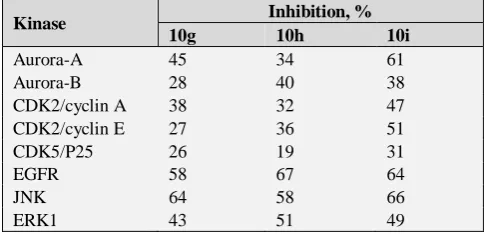
Table 2. Inhibitory activity of selected compounds against panel of eight human kinases.
Kinase Inhibition, %
10g 10h 10i
Aurora-A 45 34 61
Aurora-B 28 40 38
CDK2/cyclin A 38 32 47 CDK2/cyclin E 27 36 51
CDK5/P25 26 19 31
EGFR 58 67 64
JNK 64 58 66
ERK1 43 51 49
The inhibition results are summarized in Table 2. Protein kinase plays a key role in cell proliferation, differentiation of cell, migration of cell, survival of cell and angiogenesis of cells. The compound 10g, 10h and 10i show inhibition in the range of 28 % to 61 % for Aurora-A and Aurora-B kinases, but the activity are not the same for both kind of Aurora kinases.
The compounds show inhibitions in the rage of 19 to 51 %. for CDK/cyclin A, CDK/cyclin E, CDK5/P25 kinases belong to CMGC kinase family. For MAP kinase family the all compounds show inhibition in the range of 49 to 66%. For EGFR and JNK kinases all three compounds shows inhibitions >58 %.
CONCLUSION
We have synthesized N4-(4-fluorophenyl)-N2-substitured-benzo[d]thiazole-2,4-dicarboxamide derivatives (10a-10j) from aniline through a series of reactions including benz-thiazol synthesis, chlorination, hydrolysis, cynation and amide coupling. We have reported simple reaction condition, easy workup, short reaction time and good to high yields. The synthesized compounds were screened for anticancer activity against A-549 and Du-145 cancer cell lines. Most of the compounds were active for tested cell lines with IC50
value in the range of 1.52 to 17.18 µM. The compounds 10g, 10h and 10i are most active with IC50 values in the range of
1.52-1.98 µM. The compounds 10g, 10h and 10i were shows promising inhibitions (> 58%) for EGFR and JNK human kinases. The compounds having electron donating substituents along with electron deficient atom shows promising activity and greater inhibitions for protein kinases.
ACKNOWLEDGEMENT
The authors are thankful to the Head, Department of Chemical Technology, Dr. Babasaheb Ambedkar Marathwada University, Aurangabad 431004, MS, India for providing the laboratory facility.
REFERENCES
1Felix, Y. F., Kothari, V., Driven to metastasize: Kinases as
potential therapeutic targets in prostate cancer, Proc. Natl. Acad. Sci., 2016, 113(3), 473-475.
https://doi.org/10.1073/pnas.1522938113
2Abraham, R. T., Identification of TOR signaling complexes: more
TORC for the cell growth engine, Cell, 2002, 111, 9-12.
https://doi.org/10.1016/S0092-8674(02)01009-7
3Antonyak, M. A., Moscatello, D. K., Wong, A. J., Constitutive
activation of c-Jun N-terminal kinase by a mutant epidermal growth factor receptor, J. Biol. Chem., 1998, 273, 2817-2822.
https://doi.org/10.1074/jbc.273.5.2817
4Palmer, F. J., Trigg, R. B., Warrington, J. V., Benzothiazolines as
antituberculous agents, J. Med. Chem., 1971, 14, 248-251.
https://doi.org/10.1021/jm00285a022
5Liu, C., Lin, J., Pitt, S., Zhang, R. F., Leftheris, K., Benzothiazole based inhibitors of p38α MAP kinase, Bioorg. Med. Chem. Lett., 2008, 18, 1874-1879.
https://doi.org/10.1016/j.bmcl.2008.02.011
6Keen, N., Taylor, S., Aurora-kinase inhibitors as anticancer agents,
Nat. Rev. Cancer, 2004, 4, 927-936.
https://doi.org/10.1038/nrc1502
7Matthews, N., Visintin, C., Hartzoulakis, B., Jarvis, A., Selwood,
D. L., Aurora A and B kinases as targets for cancer: will they be selective for tumors?, Expert Rev.Anticancer Ther., 2006, 6, 109-120. https://doi.org/10.1586/14737140.6.1.109
8Carta, F., Birkmann, A., Buschmann, T. P. H., Schwab, W.,
Zimmermann, H., Maresca, A., Supuran, C. T., Lead Development of Thiazolylsulfonamides with Carbonic Anhydrase Inhibitory Action, J. Med. Chem., 2017, 60, 3154-3164. https://doi.org/10.1021/acs.jmedchem.7b00183
9Ronco, C., Millet, A., Plaisant, M., Abbe, P., Tekaya, N. H.,
Rocchi, S., Benhida, R., Structure activity relationship and optimization of N-(3-(2-aminothiazol-4-yl)aryl)benzenesulfonamides as anti-cancer compounds against sensitive and resistant cells, Bioorg. Med. Che. Lett.,
2017, 27, 2192-2196.
https://doi.org/10.1016/j.bmcl.2017.03.054
10Pawar, C. D., Pansare, D. N., Shinde, D. B.,
(Substituted)-benzo[b]thiophene-4-carboxamide synthesis and anti-proliferative activity study, Lett. Drug. Des. Disc., 2018,
https://doi.org/10.2174/1570180815666181004114125
11Pawar, C. D., Pansare, D. N., Shinde, D. B., Synthesis of new
3-(substituted phenyl)-N-(2-hydroxy-2-3-(substituted phenyl)ethyl)-N-methylthiophene-2-sulfonamide derivatives as antiproliferative agents, Eur. J. Chem., 2018, 9(1), 13-21.
https://doi.org/10.5155/eurjchem.9.1.13-21.1669
12Pawar, C. D., Chavan, S. L., Pawar, U. D., Pansare, D. N.,
Deshmukh, S. V., Shinde, D. B., Synthesis, anti-proliferative activity, SAR and Kinase inhibition studies of thiazol-2-yl- substituted sulfonamide derivatives, J. Chin. Chem. Soc.,
2018, https://doi.org/10.1002/jccs.201800312
13Zhuang, C., Guan, X., Ma, H., Cong, H., Zhang, W., Miao, Z.,
Small molecule-drug conjugates: A novel strategy for cancer-targeted treatment, Eur. J. Med. Chem., 2018, 163, 883-895.
https://doi.org/10.1016/j.ejmech.2018.12.035
14El-Damasy, A. L., Lee, J., Seo, S. H., Cho, N., Keum, G., Design
and synthesis of new potent anticancer benzothiazole amides and ureas featuring pyridylamide moiety and possessing dual B-RafV600E and C-Raf kinase inhibitory activities, Eur. J. Med. Chem., 2016, 115, 201-216.
https://doi.org/10.1016/j.ejmech.2016.02.039
15Yuan, Z., Chen, S., Chen, C., Chen, J., Jiang, Y., Design,
synthesis and biological evaluation of 4-amidobenzimidazole acridine derivatives as dual PARP and Topo inhibitors for cancer therapy, Eur. J. Med.Chem., 2017, 138, 1135-1146.
https://doi.org/10.1016/j.ejmech.2017.07.050
16Satish, G., Reddy, K. H. V., Ramesh, K., Shankar, J., Nageswar,
Y. V. D., An environmentally benign and efficient synthesis of 2-thio-substituted benzothiazoles, Eur. J. Chem., 2014, 5, 291-295. https://doi.org/10.5155/eurjchem.5.2.291-295.861 17Ali, R., Siddiqui. N., Biological Aspects of Emerging
Benzothiazoles: A Short Review, J Chem., 2013,
https://doi.org/10.1155/2013/345198
18Pawar, C. D., Sarkate, A. P., Karnik, K. S., Pansare, D. N.,
Shinde, D. B., Synthesis and antiproliferative evaluation of new (4-substituted-3,4-dihydro-2H-benzo[b][1,4]oxazin-2-yl)methane substituted sulfonamide derivatives, Eur. J. Chem., 2017, 8, 384-390.
https://doi.org/10.5155/eurjchem.9.1.13-21.1669
19Pawar, C. D., Pansare, D. N., Shinde, D. B., Synthesis and
antiproliferative activity of 3-(substituted)-4,5,6,7-tetrahydro-6-(substituted)-1H-pyrazolo[3,4-c]pyridine Derivatives, Eur. J. Chem., 2017, 8(4), 400‐409.
https://doi.org/10.5155/eurjchem.8.4.400-409.1645
20Pawar, C. D., Sarkate, A. P., Karnik, K. S., Shinde, D. B.,
antiproliferative agents, J. Hetero Chem.,2018, 55(7), 1695-1701. https://doi.org/10.1002/jhet.3206
21Hoechst, A. G., Process for the preparation of
2-mercaptobenzothiazoles, 1984, US4431813A
22Roger, S., O’Connor, S. J., Colsh, P., Derek, L., Clark, R. B.,
Stebbins, J., Campbell, A., Akuche, C., Shelekhin, T., Preparation and use of Biphenyl-4-yl-carbonylamino acid derivatives for the treatment of obesity, 2006, WO 2006/044775.
23Pawar, C. D., Sarkate, A. P., Karnik, K. S., Shinde, D. B.,
Synthesis and evaluation of N-(Substituted phenyl)-2-(3-substituted) sulfamoyl) phenyl) acetamide derivatives as anticancer Agents, Egyp. J. Basic and Applied Sci., 2017, 4, 310-314. https://doi.org/10.1016/j.ejbas.2017.09.001
24Skehan, P., Storeng, R., Scudiero, D., Monks, A., McMahon, J.,
Vistica, D., Jonathan, T. W., Heidi, B., Susan, K., Michael, R. B., New colorimetric cytotoxicity assay for anticancer-drug screening, J. Natl. Cancer Inst., 1990, 82, 1107-1112.
https://doi.org/10.1093/jnci/82.13.1107
25Vichai, V., Kirtikara, K., Sulforhodamine B colorimetric assay
for cytotoxicity screening, Nat. Protoc., 2006, 1, 1112-1116.
https://doi.org/10.1038/nprot.2006.179
This paper was presented at the “International Symposium on Exploring New Horizons in Chemical Sciences”, January 10– 12, 2019, Aurangabad, India (ENHCS–2019).