ISSN-L: 2501 - 1235 Available on-line at: www.oapub.org/edu
doi: 10.5281/zenodo.2528944 Volume 5 │ Issue 2 │ 2018
THE EFFECT OF PLYOMETRIC TRAININGS MADE
WITH MEDICINE BALL ON SOME MOTORIC
AND ANTHROPOMETRIC FEATURES OF
BASKETBALL PLAYERS
Ahmet Göneneri,
Ekrem Emir Kongel
Kocaeli University, Faculty of Sport Sciences, Kocaeli, Turkey
Abstract:
The purpose of this study is to examine the effect of plyometric trainings made with
medicine ball on some motoric and anthropometric features of basketball players. The
research group (n = 24) was formed by 14-15 year old male basketball players licenced in Kocaeli Development Sports Club. The athletes were randomly assigned to the experiment (n = 12) and control (n = 12) groups. For the experimental group, in addition to the annual basketball training programmes, plyometric training was applied with medicine ball for 3 days a week for 8 weeks. The control group followed only annual basketball training programme. The tests used in the pre and post tests to measure the motor features of the basketball players participating in the study are standing long jump test, 30 m sprint test, hand grip test, sit and reach flexibility test and vertical jump tests. Skinfold thicknesses, girths and widths of the subjects were measured for anthropometric features. When the motor and anthropometric features of the experimental group and the control group were compared, no statistically significant difference was found (p> 0,05). There was no significant difference found in motor features as a results of the intra-group analysis of the experimental group (p>0.05). There was a significant difference found in anthropometric characteristics when the intra-group results of the experiment group was analyzed (p <0,05). In conclusion, it is seen that plyometric trainings with medicine ball have no positive effect on motor features in this age group but have positive effect on anthropometric features.
Keywords: basketball, medicine ball, plyometric, vertical jump
1. Introduction
Basketball is one of the world's most popular sports. It has been defined that low-intensity movements such as walking and high-low-intensity activities such as jumping and sprint should be applied intermittently with different variations. The anaerobic suitability in the game has been determined to be important for technical actions such as tactical movements, defense-offensive games and shooting (Moreira et al., 2017, Te Wierike et al., 2014, De Araujo et al., 2014, Delgado-Floody et al., 2017). In addition to the importance of aerobic metabolism throughout the basketball game, each position has its own specific physical and physiological characteristics and requirements. Speed and agility are the basic elements of almost every defense and offensive movement in basketball players' training and matches.
The ability to repeat high-intensity sprints extended with short rest periods is considered a critical performance factor (Delgado-Floody et al., 2017). When basketball matches are carefully watched, it is understood that basketball is a sport consisting of short duration, high intensity, forward, backward, side, upward effervescence and sudden changes in direction and speed. Players move in a high intensity for a period of 30-90 seconds during the match and they are rested in short periods like breaks, free throws (Taşer, 2004).
increasing maximal strength, power, anaerobic performance and vertical jump height are the most important physical performance elements desired in the basketball, and plyometric exercises have been shown in studies that have improved all of these elements very well (Günay et al., 1994). In the direction of this information, studies related to the relationship between some motoric and anthropometric features of plyometric study made with medicine ball in adults are found in the literature. However, studies showing the performance of plyometric training with a medicine ball in the 14-15 age group are limited. In this study, it is aimed to determine the changes that may occur in the parameters of vertical jump, flexibility, hand grip strength, speed, standing long jump and anthropometric features of plyometric training performed for 8 weeks with medicine ball in 14-15 age group basketball players.
2. Method
The study group consisted of 24 male basketball players, 14-15 years old, licensed in Kocaeli Development Sports Club and active for at least 2 years. Groups were randomly assigned to control (n = 12) and experiment (n = 12) groups. In addition to the annual basketball training in the experimental group (n = 12), plyometric trainings with medicine ball was done for 8 weeks. The control group (n = 12) only continued their annual basketball training. Team trainings were ignored in the study. Preliminary information was given about the purpose of studying the subjects, and it was explained that the study is based on the principle of voluntarism and that they have the right to leave study whenever they want. Before starting to work, necessary permissions were obtained from the athletes and their families. All training sessions were held at Cahit Elginkan Anatolian High School Indoor Sports Hall. The training was conducted for 3 days a week and 1 hour 50 minutes - 2 hours a day during the days when there is no basketball training for the athletes in the study.
A total of 14 training sessions were organized with health medicine ball. 20 min warm-up part was done before the training. The training consisted of a total of 14 different movements. 2 kg medicine ball was used and movements were made as 3 sets and 10 reps in first four weeks, in the last four weeks 3 kg medicine ball was used and the number of the set was arranged as 4 sets and 8 reps.
1st-3rd-5th-7th weeks movements: lunge, backward lunge, medicine ball backward throw, medicine ball standing chest throw, one hand medicine ball throw, v-sit Russian twist, lunge twist.
2nd-4th-6th-8th weeks movements: medicine ball half squat, medicine ball quarter jump squat, medicine ball lunge, medicine ball sit up throw, medicine ball jumping lunge, medicine ball lateral scoop toss, kneeling overhead medicine ball overhead toss, medicine ball rotational jumping lunge.
grip strength, 30 m sprint time, standing long jump distance, circumference, diameter measurements and skinfold thickness were measured for both groups.
2.1 Data Analysis
Data obtained pre and post test in the study were analyzed in the IBM SPSS Statistics 21.0 package program. The Mann Whitney U test was used for intergroup evaluations and the Wilcoxon test was used for intra-group evaluations. All tests were performed at 95% confidence interval and α = 0.05 significance level.
3. Results
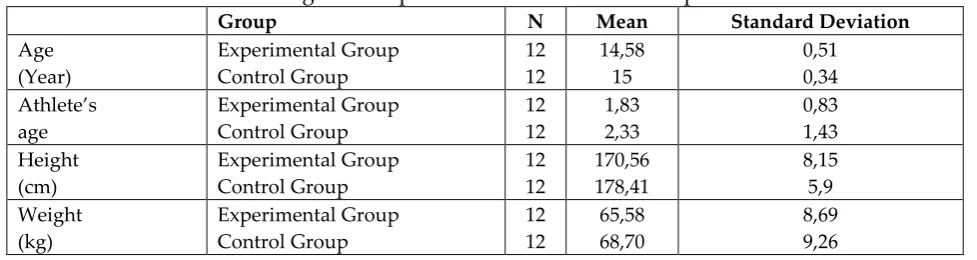
Table 1: Comparison of Descriptive Statistics of Age, Height and
Weights of Experimental and Control Groups
Group N Mean Standard Deviation
Age (Year) Experimental Group Control Group 12 12 14,58 15 0,51 0,34 Athlete’s age Experimental Group Control Group 12 12 1,83 2,33 0,83 1,43 Height (cm) Experimental Group Control Group 12 12 170,56 178,41 8,15 5,9 Weight (kg) Experimental Group Control Group 12 12 65,58 68,70 8,69 9,26
Table 2: Intra-Group Comparisons of Skinfold Thickenss of
Experimental and Control Groups
Experimental Group p Control Group p
Mean±SD Mean±SD
Biceps Pre-test 5,37±3,54 0,007* 3,82±1,53 0,003*
Post-test 4,70±3,09 4,23±1,37
Triceps Pre-test 10,36±6,66 0,008* 6,30±3,01 0,002*
Post-test 8,64±6,23 7,41±3,41
Subscapula Pre-test 10,84±6 0,023* 10,52±4,86 0,003*
Post-test 9,48±5,53 11,60±5,26
Thigh Pre-test 17,81±8,69 0,005* 17,85±8,51 0,002*
Post-test 15,71±7,92 20,34±9,40
p<0,05.
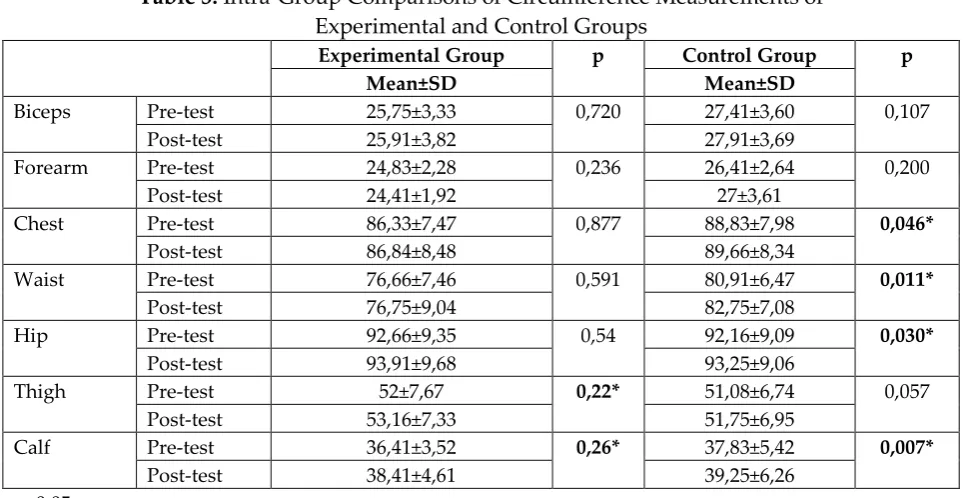
Table 3: Intra-Group Comparisons of Circumference Measurements of Experimental and Control Groups
Experimental Group p Control Group p
Mean±SD Mean±SD
Biceps Pre-test 25,75±3,33 0,720 27,41±3,60 0,107
Post-test 25,91±3,82 27,91±3,69
Forearm Pre-test 24,83±2,28 0,236 26,41±2,64 0,200
Post-test 24,41±1,92 27±3,61
Chest Pre-test 86,33±7,47 0,877 88,83±7,98 0,046*
Post-test 86,84±8,48 89,66±8,34
Waist Pre-test 76,66±7,46 0,591 80,91±6,47 0,011*
Post-test 76,75±9,04 82,75±7,08
Hip Pre-test 92,66±9,35 0,54 92,16±9,09 0,030*
Post-test 93,91±9,68 93,25±9,06
Thigh Pre-test 52±7,67 0,22* 51,08±6,74 0,057
Post-test 53,16±7,33 51,75±6,95
Calf Pre-test 36,41±3,52 0,26* 37,83±5,42 0,007*
Post-test 38,41±4,61 39,25±6,26
p<0,05
When the pre test - post test results of circumference measurements of the experimental and control groups were compared as intra-group, statistically significant were found in thigh and calf circumferences in the experimental group(p<0,05). Also there was a statistically significant difference in the chest, waist, hip, thigh and calf circumferences in the control group (p<0,05).
Table 4: Intra-group Comparisons of Motor Features of
Experimental and Control Groups
Experimental Group p Control Group p
Mean±SD Mean±SD
Vertical Jump Pre-test 40,33±9,67 0,424 38,5±8,67 0,747
Post-test 40,83±10,42 38,66±9,56
Standing long jump Pre Test 170,25±25,76 0,765 175,11±17,54 0,861 Post-test 171,88±26,12 175,44±18,93
Sit and reach (right) Pre-test 18,85±9,41 0,593 21,74±10,37 0,255
Post-test 16,92±12,48 20,1±11,14
Sit and reach (left) Pre-test 18,60±9,09 0,666 18,78±10,76 0,790
Post-test 17,64±10,61 18,4±11,14
30m Sprint Pre-test 5,40±0,78 0,121 5,71±0,98 0,654
Post-test 5,38±1,12 5,69±1,23
Hand grip(right) Pre-test 23,53±14,09 0,388 33,15±7,34 0,844
Post-test 23,47±16,56 29±14,12
Hand grip(left) Pre-test 25,68±11,96 0,084 33,24±6,65 0,105
Post-test 28,48±9,78 33,45±6,49
When the pre-test post-test results of the motor properties of the experimental and control groups were examined as intra-group, there was no statistically significant difference (p> 0,05) (Table 4).
4. Discussion and Conclusion
The purpose of this study is to examine the effect of plyometric trainings made with medicine ball on vertical jump, hand grip strength, flexibility, standing long jump, 30-meter-sprint and anthropometric features of basketball players. The weight of the medicine ball used in training according to age groups is similar to the studies in the literature. Santos and Janeira (2008) used 2 kg medicine ball for plyometric training in their study with basketball players aged 14-15 years. Faigenbaum and Mediate (2006) stated that the ideal medicine ball weight for young athletes was initially 2 kg. When the studies for young basketball teams' were examined in literature, it was seen that the mean of height, vertical jump distance and standing long jump distances of the athletes were closer to each other. Jakovljevic et al (2011) found that the mean of height of athletes was 186 ± 9,754 cm and their body weights were 68,72 ± 11,091 when they were working with a group of 14-year-old basketball players. Carvalho et al. (2011) reported that the mean height of the athletes was 177 ± 10,9 cm and the body weights were 67,4 ± 12.9 kg in the study of 14-16 age group young basketball players. In the 14-16 age group, the speed and duration of development may differ for each sport depending on genetic and environmental factors. For this reason, it can be considered that the differences that arise when teams are compared in terms of height averages are due to the development processes. In addition, although these differences seem to be numerical, it has been observed that the average height is close to each other in the studies carried out. Genetic and muscle fibril types play a key role in the development and display of these traits, along with the ability to improve speed, agility and strength. For this reason, these characteristics may vary considerably between athletes.
5,27 ± 2,15 mm, triceps 10,33 ± 4,7 mm, subscapula 8,97 ± 4,64 mm. It is known that the players who play in the pivot position are longer and heavier than the players who play in the position of guard and forward. Accordingly, the skin fold thicknesses and fat percentage may be higher. Decreasing the skin fold thickness as a result of our study shows that the intensity of the training is appropriate and the stimulus level is optimal. In addition, athletes' nutritional habits and developmental periods may have had a positive impact on the reduction of skin fold thickness. As a result of our study, there was significantly decrease found for biceps skinfold, triceps skinfold, subscapula skinfold, thigh skinfold, thigh and calf circumferences in experimental group (p<0,05). For control group, all skinfold measures and increased significantly and chest, waist, hip and calf circumferences. (p<0,05).
References
Akçakaya, İ. (2009). “Trakya Üniversitesi Futbol, Atletizm ve Basketbol Takımlarındaki Sporcuların Bazı Motorik ve Antropometrik Özelliklerinin Karşılaştırılması.”, Yüksek Lisans Tezi, Trakya Üniversitesi, Sağlık Bilimleri Enstitüsü, Edirne
Ahmed, T. (2013). The effect of upper extremity fatigue on grip strength and passing accuracy in junior basketball players. Journal of human kinetics, 37(1), 71-79. Atlı, A., (2009). “14 – 16 Yaşları Arasındaki Erkek Basketbolcu, Futbolcu ve
Sedanterlerin Bazı Fiziksel, Fizyolojik ve Antropometrik Özelliklerinin Karşılaştırılması.”, Yüksek Lisans Tezi, Selçuk Üniversitesi, Sağlık Bilimleri Enstitüsü, Konya
Bavlı, Ö. (2008), “Adolesan Dönem Basketbolcularda Mevkilere Göre Yapısal ve Motorik Özelliklerin Karşılaştırılması,” Niğde Üniversitesi Beden Eğitimi Ve Spor Bilimleri Dergisi, Cilt 2, Sayı 3, :1 74-181.
Baydil, B. (2006), “Eurofit Testleri İle 12-14 Yaş Grubu Erkek Öğrencilerin Fiziksel Uygunluk Normlarının Araştırılması (Kastamonu İli Örneği)”, Ahi Evran Üniversitesi Kırşehir Eğitim Fakültesi Dergisi (Kefad), Cilt 7, Sayı 2, s. 79-87. Bompa, T.O., (1998). Antrenman Kuramı ve Yöntemi. Ankara. Bağırgan Yayınevi, 357. Bompa, T.O., (2013). Sporda Çavuk Kuvvet Antrenmanı-Plyometrik (Çev. E. Tüzemen).
Ankara: Spor Yayınevi ve Kitabevi.62.
Carvalho, H.M., Silva, M.J.C.E., Figueiredo, A.J., Gonçalves, C.E., Philippaerts, R.M., Castagna, C., & Malina, R.M. (2011). Predictors of maximal short-term power outputs in basketball players 14–16 years. European Journal of Applied Physiology, 111(5), 789-796.
Delgado-Floody, P., Caamaño-Navarrete, F., Carter-Thuillier, B., Gallardo-Fuentes, F., Ramirez-Campillo, R., Barría, M. C., Latorre-Román, P., García-Pinillos, F., Martínez-Salazar, C., & Jerez-Mayorga, D. (2017). Comparison of body composition and physical performance between college and professional basketball players. Archivos de Medicina del Deporte: Revista de la Sociedad Española de Medicina del Deporte, (182), 332-336.
Faigenbaum, A., & Mediate, P. (2006). Medicine ball for all: A novel program that enhances physical fitness in school-age youths. Journal of Physical Education, Recreation & Dance, 77(7), 25-45.
Gaurav, V., & Singh, M., Singh, S. (2010). Anthropometric characteristics, somatotyping and body composition of volleyball and basketball players. Journal of Physical Education and Sport Management, 1(3), 28-32.
Gryko, K., Kopiczko, A., Mikołajec, K., Stasny, P., & Musalek, M. (2018). Anthropometric Variables and Somatotype of Young and Professional Male Basketball Players. Sports, 6(1), 9.
Günay, M. Sevim, Y., Savaş, S. ve Erol, E.A. (1994). Pliometrik Çalışmaların Sporcularda Vücut Yapısı ve Sıçrama Özelliklerine Etkisi. Spor Bilimleri Dergisi, 6(2), 38-45.
Jakovljevic, S.T., Karalejic, M.S., Pajic, Z.B., Macura, M. M., & Erculj, F. F. (2012). Speed and agility of 12-and 14-year-old elite male basketball players. The Journal of Strength & Conditioning Research, 26(9), 2453-2459.
Jakovljevic, S., Karalejic, M., Pajic, Z., Gardasevic, B., & Mandic, R. (2011). Influence of anthropometric characteristics on speed abilities of 14 years old elite male basketball players. Journal of Physical Education and Sport, 11(2), 221.
Metaxas, T.I., Koutlianos, N., Sendelides, T., & Mandroukas, A. (2009). Preseason physiological profile of soccer and basketball players in different divisions. The Journal of Strength & Conditioning Research, 23(6), 1704-1713.
Moreira A., Nosaka K., Nunes J.A., Viveiros L., Jamurtas A.Z., Aoki M.S.(2017) Changes in muscle damage markers in female basketball players. Biol Sport.31(1):3-7 Saka, T., Yıldız, Y., Tekbaş, Ö.F., & Aydın, T. (2008). Genç erkeklerde spor okulu eğitim
programının bazı antropometrik ve fonksiyonel testler üzerine etkisi. Niğde Üniversitesi Beden Eğitimi ve Spor Bilimleri Dergisi, 2(1), 1-8.
Santos, E.J., & Janeira, M.A. (2008). Effects of complex training on explosive strength in adolescent male basketball players. The Journal of Strength & Conditioning Research, 22(3), 903-909.
Savucu, Y., Polat, Y., Ramazanoğlu, F., Karahüseyinoğlu, M.F., Biçer, Y.A., (2004), “Alt Yapıdaki Küçük, Yıldız ve Genç Basketbolcuların Bazı Fiziksel Uygunluk Parametrelerinin İncelenmesi”, Fırat Üniversitesi, Sağlık Bilimleri Tıp Dergisi Cilt 18, Sayı 4 : 205-209.
Taşer, H. (2004). Basketbol ve Kondisyon. Ankara: Bağırgan Yayınevi, 7-42.
sprint ability in talented youth basketball players. The Journal of Strength & Conditioning Research, 28(4), 928-934.
Yazarer, İ., Taşmektepligil, M.Y., Ağaoğlu, Y.S., Ağaoğlu, S.A., Albay, F., Eker, H., (2004). Yaz Spor Okullarında Basketbol Çalışmalarına Katılan Grupların İki Aylık Gelişmelerinin Fiziksel Yönden Değerlendirilmesi, Spormetre Beden Eğitimi ve Spor Bilimleri Dergisi, 2(4):163-170.
Yörükoğlu, U., Koz, M., (2007), “Spor Okulu Çalışmaları İle Basketbol Antrenmanlarının 10-13 Yaş Grubu Erkek Çocukların Fiziksel, Fizyolojik ve Antropometrik Özelliklerine Etkisi,” Spormetre Beden Eğitimi ve Spor Bilimleri Dergisi, Cilt 5, Sayı 2 : 79-83.
Yüksek S., Cicioğlu İ., (2002). Bayan Ümit Milli Takım Judocularının Fiziksel ve Fizyolojik Özelliklerinin Belirlenmesi ve Sıkletlere Göre Karşılaştırılması, Gazi Beden Eğitimi ve Spor Bilimleri Dergisi;7(4):23-32.
Creative Commons licensing terms