ISSN-L: 2501 - 1235 Available on-line at: www.oapub.org/edu
doi: 10.5281/zenodo.1284531 Volume 4 │ Issue 7 │ 2018
EFFECT OF PHYSICAL EDUCATION AND PHYSICAL ACTIVITY
ON ANTHROPOMETRIC MEASUREMENTS AND FLEXIBILITY
AMONG COLLEGE GOING GIRLS
Manjula Suri1i, Rekha Sharma2,
Namita Saini3 1Department of Physiology and Promotive Health, University of Delhi, Institute of Home Economics, New Delhi, India 2,3Department of Physical Education, University of Delhi,
Institute of Home Economics, New Delhi, India
Abstract:
Concern for the health-related physical fitness of college going students has recently increased because of the current obesity epidemic. Therefore, the study designed to assess pre and post exposure height, weight, BMI (anthropometric) and flexibility (motor performance) characteristics among college going girls. An intervention package comprising sessions on physical education and physical activity was designed for the study participants. Participants were undergraduate college going girls (N=96) attending physical education class of one hour for one semester lasting for three months. Height, weight and BMI were noted. Flexibility test was used to test the flexibility of the lower back and hamstring muscles. Pre- and post-intervention changes in parameters were assessed using the paired ‘t’ test. The hypothesis was tested at 0.05 level of significance. The findings exhibited significant differences between the pretest and post test scores with regard to the variables namely height, weight, BMI and flexibility. We conclude that the experimental group showed significant effect of physical education and physical activity on height, weight, BMI and physical flexibility. The study suggests a strong need for more active physical education programs that are appropriate for developing the fitness and improving the health status of college going students, especially females.
Keywords: physical education, physical activity, anthropometric measurements, flexibility, college going girls
1. Introduction
The benefits of physical fitness are universal for all children and can potentially im-prove students’ academic performance, including academic achievement and grades, time on task, concentration, and attentiveness. (Centers for Disease Control and Prevention [CDC], 2013). Physical education modules are structured to improve the motor skills and participation in health-enhancing physical activity. However, physical education and related physical activities are usually offered during short sessions among college going students. Participation in physical activities and sports in university life is very important, as are the maintenance and promotion of physical fitness. The evidence for the health benefits of physical activity is irrefutable (HHS, 1996, 2008). Physical fitness reflects a person's ability to perform specific exercises/ functions and is related to concurrent/ future health outcomes. Earlier, physical fitness of youth focused on the ability to carry out certain physical tasks/ activities but recently focus has shifted to evaluating health-related fitness (IOM, 2012a) and health status. Cardio-respiratory endurance, muscular strength and endurance, flexibility and body composition are components of health-related fitness (IOM, 2012a). These components of health-related fitness can be linked to the risk of cardio-metabolic disease, musculoskeletal disability, chronic hypokinetic-related diseases etc. Parameters like BMI provide an appropriateness of weight relative to height. BMI is usually calculated from height and weight data using the following equation: BMI = body weight (kg)/height2 (m).Whereas flexibility has been defined as ‚the intrinsic property of body tissues, including muscle and connective tissues, that determines the range of motion achievable without injury at a joint or group of joints‛ (IOM, 2012b). BMI, Height, weight and flexibility are important health related fitness parameters. There is extensive literature examining the relationship between physical activity, cardiorespiratory fitness and cognitive/academic outcomes among adolescent, adult and senior citizen populations (Langford et al, 2014) though it may not extrapolate to a college population. In the recent decade, a decline in physical activity among college students has been observed (American College Health Association, 2006, 2008; Sacheck et al, 2010) and there is limited research examining how combined effect of physical education and physical activity during the college going years may impact health and fitness. Therefore, this study was designed to observe the effect of physical education and physical activity on anthropometric measurements and flexibility among college going girls.
2. Methodology
2.1 Objectives
2.2 Intervention
An intervention package comprising sessions on physical education and physical activity was designed for the study participants. Participants were undergraduate college going girls (N=96) attending physical education class of one hour for one semester lasting for three months.
2.3 Measurements
A portable electronic weighing scale with a capacity of 120kg and sensitivity of 0.1kg was used for weight measurement. Height was measured with the help of a non-stretchable, flexible measuring tape. Standard techniques were used for all measurements. BMI was calculated as weight (in kg) divided by height2 (in meters2).
The most commonly used tests are versions of the ‚Sit and Reach Test‛ Tran MD, et. al. (2001), Van Puymbroeck M., et al. (2007), Telles S., et al. (2009) Cowen V. S. (2010) and the ‚Back Scratch Test‛ Van Puymbroeck M., et.al. (2007). Sit and Reach flexibility test was used to test the flexibility of the lower back and hamstring muscles. Participants sat on the floor with both feet straight out against a box for them to press their feet against. Their feet were bare, both knees were pressed down to the floor, and their palms were facing downward. They reached as far as they could towards their toes, or if they were really flexible, over the box. With a ruler/scale, length the participants could reach (measuring from their toes to their fingertips) was recorded.
2.4 Statistical Analysis
The data obtained from the participants were subjected to analysis using suitable statistical formulae and tests. Mean and standard deviations were calculated for all parameters. Pre-intervention and post-intervention changes in parameters were assessed using the paired ‘t’ test. The software SPSS (Statistical Package for Social Sciences) version 18.0 was used for the analysis of data.
3. Result
The main concerns for this population of college going girls were in the areas of anthropometric measurements and physical flexibility.
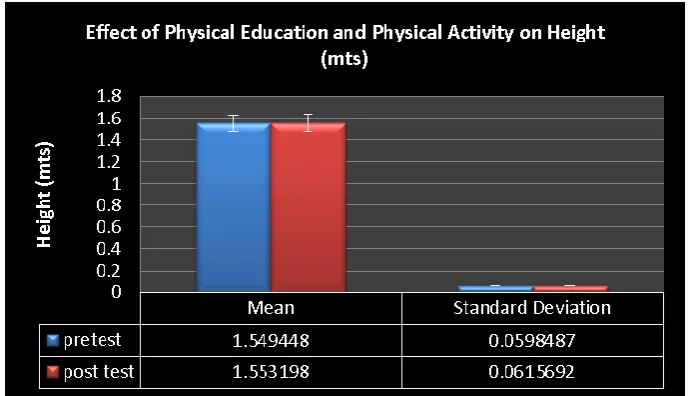
Table 1: Effect of Physical Education and Physical Activity on Height (mts)
Sl.no. Group N Mean
Standard
Deviation "t"
Mean Difference
Standard
Error Probability
1 pre test 96 1.549448 0.059849
-3.478 -0.00375 0.001078 0.001*
2 post test 96 1.553198 0.061569
Note:
N= Number of Sample ‚t‛= t test
The analysis in regard to effect of physical education and physical activity on height in the Table 1 and Figure 1 reveals that there were significant difference at 0.05 level between the pre test and post test group (t=-3.478).
Figure 1: Effect of Physical Education and Physical Activity on Height (mts)
Table 2: Effect of Physical Education and Physical Activity on weight (Kgs)
Sl.no. Group N Mean
Standard
Deviation "t"
Mean Difference
Standard
Error Probability
1 pretest 96 54.72708 11.92521
2.947 0.584375 0.198267 0.004*
2 post test 96 54.14271 11.46603
Note:
N= Number of Sample ‚t‛= t test
*= Significant at 0.05 level N.S= Not Significant at 0.05 level
Figure 2: Effect of Physical Education and Physical Activity on weight (Kgs)
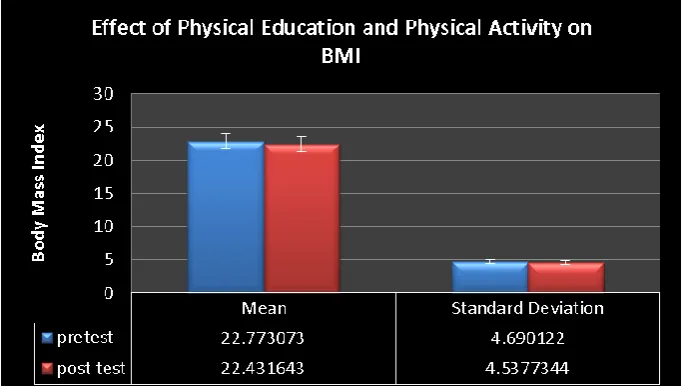
Table 3: Effect of Physical Education and Physical Activity on BMI
Sl.no. Group N Mean
Standard
Deviation "t"
Mean Difference
Standard
Error Probability
1 pre test 96 22.77307 4.690122
4.512 0.341429 0.075663 0.000*
2 post test 96 22.43164 4.537734
Note:
N= Number of Sample ‚t‛= t test
*= Significant at 0.05 level N.S= Not Significant at 0.05 level
Effect of physical education and physical activity on BMI shows that post test group had lower BMI than did pre test group. The Table 3 and Figure 3 reveals that there were significant difference at 0.05 level between the pre test and post test group (t= 4.512).
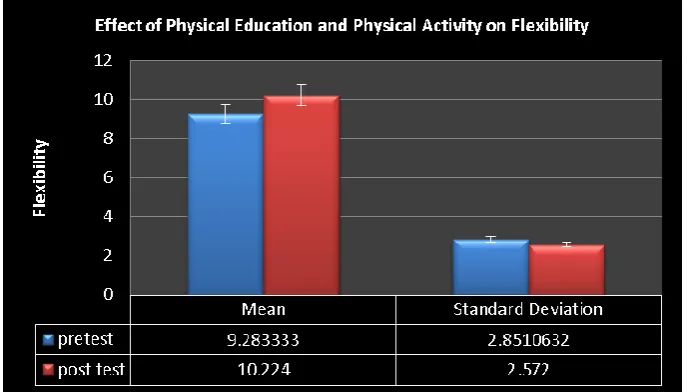
Table 4: Effect of Physical Education and Physical Activity on Flexibility
Sl.no. Group N Mean
Standard
Deviation "t"
Mean Difference
Standard
Error Probability
1 pre test 96 9.283333 2.851063
-6.54 -0.94063 0.143817 0.000*
2 post test 96 10.224 2.572
Note:
N= Number of Sample ‚t‛= t test
*= Significant at 0.05 level N.S= Not Significant at 0.05 level
With regard to the effect of physical education and physical activity, data were compared between the pre test and post test group. The sit-and-reach flexibility test results in the Table 4 and Figure 4 reveals that there were significant difference at 0.05 level (t= -6.54).
Figure 4: Effect of Physical Education and Physical Activity on Flexibility
4. Discussion
Research related to physical education and physical activity is more focused on school students and there has been little research on physical fitness in university students as subjects. In the recent decade, a decline in physical activity among college students has been observed (J. Am. Coll. Health. 2006, 2010, Sacheck J.M., 2010). Therefore, this research aimed to study the effect of Physical Education and Physical activity on anthropometric measurements and flexibility among college going students, especially girls.
important health-related anthropometric indicators. (A.H. Almeida, S.A. Santos, P.J. Castro, J.A. Rizzo, G.R. Batista, 2013). The latest references support the view that favorable somatotypical characteristics lead to exceptional biomechanical and metabolic efficiency in the selected sport. (R.L. Wilber, Y.P. Pitsiladis, 2012) Studies performed on swimmers, gymnasts, and tennis players also support the correlation to height
(https://www.forbes.com/sites/quora/2016/11/03/is-it-possible-to-increase-your height
/#48cb 32 b25139)
The study suggested that there was significant difference in weight between pre and post test group among college going girls. Weight management can be done by increasing daily physical activity without substantial caloric restriction thereby reducing obesity. Voluntary exercise is the most important discretionary component of total daily energy expenditure, it can affect energy balance. Therefore, Physical activity and exercise hold potential as part of the solution for the ongoing obesity epidemic.
(https://www.sciencedirect.com/science/article/pii/S209525461 6300060)
The study showed the significant difference in Body mass Index between pre and post test group among college going girls. Several studies have investigated the combined association of physical activity and body mass index (BMI) with CVD risk in middle-aged adults, but the results are inconsistent. (Li T. Y., et al., 2006, Weinstein A.R., et al., 2008, Kenchaiah S., et. al., 2009, Dankel S.J., et. al., 2015, Hu G., et al., 2015, Carlsson A. C., et al., 2016). A study by Weinstein et al., Weinstein A. R., et al., 2008, which assessed the combined effect of physical activity and BMI on coronary heart disease in women, reported that the risk of coronary heart disease associated with increased BMI was considerably reduced by higher levels of physical activity. These results indicate that the risk of CVD associated with a high BMI might be partly negated by physical activity. Therefore, Physical activity and physical education should be promoted as a tool in reducing BMI and obesity epidemic. Previous studies regarding the association of BMI and physical activity are consistent with our findings. (Li T. Y., et al., 2006, Weinstein A. R., et al., 2008, Kenchaiah S., et al., 2009, Dankel S. J., et al., 2015, Hu G., et al., 2015, Carlsson A.C., et al., 2016). Our study emphasizes the importance of the beneficial effects of physical activity as part of our daily life, as supported by recent recommendations. (Haskell WL, et al., 2007)
The findings from this study could be useful as a basis for developing college -based physical education and physical activity which is uniquely appropriate for meeting the physical needs, as well as the cognitive and social needs, of students in PE classes. The study also has some limitations. There has been no opportunity to gather longitudinal data as physical education classes are restricted to one semester of three months only. Future investigations are needed to extend the breadth of the study. All participants were females and so the data does not apply to males. These limitations point to avenues of future research that could be explored. To summarize, a comprehensive physical education supplemented by physical activity at the core, would make an important contribution to college going student's health and fitness.
5. Conclusion
Based on the major finding of the study, the following points are stated as conclusion. 1. Implementation of Physical education and physical activity has positive effect on
improvement of height and flexibility of the college going girls.
2. Physical education and physical activity has significantly reduced the body mass index and body weight of the college going girls.
3. The findings of this study point to an alarming reality that there is a need to promote Physical education and Physical activity among college going students, especially females.
Acknowledgement
xxxxxxxxxxxx
References
1. A.H. Almeida, S.A. Santos, P.J. Castro, J.A. Rizzo, G.R. Batista, 2013. Somatotype analysis of physically active individuals J Sports Med Phys 53(3):268-273
2. American College Health Association, authors. American College Health Association-National College Health Assessment (ACHA-NCHA) Spring 2006 Reference Group Data Report (Abridged) J. Am. Coll. Health. 55(5):16.
3. American College Health Association, authors. National College Health Assessment Reference Group Executive Summary Fall 2008. [accessed on 12 June 2010]. Available online:
http://www.acha-ncha.org/docs/ACHA-NCHA_Reference_Group_Executive Summary_Fall2008.pdf.
4. American College Health Association, authors. National College Health Assessment Reference Group Executive Summary Fall 2008. [accessed on 12 June 2010]. Available online:
5. Berryman Reese N, Bandy WD, 2006.Joint Range Of Motion And Muscle Length Testing. Philadelphia, Pa: W.B. Saunders Company.
6. Carlsson A.C., Arnlov J., Sundstrom J., et al. Physical Activity, 2016 Obesity And Risk Of Cardiovascular Disease In Middle-Aged Men During A Median Of 30 Years Of Follow-Up. Eur J Prev Cardiol 23:359–365.
7. Centers for Disease Control and Prevention. 2013. Adolescent and School Health: Physical Activity Facts. Retrieved From Http://Www.Cdc.Gov/Healthy
Youth/PhysicalActivity/Facts.Htm
8. Cowen VS. Functional Fitness Improvements After A Worksite-Based Yoga Initiative. J Bodywmovther, 2010,14pp. 50-54.
9. Dankel S.J., Loenneke J.P., Loprinzi P.D. 2015 The Impact Of Overweight/Obesity Duration On The Association Between Physical Activity And Cardiovascular Disease Risk: An Application Of The ‚Fat But Fit‛ Paradigm. Int J Cardiol 201:88–89.
10.Dar, Hilal Ahmad, Singh, Hartej and Dar, Nadeem Ahmad. 2015 Effect of Participation in Physical Education and Conditioning Programme On Flexibility. Internat. J. Phy. Edu., 8 (1):65-66.
11.Haskell W.L., Lee I.M., Pate R.R., et al. 2007 Physical activity and public health: Updated recommendation for adults from the American College of Sports Medicine and the American Heart Association. Circulation 116: 1081–1093. 12.HHS (U.S. Department of Health and Human Services). Physical activity and
health: A report of the Surgeon General. Atlanta, GA: HHS, CDC, National Center for Chronic Disease Prevention and Health Promotion; 1996.
13.HHS. Physical activity guidelines for Americans. Washington, DC: HHS; 2008. 14.Hu G., Tuomilehto J, Silventoinen K., et al. 2004 Joint Effects Of Physical Activity,
Body Mass Index, Waist Circumference And Waist-To-Hip Ratio With The Risk Of Cardiovascular Disease Among Middle-Aged Finnish Men And Women. Eur Heart J, 25: 2212–2219.
15.IOM. Fitness Measures and Health Outcomes in Youth. Washington, DC: The National Academies Press; 2012b.
16.Kenchaiah S., Sesso H.D., Gaziano 2009 J.M. Body Mass Index and Vigorous Physical Activity And the Risk of Heart Failure among Men. Circulation119: 44– 52.
17. Langford R., Bonell C.P., Jones H.E., Pouliou T., Murphy S.M., Waters E., Komro K.A., Gibbs L.F., Magnus D., Campbell R. 2014 The WHO Health Promoting School Framework For Improving The Health And Well-Being Of Students And Their Academic Achievement. Cochrane Database Syst Rev.: CD0089
18. Li T.Y., Rana J.S., Manson J.E., et al. 2006 Obesity As Compared With Physical Activity In Predicting Risk Of Coronary Heart Disease In Women. Circulation 2006, 113:499–506.
20. Sacheck J.M., Kuder J.F., Economos C.D. 2010 Physical Fitness, Adiposity, And Metabolic Risk Factors In Young College Students. Med. Sci. Sports Exerc.42:1039–1044.
21.Sacheck J.M., Kuder J.F., Economos C.D. 2010 Physical Fitness, Adiposity, And Metabolic Risk Factors In Young College Students. Med. Sci. Sports Exerc.42:1039–1044
22.Telles S., Dash M., Naveen K.V. 2015 Effect Of Yoga On Musculoskeletal Discomfort And Motor Functions In Professional Computer Users. Work, 33:297-306.
23.Tran M.D., Holly R.G., Lashbrook J, Amsterdam EA, 2001 Effects of Hatha Yoga Practice on the Health-Related Aspects of Physical Fitness. PrevCardiol 4:165-170.
24.Van Puymbroeck M., Payne L.L., Hsieh P.C., 2007 A Phase I Feasibility Study Of Yoga On The Physical Health And Coping Of Informal Caregivers. Evid Based Complement Alternat Med 4:519-529.
25.Weinstein A. R., Sesso H. D., Lee I. M., et al. 2008 The Joint Effects Of Physical Activity And Body Mass Index On Coronary Heart Disease Risk In Women. Arch Intern Med 168:884–890.
26.Petri Wiklund, The role of physical activity and exercise in obesity and weight management: Time for critical appraisal, Journal of Sport and Health Science Volume 5, Issue 2, June 2016, Pages 151-154
Creative Commons licensing terms