ALAMO COLLEGES POLICE DEPARTMENT
2015 ANNUAL SECURITY & FIRE SAFETY REPORT
In compliance with the Jeanne Clery Disclosure of
Campus Security Policy and Campus Statistics Act
Alamo Colleges is required to distribute the following information to all current and potential students and employees. Please take a moment to read the following information. The information is also available on the Alamo Colleges Police Department web site: http://www.alamo.edu/district/police/ALAMO COLLEGES POLICE DEPARTMENT
201 W. SHERIDAN, BLDG “C”
SAN ANTONIO, TEXAS 78204
PHONE: 210-485-0099
FAX: 210-486-9315
2015 Annual Security & Fire Safety Report 2
Table of Contents
A Message from the Chief of Police ... 5
Telephone Directory ... 6
Department Overview ... 7
Jurisdictional, Enforcement & Arrest Authority of Alamo Colleges Police……….7-8 Professional Standards………..8
Incident Reporting and Response………..8-9 Reporting Criminal Offenses to Campus Officials………9
Timely Warning Policy... 9
Access and Maintenance of Campus Facilities ... 10
Access ... 10
Maintenance………10-11 Emergency Response & Evacuation Procedures………11
Confirmation of an Emergency or Dangerous Situation………11-12 Emergency Notifications……….12-13 Annual Exercises and Drills………..13
Alcoholic Beverages, Illegal Drugs, and Weapons ... .….13
Alcoholic Beverages...14
Illegal Drugs ... 14
Weapons ... ……... 14-15 Sexual Assault – Domestic (Family) Violence – Dating Violence - Stalking ... 15
Sexual Assault………15-17 Domestic (Family) Violence………..17-19 Dating Violence……….19-20 Stalking………20-22 Procedures To Follow……….22-23 Protective & No Contact Orders………..23
2015 Annual Security & Fire Safety Report 3 Title IX Requirements………23-24
Procedures for Campus Disciplinary Action………..24
Complaint and Resolution Process………24-25 Administrative Disposition of Complaint and Violations………25-26 Institutional Standard of Evidence……….26-27 Sanctions That May Be Imposed……….27
Victims’ Bill of Rights………27
Sexual Offender Registry………28
Missing Students Who Reside In On-Campus Housing………28
Policy for Reporting the Annual Disclosure of Crime Statistics………..28-29 Crime Statistics………30-34 Theft Prevention………...35
Protect Your Property……….35-36 Crime Prevention Programs………36-37 Description of Educational Programs………37
Campus Statistical Reporting Area Maps………38-43 Annual Fire Safety Report 2015—……….44
Higher Education Opportunity Act Annual Fire Safety Report ……….……….. 44
The Higher Education Opportunity Act of 2008 – Legal Requirements………..……….44-45 Fire Safety Statistics ……….……… 45
On Campus Student Housing Facilities ……….……….. 45
Figure 1 – Alamo Colleges Fire Log ……….……….. 46
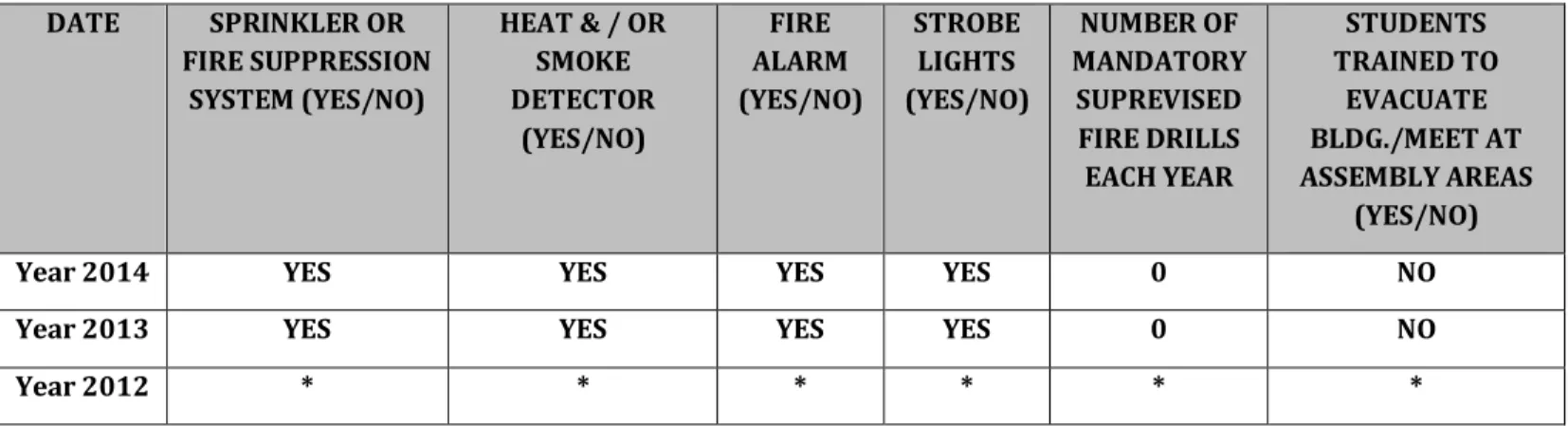
Figure 2 – Fire Protection Systems\Fire Drill Training ……….……… 46
Mandatory Supervised Fire Drills ……….………. 46
Fire Drill Procedures ……… 46
Building Evacuations ……….. 47
2015 Annual Security & Fire Safety Report 4
Fire Drill Evaluations ……….. 47
Fire Safety Related Procedures ……….. 48
Smoking Policy ……….……….. 48
Alamo Colleges Mission, Vision & Values ……….……… 49
2015 Annual Security & Fire Safety Report 5
A Message from the Chief of Police
On behalf of all of the employees of the Alamo Colleges Police Department I would like to
welcome you. The Alamo Colleges communities with whom our department personnel
interact with are a concentration of highly educated academicians, outstanding students,
and well-qualified staff. Our personnel are sensitive to the unique nature of the Alamo
Colleges population and realize that they serve in direct support of higher education.
The 60,000+ students, 5,000+ employees, five campuses and allied satellite facilities of the
Alamo Colleges make it one of the largest in the nation.
Our department’s highest priority is to provide professional campus oriented law
enforcement and security services in a receptive and collaborative manner and to make a
safe work and study environment available to all. We place our emphasis on service and
the promotion of involvement to maintain a safe and secure environment. Together we
are all keenly aware of our responsibilities in the prevention of crime.
This guide is published to provide information about department services, programs and
statistical information as required by law. If you have any questions or suggestions
concerning this publication, please contact the Alamo Colleges Police Department at (210)
485-0099 or come by our office at 1601 N. Main Ave. on the San Antonio College Campus
at the corner of Main Ave. and East Park.
Sincerely,
Don F. Adams
Chief of Police
2015 Annual Security & Fire Safety Report 6
Police Department Telephone Directory
Alamo Colleges Web Site: http://www.alamo.edu
Police Department Web Site: http://www.alamo.edu/district/police/ Area Code – 210 (for all numbers listed below)
Emergencies
Police/Fire/Medical 485-0911
Non-Emergencies
General Assistance 485-0099
Office of the Chief of Police 485-0088
Office of the Deputy Chief of Police/Administration 485-0184 Office of the Deputy Chief of Police/Patrol 486-1810
Office of the Deputy Chief of Police/Emergency Services 485-0778 Uniform Patrol Division Field Supervisor 485-0099
Sergeant / Support Services Supervisor 485-0096 Communications 485-0778
Records Division 485-0096
Criminal Investigations Division 485-0187/485-0185/485-0089
Other Important Telephone Numbers
San Antonio College Substation 486-0996 St. Phillips College Substation 486-2214
Northeast Lakeview College Substation 486-5226 Northwest Vista College Substation 486-4999 Palo Alto College Substation 486-3997
2015 Annual Security & Fire Safety Report 7
Department Overview
The Alamo Colleges Police Department is a Texas Police Chief’s Foundation Association Best Practices Law Enforcement provides law enforcement services to all components of the Alamo Colleges including academic campuses and a variety of satellite facilities throughout Bexar and Comal Counties.
The Department has 96 authorized positions including 77 state certified Peace Officers, 1 Parking Enforcement Personnel, 11 Communications Officers, and 7 Administrative Support Personnel. The department maintains a fully staffed investigations division and an Emergency Communications Center which operates 24 hours a day, year round with full interoperability capabilities.
To provide a safe campus for our students, staff, faculty and visitors, the department has armed, uniformed officers on patrol 24 hours a day, year round. To provide this around the clock coverage our officers work in three shifts. Unarmed Parking Enforcement personnel work closely with our Patrol Officers by constantly patrolling campus properties.
Patrol is the core of the Alamo Colleges Police Department. These officers are the ones to answer calls for service, respond to alarms and enforce state criminal and traffic laws in addition to the rules of the Alamo Colleges. The department also has police officers responsible for specialized assignments including Criminal Investigations, Crime Prevention and Bicycle Patrol.
Jurisdictional, Enforcement, & Arrest Authority of the
Alamo Colleges Police Department
The Alamo Colleges Police Department is the primary police authority for the colleges of the Alamo Colleges. Our Police Officers are certified Texas Peace Officers as defined in article 2.12 of the Texas Code of Criminal Procedure.
Pursuant to Section 51.203 of the Texas Education Code, the primary jurisdiction of Alamo Colleges Police Officers includes all counties in which property is owned, leased, rented, or otherwise under the control of the Alamo Colleges. As peace officers, the Department’s police officers have the same authority to detain and arrest as municipal police officers.
The Alamo Colleges Police Department is linked by computer to city, state and federal criminal justice agencies, which provides access to criminal records, wanted persons, stolen property, and vehicle information. All crimes reported to the Alamo Colleges Police Department are thoroughly investigated and are referred for prosecution through the District Attorney’s Office when appropriate. Criminal matters involving our students may also be referred to the appropriate administration for disciplinary action.
The Alamo Colleges Police Department maintains excellent working relationships with all area law enforcement agencies including the San Antonio Police Department, the Live Oak Police Department, the New Braunfels Police Department, the Bexar County Sheriff’s Office, the Texas Department of Public Safety, and the local field office of the Federal Bureau of Investigation. These working relationships are maintained through periodic
2015 Annual Security & Fire Safety Report 8
communication among agency administrators and by frequent contact between line officers and investigators cooperating on specific cases.
Professional Standards
The Police Department’s relationship with the community and ensuring that we provide excellent services is vital to achieving our overall mission of safe and secure campuses. All members of the Alamo Colleges
community can expect to be treated in a courteous and professional manner by members of our department. The Alamo Colleges Police Department will not tolerate an employee who acts unprofessionally or rudely or who does not provide an appropriate level of service. We also wish to recognize instances where our employees have been especially helpful or have exceeded your expectations in the service they have provided.
The quality of our service is dependent in part on feedback from the community we serve. Please help us improve our department by bringing your complaints and compliments to the attention of any of the following individuals in a timely manner:
1. Request the on-duty Police Patrol Supervisor by calling 210-485-0099; this individual is available 24-hours a day.
2. Address written correspondence to: Chief of Police, Alamo Colleges Police Department, 1601 N. Main Ave. San Antonio, Texas 78212.
Incident Reporting and Response
Any criminal offense, suspected criminal activity, or other emergency on campus should be reported directly to the Alamo Colleges Police by telephone, in person, or by dialing 485-0911 from any campus phone or by using one of the emergency telephones located throughout our campuses. Campus elevators are also equipped with emergency phones. Upon receipt of the call, the Emergency Services Division personnel can supply information or dispatch officers as necessary.
For non-emergencies from a campus phone, dial 485-0099. The e-mail address for the Alamo Colleges Police Department is [email protected] however request for police service should not be sent via email. Alamo Colleges Police or Parking Enforcement personnel in vehicles, on foot or on bicycles are eager to be of assistance and may be contacted directly.
The Alamo Colleges Police department will respond as quickly and safely as possible to any request for
assistance, whether it is an emergency or not. Response time is based on current activity and severity of the call. Crimes in progress, alarms, traffic accidents with injuries and medical assists have a higher priority than other types of calls.
We cannot overemphasize the importance of prompt and accurate crime reports, no matter when it occurs. If a crime is not promptly reported, evidence can be destroyed or the potential to apprehend the suspect is lost. Without accurate reports, leads could be missed and the investigation headed in the wrong direction. If you
2015 Annual Security & Fire Safety Report 9
witness a crime or emergency, promptly report it to the Alamo Colleges Police Department and be prepared to answer questions as accurately as you can.
The subsequent investigation can only be as thorough as the information received. If you are the victim of a crime or you have seen or received information of criminal activity or other emergency, please contact the Alamo Colleges Police Department immediately.
Reporting Criminal Offenses to Campus Officials
Faculty, staff and students are encouraged to report any problems with the campus environment directly to the Alamo Colleges Police, but you may also report criminal offenses to designated campus officials (including but not limited to directors, deans, and department heads) or to other local law enforcement agencies.
Crimes can be reported anonymously by calling Crime Stoppers at (210) 224-STOP. The Alamo Colleges Police Department, Counseling and Psychological Services, and the Department of Student Affairs at each campus will accept confidential and anonymous reports of crimes for inclusion in the annual statistical report. Although exempt from the reporting requirements of the Clery Act, pastoral and professional mental health counselors are encouraged to refer persons they are counseling to report crimes on a voluntary, confidential basis for inclusion in the annual statistics especially if the incident poses a continuous threat to the campus. It is our goal to provide assistance wherever the report is made to make sure we include the crime in our annual security report.
Timely Warning Policy
In the event that a situation arises, either on or off campus, that, in the judgment of the Alamo Colleges Police Department and /or the Alamo Colleges Emergency Management Coordinator, that constitutes an ongoing or continuing threat, a campus wide “timely warning” will be issued. This “Campus Crime Alert” warning may be issued through the emergency notification system via text, phone and email, the campus e-mail system to students, faculty and staff, publishing on the Alamo Colleges web site and / or the posting of flyers.
Personal Safety is paramount – it’s everyone’s responsibility. The Alamo Colleges Police Department
encourages you to attend ACPD presentations on personal security and safety which are held throughout the semester and to follow us on Facebook and Twitter to obtain important safety tips and information.
Each week, the Alamo Colleges Police Department publishes a “Police Blotter” available to the media, the public and various campus offices. This summary identifies the type, location, time and date the crime was reported. You may view this “Police Blotter” via the department web page at
http://www.alamo.edu/district/police/ and click on the “Police Blotter” section. A printed copy of this
2015 Annual Security & Fire Safety Report 10
Access and Maintenance of Campus Facilities
Access
Custodians are responsible for opening all building entrance doors which are not currently on the controlled access system for operational days and hours and for securing the building entrance doors at closing. Generally, the buildings are opened at 7 a.m. and closed between 10:00 p .m. and 10:30 p.m. each day. College faculty are responsible for opening and closing their respective classrooms and faculty offices, and custodians and DPS are responsible for verifying that all classroom spaces are secured at the end of each day.
For special activities, events, and other functions, including construction, scheduled after duty hours and on weekends, Alamo Colleges Police personnel shall be responsible for opening and securing the
buildings, when requested in writing. After normal operating hours and on weekends, access to buildings shall be restricted to the maximum extent possible, consistent with academic requirements.
A person without a key or access control ID card who needs access to a particular room should first contact their vice-president of college services, department chairperson, or college facilities coordinator to open the door.
A. San Antonio College: Buildings which would be in use at other than the normal times
mentioned in the paragraph above would be the McAllister Theatre, the McCreless Theatre, the Candler Physical Education Building, the Loftin Student Center, The Koehler House, the Scobee Planetarium, and the Visual Arts and Technology Building.
B. St. Philip’s College: In addition to the access hours noted above, the following facilities have the indicated hours of operation on Sunday: Learning Resource Center: 1:00 p.m. to 5:00 p.m.
C. Palo Alto College: Buildings which would be in use at other than the normal times mentioned in the paragraph above would be the Learning Resource Center and Natatorium which are open for special events.
D. All campuses have building construction and building renovation in progress. These
construction areas are completely secured with chain link fence, and off limits to staff, faculty and students.
Maintenance
Maintenance Hotline: Requests for maintenance and repair services may be made by telephone to the Maintenance Work Control Technician on the Hotline.
San Antonio College: 210-486-1235 St. Philip’s College: 210-486-2888 Palo Alto College: 210-486-3888 Northwest Vista College: 210-486-4888
2015 Annual Security & Fire Safety Report 11
A. An emergency (utility failure, failure of a fire protection system; heating/cooling, or security alarm system, certain fire or safety hazards, etc.) will be responded to immediately. If the request is urgent (fire, health, or safety hazards not qualifying as an emergency) Maintenance will strive to complete the request within five working days.
B. Routine requests will normally be completed in 30 days if supplies are in stock. The individual submitting the request for service will be provided the work order number for purposes of tracking and will refer to that number for any follow-up action required.
College Facilities Superintendent or designee will review the work to be completed and approve or disapprove the work order.
A. The Facilities Superintendent will certify the availability of funds for minor construction work and appoint a Facilities Coordinator to be point-of-contact for the college with the Facilities Department.
B. The Facilities Superintendent will contact the Vice President for College Services with concerns relating to work orders.
Emergency Response and Evacuation Procedures
The Alamo Colleges Police Department is the primary first responder to any emergency situation on all campuses. Campus and community emergency responders such as Alamo Colleges Environmental Health, Safety & Risk Management team and the respective Fire Departments supporting each college may also respond to the emergency scene depending on the scope of the emergency.
Preparedness is everyone’s responsibility. The Alamo Colleges Police Department has developed an Emergency Procedures Quick Reference Guide which is available on its web site at
http://www.alamo.edu/uploadedFiles/District/Employees/Departments/Police_Department/pdf/Emergency -Procedures-Quick-Reference-Guide.pdf . The guide provides information regarding protective actions to be taken during emergencies, such as an active shooter incident, suspicious package discovery, tornadoes and severe weather, hazardous materials, medical emergencies, and also provides emergency contact phone numbers.
All campuses have evacuation maps next to the elevators in each building at all campuses. The Alamo Colleges Office of Enterprise Risk Management coordinates the BAT (Building Action Team) program, which trains faculty and staff on evacuation procedures, shelter-in-place procedures, utilizing evac-chairs (mobility impaired evacuation chairs), fire safety, incident command system, crime prevention, and active shooter response. The BAT provides assistance during building evacuations.
Confirmation of an Emergency or Dangerous Situation
In order to confirm a significant emergency or dangerous situation is occurring on campus, Alamo College Police Officers are dispatched to the location where the incident has been reported. If responding officers confirm that a significant emergency or dangerous situation is occurring, the police field supervisor will ensure that
2015 Annual Security & Fire Safety Report 12
to activate emergency notifications to the campus community that are affected by the emergency or dangerous situation in consultation with the Alamo Colleges Director of Enterprise Risk Management and the Chief of Police. Department and College Administrators will be promptly notified of major incidents by the Chief of Police.
Emergency Notifications
Upon the confirmation of a significant emergency or dangerous situation involving an immediate life safety threat to students, faculty, or staff occurring on any Alamo Colleges campus, Alamo Colleges officials will, without delay, notify the campus community. Alamo Colleges’ officials will take into account the safety of the college community when determining the content of the notification and will initiate appropriate mass notification systems, unless in the professional judgment of Alamo Colleges’ officials, the notifications will compromise efforts to assist victims or to contain, respond to, or otherwise mitigate the emergency.
The Alamo Colleges provides various methods to notify students, faculty, and staff of a developing situation or emergency. The Alamo Colleges Office of Governmental and Public Relations and the Office of Enterprise Risk Management coordinate the Alamo Colleges Emergency Notification System.
All Alamo Colleges mass notification systems are designed to utilize pre-scripted messages, as well as
customized emergency communication with students, faculty, and staff. Dispatch, Enterprise Risk Management, and the District / Campus Public Relations personnel are trained to initiate the mass notifications systems, including how to develop messages and alerts. Messages and alerts have the ability to quickly alert the Alamo Colleges community via text, landline phone, cell phone, or email. Persons authorized for making notification decisions include the Chief of Police or his designee, Director of Enterprise Risk Management, and / or the ACPD Patrol Supervisor.
External partners, families, and agencies also have access to emergency information through the Alamo Colleges main website at http://www.alamo.edu/. The main webpage is routinely updated during an emergency, and provides an outlet for internal and external stakeholders to quickly review updates during a rapidly developing situation or emergency. This webpage also serves as a clearinghouse of campus emergency preparedness information, as well as road closures, class cancellations, general alerts, and other areas of interest to the Alamo Colleges community. For further information, visit the Campus Alerts webpage at http://www.alamo.edu/. The Alamo Colleges Police Department also posts information on Facebook and Twitter sites to reach external partners. Facebook – www.facebook.com/alamocollegespd and Twitter -
https://twitter.com/AlamoCollegesPD
Campus Crime Alerts: The Alamo Colleges Police Department utilizes a website called Campus Crime Alerts that was developed to keep students, faculty, staff, and the general public informed on the status of the college(s) during emergency situations.
Social Media (Facebook, Twitter) and Digital Signage (Alamo Colleges TV): the use of social media sites
provides a valuable means of interacting with the community. ACPD utilizes social media websites to enhance communication and can disseminate information related to campus emergencies, crime alerts, or issues concerning public safety. The Office of Information Technology manages a number of televisions across the
2015 Annual Security & Fire Safety Report 13
Alamo Colleges campuses that regularly post information and bulletins. Emergency notifications can be displayed on these televisions when needed.
FACEBOOK–www.facebook.com/alamocollegespd TWITTER – https://twitter.com/AlamoCollegesPD
Annual Exercises and Drills
Emergency preparedness and mitigation exercises provide the campus emergency response teams (ERTs) and all participants (students, faculty, and staff) the opportunity to learn their roles, responsibilities, and procedures before an actual emergency. All exercises with the emergency response team are designed following federal and state guidelines to ensure consistency with the National Incident Management System and Incident Command System. Emergency exercises are followed through with after action reports, meetings, and
evaluations to identify lessons learned and explore new or improved means of coordination before, during, and after an emergency at any Alamo Colleges campus.
The Alamo Colleges performs five different types of drills on an annual basis. The drills are Evacuation, Reverse Evacuation, Shelter-In-Place, Severe Weather, and Lock-down. Each campus performs the five drills annually. All exercises, drills, and activities are announced to the affected population using our Mass Notification System. Communication to the community is important before testing emergency systems or exercises so as to not alarm building occupants and ensure external partners are aware of the activities. All exercise and drill reports are maintained internally within the office of Enterprise Risk Management. When warranted, external agencies participate in these exercise drills including the San Antonio Fire Department, San Antonio Police Department, and other local, county, state, and federal emergency management agencies.
Alcoholic Beverages, Illegal Drugs, and Weapons
As an institution interested in the intellectual, physical and psychological well - being of the campus community, the Alamo Colleges deems it important to curtail the abusive or illegal use of alcoholic beverages. All members of the Alamo Colleges Community and guests are required to comply with federal, state and local laws regarding the distribution, sale, possession, and consumption of alcoholic beverages and sale, possession, and use of illegal drugs.
No person shall possess, consume, or sell alcoholic beverages, narcotic drugs, deadly weapons, intoxicating liquors, or firearms upon College District property unless specifically authorized by the College District or as provided in Policy G.1.4 regarding concealed handguns, firearms and ammunition in certain areas.
Anyone who uses a drug authorized by a licensed physician through a prescription specifically for that person’s use shall not be considered to have violated this procedure. Refer to Board Policy G.1.4.2 – Conduct on College District Property:
http://www.alamo.edu/uploadedFiles/District/Employees/Departments/Ethics/pdf/policies/G.1.4.2-Procedure.pdf.
2015 Annual Security & Fire Safety Report 14
Alcoholic Beverages
The use and sale of alcoholic beverages must be in compliance with Texas law and is strictly limited to persons 21 years of age or older. The possession, transportation, and / or consumption of alcohol by individuals less than 21 years of age are strictly prohibited on any Alamo Colleges property to include, any Alamo Colleges sponsored event held off campus.
Alcoholic beverages shall not be possessed, sold, distributed or consumed on College District property or at College District functions except in full compliance with Texas Alcoholic Beverage Commission (TABC)
requirements and as approved by the Chancellor. The Chancellor may delegate this authority and/or establish limited circumstances and locations for which prior approval is granted.
For further information on Use of Alcohol at District Facilities refer to Board Policy G.1.4 .4 (Procedure) Use of Alcohol at District Facilities - based on Board Policy G.1.4 – Use and Access to College District Facilities:
http://www.alamo.edu/uploadedFiles/District/Employees/Departments/Ethics/pdf/policies/G.1.4.4-Procedure.pdf.
Illegal Drugs
Texas state law prohibits the manufacture, sale, delivery, possession, or use of a controlled substance without legal authorization. Use of illegal drugs on any Alamo Colleges Campus or at any Alamo Colleges sponsored event held off campus is prohibited. A controlled substance includes any drug, substance or immediate
precursor covered under the Texas Controlled Substance Act, including but not limited to opiates, barbiturates, amphetamines, marijuana, and hallucinogens. The possession of drug paraphernalia is also prohibited under Texas state law. Drug paraphernalia includes all equipment, products and material of any kind that are used to facilitate, or intended or designed to facilitate, violations of the Texas Controlled Substances Act. Alleged
violations of this policy may result in criminal charges and will also be adjudicated through campus disciplinary procedures.
Weapons
In accordance with Texas Penal Code Chapter 46, it is a felony to intentionally, knowingly or recklessly possesses a firearm, illegal knife or prohibited weapon (with or without a concealed handgun permit) on the physical premises of a school or educational institution, to include any buildings or passenger transportation vehicles under the direct control of the educational institution.
The Alamo College District prohibits the use, possession, or display of any firearm, illegal knife, club, or prohibited weapon as defined under Texas Penal Code, on all property owned or controlled by the College District at all times, except under the following conditions:
A person who holds a license to carry a concealed handgun under Subchapter H, Chapter 411, Texas Government Code, may carry a concealed handgun anywhere on College District property EXCEPT:
any building owned or operated by Alamo Colleges or in a portion of a building that is leased, rented or otherwise occupied by Alamo Colleges;
on any grounds on which an Alamo Colleges sponsored activity is being conducted (examples include but are not limited to Palo Alto College Soccer Field(s), PAC Fest, St. Philip’s College Culture Fest, and Student Life sponsored events);
2015 Annual Security & Fire Safety Report 15 on any premises (defined as a building or portion of a building) where a high school, collegiate, or
professional sporting event or interscholastic event is taking place and the license holder is not a participant in the event or a handgun is not used in the event; or
in a vehicle owned or leased by Alamo Colleges and used by an employee in the course and scope of the employee's employment, unless the employee is required to transport or store a firearm in the official discharge of the employee's duties.
A person who holds a license to carry a concealed handgun under Subchapter H, Chapter 411, Texas Government Code, or a person who otherwise lawfully possesses a firearm and ammunition may
transport or store the handgun or firearm or ammunition in a locked, privately owned motor vehicle in a College District parking lot, parking garage or other parking area provided by the College District.
http://www.alamo.edu/uploadedFiles/District/Employees/Departments/Ethics/pdf/policies/G.1.4-Policy.pdf.
Sexual Assault – Domestic Violence – Dating Violence - Stalking
The Alamo Colleges Police Department is available to receive and investigate reports of sexual assault, domestic violence, dating violence, and stalking and to assist a victim in securing medical attention, participate in
evidence preservation and collection, conduct investigations, and inform the victim of legal and administrative options both on and off campus.
The Alamo Colleges Police Department is available to all victims to provide information about personal safety, Texas Crime Victim’s Rights, Texas Crime Victims Compensation Fund and other information upon request. The various campus Departments of Student Success can assist the victim with issues including, but not limited to, class schedule changes, withdrawal procedures, etc., if requested by the victim.
REPORTING: Persons who have information regarding a sexual assault are strongly encouraged to report the incident to the Alamo Colleges Police Department or other law enforcement agency immediately. If you are a
victim of domestic (family) violence, dating violence, and/or stalking, you are also strongly encouraged to notify the Alamo Colleges Police Department or other law enforcement agency immediately. You can also report the sex crime to campus officials who, in turn, can notify the appropriate law enforcement agency, if requested. It is the policy of the department to conduct investigations of all sexual assault complaints, domestic(family)
violence, dating violence, and stalking to include all other crimes with sensitivity, compassion, patience and respect for the victim(s). Investigations are conducted in accordance with guidelines established by Federal and State laws and with the guidance and direction of the Bexar County Criminal District Attorney’s Office.
Sexual Assault
All information and reports of sexual assault are kept strictly confidential. In accordance with the Texas Code of Criminal Procedure Article 57, victims may use a pseudonym to protect their identity. A pseudonym is a set of initials or a fictitious name chosen by the victim to be used in all public filesand records concerning the sexual assault. The victims of sexual assault are not required to file criminal charges or seek judicial actions through the campus disciplinary process. However, victims are encouraged to report the assault to the Alamo Colleges Police Department or other appropriate law enforcement agency in order to provide the victim with physical and emotional assistance.
Information and assistance is also available through the San Antonio Rape Crises Center Hotline at 210 349-7273 or their front desk at 210-521-349-7273, the Student Counseling Services on each campus, and/or the Dean of
2015 Annual Security & Fire Safety Report 16
Student Success of each campus. If requested, these departments will assist the victim in contacting the Alamo Colleges Police Department. The Alamo Colleges website page, AlamoCares, provides a quick resource guide for Student Emergency Resources, click for more information: AlamoCares – Quick Resource Guide -
http://www.alamo.edu/uploadedFiles/District/Employees/Departments/Alamo_CARES/files/QuickResource Guide.pdf. POLICY H.1.2 Civil Rights Discrimination, Harassment, and Retaliation -
http://alamo.edu/uploadedFiles/District/Employees/Departments/Ethics/pdf/policies/H.1.2-Policy.pdf.
The Texas Penal Code defines “Sexual Assault” as an offense if committed by a person that intentionally or knowingly causes the penetration of the anus or sexual organ of another person by any means, without that person’s consent; or causes the penetration of the mouth of another person by the sexual organ of the actor, without that person’s consent; or causes the sexual organ of another person, without that person’s consent, to contact or penetrate the mouth, anus, or sexual organ of another person, including the actor. (Texas Penal Code Sec.22.011)
“Without Consent” in regards to sexual assault is defined in Texas Penal Code as: (1)The actor compels the other person to submit by the use of violence;
(2)the actor compels the other person to submit by threatening to use violence against the victim or against any other person;
(3)the other person has not consented and the actor knows the other person is unconscious or physically unable to resist;
(4) the actor knows that as a result of mental disease the other person is at the time of the sexual assault incapable of appraising the nature of the act;
(5)the other person has not consented and the actor knows the other person is unaware that the sexual assault is occurring;
(6)The actor has intentionally impaired the other person’s power to appraise the victim’s conduct by administering any substance without the victim’s knowledge. (Texas Penal Code Sec. 22.011)
Guidelines or suggestions to follow after sexual assault:
1. Get to a safe place as soon as you can. 2. Contact the Police Department at 485-0911.
3. Get medical attention as soon as possible to make sure you are physically well and to collect important evidence in the event you may later wish to take legal action.
4. Try to preserve all physical evidence. Do not wash, use the toilet, or change clothing if you can avoid it. If you do change clothes, put all clothing you were wearing at the time of the attack in a paper, not plastic, bag.
5. Talk with a counselor who will maintain confidentiality, help explain your options, give your
information, and provide emotional support. You can reach a counselor by calling the San Antonio Rape Crisis Center Hotline at 210 349-7273 or their front office at (210-521-7273).
2015 Annual Security & Fire Safety Report 17
7. Resources available:
- Bexar County Family Justice Center, 1123 N. Main Avenue, Suite 100, San Antonio, Texas 78212 Telephone Number (210) 631-0100 Website: www.bcfjc.org
- Battered Women’s Shelter (210) 733-8810
- Department of Family and Protective Services 1-800-252-5400
- Bexar County Criminal District Attorney’s Office- Victim Assistance Division (210) 335- 2105
- Bexar County Sheriff’s Office (210) 335-6000 - San Antonio Police Department (210) 207-7273
- Victim Information & Notification Everyday (VINE) 1-877-894-8463
- The National Domestic Violence Hotline 1-800-799-SAFE (7233) or 1-800-787-3224 (TTY)
- Family Violence Prevention Services, Inc., 7911 Broadway, San Antonio, Texas 78209 Telephone Number (210) 733-8810 Website: www.fvps.org
Medical Treatment
It is important to seek immediate and follow-up medical attention for several reasons: 1. First, to assess and treat any physical injuries you may have sustained;
2. Second, to determine the risk of sexually transmitted diseases or pregnancy and take preventive measures; and
3. Third, to gather evidence that could aid criminal prosecution.
Physical evidence should be collected immediately, ideally within the first 24 hours. It may be collected later than this, but the quality and quantity of the evidence may be diminished.
Domestic Violence (Family Violence)
Victims of domestic violence (family violence) are strongly encouraged to report the incident to the Alamo Colleges Police Department immediately.
The Higher Education Act (HEA) defines the crime category of “domestic violence” in accordance with section 40002(a) of the Violence Against Women Act of 1994 as follows:
“Domestic Violence” means a “felony or misdemeanor crime of violence committed by --- - A current or former spouse or intimate partner of the victim,
2015 Annual Security & Fire Safety Report 18
- A person with whom the victim shares a child in common,
- A person who is cohabitating with or has cohabitated with the victim as a spouse or intimate partner,
- A person similarly situated to a spouse of the victim under the domestic or family violence laws of the jurisdiction receiving grant monies [under VAWA] (Violence Against Women’s Act), or
- Any other person against an adult or youth victim who protected from that person’s acts under the domestic or family violence laws of the jurisdiction.”
The Texas Family Code defines “Domestic Violence” as Sec. 71.004. FAMILY VIOLENCE. "Family violence" means:
(1) an act by a member of a family or household against another member of the family or
household that is intended to result in physical harm, bodily injury, assault, or sexual assault or that is a threat that reasonably places the member in fear of imminent physical harm, bodily injury, assault, or sexual assault, but does not include defensive measures to protect oneself;
(2) abuse, as that term is defined by Sections 261.001(1)(C), (E), and (G), by a member of a family or household toward a child of the family or household; or
(3) dating violence, as that term is defined by Section 71.0021.
Guidelines or suggestions to follow after a Domestic Violence situation:
1. Get to a safe place as soon as you can. 2. Contact the Police Department at 485-0911.
3. Get medical attention as soon as possible to make sure you are physically well and to collect important evidence in the event you may later wish to take legal action.
4. Try to preserve all physical evidence. Do not wash, use the toilet, or change clothing if you can avoid it. If you do change clothes, put all clothing you were wearing at the time of the attack in a paper, not plastic, bag.
5. Talk with a counselor who will maintain confidentiality, help explain your options, give your information, and provide emotional support.
6. Contact someone you trust to be with you and support you. 7. Resources available:
- Bexar County Family Justice Center, 1123 N. Main Avenue, Suite 100, San Antonio, Texas 78212 Telephone Number (210) 631-0100 Website: www.bcfjc.org
- Battered Women’s Shelter (210) 733-8810
- Department of Family and Protective Services 1-800-252-5400
- Bexar County Criminal District Attorney’s Office- Victim Assistance Division (210) 335- 2105
2015 Annual Security & Fire Safety Report 19
- San Antonio Police Department (210) 207-7273
- Victim Information & Notification Everyday (VINE) 1-877-894-8463
- The National Domestic Violence Hotline 1-800-799-SAFE (7233) or 1-800-787-3224 (TTY)
- Family Violence Prevention Services, Inc., 7911 Broadway, San Antonio, Texas 78209 Telephone Number (210) 733-8810 Website: www.fvps.org
Dating Violence
Victims of dating violence are strongly encouraged to report the incident to the Alamo Colleges Police Department immediately.
The Higher Education Act (HEA) defines the crime category of “dating violence” in accordance with section 40002(a) of the Violence Against Women Act of 1994 as follows:
“Dating Violence” means violence committed by a person ---
- Who is or has been in a social relationship of a romantic or intimate nature with the victim; and - Where the existence of such a relationship shall be determined based on a consideration of the
following factors;
- The length of the relationship; - The type of relationship; and
- The frequency of interaction between the persons involved in the relationship.”
The Texas Family Code defines “Dating Violence” as Sec. 71.0021. DATING VIOLENCE. (a) "Dating violence" means an act, other than a defensive measure to protect oneself, by an actor that:
(1) is committed against a victim:
(A) with whom the actor has or has had a dating relationship; or
(B) because of the victim's marriage to or dating relationship with an individual with who (2) is intended to result in physical harm, bodily injury, assault, or sexual assault or that is a threat that reasonably places the victim in fear of imminent physical harm, bodily injury, assault, or sexual assault.
(b) For purposes of this title, "dating relationship" means a relationship between individuals who have or have had a continuing relationship of a romantic or intimate nature. The existence of such a
relationship shall be determined based on consideration of: (1) the length of the relationship;
(2) the nature of the relationship; and
(3) the frequency and type of interaction between the persons involved in the relationship. (c) A casual acquaintanceship or ordinary fraternization in a business or social context does not constitute a "dating relationship" under Subsection (b).
2015 Annual Security & Fire Safety Report 20 Guidelines or suggestions to follow after a Dating Violence situation:
1. Get to a safe place as soon as you can.
2. Contact the Police Department at 485-0911.
3. Get medical attention as soon as possible to make sure you are physically well and to collect important evidence in the event you may later wish to take legal action.
4. Try to preserve all physical evidence. Do not wash, use the toilet, or change clothing if you can avoid it. If you do change clothes, put all clothing you were wearing at the time of the attack in a paper, not plastic, bag.
5. Talk with a counselor who will maintain confidentiality, help explain your options, give your information, and provide emotional support.
6. Contact someone you trust to be with you and support you. 7. Resources available:
-Bexar County Family Justice Center, 1123 N. Main Avenue, Suite 100, San Antonio, Texas 78212 Telephone Number (210) 631-0100 Website: www.bcfjc.org
- Battered Women’s Shelter Telephone (210) 733-8810
- Department of Family and Protective Services 1-800-252-5400
- Bexar County Criminal District Attorney’s Office- Victim Assistance Division (210) 335- 2105
- Bexar County Sheriff’s Office (210) 335-6000 - San Antonio Police Department (210) 207-7273
- Victim Information & Notification Everyday (VINE) 1-877-894-8463
- The National Domestic Violence Hotline 1-800-799-SAFE (7233) or 1-800-787-3224 (TTY)
- Family Violence Prevention Services, Inc., 7911 Broadway, San Antonio, Texas 78209 Telephone Number (210) 733-8810 Website: www.fvps.org
Stalking
Victims of stalking are strongly encouraged to report the incident to the Alamo Colleges Police Department immediately.
The Higher Education Act (HEA) defines the crime category of “stalking” in accordance with section 40002(a) of the Violence Against Women Act of 1994 as follows:
“Stalking” means engaging in a course of conduct directed at a specific person that would cause a reasonable person to ---
- Fear for his or her safety or the safety of others; or - Suffer substantial emotional distress.
The Texas Penal Code defines “Stalking” as Sec. 42.072. STALKING. (a) A person commits an offense if the person, on more than one occasion and pursuant to the same scheme or course of conduct that is directed specifically at another person, knowingly engages in conduct that:
2015 Annual Security & Fire Safety Report 21
(1) constitutes an offense under Section 42.07, or that the actor knows or reasonably should know the other person will regard as threatening:
(A) bodily injury or death for the other person;
(B) bodily injury or death for a member of the other person's family or household or for an individual with whom the other person has a dating relationship; or
(C) that an offense will be committed against the other person's property;
(2) causes the other person, a member of the other person's family or household, or an individual with whom the other person has a dating relationship to be placed in fear of bodily injury or death or in fear that an offense will be committed against the other person's property, or to feel harassed, annoyed, alarmed, abused, tormented, embarrassed, or offended; and
(3) would cause a reasonable person to:
(A) fear bodily injury or death for himself or herself;
(B) fear bodily injury or death for a member of the person's family or household or for an individual with whom the person has a dating relationship;
(C) fear that an offense will be committed against the person's property; or
(D) feel harassed, annoyed, alarmed, abused, tormented, embarrassed, or offended. (b) An offense under this section is a felony of the third degree, except that the offense is a felony of the second degree if the actor has previously been convicted of an offense under this section or of an offense under any of the following laws that contains elements that are substantially similar to the elements of an offense under this section:
(1) the laws of another state;
(2) the laws of a federally recognized Indian tribe; (3) the laws of a territory of the United States; or (4) federal law.
(c) For purposes of this section, a trier of fact may find that different types of conduct described by
Subsection (a), if engaged in on more than one occasion, constitute conduct that is engaged in pursuant to the same scheme or course of conduct.
(d) In this section:
(1) "Dating relationship," "family," "household," and "member of a household" have the meanings assigned by Chapter 71, Family Code.
(2) "Property" includes a pet, companion animal, or assistance animal, as defined by Section 121.002, Human Resources Code.
Guidelines or suggestions to follow after a Stalking situation: 1. Get to a safe place as soon as you can.
2015 Annual Security & Fire Safety Report 22
3. Get medical attention as soon as possible to make sure you are physically well and to collect important evidence in the event you may later wish to take legal action.
4. Try to preserve all physical evidence. Do not wash, use the toilet, or change clothing if you can avoid it. If you do change clothes, put all clothing you were wearing at the time of the attack in a paper, not plastic, bag.
5. Talk with a counselor who will maintain confidentiality, help explain your options, give your information, and provide emotional support.
6. Create a safety plan with the assistance of trained professionals.
7. Keep a log and document all stalking behaviors including e-mails, phone messages and any other electronic device communication to include social media sites.
8. Apply for a Protective Order with local resource advocates.
9. Use caution with use of electronic devices that may have GPS- Global Positioning Services capabilities.
10.Protect your personal information from social media sites. 11.Contact someone you trust to be with you and support you. 12. Resources available:
-Bexar County Family Justice Center, 1123 N. Main Avenue, Suite 100, San Antonio, Texas 78212 Telephone Number (210) 631-0100 Website: www.bcfjc.org
- Battered Women’s Shelter Telephone (210) 733-8810
- Department of Family and Protective Services 1-800-252-5400
- Bexar County Criminal District Attorney’s Office- Victim Assistance Division (210) 335- 2105
- Bexar County Sheriff’s Office (210) 335-6000 - San Antonio Police Department (210) 207-7273
- Victim Information & Notification Everyday (VINE) 1-877-894-8463
- The National Domestic Violence Hotline 1-800-799-SAFE (7233) or 1-800-787-3224 (TTY)
- Family Violence Prevention Services, Inc., 7911 Broadway, San Antonio, Texas 78209 Telephone Number (210) 733-8810 Website: www.fvps.org
Procedures to Follow
Anyone who is a victim of any form of sexual assault, domestic & dating violence, and stalking should immediately call the ACPD by dialing 485-0911 or 911. Reporting this type of crimes does not mean that the victim must press charges or take the case to criminal trial and / or a college campus disciplinary hearing. Even if a victim is undecided about filing criminal charges, calling the police, preserving evidence, and going to the hospital will provide for their emotional and medical needs and preserve the option to file criminal charges at a later time. Anyone who believes he or she has been a victim of sexual assault, sexual harassment, or sexual violence to include stalking, is encouraged to contact the District
2015 Annual Security & Fire Safety Report 23
Title IX Coordinator http://www.alamo.edu/TitleIXCoordinator/ (210.485.0230) or the College Vice President for Student Success on campus. Victims may also report in a confidential manner to a Counselor at any College Campus Counselor’s Offices.
Protective and No Contact Orders:
Victims of sexual assault, domestic & dating violence, and stalking have the right to seek restraining, judicial no-contact and / or protective orders, and internal no-contact, interim suspension, and criminal trespass warnings to maintain individual and campus safety. Protective Orders may prohibit the offender from committing further acts of family violence; or harassing or threatening the victim, either directly or indirectly by communicating the threat through another person. A “No Contact Order” is a court order or administrative order that prohibits someone from contacting another person in any way. Texas law provides for the criminal enforcement of valid protective orders issued by a Texas court and valid out of state protective orders. For more information on protective orders, contact the ACPD Crime Prevention Unit at 210 485-0094 or the Bexar County Family Justice Center at 210-335-0148.
Changes in Academic and Living Situation
The Title IX/VII/ADA/504 Coordinator can assist the victim of a sexual assault, domestic & dating violence, and stalking with issues including, but not limited to, interim remedies required to protect the victim, the campus and/or workplace safety (Sanctions, discipline, class schedule changes, suspension, etc.) if so requested by the victim and if such accommodations are reasonably available, regardless of whether the victim chooses to report the crime to campus police or local law enforcement.
If the reporting student provides credible evidence that the accused student presents a continuing danger to a person or property or possesses an ongoing threat of disrupting the academic process, the Title IX Coordinator may take interim action against the accused student, as appropriate.
Interim suspension (students) / Ejection and Exclusion of Persons (other than students and employees) from Campus: http://www.alamo.edu/uploadedFiles/District/Employees/Departments/Ethics/pdf/policies/H.1.2.1-Procedure.pdf http://www.alamo.edu/uploadedFiles/District/Employees/Departments/Ethics/pdf/policies/G.1.4.3-Procedure.pdf
Title IX Requirements
Title IX prohibits discrimination on the basis of sex (gender) in education programs of activities operated by recipients of Federal financial assistance. Sexual Harassment of students, which includes acts of sexual violence, is a form of sex discrimination prohibited by Title IX. Title IX requires the Alamo Colleges to take immediate action to eliminate harassment, prevent its recurrence, and address its effects. The Title IX Coordinator is responsible for administrative investigation of claims of sexual harassment and sexual violence, and ensuring
2015 Annual Security & Fire Safety Report 24
there are appropriate grievance procedures for prompt and equitable resolution of student sex discrimination complaints. The Alamo College’s Title IX investigation is different from a law enforcement investigation, and a law enforcement investigation does not relieve the Alamo Colleges of its independent Title IX obligation to investigate conduct.
Questions and Answers on Title IX and Sexual Violence may be viewed by clicking the U.S. Department of Education, Office for Civil Rights, http://www2.ed.gov/about/offices/list/ocr/docs/qa-201404-title-ix.pdf. H.1.1 Attachment A – Title IX/VII/ADA/504 Coordinator Organization
http://www.alamo.edu/uploadedFiles/District/Employees/Departments/Ethics/pdf/policies/H.1.1-Attachment-A.pdf.
Procedures for Campus Disciplinary Action
A student may choose to report the assault to the Chief Student Conduct Officer (Dean of Student Success) or Designeefor disciplinary action regardless of whether or not the student has decided to press criminal charges. A student may also file a report of sexual assault, domestic and dating violence, and stalking against another student, or a faculty or staff member, by directly contacting the Deputy Title IX Coordinator for each campus (Vice President for Student Success). All Deputy Title IX Coordinators and their Designees must receive annual training on issues related to sexual assault, domestic & dating violence, and stalking and how to conduct
investigations and hearings that protect the safety of victims and promotes accountability.
For detailed information, click:
http://www.alamo.edu/uploadedFiles/District/Employees/Departments/Ethics/pdf/policies/F.4.2.1-Procedure(4).pdf.
http://alamo.edu/uploadedFiles/District/Employees/Departments/Ethics/pdf/policies/H.1.2-Policy.pdf.
H.1.2.1 (Procedure) Civil Rights Complaint and Resolution Procedure:
http://www.alamo.edu/uploadedFiles/District/Employees/Departments/Ethics/pdf/policies/H.1.2.1-Procedure.pdf.
H.1.2.1 Civil Rights Complaint (diagram) click:
http://www.alamo.edu/uploadedFiles/District/Employees/Departments/Ethics/pdf/policies/H.1.2.1-Diagram.pdf.
Complaint and Resolution Process
The complaint and resolution process is designed to receive, investigate, evaluate and resolve a
complaint or report of civil rights discrimination, harassment or retaliation within sixty (60) days and will be conducted with that end in mind. A Procedure Diagram outlining the process steps and roles is attached to this procedure (see Attachment A).
The primary steps in the process are:
1. Victim or witness notifies the Title IX/VII/ADA/504 Coordinator, Deputy Coordinator, Administrator or ACPD (Alamo Colleges Police Department) of a violation or potential violation.
2015 Annual Security & Fire Safety Report 25
2. Title IX/VII/ADA/504 Coordinator helps reporter prepare a formal complaint or report. 3. Title IX/VII/ADA/504 Coordinator notifies ACPD if the matter is also a potential police matter. 4. Title IX/VII/ADA/504 Coordinator establishes any interim remedies required to protect campus and/or workplace safety (such as suspension of employee or student).
5. Title IX/VII/ADA/504 Coordinator designates a trained Deputy Coordinator and trained Investigative Panel to conduct complaint resolution.
6. Deputy Coordinator provides concurrent official notice of the complaint to the complaining and accused parties and the senior College or DSO administrator(s) for the parties.
7. Investigative Panel launches an investigation to include interviewing witnesses and collecting evidence.
8. Investigative Panel concludes the investigation.
9. Investigative Panel provides concurrent preliminary findings to all parties with a five (5) day
opportunity for complainant and accused to provide any additional information for consideration by the Panel.
10. Investigative Panel considers and may investigate any additional information provided.
11. Investigative Panel Chair prepares and issues a Final Report of Investigative Findings to the Deputy Coordinator.
12. Deputy Coordinator renders an appropriate Resolution of the complaint based on the Investigation Panel’s Final Report of Investigative Findings and the preponderance of all evidence collected by the Panel.
13. Deputy Coordinator provides a written Resolution concurrently to the complainant, accused and senior College or DSO administrator(s).
14. Deputy Coordinator refers any recommendations for employee discipline and/or student sanctions to the responsible administrator for evaluation and action.
15. The responsible Administrator implements appropriate Discipline or Sanctions, separate and apart from the Complaint Resolution Procedure but within, or as close to, the sixty (60) day Resolution Period as possible.
16. Complainant and Accused each have the opportunity to accept the Resolution or submit an Appeal to the Title IX/VII/ADA/504 Coordinator.
17. Appeals are processed in accordance with Civil Rights Appeal Procedure (H.1.2.2).
After disciplinary action is communicated to the student against whom a complaint was made, the
reporter of the complaint will be notified in writing that his/her complaint or allegations of non-academic misconduct have been investigated, and of the disciplinary sanctions imposed on the student who was found responsible.
Administrative Disposition of Complaint and Violations
After the investigation is completed, one of the following will be decided:
1. To dismiss the complaint/reported allegations as unfounded based on the preponderance of the evidence; or
2. To proceed with disciplinary action because the allegations in the complaint or report are determined to be true based on the preponderance of the evidence.
2015 Annual Security & Fire Safety Report 26
A report or complaint of an alleged violation of the Student Code of Conduct should be documented in writing or through the electronic reporting system. When the Chief Student Affairs Officer, Dean of Student Success, or designee receives information or a report that a student has allegedly violated the Student Code of Conduct, the Chief Student Affairs Officer, Dean of Student Success, or designee, such as the Student Conduct Officer, if any, shall investigate the alleged violation. An investigation may be hampered or may not take place if the complaint or report is anonymous. The person who conducts the investigation is deemed to be the “Investigator.” Some violations of the Student Code of Conduct also may constitute violations of the Civil Rights Discrimination, Harassment and Retaliation Policy at H.1.2. If such violations have also been reported to Campus Police and the Title IX/Title VII/ADA/504 Coordinator, separate investigations may occur.
Based on Board Policy: F.4.2 – Student Code of Conduct and F.4.2.2 (Procedure) Non-Academic Misconduct Disciplinary Process, Vice Chancellor for Student Success / Vice Chancellor for Academic Success are
responsible departments for the Disciplinary and Appeal Process
Institutional Standard of Evidence
The standard of evidence in determining responsibility for an alleged violation of the Student Code of Conduct (F.4.2.1) and other Board Policies to include the policy on Civil Rights Discrimination,
Harassment and Retaliation (H.2.1) is a preponderance of the evidence. Preponderance of the evidence is defined in the Student Code of Conduct (F.4.2.1) as “the greater weight of credible evidence (more likely than not).” Legal rules of evidence do not apply to hearings or meetings involving the disciplinary and appeal process. Evidence tending to prove or disprove the allegations will be considered. Irrelevant, immaterial and unduly repetitious evidence and evidence deemed not reasonably reliable or authentic shall be excluded. If he student chooses not to testify or present his / her case, the student may
nonetheless be questioned, but the student may refuse to answer. If the student refuses to testify or answer or present his / her case, only the evidence presented by the College will be considered in rendering a decision. If the student does testify or present evidence, he / she may be questioned by the Officer presenting the College’s case or committee members.
Privileged communications between a student and a member of the professional counseling staff will be recognized. However, if the information disclosed presents an actual or threatened harm to the health, safety or wellbeing of any person (including the student), the information may be used for any
appropriate purpose, including referral to the Strategies of Behavioral Intervention (SOBI) process. Legal rules of evidence do not apply to hearings or meetings involving the disciplinary and appeal
process. Evidence tending to prove or disprove the allegations will be considered. Irrelevant, immaterial and unduly repetitious evidence and evidence deemed not reasonably reliable or authentic shall be excluded. If he student chooses not to testify or present his / her case, the student may nonetheless be questioned, but the student may refuse to answer. If the student refuses to testify or answer or present his / her case, only the evidence presented by the College will be considered in rendering a decision. If the student does testify or present evidence, he / she may be questioned by the Officer presenting the College’s case or committee members.
2015 Annual Security & Fire Safety Report 27
Privileged communications between a student and a member of the professional counseling staff will be recognized. However, if the information disclosed presents an actual or threatened harm to the health, safety or wellbeing of any person (including the student), the information may be used for any
appropriate purpose, including referral to the Strategies of Behavioral Intervention (SOBI) process.
Sanctions That May Be Imposed
The disciplinary actions assessed in a particular case will be dependent upon the nature of the conduct involved, the circumstances and conditions which existed at the time the student engaged in the conduct, and the results which followed as a natural consequence of the conduct.
Sanctions can include: 1. Warning 2. Administrative Hold 3. Educational Enrichment 4. Probation 5. Suspension 6. Expulsion 7. Withholding Diploma 8. Revocation of Degree 9. Organizational Sanctions 10.Other Actions
The Alamo Colleges will, upon written request, disclose to the alleged victim of any crime of violence, or a non-forcible sex offense, the results of any disciplinary proceedings conducted against a student who is the alleged perpetrator of such crime or offense with respect to such crime or offense. If the alleged victim of such crime or offense is deceased as a result of the crime / offense, the victim’s next of kin shall be treated as the alleged victim.
Victims’ Bill of Rights
The United States Congress enacted the “Campus Sexual Assault Victim’s Bill of Rights” as a part of the Higher Education Amendments of 1992, as amended by the Campus Sexual Violence Elimination Act (Campus SaVE). This law requires that all universities afford sexual assault victims certain basic rights such as:
Accuser and accused must have the same opportunity to have others present including the opportunity to be accompanied to any related meeting or proceeding by an advisor of their choice.
Both parties shall be simultaneously informed of the outcome of any disciplinary proceeding in writing.
Survivors shall be informed of their options to notify law enforcement, including on-campus and local police.
Survivors shall be notified of counseling services.
Survivors shall be notified of options for changing academic and living situations, transportation and working situations, if so requested by the victim and if such accommodations are reasonable available, regardless of whether the victim chooses to report the crime to campus police or local law enforcement.
2015 Annual Security & Fire Safety Report 28
Sex Offenders Registry
The “Campus Sex Crimes Prevention Act” is a federal law enacted on October 28th, 2000 that provides for the
tracking of convicted, registered sex offenders enrolled as students at institutions of higher education, or working or volunteering on campus.
This act amends the Family Educational Rights and Privacy Act of 1974 to clarify that nothing in that Act may be construed to prohibit an educational institution from disclosing information provided to the institution
concerning registered sex offenders and requires the Secretary of Education to take appropriate steps to notify educational institutions that disclosure of this information is permitted.
Information about registered sex offenders may be found on the Texas Department of Public Safety web page at
https://records.txdps.state.tx.us/SexOffender/or by contacting the Alamo Colleges Police Department.
Missing Students Who Reside In On-Campus Housing
If a member of the Alamo Colleges community has reason to believe that a student who resides in on-campus housing is missing, he or she should immediately notify the Alamo Colleges Police Department at 210 485-0911. ACPD will generate a missing person report and initiate an investigation.
After investigating the missing person report, should ACPD determine that the student is missing and has been missing for more than 24 hours; the Alamo Colleges will notify the students’ designated emergency contact(s) no later than 24 hours after the student is determined to be missing.
If a missing student is under the age of 18 and is not an emancipated individual, the Alamo Colleges will notify the student’s parent or legal guardian immediately after ACPD has determined that the student has been missing for more than 24 hours in addition to notifying the additional emergency contact person(s) designated by the student. In addition to registering an emergency contact, students residing in on-campus housing have the option to select a confidential contact person to be contacted by the Alamo Colleges in the event the student is determined to be missing for more than 24 hours. If a student has selected a confidential contact person, the Alamo Colleges will notify that person no later than 24 hours after the student is determined to be missing. Students who wish to identify and select a confidential contact can do so through their respective on-campus housing management. Depending on jurisdictional issues, the ACPD will lead missing person investigations and/or assist outside law enforcement agencies in the furtherance of a missing person investigation and share relevant investigative information.
Policy for Reporting the Annual Disclosure of Crime Statistics
The Alamo Colleges Police Department prepares this report to comply with the Jeanne Clery Disclosure of Campus Security Policy and Crime Statistics Act. This report is prepared in cooperation with the local law enforcement agencies, the Student Services and the Dean of Student Life at each campus. Each entity provides updated information on their educational efforts and programs to comply with the Act.
2015 Annual Security & Fire Safety Report 29
Campus crime, and referral statistics include those reported to the Alamo Colleges Police Department, designated campus officials (including but not limited to directors, deans, department heads, advisors to students/student organizations, athletic coaches), and local law enforcement agencies.
Each year, an e-mail notification is made to all current students, faculty and staff that provide the web site to access this report. Upon request, prospective students and employees may obtain a copy of the report at the Alamo Colleges Police Department located at 201 W. Sheridan Bldg. C; by calling (210) 485-0099; or on the web at http://www.alamo.edu/district/police/