International Journal of Research in Medical and Basic Sciences Volume 4 Issue 11, November 2018 ISSN: 2455-2569 Impact Factor: 4.457
Journal Homepage: http://mbsresearch.com, Email: [email protected]
Double-Blind Peer Reviewed Refereed Open Access International Journal
1
International Journal of Research in Medical and Basic Sciences :http://mbsresearch.com, Email: [email protected]Assess the effectiveness of care protocol on knowledge and practice of
patients receiving radiation therapy regarding symptom management in
a selected hospital.
Mrs. Jinty John,M. Sc. Nursing, St. John’s College of Nursing, Bangalore
Dr. Bindhu Mathew,
Professor, Department of Medical Surgical Nursing, St. John’s College of Nursing, Bangalore
Dr. Mazhar.H. Shariff,
Professor & Head of the Department of Radiation Oncology St. John’s Medical College Hospital, Bangalore
ABSTRACT
Although radiation therapy is one of the important management for cancer patients, they experience a variety of symptoms. So it is very important to have an effective formal teaching in the form of protocol which would be beneficial for these patients. The aim of the study was to compare the knowledge and practice of symptom management between study group and control group then to determine the correlation and association of practice with the baseline variables. The study adopted a post test only control group design. The setting was radiation therapy department of St. John’s Medical College and Hospital. Using purposive sampling technique, 32 samples were selected and allotted into two groups i.e. 16 in study group and 16 in control group. Firstly, the control group was identified and patients who were in the 3 rd week of their radiation therapy were assessed using knowledge questionnaire and self- reported practice checklist. Later, the Study group was identified during their first week and a care protocol was given to them and on the 3rd week of radiation therapy their knowledge and practice was assessed. The data collected were analyzed using descriptive statistics and inferential statistics. The findings of the study revealed that there was a significant increase in mean knowledge score in the study group i.e .(16.56+ 1.9) as compared to the control group which was only(7.81+ 2.6 ) it was found to be statistically significant . The mean practice score of study group was (28.5+ 2.9) when compared to control group (27.13+ 3.8) which was not statistically significant. There was a positive correlation (16.25+ 1.9) found between knowledge and practice but it was not statistically significant in both groups. There was no statistically significant association found with selected baseline variables.
KEY WORD
International Journal of Research in Medical and Basic Sciences Volume 4 Issue 11, November 2018 ISSN: 2455-2569 Impact Factor: 4.457
Journal Homepage: http://mbsresearch.com, Email: [email protected]
Double-Blind Peer Reviewed Refereed Open Access International Journal
2
International Journal of Research in Medical and Basic Sciences :http://mbsresearch.com, Email: [email protected]INTRODUCTION:
The distressing symptoms related to cancer and its treatments are commonly experienced by many individuals and if not identified and managed early, they can escalate quickly to become life-threatening events. The worldwide incidence of cancer in developed countries is 300 per one lakh population in male and 225 per one lakh population in females.1The current incidence of cancer in India is 70-90 per 100,000 population.2.
Radiation therapy is an important management modality used in cancer. Despite its benefits, it subjects the patients to many debilitating symptoms. These symptoms can have an impact on the quality of life of individuals. Nearly two third of the patients receive radiation therapy duringtheir illness. There are many guidelines and evidences available to manage the symptoms. It is the responsibility of the health care professionals especially nurses to identify, develop & implement such protocols in care of the patient who are receiving chemotherapy.
It is important to provide the patients with current evidence based knowledge and practice to improve symptom management and thereby, improve the individual’s experience undergoing radiation therapy for cancer. So, this research is designed to explore how the care protocols can be applied and integrated for symptom management.
MATERIAL AND METHODS:
Post test only control group design was adopted to conduct the study on patients
receiving radiation therapy at St. John`s Medical College Hospital, Bangalore. In order to estimate a mean score of 423(SD=147), with 12% precision and 95% CI, the sample size required is 32. The study and control group was allotted i.e. 16 in study group and 16 in control group; it was done through purposive sampling technique. Patients who were receiving radiation therapy for at least 3 weeks with malignant tumor, between the age group of 18 to 80 years were included as study samples. Patients who were disoriented, critically ill, with mental illness and not willing to participate in the study were excluded. A proforma was used to elicit the baseline variables. The structured knowledge questionnaire consisted of 20 items based on the symptoms experienced by the patients on radiation therapy. It mainly included the six symptoms i.e. fatigue, radiation enteritis, skin
International Journal of Research in Medical and Basic Sciences Volume 4 Issue 11, November 2018 ISSN: 2455-2569 Impact Factor: 4.457
Journal Homepage: http://mbsresearch.com, Email: [email protected]
Double-Blind Peer Reviewed Refereed Open Access International Journal
3
International Journal of Research in Medical and Basic Sciences :http://mbsresearch.com, Email: [email protected]care management, oral mucositis, radiation cystitis, pain management. Every correct answer carried one mark. The maximum score was 20. The self reported practice questionnaire to assess the practice of patients on radiation therapy experiencing symptoms consisted of 35 items on 6 aspects of management of these symptoms. Every action carried one mark. The maximum score was 35.
The data was collected after obtaining formal administrative permission and ethical clearance. Firstly, the control group was identified and the knowledge and practice was assessed through the knowledge questionnaire and self-reported practice questionnaire, during their 3rd week of radiation therapy which was administered for 45 minutes. After the control group was completed, the study group was identified during their first week of radiation and a care protocol was provided to them after obtaining their consent. Then the samples were approached during their 3rd week of radiation and knowledge and practice was assessed.
The data obtained was analyzed using descriptive and inferential statistics. To compare Knowledge and practice between study and control group Range, Mean, Standard Deviation and Independent t test was used. Correlation was assessed between knowledge & practice of symptom management in study and control group. Association of knowledge and practice with baseline variables was done using chi-square.
International Journal of Research in Medical and Basic Sciences Volume 4 Issue 11, November 2018 ISSN: 2455-2569 Impact Factor: 4.457
Journal Homepage: http://mbsresearch.com, Email: [email protected]
Double-Blind Peer Reviewed Refereed Open Access International Journal
4
International Journal of Research in Medical and Basic Sciences :http://mbsresearch.com, Email: [email protected] RESULTS:Section 1
Description of baseline variables of patient in both study and control group.
Table 1a- frequency and percentage distribution and chi square of baseline variables of study and control group
.
n=32 Sl.
No.
Baseline data Study group Control group Chi square P value Frequency Percentage Frequency Percentage
1 Age in years
1.04 0.59 Middle adult 11 68.80% 12 73.40%
(20-64)
Old adult 5 31.30% 4 26.60%
(65 &above)
2 Gender
1.24 0.26
Male 4 25% 7 46.70%
Female 12 75% 9 56.30%
3 Diagnosis
4.55 0.47 Gynaecological
cancers 11 68.80% 7 43.80%
Genito-urinary
cancers 2 12.50% 4 25%
Gastro-intestinal
cancers 1 6.30% 1 6.30%
Respiratory
cancers 1 6.30% 0 0%
Oropharygeal
cancers 1 6.30% 3 18.80%
Lymphoma 0 0% 1 6.30%
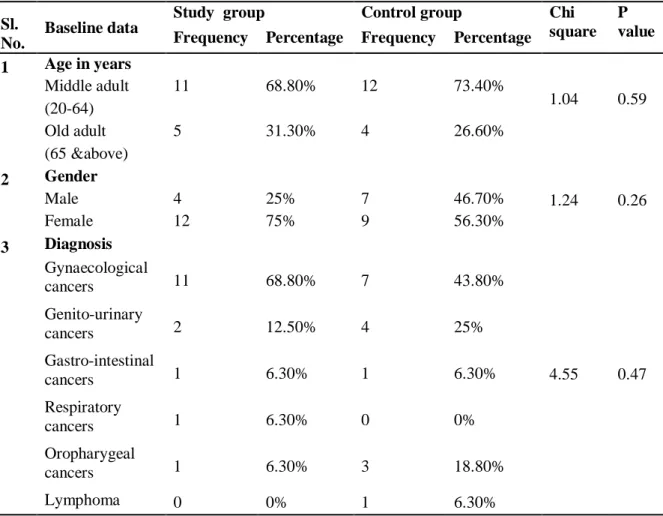
Table 1a shows that in study group 68.8% are middle adults whereas only 73.4% are middle adults in control group. In gender, 75% of the patients are females in the Study group and 56.3% are females in the control group. 68.8% in study group & 43.8% in control group are having gynecological cancers.
International Journal of Research in Medical and Basic Sciences Volume 4 Issue 11, November 2018 ISSN: 2455-2569 Impact Factor: 4.457
Journal Homepage: http://mbsresearch.com, Email: [email protected]
Double-Blind Peer Reviewed Refereed Open Access International Journal
5
International Journal of Research in Medical and Basic Sciences :http://mbsresearch.com, Email: [email protected] Section 1Description of baseline variables of patient in both study and control group.
Table 1b: Frequency and percentage distribution of baseline variables of study and control group.
n=32 Sl.
No.
Baseline data
Study group Control group
Chi square
P value Frequency Percentage Frequency Percentage
1 Site of radiation therapy
Head & neck 1 6.30% 3 18.80%
2.69 0.61
Neck 1 6.30% 1 6.30%
Pelvis 8 50.00% 5 31.30%
Thorax 6 37.50% 6 37.50%
Abdomen 0 0% 1 6.30%
2 Course of radiation therapy
0 1
3rd week 15 93.80% 15 93.80%
4th week 1 6.30% 1 6.30%
5th week
3 Education
4.84 0.43
Post graduate 0 0% 2 12.50%
Graduate 2 12.50% 3 18.80%
High school 5 31.30% 4 25%
Middle school
2 12.50% 3 18.80%
Primary 1 6.30% 2 12.50%
Illiterate 6 37.50% 2 12.50%
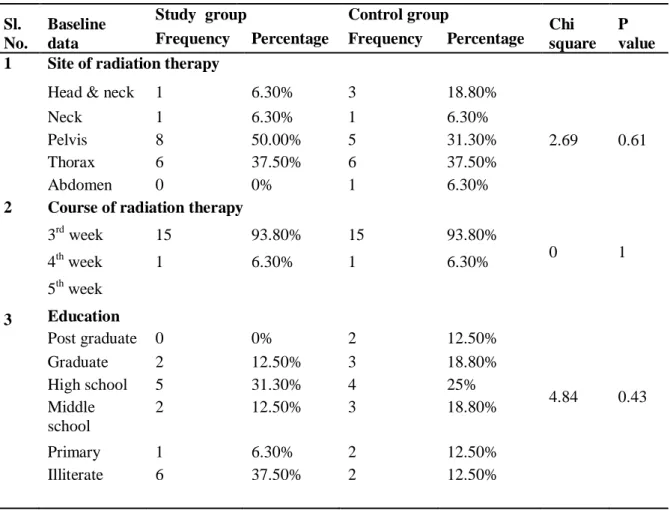
Table 1b, shows that in the study group majority of them are receiving radiation therapy on the thoracic but in control group 37.5% ,31.5%,18.8% are receiving on thorax ,pelvis and head and neck respectively . 93.8% of patients are in the 3rd week of radiation therapy both in study group and control group only 6.3% are in the 4th week in both groups. In education in study group 37.5% are illiterates whereas 12.5% in control group are illiterate.
International Journal of Research in Medical and Basic Sciences Volume 4 Issue 11, November 2018 ISSN: 2455-2569 Impact Factor: 4.457
Journal Homepage: http://mbsresearch.com, Email: [email protected]
Double-Blind Peer Reviewed Refereed Open Access International Journal
6
International Journal of Research in Medical and Basic Sciences :http://mbsresearch.com, Email: [email protected] Section 1Description of baseline variables of patient in both study and control group.
Table 1c: Frequency and percentage distribution of baseline variables of study and control group.
n=32 Sl.
No. Baseline data
Study group Control group
Chi square
P value Frequency Percentage Frequency Percentage
1 Occupation
Profession 0 0% 3 18.80%
9.34 0.05 Semi-
profession
0 0% 0 25%
Clerical/ shopkeeper/
Farmer 2 12.50% 4 25%
Skilled 12 75% 5 31.30%
Unemployed 2 12.50% 4 25%
2 Income
2.21 0.82
>32150 0 0% 1 6.30%
16020-32149 2 12.50% 1 6.30%
8010-12010 3 18.80% 4 25%
4810-8009 2 12.50% 1 6.30%
1509-4809 2 12.50% 1 6.30%
<1600 7 43.80% 8 50%
3 Any information received on symptom management
Yes 0 0% 0%
No 16 100% 16 100% - -
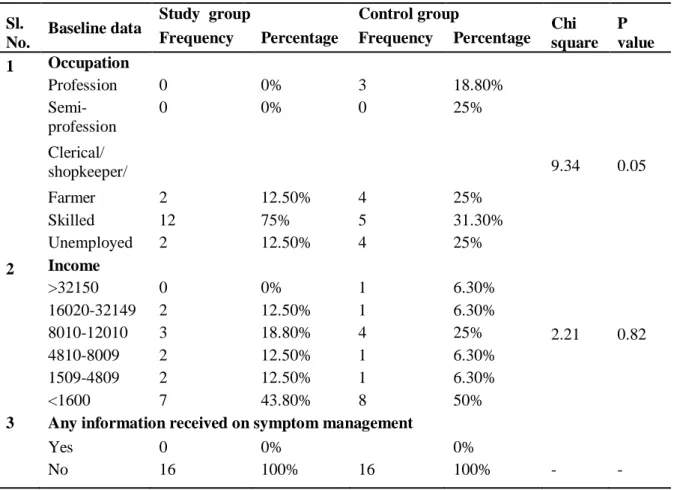
Table 1c shows that in occupation 75% is skilled people but in the control group 31.3% is skilled. In study group 43.8% have an income of less thanRs1600 and in control group it is 50%.Both the groups didn’t receive any information regarding radiation therapy. Test of homogeneity is also done which showed that both groups are comparable.
International Journal of Research in Medical and Basic Sciences Volume 4 Issue 11, November 2018 ISSN: 2455-2569 Impact Factor: 4.457
Journal Homepage: http://mbsresearch.com, Email: [email protected]
Double-Blind Peer Reviewed Refereed Open Access International Journal
7
International Journal of Research in Medical and Basic Sciences :http://mbsresearch.com, Email: [email protected] Section 2Comparison of knowledge of symptom management between study group and control group
Table no 2: Range, Mean, Standard Deviation and Independent t test to compare Knowledge between study and control group.
n=32
Group Max score Range Mean S.D Independent t test P value
Study group 20 12-19 16.56 1.96
-10.57 <0.001 Control group 20 4-14 7.81 2.66
Table 2, shows that the mean knowledge score was 16.56 ±1.96 in study group compared to the control group which is 7.81±2.66 which was statistically significant at 0.001 Level (Independent t` test = -10.57). Therefore Hypothesis H1 is accepted.
Section 3
Comparison of practice of symptom management between study group and control group. It showed that the mean practice scores of study group were 28.5±2.96 compared to the control group which was 27.13±3.86, but it did not show any statistical significance. Therefore, the hypothesis H2 is rejected.
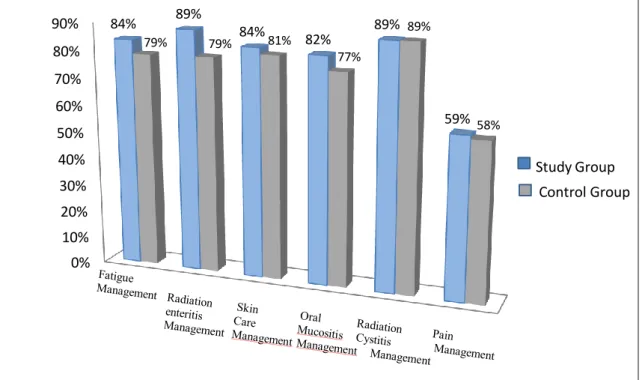
Fig.3. Area wise practice in study and control group
0%10% 20% 30% 40% 50% 60% 70% 80%
90% 84% 89% 84%
82% 89%
59%
79% 79% 81%
77%
89%
58%
Study Group Control Group
International Journal of Research in Medical and Basic Sciences Volume 4 Issue 11, November 2018 ISSN: 2455-2569 Impact Factor: 4.457
Journal Homepage: http://mbsresearch.com, Email: [email protected]
Double-Blind Peer Reviewed Refereed Open Access International Journal
8
International Journal of Research in Medical and Basic Sciences :http://mbsresearch.com, Email: [email protected]Fig. 3: It depicts that with regard to practice, the management of fatigue in study group is 84% and control group it is 79%.With regard to management of gastric problems the practice in study group is 89% and control group is 79%. The practice of skin care management in study group is 84% and control group is 81%.With regard to practice of oral mucositis management the practice score in study group is 82% and control group is 77%. The practice of radiation cyctitis management in study and control group is similar, 89%. With regard to practice of pain management in study group it is 59% and in control group it is 58%.
Section 4
Correlation between knowledge & practice of symptom management in study and control group.
It
showed that although there is a positive correlation found between knowledge and practice of study group, it is not statistically significant(p=0.18). Therefore Hypothesis H3 is rejected.Section- 5
Association of knowledge and practice with the selected baseline variables was not significant except for income (p<0.05). Therefore hypothesis is rejected.
DISCUSSION:
In the present study, it was seen that the mean knowledge score of study group was 16.56±1.9 which was significantly high as compared to control group 7.81±2.6. These findings were similar to another study done in which the results revealed that they lacked knowledge of vital issues related to breast cancer and that practice of Breast Self-Examination was inadequate.3
In the present study, the knowledge regarding fatigue management was 84% as compared to control group with 41%. This may be due to the fact that fatigue being the most commonest symptom experienced by the patients, and protocol would have helped them in improving their knowledge. There was a major difference in the knowledge score of skin care management in the study group 91% and control group 39% as these patients did not have much knowledge about skincare management. With regard to gastric problems the study group 74% and control group 34% this is because most of the patients didn’t know about the diet that should be taken during radiation therapy. In oral mucositis management also study group had 79% but only 46% in control group. With regard to radiation cystitis
International Journal of Research in Medical and Basic Sciences Volume 4 Issue 11, November 2018 ISSN: 2455-2569 Impact Factor: 4.457
Journal Homepage: http://mbsresearch.com, Email: [email protected]
Double-Blind Peer Reviewed Refereed Open Access International Journal
9
International Journal of Research in Medical and Basic Sciences :http://mbsresearch.com, Email: [email protected]the study group scored 100% compared to control group 69%, this may be due to the fact that there were more number of gynaecological & genitourinary cancers in study group & they were benefited by the protocol. In study group 69% compared to control group 6% had higher knowledge regarding pain. This may be due to the fact that protocol had information on pain management.
In the present study, the mean practice score of study group was 28.5±2.9 when compared to control group 27.13±3.8 as the patients were doing some home remedies for the symptoms and managing it, so there was no much difference. They may also have been seeking advices from others to manage symptoms, thus practice was good compared to knowledge.
CONCLUSION:
The study has revealed the existing knowledge & practice and also proved the effectiveness of care protocol on symptom management. Thus the investigator believes protocols for symptom management as per recent guidelines would be an effective tool for managing the symptoms related to radiation therapy.
RECOMMENDATIONS:
A comparative study can be done to assess outcomes between different types of cancers.
A study can be done to assess practice using observational checklist. A comparative study can be undertaken with different methods of teaching.
International Journal of Research in Medical and Basic Sciences Volume 4 Issue 11, November 2018 ISSN: 2455-2569 Impact Factor: 4.457
Journal Homepage: http://mbsresearch.com, Email: [email protected]
Double-Blind Peer Reviewed Refereed Open Access International Journal
10
International Journal of Research in Medical and Basic Sciences :http://mbsresearch.com, Email: [email protected] REFERENCE:1. Jemal.A, Bray.F, Ferlay.J, Forman .D.Global Cancer Statistics.A cancer journal of
clinicians. 2012 April;61(2):69- 90.Available at http://globocan .iarc. fr/
pages/fact_ sheets_cancer.aspx accessed on 23-03-2015
2. Bushan k, daily excelsior cancer scenario in India. Available at http://www. daily excelsior.com/cancer- scenario-india/, assessed on 17-03-2016.
3. Barton B.M, Frommer.M, Shafiq.J, The Lanset Oncology Journal, health care research.2006 Jul ;vol 7 :585-595