237
DIVERSITY, DISTRIBUTION AND ECOLOGY OF THE DACIAN BEECH
FORESTS IN THE ŞUŞARA VALLEY- PART OF THE NERA GORGES
BEUŞNIŢA NATIONAL PARK
MARIANA NICULESCU1, IULIAN BERCEA1, ALMA LIOARA NICOLIN2, ŞTEFAN STĂNESCU3
, ILIESILVESTRU NUŢĂ4, LAURENŢIU NICULESCU1
,OVIDIU NEAG5
1University of Craiova,Faculty of Agriculture and Horticulture, Departament of Botany, 19 Libertatii
Street,200583, Craiova, Romania, [email protected] 2Banat’s University of Agricultural Sciences and Veterinary Medicine, Timişoara, Departament of
Botany, E-mail: [email protected] 3Forestry Direction Reşiţa
4Segarcea Forest Manager΄s Office, [email protected]
5 Bozovici Forest Manager΄s Office
Key words: Şuşara Valley, dacian beech forests, diversity, distribution, ecology
ABSTRACT
The examined area, process which started in 2011, is situated along the course of Şuşara, a tributary of the Nera river and is an integral part of the Nera Gorges-Beuşniţa National Park. The wooden vegetation is represented by forests, underwoods and riverside coppices, the forests occupy the largest area. In the Şuşara basin, important areas are occupied by the beech forests belonging to the Phyllitidi – Fagetum Soó 1964 plant community. A new infra-coenotaxon was described: Phyllitidi – Fagetum Soó 1964 rusconetosum hypoglossae nova subass.
Several types of analysis concerning the ecological features, the local distribution, the homogeneity (by using the Bray-Curtis dissimilarity index), the floristic composition and the economic importance were performed for this plant community.
INTRODUCTION
The examined area, process which started in 2011, is situated along the course of Şuşara, a tributary of the Nera river and is an integral part of Nera Gorges-Beuşniţa National Park. The general aspect of vegetation in the Şuşara Valley represents an image of the very different stationary conditions, to which one can add the influence of the anthropo-zoogenous factors. Herbous vegetation is represented by the meadow vegetation, aquatic and paludous vegetation, ruderal vegetation and saxicole vegetation. The wooden vegetation is represented by forests, underwoods and riverside coppices, the forests occupy the largest area. In this paper, we present one plant community, belonging to Querco-Fagetea class.
MATERIALS AND METHODS
238
distinguished according to the characteristic, edifying, dominant and differential species. For the classification of the plant associations, we have used the synthesis papers on the Romanian or European vegetation, elaborated by G. Coldea (1986, 1991), D. Ivan – coordinator (1992), L. Mucina, G. Grabher & T. Ellmauer (1993), J.S. Rodwell, J.H.J. Schaminée, L. Mucina, S. Pignatti, J. Dring, D. Moss (2002).
The woody plant communities have been analyzed and characterized from the chorological, ecological point of views. They were also examined according to their floristic composition and physiognomy, syndynamics and economics.
RESULTS AND DISCUSSION
In the Şuşara Valley, important areas are occupied by the beech forests belonging to the Ass. Phyllitidi – Fagetum Soó 1964 plant community.
Ass. Phyllitidi-FagetumVida (1959) 1963 (Syn: Phyllitidi-Aceretum, Acereto-Fagetum auct. roman.)
(Table no. 1)
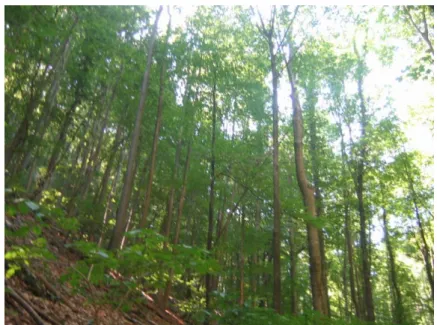
In the Şuşara Valley the phytocoenoses of this plant communitz are situated on the valleys with moderate or high hydric regime, preferring slopes whose inclination is between 100-400. The plant community dominated by Fagus sylvatica şi Phyllitis scolopendrium (fig. 1, 2) develop on the limestone bedrock with rendzine type soils, rich in skeleton, with humus type mull.
In the phytocoenotic composition in the relevees analized on the Şuşara Valley Fagus sylvatica is domonant, Acer pseudoplatanus is rarely. Are generally young forests
and provide a canopy cover between 65-85%. The level of the bushes is poorly developed.
Typical taxa of the Symphyto-Fagion, Moehringio muscosae-Acerenion and
Fagetalia.occur in this plant community, such: Stellaria nemorum, Asperula taurina, A. odorata, Pulmonaria rubra, Lunaria rediviva, Sanicula europaea, Luzula luyuloides, Dryopterix filix-mas, Rubus hirtus, Euonymus europaea, Asarum europaeum.The remaining coenotaxa are poorly represented.
The phytocoenosis analized on the Şuşara Valley, part of the Nera Gorges-Beuşniţa National Park is characterized by the presence of a number of species characteristic of the class Quercetea pubescenti-petraeae.
In some phytocoenoses Ruscus hypoglossum was dominant and these phytocoenoses were assigned to a new infra-coenotaxon - rusconetosum hypoglossae nova subass. (fig. 3).
In addition to the typical plant community, in 7 of the 12 relevés analized, abundance dominance of Ruscus hypoglossum is very high, which is why we considered this pthycoenoses a nova subass. rusconetosum hypoglossae
Holotypus hoc loco: table no. 1 rel. 11.
Ruscus hypoglossum has a good development in these phytocenoses, due to the favourable ecologic conditions: calcareous substrate, soil and trophicity higher temperature. Beside the mentioned species, in the same ecologic conditions several species occur: Oryzopsis virescens and Ruscus aculeatus.
To these are added and the fact that unlike the southern part of the country (the counties Dolj and Gorj) where the species was collected by peasants used as a species in flower arrangements and sold in markets, here we see that it has a much better protection, which allows a better development.
239
High degree of the human impact, here were made in deforestation about 40 years ago.
This plant community is part of the 91V0 habitat - Dacian Beech forests (Symphyto-Fagion); CLAS. PAL.: 41.1D2; HdR R4101, R4103, R4104, R4108, R4109, R4116
Fig. 1. Ass. Phyllitidi – Fagetum Soó 1964 on the Ungureanu Valley
Fig. 2. Phyllitis scolopendrium (L.) Newman in the Phyllitidi – Fagetum Soó 1964
240
Fig. 3. Ruscus hypoglossum L. in the Phyllitidi – Fagetum Soó 1964 plant community
on theUngureanu Valley
Ass. Phyllitidi – FagetumSoó 1964
Table no. 1
No. of relevée 1 2 3 4 5 6 7 8 9 10 11 12 K
Altitude m.o.s. (x 10 m) 45 45 48 48 48 52 50 55 55 55 55 55
Exposure E V NV SV V SV NV V V V E NV
Inclination (in grades) 5 30 40 35 20 30 30 30 30 30 20 20
Canopy 0,6 0,6 0,7 0,7 0,7 0,7 0,7 0,7 0,7 0,7 0,8 0,7
Coverage of herbacaeous layer (%) 30 35 30 30 25 35 40 35 35 35 45 50
Sampling surface (m2) 40
0 10 00 10 00 40 0 10 00 10 00 40 0 10 00 40 0 40 0 40 0 40 0
Char. ass. V
Fagus sylvatica var. moesiaca 4 4 4 4 4 4 4 4 4 4 4 4 V
Phyllitis scolopendrium 1 1 + 1-2 1-2 + 1 +-1 1 1 + 1 V
Moehringio – Acerion et Symphyto – Fagion
Acer pseudoplatanus - + + - + + - - - II
Acer platanoides - + + + - + + + + + 1 1 V
Fraxinus excelsior - - - + + + + + +-1 +-1 1 1 IV
Polystichum aculeatum + - + + - + + + + + + + V
Lunaria rediviva + - + + - + + + + + + 1 V
Festuca drymeia - - - + + + + + 1 1 + + IV
Polystichum setiferum + + - + - - + - - - + + III
Stellaria nemorum - + - - + - + - - - + + III
Ruscus hypoglossum + + + + + 1-2 2 2 1-2 2 2-3 2-3 V
Asperula taurina + + - + + + - - + - + + IV
Fagetalia
Galeobdolon luteum - - + - - + - - - I
Veronica urticifolia - - + - - + - - - I
Mycelis muralis - - + - - + + - - - + + III
Pulmonaria rubra + + - + + + + + + + + + V
Dentaria bulbifera + + - + + - - - + + - - III
Lapsana communis - + - - + - + - - - + + III
Luzula luzuloides + - + - - - - + + + - - III
Hedera helix + + + + +-1 +-1 + + 1 1 +-1 + V
Tilia platiphyllos + + - - - + + + - - III
Tilia platiphyllos reg. - - - + + + - - II
Asarum europaeum + - + - + + + + + + + + V
Asperula odorata + + - + - + + - - + - - III
Sanicula europaea - + + + - - - II
Ranunulus auricomus + + - + - - - + - - II
Mercurialis perennis + + + - + + - - + - - - III
Querco – Fagetea
Dryopteris filix-mas - - + - - + - - - + + + III
Brachypodium silvaticum + + + + + + + + + + + + V
Galium schultesii - - + + + - + - - + - + III
Euonymus europaea + - + + - + - - - - + + III
241
Geranium robertianum + + + + + + + + + + - - V
Carpinus betulus + + - - + - - - + - II
Clematis vitalba + + - + - - - II
Coryllus avellana - - + - - + + + - - - - II
Sorbus torminalis - + + - + - - - + + - - III
Geum urbanum + + + - - + - - - II
Quercetea pubescenti-petraea
Carpinus orientalis - + + + - - - + + - + - III
Tilia tomentosa + - - + + - - - - + + + III
Cynancum vincetoxicum + + + - - - + + - - - - III
Euonymus verrucosus + + - - + - + + - - + - III
Fraxinus ornus + + + - + - - - II
Scutellaria altissima - - + + + - - + + - - - III
Ruscus aculeatus + - + + - + - - + + + + IV
Oryzopsis virescens + - + + - + - + + + - - III
Silene nutans - + - + - - - - + - - - II
Variae Syntaxa
Rubus hirtus 1 1 + + + + + + + 1 2 2 V
Glechoma hederacea + + + - - + - - - II
Sambucus nigra + + - + + - - - + + III
Oxalis acetosella + + - + - - - II
Sedum maximun + - + - - - I
Ceterach officinarum - - - + + - - - I
Place and data of the relevés:1, 2, 3, 4 – Şuşarei Valley; 5, 6, 7, 8, 9, 10–Ungureanu Valley, 19.VII.2012
CONCLUSIONS
The examined area, process which started in 2011, is situated along the course of Lăpuşnic, a tributary of the Nera river and is an integral part of the Nera Gorges-Beuşniţa National Park. The general aspect of vegetation in the Şuşara Valley represents an image of the very different stationary conditions, to which one can add the influence of the anthropo-zoogenous factors. Herbous vegetation is represented by the meadow vegetation, aquatic and paludous vegetation, ruderal vegetation and saxicole vegetation. The wooden vegetation is represented by forests, underwoods and riverside coppices, the forests occupy the largest area. In this paper, we present one plant community, belonging to Querco-Fagetea class. In the Şuşara basin, important areas are occupied by the beech forests belonging to the Phyllitidi – Fagetum Soó 1964 plant community. A new infra-coenotaxon was described: Phyllitidi – Fagetum Soó 1964 rusconetosum hypoglossae nova subass. Ruscus hypoglossum has a good development in these phytocenoses, due to the favourable ecologic conditions: calcareous substrate, soil and trophicity higher temperature.This plant community is part of the 91V0 habitat - Dacian Beech forests (Symphyto-Fagion); CLAS. PAL.: 41.1D2; HdR R4101, R4103, R4104, R4108, R4109, R4116
ACKNOWLEDGEMENT
This work has benefited by the financial support from the European Regional Development Fund (ERDF) under the Operational ProgrammeEnvironment (Priority Axis 4) by the project “Developing managementplan of Nera GorgesBeuşniţa National Park (R OSCI0031 and ROSPA0020 NeraGorges-Beuşniţa)” - Manager Lecturer dr. Alma NICOLIN.
BIBLIOGRAPHY
1.Borhidi, A. - 1995, Social Behaviour types, the naturalness and relative ecological indicator values of the higher plants in the Hungarian Flora, Acta Botanica Hungarica, 39(1-2): Budapest, 81-97 pp.
242
3. Coldea G.- 1991, Prodrome des associations végétales des Carpates du sud-ouest (Carpates Roumaines), Documents phytosociologiques N.S., Camerino, Vol. 13, pp. 317-539
4. Mucina, L. – 1997, Conspectus of Classes of European vegetation, Folia Geobot.Phytotax., Praha, 32: 117-172.
5.Niculescu, M. - 2006, Flora and vegetation in the upper basin of the Luncavat River, Ph.D. thesis, "Babes-Bolyai" University of Cluj-Napoca,.347 pp.
6. Rodwell J.S., Schaminée J.H.J., Mucina L., Pignatti S., Dring J., Moss D.- 2002, The Diversity of European Vegetation, Raport EC-LNV nr. 2002/054, Wangeningen
7. Sanda, V., Popescu, A., Barabaş, N. – 1997, Cenotaxonomia şi caracterizarea grupărilor vegetale din România, St. Com., Muz. Şt. Nat. Bacău, 14: 5-366.
8. XXX – 2007, European Commission Interpretation Manual of European Union Habitats - EUR27, DG Environment - Nature and Biodiversity.