IMPROVING PHYSICIAN ENGAGEMENT IN INTERPROFESSIONAL COLLABORATIVE PRACTICE
IN RURAL EMERGENCY DEPARTMENTS
Kelly Might Wilson
A DNP project submitted to the faculty at the University of North Carolina at Chapel Hill in partial fulfillment of the requirements for the degree of Doctor of Nursing Practice in
Healthcare Systems – Outcomes Management in the School of Nursing.
Chapel Hill 2017
ABSTRACT
Kelly Might Wilson: Improving Physician Engagement in Interprofessional Collaborative Practice in Rural Emergency Departments
(Under the direction of Jennifer Leeman)
Introduction. Poor communication and collaboration among healthcare professionals negatively impact patient outcomes and quality of care. Due to the nature of the care
environment, emergency departments (EDs) are particularly susceptible to this problem. Developing interprofessional collaborative practice (IPCP) is critical to managing complexity and improving ED care. One factor limiting efforts to create IPCP is the low level of physician engagement. The purpose of this project was to explore strategies implemented by rural EDs to promote physician participation in IPCP.
Methods. The setting for this work was a HRSA-sponsored project, Shaping Systems, which involved a quality improvement collaborative designed to promote nursing’s capacity to develop IPCP in the ED setting of four rural North Carolina hospitals. Qualitative data were collected through participation in collaborative meetings, site visits, and structured interviews with participating site team members. Data were reviewed using content analysis, coded, and analyzed across cases to identify a list of strategies and report contextual factors related to improving physician engagement.
served as barriers or facilitators of these strategies were also reported. The result is a toolkit that includes strategies as well as the contextual factors that influence their applicability and success.
ACKNOWLEDGEMENTS
I would like to thank my family for all the support they have given me throughout this project. My husband and children have provided me with both time and encouragement to work on this project. My parents have also given me the support I needed to successfully accomplish my goals. I am grateful to Dr. Jennifer Leeman, the chair of my DNP project committee, for her valuable guidance throughout this project. She made both herself and her expertise available to me whenever needed. I appreciate the time and support from her and my committee members, Dr. Donna Havens and Dr. Barry Saunders. I also want to thank Dr. Havens for allowing me to work with her project as well as all the members of the Shaping Systems team from UNC. And finally, I am grateful to the Shaping Systems site team members for welcoming me into their quality improvement collaborative and their hospitals. I appreciate their willingness to share all the tremendous work they are doing to improve the care they provide in their EDs.
Source of funding
TABLE OF CONTENTS
LIST OF TABLES ... ix
LIST OF FIGURES ... x
LIST OF ABBREVIATIONS ... xi
CHAPTER 1: BACKGROUND AND SIGNIFICANCE... 1
Problem Statement ... 2
Physicians do not engage in efforts to improve communication and collaboration in EDs ... 2
Purpose ... 3
Practice Question ... 3
CHAPTER 2: REVIEW OF THE LITERATURE ... 4
Communication and Collaboration in EDs ... 4
Consequences of Poor Communication and Collaboration ... 4
Impact of the ED Environment ... 6
Additional Barriers to Interprofessional Communication and Collaboration ... 7
Interprofessional Collaborative Practice (IPCP) ... 8
Who Should Be Involved ... 9
Physician Engagement ... 10
Professional Factors ... 10
Additional Factors ... 12
Strategies for Improving Physician Engagement ... 13
CHAPTER 3: CONCEPTUAL AND THEORETICAL FRAMEWORK... 19
Relational Coordination ... 19
Relational Coordination as a Mutually Reinforcing Cycle of Relationships and Communication ... 21
Relational Coordination and ED Physicians ... 22
Relational Coordination and IPCP ... 22
Conclusion ... 24
CHAPTER 4: METHODOLOGY ... 25
Project Design ... 25
Participants ... 25
Settings ... 26
Shaping Systems Grant Project ... 26
Chatham Hospital ... 27
Pardee Hospital ... 27
Southeastern Medical Center ... 27
Transylvania Regional Hospital ... 28
Data Collection ... 28
Observations ... 28
Interviews ... 29
Interview Guide ... 30
Contextual Data ... 30
Data Analysis ... 31
Data Validation ... 31
CHAPTER 5: RESULTS ... 33
Findings on Physician Engagement in Interprofessional Collaborative
Practice Activities ... 38
Contextual Factors Influencing Physician Engagement ... 38
Strategies ... 51
CHAPTER 6: DISCUSSION ... 69
APPENDIX A: TELEPHONE INTERVIEW GUIDE ... 78
APPENDIX B: TOOLKIT FOR IMPROVING PHYSICIAN ENGAGMENT... 80
LIST OF TABLES
Table 1. Participants in the 5 learning collaboratives associated with this project... 34
Table 2. Interview participants ... 36
Table 3. Site visit participants ... 37
Table 4. Projects, initiatives, collaboratives, issues discussed by ED site teams ... 43
Table 5. Examples of meetings used to engage physicians in IPCP ... 52
Table 6. Summary of successful strategies for managing and communicating requests ... 59
Table 7. Approaches to building personal relationships with physicians ... 61
LIST OF FIGURES
LIST OF ABBREVIATIONS
APP Advanced Practice Provider
CDC Centers for Disease Control DNP Doctor of Nursing Practice
ED Emergency Department
EHR Electronic Health Record
FMEA Failure Mode and Effects Analysis
HRSA Health Resources and Services Administration
IOM Institute of Medicine
IPCP Interprofessional Collaborative Practice
RC Relational Coordination
SBAR Situation-Background-Assessment-Recommendation
TeamSTEPPS Team Strategies and Tools to Enhance Performance and Patient Safety UNC University of North Carolina at Chapel Hill
CHAPTER 1: BACKGROUND AND SIGNIFICANCE
Emergency departments (EDs) in the United States treat an increasing number of patients each year (Weiss, Wier, Stocks, & Blanchard, 2014). In 2013, 130.4 million patient visits were made to Emergency Departments (Centers for Disease Control and Prevention [CDC], 2017). ED patients are older, sicker, and require more complex care than in the past (Greenwald et al., 2015; Herring et al., 2013; Pines, Mullens, Cooper, Feng, Roth, 2012), which contributes to problems with the quality and efficiency of ED care (Institute of Medicine [IOM], 2007; Mullins & Pines, 2014). In their 2007 document, Hospital-Based Emergency Care: At the Breaking Point, the Institute of Medicine acknowledged the challenges faced by EDs as well as the need for improved communication and collaboration among healthcare professionals in these settings.
Poor communication and collaboration among healthcare professionals negatively impact patient outcomes and quality of care in EDs (Bagnasco et al., 2013; Flowerdew, Brown, Vincent, & Woloshynowych, 2012; Hitchcock, Gillespie, Crilly, & Chaboyer, 2014; Kilner & Sheppard, 2010; Redfern, Brown, & Vincent, 2009). The often chaotic, busy, and stressful environment of the ED exacerbates communication and collaboration problems (Eisenberg et al., 2005;
Flowerdew, Brown, Russ, Vincent, & Woloshynowych, 2012; Varjoshani, Hosseini, Khankeh, & Ahmadi, 2014). Overcrowding, long wait times, large numbers of patients leaving without being seen, and clinical errors have all been linked to ineffective or insufficient interdisciplinary
Improving interprofessional communication and collaboration is critical to managing complexity and improving care in the ED (IOM, 2007). To address this problem, the Heath Resources and Services Administration (HRSA) is funding projects to improve interprofessional practice, including Dr. Donna Haven’s “Shaping Systems to Promote Desired Outcomes:
Interprofessional Collaborative Practice in Rural North Carolina EDs (Shaping Systems),” an initiative involving four North Carolina EDs. Interprofessional collaborative practice (IPCP) occurs when members of multiple healthcare professions work together with patients, families, and communities to provide high quality patient care (World Health Organization [WHO], 2010). Collaborative practice can impact the “triple aim” outcomes that include improved patient experience, improved population health, and reduced health care costs (Berwick, Nolan, & Whittington, 2008; Lutfiyya, Brandt, Delaney, Pechacek, & Cerra 2015).
Problem Statement
Physicians do not engage in efforts to improve communication and collaboration in EDs
Despite evidence that suggests IPCP positively affects patient outcomes as well as recommendations that EDs adopt IPCP, many healthcare organizations find it difficult to create IPCP environments in their settings (IOM, 2007; Lutfiyya et al., 2015; Zwarenstein, Goldman, & Reeves, 2009). One factor limiting current efforts to improve communication and collaboration is the low level of physician engagement (Barker, Bosco, & Oandasan, 2005; Poochikian-Sarkissian et al., 2008). The rural EDs participating in the HRSA-funded Shaping Systems project have experienced difficulty getting physicians to participate in project activities or local efforts to improve IPCP in their EDs.
Exploring strategies to engage physicians in IPCP is part of the larger need for research on how IPCP is successfully implemented, including context-specific experiences (Lutfiyya et al., 2015). Understanding and addressing the barriers to physician engagement in interprofessional practice will also benefit healthcare organizations as they develop and implement solutions to improve patient care in their EDs.
Purpose
The purpose of this DNP project was to explore strategies that rural EDs implemented to promote physician participation in IPCP. The project built on Dr. Donna Haven’s Shaping Systems project in four rural EDs in North Carolina. Her project involved bringing these organizations together in a learning collaborative to work with and learn from each other while developing IPCP in their settings. Participants from all sites taking part in this quality
improvement collaborative reported difficulty getting physicians to participate in collaborative activities or to engage in local efforts to improve IPCP in their EDs. This DNP project
documented and synthesized challenges, needed resources, and successful strategies used to improve physician participation in local activities that promote IPCP in each of the four sites that participated in the quality improvement collaborative. This information was shared among the sites so that successful strategies could be replicated. The final product is a toolkit that can be used to foster physician engagement in IPCP in these EDs and other rural EDs.
Practice Question
CHAPTER 2: REVIEW OF THE LITERATURE Communication and Collaboration in EDs
The need to improve communication and collaboration among healthcare professionals in the ED has been identified by the Institute of Medicine (2007) as well as other researchers and ED staff members (Cameron et al., 2010; Creswick, Westbrook, & Braithwaite, 2009; Parsons, Cornett, & Burns, 2005). Effective interprofessional communication is necessary for successful collaboration and/or teamwork and both play an important role in patient care in the ED
(Hitchcock et al., 2014; Kilner & Sheppard, 2010; Patterson et al., 2013; Redfern et al., 2009). Researchers have linked failures in communication and/or collaboration to quality and safety issues in this setting (Bagnasco et al., 2013; Cosby et al., 2008; Flowerdew, Brown, Vincent, et al., 2012). Examination of how interprofessional communication and collaboration occurs in EDs illustrates how the ED environment contributes to this problem and reveals additional barriers to making improvements (Eisenberg et al., 2005; Fairbanks, Bisantz, & Sunm, 2007; Flowerdew, Brown, Russ, et al., 2012; Hitchcock et al., 2014; Kilner & Sheppard, 2010; Redfern et al., 2009).
Consequences of Poor Communication and Collaboration
Redfern et al., 2008; Risser et al., 1999). Cosby et al. (2008) identified teamwork as a
contributing factor to 61% of patient care errors while Fordyce et al. (2003) categorized 19% of errors as related to communication or team functioning. In a retrospective study, Risser et al. (1999) found that teamwork failure contributed to clinical error in at least 20% of cases reviewed. A national study of the characteristics of voluntarily reported ED medication errors found that poor communication was one of the leading causes of medication errors in this setting (Pham et al., 2011).
High-risk industries, such as aviation and nuclear energy, have recognized the importance of communication and collaboration in safety. Methods used in healthcare to identify
communication and teamwork safety failures, such as the Failure Mode and Effects Analysis (FMEA), were developed in the aviation industry. A failure mode is a way in which something might fail, potentially causing an error (Redfern et al., 2009). Bagnasco et al. (2013) found that the most dangerous failure modes were related to communication among health professionals, and Redfern et al. (2009) reported that each communication step and event in the ED patient pathway had at least one failure mode. Healthcare organizations have begun to adopt models developed by these industries for improving communication and teamwork, such as Situation-Background-Assessment-Recommendations (a standardized communication tool) and
TeamSTEPPS (a team training model) (Bagnasco et al., 2013; Redfern et al., 2009; Risser et al., 1999).
consequence of and contributor to communication and collaboration problems in the ED (Eisenberg et al., 2005). Although these problems may not cause direct errors in patient care, they can negatively impact patient safety and satisfaction. More research that specifically investigates the impact of poor communication and collaboration on these ED outcomes is needed (Kilner & Sheppard, 2010; Patterson et al., 2013). Promoting teamwork and
communication in the ED may also positively affect staff satisfaction (Kilner & Sheppard, 2010). According to Parsons et al. (2005), interprofessional communication and relationships are
described by staff as necessary for a healthy ED workplace. Additional benefits would include reductions in staff burnout and turnover. Pruitt and Liebelt (2010) note that effective teamwork would not only impact safety, it would also lead to more effective and efficient patient care. Improvements in interprofessional communication and collaboration would impact a number of problems that EDs are currently experiencing.
Impact of the ED Environment
The unique ED environment contributes to suboptimal communication and collaboration among healthcare providers in this setting. The conditions under which healthcare professionals work in the ED make it a high-risk setting (Redfern et al., 2009). Barriers to better
communication in the ED include unpredictable and often high work and communication loads (Cameron et al., 2010). Communication and collaboration are negatively affected by the physical environment in this setting, including lack of dedicated space for private
Thorpe (2002) classified one-third of communication events in an ED as interruptions. Pressure and stress that result from time constraints, overcrowding and need for accuracy have also been found to inhibit effective communication and collaboration in the ED (Rasmussen et al., 2014; Varjoshani et al., 2014). This high-risk ED environment lends itself to using aviation safety research on communication and teamwork, including Crew Resource Management (Molesworth & Estivalb, 2015; Murphy, 2001; Pruitt & Liebelt, 2010). Many factors specific to the ED environment make successful interprofessional communication and collaboration difficult to achieve.
Additional Barriers to Interprofessional Communication and Collaboration
Several barriers to interprofessional communication and collaboration observed in other healthcare settings are also present in the ED. Dynamics related to leadership, personal
relationships, and professional roles impede good communication and collaboration between healthcare professionals. Flowerdew, Brown, Russ, et al. (2012) found that leadership is a key component of team function. Unlike other disciplines, such as the military, from which
healthcare has adopted several teamwork strategies, a more flexible communication structure is sometimes needed (Jacobsson, Hargestam, Hultin, & Brulin, 2012; Klein, Ziegert, Knight, & Xiao, 2006). Personal relationships can also play a role in how professionals work together in an ED setting. Differences in the temperaments of nurses that work in EDs versus other units, misunderstandings and feelings of mistrust, and lack of respect have been cited as factors
affecting communication and collaboration among professionals within and between the ED and other hospital departments (Cameron et al., 2010; Eisenberg et al., 2006; Flowerdew, Brown, Russ, et al., 2012).
Kilner & Sheppard, 2010). The result of these ‘silos’ is often a lack of collaboration with other healthcare team members. Individuals are more closely connected to and communicate most with colleagues in their own professional groups (Creswick et al., 2009; Patterson et al., 2013). Research in business and organizational management has resulted in similar findings in these disciplines and has guided the study of communication relationships in ED settings using social network analysis (Cross & Sproull, 2004; Manev & Stevenson, 2003). Creswick et al. (2009) reported that ED staff believed that improved communication across professional groups would result in fewer medication errors. Hierarchical aspects of functional roles can also lead to intimidation that results in lack of communication (Eisenberg et al., 2005; Flowerdew, Brown, Vincent, et al., 2012; Juarez et al., 2009). According to Risser et al. (1999), lack of cross-monitoring among professionals was a factor in many malpractice incidents in the ED.
Interpersonal relationships and professional roles can be barriers to improving communication and collaboration in the ED.
Interprofessional Collaborative Practice (IPCP)
Who Should Be Involved
Healthcare team structures can differ and include a variety of professions or disciplines (Jacobsson et al., 2012). Organizational factors are often important in coordinating clinical care in the ED and may even require communication and coordination with non-clinical
professionals, such as unit secretaries and security personnel (Reddy & Spence, 2006).
Contextual features of hospitals, such as academic vs. community or rural vs. urban, will affect the composition of an interprofessional healthcare team as well as their needs regarding efforts to improve communication and collaboration (Fairbanks et al., 2007; Reddy & Spence, 2006). Lack of cross-functional communication and collaboration within the hospital system (e.g. between ED and lab department) has also been reported (Cosby, 2003; Flowerdew, Brown, Russ, et al., 2012). Eisenberg et al. (2006) found a lack of “system consciousness” regarding
emergency care. The need for more research related to the understanding of ED staff needs by other hospital units or departments has been noted (Varjoshani et al., 2014). Further research on the importance of using a team or contextual approach when evaluating communication practices in the ED setting is needed (Cameron et al., 2010; Eisenberg et al., 2006; Kilner & Sheppard, 2010).
Improving the IPCP environment in EDs will address many of the barriers to effective communication and collaboration in these settings. Using a contextual approach to
challenging for organizations (Barker et al., 2005; Kreindler, Dowd, Dana Star, & Gottschalk, 2012; Poochikian-Sarkissian et al., 2008).
Physician Engagement
Differences in professional roles have been identified as barriers to effective
communication and collaboration in the ED setting (Eisenberg et al., 2005; Kilner & Sheppard, 2010; Slade, 2015). The traditional role of physicians as autonomous professionals contributes to their lack of participation in collaborative practice as well as organizational initiatives aimed at improving the delivery of healthcare services (Baathe & Norback, 2013; Lindgren et al., 2012; Poochikian-Sarkissian et al., 2008). Human behavior is influenced by a person’s level of
association or affiliation with their profession and the organization in which they work (Fitzgerald & Teal, 2004). Strategies for engaging physicians in organizational improvement need to address physicians not only as individuals, but also as members of a profession with given attributes (Kreindler et al., 2014; Stevens, 2013). The literature has identified issues related to physicians’ professional identity as well as other obstacles to successful physician engagement (Kaissi, 2014). Barriers to physician engagement in hospital or organizational activities, such as quality or process improvement initiatives, are similar to challenges related to physician participation in collaborative practice and teamwork. Strategies for improving
physician engagement in organizational initiatives can inform potential approaches to increase physician participation in collaborative practice.
Professional Factors
Whitehead, 2007). The result has been a tradition of physician-centered practice that values independence over teamwork (Taitz, Lee, & Sequist, 2012). Characteristics of physician culture include independence and autonomy as well as their perception that they are “captains of the ship” and “teamwork is fine, but they are in charge” (Byrnes, 2015, p. 40). Unequal power and status among different healthcare professions have traditionally led to a strict hierarchical
structure with physicians at the top (Poochikian-Sarkissian et al., 2008; Whitehead, 2007). Issues related to these power differences, such as conflict and intimidation, negatively impact interprofessional collaboration and communication (Herbert et al., 2007; Manojlovich, 2010; Tang, Chan, Zhou, & Liaw, 2013). Power and status differences must be recognized to improve physician engagement in collaborative practice or teamwork (Herbert et al., 2007; Kreindler et al., 2012; Meleis, 2016; Whitehead, 2007).
The autonomous physician role has been associated with less engagement in healthcare development (Lindgren et al., 2013). Healthcare professionals have expressed a preference for a less rigid hierarchy (Herbert et al., 2007); however, efforts to restructure healthcare systems are often seen as a threat to physicians that reduces power and autonomy over their clinical practice (Kaissi, 2014). Changes in the healthcare system that call for more focus on effectiveness and efficiency in patient care management and reimbursement tied to value have contributed to physicians’ feelings of loss of control and autonomy (Rosenstein, 2015). Many physicians “just want to practice medicine” and are less interested in changes that lead to more integrated roles and responsibilities as well as frustrated by accountability for new performance and care
engagement and commitment to organizational efforts to improve collaborative care (Rosenstein, 2015; Shanafelt & Noseworthy, 2017; Swenson, Kabcenell, & Shanafelt, 2016). However, physicians are essential members of the care team needed to improve healthcare patient service delivery and improved quality of care (Skillman et al., 2017).
Additional Factors
Challenges related to engaging physicians in interprofessional collaborative practice include employment status, training, time, and attitudes toward collaboration. Physicians who are employed by a hospital feel more connected to the organization and collaborate more with other hospital staff as compared to those who are not (Fitzgerald & Teal, 2003). Hospital-physician alignment structures often do not promote Hospital-physician engagement in quality
improvement initiatives and many physicians do not recognize their responsibility for hospital quality (Suelflow, 2016). Physician participation in improvement processes has been linked to workplace continuity (Lindgren et al., 2013). Physician relationships to the organization were found to affect physician engagement in new health care innovation models (Skillman et al., 2017). Physicians that were considered “internal” to the organization were more likely to engage in and play a role in policies and practices aimed at physician engagement than “external”
physicians (Skillman et al., 2017).
Lack of engagement in collaboration and organizational improvement are also influenced by training and education. Most physicians were educated with a focus on technical training and medical competence development rather than skills related to group dynamics or collaboration (Baathe & Norback, 2013; Manojlovich, 2010; Tang et al., 2013). Younger physicians
instruction in business and personal development skills. Similarly, physicians’ prior experiences have been found to affect their engagement in new health care innovation programs (Skillman et al., 2017).
Time has been identified as a challenge to working in a collaborative model (Herbert et al., 2007; Poochikian-Sarkissian et al., 2008) as well as to physician engagement in
organizational quality and safety efforts (Taitz et al., 2012). Lack of time has been linked to work environment and competing patient care responsibilities (Lindgren et al., 2013). Physician concerns over time and effort required were also noted as barriers to physician engagement in new health care delivery innovation programs (Skillman et al., 2017).
Physicians’ perceptions of communication and collaborative work differ from those of nurses (Manojlovich, 2010). Nurses express more of a desire to work collaboratively than physicians (Tang et al., 2013). Collaborative relationships are also a more important component of job satisfaction for nurses than for physicians (Hojat et al., 2001). When asked what is important to feeling engaged, physicians ranked good relationships with other physicians higher than good relationships with non-physician clinical staff (Whitlock & Stark, 2014).
Strategies for Improving Physician Engagement
The development of organizational structures and work practices can be successful in supporting more positive group relations, interprofessional collaboration, and physician
McKinlay, 2015), interprofessional meetings (Minamizono et al., 2013), and scheduling that supports workgroup continuity (Kaissi, 2014; Lindgren et al., 2013). Improving collaboration can involve shared structures while still maintaining separate, distinct professional groups (Kreindler et al., 2012). Similarly, successful strategies identified for removing barriers to physician engagement in hospital quality initiatives or new health care delivery programs include training, outreach, tailored education and regular meetings (Suelflow, 2016). Training
specifically for improving communication and team collaboration skills has also been suggested to help physicians become more engaged in their organizations (Rosenstein, 2015).
Leadership and management play an important role in promoting physician engagement. Support by managers can foster understanding and interdependence between professional
identities (Fitzgerald & Teal, 2003). Leadership support sets the tone, creates a culture of collaboration, and establishes appropriate infrastructure (Liebhaber, Draper, & Cohen, 2009). Management structures should also be collaborative, support team development, and provide feedback (Morgan et al., 2015). A positive physician-organization relationship is important for reducing physician burnout which leads to a loss in engagement (Swenson et al., 2016). This relationship can be developed by using participative management and developing physician leaders (Swenson et al., 2016). Collaborative management requires identifying and developing physician leaders trained to work collaboratively (Duberman, Hemker, & Soloman, 2015; Kaissi, 2014). Allowing physician leaders to lead quality initiatives was identified as a successful strategy for engaging physicians (Suelflow, 2016).
can guide the process and encourage participation (Whitlock & Stark, 2014, p.11). Physician champions should be informed of the project first and consulted about who and how to engage other physicians (Sears, 2011). Physician champions should be highly respected in their area and possess personality traits such as a willingness to change practices as well as the ability to
influence others (Liebhaber et al., 2009). For implementing new health care delivery
innovations, these physicians are used to educate and encourage buy-in from other physicians (Skillman et al., 2017). Organizations should work informally with and through these
individuals to encourage physician engagement (Guthrie, 2005).
Clear and efficient communication with physicians has been suggested as a strategy for enhancing physician engagement in organizational activities (Kaissi, 2014; Suelflow, 2016). Communication can be used to ensure physicians can find opportunities to engage (Kaissi, 2014) and reduce the effort needed to participate (Suelflow, 2016). Clear communication and effective messaging can also convey the importance of improvement projects as well as their potential impact on issues such as patient safety and improved efficiency. One-on-one meetings, emails, newsletters, and posters can be used for communication. (Liebhaber et al., 2009). Open
communication and allowing physicians to voice their thoughts and concerns are also critical factors for successful physician engagement (Rosenstein, 2015; Spaulding, Gamm, & Menser, 2014). Regular communication between physicians and other care team members can be used to adjust to physicians’ needs and preferences (Skillman et al., 2017).
documentation and communication, or hospital employment (Suelflow, 2016). Employing physicians has been associated with improved physician engagement in organizational improvement (Fitzgerald & Teal, 2003; Stevens, 2013). Physician employment by an organization helps with incentives and achieves an alignment in the quality agenda between physicians and hospitals (Liebhaber et al., 2009).
Finding a common purpose can also be done less formally. The desire to improve patient satisfaction and outcomes is an example of a goal that would be mutually rewarding (Guthrie, 2005). Leaders at two different major health systems reported success in engaging physicians in their organizational initiatives by connecting projects to patient related problems (Duberman et al., 2015; Spaulding et al., 2014). One of the key characteristics of physician culture is that patient welfare is their top concern (Byrnes, 2015). This characteristic can be leveraged to encourage physician engagement in efforts geared at improving the quality of patient care (Byrnes, 2015). Physicians will also be more motivated to engage in efforts if they are told how these efforts will reduce their own frustrations, make their lives easier, or improve efficiencies that will allow them to spend more time providing patient care (Rosenstein, 2015). Successful physician engagement was also found to occur when programs explained the benefits of new health delivery innovations, such as workflow efficiencies (Skillman et al., 2017).
can involve public or private reporting and may include comparative data in the form of a scorecard (Suelflow, 2016). Sharing data was noted to be important to physicians participating in new healthcare delivery innovation programs; however, the inability to provide timely results was a challenge to building relationships with some physicians (Skillman et al., 2017).
Intrinsic and extrinsic incentives have been suggested as potential motivations for physicians to engage in organizational improvement processes, including interprofessional collaborative practice. Physicians will often choose to participate in activities that serve as sources of professional fulfillment and learning (Lindgren et al., 2013). According to physicians surveyed about engagement, feeling engaged is very important to their job satisfaction (Stark, 2014). Recognition for their participation in organizational activities can also encourage physician engagement (Baathe & Norback, 2013; Kaissi, 2014). Using public reporting to share only commendable data through public awards or recognition events has been used as a strategy to improve physician engagement (Suelflow, 2016).
Compensation and/or dedicated time for participating in organizational initiatives have also been identified in the literature as helpful for improving engagement (Kaissi, 2014;
Liebhaber et al., 2009; Poochikian-Sarkissian et al., 2008). Lack of payment for work performed was identified as a barrier that could be addressed by providing stipends, salary, or grants
Strategies that involved climate or culture around physician engagement have been reported (Rosenstein, 2015; Skillman et al., 2017; Suelflow, 2016). Efforts to promote
attitudinal and cultural changes toward quality initiatives among physicians and hospitals have been suggested (Suelflow, 2016). Given the increased need for team collaboration in healthcare settings, the idea that organizations should address the “cultural fit” of physicians with regard to goals and expectations has been recommended (Rosenstein, 2015).
Taking physicians’ needs and concerns into account has been raised as an important component to engaging physicians (Skillman et al., 2017; Swenson et al., 2016; Stark, 2014). Listening to physician concerns and balancing their need for some control over their work are recommended for promoting physician engagement (Swenson et al., 2016). Effective strategies for engaging physicians in healthcare innovation programs included addressing physicians’ concerns and adapting to their needs and preferences (Skillman et al., 2017). Hospitals should make efforts to engage in the physician’s agenda (Suelflow, 2016). Stark (2014) suggests that increasing physician engagement should begin by discovering what is important to them.
Conclusion
CHAPTER 3: CONCEPTUAL AND THEORETICAL FRAMEWORK Relational Coordination
High quality communication and collaboration among healthcare professionals can be understood using the theory of relational coordination. This theory explains the relational dynamics that are needed to successfully coordinate work (Gittell, 2011). Relational
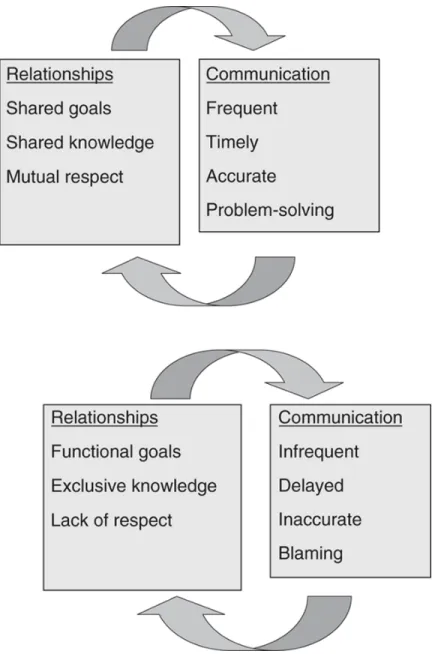
coordination (RC) conceptualizes coordination as a set of relationship and communication ties among participants in a work process (Gittell, 2012). The theory contains both relationship and communication dimensions. Relationship dimensions needed for effective coordination are shared goals, shared knowledge, and mutual respect. These dimensions exist between work roles, not individual people (Gittell, 2011). Communication dimensions of relational coordination include communication that is frequent, timely, accurate, and problem-solving (Gittell, 2012). The relationship dimensions reinforce and are reinforced by these types of communication as illustrated in Figure 1.
RC (Gittell, 2001, 2006, 2012). Relational coordination has been applied to and tested in
healthcare settings (Gittell et al., 2000; Gittell, 2008, 2009; Gittell, Weinburg, Bennett, & Miller, 2008; Hartgerink et al., 2014; Manski-Nankervis et al., 2014).
Figure 1. Relational coordination
Gittell, J.H. (2012)
Relational Coordination as a Mutually Reinforcing Cycle of Relationships and Communication
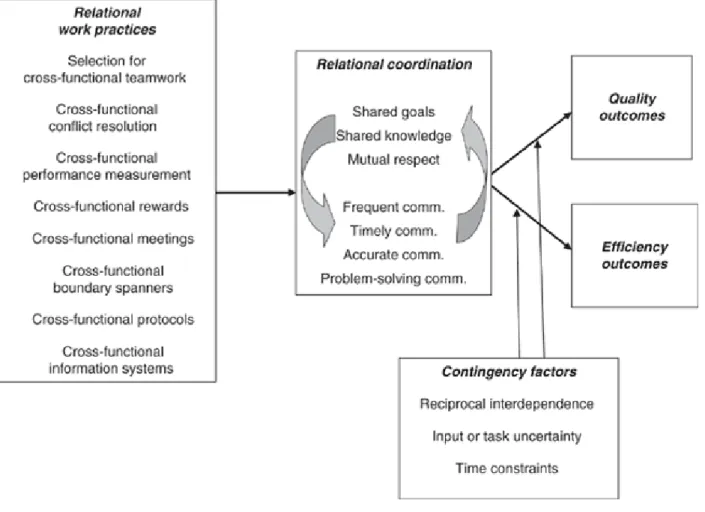
A model of Relational Coordination has been created which describes structures and processes that impact RC as well as how it can affect quality and efficiency outcomes (Gittell, 2012). This model, which is illustrated in Figure 2, allows for the practical application of RC to improve outcomes in healthcare settings.
Figure 2. Relational coordination model
Gittell, J.H. (2012)
Relational Coordination and ED Physicians
Relational Coordination is useful in situations with high levels of task interdependence, task uncertainty, and time constraints – conditions that are frequently found in EDs (Gittell, 2006). Relational coordination has been suggested as a useful model for collaboration specifically with physicians because it “does not require redefining roles and transferring
authority” (Whitehead, 2007, p. 1014). Functional roles and authority have been cited as barriers to physician engagement in interprofessional collaboration (Flowerdew, Brown, Vincent, et al., 2012; Kilner & Sheppard, 2010). Factors that have been identified as necessary for physician engagement in collaborative practice or other organizational initiatives include relationship building and development of shared goals (Kaissi, 2014; Kreindler et al., 2012), shared
knowledge creation (Morgan et al., 2015), understanding and valuing others’ roles or professions (Herbert et al., 2007; Tang et al., 2013; Whitehead, 2007), establishing trust and respect (Herbert et al., 2007; Liebhaber et al., 2009; Tang et al., 2013), and effective communication (Kaissi, 2014; Kreindler et al., 2012; Liebhaber et al., 2009; Lindgren et al., 2013; Morgan et al., 2015; Tang et al., 2013; Whitehead, 2007). These factors all relate to the dimensions of relational coordination.
Relational Coordination and IPCP
components and types of communication necessary to achieve successful coordination. According to the model of RC, effective RC improves both quality and efficiency outcomes. One of the goals of promoting IPCP is to improve these outcomes. Relational Coordination explains how effective collaboration works, including the role of communication; therefore, it can serve as both a guide and a goal for efforts made to improve interprofessional collaboration.
The use of RC to understand and evaluate what is needed to improve IPCP in EDs does have limitations. The relationship dimensions of RC exist between work roles, not individual people (Gittell, 2011). However, researchers have found that conflicts involving different
temperaments and personalities affect communication and teamwork in the ED setting (Cameron et al., 2010; Eisenberg et al., 2006; Flowerdew, Brown, Russ, et al., 2012). The role that
individuals play in achieving effective communication and collaboration is not addressed by RC. The impact of stress on this problem is also not included in this theory. The ED environment is stressful and healthcare professionals’ reactions to stress have been found to influence how they interact in this setting (Rasmussen et al., 2014; Varjoshani et al., 2014). According to the WHO (2010), IPCP also includes working with patients, families, and communities. Relational
conflicts involving physicians. These factors are not addressed by RC but could affect physician engagement in IPCP.
Another potential issue related to the use of RC for this DNP project is the theory’s effect on organizational change. The impact of RC on improving outcomes and the need for formal organizational change to sustain RC have been noted (Gittell, 2012). However, the question of whether or not these changes can be successfully implemented without the prior existence of RC has been raised (Gittell, 2012). For example, can an organization successfully implement a new practice in an environment in which co-workers do not already have some level of mutual respect, shared goals, and shared knowledge? If changes in RC must occur prior to changes in formal work structures, then the evaluation of these structures may not be helpful or even possible if the participating organizations do not exhibit any RC. One of the goals of this DNP project is to recognize barriers and needed resources related to strategies implemented to improve physician engagement in IPCP in these sites.
Conclusion
CHAPTER 4: METHODOLOGY Project Design
This DNP project is an exploratory multi-case study of four rural North Carolina EDs participating in the Shaping Systems quality improvement collaborative project designed to improve interprofessional collaborative practice. Qualitative data were collected through project participation, observation, and scheduled interviews and used to examine and report on physician engagement in interprofessional collaborative practice in these settings. Data collected for the Shaping Systems project was also used to provide additional context related to physicians at each of the participating sites.
Participants
For the Shaping Systems project, partner hospitals formed teams that participated in project activities and learning collaborative meetings. In addition, each hospital designated a site coordinator for the project. The site coordinators from each site were nurse leaders in the EDs, such as ED directors, ED nurse managers, or nurse educators. Each hospital’s project team members and site coordinators were the primary subjects or informantsfor this DNP project.
project were a convenience sample based on availability of team members, hospital staff, and site coordinators at different data collection points.
Settings Shaping Systems Grant Project
The primary setting for this DNP project was the HRSA-sponsored project, “Shaping Systems to Promote Desired Outcomes: Interprofessional Collaborative Practice in Rural North Carolina EDs.” The project’s principal investigator was Dr. Donna Havens at the University of North Carolina at Chapel Hill School of Nursing. This project was designed to implement a four-hospital quality improvement collaborative to promote nursing’s capacity to lead
development of and the competency to practice in IPCP environments in the ED setting. The quality improvement collaborative provided participating hospitals with learning opportunities and resources for practicing and leading in IPCP environments. Hospitals could adapt what they learned and implement strategies they felt worked in their local context.
Activity components of the project included quarterly learning collaborative meetings and site visits. Each hospital sent a team to attend these meetings. Hospital teams were exposed to different resources, skills, and strategies as well as given opportunities to share their
challenges and successful approaches for improving IPCP. Members of the Shaping Systems team made site visits that were scheduled according to need and availability.
Chatham Hospital
Chatham Hospital is a 25-bed, not-for-profit, critical access hospital in Siler City, NC. Critical access hospitals are part of a federal program to improve access to rural health care and reduce rural hospital closures. The emergency department has 10 beds and reported 14,449 ED visits in 2013. This hospital is part of the University of North Carolina (UNC) Health Care system. In the emergency department, UNC Health Care physicians are contracted to work alongside Chatham Hospital nurse practitioners, physician’s assistants, and nursing staff.
Pardee Hospital
Pardee Hospital is a 222-bed, not-for-profit hospital located in Hendersonville, NC. This hospital is also part of the UNC Health Care system. The emergency department has 32 beds and reported 31, 800 ED visits in 2013. In 2015, Pardee announced that the Hendersonville Emergency Consultants Group, who provided physicians and midlevel providers for Pardee’s Emergency Department, became directly employed by Pardee under the name Pardee Emergency Physicians.
Southeastern Medical Center
Southeastern is located in Lumberton, NC and licensed for 452 beds. The hospital is part of the not-for-profit Southeastern Health system which has been designated as a Magnet® organization. The emergency department has 63 beds and reported 74,650 ED visits in 2013. The hospital has contracted with Emergency Medicine Associates, P.A., P.C. to provide
Transylvania Regional Hospital
Transylvania is a 52-bed, not-for-profit, critical access hospital in Brevard, NC. This hospital is part of the Mission Health system. The emergency department has 10 beds and reported 14,077 ED visits in 2013. In the past, the hospital has contracted with a private company to provide physicians for their emergency department; however, their ED physicians are now employees of the Mission Health system.
Data Collection
Data for this DNP project were obtained by the investigator, a DNP student in the School of Nursing at the University of North Carolina at Chapel Hill during the second and third years of the three-year Shaping Systems project. The investigator collected observational data at regularly scheduled collaborative learning sessions as well as other events, such as site visits, coordinated by Shaping Systems project team members. She collected interview data as part of data collection phone interviews conducted for the larger project. Institutional Review Board (IRB) approval was obtained for the Shaping Systems project from UNC-Chapel Hill and each participating hospital and renewed annually. Additional IRB approval for this DNP project was also obtained.
Observations
“Shaping Systems” team members according to project and site needs and one site visit that she arranged with one of the sites’ ED director. The data collection for these events included note-taking when discussions were related to physician participation in either the Shaping Systems project or any hospital-related practices involving interprofessional collaboration. Observation notes were typed up using Microsoft Word and stored on a password-protected computer.
Interviews
Data were also gathered during planned telephone interviews that a Shaping Systems team member conducted annually with the site coordinator at each hospital. Interviews focused on project-related changes that had been made at the sites as well as barriers encountered. The DNP student investigator participated in interviews conducted at the end of Shaping Systems years one and two. Interview responses from both years were used to gather qualitative data for this DNP project. As part of the interviews conducted at the end of year two, the DNP student investigator asked additional open-ended questions related specifically to physician engagement.
Participants requested a copy of interview questions prior to the scheduled telephone interview. Participants acknowledged needing more time to think about the questions and consult with others if needed to find answers. This request was granted and a copy of the interview guide for this DNP project was given to participants prior to the interviews. This strategy was appropriate as participants were describing what they were doing in their settings and it enabled participants to provide more complete information. Conducting the open-ended telephone interviews allowed for follow-up questions and clarification as needed.
Interview Guide
The telephone interview conducted at the end of the second year of the Shaping Systems project included questions related specifically to physician engagement. These questions were developed by the DNP student investigator. The interview guide for these questions can be found in Appendix A. Questions focused on facilitators, barriers, needed resources, and successful strategies related to improving physician engagement in both the Shaping Systems project and interprofessional collaboration efforts at the participating sites. These questions were added to ensure that data on physician engagement were collected from each site regardless of whether it was discussed elsewhere during the interview.
Contextual Data
Information about the hospital sites size and number of ED visits was obtained from the Shaping Systems project team. Additional contextual data were collected by the DNP student investigator during participation in the Shaping Systems learning collaborative sessions. These data included information about the relative number of physicians at each site and their
Data Analysis
Transcribed observation notes and interview responses were read for content and excerpts related to physicians or physician engagement were selected. These excerpts were organized by hospital and copied into separate Microsoft Word documents. Excerpts were then reviewed using content analysis and deductive coding (Miles, Huberman, & Saldana, 2014). “Contextual factors” and “strategies” were used as codes for organizing data in the first cycle of coding based on the project’s research question (Miles et al., 2014). Information identified as “contextual factors” was reviewed and noted to be “barriers” or “facilitators” to physician engagement.
Cross-case analysis was then used to explore similarities and differences across the four participating ED sites as well as how local conditions affected their strategies and outcomes (Miles et al., 2014). Data excerpts addressing similar concepts or topics were combined into Microsoft Word tables after being color-coded according to colors assigned to each site. These tables served as conceptually clustered matrices (Miles et al., 2014). The data within these tables were then analyzed and assigned sub-codes using inductive coding. These sub-codes provided more detail within the broader categories of “contextual factors” and “strategies” (Miles et al., 2014). The sub-codes assigned were descriptive labels comprised of words or short phrases. The resulting tables allowed the investigator to describe the contextual factors and strategies used by the different ED sites based on coded and sub-coded categories or themes. The color-coded table entries enabled the investigator to identify the number of sites that addressed or identified each category, while also preserving the confidentiality of each site.
Data Validation
student investigator and co-reader worked together to reach consensus on the final data
CHAPTER 5: RESULTS Sample
The composition and number of members that participated in events used for data
collection differed for each of the four ED site teams. The green hospital had the largest number of team members (n=17) participate in events where data were collected. The orange hospital had 13 team members participate in study events. This hospital had the largest number of events related to this project. The red hospital had a total of 10 participants, including a few
Table 1. Participants in the 5 learning collaboratives associated with this project
Hospital Professions Job titles
Green 15 Registered Nurses
1 Respiratory Therapist
1 Other
xManager of Emergency Services and Clinical Operations
xED Nurse Manager xED Nurse x 5
xED Nursing Unit Supervisor xED Charge Nurse
xED Preceptor Nurse
xICU Nursing Unit Supervisor xICU Nurse
xMedical Surgical Nursing Unit Supervisor
xDirector of Clinical Operations xPerformance Improvement consultant xRespiratory Therapist
Blue 6 Registered Nurses xED Nurse Manager xED Director
xClinical Nursing Coordinator xDirector of PATHS (Psychiatric &
Addictions Therapeutic Healing Services)
xPATHS Nurse
Red 5 Registered Nurses
2 Physicians
1 Respiratory Therapist
2 Other
xED Director xED Nurse x 2
xED Co-Medical Director xED Co-Medical Director xNurse Educator x 2
Orange 10 Registered Nurses
1 Physician
1 Paramedic
1 Psychologist
1 Other
xInterim ED Director x 2 xED Director
xED Nurse Coordinator xED Nurse Manager
xED Associate Medical Director xCritical Care Transport Coordinator xChief Nursing Officer
xClinical Applications Analyst xDirector of Clinical Services for
Table 2. Interview participants
Hospital Interview Year Professions Job Titles
Green Year 1 (2015) Registered Nurse x Manager of
Emergency Services and Clinical
Operations
Year 2 (2016) 3 Registered Nurses x ED Manager x ED Nurse
x Manager of Clinical Operations
Blue Year 1 (2015) 2 Registered Nurses x ED Nurse Manager* x Interim ED Director
Year 2 (2016) Registered Nurse x ED Nurse Manager*
Red Year 1 (2015) Registered Nurse x Hospital Nurse Educator
Year 2 (2016) Registered Nurse x ED director
Orange Year 1 (2015) 3 Registered Nurses x Interim ED Director x ED Nurse Manager x ED Nurse
Coordinator*
Year 2 (2016) 2 Registered Nurses x ED Nurse Manager x ED Nurse
Coordinator*
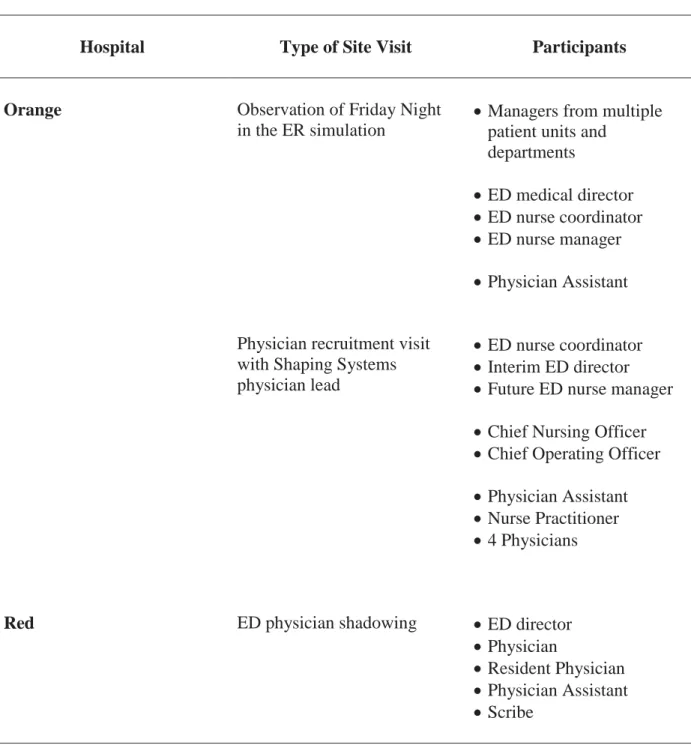
Table 3. Site visit participants
Hospital Type of Site Visit Participants
Orange Observation of Friday Night in the ER simulation
x Managers from multiple patient units and
departments
x ED medical director x ED nurse coordinator x ED nurse manager x Physician Assistant
Physician recruitment visit with Shaping Systems physician lead
x ED nurse coordinator x Interim ED director x Future ED nurse manager x Chief Nursing Officer x Chief Operating Officer x Physician Assistant x Nurse Practitioner x 4 Physicians
Red ED physician shadowing x ED director
x Physician
Findings on Physician Engagement in Interprofessional Collaborative Practice Activities
Participants described physician engagement (or lack of engagement) in three types of ICPC activities: Shaping Systems events, everyday work, and process or quality improvement initiatives. Shaping Systems events included both quarterly learning collaboratives held off-site and on-site events sponsored by the collaborative project. Everyday work included activities such as meetings, huddles, and routine patient care. Process or quality improvement initiatives, including Lean projects or Rapid Improvement Events, were frequently mentioned opportunities for IPCP. The qualitative data collected for this project related to physician engagement in all three of these types of IPCP activities or efforts and included both contextual factors and strategies that influenced physician engagement.
Contextual Factors Influencing Physician Engagement
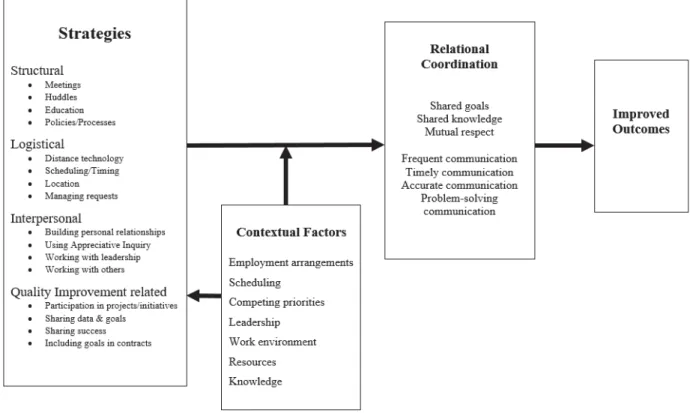
Site team members from the four EDs described seven categories of contextual factors that influenced their ability to engage physicians in IPCP activities: employment arrangements, scheduling, competing priorities, leadership, work environment, resources, and knowledge. These contextual factors were most often identified as barriers to physician participation. However, in some cases participants described factors that facilitated physician involvement.
Employment arrangements. All four site teams mentioned issues related to the
physicians’ employment arrangements. Employment arrangements varied among sites with some physicians provided by outside contract agencies or organizations and others working as
Time allotment & compensation. Three site teams indicated that employment contracts designate separate administrative and clinical time for physicians. According to team members, physicians use administrative time to participate in IPCP efforts and this time is limited. One ED nursing coordinator stated that their medical director “has too much clinical work and is not given enough time for meetings or administrative work.” Lack of compensation is a related barrier identified by three site teams. One team member claimed, “they will not attend meetings without being paid and are not as likely to come to voluntary meetings.” Physicians are given a limited amount of administrative time for all non-clinical activities which also includes education and vacation. Site teams discussed lack of compensation as a reason for the absence of physician participation in Shaping Systems collaborative meetings, rapid improvement events, as well as routine meetings.
Investment. Physician investment in or loyalty to the hospital was discussed as a factor related to IPCP at three sites. Team members questioned their physicians’ level of support for the hospital and its staff. A physician at one site acknowledged that ED physicians are often uncertain of their loyalty to the hospital versus their contract company. One site team member at a different hospital mentioned that physicians who are temporary or part-time are “just interested in getting their shifts done” and not willing to put in the extra time for IPCP activities. A
physician who was filling in temporarily at the same site admitted that his temporary status deterred him from wanting to engage in IPCP efforts. The third site team reported mixed views of physician loyalty. One team member remarked that their medical director was much more involved with the hospital and community than other ED physicians, including serving on the hospital foundation and helping with fundraising. She felt that although he is also a contract employee, he exhibited more involvement and buy-in than other ED physicians for improving patient care and processes such as ED throughput times. A member of the same site team said “I feel like physicians are still not vested in the hospital. They are contract employees in their mind. They are also not locally vested and don’t live in the community.” Three of the sites acknowledged that the contract employment status of their physicians and their rural location resulted in many physicians commuting large distances to work in their EDs. At one site, an ED nurse expressed disappointment that their ED physicians “don’t invest in the hospitals where they work.”
interprofessional efforts at her hospital. Challenges included pulling physicians from patient care, aligning physician and nurses’ schedules, and location.
Pulling physicians from patient care. The nature of physicians’ work in EDs creates obstacles to their ability to participate in IPCP activities that take place outside of everyday clinical responsibilities. The need to ensure adequate staffing for patient care was identified by three sites as a challenge to getting physicians to attend Shaping Systems collaborative meetings or interprofessional education events. One ED director noted that having only a small number of physicians on staff means that “someone has just worked or is currently working” at all times. Similarly, a participant from one site team reported that shift work makes it difficult for physicians to attend meetings. According to this team member, physicians working night shift exhibit the lowest levels of buy-in for IPCP activities. Two site teams reported difficulty scheduling meetings over the summer months due to conflicts with vacations and patient care staffing. This stemmed from physicians being required to use administrative time, not clinical time, for vacations. As a result, physicians have less time for meetings or other IPCP activities during months when they are more likely to take time off.
Aligning schedules. Members of two site teams discussed obstacles related to nurse schedules and availability. Nursing staff shortages and the need to ensure enough nurses for patient care were reported as impediments to nurses attending events with physicians, such as resident training classes. This site also noted that the focus for educational events was often on fitting nurses’ schedules, which did not align with physicians’ schedules.
challenge to getting physicians to participate as the distance required physicians to schedule more time off to participate. Similarly, a member from another site reported that their physicians do not live close to the hospital, which creates challenges to scheduling onsite IPCP activities because physicians do not want to travel to the hospital when they are not working.
Competing priorities. Every site team discussed challenges related to the high number of competing priorities for physician time and attention. Competing priorities arise from
physicians’ and staff’s multiple commitments as well as the different responsibilities of physician specialties. All site teams recognized that physicians are frequently dealing with many different responsibilities and a limited amount of time.
Multiple commitments. Each of the four site teams addressed the challenge of physicians being requested to be involved in too many different activities. All teams described their ED and/or hospital’s involvement in many different improvement projects, initiatives, and
Table 4. Projects, initiatives, collaboratives, issues discussed by ED site teams
Healthcare system value program ICU rapid admit process State-wide Transitions of Care collaborative Language of Caring classes
New EHR implementation TeamSTEPPS
Lean projects Stand out program
Rapid Improvement events Purposeful hourly rounding ED patient throughput task force Bedside shift report
Leaving Without Being Seen (LWBS) rates Leader rounding
Healthcare system caring program Patient satisfaction/experience scores
ED functional team County collaboration for psychiatric patients Stroke center designation Performance pulse
Bed Ahead process Patient advisory committee
ED renovations Transfer review team
Discharge implementation plan Surge plan – Code Surge
Staff retention Trauma protocol
Length of stay (LOS) metrics Hospital throughput - Teletracking
Accountability coaching Psych holding – implementation of safe unit
Increased volumes Paramedic job duties review
Psych education Room standardization
New MD staffing model Bridge orders
Decreasing sepsis mortality Fast track
and educational commitments as well as participation on other committees. One physician who was interested in attending a Shaping Systems collaborative meeting was unable to due to a conflict with another conference.
Different responsibilities. Site teams frequently discussed the need to collaborate with physicians outside of the ED. For example, hospitalists and intensivists play a role in the care of patients being admitted from the ED. Two of the hospital site teams brought up challenges created by the different priorities of non-ED physician specialties. One team member noted that it was difficult to coordinate intensivists with hospitalists. The other team spoke specifically about competing priorities for hospitalists. One member said that “the hospitalists are pulled in so many areas at times” and “they think that other things are more important and they have different priorities.” One site also discussed the challenge of working with physicians that have joint academic appointments and clinic responsibilities in addition to their ED work. These physicians work only part time or periodically in the ED and spend time seeing patients in an outpatient primary care setting as well as teaching at the medical school.
Leadership. The impact of leadership on physician participation in IPCP efforts was mentioned by all four site teams. All teams recognized the need for leadership support to successfully engage physicians in IPCP activities. The significance of leadership was illustrated by the level of support given by leaders and absence and turnover of leaders. Leadership at all levels was discussed, including physician leadership, nursing leadership, hospital administration, and ED level leadership.
IPCP will occur. Two hospital executives from a different site described their support of IPCP and improved collaboration between and among physicians and other staff to improve patient care. Another site described the positive impact of their medical director’s communication with physicians to encourage participation in meetings. While several sites described good
collaboration and support for IPCP from leadership, two of the sites expressed concern that these efforts were not diffusing down to the lower levels of physicians and staff. One site team
member suggested “buy-in is not getting down to the grassroots provider levels.” Similarly, a different site team participant noted that they “need to include frontline staff in the collaboration – not just between physicians and leadership.”
Absence and turnover. Two of the site teams reported that recent turnover in multiple leadership roles had created a barrier to physician engagement in IPCP activities. One team reported turnover in several ED hospital leadership positions as well as physician leadership turning over several times in a small amount of time. Another site team noted that the absence of a Chief Medical Officer has resulted in lower levels of physician engagement because no one was overseeing their activities or holding them accountable.
Work environment. Each of the site teams discussed or displayed aspects of the ED work environment that affected physician engagement in IPCP. Characteristics of the work environment included aspects of the physical layout of the hospital units, workflow, electronic health record systems, and culture or climate. The work environment influences physicians’ ability and willingness to work with other professionals.
between nurses and physicians was noted. This workspace design was also mentioned by the ED director as a deterrent to collaboration between nurses and physicians. Two other site teams reported examples of workspace facilitating IPCP. One ED director mentioned that having an office right next door to the medical director has improved their working relationship by
providing frequent interaction. They stated that this office arrangement “helps with traction and it is good to know you have a physician champion on your side.” Another site team pointed out that physician participation in huddles was the result of physicians being at the nursing station when they occur. According to one team member, the physicians “have nowhere else to run to except their breakroom, so they are there listening passively and actively, kind of forced to participate because we’re standing around them.”
Electronic health record systems. Patient health records or charts can serve as a means for collaboration and communication among healthcare providers. All of the site teams brought up issues related to their electronic health record (EHR) systems that impact physician
Culture or climate. The effect of the overall culture and climate in the ED work
environment was discussed by one site team. Two members of this site team addressed “culture and physicians not wanting to change” as their biggest challenge to improving physician
engagement in IPCP. This team also addressed the impact of overall staff morale on IPCP. They noted improvement in physician IPCP, as staff morale in the ED has improved over the last year. An ED physician from this site also noted that the culture at the hospital is changing as “the residency program has attracted physicians with better attitudes toward change and collaboration.” An ED physician from a different site noted that she gets job satisfaction from providing direct patient care and teaching. She is less interested in working on IPCP activities such as improvement initiatives and going to meetings. This hospital site team noted that many of their physicians were hired to teach at the nearby medical school and that there is a tension between teaching and working on improvement efforts in this site’s ED. All of the hospital teams discussed lack of trust and climate between hospitalists and ED physicians as a barrier to IPCP between physicians. The teams all reported a “lack of trust” or “resistance” between hospitalists and ED physicians that impeded efforts to improve patient care processes such as admissions.
Resources. Three of the site teams brought up different resources that served as either facilitators or barriers to physician engagement in IPCP. Lack of needed resources in the ED was cited as an impediment to IPCP with physicians while outside resources were discussed as opportunities to engage physicians in IPCP.
from the EHR system. Another site team noted that they did not have an ED nurse educator to support learning activities for physicians and other staff. They claimed that an educator
dedicated to the ED would provide opportunities for interprofessional education, which would in turn support more IPCP.
Outside resources. Three of the site teams discussed resources or opportunities outside of their EDs that could be used to engage physicians in IPCP. For one site, the establishment of a residency program at their hospital has created such a resource. The site team members have discussed leveraging the residency program to provide IPCP opportunities, such as the inclusion of residents in interprofessional huddles and making residency-training events open to nurses. A physician at this site also identified interprofessional education opportunities in their rural