Regional interest representation in the EU:
A qualitative intra-national comparison among German states
Julian Jaursch
A thesis submitted to the faculty of the University of North Carolina at Chapel Hill in partial fulfillment of the requirements for the degree of Master of Arts in the Department of Political Science, Concentration TransAtlantic Studies.
Chapel Hill 2012
Approved by:
Liesbet Hooghe
Gary Marks
ii
Abstract
Julian Jaursch: Regional interest representation in the EU: A qualitative intra-national comparison among German states
(Under the direction of Liesbet Hooghe)
The guiding research questions for this paper are: What channels of direct
supranational interest representation do German states use on the European level and how? If
there is variance among German states, how might different channel preferences be
explained? Independent variables explored are size, resources, an East-West divide and
conflicts of interest with the federal level.
The theoretical framework will be provided by the multi-level governance approach
and research on regional authority within the EU. The qualitative empirical basis is a set of
30 semi-structured interviews conducted in late 2011 with German state officials working in
Brussels and Berlin.
An analysis of how German states represent their EU interests in the various channels
is offered. Overall, it will be seen that there is not a lot of intra-national variance between
German states in what channels they use but that socio-economic factors play a role in how
Table of Contents
List of Tables ...iv
List of Figures ... v
List of Abbreviations ...vi
1. Introduction ... 1
2. Theoretical Framework and State of the Art Report ... 3
2.1 The EU’s Multi-level Governance System ... 3
2.2 German States in the EU’s Multi-level Governance System ... 7
3. Methodology, Sample and Data ... 14
4. Findings ... 20
4.1 German States’ Interest Representation towards the EU ... 20
4.1.1 Motives ... 20
4.1.2 The Brussels Office ... 24
4.1.3 Channels for Interest Representation ... 34
4.2 Regional vs. Federal Level: Case Study on the Structural Funds Negotiations. 47 5. Conclusion ... 55
Appendix: Interview Questionnaire ... 56
iv
List of Tables
Table 1. Sample ... 16
Table 2. Economic and political indicators regarding German states ... 19
List of Figures
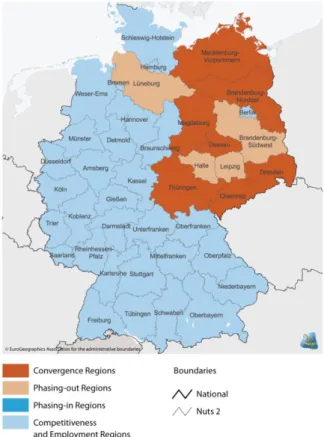
Figure 1. Convergence and competitiveness objectives, 2007-2013 ... 21
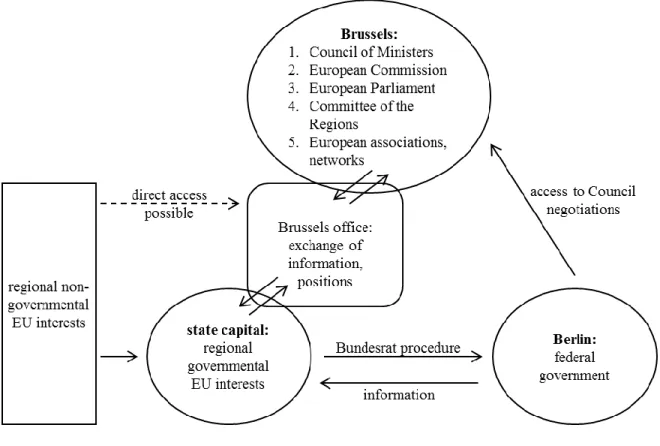
Figure 2. German states’ EU interest representation... 25
Figure 3. Number of employees in the Brussels offices ... 27
Figure 4. Brussels employees and population ... 28
Figure 5. Brussels employees and GDP per capita in € ... 29
Figure 6. Brussels employees and ERDF per capita in € ... 30
Figure 7. Brussels employees in Eastern and Western German states ... 30
vi
List of Abbreviations
CDU Christian Democratic Union
CoR Committee of the Regions
CSU Christian Social Union of Bavaria
ECJ European Court of Justice
EMK Permanent Conference of the Länder Ministers for European Affairs
EP European Parliament
ERDF European Regional Development Fund
EU European Union
FDP Free Democratic Party
GDP gross domestic product
MEP Member of the European Parliament
MLG multi-level governance
REGLEG Conference of European regions with legislative power
1. Introduction
The 16 German states are usually lumped together when talking about regional interest
representation towards the European Union (EU). They are considered to be “well funded,
strongly institutionalized, entrenched within their respective states, and active in the
European arena” (Hooghe & Marks, 1996, p. 74), thus belonging to the “first league”
(Tatham, 2008, p. 507) among European regions or even stemming from a completely
different planet (Christiansen, 1996, p. 101).
Yet, some variance in interest representation among German states could be expected
considering socio-economic differences between them such as unemployment rates (Statistik
der Bundesagentur für Arbeit, 2012), expenditures for education (Statistisches Bundesamt,
2011a, p. 35) or the structure of agriculture (Ministerium für Landwirtschaft, 2007). But in
the past, “[m]ost of the analysts of the regional level in the EU focused on the differences of
regional actors across member states much more than they conceptualized differences
between regional or subnational actors of individual member states.” (Bauer, 2006, p. 23)
This article offers an intra-national view of German states with regards to European
interest representation. The two guiding research questions are: What channels of interest
representation do German states use on the European level and how? If there is variance
among German states, how might different channel preferences be explained? The dependent
2
While German states can also represent their interests in the domestic arena, I focus
primarily on direct interest representation in Brussels. Theoretically, research in this area is
still lagging behind (Tatham, 2008, p. 498). Practically, states more clearly show their
undiluted interests in Brussels than in the constitutionally fixed and compromise-seeking
environment of German federalism.
The intra-national approach is adopted to deviate from the common international or
interregional comparative method. While it may only provide insights into one EU member
state, the very narrow and controlled setting allows for the testing of various possible
explanations for channel use. These independent variables I examine are the states’ size and
resource richness, an East-West divide and conflicts of interest with the national level.
I will lay out briefly the multi-level governance (MLG) approach as the theoretical
background to my research questions. In addition to this, German states’ powers with regards
to EU policy-making will be presented. The goal is not to provide a comprehensive history or
discussion of either the MLG concept or German states’ relationship with the federal
government and the EU. Rather, I will map out some theoretical reference points for my
empirical analysis. This central analysis will offer an in-depth examination of German states’
EU interest representation in Brussels, focusing on the different channels to the union. One
major finding is that there is no variance in what channels the states use. How they are
utilized, though, varies and this variance will be explored against the backdrop of the
2. Theoretical Framework and State of the Art Report
2.1 The EU’s Multi-level Governance System
Rejecting the idea that the EU is exclusively dominated by member states’ central
governments, proponents of the MLG approach claim that “the state no longer monopolizes
European level policy-making or the aggregation of domestic interests” as “decision-making
competencies are shared by actors at different levels” (Marks, Hooghe & Blank, 1996, p.
346). Early descriptions originated in the field of structural policy (Marks, 1992; 1993; for
criticism see Jeffery, 2000, p.7; Palmer, 2003, p. 365) but today MLG structures can be
observed in many different European policy fields (George, 2004, p. 107; Hooghe, Marks &
Schakel, forthcoming, pp. 4, 11).
Accounting for the regional level
One defining characteristic of MLG is the very acknowledgement of the importance of
regions. From the various interpretations of the term region (Bauer & Börzel, 2010, p. 253;
Eurostat, 2007; Loughlin, 1996, pp. 146-148; Münch, Meerwaldt & Fischer, 2002), the
following minimal definition corresponds well with German states and is thus used in this
paper: “A region refers to a given territory having a single, continuous, and non-intersecting
boundary. Subnational regions are intermediate between local and national governments. A
regional government is a set of legislative and executive institutions responsible for
4
The conceptualization of MLG is partly due to the realization in the early 1990s that
“subnational governments are being mobilized in unconventional ways” (Marks, 1992, p.
221; also 1993, p. 407). Complex networks and negotiations between interconnected local,
regional, national and supranational governments have led to “[t]he centralization of
authority in a continental polity and the decentralization of authority in regions” (Hooghe et
al., forthcoming, p. 2). This, in turn, means that no one level of government has absolute
power to make decisions and solve conflicts: “[T]he hierarchy of levels of governance is
being eroded.” (George, 2004, p. 123) It is precisely this interconnectedness of multiple
governments that is touched upon when considering how German states represent their
European interests. State-centric approaches, on the other hand, tend to uphold the primacy
of the national government and downplay the influence of regional actors on the European
level (Tatham, 2011, pp. 54-55).
At the same time, criticism has to be mentioned regarding the fact that MLG tends to
overstate the influence of subnational actors (George, 2004, pp. 118-122; Tatham, 2011, p.
56). More fundamentally, it has been questioned whether MLG is even its own theory or not
merely “a more comprehensive successor to neofunctionalism” (George, 2004, p. 112). Yet,
if in the same thought it is recognized that MLG does not include neofunctionalism’s main
element, functional spillover (p. 112), the justification for this criticism can be called into
doubt as well. While MLG might not provide a theoretical framework for explaining
European integration as a whole (Elias, 2008, p. 486), it is “a theory of what sort of
Subnational mobilization
In the MLG perspective, states are conceived not as actors but as a set of institutions which,
in turn, shape the opportunity structure for political actors (Marks, 1996, p. 22; Marks et al.,
1996, pp. 347-348). Such actors within state institutions may make decisions based on party
political policy preferences. So, in fact, government leaders, as politicians, might sometimes
deliberately transfer authority away from the central state. Reasons for shifting
responsibilities in such a way include government leaders wanting to appease certain
constituencies, to win the next election or to insulate a certain policy so they can influence it
after their tenure is over (George, 2004, pp. 113-114; see also Marks, 1996, pp. 25-34; Marks
et al., 1996, pp. 349-350). This opens up the possibility for regions to actively engage in the
decision-making process.
Analyzing the EU policy cycle, Gary Marks, Liesbet Hooghe and Kermit Blank found
strong indicators for the previously described actor-centered MLG system: for example, the
vital role the Commission plays both in shaping the agenda and in policy implementation, the
weak role of the member state dominated European Council, the existence of regional
lobbying groups, the expanded use of qualified majority voting and the co-decision
procedure as well as the independent European Court of Justice (ECJ) (Marks et al., 1996,
pp. 356-371). Against a state-centrist reading of EU politics, this MLG system allows for
“multiple points of access for interests, while it privileges those interests with technical
expertise that match the dominant style of EU policy-making.” (p. 372)
These access points have not always been given, though, as the EU’s MLG structure
just developed in the 1980s and is not a stable system (Marks et al., 1996, pp. 372-373). Only
6
regional policy was mostly aimed at reducing economic disparities but it lacked serious
supranational commitments until the 1988 reform of the structural policy which gave the
Commission a much-expanded role (Bauer & Börzel, 2010, pp. 254-256).
Regarding subnational mobilization, the MLG approach has been criticized for a
perceived top-down view to mobilization (Jeffery, 2000, p. 8) as well as a focus on
extra-state mobilization (1996a, p. 214; 2000, p. 7). However, even early literature on the MLG
system has included various kinds of subnational mobilization (Hooghe, 1995; Hooghe &
Marks, 1996), countervailing this criticism.
Mixed effects of integration on regions
There is a danger of equating subnational mobilization with subnational influence (George,
2004, pp. 123-124; Tatham, 2008, p. 494), when it is, in fact, unclear what influence
European integration has on regions.
Three possible scenarios for EU influence in a multi-level setting exist (Carter &
Pasquier, 2010; Fleurke & Willemse, 2006; see also Knodt, 2002, pp. 213-215): Either the
EU empowers regions, disempowers regions or has no effect at all. The EU could provide
opportunities for regions through the Commission’s regional policy and through structural
funds. Additionally, decentralization could be aided because regions institutionalize their
interest representations on the EU level and form transnational networks (Carter & Pasquier,
2010, pp. 298-300). Opponents of this interpretation hold that centralization may occur
because regions may lose legislative authority and are turned into mere administrative units
(pp. 300-301). Testing what effect EU legislation has on the decision-making of three Dutch
subnational authorities, Frederik Fleurke and Rolf Willemse have found that the EU does
(2006, p. 81). It has also been argued that due to the increased number of veto players in a
MLG setting, efficient decision-making might be hindered (Benz, 2000, p. 30).
While the MLG concept recognizes the regional level as a viable actor, it does not
assume that there is a unitary level of regional politics or convergence among European
regions. Rather, regions in Europe continue to vary in institutional and territorial structure
(Bauer & Börzel, 2010, p. 254; Hooghe & Marks, 1996, p. 91; Hooghe et al., 2010;
forthcoming, p. 5; Jeffery, 2000, p. 3). In the beginning, it was contested that MLG considers
both inter-regional and intra-regional variety but research in both fields has emerged
(George, 2004, p. 117).
2.2 German States in the EU’s Multi-level Governance System
In Germany, the different levels of authority are the federal level, the 16 states (Bundesländer
or Länder, singular Bundesland or Land), the districts and the municipalities. This paper
focuses on German states only, because they “monopolize power sharing with the federal
government” (Hooghe et al., 2010, p. 145) and because in contrast to districts and
municipalities, they handle their individual representational activities in Brussels.
In European policy-making, German states’ domestic influence is today
institutionalized in the Bundesrat procedure. The Bundesrat is the chamber of the German
legislature made up of the Länder governments (for an introduction, see Reuter, 2009). It has
the right to put forth legally binding statements to the federal government if EU legislation
touches upon policy areas in which the Länder have exclusive competences in Germany’s
federal system (Große Hüttmann & Knodt, 2000, p. 3; Moore & Eppler, 2008, p. 492; Nass,
8
In the early decades of the EU, it was almost exclusively the federal level which was
responsible for European policies. Länder were to be informed by the federal government
about major EU proposals in the procedure of forwarding legal initiatives
(Zuleitungsverfahren) and later gained minor participatory rights through the participatory
procedure (Länderbeteiligungsverfahren) (Große Hüttmann & Knodt, 2000, p. 3; Moore &
Eppler, 2008, pp. 491-492; Suszycka-Jasch & Jasch, 2009, pp. 1233-1235). Their only own
source of information was the Länder observer (Länderbeobachter): This position, dating
back to 1958 but formalized in 1988, is a joint post of all Länder and provides information
from the Council, the Commission and the Committee of Permanent Representatives to the
Bundesrat (Der Beobachter der Länder bei der Europäischen Union, 2012; Hooghe, 1995, p.
184; Knodt, 2002, p. 218; Loughlin, 1996, p. 179; Rowe, 2011, pp. 61-62).
Subnational mobilization I: From the “third level”…
The discussions surrounding the Maastricht Treaty, signed in 1992, are the prime example
for German states’ mobilization in a MLG setting. The EU not only negotiated with the
federation but also with the Länder. And the Länder, additionally, were in talks with the
federation themselves. Substantial changes concerning the states’ attitude and the formal
rules in both the domestic and the European arena were the result.
Regarding the change in attitude, the Länder in the late 1980s pushed for more
thorough reforms of the EU decision-making process. At home, the German states were in a
fairly strong position vis-à-vis the federal government due to the fact that the Maastricht
Treaty would require amendments to the German Basic Law which are subject to Bundesrat
approval (Moore & Eppler, 2008, p. 492; Münch et al., 2002). This made considerable
inter-regional cooperation under the slogan of a “Europe of the regions” (Loughlin, 1996, p.
151; Suszycka-Jasch & Jasch, 2009, p. 1238). They were attempting to rally a broad legion
of regions together in order to establish a third level of regional governance in the EU
(Jeffery, 1996c, pp. 261-262).
Domestically, the Länder achieved a change in the Basic Law in their favor (Jeffery,
1996b, pp. 60-61). The introduction of article 23 (for an English translation, see Deutscher
Bundestag, 2010, pp. 28-30) and the follow-up Law on the Cooperation of the Federation and
the Länder in Matters relating to the European Union (Bundesrat, 2010a; Suszycka-Jasch &
Jasch, 2009, pp. 1242-1246) made the German states into veto players: At least in certain
policy fields, they could now co-determine Germany’s position in the EU and send a regional
representative to the Council of Ministers (Gunlicks, 2005, p. 1290; Jeffery, 1996c, pp.
257-261; 2007b, pp. 20-22; Knodt, 2002, p. 217; Moore & Eppler, 2008, pp. 492-493; for more
detailed analyses of article 23, see Münch et al., 2002; Palmer, 2003, pp. 369-370;
Suszycka-Jasch & Suszycka-Jasch, 2009, pp. 1239-1241). With this so-called Europe Article, article 24 granting
the federation sole power to transfer sovereignty was partly overwritten.
Considering this, it is unsurprising that the federal government has not been viewing
article 23 favorably. It argues that such strong inclusion of the Länder in the EU
policy-making process severely hinders Germany’s flexibility at the negotiation table because it
necessitates comprehensive and time-consuming coordination among different domestic
actors (Jeffery, 2007b, p. 20; Moore & Eppler, 2008, p. 498). This marks the European
dimension of German federalism’s joint-decision trap (Benz, 1999; Scharpf, 2005). But such
criticism cannot be upheld when considering that Bundesrat opinions, in fact, rarely diverge
10
2008, p. 499), suggesting “that [article 23] has not been a significant problem for German EU
policy-making” (Jeffery, 2007b, p. 22). Its basic provisions also survived Germany’s 2006
federalism reform (Bauer, Knill & Ziegler, 2007, p. 742; Moore, Jacoby & Gunlicks, 2008,
pp. 400-401).
In addition to article 23, the Basic Law was also changed to allow for the creation of a
Europe chamber in the Bundesrat “to fast-track decisions when time or confidentiality issues
make full deliberation within the Bundesrat impractical” (Moore & Eppler, 2008, p. 493) but
this meeting group has convened very rarely (Reuter, 2009, p. 24).
Domestic changes furthermore concerned the states’ administrative structures.
European policy sections were created in the individual departments (Jeffery, 1996b, p. 62).
Additionally, in 1992, the states formed the Permanent Conference of the Länder Ministers
for European Affairs (Europaministerkonferenz, EMK) which enables horizontal
coordination between the states (Große Hüttmann & Knodt, 2000, p. 4; Jeffery, 1996b, p. 63;
Knodt, 2002, p. 217). The EMK’s task is to coordinate Länder positions, to represent Länder
interest towards the federal as well as the EU level and to streamline communication
regarding the union (Schmuck, 2009, p. 490). Mainly concerned with fundamental EU topics,
the conference meets a couple of times a year and leaves day-to-day EU business to the
Bundesrat (p. 501). While there is sometimes a sense of competition between different
ministerial conferences, the EMK is nevertheless a chance for the Länder to formulate
common positions on those issues that cut across departments (p. 501).
Apart from the EMK, German states began opening representations in Brussels in the
mid-1980s (Bomberg & Peterson, 1998, p. 229; Hooghe & Marks, 2001, pp. 86-87; Rowe,
connection to the EU anymore (Rowe, 2011, pp. 61-62). These offices are further proof of
the increased mobilization of the Länder in EU policy-making and will feature prominently
in the latter part of this paper.
On the European level, the Maastricht Treaty also sparked extensive changes for
regional involvement. The treaty has been called the “high point” (Keating, 2008, p. 633) for
regional influence because several provisions regarding regions in the EU were introduced
(see, for example, Bauer & Börzel, 2010, pp. 257-258):
1. The Committee of the Regions (CoR) was established. Today, it brings together 344
politicians representing regional and local authorities from all over the EU
(Committee of the Regions, 2012). This was part of the German states’ effort to
establish a third level of regional governance.
2. Regions gained entrance to the negotiations in the Council of Minister with article
146 of the Treaty establishing the European Community (TEC) which is now article
16 (Official Journal of the European Union, 2010, p. 24). A more detailed look at
both the Council and the CoR will be provided later.
3. The principle of subsidiarity was formally inscribed into the treaty in what is now
article 5 (Official Journal of the European Union, 2010; Suszycka-Jasch & Jasch,
2009, p. 1237; for an overview over EU institutions’ approach to subsidiarity, see van
Hecke, 2003). The Länder had been pushing strongly for such an inclusion as early as
1987 (Große Hüttmann & Knodt, 2000, p. 4; Münch et al., 2002; Suszycka-Jasch &
12
Subnational mobilization II: …to focusing on autonomy
After the Maastricht negotiations, regions in Europe and especially the German states seemed
satisfied with what they had accomplished (Moore & Eppler, 2008, p. 494) so regions were
rather quiet in the talks for the Amsterdam and Nice treaties in the late 1990s and early
2000s. During this time, though, the Conference of European regions with legislative power
(REGLEG) was founded in which all German states are represented and which pushes for
clear allocation of competences between the European and the regional level (Hopkins, 2010,
p. 65; Jeffery, 2005, p. 4; REGLEG, 2011).
Also at the turn of the century, a European constitution was being debated. Länder
were very active in voicing their opinion (Bauer, 2005, pp. 34-38; 2006, pp. 25-28). Yet, in
the end, the constitutional discussion did not involve a serious reconsideration or
strengthening of the regional level in the EU but mainly “some symbolic recognition of local
and regional authorities” (Bauer & Börzel, 2010, p. 258; see also Jeffery, 2005, p. 5). For
example, the CoR is still not an official EU institution on par with the Parliament or Council
and its policy scope was not increased (Jeffery, 2005, p. 6). The treaty did include the
Protocol on the Application of the Principles of Subsidiarity and Proportionality (Official
Journal of the European Union, 2010, pp. 206-209) which more clearly delineates when and
how the subsidiarity principle should be used. By means of this protocol, the CoR as well as
national parliaments gained the right to bring cases to the ECJ (p. 208). In addition, an
early-warning system for subsidiarity was established (p. 207) “to allow national parliaments to
protest about EU legislation on subsidiarity grounds” (Jeffery, 2007a, p. 11).
As can be seen from the succinct historical overview, German states have over time
gained more and more rights to be included in European policy-making, especially in the
group of regions, which makes a strong and united regional level hard to achieve. The
mobilization approach of establishing a pan-European third level of regional government has
largely been abandoned, both in practice and in the literature (Keating, 2008, p. 633).
Among scholars, it is, however, contested how exactly German states mobilize today.
Charlie Jeffery argues “that where the Länder now talk about subsidiarity in the EU, they do
so in an introspective way, focused on the exercise and protection of their internal
competences” (Jeffery, 1996b, p. 70). They have discarded the third level tactic in favor of
intra-state interest representation and consensus with the federal level (pp. 71-72). This is
termed by the Länder as European domestic policy (Große Hüttmann & Knodt, 2000, p. 4;
Jeffery, 1996b, p. 59; 2000, pp. 9-10). Jeffery and others later argued that the states opt for a
maximum of autonomy and decision-making participation in the federal environment (Große
Hüttmann & Knodt, 2000, pp. 9-10; Jeffery, 1998, p. 340; Knodt, 2002, pp. 220-221). Here,
differences in entrepreneurship, regional distinctiveness as well as a Land’s legitimacy and
social capital could lead to diverging influence on the European level (Jeffery, 2000, p. 18).
Michael Bauer also acknowledges the end of the third level as a policy goal. But he
hypothesizes that some Länder tend to focus more on autonomy and some more on
participation (Bauer, 2006, p. 29). Agreeing on Jeffery’s regional identity factor, Bauer
additionally points to the significance of party political cleavages and of actual affectedness
(pp. 35-36). The latter describes the circumstance that for some Länder, it does not matter too
much if they are autonomous or not because their “actual political room for manoeuvre” (p.
3. Methodology, Sample and Data
To answer my research questions, I complemented a thorough literature review with
qualitative interviews. The format of semi-structured in-depth interviews was chosen as a
means to engage in still fairly explorative research. This type of interview makes two-way
communication with the interviewee possible which in turn “allows the researcher to respond
to the situation at hand, to the emerging worldview of the respondent, and to new ideas on
the topic.” (Merriam, 2009, p. 90) On the downside, there are some dangers with this
qualitative data gathering, from potential interviewer bias (Holloway, 1997, p. 96) to the
possibility for respondents to provide untrue information (Keegan, 2009, pp. 82-84) in order
to portray themselves or their regional office in a certain light (Tatham, 2008, p. 495).
But as I deem the value of first-hand expert evaluations on states’ representation
higher than these methodological disadvantages, I still set out to find interview partners. To
be included in my sample, three conditions had to be met: Firstly, the respondent needed to
be employed by the Land so that familiarity with Land-specific issues and work methods was
given and the regional outlook (instead of the national or supranational) was maintained.
Secondly, the respondent needed to work in the broad field of EU affairs for his or her Land.
Thirdly, the respondent needed to know all six channels of interest representation and,
preferably, deal with at least one of them on a regular basis.
Based on these criteria, I sought out interview partners in the states’ administrations:
One group of respondents was working in the Länder representations in Berlin or in the state
the Länder bureaus in Brussels. The Brussels offices by themselves have been identified as
valuables proxies for regional EU interest representation (Tatham, 2010a, pp. 81-82;
forthcoming, 2013b, p. 6). In my study, I can additionally compare and cross-check the
Brussels perspective with the one from the region itself.
In total, I conducted 30 interviews (see table 1). The interviews lasted approximately
between 20 and 80 minutes, with the respondents speaking on the condition of anonymity
(when referring to the interviewees, I will use the male pronoun throughout, even though the
sample included both women and men; all German to English translations in this paper were
done by the author). All officials were asked a set of roughly thirteen questions about the
structure of their office, their general view on the importance of EU representation, their
evaluation of each of the different representation channels and their evaluation of those
channels if there are diverging interests with the member state (see appendix). The answers
were coded and aggregated so as to analyze similarities and difference among the Länder.
While the semi-structured nature of the interview allowed for follow-up questions and further
comments, the data is still comparable because the same questions were asked every time and
16
Table 1. Sample
Land official in Brussels official in Germany
Code Date Personal Recorded Code Date Personal Recorded
Baden-Württemberg
A1 Dec
2011
yes no B1 Nov
2011
yes yes
Bavaria A2 Dec
2011
yes yes B2 Nov
2011
yes yes
Berlin A3 Nov
2011
yes yes B3 Jan
2012
yes yes
Brandenburg A4 Dec 2011
phone yes B4 Nov
2011
yes yes
Bremen A5 Dec
2011
yes yes B5 Nov
2011
yes yes
Hesse A6 Nov
2011
yes yes B6 Dec
2011
yes yes
Lower Saxony
A7 Dec
2011
yes yes B7 Nov
2011
yes yes
Mecklenburg-Western Pomerania
A8 Nov
2011
yes yes B8 Nov
2011
yes yes
North Rhine-Westphalia
A9 Dec
2011
yes yes B9 Dec
2011
phone yes
Rhineland-Palatinate
A10 Nov
2011
yes yes B10 Nov
2011
yes yes
Saarland A11 Dec
2011
phone yes B11 Nov
2011
yes yes
Saxony A12 Nov
2011
yes yes B12 Dec
2011
yes yes
Saxony-Anhalt
A13 Nov
2011
yes yes B13 Dec
2011
yes yes
Thuringia A14 Nov 2011
yes yes B14 Dec
2011
yes yes
Hamburg n/a n/a n/a n/a B15 Nov
2011
phone yes
Schleswig-Holstein
n/a n/a n/a n/a B16 Nov
2011
yes yes
14 out of 16 Länder (= 87.5%) 16 out of 16 Länder (100%)
There are certain limitations to this sample. Most importantly, the sample is not
representative for two reasons: Externally, not all Brussels offices are part of the sample.
Internally, there is only a maximum of two interviewed officials per Land. Their statements
representation might work. Also, the sample is only made up of subnational regional
representatives. Their accounts are not cross-checked with other actors such as national and
supranational officials.
The overlap of the Brussels and German officials, while allowing for a certain
control, is another caveat: It might be redundant or even contradictory to include both sites in
the sample. But it has to be remembered that both places use direct channels to the union and
both are genuinely regional actors – in contrast to CoR members or Members of the
European Parliament (MEPs) who are influenced by party politics and are part of the EU
institutions. Furthermore, this overlap is in and of itself a distinct feature of German EU
policy-making (see figure 2 on page 25).
The independent variables size, resources, an East-West divide and conflicts of
interest with the federal level were chosen based on existing literature and Germany’s
structural and institutional situation. Size and resources are relatively easy to measure and
have been addressed in previous studies (see, for example, Tatham, 2010a, pp. 79-80). The
look at a possible East-West divide is justified considering Germany’s recent history and the
continued asymmetries between the two regions (Benz, 1999, pp. 69-72). Finally, the
question if channel preferences change when there is a conflict of interest with the national
government is interesting in light of Germany’s pronounced federal structure and the issue of
bypassing interest representation (Keating & Hooghe, 2006; Marks, Nielsen, Ray & Salk,
1996; Tatham, 2010a, 2010b, forthcoming, 2013a).
The qualitative results on the independent variables from the interviews are
complemented with data from official German and EU publications. For a German state’s
18
offices (Statistische Ämter des Bundes und der Länder, 2011a). Regarding resource richness,
for which I looked at the gross domestic product (GDP) per capita (2011b) as well as the debt
per capita (Statistisches Bundesamt, 2011b, pp. 78-79), the same sources with data from
2010 were consulted. The union’s contribution to the European Regional Development Fund
(ERDF), which is co-financed by the member states and the EU, were taken from the
Commission’s website (European Commission, 2007b, 2007c, 2007d, 2007e, 2007f, 2007g,
2007h, 2007i, 2007j, 2007k, 2007l, 2007m, 2007n, 2007o, 2007p, 2007q, 2007r). As a proxy
for conflicting interest representation, I also noted in my data the ruling or acting regional
coalition in power in mid-March 2012 to see whether it was different from the federal
coalition. These statistics, along with the number of members in the CoR (Committee of the
Regions, 2011) and the EP (Informationsbüro des Europäischen Parlaments für Deutschland,
2011) as well as the number of votes in the Bundesrat (Reuter, 2009, p. 1), are summarized in
table 2.
Some of the methodological shortcomings mentioned in this section open up avenues
for further research. For example, broadening the sample to national and/or supranational
officials would help validate or disprove the regional representatives’ evaluations. A focus on
4. Findings
4.1 German States’ Interest Representation towards the EU
4.1.1 Motives
All of the interviewed officials attributed high importance to regional interest representation
in EU affairs. A lack of variance does not come as a surprise here because all respondents
work in EU affairs, so with any other answer they would have dismissed their own
significance. Therefore, it is more helpful to examine what reasons they gave for why EU
representation is important for the Länder. Four major explanations were identified.
Structural funds
To begin with, the topic that has historically led to a closer look at regions in the EU is still
valid today: Several interviewees specified structural funds as a main reason for why EU
interest representation is crucial for them (B3, B4, B8, B10, B12, A14, B14). In the
interviews, structural funds were most often and most explicitly addressed by the Eastern
German states. Respondents working in Eastern German representations all mentioned the
financial repercussions of the EU at some point while this issue was only rarely addressed by
other Länder (A5, B10). Moreover, officials for East German Länder working in Germany
tended to bring up the topic more often than the respondents in Brussels. So, either the
officials in Belgium take the chase after structural funds for granted or they do not view it as
deducting from the talks in Brussels. As an example, one interviewee stressed the importance
of telling the home administration that setting one’s policy priorities is much more efficient
than demanding more money (A4, also A5).
The reason why East German Länder are especially focused on the structural funds is
found in the allocation of the funds. Except for Berlin, all East German Länder are covered
under the convergence objective of the ERDF (see figure 1) which is the objective with the
highest possible funding for the poorest regions (European Commission, 2012a, 2012b).
Therefore, under the 2007 to 2013 ERDF, the Eastern German Länder generally receive more
EU funds per capita than the other states (see also table 2 on page 19).
22
European legislation
The Länder are in charge of implementing federal laws and because more and more of these
are concocted in Brussels, the regional level is indirectly affected by the Europeanization of
law. Interviewees pointed this out repeatedly (B1, B2, A3, B4, A6, B6, A11, B12, B14), yet
with varying statistics: One said 30 to 40 percent of laws are influenced by the EU (B12),
another said 50 percent (B2) and still others went as high as 70 or 80 percent (A6, B6).
Around a quarter to half of the Bundesrat’s agenda comes directly from Brussels (B11, B14).
Since all Länder share the same institutional function, there was no variance in their general
assessment of the legislative impact of the EU.
Specific policy interests
German states do not, however, share the same focus on respective policy fields. So, thirdly,
some Länder have a particular focus on the EU because policy fields that are of high salience
to them are dominated by EU legislation. One example that was given by almost a quarter of
the respondents was agriculture. If a Land has a strong agricultural sector, it might view EU
interest representation as even more important than usual because most of Europe’s
agricultural policy is decided in Brussels (B1, A2, A4, A6, B8, B13, A14). Generally, if
those policy fields that concern a state the most are heavily influenced by EU legislation,
including agriculture but also environment, transportation or research, then there is a greater
need for EU interest representation. This is in contrast to, for example, social policy, where
the federal level is responsible for the laws with little input from the EU (B13). Here,
lobbying the federal government rather than the EU institutions would be the states’ first
For a third of the officials, interest representation is mostly a reaction to Commission
proposals or Green and White Books (B2, B3, A5, B5, A6, B8, B10, A12, B14, B16). This
would entail monitoring Commission activity, developing positions on topics relevant to the
respective Land and then engaging with different actors. But 70 percent of the respondents
acknowledged that interest representation can be both reactionary and proactive (A1, B1, A2,
A3, A4, B4, B15, B6, A7, B7, A8, B8, A9, B9, A10, A11, B11, B12, A13, B13, A14).
A proactive stance is taken in precisely those policy fields and industries that are
important to a state (B1, A2, B2, B5, B6, B7, B8, A13, B13, A14). For example, primary law
and EU enlargement are topics that Bavaria and Baden-Württemberg actively publish their
positions on (B1, B2). Bavaria also focuses strongly on agriculture and education (A2).
Hesse is particularly concerned about transportation and mobility (A6, B6). As mentioned
before, many poorer German states prioritize structural funds.
What this shows is a divergence in the areas that Länder represent their EU interests
in. While not a surprising finding, it is crucial to stress this policy-driven approach to interest
representation. It means that structural differences between the Länder also account for
different behavior on the EU level. Stressing the salience of policy issues is in line with
previous work on EU interest representation that often implicitly takes salience as a key
explanatory factor (Tatham, forthcoming, 2013b, pp. 3-4).
Support for European integration
A fourth motive for EU interest representation is inspired by one respondent calling himself
and his colleagues “glowing Europeans” (A9). While others might not choose words as
24
There is, in fact, a constitutionally mandated duty for Germany to foster European integration
(article 23; Deutscher Bundestag, 2010, p. 28). But in a less tangible way, officials working
in Brussels might normatively view European integration as favorable, either out of personal
conviction or because of socialization effects in the European setting.
4.1.2 The Brussels Office
As described above, the MLG concept envisions multiple actors negotiating with each other.
Regional actors as one level of government thus have the chance to engage not only with
domestic actors but also with a range of supranational actors directly, using different
channels. The concept of channels allowing access to Europe has been lingering in the
literature since the mid-1990s (Hooghe, 1995). Usually, these channels include the Council
of the European Union (Council of Ministers), the European Commission, the European
Parliament (EP), the CoR, associations as well as the Brussels office (Hooghe & Marks,
2001; Rowe, 2011, pp. 51-53; Tatham, 2008, p. 498). However, both from a theoretical as
well as from a practical point of view I do not presuppose that Brussels offices can be
Figure 2. German states’ EU interest representation (adapted from Rowe, 2011, p. 5; Tatham, 2008, p. 498)
As figure 1 illustrates, there is a double overlap for Brussels offices. One overlap is
organizational, because they form part of the Land administration but are located in Brussels.
Another overlap concerns their classification as a channel: The offices are a Brussels channel
for the state capital but mainly because they are a gateway to the five other actual EU-level
channels, thus becoming both a domestic and a supranational channel. Due to this overlap, it
is appropriate not to place them in the same category as the other five channels (for more
studies on German and other regional offices, see Bomberg & Peterson, 1998; Kettunen &
Kull, 2009; Marks, Haesly & Mbaye, 2002; Mbaye, 2009; Moore, 2006, 2008; Nielsen &
26
Resources
To measure the resources the Länder have at their disposal for EU interest representation, the
number of employees in the Brussels office is used as a proxy value. This approach has
several serious impediments in general (Tatham, 2010a, pp. 81-82) but also some specific to
the German case. For one, the number of employees in Brussels has to be evaluated in
connection to the number of people working on EU affairs in the Länder administrations in
Germany. This would include the EU minister and his staff, people in the Berlin
representations and officials for the EU affairs section of each specific department, such as
agriculture, education or transportation. A good backing from home can greatly enhance the
effect of the Brussels office and vice versa (A14). The connection to the home base cannot be
quantified, however: The total number of people working on EU affairs in Berlin and the
state capitals is not fixed because any official might have to deal with EU matters at any
time. Moreover, as will be seen, personal networks play an enormous role in the Brussels
representations. Therefore, even a small team of officials could have a big impact if their
commitment and their networks are vast.
With these caveats in mind and for lack of a better quantitative indicator, the number
of employees in Brussels will be used as an approximation. This statistic will be
complemented with qualitative evidence in the remaining parts of the paper.
A total of 242 German officials were working in the German representations at the
time of the survey, an average of 15.13 employees per office. In addition to the head of the
office, there are usually some full-time and part-time officials as well as interns (A2, A13).
Some offices have a rotation principle that brings officials from the state capital to Brussels
There are substantial differences in the number of employees in the Brussels office
(see figure 3). All respondents were in agreement that the size of the staff was adequate, even
though 16.7 percent of the interviewees said this was barely the case (A1, A2, A5, A11,
A12). In comparison to their European colleagues, all German offices in Brussels are
well-equipped: Previous studies found averages of 5.37 (Tatham, forthcoming, 2013a, p. 30) and
6.3 (Blatter, Kreutzer, Rentl & Thiele, 2008, p. 486) employees, respectively.
Figure 3. Number of employees in the Brussels offices
*These numbers were taken from the Hanse Office website and confirmed in an email by one of the officials. There are a total of 15 people working in the Hanse Office, sharing
responsibilities for both represented Länder. All other numbers are taken from the interviews.
As a next step from this descriptive finding, it is again useful to look for explanatory
factors. The office size does not seem to depend on whether there is an oppositional regional
government in place or not. For instance, both the biggest and the smallest office represent
CDU-led Länder. Interviewees did not systematically point to party politics affecting office 31 30 27 25 20 14 13 12 11 10 10 9 8 7.5 7.5 7
0 5 10 15 20 25 30 35
28
size but to validate this, a long-term study of party political staffing decisions would be
necessary for which I have not gathered data.
Population size may be a fairly decent indicator, as the five most populous Länder
also have the five biggest offices (see figure 4) and smaller Länder tend to have fewer
employees. But there are also several exceptions such as rather small Länder having
mid-sized offices, for instance Brandenburg, Rhineland-Palatinate or even Thuringia.
Figure 4. Brussels employees and population
Similar to population size, GDP per capita can be taken as a hint of an explanation
(see figure 5). Outliers seem to be the fairly rich states Berlin, Bremen, Hamburg and
Saarland which have fewer than a dozen people working in Brussels. Here, it is interesting to
note that these four states have the highest debt per capita among German states, so their BAV
NRW
BW HES
LS
BRA RLP SAH
SAX BER THU BRE
MWP HAM SH SA 0 5 10 15 20 25 30 35 40
0 5 10 15 20
B r u ss e ls e m p lo ye e s
GDP per capita wealth is relativized. Therefore, it could still be that the richer a state is, the
bigger its office is.
Figure 5. Brussels employees and GDP per capita in €
A look at the structural funds partly supports this view (see figure 6): Those Länder
that get the most funds have small to mid-sized staffs but certainly do not have the biggest
offices. At the same time, those very Länder that receive the least ERDF money, have the
biggest offices, with Hamburg as an exception. It might be that regions collecting the largest
shares of the ERDF simply cannot afford a bigger office, which would be logical considering
the largest shares of the ERDF should be collected by the poorest regions. A different causal
relation along the motto of “We get our money anyways, we do not need a big
representation.” did not emanate from the interviews, as the officials from the Eastern
German Länder stressed the importance of securing funds. BAV NRW BW HES LS BRA RLP SAH
SAX BER
THU
BRE
MWP SH SA HAM
0 5 10 15 20 25 30 35
20,000 25,000 30,000 35,000 40,000 45,000 50,000
B r u ss e ls e m p lo ye e s
30
If the correlation of relative poverty and office size is accepted, this would also
explain why, on average, Eastern German offices have 10.84 employees and Western
German offices have 17.7 (see figure 7). In the end, resources – and not need – determine the
size of the office in Brussels, highlighting the expensive nature of subnational mobilization
which might favor resource-rich regions.
Figure 6. Brussels employees and ERDF per capita in €
Figure 7. Brussels employees in Eastern and Western German states
BAV NRW
BW HES
LS
BRA
RLP SAX SAH
BER THU
BRE MWP
HAM SH SA
0 5 10 15 20 25 30 35
0 100 200 300 400 500 600 700 800 900
B r u ss e ls e m p lo ye e s
EU contribution to ERDF funds, 2007-2013, per capita, in €
10 14 8 11 12 10 27 31 9 7.5 25 20 30 13 7 7.5
0 5 10 15 20 25 30 35
Activities
Various functions and activities of regional offices have been identified (Marks et al., 2002,
pp. 4-6; Rowe, 2011, pp. 83-84) but based on the interviews, I have found only two broad
categories of activities: the task of promotion as well as the intertwined activities of
information exchange and networking. No respondent named promotional or representative
functions as the most important task of his office. While it is certainly part of an office’s job
description, in this paper, I would like to focus on information exchange and networking.
In order to exchange information, one needs networks, and in order to get networks,
one needs information. So, in line with previous research (Marks et al., 2002, p. 7; Rowe,
2011, p. 84) and the interviews, I grouped together the tasks of information exchange and
networking. Figure 8 shows the simplified chain of events of how German states represent
their interests towards the EU via their office: The office collects information from the EU
level and delivers it to the state capital. There, a Land position is formed which the office
then carries back to the EU institutions.
Figure 8. Brussels offices’ connection with the EU and the state capital
Thus, bureaus not only send information home to the state capital like in the early
32
Helping understand why some [actors] stick to their positions and others don’t.” (A7)
Another analogy used was that of being an “antenna and service provider” (A8) in the sense
that an antenna can both send out and receive data.
In order to become this intelligence service provider (Moore, 2006, p. 198; Rowe,
2011, p. 83), all Brussels respondents stressed the importance of close, personal and direct
contacts in the EU institutions. Most of these are found on the working level of the
Commission. The Land officials in Brussels are tasked with acquiring and cultivating
contacts in the Commission according to their policy field. One Brussels interviewee
described the qualifications needed for officials (A9): “My colleagues here in the office, their
core competence apart from their technical work is to network with others, to build good
personal contacts to the cabinet of a Commissioner, to communicate with important
parliamentarians or with other stakeholders.” By doing this, the officials receive early
intelligence on proposals and they have an entry point when they want to present information
and policy positions from their home region.
The advantage of maintaining a Brussels office is its proximity and easy access to the
EU-level actors (A2, A7, A10, A12), both in a geographical and a social context.
Entrepreneurship – “[t]he personal authority, interests and commitment invested by those
responsible for leading EU policy” (Jeffery, 2000, p. 15) – is therefore decisive. But
entrepreneurship and personal engagement are difficult to measure quantitatively and are not
highly associated with the number of employees: A vast and deep network by three regional
officials might be worth much more than 30 regional officials’ small and shallow personal
connections. Apart from networking with institutional and non-institutional EU actors, office
facilitating horizontal coordination among the Länder (A12; Rowe, 2011, p. 104). The
propensity of German states to cooperate in Brussels has been established before (Salk,
Nielsen & Marks, 2001, p. 12).
There is generally a need for coordination and cooperation. While this entails
compromises and may take a long time (B7, A12), 60 percent of the respondents regarded
partnerships as indispensable (A1, A2, A3, A4, A5, B5, B15, A6, B6, A7, A8, B8, B10, A11,
B11, A12, A13, B16). The following statement summarizes their reasoning: “Voicing a
single interest is less successful than coming together in a network.” (A11) The importance
of partnerships with other Länder, with other regions, with the federal level or with
associations were mentioned by roughly 60 percent of the interviewees, regardless of size,
resources or diverging regional-federal interests. Only three interviewees – from
Mecklenburg-Western Pomerania, North Rhine-Westphalia and Rhineland-Palatinate –
explicitly said their Land might attempt to push for its position without anyone else backing
it. While these states are all opposition-led, this cannot be taken as an explanation. Rather,
the respondents emphasized that solo representation happens only in the very rare instances
when extremely Land-specific original interests are concerned (B8, A9, A10, B10). This
supports the analysis that policy fields and salience matter and might be true for other states
as well, even though the interviewees did not talk about it. For example, there was consensus
that “[a]lliances are topical, they are not static” (A5) which means that some policy fields
lend themselves to forming partnerships and others do not.
A certain East-West divide can be detected, as the Eastern German Länder underlined
their cooperation (B3, A8, A12, A13, B13). Yet, even this appears to be rather policy-driven:
34
of agriculture – just like there are structural similarities between Bavaria and neighboring
German and non-German regions or between Berlin and other capital cities which make
wide-ranging cooperation possible (A2, A3, also B1, B6, B11).
Brussels interviewees from the four biggest offices and Berlin explicitly stated that
they do not view themselves as lobbyists comparable to special interest groups because they
are electorally backed and work for the public good and not special interests (A1, A2, A3,
A6, A9). Nevertheless, they acknowledged their lobbying position and the offices’
description as a lobbyist was shared by several Germany-based respondents (A1, A2, A3, B4,
B5, A6, B7, A9, B10, B12, B14; for a similar analysis, see Rowe, 2011, pp. 94-95). With a
look to the independent variables, neither the East/West consideration nor size nor diverging
regional-federal interests can be used as explanations for why some offices consider
themselves lobbyists and some do not mention this. A slight hint might again be given by the
ERDF and GDP per capita: Apart from Brandenburg, Saxony and Thuringia, it was mostly
states that receive only little or mid-sized funds and have rather high GDP rates that would
call themselves lobbyists.
4.1.3 Channels for Interest Representation
Council of Ministers
It was mostly the officials working in Germany that credited importance to interest
representation towards the Council. While the Brussels officials acknowledged its power,
nobody named it as their primary contact. “We don’t need to lobby [the Council] here”, said
a Brussels respondent (A7), “because we’re part of it through our Bundesrat deputies (…).”
This shows very clearly that the Council is an EU channel worked predominantly through the
influence the federal position, which was regarded as an important entry way to the Council
(see also Bomberg & Peterson, 1998, p. 222). Moreover, there is also the latent threat of one
or more Länder suing the federal government based on a violation of article 23 (B2, B12).
Yet, there is more direct Länder participation as well. The Länder may ask for
inclusion in areas that are domestically in their exclusive competence (Bundesrat, 2010a, p.
187). This only happens rarely (B5, B15) and the conduct of negotiations is left to the federal
government in any case. The inclusion of a Bundesrat-appointed Länder representative is
obligatory for the policy fields education, culture and broadcasting and here, he has the right
to conduct the negotiations (Bundesrat, 2010b, pp. 187-188). This has to be done in
accordance with the federal representative, though. The Länder have gradually learned how
to conduct negotiations, after being “overstrained” (B13) by this task in the beginning.
Nevertheless, the Council negotiations are still the “playing field for the member states”
(A13, also A8) in that compromised positions are usually made beforehand under the strong
leadership of the federal government. Sometimes there are struggles over who gets to
represent Germany in the Council but these disputes are more about representation than
about content (A2, B2).
Many Länder also have representatives in the lower-level Council working groups
(A2, B2, A5, A6, A7, B8, A10, B11, A12, A13; Thuringia has none; no answers for the
others). The Länder observer also has access and with his timely and detailed reports from
every session, he remains an important source of information for the Länder (B7). Even
without access, officials from the Council “are at liberty to talk about the topic over lunch or
on other occasions” (A2) with regional employees. This would support the analysis of the
36
The role of the representative in the working groups is that of an observer rather than
an influencing force (A1, A2, A3, A5, B5, A6, A7, A9, A10, B8, B12). He is selected by the
Bundesrat (B11) and instructed from the home region, not the Brussels office (A14) which is
another reason for why the regional representations do not have much to do with the Council.
As an information gatherer, his role is essential. The goal is to present the regional position
as far as possible and otherwise focus on gaining information on the federal position and
sometimes even other member states’ positions (B13).
Another way to deal with the Council is through the Permanent Representation. For
example, the thematic study groups might include experts from the Permanent
Representations (A3). The bureaus are also informally in touch with the federal officials and
have access to the Permanent Representation’s databases (A3, A13).
European Commission
The Council is a key source of information once positions are consolidated. The
Commission, though, is the access point that regions can use for the earliest possible
information on legislative proposals. This is absolutely crucial because the Länder have to
implement EU legislation developed largely in the Commission (B3, B15, B6, A8, B8, B13,
A13, A14). For this reason, the Commission was regarded by all Brussels respondents as
their primary and by far most important contact. No divergences in how the regions represent
their interests towards the Commission could be detected.
For one, the German states together can forward their opinions on proposals directly
to the Commission. Since the Lisbon Treaty, the Commission sends all types of initiatives
directly to the national parliaments and allows them to comment (protocol 1 formalized a
Official Journal of the European Union, 2010, pp. 203-205). This way, the Bundesrat can
forward the opinions on EU initiatives not only to the federal government but also to the
Commission (B2, B5, B10, B11, B12). The Länder do this in “selected cases” (B10) via the
Bundesrat in Berlin and then usually hear back from the Commission relatively promptly.
The more important relationship with the Commission is established in Brussels, though.
First, as mentioned earlier, Brussels officials try to find contacts and personal
networks within the Commission. Institutionalized routes to the Commission do not exist so
regional officials have to work to meet Commission officials, their deputies, assistants or
friends informally (A1, A2, A3, B3, A4, A5, A6, B7, A8, A10, A11, B12, A13, B16; see also
Rowe, 2011, pp. 92-93). For example, the bureaus might invite Commission officials to their
regular study groups (A12, A13). But meetings are also possible through the Permanent
Representation, at official events or over lunch or dinner in the Belgian capital. While a
greater number of employees is certainly beneficial, again, the more significant consideration
is the nature and depth of contacts: What counts is who the officials know in the Commission
and how well they can access them. This quality cannot be related to my independent
variables and as it pertains to individual commitment and personality, it is hard to measure.
Ideally, regional employees would first try to find Commission officials who are
German or know Germany and its language. Sometimes this can be tough (A2, A14),
especially for particular German regulatory matters such as public savings banks
(Sparkassen). Therefore, link-ups usually occur according to policy fields. One respondent
stated that “[e]veryone here [in the Brussels office] should know those people that are
important for their field of work [in the Commission]” (A7). This sentiment can be taken as a
38
Once the personal connections have been knit, it is the foremost task of the office to
access the Commission as early as possible (B1, A2, A3, A4, A5, B15, A6, B6, A7, B7, A9,
B9, A10, A11, A12, B13; see also Rowe, 2011, pp. 92-93; Tatham, 2008, p. 503). One
interviewee said (B6):
The ideal point to voice your interests is the moment when in the Commission someone starts thinking about thinking about writing something down. That’s where you need to be present. That surely is the big leagues, that doesn’t always work. But it’s much easier to stop a certain phrasing from entering a text in the first place than to cross it out later through revision procedures in the legislative process via the
European Parliament.
When a proposal is being published and especially when the Council and the EP deal with it,
it is often too late for the regions to have meaningful influence over the drafts. So, constant
communication with Commission officials is the bureau’s main form of lobbying: After
informing them of their regional view point, the regions can hope to be taken into
consideration. The Commission, generally very open to and thankful for input from any
external actor, actively seeks regional expertise (A1, A2, A3, A4, A6, B6, A9, A12, A14; see
also Bomberg & Peterson, 1998, p. 223; Tatham, 2008, p. 502). The two following
statements relate to this:
[T]he officials are also thankful. They are sitting far off from anything (…) in their ivory tower and don’t know what’s going on on the ground and when somebody comes along then who’s closer to what’s going on, then they’re thankful for the information. (B7)
[The Commission officials] don’t just sit at their desks and say, ‘Let’s make a nice directive now.’ but they ask, ‘Where are problems that we have to regulate and what facts do we need for that and who are the people concerned?’ (A9)
Apart from personal contacts, five Brussels offices reported that they monitor and
analyze the Commission’s roadmap for the upcoming year early on (A2, A6, A9, A12, B13).
For example, North Rhine-Westphalia’s annual “European political priorities” identify what