THE FURIES OF NATIONALISM:
DMYTRO DONTSOV, THE UKRAINIAN IDEA, AND EUROPE’S TWENTIETH CENTURY
Trevor Erlacher
A dissertation submitted to the faculty at the University of North Carolina at Chapel Hill in partial fulfillment of the requirements for the degree of Doctor of Philosophy in the Department
of History.
Chapel Hill 2017
Approved By: Donald J. Raleigh Louise McReynolds Chad Bryant
iii ABSTRACT
Trevor Erlacher: The Furies of Nationalism: Dmytro Dontsov, the Ukrainian Idea, and Europe’s Twentieth Century
(Under the direction of Donald J. Raleigh)
Using the biography of diplomat, publicist, editor, ideologue, and literary critic Dmytro Dontsov (1883-1973) as a framework, this dissertation places Ukrainian integral nationalism— an authoritarian rightwing doctrine that subordinates individual, class, and humanitarian interests to those of the nation—into its broader regional, cultural, and intellectual historical contexts, from its roots in late imperial Russia to the early Cold War in Canada. As the “spiritual father” of this ideology, Dontsov’s formative experiences in the Russian-Ukrainian and Polish-Ukrainian
borderlands, his cosmopolitan interests and aspirations, and his transnational life path were
paradoxical yet necessary factors in the development of his worldview and its resonance in
Ukrainian politics and literature. He progressed from heterodox Marxism, to avant-garde fascism, to theocratic traditionalism, cultivating a literary circle to forge new national myths, radicalizing a generation of Ukrainian youth, and influencing Ukrainian thought and culture to this day. Despite the ruptures in his politics and the contradictory sources of his ideology, a continuum of what I term “iconoclastic authoritarianism” and “cosmopolitan ultranationalism”
links Dontsov, the young socialist, to Dontsov, the elderly mystic.
v
ACKNOWLEDGEMENTS
Many institutions and individuals have made this dissertation possible. I owe a debt of gratitude to the Fulbright Program in Ukraine, the Canadian Institute for Ukrainian Studies, and the Department of History and Graduate School of UNC-Chapel Hill for funding my writing and research in Ukraine, Canada, and the US. I would also like to thank the Ukrainian Catholic University, the archivists and librarians at TsDAVO, TsDAGO, TsDIAL, LAC, and the Vasyl Stefanyk National Library for the invaluable assistance and knowledge they provided. I am particularly grateful to Kirill Tolpygo for bringing essential materials, including microfilms of Dontsov’s entire Warsaw archive, to Chapel Hill. I thank Cambridge University Press for allowing me to republish material from a version of chapter 1. The Centers for Slavic, East European and Eurasian Studies at UNC and at Duke University, and the Harvard Ukrainian Research Institute sponsored my study of Russian, Ukrainian, and Polish language and culture.
More scholars than can be listed here have contributed to the conception and refinement of this project, as well as to my development as a historian. I would like to thank Chia Yin Hsu, who inspired me to specialize in modern Eastern Europe and Russia while I was an
encouragement, helping me find my footing in the world of Ukrainian studies. I thank the L’viv-based scholars Oleksandr Zaitsev and Halyna Svarnyk, who kindly welcomed and advised me during my stay in Ukraine, imparting an extraordinary breadth and depth of knowledge on the subjects of this dissertation. My gratitude also goes out to William Risch, Faith Hillis, Frank Sysyn, Marina Mogilner, Serhii Plokhy, Paul Magosci, Oleh Wolowyna, Don Reid, Robert Jenkins, Michael Matthews, Patrick Eberlein, Eleonora Magomedova, Ewa Wampuszyc, and Volodymyr Dibrova. I thank my friends and colleagues Stephen Riegg, Gene Mayes, Dan Giblin, Andrew Ringlee, Peter Gengler, Mark Hornburg, Sarah McNamara, Alex Ruble, Jenya Mironova, Emily Baran, Mike Paulauskas, Adrianne Jacobs, Aaron Hale-Dorrel, Colleen Moore, Louis Porter, Michal Skalski, Dakota Irving, Grace Mahoney, Scott Krause, Richards Plavnieks, Fabian Link, Megan Zeazas, and everyone else who made this journey both cerebrally exciting and fun. They all offered thoughtful advice, incisive criticisms, and other forms of support
without which this dissertation would not exist. Nevertheless, I take full responsibility for any errors, omissions, problems of analysis or exposition, or controversial opinions found herein.
Finally, I would like to thank my mother and father, who set examples of personal integrity and intellectual prowess to which I still aspire, taught me the value of education and world travel, open-mindedness, and creative expression, and encouraged me to pursue my interests wherever they led; my sister, for showing by her own example what can be achieved through diligence and passion despite adversity; and Amy Parlier, for her beautiful perspective, her insight, and her unstinting love and support wherever we were, from Ukraine to California.
vii
TABLE OF CONTENTS
LIST OF FIGURES………..…...x
LIST OF ABBREVIATIONS………...xii
INTRODUCTION………...1
Historiography……….6
Iconoclastic Authoritarian, Cosmopolitan Ultranationalist………...21
Sources………...37
CHAPTER 1: THE ROOTS OF UKRAINIAN INTEGRAL NATIONALISM: DMYTRO DONTSOV’S FORMATIVE YEARS, 1883-1914……….……40
Becoming Ukrainian in “New Russia”………..46
Becoming a Heretic in East Central Europe………..58
Nationalism and Marxism in the Late Russian and Austro-Hungarian Empires………...87
Conclusion: The Fervor of the Convert and the Narcissism of Small Differences……...94
CHAPTER 2: “THE GÖTTERDÄMMERUNG OF UKRAÏNOPHILIA:” DMYTRO DONTSOV AND THE ENTANGLED EASTERN FRONT, 1914-1918………97
The Ukrainian National Movement at the Outset of the First World War………..103
The Union for the Liberation of Ukraine……….108
Epistles to the Germans………...113
The League of Russia’s Foreign Peoples ……….……...125
The Hetmanate……….…134
CHAPTER 3: “TO THE OLD GODS!” REACTIONARY MODERNISM AND THE
FOUNDATIONS OF UKRAINIAN INTEGRAL NATIONALISM, 1919-1925………..165
The Versailles Settlement and the Realignment of Ukrainian Nationalism………176
The Ukrainian-Polish-Soviet War and the Treaty of Riga………...182
The Foundations of Ukrainian Integral Nationalism………...189
The Formation of Ukrainian Nationalist Groups in Postwar East Central Europe……..208
Dontsov, Fascism, and the Avant-Garde……….227
Conclusion: New Traditions………236
CHAPTER 4: NATIONALISTS, COMMUNISTS, AND NATIONAL COMMUNISTS: DMYTRO DONTSOV, THE OUN, AND SOVIET UKRAINE, 1926-1933………239
The Assassination of Petliura and Dontsov on Jewish-Ukrainian Relations…………...243
Making Ukraine “Faustian” Again………..253
The Dontsov-Lypyns’kyi Polemic and the Formation of the OUN……….268
Dontsov’s Critics and the Image of the Russian Enemy………..285
National Communism, “Active Nationalism,” and the “Executed Renaissance”……...300
Conclusion: Dontsov the Moskal’?………..322
CHAPTER 5: THE PERSONAL AND THE POLITICAL: FEMINISM, NAZISM, AND THE VISTNYKIVTSI, 1926-1939………...325
Vistnyk between Hitler and Stalin………328
Romance and Rivalry at the Salon Dontsova………..343
The “New Woman” and the “New Europe”………363
Disagreements in the Family….………..371
ix
The Sundering of the Vistnykivtsi………398
Caste, Race, and the Nazi-Soviet War: Dontsov and the Reinhard Heydrich Institute...416
Born Again: A Cold War Epilogue………..432
Conclusion………...463
CONCLUSION………467
Reactive Nationalism: Nietzsche contra Dontsov………471
Which Europe? Dontsov’s Afterlife in Post-Soviet Ukraine………...478
LIST OF FIGURES
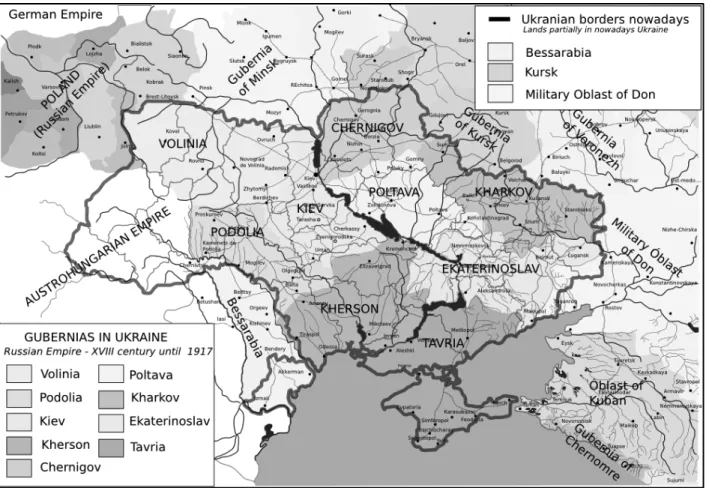
Figure 1.1 - Map of Ukraine’s guberniias on the eve of World War I………..…46
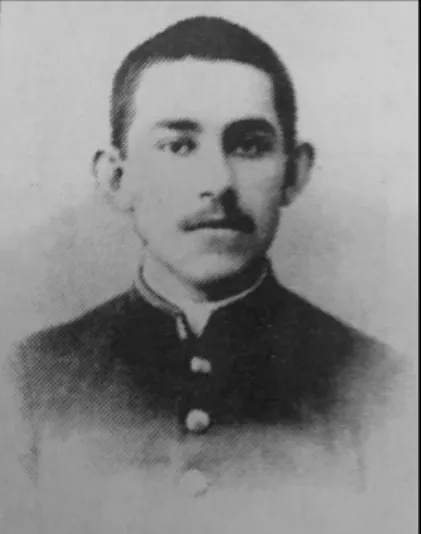
Figure 1.2 - Dmytro Dontsov’s older brother Sergei……….50
Figure 1.3 - Dontsov’s hometown of Melitopol’………...51
Figure 1.4 - Mug shot of Dontsov, 1907………..…………..58
Figure 1.5 - Mug shots of Dontsov, 1907………..………58
Figure 1.6 - Viacheslav Lypyns’kyi……….………..59
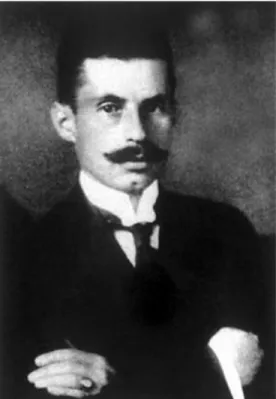
Figure 1.7 - Mariia Bachyns’ka-Dontsova………..………...76
Figure 2.1 - Dmytro Dontsov in middle age………..…………..105
Figure 2.2 - Ukraine during World War I………137
Figure 2.3 - Hetman Skoropads’kyi, Erich Ludendorff, and Hindenburg………...151
Figure 3.1 - Map of interwar Ukraine………..178
Figure 3.2 - Józef Piłsudski………..183
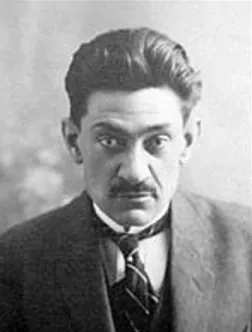
Figure 3.3 - Symon Petliura……….183
Figure 3.4 - Colonel Ievhen Konovalets’……….183
Figure 3.5 - Ievhen Malaniuk………...221
Figure 3.6 - Iuryi Lypa……….221
Figure 3.7 - Oleh Ol’zhych………..221
Figure 4.1 - The First Congress of the OUN in Vienna………...282
Figure 4.2 - Mykola Khvyl’ovyi………..315
xi
Figure 5.2 - Olena Teliha……….350
Figure 5.3 - Natalia Livyts’ka-Kholodna……….350
Figure 5.4 - Caricature of Dontsov as Don Quixote………351
Figure 5.5 - Olena Teliha and Dmytro Dontsov in Warsaw………360
Figure 5.6 - Olena Teliha and Dmytro Dontsov in Vorokhta………..360
Figure 5.7 - Olena Teliha and Dmytro Dontsov in L’viv………361
Figure 5.8 - Olena Teliha and her husband Mykhailo Teliha………..361
Figure 5.9 - Natalia Gerken-Rusova………373
Figure 5.10 - Caricature of Dontsov and Mykhailo Rudnyts’kyi………374
Figure 6.1 - The 1941 OUN(M) expedition to Kyiv………409
Figure 6.2 - MUR members (Malaniuk, Shevel’ov, Samchuk)………...436
Figure 6.3 - Dontsov near the end of his life………...463
Figure 7.1 - Commemorative plaque to Dontsov in Melitopol’………..489
LIST OF ABBREVIATIONS
ABN Anti-Bolshevik Bloc of Nations
BN Biblioteka Narodowa (National Library of Poland) CURB Central Ukrainian Relief Bureau
DD Dmytro Dontsov Archive
FNE Front of National Unity (Front natsional’noi iednosty) HUNM Group of Ukrainian Nationalist Youth
KP(B)U Communist Party (Bolshevik) of Ukraine KPZU Communist Party of Western Ukraine LAC Library and Archives of Canada
LFR League of Russia’s Foreign Peoples (die Liga der Fremdvölker Russlands) LUN League of Ukrainian Nationalists
LVU League for the Liberation of Ukraine
MUR Artistic Ukrainian Movement (Mystets’kyi Ukrainis’kyi Rukh) NEP New Economic Policy
NKVD People’s Commissariat for Internal Affairs
OVKUH Organization of the Higher Classes of Ukrainian Gymnasium Youth OUN(B) Organization of Ukrainian Nationalists, Bandera Faction
OUN(M) Organization of Ukrainian Nationalists, Mel’nyk Faction OUN(z) Organization of Ukrainian Nationalists, Abroad (za kordonom)
xiii RSDRP Russian Social Democratic Workers Party
SOUN Union of Organizations of Ukrainian Nationalists SUNM Union of Ukrainian Nationalist Youth
SVU Union for the Liberation of Ukraine (Soiuz vyzvolennia Ukrainy) TsDALIM Central State Archive of Literature and Art
TsDAHO Central State Archive of Public Organizations of Ukraine
TsDAVO Central State Archive of Supreme Bodies of Power and Government of Ukraine TsDIAK Central State Historical Archive of Ukraine in Kyiv
TsDIAL Central State Historical Archive of Ukraine in L’viv UDKhP Ukrainian Democratic-Agrarian Party
UKP Ukrainian Communist Party
UkrSSR Ukrainian Soviet Socialist Republic USKhD Ukrainian Union of Agrarian-Statists UNDO Ukrainian National-Democratic Alliance
UNR Ukrainian People’s Republic (Ukrains’ka Narodna Respublika) UPA Ukrainian Insurgent Army (Ukrains’ka povstans’ka armiia) UPC Ukrainian Parliamentary Club
UPSF Ukrainian Party of Socialist Federalists UPSR Ukrainian Party of Socialist Revolutionaries
UPNR Ukrainian Party of National Work (Ukrains’ka partiia natsional’na roboty) USDRP Ukrainian Social Democratic Workers Party
INTRODUCTION
2
entirely) Russocentric Soviet myth of the Great Fatherland War (i.e. the Nazi-Soviet conflict in World War II, from June 1941 to May 1945). Indeed, the symbols, slogans, songs, and heroes of the OUN and UPA were present in the vast crowds that drove the Maidan Revolution, during which the rightwing political party Vseukrains’ke ob’iednannia “Svoboda” (All-Ukrainian Union “Freedom”) and the paramilitary group Pravyi sektor (Right Sector) successfully promoted the use of the nationalist watchword: “Slava Ukraini! Heroiam slava!” (“Glory to Ukraine! Glory to the heroes!”). But these groups found Ukrainian society at large to be disinterested in the personality cult of Stepan Bandera (1909-1959), the most prominent and divisive of the OUN’s leaders. The radical rightwing ideology and violence of latter-day “Banderites” has frightened or embarrassed most of Ukrainian society.1 Yet, with rightwing nationalism ascendant throughout the region—from the Law and Justice Party in Poland, to Hungarian Prime Minister Viktor Orbán’s “illiberal democracy,” to Putinism and the upsurge in irredentist Russian nationalism—Ukrainian politics could conceivably follow suit, abandoning hard-won rights, liberties, and cosmopolitan aspirations for the sake of wartime cohesion, self-reliance, xenophobia, authoritarianism, militarism, and iron discipline.
Ukraine’s Europe-oriented politics and the Kremlin’s anti-Western reaction have brought about a resurgence of interest in the history, contents, and modern carriers of the OUN’s
ideology, usually termed “integral nationalism”—an authoritarian rightwing doctrine that
subordinates individual, class, and humanitarian interests to those of the nation.”2 Still, for all the controversy and mystique surrounding it, the strand of nationalism that connects the OUN to the marginal yet dangerous militias of post-Maidan Ukraine remains understudied and poorly understood. What were the foundational beliefs of the OUN, its affiliates, and its successors? How, when, and where did these ideas originate and evolve? Who articulated them, and on the basis of what precedents?
This study—a contribution to the cultural and intellectual history of Ukrainian integral nationalism, from its roots in the late nineteenth century to the early Cold War—seeks to address these questions. It places Ukrainian integral nationalism into its broader regional, cultural, and intellectual historical contexts, using the biography of the journalist, editor, diplomat, publicist, ideologue, and literary critic Dmytro Dontsov (1883-1973), the chief progenitor of this ideology, as a framing device. Dontsov represents an ideal case study for comprehending Ukrainian
integral nationalism because he stood at the forefront of its conceptualization and dissemination, and embodied its concerns and values. His long, itinerate life intersected with prominent figures of Eastern European history in over a dozen cities across the globe, from the southeastern Ukrainian town of Melitopol’ to Montreal, Canada. Both mirroring and anticipating broader changes in the Ukrainian national movement, Dontsov turned from the far left to the far right in the course of World War I and its revolutionary fallout, simultaneously yet independently crafting an ideology akin to Italian Fascism. Like many Ukrainian integral nationalists, he
4
gravitated toward German National Socialism (Nazism) during the 1930s then distanced himself from it after World War II, crossing the Atlantic and converting to pious, strictly anti-Communist positions. Dontsov personified the Ukrainian exile experience, positioning himself as a leading representative of the many thousands of émigrés unable or unwilling to live in the Soviet Union, and an ambassador for Ukrainian interests throughout Europe. A prolific, polyglot writer, he exerted a major influence on the non-Soviet Ukrainian elite and public as an editor of and contributor to literary and political periodicals in Kyiv, Vienna, St. Petersburg, Prague, and L’viv—cities teeming with avant-garde cultural and political experimentation in the early twentieth century.3 He shaped Ukrainian politics and literature in multiple capacities: as student radical in Kyiv and St. Petersburg and a participant in the Revolution of 1905; as international antitsarist propagandist and secret agent of the German Foreign Office in Switzerland during World War I; as diplomat and information minister of the Central Powers-backed Ukrainian State (also known as the Hetmanate) in 1918; as “conservative revolutionary” ideologue, cultural critic, and editor of the leading literary and political journal4 of the interwar Ukrainian
emigration; as pro-National Socialist journalist in wartime Berlin, Prague, and Bucharest; and, finally, as professor of Ukrainian literature at the University of Montreal during the early years of the Cold War. Progressing from heterodox Marxism, to avant-garde fascism,5 to theocratic
3 Carl E. Schorske, Fin-de-siècle Vienna: Politics and Culture (New York: Vintage Books, 1981); Jacques Le Rider, Modernity and Crises of Identity: Culture and Society in Fin-de-siècle Vienna (New York: Continuum, 1993); Irene Rima Makaryk, and Virlana Tkacz, eds., Modernism in Kiev: Kyiv/Kyïv/Kiev/Kijów/Ḳieṿ : Jubilant Experimentation (New York: University of Toronto Press, 2010); Mark D. Steinberg, Petersburg Fin De Siècle (New Haven: Yale University Press, 2011); and Katerina Clark, Petersburg, Crucible of Cultural Revolution (Cambridge: Harvard University Press, 1995).
4 Literaturno-Naukovyi Visntyk (Literary-Scientific Herald, 1922-32), revived under Dontsov’s sole discretion as Vistnyk (Herald, 1933-39).
5 Throughout this work, “fascism” as a generic phenomenon is lowercased while the specifically Italian original is uppercased.
traditionalism, Dontsov expounded a philosophy of will power, “creative violence,” idealism, and fanaticism, cultivated a literary circle to give it aesthetic content,6 and inspired a generation of Ukrainian youth to pursue national revolution by any means necessary.
Dontsov’s part-Marxist, part-Nietzschean worldview was an artifact of the pan-European “crisis of reason,” which provided fertile ground for the proliferation of rightwing extremism well before opposition to the spread of Bolshevism gave it a bête noire and a model of organization.7 He cast Ukraine as the decisive combatant in a worldwide clash between the “progressive” Occident and the “reactionary” Orient—between “European civilization” and “horde-like Muscovy” (i.e. Russia). Valorizing willpower over rationality and decrying
pacifistic, internationalist values, Dontsov’s incendiary prose inspired generations of Ukrainians to violent action, above all through their participation in the OUN and UPA. In addition to the insurrections, assassinations, terrorism, ethnic cleansing, racism, and espionage generally associated with the latter groups, however, Dontsov’s work also fostered a rich tradition of defiant Ukrainian prose and poetry. Ukrainian nationalists ever since have regarded him as one of their “spiritual fathers” and strived to put his ideals into practice.
But how and why did Dontsov become a “conscious” Ukrainian and a nationalist at all in a time and place (late imperial Russia) when the majority of ethnic Ukrainians were peasants disinterested in national politics and identities, and when even moderate forms of Ukrainian nationalism had yet to command a mass following, remaining the purview of a small and
suppressed intelligentsia? Up to World War I, activist Ukrainian intellectuals remained in Phase A of Miroslav Hroch’s account of nation creation: researching the “apolitical” cultural
6
foundations of national unity in language, folklore, and history to be invoked by a larger cadre of activists in Phase B—converting increasing numbers of the target ethnic group to nationalist causes—and Phase C—a fully developed social movement made of up of a variety of political parties embracing the majority of the nation.8 Much of the existing literature on Dontsov has implicitly assumed that the radical brand of Ukrainian nationalism for which he is known today was somehow nascent from birth, destined for realization as a natural reaction to certain events, and closed to revision thereafter. This ahistorical, essentialist approach to the question cannot account for what motivated the founder (not to mention the followers) of Ukrainian integral nationalism to embrace the ideas and identities that he did when he did, despite the many easier options available to him. To grasp the appeal and meaning of Dontsovism, one must think about the young Dontsov, not retrospectively, as a Ukrainian integral nationalist in the making, but contextually, as a traveler proceeding along a tortuous road punctuated by forks and pitfalls, unaware of what lay ahead and inclined to forget or embellish what lay behind. Similarly, one must view the mature Dontsov not as the unwavering prophet of a new worldview that he proclaimed himself to be, but as a seeker of knowledge and fame amid a surfeit of would-be prophets, constantly adapting to historical forces beyond his control and powers of prediction. Dontsov’s personal, professional, and intellectual journey took a serpentine course through the most catastrophic chapters of Ukrainian and world history.
Historiography
Much of the scholarship on Dontsov has treated his identity in essentialist, teleological
terms as immutable, innate, or inevitable, either retrospectively ascribing to him an unchanging,
heroic (or demonic) Ukrainianness and a stable nationalist ideology, or dismissing him altogether
as a “typical representative of the imperial Russian intelligentsia,”9 depending on the author’s
political commitments. This approach—though favorable to the creation of unifying myths or
cautionary tales—effaces the complexity of human thought and development. Ukrainian
commentators who oppose Dontsov’s ideology have tended to downplay his influence, regarding
him as an embarrassing, possibly Russian-influenced anomaly in Ukrainian intellectual history.
To the extent that they have acknowledged his relevance and studied him, their assessments of
his role in Ukrainian politics and literature since the 1920s have been overwhelmingly negative.
The resulting scholarship is simultaneously defensive and condemnatory, yet unwilling to
analyze Ukrainian integral nationalism on its own, constantly changing terms to sympathize with
the individuals who earnestly believed in it, however discomfiting that might be. By contrast,
Dontsov’s admirers, despite writing a great deal more about him than his detractors do, have
resisted discussing unsavory aspects of his life and work, tending to exaggerate his importance
and philosophical originality, and showing little interest in the ideologically inconvenient or
irrelevant vagaries of his personality and intellectual journey. The normative Ukrainian
nationalist account of Dontsov downplays the non-Ukrainian and cosmopolitan elements that
shaped his worldview and overlooks the fluidity of his (national) identity, his racism and
anti-Semitism, the mercuriality of his beliefs and values, his crises of faith, and other impurities. The
product is an icon of the unwavering “prophet of the national idea” who realized the evils of
Marxism and virtues of romantic nationalism in an irreversible, crisis-born conversion
8
hear when they needed to hear it and jolting them into the nationalizing mainstream of modern
Europe, away from the totalitarian barbarism of the Soviet “prison of nations.”
Typological disputes have dominated the literature on Dontsov and his ideology, which he termed “active nationalism” (chynnyi natsionalizm) and presented most comprehensively in his 1926 book Natsionalizm (Nationalism). Should he be categorized as fascist, integral
nationalist, both, or neither? Is Dontsov totalitarian or antitotalitarian? Modernist or
traditionalist? Are there any fundamental, ideational continuities underlying the drastic shifts in his thought, or was Dontsov a chameleon or opportunist? Commentators have answered these questions depending upon the contexts in which they wrote, their national and political identities, their moral evaluations of Dontsov and his influence, and the aspects of his career upon which they have chosen to focus. Debates about Dontsov and his legacy are often also debates about Ukrainian nationalism as a whole. Those who have endeavored to salvage Dontsov or the
nationalist movements he inspired from historical ignominy have tended to deny that his ideology can be categorized as totalitarian, fascist, racist, or anti-Semitic. Others have stopped short of dismissing Dontsov as a fascist, preferring the less inflammatory term “integral
nationalist” or “authoritarian rightist,” which leaves him open to both sympathetic and negative assessments. Still others have taken the existence of interwar Ukrainian fascism under Dontsov’s tutelage as proof that Ukrainians really are and have always been “normal” Europeans, even during their period of statelessness.10 Some scholars insist that Ukrainian statelessness, and its corollary liberationist tendencies, make Dontsovism, at worst, an instance of protofascism directed against an intolerably oppressive status quo. According to this interpretation,
totalitarianism and fascism should be applied only to state ideologies, not movements aimed at the attainment of statehood. Commentators hostile toward Ukrainian nationalism in general, and
its interwar varieties in particular, have asserted that Dontsov and his doctrine were neither original nor independently Ukrainian phenomena, but abject puppets of the fascist and imperialist powers to Ukraine’s west.
Ukrainian socialist scholars—both Soviet and non-Soviet—began writing about Dontsov in the late 1920s, shortly after he achieved celebrity status in interwar eastern Galicia, grounding their censure of his ideas in Marxism. Soviet writers also had to take into account the
occasionally conflicting political requirements of the Soviet state and Leninism, including Moscow’s desire to undermine interwar Poland by promoting Ukrainian nationalist and separatist sentiments in Galicia, while carefully controlling or repressing them inside Soviet Ukraine. In early Soviet discourse, however, Dontsov was beyond the pale even if he was a thorn in Warsaw’s side. Soviet critics categorized Dontsov’s “active nationalism” as “petit-bourgeois nationalism” or, more polemically, “fascism.” Following the then common Marxist interpretation of this term as late capitalism baring its true, antidemocratic nature, this account maintains that fascist parties and movements appear when the bourgeoisie and petite bourgeoisie, fearing proletarian revolution, enter a crisis, dismantle parliamentary and electoral institutions, appeal to the basest national egoism of the masses, and utilize police and paramilitary groups to attack leftists and organized workers. The raison d’être of fascism—its rhetoric about revolution and social welfare notwithstanding—is to protect the capitalist status quo. Soviet authors were likely to denounce any form of anti-Communism as fascism or petit-bourgeois nationalism. Since Dontsov was not only fervently anti-Communist, but anti-Russian as well, their assessment of him and “active nationalism” was extremely negative.11
10
Most Soviet works on the subject of Dontsov’s brand of Ukrainian nationalism, tending to be more propagandistic than scholarly, offer little of interest to biographers. There were, however, several exceptions prior to the early 1930s.12 Denouncing Dontsov’s ideology as fascism in the epithetical, nonacademic sense of the term was de rigueur for Soviet writers, but some expressed original ideas on the subject. Volodymyr Iurynets’s 1926 review of
Natsionalizm, for example, examines the influence of the radical French philosopher Georges
Sorel and the Polish Marxist Stanisław Brzozowski on Dontsov, challenging the assertion by other Soviet authors that his ideology lacked a theoretical foundation, labeling him an “extreme fetishist of the state.”13 After World War II, the Soviet annexation Western Ukraine and the pacification of the UPA insurgency there, the subject of radical Ukrainian nationalism became something of a taboo in Soviet discourse, broached only to blacken it and insist on its
foreignness to genuine Ukrainian life. The quality of Soviet literature criticizing Dontsov and his thought degenerated into simplistic caricatures of the man as a translator of Hitler’s Mein Kampf into Ukrainian, a hireling of the imperialist West with no ideas of his own, and a cheap
propagandist of no relevance to “real” (i.e. pro-Soviet) Ukrainians anywhere. Soviet Ukrainian academics nevertheless recognized Dontsov, whose ideas they considered to be the theoretical ________________________
Politvydav Ukrainy, 1976); Iuryi Rymarenko, Burzhuaznyi natsionalizm ta ioho ‘teoriia’ natssia (Kyiv: Naukova dumka, 1974); Klym Dmytruk, Bezbatchenyky. Pravda pro uchast’ burzhuaznykh natsionalistychnykh i tzerkovnykh iiearkhiv u pidhotovtsi napadu fashists’koi Nimechchyny na SRSR (L’viv: Kameniar, 1972); Klym Dmytruk, Zhovto-blakytni bankroty (Kyiv: Dnipro, 1982). On the subject of Ukrainian integral nationalism in late Soviet discourse and propaganda, see Trevor Erlacher, “Denationalizing Treachery: The Ukrainian Insurgent Army and the Organization of Ukrainian Nationalists in Late Soviet Discourse, 1945-85,” REGION: Regional Studies of Russia, Eastern Europe, and Central Asia 2, no. 2 (2013): 289-316.
12 See Ie. Hirchak, “Khvyl’ovyzm ta dontsovshchyna,” Zakhidna Ukraina 2 (1930): 47-52; M. Motuzak, “‘Zovsim novoho type ukraintsi’ (Do orhanizatsiino-ideolohichnykh ta prohramovykh osnov ukrains’koho fashyzmu),” Bil’shovyk Ukrainy nos. 7-8 (1929), 70-79, and no. 9, 70-81; S. Tudor. “Bellua sine capite. “Literaturno-naukovyi vistnyk,” L’viv (January-June 1931), in S. Tudor, Tvory: V 2-kh tomakh. vol. 2 (Kyiv: AN URSR, 1962), 330-39.
basis of the OUN and UPA, as enough of a threat to warrant dozens of philippics. After the 1920s, Soviet authorities strictly regulated access to Dontsov’s publications, which were available only to Communist Party members with special clearance, or, perhaps, in the form of illegally produced and circulated copies (samvydav/samizdat).
Mykhailo Sosnov’skyi, a co-founding member of the OUN(B)-controlled Canadian League for the Liberation of Ukraine (Liga vyzvolennia Ukrainy, LVU), executive of the World Congress of Free Ukrainians from 1969 to 1971, and personal associate of Dontsov’s, wrote the first biography of the latter shortly after his death in the spring of 1973. Despite its biases and shortcomings, Sosnov’skyi’s 1974 study remains one of the most comprehensive treatments of Dontsov’s life and thought to date. His evaluation of the ideologue’s impact is largely favorable, albeit with certain reservations. “In Ukrainian life,” Sosnov’skyi writes, “a situation existed that needed a ‘doctor’ with the psychology and talent of Dontsov. Dontsov’s appearance was a historical inevitability (zakonomirnist’).”14 “Active nationalism” was a necessary response to the failure of attempts to build an independent nation-state during the Ukrainian revolution (1917-1921), entailing a wholesale rejection of the nineteenth century and its idols—democracy, human rights, liberalism, socialism, and egalitarianism.15 While Dontsov did not simply copy fascism, his ideology shared certain elements with it, including voluntarism (a philosophical doctrine that asserts the primacy of will over reason), elitism, striving for the ‘spiritual rebirth’ of society (the “palingenetic myth”),16 the Führerprinzip (leadership principle), the call for an “initiative
14 Mykhailo Sosnovs’kyi, Dmytro Dontsov, Politychnyi portret: z istorii rozvytku ukrains’koho natsionalizmu (Toronto: Trident International, 1974), 259.
12
minority,” the creation of a stronger “new man,” and action for its own sake.17 Such ideas were not so much an outgrowth of Dontsov’s individual psychology and intellectual choices but an unavoidable by-product of the European zeitgeist for which neither he nor his followers can be held responsible. Without Dontsovism, however morally repugnant one might find it,
Sosnovs’kyi implies that the Ukrainian nation may have failed to survive the staggering brutality of the twentieth century. Portraying Dontsov as a typical European and a political imperative, Sosnov’skyi cites the French integral nationalist thinkers of Action Française—Maurice Barrès and Charles Maurras—as Dontsov’s closest analogues. “Under their influences,” Sosnovs’kyi writes, “the doctrine of fascism, including Dontsov’s doctrine of ‘active nationalism,’ formed.”18 Sosnovs’kyi pays insufficient attention to the more immediate influences on Dontsov from Russian, Polish, Jewish, and Germanic sources, treating his conversion to radical Ukrainian nationalism as a foregone conclusion, teleologically predestined by European reality and Ukrainian exigency. Consequently, he reads Dontsov’s mature ideology and fiercely pro-Ukrainian identity backward into his prenationalist youth, seeking out its roots everywhere and assuming the naturalness of the ideologue’s eventual position. There is little room in
Sosnovs’kyi’s account for a discussion of the contingency, nuance, flux, and multivalence in Dontsov’s intellectual biography, or for an acknowledgement of the contradictions, impurities, paradoxes, and lapses in faith and judgment that the founder of Ukrainian integral nationalism exhibited. Dontsov becomes the avatar of a foundation myth who unwaveringly propounded certain ancient and self-evident truths rather than the idiosyncratic and all-too-human seeker that
17 Sosnovs’kyi notes that Dontsov’s ideology matches Ernst Nolte’s definition of fascism. Ibid., 256. Nolte defined fascism as “anti-Marxism [that] seeks to destroy the enemy by the evolvement of a radically opposed and yet related ideology by the use of almost identical and yet typically modified methods, always, however, within the unyielding framework of national self-assertion and autonomy.” Ernst Nolte, The Three Faces of Fascism (London: Weidenfeld & Nicolson, 1965), 20-21.
he was. Sosnovs’kyi thinks of Dontsov’s Ukrainianness and nationalist ideology as things essential, ineluctable, and inherent to him, but these were acquired characteristics, subject to revision in the course of his existence, that developed alongside seemingly contradictory ideas, feelings, and identities (cosmopolitanism, socialism, exile, and assimilation).
Other historians of the Ukrainian diaspora weighed in more critically on Dontsov and his legacy, sometimes working from expressly ideological premises in the politically charged atmosphere of the Cold War era. Ivan Lysiak-Rudnyts’kyi, for example, made clear his
preference for the monarchist conservative ideology of Viacheslav Lypyns’kyi and his followers (particularly Osyp Nazaruk—one of Dontsov’s most avid contemporary critics), over and against the demagogic voluntarism of “active nationalism.” Initially, Lysiak-Rudnyts’kyi argued that Dontsovism was genetically distinct from Fascism and Nazism, staking out a position close to that of American historian John Armstrong, whose work on collaborationism draws parallels between the Hungarian, Croatian, Slovakian, and Ukrainian cases during World War II.19 Later in life, however, Lysiak-Rudnytskyi switched positions, writing: “with the whole of his authority [Dontsov] directed Ukrainian nationalism down the fascist channel.”20
The Ukrainian-American historian and political scientist Alexander J. Motyl published the first English-language monograph on Dontsov and the intellectual origins of the OUN, The Turn to the Right, in which he rejects the fascism label for Dontsov and his followers on the
grounds that “fascism was a way of organizing a state, while Ukrainian Nationalism was a way
14
of attaining a state.”21 Whereas the state preceded the nation in Italian Fascist thought, the nation necessarily enjoys primacy over the state in Dontsov’s conception. Whether one accepts this line of reasoning or not, the book’s ten-year scope, ending in 1929, the year of the OUN’s founding, leaves this organization’s actual period of existence untouched. As Motyl acknowledges, Dontsov and elements within the OUN fell under the influence of Nazism in the course of the 1930s. Though Motyl concludes that “Ukrainian Nationalism was as organically Ukrainian a phenomenon as any other political current of the 1920s,”22 he (like Sosnovs’kyi) exaggerates the influence of French integral nationalism on Dontsov and the OUN, and almost entirely ignores the preceding Polish, Zionist, German, and Russian strands of radical nationalism with which they had direct contact. Motyl astutely notes Dontsov’s counterintuitive Yankophilia in the 1920s, describing the latter’s stated preference (as late as 1929) for the US model of what he called a “conservative democracy” made up of “free individuals,” properly restrained and directed by the “moral tyranny of the majority.”23 (Dontsov thus applauded precisely what the British philosopher John Stuart Mill decried as the most insidious enemy of liberty in his
celebrated essay On Liberty.) Motyl contends that Dontsov’s democracy was not totalitarian, and not even authoritarian.24 Yet, although Dontsov occasionally flirted with the ideal of Anglo-American classical liberalism in 1920s, his decidedly antilibertarian, majoritarian understanding of it would strike most Americans as odd, and in any case not applicable to the untutored and intemperate Ukrainian peasantry, such as it was. What Dontsov admired in the United States
21 Alexander J. Motyl, The Turn to the Right: The Ideological Origins and Development of Ukrainian Nationalism, 1919-1929 (New York: Columbia University Press, 1980), 166.
22 Ibid., 173.
23 Ibid., 66, 74-75, 82.
citizenry of his imagination (he relied on Alexis de Tocqueville’s mid-nineteenth-century work, Democracy in America, which, ironically, singled out Russia for praise too) was the same thing
that he admired in the Bolshevik activists or Mussolini’s Blackshirts: iron discipline, high energy, mobilization capacity, esprit de corps. Given the less-than-ideal circumstances in places such as Ukraine, Italy, Germany, and Russia, Dontsov reasoned, extensive state intervention was needed to do what American society achieves through collective self-mobilization. His rumored liberalism, exaggerated and short-lived, was a moot point. Taking a dim view of the ideologue, Motyl attributes Dontsov’s remarkable success swaying the nationalist youth and veterans of interwar Galicia to the poverty of Ukrainian political thought at the time.
Polish scholars have been particularly active in counteracting the often uncritically pro-OUN/UPA, pro-Dontsov historiography of governmental and nongovernmental Ukrainian nationalists. But Polish commentators bring their own perspectives, and of course, biases to the subject. Wiktor Polishchuk’s forays into the matter convey palpable outrage. He asserts that Dontsov’s ideas predominated in the OUN’s ideology, cult of the nation, apotheosis of violence and war, territorial expansionism, racism, amoralism, elitism, and dictatorial authoritarian tendencies.25 Weighing in on the label debate, Polishchuk’s reasoning—that since fascism is a form of integral nationalism, the converse, every instance of integral nationalism is also an instance of fascism, and hence the OUN and Dontsov were fascists—is a logical fallacy (affirming the consequent, or the confusion of necessity and sufficiency).26
Polish historians Tomasz Stryjek and Roman Wysocki have produced more
dispassionate, evenhanded analyses of the subject. Stryjek periodizes Dontsov’s intellectual
16
evolution in the following manner: 1) the nation as an agent of progress—Ukraine as a cause of revolution (1913-1914); 2) the nation as a state—Ukraine as a part of Mitteleuropa (1914-1918); 3) the nation as a historical task—Ukraine as the bastion of Europe (1921); 4) the nation as will—Ukraine as a manifestation of the force of nature (1922-1933); 5) the nation in the plan of ‘fascism’—Ukraine as Sturm und Drang (1933-1939); and 6) the nation as a duration
(tryvannia)—Ukraine as a conglomerate of races (1939-1950s).27 Stryjek sees opportunism in these vicissitudes. Dontsov jumped from one position to the next in search of the ideas that, at any given moment, carried the most social and political purchase. Thus, for example, Dontsov supported fascism as a European force capable of destroying Bolshevism “using Bolshevik methods” and thus liberating Ukraine.28 Stryjek accepts the designation of Dontsov’s nationalism as “integral” because “nationalism of his type consists of the recognition of the nation as a singular value that cannot be subordinated to any restrictions, which is to say the kind [of value] without which no other values can emerge.”29 While Stryjek acknowledges that there is “no basis to deny that Dontsov [was] a supporter of fascism, but one cannot forget that this was an eastern- or east-central-European fascism and that Dontsov was a popularizer of an idea and not an actor in the fascist movement in Ukraine.”30 In the years following Hitler’s rise to power, Stryjek argues, Dontsov and the OUN drifted toward Nazism, but remained integral nationalist until 1941, when both fully embraced fascist ideas (with the latter engaging in genocidal
27 Tomasz Stryjek, Ukraińska idea narodowa okresu międyzwojennego: Analiya wybranych koncepsji (Wrocław: Fundacja na Rzecz Nauki Polski, 2000), 123-59.
28 Ibid., 146.
29 Ibid., 189.
behavior) only to back away from them in 1944 and thereafter.31 Instead of comparing Ukrainian integral nationalism to Nazism, Roman Wysocki focuses on its relation to Polish integral
nationalism, juxtaposing the intellectual and political biographies of the chief theorists of these two movements—Dontsov and Roman Dmowski (1864-1939), the leader of the Polish National Democracy (Endecja) movement. Wysocki makes a compelling and well-researched case for the former’s sizable debt to the latter.32
The L’viv-based historian Oleksandr Zaitsev and a leading expert on Ukrainian integral nationalism has challenged both the blinkered partisanship of the pro-Dontsov and pro-OUN camp, and the sententious, accusatory scholarship of opposing Ukrainians, Poles, Russians, and Westerners. Zaitsev’s research recognizes the presence of both liberationist and totalitarian elements in Ukrainian integral nationalism, which he divides into Dontsov’s “active nationalism” and the OUN’s “organizational nationalism” (as well as the “creative nationalism” of the lesser known Front of National Liberation, led by Dmytro Paliiv). Emphasizing the sacralization of politics and palingenetic myth-making at the center of Ukrainian integral nationalist thought, Zaitsev describes the ideology and movement as a secular religion in the making. Following the custom, Zaitsev intervenes in the typological debate, but proposes a new category: “ustashism” (from the Croatian Ustaša, a radical nationalist group that collaborated with the Nazi occupation of Yugoslavia). Zaitsev defines ustashism as “revolutionary integral nationalism developing
under conditions of perceived foreign oppression and using violence for the purpose of national
18
liberation and for creating an independent authoritarian state.”33 Ustashism differs from fascism
so long as it is stateless but transforms into fascism in cases where it achieves statehood.34
Zaitsev reads Dontsov’s project as the creation of a national mythology—an “ersatz religion”
showing Ukrainians their origins in a golden age, their unity as an organism, their Europeanness
and role as a bulwark against the chaotic forces of the Orient (i.e. Russia), their civilizing
mission, the division of humanity into superior and inferior types (and the natural right of the
former to rule to the latter), and the coming apocalypse—a holy war against the forces of
darkness.35 The great drawback of Zaitsev’s account is that it ends at the beginning of World War
II, when this idea was finally put to the test.
Zaitsev considers Fascism and Nazism to have been the chief influences on Dontsov in
the 1920s and 1930s, respectively. Dontsov openly embraced the label, albeit with reservations
and only “for the lack of a better word.” At other times he denied that “active nationalism” was
synonymous with fascism, even while praising Mussolini, Hitler, and other fascist leaders of the
era. He thought of fascism, Zaitsev contends, as the negation of allegedly harmful influences on
European civilization—socialism, pacifism, cosmopolitanism, and so on. Ultimately, Zaitsev
echoes Motyl’s argument that Dontsov’s concern—creating an independent state—was
fundamentally different from that of Italian Fascism—expanding and reorganizing an already
existing one. Zaitsev cites the nonbiological, nonracial character of Dontsov’s anti-Semitism as
evidence that he cannot be classified as a Nazi either. Instead, the ideologue was, as historian
33 Oleksandr Zaitsev, Ukrains’kyi integral’nyi natsionalizm (1920-1930-ti roky): Narysy intelektual’noi istorii (Kyiv: Krytyka, 2013), 13, 485; Oleksandr Zaitsev, “Fascism or Ustashism? Ukrainian Integral Nationalism of the 1920s-1930s in Comparative Perspective,” Communist and Post-Communist Studies 48, no. 2-3 (June-September, 2015): 183-93.
34 Stryjek, “Fashyzm chy integral’nyi natsionalizm?” 147-49.
Mykhailo Chuhuienko has argued, a “conservative revolutionary” or a “literary protofascist” in
favor of a “third way,” neither liberal nor Marxist.36 (Viewed through this lens, the radically
antiliberal Italian esotericist and ultra-traditionalist Julius Evola [1898-1974] bears a particularly
strong likeness to Dontsov.) Zaitsev does not accept Chuhuienko’s dismissal of claims that
Dontsovism is “totalitarian” thanks to its traditionalism and repudiation of the
“rational-technocratism of utopian Communism,” writing that “dogmatism, fanaticism, and creative
violence” “elitism, antipathy toward ‘partisanship,’ sympathy toward fascist regimes . . . and,
finally, a conception of nationalism as a modern religion gave Dontsov’s worldview expressly
totalitarian features.”37 Zaitsev regards Dontsov’s role in shaping the OUN as crucial, but not
canonical. More important, perhaps, was his radicalization of the generation of Galician youth
who joined the OUN in large numbers between 1929 and the outbreak of war. Dontsov hewed to
the anti-Semitic line until the end of World War II (and, more privately, until the end of his life),
but the Bandera faction of the OUN charted a more liberal, ethnically tolerant course in its 1943
program, which Dontsov sharply criticized.38
In addition to accusations of anti-Semitism, totalitarianism, and fascism, one of the
central controversies in the historiography on Ukrainian integral nationalism concerns the
relationship between and comparison of Dontsov and the OUN. To what extent did Dontsov
provide the OUN with its ideology at different stages in its development, before and after the
1940 schism between the older, more cautious followers of Andrii Mel’nyk (1890-1964) and the
36 On this point, Zaitsev cites the contemporary Russian “philosopher” of neo-Eurasianism and
National-Bolshevism, Alexander Dugin, who argues that the “conservative revolutionaries” of “the Third Way” are both to the right of the rightists in their extreme traditionalism, and to the left of the leftists in their total opposition to the status quo, albeit from the antithetical, anti-modern direction. Ibid., 235-36.
20
younger, more militant devotees of Stepan Bandera? If the official ideology of the OUN
significantly differed from “active nationalism,” was one more radical, totalitarian, or racist than
the other? In her dissertation on Dmytro Dontsov, Ukrainian scholar Iryna Shlikhta regards
Dontsov as a democratic thinker at heart who proposed national dictatorship only as a bridge to
an Anglo-American style republicanism.39 She acknowledges his significant ideological sway—
though chiefly on matters of rhetoric and abstractions—among the leaders and rank and file of
the OUN’s factions until the final years of World War II, but argues that he cannot be held
responsible for the organization’s antidemocratic outlook prior to 1943. Dontsov had always
maintained his distance from the organization (some thought irresponsibly), which had its own
official ideologues, but he became a scapegoat for many Ukrainian nationalists eager to escape
their politically suspect pasts after the war, but he retained his supporters and admirers despite
the changing times.40
Canadian scholar Myroslav Shkandrij, by contrast, argues that the OUN, though laboring
under morally questionable Dontsovist premises, charted a decidedly more moderate course, in
part because OUN members were the ones charged with realizing nationalist ideals and programs
in practice, and thus faced the severe repercussions for illegal or subversive actions.41 Privileged
and sheltered by his position as a bystander engaged in purely intellectual work (with the
complicity of the Polish authorities, whom he refrained from antagonizing), Dontsov could
afford to take more extreme and uncompromising positions on the desired social and political
39 Iryna Shlikhta, Dmytro Dontsov iak ideoloh i teoretyk ukrains’koho natsionalizmu (PhD diss. Shevchenko National University of Kyiv, 2005).
40 This includes OUN leaders Stepan Bandera and Iaroslav Stets’ko, who uncritically embraced Dontsovism that all members do the same, and Rostyslav Iendyk, who wrote an apologia: Rostyslav Iendyk, Dmytro Dontsov, Ideoloh ukrains’koho natsionalizmu (Munich: Ukrains’ke, 1955). Shlikhta, Dmytro Dontsov, 156-88.
order of the prospective Ukrainian state and on the means permissible in attaining it. Shkandrij
implies that Dontsov himself is largely to blame for the corruption of interwar Ukrainian
nationalist youth and Ukrainian literature. The postwar disavowal of Dontsov among his former
protégés and the OUN becomes a tale of a liberal-democratic awakening and redemption in
Shkandrij’s telling, while Dontsov and Dontsovism becomes an aberration relegated to the dark
days of the 1920s and 1930s, when the inexperience of youth and the humiliation of defeat left
Western Ukrainians and Ukrainian émigrés morally and intellectually defenseless against the
temptations of unfettered hatred and desperate remedies.
Iconoclastic Authoritarian, Cosmopolitan Ultranationalist
My study highlights flux and contingency, as well as the contradictions, paradoxes, and
ambiguities that defy the easy categorization of individuals and their beliefs across time.42 It
seeks to contextualize Dontsov and Dontsovism diachronically, placing his words, actions, and
associations in their early and mid twentieth-century contexts, and using his publications and
correspondences to reconstruct the social, political, and intellectual environments within which
he developed and disseminated his ideology. It thus offers a portrait, not only of Dontsov, but
also of the people who surrounded him, the spaces he inhabited, the ideas that inspired him, and
the institutions with which he associated himself. Situating the extremism of Dontsov and his
followers against this backdrop, I aim to grasp the roots and resonance of his thought in
Ukrainian society, and to put it into dialogue with radical right- and leftwing ideologies, regimes,
22
and movements elsewhere in turn-of-the-century, interwar, and postwar Europe. What shaped
Dontsov’s worldview and evolution? How did his worldview relate to contemporary intellectual
and political currents, such as Ukrainophile populism, Russian pan-Slavism and Eurasianism,
Italian Fascism, German National Socialism, Bolshevism, Zionism, and Wilsonian liberalism?
How were his ideas received internationally and domestically at different historical moments?
What does his career and intellectual development tell us about Ukrainian nationalist culture? To
what extent did his ideas continue to influence the political culture of the Ukrainian diaspora, and
what impact did they have upon official and unofficial Soviet Ukrainian discourse after
Stalinism? What relevance do Dontsov and Dontsovism hold for post-Soviet and post-Maidan
Ukraine? More broadly, what might his intellectual biography tell us about European
nationalisms that became mass movements relatively late, during the tumult of the first half of
the twentieth century?
Despite the ruptures in his politics and the contradictory sources of his ideology, a
continuum of what I term iconoclastic authoritarianism links Dontsov, the young socialist
activist, to Dontsov, the elderly ultraconservative mystic. He tailored his message to appeal to
and promote the “authoritarian personality,” and exhibited many attributes of it himself.
Although he was not thinking in these exact terms, Dontsov’s martial notion of the “new”
“strong man” with the “stone heart and burning faith” needed to carry out a merciless war for
Ukrainian national liberation celebrates the extraordinary violence and unflinching discipline of
which this personality type is capable.
The psychological traits of the authoritarian personality, as described by Theodor Adorno,
Else Frankel-Brunswick, Daniel Gevinson, and Nevitt Sanford in the classic sociological work
“superstition,” “authoritarian submission” to the powerful, “authoritarian aggression” against the
weak, “conventionalism,” obsessive prudery, contempt for empathy and sentimentality
(“anti-intraception”), a fixation on “power” and “toughness,” “anti-intellectualism,” “destructiveness,”
“cynicism,” and a tendency to scapegoat the “inferior” minorities in one’s midst rather than face
one’s own anxieties and shortcomings (“projectivity”).43 Possession of an authoritarian
personality, Adorno et al assert, predicts an individual’s likelihood of becoming anti-Semitic and
fascist, which they sought to measure using the “F-scale.” The “democratic personality”—which
they originally termed the “revolutionary personality” in line with their Marxist roots before
deferring to the pressures of their American publishers—represents the healthy antipode of the
authoritarian.
Critics of the study have objected that the political right does not have a monopoly on
authoritarian pathologies. Deploying a stock concept of Freudian psychoanalysis, Adorno et al
attribute the authoritarian personality to the Oedipal complex, wherein suppressed homosexual
tendencies lead to patricidal hostility, which is suppressed in turn out of the fear of punishment
(castration, humiliation) by the father, which produces an exaggerated obedience to and
idolization of him and of authority figures in general.44 The anxious authoritarianism produced
by repressed sexual impulses gives irrationality free reign, empowering political ideologies, like
43 Theodor Adorno, Else Frankel-Brunswick, Daniel Gevinson, and Nevitt Sanford, The Authoritarian Personality (New York: Harper and Row, 1950).
44 Ibid., 192. There were numerous attempts to diagnose fascism, as well as Communist or liberal-capitalist varieties of authoritarianism, as a kind of mass neurosis on the basis of a synthesis of Marx and Freud, blaming the ego- or superego-driven repression and oppression of desire (libidinal energy) for the observed perversions of modern individuals in the first place. Two of the most influential works in this vein are Herbert Marcuse, Eros and Civilization (London: Routledge, 1987) and Wilhelm Reich, Die Massenpsychologie des Faschismus (New York: Farrar, Straus, and Giroux, 1933). (The latter—an Austrian from Eastern Galicia (in modern-day Western
Anti-24
Dontsov’s, that rely on mysticism, emotionalism, and fantasies of salvific, cathartic violence.
The point here is not to take a (probably inadvisable) plunge into “psychohistory,” but to
describe the personal (as opposed to political) factors in the appearance and growth of Ukrainian
integral nationalism. In any event, the source material relating to his childhood is too scarce for
anything more than speculation. I will not hazard an Oedipal diagnosis, but simply note that
Dontsov’s father and mother died before he reached puberty, depriving him of the usual familial
authorities at an early age, and there is no reason to suppose that he resented his outward
conformity to heterosexual norms. We can only surmise the adult Dontsov’s actual beliefs and
feelings imperfectly; his inner psychology cannot be disentangled from his published views and
public personae. Nevertheless, the concept of the authoritarian personality, treated as a Weberian
“ideal type,” is descriptively and analytically useful.45 It closely matches Dontsov, both as a
public intellectual—that is, a body of texts bearing his name or imprimatur—and as a flesh -and-blood human being.
But the match is an idiosyncratic one; iconoclastic tendencies—that is, open antagonism
toward all sorts of received authorities—tempered Dontsov’s authoritarianism. However much
he regarded power and hierarchy as the keys to salvation, Dontsov played the role of a
consummate gadfly more than once in his life. His rebellious gravitation toward the illegal,
revolutionary, non-Russian left during his first thirty years shows an early penchant to defy state
45 An ideal type is a hypothetical abstraction—a subjective fiction—intended to make sense out of the seeming chaos of social reality, which cannot be studied in the positivistic, objective way that the natural sciences permit. The validity of an ideal type in the fields of sociology, economics, and history is a question of interpretive adequacy. By contrast, the natural sciences generate causal laws that correspond with observed reality. The latter are
encumbered in qualitatively different ways by epistemological problems of perspective and bias. Weber argues that the historian or social scientist must be self-conscious and publicly forthright about the value commitments and subjectivities they bring to their research and analysis. So, in the spirit of intellectual integrity, I confess to having an aversion to many of Dontsov’s ideas and beliefs, but nevertheless strive to produce a nonpartisan and clear-sighted account of them. Max Weber, “Objectivity in Social Science and Social Policy” and “The Meaning of ‘Ethical Neutrality’ in Sociology and Economics,” in E. A. Shils and H.A. Finch, eds., The Methodology of the Social Sciences (New York: Free Press, 1949).
authority and culturally hegemonic convention, even if it was in the name of a new authority and
ostensibly older, more legitimate traditions. Unwilling to surrender himself to party discipline
and always hostile toward the reigning intellectual and political authorities in Ukraine, he could
not tolerate ideological deviation and other displays of insubordination and disloyalty among his
followers. Dontsov and his wife Mariia never had biological children, but they became parental
figures to the younger generation of nationalist writers who rallied around their journal, Vistnyk.
The ideologue became a “spiritual father” to his closest acolytes—sons and daughters who either
grew to regard him as a stifling patriarch, asserted their independence, faced his wrath, and
turned against him, or remained loyal to the guru and his teachings even to the point of
martyrdom. In short, Dontsov permitted himself to be an individualist, a rebel, a dissenter, and a
wanderer, but decried this unmoored, fractious condition in his fellow countrymen, browbeating
subordinates into conformity with his vision and publicly savaging apostates.
Again, Dontsov reserved the right to modify his ideological program whenever and
however he saw fit, dropping former beliefs and allegiances like so many discarded snakeskins,
but conviction breaks in his thought do not indicate opportunism or a lack of rigor so much as a
lifelong conviction that the national interests of Ukraine, however defined, trumped moral or
intellectual concerns in changing historical contexts. He readily sacrificed logic and consistency
for the sake of emotive impact or political expedience, vulgarized the ideas of the writers whom
he invoked to fit the rhetorical needs of the moment, and moved chameleon-like between
political, cultural, and philosophical trends. In practice, Dontsov took to heart Nietzsche’s
26
philosophical foundations. The latter varied considerably from one decade to the next: from the
conventionally Russo-Marxian atheism, materialism, positivism, and anticlericalism of
Dontsov’s 1910 work, Shkola a relihiia (The School and Religion), to the amoralism, vitalism,
and voluntarism of his 1926 magnum opus, Natsionalizm (Nationalism); from the Social
Darwinian “democracy” of the peasantry and petite bourgeoisie found in his 1921 monograph
Pidstavy nashoi polityky (The Foundations of Our Politics), to the theocratic traditionalism and
anthropological racialism of Dukh nashoi davnyny (The Spirit of Our Antiquity) (1944). Dontsov
followed the intellectual fashions of contemporary Europe closely, amassing the foreign names
and quotations that he marshaled to impress and bewilder his readers into submission. He rarely
grappled with the substance of the chic Western and Russian concepts that he injected into
Ukrainian politics, and generally had little to offer that was novel and positive. Instead, Dontsov
was most effective as a critic and a denigrator, especially of subjects closer to home. His
jaundiced yet incisive attacks on Russian imperialism (both tsarist and Bolshevik) and on the
shibboleths of nineteenth-century Ukrainian populism show a familiarity with the subject matter
that can come only from personal experience and a fascination born of suppressed affinity.
Dontsov loathed what he knew best and knew best what he loathed.
This intellectual restlessness manifested itself even when it came to core philosophical
and epistemological paradigms, such as positivism and antipositivism (or neo-Romanticism). As
a youth Dontsov adhered to the positivism of the Russian fin de siècle, a doctrine that hoped to
supersede “theological” and “metaphysical” thinking with a materialist account of nature and
society as one in the same, subject to identical laws, and capable of being improved upon by
and Children by Ivan Turgenev—Dontsov attacked and ridiculed Christianity, patriotism, and the
state and educational institutions sustained by them as a rebellious student activist. There was no
place for blind faith, effete sentimentality, or the raptures of patriotism in the universe according
to this austere brand of positivism and “scientific socialism.”47However, as far as Dontsov’s
generation of aspiring intellectuals was concerned, positivism had already become a creed of the
Russian and Ukrainian intelligentsias’ proverbial “fathers,” hence banal and hackneyed. Thus,
breaking with the classical Marxism of his youth, Dontsov joined the “revolt against
positivism”—a continent-wide rejection of the nineteenth century’s conviction that scientific
achievements guaranteed human progress. The fantastic technologies and disenchanting
bureaucracies of the modern world seemed only to expand the destructive capacity of the beast in
man. Mechanized warfare, social dislocation, industrial exploitation, crumbling empires,
scattering nationalities, and urban rot left Dontsov and many of his contemporaries cynical and
pessimistic about modernity and its prospects. Despairing at the “nihilism” and “decadence” of
the times, which allegedly deprived people of authenticity, nobility, and stability, they yearned
for a golden age and sought the untimely values and baptismal fire that would usher in a total
rebirth on the basis of something lost and elemental. Like others, Dontsov turned to ancient
myths, medieval polities, forgotten creeds, blood, soil, race, and caste. Still, he habitually fell
back into positivist habits, cherry-picking theories from the natural and social sciences to buttress
his claims. (The clearest instance of this wavering was his formulation of a pseudoscientific,
Nazi-inspired, racialist definition of the Ukrainian and neighboring nations during the 1930s and
28
1940s.) Dontsov assailed the purported idols and mores of the preceding generations of the Ukrainian and Russian intelligentsia, as well as the Russian Empire and its literature, which his
family and upbringing had taught him to revere, but he never escaped this patrimony,
recapitulating it despite himself in novel ways. He took part in the perennial sons’ rebellion
against the fathers (who were, in their time, also iconoclastic), but did so in the name of
forefathers, authorities, and traditions that were older still.
The “ethno-symbolist” theory of nationalism, which, in contrast to “modernist” accounts
of nationalism, regards the premodern symbols, myths, historical memories, and homelands of
named ethnicities as a sine qua non of nationalisms and nation-states (which are, all the same, an
almost entirely post-1789 phenomenon), best corresponds with Dontsov’s case and the Ukrainian
experience in general. John Armstrong, one of the pioneers of ethno-symbolism (as well as the
historiography of Ukrainian integral nationalism), highlights the importance of the longue durée
for the emergence of modern nations, arguing that centuries-old “mythomoteurs”—the
constitutive myths that imbue ethnic groups with a sense of self-conscious collective purpose—
drive processes of semiotic exclusion and agglomeration based on ways of life (nomadic or
sedentary), religions, imperial polities, laws, and languages.48 Another leading proponent of
ethno-symbolism, Anthony D. Smith, argues that modernist theories of nationalism, such as the
industrialization thesis of his mentor Ernst Gellner, tend to define “nation” and “nationalism” as
48 Armstrong draws on the insights of social anthropologist Frederik Barth, claiming that the group-forming boundary is more durable than the attitudes and perceptions of the members it encloses. He thus understands ethnicity and nationality phenomenologically as a cluster of moving sentiments, ascriptions, and self-ascriptions organized into mythic, symbolic, and communicative structures that constitute interdependent ethnic groups. Moreover, as Barth explains, “categorical ethnic distinctions do not depend on an absence of mobility, contact and information, but do entail social processes of exclusion and incorporation whereby discrete categories are
synonymous with the canonical Western European cases (Britain, France, Germany, etc.), and
consequently suffer from a partial, Eurocentric perspective.49 Chronically afoul of the state (or
states) it lacks and representing an almost entirely pre-industrial population, Ukrainian
nationalism would not have survived if it did not refer to an already existing ethnie, as Smith
terms it, including a collective proper name (Ukrainian), a myth of common ancestry (the early
East Slavs and Kyivan-Rus’), shared historical memories (especially of the early modern
Cossack Period), a common culture, an associated homeland, and a sense of solidarity or kinship
among sufficiently large swaths of the population or at least its elites. Ethnies, too, are
discursively constructed “myth-symbol complexes,” but they are necessarily prior to nations and
nationalisms (in extreme cases by millennia). Also emphasizing the long-term cultural precursors
to nationalist movements, John Hutchinson insists on the distinction between “political”
nationalism, which seeks statehood (and, by extension, membership in the international
community of nation-states), and “cultural” nationalism, whose chief concern is not statehood,
but the moral regeneration of an ethnic community and its metamorphosis into a self-sufficient
nation. He observes that cultural nationalist intellectuals play a key role in defining and
reconstructing ethnic communities through the revival of ancient myths, symbols, and memories,
sometimes working in parallel with political nationalism, at other times, especially on the heels
of failed attempts at state-building, representing an alternative to it.50 Such intellectuals appear in
times of crisis and can point the way toward the cultural, social, and political renewal of ethnic
groups. Additionally, cultural nationalists’ regard humanity as “infused with a creative force
49 For a succinct statement of his life’s work on the subject, see Anthony D. Smith, Ethno-symbolism and