THE CONCEPTUALIZATION OF DEPRESSION AND ACCULTURATIVE STRESS AMONG LATINO IMMIGRANTS: A COMPARISON OF SCORES FROM NON-HISPANIC WHITES AND PERSONS OF MEXICAN ORIGIN ON THE CENTER FOR
EPIDEMIOLOGIC STUDIES DEPRESSION SCALE - REVISED (CESD-R)
Tasanee Walsh
A dissertation submitted to the faculty at the University of North Carolina at Chapel Hill in partial fulfillment of the requirements for the degree of Doctor of Philosophy in the School of
Social Work.
Chapel Hill 2014
iii ABSTRACT
Tasanee Walsh: The Conceptualization of Depression and Acculturative Stress among Latino Immigrants: A Comparison of Scores from Non-Hispanic Whites and Persons of Mexican
Origin on the Center for Epidemiologic Studies Depression Scale - Revised (CESD-R) (Under the direction of Kathleen Rounds)
This dissertation examines and compares the influence of acculturative stress on the experience of depressive symptoms among Non-Hispanic Whites and persons of Mexican origin. The objectives of this dissertation are threefold: First, to develop an expanded and integrated explanatory model of Latino acculturative stress that accounts for culture, stress and coping, cognitive appraisal, timing, and family and neighborhood factors; second, to evaluate the reliability and validity evidence of the English language version of the CESD-R; and third, to evaluate the reliability and validity evidence of the Spanish language version of the CESD-R.
iv
v
ACKNOWLEDGEMENTS
The inspiration, commitment, and wherewithal to complete my doctoral degree was drawn from my beloved grandmother Kulsum Sheriff, my mother Dr. Fariyal Ross-Sheriff, my father Bruce Ross-Sheriff, and my brother Ben Ross-Sheriff. I am who I am today because of their unwavering love and support.
I would like to thank my doctoral chair, Dr. Kathleen Rounds who believed in me and helped me through the highs and lows of meeting the requirements for my doctorate. I’m also indebted to the members of my doctoral committee, Drs. Natasha Bowen, Malcolm Cutchin, Mimi Chapman and Kyriakos Markides. Without the consistent support and invaluable feedback from my committee, my dream of earning a doctoral degree would not have been realized.
vi
TABLE OF CONTENTS
LIST OF TABLES ... viii
LIST OF FIGURES ... ix
LIST OF ABBREVIATIONS ...x
INTRODUCTION ...1
BACKGROUND ...4
MANUSCRIPT I: FRAMEWORK FOR UNDERSTANDING ACCULTURATIVE STRESS AND DEPRESSIVE OUTCOMES IN PERSONS OF MEXICAN ORIGIN ...9
Literature Review...9
An Integrated Explanatory Model of Acculturation ...22
Implications...28
Conclusions ...31
MANUSCRIPT II: RELIABILITY AND VALIDITY EVIDENCE OF THE ENGLISH LANGUAGE CENTER FOR EPIDEMIOLOGIC STUDIES DEPRESSION SCALE - REVISED (CESD-R) ...40
Literature Review...40
Research Methods ...45
Results ...61
Discussion and Conclusion ...69
vii
Literature Review...83
Research Methods ...86
Results ...98
Discussion and Conclusion ...101
CONCLUSION ...108
APPENDIX A ...112
APPENDIX B ...113
APPENDIX C ...114
viii
LIST OF TABLES
Table 1. English language CESD-R: Sociodemographic characteristics...75 Table 2. English language CESD-R: Scores by scale version ...76 Table 3. English language CESD-R: Exploratory factor analysis –
Eigenvalues criterion ...77 Table 4. English language CESD-R: Exploratory factor analysis –
2 factor structure ...79 Table 5. English language CESD-R: Confirmatory factor analysis –
fit indices...80 Table 6. English language CESD-R: Summary of results for single
and multiple-group analyses ...81 Table 7. Spanish language CESD-R: Sociodemographic characteristics ...104 Table 8. Spanish language CESD-R: Scores by scale version ...105 Table 9. Spanish language CESD-R: Confirmatory factor analysis –
ix
LIST OF FIGURES
Figure 1. The nature of acculturation ...33 Figure 2. Stress and coping: A model of interplay between context,
coping, and adaptation ...34 Figure 3. Four acculturation strategies based upon two issues, in
ethnocultural groups, and the larger society ...35 Figure 4. Acculturative stress approach to conceptualizing psychological
difficulties during adaptation ...37 Figure 5. A general framework for understanding acculturation and acculturative
stress ...38 Figure 6. An integrated explanatory model of acculturation ...39 Figure 7. English language CESD-R: Exploratory factor analysis –
scree plot ...78 Figure 8. Final multiple-group CFA model from the English language CESD-R
x
LIST OF ABBREVIATIONS
CAPHRS Concern About Petrochemical Health Risk Scale CES-D Center for Epidemiologic Studies Depression Scale
CESD-R Center for Epidemiologic Studies Depression Scale – Revised
CFA Confirmatory Factor Analysis
CFI Comparative Fit Index
DSM-5 The Diagnostic and Statistical Manual of Mental Disorders, Fifth Edition
EFA Exploratory Factor Analysis
RMSEA Root Mean Square Error of Approximation
SF-36 Health Survey The Short Form (36) Health Survey
TLI Tucker Lewis Index
Introduction
Latinos are currently the largest ethnic minority group in the United States with 50.5 million people, comprising an estimated 16.3 percent of the country’s population of nearly 309 million people (U.S. Census Bureau, 2010). Latinos are a rapidly growing minority group in the US, increasing at a rate of 43 percent between 2000 and 2010 (U.S. Census Bureau). Of these Latinos, more than two thirds are foreign born (excluding Puerto Ricans) (U.S. Census Bureau). According to the U.S. Census Bureau, approximately 31.8 million immigrants residing in the US in 2010 were Mexico-born, accounting for the largest single immigrant group. This large proportion of Mexican immigrants illustrates the need to understand acculturation and its effects on mental health specific to this population. The process of acculturation presents numerous challenges to Mexican immigrant communities, potentially benefitting or adversely affecting the mental health of Mexican immigrants and their children (Breslau et al., 2011).
2
(Dunlop, Song, Lyons, Manheim, & Chang, 2003). Other studies indicate that non-Hispanic Whites have higher rates of depressive disorders than persons of Mexican origin (Riolo, Nguyen, Greden, & King, 2005). However, the general consensus is that persons of Mexican origin have similar rates of depression when compared to non-Hispanic Whites, and U.S.-born Mexican Americans have higher rates of depression when compared to Mexico-U.S.-born Mexican Americans (Escobar, et al., 2000; Mendelson, et al., 2008; Breslau et al., 2011). According to Breslau et al. (2011), the longer a person of Mexican origin remains in Mexico before immigrating into the US, the lower the likelihood that he or she will develop anxiety and or a mood disorder.
Meeting the mental health needs of the fastest growing population in the US is a serious challenge to our society and specifically to the field of social work. Providing mental health clinicians with valid and culturally relevant mental health assessment tools is a key component to meeting the mental health needs of Latinos. Without the ability to correctly conceptualize symptoms of depression in Latino populations and how acculturation may affect this conceptualization, treatment of Latino depression may miss the mark.
The following three manuscripts center on the impact of acculturation on depression in persons of Mexican origin. Specifically, the three manuscripts aim to frame, from a multi-systems perspective, how Latinos experience depression, how it manifests, and how these experiences and manifestations differ for U.S.-born Mexican Americans, Mexico-born Mexican Americans, and non-Hispanic Whites.
The first manuscript provides a background of how frequently used theories of stress and coping and acculturation fall short in capturing all of the factors at play in fully
3
depression in Latinos. A novel framework is presented to illustrate the importance of viewing how Latino’s cope with depression from a multi-systems perspective including the key factors of family and neighborhood.
The second manuscript has two objectives. First, it is a study that examines if the English language version of the Center for Epidemiologic Studies Depression Scale - Revised (CESD-R) is a reliable and valid measure of depressive symptoms. Second, the study evaluates whether data from U.S.-born Mexican Americans, Mexico-born Mexican Americans, and non-Hispanic Whites factor differently from one another on the English language version of the CESD-R.
The third manuscript also has two objectives. First, it examines if the Spanish language version of the CESD-R is a reliable and valid measure of depressive symptoms. Second, it explores whether data from persons of Mexican origin in the US factor similarly to data from respondents included in a landmark Mexico City study that also employed the Spanish Language version of the CESD-R.
Background
To accurately design mental health research studies on persons of Mexican origin, it is important to understand how depression is conceptualized for this population. Further, it is critical to understand how well depression and other mental health outcomes among persons of Mexican origin are explained by foundational and widely used psychological and
sociological theories. Critically evaluating and building upon “gold standard” theories of stress and coping provides a roadmap for future theory development and allows a common starting point to explain new research findings. This section describes how culture,
acculturation and acculturative stress influence the development of mental health problems, and how traditional theories explain stress and depression.
To provide clarity to the following manuscripts, seminal concepts will be defined and described contextually.
Ethnicity
5
to aggregate them into one group, either Hispanic or Latino. Specifically, studies often aggregated individuals who originated from Puerto Rico, Mexico, Cuba, Guatemala, El Salvador, Honduras, and Columbia into one category (Alegria et al., 2008). Clearly defining the specific ethnic group or specific ethnic sub-group of study can help minimize threats to external validity. Specifically, research studies that clearly define ethnic groups or ethnic sub-groups allow for generalizability and replication of findings, as well as theoretical, policy, and practice implications for specific ethnic groups (Shadish, Cook & Campbell, 2002). For this dissertation, the term Latino will be used when discussing extant literature and research, and when referring to the ethnic population in its entirety. In addition, the following three terms will be used to describe the three distinct data groups used for analyses: U.S.-born Mexican Americans, Mexico-born Mexican Americans, and Non-Hispanic Whites. U.S.-bornMexican Americans are defined as persons born in the US, of Mexican descent, residing in the US. Mexico-born Mexican Americans are defined as persons born in Mexico, of Mexican descent, residing in the US. Non-Hispanic Whites are White individuals who do not identify their origin as Hispanic, Latino, or Spanish, and are also residing in the US. Finally, persons of Mexican origin refer to both U.S.-born Mexican Americans and Mexico-born Mexican Americans.
Acculturation
6
Both linear and multidimensional theoretical frameworks have been developed by scholars to understand the process of acculturation. However, the research on acculturation has not kept pace with the development of acculturation theory (Abraido-Lanza, et al., 2005). Despite the more recent development of multi-dimensional models of acculturation, acculturation
research has often employed older, linear assimilation models. Further, research on acculturative stress—the collective anxiety, loss of identity, and feelings of alienation that may result from the process of acculturation (Berry & Annis, 1974; Williams & Berry, 1991)—is just beginning to be explored by researchers investigating the effects of acculturation on Latino populations.
Acculturative Stress
Acculturative stress has been defined as collective anxiety, loss of identity, and feelings of alienation that directly results from the acculturative process (Berry & Annis, 1974; Williams & Berry, 1991). Further, it refers to experiences during the process of acculturation that have served as catalysts for the development of a particular set of emotions and behaviors (i.e., depression, anxiety, feelings of marginality, psychosomatic symptoms, identity confusion) (Organista, 2007; Williams & Berry). In a more global sense,
acculturative stress refers to the disparity in overall health and quality of life as experienced by minority cultural groups as compared to the majority cultural group (Organista).
The Hispanic Paradox
7
Coreil, 1986). The effect one’s environment has on mental health outcomes, including depression, has been well documented (Rutter, 2005; Kessler et al., 2009). The assumption is that an environment with more opportunities, less poverty, and more resources, acts as a protective factor against the development of depression and other mental health issues. Conversely, the Hispanic Paradox asserts that staying in one’s own country of origin despite political, economic, and social disadvantages is better for a Latino’s overall mental health (Aguilar-Gaxiola & Thomas, 2009).
Stress and Coping
Researchers are just beginning to understand the associations between stress, coping style, and health in Latinos living in the United States. Farley et al. (2005) found that coping styles differ among a rural population of U.S.-born Latinos, Mexico-born Mexican
8 Depression
As defined by the World Health Organization (WHO), depression is a common mental health disorder, typified by sadness, loss of interest or pleasure, feelings of guilt or low self-worth, disturbed sleep or appetite, feelings of tiredness, and poor concentration (Mathers, Fat, & Boerma, 2008).
9
Manuscript I: Framework for Understanding Acculturative Stress and Depressive Outcomes in Persons of Mexican Origin
Literature Review
The theory of stress and coping describes the mechanisms of stress and the coping strategies that are available to help mediate the effects of stressful live events on health outcomes. For immigrants, the processes of migration and resultant acculturation are often stressful life events. Understanding acculturation and acculturative stress is central to becoming aware of the unique challenges faced by immigrants in the United States. The
theory of acculturation describes the multidimensional process of leaving one’s country of origin and adapting to a new culture. The theory of acculturative stress further explains the transformative effect of acculturation, through interpersonal and intercultural experience. It also describes how the stresses of acculturation can have an effect on one’s emotional and physical well-being, and links the effects of acculturation with health outcomes. Lastly, the
Hispanic Paradox describes morbidity and mortality specific to Latinos in the US, how their outcomes are different from other ethnic groups, and proffers explanations as to what may be serving as protective factors.
10
influence one another within the context of acculturation, provides a basic building block for understanding how acculturative stress and coping affect Latino immigrants (Berry, 2003; Organista, 2007). Figure 1 shows that when two cultures interact, one culture assumes dominance over the other culture. While theoretically simplistic, it provides a foundation upon which to begin to understand the other theoretical frameworks of greater complexity. Common Models of Stress and Coping
For centuries the concept of stress has been used to describe the process of pressure and its resulting effect (Lazarus, 1993a). As early as the 1400s people were discussing how the concept of stress is central to understanding how to build and maintain a bridge (Lazarus, 1993b). The idea of stress has vastly evolved from the early bridge days, but the not easily understood complex process of how stress affects particular individuals’ biopsychosocial reality remains constant. Stress and how it influences human behavior first became relevant when clinicians and researchers were tasked with choosing which enlisted men would hold up under the pressure of World War II (Lazarus, 1993b). Research examined the biological markers of stress during the fifties and sixties, focusing on brain and biochemical changes resulting from the introduction of stress (Tache & Selye, 1985). Lazarus then presented a model of stress that challenged the basic stimulus-response model, suggesting that motivation and cognition intercede between the stimulus and the response (Lazarus, 1993b). Lazarus also asserted that it is important to examine how each individual reacts to stress, questioning the idea that there is a standard human response to stress.
11
1977). According to the transactional model of stress and coping, a person first appraises the impact of the external stressor, conceptualizing it as either a threat or a challenge and then attempts to cope with the stressor by utilizing available social and cultural resources (Lazarus & Cohen). It is important to emphasize that the transactional model illustrates the
importance of having social and cultural resources available to successfully cope with the stressor (Cohen, 1984).
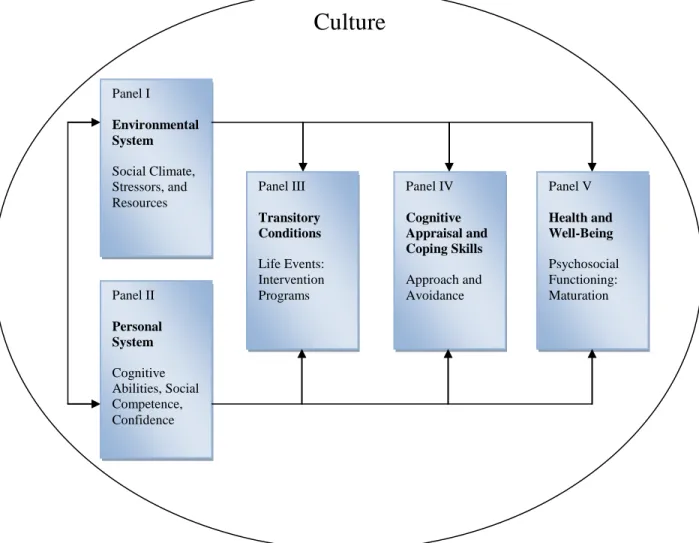
Another model of stress and coping developed by Moos (1984) (Figure 2, “Stress and Coping: A Model of Interplay between Context, Coping, and Adaptation”) recognizes the importance of the person-environment interaction but posits that contextual factors should be considered equally as important. In addition, Moos’ model views culture as a macro-systems factor, separate from other environmental factors, which is unavoidable and encompasses the entire stress and coping process. The model illustrates the confluence of the environmental system (i.e., social climate and stressors)and the personal system (i.e., cognitive abilities and self-confidence) on ensuing transitory conditions (i.e., life events), cognitive appraisal and coping skills (i.e., approach and avoidance), which in turn affect the health and well-being ( i.e., psychosocial functioning) of the person experiencing the stressor (Moos, 2002).
12
Stress and coping researchers usually separate coping strategies into four central categories: active coping; avoidance-based coping; emotion-focused coping; and social support (Farley, et al., 2005; Steptoe, 1991). Active coping or problem solving coping
directly confronts the problem that is causing the stress, attempting to ameliorate the stressful situation and the associated stress reaction (Steptoe). Active coping can be accomplished through action, but it may also include cognitively restructuring the way one perceives the stressful event (Crockett, et al., 2007) Active coping is believed to mitigate the negative effects of stress, and has been found to be linked with better psychological well-being in Latina college students as well as with lower levels of psychological symptoms in Mexican-American inner-city adolescents (Crean, 2004; Crockett, et al., 2007; Gloria, Castellanos, & Orozco, 2005).
Avoidance-based coping is considered any behavior that implies escaping from the stressful situation (i.e. physically removing oneself from the stressful situation, or mentally daydreaming to escape the problem) (Crockett, et al., 2007; Steptoe, 1991). Avoidance-based coping is considered less effective than active coping, and may even worsen the negative effects of acculturative stress (Crockett, et al.).
13
incorporating parts of each of the aforementioned coping responses into their own coping style (Steptoe).
Theory of Acculturation
The classic definition of acculturation was theorized in the mid-1930s by several anthropologists (Redfield, Linton, & Herskovits, 1936) who sought to understand the
interaction between different, autonomous cultural groups when they come into contact with one another for a sustained period of time, and the resultant changes to their original cultural patterns and customs, such as language, values, attitudes, and identity (Organista, 2007). More recently, the process of acculturation has been examined by evaluating the experiences of indigenous peoples and ethnic groups in North America, both current and historical (Berry, 2003). Berry, who is considered one of the leading theorists and researchers on acculturation and acculturative stress (Ward, 2008), asserts that even though it is theoretically possible for two cultural groups to influence each other when they come into contact, in reality it is often the larger group that dominates the smaller, less powerful one. In this type of relationship, the larger culture may have greater control and influence over the smaller culture, and may even oppress it. The process of acculturation within this type of dynamic often is resistant, stressful, and conflictual for members of the smaller cultural group (Organista).
14
seeking refuge in the lands of another cultural group. Conflict refers to the tensions that result when one group tries to assert dominance over the other. While it is theoretically possible for some individuals or groups to not experience this conflict, most groups
experience some amount of tension regardless of how similar the two cultures are, because this is an inevitable by-product of power struggles where one group is striving for
dominance. Finally, adaptation is the eventual relationship that develops between the two cultural groups in an attempt to reduce the tensions experienced in the previous stage. Accommodation at this stage can take different forms, from assimilation (for instance, when members of the smaller group marry into the larger group), to separation (for example, when the smaller group ends up existing as an autonomous group within the context of the larger group) (Organista).
Berry (2003) has theorized that the acculturative experiences of most societies can be categorized in one of four major forms of adaptation. They are: assimilation, integration, separation, and marginalization. These four forms of adaptation reflect a gradient in stress experienced by individuals undergoing acculturation. Assimilation strategy occurs when individuals do not wish to maintain their cultural identity and choose to interact with the dominant culture on a daily basis (Berry, 2006). In contrast, when individuals choose to hold onto their culture of origin, and avoid interactions with members of the dominant culture, this is called separation. When individuals choose to maintain their cultural integrity, while at the same time have daily interactions with members of the dominant culture, integration
occurs. Finally, when there is little or no cultural maintenance (by choice or enforced) as well as little or no interest in interacting with members of the dominant culture,
15
Which form a particular minority ethnic group experiences when integrating with the majority culture depends on a number of factors, including the type of initial contact
developed between the cultures, the amount of conflict present between them, as well as how tolerant the dominant culture is to diversification (Zambrana & Carter-Pokras, 2010). These factors work in tandem to influence the amount the non-dominant culture seeks to maintain its cultural identity and the degree to which positive relationships between cultures can be fostered (Organista). Berry (2003) proffers an evaluation tool to determine what type of adaptation is taking place for any given situation. His tool asks dichotomous questions on two issues: 1) Does the minority group attempt to retain its culture of origin? And, 2) are positive relations possible between the minority and majority groups? Responses to these two questions result in the minority group falling within one of the four quadrants (Figure 3, “Four Acculturation Strategies Based Upon Two Issues, in Ethnocultural Groups, and the Larger Society”) of integration, assimilation, separation, and marginalization (Berry, 2006). Similar questions can be asked of the dominant group, the answers to which can be used to identify the strategy most likely employed toward non-dominant groups.
16
segregation/separation to integration, which illustrates the dynamic nature of the acculturation process (Organista).
Researchers have made great strides in conceptualization and theoretical exploration of acculturation. Researchers are moving away from conceptualizing acculturation as a linear process where change is measured by assimilation into a dominant culture (Cuellar, Harris, & Jasso, 1980; Marin, Sabogal, Marin, Otero-Sabogal, & Perez-Stable, 1987; Szapocznik, Scopetta, Kurtines, & Aranalde, 1978; Zea, et al., 2003). Now, researchers believe that acculturation is a bilinear, multidimensional process where change occurs in two places: 1) within the culture of origin, and 2) within the host culture (Birman, 1998; Birman & Trickett, 2001; Cortes, Rogler, & Malgady, 1994; Cuellar, Arnold, & Maldonado, 1995; Marin & Gamba, 1996; Mendoza, 1989).
With this new understanding, researchers are beginning to develop better ways of empirically operationalizing and measuring the process of acculturation. These new measures typically assess one or more of the five dimensions that may play a role in
acculturation: cultural behavior, cultural identity, knowledge, language, and values (Zea, et al., 2003). Cultural behavior is often measured by an individual’s choice in friends and media preferences. Cultural identity can be measured by how the individual self-identifies, how s/he chooses to affiliate, and cultural pride. Cultural knowledge can be measured by the amount of historical and political knowledge the individual possesses regarding his or her original or new culture, and which cultural celebrations s/he participates in. Language proficiency can be operationalized as use of an individual’s new and original culture
17
culture. Some researchers suggest that the first four dimensions reflect a superficial degree of immersion, while the fifth dimension reflects a deeper degree of immersion (Kim & Abreu, 2001; Marin, 1993; Stephenson, 2000).
Theory of Acculturative Stress
Acculturative stress has been conceptualized as conflict, as experienced by the individual going through the process of acculturation, that is problematic, but controllable and surmountable (Berry, 2006). Individuals experience events that challenge their
understanding about how to live. When these experiences are due to acculturation events, the stress of having to rethink one’s way of living is considered to be acculturative stress. As part of these experiences, the individual begins to understand that he or she is going through the experiences because of intercultural contact, and that these experiences cannot be dealt with easily or quickly by adjusting or assimilating. Drawing from broader theories about stress and adaptation (e.g., Lazarus, 2000), the acculturative stress approach involves the study of how individuals deal with acculturative problems over time. That is, acculturative stress is a stress reaction to life events stemming from the experience of acculturation (Berry).
Berry’s Acculturative Stress Approach to Conceptualizing Psychological Difficulties
during Adaptation
18
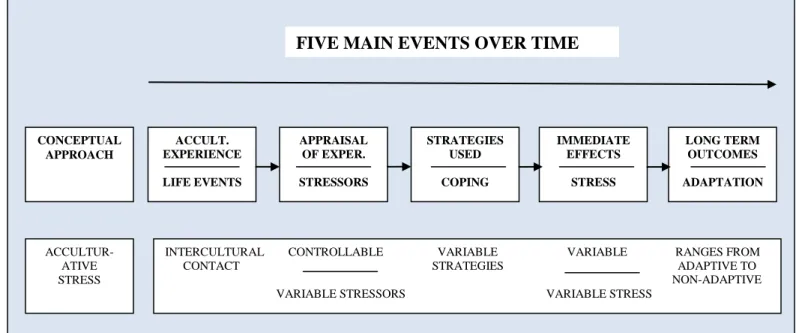
particular note, this model incorporates the influence of time, how each component leads into the next, the decisions the individual makes regarding strategies used, and how coping
impacts long-term outcomes. That is, this model captures whether, after intercultural contact an individual perceives that the stressors are controllable; what type of coping strategy he or she may employ to address the stressors, and how the resultant stress affects his or her long term outcomes.
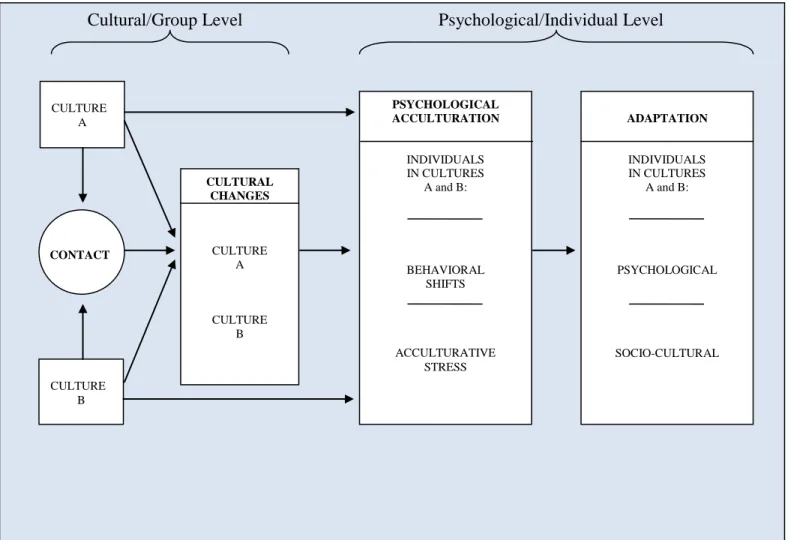
Compared to Berry’s first model that focuses on acculturative stress and adapting to psychological difficulties (Figure 4), his second model, “A General Framework for
Understanding Acculturation and Acculturative Stress” (Figure 5) is more comprehensive and explains the key components of acculturation and acculturative stress (Berry, 2006). Barry’s second model includes a cultural component, and the central role culture and cultural changes play in the acculturation and acculturative stress process. It also categorizes these components as ones that are affected at the cultural or group level, which in turn affect components at the individual and psychological level, such as behavioral shifts, acculturative stress, and psychological and socio-cultural adaptation. It also shows how these components are related temporally, with outcomes on the right hand side of the model. Further, the model takes into account the experiences of individuals in the dominant as well as minority group, indicating that the process of acculturation and acculturative stress can be experienced by members of both groups (though the level of intensity may differ).
To expand and articular further the role acculturative stress plays in mediating mental health outcomes, one of the most prominent and well-studied theories of Latino acculturative stress the Hispanic Paradox, is discussed next.
19
The relationship between low levels of socioeconomic status (SES) and poor health has been researched extensively and is well-documented (Abraido-Lanza, et al., 2005; Adler, et al., 1994). Latinos in the United States are disproportionately represented amongst those in lower SES groups and have an average income similar to that of African Americans rather than non-Hispanic Whites (Franzini, Ribble, & Keddie, 2002). As such, Latinos as a group would be expected to have higher levels of morbidity and mortality (Falcon, Aquirre-Molina, & Molina, 2001). However, many studies have shown that Latinos in the US have similar or better health, higher life expectancy, and relatively lower adult mortality compared to non-Hispanic Whites, despite lower levels of income and education (Abraido-Lanza, et al., 2005; Cho, Frisbie, Hummer, & Rogers, 2004; Crimmins, Kim, Alley, Karlamangla, & Seeman, 2007; Elo, Turra, Kestenbaum, & Ferguson, 2004; Franzini, Ribble, & Keddie, 2001; Morales, Mara, Kington, Valdez, & Escarce, 2002). This better than expected health and mortality (but not morbidity), despite higher rates of poverty, less education, and lower likelihood of possessing health insurance, has been coined the Hispanic Paradox (Abraido-Lanza, et al., 2005; Adler, et al., 1994; Markides & Coreil, 1986; Markides & Eschbach, 2005).
Not all empirical studies support the existence of a paradox, and differences exist depending on the domain of health examined and the population under investigation (Crimmins, et al., 2007). For instance, some studies have shown that total mortality from cardiovascular disease is not lower for Latinos than non-Hispanic Whites, but results across studies are not consistent, especially for men (Markides & Coreil, 1998; Hunt et al., 2003; However, studies have shown that age-adjusted cerebrovascular disease (i.e., stroke)
20
gender, with older ages and men showing significantly larger differences (Franzini, et al., 2002). Further, Latinos have lower age-adjusted mortality rates from cancers that are more prevalent in the United States, but have higher mortality rates for forms of cancer that are less prevalent, as well as higher rates of diabetes (particularly non-insulin-dependent diabetes mellitus) (Franzini, et al., 2002; Arias, 2010).
Markides and Eschbach (2005) suggest that the Hispanic health advantage is strongest for men, older adults, and Mexico-born Latinos. On the contrary, some studies have not shown the existence of a mortality advantage for Latinos compared to non-Hispanic Whites (Hunt, et al., 2002; Hunt, et al., 2003). For instance, Latino males between the ages of 15 and 44 have higher mortality rates than non-Hispanic Whites; but the reverse is true for females of this age group (Franzini, et al., 2002). Further, Latino mortality rates are lower for females from the age of fifteen, but for males from the age of fifty-five (Franzini, et al., 2002). These lower mortality rates for middle-aged to older Latinos likely reflect lower mortality from chronic diseases that are generally seen in these older age groups. Other studies question the data quality of studies that have shown a mortality advantage (Smith & Bradshaw, 2005). Various researchers concur that the Hispanic Paradox is limited to the foreign-born, and more specifically to those who are Mexico-born, rather than Latinos who are U.S.-born (Crimmins, et al., 2007; Palloni & Arias, 2004).
Ng-21
Mak, & Turner, 1999; Sorlie, Backlund, Johnson, & Rogot, 1993). The healthy migrant effect suggests that Latinos who are healthier and stronger are more successful in making the sometimes difficult migration into the United States, bringing healthy people into the US and leaving behind less healthy members of the population. Several studies have compared Latino mortality for the U.S.-born and foreign-born by country of origin. One study found that Latinos born in Central America, South America, and the Caribbean have better mortality than Puerto Rican-born and U.S.-born Latinos (Fang, Madhavan, & Alderman, 1997). Another study found that age- and sex-adjusted all-cause mortality rates for U.S.-born Mexican Americans to be higher than that of non-Hispanic Whites, but Mexico-born
Mexican Americans to have lower mortality rates than non-Hispanic Whites (Wei, et al., 1996).
The salmon bias is another migratory hypothesis which suggests that Latinos eventually migrate back to their country of origin when they get sick or old (Tura & Elo, 2008; Abraido-Lanza, et al., 1999; Pablos-Mendez, 1994; Palloni & Arias, 2004). When Latinos migrate back to their birth countries to die, their deaths are not recorded in the United States, thus resulting in artificially lower mortality rates. However, this hypothesis has not been substantiated, though studies of return migration confirm that a large percentage of foreign-born Latinos return to their home country (though it is unclear how permanent this return migration is) (Franzini, et al., 2002). One study found that U.S.-born Latinos (who would likely stay in the US to be with their families later in life), Cubans (who cannot return to their country of origin), and Puerto Ricans (whose deaths are recorded in US vital
22
Other researchers are unconvinced that the healthy migrant effect and salmon bias account for the Latino health advantage. Rather, they hypothesize that other factors, such as health behaviors, account for the phenomenon (Abraido-Lanza, et al., 1999). Some
researchers believe that Latinos may employ different coping mechanisms than non-Hispanic Whites to deal with stressful situations, and that this may account for some of the Latino health paradox (Farley, et al., 2005). Other studies have shown that Latinos are less likely to consume alcohol and smoke tobacco products than non-Hispanic Whites (Haynes, Harvey, Montes, Nickens, & Cohen, 1990; Markides, Ray, Stroup-Benham, & Trevino, 1990; Perez-Stable, Marin, & Marin, 1994; Singh & Siahpush, 2002), and have better diets than the general population (Ramirez, McAlister, Gallion, & Villarreal, 1995). However, studies indicate that with increased acculturation, financial stability, and education, Latinos are increasingly adopting negative health practices (Markides, et al., 1990; Ramirez, 1992). Further, adoption of more mainstream behaviors has been shown to increase risks for cancer and other diseases (Ruiz, Steffen & Smith, 2013; Lowenstein, 1981; Ramirez, et al., 1995).
An Integrated Explanatory Model of Acculturation Limitations of Previous Models
While each of the previously presented theoretical frameworks provides a useful lens through which to view a perspective of acculturative stress and coping, none provide a comprehensive model that captures all the key factors that may influence mental health outcomes among persons of Mexican origin. The following section highlights the gaps and areas that need further explanation regarding the previously reviewed theories.
23
unclear. Further, the model does not include how the social systems of family and neighborhood influence stress and coping. This is a critical omission, as other theories (Bronfrenbrenner, 1979; Bowen, 1993) and research (Peek & Cutchin, 2010; Breslau et al., 2011) indicate that both neighborhood and family factors significantly influence stress and coping.
Berry’s Acculturative Stress Model (Figure 4) solely focuses on the individual aspects of acculturation and acculturative stress, and fails to show what components might operate at a group or cultural level. Further, it suggests that long term outcomes might result from adaptive or non-adaptive changes in the individual, due to a unidirectional relationship. However, it does not account for any changes an individual might later make to coping strategies that result in more adaptive outcomes and does not account for neighborhood and family affects.
Berry’s General Framework for Understanding Acculturation and Acculturative Stress Model (Figure 5) does not introduce coping as a component in the acculturative stress and health outcome process. Also, it does not take into account that the acculturative stress process is temporal and continually occurring. Further, it does not depict any cognitive re-evaluation an individual might engage in after experiencing a negative outcome. Finally, it does not discuss how neighborhood and family influences may attenuate or worsen
acculturative stress.
The Development of a New Expanded and Integrated Model
24
Building upon the works of Berry (2006), “An Integrated Explanatory Model of Acculturation” (Figure 6) incorporates parts of the stress and coping model (Moos, 1984). Additionally, the integrated model includes how two critical social systems—neighborhood and family—influence acculturation. Further, the model proposes conceptualizing the acculturation process like a stream of water, where changes at one point in the flow of the river affect changes further downstream from the point of intervention.
Nested Influence: From Culture to Individual
Macro level: Influence of culture. To begin, the top third of the model shows changes that occur at the macro level, or those that take place at the cultural level, to the ethnic group or family involved in the process of acculturating. This cultural component focuses on the intercultural contact that occurs between the dominant society and the culture of the group entering into the dominant society. Each culture possesses characteristics specific to itself, and after contact occurs, there is negotiation between which characteristics remain the same and which characteristics must change in order for members of each culture to interact with one another. This process takes place over time, and continues to inform the process of acculturation and resultant acculturative stress that occurs within the individual. While some existing models have demonstrated the centrality of culture, none have
illustrated the continuous interaction between the two cultures over time, as well as the continuous influence this interaction has at the individual level.
Meso level: Influence of family and neighborhood. The middle section of the model depicts how family and neighborhood influence macro and micro levels of
25
However, it is important to point out that the model does not infer mediation, only that family and neighborhood influence outcomes. The direction and the nature of this influence on biopsychosocial outcomes are dependent upon many other factors that are shown in the model.
Research findings are mixed on how neighborhood composition influences the mental health outcomes of immigrant Mexico-born Mexican Americans. One study of Mexico-born parents found that those who settle in neighborhoods where racial discrimination is present experience more depressive symptoms than those who settle in neighborhoods bereft of racial discrimination (Ornelas & Perriera, 2011). Further, results from studies on the impact of co-ethnic neighborhoods have found that co-co-ethnic neighborhoods provide social support, access to important scarce resources, and protection against perceived stress and discrimination (Brown et al., 2009; Shell, Peek & Eschbach, 2013). In contrast, other studies have yielded results that suggest co-ethnic neighborhoods lead to poor mental health outcomes (Alegria et al., 2007). Specifically, some Latinos living in co-ethnic neighborhoods perceive a strong burden to provide initial stabilization and guidance to newly immigrated neighbors. This perceived burden can lead to increased stress, anxiety and depression (Kao & Tienda, 2005). In addition, co-ethnic Latino neighborhoods are commonly impoverished. In turn,
26
Along with neighborhood influences, it has been shown that family influences, or
familism, affect the way Latinos experience acculturative stress, and specifically, how familism modifies the effects of acculturative stress on mental health outcomes. Findings from studies on how familism influences the effects of acculturative stress on mental health outcomes distinguish superficial or casual support from instrumental and emotional family support (Orneleas, 2011). Study results show that instrumental and consistent emotional support buffers the negative effects acculturative stress has on mental health outcomes, whereas superficial, tenuous, or conflictual family relations worsen mental health outcomes (Orneleas, 2011). Specifically, study results indicate that Latinos who have familism that is characterized by family members listening to feelings, being there when they are needed, and spending quality time together, have fewer depressive symptoms (Hovey, 2000). In sum, it appears that being surrounded by familism that is actively supportive and emotional in nature is critical for counteracting negative effects acculturative stress may have on Latino mental health.
Micro level: Influence of the individual. The bottom third of the model shows changes that occur over time at the micro (or individual) level. They are broken down into three main points suitable for intervention: upstream, midstream, and downstream.
Upstream processes in the acculturative stress, coping, and health outcomes system focus on the acculturative stressors experienced by the individual. These stressors can include
27
Midstream processes focus on the coping strategies the individual uses to attempt to address acculturation stressors. These coping strategies can be adaptive or maladaptive in nature, which can affect the amount and severity of acculturative stress experienced.
Finally, downstream processes focus on the mental and physical health outcomes that result from effective or maladaptive psychological acculturation and adaptation.
Interventions that target downstream processes would try to help individuals manage their health outcomes and possibly encourage psychological or behavioral changes to help
minimize the further development of negative health outcomes. In this model, adaptation can occur after the acculturative stress has occurred, and allows for any psychological and socio-cultural changes, as well as physiological changes, an individual makes (either consciously or unconsciously) in response to the stress experienced (i.e., sense of well-being, self-esteem, increasing social support linkages, changes in the cardiovascular or nervous systems).
One major new element that this integrated model takes into account is the
opportunity for individuals to realize how the acculturative stress is affecting them and to make changes based on their experiences. Possible adaptations include changing coping strategies to reduce (or increase) the amount of acculturative stress experienced in the future. This feedback loop is not present in existing models, but may be a critical piece highlights individual agency in the psychological acculturation system.
In summary, the integrated explanatory model of acculturation shows how changes over time at the macro level (to two cultures through intercultural contact) and meso level (to family and neighborhood) influence changes in the individual at the micro level (to
28
This expanded framework provides opportunities for exploration, investigation and development of new ideas that have the potential of refining social work practices and research approaches with Latino immigrants.
Social Work Practice
Social workers are frequently the professionals who are tasked with assisting Latino immigrants as they navigate the challenges of acculturating to US culture (Furman et al., 2009). One of challenges that some Latinos face is depression. Contrary to other theoretical models and approaches (i.e., stress and coping, learning, theory and social cognitive theory) that are more myopic in conceptualizing depression, the new model allows social workers to view Latino immigrant depression from multiple angles and levels. The model also factors in how family and neighborhood relations can either exacerbate or buffer the stress of acculturation, which in turn, can either mediate or increase vulnerability for depression. Further, the new model introduces how cultural context and acculturation influence how an individual appraises a situation. Social workers could use this new model to assess for environmental and individual problem areas and strengths. Following the assessment, this model could also be used for treatment planning. For example, when working with a Latino immigrant, a social worker could use this model to assess for level of acculturation,
specifically, screening for any dissonance with his/her culture of origin or problems with acculturating to the US. The social worker could also use the model to look for culture of origin strength’s such as traditions or rituals that could be leveraged to help mitigate symptoms of depression.
29
2003). The addition of the family and neighborhood components into an integrated model of acculturation guides social workers in planning mental health intervention that may be critical in protecting Latinos against mental health problems. In particular, the embedding of specific Latino sub-group (i.e., Mexican, Puerto Rican, Salvadorian) community centers that offer a variety of services and resources including family counseling will serve to increase sense of belongingness for Latino immigrants. A sense of belongingness has been shown to be a critical factor in the prevention mental health problems, especially depression (Furman et al., 2009; Joiner, 2005). For example, social workers who are working in communities where there is a preponderance of persons of Mexican origin could use the new expanded and integrated model to inform the development of Mexican community centers. In addition to other services and resources, the centers could offer counseling services and meeting spaces for cultural activities and festivities.
Further, unique to social work practice are the values that inform social worker case conceptualization and clinical decision making. The new expanded and integrated model is informed by social work values. Social work values center on client empowerment, right to self-determinism, identification of strengths, and acceptance of all types of client diversity. For example, in the new model importance is placed on cultural competence, systems
thinking, meeting a person where he or she is, and identifying and capitalizing on client strengths. The new model provides a scaffold upon which social work values can be laid and systems thinking supported.
In sum, the new, integrated model presents a framework consistent with
30
and use social work interventions at a variety of levels: community, family, culture, and individual.
Future Research
Understanding how two distinct components of the Latino community, U.S.-born or recently immigrated, cope with stressors and how such coping styles affect health outcomes is important to affecting positive changes in the Latino and other at-risk communities. Due to the complexity of this phenomenon, further research employing multi-dimensional statistical methods is needed to understand the relationships among nativity, acculturative stress and its interaction with other stress, and coping mechanisms on health outcomes. Structural equation modeling (SEM) would be particularly useful in exploring the relationships between the various components, because it allows for the testing of
mediational and theoretical models. In addition, SEM affords the researcher flexibility in representing relationships among theoretical constructs. It also allows for latent variable modeling. Finally, it offers the capability to evaluate the general compatibility of a proposed model for the data being examined and the strength of relationships between constructs (Quintana & Maxwell, 1999).
31
In summary, it is important that future studies tease out the effect acculturation—by itself or in combination with other factors—has on health and mental health outcomes. This will help sensitize social workers to the importance of assessing the level of acculturation in Latino immigrant clients.
Conclusions
Acculturative stress and its effect on the health and mental health of Latinos, and influence on development of depression, is a complex process that includes macro, meso and micro processes. The theories and explanatory frameworks of stress and coping,
acculturation, acculturative stress and the Hispanic Paradox, all offer ways of interpreting how individuals deal with stress, especially immigrants. Berry’s General Framework for Understanding Acculturation and Acculturative Stress (Figure 5) provides an excellent starting point for understanding how cultural changes, specifically how acculturation influences changes at the individual and psychological levels.
The new integrated and expanded model aims to further the understanding of Latino acculturative stress by incorporating the essential components of Berry’s General Framework model, but adds the following key components to optimally address the complex and
32
components, and how interventions can target upstream, midstream and downstream
33
Figure 1. The Nature of Acculturation (adapted from Berry, 2003; Organista, 2007)
In Theory
Culture A Culture B
In Reality
34
Figure 2. Stress and Coping: A Model of Interplay between Context, Coping, and Adaptation (Moos, 1984)
Culture
Panel I
Environmental System
Social Climate, Stressors, and Resources
Panel V
Health and Well-Being
Psychosocial Functioning: Maturation Panel IV
Cognitive Appraisal and Coping Skills
Approach and Avoidance Panel III
Transitory Conditions
Life Events: Intervention Programs Panel II
Personal System
35
Figure 3. Four Acculturation Strategies Based Upon Two Issues, in Ethnocultural Groups, and the Larger Society (Berry, 2006)
STRATEGIES OF NON-DOMINANT GROUPS
ISSUE 1:
MAINTENANCE OF CULTURE AND IDENTITY
ISSU
E 2:
R
ELA
TI
ON
S
HI
P
S
S
OU
GH
T
AMO
NG
GROU
P
S
- +
+ -
INTEGRATION ASSIMILATION
SEPARATION MARGINALIZATION +
+
-
36
STRATEGIES OF DOMINANT GROUPS
ISSUE 1:
MAINTENANCE OF CULTURE AND IDENTITY
ISSU
E 2:
R
ELA
TI
ON
S
HI
P
S
S
OU
GH
T
AMO
NG
GROU
P
S
-
+ -
MULTICULTURALISM MELTING POT
SEGREGATION EXCLUSION
+ -
+
Figure 4.Acculturative Stress Approach to Conceptualizing Psychological Difficulties during Adaptation (Berry, 2006)
CONCEPTUAL APPROACH
ACCULT. EXPERIENCE
LIFE EVENTS
APPRAISAL OF EXPER.
STRESSORS
STRATEGIES USED
COPING
IMMEDIATE EFFECTS
STRESS
LONG TERM OUTCOMES
ADAPTATION
ACCULTUR-ATIVE STRESS
INTERCULTURAL CONTROLLABLE VARIABLE VARIABLE RANGES FROM CONTACT STRATEGIES ADAPTIVE TO
NON-ADAPTIVE VARIABLE STRESSORS VARIABLE STRESS
FIVE MAIN EVENTS OVER TIME
38
Figure 5. A General Framework for Understanding Acculturation and Acculturative Stress (Berry, 2006)
Cultural/Group Level Psychological/Individual Level
Cultural/Group Level Psychological/Individual Level
CULTURE A
CULTURAL CHANGES
CULTURE A
CULTURE B
CULTURE B
PSYCHOLOGICAL ACCULTURATION
INDIVIDUALS IN CULTURES
A and B:
BEHAVIORAL SHIFTS
ACCULTURATIVE STRESS
ADAPTATION
INDIVIDUALS IN CULTURES
A and B:
PSYCHOLOGICAL
39 Figure 6. An Integrated Explanatory Model of Acculturation
INTERCULTURAL CONTACT Culture A CONTACT CULTURAL CHANGES Culture A Culture B APPRAISAL OF EXPER. Acculturative Stressors STRATEGIES USED Coping Psychological Socio-cultural Physiological IMMED. EFFECTS Accult. Stress
PSYCHOLOGICAL ACCULTURATION ADAPTATION
M ACRO L E V E L (C u ltu ral/Gr o u p ) M ICRO L E V E L (I n d iv id u al) OUTCOMES HEALTH & WELL-BEING Mental Health Physical Health
UPSTREAM MIDSTREAM Culture
B
DOWNSTREAM Family and Neighborhood Factors
Moderate the relationship between Intercultural Contact and Stress and Coping
Manuscript II: Reliability and Validity Evidence of the English Language Center for Epidemiologic Studies Depression Scale - Revised (CESD-R)
Accurately assessing depression among Latinos and making proper referrals and treatment decisions is paramount for safeguarding this rapidly growing population, especially because it is a population that already severely underutilizes mental health resources (Breslau et al., 2011). Inaccuracies in the assessment of depression can lead to faulty treatment
planning, including the failure to refer to mental health providers when appropriate. As the Center for Epidemiologic Studies Depression Scale - Revised (CESD-R) gains acceptance as a screening device for depression (http://cesd-r.com), it is critical to test if the measure is a valid measure of depression in Latinos. The study described in Manuscript II aimed to determine if the CESD-R is a valid measure of depression for persons of Mexican origin, and whether persons of Mexican origin (both U.S.-born and Mexico-born) manifest symptoms of depression differently than non-Hispanic Whites on the CESD-R. This study has important implications for the measurement of depression in persons of Mexican origin and
understanding the role acculturation plays in the development of depressive symptoms. Literature Review
41
other symptoms of a major depressive episode according to the DSM-5 are: significant weight loss or gain, insomnia or hypersomnia, psychomotor agitation or retardation, fatigue, feelings of worthlessness, decreased concentration, and suicidal ideation or suicide attempt. The symptoms must cause significant distress or impairment (American Psychiatric
Association, 2013).
It is estimated that in their lifetime, approximately 16-20 percent of the Hispanic population will experience a major depressive episode (Algeria, 2008). Approximately 10 percent of persons of Mexican origin report high levels of depressive symptoms (Breslau et al., 2011). Until recently, studies comparing the prevalence of depression among persons of Mexican origin and non-Hispanic Whites, and between U.S.-born and Mexico-born Mexican Americans, were mixed. Some studies have shown that persons of Mexican origin have higher rates of depressive symptoms (Roberts, 1981; Munet-Vilaro, Folkman et al., 1999) and higher rates of major depressive disorder (Dunlop et al., 2003). Other studies indicate that non-Hispanic Whites have higher rates of depressive disorders than persons of Mexican origin (Riolo et al., 2005). More current research strongly suggests that the longer a person stays in Mexico the less likely he or she will become depressed, anxious, or suicidal (Breslau et al.; Borges et al., 2009). The most recent research on depression and Mexico-born
Mexican Americans is especially credible due to its rigorous longitudinal methods and utilization of Spanish-speaking clinicians administering diagnostic interviews (Breslau et al.; Borges et al.). In contrast, previous research was mostly correlational and dependent upon self-report measures typically designed for Whites (Tyson, 2011).
42
Minsky, 2003). Further, Latinos manifest mood and affective symptoms of depression dissimilarly to non-Latinos (Issac, 1996; Tyson, 2011; Minsky, 2003). Latinos appear to merge symptoms such as appetite and low energy with symptoms such as sad mood and low self-esteem into one component of depression, whereas non-Latinos commonly manifest a defined mood and affective component of depression separate from somatic symptoms (Algeria, 2008; Tyson, 2011; Minsky, 2003). Also, research suggests that Latinos do not commonly associate issues related to sleep with depression (Tyson, 2011; Grzywacz, et al., 2011). Specifically, studies suggest that sleepiness and fatigue among Mexican immigrants is a product of poor work conditions and physical stress and not depressed mood. (Grzywacz, et al., 2011; Winkleman, et al., 2013). In Non-Hispanic Whites, sleep disturbance has been shown to be a result of sad mood, specifically, negative and depressed thoughts prevent sleeping (Franzen & Buysse, 2008; Nyer et al., 2013).
In addition, study findings suggest that non-Hispanic Whites and U.S.-born Mexican Americans have much higher rates of depressive disorders and thoughts and behaviors related to suicide compared to Mexico-born Mexican Americans (Borges, et al., 2009). According to ethnographic research on how Latinos experience depression and a large scale epidemiological study of Mexico-born Mexican Americans and suicide, Mexican Americans conceptualize suicide as a problem separate from depression, whereas many non-Latinos view suicide as an extreme form of depression (Tyson, 2011; Borges, et al., 2009).
43
depression have been developed for research to refer to depression that is marked by significant symptoms of anxiety (Fava et al., 2008).
Lastly, compared to non-Hispanic Whites and U.S.-born Mexican Americans, among Mexico-born Mexican Americans depression manifestation is more prominent in
interpersonal and community interactions. Though social isolation and withdrawal are common symptoms of depression for many, regardless of ethnicity, Mexico-born Mexican Americans’ lack of involvement in community activities and withdrawal from family may be more indicative of depression than the “classic” sad mood (Furman et al., 2009; Breslau et al., 2011).
Researchers and sociologists studying Mexico-born Mexican depression have used the term “sociosomatic” to describe how Mexico-born Mexican Americans exhibit signs of depression through restricted and withdrawn social interactions within the Mexican
community (Pincay & Guarnaccia, 2007; Rao, Poland & Lin, 2012). Similar to
psychosomatic disorders that involve expressing emotional distress via physical symptoms, sociosomatic symptoms of depression involve expressing emotional distress through social symptoms such as withdrawal and isolation (Rao, Polan & Lin, 2012). Sociosomatism is believed to be more common among Latinos because Latinos are typically more community and group focused and more likely to see life as a collective experience compared to non-Hispanic Whites. Further, it makes sense that the area of life that is viewed as most
44
The above section underscores the importance of understanding and ultimately
measuring the similar and dissimilar manifestations of depression for Latinos and specifically persons of Mexican origin.
Center for Epidemiologic Studies Depression Scale - Revised (CESD-R)
Developed in 2004 by a team of researchers at Johns Hopkins University (Eaton et al., 2004), the Center for Epidemiologic Studies Depression Scale - Revised (CESD-R) sought to bring the original Center for Epidemiologic Studies Depression (CES-D) instrument in line with the current understanding of major depression and depressive symptomatology, as delineated by the fourth revision (1994) of the American Psychiatric Association’s Diagnostic and Statistical Manual of Mental Disorders (DSM) (American Psychiatric Association 2000). The original CES-D has been shown to be useful when assessing depression epidemiology in large-scale, national surveys (Comstock & Helsing, 1976; Eaton & Kessler, 1981; Radloff & Locke, 1986); can be implemented via telephone or self-administration; has been translated into other languages; and is accessible to the elderly, under-served, and poor (Eaton, et al.). The new CESD-R seeks to maintain the
characteristics of the original instrument, which allow it to have wide and far-reaching use, while updating its content to align with current knowledge of depression.
To date, very few studies have evaluated the reliability and validity of the CESD-R (Eaton et al. 2004; Van Dam & Earleywine, 2011). This study proposes to evaluate
reliability and validity evidence of the CESD-R using a community sample, including cross-validation of the measure on persons of Mexican origin, compared to non-Hispanic Whites. Research Questions
45
1. Is the English language version of the CESD-R a reliable measure of depressive symptoms?
2. Is the English language version of the CESD-R a valid measure of depressive symptoms?
3. Do data from persons of Mexican origin (U.S.-born and Mexico-born) factor differently than data from non-Hispanic Whites on the English language version of the CESD-R?
Research Methods Study Design
The data for this manuscript came from the Texas City Stress and Health Study. The purpose of the original study was to examine the sociobiological stresses associated with living close to technological and environmental health hazards (i.e., oil refineries). Special attention was paid to capturing the experiences of people of Mexican origin. One major advantage of the original study is that it sampled every Hispanic household within Texas City, Texas. Texas City is located 40 miles southeast of Houston, TX, and 14 miles northwest of Galveston, TX. Since Houston is a port of entry for many immigrants from Mexico, Texas City has a sizable population of people of Mexican origin (both Mexico-born and U.S.-born). Another advantage of this dataset is that it is one of the few that contains the CESD-R measure in a relatively large sample of persons of Mexican origin (Peek, Cutchin et al., 2010).
46
with at least one adult who self-identified as Hispanic were classified as “Hispanic.” All homes were categorized into one of three ethnic groupings: 1) adult Hispanics aged 25-64; 2) older Hispanics aged 65 and over; and 3) non-Hispanics. During the second stage, Housing Units (HUs) were selected for inclusion. All Hispanic HUs and 1-in-8 non-Hispanic HUs were selected to be a part of the study. During the third stage, individuals were selected for inclusion from the subset of HUs created in the second stage. One adult per Hispanic HU aged 25-64 was selected at random and considered eligible for inclusion in the study. One adult per non-Hispanic HU (regardless of age), and all older Hispanics aged 65 and over were selected at random and were also considered eligible.
Selected adults were approached for their participation in the study. The institutional review board at the University of Texas Medical Branch (UTMB) approved the study
protocol. Informed consent was obtained from all participants, after which residents were interviewed in their homes. The survey instrument contained a number of demographic, behavioral, social, and health measures. Interview rates for this study were 80%, resulting in a sample size of 2,706.
Removal of Multi-Level Component
47
Cases were randomly selected and deleted from each HU with multiple respondents. A total of 163 cases were deleted from the dataset, leaving a sample size of 2543.
Reduction of Dataset by Ethnicity
After the multi-level component was removed from the dataset, respondents who did not self-identify as being non-Hispanic White or of Mexican origin (n=494), and who would not be included in the analysis, were removed from the dataset. The resultant sample size was 2049.
Missing Values
Preliminary analysis of the CESD-R, SF-36 Mental Health Subscale, and CAPHRS items indicated that cases had less than 5 percent missing, with most variables missing only 0 to 3 cases, with one variable missing 5 cases (0.2%) and another variable missing 4 cases (0.2%). Data analysis conducted using Mplus Version 7.11 (Muthén & Muthén, 2013) employed full information maximum likelihood (FIML) to address cases with missing data (Muthén, 1984; Muthén & Muthén, 1998-2007).
Sampling
The Texas City Stress and Health sample was further reduced to only include
respondents who completed the English language version of the CESD-R and self-identified as non-Hispanic White or as a person of Mexican origin (either U.S.-born or Mexico-born). After removing cases to address the multi-level component and reduction of the dataset by ethnicity, there were a total of 1825 respondents who completed the English CESD-R. Of these, 916 were non-Hispanic White respondents, 766 were U.S.-born persons of Mexican origin, and 143 were Mexico-born persons of Mexican origin.
48
Center for Epidemiologic Studies Depression Scale - Revised (CESD-R): English
Language Version
Original CES-D. The CES-D (also known as CESD) was developed at the Center for Epidemiologic Studies (CES), National Institute of Mental Health (NIMH), National Institutes of Health (NIH), in 1971 (Radloff, 1977). The CES-D is a compilation of a number of other depression measures, including Zung’s depression scale (Zung, 1965), the Beck Depression Inventory (Beck, Ward et al. 1961), and the Minnesota Multiphasic
Personality Inventory (MMPI) (Eaton et al., 2004). The CES-D is a self-report measure that contains 20 items that evaluate mood, somatic complaints, interactions with others, and motor functioning. Respondents choose from a 4-point Likert scale (coded value from 0 to 3), with anchors from “Rarely or none of the time (less than one day)” to “Most or all of the time (5-7 days).” Responses are summed (based on their coded value) to create a composite score, ranging from 0 to 60, with people whose final score is 16 or higher being identified as a depressive “case” (Eaton et al., 2004). Generally, those who score 16 or higher have reported 6 of the 20 items to be frequently present over the course of the previous week, or most of the 20 items to be present for a shorter amount of time (Eaton et al., 2004).
Four factors of depressive symptomatology were generally (but not always) found for the original CES-D measure: depressed affect, positive affect, somatic and retarded activity, and interpersonal functioning (Eaton et al., 2004).