IMPROVING ACCESS TO CANCER TESTING AND TREATMENT IN KENYA
Louise Makau-Barasa
A dissertation submitted to the faculty at the University of North Carolina at Chapel Hill in partial fulfillment of the requirements for the degree of Doctor of Public Health
in the Department of Health Policy and Management in the Gillings School of Global Public Health.
Chapel Hill 2016
© 2016
ABSTRACT
Louise Makau-Barasa: Improving Access to Cancer Testing and Treatment in Kenya (Under the direction of Antonia Bennett)
As the third-leading cause of mortality in Kenya after infectious and cardiovascular diseases, cancer poses a challenge to the current health infrastructure. An increase in the number of cancer cases in Kenya over the past ten years resulted in the creation of cancer policies and guidelines to guide delivery of cancer testing and treatment services. Access to these services is limited for the majority of cancer patients in Kenya due to a combination of factors.
This study applied a qualitative analysis approach to determine barriers faced by patients seeking access to cancer testing and treatment, as well as providers delivering these services. The 1974 Andersen and Aday Framework for the study of access to medical care services1 was applied to respond to the research question, analyze findings and recommend actions in the plan for change section.
behaviors, the locations of cancer diagnostic and treatment services, and policy development and implementation. Further analysis was conducted based on these themes and
recommendations on a policy implementation plan formulated.
To Angelina Malinda Makau Velle:
With gratitude for your love, encouragement and support. Your fight with cancer over ten years gave me hope and inspiration to advocate for access to early cancer testing and
ACKNOWLEDGEMENTS
Completion of this doctoral program was only possible with the support and encouragement from a multitude of people.
I want to thank the people who believed in me and wrote my letters of recommendation to UNC when I wasn’t sure of myself.
I also want to thank my chair, Dr. Antonia V. Bennett, for the many hours she spent listening to my thoughts and questions and patiently guiding me to the finish line. I am also grateful to my committee members for their feedback and guidance throughout this study.
To my C9 cohort members, I am grateful for your friendship and for sharing in this life-changing journey. Your support throughout the entire program enabled me to keep going when I most doubted myself.
To my husband for doing all that it took to enable me to complete my assignments, conduct field research and write this dissertation. Thank you for your prayers and support in immeasurable ways. To my children – Liam and Layla – thank you for allowing me the time to do this. To my parents and to my sister, thank you for taking care of the children while I was in class. And lastly, to my larger community and friends, my thanks for your listening ears, support and prayers. I am forever grateful.
TABLE OF CONTENTS
LIST OF TABLES ...x
LIST OF FIGURES ... xi
LIST OF ABBREVIATIONS ... xii
CHAPTER 1: INTRODUCTION ...1
1.1 Significance of the Issue ... 3
1.2 Study Purpose ... 4
1.3 Background on Health Service Delivery in Kenya ... 5
1.3.1 Cancer Treatment Facilities ... 7
1.3.2 Financing Health Services in Kenya ... 8
1.3.3 Kenya’s Health Policies ... 9
CHAPTER 2: LITERATURE REVIEW ...11
2.1 Search Strategy ... 11
2.2 Inclusion, Exclusion Criteria ... 12
2.3 Literature Review Process ... 12
2.4 Literature Review Search Results ... 14
2.4.1 By Type of Cancer ... 14
2.4.2 By Types of Barriers ... 15
2.5 Findings ... 16
2.6 Limitations ... 19
CHAPTER 3: QUALITATIVE INTERVIEW METHODOLOGY ...20
3.2 Application of the Framework ... 22
3.3 Study Design ... 24
3.4 Study Setting ... 24
3.5 Sample Criteria and Selection ... 24
3.6 Sampling Technique ... 25
3.7 Data Collection ... 26
3.8 Data Analysis and Interpretation of Interviews ... 28
3.9 Ethics Statement ... 29
CHAPTER 4: QUALITATIVE INTERVIEW RESULTS ...31
4.1 Data Analysis ... 32
4.2 Key Findings ... 33
CHAPTER 5: POLICY ANALYSIS ...55
CHAPTER 6: DISCUSSION ...62
6.1 Application of the Conceptual Framework ... 62
6.2 Study Limitations... 62
6.3 Conclusion ... 63
CHAPTER 7: POLICY IMPLEMENTATION RECOMMENDATIONS ...64
7.1 Defining Policy Implementation ... 64
7.2 Stakeholder Analysis ... 65
7.3 Policy Implementation Goals ... 69
7.4 Policy Implementation Stages ... 69
7.4.1 Stage 1: Exploration Stage ... 70
7.4.2 Stage 2: Installation Phase ... 72
7.4.3 Stage 3: Implementation Phase ... 73
7.5.1 Stage 4: Policy Implementation Monitoring and Evaluation ... 81
CHAPTER 8: PLAN FOR CHANGE ...84
8.1 Short-term Implementation Actions ... 84
8.2 Long-term Implementation Actions ... 87
8.3 Next Steps ... 88
APPENDIX 1: LIST OF CANCER TESTING AND TREATMENT FACILITIES IN KENYA ...90
APPENDIX 2: LITERATURE REVIEW RESULTS TRACKING TABLE ...91
APPENDIX 3: STUDY INFORMATION AND CONSENT FORM ...107
APPENDIX 4: KEY INFORMANT INTERVIEW GUIDE ...112
APPENDIX 5: EXAMPLE OF TRANSCRIBED RESPONSES ...117
APPENDIX 6: KENYA’S LEGISLATIVE PROCESS ...119
LIST OF TABLES
Table 1. A Comparative Summary of Cancer Incidences in the World, Africa
and Kenya ... 3
Table 2. Characteristics of the Study Participants ... 32
Table 3. A Summary of the Emerging Themes Based on the Conceptual Framework and Research Questions ... 33
Table 4. Themes and Sub-Categories from the Semi-Structured Interviews... 34
Table 5. A List of Kenya’s Cancer Policies and Guidelines... 57
Table 6. Summary of Kenya’s Cancer Sector Stakeholders, Their Roles and Levels of Influence ... 68
Table 7. Exploration Stage Activities Checklist ... 72
Table 8. Installation Stage Activities Checklist ... 73
Table 9. Implementation Stage Activities Checklist... 75
LIST OF FIGURES
Figure 1. A Schema of the Literature Identification and Qualification Process ... 13
Figure 2. Presentation of Literature Review Results by Types of Cancer ... 14
Figure 3. A Summary of Barriers Faced by Patients Seeking Cancer Testing and Treatment in Kenya... 15
Figure 4. Conceptual Framework for Studying the Barriers to Accessing Cancer Testing and Treatment Service in Kenya ... 22
Figure 5. Steps in Data Collection and Analysis ... 30
Figure 6. Development of Cancer Policy since 2011 in Kenya ... 56
LIST OF ABBREVIATIONS MOH Ministry of Health
GOK Government of Kenya KNH Kenyatta National Hospital KNCI Kenyan National Cancer Institute
KENCO Kenya Network of Cancer Organizations AMREF Africa Medical Research Foundation ESRC Ethics and Scientific Review Commission UNC University of North Carolina
CHAPTER 1: INTRODUCTION
Cancer is one of the four 1 non-communicable diseases (NCDs) posing a significant social and economic burden globally, but particularly in Low and Middle Income Countries (LMIC) where access to cancer treatment is limited by social, economic and systemic factors. Scientific evidence supports a strong association between tobacco usage, excessive alcohol consumption, and the consumption of foods with high levels of fat, sugar and salt content – all of which carry a higher cancer risk. Other associated factors include genetic composition, exposure to carcinogens, toxins and toxic substances 2 and, in some studies, the use of a combination of certain oral contraceptives 3 have also been attributed to the development of
certain cancers in women.
In 2012, the International Agency for Research on Cancer Research (IARC), a World Health Organization (WHO) agency, reported 14.1 million new cancer cases, 8.2 million cancer deaths and 32.6 million people living with cancer (within five years of diagnosis) worldwide. That is projected to reach 26 million by 2030 4. Of these, 8 million (57%) of these new cancer cases, 5.3 million (65%) of the cancer deaths, and 15.6 million (48%) of the five-year prevalent cancer cases occurred in less developed regions 4, 2.
Africa reported 847,000 new cancer cases (ASR 3 123.4 per 100,000) and 591,200 cancer deaths (ASR 89.8 per 100,000) in 2012 5. However, these figures could be
underestimated due to the lack of appropriate cancer diagnosis services, sub-optimal access to cancer testing and treatment services, and the lack of health systems to report the extent of the cancer burden 6.
In East Africa, Kenya has the highest number of reported cancer cases, ranging from 22,000 new cases per year 7 to 41,000 new cases per year(ASR 181.8 per 100,000) 5, while
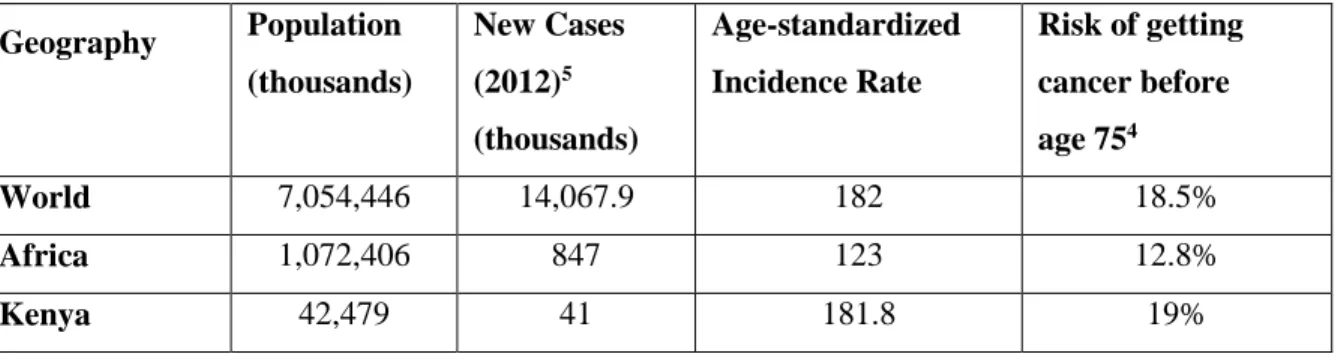
the cancer mortality rate was reported at 28,000 per year (ASR 135.3) 8. The wide range of incidence rates is an indicator of the lack of data resulting from a weak cancer registration system in Kenya, which is not unlike registries in many low and middle income countries 9. Table 1 below presents a comparative summary of the global burden of cancer in the world, Africa and Kenya. The aim of this table is to allow readers to understand the significance of this study for Kenya’s public health sector. Based on the data source, the new cases shown in the table below represent population weighted average of the area-specific rates applied to the 2012 area population 4.
3An age-standardized rate is the rate that a population would have if it had a standard age structure. It is based on the number of new cases or deaths per 100 000 persons per year. Standardization is necessary when
Table 1. A Comparative Summary of Cancer Incidences in the World, Africa and Kenya5
Geography Population (thousands)
New Cases (2012)5
(thousands)
Age-standardized Incidence Rate
Risk of getting cancer before age 754
World 7,054,446 14,067.9 182 18.5%
Africa 1,072,406 847 123 12.8%
Kenya 42,479 41 181.8 19%
Cancer represents the third-leading cause of mortality in Kenya after infectious and cardiovascular diseases; 60% of cancer patients are younger than 60 7. Whereas 48% of the cancer deaths in LMICs are premature (under the age of 70), only 26% of cancer deaths fall under the same category in high-income countries 10. Among men, prostrate is the most common cancer with a five-year prevalence rate of 21.5% and 6,577 deaths5.
Among women, cervical cancer has the highest incidence rates (20.5%), however breast cancer has higher mortality rates with an average five-year prevalence rate of 27 % or 14,070 cases, compared to 23% and 12,338 cases, respectively, for cervical cancer 5.
1.1 Significance of the Issue
HIV/AIDS and perinatal conditions remain the leading causes of death in Kenya and the emergence of non-communicable diseases are causing a significant strain on Kenya’s health system 11. As the third-leading cause of mortality in Kenya, cancer is posing unique challenges to the current health infrastructure, while also affecting a much younger
population when compared to populations in other countries. In Kenya, the risk of dying of
cancer before the age of 75 is high (14.5%), as compared to 10.5% globally and 9.4% in Africa 4. Currently, access to cancer testing and treatment in Kenya is provided by 12 health
facilities, the majority of which are located in urban areas. Most of these services are available in Nairobi, the capital of Kenya.
This study is relevant to ongoing stakeholder discussions to strengthen Kenya’s cancer prevention and control efforts by focusing on four main components:
1. cancer research
2. pathology and cancer registries 3. cancer awareness and education
4. national healthcare systems and infrastructure
In addition to these initiatives, the 2015 amendments to the current Cancer Act 12 are indicative of the need to continue revising the current legal framework that governs the provision of cancer services in Kenya, and as further explained by this study’s findings and recommendations in the plan for change section.
This research will identify barriers faced by patients seeking access to cancer testing and treatment services in Kenya, in order to address the overarching question: How can access to cancer diagnosis and treatment be improved in Kenya? In this study, testing was defined as both screening and diagnostic testing.
1.2 Study Purpose
Research question 1: What are the patient characteristics, including level of cancer
awareness, among people seeking access to cancer testing and treatment services and which of these are modifiable through policy or other actions?
Aim 1: To identify and seek to understand barriers faced by patients seeking access to cancer testing and treatment services in Kenya by conducting semi-structured interviews with cancer advocacy group leaders.
Research question 2: How does the organization of health services and the health infrastructure affect access for patients?
Aim 2: To identify and seek to understand barriers faced by patient providers who are delivering cancer testing and treatment services in Kenya by conducting semi-structured interviews with clinicians.
Research question 3: What policy actions can improve access to timely cancer testing and treatment in Kenya?
Aim 3: To identify potential policy level actions that could be recommended to the
legislature in order to improve access and delivery of cancer testing and treatment services in Kenya by integrating results of the qualitative interviews with a policy review.
1.3 Background on Health Service Delivery in Kenya
In 2010, Kenya’s constitution changed the governance of Kenya’s health sector, beginning with the merging of the former Ministry of Public Health and Sanitation (MOPHS) and the Ministry of Medical Services (MOMS) (2008 - 2012) into one body: the Ministry of Health. This merger called for the devolution of health services to the county level 13. These
workforce development, infectious disease control, policy development, health quality assurance and standards 14. However, the management and control of NCDs –
including cancer – remained a function of the primary under primary healthcare.
In 2016, Kenya reported a total of 10,795 health facilities, including dispensaries (clinics) and health centers, which reflected a 25% increase over the 8,496 health facilities recorded in 2012 by the Ministry of Health 15. In 2012, 49% of the health facilities were public, 33% were private and for-profit, and 16% were private and not-for-profit. During the same period, the doctor to population ratio was <1:10,000; nurse to population ratio 3:10,000 and the registered clinical officer to population ratio 1:10,000 11. Kenya also has a total of 11 radiation oncologists 16 and about 10 medical oncologists 17.
Based on the organization of health services in Kenya, national level actions include 18: 1. Setting national policies and legislation that established standards, national reporting,
sector coordination, and resource mobilization
2. Offering technical support, with emphasis on planning, development, and monitoring of health service delivery quality and standards throughout the country
3. Providing guidelines on tariffs chargeable for the provisions of health services 4. Promoting mechanisms for improving administrative and management systems,
including conducting appropriate studies
5. Capacity building of county governments to effectively deliver high-quality and responsive health services
1. County health facilities and pharmacies 2. Ambulance services
3. Promotion of primary healthcare
4. Licensing and control of undertakings that sell food to the public 5. Veterinary services (excluding regulation of the profession) 6. Cemeteries, funeral parlors, and crematoria
7. Refuse removal, refuse dumps, and solid waste disposal
In addition to the above functions, county governments may be assigned other functions that were agreed to during the intergovernmental consultative forums. The county is also tasked with taking a lead role in advising, mobilizing, and collaborating with other government ministries, departments, and agencies 19.
1.3.1 Cancer Treatment Facilities
1.3.2 Financing Health Services in Kenya
A breakdown of Kenya’s health expenditures in 2012-2013 indicated a larger allocation of the health spending to infectious diseases – HIV/ AIDS (20%) and malaria (9.8%) – and reproductive health (12.9%). Respiratory infections, vaccine-preventable diseases, and non-communicable diseases each accounted for roughly 6% of the total health budget or 0.4% of the GDP11. Specifically, the non-communicable diseases budget
amounted to KSh 14.6 billion (USD $170 million) in 2012-2013, with 90% being spent on current health expenditures and the remaining 10 percent on capital formations11.
The above figures reflect a slight increase in the total health budget from KSh 163 billion (USD $2.155 million) in 2009-2010 to KSh 234 billion (USD $2.743 million) in 2012-2013, partly due to a reduction in donor funding for Kenya’s health sector. Overall, Kenya’s total health expenditure, as part of total government expenditures, fluctuated from 8% (2001-2002), 5.2% (2005-2006), 4.6% (2009-2010) to 6.1% (2012-2013) 11.
During the same period (2012-2013), revenues to finance healthcare in Kenya came from three major sources: the government (31%), households (32%), and donors (26%). The remainder came from corporations (10%) and other sources (1%) 11. From these sources, the
1.3.3 Kenya’s Health Policies
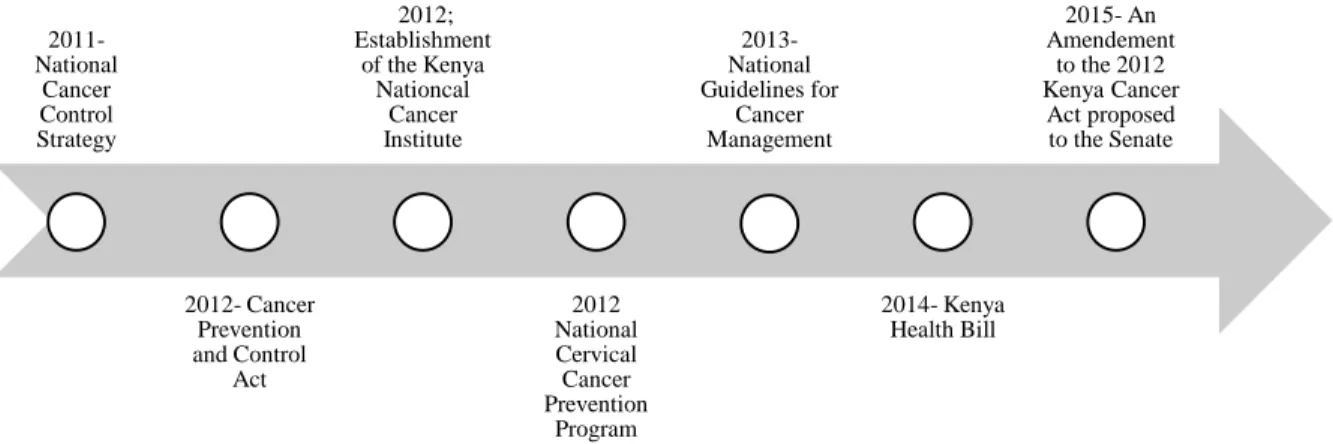
In 2011, the National Cancer Control Strategy (2011-2016) was produced by the Ministry of Public Health and Sanitation and the Ministry of Medical Services in response to the need to prioritize cancer prevention and control in Kenya 20. This was followed by the
creation of Kenya’s Cancer Prevention and Control Act in 2012 (Amended in 2015) 21 as a
regulatory and national framework to address cancer as one of the emerging non-communicable diseases in the country. In 2013, the National Guidelines for Cancer Management were published by the government to provide guidance to clinical providers tasked with screening, diagnosing and treating cancer 22. In 2015, Kenya’s National Cancer
Institute Board was elected to oversee the implementation of the cancer bill and coordinate national activities and cancer services providers, mostly targeting awareness and treatment 23. These policy documents and actions have laid the framework for addressing the existing cancer burden.
These recent legislative developments surrounding the provision of medical services to diagnose and treat cancer are an indicator of the momentum to respond to the increasing cancer burden in Kenya.
As such, this study will seek to further identify and communicate barriers faced by patients seeking access to diagnostic and treatment services for cancer in the country, and barriers faced by practitioners delivering cancer diagnostic and treatment services and ways they can be addressed.
Part 1: A literature review on cancer incidence, prevalence and mortality rates, as well as the barriers to cancer testing and treatment in Kenya was conducted and results are presented in Chapter 2.
Part 2: Semi-structured key informant interviews were conducted to further identify and understand barriers faced by people seeking cancer testing and treatment in Kenya, from the perspective of patient support and advocacy groups (Aim 1), and clinical cancer services providers (Aim 2). The qualitative methods are described in Chapter 3 and the results of the interviews are presented in Chapter 4.
Part 3: An analysis of Kenya’s current cancer policies was conducted. This analysis was informed by a review of policy literature (Aim 3). Policy-focused literature sources included government policy documents and guidelines identified through the Ministry of Health and informal conversations with policy makers and research articles identified through PubMed. Further, a section of the semi-structured key informant interviews sought the opinions of the participants on the current cancer act and its effect on patients and providers in the cancer sector. These findings are brought to bear on the policy analysis. The policy literature review is presented in the policy implementation recommendations in Chapter 7 and the plan for change in Chapter 8.
CHAPTER 2: LITERATURE REVIEW
A literature review was first conducted from September 2014 to March 2015. In this first phase, an extensive review of published peer reviewed literature and newspaper articles from Kenya’s leading newspapers highlighting cancer access and policy articles was
conducted. A revision was conducted in January 2016 to capture articles that had been published after March 2015. The results of both exercises indicated barriers faced by patients seeking access to cancer testing and treatment, and barriers faced by clinicians delivering the services. The following strategy was applied and the results used to inform recommendations in the plan for change.
2.1 Search Strategy
An online search for peer reviewed and indexed articles was conducted through PubMed. PubMed was selected due to its access to a wide range of indexed medical journals, including context relevant ones, such as the East African Medical Journal where most full manuscripts on cancer and Kenya were located. The search terms included
“Neoplasms”[Mesh] AND (“Kenya”[Mesh]) and (test OR testing OR treatment OR
online in an NCBI5 folder then exported to Refworks – an online data management software where the articles were filtered using titular relevance and then analyzed.
2.2 Inclusion, Exclusion Criteria
To be classified as relevant, articles were required to have one or all of the search terms and have been published between January 2000 and January 2016. Articles published before the year 2000 were excluded due to changes in Kenya’s cancer sector over the past 15 years. Language was limited to English. Also excluded were articles whose titles included terms such as “Low and Middle Income Countries (LMIC),” “Africa,” or named a different country other than Kenya. These were deemed too general and not applicable to the country-specific information relevant to this study.
2.3 Literature Review Process
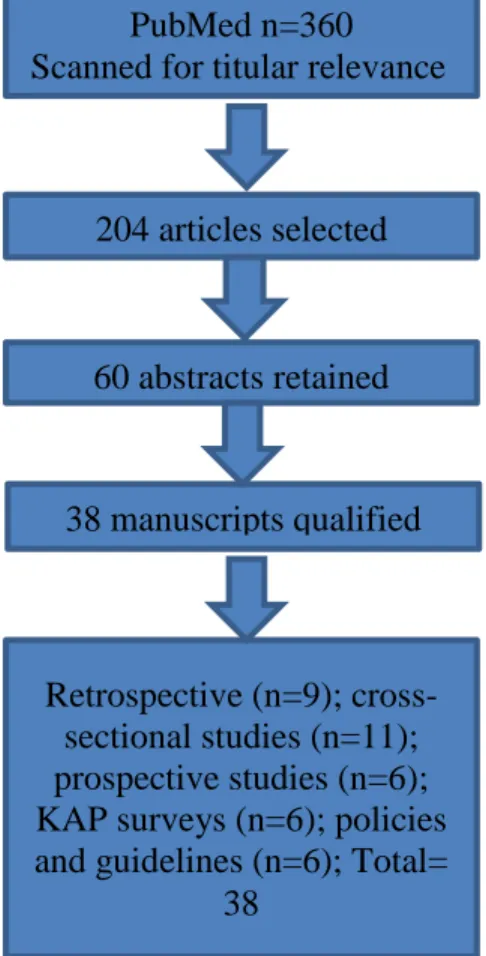
The search yielded 360 articles through PubMed, out of which 204 were preselected based on titular relevance and 38 qualified for a systematic review. Of these articles, 34 identified barriers to treatment and suggested interventions to improve screening, diagnosis and treatment. Four articles focused on policies and policy level actions that could address existing patients and provider barriers to screening, testing and treatment in Kenya. A systematic review of the full articles was conducted in the following manner:
Step 1: The titles of all the search results (n=360) were checked for titular relevance based on the search terms and 204 articles were preselected, based on a match to most of the search terms.
Step 2: Abstracts were screened and about 60 abstracts were selected based on their potential to respond further to the research questions. Some 22 abstracts were further excluded for lack of the full article. After further analysis of the full manuscripts, 38 articles were retained based on the search criteria and relevance to the study. The literature identification and selection process is presented below (Figure 1).
Step 3: Each study’s profile: publication date, type, authors, type of cancer studied, and the results were tracked in an Excel table that was later used to document and reference the studies’ findings (Appendix 2: Literature Review Results Tracking Table).
Figure 1. A Schema of the Literature Identification and Qualification Process 60 abstracts retained
204 articles selected PubMed n=360 Scanned for titular relevance
Retrospective (n=9); cross- sectional studies (n=11); prospective studies (n=6); KAP surveys (n=6); policies and guidelines (n=6); Total=
38
2.4 Literature Review Search Results
The literature review results were organized into two sections: 1) Barriers to
screening, testing and treatment – mainly reported by patients and, in a few cases, by clinical providers. These were first sorted out by type of cancer followed by themes identified from the literature; and 2) policies and interventions that could improve access and uptake of the aforementioned services.
2.4.1 By Type of Cancer
Studies were sorted out by type of cancer for comparative purposes. Cervical (n=16), Breast (n=7), Childhood Cancers (n=6), Esophageal (n=1), Gastric (n=1), Head and Neck (n=1) and Prostate Cancer (n=1); various cancers (n=1). For each of the studies on specific cancers, data was collected from patients, relatives and in some of the healthcare providers in health facilities providing cancer testing or treatment (Figure 2).
Figure 2. Presentation of Literature Review Results by Types of Cancer 0
2 4 6 8 10 12 14 16 18
Cervical Breast Childhood Cancers
Esphageal Gastric Head and Neck
Prostate Others
N
u
m
b
er
o
f St
u
d
ie
s
2.4.2 By Types of Barriers
A lack of knowledge and information about their specific cancer was the challenge most often cited by patients, and a reason for late presentation when the cancers were advanced (n=11). Transportation costs and health provider service fees – consultation charges, testing, diagnosis and treatment costs – were the second-most common barrier cited (n=10). Fear of cancer due to stigma and its association with death was cited as the third leading reason (n=9) for not seeking immediate treatment, and or seeking alternative justifications for their symptoms. Difficulty accessing health providers due to distances and or long wait times was reported in four of the studies, while poor health provider attitudes – especially for cervical cancer due to its association with HIV/AIDS – was reported as a deterrent by patients seeking cervical cancer screening (n=4). Inadequacy of health providers to accurately screen and or diagnose cancer was reported in at least four articles (n=4), leading to misdiagnosis or sub-optimal treatment of patients (Figure 3).
Figure 3. A Summary of Barriers Faced by Patients Seeking Cancer Testing and Treatment in Kenya
0 2 4 6 8 10 12 Lack of Knowledge and information Costs for diagnosis and or treatment Fear of cancer Difficulty accessing health providers Long distances to health facilities Poor health provider attitude Health systems and health provider inadequacy N o .. o f St u d ie s
2.5 Findings
Overall, medical costs pose a significant barrier to accessing cancer services. Patients with public insurance known as the National Health Insurance Fund (NHIF) were more likely to complete treatment as compared to those without any insurance 24, 25, 26.Hospital policies
on detaining patients in hospital for unpaid bills were noted as a significant barrier to accessing treatment 24, 25
Studies on cervical cancer in Kenya indicated that patient barriers included fear of the disease 27, 28, 29, 30, 31, 32, 33, 34 and financial difficulties to access treatment due to the location of the health services 33, 35. Lack of support to access screening services, which were in some
cases located far from their homes, was reported by women 33.
Poor provider attitudes and stigma for patients seeking cervical cancer screening was commonly cited as a deterrent to screening and treatment by women36, 33. However, men’s attitudes leaned toward supporting timely screening of their partners despite only half of those interviewed perceived their partners to be at risk 36.
A lack of provider skills, and in most cases, the medical equipment to accurately screen, diagnose and treat cancer is a significant barrier to effective identification and treatment of cancers 30, 35.Kenyatta National Hospital (KNH) in Nairobi and the Moi
Teaching and Referral Hospital (MTRH) in Eldoret received 70% of cervical cancer cases in the country 29. This means patients from all over the country are more likely to travel to these two hospitals for treatment, which contributes to the long wait times that sometimes average three to four months, based on patient reports 28, 30, 34. Women over 30 years old were more
could reduce the amount of time lost by patients through the referral system and bring services closer to the most affected areas and susceptible groups.
Patients with late presentation for breast cancer were classified as those whose cancer had progressed to stage IIB, III or IV 38, 39. Testing was conducted at health facilities using physically palpable nodules, tissue biopsies, ultrasounds and CT scans 37. MRI was not widely available in the hospitals, requiring patients to travel long distances mostly to the national hospital (KNH) for MRI and additional testing. Tissue biopsy analysis was also not available in most of the studied county level hospitals 40. The lack of these services resulted in treatment delays for patients and further contributed to poor outcomes for cancer patients
39. Results also indicated an early onset of breast cancer among Kenyan women, 35 to 45
years of age, which is 10 years earlier than onset in Caucasian women. A more aggressive and estrogen negative cancer was reported among the majority of patients 41. Women with a
family history of breast cancer had an 18.8% risk of developing cancer, had higher rates of metastases at 88% by the time of presentation, and could benefit from targeted genetic testing to improve their outcomes. Awareness of familial cancer risk is important for targeted
screening and testing 39.
Childhood cancer studies reported low survival rates and a significant amount of late presentation of cases in at least 85% of the cases 28, 24, 33. High transport costs to the medical
facility, lack of parental awareness about the disease, poor communication by the providers and a scarcity of pediatric oncological services were reported as major barriers faced by parents of children diagnosed with a pediatric neoplasm 28, 24, 33, 26. Insured patients had higher treatment completion rates and a higher chance of an event-free survival two years after treatment as compared to uninsured patients 24, 33, 37.
Kenyan hospital policies of detaining patients due to lack of payment was a significant barrier to treatment compliance and completion. Such policies need to be abolished and instead supportive mechanisms put in place through the NHIF to ensure that patients are protected from hospital policies that are detrimental to their health 30, 24, 37, 42. Data on the extent of childhood cancers in Kenya is scant and could be an indicator of a lack of reporting or misdiagnosis at the provider level.
Patients faced with other cancers Esophageal (n=1), head and neck (n=1), gastric (n=1) and prostate (n=1) presented late in over 50% of the cases, largely due to lack of information about their diseases 43, 44, 45
However, targeted screening and early diagnosis was reported to increase the likelihood of effective treatment 38, 35.
2.6 Limitations
The literature search focused on peer-reviewed articles found mainly through PubMed. Every effort was made to retrieve the full manuscripts of journals indexed at PubMed, however, manuscripts were occasionally unavailable for further review, thus potentially leaving out relevant articles. By limiting the search period from 2000 to 2015, other relevant articles could have been excluded. However, delimiting the time period yielded a limited number (<10) relevant articles with more than five of the full manuscripts unavailable for further analysis.
A comparative analysis of barriers to cancer care by cancer type was not possible due to the wide variety of cancers in the small number of articles. Instead, results were grouped across cancer types by theme. In the current review, the population characteristics are not taken into account since the primary focus is on the type and impact of barriers on the patients’ health outcomes.
CHAPTER 3: QUALITATIVE INTERVIEW METHODOLOGY
Qualitative research dates back to the late 19th century post positivism era with the application of phenomenology by the German philosopher Edmund Husserl (1859-1938) and the development of anthropology by Franz Boas (1858- 1942). Most recently, qualitative research gained in importance “… after 1970 with the emergence of postmodernity, signaling a new dynamic, multi-perspectival, and emergent social complexity that cannot easily be captured with the use of quantitative methods…” 47. Qualitative research allows the
researcher to obtain the opinions and perceptions of key informants. It attempts to explore the relative nature of knowledge, which is subjective, unique and contextual 48. It also allows the
researcher to understand a particular situation or event 49. As an investigative process, it allows for a deeper understanding of specific events, in this case a health phenomenon. Focusing on the participants’ perceptions and experiences, it attempts to understand multiple realities 49 faced by participants in relation to the study topic. It acknowledges the changing nature of people and phenomena that make it inappropriate to generalize results to the wider population or phenomena being studied, unless the readers resonate with the findings of the study and choose to transfer them to comparable contexts. Qualitative research also allows the researcher to connect the ideas and patterns observed through interviews and data analysis, in a congruent manner, to the research objective and the resulting implications of the study 48.
Additionally, a conceptual framework was applied to the study design and interpretation of findings, and their use to respond to the study’s research questions and aims as shown in the following section.
3.1 Conceptual Framework
The 1974 Andersen and Aday Framework1 integrates definitions and concepts of access to medical care services into a framework “…that views health policy as designed to affect characteristics of the health care delivery system and of the population at risk in order to bring about changes in the utilization of health care services and in the satisfaction of consumers with those services. 1” In this study, this framework was applied to demonstrate
barriers faced by patients seeking cancer testing and treatment services and providers delivering these services in Kenya. Revised versions of this framework have been published by the authors, however, the 1974 version was selected for this study due to its ability to demonstrate how access to cancer care in Kenya can be improved through policy actions.
This framework postulates that three variables need to be considered in policy oriented studies: (1) the outcomes of the utilization of the health services; (2) the changeable factors (mutable variables) amenable to policy actions; and (3) the factors that affect health outcomes, but cannot be changed by policy actions. Figure 4 (below) is a schematic
3.2 Application of the Framework
This framework was used to assess current practices to cancer testing and treatment in Kenya and informed the analysis of the key informant interviews. The roles of each of the key players in the health sector were examined using the framework.
1. Patients: This study examines the role of patients in overcoming barriers using the factors identified in the framework under “characteristics of the population at risk,” with a focus on identifying mutable factors that can be affected by policy actions, such as access to the national and private health insurance schemes. Immutable factors are those Figure 4. Conceptual Framework for Studying the Barriers to Accessing Cancer
that are non-responsive to policy changes, such as patient demographics (age, income and education levels) and their influence on the population’s health-seeking behaviors. 2. Clinical Providers: This study examines the role of doctors and the barriers they face in
the delivery of cancer testing and treatment services using variables identified under the “characteristics of the health system delivery” by Aday and Anderson1 Some of the
examined characteristics include the availability of oncologists to the population, patient wait times, the delivery and organization of cancer testing, and treatment services, including patient follow-up.
3. Health Infrastructure: This study examines the characteristics and availability of cancer testing and treatment services in the country. This includes identifying the types and locations of cancer diagnostic and treatment services available in the country, and their capacity to respond to current patient demand.
4. Patient Support and Advocacy Groups: This study examines levels of patient satisfaction, as reported by the leaders of cancer patients and survivors support and advocacy groups, with the current cancer testing and treatment services. This aspect includes the ease of access, related access costs, the coordination of cancer care within and outside the delivery setting, availability of information and provider-to-patient communication.
3.3 Study Design
A series of key informant interviews targeting cancer clinical providers (clinicians) and leaders of cancer patient support and advocacy groups (non-clinical) were conducted in January 2016. The objective of these interviews was to supplement information obtained from the literature review and to gain a better understanding of barriers faced by patient’s seeking access to cancer testing and treatment through discussions with leaders of cancer patients and survivor group representatives and clinical providers. The second objective was to collect the opinions of these two stakeholder groups on how Kenya’s current cancer policy can be improved.
3.4 Study Setting
The study was conducted via phone (n=3) and face-to-face (n=11) interviews in Nairobi. Apart from interviews conducted over the telephone, clinical providers (n=6) were interviewed in one public hospital, two private and one mission hospital. Non-clinical providers (n=5) were interviewed at meeting locations in Nairobi.
3.5 Sample Criteria and Selection
Study participants were selected for one of two main categories: 1) serve as medical practitioner, doctor or clinician delivering cancer testing and treatment services in Kenya (clinicians); or 2) serve as a cancer patient support and advocacy group leader (non-clinician). People who met this criterion were invited to participate in the key informant interview.
The initial goal was to interview up to 20 key informants. However, once saturation was obtained by the tenth interview, an additional four participants whose interviews had been scheduled were interviewed to ascertain that saturation had been attained. In this study, saturation was defined as having been reached when no new themes emerge from the
participants in response to the interview questions, as described in “Applied Thematic Analysis”. 50
3.6 Sampling Technique
The concentration of cancer services within Nairobi results in the concentration of clinicians within the four health facilities (in Nairobi) with comprehensive cancer services. These concentrations influenced the purposive sampling technique applied to identify potential study participants who were recruited in two phases: 1) through personal contact and introductions to key cancer sector experts and policy makers Kenya; and 2) using direct emails to organizations listed in the Kenya Cancer Network Organization (KENCO) website and published articles. In both cases, information about the study was shared through email and using a standard study information document approved by the ESRC and UNC’s IRB board. Names and the contact information of additional participants were shared by some of the participants during the interviews. This personal approach was most suitable to further explain the study’s objectives and secure participation in the study. It was also observed to increase the response rate when compared to the initial emails sent to contacts identified through the KENCO website.
between December 2015 and January 2016. Initial conversations with each of the
respondents were used to further explain the study and determine whether the respondent met the participant criteria (clinician or leader of a cancer patients and survivors support and advocacy groups).
A total of 25 people who responded and met the criteria were contacted and a tentative interview time was set up. Although the study’s target was 20 key informants, this higher number was taken to accommodate the likelihood of some of the respondents not being available at the time of the interview. Non-respondents were excluded from the study after three contact attempts with no response. Five respondents who confirmed in the affirmative after January 24 were excluded due to time constraints, feasibility and study saturation.
3.7 Data Collection
A review of the study procedures, including the estimated duration of the interviews, was described again in detail to the participants before the beginning of each interview to enable participants to be fully informed of their time requirements and to freely consent or decline to participate in the study. Prior to each interview, signed consent was obtained by email for the three telephone participants and in person for in-person interview participants (Appendix 3- Study Information and Consent Form). All interviews were conducted in English. Telephone interviews were held during the evening hours for the participants. This was done to accommodate the participants’ schedule and due to the eight-hour time
minutes per participant. Verbal consent was obtained from the participants at the beginning of each interview. A thank-you note was sent via email to each participant three weeks after the interviews.
Overall, a total of fourteen (n=14) key informants participated in the study. Eleven of the 14 participants were interviewed in person at the study site in Nairobi, and three
participants were interviewed by telephone. Five participants were unavailable at the
scheduled times of their interviews. One confirmed participant backed out of the study, citing a fear of meeting strangers. The participant interview guide (Appendix 4: Key Informant Interview Guide) was used to collect information from the participants. This interview guide has two separate sets of questions for the two types of key informants – one for clinical personnel and second for non-clinical personnel. Further probing was done when the participants seemed to have more to say in response to a question. This was done to ensure that additional and potentially relevant information was captured. Questions designed for clinicians were varied for the pathologists (n=2) to accommodate their role and not directly dealing with patients in the same manner as the other clinicians (oncologists and surgeon). Where a question was not applicable, it was skipped or marked as not applicable (N/A) (Appendix 5: Example of Transcribed Responses)
1. The secure storage of all written and audio transcripts in a locked cabinet in the principal investigator’s office.
2. Password protection of the collected data on a computer at the principal investigator's office.
3.8 Data Analysis and Interpretation of Interviews
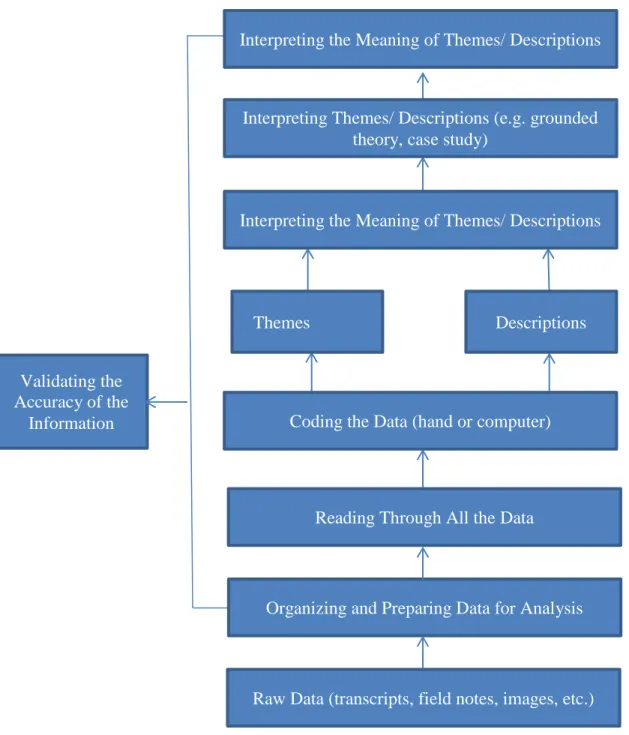
Following the interviews, and using Creswell’s systematic approach to data analysis (Figure 5), data was transferred from the voice memos to a password protected computer file in the principal investigator’s home office. The files were organized and listened to for clarity before being sent electronically to two individual transcribers located in the study setting (Nairobi). This approach was necessary to accommodate language nuances and translate any Kiswahili (Kenya national language) terminology used by respondents. The written transcripts were verified against the audio recordings to ensure that critical information had been captured.
All data was reported in aggregate terms to protect the identity of participants and their organizations. The data was stored in compliance with the UNC IRB and the AMREF ESRC requirements.
Upon completion of this step, the transcripts were read to get a general idea of the information received. These were then organized in the two participant categories— clinicians (medical personnel) and non-clinical personnel (cancer patient support and
advocacy group leaders). This was done to enable the identification of themes per respondent group.
One of the clinician’s responses were inaudible and could not be effectively
3.9 Ethics Statement
Figure 5. Steps in Data Collection and Analysis
Interpreting the Meaning of Themes/ Descriptions
Interpreting Themes/ Descriptions (e.g. grounded theory, case study)
Reading Through All the Data Coding the Data (hand or computer)
Interpreting the Meaning of Themes/ Descriptions
Validating the Accuracy of the
Information
Themes Descriptions
Organizing and Preparing Data for Analysis
CHAPTER 4: QUALITATIVE INTERVIEW RESULTS
This chapter reports the results of semi-structured interviews conducted with 13 of 20 possible participants in response to the three research questions and their related study aims. The objective of the interviews was to obtain their opinions on the barriers to cancer testing and treatment in Kenya.
Seven (n=7) of the participants were clinicians. These included three oncologists, two pathologists, one surgeon and one palliative care doctor performing surgery as part of cancer treatment. All but one of these seven practiced in the main cancer testing and treatment hospitals in Nairobi—KNH, Aga Khan Hospital, MP Shah’s Cancer Care, and Nairobi Hospital. One of the clinicians practiced in a mission hospital located in the outskirts of Nairobi.
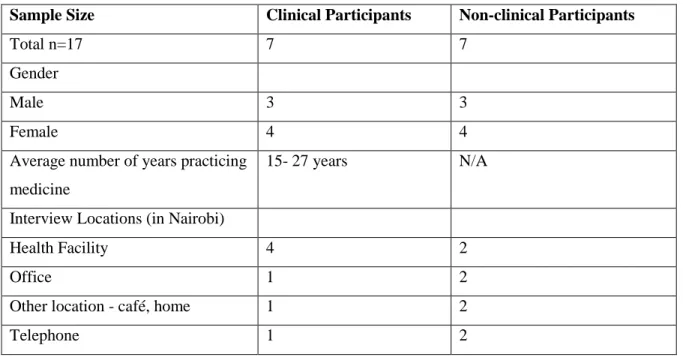
Seven non-clinical cancer service providers (three male and four female) who were cancer support group leaders were interviewed. Most of them operated in Nairobi, however, each group conducted outreach services outside of Nairobi as a way to raise awareness about cancer and promote early detection. Table 2 below summarizes the characteristics of the study participants.
Table 2. Characteristics of the Study Participants
Sample Size Clinical Participants Non-clinical Participants
Total n=17 7 7
Gender
Male 3 3
Female 4 4
Average number of years practicing medicine
15- 27 years N/A
Interview Locations (in Nairobi)
Health Facility 4 2
Office 1 2
Other location - café, home 1 2
Telephone 1 2
4.1 Data Analysis
The content of each transcript was analyzed and codes/themes manually identified, based on the respondents’ remarks. Common themes from the responses were identified and used to interpret the meaning of the responses.
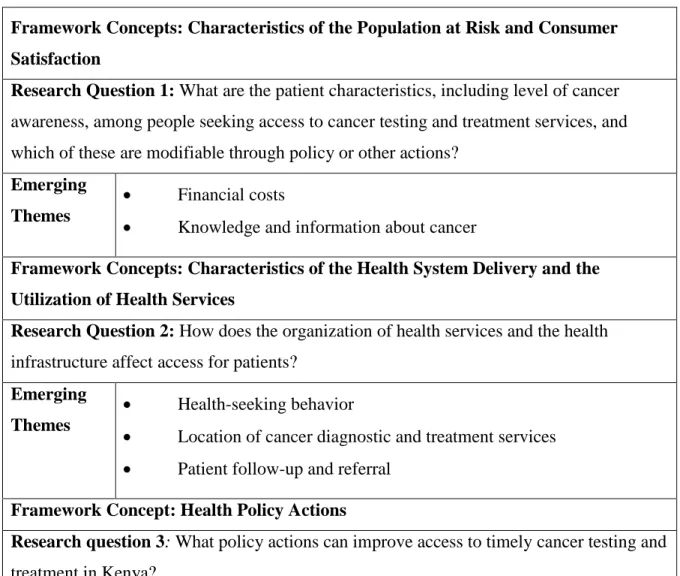
Table 3. A Summary of the Emerging Themes Based on the Conceptual Framework and Research Questions
Framework Concepts: Characteristics of the Population at Risk and Consumer Satisfaction
Research Question 1: What are the patient characteristics, including level of cancer awareness, among people seeking access to cancer testing and treatment services, and which of these are modifiable through policy or other actions?
Emerging Themes
Financial costs
Knowledge and information about cancer
Framework Concepts: Characteristics of the Health System Delivery and the Utilization of Health Services
Research Question 2: How does the organization of health services and the health infrastructure affect access for patients?
Emerging Themes
Health-seeking behavior
Location of cancer diagnostic and treatment services Patient follow-up and referral
Framework Concept: Health Policy Actions
Research question 3: What policy actions can improve access to timely cancer testing and treatment in Kenya?
Emerging Themes
Policy development Policy implementation
4.2 Key Findings
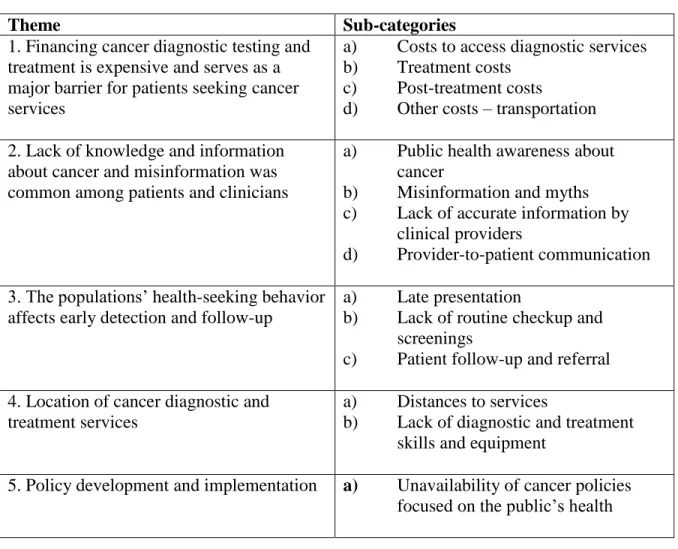
The participants’ responses were analyzed under each theme and sub-category as presented in table 4 below.
Table 4. Themes and Sub-Categories from the Semi-Structured Interviews
Theme Sub-categories
1. Financing cancer diagnostic testing and treatment is expensive and serves as a major barrier for patients seeking cancer services
a) Costs to access diagnostic services b) Treatment costs
c) Post-treatment costs d) Other costs – transportation 2. Lack of knowledge and information
about cancer and misinformation was common among patients and clinicians
a) Public health awareness about cancer
b) Misinformation and myths c) Lack of accurate information by
clinical providers
d) Provider-to-patient communication 1. 3. The populations’ health-seeking behavior
affects early detection and follow-up
a) Late presentation
b) Lack of routine checkup and screenings
c) Patient follow-up and referral 4. Location of cancer diagnostic and
treatment services
a) Distances to services
b) Lack of diagnostic and treatment skills and equipment
5. Policy development and implementation a) Unavailability of cancer policies focused on the public’s health
1. Financing cancer diagnostic testing and treatment is expensive and serves as a major barrier for patients seeking cancer services. The four main categories of cost are
discussed below based on the participants’ responses.
inspection with ascetic acid for cervical cancer and the self-breast exam that women and clinicians can perform to detect breast anomalies before further diagnostic tests, such as mammograms, were performed. Some of the diagnostic tests such as mammograms were deemed expensive for the “average Kenyan.”
For cervical, hospitals charge KShs. 5,000-10,000 (US $50 to $100). Because what normally happens is with cervical there are some stages … for you to properly diagnose, you’ll need to do a pap smear, which is KShs 2,500 (US$ 25) and above. Then beyond that, there are some other tests… Even to get a simple thing like a mammogram, it’s very expensive…- NCP1
… Right from the start of course ... treatment and diagnosis is expensive and many people are unable to afford it. - NCP2
b) Treatment costs: Both clinicians and non-clinicians (n=11) cited treatment costs as the major barrier and first determinant of treatment for both insured and uninsured patients. Costs were lower in the public hospital when compared to the private hospitals. The cost of cancer drugs was often cited as the main driver of the treatment costs.
Mostly financial constraints – that is the number-one constraint. Secondly the accessibility of medication because we have to import each and every medicine … there are no oncology drugs produced in Kenya, so we have to get them from other countries like India and UK.- CP1
Definitely, money first and foremost is the major concern … because, as you know, in our setup, you can’t even access medical services… the major challenge (to
treatment) is lack of financial ability. - NCP 4
Whether they’ve accepted to treatment after explanation on the side effect, is based on whether they can afford, which is actually number one ... - NCP 5
Those who believe that India is the only place they can get cured are usually encouraged by us to go because, with that mindset, they might blame you for not curing them when the reality is that that cancer cannot be cured … They might say cost, but it is not much cheaper than treatment in Kenya. Maybe it can be cheaper than treatment in Europe and the States, but not here. It is more of a mindset. - CP4
Firstly, it is well-known that cancer treatment in Kenya is very expensive. So the first thing that comes to mind is where to go for treatment. India is a common destination, but it’s not cheap so the next step is fundraisers for the same. But we try and sensitize them to the fact that there are viable treatment avenues within the country, which they should consider before looking at options abroad, which are also quite costly.
- NCP1
c) Other costs – transportation: The concentration of oncology services in major towns posed an additional barrier for rural populations, as cited by some of the participants (n=5). People outside major towns incur additional costs associated with transportation and, in some cases, accommodations when traveling to the facilities that have cancer diagnostic and
treatment services.
...And as you’d expect, most of the facilities are here in Nairobi and a bit in the other major centers: Mombasa, Kisumu, Eldoret. And that includes the doctors as well. So the rest of the country is really bare. And most of these services are in the private [sector], so they are really expensive. – NCP3
Cost is number one. Also availability when they are up-country. You know they have to travel to the district hospitals, which to some of them may be quite far. Then when it comes to the final treatments, they may have to come to Kenyatta, especially for the [radiation]. These days they have opened up when it comes to giving chemo in the outside towns and I’m sure you’ve come to hear of that … I think the provincial hospitals are also administering chemo, but for [radiation], they still have to come to Kenyatta or the private hospitals in town. – NCP 5
…. Then the difficulty in following up patients, especially if they are coming from up-country [rural areas]. They are not keen on coming back to us for follow-up unless they develop any symptoms because of the logistics and transportation issues. - CP1
… Or even after you know that in the case of prostate cancer people have to go onto hormonal treatment for the rest of their lives and this can be expensive. But this has been one of the major challenges – the financial status. Right from the start of course the status of many Kenyans ... treatment and diagnosis is expensive and many people are unable to afford it. – NCP2
… The other was about finances because the treatment is very costly. Some of the ongoing drugs likes Tamoxifen are very costly. – NCP6
Eleven of the 13 respondents cited patients’ ability to afford cancer diagnosis and treatment service as the number-one determinant of whether they would undergo treatment or complete treatment, in some cases. Some patients were unaware that they would incur
follow-up and post-treatment drugs. Services at public hospitals and outside of Kenya were deemed more affordable primarily due to the importation of cancer treatment drugs and taxes. Understanding the financial burden to patients at each phase could help the
government institute policies that improve access to treatment and post-treatment therapy, when needed. Recommendations on this are further explained in the policy section.
2. Lack of knowledge and information about cancer and misinformation were common among patients and clinicians. This led to late presentation by patients and
Basic knowledge and lack of information, because there are many people living with half symptoms of this disease like blocked urinary tract, pains here and there and local dispensaries keep giving painkillers for such cases till it’s too late. I think lack of awareness is to blame, so we encourage the group member to create awareness on cancer to as many people as possible Our primary objective is to try and encourage people to talk about it much more to the wider population – not only to those who have cancer. – NCP2
I think, first of all, literacy, knowledge. If they’re not literate, they may not even know what it is. I have seen patients who have come to see the doctor with a huge fungating wound. So literacy, knowledge and culture are also very important and again
funding. – CP3
Increasing awareness about cancer could improve patients’ ability to seek screening and diagnostic services on time. Policy actions to improve public education through
awareness campaigns was cited (n=5) as one of the factors to be considered in improving the current cancer Act.
It’s difficult to say because the access to cancer screening and treatment is based on the awareness that the people have, accessibility to the facilities and availability of resources to ensure that they came for screening. – NCP7
There should be also increased advocacy to sensitize the public and increase awareness. – NCP1
I think awareness of both the disease and our services [affects patients’ ability to access the facilities’ services). – CP2
… there is very little awareness by the people – maybe just in the large urban centers and during the October awareness month. – CP6
The government needs to be very aggressive in creating awareness. Whether through the media like they did with AIDS or through NGOs to go out there to carry out the awareness and screenings and for people to be made aware that it is their right to seek these services when they enter government institutions. – NCP5
One participant reported that patients’ lack of full disclosure of their symptoms to the doctors, and the stigma associated with cancer, as a contributing factor to misdiagnosis.
are going through so that he may deduce what you may be suffering from. And so the disease is left unattended because the patient has covered up. – NCP5
b) Misinformation and myths about cancer is affecting patients’ decision to undertake treatment once a cancer diagnosis is made. Some of the patients had the wrong
information about cancer. One respondent cited cultural and religious beliefs as rampant, in some cases, regardless of the patient’s level of education.
... But because there’s also this “witch” culture, they believe somebody has bewitched me and everything. – CP3
c) Lack of accurate information by clinical providers contributes to misdiagnosis and the high number of late presentations observed by a majority of the study participants. A sub-set (n=2) of the cancer patient support and advocacy group leaders cited lack of
knowledge by the clinicians as contributing factor to patient misdiagnosis and, in some cases, late presentation when the cancer was advanced.
We are also targeting health providers: dispensaries, hospitals because there is some negligence there because people keep going to hospitals and dispensaries and instead of getting proper diagnosis, they take you round and misdiagnosed until it’s too late. – NCP2
Sometimes it [has] nothing to do with finances, but the doctors who misdiagnosed them. We have so many people being taken around in circles by the doctors – general practitioners who did not know that it was cancer. So many are complaining that if they knew earlier or were diagnosed earlier, their cancer would have been treated. You are told you have a sore throat and the doctor does not look at the issue keenly. – NCP6
noted the need to improve how they communicated with cancer patients and their families, especially when the disease was terminal.
The communication after the initial consultation with the health care worker when they are now being told of the situation and the advised treatment plan is critical. How this is communicated or received by the parent or patient determines whether they will either start on the regimen as prescribed or even whether they’ll follow through with subsequent appointments. – NCP4
Not very much information is given to them, but a few years ago we wrote some communication on various cancers and were published by the Nairobi University Press. … We used to keep them at the reception for patients to read and it would help because it would give them some level of understanding and made it easier to
communicate with patients. – CP4
… around 20% to 30%, they usually will have an idea [about cancer]. For example, like when I was working at [name withheld] hospital, doctors will talk about a disease in front of the patient during the ward rounds and use the medical terminology and the patient wonders what were they talking about. So when the patient comes to the hospital, they say the doctor kept on talking about ‘Carcinoma.’ So when you ask them do you know what it is, they say no and then you have to start telling them what it is. But in the back of their mind, I believe they can read the expression on the physicians face and everything. The fact that they are willing to talk about it, or they had a neighbor who had something on their breast and it was cancer. They kind of guess[ing] sometimes, but in terms of giving the full diagnosis to
patients, we’re not doing very well. – CP3
One respondent noted that doctors need to improve their communication with patients, regardless of the patient’s literacy level. This suggest a discriminatory practice by doctors based on a patient’s ability to engage with a physician.
Well, I think you know in Africa a doctor is a god. What the doctor says is what goes … If you’re going to give them chemotherapy, you need to tell them what it is, what it is going to do to their body. But unfortunately people don’t do these things …
especially if a patient is illiterate, it’s assumed that they don’t need to be told anything. But an illiterate patient is going to suffer the same side effects as the literate one. So it’s good to tell them when you’re treating them. – CP3
Additionally, patients need to be encouraged to disclose symptoms to doctors to increase diagnosis accuracy. The doctors communication with patients as reported by participants (n=2) indicates the need for patient-centered communication due to its impact on the patient’s treatment decisions, compliance to phamarco-therapies and, the patients’
subsequent health behavior if changes are needed 51. Communication to the patient and their family member(s) or caregiver(s) was cited as a primary practice by the clinical participants in deciding the patient’s treatment. A greater awareness by the clinicians on the impact of their communication approach on the health-seeking behaviors of the family members can improve the timeliness with which any family members at risk can seek diagnostic services. 3. The populations’ health-seeking behavior influences the use of screening, diagnostic and post-treatment follow-up services and leads to late presentation of cases among the Kenyan population.
a) Late presentation is a major barrier to effective treatment: Participants (n=6) reported that the majority of the cases sought medical care when symptoms were present. In addition to the lack of information about cancer symptoms, there is a significant fear of cancer due to its association with death. As such, the majority of the cases were presented to the doctors when the cancer had advanced and treatment outcomes were poor.
… two is the stigma of cancer. People do not want to know about it and the expenses involved, especially for those who come in stage 3 and 4. – CP2
People will die but no one will say they died of cancer. They are very scared of the word and people want to hide it as a cause of death. – NCP2
Unfortunately, most cancers we’re finding are in the late stages. Stage 3 [and] 4. This is why we advocate for people to be aware and seek annual screening … We realize that the medical personnel are really stretched. – NCP 3
Again most of the diagnosis is done at stage 3, 4 or 5. Patients will wait, not
the right thing. They complain of abdominal pain, burning sensation, then they’re treated for ulcers or amoeba, yet they have a tumor growing. So it maybe late diagnosis and late treatment that result in the patient coming when it’s quite late. – CP3
It depends with the type of cancer, if it is breast cancer in Nairobi, we are seeing stage 2 and 3, advanced. We are getting smaller percentages, but from up-country, we are getting more advanced cases. … Prostate cancer seems to be advanced cases. Cervical cancer, we see a few, but they are mostly advanced cases. – CP4
For breast cancer, I could say 50% to 60% of my cases come in at stage 3. I would say overall, 70% to 80% come in late at stage 3 and 4 of the disease. – CP5
b) Lack of routine checkup and screenings: Access to routine health screenings that can detect cancer at early stages is limited by the financial costs associated with checkups, as well as the fear and stigma associated with cancer, as noted by some of the cancer patient support and advocacy group leaders (n=2).
In fact, most people don’t even go for basics like screening because they can’t afford it. So money is the biggest problem. Some people are even scared to address it, but by the time they are coming to our camp, it is like they are braver than the average person because they know that it is possible. – NCP3
For the people in our groups, I can say 70% of the cases went to the doctors when the cancer was advanced mostly with the cervical cancer cases. I can say that it also has to do with their economic situation because those who have money go for annual checkups and whereby the prostate cancer can be diagnosed early, but for those who do not have funds … they come when it is late stage. – NCP6
However, most (n=5) of the patient support and advocacy groups engage in
…we screen people between the ages of 17 to 60. We emphasize on screening people outside the metropolitan or urban areas. .... We focus on the most common cancers we have … the reproductive cancers – that is breast, cervical and prostate cancer. … What we do is instead of holding these screenings in the hospitals, we usually hold them in schools, churches, open grounds ... so once they come and we have them screened and diagnosed, then we have a very good referral process to various hospitals – like here in Nairobi, we usually send them to Kenyatta. – NCP1
… We have patients who came to us from our screening programs and they are from rural and peri-urban. Their education level ranges from basic informal education and their age ranging from 21 years to our oldest lady who was 73 years old. … We provide awareness about cancer and the benefits of early detection. We also provide outdoor screening services in the villages and provide information on what the diagnosis means and why they need treatment and put them on a referral system where the doctors provide information on the treatment plan that they could
undertake. We also [provide] information of what is available in terms of treatment on other institutions and take them through the costs. – NCP7
One participant also cited that patients sought screening only once symptoms manifested themselves.
Most people don’t just go for screening even after the awareness. They usually come for screening once they get a symptom. – NCP1