MESSAGE DESIGN FOR CORRECTING MISINFORMATION ON HIV/AIDS FOR CHINESE INTERNATIONAL STUDENTS IN THE US
Ran Li
A thesis submitted to the faculty of the University of North Carolina at Chapel Hill in partial fulfillment of the requirements for the degree of Master of Arts in the School of Media
and Journalism (Interdisciplinary Health Communication)
Chapel Hill 2016
Approved by: Joan R. Cates
Laura A. Ruel Amelia Gibson
©2016 Ran Li
ABSTRACT Ran Li:
Message design for correcting misinformation on HIV/AIDS for Chinese International Students in the US
(Under the direction of Joan R. Cates, Ph.D., MPH.)
This thesis is dedicated to my parents, Li Wenyi and Xu Suyun for their unconditional support. It
is also dedicated to my boyfriend, Wu Xinyuan for always holding my hand and supporting me
ACKNOWLEDGEMENTS
TABLE OF CONTENTS
LIST OF TABLES……….……….ix
CHAPTER 1: INTRODUCTION AND BACKGROUND……….1
1.1 Susceptibility to HIV/AIDS……….…..2
1.2 HIV/AIDS-Related Knowledge………3
CHAPTER 2: LITERATURE REVIEW……….6
2.1 HIV/AIDS-Related Stigma………6
2.2. Misinformation Concerning HIV Transmission……….…..8
2.3 KAP Studies on Chinese College Students……….…10
2.4 HIV/AIDS Intervention……….…..11
2.5 Sources of HIV/AIDS Information……….12
2.6 Theoretical Perspectives……….13
2.6.1 Gain-Framing and Loss-Framing Message Design………..….…13
2.6.2 Application of Gain-Framing and Loss-Framing Message Design………….…..13
CHAPTER 3: HYPOTHESES………..……….17
4.2 Online Survey………..………21
CHAPTER 5: RESULTS………..……….27
5.1 Key Informant Interview………..27
5.1.1 Demographic Characteristics……….27
5.1.2 Interview Questions………..………27
Q1. Are college students more susceptible to HIV/AIDS compared to other groups?……….27
Q2. Why do college students clearly know how HIV is transmitted but do not know how HIV is not transmitted, though they are well-educated?……….29
Q3. For Chinese college students living in the U.S., what do they (you) think current HIV-related education activities or campaigns targeted at Chinese students in China?………30
Q4. What are the misconceptions among Chinese college students in China?………..31
Q5. Do Chinese college students are able to identify the misinformation on the Internet?………..31
Q6. Do Chinese college students search for health-related information, especially HIV/AIDS-related information?………..…32
Q7. What’s the main source for searching health-related information?………..32
5.1.3 Poster Design……….33
5.2 Online Survey……….34
5.2.1 Demographic Characteristics………34
5.2.2 Research Hypothesis 1………..34
5.2.4 Research Hypothesis 3………..39
5.2.5 Research Hypothesis 4………..40
5.2.6 Research Hypothesis 5………..41
5.2.7 Visual Aids Design………42
CHAPTER 6: DISCUSSION……….44
CHAPTER 7: LIMITATIONS……….………..48
7.1 Generalizability………48
7.2 Survey Design………..49
7.3 Time Limitation……….………..………49
APPENDIX 1: EMAIL RECRUITMENT FOR KEY INFORMANTS………68
APPENDIX 2: TELEPHONE INTERVIEW GUIDE AND QUESTIONS………..…69
APPENDIX 3: EMAIL RECRUITMENT FOR SURVYE PARTICIPANTS………..71
POSTER RECRUITMENT FOR SURVEY PARTICIPANTS………72
APPENDIX 4: QUESTIONNAIRE………..73
APPENDIX 5: POSTER IN TEXT……….………..83
POSTER IN TEXT AND NUMBER………84
POSTER IN TEXT AND GRAPH……….……..85
LIST OF TABLES
Table
1. Demographic Characteristics of Survey Participants………..……….51
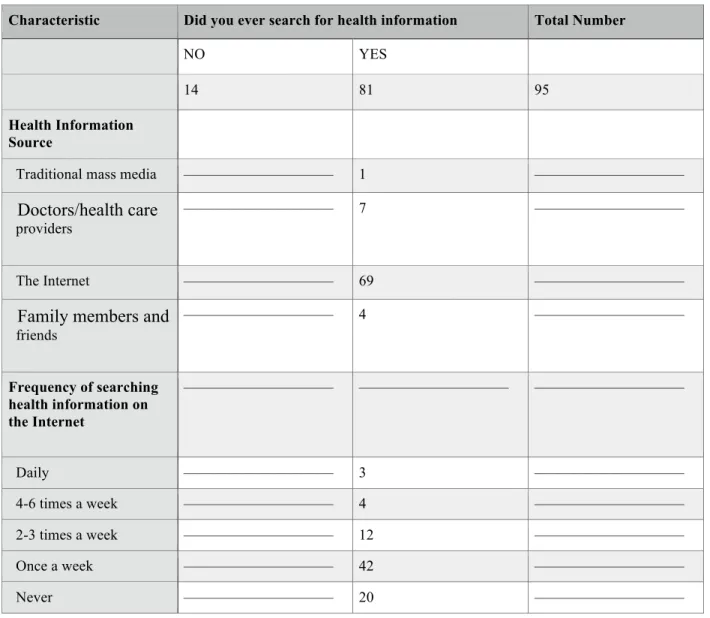
2. Health Information Searching……….……….52
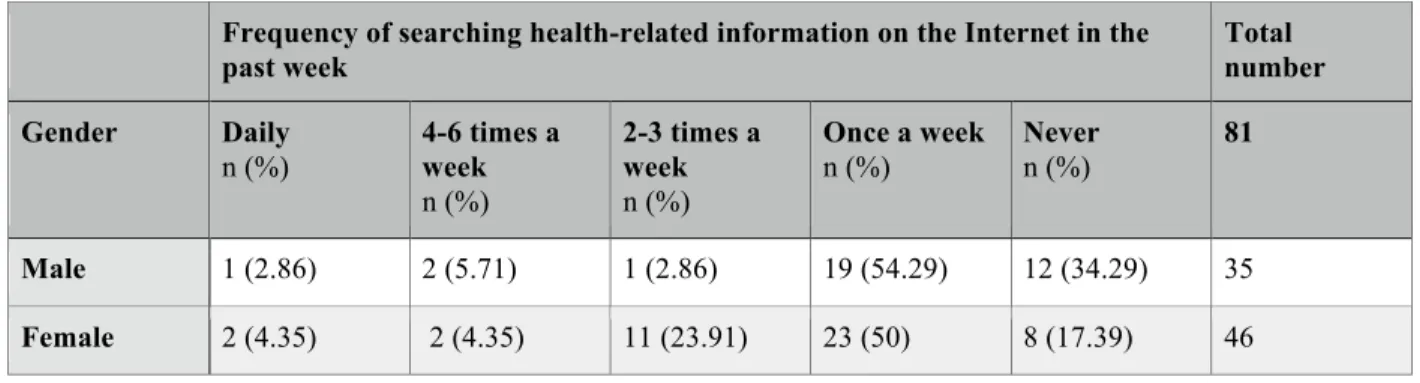
3. Frequency of Health Information Searching on the Internet by Gender.……….…53
4. Searching Health Information by Topic………53
5. Provider of Health-Related Websites………54
6. Criteria for Health Websites………..54
7. Identifying HIV Prevention among Participants Who Heard of HIV/AIDS………55
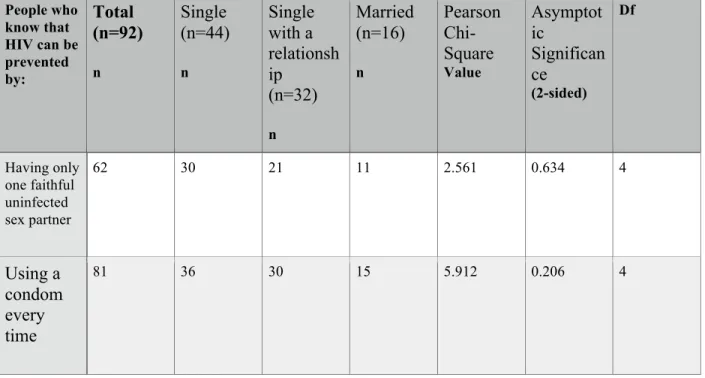
8. Identifying HIV prevention among Participants Who Heard of HIV/AIDS by Relationship……….………56
9. Identifying HIV Prevention among Participants Who Heard of HIV/AIDS by Gender……….……….56
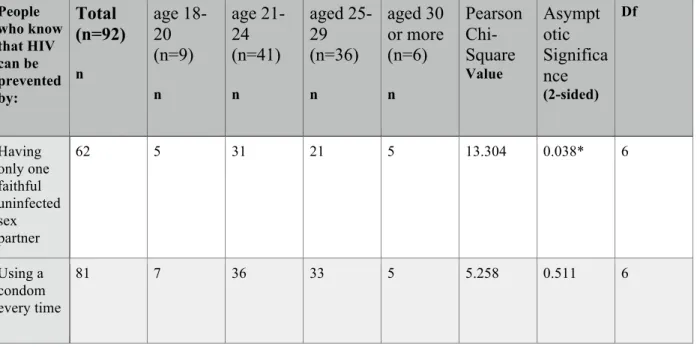
10. Identifying HIV Prevention among Participants Who Heard of HIV/AIDS by Age Group……….………..57
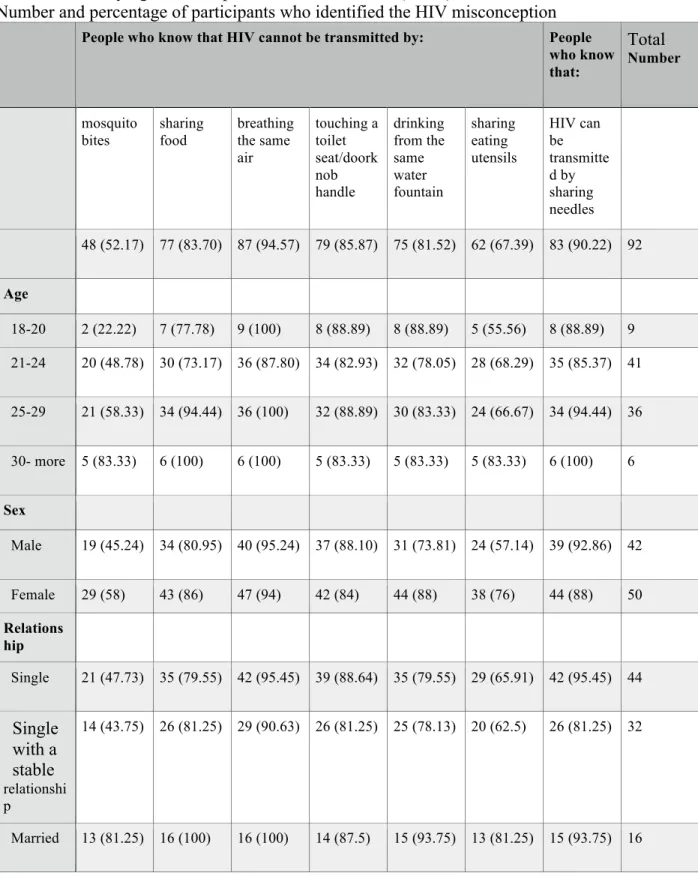
11. Identifying Misconceptions about HIV/AIDS……….58
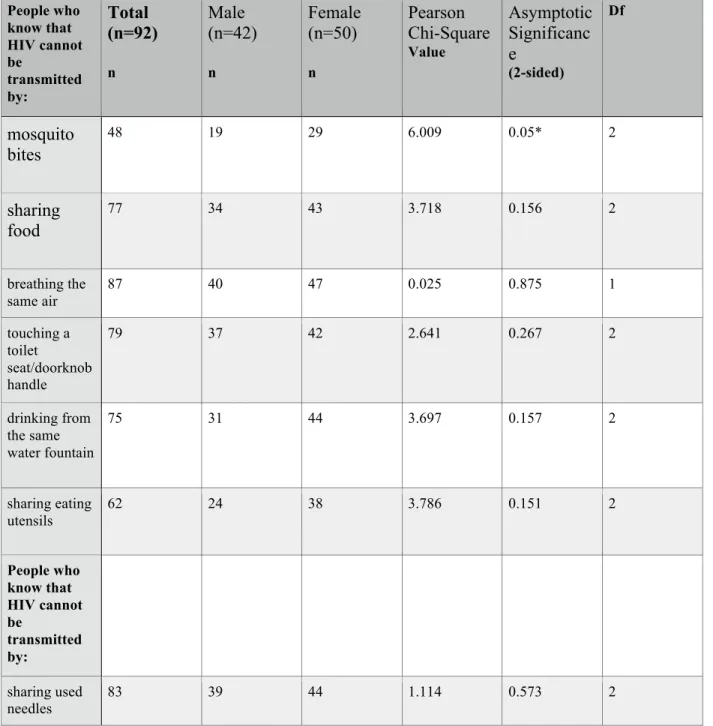
12. Identifying Misconceptions about HIV/AIDS by Gender……….……..59
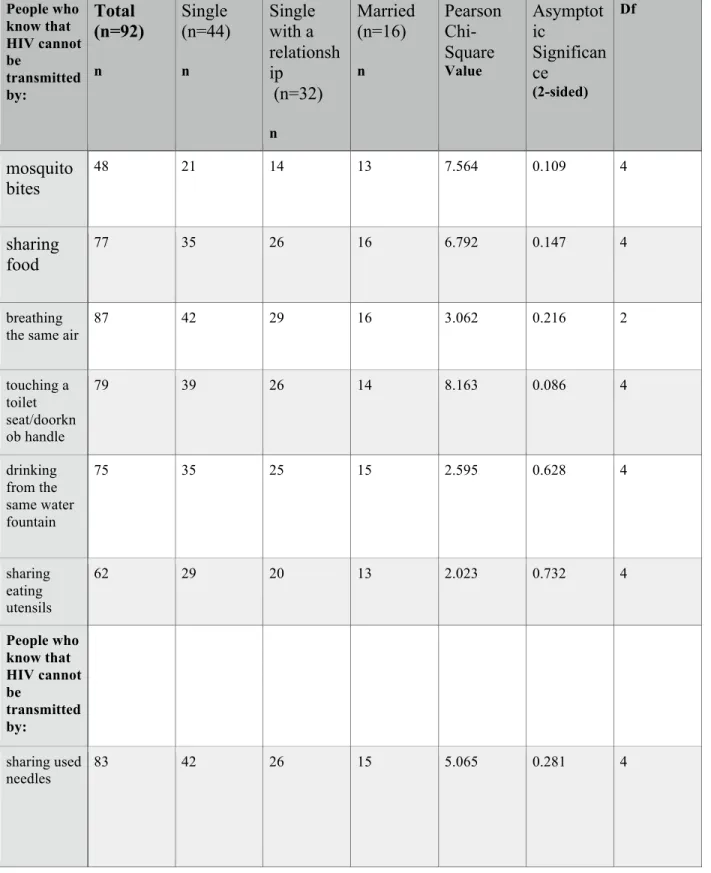
13. Identifying Misconceptions about HIV/AIDS by Relationship……….……..60
14. Identifying Misconceptions about HIV/AIDS by Age Group……….61
15. Knowledge of Mother-to-Child HIV Transmission……….62
17. Knowledge of Mother-to-Child HIV Transmission by Gender……….……..63
18. Knowledge of Mother-to-Child HIV Transmission by Relationship……….……..64
19. Comprehensive Knowledge of HIV/AIDS Transmission………65
20. Attitudes toward People Living with HIV/AIDS……….66
CHAPTER 1: INTRODUCTION AND BACKGROUND
Approximately 304,040 Chinese students were enrolled in various higher education
institutions in the United States during the 2014-2015 academic year. Chinese students
accounted for 31.2 percent of all international students in the U.S., an increase of 10.8 percent
compared to the 274,439 Chinese students enrolled during 2013-2014. Currently, China is the
top source country of foreign students studying in the U.S. (“Open Doors,” 2015). As such a
significant population studying in the U.S., Chinese students deserve to be the target population
for research and, if necessary, health interventions. Moreover, with cultural and linguistic
barriers, Chinese students in the U.S. may become susceptible to adopting risky health behaviors
seen in the general U.S. population (Tung, Lu, & Cook, 2013). As they learn mainstream U.S.
culture, Chinese students with a misunderstanding of a deeply entrenched stigma toward
HIV/AIDS may be at additional risk of acting with unsafe sexual behaviors (Samson & Spector,
2012). One study found that migrants had lower level of knowledge on HIV/AIDS compared to
native people (Tulloch et al., 2012). In the study, African-born HIV patients had less knowledge
compared to the Canada-born HIV patients. This indicates that Chinese-born college students in
the U.S. may have a higher risk of carrying out unsafe behaviors that can lead to HIV/AIDS.
With the increasing number of Chinese students studying in the United States, health researchers
need to further study this group’s knowledge toward HIV/AIDS, attitudes toward HIV/AIDS,
HIV interventions. However, little research has been done about this particular sub-set of ethnic
minority students.
The main purpose of this study is to add to the growing understanding of knowledge,
attitudes, and practice (KAP) toward HIV/AIDS among Chinese college students in the U.S. by
examining (a) their knowledge about HIV and AIDS, and HIV transmission, (b) the attitudes
toward HIV and people living with HIV/AIDS, and (c) the sources they rely on when searching
for health-related information. This study also aims to design a culturally-based poster targeting
Chinese students in the U.S., examining the effects of gain- and loss-framed message designs in
different message formats (text based only, text and numerically based, text and graphically
based). A sound and culturally-based HIV/AIDS poster design must be based on the current
situation of HIV/AIDS among college students in China. What is that current situation?
1.1 Susceptibility to HIV/AIDS
Human immunodeficiency virus infection or acquired immune deficiency syndrome
(HIV/AIDS) is a disease of the human immune system (Sepkowitz, 2001). This disease is a
worldwide problem of considerable magnitude, including in China where cases of the disease are
increasing. According to the most recent data from the World Health Organization (Domínguez,
2014), 36.9 million people worldwide were living with HIV by the end of 2014. In that same
year, 2.1 million people across the world were newly infected with HIV and 1.2 million people
died of AIDS-related causes (World Health Organization [WHO], 2015). Similarly, China is
witnessing a dramatic increase in HIV cases. By the end of 2014, there were 501,000 reported
cases of people living with HIV/AIDS (296,000 with HIV and 205,000 with AIDS) and 159,000
has recently begun increasing rapidly (“2015 China AIDS response progress report,” 2015).
According to an official report published recently, in 2014, mainland China (excluding Hong
Kong, Macao and Taiwan) saw 45,145 new cases of HIV, an increase of 6.67 percent compared
to the 42,286 new cases diagnosed in 2013; the number of mortality cases also increased by 5.09
percent to 12,030 in 2014, compared to 11,437 in 2013 (“National Notifiable Infectious Diseases
Situation FY2014,” 2015). In September 2015 alone, mainland China saw 4,967 new HIV cases,
compared to the 585, 322 new cases of all diseases. Of the 1,433 people that died that month
from disease, 1,172 of those people died from HIV (“September 2015 National Notifiable
Infectious Diseases Report,” 2015).
Young people and adolescents are at a higher risk of being infected by HIV than people
in other age groups (Luo, Xiao, Deng & Ou, 2008; Wang, Gu & Fu, 2010). Worldwide, 2,100
teenagers are infected with HIV every day (UNAIS, 2014). In 2012, young people with
HIV/AIDS accounted for 40 percent of all new adult HIV infections (UNAIDS, 2012). Similarly,
teenagers and young adults in China have a higher susceptibility of HIV/AIDS of being infected
w3ith HIV/AIDS. Young adults ages 20-29 accounted for 34.2 percent of the total HIV carriers
and 15.6 percent of people living with HIV/AIDS in China (Joint United Nations Program on
HIV/AIDS, 2008; Liu, Luo, Cai, & Lin, 2009). College students are a vulnerable group at risk of
getting AIDS (He et al., 2008; Liu, 2006; Wang, 2002).
1.2 HIV/AIDS-related Knowledge
Young adults generally have a poor understanding of HIV/AIDS (Huang et al., 2005;
Kaufman, Kleinman, & Saich, 2006; Li, Cottrell, Wagner, & Ban, 2004; Lonn et al., 2007).
Studies on Chinese college students in China indicated that less than 50 percent of respondents
(Huang et al., 2005; Li, Cottrell, Wagner, & Ban, 2004). Other studies have demonstrated that
college students hold common misconceptions regarding HIV/AIDS. According to a 2005 study,
nearly 90 percent of Chinese college students believed that HIV/AIDS could be transmitted
through casual contact, such as shaking hands, touching, and kissing on the cheek. More than
one-third believed that mosquito bites could transmit HIV/AIDS, and half believed that
HIV/AIDS could be transmitted through sharing public equipment including public toilets and
swimming pools (Huang et al., 2005; Li, Cottrell, Wagner, & Ban, 2004; Lonn et al., 2007).
However, more recent studies indicate that the level of HIV-related basic knowledge amongst
college students has increased. Data from sentinel surveillance systems reported that from 2012
reported that 88.2 percent of young students (in-school youth) had basic knowledge about
HIV/AIDS (2012 China AIDS Response Progress Report, 2012). Results from the 2012 “China’s
Action Plan for Reducing and Preventing the Spread of HIV/AIDS” showed that 85.1 percent of
young women and men aged 15-24 in school correctly identify both HIV prevention and
misconceptions (2012 China AIDS Response Progress Report, 2012). Although there was an
increasing trend on knowing the basic knowledge on HIV/AIDS, nevertheless, surveys on
Chinese college students still suggested that college students have knowledge deficit on
HIV/AIDS (Chen et al., 2012; Sun, Liu, Shi, Wang, Wang, & Chang, 2013; Tung, Lu, Cook,
2013). The majority of Chinese college students knew clearly how HIV was transmitted but did
not know how HIV was not transmitted (Song et al., 2013; Wang, Tang, & Jiang, 2008; Yang et
al., 2010).
Research shows that Chinese college students have a lack of knowledge about
States also have a lack of knowledge about HIV/AIDS, and how American institutions can
CHAPTER 2: LITERATURE REVIEW
Bernhard Schwartlaender, a WHO Representative in China, stated in a Deutsche Welle's
interview that despite the remarkable progress made by the country in some public health areas,
China still faces many challenges concerning preventing HIV infections and ensuring equal
access to treatment for HIV carriers. In addition, he also argued that stigma is one of the biggest
enemies to the elimination of HIV in China (Domínguez, 2014).
2.1 HIV/AIDS-Related Stigma
Although people are now more accepting toward others living with HIV/AIDS
(PLWHA) than in the early years of the outbreak, several studies indicate that the discrimination
and stigma toward PLWHA still exist. Herek and Capitanio (1999) found that people still feel
anxious being around PLWHA. They also reported that people tend to associate HIV with certain
stigmatized groups, namely, gay people, sex workers, and intravenous drug users. In 2007, Smith
suggested that “horrifying” is the most frequently used description of HIV/AIDS. In addition,
Parker and Aggleton (2003) found that the general public believes people living with HIV/AIDS
have dysfunctional personalities.
In China, although people tend to realize that AIDS is a chronic disease, many still link
AIDS to sexual deviance and moral corruption (Zhou, 2007). The general public tends to make
moral judgments about how carriers were infected with HIV/AIDS. Several scholars found that
the majority of people in China are likely to attribute specific behaviors to PLWHA, such as
behaviors are not accepted according to traditional values in China, people living with
HIV/AIDS often experience and internalize the stigma of living with HIV/AIDS and hold a
negative attitude toward themselves (Yang & Kleinman, 2008).
Additionally, several results from previous studies illustrated that people infected by
HIV/AIDS are discriminated against by different groups of people and in different settings in
China. For example, PLWHA face discrimination not only from the general public (Lee, Wu,
Rotheram-Borus, Detels, Guan, & Li, 2005) and from their family members (Root, 2010), but
also from health care workers (Anderson, Zheng, Wu, Li, & Liu, 2003). For example, in Yunnan
province, a survey of health professionals revealed that around 80 percent preferred to not treat
HIV-positive patients (Hesketh, Duo, Li, & Tomkins, 2005). Besides the direct pressure of
stigma, PLWHA also bear indirect discrimination. For instance, uninfected relatives of people
living with HIV/AIDS are stigmatized by Chinese society through being barred from schools,
suffering job market discrimination, and being unable to find romantic partners (Cao et al.,
2006).
Because of the stress, internalized stigma, and direct and indirect discrimination toward
carriers with HIV/AIDS, PLWHA in China try to conceal their disease from others, including
from family members (Cao et al., 2006). They feel reluctant to seek both emotional and social
support and also information about the disease. Furthermore, carriers of HIV are at a high risk
for emotional and mental health disorders (Freeman, Nkomo, Kafaar, & Kelly, 2007; Green,
1995; Sowell & Misener, 1997), often because of their unwillingness to seek social support and
medical assistance (Parker & Aggleton, 2003).
Due to the pervasiveness of the stigma and stereotypes directed at people living with
(Su et al., 2013). People with this condition fear disclosing their status to their community, health
providers, and family members (Cao et al., 2006). People living with HIV/AIDS are also afraid
of being discovered and so avoid going to the local medical clinic for help (Derlega, Winstead,
Greene, Serovich, & Elwood, 2002). As a result, the stigma toward PLWHA potentially
discourages carriers with HIV from seeking social support and medical assistance (Parker &
Aggleton, 2003).
To encourage PLWHA to seek help, and prevent them from being isolated by society,
misconceptions concerning HIV transmission should be addressed. Many in china mistakenly
associate HIV/AIDS with sexual deviance and moral corruption, and will erroneously believe
that the following can transmit the diseases: casual contact (social kissing, hugging, shaking
hands), and sharing food, eating utensils, touching the same toilet seat, and drinking from the
same water fountain. Correcting this misinformation could lead the general public to become
more accepting of PLWHA.
2.2 Misinformation Concerning HIV Transmission
Misinformation is defined in relation to scientific fact. Because science evolves, currently
accepted scientific fact may not be considered accurate in a few years (Tan, Lee, & Chae, 2015).
Conversely, what qualifies as misinformation evolves gradually over time. Because of this
limitation, this study only focused on information related to HIV/AIDS that was considered to be
unambiguously incorrect by the scientific community at the time this study was conducted.
Therefore, this study did not address misinformation that at the time was unverified, speculative,
vague, or contested.
(Tan, Lee, & Chae, 2015). As a result, the general public is exposed to a health information
environment where myths or patently false information compete with correct information. This
environment could adversely influence public belief, social norms, and ultimately lead to adverse
consequences on public health (Culver, Gerr, & Frumkink, 1997; Eysenbach, Powell, Kuss, &
Sa, 2002; Poland & Spier, 2010). Specifically, cases where available information includes
correct and incorrect statements can lead to public confusion, frustration, indifference,
information overload, or resistance to evidence-based health recommendations (Arora et al.,
2008; Nagler, 2014).
In 1992, Price and Hsu reported that AIDS-related stigmatizing attitudes were strongly
correlated with misunderstanding HIV transmission (Price & Hsu, 1992). This finding was
confirmed by other subsequent studies (Brown, Macintyre, & Trujillo, 2003; Ezedinachi et al.,
2002; Herek, 2002). Moreover, Kalichman and Simbayi (2004) stated that misinformation about
HIV/AIDS might be the source of stigmatizing beliefs. Studies also learned that there was an
inverse relationship between the level of AIDS knowledge and AIDS-related stigma: more
knowledge about AIDS was associated with less HIV/AIDS-related stigma (Hamra et al., 2005).
According to the studies described in Chapter 2, many Chinese college students have a
stigma toward HIV/AIDS and people living with HIV/AIDS and have limited knowledge about
the diseases. Although college students understand how HIV is transmitted, they are not familiar
with how the virus is not transmitted (Wang, Tang, & Jiang, 2008; Yang et al., 2010; Zhou,
Zhang, & Meng, 2006). This lack of knowledge could be the cause of stigma, and also lead to a
higher chance of becoming infected; therefore, HIV/AIDS knowledge misinformation needs to
Viswanath stated that although various sources provide ever-increasing health
information today, the information explosion poses challenges to the equal access to information
and the accuracy and availability of the information (2005). Currently, misinformation frequently
arises in the media environment without any intention to mislead the general public (Tan, Lee, &
Chae, 2015). For instance, because of the development of the Internet and the characteristics of
today’s fast-paced news industry, journalists have to report initial news without waiting for the
final results of events. Sometimes, initial reports are erroneous. Although subsequent corrections
of earlier information are published on the same website, the corrected information is often not
able to reach the same audience as the incorrect information. Even if the revised version reaches
the same target audience, the incorrect information often persists (Tan, Lee, & Chae, 2015).
2.3 KAP Studies on Chinese College Students
To date, there have been few studies on Chinese students living in the United States, let
alone studies around HIV/AIDS. Mush of the information about this topic comes from two
studies recently published. Tung, Lu, and Cook (2013) assessed knowledge and attitudes about
HIV/AIDS and sources of HIV/STI information among Chinese students living in the United
States. They found that almost half of participants mistakenly believed that HIV could be
contracted through mosquito bites, and that 22.6 percent were unaware that condoms could
prevent HIV. Moreover, they also found that male students were more likely to have a higher
HIV/AIDS knowledge level than female students. In 2015, an article examining VOICES (Video
Opportunities for Condom Education and Safer Sex) intervention for Chinese college students. It
explored gender differences in the effectiveness of educational intervention about the use of
significantly higher scores of perceived benefits and condom use self-efficacy. As a result, this
study showed the need to develop differentiated HIV intervention based on gender.
However, compared to the few studies on Chinese college students in the United States,
there is a large body of research on HIV-related KAP among college students in mainland China.
Most previous studies found that though college students were well-educated, they still had
knowledge deficit on HIV/AIDS (Chen et al., 2012; Cottrell, Wagner, & Ban, 2004; Huang et al.,
2005; Li, Lonn et al., 2007; Sun et al., 2013; Tung, Lu, & Cook, 2013) and, uncertainty and
confusion about myths related to HIV (Chen et al., 2012; Song et al., 2013; Sun et al., 2013;
Tung, Lu, & Cook, 2013; Xiong, 2007). The majority of Chinese college students knew clearly
how HIV was transmitted but did not know how HIV was not transmitted (Song et al., 2013;
Tang, & Jiang. 2008; Wang, 2002; Wang, Gu, & Fu, 2010; Zhou, Zhang, & Meng, 2006). To be
more specific, at least half of the participants did not know that HIV could not be transmitted
through kissing, hands shaking, or being bitten by mosquitos (Yang et al., 2010). Almost half of
the participants did not want to interact with HIV carriers who were their friends before
diagnosed with the disease. Even worse, almost one fifth of the participants believed people with
HIV should be isolated (Yang et al., 2010). Therefore, there is an urgent need for Chinese
college students in mainland China to have HIV/AIDS interventions to understand how HIV is
transmitted and to prevent being infected by HIV (Wang, Gu, & Fu, 2010).
2.4 HIV/AIDS Intervention
In China, sex education is included in the formal curricula of secondary schools and is
compulsory (Huang et al., 2005; Li, Cottrell, Wagner, & Ban, 2004; Zhang, Li, & Shah, 2007).
However, although current AIDS education had proven to be effective, especially in improving
students did not voluntarily engage with HIV-related educational activities, such as
health-related campaigns and classes (Liu, Du, & Zhang, 2008; Yang et al., 2010). The shortage of
appropriate sex education or activity may lead to limited knowledge on HIV/AIDS.
Given the continuing misunderstanding about HIV/AIDS and students’ lack of interest
shown toward current sex education opportunities, additional and proper sexual health education
(including informative poster) about AIDS/HIV is needed (Liu, Du, & Zhang, 2008; Luo et al.,
2008; Sun et al., 2013; Yang et al., 2010). To date, there is no study in China on how to design
these educational activities to reach college students. There is a gap in the literature regarding
how to design effective and informative visual aids to teach Chinese college students about
HIV/AIDS and to influence the stigma towards HIV/AIDS and PLWHA.
2.5 Sources of HIV/AIDS Information
The lack of appropriate sex education or activity in schools compelled many Chinese
college students to seek information from other channels instead of consulting with teachers or
health professionals at school. Many Chinese college students sought sexual information from
mass media or discussions with family or friends (Huang, et al., 2005; Li, Cottrell, Wagner, &
Ban, 2004; Lonn et al., 2007; Tan, 2008). Mass media is the main source for providing
HIV/AIDS-related information (Bertrand, O’Reilly, Denison, Anhang, & Sweat, 2006; Ross &
Carson, 1988), with the Internet ranking first, followed by newspapers, magazines, and television
(Tung, Lu, & Cook, 2013). School teachers, radio, friends, neighbors, family members, and
2.6 Theoretical Perspectives
2.6.1 Gain-Framing and Loss-Framing Message Design
Gain-framed and loss-framed message design primarily focuses on the persuasiveness of
the message design in health related interventions. A gain-framed appeal emphasizes the
advantages of the recommended behaviors; a loss-framed appeal focuses on the disadvantages of
not adopting the recommended behaviors. The persuasive effects of these two appeals derive
from Prospect Theory (Cho, 2011), a model that aims to describe decision-making in
psychologically realistic ways. Meyerowitz and Chaiken (1987) conducted one of the earliest
empirical comparisons between the different persuasive effects of gain-framed and loss-framed
appeals. Research has shown that framing health messages in terms of gains or losses influences
the adoption of the desired behavior (Rothman, Martino, Bedell, Detweiler, & Salovey, 1999).
Moreover, losses generally have greater motivating power than do gains (Hossain & List, 2009).
2.6.2 Application of Gain-Framing and Loss-Framing Message Design
Derived from Prospect theory (Tversky & Kahneman, 1981), loss- and gain-framed
message designs are effectively applied in various domains to design persuasive health
messages.
Behaviors involving risk (detection behavior) should use loss-framed messages to
promote corresponding desired behaviors (Apanovitch, McCarthy, & Salovey, 2003; Meyerowitz
& Chaiken, 1987; Rothman & Salovey, 1997; Rothman, Salovey, Antone, Keough, & Martin,
1993; Salovey & Wegener, 2003; Schneider et al., 2001a), while behaviors involving little or no
risk (prevention behavior) should use gain-framed messages to promote (Detweiler et al., 1999;
al., 2005), breast self-examination (Kiene et al., 2005; Meyerowitz & Chaiken, 1987; Williams,
Clarke, & Borland, 2001), skin cancer examinations (Block & Keller, 1995; Rothman et al.,
1993), and mammography screenings (Abood, Black, & Coster, 2005; Abood, Coster, Mullis, &
Black, 2002; Banks et al., 1995; Cox & Cox, 2001; Finney & Iannotti, 2002; Schneider et al.,
2001a). In contrast, examples of prevention behavior are wearing a seat belt while driving (Kiene
et al., 2005; Millar & Millar, 2000), physical exercise (Jones, Sinclair, & Courneya, 2003;
Latimer et al., 2008; McCall & Ginis, 2004), smoking cessation (Schneider et al., 2001b; Toll et
al., 2010, 2007), and wearing sunscreen (Detweiler et al., 1999; Rothman et al., 1993). However,
gain-framed appeals are not more effective than loss-framed appeals in promoting certain
preventive behaviors. Although using a condom during sex is known as a prevention behavior,
some scholars believed that a loss frame might be more effective than a gain frame in that it is
viewed as an interpersonal behavior with associated emotional risks (Kiene et al., 2005), while
others believed gain-framed appeals induce greater adherence for prevention behaviors like
condom use (Garcia-Retamero & Cokely, 2011). Gain-framed messages also are not useful in
promoting vaccination against the flu (McCaul, Johnson, & Rothman, 2002) or the human
Papillomavirus (Gerend, Shepherd, & Monday, 2008), or in promoting preventive dietary
behaviors (Brug, Ruiter, & van Assema, 2003; O’Keefe & Jensen, 2007).
Both gain- and loss-framed message designs were used in this study. Although the
purpose of this study is to explore an effective prevention for protecting Chinese college students
in the United States from being infected by HIV, there is no substantial evidence to prove that
gain-framed appeals must be more persuasive than loss-framed appeals in designing preventive
Additionally, the efficacy of visual aids mediates the effect of gain- and loss-framed
messages on sexual health risk communication (Garcia-Retamero & Cokely, 2011). Visual aids
are known as promising methods to effectively communicate health-related information with the
target population (Edwards, Elwyn, & Mulley, 2002; Lipkus, 2007; Lipkus & Hollands, 1999;
Paling, 2003; Peters, Hibbard, Slovic, & Dieckmann, 2007). They are able to not only improve
the understanding of adverse consequences with medical treatments and screenings (Ancker,
Senathirajah, Kukafka, & Starren, 2006; Galesic, Garcia- Retamero, & Gigerenzer, 2009;
Garcia-Retamero & Galesic, 2010; Lipkus, 2007), but make professional or obscure information
easier to understand (Goodyear-Smith et al., 2008). To date, few published studies investigate
whether visual aids influence the efficacy of gain- and loss-framed messages in promoting
prevention behaviors. Garcia-Retamero and Cokely (2011) first investigated the influence of
visual aids on the effectiveness of gain and loss frame for both detection and prevention
behaviors. They found that when the information on condom use was provided in written text
only or in written text and numerically, participants who read the gain-framed message
promoting the use of condoms (prevention behavior) reported stronger intentions to perform the
recommended behavior than those who read the loss-framed message. In contrast, participants
who read the loss-framed message promoting screening for STDs (detection behavior) reported
stronger intentions to make an appointment with their doctor to ask about a screening than those
who read the gain-framed message. However, when the risk information was provided in written
text and graphically, both the gain- and loss-framed messages had an equally high influence on
participants’ intentions of adopting the recommended behaviors. Therefore, this study formatted
graphically to determine the persuasiveness of gain- and loss-framed messages in different
CHAPTER 3: HYPOTHESES
H1: The Internet is the main source for Chinese college students in the United States searching
for general health-related information.
H2: Chinese college students in the United States know clearly how HIV is transmitted but do
not know how HIV is not transmitted.
H3: Chinese college students in the United States have an open attitude towards HIV/AIDS and
people living with HIV/AIDS.
H4: When the corrected information on HIV is provided in written text only or in written text
and numerically based message format, participants prefer a gain-framed message instead of a
loss-framed message.
H5: When the corrected misinformation on HIV is provided in written text and graphically based
message formats, both the gain- and loss-framed messages are equally preferred by participants,
and posters in text and graphical message format increase participants’ self-efficacy in protecting
CHAPTER 4: METHODS
The primary goal of this research project is to study the knowledge and attitudes toward
HIV/AIDS and people living with HIV/AIDS (PLWHA) among Chinese college students in the
United States.This study also aims to examine the effects of gain- and loss-framed message
designs in different message formats (written text only, written text and numerically based, and
written and graphically based). This study used mixed research methods, both qualitative and
quantitative. Since the methods involve human subject interaction, this study asked and obtained
approval from the Office of Human Research Ethics Institutional Review Board at UNC.
4.1 Key Informant Interview
Key informant interviews are qualitative in-depth interviews with people who are
familiar with certain topics in the community (“Key Informant Interviews,” n.d.). In-depth
interviews are useful when research aims to explore new issues in-depth with a specific
demographic of people and needs detailed information about their thoughts and behaviors
(Boyce & Neale, 2006). Key informant interviews also allow researchers to learn the “how” and
“why” of behavior. Little research has studied KAP among Chinese college students in the
United States. Therefore, this qualitative, exploratory research approach was chosen to probe this
group’s (a) knowledge about HIV and AIDS, and HIV transmission, (b) attitudes toward
HIV/AIDS, and people living with HIV/AIDS, and (c) sources for searching for health-related
Key informant interviews also allow for the discussion of private information. The topic
of this study is sensitive and can be personal in nature. Confidential key informant interviews –
rather than group discussions – allow subjects to feel free to talk about private beliefs and
practices they may otherwise feel uncomfortable sharing. The format of key informant
interviews also lets the study seek feedback on the effectiveness of different message designs in
the target demographic – Chinese college students. The one-on-one setting gives the researcher
the ability to ask for constructive suggestions on visual materials used to educate college students
about the susceptibility of HIV/AIDS and correct HIV-related misinformation found on the
Internet (i.e., HIV transmission). Finally, key informant interviews were also the best way to use
the researcher’s available time and resources. This study conducted key informant interviews
through the telephone, instead of face-to-face, in order to save time. Unlike in a face-to-face
interview, telephone interviews have limited personalized interaction, but a well-structured
telephone interview guide is able to address this problem (“Key Informant Interviews,” n.d.).
Participants. Respondents were recruited through email (see appendix 1). The potential
list of key informants was created with the help of Dr. Joan Cates from the School of Media and
Journalism at the University of North Carolina at Chapel Hill and was based on informants’
educational background and working experiences. A total of 10 respondents received the
recruitment email, and 70 percent (n=7) of them replied to the email. Of the replied emails, 71.4
percent (n=5) of respondents were deemed eligible to participate based on willingness to
participate and the predetermined criteria for inclusion: be healthy, be familiar with HIV in
China, know college students in mainland China, know Chinese college students in the United
States, and be willing to participate in a telephone interview. Once the eligibility was
interviewees agreed to a determined interview time and completed a telephone interview. The
responses of these five participants were considered in data analyses. Four of five key informants
were female. Key informants’ ages ranged from 23-35 (Median = 24). Forty percent of
participants (n=2) self-identified as American, and 60 percent (n=3) self-identified as Chinese.
Interviewees indicated whether they currently resided in mainland China, Hong Kong, and the
United States.
Interview Protocol. All selected key informants participated in semi-structured telephone
interviews regarding their knowledge on HIV in China, HIV-related KAP among college
students in mainland China and students in the United States, and HIV-related common
misconceptions on the Internet. The interviews were conducted over the telephone by the
researcher and recorded by the Voice Memos application automatically installed on the iPhone.
Interviews lasted about 25 minutes, though the length varied from participant to participant. An
interview guide and set of questions were developed specifically for this study (see appendix 2).
Besides the interview guide and questions, the informants were told about the purpose of the
study and the confidentiality of their answers, and were asked to verbally declare their
willingness to participate prior to the interviews. The Institutional Review Board at the
University of North Carolina at Chapel Hill approved all procedures used in this research.
Interview Guide. The interview guide was created to address the following key questions.
Q1. Are college students more susceptible to HIV/AIDS compared to other groups?
Q2. Why do college students clearly know how HIV is transmitted but do not know how
HIV is not transmitted, though they are well-educated?
Q4. What are the misconceptions among Chinese college students in China?
Q5. Do Chinese college students are able to identify the misinformation on the Internet?
Q6 Do Chinese college students search for health-related information, especially
HIV/AIDS-related information?
Q7 What’s the main source for searching health-related information?
Questions were created using constructs from an existing interview guide (Boyce &
Neale, 2006), and with guidance from Dr. Joan Cates.
Data Analysis. With the permission of respondents, telephone interviews were recorded
and transcribed. The transcription and recordings were destroyed once they were no longer
needed.
4.2 Online Survey
As a quantitative research approach, the online survey is useful to learn about “how
many” (Boyce & Neale, 2006) people agree with a specific opinion or behave a behavior. This
research project utilized an online survey to confirm or disprove the research hypotheses
discussed in the Research Hypotheses section through asking HIV-related questions on
knowledge, attitude, and practices. The survey was also used to identify an effective educational
intervention strategy by showing respondents different visual aids (gain- and loss-framed
messages in text based only, in text and numerically based, and text and graphically based
message formats) and receiving the respondents’ feedback.
The online survey was conducted to investigate the factors influencing the effectiveness
of message framing in HIV prevention. Two variables were in one group: message frame (gain
vs. loss) and message format (text based only vs. text and numerically based vs. text and
four modules: informed consent form, a demographics module for collecting participants’ basic
information, an information seeking module to learn about participants’ habits of searching for
health-related information on the Internet, and an HIV/AIDS module for learning participants’
knowledge and attitudes on HIV/AIDS and people living with HIV/AIDS. The survey was
pretested among 40 Chinese college students in other universities in the United States before
being conducted. Five of the 40 pretesters were interviewed to obtain feedback in detail.
Participants. Survey respondents were recruited via UNC’s mass email system provided
by the Office of the University Registrar. The email system can filter by demographics, so the
Registrar’s Office sent the email on behalf of the researcher only to students identified as eligible
for the study. Students had to be healthy, at least 18 years old, officially enrolled in college,
have Chinese nationality, and be willing to participate in a survey. The Registrar’s Office also
sent out emails encouraging sharing the survey’s URL with friends and acquaintances (snowball
sampling). Additionally, survey respondents were also recruited via posters placed in public
places on campus (see appendix 3).
Survey design. The survey was largely created based on an HIV/AIDS standardized
model — MICS3 (UNICEF, 2005) —but some of the items of the questionnaire were adapted
locally or were revised for the study’s purposes (see appendix 4). This survey includes five
modules. The first module is the informed consent form, where participants were asked to read
through the standardized consent form and then check a box to express willingness to voluntarily
participate in the study. Following the consent form were three exclusion questions to select
participants (be healthy, at least 18 years old, and self-identified as a Chinese international
would not be eligible for the study and the survey would end immediately. The second module
asked four questions about demographics: age, gender, program of study and relationship status.
The third and fourth modules sought information about the participants’ behavior and
habits. The third module opened with a question that asked about searching health-related
information behavior (e.g., Did you ever search for health-related information? Note:
information in any language including Chinese and English). If a participant answered “No” for
this question, the participant would be sent on to the next module. If the participate answered
“Yes” for this question, seven additional questions then queried participants about their health
information searching behavior on the Internet. The fourth module focused on HIV/AIDS
knowledge and beliefs. The first question asked whether participants knew HIV or AIDS (e.g.,
Have you ever heard of the virus HIV or an illness called AIDS?). If a respondent had never
heard of the HIV virus or AIDS illness, the respondent would be sent to next module. The
following twelve questions queried participants about basic knowledge on HIV/AIDS and
attitudes toward PLWHA. Participants were asked two questions on specific ways to avoid HIV
transmission. One is limiting the number of sexual partners, the other one is using condoms
during sexual intercourse. They were also asked to identify seven common misconceptions
concerning HIV transmission among Chinese college students. (mosquito bites, sharing food,
breathing the same air, drinking from the same water fountain, touching toilet seat, sharing
eating utensils, and using used needles). These seven misconceptions were derived from MICS3
(UNICEF, 2005), information from key informants, and previous studies (Li, Lin, & Nie, 2009;
Wu, 2009; Zhao, Zhang, & Meng, 2006). Next, they were asked three questions on
mother-to-child HIV transmission concerning mother-to-mother-to-child pregnancy, birth, and breastfeeding. Since
transmitting HIV, as a result, this transmission was not included in this survey. Finally, last four
questions were meant to ascertain the respondent’s personal opinion and attitude toward people
with AIDS.
The fifth and final module examined respondents’ reactions to educational posters. There
were three pairs of posters (see appendix 5). Each pair of posters had four associated questions:
Which poster do you like? Why do you like the poster? Do you trust the information on the
posters above? Do the posters above make you want to find out more information? The first pair
of posters consisted of one loss-framed message using only text and one gain-framed message
also using only text. The second pair was composed of one loss-framed message and one
gain-framed message using both text and numbers. The third pair included one loss-gain-framed and one
gain-framed message using text and graphics.
Because this was a sensitive topic, and because discussing sexual health can cause
psychological embarrassment, the author preferred not to risk emotional embarrassment by
exposing participants to potentially disturbing questions and poster designs. Therefore, survey
respondents could stop taking the survey at any time or skip a question for any reason.
Visual aids. The information about the susceptibility of HIV/AIDS was presented in the
left column of the poster (Liu, Luo, Cai & Lin, 2009; “More HIV Cases Among Chinese
Students,” 2013). The corrected misconceptions on HIV transmission were presented in the right
column of the poster. They were “social kissing does not cause AIDS” “sharing food does not
cause AIDS” and “mosquito bites do not cause AIDS.” The tagline at the bottom of the poster
emphasized, depending on the message, either the benefits of adopting the desired attitudes and
The first pair of posters was in text based only message format. Participants received
information about the high risk of being infected by HIV among young adults ages 18-29 in
China, and the increasing number of students who are HIV positive or who are living with AIDS.
The second pair of posters is in text and numerical message format. Participants were informed
that 34.2 percent of the total HIV carriers and 15.6 percent of people living with HIV/AIDS in
China were young adults, and the number of Chinese students with HIV increased by 24.5
percent year-on-year. Similarly, the third pair of posters is in text and graphically based message
format. Participants read information on the susceptibility of HIV/AIDS and saw two graphs (see
appendix 5). Specifically, all respondents were exposed to two pieces of statistical information
and corresponding graphs: “Young adults accounted for 34.2percent of the total HIV carriers in
China” and “Young adults accounted for 15.6percent of people living with HIV/AIDS in China.”
Data analysis. Questionnaires were completed in English. Three following variables were
measured before providing participants with the posters.
1.Demographics. Participants finished the demographics module in the survey, reporting their
age, gender, educational level, and relationship status.
2.Information seeking behavior. Participants finished the information seeking module,
indicating their information searching habits on the Internet.
3.Knowledge and attitudes on HIV/AIDS and people living with HIV/AIDS (PLWHA). On
“yes,” “no,” and “don’t know,” participants evaluated their knowledge on two main HIV
preventions, mother-to-child HIV transmission, misconceptions on HIV transmission, and
discrimination on PLWHA.
Information searching behavior was measured by frequency and percentage. The
measured by Chi-square data analysis and t-test. The correlation between the level of knowledge
on HIV/AIDS and the attitudes toward PLWHA was measured by Pearson.
The preference of posters were measured by 3-point scales. After each pair of posters, on
3-point scales ranging from 1 (not at all), 2 (a little), and to 3 (a lot), participants indicated how
they felt about the message framing (gain vs. loss framing) and the message formats (text only
vs. text and numeric vs. text and graphics). Specifically, with the 3-point scales, participants
indicated the extent to which they trusted the message on the poster, and reported to what extent
they wanted to find out more information.
Incentive. A monetary incentive was offered to four survey participants. Four $25 gift
cards to Amazon were randomly distributed to participants who completely finished the survey.
The gift cards were emailed to participants after the completion of the survey. Amazon gift cards
were selected because no personal identifier was needed except participants’ email addresses to
distribute the gift card.
Confidentiality. The data was only collected for this study. Any potentially identifying
CHAPTER 5: RESULTS
5.1 Key Informant Interview
5.1.1 Demographic Characteristics
Five key informants were recruited in telephone interviews by meeting the predetermined
inclusion (be healthy, be familiar with the HIV in China, Chinese college students both in
mainland China and in the United States) and by being willing to participate in the study. Two of
the total five informants were HIV/AIDS-related health professionals, one of the rest three
informants was a graduate student with major in sexually transmitted disease, other two
informants were Chinese college students in the United States. Most of the informants (n=4,
80%) were female. Forty percent of participants (n=2) self-identified as American, and 60
percent (n=3) self-identified as Chinese. Their ages ranged from 23-35 (Median=24).
5.1.2 Interview Questions
Q1. Are college students more susceptible to HIV/AIDS compared to other groups?
All of the five informants did believe Chinese college students was the group at risk,
though they did not believe Chinese college students were more vulnerable compared to other
groups. Two of the five informants stated that men having sex with men was the most vulnerable
group in China. One of the rest three informants believed that general young adults were more
vulnerable than college students due to the lack of sexual education.
Em, well, I wouldn’t say they are more vulnerable. I would think that everybody is the same. No matter how high education they got, they still have the equal chance to get HIV if they do not treat HIV seriously. - Informant 2
We are the target that is vulnerable to the HIV/AIDS. - Informant 3
It’s not the most vulnerable group, but the group is definitely, em. a group with risk. - Informant 4
Young adults generally, em, are not the same as college students. College students are more educated. But young people generally would have, you know, they are less of experience, there is not a whole of sexual health education in China, that all contribute to the HIV risky behaviors. - Informant 5
Additionally, most of the informants (n=4, 80%) believed that the reason for the
vulnerability of Chinese college students was that the students had open attitudes toward sex but
they lacked basic knowledge on HIV/AIDS so that they could not protect themselves from being
infected by HIV. One of the informants claimed that because the western culture was different
from eastern culture, Chinese college students in the US tended to try risky sexual behavior.
General, there is not much knowledge about HIV and there are lots of social stigma against people with HIV. - Informant 1
I do think that is because of the American culture is more open than Chinese culture, the people here may not take sexual intercourse seriously, they may tend to try risky sexual behaviors, like having several sexual partners. - Informant 2
We are very open to have the relationship and opinion on having sex. But at the same time, we don’t get enough information about this disease and how to protect ourselves. I think this maybe somehow make us a target. Because AIDS is related to sexual behavior. We have a higher rate to have those behavior but with shortage of information . That’s maybe the reason we can be the target and be vulnerable to this HIV. - Informant 3
Q2. Why do college students clearly know how HIV is transmitted but do not know how
HIV is not transmitted, though they are well-educated?
Most of the informants believed that the lack of knowledge on identifying how HIV was
not transmitted might partly due to the traditional culture in China. Because of the deeply
entrenched stigma towards HIV/AIDS and people living with HIV/AIDS, people in China felt
awkward and embarrassed talking about HIV. As a result, Chinese students hesitate to learn or
discuss HIV-related knowledge.
I think they are still lack of knowledge about how HIV is transmitted. There are some sexual activities can transmit HIV, so I think there might be some confusion among which activity can transmit HIV. Since like there are libertine sexual activities but not all of them will transmit HIV. - Informant 1
Personally I think maybe they are shy to talk this issue with doctors, friends and family members. - Informant 2
To be honest, when you talk about AIDS, they will look at you and think you are kind of strange. Because when you talk about AIDS, people may think you are homosexual. They will related to gay. People still have bias on gay and lesbian. - Informant 3
Sex is sensitive topic in China. Em, parents often don’t feel comfortable talking to their children about sexual health and sexual behavior. Teachers also generally, em, are not comfortable talking about sex and sexuality during the class time.
- Informant 5
Furthermore, according to the informants, college students had many misconceptions on
HIV transmission so that people believed that some casual contacts with HIV carriers will make
them at risk.
I have so many uncertainties on identifying the misconceptions. - Informant 2
society. People don’t know that normal activities with people with AIDS are not dangerous. - Informant 3
Q3. For Chinese college students living in the U.S., what do they (you) think current
HIV-related education activities or campaigns targeted at Chinese students in China?
All informants thought current HIV-related education in China was in shortage and
needed to be improved significantly. In China, there are not many sexual health-related
interventions targeting at students except a compulsory course. The course is one-time lecture.
Although sex education is included in a compulsory course, school teachers hesitate to talk sex
especially sexual behaviors and prevention of sexually transmitted disease, instead, they only
teach general information which can be easily found in elsewhere. Students feel awkward to pose
questions and discuss with peers in class.
We took required classes. It’s not about sex, sometimes the teacher got the part of sex. It was a lecture class. At that time, I did not fully engaged in the class. I think I was little bit shy at that time. I did not ask any
questions. I did not actively discuss the issues with peers and teachers. At that time I think I would not have a chance to practice sex. - Informant 2
I was never exposed to any activities except the course I took. It’s only one course, that was not that helpful. It was like a one time lecture. I was not fully engaged to the course. The information provided on the course was usually very basic instead of detailed. Which means you can easily get those information in any other sources. It may only be one page of a website, that’s it. The lecture is boring. - Informant 3
It’s interesting that the word “HIV/AIDS” appears a lots in media, but they don’t really talk in detail, like what should be done to prevent the disease. - Informant 4
Some informants believed that the low susceptibility to the disease among young adults
might be one of the misconceptions concerning HIV/AIDS. Chinese young adults especially
college students believed they had low chance of getting HIV/AIDS, since they were
well-educated and treated the relationship seriously. Moreover, most of the informants still believed
that some common misconceptions still are held among Chinese college students: mosquito bites
(n=4), drinking from a water fountain (n=3), casual contacts such as kissing, hand shaking, and
hugging (n=3), sharing eating utensils (n=3), and touching toilet seat or doorknob handle (n=2).
Some of my friends, like a few of my Chinese friends do not work in public health, they might think that, em maybe it is not relevant to them. Informant 1
They got HIV and thought they were highly educated and they think treat the relationship seriously and the also used condom, but things just
happen. So I feel like college students are just like others, in front of HIV, they are equal. - Informant 2
There must be a lots of misconceptions on this disease. Because this topic it the one people don’t want to talk. So the less people know the better chance for those misinformation being transferred. Usually those wrong information sounds very terrifying and impressive, make it easier people want to transfer those story. Informant 3
Q5 Do Chinese college students are able to identify the misinformation on the Internet?
Most informants reported that Chinese college students were not confident of identifying
incorrect health information on the Internet. They would like to doubt themselves when they
were exposed to the information they were not familiar with.
I’m not sure. I feel like I’m not knowledgeable enough that I would be able to tell. - Informant 1
Because I am not professional in medial area, I would not think those are misinformation. I would think maybe because I don’t know the
There are lots of misinformation on the website. I tend to doubt myself though I don’t believe it all. -Informant 3
Q6 Do Chinese college students search for health-related information, especially
HIV/AIDS-related information?
Three out of five informants reported that Chinese college students did not search
HIV/AIDS information very often due to the low perceived susceptibility. However, four
informants indicated that the students did search general health information. The motivation for
them to search health information was highly related to their own health.
Not so much. I only searched the information when I’m ill. - Informant 1
I search the information mainly depends on my own health status. I do not search HIV information because it is far away from me. - Informant 2
Searching information is highly related to my health situation. I feel this kind of disease is far from me and there is no need for me to search the information. - Informant 3
It’s not a routine practice to search health issues. I just search it when I have questions about it or when I encounter something related health. For the HIV, it does not happen to me very often because it mainly depends on the number of sexual partners. - Informant 4
Q7 What’s the main source for searching health-related information?
Four out of five informants stated that the Internet was the main source for searching
health-related information, and search engine was the top choice. Convenience or accessibility
was the main reason for choosing the Internet. Besides, one informant reported that whether
searching information on the Internet mainly depended on the level of the painfulness of the
illness. If the illness is small with no pain, students would choose to turn to the Internet; while if
appointment and talk with a health provider. Sometimes that seems like too much of a hassle. - Informant 1
If the illness is very small and not painful, I would trust the Internet and see what happen. If the illness is really painful, I would go to the hospital directly. I just used general websites to search health information, like google. I don’t know any specific authoritative health website. - Informant 2
The Internet is the first way to search information. It’s easier to get the Internet access whenever you have laptop or phone with you. I pay a lot of attention to Zhihu, Douban. You never ask those questions to your parents or your friends. Because the first reaction they will have is wondering do you have. - Informant 3
Mostly, the Internet is the main way for searching health-related information because it is the most easily accessed. - Informant 4
I’m sure that young people would search STD online. I would speculate that young people would go to big search engines like the Chinese equivalent to Google. Search engines would be one of the places they would go for health information. - Informant 5
5.1.3 Poster Design
Based on the feedback from the informants, less aggressive and straightforward tone was
recommended. Misconceptions on normal activities with people living with HIV/AIDS needed to
be corrected and emphasized. The information on anti-stigma is necessary.
If you are in China, it’s more conservative and shy culture, and they you design the poster with more romantic and less obvious way, maybe in America you can make it dramatic. It just depends on how you design the poster. Most of the posters I saw did not emphasize the way could not transmit HIV. - Informant 2
People don’t know that normal activities with people with AIDS are not dangerous . So people with HIV are isolated. I think those kind of
information will be helpful for people to accept like AIDS patients and to help them. - Informant 3
It’s worthy and necessary to do sexual education concerning anti-stigma among college students. - Informant 4
5.2 Online Survey
5.2.1 Demographic Characteristics
The survey was conducted between March 8, and March 19, 2016. A total of 122
participants voluntarily responded to the online survey. Of those, 16 participants were not
eligible for the study based on the predetermined inclusion factors (be healthy, be healthy, at
least 18 years old, and self-identify as a Chinese international student at UNC). Among those
who were eligible for the study (n=106), 11 participants’ responses were partial so their
responses were excluded. As a result, in this survey, 95 participants’ responses were considered
in data analyses. All 95 respondents were aged 18 or older, with 9.5 percent aged 18-20 (n=9),
45.3 percent aged 21-24 (n=43), 37.9 percent aged 25-29 (n=36), and 7.4 percent aged 30 or
older (n=7). They came from various disciplines and programs. Participants came from
undergraduate (n=24, 25.3%), master (n=34, 35.8%), combined doctoral or doctoral (n=33,
34.7%), and professional programs (n=4, 4.2%). Approximately 53.7 percent of total participants
(n=51) were female. Nearly 48.4 percent (n=46) of participants indicated that their relationship
status was single, 33.7 percent (n=32) of participants were single but in a relationship, and 17.9
percent (n=17) were married (see table 1).
5.2.2 Research Hypothesis 1
This study sought to verify the following hypothesis: The Internet is the main source for
Chinese college students in the United States searching for general health-related information.
Several questions concerning general health-related information searching behavior were asked.
Most of the participants (85.3 percent, n=81, N total=95) had at least once searched for
information (n=7) chose doctors or health care providers, 4.9 percent chose family members and
friends (n=4), and 1.2 percent chose traditional mass media (radios, magazines, television and
newspapers) (n=1) (see table 2). Although there were 12 participants who did not choose the
Internet as the main source to search health-related information, all of them had surfed the
Internet for health information. Of the participants who had ever searched for health-related
information on the Internet (n=81), within the last week before conduction the survey, 51.85
percent of them (n=42) had searched health information on the Internet once, 14.81 percent
(n=12) of them searched 2-3 times, 4.94 percent (n=4) had searched 4-6 times, and 3.7 percent
(n=3) searched daily. Only 24.69 percent (n=20) of respondents had not searched in past week
(see table 2). Moreover, female students were more likely to search for health-related
information on the Internet than male students. Eighty-three percent of female students searched
health-related information on the Internet in the past week (daily, 4-6 times a week, 2-3 times a
week, and once a week), compared to 65.71 percent of male students (see table 3).
Of the respondents that used the Internet as their primary source for searching
health-related information (n=69), accessibility (n=64, 92.8%) was the main reason for choosing the
Internet, followed by ease of understanding (n=25, 36.23%), currency (n=8, 11.59%), and
credibility or reliability (n=7, 10.14%). In addition, fitness or exercise fitness or exercise (n=56,
69.14%) and nutrition or diet (n=48, 59.26%) were two frequently searched topics. Only 23.46%
participants (n=19) searched for sexual health information (see table 4).
Among those who searched for health-related information on the Internet (n=81),
non-profit organizations were chosen as the favored type of website (n=38, 46.91%), followed by
support groups (online discussion group with a specific health topic) (n=28, 34.6%), medical
(n=18, 22.2%), government websites (n=17, 21.0%), with drug company websites as the
least-selected choice for participants (n=5, 6.2%). Six people chose other providers, such as Baidu,
ZhiHu , and the news (see table 5). Furthermore, the accuracy of the information (60, 74.1%),
credibility of author (39, 48.2%), and ease of understanding (40, 49.4%) were the three main
criteria respondents used to judge health websites (see table 6).
In terms of the extent of difficulty in searching information on the Internet, of the total
group (n=81), 53.1 percent (n=43) believed searching the information on the Internet is
extremely easy or somewhat easy and 37.0 percent (n=30) believed it is neither easy nor
difficult. Only 9.88 percent (n=8) thought it is somewhat difficult. No one thought it is extremely
difficult. Moreover, when it comes to the reliability of the information on the Internet, 90.1
percent (n=73) of the total population (n=81) thought that health information on the Internet is
very reliable or moderately reliable. Only 9.88 percent (n=8) thought it is slightly reliable.
5.2.3 Research Hypothesis 2
This study posed the following research hypothesis: Chinese college students in the
United States know clearly how HIV is transmitted but do not know how HIV is not transmitted.
In order to confirm this hypothesis, all participants were asked to finish twelve questions on HIV
prevention, HIV misconception, and HIV transmission. Approximately 96.8 percent of
participants (n=92) had heard of HIV virus or AIDS illness, only 3.2 percent (n=3) had not hear.
Nearly 88 percent of participants (n=81) knew that using a condom every time during sex
reduced the chance of getting HIV, while 67.4 percent (n=62) knew that having only one sexual
partner who is not infected and also has no other partners reduced the risk of getting HIV. Only
four were single (see table 7). The association between knowledge on HIV prevention and
relationship status was not statistically significant (see table 8). Similarly, there was no
association between knowledge on HIV prevention and gender (see table 9). However, there is
an association between the age group and knowledge on HIV prevention concerning having only
one faithful uninfected sex partner (χ² = 13.304, p=0.038, df=6). Participants aged 30 or more are
more likely to know HIV can be prevented by having one faithful uninfected sexual partners (see
table 10).
Participants were also asked to identify seven common misconceptions among Chinese
college students. Most participants knew that sharing food (n=77, 83.7%), breathing the same air
(n=87, 94.6%), touching toilet seat or touching doorknob handle (n=79, 85.9%), and drinking
from a water fountain (n=75, 81.5%) with a person who had HIV/AIDS did not transmit HIV.
Moreover, the majority of participants (n=83, 90.2%) knew that sharing used needles
transmitted HIV. However, nearly half of participants mistakenly believed that mosquito bites
(n=44, 47.8%) and sharing eating utensils with HIV carriers or people living with AIDS (n=30,
32.6%) transmitted HIV. Female participants tend to have more knowledge with the comparison
to male participants (see table 11). However, among seven misconceptions, only misconception
concerning mosquito bites transmitting HIV was associated with gender (χ² = 6.009, p=0.05,
df=2) (see table 12). Moreover, participants who were married tent to have more knowledge on
HIV misconception compared to participants who were single or single with a stable relationship
(see table 11). Specifically, more than half of the participants who were single and single with a
stable relationship held the misconception on mosquito bites, 54.4 percent (n total single=46) and
56.3 percent (n total single with a stable relationship=32) respectively, compared to 18.8 percent