i
Examining Perceptions of Participation in a Pediatric IBD Collaborative:
Analyzing the Sustainability of Quality Improvement Activities
By
Erica J. Peterson
A Master‟s Paper submitted to the faculty of the University of North Carolina at Chapel Hill in partial fulfillment of the requirements for the degree of Master of Public Health in the Public
Health Leadership Program. Chapel Hill
2010
Advisor and First Reader
Date
Second Reader
ii
Abstract
In 2007, pediatric gastroenterologists from ten practice sites across the U.S. created a quality improvement collaborative, now known as ImproveCareNow, to improve the quality of care provided to children with inflammatory bowel disease. Despite the face validity and great potential of quality improvement collaboratives, investigators do not fully understand how improvement happens, including the variables contributing to quality measures and the
necessary components needed to sustain quality improvement. The purpose of this project was to explore perceptions of collaborative participants to identify elements of sustainability.
We performed qualitative interviews with 16 ImproveCareNow participants as one method in a triangulated strategy of measuring collaborative participants‟ perceptions. We
selected informants from a diverse list of practice types and geographic locations, and asked open-ended questions, which we then transcribed and coded. For this master‟s paper‟s focus on sustainability, I extracted participant views of the collaborative‟s most valuable aspects,
obstacles to participation, and perceptions of variables affecting outcome measures.
New site participants found practice standardization to be most valuable; existing sites named a patient tracking, collaboration, and quality improvement training. New and existing sites mentioned time as the biggest obstacle to collaborative participation; existing sites, with more experience, also named persuading non-ICN providers to support the effort, and other challenges varied by particular ICN activities. Finally, 9 of 12 (75%) informants said that
collaborative activities were responsible for improved inactive disease rates, and 3 of 12 (25%) said the ICN collaborative was partially responsible. When asked if other factors were affecting outcomes, 4 of 12 (33%) said no; 2 of 12 (17%) said yes; and 6 of 12 (50%) were uncertain.
iii
Perspective/Author’s Note
This master‟s paper represents just a portion of a larger team project that allowed my
friend and colleague Thomas Runge and me to employ qualitative research tools to examine this pediatric IBD collaborative. Working together, we were able to examine the perspectives of collaborative participants and explore the literature on quality improvement collaboratives in greater depth than either one of us alone could have achieved. Therefore, the work completed for the master‟s paper and practicum requirements was a collaborative effort, in which we both
contributed equally at every stage.
Although our master‟s project examined the perceptions of participation in a pediatric
IBD collaborative, I chose to focus on elements of sustainability of particular ICN activities and the Improve Care Now (ICN) collaborative itself, while Thomas chose to focus on the practice variation and implementation of key ICN activities. We hope to present our combined work, including findings not fully represented in our master‟s papers, to the ICN Research Committee
iv
Acknowledgements
This project would have been possible without the guidance, expertise, and support from my two advisors and readers, Dr. Sue Tolleson-Rinehart and Dr. Mike Kappelman. I would also like to extend my gratitude to my friend and colleague in this project, Thomas Runge. In
v
Table of Contents
Abstract ... ii
Perspective/Author‟s Note ... iii
Acknowledgements ... iv
Table of Contents ... v
List of Tables and Figures ... vi
Introduction ... 1
Methods ... 5
Results ... 8
Discussion ... 11
Conclusion ... 13
Tables and Figures ... 14
Appendix 1: Further Background on Quality Improvement Collaboratives ... 20
Appendix 2: Limited Systematic Review of Quality Improvement Collaboratives ... 23
Appendix 3: Further Methods ... 50
Appendix 4: Interview Protocol for Existing Sites ... 53
Appendix 5: Interiview Protocol for New Sites ... 56
Appendix 6: Web-based Survey ... 58
vi
List of Tables and Figures
Table 1: Interview Data By Domain ... 15
Table 2: Kappa Statistics ... 16
Table 3: Interviewees ... 16
Table 4: Selected Site Characteristics ... 17
Table 5: Most Valuable Aspect of the Collaborative Perceived by ICN Participants ... 18
Table 6: Obstacles to Collaborative Participation among New Site Participants ... 18
Table 7: Obstacles to Collaborative Participation among Existing Site Participants ... 18
Table 8: ICN Activities & Descriptions ... 19
Table 9: Obstacles Mentioned by ICN Activity ... 19
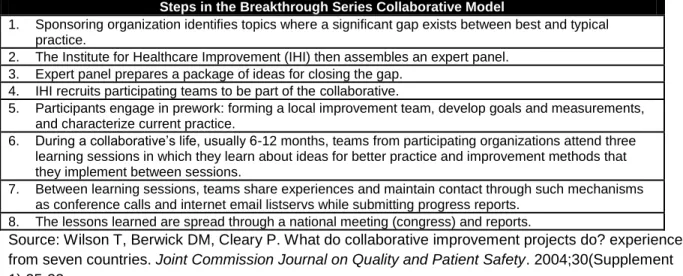
Figure A-1. Steps of the IHI Breakthrough Series Collaborative Model ... ..21
Figure A-2. IHI Collaborative Framework ... 22
Table A-1. Literature for Systematic Review ... 43
Table A-2. Critical Appraisal ... 45
1
Introduction
Pediatric inflammatory bowel disease (IBD) represents one of several chronic diseases that are the focus of quality improvement efforts in the U.S. Chronic diseases are the leading causes of death and disability in the U.S.,1 making their management an important focus of quality improvement and prompting the development and utilization of the chronic care model, improvement collaboratives, health information technology, pay for performance financial incentives, and report cards.2 Recognizing that addressing practice variation is an important step in quality improvement, a group of pediatric gastroenterologists from ten centers across the country formed the first pediatric IBD quality improvement collaborative in 2007,3 now known as ImproveCareNow. Since then, the collaborative has grown to represent 23 sites. As of 2009, more than 2,500 patients have been enrolled in a pediatric IBD registry, and data from over 7,500 visits have been collected and analyzed.4 Preliminary data indicate a rise in the rate of disease inactivity from 49% at the beginning of the collaborative to 64% in 2009. Can
collaborative activities be said to account for any of the improvement in inactive disease? Identifying the drivers of outcomes improvement within and outside the collaborative is necessary to understanding how quality improvement occurs.
Assuring health care quality in the U.S. began more than a century ago when Ernest Codman convinced the founders of the American College of Surgeons to adopt a system of measuring patient outcomes.5 By the 1960‟s, assessing quality expanded beyond patient outcomes. Avedis Donabedian outlined a framework for quality measurement, consisting of three components – structures, processes, and outcomes.6 Structural measures are
2 John Wennberg and Alan Gittelsohn revived the quality of care conversation two
decades later by introducing the concept of practice variation, after they demonstrated the existence of small area practice variations in the utilization of health services and their associated costs.7 Unwarranted variation in care may be associated with misuse, underuse, and overuse of health care resources and services.8, 9 Performance variation, a type of
unwarranted variation, is the difference between optimal performance and observed practice.10,
11 Quality improvement science involves addressing such variation, using methods adapted
from other industries. For instance, the Institute for Healthcare Improvement based its Model for Improvement in large part on W. Edwards Deming‟s approach to management, the System of
Profound Knowledge.12
Quality improvement finally came to public attention when the Institute of Medicine (IOM) found that serious and widespread quality problems existed throughout American medicine.8 and subsequently released its reports To Err is Human in 200013 and Crossing the Quality Chasm in 2001.14 The IOM defined quality of care as “the degree to which health services for individuals and population increase the likelihood of desired health outcomes and are consistent with current professional knowledge.”15 In To Err is Human, the IOM reported that “tens of
thousands of Americans die each year from errors in their care, and hundreds of thousands suffer or barely escape non-fatal injuries.”13
Crossing the Quality Chasm concluded that “between the health care we have and the health care we couldhave lies not just a gap, but a chasm.”14 Reviving Codman‟s sense of accountability among clinicians, the IOM reports
3 Quality improvement collaboratives(QICs) represent one systems-based approach to improve health care quality and patient outcomes.In 1998, the Institute for Healthcare
Improvement developed the Breakthrough Series collaborative model, legitimizing a model for quality improvement and spawning new attempts to reorganize and improve care.18, 19 In QICs, multidisciplinary teams from different sites work together to develop strategies to improve patient care.2 QIC participants receive training in quality improvement, set measurable goals, track process and outcomes measures through plan-do-study-act cycles, exchange ideas and advice, and generate enthusiasm and commitment to achieving a common goal.20 (Find
additional information on the origin of quality improvement collaboratives in Appendix 1: Further Background on Quality Improvement Collaboratives.)
Health care providers and administrators have adapted QICs to fit their goals, from reducing hospital mortality associated with coronary artery bypass graft surgery21 to lowering mean hemoglobin A1c levels in diabetic patients in primary care clinics.22 Despite the face validity and growing popularity of QICs, investigators acknowledge the modest quantity and quality of evidence supporting collaboratives as an effective intervention.20, 23-25 (Find additional information on the effectiveness of quality improvement collaboratives in Appendix 2: Limited Systematic Review of Quality Improvement Collaboratives.)
The Need for Quality Improvement in Pediatric IBD
4 burden on children and their families as children with IBD are at greater risk of difficulties in
behavioral and emotional functioning.28
Like many chronic diseases, early studies suggest variation in care among IBD patients. In a study of 65 adult patients with IBD, Reddy et al. found that there was suboptimal dosing of maintenance medications, prolonged use of corticosteroids, failure to use steroid-sparing agents, and inadequate attention to metabolic bone disease and screening for colorectal cancer.29 Colletti et al. reported similar variation in care among 246 pediatric patients with Crohn‟s disease.3 Clinicians vary in their utilization of diagnostic interventions and treatments,
including stool tests for pathogens, imaging of the small bowel, following pretreatment protocols before initiating thiopurine or infliximab, poor adherence to medication dosing
recommendations, and inconsistencies in nutritional interventions among severely underweight patients.3 As Kappelman et al. noted, “there is a clear need for translating evidence-based practices into the actual practice and follow-up provided for patients.”2
ImproveCareNow (ICN) originated from the Pediatric IBD Network for Research and Improvement (PIBDNet), a two-year project funded by the North American Society for Pediatric Gastroenterology in 2004 to evaluate variation in care in pediatric Crohn‟s disease.4 After
publishing its findings in 2009,3 PIBDNet shifted its focus to quality improvement and formed the PIBDNet Trailblazer Improvement Collaborative, basing it on the IHI‟s Breakthrough Series
5 witnessed promising results both in terms of processes of care and outcomes and think that
practice sites are building sustainable infrastructures.
Investigators frequently demonstrate the need to lessen practice variation and improve the quality of care in many fields; however, they have a more modest understanding of how improvement happens in particular health fields, and know even less about how to sustain that improvement. Pediatric gastroenterologists have invested considerable energy, time, and finances to improve the quality of care of pediatric IBD patients through a quality improvement collaborative. The purpose of this project is to explore and assess the perceptions of
participants in this preliminarily successful collaborative. Describing elements of sustainability of ICN has implications for future health delivery systems in its approach to other chronic diseases. I will examine the most valuable aspects of the collaborative, the obstacles to participation, and the variables affecting outcome measures perceived by ICN participants.
Methods
6 In-Depth Structured Interviews
The purpose of the in-depth structured interviews was to identify what ICN members believed were the key values, components, and drivers of the ICN collaborative and improved outcomes measures. Using process tracing, a method of obtaining information about well-defined and specific events and processes, elite interviews can be used to establish what a set of people think and to make inferences about a larger population's characteristics and
decisions.30 Elite interviews were used for additive purposes, or to provide new information that advanced the research process;31 for our purposes, we used the information about
interviewees‟ attitudes, values, and beliefs to develop a web-based survey.
Our sampling strategy was based on purposive and chain-referral methods, often used when randomized selection is not appropriate.30 We selected a sample of participating centers that represented geographical diversity, differing lengths of membership in the ICN
7 At the beginning of each interview, we asked for the participants' permission to be
recorded with a digital voice recorder and to use direct quotes for purposes of analysis. We recorded the interviews and used recorded files and type written notes to transcribe each interview. In total, we transcribed 42,780 words, equaling 91 typed pages. We sent each respondent his or her own completed transcription.
Methods for Coding Interviews. Based on a multi-step analytic method described by Philip Bernard,32 two independent investigators (E.P and T.R.) systematically reviewed
transcripts and notes from 16 interviewsand coded them for themes and concepts in an Excel spreadsheet. Because interviews consisted of open-ended questions, we used an open coding strategy described by Strauss and Corbin33 to construct our codebook. We began with 138 unique headings based on acquired knowledge and interview questions, which were collapsed into 19 larger categories. When new concepts emerged, we added a code heading to reflect them. To categorize particular responses, we sought to enter the respondent‟s “frame of reference,” as described by Rogers.34 Both investigators discussed and agreed upon
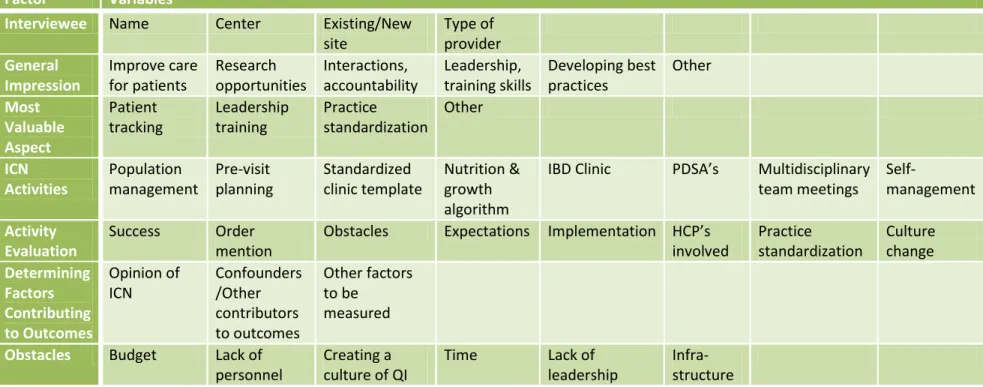
establishing the final code headings. Then, we (E.P. and T.R.) independently reviewed the transcriptions and notes again to complete the codebook. We used 39 final code headings; codebook information can be seen in Table 1: Interview Data Collected.
Upon completion of coding, E.P. and T.R. met to determine the agreement in coding and resolve conflicts. Such utilization of multiple coding minimizes the potential biases when
8
Results
Most Valuable Aspect of the Collaborative
Seventeen of 18 invited participants from ten sites agreed to be interviewed, and 16 of these 17 scheduled and completed the interview. Table 3 lists the interviewees and their
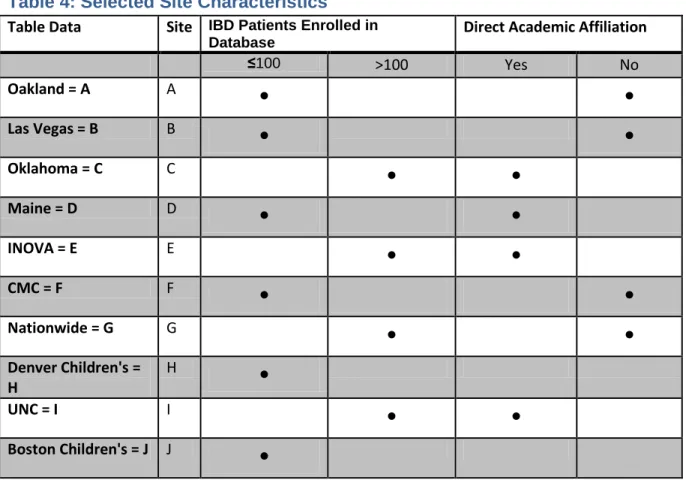
member sites. Table 4 lists selected site characteristics. One participant refused to be recorded, and a second participant's interview was not recorded because of technical difficulties. The average interview lasted 24:46 minutes, but ranged from 10:09 to 43:07 minutes.
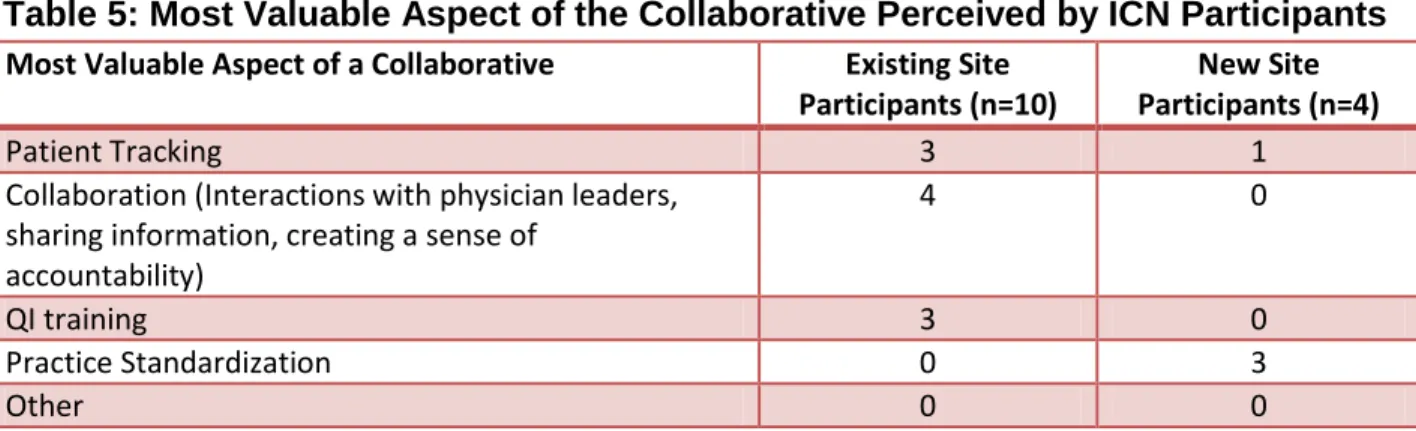
A summary of the most valuable aspects of the collaborative perceived by ICN participants can found in Table 5. Standardizing practice was the most common response among new site participants when they were asked to say what was most valuable to them as health care providers from joining the collaborative. One participant mentioned patient tracking as the most valuable aspect.
Participants from existing sites took varying perspectives. Three of the ten existing site participants claimed patient tracking was the most valuable aspect of ICN. Patient tracking can be summarized as a system that allows clinicians to track their patients‟ disease severity,
diagnostic tests, nutrition and growth status, medications, and preventive-care measures. These participants describe the value of honing in on details of care they may miss otherwise. One key informant described the patient encounter when he realized the value of patient tracking:
I‟ve followed [one patient with ulcerative colitis] for 10 to 15 years…and I would see her about every 6 months to a year.... Over two or three years, she lost two to three kilos, …but because she didn‟t have …particular symptoms, I really didn‟t pursue it. But once we started up the collaborative…and watching nutritional status, …I started saying, „Well, gee wiz, look at this, she‟s been going down for years!‟ …I re-evaluated her, and she had active disease, and when we
9 Four existing site participants said that collaboration -- interaction with physician leaders, sharing information, and creating a sense of accountability – was the most valuable
collaborative feature. For example, one informant describes the most valuable aspect of the collaborative as “being [able] to meet with … not only industry leaders and others that care for
IBD [patients], but those that work in quality improvement as well. Having them meet in one spot has been invaluable.” Another participant describes the sharing of information and resources in the collaborative: “People may have great ideas that you never thought of, and rather than re-inventing the things, let‟s adapt what‟s working well for other centers who do really well, while
not wasting time repeating some of the same mistakes. The three remaining existing site participants described quality improvement training resulting in an increased knowledge base and resources, as the most valuable aspect of being in the collaborative.
Obstacles to Participation
ICN participants described encountering a number of obstacles during the implementation of particular ICN activities. Table 6 and 7 list barriers described by key informants and the frequency they mention them. Among new sites, participants worry that a number of factors threaten their participation in ICN quality improvement activities, the most common of which is time: three of the four new site informants mention their own time as a challenge to ICN participation. One provider expands: “Just seeing the huge volume of emails, I‟m going to have to cancel a weekly clinic just to keep up. …The volume of communication
seems to be quite significant. So, there has to be time, and someone has to pay for that time, right?”
10 budgetary difficulties to support these research activities. We‟re not part of a university setting,
so we have to find the money to pay the personnel that will be doing the study, to cover the budget for the trips to go and attend the meetings.”
Providers at existing sites in ICN also worry about similar barriers: informants mentioned seven types of obstacles inherent to different ICN activities. Time was the most common obstacle (8 of 12 mentions), followed by earning the support for quality improvement from fellow health care providers (7 mentions) and a lack of personnel (5 mentions).
Transitioning to electronic medical records and taking on too much work initially were two other challenges, with 3 mentions each. A single informant mentioned coordinating schedules and obtaining patient/family buy-in for a particular clinic change.
If we break challenges down by ICN activity, we see indications that particular
11 Perceived Collaborative Effectiveness
When we asked collaborative members if increased patient remission rates were a result of the collaborative, 9 of 12 (75%) of the informants said “yes,” and the remaining 3 said the ICN
collaborative was partially responsible. Four of the 12 said that other factors were not affecting outcomes; half of participants were uncertain about the role of other influences, and 17% of respondents thought that outcomes were attributed to factors beyond collaborative activities. Respondents discussed sources of outcomes change: two informants mentioned variation in how patients were entered into the database, suggesting that, early on, sick patients were more likely to be enrolled given their frequency of clinic visits. Utilization of more aggressive
treatment options was also mentioned by two informants. Subjective variation in scoring of disease severity using the Physician Global Assessment; inconsistent participation of other physicians at practices; natural stabilization of the course of disease over time, occurring independent of the collaborative; and disease characteristics not yet known by the medical community were all mentioned once.
Discussion
Performing qualitative interviews of ICN participants is the first step in understanding what health care provider perceive as the value, benefit, and challenge to initiating and sustaining quality improvement activities in a collaborative. At all points of the collaborative‟s
evolution, health care providers must perceive that the collaborative and its activities provide tangible benefits to a practice. The differing views of the most valuable aspect of ICN by new and existing site participants may indicate that one‟s perception of collaborative value changes
12 early focus of the collaborative, longer-standing members may have shifted their perceived value of ICN to patient tracking, collaboration with other providers, and quality improvement training. Alternatively, new member providers may not anticipate the value of collaboration, patient tracking, and quality improvement training at the onset of their participation.
Overcoming obstacles to collaborative participation cannot occur until the obstacles are identified. Because participants had not ever been queried about participation challenges in a systematic way before we conducted this study, collaborative leaders did not know to what extent particular barriers confront providers. Some challenges, such as financial costs, may not be surprising, but should be viewed in context of other obstacles facing providers. Sustaining quality improvement involves integrating it into the fabric of the practice, and gaining the support of non-ICN physicians for ICN is a substantial barrier.
In addition, challenges encountered by ICN members as they undertake particular ICN activities are also important to the sustainability of quality improvement activities. Most providers were in agreement about the value of population management and pre-visit planning, but often the continuation of these activities at certain sites is threatened by small changes, such as the turn-over or unavailability of a key provider.
Finally, and possibly most importantly, assuring that the collaborative itself is causing the increase in patient remission rates, a key outcome measure, is vital to sustaining ICN as an effective intervention. At this point, most providers believe the collaborative is the main driver of improved outcomes and this perception will likely sustain active collaborative participation and propel future recruitment of new sites. However, many ICN members are aware of potential confounders of measured outcomes. Though infrequent, participants‟ mention of confounders
prompts further investigation into what other ICN participants feel may be influencing increasing remission rates and to what extent. Site-to-site variation in the perceptions of potential
13 participation among existing and new members, most participants should agree that ICN is an effective approach to improving the quality of care provided to pediatric IBD patients.
Future Directions
These qualitative interviews serve as the foundation for a web-based survey that will allow us to measure more extensively the perceptions of ICN participants. The number of interviews completed for this project was not sufficient to make conclusive determinations regarding the perceptions of the universe of ICN participants. A web-based survey will allow us to reach the universe of providers, including various types of providers affiliated with ICN.
Two sites have withdrawn from collaborative participation since its inception. Examining the perceptions of former ICN members would give us a basis for comparison for several
variables. For instance, do former ICN site participants feel that the collaborative did not provide valuable benefits to them as health care providers? Or, were there particular challenges that forced these sites to withdraw? Speculation points to the latter, but interviews with withdrawn site members could confirm this conclusion.
Multidisciplinary care is the basis for many quality improvement efforts, including the chronic care model and quality improvement collaborative. However, identifying the differing needs and obstacles facing different types of health care providers is also important to sustaining cross-disciplinary quality improvement efforts. Measuring the perceptions of other members of the IBD care team may shed some light on this question.
Conclusion
Quality improvement collaboratives are one approach to improving patient care, particularly with chronic disease management. The ImproveCareNow (ICN) collaborative is a network of pediatric gastroenterologists from public and private practices and different
15
Tables and Figures
Table 1: Interview Data By Domain
Factor VariablesInterviewee Name Center Existing/New site Type of provider General Impression Improve care for patients Research opportunities Interactions, accountability Leadership, training skills Developing best practices Other Most Valuable Aspect Patient tracking Leadership training Practice standardization Other ICN Activities Population management Pre-visit planning Standardized clinic template Nutrition & growth algorithm
IBD Clinic PDSA’s Multidisciplinary team meetings
Self-management Activity
Evaluation
Success Order mention
Obstacles Expectations Implementation HCP’s involved Practice standardization Culture change Determining Factors Contributing to Outcomes Opinion of ICN Confounders /Other contributors to outcomes Other factors to be measured Obstacles Budget Lack of
personnel
Creating a culture of QI
Time Lack of leadership
16
Table 2: Kappa Statistics
Question
Kappa
Q1 – General Impression 0.57
Q2 – Most Valuable Aspect of Participation 0.83
Q3 – ICN Activity Categorization 0.82
Q4 – Outcomes Due to Collaborative 1.00
Q5 – Potential Confounders 0.62
Table 3: Interviewees
Name Type of
Practitioner
Center City, State
Leslie Higuchi MD Children’s Hospital Boston Boston, MA Victor Pineiro MD Carolinas Medical Center Charlotte, NC
Deborah Neigut MD The Children’s Hospital Aurora, CO
Diane Redmond Quality Improvement Specialist
The Children’s Hospital Aurora, CO
Sandra Kim MD North Carolina Children’s Hospital Chapel Hill, NC Beth McLean RN North Carolina Children’s Hospital Chapel Hill, NC
Ian Leibowitz MD Inova Health System Falls Church, VA
Bernadette Diez NP Inova Health System Falls Church, VA
Mark Integlia MD Maine Medical Center Portland, ME
Bernadette Ray RN Maine Medical Center Portland, ME
Wallace Crandall MD Nationwide Children’s Hospital Columbus, OH Amy Donegan NP Nationwide Children’s Hospital Columbus, OH Sabina Ali MD Children’s Hospital of Oakland Oakland, CA John Grunow MD Oklahoma University Medical Center Oklahoma City, OK Howard Baron MD Pediatric Gastroenterology &
Nutrition Associates
Las Vegas, NV Teresa Carroll NP Pediatric Gastroenterology &
Nutrition Associates
17
Table 4: Selected Site Characteristics
Table Data Site IBD Patients Enrolled in
Database Direct Academic Affiliation
≤100 >100 Yes No
Oakland = A A
•
•
Las Vegas = B B
•
•
Oklahoma = C C
•
•
Maine = D D
•
•
INOVA = E E
•
•
CMC = F F
•
•
Nationwide = G G
•
•
Denver Children's = H
H
•
UNC = I I
•
•
18
Table 5: Most Valuable Aspect of the Collaborative Perceived by ICN Participants
Most Valuable Aspect of a Collaborative Existing Site Participants (n=10)
New Site Participants (n=4)
Patient Tracking 3 1
Collaboration (Interactions with physician leaders, sharing information, creating a sense of
accountability)
4 0
QI training 3 0
Practice Standardization 0 3
Other 0 0
Table 6: Obstacles to Collaborative Participation among New Site Participants
Obstacles to Participation (New Site Interviewees, n=4) # Times Mentioned
Time 3
Need for infrastructure 1
Provider support for quality improvement 1
Budget 1
Lack of personnel 1
Lack of understanding about what QI is 1
Data collection difficulties 1
Resources 1
Table 7: Obstacles to Collaborative Participation among Existing Site Participants
Obstacles of Activity Implementation (Existing Site Interviewees, n=12) # Times Mentioned
Time 8
Provider support for quality improvement 7
Lack of personnel 5
Transition to EMR 3
Taking on too much initially/getting in over our heads 3
Coordinating schedules 1
19
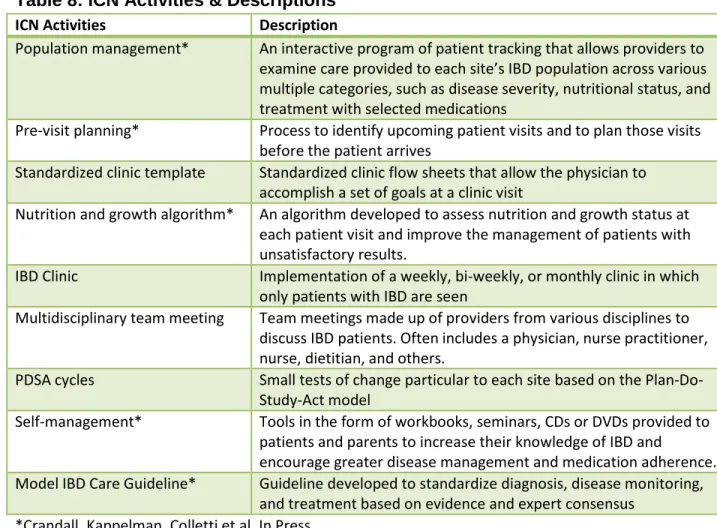
Table 8: ICN Activities & Descriptions
ICN Activities Description
Population management* An interactive program of patient tracking that allows providers to examine care provided to each site’s IBD population across various multiple categories, such as disease severity, nutritional status, and treatment with selected medications
Pre-visit planning* Process to identify upcoming patient visits and to plan those visits before the patient arrives
Standardized clinic template Standardized clinic flow sheets that allow the physician to accomplish a set of goals at a clinic visit
Nutrition and growth algorithm* An algorithm developed to assess nutrition and growth status at each patient visit and improve the management of patients with unsatisfactory results.
IBD Clinic Implementation of a weekly, bi-weekly, or monthly clinic in which only patients with IBD are seen
Multidisciplinary team meeting Team meetings made up of providers from various disciplines to discuss IBD patients. Often includes a physician, nurse practitioner, nurse, dietitian, and others.
PDSA cycles Small tests of change particular to each site based on the Plan-Do-Study-Act model
Self-management* Tools in the form of workbooks, seminars, CDs or DVDs provided to patients and parents to increase their knowledge of IBD and
encourage greater disease management and medication adherence. Model IBD Care Guideline* Guideline developed to standardize diagnosis, disease monitoring,
and treatment based on evidence and expert consensus *Crandall, Kappelman, Colletti et al. In Press.
Table 9: Obstacles Mentioned by ICN Activity
Obstacles per ICN Activity Population Management Report Pre-visit Planning IBD Clinic Team Meetings Standardized Clinic Template ICN Data Collection Nutrition Growth Algorithm
Time 4 3 1 2 0 1 0
Provider buy-in 3 5 1 1 0 1 0
Personnel issues
3 3 1 0 1 0 0
Transition to EMR
1 0 0 0 1 1 1
Logistics/ Clinic Restructuring
20
Appendix 1: Further Background on Quality Improvement Collaboratives
Origin of Quality Improvement Collaboratives
Promotion of quality assurance in the health care field originated long before the IOM reports To Err is Human37 and Crossing the Quality Chasm.14 In 1989, Berwick proposed the adoption of The Theory of Continuous Improvement in the field of health care.38 However, for years few practitioners took quality improvement seriously because, as Kilo explains, promoters of quality assurance focused on cost control, did not know how to motivate physicians, had unrealistic expectations of health outcomes, and poorly understood the science of
improvement.19
Nonetheless, Berwick‟s goals for improvement in health care39 were the basis for the
development of the Institute of Healthcare Improvement‟s (IHI) Breakthrough Series (BTS) collaborative model in 1998, which aimed to achieve “unprecedented levels of improved
performance in participating organizations in less than 1 year by bringing providers together to understand and drive improvement within a specific topic area” (p. 2).19
The IHI developed the collaborative model based on the following principles:
1. A sustained gap exists between knowledge and practice in health care; 2. Broad variation in practice is pervasive;
3. Examples of improved practices and outcomes exist, but they need to be described and disseminated to other organizations;
4. Collaboration between professionals working toward clear aims enables improvement;
21 6. Understanding the science of rapid cycle improvement can accelerate demonstrable
improvement.19
The IHI BTS collaborative model offered a framework adaptable for many types of diseases, provider networks, and health organizations. Wilson, Berwick, and Clearly 40
summarized the steps in the BTS Collaborative Model, which are presented in Figure A-1. The success or failure of collaborative is dependent on team member interactions, which take place during “learning sessions.” Operating under a Plan-Do-Study-Act model, team members learn
improvement techniques, exchange ideas and advice, and generate enthusiasm and commitment to achieving a common goal”20 Learning sessions commonly involve specific
instruction on improving selected aspects of care, developing, sharing, and refining data
collection and tracking modalities, and reporting results or recent changes at each site.41 After each learning session, team members return to their practice or organization to apply new knowledge and evaluate new outcome measures.19 In between learning sessions, access to a listserv41 or extranet is common, as are monthly conference calls. Some collaboratives also develop and utilize state- and region-based support, offering technical assistance to
participating health centers.42 Figure A-2 illustrates the basic framework of the BTS model.
Figure A-1. Steps of the IHI Breakthrough Series Collaborative Model
Steps in the Breakthrough Series Collaborative Model
1. Sponsoring organization identifies topics where a significant gap exists between best and typical practice.
2. The Institute for Healthcare Improvement (IHI) then assembles an expert panel. 3. Expert panel prepares a package of ideas for closing the gap.
4. IHI recruits participating teams to be part of the collaborative.
5. Participants engage in prework: forming a local improvement team, develop goals and measurements, and characterize current practice.
6. During a collaborative‟s life, usually 6-12 months, teams from participating organizations attend three learning sessions in which they learn about ideas for better practice and improvement methods that they implement between sessions.
7. Between learning sessions, teams share experiences and maintain contact through such mechanisms as conference calls and internet email listservs while submitting progress reports.
8. The lessons learned are spread through a national meeting (congress) and reports.
22
Figure A-2. IHI Collaborative Framework
LS: Learning session
23
Appendix 2: Limited Systematic Review of Quality Improvement Collaboratives
Introduction
Investigators have identified deficiencies in the safety and quality of health care provided in the U.S. 14, 37 Among recommendations proposed by the Institute of Medicine‟s Crossing the Quality Chasm is one promoting collaboration among clinicians, institutions, and patients through shared knowledge, free flow of information, evidence based decision making, and transparency of health system processes.14 In addition, financial rewards linked with clinical outcomes further incentivize adoption of quality improvement methods.43 Quality improvement collaboratives (QICs) represent one systems-based approach to improve health care quality and patient outcomes.
The purpose of this review is to provide an overview of the literature surrounding QICs, to classify the types of analyses performed on chronic disease QICs, and to appraise the quality of literature examining their effectiveness. First, we will briefly describe the evidence base for QICs. Then, we will report the methods, results, and discussion of a systematic review of
studies examining collaboratives specifically focusing on chronic disease. Finally, we will outline
suggestions for future research.
Evaluation of the Evidence Base Surrounding QICs
Since the inception of IHI‟s BTS collaborative model, various health care systems,
organizations, and groups of providers have adopted versions of collaboratives to fit their needs. Improving surgical and critical care outcomes in hospitals were among the first targets of
24 after major surgery, and quality of care for very low birth weight infants neonatology survival
rates, respectively.
Utilization of collaboratives quickly expanded from hospital-based outcomes to
outpatient-based diseases and illnesses. As of 2003, the IHI had conducted collaboratives with over 700 teams working on 23 clinical conditions.41 In addition, the U.S. Health Resources and Services Administration46 and the Veterans Health Administration47 adopted the QIC method. Moreover, adoption of collaboratives expanded beyond the Unites States. Australia, France, the Netherlands, Norway, Sweden, and the United Kingdom‟s National Health Services have
developed and implemented variations of collaborative programs.40
Numerous studies document the effectiveness of particular quality improvement collaboratives (QICs). Investigators credit the implementation of QICs for reduced inpatient mortality rates associated with coronary artery bypass graft procedures,21 decreased neonatal infection rates,48 decreased c-section rates,49 less costly prescriptive practices,50 improved patient safety,50 decreased emergency department waiting times,51 and improved management of patients with chronic disease.50 52 Such studies support the use of quality improvement collaboratives as a viable method for identifying and implementing best practices.
Few studies in the literature conclude that QICs are ineffective, but Landon and colleagues41 offer one example. They performed a prospective matched pre- and post-interventions study of almost 10,000 HIV-infected patients and found that a multi-institutional quality improvement collaborative did not significantly affect the quality of care.41
25 attendance to the human dimension, nonlinear development, attendance to organizational culture, integrated philosophy of quality improvement, and a focus on process and outcome measurement to drive change.53 Meanwhile, Wilson and colleagues40 performed semi-structured interviews with 15 leaders of collaboratives to ascertain the features of effective collaboratives; they identified the following seven critical determinants: sponsorship, topic, ideas for improvements, participants, senior leadership support, preliminary work and learning, and strategies for learning about and making improvements.40 However, the internal validity of these studies is questionable because of variation in collaborative frameworks, which targeted a diverse set of medical outcomes and settings, ranging from ambulatory care to critical care units. Similar inconsistencies are rampant in the QIC literature.
Methods
We conducted a MEDLINE search to search for literature written about chronic disease QICs published before January 2010. The search algorithm appears in Figure A-3. We used the following MeSH terms: “quality” AND (“cooperative behavior” OR “cooperative” AND “behavior” OR “collaborative”) AND “improvement.” Our 2-person team reviewed the titles and abstracts of
articles appearing before January 9, 2010. To obtain additional articles not recovered in our
MEDLINE search, we hand-searched references of sentinel articles.
We included studies that were written in English, took place in the U.S., examined collaboratives targeted at one or more chronic diseases, and met the definition of collaborative. In an ad hoc manner we defined a quality improvement collaborative (QIC) as “a voluntary network of health care providers in more than one health care system, who agree to share data and information on processes of care for the purpose of improving the quality of care and patient outcomes.” This definition was based on a pilot search and review, which identified
26 deviations from published guidelines, defined, measurable outcomes, a willingness to pursue active information sharing, and collection of data with the intent to study the effectiveness of the intervention. These variables, and others, were also identified in a systematic review of
collaboratives by Schouten et al, which helped add a measure of validity to our original search goals and inclusion criteria, for quality improvement collaboratives.54
We excluded articles if the collaboratives took place in the settings of improvement in emergency departments, intensive care units, and primary care practices not focusing on a particular chronic disease. We also excluded articles written about collaboratives focused on organ donation, general preventive measures, medical imaging, surgical interventions, and palliative care.
From abstracts and full-texts of the articles meeting inclusion and exclusion criteria, we extracted the following information: the authors and year of the publication, the disease or medical specialty (i.e. pediatric cardiology, psychiatry, etc.) addressed in the collaborative, the setting of the collaborative participants, and the type of analysis performed by authors. We then classified the types of analyses into the following three broader categories: process and
methods, sustainability, and effectiveness. Process and methods included articles written about the need, development, and implementation of quality improvement collaboratives. The
category of sustainability included articles that described or identified internal or external
resources necessary to sustain the effects of a collaborative. Among these, we also recorded if authors addressed the importance of team work or informatics as necessary components of the collaborative investigated. Finally, the category of effectiveness included articles that evaluated
the effectiveness of collaboratives on patient outcomes.
patient-27 oriented outcomes. We excluded studies evaluating effective components of a collaborative, i.e. teamwork or information technology, and studies examining exclusively non-disease specific outcomes. From the studies meeting these inclusion and exclusion criteria, we extracted the following information: the disease or medical condition addressed by the collaborative, a brief description of the study, the study design, the participants in the analysis, the source of
assessment, the outcomes assessed, the methodological status, the duration of follow-up, and the findings. For each study, we appraised the internal validity, external validity, and the clinical utility of the measured outcomes.
Results
The MEDLINE search algorithm produced a total of 626 articles, but only 51 met
inclusion criteria. A hand-search of pertinent literature yielded five additional articles. Table A-1: Literature for Systematic Review details the classification of the 56 articles. Nineteen fell into the category of process/methods, 15 in sustainability, and 22 in effectiveness.
Categories of Literature
28 Articles classified under the categories of sustainability and effectiveness reported various outcomes about collaboratives that had been in operation for at least one year. In general, sustainability articles reported the necessary components to sustain the quality improvement practices initiated because of a collaborative. Some investigators addressed sustainability of a collaborative itself, while others focused on specific components of the QIC. To evaluate which components of a QIC were effective, investigators often conducted
qualitative methods, such as interviews with key informants. Six sustainability studies55-60 61 mention information technology as a necessary component, while 455-58 of these specifically evaluate a particular type of technology utilized in the collaborative. Three sustainability
studies60-62 cited an element of teamwork as an effective QIC component. One study evaluates the cost-effectiveness of implementation of a QIC.
Investigators evaluated a variety of outcomes of collaboratives in studies classified in the category of effectiveness. The outcomes examined are as diverse as the goals for initiation of collaboratives. For instance, some QICs aim to reduce disparities among diabetic patients, while others evaluate physician practices and patient-outcomes.
29 Critical Appraisal
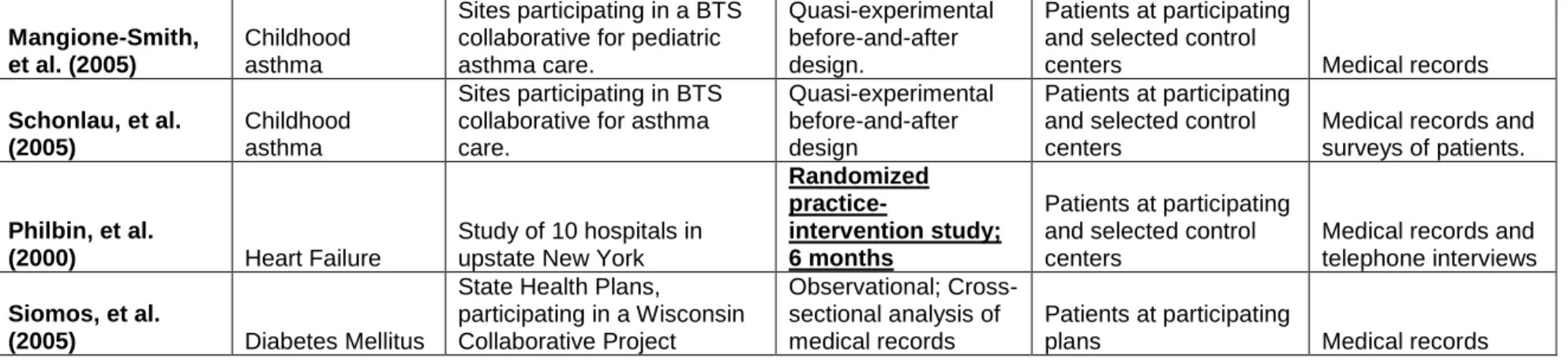
A summary of the systematic review of QIC effectiveness studies is provided in Table A-2: Critical Appraisal. Overall, 13 manuscripts met the inclusion criteria for the systematic review of the effectiveness of QICs. 41, 42, 63-67, 67-73 Of these, only 3 studies involved a randomized component in their study design. Five included studies 41, 42, 63, 64, 70 used a comparison group study design, with selected intervention sites and control sites, not unlike a case-control design. Three studies66, 67, 70, 72 used quasi-experimental before-and-after designs, one73 used a cross-sectional analysis of a state‟s health plans, and two studies65, 68 were uncontrolled
cross-sectional analyses of a single site participating in a collaborative intervention.73
Randomized Studies
30 sessions, critical pathways, and lectures. The New York research team found no significant improvements in process-of-care markers or clinical outcomes among intervention sites
compared to controls. However, a slight, non-significant reduction in hospital length-of-stay was observed among intervention hospitals. The third and final study with a randomized component that fit our inclusion criteria was a study of a diabetes quality improvement collaborative,
undertaken by Chin et al.67 Embedded in a longitudinal study looking at the effect of a
collaborative quality improvement intervention for, sites treating patients with Type 2 diabetes were randomized to either a high-intensity and standard protocol after 1-2 years of participation. For ACE inhibitor and aspirin use, Chin et al. found slightly higher documented rates of
compliance.67 However, for many other intermediate incomes, and for clinical outcomes measures, there was no significant effect of the higher-intensity intervention.67 For several of the intermediate outcomes, including HbA1c levels and systolic blood pressure measurements, control sites out-performed sites that participated in the high-intensity intervention.
Observational Studies
The majority of the studies included in our review were observational studies, employing several different designs. The preponderance of observational study designs among our
31 education outcomes, as well as positive effects on rates of ACE inhibitor and lipid-lowering therapy for heart failure patients. However, Asch et al. found no improvement in readmission rates for patients at participating sites.63 Landon et al., in 2004, published results from a similar assessment of a BTS collaborative, this time concerning HIV treatment and quality. Comparing 44 intervention sites to 25 control clinics primarily on the basis of control of viral load and prevention of opportunistic infections, investigators found no significant differences in outcomes between the two groups. Although the end result was a lack of significance, the proportion of patients with viral load controlled increased twice as much in the intervention group compared to the control group; these figures were 11.0% improvement (40.7 to 51.7) and 5.4% improvement (44.1 to 49.5), respectively.41
Despite mediocre results in the EQHIV study, another Landon-led research team assessed the effects of collaboratives on management and outcomes of asthma, diabetes, and hypertension.42 Interestingly, for these common chronic diseases, Landon et al. found that collaborative participation was associated with improvements in screening, prevention, and disease monitoring, for patients with asthma and diabetes.42 Similar improvements were not seen with hypertension, however. For diabetes and hypertension, there was virtually no effect of collaboratives on clinical outcomes. In contrast to these results, Baker et al. found that participation in a collaborative for heart failure reported much higher quality of life, satisfaction with medical care, and knowledge of their condition.64 Most importantly, patients in the
intervention group utilized less care, in terms of hospitalizations, than those in the control group.64 Despite selection concerns in this study, the utilization outcomes data shows that meaningful improvement likely did occur. The final study comparing “intervention” sites to
32 patient self-management skills. However, small differences in health utilization outcomes between the two groups were not statistically significant, echoing the non-significant findings of
this type in several other studies.42, 72
Of the remaining studies that fit our inclusion criteria, three employed a before-and-after design, one analyzed variations in care from the perspective of a state health plan, and two studies were uncontrolled studies, reporting results and experiences related to a single site‟s
participation in a collaborative. Two of the before-after studies targeted Health Disparities Collaboratives (HDCs). Both of these 66, 67 studied the effect of collaborative interventions on diabetes care, using a collaborative structure that emphasized involvement of community health centers, combining semi-structured interview data with surveys and reviews of medical records. In these studies, investigators found significant improvements across the board, from process-of-care measures such as HbA1c checks, foot and eye exam referrals, and lipid assessments, as well as HbA1c control, an intermediate outcome that for diabetes surves as a monitor for disease control. Between the two studies the improvement in HbA1c ranged from 0.2%66 to 0.45%,67 although this difference was not significant in either case. The third study with a before-after study design72 actually included control sites for comparison, but the control sites had dramatic differences in location and payor mix compared to intervention sites, so for the purposes of this analysis the study was treated as a time series analysis. Schonlau et al. found several significant differences between intervention clinics and control clinics, including several satisfaction and self-management indicators.72 With only 9 included centers, however, the number of utilization outcomes or events (e.g., emergency room visits) was very small,
33 One study73 that met our inclusion criteria found positive gains attributed to a statewide collaborative for Diabetes quality improvement. Reported from the perspective of Wisconsin-based HMO health plans, Siomos et al. found incremental improvements in LDL and HbA1c monitoring, nephropathy screening, and eye exam referrals. However, absent in this study were descriptions of which HMO plans were included for each year of analysis as it varied according to year, and was not explicitly tracked. Nor was there included information on selection of sites, clear presentation of results, or analysis of findings. The final two studies that met our search criteria65, 68 had similar validity questions, stemming from incomplete and haphazard reporting of results, no arrangements or discussion of secular trends, and lack of demographic information on included patients or sites. In addition, Benedetti et al. and Fox et al. presented select
information on only one participating center, which drastically limits the validity of these studies. With no substantive discussion of secular trends, the primary purpose of these studies was informative. From an appraisal standpoint, however, these two studies do little to prove that quality improvement collaboratives have a positive, meaningful effect on quality of care and outcomes.
Discussion
The literature on chronic disease QICs is appropriately diverse to coincide with the variety of chronic diseases and conditions and the range of goals QICs seek to address. For instance, the heterogeneity of HIV patients seen at outpatient care facilities may require completely different management strategies from visit to visit. Thus, an HIV collaborative may
be less fitted to a rigorously systematic, QIC methodology.
34 and methods for different conditions. Next, collaborative participants must measure patient outcomes and determine what components of the QIC contribute to those outcomes. Finally, identifying and developing methods to sustain quality improvement is crucial. The literature thus far indicates chronic disease QICs are at an early evolutionary stage.
In particular, investigators need to measure consistent patient outcomes to strengthen the evidence of effectiveness of chronic disease QICs. Doing so requires reliable and valid quantitative medical research designs. However, the transition to evaluation of effective QIC components and how to sustain them likely requires qualitative research methods, which may be a challenge for clinical investigators unfamiliar with such methods.
An appraisal of the chronic disease QIC effectiveness literature reflects poor internal validity. Randomized controlled trials have the greatest potential to maximize internal validity, but they are rare in the literature. We did not find consistent, corroborated evidence proving the effectiveness of collaboratives.
35 collection aids, likely were aware of their sites‟ relative poor performance, and may not have
volunteered for a study because of their own inherent belief that collaboratives are beneficial. Randomization affords the investigator the opportunity to account for both known and unknown confounders, and with special relevance for collaborative-based interventions, has the potential to eliminate biases associated with secular trends. Still, RCTs are not immune to biases, and what follows is a discussion of limitations associated with the randomized studies that analyzed the effectiveness of collaboratives.
In the study by Homer et al.,69 a much higher percentage of patients enrolled in control sites were on Medicaid. In addition, as reported by the study authors, the risk of contamination in the study was high. This arises from the fact that although 43 sites were randomized at the start of the study, representing the largest sample of clinics included in our review, all forty-three practices were located in one of two geographic areas. In one of the studied regions (Detroit, MI), all of the participating sites, regardless of control or intervention status, were under the same ownership. An unknown dilution factor could have assimilated the medical practice of intervention and control sites that happened to employ the same physicians, but the effect this had is uncertain. In addition, there is no way to ascertain the level of participation or
commitment at each site, given that sites were randomized, and some sites with limited investment in the project may have diminished the magnitude of effect at certain sites.
Another randomized study, undertaken by Philbin et al.,71 randomized 10 practices to either an intensive quality improvement intervention or standard care, for patients with heart failure. This study was exposed to fewer potential biases than the earlier study, primarily due to minimal contamination concerns, but had limitations of its own. First, blinding was not
36 very difficult to ascertain the intent or strength commitment of participating clinics and their leaders and practitioners. Leadership is an oft-mentioned component of successful quality improvement and collaborative interventions.47, 74 Additionally, although Philbin et al. made heart failure the focus of their study, the primary evaluations were carried out from the perspective of acute inpatient diagnosis and treatment, rather than chronic outpatient care.
The final study that included a randomized component in the study design was
conducted by Chin et al.67 The randomization to either standard-intensity intervention (with no additional learning sessions) or the high-intensity intervention (attendance at 4 additional learning sessions) did not give any significant differences between groups. However, there are several reasons why a true benefit to collaborative interventions might have been missed here. First, even though the study used randomization, it is vital to note that randomization occurred 1-2 years into the study, at which time all included sites had been participating in the
longitudinal, observational study, attending collaborative learning sessions, and engaging in quality improvement measures.67 Thus, a majority of the attainable improvement may have already been reached by the time of randomization. In addition, as is the case with the vast majority of studies on collaborative interventions, documentation variation plays as substantial role in the perceived effectiveness of collaboratives, in many of these study designs. In this particular study, the high-intensity intervention was associated with less documentation of diabetes education and exercise counseling. However, additional attention to medication
adjustments and communication may have left less time for counseling in a short clinic visit. Or, physicians may have continued with counseling but spent less time documenting so in medical charts. The uncertainty with documentation issues like these clouds a final judgment of
effectiveness of the high-intensity intervention.
37 serious validity concern that affects any before-after study of this type. Unlike the more
sophisticated interrupted time series design75 that employ time series regression models to reduce unwanted bias in their design, before-after or time-series designs have few defenses against the risks of secular trends. In a health care environment with increasing awareness of quality of care and quality improvement, especially since the release of the IOM reports, the potential effects of secular trends are substantial. During observational studies like these, unknown and unstudied events can occur at any subset of participating sites, drastically
weakening the ability of readers to make causal inferences about their results.75 Internal validity can easily be compromised, especially if studies essentially conduct two-sample t-tests on intervention points and post-intervention points. Doing so gives inaccurate effect sizes if pre-intervention trends are present.75
38 studies, since sites with strong leadership could all be randomized to control sites, the effect of a quality improvement “champion” or leader at sites participating in a collaborative is universally
understood and valued by those with collaborative experience.19, 74 Sites without motivated leaders may consistently underachieve compared to centers with strong leadership. Unfortunately leadership is difficult to assess in these studies.
Another problematic issue when analyzing and interpreting the literature on the effectiveness of collaboratives is the almost universal reliance on medical records for data collection. As discussed previously concerning the randomized intervention undertaken by Chin et al, this problem drastically undermines the ability to draw conclusions from uncontrolled studies,65, 68 in which simply increasing documentation in a practice or practices can give the impression that large improvements in care have occurred. But even for more sophisticated studies, determination of statistical significance from medical records alone is troubling. If, for example, a learning session emphasizes preventive counseling and lifestyle changes for heart failure, does finding a higher percentage of patients with “dietary counseling” in their chart
indicate quality improvement? For evaluation of prevention and screening measures, an
undocumented test or discussion is one that for the purposes of analysis did not occur. Further, in practice-based intervention studies where blinding is seldom performed, an increased
emphasis on documentation may falsely create the sense of improvement when the only
39 Still, an important distinction about medical record abstraction should be made here, because some endpoints can be reliably taken from medical records. One of the most important uses of medical records is making a determination of definite clinical outcomes, such as MI, stroke, death, or other conditions that are easily defined and reliably documented. However, of the 14 studies we evaluated that analyzed the effect of collaboratives on chronic disease care, only 6 (or 43%) even collected data on clinical outcomes. Data tables in these articles are filled with satisfaction measures, quality of life indices, and process-of-care targets, some of which are linked to improved outcomes. However, higher indicators now do not equal improved outcomes in the future. Whereas there can be disagreement among scales and indices when researchers assemble them together to make a clinical judgment, as in a meta-analysis, there is no dispute when studies publish hard, easily defined, concrete outcomes. Of course, improving quality of care is not limited to keeping patients alive, and true quality includes many of these components. In addition, the current medical record abstraction method for data collection in these practice-level interventions is quite useful for some conditions. For instance, heart failure is a condition that arguably is quite better suited to medical record abstraction. For heart failure patients, unlike patients with other medical conditions, utilization outcomes can be used as a proxy measure for disease control. With diabetes mellitus, the pathological processes
underlying the disease are often undetectable to afflicted patients, and long-term adverse events like heart attacks, strokes, and peripheral vascular complications are most commonly measured. For heart failure, a poorly controlled patient is a symptomatic one, who will likely
present to the hospital with more short-term needs.
Future Directions
40 improvements in patient outcomes is somewhat underwhelming. With these limitations,
however, come opportunities for improvement, and there are other indications that
collaboratives may be more successful than the demonstrated evidence currently indicates. For instance, many collaboratives are currently ongoing. Although funding constraints and logistical issues have prevented long-term data collection and analysis for the purposes of publication, these opportunities will increase the future.
Although the literature to date contains some methodological flaws, the sense of cooperation, information-sharing and camaraderie that these interventions can create, both between sites and within sites, is likely already leading to improved care. In a recent study by Bray et al, researchers found that even once a collaborative project with a defined-length of operation ended, many of the quality improvement programs, from infrastructure support, regular meetings to study patient data, and leadership development, remain in place at participating clinics.61
QICs are likely to become more frequent in pediatrics as the American Academy of Pediatrics now requires participation in quality improvement projects. In the Education in Quality Improvement for Pediatric Practice (EQIPP) program, qualified improvement projects help distribute practice-wide data on effectiveness and management.78 Enrollment in such a program allows one to receive credit that is required under Maintenance-of-Certification guidelines for Pediatricians. Collaboratives may be beneficial to streamline practices,
41 The gaps remaining in the literature must be addressed by subsequent investigators. As mentioned earlier, current medical management of certain chronic diseases are unclear and must be defined. Such a step requires commitment of regulatory agencies and professional medical associations alike. An effort should be made to increase the number of facilities involved in these interventions, to strengthen the ability of statistical techniques to show significant conclusions. In addition, an increased number of included clinics, from various geographic, socioeconomic, and organizational styles, must be approached and included.
Second, key investigators and journal editors must establish standards for research design and methods for evaluating collaboratives to ensure reliable, valid, and comparable findings, which may facilitate future systematic reviews and meta-analyses.20 Third, sponsoring agencies of QICs need to provide more information regarding the teaching and implementation of collaboratives.41 The IHI BTS collaborative model provides the most detailed information on collaborative start-up; however, many variants exist. Additionally, BTS collaboratives were designed to last one year or less and offer little direction for providers once a particular collaborative is over.
Finally, quality improvement remains a complex issue in health care. If inconsistent research designs prevent the identification of successful components of QICs, then the components necessary to sustain quality improvement following the completion of a
collaborative is less certain. An evidence base for quality improvement itself must be improved. Future research must address concepts regarding the nature of quality problems, quality improvement processes, and the types of research needed to elucidate these processes.20
42 camaraderie, facilitate data, speed the adoption of best practices, and most importantly,
improve care for patients with chronic disease. However, the research methods to evaluate collaborative interventions require a different mindset, and standards different from those