Laura Vepraskas. An Evidence-Based Study of Social Media Use by Small
Businesses. A Master's paper for the M.S. in I.S. degree. January, 2015. 135
pages. Advisor: Stephanie W. Haas
Over the past decade, social media networking has become increasingly
valuable to individuals and other entities, such as small businesses for
promotional means. Developed as a tool to help individuals interact,
communicate, and exchange information, social media use can yield positive
outcomes for small businesses as evident through financial gain and increased
customer communication.
Using Evidence-Based Practice (EBP) principles, this study evaluates the
current body of literature regarding small business use of social media. Thirty
articles were evaluated using a criteria checklist to develop recommended
principles of how small businesses may best use social media in their future
marking strategies.
Headings:
Digital Media
Communication & Technology
Business – Computer Use
AN EVIDENCE-BASED STUDY OF SOCIAL MEDIA USE BY SMALL
BUSINESSES
by
Laura Vepraskas
A Master's paper submitted to the faculty of the School of Information and Library Science of the University of North Carolina at Chapel Hill
in partial fulfillment of the requirements for the degree of Master of Science in
Information Science.
Chapel Hill, North Carolina January 2015
Approved by:
TABLE OF CONTENTS
Introduction………3
Purpose of Study………..4
Literature Review….……….4
Evidence-Based Practice………..4
Small Business……….6
Social Media………6
Small Business Use of Social Media………...8
Method………..11
Source Description……….11
Literature Search………12
Checklist Assessment……….15
Internal Validity for the Selection Process………18
External Validity for the Selection Process………...18
Credibility for the Selection Process………..19
Scope of Selected Articles……….19
Selection Criteria………...20
Results………...24
Evaluation of Selected Articles………..24
Financial Gain Articles....………..………24
Increased Communication Articles …………...……….36
Discussion……….51
Financial Impacts of Social Media…………...………..51
Principle I- Increasing Sales………..51
Principle II- Social Medial Comprehension………..52
Principle III- Goals for Using Social Media………..53
Using Social Media to Communicate with Customers………..55
Principle I- Marketing Plans………..56
Principle II- Connecting to Customers………..…58
Principle III- Using Social Media Within the Company………...60
Conclusions………...61
Reference……….…….63
Appendices………..…..69
Appendix A: Completed Checklists for Trade Articles………69
Appendix B: Completed Checklists for Academic Articles……….97
INTRODUCTION
Within the past ten years, social media has become increasingly valuable to multiple types of institutions, varying from small businesses and academia to government agencies, political campaigns and giant corporations. Social media was developed to allow individuals to communicate, interact and exchange information via the Internet. Common social media sites include Facebook, Twitter, LinkedIn, and Pinterest.
Purpose of Study
The purpose of this research study is to assess different strategies for using social media to promote financial gain and communication for small businesses by using the principles of Evidence-Based Practice (EBP). Financial gain is defined as an increase in profits. Communication is defined as building partnerships with other businesses and increasing interactions with individual customers. Because social media use is a rather new but popular phenomenon (Facebook launched in 2004 and Twitter launched in 2006), the amount of authoritative literature on its use is relatively small compared with other forms of communication. The quality of data produced by news articles, trade journals, blogs and academic publications may vary, and thus the quality of the data from these sources need to be assessed.
The goal of this study is to propose best practices for small business’ use of Twitter as a tool for communication and financial gain. The objective of this study is to find articles that can be used to define best practices for using Twitter for financial gain and customer communication.
LITERATURE REVIEW Evidence-Based Practice
1) Assess the Problem: What question arises?
2) Ask the Question: Construct a well-built question derived from the case 3) Acquire Evidence: Select appropriate resources and conduct a search 4) Appraise the Evidence: Appraise the validity and applicability 5) Apply Evidence: Integrate evidence with expertise
6) Self Evaluation: Evaluate one’s own performance
While the basis behind systematic review of outcome research is not a new concept, the application of it in a variety of settings has recently been gaining wide acceptance. The term was first used in clinical medicine and in recent years, EBP has established a notable reputation in the health-care arena. Specific disciplines include cardiology, pediatrics, surgery, nursing, gastroenterology, diagnostic radiology, disease management, pathology, midwifery, complementary or alternative medicine and health policy (Eldredge, 2000).
The increase in popularity of EBP is especially encouraging for librarians because it allows them to implement well-researched and relevant information-skills training sessions for specific audiences (Jeffery, 2008). As experts on information seeking and resources, librarians must be able to identify and retrieve the most relevant and useful resources on a given topic quickly. Further, an awareness of the evolution of research in a given field allows librarians to educate researchers and professionals about updated findings (Kronenfeld et al, 2007).
Resource selection should focus on research-based studies. The selected studies will then be analyzed to identify relevant information that can be interpreted and classified by EBP (Petticrew and Roberts, 2006).
These analyses serve many purposes. According to Petticrew and Roberts, “Information seekers can examine old theories and propose new ones, consider where the balance of evidence lies in relation to a particular topic, and provide a basis for recommendations for interventions.” In essence, EBP aims to evaluate already existing literature written about a given topic to better understand the ways to approach and solve an issue.
Small Business
According to the Small Business Association (www.sba.gov, 2010), a small business is defined as one that is independently owned and operated, is organized for-profit and is not dominant in its field. Depending on the industry, size limits are based on the average number of employees for the preceding twelve months or on sales volume averaged over a three-year period.
Social Media
According to the small business hosting platform, Intuit Websites by Homestead (2013), incentives for small businesses to increase their social media use include: free services, customer familiarity, and time efficiency. Twitter and Facebook offer free marketing tools, such as business pages and ads aimed at target audiences. Small businesses may use their profiles on social media sites to introduce their products or services to a broad audience and open up an informal channel of communication between business and consumer. Social media is also a time-efficient medium, as it allows businesses to publish a message to a broad audience of consumers quickly. In addition, small businesses spend time on social media sites to connect with customers, increase brand visibility, improve self-promotion, advocate innovative campaigns and challenge the competition (Intuit, 2013). Social media sites allow small businesses to communicate openly with consumers. Individuals have the ability to post content directly to a small business’ page (or account), which the business can then respond to. Today, many consumers have accounts on social media sites and by actively participating in these networks, small businesses are able to increase visibility by appealing to consumers in a familiar environment. This aids in improving self-promotion as small businesses have the ability to promote desirable aspects of their businesses while also remaining responsive to their audience.
allowing small businesses to challenge the social media marketing efforts of others within their industry.
Small Business Use of Social Media
Social media outlets allow businesses to connect with customers and potential customers (henceforth referred to as the "audience") about their products and/or services. With news and updates frequently posted by businesses, interactive connections (webs) can be formed with their audience. This quick form of communication facilitates an active dialogue and gives the audience an opportunity to express opinions about the product or service. In turn, with an active social media presence, companies can readily address audience concerns and defend themselves to their online community. Data gathered through customer comments, message content, and frequency of interaction offer important feedback that can be used to improve customer services and products.
According to Reid (2009), digital communications between businesses and consumers on the social web are top areas for enterprise activity, especially in regards to increasing the quality of customer service, brand value expansion and competitive intelligence.
make informed decisions quickly. This is a fast-action form of business referral that could be considered untapped before online networking (Poland, 2013).
In addition, a study conducted by Manta, an online business community, indicates that small business owners that use social media saw a positive return on investment (ROI) in the first quarter of 2013. Small business owners are focusing promotional efforts on social media outlets. The results of this study indicate that social media is a time and resource efficient platform that is continuously evolving. The researchers recommend that small business owners stay current with trends and updates on social media use. From the first quarter alone, 40% of small businesses surveyed indicated a positive ROI directly from social media efforts, and 30% indicated a return of $2,000 or greater (Manta, 2013).
Twitter is an online social networking and micro-blogging service that allows users to create and view others status’ in 140 characters or less. The site was launched in 2006 by Jack Dorsey and is estimated to have more than 255 million monthly active users
(about.twitter.com). As of August 2013, 500 million tweets were sent per day, and 77% of accounts were from outside the United States. For the purposes of this research, focusing only on Twitter allows the study to evaluate what types of businesses may benefit from using a specific social media network. Communication on Twitter is, by its nature, compact and fast-paced, which may not be suitable for all types of small
designed to deliver news, unique perspectives and information. It promotes this
METHOD
By applying the principles of EBP, the goal of the investigation is to determine effective practices through analysis of relevant literature to provide best practices for the use of Twitter to foster communication with customers and increase profit. For the purpose of this study, small businesses are those with a maximum of 1,500 employees and a maximum of $21.5 million in annual sales.
Source Description
Resources for inclusion were published articles and books. A variety of trade journals, blogs, case studies, and online publications were drawn from to gather different
perspectives on the research topic. While it is noted that there is a risk in not solely assessing peer reviewed sources, as found in scholarly journals, the checklists used to evaluate each piece are, in part, used to act as a safeguard to measure the quality of information in a given piece of work. Publications were evaluated using a broad, literature-based checklist to assess how many of the following criteria each source addresses:
• Increase revenue • Drive traffic to website • Create conversions
• Build online communities • Generate leads
• Scan industry environment for marketplace trends • Form business partnerships
Literature Search
Sources were identified using databases provided by the UNC-Chapel Hill Libraries Catalog (www.lib.unc.edu). Databases were selected from the following disciplines:
• Business
• Communication Studies
• Journalism and Mass Communications
• Library and Information Science
These disciplines were selected to gain a broad understanding of how industry professionals view social media and how communication networks can be developed using social media.
Articles were obtained from databases identified by UNC Chapel Hill Libraries as “frequently used” (http://eresources.lib.unc.edu/eid/). These databases were chosen because of their broad subject return. This was important because of the various publication types encompassed in my study. The databases used were:
• Academic Search Complete • Business Source Complete
• Communication and Mass Media Complete
Initially, I used the following terms to search an index of discipline-specific sources (http://eresources.lib.unc.edu/eid) for relevant articles. I chose these terms because they directly encompassed the scope of the study:
• Small Business • Twitter
• Social Media
• Return on Investment (ROI) • Social Networking
• Quantitative and Qualitative research
The following terms were entered as “advanced search” terms as individual or grouped search to ensure that the specified terms were used in the retrieved articles. The UNC Libraries Search Engine provides “Refined Search” options. For each search, I specified:
• Content Type: Any
• Subject Terms: Those terms specified in the search
• Publication Date: 2006-2013 (only articles that were published after the launch of Twitter)
• Language: English
As the search process progressed, the researcher added the following terms to further refine the results:
• Small-‐to-‐Medium Business (SMB)
• Small-‐to-‐Medium Enterprises (SME)
• Electronic Word of Mouth (eWOM)
The following were required terms for the search:
• Small Business
• Financial Gains AND/OR
• Increased Communication
Checklist Assessment
The literature search returned 30 articles from the following databases:
• Academic Search Complete
• Business Source Complete
• Communication and Mass Media Complete
• Library and Information Science Abstracts (LISA)
• Small Business Reference Center
These articles fit the search criteria regarding financial and communicative gains for small business Twitter use. Each article was evaluated by a checklist assessment based on a checklist found in Bronson and Davis (2012). My checklist, originally developed by Bronson and Davis (2012), and expanded upon by myself for the purpose of this study, consisted of 22 criteria organized into four categories:
• Internal Validity
• External Validity and Relevance
• Credibility
• Scope of Study
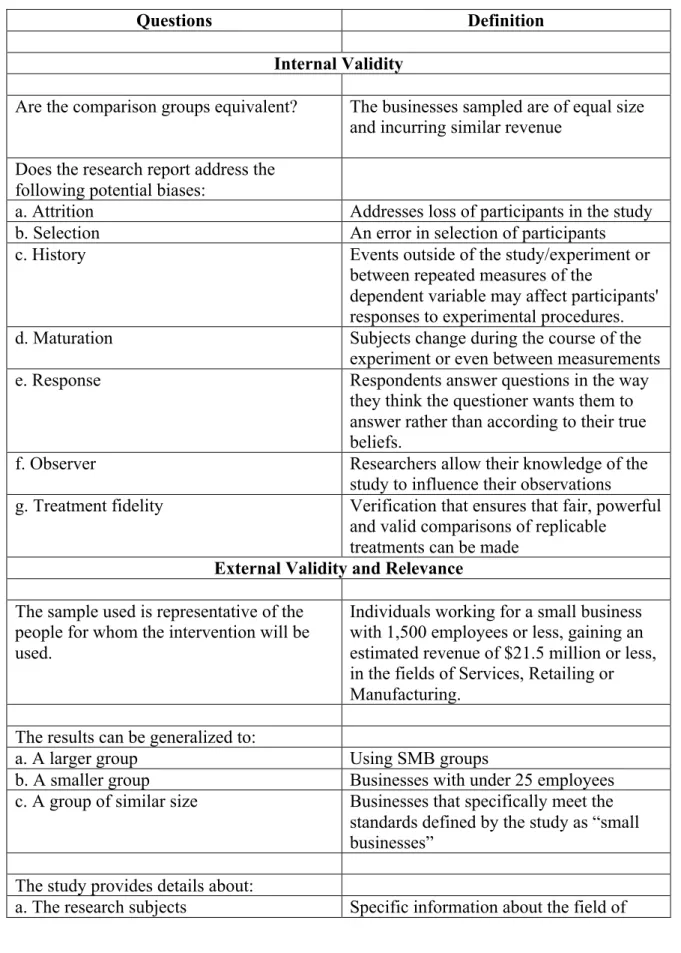
Table 1. Questions used to survey data validity and relevance.
Questions Definition
Internal Validity
Are the comparison groups equivalent? The businesses sampled are of equal size and incurring similar revenue
Does the research report address the following potential biases:
a. Attrition Addresses loss of participants in the study
b. Selection An error in selection of participants
c. History Events outside of the study/experiment or
between repeated measures of the
dependent variable may affect participants' responses to experimental procedures. d. Maturation Subjects change during the course of the
experiment or even between measurements
e. Response Respondents answer questions in the way
they think the questioner wants them to answer rather than according to their true beliefs.
f. Observer Researchers allow their knowledge of the
study to influence their observations g. Treatment fidelity Verification that ensures that fair, powerful
and valid comparisons of replicable treatments can be made
External Validity and Relevance
The sample used is representative of the people for whom the intervention will be used.
Individuals working for a small business with 1,500 employees or less, gaining an estimated revenue of $21.5 million or less, in the fields of Services, Retailing or Manufacturing.
The results can be generalized to:
a. A larger group Using SMB groups
b. A smaller group Businesses with under 25 employees c. A group of similar size Businesses that specifically meet the
standards defined by the study as “small businesses”
The study provides details about:
business, size of business, yearly revenue, and customer communications
b. The treatment setting How the research was conducted c. Characteristics of those who provided the
intervention Credentials and job description
The intervention has been replicated with other populations in different settings
Multiple settings (different types of businesses within different cultural settings)
The intervention is readily available Available to the public (easily accessed via search engine)
Credibility
Detailed information is provided about the researcher, including place of employment, previous research and potential conflicts of interest
Description as stated
Information about the funding and the funding organization
Information as to where and why the specific organization is funding the study Information about possible financial gains
for the researchers associated with the outcome of the research
Description as stated
The author has clearly presented the purpose of the research
Description as stated The research report appears to be
transparent and the conclusions are
consistent with the evidentiary status of the research
The methods are clearly specified, and other researchers could repeat the study
Scope of Study
Does this study evaluate: a. Twitter exclusively
b. Twitter and other social networking systems
Description as stated
How would you describe the type of research that this study utilizes? a. Qualitative
b. Quantitative c. Trade review d. Other
Description as stated
Internal Validity for the Selection Process
For the purpose of this study, internal validity was defined as whether an experimental treatment (or condition) influenced outcomes and whether there was a sufficient amount of evidence to support such a claim (Campbell and Stanley, 1963), using evaluator questions requiring a “yes,” “no,” “unknown,” or “not applicable” answer. For articles detailing qualitative research with no actual treatment, an “N/A” answer was given. Each chosen article was assessed to gauge whether the content had a high level of internal validity.
External Validity for the Selection Process
For the purpose of this study, Campbell and Stanley’s (1963) definition of external validity was evaluated using the Bronson & Davis’ (2012) checklist. For Campbell & Stanley, “External validity asks the question of generalizability: To what populations, settings, treatment variables, and measurement variables can this effect be
generalized?” Here, the criteria used for the checklist were geared towards producing for this research? estimated revenue of $21.5 million or less,
in the fields of Services, Retailing or Manufacturing.
What is the time frame of the research? Description as stated Specify the size of the research sample Description as stated
Does it address outcomes? The article describes how Twitter use has had an impact on the researched
business(es) Does it address positive financial outcomes
from Twitter? Description as stated
Does it address positive financial outcomes
generalizable knowledge that would aid the small business social media practitioner in his/her use of a specific social network. The development of this checklist was also created with the intent that it could be applied to other EBP studies in other fields of research with the intent of further enabling the extent of small business internet marketing.
Credibility for the Selection Process
The question of credibility is important for EBP in many setting. According to the American Speech-Language-Hearing Association, expert opinion is necessary to provide high-quality guidelines for clients in reference to their needs, values and interests
(http://www.asha.org/members/ebp/). With an eye toward allowing practitioners to
make inferences about the credibility of the various sources evaluated, information requested about the type of publication that the article appeared in, criteria for assessing the validity of comparisons, biases, the relevance of samples represented, populations to which results could be applied, the level of detail provided about the setting, subjects, research, and funding.
Scope of Selected Articles
The scope of each article was evaluated in terms of specific social network(s) used, the type of research or evaluation presented among different platforms, the time frame of the study, and the size of the sample. These specifications were intended to assist in
using the checklist. Time-frame variance and comparative sample sizes could be effective measures to help predict future behavior of small business use of Twitter.
Selection Criteria
Thirty articles were retrieved for inclusion in this study, by using the query terms specified in the Literature Search. The selected articles were organized into three
categories: Trade, Academic, and News publications to further understand the difference between different types of publications. The criteria for each category (see Table 2) were derived from those used in Ulrich’s Periodical Directory. This classification system was chosen because of the wide use of Ulrich’s as a library directory and database
Table 2: Categorical definitions used for evaluation
Trade Academic News
Authors Staff writers and
experts in the field; may be unlisted
Researchers and experts in the field
Journalists, staff writers, popular authors; may be unlisted
Audience Members of a
given trade, industry or profession
Researchers and
experts in the field The general public
Documentation Sources may be
cited
Sources are always cited
Sources usually are not cited
Content Current trends,
standards and new technology in a trade, industry or profession Original research findings, scholarly reports, methodology and theory General interest, news or entertainment stories
Language Industry
terminology that assumes expertise in the field
Terminology that assumes expertise in the field
Broad, simple language that anyone can understand
Publisher Associations Associations or
universities
Commercial organizations
Review Policy Reviewed by
editors
Reviewed by peers and experts in the field; the editorial board is made up of distinguished scholars
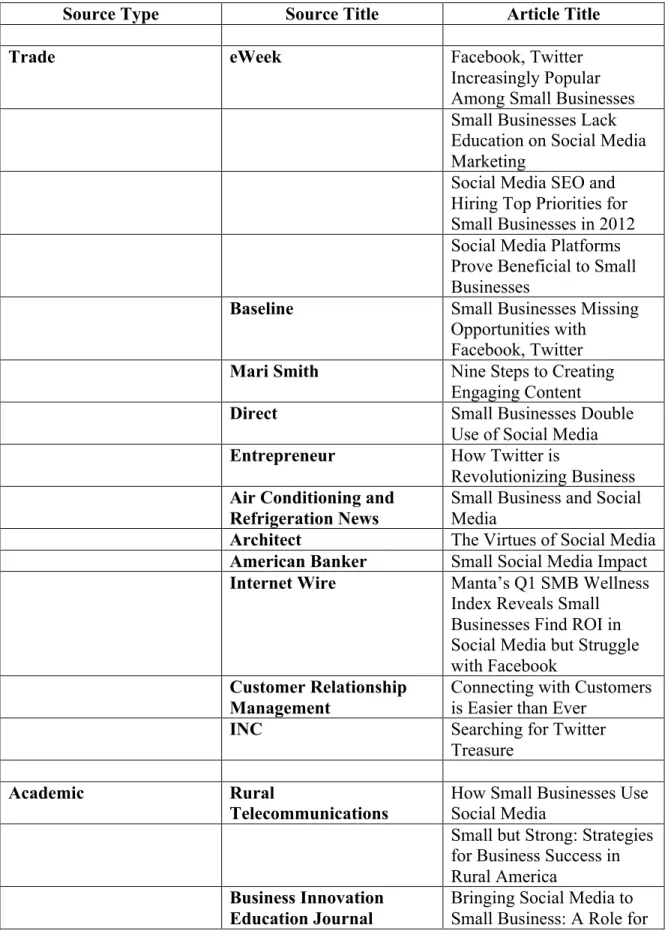
Table 3: Source type and corresponding source title and article title.
Source Type Source Title Article Title
Trade eWeek Facebook, Twitter
Increasingly Popular Among Small Businesses Small Businesses Lack Education on Social Media Marketing
Social Media SEO and Hiring Top Priorities for Small Businesses in 2012 Social Media Platforms Prove Beneficial to Small Businesses
Baseline Small Businesses Missing
Opportunities with Facebook, Twitter
Mari Smith Nine Steps to Creating
Engaging Content
Direct Small Businesses Double
Use of Social Media
Entrepreneur How Twitter is
Revolutionizing Business Air Conditioning and
Refrigeration News
Small Business and Social Media
Architect The Virtues of Social Media
American Banker Small Social Media Impact
Internet Wire Manta’s Q1 SMB Wellness
Index Reveals Small Businesses Find ROI in Social Media but Struggle with Facebook
Customer Relationship Management
Connecting with Customers is Easier than Ever
INC Searching for Twitter
Treasure
Academic Rural
Telecommunications
How Small Businesses Use Social Media
Small but Strong: Strategies for Business Success in Rural America
Employees and Students in Technology Diffusion
Socialnomics Socialnomics
Global Business and
Management Research Twitter: A Viable Marketing Tool for SMEs?
Baylor Business Review The State of Small Business
Marketing News Small B-to-B Firm
Engineers a New Social Strategy
Entrepreneurial Executive The Evolution of Social
Media as a Marketing Tool for Entrepreneurs
News The Wall Street Journal Small Firms Say that
LinkedIn Works, Twitter Doesn’t
Twitter’s Small Business Big Shots
The Economist A Peach of an Opportunity
Advertising Age Like This, Follow That: It’s
the 10 Best Social Media Campaigns of the Year
PR News Wire American Small Business
Goes Global
The Financial Times Small Businesses Find Big
Value in Twitter Website
DM News Making the Best of a Small
Budget
MediaWeek For Smaller, Independent
RESULTS Evaluation of Selected Articles
Thirty articles were selected for detailed evaluation by considering financial gains and improved communication. Individual checklists for trade articles may be found in Appendix A., checklists for academic articles in Appendix B., and checklists for news articles may be found in Appendix C.
Financial Gain Articles
Out of the 30 articles included in this study, the following articles focus on a financial gain for a small business. Manta, an online small business service directory and social community is the organization conducting the study in the article “Manta's Q1 SMB
Wellness Index Reveals Small Businesses find ROI in Social Media but Struggle with
Facebook” (2013). Manta sent out survey requests to small business owner members and
received 1,235 responses over one week’s time in 2013. Nearly 50% of small businesses
had increased time spent on social media compared to the same time in the previous year.
In addition, 1/3 of small business owners spent one to three hours each week managing
social media channels, while 10% spent more than 10 hours managing social media
channels. Only 18% of small business owners asked for social media help from third
party experts while 36% turned to online resources. Of those surveyed, 40% claimed to
see an ROI of social media participation and 30% saw returns greater than $2,000 from
social media use. Thirty-six percent of surveyed small business owners reported the
primary goal of social media use was to acquire and engage new customers. High
media, online advertising, and marketing, the authors determined. Social media
involvement was trending upward in the small business community because of its
potential to generate a compelling ROI.
For her article, “Small Business and Social Media” (2013), Lorraine Ball surveyed small business owners to see if they were using social media sites. Ball is the owner of
Roundpeg, a small-business marketing firm based in Indianapolis, IN. The small business owners surveyed had companies (with around 25 employees) classified as in the HVAC
(Heating, Ventilation, and Air Conditioning), plumbing and construction industries and
were all clients of Roundpeg. Ball sent out an online invitation via Twitter, Facebook,
LinkedIn and email to small business owners to understand how they were using social media and if they were seeing an ROI for the time spent using it. The survey was
least 30-60 minutes a day on social media to make connections, update content and create a viable consistent presence.
In his book “Socialnomics: How social media transforms the way we live and do business” (2011), Erik Qualman compiled information from a variety of interviews conducted on his own.The author is an award-winning MBA professor that at one time had the most watched social media video series in the world. He explained, in detail, how social media marketing is quickly replacing traditional marketing strategies (such as television commercials). Interviews were conducted with 75 Fortune 1,000 companies, 50 colleges and universities and over 100 small businesses and non-profits to provide an overall guide of how companies may easily utilize social media tools and how businesses may most efficiently use social media for success. According to Qualman, large and small businesses may experience financial gain through the use of social media if implemented correctly. To achieve this outcome, it is necessary to develop a cohesive social media plan to achieve social media relevancy and attract millennial clients. To this end, Qualman offered strategic guidance for companies in order to increase brand
awareness, sales and to build relationships while at the same time, cutting costs.
In the report “Small firms say that LinkedIn works, Twitter doesn't “ (2013), a survey was conducted by the Wall Street Journal and Vistage International (a peer-to-peer membership organization for CEOs of small to midsize businesses) to determine how business owners used social media tools to aid growth of their company. The survey, conducted over 10 days, evaluated the use of Twitter and other social media sites.
business owners were interviewed. The survey was presented to small business owners across a wide range of industries for companies with less than $20 million in annual revenue. While 60% of those surveyed agreed that social media was a valuable marketing tool, only 3% believed that Twitter generated the most potential. LinkedIn was the highest ranking by 41%, followed by YouTube with 16% and Facebook with 14%. Users believed that Twitter might not be beneficial to their businesses because the fleeting nature of the platform does not provide a meaningful engagement for potential customers.
In “Small Businesses Find Big Value in Twitter Website” (2009), Tim Bradshaw examined a proprietary research study that had been conducted by O2 Mobile (an international provider of mobile phones and broadband internet). The study evaluated how numerous small businesses used Twitter and the advantages to it, from information collected from a survey of more than 500 small business owners. O2 estimated that more than 700,000 small businesses were using Twitter, sending at least three messages a day. According to O2, 16% of small businesses using Twitter saved more than $10,000 on marketing and recruitment costs and 1/3 saved more than $2,000 on marketing costs since joining Twitter. Bradshaw suggests that implementing a Twitter campaign may help small businesses save money on marketing costs.
Twitter. Bans interviewed the owner of Gaia Essentials, a local business based out of Moss Beach, California that sold organic homemade skincare products using only food-grade ingredients. She then analyzed the resulting revenue numbers after the small business participated in a “Twitter Treasure Hunt.” Each morning, Peninsula Shops would tweet a trivia question in relation to a small business in the Bay area. Participants were encouraged to visit the website, or physical location of the business to answer the trivia question. Those who answered the question correctly had their names entered into a drawing to win a $25 gift certificate to be used at the representative business.
Participants were guided to the Gaia Essentials website to find the answer to the trivia question, and many did extra shopping after spending time on the site. Gaia Essentials found a 400% increase of website traffic within hours of the Treasure Hunt question being posted, and confirmed a 7% increase in quarterly sales. Foot traffic within the store increased, and the Treasure Hunt reported garnered a response rate of up to 26% of Twitter followers. The study concluded that the participatory nature of the Treasure Hunt on Twitter was a positive use of the site and succeeded in engaging potential customers to explore what local businesses in their area had to offer. This tactic allowed users to feel as though they were part of a community, both geographically and virtually.
In his article, “The State of Small Business” (2011), Eric Krell (Business Finance author with The Baylor Business Review publication) interviewed one small business owner and eight business professionals to better understand what small businesses were doing to stay relevant to clients and potential clients, though participant selection was not
fewer than 500 employees. The sample consisted of individuals familiar with small business practices who were also willing to discuss the general difficulties in the current global climate. According to one interviewee (Kevin Castello, the Director of the Baylor Angel Network) with less than $10 million in annual revenue were having trouble finding capitol and access to credit that they needed. According to the author, social media can:
Connect people and customers…their offerings can help companies conduct powerful marketing and CRM [Customer Relationship
Management] activities in a highly responsive and customized way for the cost of an internet connection and a laptop…small businesses need to take advantage of this avenue as a way to reach more customers and increase revenue.
and they anticipated business development in 2012. Respondents “overwhelmingly” ranked primary future business goals as growing revenues and profit building.
indicate that small businesses are increasing their use of social media and can provide financial benefits and communicative benefits for companies.
“American Small Business Goes Global” (2011) cites a study conducted by “The Business Journals” (a business industry news outlet). The study surveyed 2,233 SMB owners with between 1-499 employees, though no further information about those surveyed, nor a response rate, is indicated. According to the article, published on Porfolio.com (a national business news site for SMB executives and entrepreneurs), international sales were a vital and growing part of the SMB market, as of 2011, and one quarter of American small business leaders surveyed said that some portion of their business sales came from overseas. In addition, the study found that 6% are expected to join in on the trend, with approximately 1 million of SMBs engaging in international sales in the near future. American SMBs with an international strategy saw average sales of $13.2 million and a 32% sales growth. This was more so than the total SMB average sales of $7.7 million and a 20% sales growth for all American SMBs. The Business Journals concluded that advances in technology were a cost-effective and efficient channel to drive international expansion strategies. The author states that social networking is an important tool that has been incorporated into 58% of surveyed
international businesses marketing plans.
in-depth literature analysis of a range of studies conducted since 2009 dealing with social media use by small businesses.
Dangelo and Geho cite a 2009 article, “Twitter Study Reveals Interesting Results About Usage—40% is Pointless Babble” (Kelly, R.) indicating that the time investment
necessary for Twitter was not viable for small businesses at that time. When small businesses started a Twitter account, they had to monitor it, develop a following and do so without the human capital, infrastructure and financial capacity available to large companies. However, by 2012, programs had been developed to monitor Twitter; the rise of mobile applications and smartphone users had changed how people access Twitter, which reduced the necessary time commitment to the social media platform. For
instance, tweets could be seen in real time and 63% of users accessed Twitter via mobile phone. Also, social media dashboards helped to identify and sort tweets, retweets, mentions and direct messages, cutting down on the time commitment. Programs had been developed to easily search keywords, what topics were trending and what hash tags were most effective.
Dangelo and Geho concluded that despite all the advances making ROI more reasonable for small businesses, entrepreneurs must cautiously implement social media marketing campaigns. Outdated or stagnant Twitter feeds could be harmful to the branding of a small business. Social media strategies must first and foremost be built upon the existing branding of a company.
network of 350,000 small businesses that strives to aid members by finding effective solutions to help business growth. The intent of the study was to evaluate how small businesses used social media and their beliefs about these platforms. The study included 343 small business executives, all of whom were OfficeArrow members, but no response rate was provided. Predominantly, the executives represented companies with less than 10 employees and were engaged through email and web surveys. Results indicate that 67% of survey participants were holding back on social media use because they did not know how to use the platforms and 50% believed that social media required too much management for their resources. Additionally, 51% feared sharing sensitive information to the public and 44% feared that use would result in information overload. Of those businesses that did use social media, 41% focused on promotion to increase brand awareness. From these findings, the authors determined that businesses should use social media as a platform for listening to their audience, more so than talking at it. The author recommends solutions such as: finding customers online; obtaining relevant customer service insights, and then using data provided from studies to create meaningful communication with audience members.
According to “Social Media Platforms Prove Beneficial to Small Businesses” (2012), a survey of 400 SMBs (no response rate was provided, nor is any information about how the participants were selected) conducted by Vocus (a provider of cloud marketing software with a social media focus) and Duct Tape Marketing (a small-business
little-to-no effect on their business success. The main reason that SMBs used social media was to share information about their business with their audience, and 46% saw it as a place to handle customer service issues. Around 76% of respondents cited website referral traffic derived from social media. Of those surveyed, 36% spent $845 a month on software tools for social media management and 77% indicated that social media made up a quarter or more of their total marketing efforts
John Jantsch, marketing consultant and founder of Duct Tape Marketing found the results of this study “encouraging” and believes that small businesses can actively use the
information to integrate social media into their marketing plans. He concluded, “What I’ve been noticing more and more is there is finally this acceptance that social media isn’t going away and it is an essential element of the marketing mix. The real challenge now is to figure out how to integrate it into the total online and offline marketing presence.”
“Small Businesses Double Use of Social Media” (2010), describes The Small Business Success Index (a survey designed to measure small business owners’ outlooks on success), sponsored by Network Solutions (a digital promotions firm for small
staying engaged with customers. Half of respondents indicated concern over the amount of time needed to spend on social networking, while 17% worried that social media created more channels to criticize the brand online. Social media investment also ranked third in small business investments to be made by 2013 (only behind website
development and online product/service showcasing).
Increased Communication Articles
Out of the 30 articles included in this study, the following articles focus on an increase in business-customer communication. “Connecting with Customers is Easier than Ever,” by Brent Leary, evaluated the findings of a 2011 CRM Essentials (an Atlanta-based
Customer-Relationship Management advisory firm that focused on small and midsize businesses) survey of 750 SMB executives to determine how small and medium sized businesses were integrating social media into their marketing plans, and what the results were. Maintaining current customers and attaining new customers were key reasons that SMBs were turning to social media sites, such as Twitter and Facebook. While reaching customers was more straightforward through social media, problems arose when
The author determined that integrating social interaction with more aspects of business improved the likelihood of business success. This was identified as a “strategic/holistic” approach, and was said to contribute to company morale, as well as an improved
communication channel with potential customers. Some key findings of the survey were: 1. Strategic/Holistic users (those who integrated social networking with other
aspects of business) were twice as likely to have already integrated social media into their sales process
2. Strategic/Holistic users were more than five times as likely to measure customer retention metrics
3. Strategic/Holistic users were almost three times as likely to use social media for product development
4. Strategic/Holistic users were twice as likely to use social media for internal collaboration.
In addition, the survey results indicated that Strategic/Holistic users were twelve times more likely than “Informal Social Media Users” (those who continued to use traditional marketing approaches and had not fully integrated social media into customer acquisition tactics) to predict increased sales revenue of at least 20% over previous years. The author recommends that small businesses consider integrating a strategic/holistic approach to marketing for increasing communication success with their audience.
In “Twitter: A Viable Marketing Tool for SMEs?” (2010), a study was conducted by two
researchers; Marius Bulearca from Center for Industry and Services’ Economics of the
the United Kingdom. The two had three primary objectives; to explore how SMBs used
Twitter in their marketing strategies, to explore SMBs’ perceptions of the benefits and
limitations of Twitter as a marketing tool in reference to other social networking sites,
and to explore plans for improvement and future Twitter use. The research was
conducted using a semi-structured one-on-one interview with five Romanian and British
small and medium-sized businesses with two employees from the Public
Relations/Marketing team of each company. There is no information provided in the
study that indicates how the small businesses were selected. The authors indicated that
they chose to compare British and Romanian SMBs to evaluate the marketing perceptions
of companies located in countries with an improving and declining economy to measure
the similarities and differences in behavior, based on business behavior and findings.
Regardless of geographic location, results indicated that Twitter was a more helpful
medium for Business-to-Client interaction than Business-to-Business interactions; the
interviewees cited breaking confidentiality agreements through the public network as a
key example of why. In addition, companies gained consumer trust by creating positive,
informative tweets about the business. Positive e-WOM (electronic word of mouth)
directly led to new customer acquisitions. The interviewees indicated that Twitter was a
positive “relationship builder,” and gave businesses a more intimate connection with
consumers. Twitter was seen as a dynamic tool that could be useful for small businesses
to build relationships with clients, but there was also awareness that the use of Twitter
In “Bringing Social Media to Small Businesses: A Role for Employees and Students in
Technology Diffusion” (2012), Bakeman and Hanson (researchers at California State
University) conducted a literature review of current research to better understand why
small businesses were lagging behind larger corporations when it came to social media
adoption. According to “Experts: Small Businesses Need a Plan for Using Social Media”
(2011), the authors found that 1/5 of small businesses were already integrating social
media into their operations, but were still placing a greater priority on company websites
and computer software. The authors argued that social media networking creates a
two-way relationship between business and audience and can create a community centered on
a brand. This connection cannot be attained through traditional marketing methods. The
authors suggested that small business employers utilize the personal social media
knowledge of young employees to facilitate profitable relationships with customers and
potential customers on sites such as Twitter, Facebook and LinkedIn.
could be by integrating social media links to enhance channels of communication with audience members.
“Facebook, Twitter Increasingly Popular Among Small Businesses” described the findings of the 2011 “Attitudes and Outlook” survey completed by Constant Contact, a consulting company that helped small businesses, associations and non-profits connect to and engage in customer relationships. The survey was completed by 2,000 small business owners and found that the use of social media was being integrated into strategic
marketing plans (no further information about participants, nor a response rate, was provided). Over 73% of small business respondents were already using social media and 81% intended on using it more frequently in the coming year. Of those using Twitter, 45% said that adoption of the tool was “easy” (no definition of “easy” was provided in the article) and 60% reported engaging with all customers and prospects that posted positive and/or negative comments submitted on the platform.
Constant Contact CEO, Gail Goodman stated that those small businesses not utilizing the channels simply need coaching and education on how to use the tools and recommended creating social media profiles. Goodman said, “Small businesses are a true indicator of the health of our economy. The perception that revenues will rise this year is a great sign for economic recovery.”
executive editor of Fiercemobile newsletter) for Entrepreneur magazine. The interviews took place with small business entrepreneurs who credited Twitter with expanding their businesses beyond the reach of traditional marketing campaigns. Four different small business owners were interviewed (small business selection was not explained in detail): a Twitter consultant, a pizza parlor owner, a digital application creator, and a cattle rancher. Those interviewed were located in different geographic areas around the United States and had used Twitter to communicate with their clients and other businesses. One specific example provided in the article indicated that the pizza parlor had boosted its revenue by 68% in one day due to a Twitter-based promotion.
According to the author, the digital application ecosystem is vast and does not have the same limitations as traditional marketing. Twitter can be seen as a networking
opportunity for small businesses to interact with and learn from their clients, as well as other businesses. The author developed five rules of etiquette when using Twitter as a small business, based on the findings: 1) Listen before speaking, 2) Keep your content interesting, 3) Measure the value of your tweets (are they retweeted, and if so, by whom?), 4) Tweet daily, and 5) Find and use Twitter applications.
Someecards launched in 2007 with only several employees. At the time of publication, Hallmark had 2,017 Twitter followers while SomeEcards had 1.7 million Twitter followers. SomeEcards credited Twitter users for extending the company’s range of brand awareness. The short-form communication implemented by Twitter allowed users to publish content that was quick and to the point. One positive aspect of the social media site is that Twitter is also an “opt-in medium,” so that only interested parties see content. The author concluded that for small businesses, Twitter could be a good way to connect with end users (a participatory audience).
In the article “How Small Businesses use Social Media” (2011), Jonah Arellano evaluated a study conducted by the media management tool, Postling (a small business social media dashboard). The company surveyed small business owners who used Postling to compare and organize their profiles on different social media sites. Postling aimed to find out whether this engagement drove traffic and found that it did. The researchers received 20,000 responses and the results indicated that 78% of small business owners used Twitter, while 75% used Facebook and 30% used LinkedIn (no information about response rate, or potential participants was provided). The results indicated that Twitter was the most interactive medium, as 50% of total comments made on these three sites were made on Twitter. URL links posted on Twitter yielded an average of 117 clicks and Facebook yielded an average of 250 clicks. An average of 62% of small businesses surveyed posted at least eight times per week on Twitter and received an average of 10.27 comments per day on Twitter. While customers were the most engaged on Twitter, Postling recommended that small businesses maintain active profiles on Facebook and LinkedIn, as well.
For his article “The Virtues of Social Media” (2010), Wall Street Journal reporter Ernest Beck interviewed New York Design entrepreneur Clodagh (New York City-based artist and designer) on her 1-2 person company’s use of social media, specifically Twitter. Clodagh admitted to lagging behind when it came to emerging technologies, but said that Twitter had allowed her company to reach beyond their downtown New York showroom. One of the benefits of using Twitter was to drive traffic to her company website.
customers who were located geographically far away and broadened her audience by connecting with non-professionals. In fact, social media had driven so much traffic that Clodagh closed her downtown showroom because it was not producing as much revenue as was her Twitter page. Beck concludes that small businesses may also broaden their audience using Twitter or other social networks, in geographical ways that were previously more difficult to do.
In its annual “Book of Tens 2011,” the trade publication Advertising Age published “Like This, Follow That: It’s the 10 Best Social Media Campaigns of the Year.”
Advertising Age is a global marketing news source written for media communities. The article provided details about what the publication determined to be the most successful social media campaigns launched in 2011. Though none of the businesses detailed were considered “small,” the campaign ideas launched in each example could provide
educative information for businesses of all sizes. The descriptions described the who, what, where and why of each campaign. Seven of the 10 campaigns were launched via Facebook alone, while the remaining four were launched on multiple social media platforms, including Twitter. The companies described are all large corporations who hired outside advertisers to develop the campaigns. Success was measured by the levels of retweets, trending search terms, and an increase in followers on Twitter.
the “Small Business Saturday” Facebook page received over 2.7 million fans, compared to 1.2 million fans of the page in 2010. In addition, the term #smallbizsaturday trended on Twitter. Citroen, a French auto manufacturer, led another successful initiative. The campaign allowed residents in the Netherlands to compete for the chance to win a Citroen DSS vehicle through a daylong “Twitter Race,” where participants would tweet their location for the driver of the vehicle. The winner was the last one to tweet the final message to the car. In addition, Intel-Toshiba created the “Inside Experience,” an
interactive movie/social-media campaign, starring actress Emmy Rossum as the character Christina Perasso. In the scenario, Perasso had been abducted and could only transmit clues to her whereabouts via Twitter, Facebook and Youtube on the Intel-Toshiba laptop that she was left with. While these campaigns are not necessarily representative of small business budgets or audiences, learning about highly successful Twitter campaigns could provide inspiration for small creative teams.
In 2009, “Small Social Media Impact” by Steve Bills, examined the results of a study conducted by CitiBank Small Business to determine how small businesses were using social media. CitiBank Small Business is a company that provides banking resources and solutions for small businesses. The survey was conducted via telephone by market research agency GFK Roper during August 20-27, 2009. Researchers contacted over 500 small business executives across the United States, though a response rate is not
expansion. Over 61% of those surveyed still relied heavily on search engines, such as Google and Yahoo, to seek industry information rather than sites that specialized in small-business information or the Wall Street Journal. At the time of the study, 28% of those surveyed were using email marketing, and 25% were using online advertising to reach customers and potential customers. Though social media was not a strong area of interest for small business owners, 57% did admit to relying more heavily on their
company website than before. This information provides insight into how small business attitudes have changed towards social media since 2009, when this survey was
conducted.
In “Making the Best of a Small Budget” (2009), Mara Conklin, founder and president of Clarus Communications discussed her experiences with social media. Clarus
Communications provides Internet, cloud and phone solutions for small businesses in the Saint Louis, Missouri area. Conklin recommended three inexpensive and easy tactics that use existing resources and expertise to drive ROI on a small budget, as determined by her own experimental success as a small business owner. Conklin said to offer customers something useful. This can be in the form of coupons, relevant tips or event invitations. Promote these things through an online channel, such as Twitter. Using Twitter allows companies to track clicks, responses and feedback. Also, assign online social networking to someone already employed by your company who can articulate goals and
trends, offer advice on industry issues, news-related ties and highlight new customers and other achievements to actively communicate with an audience.
Sarah Needleman, a reporter and small business editor for the Wall Street Journal, examined the most influential voices on Twitter in her article “Twitter’s Small Business Big Shots.” Dustin Lutner, the head of social media for Dun and Bradstreet Credibility Corp.’s (a private company that provides credit and credibility solutions for businesses in the U.S. and Canada) used a proprietary algorithm to come up with a list of the 68 most influential voices on Twitter. The formula was based on the type of followers a Twitter user had (more weight was given to those who were being followed by people within the small business community) as opposed to the overall number of followers that one had. Those who made the list produced a high level of content and were followed by others in the small business community, and can be considered small business owners themselves.
The individual ranked in first place, Chris Brogan, a self-proclaimed “entrepreneur, business consultant, professional speaker, magazine contributor, blogger and author of “Trust Agents,” a how-to book on gaining influence on the internet. At the time of the release of the list, this individual had more than 186,000 followers. His Twitter profile described him as the president of Human Business Networks, an online education and community company for small businesses and solo entrepreneurs.
social media use, with an expertise in wine. He launched a daily video blog called “Wine Library TV” and began a similar blog called “DailyGrape” in 2011.
Ranked third was Scott Stratten, ranked fourth was Brian Clark, and ranked fifth was John Jansch, all of whom were noted marketing experts. Ranked twenty-seventh was Guy Kawasaki, a well-known venture capitalist, Apple Inc. alumnus and co-founder of Alltop, a news aggregation site.
The highest-ranking woman was Liz Stauss, ranked seventh, a professional speaker on corporate leadership and founder of SobCon, an annual bloggers convention held in Chicago and Portland. Strauss encouraged individuals to limit their tweets to a specific topic. This will allow followers to begin to see you as a “go-to person” for information on that topic. She also suggested keeping tweets shorter than 140 characters so that they may be easily re-tweeted. Strauss said, “You want to share that one thing that is easy to share. You want to do the work for them. It’s got to be small and sharable and easy to pass on.”
Small businesses can learn from these individuals to heighten the quality of their tweets as well as how to interact with followers. These high rankers know that good content can increase the size of an active Twitter audience.
platform that helps professionals organize, discover, curate and create engaging content). According to Silverman, the “Nine Steps to Creating Engaging Content” (2013) were as follows:
1. Think about what you know: What do you know and what interests your followers?
2. Find good sources: collect websites, blogs and books and keep pruning the bad ones
3. Read: read content everyday; evaluate what is good, what is bad and why 4. Save things: file information with your own notes and ideas in the proper place
that you will be able to come back to
5. Hold editorial meetings: meet with colleagues to discuss what each of you have read recently, share ideas and headlines
6. Give yourself deadlines: these provide focus and motivation
7. Write: the natural extension of reading, keeping notes and refining ideas with colleagues. Be clear and don’t use words that you don’t understand
8. Edit: Have an editor to ensure what you have written is clear and to the point. Tell the editor to be generous with praise, but use an editor to focus on what serves the reader, not your ego
9. Repeat these steps: the more often you do it, the easier it gets
created in 2013, the authors had several years of social media experience to study and develop successful guidelines.
In his article, “Small but Strong: Strategies for Business Success in Rural America” (2009), Mark Crawford (a reporter for NTA: The Rural Broadband Association)
DISCUSSION
Financial Impacts of Social Media
I propose three basic principles derived from articles that discussed financial gain. The information provided here makes recommendations to increase sales in small businesses.
The three basic principles are:
I. Increasing Sales: Social media does increase sales if used effectively.
II. Social Media Comprehension: Use social media to make connections, update content, and to create a viable, consistent presence.
III. Goals for Using Social Media: Effective use of social media to increase sales must allow businesses to: listen to customers, interact with customers, and react to customer needs before making a sale.
Principle I- Increasing Sales
“Manta’s SMB Wellness Index” (2013), respondents claimed to see a Return on
future sales was rising for small business owners who used social media. According to the author, business owners understood the importance of implementing cost effective marketing tools to help reach their business goals, primarily through implementation of a social media presence.
“The Evolution of Social Media as a Marketing Tool for Entrepreneurs” (2012) recognized that social networking sites were now influencing how consumers bought products and services. Time is a major deterrent for many small businesses, as is figuring out a way to best calculate the ROI for social media campaigns. According to the article, social media is now the key to reaching a mass audience and can be measured through retweet, clicks and mentions (specifically, through Twitter). Social media ROI must take into account the tracking of the customer’s investment, not just the investment of the company itself.
Principle II- Social Media Comprehension
because of exclusive deals and offers they obtain. For instance, food trucks tweet their locations and bakeries tweet “passwords” so customers can get free treats (see p.26).
In “Small Firms say that LinkedIn Works, Twitter Doesn’t” (2013), Maltby and Ovide indicated that many small business owners believe that social media does contribute to growth of their company and over half of those surveyed anticipated an increase in profitability and in sales revenues (see p.22). Small business owners needed to experiment to determine the most useful way to utilize social media. Suggestions included spending 10 hours-per-week on social media and assigning the task to at least one employee who can be trusted to promote the best interests of the company. It is important to gain new followers and engage in meaningful conversations to drive users to a business’ website. In the article, “Searching for Twitter Treasure” (2010), Lauren Bans explained how one small business used Twitter to draw traffic to their website by asking Twitter followers quiz questions (with answers found on the company website) and awarding prizes to winners. Once at the website, many participants did extra shopping after finding the answer to the quiz question (see p.23). The company later attributed an increase in website traffic and an increase in quarterly sales to the quiz (see p.24).
Principle III- Goals for Using Social Media
According to Qualman, a small business can build social ROI through the following steps (Fig. 1):
• Listen: to customers and conversations around your brand
• Interact: Join in on these conversations
• React: Adjust your product/service based on feedback
• Sell: It takes less effort if you engage in the first three steps effectively These steps occur from the perspective of the business. How the customer responds to these steps is shown in Fig. 1.
Figure 1. Steps for small businesses to use in building a return on investment (Qualman, 2011).
Using Social Media to Communicate with Customers
I propose three basic principles that can be used by small businesses to develop strategic communication plans that increase customer relations and increase sales.
The three basic principles are:
I. Marketing Plans: Small businesses should use social media to implement a strategic and integrative marketing plan.
II. Connecting to Customers: As part of the marketing plan, small businesses should use social media as a platform to listen to customer opinions, and eventually to influence customer opinions. Social media (especially Twitter) can be used to build casual connections with customers first, and then to develop “two-way” relationships, which grow through traditional marketing strategies (e.g., coupon offers).
III. Using Social Media within the Company: Small businesses should make attempts to ensure that most employees (not just those in marketing positions) use social media to build the company’s brand. This includes creating
Principle I-Marketing Plans
Small businesses should consider including social media in their marketing strategies. In “Small Social Media Impact,” (2009), Steve Bills cited a study that showed while traditional marketing tactics were still relied upon most, surveyed small business
executives had been using their company’s website more than in the past acknowledged that social networking sites had been helpful with business expansion (see p.41).
“Connecting with Customers is Easier than Ever” (2012), concluded from survey data that a holistic marketing approach to social media should reflect integrative business strategies, which are plans to market a brand using a range of methods (such as social media, thinking outside the box, and design and message continuity) to increase the likelihood of consistent success. “Facebook, Twitter Increasingly Popular Among Small Businesses” (2011) also noted that many small businesses were already, or were planning on, including social media in strategic marketing plans.
the coming years. Small businesses are expected to make significant financial gains because of the risk factors involved with social media (“Manta's Q1 SMB Wellness Index
Reveals Small Businesses find ROI in Social Media but Struggle with Facebook,” 2013).
It is repeatedly stated in the current literature that small businesses have the ability to take greater risks in their social media strategy than larger companies. Evidence from this study shows that early adopters of social media tended to be small businesses that were less likely to have stringent privacy policies and who felt that using social media did not pose a great financial risk to their company.
When looking towards the future, small businesses should closely examine how they approach social media, particularly Twitter (“Bringing Social Media to Small Businesses: A Role for Employees and Students in Technology Diffusion,” 2012). Numerous reports noted that the main reason businesses stayed away from social media sites was because they did not understand how to use it (“Socialnomics,” 2011). Educating small
businesses on how to use Twitter towards their advantage would allow individuals to use such free and dynamic outlets to broaden their connections with consumers (“Twitter: A Viable Marketing Tool for SMEs?” 2010). Much of the current research is conducted by non-academic institutions, and findings are typically published by news and trade
Principle II- Connecting to Customers
The need for using social media consistently and regularly was noted in “Twitter: A Viable Marketing Tool for SMEs?” (2010). Interviewees acknowledged that the “positive relationship building” aspect of Twitter was only successful when a company used the social media outlet consistently (see p.33). Interviewees cited widening network contacts and building authority in their industries as two positive results stemming from use of social media. Most importantly, it was reiterated that Twitter acts as a critical platform for a company to listen to, as well as, influence consumer opinions through two-way interaction. This relationship building resonated with the small business owners interviewed in “How Twitter is Revolutionizing Business” (2009), who discussed the importance of “enterprise micro-sharing” on Twitter. The idea is for a company to share information as a way to connect clients to new ideas and innovation through social media. Twitter is an ideal platform to exploit the immediacy and intimacy that other social media channels don’t match. In her article, “Making the Best of a Small Budget” (2009), Mara Conklin suggests offering customers something useful such as coupons, assigning social media implementation to someone already employed by the company, and to remember to stay relevant to customers and potential customers (see p.41).
As early as 2009, some companies had realized the value in creating “two-way”