Using Newer Interferon Gamma Release Assays in the Indian Health
Service as Part of a Comprehensive 1 argeted Testing Program for Latent
Tuberculosis Infection among American Indians & Alaskan Natives
Classified as High-Risk for Progression to Active Stage TB Disease.
By
Jessica L. Damon
A Master's Paper submitted to the faculty of the University of North Carolina at Chapel Hill
In partial fulfillment of the requirements for the degree of Master of Public Health in
the Public Health Leadership Program.
Cha~=;E;ll t-lill
Introduction
Latent tuberculosis infection (LTBI) is a silent threat to public health, nationwide, and
addressing it remains a challenge. The Centers for Disease Control and Prevention
(CDC) announced its Total TB Elimination Goal in 1989 with a target year of 201 0 for
the eradication of tuberculosis from the United States. Although TB rates have steadily
declined over the last decade, the rate of decline is slowing every year (CDC, 2008). To
reach this goal, all federal agencies will have to work together to design and implement
effective screening programs. Improvements in the specificity of available testing
methods hold one part of a national solution to TB elimination. Many state public health
departments have already implemented TB programs which not only embrace these
newer test methodologies, but also rely on targeted testing models for latent
tuberculosis infection among special populations deemed to be at increased risk for the
development of active TB disease. The Indian Health Service is lagging behind its
peers in adequately addressing latent tuberculosis among Native Americans. By
developing targeted screening programs for high-risk American Indians/Alaskan Natives
which incorporate interferon gamma release assay methodologies for a more accurate
diagnosis of infection, the disease disparity that exists for tuberculosis among AllAN's
can be effectively reduced. The financial cost of running such programs would be offset
by the health benefit of disease prevention among AllAN's and the associated reduction
in health care expenditures to treat both infection and disease.
Although persons with L TBI cannot transmit TB disease to others, they harbor the
etiologic agent of TB, Mycobacterium tuberculosis. In the report "Ending Neglect"
increased risk for developing active TB disease and thereby entering an infectious state
in which they can transmit the disease to others (p.16). Progression from LTBI to active
disease carries a risk of 1 0% over the lifetime of the individual, with further increased
risk found among immunocompromised groups (CDC, 201 Ob). Progression from latent
infection to active disease is the result of a compromised immune system response to
infection. Compromised immunity occurs through a variety of pathways including, but
not limited to, the development of autoimmune diseases (i.e. rheumatoid arthritis, lupus
erythematosis, scleroderma etc ... ); the onset of cancer (particularly lung and bronchus);
HIV infection; pharmacologic immune suppression; health conditions such as diabetes
mellitus and chronic renal failure; and health behaviors such as smoking and drug
abuse (CDC, 201 Oa).
Native Americans form a unique high-risk group due in part to their ethnicity where there
exists a higher genetic predisposition to the development of some
immunocompromising diseases. Native Americans are also victim to many multifactoral
health disparities which subsequently lead to increased rates of conditions and
behaviors that weaken the immune system. Therefore, a new and more effective
approach is required to adequately screen, accurately diagnose, and properly manage
the treatment of American Indian and Alaskan Native (AI/AN) patients receiving care
through Indian Health Service clinics nationwide. Utilizing newer Interferon Gamma
Release Assays (IGRA), such as T. Spot TB and Quantiferon TB Gold In Tube, in
Indian Health Service laboratories to target AI/ AN's classified as "high risk" for
progression of LTBI to active tuberculosis will increase patient compliance with testing,
infection in immunocompromised AllAN's. The cost savings over time is demonstrated
to be significant thereby substantiating a transition to IGRA screening for Latent TB
Infection at all federally funded facilities.
Methods
Research included a systematic review of topics using primary and secondary sources
to demonstrate the importance of using highly specific test methods in a cost-effective
L TBI screening program model designed to reach high-risk AllAN's in the Indian Health
System.
Search Strategy:
Subject Search: Three web browsers (Yahoo, MSN, and Google), two literature search
engines (PubMed and Medline), and three online journal publications (Archives of
Internal Medicine, Chest, American Family Physician)- were used to conduct searches
of primary literature on the following subject list:
Latent Tuberculosis Infection
Targeted Tuberculosis Testing
High-risk Groups for L TBI progression to TB
Cost Effective Analysis of TB Testing Methods
TB Testing Specificity and Sensitivity Studies.
Organizational Web Pages: In addition to subject searches, the organizational websites
Oxford lmmunotec, and The National TB Center were used, in whole or in part, to
access and review available tuberculosis data and statistics, including, but not limited
to:
TB Screening program materials
Specific techniques and interpretations for TB screening methods
Recommended guidelines for TB testing
The organizational websites for The National Kidney Foundation, The National Diabetes
Information Clearing House, Indian Health Services, Office on Minority Health,
Management of Science & Health, and Harvard School of Medicine were also culled to
discern the specific health disparities which place AllAN's at increased risk for disease
progression.
State Health Departments: State Departments of Health with TB prevention programs
that included targeted testing protocols for latent TB infection were reviewed to
construct potential program recommendations applicable to AllAN's receiving care in
the Indian Health Service. The following states were chosen for review because they
met the L TBI screening criterion and they were representative of a cross section of the
United States: New York, Minnesota, California, Oklahoma, and Wisconsin.
Technical Resources Employed: Technical information regarding Mycobacterium
tuberculosis and TB testing methods was derived from several different textbooks of
microbiology and pathogenic microbiology, immunology/serology, anatomy/physiology
Conceptual Frameworks: Sources for conceptual frameworks relating to health program
development came from textbooks used in the University of North Carolina's Master's in
Public Health Leadership Curriculum. These texts included concepts on population
statistics, epidemiology, program planning, and leadership which were strategically
incorporated into the conclusions and recommendations section of this research.
Applied Analysis: Statistics from these sources were used to demonstrate the cost
effectiveness and cost-benefit of utilizing new Interferon Gamma Release Assays in the
testing of high-risk AllAN's in the Indian Health Service. Internal research by the Indian
Health Service has not been conducted to date and is not part of the body of
knowledge, therefore some program generalizations were employed in order to evaluate
current practices in L TBI screening at I HS facilities.
Literature Review & Objective Analysis
Latent TB Infection: A Population Perspective
The Centers for Disease Control and Prevention (201 Oc) reports a third of the world's
population to be infected with Mycobacterium tuberculosis. With the current world
population at approximately 6,900,000,000 persons (US Census Bureau 201 Oa), nearly
2.3 billion people across the globe are infected with M. tuberculosis. Since infection with
M. tuberculosis does not always result in the onset of TB disease, due to the unique
immune status of the infected individual, understanding disease progression rates is
crucial to comprehending the impact of L TBI on any given population and to the CDC's
According to Dr. Charles Bryan, MD (2009), at the University of South Carolina Medical
School, research designed to track and monitor sample sets of persons infected with TB
demonstrated that approximately 5% of healthy individuals will develop TB disease in
the first 24 months post infection, while the remaining 95% of individuals carry a 5%
average lifetime progression risk of disease development from latent infection (Ch. 5,
Section: Tuberculosis Overview. Causes, & Pathogenesis, '1!5). Certain high-risk groups
demonstrated a rate much higher, upwards of 3% to 10% per year in HIV+ individuals
co-infected with L TBI (Kawamura, 2006, Slide 15). Hence, of the 2.3 billion infected, a
conservative estimate of 5% or 115 million people will progress from latent TB infection
to active TB disease over the course of their lifetimes. Not only would these individuals
become ill with classic manifestations of tuberculosis, including a cough lasting more
than two weeks, weight loss, chills, night sweats and fever, they would become highly
infectious and capable of spreading the disease to others. Therefore, these individuals
who progress to active diseases become a force to be reckoned with in the fight to
achieve total elimination of TB in the US.
The ability to accurately identify latent TB cases and effectively treat those who are
most likely to develop active disease is a target of TB elimination programs worldwide.
While active global case rates as well as United States active case rates are in decline,
the number of individuals with L TBI continues to increase. Confounding progression
rates for disease is the rapidly escalating number of individuals suffering from chronic
illnesses. Many different chronic diseases and conditions weaken the immune system
over time. In 2005, the CDC reported that 133 million Americans lived with at least one
In the US, tuberculosis is a long-standing member of the nationally notifiable disease list
due to the serious threat it poses to national public health. All fifty states have mandated
reporting for TB and "confirmed cases" are entered into the Nationally Notifiable
Disease Surveillance System (NNDSS) for statistical and epidemiological tracking
purposes. In 2008, 12,904 cases of TB were reported into the NNDSS (CDC, 2009).
A multitude of variables prevents an accurate estimation of the number of citizens who
were potentially infected with TB that same year but did not develop active TB disease.
However, using the assumption that the 12,904 confirmed active TB cases represented
a 5% progression rate from initial, then approximately 258,080 persons living in the US
were potentially infected with TB that less than 24 months previously and a remaining
245, 174 individuals are potentially latently infected. With a stabilizing rate of decline in
TB cases in the US it is possible to presume that for every 12 to 24 months there is an
increase of approximately 245,000 individuals who may be latently infected with
tuberculosis. This increase compounds the estimated 1 0 to 15 million persons in the
United States already currently estimated to be living with L TBI (Hauck, 2009, p.879).
With the ever increasing magnitude of latent tuberculosis infection it is essential to plan
effective targeted testing programs using the most highly specific testing methodology
for accurate L TBI case identification in order to combat the progression of latent
infection to active disease. This can best be done by understanding the infectious
Infection with Mycobacterium tuberculosis
To recognize the magnitude and severity of latent tuberculosis infection, it is essential to
understand the etiologic agent, its predilection for lung tissue, its method of spread and
its specific virulence factors that cause it to rank in the top ten leading causes of death
worldwide. Human tuberculosis is an infectious bacterial disease caused by tubercle
bacilli of the species Mycobacterium tuberculosis. Humans serve as the only known
reservoir for this pathogenic microbe. The human host becomes infected with the
bacterium through the inhalation of airborne particles, called droplet nuclei, formed
primarily through the coughing of persons with an active TB infection. According to the
Material Safety Data Sheet for Mycobacterium tuberculosis (MSDSonline, 201 0), the
infectious dose is extremely low, approximately 10 bacilli. Each droplet nuclei can
contain up to 3 bacilli. Therefore 3 or 4 droplet nuclei, if inhaled, can readily transmit the
disease. Todar (2009), in his online textbook of bacteriology, placed the transmissibility
of tuberculosis infection into perspective when he explained that a single cough
generates approximately 3000 droplet nuclei (p.3). The droplet nuclei containing the
infectious bacilli spread easily from one human host to the next.
Infection begins when the droplet nuclei reach the alveoli, the tiny air sacs at the
farthest ends of the host lungs. Alemuja Raja (2004), a resident in the Department of
Immunology Tuberculosis Research Center, in Chennai, India said of the initial immune
response to invasion:
M. tuberculosis is an obligate aerobe, requiring an environment rich in oxygen.
macrophages phagocytize (ingest) the invading bacterium in a nonspecific
immune response meant to act as the body's natural barrier to dust and debris.
Typically, phagocytized foreign invaders are degraded by the lytic properties of
the phagosome that forms around them. But M. tuberculosis is resistant to this
process allowing the bacteria to multiply unrestricted within the phagosome
(p.214).
Raja also stated "The protective and pathologic response of (the) host toM.
tuberculosis is complex and multifaceted involving many components of the immune
system" (p.224) At this point in the infectious process, the fate of the human host is
dependent upon a highly complex cell-mediated immune (CMI) response that develops
over a two- to six-week period.
The Role of the Immune System in Latent TB Infection
The complexity of human immunity and TB infection far exceeds the scope of this work.
Nonetheless, some key concepts require exploration in order to better understand
infection with M. tuberculosis and the risk for progression of latent infection to an active
disease state in certain high-risk groups.
Initially, infection with M. tuberculosis is mitigated by the host's innate immunity. The
Merck manual (2008) describes innate immunity as being "present at birth ...
non-specific ... treating all foreign invaders the same". Thus, the innate response to invading
tubercle bacilli is physiologic and not mediated by chemicals produced at a cellular
level. Instead, the response is produced by specialized cells in the human respiratory
the infectious bacilli is one possible immune system response to infection with M.
tuberculosis. This response is most likely when the exposure rate to TB is low, the
exposure episode was brief and/or the individual is in excellent health. If the bacilli make
their way into the tiny air sacs of the lung, then they are ingested (endocytized) and
digested (phagocytized) by alveolar macrophages. While other cells in the lurigs,
including the alveolar epithelium, will also ingest the tubercle bacilli, the alveolar
macrophage is most often the cell to perform this task.
This innate immune response is nonspecific but is also mediated through receptors on
the surface of the alveolar macrophage which allow for binding to the tubercle bacillus.
Because there exists an array of receptor types that promote binding and endocytosis,
van Crevel (2002), wrote that "distinct routes of entry of M. tuberculosis may lead to
differences in signal transduction, immune activation, and intracellular survival of M.
tuberculosis" (p.297). Van Crevel and his colleagues stated that the role of variable
routes for entry into the alveolar macrophage remains unclear but is strongly suggestive
of immune evasion on the part of the bacteria as certain receptors are more favorable to
the bacterium survival in vivo.
M. tuberculosis is well equipped for innate immune system evasion. As such, the
second step in the immune response process is to call for reinforcements in the form of
cells directed to the site of invasion by cytokines (inflammatory response chemicals).
These "additional troops" will assist in recognition by the host's immune system of the
bacteria or its constituents and products. A very complicated interaction of cellular
chemotaxis allows for other macrophages and T cell lymphocytes to be routed to the
the basis for the newer testing methodologies discussed later.) When these cells
migrate to the site of infection and work to stop the growth of the bacilli, they
"encapsulate" the organism inside a granulomatous lesion. Here the tubercle bacilli will
remain dormant, held in a state of suspended animation for as long as the host's
immune system can keep the granuloma intact. This is the potential immune system
response that results in latent TB infection.
The third immune response is the development of disease which occurs due to a failure
of the host's immune system to destroy or sequester the bacteria. In active TB disease,
cases can range from a strict pulmonary infection (confined to the lungs) to a more
aggressive, disseminated infection sometimes referred to as miliary or disseminated TB.
Miliary TB spreads throughout the body creating lesions on a wide variety of tissues.
Active cases of TB are most frequently seen in the socioeconomically challenged due to
dietary impact on immune system strength, genetically susceptible populations like
African Americans, and the severely immunocompromised such as HIV/AIDS patients.
Lastly, the fourth type of immune response to Mycobacterium tuberculosis is one about
which there is growing concern in the scientific and medical communities. This outcome
occurs when changing immune system strength due to chronic disease states leads to
the breakdown of the granulomas harboring the dormant bacteria in the latently infected
and progression to active TB disease occurs. Progression is a possible outcome for all
latently infected persons, though research has demonstrated many factors that increase
L TBI and High-risk Groups
According to the CDC's Guidelines for Targeted Testing and Treatment of L TBI, those
with increased risk for progression to active disease can be separated into two groups.
The first group of individuals is at increased risk due to a recent TB exposure with
progression rates being highest in the first two years post exposure. This group
includes:
• Close contacts of a person with infectious TB
• Recent TST converters (persons with baseline testing results who have an
increase of 1 0 mm or more in the size of the TST reaction within a 2-year period)
• Persons who have immigrated from TB-endemic regions of the world
• Children ::; 5 years of age who have a positive TST result
• Persons who work or reside in facilities or institutions with people who are at
high-risk for TB, such as hospitals, homeless shelters, correctional facilities,
nursing homes, or residential facilities for patients with AIDS (CDC, 2005b).
The second group is comprised of individuals who are compromised by health
conditions that alter the strength of their immune system and lead to the breakdown of
the protective capsules containing the dormant Mycobacterium tuberculosis. This group
includes:
• Persons with HIV Infection
• Persons with HIV infection
• Radiographic evidence of prior healed TB
• Persons with a low body weight (~ 10% below ideal)
• Individuals with other medical conditions, such as silicosis, diabetes mellitus,
chronic renal failure or on hemodialysis, gastrectomy, jejunoileal bypass, solid
organ transplant, head and neck cancer, and other conditions that require
prolonged use of prednisone or other immunosuppressive agents such as TN F-a
antagonists (CDC, 2005b).
The CDC concludes that there is evidence to support the targeted testing and treatment
of individuals who fall into either the first or the second group in an effective TB
eradication program. However, the CDC recommends against the wasting of resources
to perform widespread testing and treatment of individuals with a low risk.
Testing for L TBI: Limitations and Technological Advancements
The oldest method for TB testing, and still the most widely used, is the tuberculin skin
test. Although newer IGRA methodologies emerged nearly a decade ago, there was
limited clinical data and evaluation on their sensitivity and specificity forM. tuberculosis.
However, on June 251h, 2010 the CDC released "Updated Guidelines for Using
Interferon Gamma Release Assays to Detect Mycobacterium tuberculosis". These new
guidelines were developed by a panel of experts who reviewed the available body of
scientific literature (152 journal articles) to determine the advantages, disadvantages
and limitations of the tuberculin skin test (TST), the Interferon Gamma Release Assays
The Tuberculin Skin Test (Mantoux method): Developed in 1907 by Robert Koch, this
method relies on the use of a purified protein derivative (PPD) made from sterile culture
filtrates of Mycobacterium bovis. In the tuberculin skin test method, a dose of 0.5ml's is
administered intradermally, on the underside of the forearm. All resultant reactions
should be read and measured by a trained healthcare professional between 48 and 72
hours after administration. The reaction is read in millimeters measuring the site of
induration (the hard raised reaction produced from a delayed-type hypersensitivity
reaction to the PPD) across the long axis of the forearm with no induration being Omm,
and significant cutoff points being set at 5mm, 1 Omm, and 15mm based upon medical
and exposure history.
In the CDC's 2004 Interactive Core Curriculum on Tuberculosis for physicians, the
variable cutoff point applications are outlined in the section entitled Testing for Latent
Tuberculosis lnfectionrresting Methods and reproduced here as follows for reference:
• A TST reaction of?. 5 mm of induration is interpreted as a positive result in the
following groups: HIV-infected persons, recent contacts of a known TB case,
persons with fibrotic changes on chest radiograph consistent with old healed TB,
and patients with organ transplants and other immunosuppressed patients
(receiving the equivalent of?. 15 mg/day of prednisone for?. 1 month). (CDC
2004, Slide 19)
• A TST reaction of?. 10 mm of induration is interpreted as a positive result in
persons who do not meet the preceding criteria but who have other risk factors
countries, injection drug users, residents and employees of high-risk congregate
settings, mycobacteriology laboratory personnel, persons with medical conditions
that place them at high risk, children < 4 years of age, and children and
adolescents exposed to adults in high-risk categories. (CDC 2004, Slide 20)
• A TST reaction of~ 15 mm of induration is interpreted as a positive result in
persons with no known risk factors for TB who except for certain screening
programs required by local law or regulation would otherwise not be tested.
(CDC 2004, Slide 21)
When variable cutoff interpretations are used in the reading of tuberculin skin tests the
specificity of the test method increases. However, a review of pooled data from
numerous studies demonstrated only 85% accuracy in the detection of infection with
Mycobacterium tuberculosis when this testing method is used (CDC 2005b, p. 3)
Although implementation of the variable cutoffs almost eliminates false negatives in
high-risk groups, this method still produces a high rate of false positives leading to
treatment measures that are not necessary in 15% of detected infection cases. False
positive reactions occur due to the nature of the tuberculin itself which does not allow for
the differentiation between reactions caused by Mycobacterium tuberculosis, and those
produced by other environmental Mycobacterium species or undocumented vaccination
with BCG.
T. Spot TB Test (ELl Spot method): The T. Spot TB test is based upon a testing method
called ELISpot (enzyme-linked immunospot), which was developed in 1983. Modified
effector T cell lymphocytes responding to the antigens used in the testing platform.
According to test literature published by the test manufacturer, Oxford lmmunotec
(201 Ob) effector T cells are part of the host's cell-mediated immune response.
These cells form part of the immune system's response to current invasion and
are designed to actively engage and destroy a pathogen when it is encountered.
The presence of effector T cells sensitized to M. tuberculosis antigens means
that M. tuberculosis is currently being fought off by the body's immune defense.
This is the case in both active and latent TB disease. (Oxford lmmunotec 2010b,
T Cell Immunology, ~4)
All T cells secrete a cytokine called Interferon Gamma (IFN-y). Cytokines help cells to
move toward and bind to other cells, tissues and foreign invaders. In this case, the
cytokine, Interferon Gamma, will be released by the effector T cell when exposed to the
ESAT -6 and CFP-1 0 M tuberculosis antigens embedded in the solid phase of the test
platform. IFN-y promotes the binding of the effector T cell to the antigens. At each site
where cell-to-antigen binding occurs there is the formation of a colored spot. The spots
are quantified and compared against an internal negative test control (Nil) to determine
a test result of positive, equivocal or negative.
The package insert for the test platform (Oxford lmmunotec, 201 Oa) gives the following
guidance for result interpretation:
Results for the T. SpotTB test are interpreted by subtracting the spot count in the
Nil control well from the spot count in each of the panels, according to the
• The test result is Positive if (Panel A-Nil) and/or (Panel B-Nil) <:: 8 spots.
• The test result is Negative if both (Panel A-Nil) and (Panel B-Nil) ::; 4
spots. This includes values less than zero.
• Results where the highest of the Panel A or Panel B spot count is such
that the (Panel minus Nil) spot count is 5, 6 or 7 spots should be
considered Borderline (equivocal) and retesting by collecting another
patient specimen is recommended (Oxford lmmunotec 201 Oa, p.12).
In comparison to the tuberculin skin test, one strength of the T Spot . TB is the utilization
of the ESAT -6 and CFP1 0 antigens. Derived from a gene sequence not found in the
BCG vaccine matrix or the purified protein derivative used in the Mantoux method,
these antigens are highly specific toM. tuberculosis. Positive results from the test will
not occur in reaction to BCG vaccine status or to other commonly encountered
environmental mycobacterial species. Pooled specificity for the T. Spot TB test was
88% compared to the TST specificity of 85% (CDC 201 Ob, p. 3). Hence, a significant
decrease in the rate of false positives occurs with this testing method. A false positive
result can result in the treatment of patients for L TBI who are not actually infected with
M. tuberculosis. Therefore, although the T. Spot TB test costs more to perform, the
expense of treating false positive cases is reduced by use of this IGRA.
In addition to increased specificity, another distinct difference between the TST and T.
Spot TB method, is that the T. Spot TB is a laboratory test which requires trained
medical laboratory professionals to perform and for which there are standardized
readings thereby decreasing the subjectivity of test results. An additional benefit of
initial blood draw with no subsequent follow-up visit to read the patient test result. This
greatly increases patient compliance with testing, particularly in the homeless, the
socioeconomically challenged, geographically challenged and drug addicted where
return rates for TST reading are among the lowest.
QuantiFERON TB Gold in Tube (QFT-GITl: Cellestis released QuantiFERON TB in
2003 and produced this modified version, QuantiFERON TB Gold in 2005. In 2007, they
further expanded the stability and performance of the platform with the introduction of
the "in tube" method. Another IGRA assay, the QFT-GIT method is similar to the T. Spot
TB in that it is performed in a laboratory using blood drawn from the patient in a single
patient visit, has standardized interpretations, and is reliant upon the cytokine interferon
gamma (IFN-y). However, the performing technique is not the same.
In this testing platform, enzyme-linked immunosorbant assay (ELISA) is utilized to
measure the quantity of the IFN-y released into the plasma portion of the blood in
response to TB antigen exposure. As with T. Spot TB, this platform utilizes the same
highly specific antigens from the M. tuberculosis genome but adds yet a third antigen
TB7.7 (Cellestis 2006, p.4). Unlike the T. Spot TB which uses a single lithium heparin
tube found in most laboratory phlebotomy sites, the QFT-GIT requires three special
collection tubes marketed by the manufacturer. All three tubes are required for test
performance.
The grey topped NIL tube is drawn first, and contains only the anticoagulant heparin
and no antigens. Thus it serves as the negative control for the test procedure. The red
antigens which heavily coat the inner plastic surface of the tube. It is thought that the
immediate exposure of circulating effector T cells to the test antigens inside this tube
promotes the release of IFN-y. The purple topped tube is collected last and also
contains the anticoagulant heparin like the previous tubes. However, in the purple tube,
there are no TB antigens, only a "mitogen". A mitogen is a protein that stimulates cell
division. In this method the mitogen acts as a positive control, validating the test
subject's ability to produce a sufficiently strong immune response. Its purpose is to
validate that the platform works in subjects with a compromised immune status, thereby
eliminating false negatives, something the T. Spot TB is not equipped to do, making the
QFT-GIT method more appropriate in immune-suppressed high-risk patients.
An additional test benefit to using the QFT-GIT method is the availability of test
interpretation software from the manufacturer, Cellestis. Cellestis' package insert for
QuantiFERON TB Gold In Tube Method claims that the software "performs a Quality
Control assessment of the assay, generates a standard curve and provides a test result
for each subject, as detailed in the Interpretation of Results section" (Cellestis, 2006,
p.16). Manual test interpretation can be performed by the laboratory professional if
software is not used. Interpretation tables are available in the package insert. In
general, test interpretation begins with measurement of the negative control tube (Nil).
Results of IFN-y values must measure less than 8.0 IU/ml or test results will be
considered indeterminate. In test populations, 8.0 IU/ml or higher circulating levels of
IFN-y occurred in only 0.25% of test subjects (Cellestis, 2006, p. 19). Positive results
occur when the difference between the IFN-y levels in the Nil tube and the TB Antigen
method increases the specificity of TB testing for M. tuberculosis while decreasing the
rate of both false negative and false positive results which makes the QFT-GIT method
the superior test for targeted L TBI testing programs.
American Indian/Alaskan Native's as
a
Unique High-Risk GroupUnfortunately, health disparities due to a complex interaction of behavioral,
socioeconomic, and genetic factors, place AllAN's at significantly higher risk for
progression of LTBI to active disease. In addition to an increased risk for disease
progression there is also an increased risk of mortality from active stage disease.
According to the Provider's Guide to Quality & Culture, a collaborative project of the
Management Sciences for Health (2008), American Indians have a "disproportionately
high rate of mortality" from tuberculosis in comparison to other Americans (p.1 ). In fact,
the age-adjusted mortality rate is quoted as being 500% higher than the general U.S.
population (p.3). Effective targeted testing of AllAN's at high-risk begins by recognizing
the health conditions and behaviors that contribute to this increased risk.
In a recent article for American Family Physician, Hauck (2009) wrote that an increased
risk of progression occurs most significantly in the first two years after infection is
acquired, and that this risk is further increased by any decrease in the immune
competence of the host. The conditions listed in the article which threaten to
compromise host immunity included HIV infection, diabetes mellitus, chronic renal
failure and end-stage renal disease, and those persons with "disorders requiring long
term use of corticosteroids or other immunosuppressant medications (tumor necrosis
conditions are notoriously endemic to the Native American population. In the publication
entitled National Diabetes Statistics, 2007, the National Diabetes Information
Clearinghouse (2008) reported a rate of 16.5% for diabetes in AllAN's, more than twice
the national average of 7.8%. Hand in hand with this increase, the National Kidney
Foundation (2002) reported in the Diabetes & Chronic Kidney Disease Guide for
American Indians and Alaskan Natives brochure, a three-fold increase for kidney failure
in AllAN's over white Americans directly resulting from the impact of diabetes mellitus
on kidney health and function (p.3). In addition, the observed increase is not uniform, as
end-stage renal disease (ESRD), the last stage of chronic kidney disease, occurs in
AllAN's at a rate of six times that of non-Native Americans (Davita.com, 2006, ~2). It is
clear that diabetes mellitus poses a significant threat to immune system health in Native
American populations thereby indicating that all AllAN's with diabetes should be
routinely screened for the presence of L TBI so that immediate treatment can be offered
to prevent progression to active stage tuberculosis.
Autoimmune diseases are also found in higher rates among Native American females
than in the general US population. According to the National Institute of Health's (NIH,
2009) September 2009 podcast transcript on Autoimmune Diseases and Their Impact
on Women, "Autoimmune diseases are a category of disorders that can affect just about
every organ system in the body- from hair to toenails- and are often chronic
diseases that can go on for a lifetime" m1). Autoimmune disease occurs when the body
begins to recognize normal healthy tissue as being a foreign invader. When this
happens, the defense mechanisms normally used to trap and kill pathogens, like viruses
leads to a wide array of symptoms and in some extreme cases the process can even be
fatal. Autoimmune disorders are commonly categorized as either isolated or systemic.
In AI/AN females, systemic autoimmune diseases such as rheumatoid arthritis (RA) and
systemic lupus erythematosis (SLE) are encountered with greater frequency than in
non-native females. While the increased incidence of SLE is approximately three fold
(US DHHS Office of Minority Health, 2008), for RA there is a 5 times greater likelihood
of development in AI/AN females over their Caucasian counterparts (Smith, 201 0).
Drugs commonly used to treat autoimmune disease include the Tumor Necrosis Factor
(TNF) blockers - Enbrel, Remecade and Hum ira. These drugs are useful in moderating
patient symptoms, particularly in patients for whom Methotrexate and Sulfanizole have
failed to work. However, use of TNF blockers place these individuals at significantly
greater risk of L TBI progression to active TB.
The high prevalence of diabetes mellitus, RA and SLE place further emphasis on the
cruciality of effective screening programs in the Indian Health Services. All Native
Americans with diagnoses which place them at increased risk should be screened
annually with a test method that offers the highest degree of sensitivity and specificity
for Mycobacterium tuberculosis as part of a comprehensive L TBI screening program. All
positives must be investigated and individuals encouraged to complete drug treatment
regimens to prevent progression of latent infection to TB disease.
Conclusions:
There are approximately 3.2 million American Indians and Alaskan Natives living in the
United States (Census Bureau, 2007). The Indian Health Service (2006) estimated, in
the publication Facts on Indian Health Disparities, that more than half the AllAN's living
in the US accessed health care services at the 49 hospitals and more than 600 clinics
operated by the Indian Health Service, Tribes, and Alaskan Native corporations. This
represents approximately 1.8 million AllAN's from 562 different tribes. It is, therefore, a
responsibility of the Indian Health Service to adequately address L TBI through the
targeted testing of those AllAN's who are at increased risk for progression to active
disease. However, health care finance plays a key role in any effort to reduce or
eliminate tuberculosis in AllAN's.
In a Symposium on Native American Health Disparities held in November 2007at
Harvard, the Chief Information Officer of IHS, Theresa Cullen, stated that, though
historically underfunded and understaffed, the Indian Health Service is asked by
Congress to provide this care with inadequate resources (Harvard Science, 2007). In
his 2009 lecture entitled "Indian Healthcare Challenges in Leadership", Dr. Vincent
Berkley, Chief Medical Officer for the Phoenix Area of IHS, stated that the United States
government spends more money on each individual in its prison system than it does on
AI/AN citizens for basic health care. Therefore, health disparities remain and so does
TB.
The 2010 Indian Health Recovery Act placed funding into facilities, equipment and
programs in an effort to reduce and eliminate the severity of health disparities among
AllAN's. However, it is paramount to recognize that even with the Congressional
estimated $9 million in third-party payer collections, this amounts to approximately
$2690 per capita health expenditure on each AI/AN for the 2010 budget year. The per
capita expenditure on healthcare for the general US population is $6826 (IHS, 201 0).
Thus, it is anticipated that the added cost of Interferon Gamma Release Assay testing
methods for L TBI is likely to present the greatest barrier to adoption and implementation
of an effective L TBI targeted testing program in the Indian Health Service. To this end,
demonstrating the increased cost-benefit ratio both to the agency as a healthcare
provider and to the AI/AN patient as the healthcare consumer is paramount to the
adoption of new screening protocols.
Exploring the Cost-Benefit Ration for IGRA Use Demonstrates Appropriate
Management of IHS Resources
Due to the introduction of new testing platforms with an increased specificity to detect
tuberculosis infection, several cost analysis studies, independent of the test
manufacturers, have begun to emerge. Utilizing knowledge from these studies, the
Indian Health Service can better extrapolate the cost-benefit ratio of implementing IGRA
testing platforms for the detection of L TBI in high-risk groups. A 2009 study, lead by
researchers from the University of Cincinnati and the Veterans Affairs Office of
Infectious Diseases in Washington DC and published in the Archives of Internal
Medicine, sought to examine the cost effectiveness of using I GRAs to screen health
care workers (HCW), who, like American Indian/Alaskan Natives, also form a unique
high-risk group due to HCW's increased risk of repeated TB exposure. Lead researcher,
Marie A. De Perio, MD (2009), concluded that "QFT-GIT strategies are more effective
BCG (p.185, ~2). Dr. de Perio and her research team further stated that sensitivity
analysis for IGRA testing demonstrated that the newer test platforms were "clinically
and economically worthwhile" (p.185, 1!2). One cautionary statement emerged from the
study commentary that "batch testing" helps to keep associated costs (such as lab
personnel time involved to perform the analysis) moderated. Due to the increased
stability of the new QFT-GIT method, performing laboratories are electing to save
patient isolates for testing one day a week in low volume laboratories. This is an
important consideration for the Indian Health Service as many health clinics are located
in rural areas and serve smaller populations than their urban counterparts. In these
settings, adjustments to scheduling may be required to keep incurred costs to a
minimum.
Another important criterion for consideration in the cost benefit ratio is the tradeoff
between test sensitivity and test specificity. Sensitivity describes a test's ability to detect
positive cases of disease. In a test method with "high" sensitivity few positives are
missed but the tradeoff is frequently in the specificity of the test. Test specificity refers to
the ability of a test method to detect true disease (aka "true" positives). In latent
tuberculosis infection screening, increased test specificity generates a cost savings.
This results from the fact that all positives, whether real or false, require further testing
and evaluation to rule out active disease, including chest x-rays, subsequent IGRA
testing, and additional physical exams by a physician. Also, drug treatment must be
provided to any presumed positives among the latently infected at high-risk for disease
the more costly but most specific test platform to essentially pay for itself over the
duration of its use.
Great Waste Can Be Avoided by Changing Test Methods & Implementing Targeted
Testing for L TBI
When change is imminent, leaders emerge at the forefront. According to Rowitz (2003),
a professor in the School of Public Health at the University of Illinois, "If public health
leaders are oriented to change and want to become catalysts for change, they need to
develop program scenarios for possible futures" (pg. 59). One such leadership example
in IHS is the combined efforts of Medical Officer, Suzanne Gnaegy, MD, and Public
Health Nurse, Elizabeth Sullivan, RN, who collaborated on a project to fund IGRA
testing for latent tuberculosis infection for patients served at the Colville Indian Health
Center, a clinic located in the Portland Area of IHS. Colville IHC is located on the
Colville Reservation which spans 1 .4 million acres of land and is home to twelve tribes
and one band. Colville Indian Health Center serves 9600 AllAN's from a 40,000
square-foot family practice facility recently constructed in 2007.
Staying abreast of the latest research and recognizing the advantages of utilizing the
newer testing methodology, in August 2007 Dr. Gnaegy and Ms. Sullivan applied for a
grant to use the QuantiFERON TB Gold test to screen all tribal members. As
emphasized by Rowitz (2003) in Public Health Leadership: Putting Principles into
Practice, "leaders of local public health agencies have the responsibility to ... make sure
the agencies are viewed as providers of high-quality programs and services" (p. 65).
Assays into TB testing, based upon strong scientific evidence in the current body of
literature, demonstrates their commitment as a health care team to ensuring the highest
quality of care for their patient population. Together their foundational statistics quoted
in their grant application paves the way for other IHS clinics to follow in their footsteps.
In the application for this grant, they cited a 25% no show rate on tuberculin skin test
reads among their patients which is mirrored at other clinics throughout the nation. In
part, this is due to transportation and economic barriers for patients (Gnaegy. S and
Sullivan, E., 2007). Unfortunately, this 25% represents a significant number of patients
who remain unscreened. For those among them who would have produced a positive
TST reaction, these individuals remain untreated and at risk for progression. They also
provided cost estimates of $739- $1,311 per patient for treatment of positive TST's. By
utilizing their statistics and the national estimate of 1.8 million AllAN's served through
IHS facilities nationwide, the financial impact of screening all AllAN's annually with a
method having poor specificity and minimal compliance rates can be extrapolated.
Of the 1.8 million screened with TST, 450,000 will be lost to follow up. Of the 1.35
million who receive the follow up result reading in the appropriate window, only 85% will
generate an accurate result. Fifteen percent, or 202,500, will be falsely positive and
require treatment at a total cost to IHS of approximately $150 to $266 million dollars. In
the 2007 presentation at the IGRA Symposium, entitled IGRA's in Public Health
Practice: Economic Issues, Dr. Kawamura (2007) cited results of a cost analysis study
that demonstrated incurred lab costs of $302,000 per year per 10,000 tests for the
OFT-GIT method (Slide 8). If this cost is analyzed across 1.8 million AllAN's receiving care
compliance with testing, then the costs of screening all AI/ AN's in the system can be
estimated to be approximately $54.5 million. Of these, there will be an approximate 1%
false positive rate incurring wasted treatment costs approximating $1.3 to $2.3 million.
Thereby the savings to the federal government in waste associated costs with the
currently used tuberculin skin test is estimated to be in the hundreds of millions of
dollars. It is likely that the concurrent development and implementation of targeted
testing models in IHS, using CDC recommendations, could further reduce the cost of
testing.
Recommendations
Leadership Driven Change is Required to Execute More Effective L TBI Screening
Programs in IHS
Because services are strongly tied to already inadequate funding in the Indian Health
Service, both tribal and federal leadership will be required to secure policy changes
which ensure the development of effective screening programs for latent tuberculosis
infection among American Indians and Alaskan Natives. To chart the agencies pathway
towards an effective transformation in the Indian Health Service approach to L TBI
screening, it is beneficial to consider all recommendations in relation to the core
functions and essential services model of Public Health.
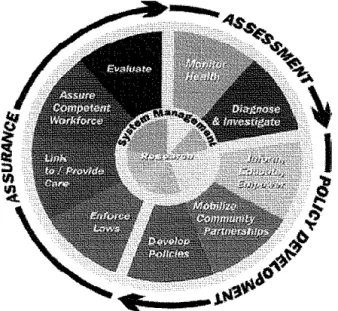
In 1988, the institute of Medicine (10M) identified three core functions of public health-.
Subsequently, in 1994, the I OM, CDC, American Public Health Association and National
Association of County & City Health Officials, formed the Public Health Functions
by the I OM's core functions. From this collaborative effort, a representative model was
established to define Public Health. Reprinted below for reference, the model is
comprised of several concentric layers (Public Health Functions Committee, 1994). The
outer ring of the model, featured in black arrows, represents the core functions while the
inner colored pie pieces represent the essential services these functions embody.
Embedded in each essential service are a multitude of leadership activities not depicted
by the model but expounded upon by the American Public Health Association. Residing
at the core of the model is research. Research is thusly depicted as impetus that drives
the all essential services. Therefore, in the case of tuberculosis screening, current
research should create the underlying driver for change.
Fig. 1 Courtesy of the Public Health Functions Committee, Fall 1994
Assessment: What is learned through research is often conveyed to the Public Health
workforce via statistics. For example, statistics demonstrate that AllAN's are
disproportionately affected by the incidence of tuberculosis as well as by health
conditions which increase their risk of latent TB Infection progression to active disease.
increased rates of TB in this population. A failure to effectively diagnose and treat L TBI
cases among AllAN's forms a significant contribution to this disparity.
Through the essential service of Evaluation, IHS can use internally collected information
to better Educate and Empower it's leaders to improved latent tuberculosis screening.
Cost-benefit analyses are one useful assessment tool that can successfully drive policy
development while leading to quality assurance in the form of improved patient care. In
the CDC tutorial on Cost Analysis, a part of the Economic Evaluation of Public Health
Preparedness and Response lecture series, the appropriate use of cost analysis is
described to be when the following criteria are met:
-A single program (i.e. Tuberculosis Screening) is being assessed
- Information about the program's "effectiveness" is unavailable (i.e. IHS does not have
adequate capture of effectiveness although the ongoing disparity in TB incidence
among AllAN's is indicative of poor program performance)
- Interventions to be assessed or compared are equally effective (in the case of TB
screening, the CDC states that IGRA methods are employable in all instances where
TST methodology is currently being used.)
Since it is debatable that the two interventions, TST and IGRA, can be considered
"equally effective", in light of the rapidly increasing evidence supporting the greater
sensitivity of IGRA's and the increased patient compliance when this method is
employed, it then becomes necessary to consider broadening the scope of the cost
A cost-benefit analysis works to identify and quantify, in monetary terms, all of the
benefits (deemed to be the pro's or benefits for using the method) and the costs (the
con's or the costs of using the method). The total "cost" is subtracted from the total
"benefit" to show the "profit" for employing each method. The most "profitable method"
should be the method of choice. For programmatic evaluations, costs and benefits can
be somewhat elusive - such as money saved in decreased physician/nurse contact
with patient or the cost of patient progressing to active TB due to failed ability to identify
disease. However, a skilled team possessing a statistician and epidemiologist can often
achieve accurate estimates. A recommended approach to performing a cost-benefit
analysis would be to "run the numbers" on all three methods- TST, T. Spot TB, and
QFT-GIT for the entire population. Then to repeat the analysis on only those AllAN's
deemed to be at-risk for progression.
Assurance: Use of the newer and more specific Interferon Gamma Release Assays to
perform targeted L TBI screening on those AllAN's with chronic diseases, such as
diabetes mellitus and autoimmune disease, must be separately considered from routine
screening. Therefore, these high-risk groups present a different concern to the agency.
Evidence-based practice is a call to treat all patients with the highest quality of care
based upon the current body of knowledge. As this knowledge is rapidly increasing for
high-risk L TBI groups, the Indian Health SeNice must consider the evidence in its
approach to TB screening program development and funding.
One way to assure that TB screening programs are compliant with evidenced based
practices is to evaluate the cost effectiveness and utility of using IGRA technology in
data representative of only those patients who comprise these high-risk groups, it may
be discovered that targeted testing in these individuals with IGRA is a funding priority
over routine screening with IGRA. Some studies have shown this to be an effective
patient management approach within generalized TB screening programs. In Turnock's
book, Public Health: What It Is and How It Works, he emphasizes that "At the heart of
public health interventions for improving the quality of life and reducing preventable
mortality and morbidity are scientifically sound strategies and approaches" (p.260).
Leadership in the Indian Health Service has a responsibility to stay current on the latest
research affecting TB screening and to work toward embracing this knowledge and
incorporating it into the design, structure and function of its approach to reducing TB
incidence and mortality among Native Americans. Clinical preventative services, which
include screening, counseling, immunizations, and chemoprevention, are monitored by
the US Preventative Services Task Force for their ability to truly improve clinical
outcomes. Each time the task force convenes it publishes a list of recommended
services based upon the evidence that these services improve outcomes. TB screening
remains on this list and as such any improvement in the effectiveness of screening can
be assumed to correlate with improvement in health outcomes.
Policy Development: In the case of TB testing the Indian Health Service needs to review
the "bottom line", or profit, in light of both agency funding as well as a patient quality of
care. IHS leadership must internally demonstrate that federal funding streams can be
more effectively utilized with IGRA implementation as these platforms demonstrate a
significant cost savings over the currently used tuberculin skin test. Tribal leadership
greater success in eliminating the health disparity of TB disease among AllAN's. Goal
three of the Indian Health Service's strategic plan for 2006 through 2011 is the fostering
of collaboration and Innovation across the Indian health network. Objective 3.1 is to
expand coalitions and partnerships across the network through innovative partnerships.
If funding issues create a barrier to redesigning the Tuberculosis screening programs
across the Indian Health Service then local service units should attempt to collaborate
with tribes to generate funding for incorporating IGRA. The more data that can be
generated at the local service unit level, the more leverage the agency can use to
access funding for these improvements. This provides a wonderful opportunity for local
federal facilities and their associated tribes to work together.
Through collaboration with the tribal governments, adequate assessment, better policy
development and increased assurance of quality health care can be achieved. The
combination of increased test specificity, increased testing compliance, and the
proactive treatment of individuals in high-risk groups for L TBI progression has the
potential to significantly impact rates of tuberculosis morbidity and mortality among all
AllAN's and will serve to align the Indian Health Service with the strategic TB
References
Berkley,V. (2009, May 4). Indian Healthcare Challenges in Leadership: History, Politics,
and the Growth of an Indian Health System. Executive Leadership Development
Program training. Western Management Development Center- Office of
Personnel Management.
Bryan, C. (2009, May 5). Microbiology
&
Immunology On-line Textbook. Section:Infectious Disease Chapter 5: Mycobacterial Diseases Subject:
Tuberculosis-Overview, Causes, & Pathogenesis. University of South Carolina Medical School.
Retrieved August 241h, 2010 from http://pathmicro.med.sc.edu
Cellestis, Limited (2006, August). QuantiFERON TB Gold (In Tube Method)
Packagelnsert. Retrieved on September
ih,
2010 from http://www.cellestis.com/I RM/Company/ShowPage.aspx?CPI D=1171
Davita.com (2006, November 6). Topic: Native Americans and Chronic Kidney Disease.
Section: Diabetes is the Leading Cause of CKD. Retrieved on September 11,
2010 from <http://
www.davita.com/kidney-disease/symptoms-and-diagnosis/a/544>
De Perio, M., Tsevat, J., Roselle., G., Kravolic, S., and Eckman, M. (2009, January 26).
Cost-effectiveness of Interferon Gamma Release Assays vs Tuberculin Skin
Tests in Health Care Workers [Electronic Version]. Reprinted in the Archives of
Internal Medicine. Volume 169 (No. 2).
Geiter, L. (Ed) (2000). Institute of Medicine (US) Committee on the Elimination of
Tuberculosis in the US. Ending Neglect: The Elimination of Tuberculosis in the
Gnaegy, Sand Sullivan, E. (2007, August 29). Application for Grant by Colville Indian
Health Center. Personal communication on August 1 ih, 2010. Contact
information for Elizabeth Sullivan is [email protected] 509-634-2987.
Harvard Science (2007, November 7). Symposium Addresses Disparities in Native
American Health Care: Proposals Considered to Improve Situation. Retrieved on
September 9th, 2010 from
<http://harvardscience.harvard.edu/medicine-health/articles/symposium-addresses-disparities-native-american-health-care>
Hauck, F, Neese B., Panchal, A., and El-Amin, W. (2009, May 15)). Identification and
Management of Latent Tuberculosis Infection. American Family Physician
[Electronic Version]. 79(1 0), 879-886.
Heart, T. and Shears, P. (1996). Color Atlas of Medical Microbiology. Barcelona, Spain.
Mosby-Wolfe.
Indian Health Service (2006, January). Facts on Indian Health Disparities. Retrieved on
September 8th, 2010 from <http://info.ihs.gov/Files/DisparitiesFacts-Jan2006.pdf
Indian Health Service (2010). IHS Year 2010 profile. Retrieved on September 13th, 2010
from < http://info.ihs.gov/Profile201 O.asp>
Kawamura, L. (2006, March). Targeted Testing and Treatment of Latent TB Infection:
An Online Presentation. Produced by the Francis J. Curry National Tuberculosis
Center. Updated December 2009. Retrieved on September 15th, 201 0 from
http://www.nationaltbcenter.ucsf.edu/testing_ltbi/presentation.cfm
Kawamura, L. (2007, February 21 ). IGRA's In Public Health Practice: Economic Issues.
Presented at the First IGRA Symposium. Retrieved on September 15th, 2009
Management Sciences for Health- Electronic Resource Center (2008). Cambridge, MA.
Provider's Guide to Quality & Culture. Retrieved on September 8th, 2010 from
http:/ /ere. msh .org/provider/informatic/ AlAN_ Disparities_ HealthStatus. pdf
Merck Manuals Online Library (2009-201 0). Section: Immune Disorders; Subject:
Biology of the Immune System; Topics: Innate Immunity. Reviewed by P. Delves
PhD September 2008. Retrieve on September 1, 2010 from
<http://www.merck.com/mmhe/sec16/ch183/ch183b.html>
MSDS Online (2001). Mycobacterium tuberculosis Material Safety Data Sheet. Updated
May 15th, 2001. Retrieved on August 23'ct, 2010 from
http://www.msdsonline.com/CustomerSupport/Disease-MSDS/
MSDSMycobacteriumTuberculosis.aspx
National Diabetes Information Clearinghouse (2008, June). National Diabetes Statistics,
2007: Race and Ethnicity Differences in Prevalence of Diagnosed Diabetes. NIH
Publication Number NIH 08-3892. Retrieved on September 9th, 2010 from
<http://www.diabetes.niddk.nih.gov/dm/pubs/statistics/>
National Kidney Foundation, Inc. (2002). Diabetes & Chronic Kidney Disease Guide for
American Indians and Alaskan Natives [Electronic Version]. New York, NY.
Oxford lmmunotec Limited (201 Oa, July 26). T. Spot
TB
Package Insert. Retrieved onSeptember 6th, 2010 from <http://www.oxfordimmunotec.com/USpagelnsert>
Oxford lmmunotec Limited (2010b). T Cell Immunology. Retrieved on September 6,
2010 from <http://www.oxfordimmunotec.com/
Public Health Functions Project (1994). Public Health In America Statement. Last
updated on May 15\2008. Retrieve on October 11th, 2010 from
<http://www.health.gov/phfunctions/public.htm>
Raja, A. (2004, October). Immunology of Tuberculosis. Indian Journal of Medical
Research [Electronic Version]. Oct 2004, 213-232.
Rowitz, L. (2003). Public Health Leadership: Putting Principles into Practice. Sudberry,
Massachussettes. Jones & Bartlett Publishers.
Smith, H. (201 0, August 24). Rheumatoid Arthritis. eMedicine.com. Retrieved on
September 12th, 2010 from
<http://emedicine.medscape.com/article/331715-overview
Todar, K. (2009). Mycobacterium tuberculosis and Tuberculosis. Retrieved on August
23'ct, 2010 from http://textbookofbacteriology.net/tuberculosis.html
Turnock, B. (2004). Public Health: What it is
&
how it works. Sudberry, Massachusetts.Jones & Bartlett Publisheres.
United State Center for Disease Control & Prevention. Economic Evaluation of Public
Health Preparedness and Response Efforts. Retrieved on October 11th, 2010
from <http://www.cdc.gov/owcd/EET /Preface/Fixed/Preface. html>
United States Centers for Disease Control and Prevention (October 2004). Interactive
Core Curriculum on Tuberculosis. Retrieved on September 2, 201 0 from
http://www.cdc.gov/tb/webcourses/CoreCurr/index.htm
United States Centers for Disease Control and Prevention (2005a). Chronic Disease
Prevention & Health Promotion. Updated July 7, 2010. Retrieved on September
United States Centers for Disease Control and Prevention (2005b). Guide for Primary
Healthcare Providers: Targeted Tuberculin Testing and Treatment of Latent
Tuberculosis Infection 2005.Updated July 1, 2010. Retrieved on September 2,
2010 from <http://www.cdc.gov/tb/publications/LTBI/targetedtesting.htm>
United States Centers for Disease Control and Prevention (2007, March 23rd).
Morbidity & Mortality Weekly Review [Electronic Version]. 56(11 ), 245-250.
United States Centers for Disease Control and Prevention (2008, March 21). Morbidity
& Mortality Weekly Review [Electronic Version]. 57(11 ), 281-285.
United States Center for Disease Control & Prevention (2009). Reported Tuberculosis in
The United States 2008. Retrieved on August 25th, 2010 from
http://cdc.gov/tb/statistics/reports/2008/pdf/2008report.pdf
United States Centers for Disease Control and Prevention (201 Oa). Basic TB Facts.
Retrieved on August 23rd, 2010 from http://www.cdc.gov/tb/statistics/default.htm
United States Centers for Disease Control and Prevention (201 Ob). Tuberculosis Fact
Sheets. Retrieved on September 14th,. 2010 from http://www.cdc.gov/
tb/publications/factsheets/generai/L TBiandActive TB. htm
United States Centers for Disease Control and Prevention (201 Oc). Tuberculosis (TB)
Data and Statistics. Retrieved August 22nd 2010 from http://www.cdc.gov/tb/
statistics/default. htm
United States Centers for Disease Control and Prevention (201 Od). (201 0, June 25th)
United States Census Bureau (201 Oa). U.S. & World Population Clocks. Retrieved on
August 21, 2010 from http://www.census.gov/main/www/popclock.html
United States Census Bureau (201 Ob). State and Country Quick Facts. Retrieved on
August 291h, 2010 from http://quickfacts.census.gov/qfd/states/40000.html
United States Department of Health & Human Services. Indian Health Service: Strategic
Plan 2006-2011. Office of Public Health Support. Division of Planning, Evaluation
& Research. Rockville, MD.
United States Department of Health & Human Services Office on Minority Health
(2008). American Indian and Alaskan Native Disease Profile. Retrieved on
September 12th, 2010 from http://minorityhealth.hhs.gov/templates/
browse .aspx?lvl=3&1vlid=282
United States Department of Health & Human Services Office on Minority Health
(201 0). American Indian and Alaskan Native Disease Profile. Retrieved August