Acknowledgements
I would first like to extend my deepest thanks my committee members: Professors Johnston, Sweeney and McMahan. Without all of you my thesis would not have been possible. I would also like to thank Professor Spencer Barnes for giving me incredible insight and direction when it came to study design. Lastly, I would like to thank my family for their undying support. Thanks Mom and Dad for always answering frantic calls when I felt frustrated during this challenging, yet rewarding process. And thank you Aunt Roz for always being there to encourage, support and proofread.
Abstract
Alexis Jordan
On your mark, get set, action! A look into viewer perceptions of sports-‐themed branded videos
With the proliferation of media, particularly digital media, consumers have become more powerful. They now make decisions about when, where and how they consume media (Young, 2014). Such decisions often include the elimination of traditional advertisements. Consumers have found a straight path to entertainment, which thwarts advertisers’ attempts to distract them. The solution? Advertisers have encouraged brands to become the entertainment. With branded integration, advertisers are able to slip into the imaginations of consumers (Chen, 2014). Their stories champion themes and values that are related to their brand identities Athletic apparel brands such as Nike and Adidas have increased their development of branded integration with strong sports themes. In addition, brands that are not connected with sports are beginning to create branded integration centered on major sporting events (Nudd, 2014). This study explored how audiences perceived videos created by advertisers. In addition, it applied two theories, narrative
transportation and identification, in order to get a better understanding of how viewers form connections with brands. Seven college undergraduates, who
Table of Contents
List of Tables ... iv
List of Figures ... 1
Chapter 1 ... 2
Introduction ... 2
Literature Review ... 4
Advertising as Persuasion. ... 5
Narrative Transportation. ... 6
Identification. ... 7
A History of Branded Integration. ... 11
Branded Integration and Long-‐Form Video. ... 12
Justification ... 17
Chapter 2 ... 18
Methods ... 18
Participants. ... 18
Materials. ... 18
Procedure ... 21
Methods of Analysis. ... 24
Statement of Positionality ... 25
Chapter 3 ... 26
Findings ... 26
Comparison to Reality ... 29
Identification of Overarching Messages. ... 31
Identifying with the Protagonist. ... 33
Enjoyment. ... 36
Summary of Findings.. ... 38
Chapter 4 ... 40
Discussion ... 40
Recap of Findings. ... 40
Narrative Transportation... ... 40
Identification.. ... 41
Enjoyment ... 43
Limitations ... 44
Implications ... 45
Future Research ... 46
References ... 47
Appendix A ... 51
Appendix B ... 55
Appendix C ... 67
List of Tables
List of Figures
Figure 1: Experienced story of characters……….………..51
Figure 2: Experienced the emotional reactions……….….………..51
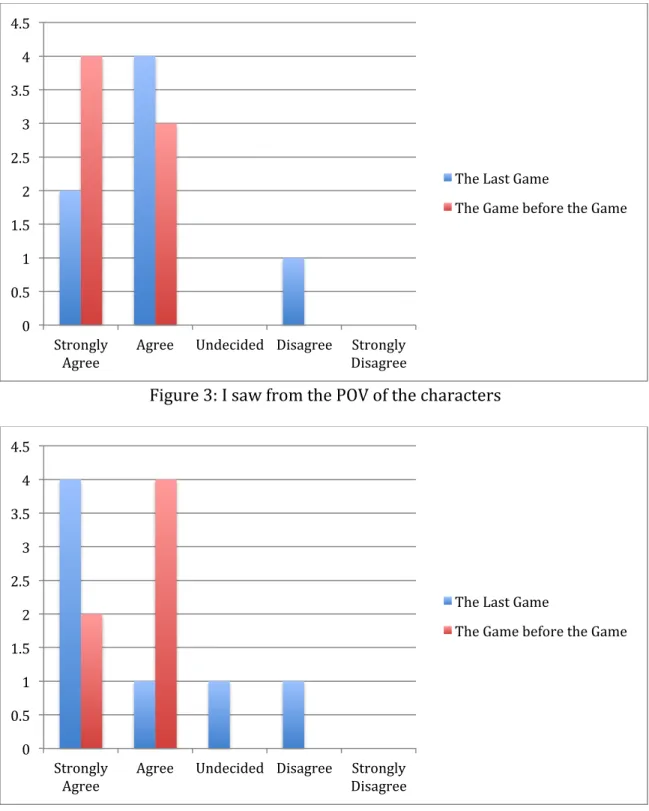
Figure 3: POV of the characters……….…………..…………52
Figure 4: I was able to imagine the character’s feelings………...………..……….52
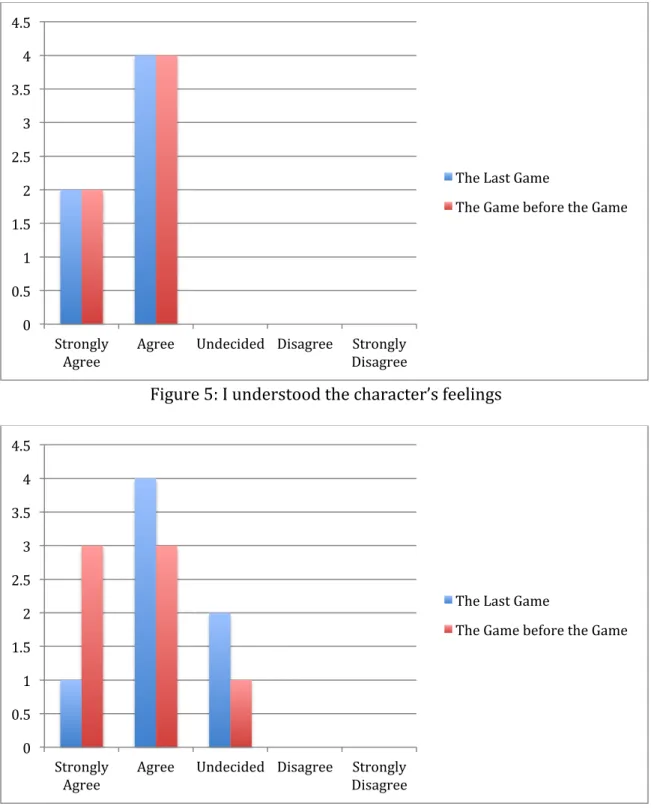
Figure 5: Understood the character’s feelings………...………..……..53
Figure 6: Emotionally involved with the character’s feelings………..……53
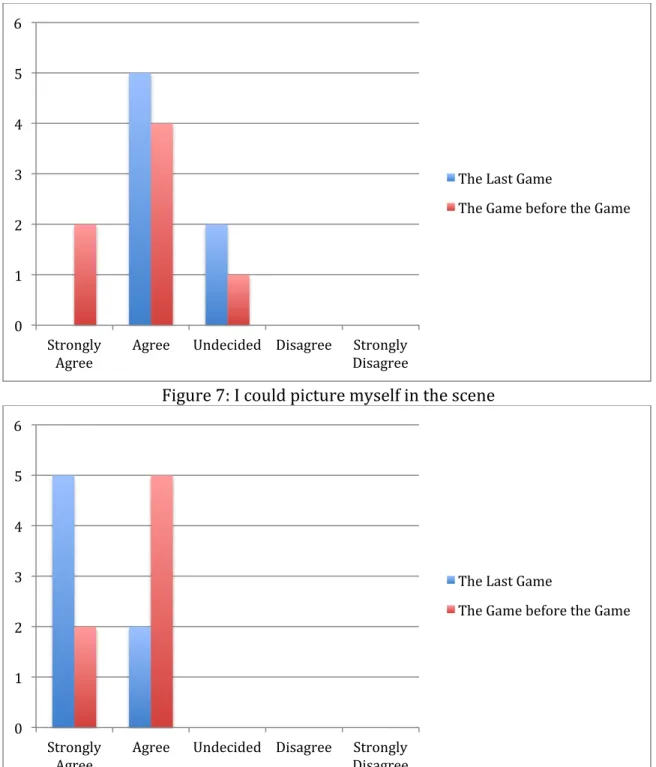
Figure 7: Picture myself in the scene………....…..54
Chapter 1 Introduction
In the opening scenes, young boys descend onto the streets of Rio de Janeiro. They glide through the streets, passing a soccer ball back and forth with exaggerated gusto. The scene is interspersed with cuts to famous soccer players who perform the same moves. Then, an austere man presents an innovative idea: the production of perfect clones of well-‐known soccer stars. Subsequently, the stars are forced out of the sport due to their imperfections and personalities. Yet, in the end, the soccer stars rise together to reclaim their beloved sport. The story, created by athletic apparel giant Nike, Inc. celebrates personality, passion and imperfection. The story does not, however, celebrate Nike products. The outcome is cool. But the question is, why?
With the proliferation of media, particularly digital media, consumers have become more powerful. They now make decisions about when, where and how they consume media (Young, 2014). Such decisions often include the elimination of traditional advertisements. Consumers have found a straight path to entertainment, which thwarts advertisers’ attempts to distract them. The solution? Advertisers have encouraged brands to become the entertainment.
Athletic apparel brands such as Nike and Adidas have increased their
development of branded integration with strong sports themes. Brands that are not connected with sports are beginning to create branded integration centered on major sporting events as well (Nudd, 2014). In North America, spending on sport sponsorship has been on a steady incline, with spending totaling 11.28 billion in 2009 and a projected 14.35 billion in 2014 (Global Sponsorship, 2013). This past year, Beats by Dre released a five minute feature that captured the pregame rituals of soccer player superstars such as Neymar da Silva Santos, Jr., Bacary Sagna and Mario Gotze to name a few. This short, which is very similar to the short film by Nike in nature, captured the attention of 27 million viewers (Nudd, 2015).
There has been limited research on consumer perception of sports-‐themed videos created by brands. Without this, it is difficult to understand how viewers process the ideas presented in the branded integration. The purpose of this study is to understand how sports fans perceive branded integration. More specifically, this study will focus on long-‐form videos created by advertisers much like the previously described videos. While it may be hypothesized that sports fans would experience greater enjoyment of the long-‐form videos, it would be interesting to have a deeper understanding of why this may occur. Also, observing how the long-‐form videos influence sports fans’ perceptions of the brand will give insight into the
effectiveness of the videos.
Literature Review
In this section, the modern landscape of media consumption will first be discussed. Next branded integration will be defined and its history will be reviewed. Finally advertising will be discussed as persuasion. Theories such as social
cognitive, consumer persuasion knowledge, identification and narrative transportation will be introduced, defined and discussed.
Today, the average consumer has access to a wide variety of media channels and vehicles. Consumers have begun to spend more time on many different Internet media sites, thus increasing control of how and when they consume entertainment (Lieberman, 2014). Now, consumers are able to personalize their entertainment-‐ viewing experiences. Because of this, advertisers are having a more difficult time reaching consumers through traditional advertising. In addition, relatively new electronic devices allow audiences to completely skip advertisements (Lieberman, 2014).
The proliferation of media has urged advertisers to act quickly in order to communicate with their audiences (Liberman, 2014). In order to reach millennials, advertisers have elected to expand beyond traditional advertising spots (Thielman, 2014). They seek to cut through increased clutter in the marketplace and engage their audiences in original ways.
into an entertainment narrative, brands have found a way to avoid being completely ignored (Masters & McGinn, 2011). Instead of creating advertisements that seem to stand out or catch the eye of viewers, advertisers have elected to make their brands an integral part of the entertainment. Moreover, branded integration allows for psychological processes that heavily influence the effectiveness of the persuasion attempt.
Advertising as Persuasion. Advertisements are rhetorical persuasion that elicits cognitive and affective responses. Cognitive responses occur when an audience is able to recognize the brand’s attempt to persuade the audience to purchase a product or service. The consumer persuasion knowledge model posits the idea that once a viewer recognizes a persuasion attempt, he or she will begin a decision making process. During this process, the audience member makes
judgments about the brand’s intent and whether or not he or she will accept or reject the advertiser’s claims (de Graaff, 2013).
Persuasion knowledge can be activated when a brand is placed prominently in the entertainment being viewed. For example, if a Coke is seen several times during a particular television show, viewers may begin to consider whether or not Coke is making an attempt to persuade them to buy the product.
In contrast, affective classical conditioning is a matter of pairing an
Affective classical conditioning is likely to occur as a result of product placement, a basic form of branded integration.
Narrative Transportation. Branded integration has expanded from simply showing a brand’s product in a television show or movie to a brand’s seamless integration into a narrative. In the former, affective classical conditioning and consumer persuasion knowledge are more likely to occur. But, incorporating a brand into a narrative leads to a different psychological process.
Narrative persuasion is centered on the story. A narrative is an account of connected events that could be fictional or nonfictional. Though narrative is entertainment, it also has persuasive qualities. The realization that narrative entertainment could captivate audiences in a unique way is what led to the development of the narrative transportation theory (Green & Brock, 2000).
Narrative transportation is a subjective state that is characterized by deep focus on a narrative (Shrum, 2012). Going beyond the idea of simply paying attention to the story, audiences who are transported are completely immersed in the plot. They temporarily suspend all focus on the world around them (Green & Brock, 2000).
some way once individuals return from the narrative world (Green, Brock & Kaufman, 2004).
When a consumer enjoys a narrative, he or she will be less likely to doubt the ideas and themes presented in the narrative. And, because audiences are being willingly transported, they will likely not interrupt the transportation experience by trying to activate the consumer persuasion knowledge model in order to question ideas presented in the story. Green and Brock (2012) found that transported
audiences show more story-‐consistent beliefs than their counterparts and are more likely to believe and agree with the ideas presented in the narrative.
In a study conducted in 2000, Green and Brock developed a transportation scale that was tested and validated through the testing of three experiments. The first experiment demonstrated that transportation supported story-‐consistent beliefs and positive evaluations of protagonists. The second showed that
transported readers found fewer falsities in a story than non-‐transported readers. The final experiment found that reduced transportation led to reduced story-‐ consistent beliefs and protagonist evaluations (Green & Brock, 2000).
Identification. Transportation can lead to enjoyment from opened doors to the exploration of and experimentation with other possible selves. These are
Audiences who are experiencing a well-‐crafted narrative tend to respond to situations presented in the narrative as if they were the main characters (Sestir & Green, 2000). Thus, viewers who experience increased identification with a
character in the narrative are more likely to mimic the actions of the character for a short period after the viewing of the narrative (Sestir & Green, 2000). In addition Juan Jose Igartua (2010) identified emotional empathy, cognitive empathy, sharing or internalizing the character’s goal, and absorption as key indicators of
identification. In this sense, cognitive empathy describes the process of adopting the point of view of the main character or putting oneself in the place of the characters.
Identification was born from Albert Bandura’s social cognitive theory. The foundation of social cognitive theory is built on the idea that copying is evolutionarily necessary. Bandura (2001) stated that human behavior is often explained by unidirectional causation in which behavior is controlled by environmental settings or internal disposition. Individuals can experience
behavioral, cognitive and affective learning from vicariously observing others. The growth of a digital media landscape in which videos can be delivered
instantaneously and to a broad audience has expanded the range of models for exposure. Observers who learn from these models can transcend their immediate environments (Bandura, 2001).
Thus, audiences appear to internalize messages and then apply them to the real world.
Sestir and Green (2010) applied the concepts of social cognitive theory to identification when they stated that viewers could internalize traits displayed by a character with which the viewer identifies. They defined this as self-‐identification. Developmental research has found strong, though correlational, evidence that children identify strongly with media characters and believe that they are highly similar to the character that they identify with (Sestir & Green, 2010). However, Sestir and Green (2010) argued that because such studies were run exclusively on children, they cannot be generally applied to adults as well. So, they tested the idea of identification and self-‐identification with undergraduate students. Sestir and Green (2010) found that, after the students viewed a movie clip, they at least temporarily adopted the perceived traits of characters with whom they identified.
Sestir and Green (2010) have studied narrative transportation in close comparison with identification constructs. Like transportation, identification
involves losing yourself in the narrative (Shrum, 2012). Individuals transported into a story tend to identify with the characters because they are thought of as an
orientation through which viewers perceive the story (Shrum, 2012). It is most often the case that viewers experience the story from the
healthy, that person will likely take on similar healthy behaviors from a raised sense of his or her own self-‐efficacy (Smith, Downs & Witte, 2007).
While both narrative transportation and identification involve an increase in perceived verisimilitude, theoretically the two processes do not necessarily always occur in concert (Sestir & Green, 2010). Transportation can occur without
identification and identification can occur without transportation, though the latter is less likely (Sestir & Green, 2010). In addition, transportation is viewed as a cognitive state while identification is character specific (Sestir & Green, 2010).
In their transportation imagery model, Green and Brock (2004) found that identification with characters played a significant role in narrative persuasion processes. Green and Brock (2000) found that audience members who identify with characters do not counter-‐argue with the ideas presented in the narrative. Because identification means that the audience member assumes the identity of a character in the film, the audience member is less aware of himself or herself (Igartua, 2010). Both processes occur when a narrative is well constructed, engaging and causes enjoyment (Sestir & Green, 2010).
comparable effects for traits not displayed by the character, or traits not identified as self-‐descriptive (Sestir & Green, 2010). This research establishes that a
perception of similarity may be at least temporarily accompanied by a shift in self-‐ concept toward the traits of the character. Sestir and Green (2010) also noted that transportation effects were not consistently supported. They attributed this to the fact that transportation’s influence may not translate as directly to character trait activation.
A History of Branded Integration. Now that psychological theories that describe factors that may influence the efficacy of branded integration have been introduced, it is time to look at the history of branded integration.
Product placements can be traced back to the advent of motion pictures itself. In the 1890s, the Lever Brothers placed their branded soaps in some of the earliest films made (Hudson & Hudson, 2006). From the early 20th century on, product placement deals were made. The advent of television sets in the 1950s created another avenue by which advertisers could promote their brands (Hudson & Hudson, 2006). In fact, early television programs were sponsored by brands. Within these programs, presenters would promote the virtues of the sponsoring brands (Hudson & Hudson 2006).
success has caused product placement to become an important element of marketing programs.
Following E.T.’s release, the use of product placement rose considerably for about ten years (Hudson & Hudson, 2006). Growth in the entertainment industry itself has also been a factor in the growth of the use of product placements. However, as entertainment is now being consumed through a variety of media, more complex branded integration is being ushered in. It is being used as a means for brands to maintain engaging conversations with consumers Hudson & Hudson, 2006).
Branded Integration and Long-‐Form Video. Balasumbrian (1994) defined [branded] integration as a mix of advertising and publicity. Essentially, brands pay for messages that are not commercial in nature. Similarly, another definition of branded integration regards it as a spectrum of strategies that integrates some aspect of the brand into a form other than a commercial (Masters & McGinn, 2011). In many cases, brands are integrated into the plot of an entertainment medium such as a television show or video game.
Both definitions suggest the multidimensionality of branded integration. The integration of brands into entertainment narratives can produce products of
However, branded integration can be more complex. As product placements grow in complexity, the product may become more prominent and play a role in the storyline of the narrative. The most complex branded integration occurs when the brand has complete control over brand prominence and the integration of the brand into the storyline. This is referred to as advertiser-‐created content.
The problem with product placement is that the advertiser doesn’t have total control over the associations that will be made with the brand. Viewers typically experience an array of emotions when watching a show or movie. It is hard to decipher which emotion will be associated with the brand (McCarty & Lowrey, 2012).
In addition, product placements that are too over-‐reaching, or appear in the story too many times are more likely to activate consumer persuasion knowledge. This will cause the viewer to initiate cognitive thinking about the advertiser’s intentions rather than viewing the placement passively. Consumer persuasion knowledge may also be activated if an advertisement for the product appears directly before the narrative containing the same product (Shrum, 2012).
There are also external influences that impact the form that modern advertisements take. According to an article in Ad age shrinking attention spans have caused media segments to decrease (Parekh, 2010). Traditional advertising spots have reduced from 60-‐, to 30-‐ to 15-‐ seconds. Because of this, advertising industry executives struggle to create work that stands apart (Parekh, 2010). Thus, advertisers have thrown out the old rule of keeping an advertisement under a minute and a half. Now, they focus on making content that is entertaining, no matter the length of the segment (Parekh, 2010).
Parekh (2010) provides advertisers with three reasons to elect to create long-‐form videos. The first is that such ads allow advertisers to stand out amongst the clutter of 30-‐second ads and deliver entertainment to consumers. Second, longer spots do not connote an exorbitant amount of spending because short films can be repurposed into several shorter ads. Third, long-‐form videos have proved to be successful in the past. Parekh (2010) also added that long-‐form advertisements could be easily distributed in the digital era.
A recent study conducted by Chen sought to gain a deeper understanding of the effectiveness of advertiser-‐created long-‐form videos by employing narrative persuasion theory. In the study, Chen created an online survey that contained links to real Taiwanese mini films created by brands. He found that narrative persuasion had an influence on attitudes towards the mini film, and the mini film attitude mediates the effect of narrative transportation to brand attitude and purchase intention. He notes that that the ability of branded integration to entertain should not be undervalued. He notes that bold product placements interrupted
transportation and thus stifled the likelihood that such videos would go viral (Chen, 2014).
Chen (2014) elaborated that narrative transportation into the stimulus viewed caused his participants to have a more positive attitude towards the film. He then stated that positive attitudes towards the brand and purchase intention were subsequently formed (Chen, 2014). He points out that the relationship between transportation and brand attitude simply does not exist in the proposed research model.
A possible explanation might be embedded in the dual characteristics of branded integration, that is, to serve as an entertaining short film to attract voluntary viewing besides brand promotion (Chen, 2014). Chen (2014) reasoned that successful films attract audiences not because of their persuasive content but because they are compelling drama.
Justification
It should first be noted that there is very limited research on advertiser-‐ created long-‐form videos. The studies by de Graaff and Chen are the only two that I had access to. Moreover, the two studies conducted by the aforementioned
researchers were quantitative in nature, meaning the effects of the long-‐form videos were not studied. In addition, such methods do not offer insight into how audiences perceive long-‐form videos. A qualitative study that seeks to understand why viewers engage in transportation or identification process, as well as why or why not this might affect views about the brand would complement to the studies that have already been conducted.
The following are the research questions answered in this study:
RQ1: How do audiences perceive the stories being told by brands?
RQ2: How does acceptance of persuasive elements due to transportation and/or identification affect brand attitude?
Chapter 2 Methods
Participants. Sports fans are the primary target of sports-‐themed,
advertiser-‐created videos. Because of this, it was important that this population was represented in my study. In order to find participants in this population, I used purposive sampling. The preferred ages of participants were between eighteen and twenty-‐four years old, which is the typical age of college students.
First, I used Hermes’ friendship pyramiding to identify students who might meet the criteria to participate in the study. Friendship pyramiding is the utilization of the researcher’s personal contacts to find potential candidates for focus group research (Kitzinger, 1994). Snowball sampling was then used to reach out to a greater number of potential candidates that included friends of friends,
acquaintances and colleagues.
While using these methods, I found participants who shared common social groups. As a result, most of my participants had played some sport together, or at the very least had one mutual friend. According to Kitzinger (1994) the use of pre-‐ existing groups could create an environment in which participants could easily relate to each other’s comments and are more likely to challenge each other. I elected to use this method of focus group recruiting because I wanted participants to be able to candidly compare their ideas to others during the discussion.
weeks leading up to the 2014 FIFA World Cup. In addition, they were both over five minutes in duration. However, the videos differed in many ways.
The Last Game presents a strongly connected storyline. It features famous
footballers trying to save soccer from a villainous mastermind. In the video, the footballers are filled with personality, yet they all perform dangerous tricks on the soccer field. Because of this, the mastermind points out that they are flawed and take too many risks. So the mastermind creates clones that have a normalized and effective style of play. These clones have flawless decision-‐making and are sure to give coaches guaranteed results. They beat the soccer stars in a grand match up between the two teams and take over the sport.
The famous footballers are forced to find other jobs to make ends meet. Neymar da Salva Santos, Jr. becomes a beautician and Cristiano Reynaldo makes money posing a mannequin. Billboards sponsored by Perfect Inc., encouraging onlookers to Risk Nothing, begin to pop up throughout the city of Rio de Janeiro.
Growing frustrated with the state of soccer, Ronaldo Fenomeno bands
together the originals in order to challenge the perfect clones. The rules of the game are rigid: first goal wins, no second chance. In an exciting final scene, the originals are able to overcome the clones. According to the Nike website, the video is meant to illuminate the dangers of playing it safe. In total, the short film is five minutes and 29 seconds long. To date, it has been watched over 79 million times of YouTube.
encourages him to play hard and not hold back. When the conversation ends, Neymar gets off of a bus and is subsequently faced with press snapping pictures of him and calling his name. Neymar coolly puts on his Beats headphones and music begins to play.
The rest of the video consists of famous soccer players and soccer fans alike, preparing for a grand soccer match. Fans engage in crazy and unique rituals, such as tattooing their teams name on themselves, shaving their country’s flag on their head and praying to shrines. The video ends with the soccer players removing the Beats headphones from their heads and walking towards the stadium.
The voice of Neymar’s father returns, instructing Neymar to put God’s army in front of him. Finally, Neymar’s father says, “I love you.” Then the video ends. The video is five minutes and four seconds long. To date, it has been watched over 27 million times on YouTube.
Design. According to Kreuger and Case (2000), the use of focus groups is appropriate when studying the range of ideas that people have developed concerning a particular subject. Focus groups are also useful when trying to understand differences between groups. Lastly, Kreuger and Case (2000) also mention that focus groups can be used when attempting to uncover factors that influence opinions, behaviors or motivations. This study sought to understand how sports fans interact with sports-‐themed, advertiser-‐created, long-‐form videos. As such, understanding a range of ideas and opinions, as well as what influences these ideas would allow me to answer my research questions.
In order to be able to gather some context about my participants and test the items of the narrative transportation and identification scales, I developed a series of questionnaires. Four questionnaires were handed out and completed by focus group participants at several points during the discussion. The first questionnaire judged participant interaction with both of the brands being studied. The second and third questionnaires were applications of the narrative transportation and identification scales. They were completed after the participants watched each video. The fourth questionnaire asked participants to determine what was most salient about the videos watched and asked which video the participants preferred. Answers to the questionnaire questions were converted into bar graphs in order to easily compare responses.
Procedure. As mentioned earlier, I used an adapted version of Green and Brock’s narrative transportation scale that was developed and tested in 2000. In addition, I also adapted Igartua’s identification scale. Both scales were used to form the set of questionnaires that participants completed after viewing each video. Both theories have typically been used in experiments. Instead of performing
experiments similar to the aforementioned researchers, I elected to utilize focus groups in order to get a deeper understanding of the identification and narrative transportation processes as they relate to advertiser-‐created, long-‐form videos. Focus also groups provided me with greater insight into the effects of narrative transportation and identification processes.
other friends who were sports fans and who might also be interested in the study. I contacted these people via email so that I could explain what I was studying and gauge their interest. I collected the information of the participants who agreed to participate in my study and began to talk to them about a time and date that would be best for the study to take place. After I found a general consensus about best time and date for the study, I notified all participants of the time and location of the focus group.
Prior to holding the focus group meeting, I held a mock focus group session with friends. This helped me to rearrange the order of the questions as well as revise some discussion questions that might have been unclear.
The actual study was held in Carroll 340 on Thursday March 19, 2015 at 5 p.m. This room was chosen because its set up was conducive to a seminar-‐type discussion. In addition, the room had the capability to screen videos, which was essential given the nature of the study.
well as how often they engaged with the brands through various forms of media. The forms of media asked about were mobile applications, websites and social media. This questionnaire was meant to serve as a sort of benchmark, to gauge the participants’ relationship with the brands being considered.
After the questionnaires were collected, I played the first video. Following the completion of the first video, I passed out questionnaire two. This post-‐video questionnaire featured several questions directly from the narrative transportation and identification scales. The rest of the items from the scales were developed into focus group discussion questions, which were asked following the completion of questionnaire two.
Once the discussion on the first video ended, the participants watched the second video. Subsequently they were given another questionnaire, questionnaire three, which was identical to the first post-‐video survey. Once this questionnaire was collected, a discussion on the second video began. The questions for this
discussion were similar to the first, but were designed to allow for more comparison between the two videos.
The session was approximately an hour and fifteen-‐minutes long. Participants were thanked for their participation in the focus group with food, which they ate after the completion of the study.
Methods of Analysis. I used Krueger’s analysis framework to make sense of my findings. According to Krueger and Casey (2000), the purpose of the study should always drive analysis. Furthermore, according to Rabiee (2004), the purpose of any study is to bring meaning to a situation instead of search for truth. Given this, my first step was to review my research questions. After doing this, I began to follow Kreuger’s framework, which is broken into four distinct stages: Data collection, identifying thematic frameworks, indexing and charting.
For data collection, I accrued data during the focus group session and complemented it with observational notes. I was also able to collect data from the four questionnaires completed by the participants during the session. I then typed up comments from the focus group participants and read over the transcripts a few times. I did this in order to familiarize myself with the data as Krueger suggests.
After getting a better grasp of what was said during the study, I began to identify major themes and create categories. Given that one of my research objectives was to understand the role that narrative transportation and
After becoming more familiar with the data, Krueger suggests that the researcher index the data. This requires the researcher to sift through the data and compare quotes. I used a popular qualitative analysis program, Dedoose, in order to do this. I loaded my transcript onto the software. Then, I was able to code and group similar excerpts.
In the charting stage, Krueger suggests that the researcher rearrange quotes into newly developed thematic content. In Dedoose, I was able to create codes that were named for major themes that I was able to gather after reading the transcripts. I was then able to use a feature of the software to export all of my excerpts while grouped as codes.
Statement of Positionality As I prepared to conduct my focus group with undergraduate students, I expected that my position as a female sports fan and former athlete would allow me to empathize more with the perspective of the female athletes in the group. However, my position as a sports-‐fan who is not familiar with soccer caused a barrier at some points, because I was unfamiliar with some players shown in the video and some events mentioned during the discussion.
Because my study didn’t look at any particular differences in race, I am not concerned that my position as an African American might have influenced the way that I perceived the comments of my participants. Race never came up during the discussion.
Chapter 3 Findings
In this study, I was interested in understanding how audiences perceive and form connections with advertiser-‐created, long-‐form videos. Specifically, my
research questions were: How do audiences perceive the stories being told by brands and how does acceptance of persuasive elements due to transportation and/or identification influence brand attitude. These questions were used to guide my analysis of the responses from my focus group participants. All questionnaire-‐ related findings can be found in figures one through eight in the Appendices.
Table 1 shows background on the men and women who participated in the study. This data was gathered from the questionnaires as well as the focus group discussion.
Table 1: Participant Profiles
Name Ethnicity/Gender Sports Activity Interaction with Brands
Melvin Nigerian/Male He has played mostly soccer and racquet sports for a long time.
Self prescribed “Biggest soccer fan you will ever meet”
Doesn’t have an opinion on Nike but likes Beats by Dre. Watches Nike TV commercials and other videos often. Watches only TV commercials by Beats by Dre often. Doesn’t interact with Nike or Beats by Dre owned media.
Ariel African American/ Female
She hasn’t played sports for a long time.
She was a cheerleader in high school and watches sports often.
Very familiar with both Nike and Beats by Dre. Doesn’t visit either brand’s owned media often. However, she watches TV commercials and other videos by both brands often. Considers both brands to be very likeable Jasper African
American/Male Played baseball and basketball for 15 years. Avid watcher of sports.
Carl Colombian-‐
American/ Male Plays soccer as well as recreational basketball. Avid watcher of sports on television
Very familiar with both brands. Visits Nike’s owned media more often than Beats by Dre’s. Watches TV commercials by both brands often. Views videos other than TV commercials by Nike often. Considers both Nike and Beats by Dre likeable.
Wes White/Male Played soccer in high
school Familiar with both brands. Doesn’t visit either brand’s owned media often. Views TV commercials by both brands often. Doesn’t watch videos other than TV commercials by either brand often. Considers both brands to be likeable Julius Ghanaian/Male Played tennis. Watches
sports on TV often. Familiar with both brands. Doesn’t visit either brand’s owned media often. Views Nike TV commercials more often than Beats by Dre’s. Doesn’t view videos other than TV commercials by either brand often. Considers Nike more likeable than Beats by Dre. Emily White/Female Played basketball, soccer
and tennis. Has also swum her entire life.
More familiar with Nike than Beats by Dre. Doesn’t visit Beats by Dre’s owned media. Views TV commercials by Nike more often than commercials by Beats by Dre. Doesn’t view videos other than TV commercials by either brand often. Considers Nike likeable. Has no opinion on Beats by Dre.
Brand Familiarity. All of the seven participants considered themselves to be familiar with Nike, Inc. and over half of the participants considered themselves to be very familiar with the brand. In addition, all participants considered themselves to be familiar with the Beats by Dre brand and a little under half of the participants considered themselves to be very familiar with Beats by Dre.
TV commercials and other videos. Less than half of the participants said that they viewed TV commercials by Nike often. However, more than half of participants said that they did not view Nike related videos, other than TV commercials, often. In comparison, under half of participants viewed TV
commercials by Beats by Dre often. In addition, almost all of the participants had either not viewed Beats related videos other than TV commercials often or not at all.
Likeability Most of the participants liked Nike. Of this group, over half of the participants considered Nike very likeable. Almost all of the participants also liked Beats by Dre. But only three participants considered Beats by Dre very likeable.
Major Themes. As mentioned earlier, I used Krueger and Casey’s analysis frameworks to find themes and categories in my focus group transcripts. I was able to distinguish four important themes that revealed themselves several times during the conversation. These themes are comparison to reality, identification of
overarching messages, identifying with a protagonist and enjoyment.
Comparison to reality refers to the ability to compare the protagonists and occurrences in the narrative world to events and people in the real world. The identification of overarching messages pertains to the ability of the participants to discern the presence of themes central to the story and interpret what they might mean. Identifying with a protagonist is the ability of participants to cognitively and emotionally empathize with the protagonists. Enjoyment refers to whether or not the participant enjoyed the film and why he or she felt this way.
famous soccer players too dangerous because of their risky decision-‐making. Because of this, the mastermind creates clones that are formulated to never take risks and never make mistakes. The soccer players are forced out of the league and have to find odd jobs in order to make ends meet. This is until Ronaldo Fenomeno inspires the original soccer players to band together to defeat the clones. In a final scene, the original players make bold plays in order to defeat the clones.
Beats by Dre’s The Game before the Game is a nod to the unconventional pre-‐ game rituals that dedicated soccer players partake in. In this video, soccer players, famous athletes and fans alike perform special rituals such as praying to a shrine, shaving their heads and tattooing their favorite team on their bodies. In the beginning and end of the spot, the audience hears the voice of Neymar’s father, giving inspirational messages about perseverance and ardor.
Comparison to Reality. Immediately after watching the video, Melvin noted that he felt that The Last Game was very creative because of its futuristic view and the accuracy of the personas depicted. Thus, his apparent first instinct was to compare the characters in the video to the soccer players in real life. Melvin explained, “They managed to depict almost like the real life characteristics of each soccer player. Like the whole Zlatan thing, that’s how he is in real life. So that was amazing.”
experienced the return of similar emotions felt during the World Cup while watching the video. Melvin explained, “The video is definitely emotional for me because it brought back so many memories of the World Cup.” In addition, Julius said, “Seeing [the video] now really brings back all of the emotions that came with the World Cup and soccer being on a global stage.”
Interestingly, Julius also felt that the release of the soccer themed Nike video was very much a part of the anticipation of the World Cup itself. Thus, it appeared as if Nike, as a brand, was an integral part of the cultural moment for this participant. Julius said, “Well for me, I know that this came around World Cup time. So there was a lot of hype around what Nike was going to do to get everyone excited for the World Cup. I really enjoyed it when I saw it back then…”
After watching Beats by Dre’s The Game before the Game, participants also felt that the video brought back emotions related to their World Cup experiences. These emotions were tied in with how they felt about the featured soccer players in reality. Julius explained that he felt a mix of emotions after watching the video because of the presence of certain soccer players. Thus, while watching the video, Julius was referring back to his feelings towards these players in real life. When asked to describe some of the emotions that he felt, Julius said:
named Sydney Leroux, she became my twitter crush when she played soccer for the US soccer team. I think she’s gorgeous.
Three of the participants mentioned particular events that happened during the World Cup, like Neymar getting hurt and Gotze scoring the first goal. In one instance, Carl applied his knowledge of real world events to a specific point in the narrative. He said, “There’s a line in there that said… uh I think it’s his father right? He says ‘wear God’s armor’ and it’s funny because I’m sitting there and I’m just like yeah but make sure you wear it on your lower back.” By referencing Neymar’s injury while making specific comments on Neymar’s father’s words in the narrative, Carl fostered a connection between the real world and the narrative world.
Identification of Overarching Messages. In addition to comparing
characters and events in the narrative to reality, participants also identified major themes in the narrative and compared them to their own personal philosophies. When asked whether or not they felt that there were life lessons taught in The Last Game, participants agreed that there was an overall message of persistence. Julius said, “I think that one thing that was in the video was the idea of fighting the odds when they seem against you. When things look bleak, just to, you know give it all you have to get what you can. No matter the outcome at least you gave it your all.”
Rather, the video appeared to prime certain ideas in the participants’ minds and validate these ideas. Jasper said this explicitly when referring to how he felt about the theme presented in The Last Game. Jasper said, “I’ve always had a positive outlook on situations, even when they may not be in my favor. So just risk
everything and go for it all, that was really on par with what I believe in.
Going along with the theme of drawing comparisons between the video and everyday life, one participant explained his take on the overarching message presented in the video in terms of typical experiences of young people. Carl said, “Yeah, I feel like day-‐to-‐day you have these situations where you know you can do it all or you can do the safe thing. You know you could ask a girl on a date or you could just pass her by.”
In addition, a participant connected the belief presented in the narrative with sentiments towards the World Cup and affection for one’s team. Julius said, “Um, did I accept [the video]? Yeah. At the same time, it also made me believe that my favorite team could win the World Cup.”
According to the narrative transportation scale, the ability to imagine a different ending has bearing on whether or not the viewer is transported.
Participants didn’t imagine the narrative ending in a different way. This is likely due to the fact that if the narrative ended in a different way, this would mean that the message of the video would be dramatically changed. Jasper felt that if the clones won then the message would be that no one should take risks. None of the
accept the message in the video will have difficulty imagining an ending that would dramatically change the original message.
In contrast, no participant felt that there was a life lesson, or overarching theme connected to The Game before the Game. Instead, participants felt that the video served the simple purpose of getting fans excited about the World Cup. When speaking about the video, Carl said, “It’s like a hoorah, it’s a pep rally, let’s get
pumped up. But I don’t think that it really changes anything. You’re not like ‘Oh, now I have to think this way.’”
The video didn’t change the participants’ way of thinking, but it validated their practices of pregame rituals and their obsessions with their favorite teams. Melvin said, “I don’t think it really changed my way of thinking. It just made me feel like I was not the only weird one about soccer. People always, especially in America, American people always make me feel weird about my soccer rituals. It just made me seem like I’m not the only weird one. So that was good.”
Thus, it seems that participants did not connect to an overall theme in the Game before the Game. Rather, they placed more importance on the validation of their beliefs on fandom.
Identifying with the Protagonist. Most participants strongly felt that they anticipated that they would be like the characters in The Last Game. However when asked if they felt as if they were one of the characters in the Last Game, three
identifying with them because of their high status in society. Carl reasoned that he didn’t feel like he could immediately relate to the characters because they were famous soccer players and he had never been in their position.
Jasper noted that his support for the protagonists was based on the aesthetics of the video itself. He said, “I was behind them all the way, um just the colors that they used in the making of the film, where the clones were very bland and neutral and grey and they had all of the colors. It’s just psychological to cheer for the more colorful or happy looking team. However, most participants began to support and relate to the protagonists once the participants were able to see them more familiar situations. Emily said,
In the beginning, I was kind of confused about the clones and what was happening, but then when they played against them that’s when it really got exciting. Even though the video was like, I don’t know, I don’t know how long it was but you were pumped for them to win and kind of hoping for them to beat the clones.
In addition, Carl said:
I thought that it was very humorous how they went from being these amazing footballers to like, having these weird regular jobs. And, I feel like when you see that you relate because… at one time I hoped to be like this amazing soccer player and now I’m in college and I’m going to have a regular job, instead of being a footballer. So that’s how you can relate.