R E S E A R C H A R T I C L E
Open Access
In-silico design of computational nucleic acids
for molecular information processing
Effirul Ikhwan Ramlan
1*and Klaus-Peter Zauner
2Abstract
Within recent years nucleic acids have become a focus of interest for prototype implementations of molecular computing concepts. During the same period the importance of ribonucleic acids as components of the regulatory networks within living cells has increasingly been revealed. Molecular computers are attractive due to their ability to function within a biological system; an application area extraneous to the present information technology paradigm. The existence of natural information processing architectures (predominately exemplified by protein) demonstrates that computing based on physical substrates that are radically different from silicon is feasible. Two key principles underlie molecular level information processing in organisms: conformational dynamics of macromolecules and self-assembly of macromolecules. Nucleic acids support both principles, and moreover computational design of these molecules is practicable. This study demonstrates the simplicity with which one can construct a set of nucleic acid computing units using a new computational protocol. With the new protocol, diverse classes of nucleic acids imitating the complete set of boolean logical operators were constructed. These nucleic acid classes display favourable thermodynamic properties and are significantly similar to the approximation of successful candidates implemented in the laboratory. This new protocol would enable the construction of a network of interconnecting nucleic acids (as a circuit) for molecular information processing.
Keywords: Functional nucleic acids, Ribozymes, Nucleic acids computer, Molecular logic gates
Background
Early suggestions for implementing a molecular com-puter with nucleic acids followed the encoding principle of genetic information [1]. This would require the forma-tion and cleavage of numerous covalent bonds for their operation and thus require specific sets of enzymes. Major progress in the application of nucleotides for informa-tion processing came about two decades later with Adle-man’s insight that random oligonucleotides could be the basic tokens for information processing [2]. His method employed enzymes only to stabilise (through covalent bonds) the products of a self-assembly process (hybridi-sation of partially complementary oligonucleotides) but not in the information processing itself, and accordingly did not require enzymes with sequence specificity. This implementation by Adleman spawned the idea of building nucleic acid (DNA) computers as an alternate computing
*Correspondence: effi[email protected]
1Department of Artificial Intelligence, Faculty of Computer, Science and Information Technology, University of Malaya, 50603 Kuala Lumpur, Malaysia Full list of author information is available at the end of the article
means that possess greater computational power than the conventional machines. However this view has changed, as currently nucleic acids computers are being designed and engineered to function inside a living cell [3-7].
The discovery of short RNAs’ (which are 21–25 nt in length) role in regulating gene expression [8] has sparked a strong interest in RNA molecules. For instance, in RNA interference, a short interfering RNA molecule (siRNA) forms complementary base pairs with a target region in mRNA, allowing a protein complex called RISC (RNA-induced silencing complex) to attach and cleave the tar-get region [9,10]. Another short RNA called microRNA (miRNA), generated from an enzyme named Dicer that cleaves non-coding RNAs (i.e., RNA that do not code pro-tein), binds imperfectly with the target region in mRNA (forming a bulge), thus preventing the translation machin-ery from accessing this target region [11]. In addition to these short RNAs, another complex folded RNA domain called riboswitch also plays a role in gene regulation. Riboswitches sense the presence of specific metabolites and harness their conformational switching to activate the
gene-control mechanisms in preventing the production of protein [12,13]. The ability of these RNA molecules provides an interesting application scenario for molecular information technology.
Nucleic acids as substrate for information processing Computational nucleic acids are constructed as modular tuneable units, where different components of one system can be substituted with alternative parts as demonstrated in proof-of-concept models of simple computational units [14,15] and as synthetic devices integrated within living cells [4-6]. These proof-of-concepts are founded by a par-ticular type of RNA molecules, so calledribozymes, that can act as catalysts. Moreover, the catalytic activity may be enabled or suppressed upon binding of a nucleotide strand [16]. It is even possible to design and fabricate ribozymes endowed with multiple interacting effector binding sites. On the one hand, the combinatorial variety of nucleic acid strands allows for the numerous different effector molecules and accordingly facilitates the indepen-dent parallel operation of several allosterically controlled ribozymes. On the other, the fact that such ribozymes can have the same type of molecules, i.e., RNA oligonu-cleotides, as effectors and as products of the reactions they catalyse opens up a path to cascading several pro-cessing stages for molecular signals. Within the context of molecular information processing, a ribozyme called hammerheadappears to be the most suitable as the enyz-matic core for the construction of allosterically controlled ribozymes (The secondary structure of a hammerhead ribozyme is depicted in Figure 1). The concept of alloster-ically controlled ribozymes is illustrated in Figure 2.
Input signals are encoded as small molecules of DNA strands which effect a computing machinery that com-bines both functional nucleic acids (ribozymes for RNA and deoxyribozyme for DNA) and receptor units for input signal detection. The key to this approach lies in the possi-bility of controlling the activity of a ribozyme or deoxyri-bozyme with oligonucleotides as input. Such allosterically controlled nucleic acid enzymes have been investigated as sequence specific biosensors, where they have the advan-tage over molecular beacons because they can catalytically amplify the recognition event [22]. Within certain con-straints, the base sequence for the binding site of the control oligonucleotide (labelled OBS in the Figure 2) can be chosen independently of the sequence on which the nucleic acid enzyme will act. It is therefore possi-ble to have an oligonucleotide sequence start (or stop) the production of another, largely independent, oligonu-cleotide sequence. Moreover, it is possible to engineer nucleic acid enzymes to be controlled by more than one oligonucleotide. It is even possible to design and fabricate ribozymes endowed with multiple interacting effector binding sites.
(
(
(
-
-
-
-)
)
)
(
(
(
-)
)
)
(
(
(
(
-
-
-
-)
)
)
)
U
H
A
A A
G
G
C
C
U
G
A
G
A
5‘ 3‘ 3‘ 5‘
H3
H2
H1
Figure 1Minimal functional structure of hammerhead ribozyme.
Three helical stems (H1, H2, H3) emanate from a junction on the ribozyme core [17,18]. In nature, either helix H1 or H3 is terminated by a hairpin loop, which results in intra-molecular catalysis.
Hammerhead ribozymes that catalyse thein-transreaction, as depicted in the figure, can be made synthetically [19]. The core region has a specific sequence for all known active structures and is therefore termed ‘conserved’. Conserved bases are specified explicitly, with H representing any one of{A, C, U}. A dot (•) stands for any base that will not cause hybridisation in this position;
correspondingly two parentheses connected by a dash indicate an arbitrary pair of complementary bases. Hammerhead ribozyme cleaves the substrate strand that binds to form H1 and H3 as symbolically represented by the scissor and dashed lines.
The tuning of the computational units (i.e., ribozyme and the receptor sites) is achieved by altering the sequence of bases in certain regions of the nucleic acids guided by energetic information that can be calculated from the sequence to structure mapping of the molecules. In a simi-lar manner, one can allocate sequence constraints that can enhance sequence specificity for any particular part of the computational units. In designing sets of nucleic acids for information processing, one typically has a desired molec-ular conformation and additional local constraints specific to certain regions of the molecules. For example, a bind-ing site for an effector molecule (i.e., a nucleic acid that will affect the activity of a functional nucleic acid) may be required to be complementary to a sequence released in a preceding step.
OBS
Inactive Ribozyme
Allosteric Activitation Allosteric
Ribozyme
Active Ribozyme
Allosteric Inhibition Allosteric
Ribozyme
E +
-E +
-OBS
Figure 2Allosterically controlled ribozymes.Allosterically activated ribozyme (top) and allosterically inhibited ribozyme (bottom) [20,21]. The allosteric ribozyme is composed of two components (left of the dashed arrow), a oligonucleotide binding site (OBS) and a ribozyme part. The two components are covalently bound and form a single nucleic acid molecule (centre). Upon binding an effector oligonucleotide (E) the conformation of the binding site changes and affects the conformation of the ribozyme component. The latter conformational change will activate (top) or inhibit (bottom) the catalytic activity of the ribozyme part. The same scheme can also be realised with deoxyribozymes. The scissors symbolically represent the cleavage reaction of the ribozyme.
development of highly regulated molecular networks able to support complex decision-making criteria is feasible.
In a conventional machine, the components (i.e., hard-ware) are wired according to a predefined transfer func-tion (e.g., a logic circuit is mapped to “YES” given a state of x element as “YES”) [2]. In this paradigm, the set of actions are already predetermined resulting into a finite set of input and output mapping (i.e., a large and compli-cated hash-map table). The construction of conventional logic gates as a molecular computer however, does not imply that logic gates are a viable strategy for implement-ing computational nucleic acids. Nevertheless, if a nucleic acid circuit is to be constructed for the purpose of regu-latory control, then, the design of binary logic operators used here as a test case has a direct application.
Although there exists various nucleic acid comput-ers, the basis (in which each unit functions or operates) remains the same. By utilizing self-assembly to bind to the respective receptor regions, a chemical reaction is insti-gated, causing the molecule to undergo conformational changes. These reactions will either release an output signal or trigger consequent self-assembly reactions to de-form the molecules into different states (i.e., conforma-tional change).
Methods and materials
Constructing the RNA molecular “PASS” logic gates: A retrospective
In contrast to proteins, there exist well established com-putational tools that can aid in the secondary structure
prediction and sequence design of RNA molecules. By combining RNAfold for secondary structure prediction, RNAinverse for sequence design,Kinfold for simulating the kinetic pathway of a secondary structure folding (for an RNA sequence), andRNAcofoldfor measuring the effi-ciency of intermolecular binding (from the Vienna RNA package of [28]), Penchovsky and Breaker [15] derived a computational protocol to construct RNA logic gates using the allosterically controlled ribozymes architecture. The protocol of Penchovsky and Breaker [15] however, imposes strict structural constraints during the design process in an effort to produce only plausible candidates to undergo the in-vitro selection process. However, these structural constraints limit the ability of the protocol to produce different structural designs, which are required in order to construct computational nucleic acid circuitries comprising of hundreds of interacting molecules.
The simplest logic gates have only one bit input. The NOT gate that inverts the input and the PASS gate (some-times also called “identity” or YES gate) that forwards the input signal. Although, from a purely logical viewpoint PASS gates serve no purpose, in practise they can reform a degraded signal or adjust signal delay [29]. The molecular pass gates considered here are more powerful than one-bit logic gates and an essentially arone-bitrary input sequence of limited length can be recoded into a different output sequence.
[15], we have demonstrated the possibility of producing more diversified structural configurations for the molecu-lar PASS gates, which are quite unique, compared to the homogeneous configurations implemented in the origi-nal protocol. Our protocol for designing an allosterically controlled ribozyme for one-input logic gate comprises of three generating steps, (the same steps outlined in Table 1 with only a single effector binding region instead of two as depicted in the table) to arrive at a sequence design. Sequence generation is followed by a series of validation steps.
Although our protocol (P-ER1) successfully increases the degree of freedom in designing the molecular PASS gate, however we acknowledge that the variant compu-tational protocol is far from being efficient. There is an increase in computational time and a significant decline in the number of solutions plausible for laboratory imple-mentation(based on the filter cascade suggested by Pen-chovsky and Breaker in [15]). Evidently, the increase in the structural space has a decremental effect towards the generation of quality candidates (to be evaluated in the laboratory). A compromise between promoting structural diversity and the generation of plausible candidates must
be addressed in order to ensure a successful implementa-tion of computaimplementa-tional nucleic acids.
Constructing the complete set of RNA molecular logic gates: Conventional RNA sequence designer
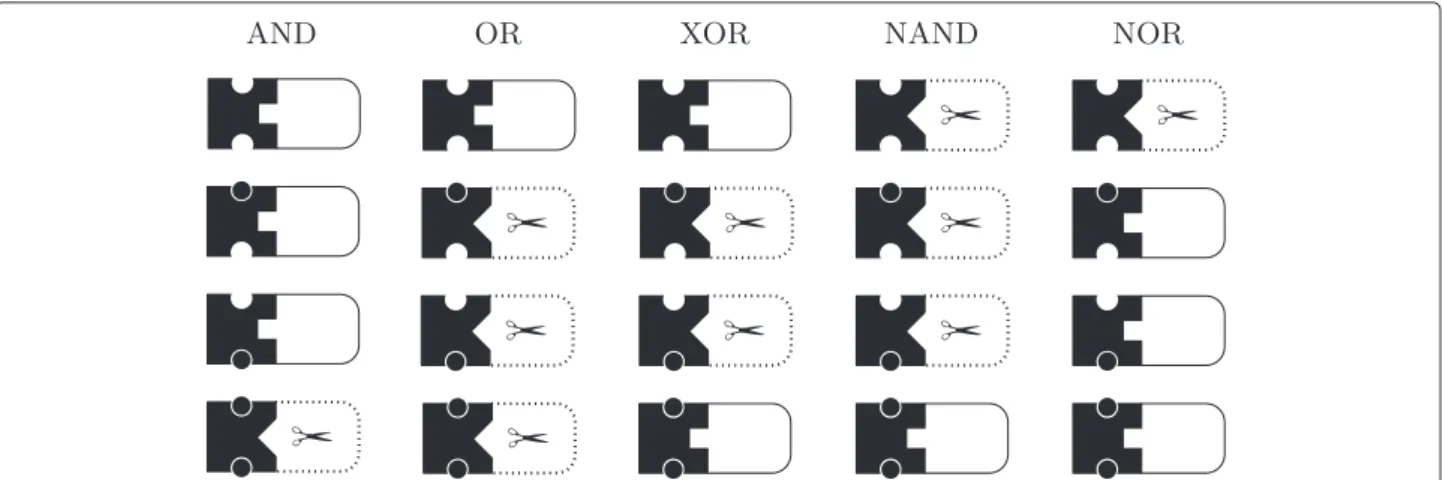
In this section, we discuss the design of nucleic acid molecular gates that follow the logic of all possible two inputs conventional logic gates. The complete truth table of all the possible two input logic gates is listed in Table 2. In contrast, Figure 3 illustrates the abstract representation of the nucleic acid logic operators.
Instead of the binary operation of conventional logic gates, biomolecules offer richer operations. For instance, a molecular gate can be made from an allosterically con-trolled hammerhead ribozyme, where one can attach dif-ferent substrate strands to be released as output sequence, and design the receptor sites with different effector molecules as inputs [15]. The substrate is cleaved when the ribozyme is activated, while the effector binds to the receptor site to steer conformation change that activates the ribozyme. However, it is possible to design a sub-strate strand that can function as an effector molecule for another allosterically controlled ribozyme, for instance
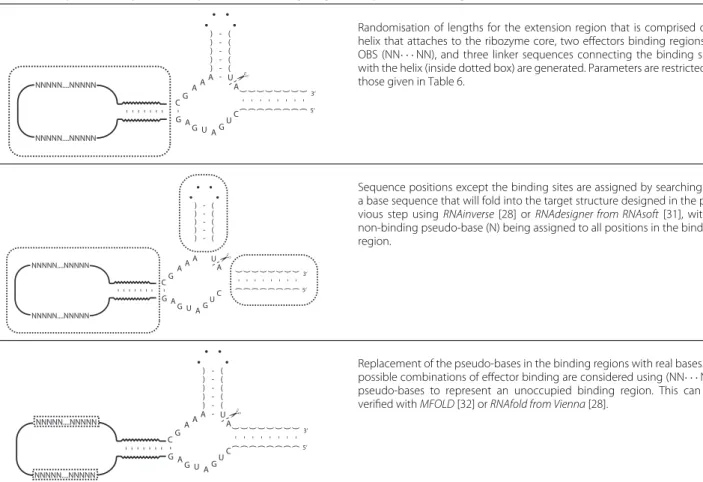
Table 1 Proposed computational protocol for designing two-input molecular gates
Randomisation of lengths for the extension region that is comprised of a helix that attaches to the ribozyme core, two effectors binding regions or OBS (NN· · ·NN), and three linker sequences connecting the binding sites with the helix (inside dotted box) are generated. Parameters are restricted to those given in Table 6.
Sequence positions except the binding sites are assigned by searching for a base sequence that will fold into the target structure designed in the pre-vious step usingRNAinverse[28] orRNAdesigner from RNAsoft[31], with a non-binding pseudo-base (N) being assigned to all positions in the binding region.
Replacement of the pseudo-bases in the binding regions with real bases. All possible combinations of effector binding are considered using (NN· · ·NN) pseudo-bases to represent an unoccupied binding region. This can be verified withMFOLD[32] orRNAfold from Vienna[28].
Table 2 Two-input binary logic gates
Line Input state
A 1 0 1 0
B 1 1 0 0
Operation Output state Name Symbolic
A◦1B 0 0 0 0 0
A◦2B 0 0 0 1 NOR AB
A◦3B 0 0 1 0
A◦4B 0 0 1 1 NOT B ¬B
A◦5B 0 1 0 0
A◦6B 0 1 0 1 NOT A ¬A
A◦7B 0 1 1 0 XOR
A◦8B 0 1 1 1 NAND A|B
A◦9B 1 0 0 0 AND A∧B
A◦10B 1 0 0 1 Equivalence A⇔B
A◦11B 1 0 1 0 A
A◦12B 1 0 1 1
A◦13B 1 1 0 0 B
A◦14B 1 1 0 1 Implication A⇒B
A◦15B 1 1 1 0 OR A∨B
A◦16B 1 1 1 1 1
Two-input binary logic gates.
in the design of a cascade of nucleic acid computers. The substrate and effector molecules may have differ-ent sequences, therefore an RNA AND gate, although it follows the logic AND operation (i.e., only releases its out-put when both effector molecules are present) does not directly correspond to a conventional AND gate.
The two-bit input and one-bit output signals of the conventional logic gates are represented by essentially arbitrary nucleotide sequences. In principle, there are 4n
base combinations for the input and output molecules, wherendenotes the length of the signalling molecule. Two or more molecular gates that are common in their activa-tion mechanism could be completely different in terms of their structural design and mechanism [15]. If a cascade of logic gates is to be developed, the dynamics of the molecu-lar logic gates not only allows for the use of output strands as effectors but also as substrates in subsequent processing stages.
From the computational protocol P-ER1 for the design of PASS gates, we derived a variant protocol named P-ER2 that will allow the search for the logic operators as listed in Table 2 by adding another effector binding site and linker to the extension region of helix II. As in the P-ER1 protocol, we initially start with an active hammer-head ribozyme configuration, then, search for a sequence combination to be placed in the effector binding region that distorts the active hammerhead motifs. But in the case where two effectors are required, we extended the protocol to check for all four possible meta-stable con-formations of the molecule (i.e., [no E], [E1], [E2] and [E1 and E2], where E denotes the effector molecules). Table 1 depicts the protocol of P-ER2 for the design of two-input molecular logic gates.
In order to increase the probability of generating sequences that will disrupt the formation of the ham-merhead motifs, the complementary bases of the con-served region are embedded at arbitrary locations within the linker extensions, or at the effector binding sites, or overlapping both. Details on various strategies to design allosterically controlled functional nucleic acids (specifi-cally hammerhead ribozyme) are discussed in [30].
There are two conditions that need to be investigated in order to generate sequences for the complete set of logic operators. Based on the binary logic table, represented in Table 2, we start searching from the structures that
are active with the presence of both effector molecules (i.e., the normal direction of the previously described protocol–cf. Table 1) and secondly, starting from the reverse direction, where the presence of both effectors does not affect the inactive state of the ribozyme (i.e., the conserved regions of hammerhead ribozyme are bound randomly at the start of the search). By fulfilling the first condition, we can generate sequences for the bottom half of the binary logic function as depicted in Table 2, where in the presence of both effector molecules (input-A and input-B in the table) the catalytic function is activated, and by satisfying the second condition, we can produce solu-tions for the top half of Table 2, where in the presence of both effectors the catalytic function is always deactivated. For clarity, the logic operators for the first condition are referred to as LG-B, and the logic operators for the second condition are referred to as LG-T.
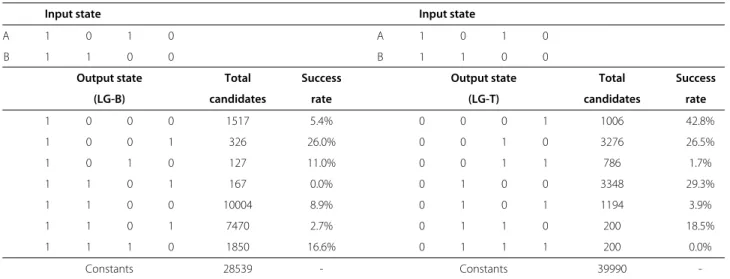
We first investigated the distribution of two-input gates that are generated by the automatic design protocol (P-ER2). For this purpose 50,000 candidate sequences were generated using the protocol. The results are as shown in Table 3. Any response pattern of the generated structures to two effector molecules will correspond to a row in Table 2. However, the top row (A◦1B) and the bot-tom row (A◦16B) correspond to the case of a constant OFF output and a constant ON output. These two cases that ignore the effector molecules entirely will not be consid-ered further. Only ≈43% of the total candidates can be classified as imitating the conventional binary logic oper-ation where as the remaining≈57% fall directly under the constant 0’s and 1’s logic operators, with the latter forming the majority≈95% of the constant gates.
This indicated that the conformation of the ribozyme core remains active despite the absence of the effec-tor molecules, and subsequently, remain unaffected with the presence of either one or even both of the effector molecules. This is equivalent to the failure of allocat-ing a base pairallocat-ing region for the conserved bases durallocat-ing the design of the effector binding region (OBS), which is intended to disrupt the catalytic activity of the ribozyme core.
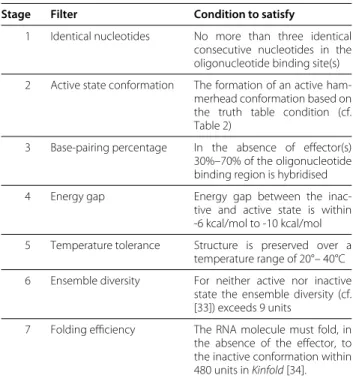
As shown in Table 3, the P-ER2 protocol, with the first search strategy (LG-B), managed to generate can-didate sequences for the logic operators in the bot-tom half of Table 2 (LG-B). However, as indicated in the “Success Rate” column, after the filtering process (i.e., this filtering process was adapted from Penchovsky and Breaker’s [15] protocol with the same objectives, which is to eliminate candidates unsuited for in-vitro implementation. This filtering process is summarised in Table 4), we observed a significant decrease in the number of candidates for each classified operator. Upon closer inspection, the passing percentage reduced signif-icantly during the execution of filter steps 3 and 4. As we are removing some of the constraints in the struc-ture specification, in order to increase the degree of freedom and the space of plausible structure configura-tion, the decrease in candidates occurring in both filters are inevitable, for a procedure that relies on the single state sequence design algorithm in generating its candi-date sequences. The ideal solution would be to replace the single state design algorithms with a multi-stable design algorithm, which minimises the energy gap between the meta-stable states.
Table 3 Distribution of candidate sequences generated by the P-ER2 computational protocol
Input state Input state
A 1 0 1 0 A 1 0 1 0
B 1 1 0 0 B 1 1 0 0
Output state Total Success Output state Total Success
(LG-B) candidates rate (LG-T) candidates rate
1 0 0 0 1517 5.4% 0 0 0 1 1006 42.8%
1 0 0 1 326 26.0% 0 0 1 0 3276 26.5%
1 0 1 0 127 11.0% 0 0 1 1 786 1.7%
1 1 0 1 167 0.0% 0 1 0 0 3348 29.3%
1 1 0 0 10004 8.9% 0 1 0 1 1194 3.9%
1 1 0 1 7470 2.7% 0 1 1 0 200 18.5%
1 1 1 0 1850 16.6% 0 1 1 1 200 0.0%
Constants 28539 - Constants 39990
Table 4 Filter cascade for candidate sequences
Stage Filter Condition to satisfy
1 Identical nucleotides No more than three identical consecutive nucleotides in the oligonucleotide binding site(s)
2 Active state conformation The formation of an active ham-merhead conformation based on the truth table condition (cf. Table 2)
3 Base-pairing percentage In the absence of effector(s) 30%–70% of the oligonucleotide binding region is hybridised
4 Energy gap Energy gap between the inac-tive and acinac-tive state is within -6 kcal/mol to -10 kcal/mol
5 Temperature tolerance Structure is preserved over a temperature range of 20°– 40°C
6 Ensemble diversity For neither active nor inactive state the ensemble diversity (cf. [33]) exceeds 9 units
7 Folding efficiency The RNA molecule must fold, in the absence of the effector, to the inactive conformation within 480 units inKinfold[34].
Constraints imposed on candidate sequences following [15].
Next we focused on the search for the LG-T binary logic operators, where the operator would remain inac-tive, in the presence of both input molecules (cf. top half of Table 2). For the second design strategy (LG-T), the pro-tocol (P-ER2) assigns the complementary base pairs of the ribozyme core (conservedCUGAUGAG-region) in any ran-dom positions within the extension region of helix II (cf. figure panel in Table 1).
From Table 3, with the exception of three gates (where the success rates are lower than≈4%), the success rates of the remaining logic gates are slightly better than the success rate for LG-B. Despite the slight increase in the success rates, more than 75% of the candidates are dis-carded during the filtering stages. However, the candidate sequences of LG-T have a higher passing rate in filter step 4 compared to the generated candidate sequences of LG-B, although we observed that the passing rate in fil-ter step 3 is still mediocre. The results indicate, that the computational protocol (P-ER2), which aims to increase the degree of freedom in generating a diversified struc-ture configuration for the design of molecular logic gates seems to be rather inefficient. The meta-stable conforma-tions of the molecules are not considered during sequence assignment by the single state sequence design algo-rithm (panel 2 in Table 1). Instead of the single state sequence design algorithms, for the sequence assignment of computational units with multi-stable conformations, a multi-stable sequence design algorithm is required.
Constructing the complete set of RNA molecular logic gates: Multi-stable sequence design algorithm
From the engineered DNA and RNA logic gates [14,15] to the development of synthetic RNA devices [5-7,35], the type of molecules that are of interest for information processing tasks have a number of meta-stable confor-mations representing their change of folding with regard to the changes in their environments. For instance, an allosterically controlled hammerhead ribozyme imitating the AND logic operator [15] has four different meta-stable conformations. These conformations are repre-sentative of four conditions, i.e., when no effectors are present, when one effector is present but not the other, and when both effectors are present. For naturally occur-ring riboswitches, there could be a number of possible meta-stable conformations which includes the binding of specific metabolites to their receptor sites and the differ-ent stages of conformational shift to triggers their gene control mechanisms, as discussed by Nudler [36] and Suess and Weigand[37]. Therefore, in order to design nucleic acid computing units, a protocol that includes a multi-stable sequence design algorithm is required. The development of such protocol is discussed in this section, and using RNA logic gate as test case, we evaluate the performance of the new protocol.
From our detailed analysis on the results generated in Table 3, we identified that the pool of candidates were significantly reduced during filter step 3 (base-pairing per-centage) and 4 (energy gap). It appears that the use of a single state sequence designer is insufficient, largely because the multi-stable characteristics (i.e., conforma-tion, free energy and energy gap) are not part of the opti-misation objective of the single-state design algorithms. There is a need to substitute the single state sequence designer with a multi-stable sequence design algorithm to take into account the multi-stable characteristics of the molecules. The reduction in filter step 4 is related to the method of constructing the initial structural configura-tions of the molecule (step 1 in Table 1). We showed that a less restrictive space is required to produce a diversi-fied set of molecular gates, but accordingly the design space should be constructed by considering a few essential design elements of the molecular gates, e.g., the placement of the receptor sites and the base pairing complementary of the conserved region.
the plausible structure configuration (known as “partial conformation”) representing the molecules based on their structural and sequence constraints, and secondly the generation of sequences usingmultiSrchwith the meta-stable partial conformations(defined in the first step) as input.
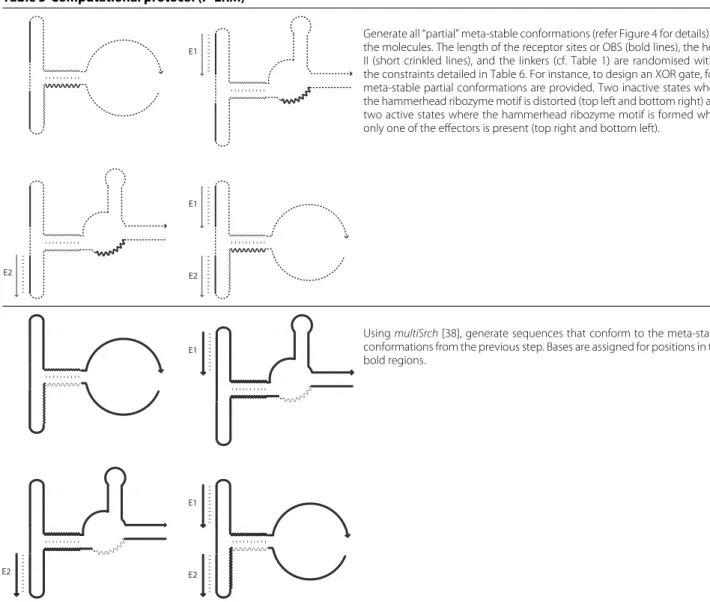
In P-ERM protocol, the generation of structure in the first step is not entirely random as in the previous proto-cols (P-ER1 and P-ER2). Only the variable lengths of the regions were arbitrarily selected (cf. Table 5). To specify a partial conformation, for each state, the regions between which base pairing is derived in the molecule is specified. Figure 4 illustrates a partial conformation for a state where the presence of two effector molecules did not activate the catalytic function of the molecule.
The conserved bases (indicated by bold wavy lines) are specified to explicitly bind to the helix II region when
the two effectors are present, in order to inhibit the cat-alytic activity of the molecule. Aside from the fixed base pairs (E1 and E2 with their receptor sites, and the con-served CUGAUGAG-region with helix II), the remaining positions are not restricted, and can either form comple-mentary base pairs with the remaining bases (i.e., part of helix) or completely unpaired in that particular state. Note that the randomisations of complementary positions are permitted.
Fixing the partial conformation beforehand seems to resemble the protocol suggested by [15]. How-ever, since only partial regions in the conformation are fixed, in actual fact, the P-ERM protocol still maintains the degree of freedom in generating vari-ous structural configurations—rather than stereotyping the molecular structure into a predefined homogeneous conformation.
Table 5 Computational protocol (P-ERM)
Generate all “partial” meta-stable conformations (refer Figure 4 for details) for the molecules. The length of the receptor sites or OBS (bold lines), the helix II (short crinkled lines), and the linkers (cf. Table 1) are randomised within the constraints detailed in Table 6. For instance, to design an XOR gate, four meta-stable partial conformations are provided. Two inactive states where the hammerhead ribozyme motif is distorted (top left and bottom right) and two active states where the hammerhead ribozyme motif is formed when only one of the effectors is present (top right and bottom left).
UsingmultiSrch[38], generate sequences that conform to the meta-stable conformations from the previous step. Bases are assigned for positions in the bold regions.
Figure 4A sample structure configuration depicting a partial
conformation of the binary logic XOR operation.A sample
structure configuration depicting a partial conformation of the binary logic XOR operation, where the presence of two effectors yield no activation of the molecule (cf. XOR in Table 2). The crinkled lines in the figure represent the helix II base pairing of the active hammerhead ribozyme, while the bold wavy line represent conserved region (CUGAUGAG). The small dashed-lines denote un-fixed conformation, where the base position belonging to this region can be either paired or unpaired as long as other mandatory regions (i.e., the base pairing ofCUGAUGAG-region and the complementary half of the helix II, effector 1 (E1) with its binding site and effector 2 (E2) with its binding site) are present.
Results and discussion
For the experiment, we created 10 different sets of partial conformation for each type of binary logic operator (T1 to T10). The difference between each set is the length of each element, which was randomly selected within the con-straints detailed in Table 6. For each set, the partial confor-mations corresponding to the binary logic operations are explicitly defined. For instance, the partial conformation for any molecular gate where in one state, the presence of both effectors yields no activation of the ribozyme core is equivalent to the partial conformation presented for the XOR logic gate depicted in Figure 4. Compared to the random base pairing assignment suggested in P-ER2 pro-tocol, the partial conformation contains mandatory base paired regions that must be preserved by multiSrch. In order to promote structural variability, the selection of the complementary pairings is randomised within the speci-fied range (i.e., either a region in the hairpin loop region of helix II, or the helix II region itself ).
The parameter settings for multiSrch are shown in Table 7. The settings are largely based on the findings of the evaluation study to generate candidates for DNA and RNA gates described in [30]. The parameter settings are kept constant for each set of structural configurations. BecausemultiSrchis a deterministic algorithm, therefore only one run was required.
Table 6 Design space for computational nucleic acids
Type Maximum no. Length range
Helix - 4–15
Hairpin Loop 0–3 4–15
Internal Loop 0–3 2–8
Bulge 0–1 1–8
Junction 0–3 4–8
OBS 2 15–22
Linker 2 0–5
Design space for computational nucleic acids derived from potential candidates reviewed in [30]. As reported in our previous work [30], we have compiled a database of natural small catalytic nucleic acids and synthetically developed functional nucleic acids. Using this database, we have extracted the structural features that are common across these molecules. The column “Maximum no.” refers to the number of occurrences for each secondary structure element and the corresponding column “Length Range” represents the length for each element.
To allow for direct comparison with the previous results generated by the P-ER2 protocol, we divided our results into two different categories (LG-T and LG-B). These categories are differentiated by the initial state of its binary logic operations, similar to the initialisation strat-egy undertaken in the previous section. Table 8 shows the result for the LG-B logic operators (where without the presence of both effector molecules, the operators are inactive), while Table 9 shows the result for LG-T operators (where the operator would remain inactive, in the presence of both effector molecules). For each logic gate, 300 candidate sequences were generated based on the sets of partial conformations T1 to T10. These 300 candidate sequences were then filtered using the filter cascade shown in Table 4. In the inactive state, the con-served region must form base pairs with any regions from the helical arms II (helix II) until the hairpin loops next to the helix (includes both effector binding sites), and in the active state, this conserved region must be unpaired and the overall structure must have three helices [39,40] that resembles the conformation of an active hammerhead ribozyme.
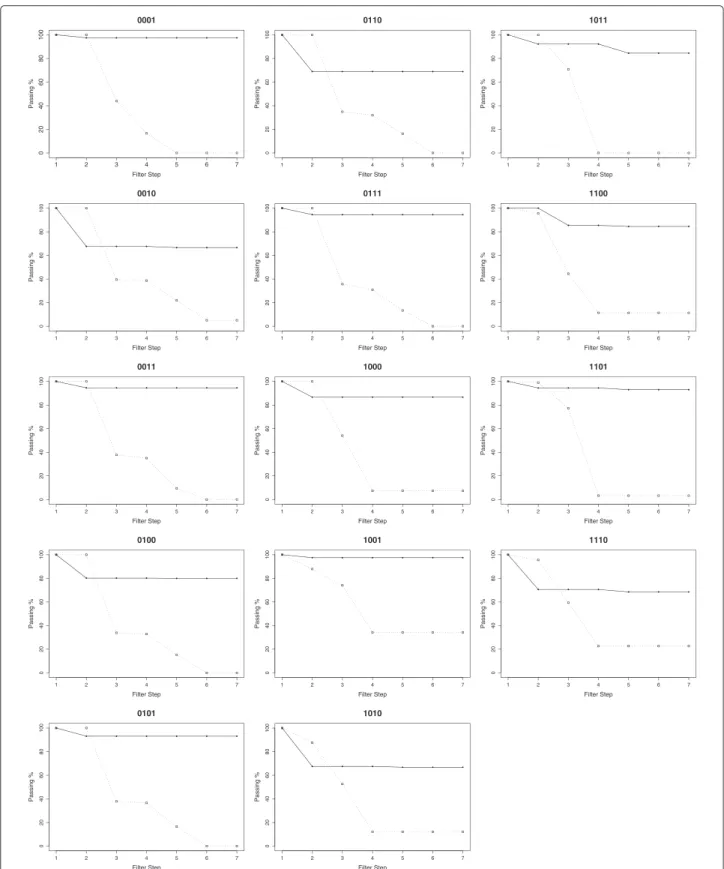
The overall performance of the revised computational protocol with the addition of multiSrch is shown in Figure 5. In terms of the number of candidates that passed
Table 7 Default parameter settings formultiSrch[38]
Parameter Value
D(∗)Order Descending
(x) Eq. 5.7 withEgap= −6.0
300
KEEP (x)−min((x))= ±5.0
Table 8 Distribution of filtered candidate sequences generated by the P-ERM (cf. Table 5) protocol for LG-B binary logical operators
T1 T2 T3 T4 T5 T6 T7 T8 T9 T10 Rate
A◦9B 210 205 269 300 300 300 209 300 278 200 85.7%
A◦10B 281 300 297 245 298 300 300 285 275 300 96.0%
A◦11B 200 201 188 181 206 204 200 192 201 214 66.2%
A◦12B 264 276 259 231 253 250 239 293 262 273 86.7%
A◦13B 300 300 221 269 277 209 203 269 212 277 84.6%
A◦14B 278 300 251 245 251 300 300 300 265 300 93.0%
A◦15B 242 208 203 208 214 200 204 193 184 201 68.6%
Distribution of filtered candidate sequences generated by the P-ERM (cf. Table 5) protocol withmultiSrchmulti-stable states designer, classified according to the type of binary logic operator (LG-B) shown in the bottom half of Table 2. Depicted in the table is the number of candidates that passed the seven filter cascades (cf. Table 4) for each run. Before the filtering protocol, 300 candidates were generated for each type of logic operation in each run. The mean percentage of success rate is given in the “Rate” column.
the filter cascade, the P-ERM protocol with multiSrch performed significantly better when compared to results from P-ER2 protocol. Compared to the low passing rates we observed for LG-B and LG-T candidate sequences that pass filter step 4 in P-ER2, majority of the candidate sequences generated bymultiSrchin the P-ERM protocol (for both LG-B and LG-T) pass filter step 4. However, we observed that for A◦11B (1010), OR (1110), A◦3B (0010), and the XOR (0110) logic operators (cf. Figure 5), there is a slight dip of the candidate sequences in filter step 2. This indicates that the candidate sequences for the four logic operators mentioned, the active hammerhead ribozyme conformation was not obtained. The consistency of the results (for T1 to T10) is also maintained as shown in Tables 8 and 9.
For LG-B logic operators, (cf. Table 8), one can observe a significant improvement in the number of candidate sequences that pass the filtering procedure (indicated by percentage of passing in column Rate in Table 8) when compared to the P-ER2 protocol. Note the number of can-didate sequences that pass the filter cascade. The worst passing rate across all types (T1 to T10) was recorded
at≈60%, which is still significantly better than the≈25% observed in the previous section.
Analysis of the filtering process showed that the reduc-tion of the candidate sequences occurred during filter step 2, where the conformation resembling an active hammerhead ribozyme was not obtained from the four meta-stable conformations. For instance, for A◦11B gate with the output state of 1010, we found that the bind-ing of a sbind-ingle effector molecule did not trigger any conformational shift that resembles an active ribozyme conformation.
Note that the filtering procedure conducted here is a direct implementation of the filtering model suggested by [15]. In order to test the presence of an active hammer-head ribozyme conformation, Penchovsky and Breaker in [15] suggested replacing the bases for the effector bind-ing sites with “X”s due to the lack of multi-foldbind-ing pre-diction programs. When one folds the sequence using RNAfold, this “X”s-region would represent a mandatory unpaired region thus simulating the conformation of a molecule with an effector molecule externally bound to it. Although we adopted the same filter technique, we
Table 9 Distribution of filtered candidate sequences generated by the P-ERM (cf. Table 5) protocol for LG-T binary logical operators
T1 T2 T3 T4 T5 T6 T7 T8 T9 T10 Rate
A◦2B 298 300 292 291 296 300 300 275 275 300 97.6%
A◦3B 201 187 200 231 196 198 200 192 191 200 66.5%
A◦4B 278 300 297 245 298 300 300 285 275 259 94.6%
A◦5B 300 199 246 200 300 259 210 212 278 198 80.1%
A◦6B 278 300 297 245 213 300 300 285 275 300 93.0%
A◦7B 209 200 209 194 251 200 183 192 200 192 67.6%
A◦8B 275 300 251 245 300 300 300 300 265 300 94.5%
1 2 3 4 5 6 7 02 0 4 0 60 80 100 0001 Filter Step Passing %
1 2 3 4 5 6 7
0 20 40 60 80 100 0010 Filter Step Passing %
1 2 3 4 5 6 7
0 20 40 60 80 100 0011 Filter Step Passing %
1 2 3 4 5 6 7
0 2 04 06 0 80 100 0100 Filter Step Passing %
1 2 3 4 5 6 7
02 0 4 0 6 0 80 100 0101 Filter Step Passing %
1 2 3 4 5 6 7
0 2 0 4 0 6 0 8 0 100 0110 Filter Step Passing %
1 2 3 4 5 6 7
0 2 0 4 0 6 0 8 0 100 0111 Filter Step Passing %
1 2 3 4 5 6 7
0 2 0 4 0 6 0 8 0 100 1000 Filter Step Passing %
1 2 3 4 5 6 7
0 2 04 06 08 0 1 0 0 1001 Filter Step Passing %
1 2 3 4 5 6 7
02 0 4 0 6 0 8 0 1 0 0 1010 Filter Step Passing %
1 2 3 4 5 6 7
02 0 4 0 60 80 100 1011 Filter Step Passing %
1 2 3 4 5 6 7
0 2 04 06 08 0 1 0 0 1100 Filter Step Passing %
1 2 3 4 5 6 7
02 0 4 0 60 80 100 1101 Filter Step Passing %
1 2 3 4 5 6 7
0 2 04 06 08 0 1 0 0 1110 Filter Step Passing %
do not think that this filter accurately predicts the inter-molecular binding between these interacting molecules. The amount of energy released during the formation of external binding is strong enough to break or shift exist-ing internal hybridisation bonds and thus can lead to a change in conformation of the molecule. If we consider the intermolecular binding efficiency between the effec-tor molecule and recepeffec-tor site instead of the refolding of sequences with “X”s-region, then more than 90% of the generated sequences from multiSrchfor LG-B have perfect binding between effector and receptor site as simulated byRNAup[41].
The reduction of candidate sequences for A◦11B (1010) and OR (1110) logic gates in filter step 2, can also be contributed by the low free energy generated from these candidate sequences. For a low free energy structure, the base pair composition is highly dominated by eitherC-G or G-C pairing. Despite the effort to enforce the identi-cal base pairing rules (cf. filter step 1 in Table 4), there is still an abundance of C-GandG-Cpairings occurring (i.e., non-consecutive, but distributed in the group of three or four). By specifying the Gopt target value in
multi-Srch, the algorithm is then able to generate sequences with higher free energy values which are better suited to the meta-stable molecules to be implemented [38]. For this purpose,Goptcan be based on nucleic acids logic gates
that have already been engineered in the laboratory. Table 9 shows the overall result of generating candidate sequences for LG-T logic operators. The results are simi-lar to the LG-B logic operators in Table 8, where there are two types of logic operators (A◦3B and XOR) where the success rates are below≈66%. During the filtering pro-cess, the reduction in candidate sequences occurs during filter step 2. Upon closer inspection, we found that the fil-tering procedure for step 2 in Table 4 that is implemented based on the model of [15] might be flawed because the base pairing formation between the effector molecules and its corresponding binding site are present when the generated sequences are simulated using RNAup [41]. The inability of the molecules to shift conformation (with the substitutions of “X”s bases) might be due to the low free energy of these sequences. The possibility to specify a desired MFE (Gopt) for the multiSrchalgorithm was
motivated by this issue.
From the results in Tables 8 and 9, the type gates with consistently poor numbers of filtered candidates across all ten structural designs (T1 to T10) were selected. Four gates were identified, the A◦11B (1010), OR (1110), A◦3B(0010), and the XOR (0110) gates where the suc-cess rate is less than ≈69%. The partial conformations for each of these gates can be classified as unfavourable. For these molecular gates, the presence of any one of the effectors can activate the ribozyme. However, the partial conformation that is arbitrarily selected in this compar-ison study is inadequate for dealing with this condition, because in the inactive state, some regions belonging to the receptor site always bind together. The self-assembly between the effector and receptor site for either one of the input (A or B), might not be sufficient in triggering a conformational change to activate the ribozyme. The design of A◦11B logic gate would be more favourable if the effector representing input B is shorter compared to the effector for input A. The binding of effector B is estimated not to change the conformation as much as the binding of effector A to its receptor site. A favourable partial confor-mation design for each of these four gates would improve the passing rate of the candidate sequences especially for filter step two. The comparison study in [38] showed that the default setting of the multiSrchalgorithm usu-ally arrives at sequences with low MFE. These sequences are therefore quite stable and would require overcoming a high energy barrier to disassociate some of the existing base pairs.
A test to generate sequences for the four gates which were difficult to design using the same initial structures were conducted with a target MFE of Gopt = -40.00
kcal/mol. There is an increase in the percentage of suc-cess rate of all four logic gates, from≈66% to≈81% as indicated in Table 10. For the two logic gates of A◦11B (1010), and OR (1110), the success rate increased up to ≈92%, approximately 10% better than the other two logic gates of A◦5B (0100), and XOR (0110). The likely cause of this issue is the design of the partial conformation itself. For instance, in the design of XOR gate, the design of external binding for both effector molecules must be strong enough to completely disrupt the formation of an active conformation that needs to be present with a single effector molecule.
Table 10 Design of logic gates using a desired MFE
T1 T2 T3 T4 T5 T6 T7 T8 T9 T10 Rate
A◦11B 281 281 278 273 286 274 266 272 271 284 92.0%
A◦15B 262 278 284 288 272 285 276 283 264 291 92.8%
A◦3B 251 254 240 272 255 243 249 258 255 261 84.6%
A◦8B 221 243 233 245 251 240 232 227 244 253 81.6%
Design of logic gates using a desired MFE. The number of candidates that pass the filter cascade generated for the four selected binary logic operators using
It is best, if we can supply the multi-stable states design algorithm (multiSrch) with complete structural details of the molecule, including changes in its meta-stable state. Regardless of the level of details available in the par-tial conformations, the computational protocol (P-ERM) should still be able to produce a good number of candidate sequences, as shown in this evaluation (Table 10). The success rate of the “difficult” structures illustrated by the XOR and A◦3B are still above 80%, which is very encour-aging because only partial conformations are supplied in the protocol. From the pool of successful candidate sequences, one can simply select any of the workable con-formations as inputs formultiSrch, and accordingly with the estimation of MFE and energy gap, one would likely be able to produce a good number of candidate sequences.
Evidently, the task of designing the partial conformation and the parameter tuning would fall under the direction of the user. Using the knowledge of the structural con-formation and the aid of the protocol, the user is able to design a better architecture of the nucleic acid unit
and a better generation of candidate sequences to suit this architecture. In order to construct a fixed structural configuration, one is required to fix the mandatory base pairing and unpaired region of the molecules, thus creat-ing a partial conformation (Figure 4) of the molecules for each meta-stable state. The undefined regions (i.e., non-mandatory base positions) are allowed to form base pair or remain unpaired as long as the mandatory base pairings and unpaired regions are preserved. Only the conserved bases are specified as constraint, allowing another level of diversity for the sequences. This approach is suitable if the target conformation is only partially known beforehand.
A design for a molecular XOR gate was selected to illus-trate its operation from the pool of candidate sequences that passed all the filter stages in Table 4. The four meta-stable conformations of this XOR design are shown in Figure 6. For the logic operation of the molecular XOR gate the presence of a single effector molecule would trigger conformational changes that form the active con-formation of the ribozyme. The presence of both effector
+E
1
-E
1
E1
E2
E1
E2
1
0 1
0
1 1
1
1 0
0
0 0
+E
2
-E
2
+E
1E2
E1E2
-Figure 6Molecular XOR gate generated using P-ERM computational protocol.Molecular XOR gate generated using P-ERM computational protocol (selected from successful candidates in T1). The inactive conformation of the molecule (top left) changes in the presence of effector molecule E1, to the active ribozyme conformation (bottom left). The presence of effector molecule E2triggers a different conformation shift, that
molecules in this case would stretch the binding site region, disrupting the formation of the hammerhead motif and thus deactivating the ribozyme.
Conclusions
Penchovsky and Breaker [15] suggested a computational protocol to assist in the construction of ribonucleic acid logic gates. The protocol however, is restricted and specif-ically tuned only for generating sequences for alloster-ically controlled ribozymes imitating conventional logic gates. This limits the degree of freedom in generating various structural configurations. For constructing com-putational nucleic acids, structural variability is important because in the laboratory, depending on the physico-chemical environment, only some designs are practicable. By having a set of structural configurations, it is then possible to not only use the configuration that is work-able under the given conditions, but at the same time, allows for the best design to be applied. This is also important because it allows one to investigate the type of structural complexity that might be required to solve cer-tain information processing tasks. For instance, the design of a cascade of computing units (to relay or transform a signal) might require a large number of different structural configurations. The protocol of [15] becomes insufficient if one desires to construct a number of computational units.
The development of a computational protocol, which enables the construction of functional nucleic acids that can act as a substrate for information processing is the focus in this study. A new protocol called P-ERM was developed. In general, the P-ERM protocol comprises of two phases (Table 5), the construction of the partial conformation (cf. Figure 4) and the generation of the candidate sequences (using multiSrch) that conform to the partial conformation. The partial conformation allows users to specify both the structural and sequence con-straints for each state. Using the binary logic operators as a test case, the P-ERM protocol generated a set of struc-tural configurations with candidate sequences that have a high success rate during the filtering procedure. The feasibility of generating the complete set of binary logic operators in this study indicates both the effectiveness (in term of generating sequences with high success rate) and the efficiency (using only one run of multiSrch) of the protocol. To accomplish the task of constructing these nucleic acid computers, the protocol managed to produce a diverse set of structures and sequences based on the design constraints. Although, thein-silicoconstruction of computational nucleic acids using the protocol does not guarantee their success in the laboratory, the protocol contributes in identifying possible candidate solutions for the actual implementation.
The application of nucleic acids in bioimmersive com-putation has the potential to open up interesting pos-sibilities. For instance, using the strands of noncoding RNAs (ncRNA), one could try to develop regulatory units that harness their conformational switching (triggered after the introduction of an effector molecule, i.e., in this case, a short ncRNA) to create sticky ends that bind to a particular codon on mRNAs. The development of regulatory control points, such as a set of riboswitches or allosterically controlled nucleic acids is also possi-ble. For instance, using short ncRNAs as input, the set of allosterically controlled nucleic acids can be activated when specific effector molecules are present and release short RNA strands that bind to a specific codon in mRNA thus blocking protein synthesis. Our computational pro-tocol can support the design of nucleic acid computers that function as detection units, or the design of a net-work of regulatory control points. Smart drugs that can sense the internal state of cell and intervene in the intra-cellular regulatory mechanisms may come within reach [42] and engineered molecular control mechanisms that can be integrated into cells would be a powerful tool for life-science research [43].
Before the potential of these long-term aims can be realised many obstacles in the laboratory need to be tack-led and much better computational design procedures are required. A crucial issue will be the prediction of the interactions within complex mixtures of molecules. At present folding simulators for multiple interacting RNA strands are at their infancy and simulation tools capa-ble of predicting DNA-RNA interactions do not exist. There is a need for a general methodology and sup-porting computational tools to create purpose-designed sets of interacting computational nucleic acids. This in-silico-first approach will enable designers to specify the physiological conditions plus additional constraints that should aid in the construction of well-defined computa-tional units, and reduce the cost and time required in the laboratory.
Competing interests
The authors declare that they have no competing interests.
Authors’ contributions
EIR designed and implemented the computational protocol. KPZ provided the direction and guidance to the project and all authors contributed to, and have read and approved the final manuscript.
Acknowledgments
This study is supported by The High-Impact-Research Grant
(UM-HIR-MOHE-FCSIT-002) jointly funded by the Ministry of Higher Education, Malaysia (MOHE) and University of Malaya (UM).
Author details
1Department of Artificial Intelligence, Faculty of Computer, Science and
Information Technology, University of Malaya, 50603 Kuala Lumpur, Malaysia. 2ECS, Faculty of Physical and Applied Sciences, University of Southampton,
Received: 11 December 2012 Accepted: 3 April 2013 Published: 7 May 2013
References
1. Liberman EA:Analog-digital molecular cell computer.BioSystems 1979,11:111–124.
2. Adleman LM:Molecular computation of solutions to combinatorial problems.Science1994,266:1021–1024.
3. Isaacs FJ, Dwyer DJ, Collins JJ:RNA synthetic biology.Nat Biotechnol 2006,24:545–554.
4. Rinaudo K, Bleris L, Maddamsetti R, Subramanian S, Weiss R, Benenson Y: A universal RNAi-based logic evaluator that operates in mammalian cells.Nat Biotechnol2007,25(7):795–801.
5. Beisel CL, Bayer TS, Hoff KG, Smolke D:Model-guided design of ligand-regulated RNAi for Programmable control of gene expression.Mol Syst Biol2008,4(224):1–14.
6. Win MN, Smolke CD:Higher-order cellular information processing with synthetic RNA devices.Science2008,322:456–460.
7. Xie Z, Wroblewska L, Prochazka L, Weiss R, Benenson Y:Multi-input RNAi-based logic circuit for identification of specific cancer cells.
Science2002,333:1307–1311.
8. Couzin J:Small RNAs make big splash.Science2002,298:2296–2297. 9. Hannon GJ:RNA interference.Nature2002,418:244–251.
10. Petersen CP, Doench JG, Grishok A, Sharp PA:The biology of short RNAs.InRNA world. third edition. Edited by Gesteland RF, Cech TR, Atkins JF. New York: Cold Spring Harbor Laboratory Press; 2006:535–565. 11. Zamore PD, Haley B:Ribo-gnome: The big world of small RNAs.
Science2005,309:1519–1524.
12. Mandal M, Breaker RR:Gene regulation by riboswitches.Mol Cell Biol 2004,5:451–463.
13. Nudler E, Mironov AS:The riboswitch control of bacterial metabolism.
Trends Biochem Sci2004,29:11–17.
14. Stojanovic MN, Stefanovic D:A Deoxyribozyme-based molecular automaton.Nature Biotechnol2003,21(9):1069–1074.
15. Penchovsky R, Breaker RR:Computational design and experimental validation of oligonucleotide-sensing allosteric ribozymes.Nat Biotechnol2005,23(11):1424–1433.
16. Porta H, Lizardi PM:An allosteric hammherhead ribozyme.
Bio/Technology1995,13:161–164.
17. Hertel KJ, Herschlag D, Uhlenbeck OC:A kinetic and thermodynamic framework for the hammerhead ribozyme reaction.Biochemistry 1994,33:3374–3385.
18. Symons RH:Plant pathogenic RNAs and RNA catalysis.Nucleic Acids Res1997,25(14):2683–2689.
19. Birikh KR, Heaton PA, Eckstein F:The Structure, function and application of the hammerhead ribozyme.Eur J Biochem1997, 245:1–16.
20. Soukup GA, Breaker RR:Nucleic acid molecular switches.Trends Biotechnol1999,17:469–476.
21. Silverman SK:Rube goldberg goes (Ribo)Nuclear? Molecular switches and sensors made from RNA.RNA2003,9:377–383.
22. Kuwabara T, Warashina M, Taira K:Allosterically controllable ribozymes with biosensor functions.Curr Opin Chem Biol2000,4:669–677. 23. Stojanovic MN, Nikic DB, Stefanovic D:Implicit-OR Tiling of
Deoxyribozymes: construction of molecular scale OR, NAND and four-input logic gates.J Serb Chem Soc2003,68(4–5):321–326. 24. Stojanovic MN, Stefanovic D:Deoxyribozyme-based half-adder.
J Am Chem Soc2003,125:6673–6676.
25. Lederman H, Macdonald J, Stefanovic D, Stojanovic M:
Deoxyribozyme-based three input logic gates and construction of a molecular full adder.Biochemistry2006,45:1194–1199.
26. Pei R, Taylor SK, Stefanovic D, Rudchenko S, Mitchell TE, Stojanovic MN: Behaviour of polycatalytic assemblies in a substrate-displaying matrix.J Am Chem Soc2006,128:12693–12699.
27. Macdonald J, Li Y, Sutovic M, Lederman H, Pendri K, Lu W, Andrews BL, Stefanovic D, Stojanovic MN:Medium scale integration of molecular logic gates in an automaton.Nano Lett2006,6(11):2598–2603. 28. Hofacker IL, Fontana W, Stadler PF, Bonhoeffer LS, Tacker M, Schuster P:
Fast folding and comparison of RNA secondary structures.Chem Mon1994,125(2):167–188.
29. Zauner KP:Molecular information technology.Crit Rev Solid State Mater Sci2005,30:33–69.
30. Ramlan EI, Zauner KP:Nucleic acid enzymes: the fusion of self-assembly and conformational computing.Int J Unconventional Comput2009,5(2):165–189.
31. Andronescu M:Anguirre-Hern ´andez R, Condon A, Hoos HH: RNAsoft: A suite of RNA secondary structure prediction and design software tools.Nucleic Acids Res2003,31(13):3461–3422.
32. Zuker M, Mathews DH, Turner DH:RNA Biochemistry and Biotechnology. Dordrecht: Kluwer Academic Publishers. NATO ASI 1999 chap. Algorithm and Thermodynamics for RNA Secondary Structure Prediction: A Practical Guide :11–43.
33. Penchovsky R, Ackermann J:DNA Library design for molecular computation.J Comput Biol2003,10(2):215–229.
34. Flamm C, Fontana W, Hofacker IL, Schuster P:RNA folding at elementary step resolution.RNA2000,6:325–338. 35. Shapiro E, Gil B:RNA computing in a living cell.Science2008,
322:387–388.
36. Nudler E:Flipping riboswitches.Cell2006,126:19–22.
37. Suess B, Weigand JE:Engineered riboswitches: overview, problems and trends.RNA Biol2008,5:24–29.
38. Ramlan EI, Zauner KP:Design of interacting multi-stable nucleic acids for molecular information processing.Biosystems2011,105:14–24. 39. Tang J, Breaker RR:Rational design of allosteric ribozymes.Chem Biol
1997,4:453–459.
40. Tang J, Breaker RR:Structural diversity of self-cleaving ribozymes.
Proc Natl Acad Sci USA,97:5784–5789.
41. M ¨uckstein U, Tafer H, Hackerm ¨uller J, Bernhard S, Stadler PF, Hofacker IL: Thermodynamics of RNA-RNA binding.Bioinformatics2006, 22(10):1177–1182 10.1093/bioinformatics/btl024.
42. Benenson Y, Gil B, Ben-Dor U, Adar R, Shapiro E:An autonomous molecular computer for logical control of gene expression.Nature 2004,429:423–429.
43. Simpson ML:Rewiring the cell: synthetic biology moves towards higher functional complexity.Trends Biotechnol2004,22(11):555–557.
doi:10.1186/1758-2946-5-22
Cite this article as:Ramlan and Zauner:In-silico design of computational nucleic acids for molecular information processing.Journal of Cheminfor-matics20135:22.
Open access provides opportunities to our colleagues in other parts of the globe, by allowing
anyone to view the content free of charge.
Publish with
Chemistry
Central and every
scientist can read your work free of charge
W. Jeffery Hurst, The Hershey Company.
available free of charge to the entire scientific community peer reviewed and published immediately upon acceptance cited in PubMed and archived on PubMed Central yours you keep the copyright
Submit your manuscript here:
![Figure 2 Allosterically controlled ribozymes. Allosterically activated ribozyme (top) and allosterically inhibited ribozyme (bottom) [20,21]](https://thumb-us.123doks.com/thumbv2/123dok_us/7884270.2101216/3.892.87.812.131.414/allosterically-controlled-ribozymes-allosterically-activated-ribozyme-allosterically-inhibited.webp)