!
!
!
MULTIDIMENSIONAL LITERACY DEVELOPMENT:
EXAMINING CHILD ENGAGEMENT AND TEACHER INSTRUCTION
!
!
Cathleen Carolyn Reynolds
!
!
!
A dissertation submitted to the faculty of the University of North Carolina at Chapel Hill in partial fulfillment of the requirements for the degree of Doctor of Philosophy in the School of Education (School Psychology).
!
!
!
Chapel Hill2014
!
!
!
!
!
!
!
!
!
!
!
!
!
!
!
!
!
!
!
!
© 2014!
!
!
!
!
ABSTRACTCathleen Carolyn Reynolds: Multidimensional Literacy Development: Examining Child Engagement and Teacher Instruction
(Under the direction of Rune J. Simeonsson)
!
Given the importance of federal legislation in combating educational inequities,
particularly those in reading development, the identification of specific school-based variables that contribute to reading proficiency for struggling readers is paramount. While federal education policy, such as the No Child Left Behind (NCLB) Act of 2001 (2002) focuses
primarily on direct instruction of specific literacy skills and characteristics of teacher quality, the literature does not show strong support for isolating these variables to improve children's reading skills in public schools. A growing body of literature has focused on the connection between child classroom behavioral engagement and reading achievement. This study utilizes data from the Early Childhood Longitudinal Study - kindergarten class (ECLS-K) to examine of child behavioral engagement skills and teacher instruction in relation to children’s literacy
Second, the contribution of teacher’s instructional choices on child literacy outcomes in third and fifth grades were examined above and beyond the contribution of teachers’ Highly Qualified Teacher (HQT) status and children’s participation in additional instruction time. Finally, within-year analyses examined individual and interaction effects of child behavioral engagement and teacher instructional choices on within-year child literacy scores. Support was found for the first hypothesis, but no support was found for the second hypothesis. Further, instructional time, teacher certification, and level of teacher education did not make any significant contribution to child reading scores. This research clarifies and extends current knowledge of constructs
highlighted in NCLB and child classroom behavioral engagement. Findings of this research, in conjunction with future efforts, offer information for policymakers to develop evidence-based educational policies and improve the quality of public education for our children.
!
!
!
To my daughters, Emma and Margaret. You can achieve anything.
!
!
!
!
!
To my husband, Pete.
Your unconditional support, encouragement, and love made this possible.
!
!
!
!
!
!
And, to my parents,
for always encouraging me to do my best.
!
!
!
!
!
ACKNOWLEDGEMENTS
!
I would like to acknowledge the contributions of each member of my committee. Your thoughtful suggestions and edits improved the quality of this project and helped me to improve my writing skills. I am truly grateful for each of your input. I would also like to specifically thank my advisor and chair of my dissertation committee, Rune Simeonsson. Throughout my graduate school experiences in coursework and research efforts, my greatest influence in
conceptualizing the developing child has come from working with Rune. I am so grateful to have been able to get a glimpse of the important work that Rune conducts in the name of child health and positive child development, worldwide. I will remain committed to prevention and early intervention efforts throughout my career because of this influence. I would also like to
specifically thank Cathy Zimmer. I met Cathy through my work on this project, and her input on the data preparation and statistical analysis was invaluable. I truly believe that I could not have completed this project without her specialized expertise and encouragement. I hope to remain in touch with both Rune and Cathy as I begin my career. I would also like to acknowledge the support and encouragement from my friends and family. The quiet support and encouragement of my parents, sister, brother, and sister-in-law was always present in my mind. My extended
!
!
!
!
!
TABLE OF CONTENTS
!
LIST OF TABLES ...x
LIST OF FIGURES ...xiii
LIST OF ABBREVIATIONS ...xiv
LIST OF SYMBOLS ...xvi
CHAPTER I: INTRODUCTION ...1
CHAPTER II: LITERATURE REVIEW ...6
Childhood Reading ...6
Conceptual Framework ...11
Proximal Processes in Classroom Reading Instruction ...15
Relation Between Behavioral Engagement and Teacher Influence ...28
CHAPTER III: RESEARCH STUDY ...30
Research Hypotheses ...32
Methods ...33
Procedures. ...38
Research Design. ...42
Data Preparation ...44
Data Screening ...55
Longitudinal Analyses ...56
CHAPTER IV: RESULTS ...58
CHAPTER V:.DISCUSSION ...73
Struggling Reader ...73
Behavioral Engagement ...77
Instruction ...79
Limitations ...82
Future Research ...83
Potential Applications of Findings ...90
LIST OF TABLES
Table 1. 30th Percentile Kindergarten IRT Reading Scores Across Imputed Datasets and Computed Mean IRT Reading Score Used to Create
Sample (n = 10651)……….……… 92
!
Table 2. Comparison of Sampled and Excluded Participants’ Demographic Characteristics.….93
!
Table 3. Comparison of Percentage of Sampled and Excluded Participants’
Hierarchical Mastery of Early Literacy Skill Development at Kindergarten Entry…… 95
!
Table 4. Frequency of Sampled Participants’ Teachers Who Completed
Multiple Participant Questionnaires………..………..… 96
!
Table 5. Descriptive Statistics for Sampled Participants’ Teachers Across Grade Levels………97
!
Table 6. Summary Statistics of Sampled Participants Scores (range 1, 4) on Individual Measures of Behavioral Engagement in Kindergarten,
First, Third, and Fifth Grades using un-imputed data (M=0)………..………… 98
!
Table 7. Frequency and Explanation and Recoding of “Not Applicable” Missing
Values for all Eligible Participants (n = 10,673)………..………….…….…..… 99
!
Table 8. Categorization of Instructional Variables for Analysis ……….100
!
Table 9. Descriptive Statistics of Third Grade Control Variables for Sampled
Participants in the First Research Question (n = 1880)..…..…..…..………..……102
!
Table 10. Descriptive Statistics of Third Grade Independent Variables for
Sampled Participants in the First Research Question (n = 1880)……….. 103
!
Table 11. Individual Contribution of Independent Variables in Bivariate Regressions with Third Grade IRT Reading Scores as the Dependent
Variable (n = 1880) ………..…..….. 104
!
Table 12. Hierarchical Multiple Regression Analyses Predicting Third Grade IRT Reading Scores from Kindergarten Reading IRT Scores,
Behavioral Engagement Scores, and Reading First Status (n = 1880)………….…….105
!
Table 13. Final Model of Hierarchical Multiple Regression Analyses Predicting IRT Reading Scores in Third Grade from Kindergarten Reading IRT
Table 14. Descriptive Statistics of Fifth Grade Independent Variables used
in the First Research Question (n = 1880)……..….……….……. 107
!
Table 15. Individual Contribution of Independent Variables in Bivariate
Regressions with Fifth Grade IRT Reading Scores (n = 1880)……… 108
!
Table 16. Hierarchical Multiple Regression Analyses Predicting Fifth Grade IRT Reading Scores from Kindergarten Reading IRT Scores,
Behavioral Engagement Scores, and Reading First Status (n = 1880).…….………. 109
!
Table 17. Final Model of Hierarchical Multiple Regression Analyses Predicting IRT Reading Scores in Fifth Grade from Kindergarten Reading IRT
Scores, Behavioral Engagement Scores, and Reading First Status (n = 1880)………110
!
Table 18. Summary Statistics of Third Grade Independent Variables used in the
Second Research Question (n = 1880)………..….…..….………111
!
Table 19. Individual Contribution of Teacher Independent Variables used in the Second Research Question in Bivariate Regressions with Third Grade
Reading IRT Scores (n = 1880)..………..………..…….. 112
!
Table 20. Summary Statistics of Fifth Grade Independent Variables used in the
Second Research Question (n = 1880)..……..……….… 113
!
Table 21. Individual Contribution of Teacher Independent Variables Used in the Second Research Question in Bivariate Regressions with Fifth Grade
Reading IRT Scores (n = 1880)..………..… 114
!
Table 22. Hierarchical Multiple Regression Analyses Predicting Fifth Grade
Reading IRT Scores from Child and Teacher Independent Variables (n = 1880)..……115
!
Table 23. Descriptive Statistics of Kindergarten Within-Year Independent Variables ……….. 116
!
Table 24. Individual Contribution of Kindergarten Independent Variables in Within-Year Bivariate Regressions with Kindergarten Reading IRT Scores
as the Dependent Variable (n = 1880).………..………….117
!
Table 25. Final Model of Multiple Regression Analyses Predicting Kindergarten Reading IRT Scores from Within-Year Behavioral Engagement, Instruction,
and Interaction Variables……..………..………118
!
Table 27. Individual Contribution of First Grade Independent Variables in Within-Year Bivariate Regressions with First Grade Reading IRT
Scores as the Dependent Variable (n = 1880)……….………..…….120
!
Table 28. Final model of Multiple Regression Analysis Predicting First Grade Reading IRT Scores from Within-Year Behavioral Engagement and
Interaction Variables (n = 1880)……….…….…..…..121
!
Table 29. Descriptive Statistics of Third Grade Within-Year Independent Variables….………122
!
Table 30. Individual Contribution of Third Grade Independent Variables in Within-Year Bivariate Regressions with Third Grade Reading IRT
Scores as the Dependent Variable (n = 1880)………..………..…..…..123
!
Table 31. Descriptive Statistics of Fifth Grade Within-Year Independent Variables…………..124
!
Table 32. Individual Contribution of Fifth Grade Independent Variables in Within-Year Bivariate Regressions with Fifth Grade Reading IRT
Scores as the Dependent Variable………..………….………..….125
!
Table 33. Final Model of Multiple Regression Analyses Predicting Fifth Grade Reading IRT Scores from Within-Year Behavioral Engagement,
LIST OF FIGURES
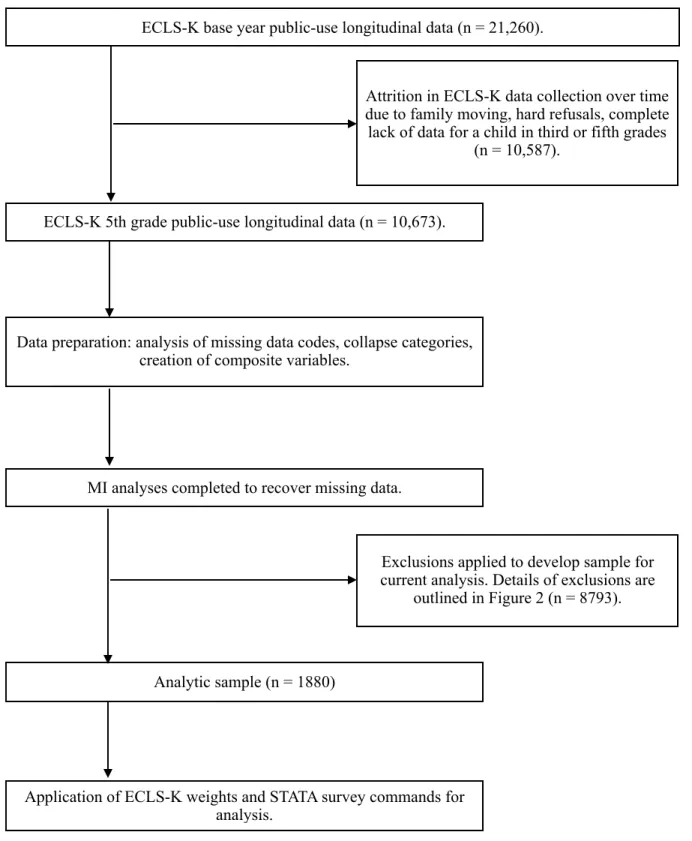
Figure 1. Flow chart of the development of the analytic sample from the
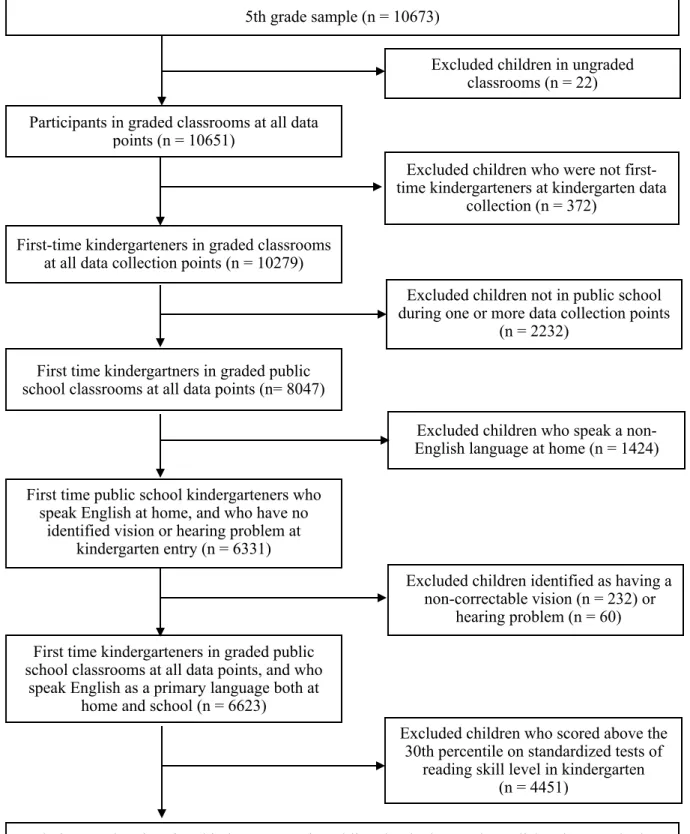
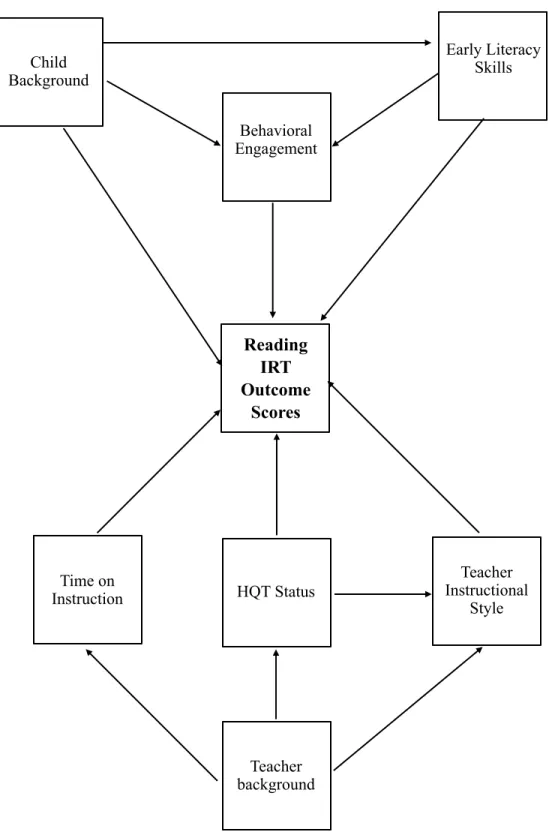
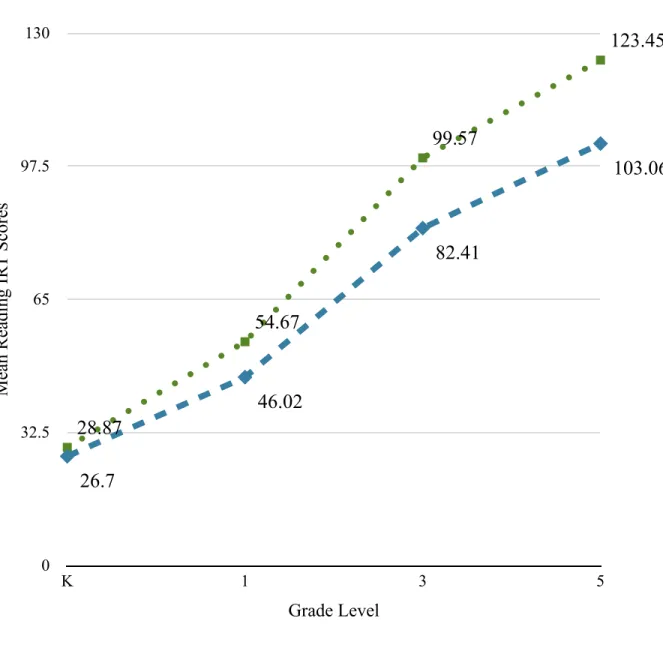
base-year ECLS-K dataset……….. 127 Figure 2. Flow chart of sample exclusions.……….…….…….……….……….128 Figure 3. Conceptual model of research study…….……….…….……….……129 Figure 4. Sampled participants’ mean IRT scores across years of data collection
and status of participation in special education services.………….…….………. 130 Figure 4. Sampled participants’ mean IRT scores across years of data collection
LIST OF ABBREVIATIONS
!
ACYP Administration on Children, Youth, and Families
ECLS-K Early Childhood Longitudinal Study – Kindergarten Class of 1998-1999
!
HQT Highly Qualified Teacher, as defined in NCLB
IRT Item Response Theory
MBA Woodcock-McGraw-Werder Mini Battery of Achievement MCMC Bayesian iterative Markov chain Monte Carlo
MI Multiple Imputation
MVN Multivariate Normal Multiple Imputation NAEP National Assessment for Educational Progress
NAEYC National Association for the Education of Young Children NASP National Association of School Psychologists
NCES National Center for Education Statistics NCLB The No Child Left Behind Act of 2001
NGACBP National Governors Association Center for Best Practices & Council of Chief State School Officers
!
NICHD National Institute of Child Health and Human Development OSEP Office of Special Education Programs
PSU Primary Sampling Unit
REACT Responsive Environmental Assessment for Classroom Teaching
RTI Response to Intervention
SES Socioeconomic status
SPSS Statistical Package for the Social Sciences
SRS Social Rating Scale
SSRS Social Skill Rating System T-SRS Teacher Social Rating Scale
US United States
VIF Variance Inflation Factor
LIST OF SYMBOLS
𝛽 Beta
CI Confidence Interval
F F-Score
M Imputed dataset
𝜇 Mathematical mu representing the mean or average score
p p-value
R2 R-squared
SD Standard deviation
t t-score
!
!
!
!
!
!
!
CHAPTER I: INTRODUCTION
Two primary goals of NCLB (2002) are to improve the academic achievement of underserved populations and for all students to be proficient in reading by the 2013-14 school year. This ambitious goal is addressed through a broad multifaceted intervention approach within the Act, including two major areas of focus for elementary school aged intervention: children’s early literacy skills and teacher quality. Specifically, Reading First interventions and HQT status are highlighted in NCLB as essential components of a high quality education.
This research examined the impact of Reading First and HQT on the literacy skills of struggling readers in public elementary schools in concert with additional research suggesting that child behavioral engagement and teacher instructional choices can contribute to child literacy outcomes in public schools. Specifically, the contribution of child behavioral
Evaluating the differential contribution of components of NCLB to child literacy outcome scores is necessary to ensure that federal education policy and funding are focused on
empirically-validated facets of education. Although NCLB regulations have been in place since 2002, the National Assessment for Educational Progress (NAEP) reported in 2009 that 65% of fourth graders in the United States (US) were not proficient in grade-level reading skills (National Center for Education Statistics, NCES, 2014). Further, research in this area has demonstrated that children who are struggling with reading achievement in early elementary school tend to be members of underserved populations, including minority (Snow, Burns, & Griffin, 1998; West, Denton, & Germino-Hausken, 2000) and low socioeconomic status (SES; Denton & West, 2002; Snow et al., 1998) that are often referred to as “at risk” populations (Coie et al., 1993). These populations of “at risk” children are precisely those targeted through NCLB legislation.
Some previous research suggests that improvements in achievement were found
Whiteley, & Cleveland, 2009; Mashburn et al., 2008; McClelland, Acock, & Morrison, 2006; Parlardy & Rumberger, 2008; Schaefer & McDermott, 1999; Spira, Bracken, & Fischel, 2005; Yen, Konold, & McDermott, 2004). Yet, despite the strong support linking both a child’s behavioral engagement and a teacher’s instructional style with child achievement outcomes. Current literature is in need of definitive research examining literacy outcomes with a population of children who begin school lacking essential pre-literacy skill development. It is these children, primarily targeted by NCLB, who require greater achievement gains within the same timeframe as their better-prepared peers in order to reach grade-level proficiency in reading.
Additionally, few results have been reported in the literature regarding the impact of children’s behavioral engagement on their achievement outcomes in the later elementary school years (Alexander, Entwisle, & Dauber, 1993; McClelland et al., 2007; McClelland Morrison, & Holmes, 2000; Ponitz, Rimm-Kaufman, Grimm, & Curby, 2009), and inconsistent results have been reported regarding the impact of kindergarten behavioral engagement on reading outcomes in later elementary school years (McClelland et al., 2006). Furthermore, studies addressing the impact of kindergarten behavioral engagement on reading outcomes have largely focused on within-year results, rather than examining longitudinal data covering the entirety of elementary school (Alexander et al., 1993; McClelland et al., 2007; Ponitz et al., 2009). Finally, to date, no study has examined the potential differential impact of behavioral engagement skills measured during later elementary school years, nor has any study in this area of research included data regarding the potential impact of a child’s participation in Reading First interventions.
With regard to teacher instructional choices, few studies have reported results that were specific to reading achievement (Mashburn et al., 2008), and previous results tend to be based on samples that are generalizable to an overall population of elementary students with diverse learning levels (Block et al., 2009; Mashburn et al., 2008), rather than specifically examining the impact of teacher instructional choices on the achievement of students who are already
struggling or at-risk for poor achievement (Coie et al., 1993). Of the studies that did focus results on at-risk populations inconsistent results were seen (Hamre & Pianta, 2005; Xue & Meisels, 2004). A longitudinal study focusing on a population of struggling early readers from
kindergarten through fifth grade is needed to clarify these results.
This research is intended to be a comprehensive examination of the impact of both child behavioral engagement and teacher instructional style on struggling readers’ achievement over the course of elementary school, accounting for children’s early reading status, participation in Reading First interventions, and characteristics of teacher quality. This study fills gaps in the current literature by examining these questions using a longitudinal, nationally representative sample of children who were performing poorly in reading achievement at the end of
kindergarten.
In Chapter 2, literature describing struggling readers, the achievement gap, Reading First, HQT, child behavioral engagement skills, and teacher instructional choices will be reviewed and discussed in relation to the literacy achievement of struggling readers. In Chapter 3, research hypotheses, procedures and data preparation will be reviewed in detail. In Chapter 4, results of each research question will be reviewed and displayed in figures and tables at the end of this document. Finally, in Chapter 5, results of each research question will be discussed in relation to what was known from previous literature and NCLB. Conclusions, limitations and future
!
!
!
!
!
CHAPTER II: LITERATURE REVIEW
To define the scope of this research, this review of the literature begins with an examination of the current status of reading skills for public elementary schoolchildren in the United States. The achievement gap, long-term individual and educational correlates of academic reading development, and the prediction of reading scores from early indicators are reviewed. Federal policy addressing reading intervention is examined in concert with the bio-ecological theory of child development to provide a conceptual framework for examining child and teacher effects on reading development. Literature examining the impact of child behavioral engagement and teacher instructional style on child reading achievement discussed to provide the foundation for the primary research questions.
Childhood Reading
The ability to read and comprehend text is an essential component of success in today’s society. Yet, in 2009, the NAEP reported that 65% of fourth grade children scored below grade-level proficiency on standardized tests of reading skills (NCES, 2014). The issue of reading development has been widely researched, including the relative stability and longstanding effects of reading scores (Butler, Marsh, Sheppard & Sheppard, 1985; Chatterji, 2006; Hanson &
Jenkins, 1999; Schatschneider, Fletcher, Francis, Carlson, & Foorman, 2004). The results of previous work produced a deeper understanding of childhood reading development and
ultimately contributed to improvements in reading intervention services for struggling students. Yet, it is clear that in order to improve the odds for young children who are struggling to achieve proficiency in reading, more work is needed to clarify and improve upon current knowledge.
Struggling readers. Before discussing factors that may contribute to the achievement of
children who are below proficiency in reading, it is important to understand how this population of children has been conceptualized in previous literature. Struggling readers have been
operationalized and described in the literature in a number of ways, covering both child background characteristics, performance on classroom assessments, and/or child scores on standardized and non-standardized tests of reading skills. Further, individual child
characteristics, such as race (Snow et al., 1998; West et al., 2000; Wiggan, 2007), SES (Denton & West, 2002; Eamon, 2002; Singh, 2012; Sirin, 2005; Snow et al., 1998), age at kindergarten entry (Justice, Invernizzi, Geller, Sullivan, & Welsch, 2005), and gender (Denton & West, 2002; Justice et al., 2005; Phillips, Norris, Osmond, & Maynard, 2002) have been repeatedly linked in previous literature with the development of early reading skills and discussed as potential areas of risk (Coie et al., 1993).
2001) and show a greater risk of long-term negative secondary outcomes (Rathbun et al., 2005; Smokowski, Mann, Reynolds, & Fraser, 2004), including grade retention (Baydar, Brooks-Gunn, & Furstenberg, 1993), school failure (Mather & Ofiesh, 2005), and/or school dropout (Cairns, Cairns, & Neckerman, 1989; Korhonen, Linnanmaki, & Aunio, 2014; Vitaro et al., 2005). In fact, previous findings from ECLS-K demonstrated an 11-point difference between the kindergarten through third grade reading gains of children with no risk factors versus those with two or more risk factors (Livingston & Wirt, 2004). Indeed, it is well understood within the literature that children who are identified as struggling readers early in formal schooling are likely to also hold characteristics of risk.
While struggling readers are often found to hold multiple characteristics of risk, they are primarily identified in research through performance on reading assessments, or on an end-of-year high stakes assessment (Melekoglu, 2011; Reutzel, Petscher, & Spichtig, 2012; Roberts, Vaughn, Fletcher, Stuebing, & Barth, 2013). Indeed, this may be appropriate as current trends in public education have moved toward the use of high stakes testing in schools to determine academic proficiency and make grade-promotion decisions (NCLB, 2002). Each of these methods of identification use a cutoff point of reading performance on a one-time test.
Others have defined struggling readers through repeated examples of their in-school achievement in reading such as in-school grades, and in-class, teacher-administered 1:1 assessments of specific reading skills, repeated over time, to rank whether children were
thought to be accurate measures of a child’s in-class achievement, measured over time to demonstrate whether children are making necessary improvements in skills as they are exposed to the reading curricula in class.
Due to the complexity of data-based decision making such as what is seen within a RTI framework, and the complexity of data collection within ECLS-K , this level of identification was not possible in the current research. Indeed, for the purposes of the current research, struggling readers were conceptualized as those who performed below a cutoff score on a one-time test capturing a snapshot of children’s literacy skills as they completed kindergarten. Children who scored below the cutoff score were determined to be struggling with early reading skills. To further describe this sample of struggling readers, their proficiency on specific skills at the time of the test and multiple indicators of risk were explored and discussed.
Achievement gap. A child’s individual characteristics and background, such as SES, in
combination with child achievement or skill development present a multifaceted approach to describing children who are struggling. Research has shown that early childhood experiences are a strong contributor to the skill development and background knowledge of first time
empirically-validated interventions to assist in improving academic and behavioral skills for children who present with multiple characteristics of risk, particularly those who present with poor early achievement during early elementary school are essential to reach the ambitious goal of reading proficiency for all children.
Without appropriate empirically-validated intervention, children who begin school struggling with reading skills are far less likely to reach grade-level expectations. Matthew effects (i.e., the widening gap, over time between children with strong academic reading skills and those who require more assistance in developing their academic reading skills; Stanovich, 1986) in reading skill development pose a considerable challenge for successful outcomes. The Matthew effect phenomenon and the relative stability of children’s reading skills (Butler et al., 1985; Juel, 1988; Stanovich, 1986; Walberg & Tsai, 1983)have inspired a wealth of research examining the long-term predictive relationship between early reading skills (e.g., phonological awareness), long-term school achievement (Cunningham & Stanovich, 1997; Juel, 1988;
McClelland et al., 2006; McClelland et al, 2000; NICHD, 2000; Scarborough & Parker, 2003; Torgeson et al., 1999), and adult contributions to society (National Association for the Education of Young Children, NAEYC, 1998). Yet others have reported results refuting evidence of the stability of reading during elementary school (Phillips et al., 2002) and of Matthew effects occurring within the school year (McCoach, O’Connell, Reis, & Levitt, 2006), suggesting that the relationship between early reading skills and later achievement may be mediated by other variables.
While school reading interventions focused primarily on the targeted training of specific early literacy skills (e.g., phonological awareness) have achieved some success in improving children’s reading achievement (Elbro & Petersen, 2004; Lane, O’Shaughnessy, Lambros, Gresham, & Beebe-Frankenberger, 2001; Otaiba et al., 2008), children from at-risk backgrounds continue to achieve below their peers from more stable backgrounds (Elbro & Petersen, 2004; Lane et al., 2001; Otaiba et al., 2008). However, multivariate early childhood interventions such as the Abecedarian (Campbell, Ramey, Pungello, Sparling, & Miller-Johnson, 2002) and Perry Preschool programs (Schweinhart et al., 2005) using specialized curricula designed to target academic goals have reported positive results into adulthood. Current trends in the literature highlight not only the impact of specific reading skills, but also the impact of empirically-validated multivariate interventions that better account for the complex interplay of variables contributing to reading development.
Conceptual Framework
Though the complexity of reading development is not fully understood, this research narrowed the lens to focus specifically on influences of childhood reading development
classroom) over time (e.g., a school year). According to the bio-ecological theory, a child’s reading development will vary uniquely based on the quality of the proximal processes or interactions within the child’s environment. Although the characteristics of both the developing child and persons within the child’s environment make important contributions to developmental outcomes, proximal processes are established within the model as the “engines of
development” (Bronfenbrenner & Morris, 1998, p. 999).
The power of such processes to influence development is presumed, and shown, to vary substantially as a function of the characteristics of the developing Person, of the
immediate and more remote environmental Contexts, and the Time periods, in which the proximal processes take place (Bronfenbrenner & Morris, 1998, p. 994).
!
Bronfenbrenner and Morris (1998) further posited that positive proximal processes impact achievement outcomes by leading to greater developmental gains, and by protecting “against effects of disadvantaged and disruptive environments” (p. 1004). This premise suggests that interventions focused on strengthening proximal processes in the classroom environment, and examining how the interactions with these variables might change over time, could produce robust results in combating poor reading achievement.
Yet, federal legislation aimed at reducing the achievement gap did not address proximal processes in the classroom. Portions of NCLB that pertained to elementary school-aged reading development addressed specific instructional and teacher characteristics; the Act failed to address complex processes, such as the child’s level of engagement with educational materials and the effect of teachers’ instructional style, over time.
The major component of NCLB targeting reading skills, the Reading First program (NCLB, 20 U.S.C. §§ 6361-6368 [2002]), is another example of this discrepancy. Although the program highlighted five essential components of reading (phonemic awareness, phonics, vocabulary, fluency, and comprehension) as the primary focus of funded interventions, the legislation was absent of any mention of proximal processes, such as a teacher’s instructional style or a child’s engagement with the academic materials. While the five essential components in NCLB come from a strong empirical foundation derived from the literature at the time of the 2002 reauthorization (i.e., Kaverz, 2002; NICHD, 2000;Snow et al., 1998), it is clear that focusing interventions primarily on these five academic components has not met the goal of making all children proficient readers by the third grade (Gamse et al., 2008; NCES, 2014).
Specifically, the Reading First Impact Study reported a significant increase in the amount of first and second grade classroom instructional time spent on the five early reading skills highlighted by the program, but found no significant impact on children’s fourth grade reading comprehension scores or on their engagement with print (Gamse et al., 2008). Additionally, the Nation’s Report Card reported that only 65% of fourth grade public school children achieved at or above proficiency in reading (NCES, 2014). In other words, although children are spending more instructional time on specific reading skills and have improved their standardized test scores, there appears to be no subsequent improvement in reading comprehension, children are not spending more time engaged in reading, and 65% of children are not proficient in reading by the end of fourth grade (NCES, 2014). While it is true that empirically supported interventions (addressing the five essential components of reading) funded by Reading First may have
to intervention, particularly one addressing proximal processes and the changing effects of the processes over time, may better support young struggling readers.
Likewise, NCLB focused on identifying HQT using qualifications such as demonstration of knowledge in subject areas (typically through a passing score on a state certification test) and certification status (NCLB, 20 U.S.C. § 7801 [2002]), rather than considering proximal
processes, such as how a teacher presents academic materials to students. Further, although context-specific variables such as duration of instructional time and type of instructional
materials were highlighted in the Act, the processes by which a child learns were largely omitted. This type of approach, emphasizing one learning domain (e.g., early academic skills) over
another (e.g., behavioral engagement), is unsupported by research as a method of developing successful interventions (Scott-Little, Kagan, & Frelow, 2006). However, no studies, to date, have examined whether the inclusion of an alternate learning domain, such as learning-related behavioral development, might strengthen interventions supported by NCLB.
Although the bio-ecological theory suggests that proximal processes significantly impact learning and development, these processes have not yet been adequately addressed within major federal education policy. To date, no literature has examined the effect of process variables on reading outcomes relative to variables included in NCLB (2002). Proximal processes
surrounding elementary school reading development in a classroom environment should be further explored in research efforts.
Proximal Processes in Classroom Reading Instruction
When examining discrepancies in reading instruction with the goal of reducing
achievement disparities, it is wise to look not only at aspects of the academic curricula that are associated with later achievement (e.g., phonological awareness), but also at the interaction of proximal processes occurring, in context, between persons (or between persons and objects) over time. During elementary school reading instruction, one must consider not just what specific academic skills are presented, but also consider how they are presented and how individual children are receiving the instruction. Learning and development are posited to be bi-directional and interactive (Bronfenbrenner & Morris, 1998). This research examined whether specific proximal processes (i.e., a child’s behavioral presentation and a teacher’s instructional
presentation) contributed to reading outcome scores above and beyond the contribution of the child and teacher characteristics that are currently identified within NCLB (2002) legislation.
Child behavioral engagement. Behavioral engagement is a construct defined by
observable classroom behaviors that demonstrate the degree to which a child engages in his or her own learning experiences (Fantuzzo et al., 2007; Schaefer & McDermott, 1999). In the literature, this construct has also been called “behavioral regulation” (McClelland et al., 2007) “approaches to learning” (e.g., Denton & West, 2002; Denton, West, & Walston, 2003; Rathbun et al., 2005), “attention-related behaviors” (e.g., Claessens, Duncan, & Engel, 2009) and
Blumenfeld, & Paris, 2004; Greenwood, Horton, & Utley, 2002; Ponitz et al., 2009). For the purposes of clarity, the construct will be referred to as behavioral engagement in this research. Snow et al. (1998) noted the challenges relative to behavioral engagement for children within the kindergarten classroom environment:
A child can no longer demand the attention or assistance of the attendant adult at will; each must learn how to solicit individual attention and to wait patiently while the teacher is attending to others. To a greater or lesser extent depending on the classroom, every kindergartner must learn to sit quietly, to listen considerately to both the teacher and other students, to communicate cooperatively, to restrain behavior to within acceptable limits, to accomplish tasks both independently and with others, to share resources, to treat others respectfully, and to try to learn and do what she or he is asked to learn and do (p. 179).
!
Poor behavioral engagement has been reported to occur disproportionately in children from at-risk backgrounds. For example, in a study examining differential outcomes between two groups of economically at-risk and not-at-risk 5- to 8-year-olds, the children did not differ in learning-related confidence or eagerness to learn, but children from economically at-risk families demonstrated poorer behavioral engagement skills, such as motivation and self-regulation
(Howse, Lange, Farran, & Boyles, 2003). Yet, behavioral engagement can also act as a protective factor against high school dropout (Alexander et al., 1993; Entwisle & Alexander, 1993;
Fredricks et al., 2004), and some have suggested that interventions targeting behavioral
and enhancing the predictive ability of cognitive skills above and beyond that which cognitive ability and early achievement predict alone (Schaefer & McDermott, 1999; Yen et al., 2004). Yet, more research is needed to answer questions about the contribution of behavioral engagement skills in predicting later elementary school reading outcomes for struggling readers.
While the literature shows a clear influence of behavioral engagement on academic outcomes, the impact of this construct on reading-specific achievement is only beginning to be understood. Current literature shows positive within-year results for behavioral engagement skills predicting preschool emergent literacy and vocabulary skills (McClelland et al., 2007), predicting kindergarten reading skills (Ponitz et al., 2009), improving the predictive ability of kindergarten phonological awareness skills (Torgeson et al., 1999), and discriminating the growth of first grade reading scores above and beyond the predictive ability of first grade phonological awareness skills in a sample of children with poor reading development (Spira et al., 2005). However, while positive within-year results for kindergarten and first grade suggest that behavioral engagement skills may contribute to future reading scores, it is unclear whether these effects would continue throughout elementary school.
The few longitudinal studies examining the contribution of behavioral engagement skills on reading provide evidence for a relationship between behavioral engagement and later reading achievement from kindergarten through second grade (McClelland et al., 2000), fourth grade (Alexander et al., 1993), fifth grade (Claessens et al., 2009), and sixth grade (McClelland et al., 2006). Yet, within those studies, questions remain. First, although McClelland et al. (2000) reported that kindergarten behavioral engagement skills predicted unique variance in
behavioral engagement skills were associated with gains in reading achievement from
kindergarten through the second grade, McClelland et al. (2006) also reported that kindergarten behavioral engagement skills were not predictive of gains in reading skills beyond the second grade.
It is unclear from these results whether behavioral engagement skills are a less robust predictor of achievement as children progress through school, or whether kindergarten behavioral engagement skills lose significance as children grow and modify their behavioral repertoire. Another possible confounding factor in McClelland et al.’s (2006) study is their use of different measures after the second grade. Their results seem to defy expectations that as children progress through school and increase in independent learning requirements, their engagement in academic materials will become a more important indicator of success. No study, to date, has examined the influence of behavioral engagement skills, rated after kindergarten (i.e., first grade or third grade), on third and fifth grade reading outcomes to determine whether behavioral
engagement, rated in first or third grade might better predict reading outcome scores at the end of elementary school.
This distinction is important because children who are targeted for reading skills interventions in public schools tend to be associated with different demographic characteristics than is found in the general population of elementary school students, such as an increased likelihood of a being from a low SES background, coming from single parent households, and being from minority backgrounds (Rathbun et al., 2005). Consequently, the literature is in need of studies examining the predictive influence of behavioral engagement on elementary school reading outcomes in samples of children who might be selected for academic reading
intervention so that empirical results are representative of the population of children who are targeted for intervention.
Additionally, in the behavioral engagement literature, to date, while children’s early reading skills and kindergarten behavioral engagement skills have shown promise in predicting within-year and longitudinal outcomes, the potential confounding influence of children’s participation in Reading First intervention has not been examined. This significant distinction may help to discriminate which specific characteristics (e.g., strong behavioral engagement skills) may assist children in benefiting more from school-based intervention. Without
knowledge of a child’s intervention status, variability in outcomes may be inaccurately attributed to a child’s characteristics rather than the presence of effective school-based intervention. It remains unclear whether the influence of behavioral engagement skills could impact reading outcome scores above and beyond the combined influence of early reading scores and participation in Reading First programming.
research study expands on the current literature, further exploring these relationships by looking at the longitudinal predictive relationship of kindergarten, first, and third grade behavioral engagement ratings on reading outcome scores in third and fifth grades, using a nationally
representative sample of students who were low performing in reading at the end of kindergarten. Teacher influences. When examining the literature on early reading development, it is
clear that multiple domains must be targeted to better assist children in the improvement of their academic reading skills. The usefulness of examining proximal processes surrounding teachers and instruction cannot be understated. A teacher’s ability to modify instructional techniques in response to student cues is a powerful tool once referred to by Vygotsky (1978) as “scaffolding”, and posited by Vygotsky to best occur within the Zone of Proximal Development (ZPD) - the distance between a child’s capability to learn independently at their current developmental level and the child’s skill development with assistance from an adult or more skilled peer. According to Vygotsky, children achieve higher developmental gains when proper scaffolding is included in their instruction.
However, NCLB (2002) legislation addressing reading intervention in elementary schools largely avoids discussion of instructional techniques. Rather, a main portion of the Act addresses teacher qualifications, or HQT characteristics. While HQT can be easily measured, their
effectiveness in producing positive achievement gains for struggling readers is less clear. This research further explores the differential impact of teacher instructional style and HQT
characteristics on elementary school reading outcomes in order to better inform policy efforts aimed at reducing the achievement gap.
Background characteristics. As part of a multivariate approach to address the goal of reducing and ultimately eliminating the achievement gap, NCLB contains regulations defining characteristics of a HQT (20 U.S.C. § 7801 [2002]), and regulations requiring that all teachers providing Reading First services meet the HQT requirement (20 U.S.C. § 6362 [2002]).
Generally speaking, these regulations mandate that teachers are certified by the state and possess knowledge in the subjects they teach. While certification status has been linked to student
achievement (Chatterji, 2006; Kukla-Acevedo, 2009; Goldhaber & Brewer, 1997; Goldhaber & Brewer, 2000; Hawk et al., 1985; Heck, 2007; Nye et al., 2004; Wayne & Youngs, 2003), there have been no longitudinal studies examining the effect of certification on the reading
achievement gains of struggling readers. Additionally, some previous work used school-level analyses, such as Chatterji’s (2006) study showing strong school-level achievement effects of certification rates on first-grade reading achievement, and Heck’s (2007) study showing a positive relationship between teacher quality and reading achievement in elementary school, particularly for children from risk groups. While these results are informative, neither study can link their findings to individual students. Other studies found a link between teacher certification and within-year math scores of students in fifth grade (Kukla-Acevedo, 2009), tenth grade (Goldhaber & Brewer, 1997), and twelfth grade (Goldhaber & Brewer, 1997). While this, too, provides valuable information about teacher certification effects on achievement, they do not address whether similar effects exist for the reading achievement of struggling readers. No study, to date, has examined longitudinal data of HQT status on the reading outcomes of elementary-aged struggling readers.
Others findings have suggested that there is a lack of evidence to support policy linking HQT characteristics with student achievement (Early et al., 2006; Early et al., 2007; Guarino, Hamilton, Lockwood, Rathbun, & Germino-Hausken, 2006; Muñoz & Chang, 2007; Rowan, Correnti, & Miller, 2002), using results based on samples of preschool children (Early et al., 2006; Early et al., 2007) and high school children (Guarino et al., 2006; Muñoz & Chang, 2007). Of the few studies using elementary school samples, results were somewhat inconsistent. Rowan et al. reported that neither special certification to teach reading, nor a bachelor’s or master’s degree in English, had a significant effect on growth in first-grade children’s reading
achievement; however, their results were based on a relatively small sample of teachers. Another study reported no significant effects of certification status, but positive effects for type of degree earned (i.e., elementary education; Croninger, Rice, Rathbun, & Nisho, 2003). However, neither study used a sample struggling readers. Further, while both studies reported no significant link between teacher certification and child reading achievement, their results differed on the question of whether teacher degree makes a significant contribution to child reading achievement. Consequently, while the HQT regulations remain a focus for school systems aiming to comply with NCLB regulations, a consensus has yet to emerge in the literature regarding the effectiveness of these characteristics on the reading achievement of at-risk elementary school students.
To date, no study has examined the differential effect of HQT characteristics on the reading outcomes of struggling readers in elementary school who are in need of better developed
longitudinal data and nationally representative samples of children who reflect the group of students targeted with Reading First legislation (NCLB, 2002). This research further extends the literature by examining the effect of teacher certification, and longitudinally, from kindergarten through fifth grade with a nationally representative sample of kindergarteners who are struggling with reading achievement. Additionally, the type of degree earned will be examined to clarify the issue of whether the influence of degree status extends to this specific population of children.
Instruction. In addition to teacher characteristics, regulations in NCLB (2002) focused on increasing the instructional time dedicated to the five essential components of reading. The literature in this area is inconsistent with regard to the effectiveness of increased reading
instruction time on student reading achievement outcomes. While increasing time on instruction has been associated with improved academic performance (Connor, Son, Hindman, & Morrison, 2005), others found that increased time was not enough to increase reading comprehension skills (Block et al., 2009). Some posit that positive outcomes of increased time on reading instruction can only occur when effective, empirically-validated instructional techniques, are used to improve student outcomes (Block et al., 2009).
One area of the literature that has shown positive results is examining the contribution of teachers instructional choices on student achievement (Block et al., 2009; Mashburn et al., 2008; Parlardy & Rumberger, 2008; Stronge, Ward, Tucker, & Hindman, 2007). Recent research
suggests that teachers instructional choices can substantially influence student outcomes, perhaps beyond that of HQT characteristics (Mashburn et al., 2008), or that of increased instructional time (Block et al., 2009; Parlardy & Rumberger, 2008).
In this regard, Mashburn et al. reported that teacher’s use of instructional techniques such as integration of curricula and discussion demonstrated a significant contribution to achievement outcomes for pre-kindergarteners; however, these results were based on a sample representing the overall population rather than children who are struggling with reading skills. Further, Mashburn et al.’s results examined overall achievement and did not specifically address reading achievement. Extending their results to older elementary-aged children will be beneficial in clarifying whether instructional techniques such as discussion and integrating curricula demonstrate positive achievement gains for older elementary aged children.
Block et al. (2009) attempted to further explore some of these questions by examining children’s reading comprehension outcomes in grades two through six and found that children who were given more instructional time without the addition of teacher instructional interactions - such as choice and discussion - produced the lowest gains in reading comprehension. However, the sample in Block et al.’s study represented the general population of elementary students, and thus cannot be generalized to the population of elementary children targeted through NCLB (2002) legislation.
When considering the effect of instructional practices on the general population of students, teachers’ instructional choices have been linked with improved achievement in elementary students (Houtveen & van de Grift, 2007; Stronge et al., 2007), and middle school students (Wenglinsky, 2002). Further, Xue and Meisels (2004) reported that higher reading outcomes in kindergarten were linked to teachers’ instructional techniques (e.g., discussion, cross curricular connections, and choice) in a general population sample.
The literature is less clear about whether the impact of teachers instructional choices remains as strong in samples of children with less well-developed reading skills. One author reported that teachers with high proportions of kindergarten and first graders from low-income backgrounds used basic skill instruction techniques (e.g., rote memorization, reading without discussion, isolated phonics tasks without meaningful text, etc.) more frequently than engaging instructional techniques (e.g., discussion, phonics embedded in meaningful text; emphasis on student participation; Stipek, 2004); however, their results did not examine whether children demonstrated differential achievement outcomes.
Interestingly, Torgeson (2002) reported that children from at-risk backgrounds, such as low SES, benefited more from basic-skills instruction over higher-order, pedagogical techniques. Additionally, Xue and Meisels (2004) reported that at-risk kindergarten-aged children with poor achievement were found to benefit less from instructional techniques (e.g., discussion about reading, cross-curricular connections, dictating and retelling stories) than children who were not at-risk, suggesting that children who are at-risk may benefit more from basic-skills instructional practices than would children who are not at-risk.
However, Hamre and Pianta (2005) challenged Xue and Meisels’ (2004) results and Torgeson’s (2002) results, reporting improved overall achievement gains for children who were at-risk and learned from teachers who reported using instructional techniques such as evaluative feedback, discussion, and encouragement of student responsibility, thus suggesting that children who are at-risk may benefit from engaging instructional practices. It is unclear from these results whether children who are considered at-risk for poor achievement differentially benefit from exposure to engaging instructional techniques. The literature is certainly in need of clarification on this question.
Another body of literature exists that specifically examines the literacy practices of children who have scored poorly on standardized reading tests, and are therefore considered to be at-risk for poor achievement. Findings indicate that when these children are out of school and provided with choice and appealing activities that include reading, many children will choose to engage in these alternate literacy-type activities (e.g., texting, using the Internet) and will self-identify as “readers” (Alvermann et al., 2002; Alvermann et al., 2007). The authors noted these results as somewhat unexpected, given the students self-identification as being uninterested in reading.
reading materials may better parallel the out-of-school literacy practices of this sample of students and lead to more positive in-school reading outcomes. These questions surrounding the impact of choice, discussion, and cross-curricular instructional practices are important to
examine within the framework of struggling readers.
Although results from the literature demonstrate inconsistent results in determining whether children from at-risk backgrounds benefit from their teachers’ differential use of these instructional practices, the use of overall achievement outcomes, rather than reading
achievement, may contribute to the lack of consistent results. Differences in effective
instructional practices across subject areas can be vast - what might work well in mathematics could be less effective in reading instruction. Focusing results on a the reading achievement of struggling readers could better clarify the impact of these instructional practices on the
achievement of children who are at-risk. Additionally, the current literature examining teachers’ instructional practices is absent of clear longitudinal data across elementary school. Likewise, only a few studies examining instructional effects on achievement have focused on the
population of students targeted through Reading First legislation, and their results have been inconsistent (Connor et al., 2005; Hamre & Pianta, 2005; Torgeson, 2002; Xue & Meisels, 2004).
unique effects of teacher instructional style on young children who are at risk for poor academic reading achievement, and determine whether differential effects exist between teacher
qualifications and instructional style on struggling readers achievement in third and fifth grade. Relation Between Behavioral Engagement and Teacher Influence
While teacher’s instructional practices that support engagement can work to
bi-directionally support children’s ultimate reading achievement (Connor et al., 2005; Ponitz et al., 2009), even teachers using instructional approaches strongly supported in the literature can only be successful if met by children who can focus and engage with the tasks at hand (Downer et al., 2007; Hughes & Kwok, 2007). Ponitz et al. (2009) described the interaction between teaching qualities and a child’s behavioral engagement as follows:
[teachers] actively monitor and respond to child engagement. Compared to learning gains, behavioral engagement provides a relatively proximal indicator of whether instructional efforts are succeeding…. If students are not engaged, teachers can then adjust their actions to promote these desired behaviors. (p. 117).
!
outcomes. However, Ponitz and colleagues’ results were within year and generalizable only to an overall sample of kindergarten children. Further, their measures of teacher behavior covered multiple domains of behavior and results on subdomains (e.g., teacher instructional support) were not reported.
The field is in need of further clarification about the interaction between child behavioral engagement and specific teacher variables (i.e., instructional style and HQT status). If child behavioral engagement is found to contribute, significantly, to student reading outcomes in third and fifth grades, then determining what teacher variables, if any, best produces high engagement from elementary students will be helpful to inform teaching practices when working with
struggling readers. This research provides a preliminary exploration of this question by determining whether behavioral engagement scores at points across elementary school (kindergarten, first, third, and fifth grade) had any combined effect with teacher instructional style during the same school year, and whether these skills have any effect on student reading outcomes. These results should be used to inform future research in this area.
!
!
!
!
!
CHAPTER III: RESEARCH STUDY
Given the importance of NCLB (2002) legislation in combating educational inequities, particularly those in reading development, identifying school variables, above and beyond a child’s background, that best assist school-aged children in achieving reading proficiency is paramount. Applying bio-ecological theory (Bronfenbrenner & Morris, 1998) to child reading development, it follows that reading develops over time through a series of interactions between a child’s personal and background characteristics and resources or materials available to the child (including the child’s parents and teachers). Deficiency or poor development in any area can have a compounding effect on the child’s development (Rathbun et al., 2005; Zill & West, 2001), thus highlighting the importance of strong resources and effective teaching strategies,
particularly for children who enter formal schooling without adequate pre-reading skills.
Furthermore, with strong supports and resources, focusing on developing a positive repertoire of child behavioral characteristics in school, such as engagement in classroom activities, may serve as a protective factor in the challenging pursuit of reading proficiency.
NCLB (2002) legislation targeting the achievement of reading proficiency highlights a multifaceted intervention to better develop child reading skills, but it does so through a narrow lens: child characteristics are primarily limited to five reading-specific skills (phonemic
interactions that occur as a culmination of background variables such as behavior, engagement in school activities, and teacher-child interactions (i.e., process variables; Bronfenbrenner & Morris, 1998). In other words, a struggling reader, who is also unable to follow directions or focus and persist on classroom assignments may have a far more difficult time developing age-appropriate reading proficiency than a struggling reader who has strong classroom behavioral engagement skills (Alexander et al., 1993; McClelland et al., 2000; McClelland et al., 2006; Ponitz et al., 2009; Spira et al., 2005).
Current literature demonstrates a link between the child’s classroom behavioral
engagement and academic achievement. However, the literature largely depends on results using samples of children with a full range of reading skills levels, rather than the those students who are already demonstrating poor achievement. Additionally, the current literature tends to focus on overall achievement outcome scores, rather than reading-specific outcomes. Further, conclusions about the utility of behavioral engagement as a predictor of later achievement are based on kindergarten behavioral ratings. No study has yet examined the effect of behavioral
characteristics throughout elementary school, on reading achievement scores. A connection between child behavioral engagement and reading proficiency would suggest that reading interventions should be developed within the framework of encouraging and maintaining adaptive behavioral engagement skills in order to improve a child’s ability to benefit from instruction.
Mashburn et al., 2008; Parlardy & Rumberger, 2008; Pressley et al., 2001; Rowan et al., 2002; Wenglinsky, 2002; Xue & Meisels, 2004). Indeed, a body of literature highlighting the influence of a teacher’s instructional strategies on childhood academic achievement, suggests that
instructional influences can be stronger than that of teacher certification alone (Mashburn et al., 2008). Yet, no studies have examined the effects of teacher certification and teacher instructional strategies with an elementary school population struggling readers. Process variables such as behavioral engagement and teacher instructional style, are a framework that can be used to improve the quality and outcomes of reading interventions funded through NCLB.
Research Hypotheses
Based on findings from previous research regarding the application of child behavioral engagement and teacher instructional practices to child reading outcomes, the following hypotheses were proposed for this research:
1. Kindergarten, first, third, and fifth grade child behavioral engagement skills will significantly add to the prediction of child literacy outcome in third and fifth grade beyond the individual contribution of children’s kindergarten literacy skills and the combined contribution of their kindergarten literacy skills and participation in Reading First interventions.
!
2. Differences in teachers’ instructional strategies will significantly add to the prediction of children’s third and fifth grade literacy outcome beyond the contribution of teachers’ HQT status alone, and beyond the combined contribution of teachers’ HQT status and children’s participation in additional instructional time.
!
3. Child behavioral engagement and teacher instructional style will demonstrate within-year interactions and individual effects on reading outcomes at points across elementary school (kindergarten, first, third, and fifth grades).
Methods
Participants. Data utilized for this research came from the ECLS-K fifth grade
public-use longitudinal data file (NCES, 2006). The ECLS-K is a federally funded longitudinal study that focuses on children’s early school experiences, following children from kindergarten through eighth grade. In the base-year, the ECLS-K sample was a nationally representative sample of approximately 21,260 children who attended kindergarten from 1998 to 1999 and were selected through a complex, clustered multi-stage probability design. For a complete description of the base year selection procedures for the ECLS-K, please see Tourangeau et al., (2004). Attrition from the kindergarten year to fifth grade occurred largely due to a child’s family moving to an non-sampled location, hard refusals by a child’s parents, or a lack of any data in 1 both first and third grade. Figure 1 displays a general overview of the following methods, which detail how the analytic sample was developed from the fifth grade public-use longitudinal dataset.
The fifth-grade longitudinal dataset is composed of 10,673 eligible participants (51.5% 2 male, 48.5% female) with an average age of 6.23 years in the spring of kindergarten year.
Participants were from diverse backgrounds (57.7% White, 18.8% Hispanic, 16.0% Black, 2.9% Asian, 1.7% Native American, 2.3% Multiracial, 0.6% Pacific Islander) . Eighty percent of 3 eligible participants attended public school across all for years, and 96% of eligible participants were first-time kindergartners. Of eligible participants, 74.4% lived in a home with two parents,
Hard refusals is defined in the ECLS-K literature as “children whose parents emphatically refused to
1
cooperate” (Tourangeau, Nord, Pollack, & Atkins-Burnett, 2006 p. 4-2)
These data exclude children from the Round 3 freshening sample (n = 5118). Please see Tourangeau et al., (2002)
2
for more information about the excluded sample.
These are weighted estimates. Please see Section 4.7 in Tourangeau et al. (2006) for a complete description of
3
while 24.1% reporting living in a single parent home, and 1.5% reported living with no biological or adoptive parent in the home. Further 12.6% of participants reported that a non-English language was spoken as the primary language in their homes at the time of kindergarten data collection, one percent reported difficulty hearing, and 3.6% reported difficulty with vision. Twenty-two percent of eligible participants lived below the poverty level in kindergarten, and 34% reported participation in the free school lunch program . During the kindergarten year, 4.5% 4 of eligible participants were involved in special education services, and 10.5% participated in Reading First reading services.
Sampling procedures. Prior to developing the analytic sample, multiple imputation (MI) procedures were completed to recover missing data, as discussed in the Missing Data section later in this chapter. An effort was made in this research to accurately capture the literacy skill development of children who attend public elementary schools and began formal schooling with poorly developed academic pre-literacy skills. As a result, a number of exclusions, outlined in Figure 2, were made to the sample of eligible children. First, less than 0.3% of participants (n = 22) were excluded from analysis because of teacher reported participation in an ungraded
classroom for the majority of the school day, as this type of classroom experience often provides an environment and curricula that differs from a typical public elementary school experience. 5 The sample was then limited to those who were first-time kindergarteners during Spring, 1999 (kindergarten) data collection (n = 10279) and who attended public school during all four rounds
Children are eligible for this program if their household income is less than 130% (free lunch) or 185% (reduced
4
lunch) of the federal poverty guidelines. For more information, please see the Program Fact Sheet (Food and Nutrition Service, 2013)
A description of how these participants were excluded from analysis can be found in the Results section of this
of data collection (n = 8047). Children with exposure to a kindergarten classroom prior to the first round of data collection were not appropriate for the analyses, as initial estimates of their knowledge would include previous kindergarten-level experiences, potentially skewing initial data estimates. Further, limiting the sample to children who attended public school during each round of data collection ensured that the analyses captured an accurate picture of literacy achievement within a public school environment.
Of the remaining sample, additional participants were excluded due to parent report of a primary language other than English (n = 1424), and/or a non-correctable hearing (n = 60) or vision (n = 232) problem diagnosed before the questionnaires were completed in the fall of kindergarten data collection. As previously noted, participants who skipped grades or were held back after the kindergarten year were retained in the sample. Following these exclusions, 6331 participants remained eligible for analysis. Finally, the sample was limited to participants who scored at or below the 30th percentile (n = 34.062) on IRT-based theta estimates of overall academic reading skills during kindergarten data collection. Table 1 displays the data used in the calculation of the IRT cutoff score, calculated by taking the mean of the 30th percentile cutoff score for each of the 20 imputed datasets . Following this final exclusion, the sample contained 6 1880 participants. Hereafter, rounds of data collection will be referred to by the grade in which the majority of children were enrolled. For example, the spring, 1999 data collection will be referred to as “kindergarten data collection”.
!
Please refer to the Missing Data section later in this chapter for a description of MI procedures that resulted in
6
Sampled participants. Sampled participants (n = 1880; 57.4% male, 42.6% female) were first-time kindergartners in public schools throughout the United States (US), representing the northeast (17.5%), south (43.4%), midwest (24.3%), and west (14.8%), as well as US cities (35.2%), suburbs (38.8%), and rural areas (26.0%). Male participants were of similar age (M= 6.15 years) to the female participants (M = 6.14 years,). Participants were from diverse
backgrounds (50.0% White, 30.2% Black, 12.6% Hispanic, 1.1% Asian, 0.7% Pacific Islander, 3.4% Native American, and 2.1% Multiracial), and, as expected, many lived in circumstances of increased risk for poor academic performance (Coie et al., 1993). For example, at the time of kindergarten data collection, 35.2% of sampled participants were living below the poverty level, 2.7% were living in a home with no biological or adoptive parent, and 37.6% were in a one parent household. Further, at the time of kindergarten data collection, 47.9% of sampled participants were involved with the school free lunch program, 9.2% were receiving special education services, and 17.8% were receiving Reading First services.
Table 2 describes how sampled participants differed from non-sampled participants across many areas of risk including age, race, SES, Reading First participation, number of parents in the home, special education participation, and retention in school. Consistent with previous literature, these data demonstrate how children who begin school with poor pre-literacy skills differ in background characteristics from what might be expected in the general population of students (Downer et al., 2007; Howse et al., 2003; Rathbun et al., 2005; Vitaro et al., 2005).