2013 edition
.POFZMBVOEFSJOHJO&VSPQF
Ex
er i
n v
u
lla f
ac
i b
la
mc
o
n
se e
u
is n
ibh e
l ut
at d
ip e
x e
le
st
isi
m
R
ilis
a
u
g
ia
ti sis
cil
it
v
en
is
n
im
Statistical working papers
ISSN 1681-4789
2
01
3
e
d
it
ion
ISSN 2315-08072013 edition
.POFZMBVOEFSJOHJO&VSPQF
Statistical working papers
0H
(*) The information given is free, as are most calls (though some operators, phone boxes or hotels may charge you).
More information on the European Union is available on the Internet (http://europa.eu). Cataloguing data can be found at the end of this publication.
Luxembourg: Publications Office of the European Union, 2013 ISBN 978-92-79-22843-8
ISSN 2315-0807 doi:10.2785/415
Cat. No: KS-TC-13-007-EN-N
Theme: Population and social conditions Collection: Statistical working papers © European Union, 2013
Table of contents
6
Table of Contents
1. New developments at European Union and international level ... 9
1.1. Short introduction to the fight against money laundering in a European context ... 10
1.2. Background to the first publication of European statistics on laundering ... 11
1.3. The purpose and outcomes of this publication: a second vital step, but with moderate results ... 12
1.4. The difficulty of interpreting data or the issue of comparability of statistics between Member States ... 15
2. Detailed information on selected indicators ... 21
2.1. Glossary of terms ... 22
2.2. Statistical data ... 25
2.2.1. Reporting/Intelligence stage ... 25
2.2.2. Investigation stage ... 57
2.2.3. Judicial stage ... 67
Annex: Guidelines and rationale for the collection of data ... 74
List of Tables
Table 1: Number of reports filed by type ... 25
Table 1.a: Percentage of STRs, SARs or UTRs from credit institutions ... 26
Table 1.b: Number of Suspicious Transaction Reports (STRs) filed by each category of obliged
entities, 2008 ... 27
Table 1.c: Number of Suspicious Transaction Reports (STRs) filed by each category of obliged
entities, 2009 ... 28
Table 1.d: Number of Suspicious Transaction Reports (STRs) filed by each category of obliged
entities, 2010 ... 29
Table 2: Number of postponement orders adopted on reported transactions ... 33
Table 3: Number of money laundering investigations carried out independently by law
enforcement agencies (without a prior STR) ... 36
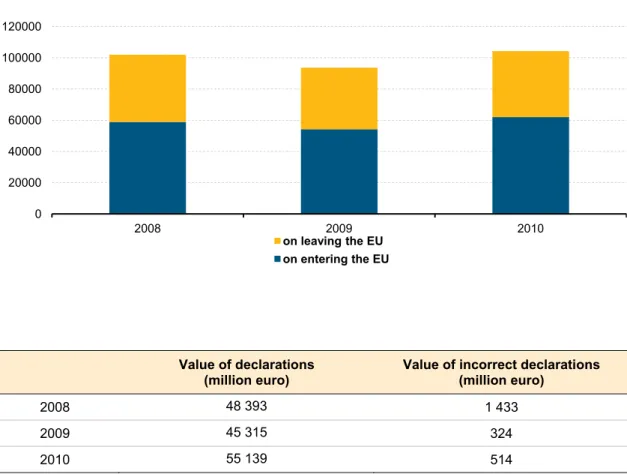
Table 4: Number of declarations made in application to the EU Cash Control Regulation ... 41
Table 5: Number of incorrect cash declarations or findings as a result of customs controls in
the EU at external borders ... 42
Table 6: Number of suspicious cash activities at the EU borders reported to the FIU (including
those based on declarations and smuggling) ... 45
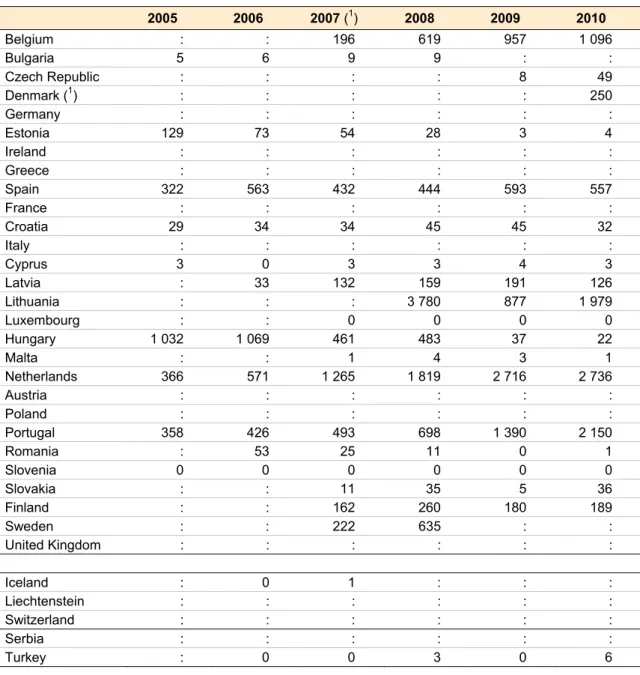
Table 7: Number of Suspicious Transaction Reports (STRs) sent to law enforcement (1) ... 48
Table 7.a: Percentage of reports sent to law enforcement by Member States ... 49
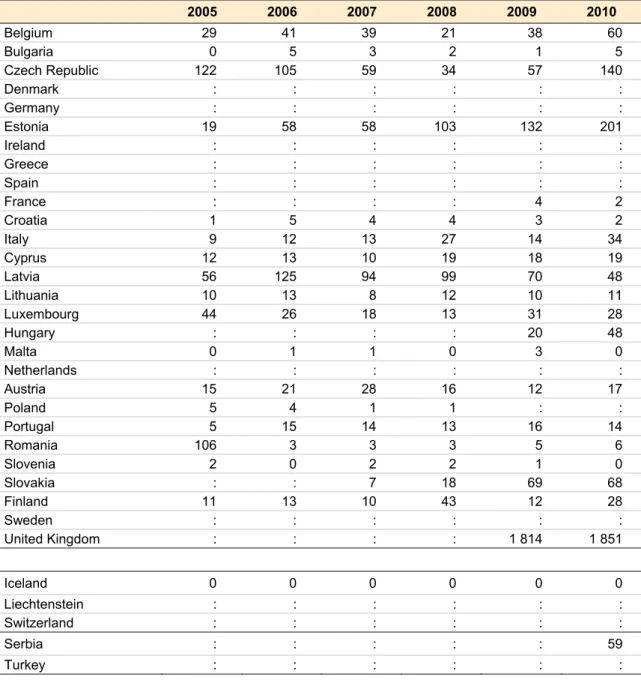
Table 8: Number of staff dedicated full time (or full time equivalent) to money laundering in
the FIU (1) ... 53
Table 9.1: Percentage of Suspicious Transactions Reports (STRs) sent by the Financial
Intelligence Unit (FIU) to law enforcement which are then investigated ... 58
Table 9.2: Number of cases initiated by law enforcement agencies on the basis of Suspicious
Transactions Reports (STRs) sent by the Financial Intelligence Unit (FIU) (1) ... 59
Table 10: Number of cases brought to prosecution: originating from Suspicious Transaction
Reports (STRs), Cash Transaction Reports (CTRs) and independent law enforcement
investigation (ilei) (1) ... 64
Table 11: Number of persons/legal entities convicted for money laundering offences (1) ... 68
Table 12: Number of sentences (by type) for money‐laundering offences (1) ... 72
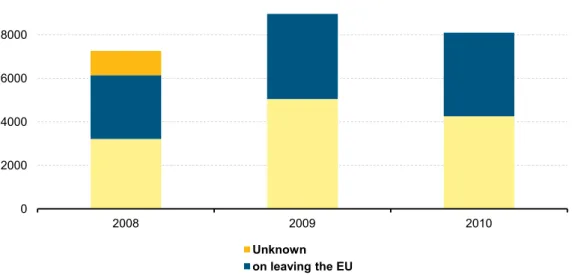
List of Figures
Figure 1: Declarations made in application to the EU Cash Control Regulation ... 39
Figure 2: Incorrect cash declarations or findings as a result of customs controls in the EU at
external borders ... 40
Figure 3: Total number cases brought to prosecution originating from STRs, CTRs or ILEI ... 63
Foreword
6
This publication is dedicated to Cynthia Tavares, who passed away suddenly in January 2013. Her work on crime statistics spanned twenty years, beginning first in the UK Home Office and then continuing as a Eurostat expert working on international crime and criminal justice statistics. She co-authored a series of annual Eurostat Statistics in Focus publications and drafted the first Eurostat Working Papers on Money Laundering and on Trafficking in Human Beings. She worked with colleagues in organisations around the world, including national statistical offices, the UN Office on Drugs and Crime and the European Sourcebook Group; her commitment and enthusiastic contribution to the development of international statistics on crime will be sadly missed.
Foreword
In 2011 Eurostat published a report on Money laundering in Europe, in the series Eurostat Methodologies and Working Papers. This represented a first attempt to collect information in a difficult and sensitive area of crime statistics. The present publication seeks to build upon the progress already made and to improve the quality of the existing information.
The need to produce comparable statistics for the European Union was stressed by the European Council in the Hague Programme of 2004, which tasked Eurostat with the collection of a set of agreed indicators. Following the conclusion of the Hague Programme, further development of crime statistics has taken place within the context of the Stockholm Programme, agreed by the Council in 2009. The Stockholm Programme stressed the need to extend the statistical coverage of crime to areas beyond those traditionally covered in national statistics, to include for example organised crime, money-laundering, cybercrime and trafficking in human beings.
In the 2010 Working Paper, Eurostat noted that the quality of the statistics did not in all respects comply with the stringent requirements of the European Statistics Code of Practice. Some improvement in this quality has been made possible through the gradual implementation of the Third Anti-Money Laundering Directive, but nevertheless suitable caution should be exercised in interpreting the figures, and the methodological notes and caveats provided should be rigorously taken into account in all subsequent analysis. Full details of the background to the data collections can be found in the 2010 Working Paper. In 2012, the Financial Action Task Force published a revised set of standards, and the Commission followed this up with a proposal for a Fourth Anti-Money Laundering Directive, adopted in 2013. The revisions entail a reinforcement of the “risk-based approach”, implementation of which will be particularly challenging in terms of understanding risks, thus strengthening the need for good quality data both at national and EU level. At the same time, the Fourth Anti-Money Laundering Directive has revised the evaluation methodology for assessing technical compliance with the Directive’s Recommendations and the effectiveness of anti-money laundering and counter‐terrorist financing systems, which will require solid statistical data (1).
In the production of the current Working Paper, Eurostat wishes to thank its contact points for crime statistics in the European Statistical System, and gratefully acknowledges the specialist information provided by the colleagues in the Commission’s Directorates-General responsible for Home Affairs, Internal Market and Services, and Taxation and Customs Union.
Foreword
6
New developments at European
Union and international level
1
New developments at European Union and international level
1. New developments at European Union and
international level
The first steps towards a European ambition
Promoting greater understanding and comparability of measures taken to address money laundering and terrorist financing is a vital part of reinforcing the effectiveness of the EU preventive framework and the existing measures to combat money laundering at national level.
In the field of money laundering, there are significant gaps between what has been promised and what has been actually achieved in terms of statistical data; between data at a national level and comparable data across the continent.
The European Commission, in partnership with the Member States and associated countries, has set out to fill these gaps. However, more is required than a “bookkeeping style” perspective on money laundering that runs from the filing of the suspicious transaction report to criminal conviction.
An integrated perspective is required to establish a cost/benefit analysis of national and European anti- money laundering tools.
The fight against money laundering is one of the European Commission’s strategic priorities. As such, this vast and complex criminal market is being addressed from different angles across various sectors. Several of the Commission’s Directorates-General (2) are coordinating their policies to provide joint
action that combines prevention, enforcement and financial support for Member State projects. In view of these actions, it has become apparent that there is a need to develop a better statistical knowledge of money laundering at national and European levels in order to provide a more precise and more reliable diagnosis of this criminal threat.
This deeper and more evidence-based knowledge has the potential to enrich analysis of the phenomenon and thus to enable a cost/benefit analysis of national and European anti-laundering systems. While this is the Commission’s long-term ambition, it will however take some years to implement, as the cost/benefit issue is complex and has barely begun to be explored at international level.
Exploring this terra incognita involves advancing methodically on the basis of current statistical
information available within the Member States. For that reason this report, the second publication of statistical data on money laundering at European level, is limited to the linear monitoring of the anti-money laundering chain, from the filing of the suspicious transaction report through to criminal conviction.
(2) DG Internal Market (the main player regarding the preventive site of fight against money laundering), DG Home Affairs in charge of the EU’s
repressive respond to ML and DG Taxation and Customs Union.
However, this first step, which should form a basis for drawing up a cost/benefit analysis, has run into difficulties. Twenty one years after the First Anti-Money Laundering Directive, national systems are now sophisticated enough to follow different routes. These strategic choices, the result of the principle of subsidiarity being applied, make it difficult to compare and therefore interpret current data.
Despite its limits, this publication represents a tangible result which deserves to be warmly welcomed since the difficulties faced were great. It bears testimony to the Commission’s commitment while offering a concrete basis for future work.
1.1. Short introduction to the fight against money laundering in
a European context
Historically, European anti-money laundering policy took a preventive focus, which involves protecting the proper functioning of the financial system from pollution by laundering schemes. The keystone of the European system remains the Third Anti-Money Laundering Directive, adopted in 2005 (3). The
preventive approach and the objective to protect the Internal Market justified the adoption of a directive, a first pillar instrument. As regards the repressive side of the EU’s response to money laundering, in particular the criminalisation of that offence, the European Commission is examining the possibility under Article 83(1) of the TFEU of proposing corresponding harmonisation legislation.
This distinction is significant. It stems from the international structure of the fight against money laundering adopted within the Financial Action Task Force (FATF) (4), based essentially, given the
prevailing preventive approach, on the filing of suspicious transaction reports.
Today, twenty one years after the First Anti-Money Laundering Directive was adopted, the European
corpus iuris is extensive, clearly showing the investment made by the Commission and the Member
States. The Third Anti-Money Laundering Directive sits alongside other related directives and regulations such as the Regulation on controls of cash entering or leaving the Community (5) managed by DG
Taxation and Customs Union. DG Home Affairs (and its predecessor, DG Justice, Freedom and Security) has put a lot of effort into cooperation between financial intelligence units (6)and harmonising to a certain
degree criminal penalties for money laundering (7). In addition, DG Home Affairs and DG Internal
Market co-chair the EU Financial Intelligence Units Platform and DG Home Affairs provides financial support to projects led by Member States and private partners to combat money laundering and terrorist financing. In particular, the Commission is also funding the FIU.Net project (8), a system enhancing
secure information exchange between the financial intelligence units of the Member States.
The legislative framework is progressively evolving and strengthening. In February 2012, the FATF amended its 40 Recommendations, the global standards for the fight against money laundering and terrorist financing. Various changes were introduced (9) which are designed to deliver more effective and
targeted measures to combat money laundering and terrorist financing. In parallel to the international
(3) Directive 2005/60/EC of the European Parliament and of the Council of 26 October 2005 on the prevention of the use of the financial system for
the purpose of money laundering and terrorist financing.
(4) The Financial Action Task Force (FATF) is an intergovernmental body which seeks to develop and promote national and international policies to
combat money laundering and terrorist financing. (5) Regulation 1889/2005 of 26 October 2005.
(6) Council Decision 2000/642/JHA of 17 October 2000 concerning arrangements for cooperation between financial intelligence units of the
Member States in respect of exchanging information.
(7) Council Framework Decision 2001/500/JHA of 26 June 2001 on money laundering, the identification, tracing, freezing, seizing and confiscation
of instrumentalities and the proceeds of crime. (8) See http://www.fiu.net/
(9)
http://www.fatf-gafi.org/media/fatf/documents/recommendations/pdfs/FATF%20Recommendations%20(approved%20February%202012)%20reprint%20May% 202012%20web%20version.pdf
1
New developments at European Union and international level
process, the European Commission carried out its own review process regarding the Third Anti-Money Laundering Directive. Based on both the results of the review process as well as the revised international standards, the Commission (DG Internal Market and Services) adopted a proposal for a revision of the Third Anti-Money Laundering Directive (10) in February 2013. This proposal recognises the importance
of data gathering as a valuable tool to enable Member States and obliged entities to review the effectiveness of their systems to combat money laundering and terrorist financing, as well as the important role solid data will play with respect to the preparation of risk assessments. The Commission’s proposal includes a revised and more detailed Article on statistics (11).
In addition to these legislative and operational activities, DG Home Affairs launched an initiative in collaboration with Eurostat, the Member States and associated countries. The aim is to collect statistical data on money laundering with a view to building the foundations of a (primarily statistical) structure, which in the long term should help to determine a cost/benefit analysis of national and European anti-money laundering provisions. This analysis should be valuable input for the Commission’s future policy development.
At this stage, the focus was to compile the statistical data available and to identify the obstacles to comparing data at European level.
1.2. Background to the first publication of European statistics
on laundering
Quantitative information on the trends, rates and types of crime and on the measures used to prevent and combat different criminal markets, both in the Member States and at European Union level, is essential in order to develop an evidence-based policy against cross-border crime. This knowledge gap must be targeted in a coherent and uniform way giving priority attention to all “Eurocrimes” (12) as referred to in
Article 83(1) of the Treaty on the Functioning of the European Union.
Since 2005, the Commission has identified the lack of reliable and comparable statistical data from Member States as an obstacle to the qualitative assessment of its policies.
For that reason, a 2006-2010 action plan - Developing a comprehensive and coherent EU strategy to measure crime and criminal justice (13)- was adopted on the basis of the mandate given by the Member
States under the Hague Programme, which laid down the political priorities in the field of freedom, security and justice for the period 2005-2009.
The publication of the Working Paper in 2010 was the end result of pioneering work. No international organisation had ever before carried out work of this scale on money laundering. It was also the first time that a “Eurocrime” was the subject of a publication of statistical data consolidated at European level. However, this was only the first step towards the real objective which the Commission has set itself: to enable a cost/benefit analysis of anti-money laundering provisions which would feed into and clarify not only political decision-making but also operational cooperation. The current report should be seen as a further step in this direction.
(10)COM(2013)45final also called 4th Anti-Money Laundering Directive.
(11)COM(2013)45final, Chapter V, Record keeping and statistical data, art. 41.
(12) Article 83 paragraph 1 of the Treaty on the Functioning of the European Union spells out the list of serious crimes with a cross-border
dimension for which minimum rules concerning the definition of criminal offences and sanctions could be established at EU level. They include: terrorism, trafficking in human beings and sexual exploitation of women and children, illicit drug trafficking, illicit arms trafficking, money laundering, corruption, counterfeiting of means of payment, computer crime and organised crime.
1.3. The purpose and outcomes of this publication: a second
vital step, but with moderate results
This publication has four aims. They are:
- to clearly identify obstacles to comparing data between Member States; - to bring clarity and transparency to a complex issue;
- to encourage Member States to improve their statistical expertise by collecting data more rigorously, in particular in the judicial phase of money laundering cases;
- to encourage Member States to develop a cost/benefit analysis of their anti-money laundering scheme.
At this stage of the development of European statistical work on money laundering, the Commission is endeavouring to obtain a linear view of the anti-money laundering chain. Ideally, this would track a suspicious transaction report from its filing to criminal conviction, allowing rates of progression between each successive stage to be calculated.
While determining such rates would offer some indication of the efficiency of the anti-money laundering regime, one has also to recognise their limitations. Trying to put a simple figure on how many filed suspicious transaction reports led to criminal conviction has proved challenging due to the complex and fragmented (i.e. “non-linear”) nature of the anti-money laundering chain. This is one of the conclusions of the second data collection exercise, as presented in this report. However, comparison based on the current indicators over time (trends) may provide a clearer indication of the performance within a Member State and in the EU as a whole.
It should also be noted that one indicator of the collection takes account of the number of investigations opened without suspicious transaction reports - without the contribution of the Financial Intelligence Unit (FIU) - with the aim of trying to determine the role of the prudential regime in the fight against money laundering.
With regard to the figures for unrecorded money laundering, the difference between the real and known figures can only be approximated and indirectly estimated. The weaker the correlation, the cruder the estimate, to the extent that the very point of having an estimate is questionable, as with the United Nations Office for Drugs and Crime (UNODC) estimate of$1.6 trillion, amounting to around 2.7% of global GDP.
At this stage, whilst Article 33(1) of the Third Anti-Money Laundering Directive states that Member States must review the effectiveness of their systems to combat money laundering, Article 33(2) gives guidance on the type of statistics necessary to carry out this review (14). This non-exhaustive list must be
regarded as a minimum requirement. However, some Member States have continued to encounter difficulties in providing data in a reliable way, or simply in communicating that data. This is particularly true with regard to the number of persons prosecuted and the number of confiscations, which indicates a need to improve the collection and consolidation of statistical data at national level.
Article 33(2) makes reference to the activity of law enforcement services and their relations with reporting entities (banks, casinos, notaries, lawyers etc.) whereas these statistical data should also be
(14) Article 33(2): “Such statistics shall as a minimum cover the number of suspicious transaction reports made to the FIU, the follow-up given to
these reports and indicate on an annual basis the number of cases investigated, the number of persons prosecuted, the number of persons convicted for money laundering or terrorist financing offences and how much property has been frozen, seized or confiscated”.
1
New developments at European Union and international level
compared with the threat of money laundering itself. A comparison of this kind would be wholly in line with the spirit of Article 33(1) of the Third Anti-Money Laundering Directive.
The table below summarises the results of the three data collections, with the indicators used for this publication highlighted in blue. The 23 indicators are divided into three stages in accordance with the linear approach described in Section 1.3. As can be seen, the Member States collaborated better in the later collections of data, in particular thanks to an awareness raising campaign and the quality of the list of contact points, drawn up by the Commission with the support of the Member States.
Number of EU Member States and other countries which supplied data for the first, second and third data collections
Summary of responses:
(blue shading = indicators considered in this publication)
Number of countries able to provide data for collections in
2008 / 2009 / 2010
(grey shading = third data collection)
EU Member
States(15) (27) countries (7)Other
REPORTING / INTELLIGENCE PHASE
1.1 Number of Suspicious Transaction Reports (STRs) filed by
each category of obliged entities 23/25/26 5/6/5
1.2 Number of Cash Transaction Reports (CTRs) filed by each
category of obliged entities 9/10/12 0/2/2
1.3 Number of postponement orders adopted on reported
transactions 13/16/19 0/3/3
1.4 Number of money laundering investigations carried out independently by law enforcement agencies (without a prior STR)
14/11/15 2/1/2
1.5 Number of declarations made in application to the EU Cash
Control Regulation 14/27/27 0/2/-
1.6 Number of incorrect cash declarations or findings as a result of
customs controls in the EU at external borders 12/27/27 0/1/- 1.7 Number of suspicious cash activities at the EU borders reported to the FIU (including those based on declarations and
smuggling)
12/15/17 3/4/4
1.8 Number of STRs sent to law enforcement and on which further
analysis was made 15/18/18 3/5/5
1.9 Number of staff dedicated full time (or full time equivalent) to
money laundering in the FIU 20/20/20 5/6/6
(15)
Summary of responses:
(blue shading = indicators considered in this publication)
Number of countries able to provide data for collections in
2008 / 2009 / 2010
(grey shading = third data collection)
EU Member States(16) (27)
Other countries (7)
INVESTIGATION PHASE
2.1 Number of cases initiated by law
enforcement agencies on the basis of STRs sent by the FIU
17/17/16 0/4/3
2.2 Number of staff dedicated full time (or full time equivalent) to money laundering in law enforcement agencies
10/16/17 0/2/2
2.3 Number of cases brought to prosecution: originating from STRs, CTRs and
independent law enforcement investigation
15/19/20 0/2/3
JUDICIAL PHASE
3.1 Number of staff dedicated full time (or full time equivalent) to money laundering in the judiciary
3/5/4 0/1/0
3.2 Number of persons / legal entities convicted
for money laundering offences 13/19/23 3/4/6
3.3 Number of convictions for laundering
proceeds of crimes committed abroad 6/7/8 0/0/2 3.4 Number of convictions for crimes other than
money laundering originating from STRs 4/3/3 0/1/0
3.5 Number of sentences by type for money
laundering offences 15/18/20 1/4/5
3.6 Number of unsuspended custodial
sentences by length (as principle offence, as predicate offence)
13/15/15 3/4/5
3.7 Number of freezing procedures (based on a
court order) 8/10/10 0/1/3 3.8 Number of confiscation procedures 12/13/13 1/2/2 3.9 Number of requests received for freezing
orders from another EU Member State and the value of frozen assets
5/9/8 0/1/1
3.10 Number of requests received for confiscation orders from another EU Member State and the value of confiscated assets
7/10/7 0/1/1
3.11 Amounts recovered from assets 9/10/6 0/0/1
(16)
1
New developments at European Union and international level
1.4. The difficulty of interpreting data or the issue of
comparability of statistics between Member States
This key question is complex for legal, operational and statistical reasons.
Legal reasons
Article 5 of the Third Anti-Money Laundering Directive authorises Member States, in accordance with the principle of subsidiarity (17), to lay down measures which go beyond the obligations required by the
Directive (18). This allows for a degree of flexibility, as can be seen in the adoption of different concepts
when implementing the Third Directive. Whilst the Suspicious Transaction Report (STR) is the counting
unit most used by Member States, some (United Kingdom, Cyprus and Finland) have preferred to use the Suspicious Activity Report (SAR). Furthermore, The Netherlands has preferred to use a different concept
in the form of the Unusual Transaction Report (UTR).
→The use of different counting units, each with a different scope, inevitably compromises the comparability of data between Member States (19).
Moreover, it would be pointless to compare the absolute number of such reports without looking to correlate figures in relative terms, that is to say by comparing them with the size of the financial sector of each Member State.
Operational reasons
The flexibility arising from the application of the principle of subsidiarity and the use of a directive (20) is
also evident in the operational choices made by the Member States. The Member States are free to determine their approach in the fight against money laundering in a way consistent with the obligations in force. Consequently, each Member State has made different operational choices.
→From these choices, very different needs and working methods often emerge. Inevitably, these anti-money laundering models act as prisms through which national statistics must be interpreted, further restricting the comparability of data.
Accordingly, each Member State may decide, within the scope of the Third Directive, to make the reporting obligations for reporting entities (banks, casinos, notaries, etc.) subject to a different set of objective criteria (e.g. there may be an automatic reporting obligation on moving from one variable threshold of one Member State to another) and subjective criteria (where the reporting entity, after having made its own risk assessment, may decide whether or not to submit a report to the FIU).
(17) Article 5(3) of the Treaty on European Union provides: “Under the principle of subsidiarity, in areas which do not fall within its exclusive
competence, the Union shall act only if and insofar as the objectives of the proposed action cannot be sufficiently achieved by the Member States, either at central level or at regional and local level, but can rather, by reason of the scale or effects of the proposed action, be better achieved at Union level”.
(18) It provides: “The Member States may adopt or retain in force stricter provisions in the field covered by this Directive to prevent money
laundering and terrorist financing”.
(19) A grandfather who buys a car for his granddaughter paying with EUR 20 000 hidden “under the mattress” makes a transaction which is unusual
but does not in itself arouse a suspicion of money laundering. This same transaction will therefore be reported in one national system and not in another, illustrating the different scopes of those systems.
(20) The legal basis is binding on Member States only in relation to the objectives to be achieved, with the means deemed necessary remaining at
Of course, with regard to the objective criteria, the lower the threshold, the greater the number of reports which will be filed.
→ As a result, the fact that a Member State records a high number of reports must not necessarily be regarded as an indicator of susceptibility to money laundering and/or of the effectiveness of the prevention system.
These subjective criteria remain, despite established guidelines, within the discretion of the reporting entities. Although they risk allegedly deterrent fines for not reporting a transaction or a suspicious or unusual activity, the number of reports filed on the basis of those subjective criteria inevitably varies as a result of the degree of sensitivity and professionalism of the economic operator in question (which varies from one economic sector and from one Member State to another). This has a direct impact on the statistics.
→ Data are therefore to be considered as a possible indication of money laundering but will be influenced by various factors (21).
These operational differences between Member States also have ramifications in terms of investigations. Some FIUs have extensive powers which allow them to carry out real groundwork, enabling them to hand over detailed files which in fact are equivalent to investigations; obviously, putting together such files is very time consuming. Other FIUs may function differently, for example by requiring and obtaining large amounts of data concerning suspicious or unusual transactions, and performing analysis to identify trends and movements which may not be visible by looking at transactions individually. They will therefore tend to submit more files where the suspicion of laundering in those files will be weaker, leaving the task of pursuing and deepening the investigation to the investigation services.
→ FIUs which make full use of extended powers of investigation will tend to hand over fewer files to the investigation services than other FIUs. Those files will, however, contain stronger elements, thus facilitating the investigation phase. FIUs requiring reports to be filed on the basis of lesser suspicions may use the reports to perform trend analysis. It is essential to consider this point when comparing the number of files sent to investigation services.
Statistical reasons
In the context of data collection, Eurostat has found that Member States tend to aggregate, and therefore to count, their reports differently. Member States tend to classify them in files according to their relevance (by the name of the natural or legal person forming the subject matter of the report). In some Member States, all relevant reports held in one single file may be counted whereas other Member States count only the first report which led to the file being opened. However, a file may comprise several STRs, SARs and UTRs, each in turn made up of several transactions or activities (sometimes thousands) declared over many years.
→ This has a direct impact on the comparability of data between Member States.
1
New developments at European Union and international level
This issue of comparability arises again at the investigation phase: several files sent by the FIU may form just one enquiry at the investigation stage and will tend to be accounted for as such.
→That is why, in statistical terms, it becomes difficult to follow a report from its filing to a possible criminal conviction because the unit of account changes between the reporting phase and the investigation phase (22).
In order to address this issue, the Commission had submitted guidelines with the aim of establishing common definitions and counting units/rules in order to ensure as much comparability as possible within each of the three phases of the anti-money laundering regime. However, these guidelines have been only partly followed, limiting their potential value.
CONCLUSION:
The cost/benefit analysis of anti-money laundering regimes needs continuous efforts with the objective of being able to use it as an element for future policy development at EU level.
As previously mentioned, the Commission’s long term aim is to draw up a cost/benefit analysis of anti-money laundering provisions. Article 33(1) of the Third Anti-Money Laundering Directive (23) requires
Member States to review the effectiveness of their anti-money laundering provisions (i.e. how and to what degree they produce the desired effect). The Commission intends to support this effort by facilitating the sharing of approaches and best practice on the subject.
The Commission already provided financial support to a project led by the University of Utrecht, the ECOLEF project, aiming to establish the cost/benefit analyses of national anti-money laundering/ financing of terrorism regimes in the 27 Member States(24). The final results of this study will be
published in the near future.
The Commission also continues to follow the debates within the FATF.
According to a 2009 study, the Third Anti-Money Laundering Directive is seen, within the financial sector of the internal market (25), as a costly directive. It requires the creation of a system to monitor
transactions and clientele, which is relatively onerous for the banks. Consequently, some in the private sector question the effectiveness of such a system. It is here that the need for reliable statistics is acute, not only to provide a basis for the justification of a policy’s relevance to private partners in the system, but in particular to improve it by adapting it to needs.
It is therefore a matter of comparing the available data with the analyses of the criminal threat in order to draw up a European and national money laundering profile. Once this profile has been created, the aim
(22) Furthermore, it remains difficult to determine the nature of the evidence which leads to conviction by the court. The evidence may well relate to
confessions or phone tapping, in which case the file sent by the FIU and supplemented during the investigation phase will be used above all to assess the nature of the proceeds of the crime at the confiscation stage.
(23) Article 33(1): "Member States shall ensure that they are able to review the effectiveness of their systems to combat money laundering or
terrorist financing by maintaining comprehensive statistics on matters relevant to the effectiveness of such systems."
(24) University of Utrecht, "The Economic and Legal Effectiveness of Anti-Money Laundering and Combating Terrorist Financing Policy" also called
ECOLEF project (ref.JLS/2009/ISEC/AG/87).
(25) See Final Report by Europe Economics, Study on the Cost of Compliance with Selected FSAP Measures,
http://ec.europa.eu/internal_market/finances/docs/actionplan/index/090707_cost_of_compliance_en.pdf, 5 January 2009. “In order to strike a balance between depth and breadth of coverage, we have focused our work upon the following Directives: the Capital Requirements Directives (the CRDs); the Transparency Directive; the Markets in Financial Instruments Directive (MiFID); the Third Anti-Money Laundering Directive (3AMLD); the Prospectus Directive and the Financial Conglomerates Directive (together, the Selected Directives). With the exception of the 3AMLD, these measures formed important parts of the Financial Service Action Plan (FSAP).”
will be to identify those economic sectors which are most vulnerable to criminal penetration by means of money laundering and the consequences of such penetration (impact of money laundering) in order to better calibrate the strategic approach to both legislation and operations at European level.
A combined approach bringing together risk analyses (threats, vulnerabilities and impact) as well as legal analyses (e.g. are relevant laws correctly implemented and adapted to identified needs?) and economic analyses (e.g. what does the system cost reporting entities and public authorities?) would help in identifying anomalies more effectively.
By targeting weaknesses more effectively, the anti-money laundering provisions should be able to be adapted more rapidly, more effectively and with greater ease to changes in the criminal threat (at a fair cost for operators and public authorities) and without necessarily having to reform legal instruments, which by definition is a slow and arduous process.
Although there is still much to do in order to establish a true cost/benefit analysis of anti-money laundering provisions, the Commission is confident that these efforts will have an important impact on the EU’s fight against money laundering future and its policy development in this field.
Detailed information on
selected indicators
2
Detailed information on selected indicators
2. Detailed information on selected indicators
Information on selected indicators for the three stages of the anti-money laundering regime (reporting/intelligence, investigation and judicial) is presented in this section.
Guidance Notes and a Glossary of Terms were provided to the Eurostat contact persons for each indicator in order to facilitate the collection of the relevant statistical data. These Guidance Notes and Glossary of Terms are reproduced here together with the data and metadata. The Eurostat contact persons provided the data for Tables 1-3 and 6-12 whilst DG Customs and Taxation Union provided the data for Tables 4 and 5.
The Eurostat contact persons were also provided with a document, “Guidelines and rationale for the second collection of data based on detailed comments on the first money laundering data collection exercise” (see Annex) in order to facilitate the collection of the relevant statistical data. For each table, the Guidelines included the standard definition which countries were asked to observe in assembling the figures. If the national figures diverged from the proposed standard definition, the contact person was asked to provide an explanation. These explanations (or metadata) are included in the “Country notes” applicable to each table. Please note, however, that only a selection of the most significant metadata is reproduced for each table in this publication.
Some tables show trends. These trends need to be carefully interpreted as they can both bear testimony of better reporting and of an overall improvement in statistical awareness, and perhaps also provide an indication of Member States’ legal actions against money laundering. These trends need also to be considered with other types of information such as threat analysis and should not be used and interpreted in isolation.
As a result, users are reminded that they need to exercise caution when using the data, to study the metadata associated with each table, to take note of the difficulty of interpreting and comparing data from Member States (see Section 1.4) and to take into account the comments on the following pages.
Statistical data are available for the following stages:
Reporting/Intelligence stage
1. Number of Suspicious Transaction Reports (STRs) filed each category of obliged entities 2. Number of postponement orders adopted on reported transactions
3. Number of money laundering investigations carried out independently by law enforcement agencies 4. Number of declarations made in application to the EU Cash Control Regulation
5. Number of incorrect cash declarations or findings as a result of customs controls in the EU at external borders
6. Number of suspicious cash activities at the EU borders reported to the Financial Intelligence Unit (FIU) (including those based on declarations and smuggling)
7. Number of Suspicious Transaction Reports (STRs) sent to law enforcement
8. Number of staff dedicated full time (or full time equivalent) to money laundering in the Financial Intelligence Unit (FIU)
Investigation stage
9. Number of cases initiated by law enforcement agencies on the basis of Suspicious Transaction Reports (STRs) sent by the Financial Intelligence Unit (FIU)
10. Number of cases brought to prosecution originating from Suspicious Transaction Reports (STRs), Cash Transaction Reports (CTRs) and independent law enforcement investigation (ileis)
Judicial stage
11. Number of persons/legal entities convicted for money-laundering offences 12. Number of sentences, by type, for money-laundering offences
2.1. Glossary of terms
Cash for the purposes of Regulation (EC) No 1889/2005 on controls of cash entering or leaving the
Community is defined in Article 2 of the Regulation as:
Bearer-negotiable instruments, including monetary instruments in bearer form such as travellers cheques
Negotiable instruments (including cheques, promissory notes and money orders) that are either in bearer form, endorsed without restriction, made out to a fictitious payee, or otherwise in such form that title thereto passes upon delivery
Incomplete instruments (including cheques, promissory notes and money orders) signed, but with the payee's name omitted
Currency, i.e. banknotes and coins that are in circulation as a medium of exchange.
Cash transaction report means a disclosure made to an FIU, by a party having an obligation to disclose
based on a threshold established by national legislation.
Confiscation means a penalty or a measure, ordered by a court following proceedings in relation to a
criminal offence or criminal offences resulting in the final deprivation of property (2005 Warsaw Convention of the Council of Europe on Laundering of the Proceeds from Crime and Financing of Terrorism, CETS 198).
Directive 2005/60/EC (26)of the European Parliament and of the Council of 26 October 2005 on the
prevention of the use of the financial system for the purpose of money laundering and terrorist financing.
Egmont Group (27)is an informal network of FIUs whose goal is to facilitate international co-operation
especially in relation to the sharing of information and expertise.
Financial Action Task Force (FATF) (28)is an inter-governmental policy making body whose purpose
is to establish international standards, and develop and promote policies, both at national and international level, to combat money laundering and terrorist financing. In response to mounting concern over money laundering, the FATF was established by the G-7 Summit that was held in Paris in 1989. The European Commission is member of the FATF together with 15 Member States. Countries that joined the
(26) http://eur-lex.europa.eu/LexUriServ/LexUriServ.do?uri=OJ:L:2005:309:0015:0036:EN:PDF
(27) http://www.egmontgroup.org/
2
Detailed information on selected indicators
European Union from 2004 onwards are represented in the MONEYVALgroup, which has the status of observer at the FATF and since 2006 the status of associated member (allowing more countries within the MONEYVAL group to attend and participate in the FATF meeting). The FATF develops and promotes national and international policies to combat money laundering and terrorist financing. It works to generate the necessary political will to bring about legislative and regulatory reforms in these areas. This is done by means of the adoption and revision of a series of recommendations.
Financial Intelligence Unit (FIU) means the central national unit responsible for receiving (and to the
extent permitted requesting), analysing and disseminating to the competent authorities, disclosures of information which concern potential money laundering, potential terrorist financing or are required by national legislation or regulation. This definition is enshrined in Article 21, paragraph 2 of the EU Third Anti-Money Laundering Directive.
Freezing or seizure means temporarily prohibiting the transfer, destruction, conversion, disposition or
movement of property or temporarily assuming custody or control of property on the basis of an order
issued by court or other competent authority (2005 Warsaw Convention of the Council of Europe on Laundering of the Proceeds from Crime and Financing of Terrorism, CETS 198).
Money-laundering investigation means an investigation initiated by a disclosure by an obliged party or
by intelligence gathered by investigators.
MONEYVAL group (29) - countries that joined the European Union from 2004 onwards are represented
in the MONEYVALgroup, which has the status of observer at the FATF and since 2006 the status of associated member (allowing more countries within the MONEYVAL group to attend and participate in the FATF meeting).
Regulation (EC) No 1889/2005 (30) of the European Parliament and of the Council of 26 October 2005
on controls of cash entering or leaving the Community.
Seizure – see Freezing.
Self-laundering refers to "own proceeds" laundering by a person who may be the author of the offence. Suspicious Activity Report (SAR) is a disclosure made to an FIU by a professional having an obligation
to disclose based on any suspicious activity of money laundering or terrorist financing. The main difference with STR is the fact that the SAR scope is broader as it may not include a transaction.
Suspicious transaction report (STR) is a disclosure made to an FIU by a party having an obligation to
disclose based on any type of suspicion of money laundering or terrorist financing which are required by regulations which may include unusual behaviour. Suspicious transactions are handed to the appropriate law enforcement units for investigation. The counting unit was specified as the initial STR received for each case opened by the FIU from each category of obliged entity.
Third-party money laundering – means laundering by a person other than the author of the offence.
(29) http://www.coe.int/t/dghl/monitoring/moneyval/
Unusual transaction is a transaction designated as such on the basis of indicators established at national
level. The unusual transaction must be reported by the relevant institutions to an FIU. Unusual transactions are analysed by the FIU and, where suspicion of money laundering or terrorist financing can be established, a Suspicious Transaction Report is forwarded to the appropriate law enforcement Units for investigation.
Unusual transaction report (UTR) is a disclosure made to an FIU by a professional with an obligation
to disclose, based on unusual behaviour in a client's profile. The main distinction between an STR and UTR is the higher standards and quality expected of STRs.
2
Detailed information on selected indicators
2.2. Statistical data
2.2.1. Reporting/Intelligence stage
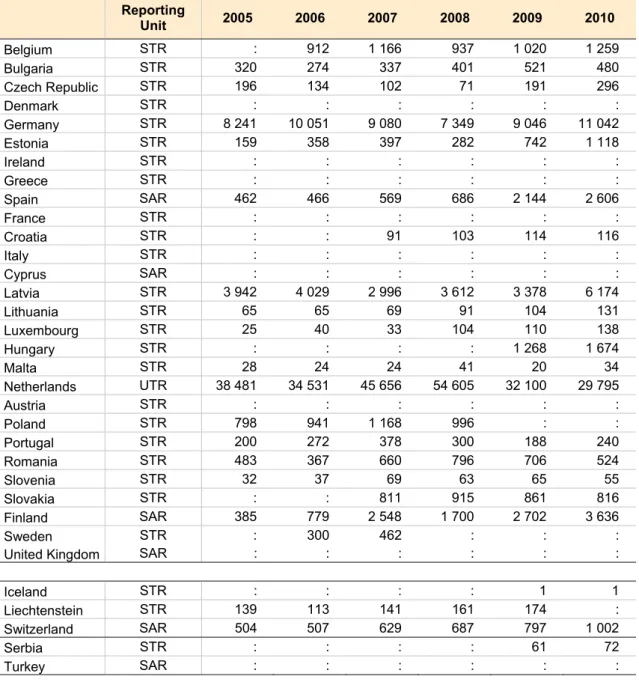
During this third data collection, a number of countries have revised their data for 2008. This explains the discrepancies with the figures published in 2010. Moreover, the reporting unit for Spain is not the Suspicious Transaction Report as erroneously stated in 2010 publication, but the Suspicious Activity Report. Figures for 2008, 2009 and 2010 for STRs (or SARs and UTRs, if applicable) are presented in the table. Nearly all Member States (apart from Ireland) were able to provide some data and a full or partial breakdown by obliged entity.
The figures reported vary greatly, reflecting the different sizes of the respective financial markets and the differences in the concepts, the counting rules and the reporting practices. FIUs tend to process transactions received in STRs as cases. Relevant cases are sent to the law enforcement authorities. Some FIUs record all related STRs as one case, while others only count the first case-opening STR. As a result some countries report extremely high figures.
For some Member States (Cyprus, Spain, Finland, and United Kingdom) the concept is interpreted as a Suspicious Activity Report (SAR) which may include activities not related to any particular monetary transaction but to the opening of a bank account. One Member State (NL) records Unusual Transaction Reports (UTR) which, if found to be suspicious, may be sent to the law enforcement authorities. In 2008 and 2009 Latvia reported the highest number of STRs, followed by Belgium, France, Italy and Sweden. In 2010, it was Italy that reported the highest number of STRs and more than twice the number reported in 2008.
All in all, there is an increase in the total number of STRs and SARs throughout the reference period 2008-2010. Calculations were based only on the 22 Member States that provided data for all three reference years.
Table 1: Number of reports filed by type
Number of
reports filed 2008 2009 2010
STR 88 499 101 341 126 116
SAR 247 366 261 312 266 388
UTR 295 464 90 976 118 559
In particular, Tables 1.b – 1.d show that 13 Member States show an increase from year to year, 7 Member States show an increase in 2010 in comparison to 2008 whereas 6 Member States have reported a smaller number of STRs or SARs in 2010. It is however possible that the 2010 figures could be revised in the future as in the case of the 2008 data.
Similarly, Switzerland, Serbia and Turkey show an increase in the number of STRs contrary to what happened in Croatia. This increase could be a sign of a substantive progress if disclosures were indeed related to money laundering. However, this increase could alternatively be a product of over-reporting whereby only a small proportion of these reports are deemed by law enforcement as worthy of investigation. This could only truly be assessed in a longer time frame depending on judicial follow-up (and a reliable corresponding collection of data).
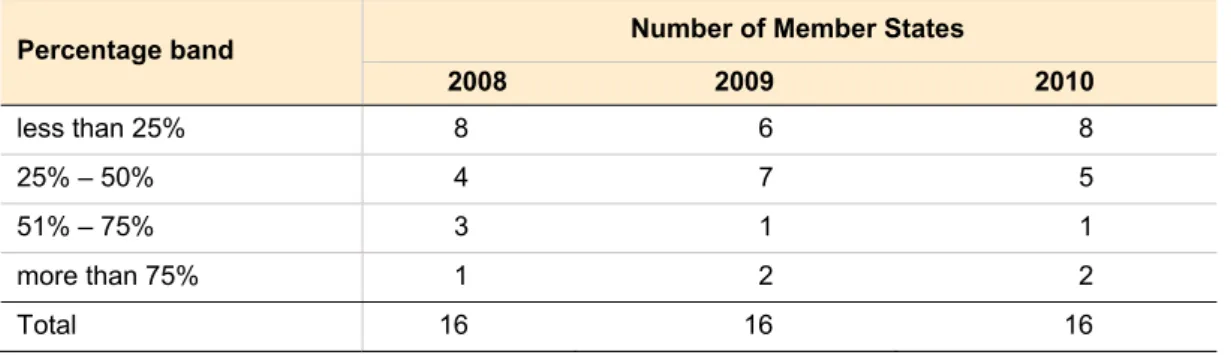
Credit institutions (31) (banks) are the principal source of STRs. The following table gives the distribution
of the percentage of STRs, SARs or UTRs that came from credit institutions. For example, in half of the Member States that provided data, STRs from credit institutions represent more than 75 % of the total number of STRs filed by the obliged entities. The Member States with the lowest percentages are Finland, the Netherlands and the United Kingdom for all three years of reference. It is important to note that none of them files STRs, but SARs or UTRs.
Table 1.a: Percentage of STRs, SARs or UTRs from credit institutions
Percentage of STRs, SARs or UTRs from credit institutions
Number of Member States
2008 2009 2010 less than 25 % 3 4 4 25 % – 50 % 2 4 2 51 % – 75 % 7 4 6 more than 75 % 14 12 10 Total 26 24 22
The percentage of STRs or SARs that come from credit institutions is reduced in 2010 for a number of Member States. The highest reduction was noted in Portugal where in 2008 94 % of the STRs were filed by credit institutions, whereas in 2010 only 48 % of STRs were filed by credit institutions.
(31) As defined in Article 1 of Directive 2000/12/EC as "an undertaking whose business is to receive deposits or other repayable funds from the
2
Detailed information on selected indicators
Table 1.b: Number of Suspicious Transaction Reports (STRs) filed by each category of obliged entities, 2008
Reporting Unit credit inst itut ions lif e insur ance companie s invest ment firm s mutual funds money t ransf er inst itut ions bureaux d e change lawy ers notaries external ac counts
/ auditors tax adv
isors real est at e agent s casino s traders in goods above Euros1 500 0 trus ts company serv ice
providers others financial inst
itut ions TOTAL Belgium STR 4 032 85 2 0 : 8 576 3 320 47 : 1 1 047 : : : 1 441 : 15 554 Bulgaria STR 492 0 1 0 0 0 0 1 0 0 1 5 0 0 0 66 : 566 Czech Republic STR 2 090 : : : : : : : : : : : : : : 230 : 2 320 Denmark STR 545 0 : : 711 273 5 : : 0 1 17 : : : 1 : 1 553 Germany STR 6 352 37 0 0 920 0 9 5 3 5 0 4 9 0 0 5 : 7 349 Estonia STR 3 028 2 1 0 2 136 41 6 53 3 0 0 37 23 0 0 264 252 5 846 Greece STR 1389 : 204 : 322 37 : : : : : : : : : 272 : 2 224 France STR 11 511 703 58 10 : 1 467 3 347 24 : 3 37 11 : : 191 200 14 565 Croatia STR 1 948 175 3 : : : : 2 : : : : : : : 25 : 2 153 Italy STR 12 614 147 4 8 1 071 0 6 103 5 37 13 3 : 20 : 9 183 14 223 Latvia STR 21 266 26 0 0 414 0 3 4 0 0 0 0 0 0 0 2 250 : 23 963 Lithuania STR 126 : : : : : : : : : : : : : : 66 : 192 Luxembourg STR 636 27 45 : : : 2 1 33 0 1 7 0 : : : : 752 Hungary STR 8 165 83 370 7 : 981 3 4 10 1 : : 3 : : 2 51 9 680 Malta STR 44 0 2 0 13 0 1 0 0 0 0 3 0 5 0 1 : 69 Austria STR 992 8 : : : : 6 3 1 : 3 : 8 : : 38 : 1 059 Poland STR 1 260 4 21 : : : 2 : : : : : : : : 3 : 1 290 Portugal STR 535 3 0 0 1 17 0 0 0 0 1 0 1 0 0 10 : 568 Romania STR 1 545 5 3 : 17 1 2 225 : : 2 12 51 : 2 468 5 2 338 Slovenia STR 188 0 0 0 0 0 2 0 2 0 0 0 0 0 0 0 0 192 Slovakia STR 1 942 261 0 0 0 0 0 5 1 0 0 0 49 0 0 17 : 2 275 Sweden STR 7 232 0 5 : 1 452 4 177 : : 2 0 0 145 : 4 1 30 : 13 048
Member States reporting Suspicious Activity Reports (SARs)
Spain SAR 2 156 11 12 : 195 : 32 248 6 : 30 2 : : : 212 : 2 904
Cyprus SAR 216 0 1 0 0 0 2 : 2 0 0 : 0 0 0 23 : 244
Finland SAR 876 67 6 : 17 225 : 5 : 12 : 14 4 252 7 : : 288 : 22 752
United Kingdom SAR 202 : 909 : 8 438 3 524 6 319 : 7 104 97 170 : 41 : 48 25 994 168 620 221 466
Member States reporting Unusual Transaction Reports (UTRs)
Netherlands UTR 5 013 13 : 0 288 799 0 16 568 112 7 0 538 53 4 : 341 : 295 464
Member States not providing data
Ireland : : : : : : : : : : : : : : : : : : : Iceland STR : : : : : : : : : : : : : : : : : : Liechtenstein STR 119 6 0 0 1 0 1 0 0 0 0 : 0 61 : 1 : 189 Switzerland SAR : : : : : : : : : : : : : : : : : 851 Serbia STR : : : : : : : : : : : : : : : : : : Turkey SAR 4889 10 0 0 : 0 0 1 0 0 0 : : : : 0 24 4 924
: Data not available or concept does not apply. 0 = zero (no cases) in that year.
Reporting Unit credit inst itut ions lif e insur ance companie s invest ment firm s mutual funds money t ransf er inst itut ions bureaux de change lawy ers notaries external ac counts
/ auditors tax adv
isors real est at e agent s casino s traders in goods above Euros1 500 trus ts company serv ice
providers others financial inst
itut ions TOTAL Belgium STR 3 628 82 1 1 : 9 973 3 251 120 : 9 1 055 : : : 2 047 : 17 170 Bulgaria STR 640 : 0 0 : 0 0 3 0 0 0 5 1 : 0 42 100 791 Czech Republic STR 1 932 : : : : : : : : : : : : : : 292 : 2 224 Denmark STR 755 0 0 0 797 499 11 0 0 4 0 25 0 0 0 4 0 2 095 Germany STR 8 111 47 1 0 830 0 16 5 1 1 1 8 12 : : 7 6 9 046 Estonia STR 2 583 0 3 0 2 078 48 4 50 3 0 1 2 5 0 0 327 1 159 6 263 Greece STR : : : : : : : : : : : : : : : : : : France STR 12 254 1 007 67 58 : 2 249 2 370 77 : 33 30 12 : 0 476 675 17 310 Croatia STR : : : : : : : : : : : : : : : 1 493 494 Italy STR 17 147 232 3 24 2 721 0 3 69 9 38 3 6 : 33 : 14 357 20 659 Latvia STR 21 326 4 0 0 10 7 13 2 0 0 0 0 0 0 0 7 077 : 28 439 Lithuania STR 141 : : : : : : 31 : : : : : : : 41 : 213 Luxembourg STR 1 166 46 54 : : : 6 2 41 1 0 15 1 : : : : 1 332 Hungary STR 4 637 134 166 3 5 416 9 2 11 0 0 0 0 : : 1 23 5 407 Malta STR 26 0 3 0 6 0 2 1 4 0 2 4 0 2 3 10 : 63 Austria STR 1 239 12 : : : : 8 15 5 : : : 5 : 1 100 : 1 385 Poland STR : : : : : : : : : : : : : : : : : : Portugal STR 594 1 0 0 12 6 0 0 0 0 0 0 1 0 0 20 : 634 Romania STR 1 876 8 4 : 43 : : 200 : 1 1 11 9 : 41 558 19 2 771 Slovenia STR 157 0 0 0 0 0 3 0 0 0 0 0 0 0 0 3 0 163 Slovakia STR 2 377 115 0 0 1 0 0 2 4 1 2 2 0 0 2 66 114 2 686 Sweden STR 3 275 : 1 : 1 749 3 680 : : 8 0 8 322 : 0 7 87 : 9 137
Member States reporting Suspicious Activity Reports (SARs)
Spain SAR 2 111 14 10 2 153 : 32 194 5 : 12 9 : : : 222 : 2 764
Cyprus SAR 380 0 0 0 1 : 6 : 2 : 0 : 0 0 0 : 389
Finland SAR 869 68 1 : 21 543 : 8 : 16 : 9 5 023 15 : : 229 : 27 781
United Kingdom SAR 300 1 611 644 13 7 244 4 051 4 992 : 6 720 : 119 491 3 059 71 : 10 306 190 757 230 378
Member States reporting Unusual Transaction Reports (UTRs)
Netherlands UTR 3 396 9 : 0 84 952 0 15 338 578 88 3 510 23 5 : 1 059 : 90 976
Member States not providing data
Ireland : : : : : : : : : : : : : : : : : : : Iceland STR : : : : : : : : : : : : : : : 1 493 494 Liechtenstein STR 136 9 0 0 0 0 5 0 0 0 0 0 0 83 0 2 0 235 Switzerland SAR : : : : : : : : : : : : : : : : : 896 Serbia STR 136 9 0 0 0 0 5 0 0 0 0 0 0 83 0 2 0 235 Turkey SAR : : : : : : : : : : : : : : : : : 896
: Data not available or concept does not apply. 0 = zero (no cases) in that year.
2
Detailed information on selected indicators
Table 1.d: Number of Suspicious Transaction Reports (STRs) filed by each category of obliged entities, 2010
Reporting Unit credit inst itut ions lif e insur ance companie s invest ment firm s mutual funds money t ransf er inst itut ions bureaux d e change lawy ers notaries external ac counts
/ auditors tax adv
isors real est at e agent s casino s traders in goods above Euros1 500 0 trus ts company serv ice
providers others financial inst
itut ions TOTAL Belgium STR 3 870 76 0 1 : 11 491 0 163 74 : 26 912 : : : 2 060 : 18 673 Bulgaria STR 726 : 0 0 : 2 1 4 0 0 1 7 0 : 0 117 372 1 230 Czech Republic STR 1 476 : : : : : : : : : : : : : : 411 : 1 887 Denmark STR 968 3 0 0 972 342 4 0 0 3 1 16 0 0 0 7 0 2 316 Germany STR 10 227 97 0 0 574 0 10 4 0 3 0 11 33 0 0 77 6 11 042 Estonia STR 2 635 1 0 0 1 744 221 5 59 0 0 0 5 2 0 0 332 29 5 033 Greece STR : : : : : : : : : : : : : : : : : : France STR : : : : : : : : : : : : : : : : : : Croatia STR 307 0 0 2 0 0 5 23 0 0 0 0 : 0 0 63 6 406 Italy STR 30 345 154 21 30 5 333 24 12 66 18 66 3 34 : 197 : 38 702 37 043 Latvia STR 22 528 0 0 0 18 2 26 0 0 0 0 1 0 0 0 3 428 : 26 003 Lithuania STR 165 : : : : : : 31 : : : : : : : 26 : 222 Luxembourg STR 4 629 78 63 : : : 13 4 56 2 0 21 0 : : : : 4 866 Hungary STR 6 551 155 72 0 16 352 0 0 2 0 1 0 2 0 0 0 26 7 177 Malta STR 38 4 2 0 4 0 3 0 3 0 0 6 0 4 5 4 : 73 Austria STR 1 941 7 : : : : 12 6 5 : 2 1 3 : : 241 : 2 218 Poland STR : : : : : : : : : : : : : : : : : : Portugal STR 1 061 4 0 0 995 0 0 5 0 0 0 0 2 0 0 138 : 2 205 Romania STR 1 915 11 : : 711 1 1 108 : : : 1 29 : : 682 18 3 477 Slovenia STR 170 0 0 0 0 0 1 1 1 1 1 0 0 0 0 6 0 181 Slovakia STR 2 031 85 0 0 27 0 1 1 3 2 2 7 0 0 5 192 114 2 470 Sweden STR : : : : : : : : : : : : : : : : : :
Member States reporting Suspicious Activity Reports (SARs)
Spain SAR 2 082 11 14 4 285 : 39 345 6 : 23 7 : : : 356 : 3 172
Cyprus SAR 463 1 8 0 4 : 6 : 2 : 0 : : 0 2 24 : 510
Finland SAR 1 000 153 5 : 16 012 : 7 : 17 : 14 3 951 45 : : 250 : 21 454
United Kingdom SAR 384 1 430 664 7 8 562 4 216 4 878 : 6 085 : 116 563 3 742 57 : 5 976 204 572 241 252
Member States reporting Unusual Transaction Reports (UTRs)
Netherlands UTR 7 415 2 : 0 108 826 0 11 277 445 127 2 564 44 12 : 834 : 118 559
Member States not providing data
Ireland : : : : : : : : : : : : : : : : : : : Iceland STR : : : : : : : : : : : : : : : 1 413 414 Liechtenstein STR : : : : : : : : : : : : : : : : : : Switzerland SAR : : : : : : : : : : : : : : : : : 1 159 Serbia STR : 9 : : : : : : : : : : : : : 63 4 590 4 662 Turkey SAR 9968 47 2 0 : 11 : 1 : : 0 : : : : 25 197 10 251
: Data not available or concept does not apply. 0 = zero (no cases) in that year.
Country notes applicable to Tables 1.b, 1.c and 1.d
Belgium: Tax advisers are included with eternal accountants/auditors.
Bulgaria: The statistics provided for 2007, 2008 and 2009 represent cases opened on the basis of STRs
received from the obliged entities. Each case is opened based on at least one STR and can contain subsequent STRs received by the FIU. The cases opened most closely reflect the recommendation to “only count the initial STR/report received in each case opened by the FIU from each category of obliged entities per year”. As a result of the new internal rules introduced, the STRs are further designated either for operative purposes or for information purposes. For 2010 the additional, complementary STRs are subtracted from the statistics and the STRs that were designated for information purposes are counted according to the respective category of reporting entities. In 2008 the Money Transfer Provider reporting is counted as reporting done by credit institutions and no separate statistics are maintained. For 2009 and 2010 a number for the money transfer institutions again cannot be provided as Money Transfer Provider reporting is distributed between both credit institutions and financial institutions (money transfer activity based on a contract with banks or other financial institutions. The numbers for both the financial institutions and the credit institutions include also STRs related to money remittance. Therefore the cell for money transfer institutions is marked with “:” as no separate statistics are maintained. The statistics under the category financial institutions also cover activities of currency exchange.
Germany: The FIU is police-based and therefore has a different reporting structure from the
administrative FIUs operating in some other Member States. Germanyproposes a new definition for the STR (suspicious transaction report): STR is a disclosure made to a Financial Intelligence Unit or law enforcement agency by a party having an obligation to disclose based on any type of suspicion, which may include unusual behaviour. Suspicious transaction reports are analysed by the FIU.
Estonia: FIU Estonia aggregates statistical data about STR by the following subject categories: credit
institutions, financial institutions that include life insurance companies and investment forms, providers of currency exchange services, providers of cash transfer services, organizers of gambling and lotteries, persons who carry out or act as intermediaries in transactions with real estate, intermediaries of high-value goods, auditor, accountants, tax advises, lawyers, notaries and others.
Iceland: The FIU gets almost all its STRs from Financial Undertakings, which means commercial banks
and from Money Value Transfer Companies.
Ireland: The FIU is also a Police Unit and therefore the Competent Authority to investigate Suspicious
Transaction Reports.
Italy: The reporting obligation of STRs on money laundering only entered into force in 2006, with the
enactment of the secondary legislation. A suspicious transaction report could contain several transactions. In the statistics produced, based on the Italian FIU annual report, the FIU count all the STRs received from each category of obliged entities per year, based on suspicion of money laundering. The category “credit institutions” includes also “Poste Italiane”; the category “money transfer institutions” includes the money transfer companies; the category “others” includes government authorities, the category “financial institutions” includes the financial intermediaries officially listed in Banca d’Italia.
Latvia: This definition excludes STRs from parties not having an obligation to report. The STRs
therefore show only the number of reported transactions.
Lithuania: The majority of STRs are received from the credit sector. Other STRs are received from other