Linköping University Post Print
Can diabetes medication be reduced in elderly
patients?: An observational study of diabetes
drug withdrawal in nursing home patients with
tight glycaemic control
Peter Sjöblom, Anders Tengblad, Ulla-Britt Löfgren, Christina Lannering, Niklas Anderberg, Ulf Rosenqvist, Sigvard Mölstad and Carl J Östgren
N.B.: When citing this work, cite the original article.
Original Publication:
Peter Sjöblom, Anders Tengblad, Ulla-Britt Löfgren, Christina Lannering, Niklas Anderberg, Ulf Rosenqvist, Sigvard Mölstad and Carl J Östgren, Can diabetes medication be reduced in elderly patients?: An observational study of diabetes drug withdrawal in nursing home patients with tight glycaemic control, 2008, Diabetes Research and Clinical Practice, (82), 2, 197-202.
http://dx.doi.org/10.1016/j.diabres.2008.08.014 Copyright: Elsevier Science B.V., Amsterdam.
http://www.elsevier.com/
Can diabetes medication be reduced in elderly
patients?
An observational study of diabetes drug withdrawal in nursing home patients
with tight glycaemic control
Peter Sjöblom, MD 1,2 AndersTengblad, MD 2 Ulla-Britt Löfgren 3 Christina Lannering 4 Niklas Anderberg, MD5 Ulf Rosenqvist, MD 6 Sigvard Mölstad, MD, PhD 4 Carl J Östgren, MD, PhD 2 1
Söderköping Primary Health Care Centre, S-614 82 Söderköping, Sweden 2
Department of Medical and Health Sciences, Linköping University, S-581 83 Linköping, Sweden
3
Department of Endocrinology and Metabolism, Linköping University Hospital, S-581 83 Linköping, Sweden
4
The Research and Development Department of Local Health Care,County Council of
Jönköping, S-551 85 Jönköping, Sweden 5
Vråen Primary Health Care Centre, S-331 41 Värnamo, Sweden 6
Department of Internal Medicine, Motala Hospital, S-591 85 Motala, Sweden
Address for correspondence: Peter Sjöblom
Söderköping Primary Health Care Centre Östra Rydsvägen
S-614 82 Söderköping, Sweden
Fax +46 121 348 29 tel +46 121 348 82
Word count: 2 084
Abstract word count: 200 Table count: 2
Abstract Aim
To explore the feasibility of withdrawal of diabetes medication in elderly patients with HbA1c
≤ 6.0%.
Methods
HbA1c was measured in 98 patients with known diabetes in17 nursing homes in Sweden. 32 subjects with HbA1c ≤ 6.0% participated in the drug withdrawal study. After measuring plasma glucose on three consecutive days, diabetes drugs were reduced, i.e. complete
withdrawal of oral anti-diabetic drugs (OADs), complete insulin withdrawal when doses were
≤ 20 units/day and reduced by half in patients on more than 20 units/day.
Results
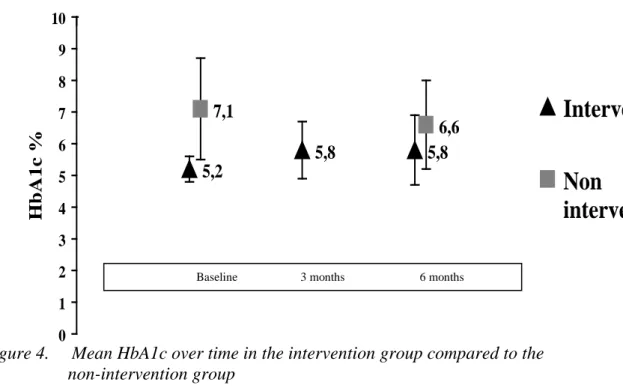
We identified 31 episodes of plasma glucose ≤ 4.4 mmol/l, most of them nocturnal (n=17). Mean HbA1c was 5.2 % ± 0.4 compared to 7.1 % ± 1.6 in the non-intervention group. Three months after the diabetes drug discontinuation, 24 patients (75%) remained in the intervention group and mean HbA1c was then 5.8 %. ± 0.9. Six months after baseline investigation mean HbA1c in the intervention group was 5.8 % ± 1.1 compared with 6.6 % ± 1.4 in the non-intervention group.
Conclusions
Hypoglycaemic events are common among elderly patients with type 2 diabetes. The withdrawal of diabetes medication in elderly with tight glycaemic control is safe and may decrease the risk for hypoglycaemia.
Keywords: Diabetes; Drug therapy; Hypoglycaemia
Introduction
M
ost of our knowledge concerning pharmaceutical treatment of type 2 diabetes is derivedfrom clinical trials conducted on patients younger than 70-75 years old. However, glucose tolerance declines with age and the prevalence of diabetes type 2 progressively increases, involving perhaps 15-20 percent of subjects above the age of 80 years (1). The management of type 2 diabetes in general calls for intensive therapy (2), with tight glycaemic control aiming to prevent micro- and macrovascular complications but there are no studies supporting that this approach is beneficial in the oldest population (3). Declining body-functions may increase the vulnerability to adverse drug reactions and drug-induced hypoglycaemia may cause cerebral damage, cardiac arrhythmias, and even death.
In a previous Swedish study in patients with diabetes in community dwellings, it was reported that glycaemic control was more often tight than poor (4). The objective of this study was to explore glycaemic control among elderly patients with diabetes in nursing homes. A further aim of this study was to investigate the feasibility and safety of withdrawal of diabetic medication among patients with tight glycaemic control.
Subjects and methods
In 2006, we identified all patients with known diabetes mellitus at 17 different nursing homes with a total of 658 residents in the counties of Östergötland and Jönköping, Sweden. At baseline, all patients with diabetes were examined for height and weight. Blood specimens were drawn for analysis of plasma creatinine, Cystatin C and HbA1c and were analysed at the University Hospital in Linköping and the County Hospital Ryhov in Jönköping, using
identical methods. Swedish standard Mono-S HPCL was used for HbA1c, i.e. approximately 1 % below DCCT-standard (5). Current medications for diabetes were registered.
Patients at Swedish nursing homes are usually very old and frail and due to the nature of aging, suffering from a complexity of prevalent co existing conditions such as sequel from previous cardiovascular events, cognitive dysfunction, neurological disorders and functional disabilities from a variety of reasons. Thus, in many cases, the concomitant medications among these subjects are extended.
We registered the concomitant medication and the most frequently used drugs were categorized within three groups; psychiatric medication used for alleviating depression or dysthymia, anxiety or sleeping disorders (antidepressants, neuroleptics, benzodiazepines), cardiovascular associated medication (diuretics, low dose aspirin, beta blockers and ACE-inhibitors) and the third prominent group of medication were analgesics, mostly paracetamol but even morphine were common. We did not observe any substantial differences in
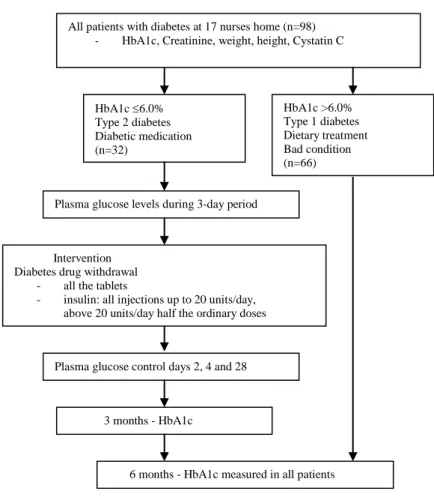
Based on clinical criteria and data from medical records the patients were categorized as type 1 or type 2 diabetes. Patients with type 2 diabetes, HbA1c ≤ 6.0 % and treated with oral anti diabetic drugs (OADs) or insulin, or both in combination, were invited to participate in the diabetes medication withdrawal part of the study. Figure 1 illustrates the study design. In patients with HbA1c≤ 6.0%, plasma glucose was measured in the morning (fasting), two hours after breakfast, at bedtime (about 8 p.m.) and at night (2 a.m.), for three consecutive days with accredited plasma glucose monitors (Hemoccue) before the withdrawal of diabetes medication. Hypoglycaemia was defined as blood glucose ≤ 4.0 mmol/l or 72 mg/dl (6) corresponding to a plasma glucose ≤ 4.4 mmol/l. In the intervention group, the use of diabetes drugs was then discontinued for all types of oral anti diabetic drugs and insulin up to 20 units/day. For patients using >20 units/day, the insulin doses were reduced to half the ordinary doses.
Day 2, 4 and 28 after the drug withdrawal, postprandial plasma glucose was measured and if plasma glucose was >16.0 mmol/l the patients were excluded from the drug withdrawal. Three months after baseline, HbA1c was analysed. Six months after baseline, HbA1c was analysed in all surviving patients in the intervention group, as well as in those in the non-intervention group. In the non-non-intervention group, there was no change in diabetes medication during the six months study period. In none of the groups, no change of dietary
recommendations was suggested.
Figure 1. Design of the study.
Ethics
Informed consent was obtained from all participants and the study was approved by the Regional Research Ethics Committee at Linköping University.
Statistics
SPSS 15.0 for Windows was used for data analyses. Comparisons were made with Student’s paired t-test and correlations were performed with Pearson’s test.
All patients with diabetes at 17 nurses home (n=98) - HbA1c, Creatinine, weight, height, Cystatin C
HbA1c ≤6.0% Type 2 diabetes Diabetic medication (n=32) HbA1c >6.0% Type 1 diabetes Dietary treatment Bad condition (n=66)
Plasma glucose levels during 3-day period
Intervention Diabetes drug withdrawal
- all the tablets
- insulin: all injections up to 20 units/day, above 20 units/day half the ordinary doses
Plasma glucose control days 2, 4 and 28
3 months - HbA1c
6 months - HbA1c measured in all patients
Results
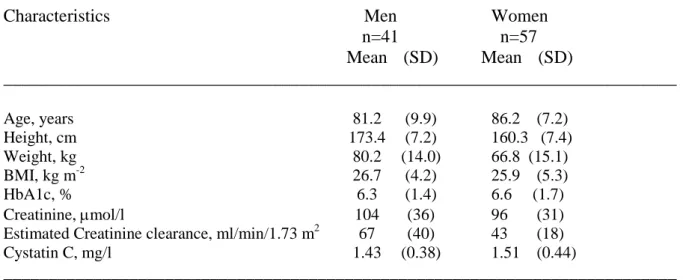
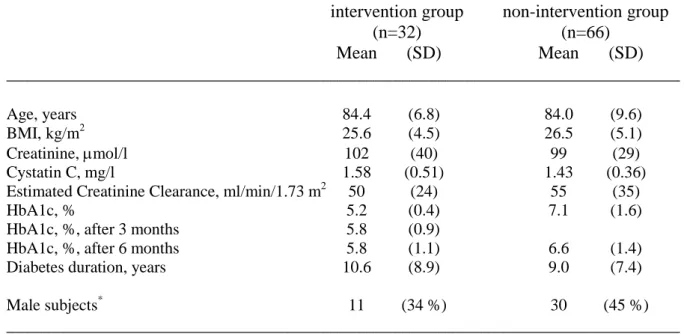
Of 658 individuals at 17 nursing homes, we identified 98 patients (15%) with diabetes mellitus. Twelve patients were on diet treatment only, the remaining patients were treated with OADs (n=27), insulin (n=43) or with combinations of OADs and insulin (n=16). Baseline characteristics are shown in table 1 for male and female patients, respectively, and for the intervention and non-intervention groups, respectively, in table 2. Patients with diabetes had been staying at the nursing homes for 4 ± 3.5 years and their mean age was 84.1
± 8.8 (range 58-100) years. Women residents were five years older than their male counterparts.
Table 1 Baseline characteristics in 98 patients with diabetes at 17 nursing homes, 2006.
___________________________________________________________________________
Characteristics Men Women
n=41 n=57 Mean (SD) Mean (SD) ___________________________________________________________________________ Age, years 81.2 (9.9) 86.2 (7.2) Height, cm 173.4 (7.2) 160.3 (7.4) Weight, kg 80.2 (14.0) 66.8 (15.1) BMI, kg m-2 26.7 (4.2) 25.9 (5.3) HbA1c, % 6.3 (1.4) 6.6 (1.7) Creatinine, µmol/l 104 (36) 96 (31) Estimated Creatinine clearance, ml/min/1.73 m2 67 (40) 43 (18) Cystatin C, mg/l 1.43 (0.38) 1.51 (0.44)
___________________________________________________________________________
HbA1c levels varied from 4.4 to 11.5%, mean value was 6.5 ± 1.6%. In total, 47 patients (48%) had an HbA1c level ≤6.0%. Seven of these subjects were on dietary recommendations
only and were accordingly not of consideration for a diabetes drug withdrawal. Because of a moribund condition with short duration of suspected survival (n=4), drug adjustment just prior to the trial (n=3) and one case of high plasma glucose (20.7 mmol/l) during the initial three days of blood glucose sampling, a total of eight patients were excluded from
participating in the study. The remaining 32 patients accepted to participate in the intervention part of the study and, in this group, 10 patients were on OADs, 17 were on insulin treatment and 5 had insulin combined with OADs. Seven patients with insulin alone and four patients with insulin combined with OADs were subjected to a complete insulin withdrawal. The remaining 11 subjects had their insulin doses reduced by 50%. All OADs were discontinued.
Table 2 Baseline characteristics for the intervention group and the
non-interventiongroup, respectively
___________________________________________________________________________ intervention group non-intervention group
(n=32) (n=66) Mean (SD) Mean (SD) ___________________________________________________________________________ Age, years 84.4 (6.8) 84.0 (9.6) BMI, kg/m2 25.6 (4.5) 26.5 (5.1) Creatinine, µmol/l 102 (40) 99 (29) Cystatin C, mg/l 1.58 (0.51) 1.43 (0.36) Estimated Creatinine Clearance, ml/min/1.73 m2 50 (24) 55 (35)
HbA1c, % 5.2 (0.4) 7.1 (1.6)
HbA1c, %, after 3 months 5.8 (0.9)
HbA1c, %, after 6 months 5.8 (1.1) 6.6 (1.4) Diabetes duration, years 10.6 (8.9) 9.0 (7.4)
Male subjects* 11 (34 %) 30 (45 %)
___________________________________________________________________________
* Figures are n and per cent
Of a total of 31 episodes of hypoglycaemia (range 2.4 -4.4 mmol/l), more than half occurred during the night (n=17) and mostly involving individuals with only insulin treatment (7 of 9).
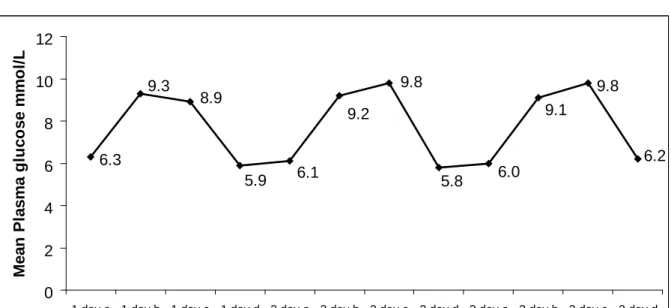
Figure 2 shows the distribution of mean plasma glucose during the three consecutive days. During these three days, 22 subjects out of 32 (69%) had at least one episode of
hypoglycaemia. Furthermore, 4 of 10 (40%) on OADs, 13 of 17 (76%) on insulin and all 5 subjects (100%) on OADs combined with insulin experienced at least one hypoglycaemic episode.
BMI (Body Mass Index) was 26.2 kg m-2 (4.9) (range 16-44) but there were only two patients
with BMI above 35 kg m-2. BMI was lower in subjects with HbA1c ≤6.0 compared to subjects with HbA1c >6.0%; 25.2 kg m-2 (4.7) vs 27.2 kg m-2 (5.0). HbA1c-levels correlated to BMI at
baseline (r = 0.35, p<0.01). 6.3 9.8 6.2 9.1 6.0 5.8 9.8 9.2 9.3 8.9 5.9 6.1 0 2 4 6 8 10 12
1 day a 1 day b 1 day c 1 day d 2 day a 2 day b 2 day c 2 day d 3 day a 3 day b 3 day c 3 day d
M e a n P la s m a g lu c o s e m m o l/ L
Figure 2. Plasma glucose was measured in patients with HbA1c <6.1% before withdrawal of diabetes medication in the intervention group for three consecutive days (1 day, 2 day and 3 day) four times
daily; ain the morning (fasting), b two hours after breakfast, c at bedtime (about 8 p.m.) and d at night
(2 a.m.).
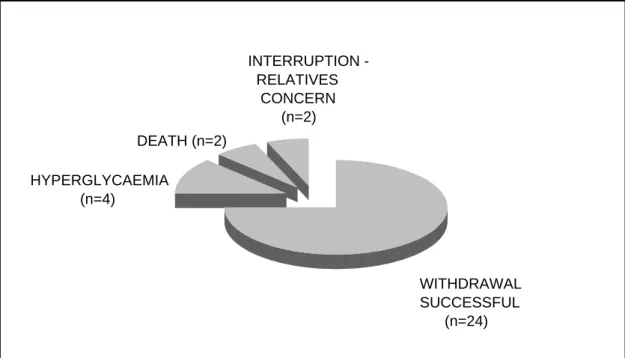
The outcome in the intervention group after three months is illustrated in figure 3, showing that the initial reduction/withdrawal of the diabetic medication was successful in 24 patients (75%). Four patients discontinued the study as a result of hyperglycaemia (at plasma glucose
levels 16.6, 17.4 and 18.3 mmol/l at the glucose check-ups). Consequently, three patients were discontinued from the drug withdrawal by safety reasons according to the study design. The fourth patient who was discontinued because of hyperglycaemia (plasma glucose 14.6 mmol/l) had a previous planned visit to a geriatric centre eight days after drug reduction, and outside of the study, the previous insulin dose was restored during this geriatric centre visit.
The course of the mean HbA1c during the study period is shown in figure 4. Comparing mean HbA1c at baseline with the six month follow-up for the two groups, significant changes could be seen (drug withdrawal group p=0.007 and non-intervention group p=0.004) and the
Pearson correlation was significant at the 0.01 level (2-tailed) for the non-intervention group, r=0.56. The course of the mean HbA1c during the follow up was in the subgroup with
reduced insulin therapy; 5.2% at baseline, 6.2% after three months and 6.4% after six months compared to 5.2%, 5.7% and 5.6% in patients subjected to complete diabetes drug
withdrawal. WITHDRAWAL SUCCESSFUL (n=24) INTERRUPTION RELATIVES CONCERN (n=2) DEATH (n=2) HYPERGLYCAEMIA (n=4)
Figure 4. Mean HbA1c over time in the intervention group compared to the non-intervention group
Finally, the all cause mortality rate in this study at the six-month follow-up showed that the mortality in the intervention group was 5 out of 32 patients (16%) compared to 14 out of 66 (21%) in the non-intervention group.
Discussion
This study has confirmed previous results (4) that glycaemic control in Swedish elderly patients with diabetes in nursing homes is more often tight than poor. Furthermore, we
showed that it was safe and feasible to completely withdraw oral agents and to discontinue, or reduce the use of insulin without harmful effects in patients with type 2 diabetes and tight glycaemic control. 5,2 5,8 5,8 7,1 6,6 0 1 2 3 4 5 6 7 8 9 10 HbA1c %
Intervention
Non
intervention
In this study we found a diabetes mellitus prevalence of 15 percent. The vast majority, 88 percent, of the patients with diabetes had some kind of diabetes drug treatment and 60 percent were on insulin. Since the glycaemic thresholds for responses to hypoglycaemia are dynamic rather than static, it is difficult to define hypoglycaemia in patients with diabetes but a reasonable cut off level is plasma glucose ≤4.4 mmol/l (6). Hypoglycaemia due to pharmacological treatment in patients with diabetes affects many physiological aspects, deteriorates the cognitive function, and may even lead to death (7). The oldest patients are at a higher risk for iatrogenic hypoglycaemia (8). Our study confirmed the high frequency of hypoglycaemia, especially nocturnal hypoglycaemia among old patients with diabetes mellitus in nursing homes (4). It also illustrated the difficulties in detecting hypoglycaemia because of the diurnal rhythm, with dominating nocturnal hypoglycaemia.
Elderly subjects in nursing homes are often frail and characterized by cognitive or functional impairment and life limiting illness or infirmity and are thus not always able to notice the any association to the appearance of symptoms of hypoglycaemia. It is, therefore, of paramount interest that these patients are not treated too vigorously. In this study, the mean age of subjects with diabetes mellitus was 84.1 years, with short remaining lifetime expectancy. There are no studies supporting beneficial effects from tight glycaemic control among these patients. On the contrary, in these fragile patients, pharmacological treatment that may cause suffering or adverse events should be kept to a minimum. However, to our knowledge, there is no study targeting the feasibility of discontinuation of diabetes medication in elderly nursing home patients with type 2 diabetes with tight glycaemic control.
An interesting finding was the course of HbA1c-levels during the six month study period in the non-intervention group. At baseline, mean HbA1c was 7.1 ± 1.6% and six months later mean HbA1c had decreased to 6.6 ± 1.4%. This may illustrate the natural course of diabetes at this stage of life and further underlines the increasing susceptibility to hypoglycaemia induced by glucose lowering drugs in these patients.
This study has some limitations. It is not a randomised controlled trial. However, from an ethical point of view, we did not find a randomised design to be justified, since unchanged anti-diabetic medication could severely endanger the patients who were not subjected to diabetes drug discontinuation. Furthermore, it is important to remember that the conclusions from this study are only applicable to patients with type 2 diabetes. Finally, our definition of hypoglycaemia were based solely on laboratory measuring.
The high all cause mortality rate in this study reflects the poor status in this category of patients with functional impairment due to high age and sequel from previous cardiovascular events and dementia making the subjects susceptible to simple infectious diseases. Thus, infectious diseases were the predominant cause of death. However, since the drug withdrawal group and non-intervention group were different in many aspects, further comparisons of all cause or cause specific death between the groups were thus not relevant.
We conclude, from this study, that the withdrawal or reduction of diabetes medication in elderly patients with type 2 diabetes with tight glycaemic control was successful in the majority of the cases. Furthermore, this study has confirmed (4) that elderly patients with diabetes in nursing homes, with low levels of HbA1c, often suffer from hypoglycaemia. The clinical implication from this study is that there is a need for systematic drug reviews for
patients with diabetes at nursing homes, paying special attention to subjects with tight glycaemic control.
Conflict of interest statement
No conflict of interest was declared.
Acknowledgements
This study was supported by grants from the Medical Research Council of Southeast Sweden, the Research Board of NSÖ and the R&D Department of Local Health Care, County Council of Östergötland.
References
1. The DECODE Study Group. Age- and sex-specific prevalences of diabetes and impaired glucose regulation in 13 European Cohorts. Diabetes Care 2003; 26: 61-69. 2. Gaede P, Vedel P, Larsen N, Jensen GVH, Parving HH, Pedersen O. Multifactorial
intervention and cardiovascular disease in patients with type 2 diabetes. N Engl J Med 2003; 348:383-93.
3. American Diabetes Association. Standards of medical care in diabetes-2006. Diabetes Care 2006; 29 (Suppl 1): 28-29.
4. Löfgren UB, Rosenqvist U, Lindström T, Hallert C, Nyström FH. Diabetes control in Swedish community dwelling elderly: more often tight than poor. J Int Med 2004; 255: 96-101.
5. Hoelzel W, Weykamp C, Jeppsson JO, Miedema K, Barr JHR, Goodall I, Hoshino T et al; IFCC Working Group on HbA1c Standardization. IFCC reference system for measurement of Hemoglobin A1c in human blood and the national standardization schemes in the United States, Japan and Sweden: a method-comparsion study.
Clin Chem 2004; 50: 166-74.
6. Cryer EC, Davis SN, Shamoon H. Hypoglycemia in diabetes. Diabetes Care 2003; 26: 1902-12.
7. Sinclair AJ. Special considerations in older adults with diabetes: Meeting the challenge. Diabetes Spectrum 2006; 19: 229-33.
8. Shorr RI, Ray WA, Daugherty JR, Griffin MR. Incidence and risk factors for serious hypoglycemia in older persons using insulin and sulfonylureas. Arch Intern Med 1997; 157 (15): 1681-86.