SEARCH FOR A PRACTICAL STRATEGY TO DISSEMINATE MODELS OF ADVANCED PREVENTIVE CARE THAT IMPROVE THE HEALTH OF CHRONICALLY ILL OLDER ADULTS
Kenneth D. Coburn
A dissertation submitted to the faculty at the University of North Carolina at Chapel Hill in partial fulfillment of the requirements for the degree of Doctor of Public Health in the Department of Health Policy and
Management in the UNC Gillings School of Global Public Health.
Chapel Hill 2016
ABSTRACT
Kenneth D. Coburn: Search for a Practical Strategy to Disseminate Models of Advanced Preventive Care that Improve the Health of Chronically Ill Older Adults
(Under the direction of Sandra B. Greene)
Developing new, more effective models of preventive care for an aging, chronically ill population is
an important public health imperative. New models that provide more frequent and ongoing monitoring
and assessments coupled with personalized preventive interventions are emerging. Such models of
“advanced preventive care” are operationally demanding and costly to implement. Even when they improve health outcomes and reduce net health care expenditures, there are several barriers to the
spread of such models and no guarantee they will come into widespread use. Little research has been
undertaken to assess the role that innovators of new care models might play in facilitating their
dissemination. The theoretical framework of Greenhalgh et al. helps conceptualize the position
innovators hold relative to other entities involved in dissemination, but leaves unanswered the question of
what direct actions innovators might take to facilitate dissemination (2008).
Using an exemplar advanced preventive care program as a reference point, sixteen health care
executives from hospital (n=12) and physician organizations (n=4) were interviewed regarding their level
of interest in providing such a program to their service populations. Informants were asked about three
types of collaborations with the program’s developers to support their organization’s use of the program;
direct service partnership, franchising, or regional cooperative.
The research yielded a new model of collaborative partnership, replication consultancy, that would
provide more robust support for the adoption and assimilation of advanced preventive care than typical
consulting or knowledge purveyor offerings without institutionalizing long-term dependency on program
developers. The direct service partnership model that the originators of the exemplar model have relied
on for years in their local service area, also appears to be a viable option to support broader
iv
franchise and regional cooperative models with the only model viewed favorably by the small number of physician organizations in the study being the regional cooperative (2 out of 4).
These results inform an implementation plan program developers can use to further the
dissemination of advanced preventive care and highlight opportunities for health policy to help advance
To all past, present, and future explorers who, without thought of personal gain, persevere to discover and disseminate innovations that better the human condition. And to all who educate, train, support,
share the journey with, and love them.
vi
ACKNOWLEDGEMENTS
Heartfelt thanks to my daughter, Borah Coburn, who, serving as my research assistant, provided much needed and highly capable administrative support for this study including the painstaking verbatim transcription of recorded interviews. Thanks to my wife, Youngsook Choi for her patience, support, and her own passion for and commitment to public health. Thanks to the Board of Directors and my
TABLE OF CONTENTS
LIST OF TABLES ... xii
LIST OF FIGURES ... xiii
LIST OF ABBREVIATIONS ... xiv
CHAPTER 1 – INTRODUCTION ... 1
Proposed Schema for an Emerging Innovation in Preventive Care ... 1
A Specific Exemplar of “Advanced Preventive Care” ... 4
Evaluation and Impacts of the Health Quality Partners (HQP) Program ... 7
Efforts to Spread HQP’s Model of Advanced Preventive Care ... 12
Knowledge Gap – Possibilities for Direct Innovator-User Linkage ... 13
The Conceptual Model for this Research ... 14
Application of a Theoretical Framework to Guide the Research ... 14
Overarching Research Question ... 19
Specific Research Questions ... 20
How this Research Can Help and Why it’s Important ... 22
CHAPTER 2 – REVIEW OF THE LITERATURE ... 24
viii
Two References Cited by Greenhalgh ... 27
References citing Greenhalgh ... 29
Diffusion versus Dissemination ... 30
‘Resource System’ and Synonyms ... 31
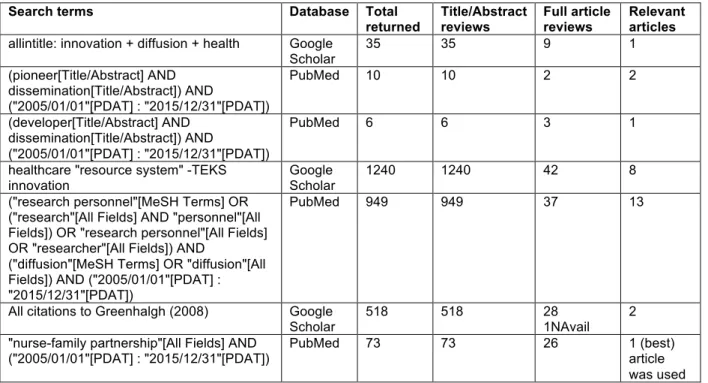
Search Algorithms and Results ... 31
Reflections on the Nurse Family Partnership (NFP) Program ... 35
Conclusions ... 37
CHAPTER 3 – METHODOLOGY ... 39
Overall Study Strategy ... 39
Protections of Human Subjects ... 39
Rationale for Selection of Potential User System Organizations ... 40
Conduct of the Study ... 41
Key Informant Outreach and Recruitment ... 41
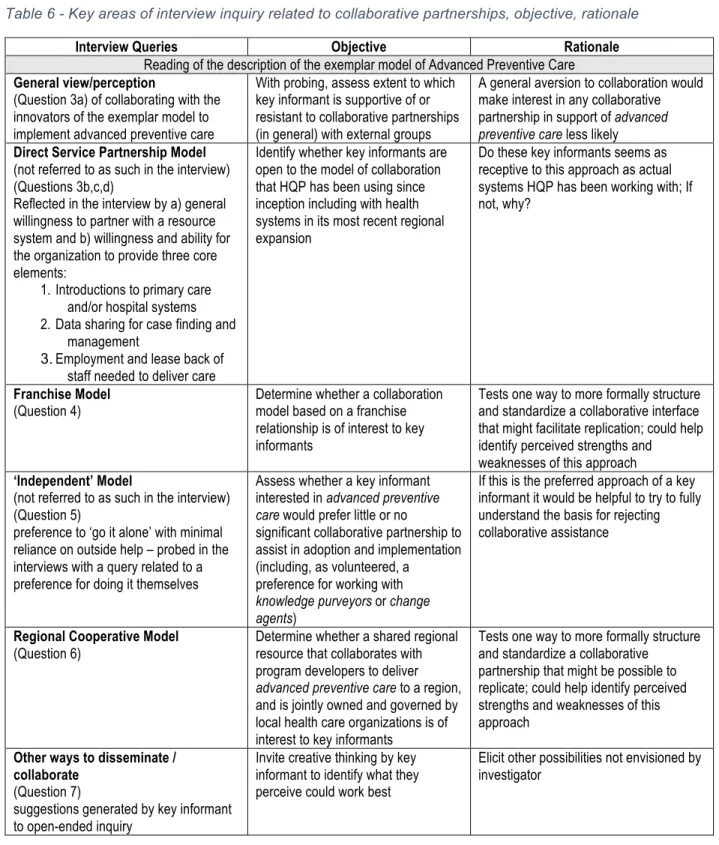
Interviews ... 43
Data Capture ... 47
Analysis ... 47
Informant Self-Selection: Likely to Yield a Sample of “Early Adopters” ... 48
CHAPTER 4 – RESULTS ... 50
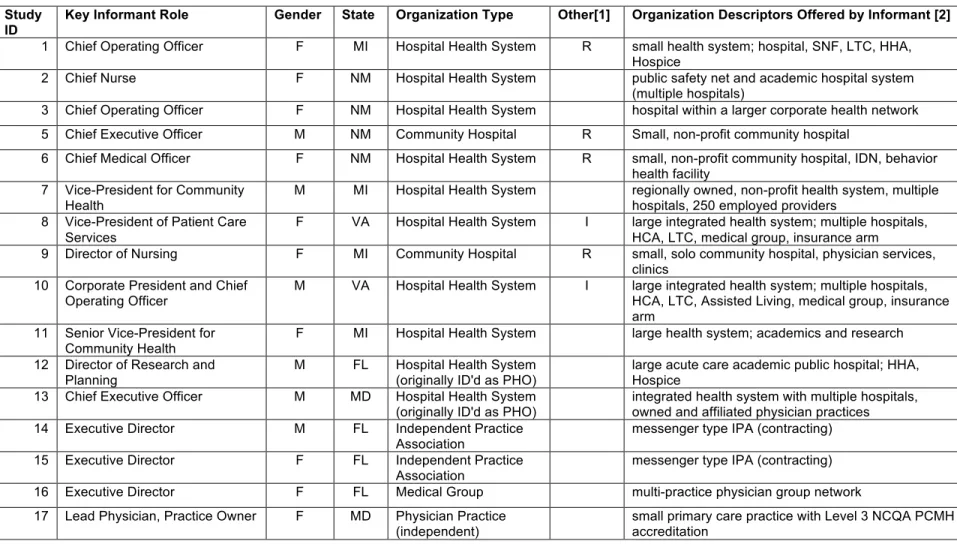
A Wide Range of Experience with Care Coordination/Management ... 56
Care Management of Chronically Ill Older Adults Will Require More Resources ... 57
Experience with Risk Contracting ... 58
General Concept of Collaborating with Program Developers is Appealing ... 58
Analysis by Collaborative Partnership Model ... 60
A NEW Model Emerges from the Research: Replication Consultancy ... 60
Summary of Findings for Collaborative Partnership Models Assessed ... 62
Direct Service Partnership ... 64
Franchise Model ... 66
Regional Cooperative Model ... 69
Who is Most Likely to Collaborate with Developers? ... 72
High Likelihood of Collaborating ... 72
Lower Likelihood of Collaborating ... 73
Other Ideas Offered by Informants at the Close of the Interview ... 74
Summary of Results: ... 77
CHAPTER 5 – IMPLEMENTATION PLAN ... 79
Overview and Aims of an Implementation Plan ... 79
Resources: People, Funds, and Infrastructure Elements ... 80
x
Funds ... 81
Infrastructure Elements ... 82
Players Affecting the Change Including Key Stakeholders ... 83
User Systems (Program Adopters) ... 83
Tentative Timeline of New Program Engagements ... 84
Candidate Target Populations ... 85
Decision-makers ... 86
Contextual Parameters ... 87
U.S. Domestic Policy ... 87
U.S. Health Care Marketplace ... 89
International Context and Opportunities ... 91
Actions to be Taken by Health Quality Partners ... 91
Develop a Portfolio of Collaborative Partnership Models ... 91
Develop Replication Consultancy as primary means of dissemination ... 92
Continue using Direct Service Partnership for local service ... 93
Develop an IT Platform (SPERO®) to Support Dissemination ... 95
Enhance Research Partnerships ... 95
Establish opportunity development partnerships ... 96
Limitations ... 98
Leading with Exemplary R&D to Propel Advanced Preventive Care ... 99
Crude estimation of HQP’s opportunities to execute the Implementation Plan ... 100
Policy Implications ... 102
Research Implications ... 103
Public Health Implications ... 104
APPENDIX A – TABLE OF INTERVENTIONS IN HQP’S ADVANCED PREVENTIVE CARE PROGRAM ... 106
APPENDIX B – TABLE OF MANAGEMENT ELEMENTS IN HQP’S ADVANCED PREVENTIVE CARE PROGRAM ... 110
APPENDIX C – LITERATURE SEARCH ALGORITHMS USED AND COUNT OF ARTICLES RETURNED ... 112
APPENDIX D – RESEARCH LETTER OF INVITATION / INTRODUCTION ... 115
APPENDIX E – INTERVIEW GUIDE ... 116
xii LIST OF TABLES
Table 1 - Proposed criteria for a model of Advanced Preventive Care. ... 2
Table 2 - Impacts of HQP's model of advanced preventive care from Brown et al. 2012 ... 9
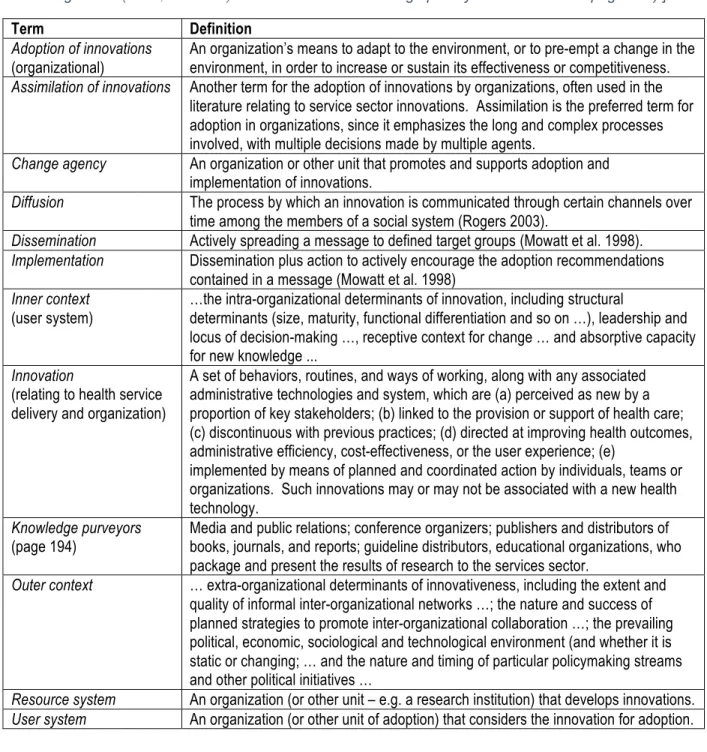
Table 3 - Definition of terms associated with the conceptual model of Greenhalgh, et al. and as applied in this study. [Minor edits and spelling changes applied to verbatim terms selected from the glossary of Greenhalgh et al. (2008, 293–295). With addition of ‘knowledge purveyor’ definition from page 194).] ... 17
Table 4 - Search algorithms yielding relevant articles ... 31
Table 5 - Mailed study participant invitation letters by organizational type ... 43
Table 6 - Key areas of interview inquiry related to collaborative partnerships, objective, rationale ... 46
Table 7 - Description of Key Informants and Organizations they Represent ... 52
Table 8 - Main Results (Larger Hospital-based Health Systems) ... 53
Table 9 - Main Results (Small, Rural Hospitals; Larger Health Systems with Insurance Divisions) ... 54
Table 10 - Main Results (Independent Practice Associations, Medical Group, Primary Care Practice) .... 55
LIST OF FIGURES
Figure 1- Core Implementation Components - Taken from (Fixsen et al. 2009, 534) ... 11
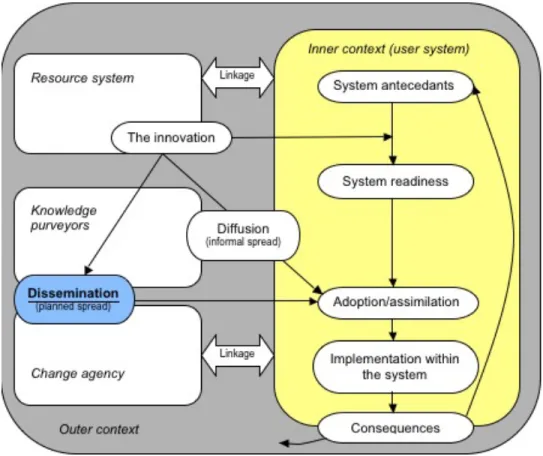
Figure 2 - Basic schematic of a theoretical model for the dissemination and diffusion of innovations in health care organizations. Taken from Greenhalgh, T et al. “Diffusion of Innovations in Health Care Organisations: A Systematic
Literature Review”, (2008, 6) ... 15
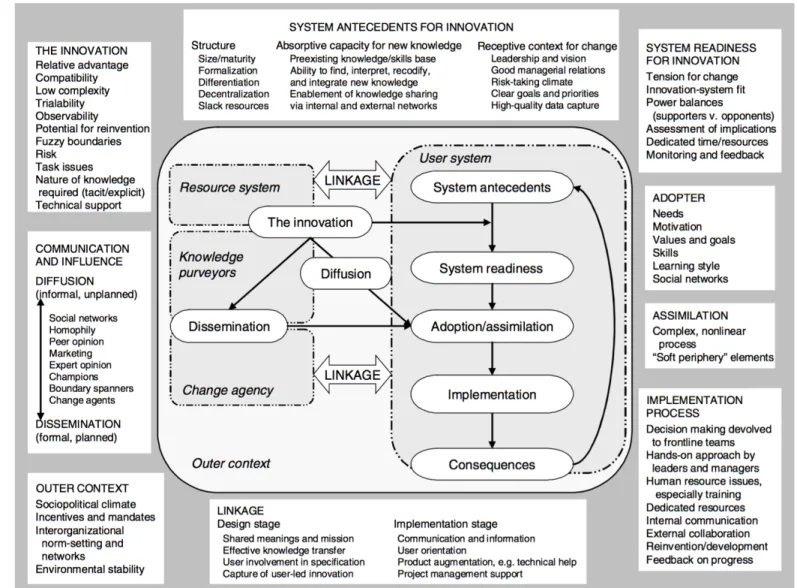
Figure 3 - A complete and detailed schematic of a theoretical model for the dissemination and diffusion of innovations in health care organizations. Taken from Greenhalgh, T et al. “Diffusion of Innovations in Health Care Organisations: A Systematic
Literature Review”, (2008, 201) ... 16
Figure 4 - Framework for addressing study research questions and their relationship to
the theoretical model of Greenhalgh et al. 2008 ... 21
Figure 5 - Favorability Ratings of Collaborative Partnership Models (All Organization Types, n=16) ... 62
Figure 6 - Favorability Ratings of Collaborative Partnership Models (Hospital
Organizations ONLY, n=12) ... 63
Figure 7 - Favorability Ratings of Collaborative Partnership Models (Physician
xiv
LIST OF ABBREVIATIONS
ACO Accountable Care Organization APC Advanced Preventive Care
BPCI Bundled Payment for Care Improvement CCHP Camden Coalition of Healthcare Providers CEO Chief Executive Officer
CFIR Consolidated Framework for Implementation Research CHHI Canadian Heart Health Initiative
CHIP Children’s Health Insurance Program CIN Clinically Integrated Network
CIO Chief Information Officer
CJR Comprehensive Care for Joint Replacement CMO Chief Medical Officer
CMS Centers for Medicare and Medicaid Services COO Chief Operating Officer
COOP Regional Cooperative ED Executive Director
ER Emergency Room
FTE Full-time Equivalent
HCIA Health Care Innovation Award HF Heart failure
HHA Home Health Agency
HIV Human Immunodeficiency Virus HQP Health Quality Partners, Inc. IDN Integrated Delivery Network
IHI Institute for Healthcare Improvement IIK Invest in Kids
IRB Institutional Review Board
ISF Interactive Systems Framework for Dissemination and Implementation IT Information Technology
LTC Long Term Care
MACRA Medicare Access and CHIP Reauthorization Act of 2015 MCCD Medicare Coordinated Care Demonstration
MCCPRN Medicare Chronic Care Practice Research Network MeSH Medical Subject Heading
MMM Methadone Medical Maintenance MPR Mathematica Policy Research, Inc. MSSP Medicare Shared Savings Program MSW Masters in Social Work
NCQA National Committee for Quality Assurance NFP Nurse-Family Partnership
NP Nurse Practitioner
NSO Nurse-Family Partnership National Service Office OT Occupational Therapy
PACE Program of All-Inclusive Care for the Elderly
PARIHS Promoting Action on Research Implementation in Health Services PCMH Patient-Centered Medical Home
PHO Physician Hospital Organization PMPM Per member per month
PT Physical Therapy
xvi SVP Senior Vice President
TDF Theoretical Domains Framework TRIP Translating Research Into Practice U.S. United States of America
VP Vice President
CHAPTER 1 – INTRODUCTION
Proposed Schema for an Emerging Innovation in Preventive Care
Non-communicable chronic disease among older adults is the greatest threat to health in the United States. The national toll of this modern epidemic in terms of health care expenditures, disability, and reduced quality and length of life is significant and growing (Valderas et al. 2009; “Chronic Care” 2010; American Diabetes Association 2008; Jeon et al. 2009; Christine Vogeli 2008) . The World Health Organization (WHO) reported that non-communicable conditions “… are the leading global causes of death …” (“WHO | Global Status Report on Noncommunicable Diseases 2010” 2016), making scalable interventions to address these conditions a global health priority. In the current American health system chronically ill patients often receive uncoordinated, costly care of inconsistent quality (Zingmond et al. 2007; Wenger et al. 2003). A systematic review of the quality of care elderly patients receive across different settings of care demonstrate many areas needing improvement (Askari et al. 2011). The successful design and implementation of care management processes to better address the needs of those with chronic diseases has been limited (Casalino L et al. 2003). The need to move from a reactive health system geared to provide costly acute care services to one designed to better avoid complications of chronic disease and preserve health, has spurred recent delivery and payment demonstrations and pilots in the U.S. such as Patient-Centered Medical Homes (PCMHs) and Accountable Care
Organizations (ACOs).
2
Ferris 2014; Coburn et al. 2012). These models and others like them may constitute a new, emerging category of health care service, which could be described as models of advanced preventive care. To date, a useful, standardized, and widely accepted schema for classifying these kinds of programs or the large number of those variously
described as care management, disease management, care coordination, complex care management, public health nursing, etc., does not exist. Creating a framework that can differentiate programs in terms of their application of design and system principles as well as staffing roles, and
implementation specifications may help better identify characteristics that distinguish more effective from less
effective models and help health care and public health leaders better understand what is required for adoption and implementation to achieve reproducible results.
Absent a generally accepted schema, for the purpose of understanding the approach taken in this study, a
Advanced Preventive Care (APC):
Definition and criteria proposed by K.D. Coburn, MD, MPH
A comprehensive set of “best practice” preventive
interventions, encompassing primary, secondary, tertiary, and quaternary prevention activities that are …
1) Delivered in accordance with the following specifications; a) Coordination and collaboration within the APC delivery
team, and with health care providers (especially primary care) and community services
b) Continuously over time (longitudinal) and across care settings
c) Using team roles that are defined and for which needed training is provided
d) Process and performance monitoring systems capable of supporting high reliability and measuring variation in key processes
e) Personalized by understanding and honoring the changing needs and preferences of participants
2) Chosen to address key health determinants of a defined target population;
a) Using the best available evidence to identify health determinants of a target population and selecting
corresponding ‘best in class’ interventions to address those determinants
3) Continuously improved by;
a) Refining / rebalancing the preventive interventions included b) Improving effectiveness, participant experience, efficiency,
and reliability of the delivery system Has strong evidence of effectiveness in preventing complications of chronic
disease through rigorous and methodologically sound evaluation and testing (demonstrations, research trials, etc.)
Models meeting the above criteria, but not yet rigorously evaluated for effectiveness may be designated as “provisional” Advanced Preventive Care programs
set of criteria to define a model of advanced preventive care is proposed. These criteria are the result of 15 years of work by the author and his colleagues at Health Quality Partners (HQP) to develop better models of preventive care to improve the health outcomes of vulnerable populations. Though not yet accepted as a standard schema broadly, this framework has had great practical value for HQP, and it helps characterize the attributes of the exemplar innovation used in this study which is based on the model of advanced preventive care developed and rigorously tested by HQP. The proposed criteria for qualifying as an advanced preventive care modelis as follows;
An integrated and coordinated set of primary, secondary, tertiary, and quaternary preventive interventions, delivered continuously over time and across care settings that address existing and anticipate emerging risks, needs, and preferences of individuals belonging to a defined (target) population, using well-defined team roles that require special training, as well as process and performance monitoring systems used for day-to-day management and continuous improvement. Finally, the model must be tested in a high quality evaluation and be shown to improve health outcomes. The last element of this definition, (evidence of effectiveness), differentiates those few programs with such evidence from those without it.1
The paucity of full-fledged advanced preventive care models to date, seems to reflect; 1) the newness and limited history of efforts to develop and test models designed in this way and, 2) the challenge most health care and public health entities face in combining the program elements needed to do so; a broad portfolio of evidence-based preventive interventions congruent with the needs of a defined population along with the implementation capabilities the model requires (longitudinal and continuous service across care settings, explicit team roles and training, and process and performance monitoring systems).
The scope, unfamiliarity, and complexity of tasks and resources associated with implementing a system of advanced preventive care make learning, adopting, and implementing such a model challenging for health care organizations. Yet if such models have the promise of improving health outcomes for large segments of vulnerable populations their widespread adoption and use will be necessary. In principle, the framework and objectives of advanced preventive care are congruent with and overlap those of primary medical care and public health. In this researcher’s experience, however,
4
neither primary care nor public health services have implemented all elements of the advanced preventive care model as a system of care to a defined target population on a large scale.
Current models of innovations related to practice-based primary care, such as the Patient-Centered Medical Home (PCMH), typically address a broader target population, assess a smaller subset of risk factors and implement a less intensive set of preventive services than that defined by advanced preventive care. The fact that “best practice” prevention for higher-risk populations often also requires periodic visits to the home (or other non-practice settings) over a prolonged time period makes such a model challenging for public health and primary care providers to fund and operate. And home visits in and of themselves do not suffice to qualify a program as a model of advanced preventive care and do not guarantee model effectiveness.
Even when preventive home visits are included in care management programs the precise set of interventions provided, the reliability with which they are delivered, and the impact that collaboration and coordination have on altering or enhancing other services is often unknown or unreported making results difficult to interpret and compare between programs. For example, one recent meta-analysis of various preventive home visit programs did not demonstrate effectiveness for these programs, overall (Mayo-Wilson et al. 2014). Without a more complete and specific classification schema it is impossible to know whether any of the programs in the Mayo-Wilson study met the criteria for advanced preventive care.
A Specific Exemplar of “Advanced Preventive Care”
between resources systems (innovators that developed the program) and user systems (organizations that will adopt, implement, and assimilate the model). Of prime interest is whether such
collaborations could accelerate the dissemination of programs with attributes characteristic of
advanced preventive care.
The community-based nurse care management program of Health Quality Partners (HQP) is the exemplar advanced preventive care model used in this study. It is designed to prevent avoidable complications of chronic diseases and geriatric frailty among older adults by providing a comprehensive set of preventive services including health behavior modification, medication reconciliation and adherence counseling, assessment of adherence to evidence-based guidelines, self-management support, disease management, geriatric care management and overall care coordination. Several social determinants of health are addressed in HQP’s program as part of standardized assessments and individualized plans as listed in Appendix A, Table 12. These include social, family, economic, and home and community environmental factors including personal safety, housing, food security, and access to medical care and social support services.
A fuller description of the interventions and management elements of the program can be found in tabular form in Appendix A and B, respectively. Both of these tables were previously published as
Supplemental material to a study of the model’s impact on mortality done by this author and colleagues at HQP (Coburn et al. 2012).
HQP’s model has undergone extensive testing in a national Medicare study, the Medicare Coordinated Care Demonstration (MCCD). The HQP model has been found to significantly lower
6
systems and physician practices have reported that the program is easy for them and their patients to access and utilize.
For over 8 years, from April 2002 through September 2010, the HQP model was delivered by a single organization (HQP) in collaboration with primary care physician practices in a four county region of eastern Pennsylvania as part of the Medicare Coordinated Care Demonstration. Beginning in October 2010, the Centers for Medicare and Medicaid Services extended HQP’s demonstration project, but required a significant change in participant eligibility criteria and expansion of the program into adjacent geographic regions. This second phase of the demonstration was characterized by periodic disruptions in services due to delays in CMS reauthorizations, and required HQP to modify its population targeting strategy, data sources and processes for case-finding, program implementation strategy, and
interventions. In addition, it challenged HQP to expand its use of collaborative partnerships with hospital-based health systems to support care delivery across a larger and more demographically diverse
geographic region of southeastern Pennsylvania.
The collaborative partnership model used by HQP to deliver this program required health systems to help recruit, hire, and provide human resource services and benefits to employees that are leased to, trained, managed, deployed, and paid for by HQP. In this particular scenario, funding flowed from CMS to HQP to health system partners.2 These staff (nurses) are employed by the health system, but are selected, trained, evaluated, and managed day-to-day by HQP in order to ensure the delivery of HQP’s model with fidelity. In addition, health systems are also required to provide hospital discharge data reports to support case-finding and recruitment by helping HQP to identify all discharged patients that are
potentially eligible for the demonstration. Finally, the health systems must assist HQP to find workspace for staff and to facilitate introductions with local primary care providers whose patients are admitted to their hospital. During the course of the entire CMS demonstration, from April 2002 through December 2014, a total of five health systems in the greater Philadelphia area participated in this form of
collaborative partnership for varying periods of time. The term “direct service partnership” succinctly captures this model of collaboration and will be used to refer to this approach.
The HQP experience and insights gained from developing and implementing direct service partnerships with health systems in the greater Philadelphia area led to the notion that creative
collaborations between innovators and adopting organizations may be an under-recognized opportunity to support the diffusion of innovations in health care delivery, especially, perhaps preventive care models implemented in the community, with which few acute care health systems have much experience. This experience also highlighted the difficulty that health systems and physician groups would face as user systems3 attempting to implement a demanding advanced preventive care program without significant expert support. HQP’s experience suggests that the direct service partnership model of collaboration in which user systems work closely with and support the resource system to implement the program in their service area is practical and resilient. It is possible that over time user systems sufficiently motivated to do so might accrue sufficient expertise to allow them to become less dependent on the resource system (HQP) for direct oversight and management of program implementation.
In addition to helping to identify key factors in resource system–user system collaborations that may be important in the dissemination of advanced preventive care programs, the actionable output of this study will be a strategic implementation plan for dissemination of the HQP program. Action taken to pursue such a plan could provide a means to prospectively validate factors identified in the current study as important elements of collaborative models that can gain health system and physician group support and lead to effective dissemination of the HQP program.
Evaluation and Impacts of the Health Quality Partners (HQP) Program
Health Quality Partners model of community-based nurse care management has been tested at a single region in a long-term (12 ¾ year), prospective, randomized trial conducted as part of a national demonstration project designed to help identify promising new models of care coordination for chronically ill older adults (R. S. Brown et al. 2001). During the first 8 1/2 years of the demonstration, community-dwelling older adults, aged 65 and over, were eligible to receive the program if they had heart failure,
8
coronary heart disease, diabetes, asthma, high blood pressure, or high cholesterol and did not have a low risk score on a pre-randomization health risk assessment (Archibald and Schore 2003). Unlike all other sites participating in the MCCD, HQP intentionally enrolled a heterogeneous group of participants with a wide range of risk for adverse health outcomes. That this was achieved is supported by the fact that the average monthly Part A & B Medicare expenditure for those randomized into the HQP study was $497 versus a 2003 national Medicare average or $552.
The HQP program uses nurses to provide all of its services, though it has other senior staff from other professional backgrounds (social worker, physician) providing input on program design, guidelines, quality improvement, program oversight, case reviews, and training. There was a capitated monthly fee paid by the Centers for Medicare and Medicaid Services (CMS) to HQP to provide this service in the context of the Medicare Coordinated Care Demonstration (MCCD).4 This payment was not intended to replace or substitute for any other Medicare-covered benefit, which continued to be paid in the usual way through the traditional, fee for service Medicare program.
Highlights of the impact of HQP’s model (compared to a randomized, usual care, control group) based on analyses undertaken by Mathematica Policy Research, Inc. (MPR) under contract to CMS and contained in the Fourth Report to Congress on the Evaluation of the Medicare Coordinated Care
Demonstration (Schore et al. 2011b) included the following:
• A 25% reduction in all-cause mortality for the intervention group (p=0.02) (1,721 combined treatment and control)
• Among participants identified as at high risk, based on results of a health risk assessment completed prior to randomization, a 30% reduction in all-cause mortality was observed for the intervention group (p=0.03) (502 combined treatment and control)
• Among all randomized participants (1,721), HQP’s program had modest (not statistically significant) impacts on hospitalizations -7% and net cost (including program fee) +9%
• Among a higher-risk subgroup5 chosen by the program evaluators (248 combined treatment and control) the treatment group had;
o A 39% reduction in hospitalizations (p<0.01) o A 37% reduction in emergency room use (p=0.05)
o A net savings (including program fees) of -$397 per beneficiary per month equal to a 28% reduction in total Part A & B Medicare expenditures (p=0.05)
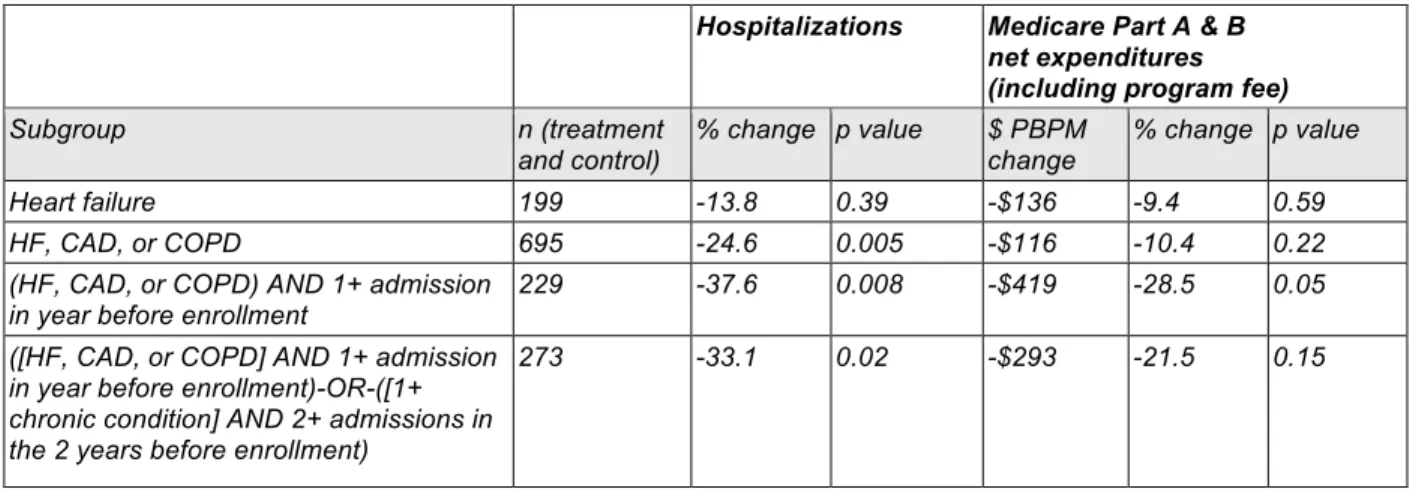
An article by the same evaluators (R. S. Brown et al. 2012), provided additional data on the impact of HQP’s program in the MCCD across a wider variety of higher-risk subgroups as summarized in the table below.
Table 2 - Impacts of HQP's model of advanced preventive care from Brown et al. 2012
Hospitalizations Medicare Part A & B net expenditures (including program fee)
Subgroup n (treatment
and control) % change p value $ PBPM change % change p value
Heart failure 199 -13.8 0.39 -$136 -9.4 0.59
HF, CAD, or COPD 695 -24.6 0.005 -$116 -10.4 0.22
(HF, CAD, or COPD) AND 1+ admission
in year before enrollment 229 -37.6 0.008 -$419 -28.5 0.05 ([HF, CAD, or COPD] AND 1+ admission
in year before enrollment)-OR-([1+ chronic condition] AND 2+ admissions in the 2 years before enrollment)
273 -33.1 0.02 -$293 -21.5 0.15
Since 2010, Aetna, Inc., a leading health insurance company in the U.S., has contracted with HQP to provide its model of advanced preventive care to Medicare Advantage members it identifies as at high risk of poor health outcomes and increasing health care costs (using its own proprietary risk algorithm) receiving primary care from participating physician practices in southeast Pennsylvania. Aetna’s medical economics division has assessed the program’s impact using a difference-in-differences analysis
comparing trends in hospital utilization (inpatient admissions and outpatient services). In this approach, hospital utilization over time for the target intervention group is compared to hospital utilization among a
10
cohort of members meeting the same eligibility criteria, but belonging to practices not participating in the program. The analysis was conducted on an intention to treat basis and included all Aetna members identified as at high risk and referred to HQP whether they could be engaged and went on to actually enroll in the advanced preventive care program provided by HQP or not. In public press releases over the past few years, Aetna reported that the program reduced hospital admissions 17-20% and lowered hospital expenditures 16-18% (“Aetna, Health Quality Partners See Lower Costs, Fewer Hospital Admission With Care Management Program For Medicare Advantage Members” 2011; “Aetna, Health Quality Partners See Fewer Admissions, Lower Costs from Care Management Program” 2013).
Not all implementations or variations of this model have been effective. For example, in the second phase of the Medicare Coordinated Care Demonstration (from Oct 2010 thru December 2014) the program did not appear to offer any advantage compared to usual care (Peterson et al. 2015). In this phase of the demonstration, there were marked differences in the conditions under which this
heart failure patients (2014-2015, unpublished communications from senior leaders at St Mary Medical Center, Langhorne, PA) and in support of the previously mentioned contract with Aetna.
While further research to more precisely define the magnitude of the benefit of the HQP model and the conditions under which it is most reliably effective is ongoing, the overall experience and evidence of effectiveness is sufficient to warrant testing the model in other locations and among different populations to determine if initial program results can be replicated in these settings. Doing so will require
dissemination of the program; the relative success or failure of which may dictate the future utility of this model and others like it.
To help ensure reliable and effective delivery of its program, HQP has adopted a theoretical framework of “core implementation components” to specify, at a high level, the general organizational requirements for implementation (Fixsen et al. 2009). This theoretical model closely matches the approach that developers of the HQP program had independently developed and used since the program’s inception. Use of this framework represents the highest level of a broad and deep set of specifications necessary to implement HQP’s model. The core components of implementation include; staff recruitment and selection, pre-service training, consultation (mentoring) and coaching, staff performance evaluation, decision support data systems, facilitative administrative supports, and system interventions.
Core Implementation Components – Essential framework to be required of adopting organizations interested in
implementing the HQP model of community-based nurse care management:
12
In order to ensure consistent effectiveness of advanced preventive care models, organizations must be willing and able to implement these programs with a high degree of adherence to well-defined process and operating specifications. Evidence to support this comes from a comparison of performance between programs (Peikes et al. 2008b; Schore et al. 2011b). Allowing user systems to freely make changes they prefer for local adaptation and reinvention may well foster broader program adoption, but in the case of advanced preventive care models, may also risk diminishing program effectiveness. This highlights the importance of finding ways to reduce the burden of adoption and implementation while supporting organizations to implement the program with high fidelity. The research undertaken in this study to explore such collaborative options will be guided by the theoretical model of innovation spread in health care organizations recently put forth by (Greenhalgh et al. 2008) and described later in this chapter.
Efforts to Spread HQP’s Model of Advanced Preventive Care
study will help determine whether such an approach might be feasible beyond southeastern Pennsylvania.
Knowledge Gap – Possibilities for Direct Innovator-User Linkage
Most research on the spread of innovations in health care has focused on the spread of new technologies or processes used by individual health care providers or small groups of providers (e.g., tightly defined teams or work units within an organization) by means of diffusion.6 That research has focused largely on; a) characteristics of innovations that make them more amenable to diffusion, b) characteristics of adopting organizations that enable them to adopt and implement innovations, and c) in the case of intentional efforts to spread innovation (dissemination7), the role of knowledge purveyors and change agents to facilitate organizational adoption and implementation. Little research has been
undertaken to understand how the interface or linkage between the organization or unit that originally developed the innovation (the resource system) and the organization that puts the innovation to use (the user system) might affect the rate of adoption and use of an innovation. The authors of a systematic literature review on this subject commissioned by the United Kingdom’s National Health Service noted;
“We found virtually no empirical studies focusing on the input of the resource system in innovation implementation, and none at all from the health services literature.”
(Greenhalgh et al. 2008, 190)
This is an especially important question with regard to advanced preventive care, which will likely require resource systems to make a significant contribution to effective implementation. To help fill this gap in the existing knowledge base, this study is designed to assess potential strategies to enhance the
dissemination of advanced preventive care models through collaborative partnerships between the resource system (designer and primary producer of the innovation) and user system (health care organizations wishing to help make the innovation available to populations they serve). In this context, organizations (user systems) with which the resource system can collaborate could play the role of user
6Diffusion is has been defined as the passive spread of a new innovation through informal channels and is largely a social process (Rogers 2003; Lomas 1993)(Lomas 1993).
14
system in a number of creative ways. The user system could, for example, play the classical role whereby the organization takes the primary responsibility for adopting and implementing the innovation with or without some outside help, or it could play more of a supporting and enabling role by which it helps the resource system expand its implementation capabilities, acting more as a supporting partner or as a franchisee. An example would be an organization that is a user system committing facility space, data, human resources, funding or other resources to enable the resource system to implement the model on its behalf to the user system’s service population. It might also be possible to have user systems simultaneously play the adopter/implementer and sponsorship roles to varying degrees. In this regard, it is hypothesized that making advances in creating and utilizing new approaches to health care delivery will require as much innovation with regard to inter-organizational collaboration as in pioneering new programs or interventions. The aim is to evaluate the potential such collaborative relationships have in promoting the successful spread of this emerging class of innovations to improve the health outcomes of chronically ill older adults.
The Conceptual Model for this Research
Application of a Theoretical Framework to Guide the Research
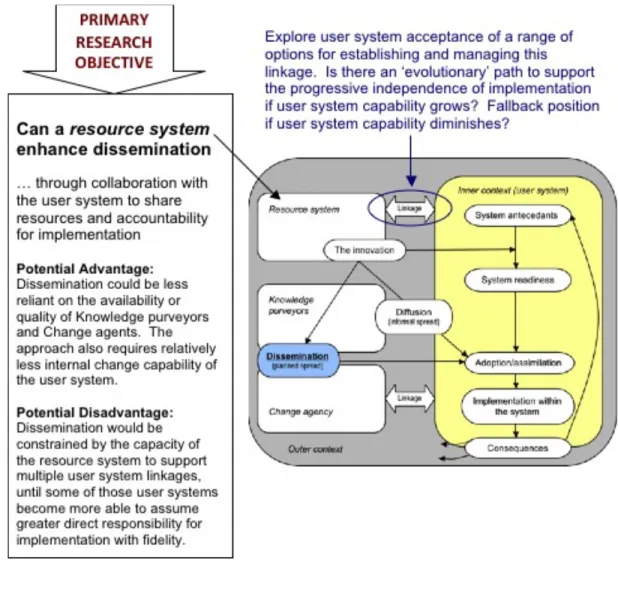
Greenhalgh, et al. (2008) offer a theoretical model for the diffusion and dissemination of innovations in health service organizations based on an extensive recent systematic literature review commissioned by the UK Department of Health via the National Health Service (NHS) Service Delivery and Organisation (SDO) Programme undertaken between October 2002 and December 2003. Two schematics of the model are shown below – a simplified and a more detailed depiction, both taken from Greenhalgh, et al. (2008).
Figure 2 - Basic schematic of a theoretical model for the dissemination and diffusion of innovations in health care organizations. Taken from Greenhalgh, T et al. “Diffusion of Innovations in Health Care
Figure 3 - A complete and detailed schematic of a theoretical model for the dissemination and diffusion of innovations in health care organizations. Taken from Greenhalgh, T et al. “Diffusion of Innovations in Health Care Organisations: A Systematic Literature Review”, (2008, 201)
Table 3 - Definition of terms associated with the conceptual model of Greenhalgh, et al. and as applied in this study. [Minor edits and spelling changes applied to verbatim terms selected from the glossary of Greenhalgh et al. (2008, 293–295). With addition of ‘knowledge purveyor’ definition from page 194).]
Term
Definition
Adoption of innovations
(organizational)
An organization’s means to adapt to the environment, or to pre-empt a change in the
environment, in order to increase or sustain its effectiveness or competitiveness.
Assimilation of innovations
Another term for the adoption of innovations by organizations, often used in the
literature relating to service sector innovations. Assimilation is the preferred term for
adoption in organizations, since it emphasizes the long and complex processes
involved, with multiple decisions made by multiple agents.
Change agency
An organization or other unit that promotes and supports adoption and
implementation of innovations.
Diffusion
The process by which an innovation is communicated through certain channels over
time among the members of a social system (Rogers 2003).
Dissemination
Actively spreading a message to defined target groups (Mowatt et al. 1998).
Implementation
Dissemination plus action to actively encourage the adoption recommendations
contained in a message (Mowatt et al. 1998)
Inner context
(user system)
…the intra-organizational determinants of innovation, including structural
determinants (size, maturity, functional differentiation and so on …), leadership and
locus of decision-making …, receptive context for change … and absorptive capacity
for new knowledge ...
Innovation
(relating to health service
delivery and organization)
A set of behaviors, routines, and ways of working, along with any associated
administrative technologies and system, which are (a) perceived as new by a
proportion of key stakeholders; (b) linked to the provision or support of health care;
(c) discontinuous with previous practices; (d) directed at improving health outcomes,
administrative efficiency, cost-effectiveness, or the user experience; (e)
implemented by means of planned and coordinated action by individuals, teams or
organizations. Such innovations may or may not be associated with a new health
technology.
Knowledge purveyors
(page 194)
Media and public relations; conference organizers; publishers and distributors of
books, journals, and reports; guideline distributors, educational organizations, who
package and present the results of research to the services sector.
Outer context
… extra-organizational determinants of innovativeness, including the extent and
quality of informal inter-organizational networks …; the nature and success of
planned strategies to promote inter-organizational collaboration …; the prevailing
political, economic, sociological and technological environment (and whether it is
static or changing; … and the nature and timing of particular policymaking streams
and other political initiatives …
Resource system
An organization (or other unit – e.g. a research institution) that develops innovations.
User system
An organization (or other unit of adoption) that considers the innovation for adoption.
Previous research has convincingly shown that several key attributes of innovations8 are associated
with their rate of spread. This is not the focus of the current study. Based on HQP’s experience in the
18
MCCD9 and the framework that HQP itself uses for implementing its model (core implementation
components) the current working assumption is that, for program effectiveness to be preserved,
dissemination of the model will require a high degree of fidelity to the original program design. In other
words, for all but the most minor operational adaptations, the specifications for implementing the
innovation (in this case the HQP model) are not to be significantly “reinvented” at each implementation
location. Combined with the fact that so much research has already been undertaken on this general
topic, no effort will be made in the current study to seek correlations between attributes of HQP’s program
and its ease of dissemination.
Studies also indicate that the inner milieu of an organization is a powerful determinant of the
organization’s ability to adopt and implement innovations. In particular, system antecedents and system
readiness, defined along several dimensions, have been shown to correlate with an organization’s
adoption and implementation of innovations. (for an overview of this extensive literature see Chap. 7, pp
134-156 of Greenlagh, et al). Assessing these would help identify organizations that are more likely to
adopt the HQP model and therefore be more fruitful targets of dissemination efforts. Given the wealth of
existing research and the limitations of time and access to internal organizational information, these
attributes will not be specifically probed in the key informant interviews undertaken for this study.
The extent to which, if at all, partnerships or collaborations between resource systems and user
systems can impact the adoption and use of innovations by health care organizations is not well
researched, is an area that Greenhalgh, et al. believed warranted further study, and is the focus of the
current research.
“The outer context. Research at the interorganizational level might fruitfully explore the process of informal interorganisational networking and more formal
interorganisational collaboration, with an emphasis on the role of the change agency (and how this might be enhanced). An explicit study of the process and effectiveness of interorganisational knowledge transfer activities through boundary spanners (such as the appointment, training, and support of knowledge workers) might provide
generalisable lessons for the organisations seeking to develop their capacity in this area.” (pgs. 17-18)
“Overall, and in contrast to the findings from the commercial sector, there is almost no research aimed specifically at developing the role of the resource system or change
9 Fidelity to the principles and key elements of the original HQP program is presumed essential for
agency. Perhaps this is partly because service delivery innovations are not a ‘product’ produced in a s factory or laboratory, but it may also be because there is less
commercial incentive for the resource system to evaluate and enhance their own role.” (pg. 191)
Overarching Research Question
The immediate objective of this research is to find a mechanism for a resource system (HQP) to
support the replication of advanced preventive care by a relatively small number of other organizations at
different locations in order to create the confidence and momentum needed to gather the resources
required for broader program dissemination. The longer term goal is broad dissemination - the active,
intentional spread - of HQP’s evolving model of advanced preventive care. The specific research
questions pursued in this study are designed to support this stepwise approach. The path laid out in the
implementation plan will provide more opportunities to continue to innovate both the advanced preventive
care model and the mechanisms for its dissemination through applied R&D as the work unfolds. This
research represents an important starting point. Others interested in the framework of advanced
preventive care and working toward similar goals may find this approach and the information gained from
this research useful in pursuing replication and dissemination.
What kinds of collaborative partnerships would health systems, physician groups, and health
system-physician alliances (user systems) be willing to engage in with a resource system to adopt
and implement advanced preventive care? More generally, what kind of collaborative support could
resource systems offer user systems to help implement advanced preventive care and vice versa?
Specifically, this study will investigate what role health care organizations perceive a resource
system can play to help accelerate dissemination, with the following realistic constraints assumed;
1. there is limited opportunity for local adaptation (modification) of the innovation
2. adopting organizations will not have the necessary internal capabilities to implement
advanced preventive care without significant support and assistance
Under these constraints, the working hypothesis is that organizations would be more willing and
better able to adopt or make use of an innovation if they had well-designed, high value support services
or collaboration partners to directly implement the innovation on their behalf, or significantly guide and
20
they have an opportunity to participate in an organizational partnership that could significantly reduce the
burden of implementation - e.g., provide collaborative (shared or fully outsourced) operational
management, staff training and evaluation, data management, performance analysis, or some
combination of these.
Specific Research Questions
1. What is the willingness and ability of health system, physician group, and health system-physician
alliance leaders to collaborate with program innovators to provide an exemplar model of
advanced preventive care to their patient populations?
2. What objections, barriers, or difficulties do health system, physician group, and health
system-physician alliance leaders associate with such collaboration?
3. Are there specific structures of collaborative partnerships that health system, physician group,
and health system-physician alliance leaders are more willing to accept?
a. Direct Service Partnership b. Franchise Model
c. Regional Cooperative
4. To what extent do the pattern of responses of health systems, physician groups, and health
22 How this Research Can Help and Why it’s Important
Whether the specific exemplar model of advanced preventive care used in this study will ultimately
prove to be a major innovation to improve the health of chronically ill older adults or not is less important
than is the strong likelihood thatcare models significantly different than ones commonly used todaythat
are more robust andmore demanding to implement will be needed to effectively combat this growing
public health challenge. As one example, none of the four models of complex chronic care with the
strongest evidence of effectiveness in a recent systematic review have yet spread broadly in the U.S.
(Hong, Siegel, and Ferris 2014). This suggests that these models may share attributes that make them
difficult to diffuse; such as an intensive commitment of resources, new training methods, unfamiliar
processes or team models, etc. Whether new models of collaborative partnerships between innovators
(resource systems) and adopting organizations (user systems) will prove to be helpful in improving the
dissemination of such models remains to be seen, but at least a framework and rationale for considering
such efforts can be informed by the current study.
If these new models are to spread, it will likely require intentional efforts to disseminate them. While
there will be important roles for health care policy and financing in helping do so, the possibility that the
innovators of such models might play an important role as well has, up till now, gone largely unexplored.
It may be that to be successful in disseminating these models, all possible supports will be needed;
policy, financing, and new (more effective) roles for innovators, knowledge purveyors, and change
agents.
It also seems likely that there may be an increasingly important role for organizations like HQP that
has as its dedicated mission undertaking the applied R&D required to design and test new care
innovations even when doing so provides no immediate commercial, strategic, or political gain. If so, how
are such organizations to be sustainable? It might be that if they diversified in ways that supported
collaborative partnerships that enable dissemination this could help fulfill their missions and provide
revenues to do so.
The results of this study will inform an implementation plan for HQP to prioritize the development of
collaborative partnership models that are feasible and likely to be accepted among health care
commitment to its organizational mission to design, test, and spread innovations in advanced preventive
care, HQP must be successful at both innovating and rigorously studying such models as well as
partnering with others to spread their use and to generate revenues to support operations. In effect, if
executed as intended, this strategic (implementation) plan will provide a test case for the practical utility of
the findings of this study, at least for a single organization.
On a larger scale, it is possible that other organizations involved in health care or public health
innovation might find these results useful and apply them in a similar manner to inform their strategic
planning. To the extent this occurs, it could provide a more robust validation (or refutation) of the
24
CHAPTER 2 – REVIEW OF THE LITERATURE
From (Greenhalgh et al. 2008) page 190
“We found virtually no empirical studies focusing on approaches to enhance the input of the resource system in innovation implementation, and none at all from the health services literature. We found two relevant studies: one from the education sector and one from health care, both of which we rated as high quality, and which we feel raise interesting methodological issues.”
The quote above summarizes the paucity of published research literature on the role a resource
system might play in supporting the implementation and dissemination of innovations circa 2008. Four
main strategies were used to search for research articles relevant to the current study:
a) Review the two references cited in the quote above by Greenhalgh
b) Review articles citing each of the two references
c) Use Google Scholar to review all works citing Greenhalgh et al. 2008
d) Search PubMed and Google Scholar databases10 for works published from 2005-15
e) Selected information related to the Nurse Family Partnership (NFP) model of care11
References found through these four mechanisms were reviewed for relevance to the main research
question, which in the broadest possible sense, would include any description of resource system - user
system interactions or collaborations in the context of the dissemination of innovations. Unless, otherwise
stated, all searches sought works published through 2015. Because this study addresses innovations in
10The overall evidence from recent reports suggests that while PubMed and Google Scholar are each
powerful literature search databases, using both in combination, is a robust and efficient approach to conduct a systematic review; especially for health-related topics with a limited number of published articles (Bramer, Giustini, and Kramer 2016; Giustini and Boulos 2013; Gehanno, Rollin, and Darmoni 2013; Shariff et al. 2013; Bramer et al. 2013; Haddaway et al. 2015).
11NFP is an innovation in care with strong evidence of effectiveness that has been disseminated with the
health care delivery (involving human to human interactions), exclusion criteria include innovations of a
purely technological or information system nature or those associated solely with the dissemination of
clinical guidelines (absent any change in the care delivery system).
A study of eight successful diffusion initiatives occurring within the Global Diffusion of Healthcare
Innovation study, provides a useful context for thinking about this literature review and exemplifies some
challenges. By analyzing interviews of those involved in each of these initiatives, the authors concluded
that “Purposeful and directed change management is needed to drive system transformation” (Parston et
al. 2015). One element deemed critical to supporting such intentional change efforts was “a
specific agency to promote diffusion.” Given the information provided in the study, however, it’s not
clear what the exact nature of these agencies was, how they varied, how they interacted with user
systems, or to what extent they had attributes consistent with a resource system as defined by
Greenhalgh et al. (2008).
They were described only as having certain functions and characteristics; “The creation of a specific
program or initiative to promote diffusion can help translate a vision into reality by providing the impetus,
coordination, resources, and structures needed to diffuse the innovation throughout the system. The
leaders of the agency must have credibility; the capacity to mobilize change; and the necessary technical,
communication, and project management skills. In each of the eight case studies, there was a dedicated
program or organization in place to help create an enabling environment and drive diffusion across the
system.” More information regarding whether such agencies were most like resource systems,
knowledge purveyors, change agents, some combination or mix of these, or an altogether different kind of
organizational entity would help position this work in the context of the current study. As is true for most
of the articles identified through this literature review, they offer little or no description of the structural or
operational features of the resource system - user system relationship.
Logic and Perspective
Dissemination and implementation are closely related and interdependent. With increasing
frequency, the two terms are being used together to describe an emerging field or science. One example
26
insights from initial trainees” (Stamatakis et al. 2013). Even when the term “Implementation Science” is
used alone, it is usually in the service of disseminating effective innovations (Newhouse et al. 2013). In
the context of the current study, a distinction is to be made between the unqualified (more general)
concept of a ‘researcher’ versus an ‘innovator’ or ‘inventor’. The latter is more consistent with the
definition of a resource system as described in the model of Greenhalgh et al. and as applied in the
current study.
The ideal resource system brings deep understanding of a program, operational expertise, extensive
experience successfully implementing the innovation, and the insight required to balance disciplined
program adaptation and rigorous fidelity. These requirements may be more akin to Deming’s “system of
profound knowledge”12, than to a narrower scope of research or technical expertise. This field is new and
our understanding of the full potential of a resource system remains largely unexplored and
underdeveloped. “A major new scientific challenge for prevention involves understanding the processes
that facilitate or impede quality implementation of programs demonstrated to have positive effects. To
date, few of these successful programs have been implemented in communities, and the scientific
community is in need of new methodological approaches to understand the implementation processes.
Unlike the first phase of prevention research that was based on efficacy and effectiveness trials, this new
phase of implementation is still in an early stage and has no single accepted paradigm to guide the
scientific work.” (C. H. Brown et al. 2012)
In addition to the model of Greenhalgh, et al., many other frameworks and models have been
proposed to describe factors influencing the implementation of innovations; Rogers’ Diffusion of
Innovation Model (Rogers 2003), Interactive Systems Framework for Dissemination and Implementation
(ISF) (Wandersman et al. 2008), Consolidated Framework for Implementation Research (CFIR)
(Damschroder et al. 2009), the theoretical domains framework (TDF) (Michie 2005; Cane, O’Connor, and
Michie 2012), Promoting Action on Research Implementation in Health Services (PARIHS)
(Rycroft-Malone 2004), translating research into practice (TRIP) (“Translating Research Into Practice” 2016),
push\pull framework (Zmud 1984), and several others. These varied models all seek to describe factors
12Consisting of a combination of; appreciation for a system, knowledge of variation, theory of knowledge,
important to implementation effectiveness and by extension the dissemination of innovation. One
approach to synthesizing the available literature might have been to review key articles describing such
models and hypothesize how an aspiring resource system, like HQP, could interact with a user system by
applying the framework of one or more such models. Within such a context, one could hypothesize and
compare the mechanisms, benefits, risks, barriers, and facilitators arising from the use of each of the
selected models.
There are several reasons why this approach was rejected. First, it would predispose the analysis
toward conceiving of the resource system as a substitute for knowledge purveyors, change agents,
boundary spanners, business consultants, or other players commonly providing implementation support
such as training, facilitation, technical assistance, and management consulting. Second, attempting to
map elements of these theoretical models, learned only by reading landmark articles describing them, to
the capabilities of a resource system, risks articulating a “pseudo-understanding” rather than a more
grounded set of insights with practical utility (Fredriksson, Ebbevi, and Savage 2015).
Finally, such an approach would diminish the possibility of discovering novel means by which
resource systems could support the implementation of innovations that are not described in any of these
models. This seems especially relevant given HQP’s experience of successfully providing a unique
collaborative partnership to user systems for several years and having an experience-informed intuition
about other types of collaborative partnerships it could offer to facilitate dissemination of advanced
preventive care. Therefore, the search strategies for this literature review were designed to seek
reports that describe the direct work of resource systems in support of user systems to
implement and disseminate innovations.
Two References Cited by Greenhalgh
One of the references cited by Greenhalgh et al. 2008 models the benefit a supplier might receive by
“triaging” customers with regard to their innovativeness to provide more support to those most likely to
adopt an interorganizational information system (Nault, Wolfe, and Dexter 1997). Such systems when
fully deployed have advantages in terms of monitoring customer needs and more reliably and efficiently
28
information technology platform (SPERO®) enabling the user system and the resource system (in this
case HQP) to monitor and address variations in program implementation and performance, there is some
overlap with the premise put forth in this paper. A key difference, however, is that the information
technology application is but one of several critical program elements required for a user system to fully
implement HQP’s model of advanced preventive care. All 18 articles that cited Nault et al., identified
using Google Scholar, were reviewed in full, and none, (other than two works by Greenhalgh et al.)
directly addressed resource system – user system collaboration and its potential role in dissemination.
The other citation referenced by Greenhalgh et al., was a study of how university-based innovators
describe and communicate key attributes of their innovations and how such descriptions are perceived by
potential adopter organizations (government regulators, industrial scientists, and consulting engineers).
This ‘early stage’ communication about emerging innovations undertaken by innovators is believed to
influence how potential adopters learn about, form initial impressions of, and ultimately adopt innovations.
The results indicated that university innovators did not always positively represent their own innovations
and, that as a group, they may be able to improve the effectiveness with which they communicate key
attributes of their innovations to strengthen the rate of adoption by different categories of potential users
(Dearing, Meyer, and Kazmierczak 1994).
While effectively communicating key attributes of an innovation is one aspect of the work HQP is
undertaking to promote the dissemination of its model of advanced preventive care, it is not the main
focus of the current study. Review of the 33 Google Scholar identified articles citing Dearing et al. 1994,
did not yield any works directly relevant to the current study. The closest was a work by the same lead
author (Dearing et al. 2013) that proposes an overall approach for more effective dissemination of
pre-exposure prophylaxis for HIV. That paper offers a thoughtful and comprehensive schema that includes
“agenda setting”, “diffusion-system readiness”, communication and social networking strategies,
“partnering to build delivery capacity and infrastructure support”, “training and technical assistance”,
“evaluating and sharing rapid improvement results”, and “monitoring for diffusion outcomes”. Though a
helpful, high-level roadmap, it does not address any specific structural or operational elements of a