DELIBERATE PRACTICE WITH MASTERY LEARNING:
USING AN ONLINE APPROACH TO DEVELOP NURSING STUDENTS’ INTERPROFESSIONAL CRITICAL INCIDENT REPORTING SKILLS
Vicky J.-H. Yeh
A dissertation submitted to the faculty at the University of North Carolina at Chapel Hill in partial fulfillment of the requirements for the degree of Doctor of Philosophy in the
School of Nursing.
Chapel Hill 2018
Approved by:
Gwen Sherwood
Linda S. Beeber
Carol F. Durham
Suzie Kardong-Edgren
ABSTRACT
Vicky J.-H. Yeh: Deliberate Practice with Mastery Learning: Using an Online Approach to Develop Nursing Students’ Critical Incident Reporting Skills
(Under the direction of Gwen Sherwood)
Communication breakdown among healthcare providers is a major contributing factor in
healthcare errors that could lead to serious patient harm. The ability to convey patient
information accurately and promptly is pivotal in order for healthcare providers to make
informed care decisions. However, pre-licensure nursing students rarely have opportunities to
practice reporting patient information to non-nurse healthcare providers. The use of deliberate
practice (DP), a conceptual model for skills acquisition, is widely used to develop psychomotor
clinical skills and demonstrate effectiveness. The purpose of this dissertation is to explore the
feasibility of using DP to develop communication skills for pre-licensure nursing students. This
project examines the impacts of using an online DP intervention that is guided by mastery
learning theory on learners’ skill performance and confidence in reporting a patient critical
incident using the standardized communication tool, SBAR (situation, background, assessment,
recommendation).
This dissertation is composed of three papers. The first paper is a systematized review of
the current literature on the use of DP in developing clinical communication skills. The second
paper describes the design and evaluation of story-guided online DP sessions to provide learners
experimental study, the third paper examines the impact of engaging in regular online DP, at
least five sessions for the intervention group (n = 22) versus two for the control group (n = 21), on learners’ ability to achieve a preset mastery standard and on any changes in their SBAR
performance and confidence.
The results of the systematized review support the continued study of DP for developing
clinical communication skills to produce further evidence of its effectiveness. Feasibility testing
of the online DP sessions shows that this cost-effective teaching/learning approach could provide
highly satisfactory learning experiences and be adopted into nursing curricula. The results of the
pilot experimental study indicate that the intervention group learners showed significantly (p
< .05) greater improvement in their performance and confidence levels than the control group
after controlling for covariates. Two intervention group learners (versus none in the control
group) met the mastery standard. Future study is needed to examine the number of practice
To my parents, Kung-Yi Yeh and Tsair-Yun Chen, and my brother, Yi-Ting Yeh
To my grandparents, whom I dearly miss
To my mentor, Dr. Gwen Sherwood,
who is in every page of this dissertation and every step of my doctoral study
To students
ACKNOWLEDGEMENTS
My deepest gratitude goes to my parents for giving me the opportunity to pursue higher
education in the United States. They make possible the dreams that I dare not share, cheer for me
when I refuse to smile, and listen even if I have no words.
My sincere appreciation goes to my dissertation committee, Drs. Gwen Sherwood, Linda
Beeber, Carol Durham, Suzie Kardong-Edgren, Todd Schwartz, and Josephine Asafu-Adjei
(former). Their expertise, patience, and encouragement are the reasons I was able to start and
finish this dissertation. I also would like to thank my first advisory committee that encouraged
me to search for my passion. A special note of gratitude to my dissertation chair, Dr. Sherwood: I
am incredibly grateful for the tremendous support and mentorship that you have given me. I am
where I am today because of who you are. You made my long journey to a Ph.D. degree
inexplicably enjoyable and a time that I will greatly miss. I am truly honored to be your student.
My wholehearted thanks go to those who have helped me in the development and
implementation of the online deliberate practice sessions: at UNC, J. Alderman, D. Baker,
K. Bates, S. Berrier, D. Berry, M. Cockroft, C. Durham, B. Foster, J. Page, G. Sherwood,
E. Youngman, B. Joyner, and 88 students; at StoryCare®, S. Powell; and my brother, Y.-T. Yeh. I must thank all my friends with whom I have shared life in my years at UNC,
particularly my fellow doctoral students in nursing, and the staff and faculty members who I see
and work with at the School. I cherish the friendship that each of them uniquely extended to me.
Most importantly, I praise and thank God for working my weakness and fear into a
dissertation project and allowing me to begin to find a purpose in them and see His goodness.
Special thanks go to Hsinyi and Kenny from S.A.L.T., Joann and Howard from FYTER, and
TABLE OF CONTENTS
LIST OF TABLES ... xiii
LIST OF FIGURES ... xv
LIST OF ABBREVIATIONS ... xvi
CHAPTER 1: INTRODUCTION AND DISSERTATION OUTLINE ... 1
Interprofessional Communication in Pre-Licensure Nursing Education ... 2
Deliberate Practice for Skills Acquisition ... 3
Significance of the Study for Nursing Education ... 5
Theoretical Framework: Deliberate Practice with Mastery Learning ... 7
Study Purpose ... 9
Methods ... 10
Protection of Human Subjects ... 10
Research Design ... 11
Outline of Dissertation ... 25
REFERENCES ... 27
CHAPTER 2: USE OF DELIBERATE PRACTICE IN COMMUNICATION SKILLS DEVELOPMENT IN HEALTHCARE PROFESSION EDUCATION: A SYSTEMATIZED REVIEW ... 30
Overview ... 30
Applying Deliberate Practice to Develop Clinical Skills ... 32
Aim ... 33
Literature Search Strategies ... 33
Inclusion and Exclusion Criteria ... 34
Search Outcomes ... 35
Results ... 35
Definition of Deliberate Practice in Educational Programs ... 37
Use of Deliberate Practice in Targeted Communication Skills Development... 40
Application of Deliberate Practice in Communication Skills Interventions ... 41
Impact of Learning Outcome by Intervention that Emphasized Deliberate Practice (Also See Table 2.4) ... 43
Discussion ... 51
Lack of Studies that Target Non-Medicine Learners and Interprofessional Communications ... 51
Variations in Opportunities to Engage in Individual Deliberate Practice ... 52
Support for the Use of Interventions that Emphasize Deliberate Practice ... 53
Implications for Future Research, Education, and Practice ... 54
Limitations ... 56
Conclusion ... 56
REFERENCES ... 58
CHAPTER 3: ONLINE DELIBERATE PRACTICE TO DEVELOP INTERPROFESSIONAL COMMUNICATION SKILLS: DESIGN, IMPLEMENTATION, AND EVALUATION ... 61
Overview ... 61
Conceptual Model and Theoretical Framework ... 63
Deliberate Practice: A Conceptual Model for Skills Development... 63
Applying Deliberate Practice and Mastery Learning to Communication
Skills Development ... 65
Design of Online Deliberate Practice Sessions and Feasibility Test ... 66
Structure of Deliberate Practice Sessions ... 66
Using Clinical Stories to Facilitate an Online Simulation-Based Learning Environment ... 67
Validating Content for Online Deliberate Practice Sessions ... 68
Feasibility Testing of Online Deliberate Practice Sessions ... 69
Implementation of Online Deliberate Practice Sessions: A Pilot Experimental Study ... 71
Outcome Measurements: Performance, Mastery Standard, and Confidence ... 72
Evaluation of the Design and Implementation of Online Deliberate Practice Sessions ... 75
Establish Inter-Rater Reliability ... 75
Preliminary Results of the Impact of Online Deliberate Practice Sessions... 77
Overall Self-Reported Learner Experience with Online Deliberate Practice Sessions ... 79
Key Lessons Learned ... 81
Challenges of Using Technology ... 81
Complexity of Evaluating Communication ... 82
Importance of Specific Feedback and Debriefing ... 82
Conclusion ... 83
REFERENCES ... 84
CHAPTER 4: DELIBERATE PRACTICE WITH MASTERY LEARNING: USING AN ONLINE APPROACH TO DEVELOP NURSING STUDENTS’ INTERPROFESSIONAL CRITICAL INCIDENT REPORTING SKILLS ... 87
Overview ... 87
Deliberate Practice ... 89
Mastery Learning... 90
Methods ... 92
Study Design and Data Collection ... 92
Participants and Recruitment ... 92
Intervention: Online Deliberate Practice Sessions ... 93
Comparison of Control and Intervention Groups ... 94
Measurement ... 95
Outcome Measurement: Primary Outcome ... 97
Outcome Measurement: Secondary Outcomes ... 98
Sample Size ... 99
Statistical Methods ... 100
Results ... 102
Participant Demographics ... 102
Online Deliberate Practice Session Completion ... 103
Outcome Measurement ... 104
Exploratory Within-Intervention Group Analysis ... 109
Participant Satisfaction and Intervention Evaluation ... 112
Discussion ... 116
Mastery ... 116
Performance and Confidence ... 117
Differences within the Intervention Group ... 118
Intervention Evaluation ... 119
Study Limitations ... 122
REFERENCES ... 125
CHAPTER 5: SYNTHESIS OF DISSERTATION FINDINGS AND IMPLICATIONS ... 128
Paper 1 (Chapter 2): Use of Deliberate Practice in Communication Skills Development in Healthcare Profession Education: A Systematized Review ... 130
Paper 2 (Chapter 3): Online Deliberate Practice to Develop Interprofessional Communication Skills: Design, Implementation, and Evaluation ... 132
Paper 3 (Chapter 4): Deliberate Practice with Mastery Learning: Using an Online Approach to Develop Nursing Students’ Interprofessional Critical Incident Reporting Skills ... 134
Synthesis of the Overall Findings ... 136
Limitations of the Dissertation ... 138
Strengths of the Dissertation ... 140
Implications for Research ... 141
Implications for Practice ... 143
Implications for Nursing Education ... 144
Conclusion ... 146
LIST OF TABLES
Table 1.1. Instruments Used to Measure/Collect Variables in Study Part II ... 22
Table 2.1. Search Terms and Search Results by Database ... 34
Table 2.2. Targeted Communication Skills, Participant Levels, and Authors of
Studies ... 36
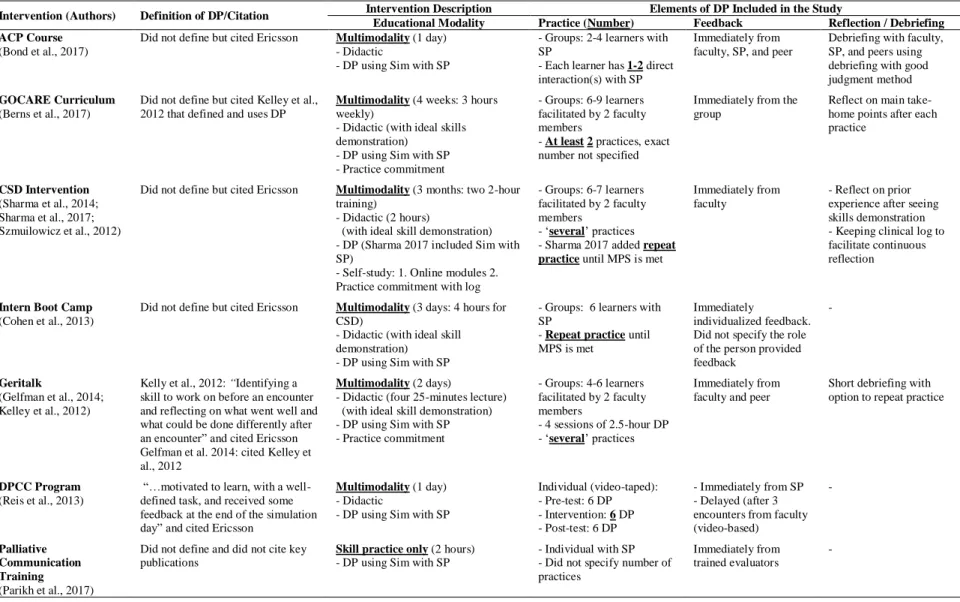
Table 2.3. Definition of Deliberate Practice, Description of Intervention, and the
Application of Deliberate Practice in Studies ... 38
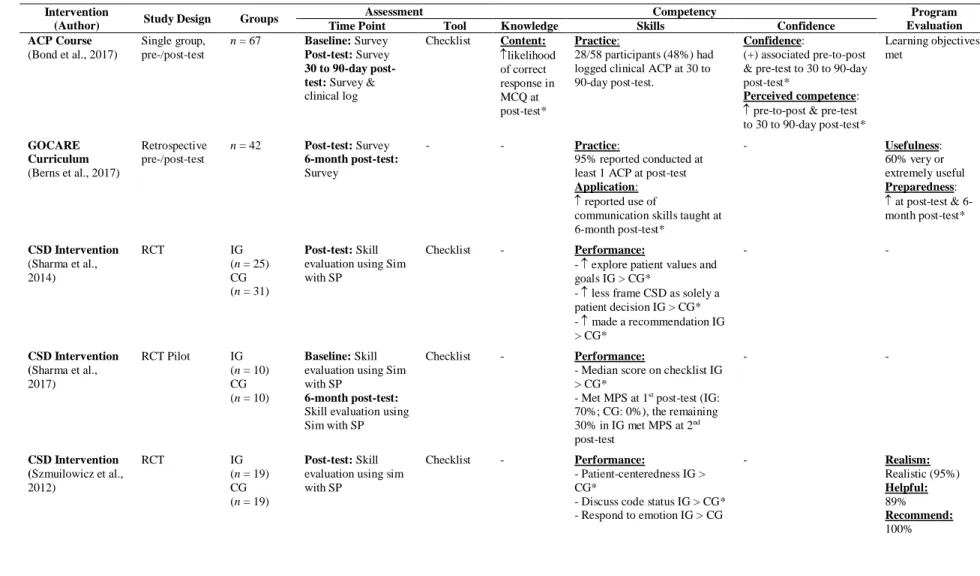
Table 2.4. Study Design, Measurement, and Impact of the Interventions that
Incorporated Deliberate Practice on Learners... 44
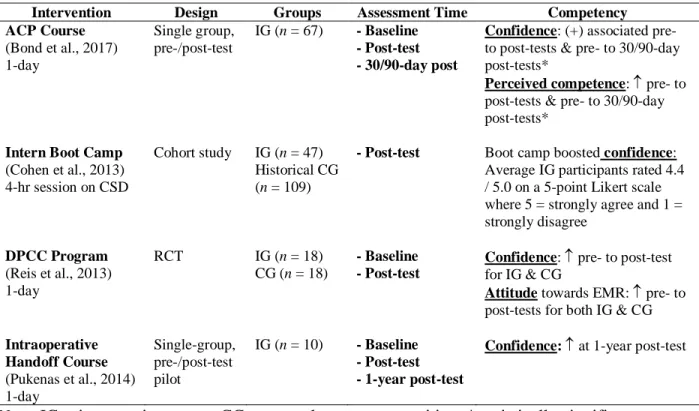
Table 2.5. Impact of Educational Interventions on Learners’ Confidence Level ... 51
Table 3.1. Categories and Items from Original IICR and Examples of
Story-Specific Sub-Items Included in Adapted IICR Checklist ... 73
Table 3.2. Inter-Rater Reliability Assessment of the Adapted IICR Checklists ... 76
Table 3.3. Overall Percent Agreement for Assessment of Items with Low
Weighted Kappa... 77
Table 3.4. Test Results of Group Differences of Changes in Mean Performance
and Confidence Levels ... 79
Table 3.5. Evaluation Survey Participant Characteristics Breakdown by Group ... 80
Table 4.1. Categories and Items from the Original ISBAR Interprofessional Communication Rubric (IICR) and Examples of the Sub-Items
Included in the Adapted IICR Checklists Used in this Study ... 97
Table 4.2. Summary of Variables, Measures, and Time Points ... 99
Table 4.3. Participant Demographics by Group... 103
Table 4.4. Comparison of the Two Participants Who Met the Minimum Passing
Score at Post-Test ... 106
Table 4.5. Analysis of Covariance to Assess Mean Difference of Performance
Change Between Groups... 108
Table 4.6. Analysis of Covariance of Mean Confidence Level Change Between
Table 4.7. Regression Analysis between Number of DP Sessions Completed and
Participants’ Performance Level Change within the Intervention Group ... 111
Table 4.8. Regression Analysis between Number of DP Sessions Completed and
Participants’ Confidence Level Change within the Intervention Group ... 111
Table 4.9. Regression Analysis between Participants’ Confidence Level Change
and Performance Level Change within the Intervention Group ... 112
Table 4.10. Basic Demographics of the 46 Students Who Completed the Online
Evaluation Survey ... 113
Table 4.11. Participants’ Self-Perceived Improvement in Using SBAR in Communications with Other Providers during the 10-Week Study
Period by Group ... 114 Table 4.12. Participants’ Perceived Number of Online Deliberate Practice
Sessions Needed for Them to Feel Comfortable Reporting a Patient
Critical Incident Interprofessionally ... 115 Table 4.13. Participants’ Perceived Ideal Time Interval to Offer Online Deliberate
LIST OF FIGURES
Figure 1.1. Conceptual framework of deliberate practice with mastery learning. ... 9
Figure 1.2. Structure of the online deliberate practice session. ... 11
Figure 1.3. Study Part I (feasibility study) flow: Design and test the online
deliberate practice sessions... 12
Figure 1.4. Study design of the pilot experimental study to examine the impact of the online deliberate practice intervention on students’ critical incident
reporting performance. ... 15
Figure 1.5. Stratified randomization by course section with blocking feature. ... 18
Figure 1.6. Pilot experimental study intervention and control group comparison... 20
Figure 1.7. Study Part II research questions and relationships examined between
variables. ... 23
Figure 2.1. Disposition of the study selection process... 35
Figure 3.1. Structure of an online deliberate practice session used in this study. ... 67
Figure 3.2. Example of the adapted IICR checklist with emphasis strategies
(underlined and bold) for Background category. ... 74
Figure 4.1. Number of online deliberate practice sessions completed by the
intervention group participants. ... 104 Figure 4.2. Comparison of participants’ perceived improvement, practice needs,
LIST OF ABBREVIATIONS
ABSN Accelerated Bachelor of Science in Nursing
ANCOVA Analysis of covariance
BSN Bachelor of Science in Nursing
DP Deliberate practice
IRB Institutional review board
IRR Inter-rater reliability
ISBAR Identification, situation, background, assessment, recommendation
IICR ISBAR interprofessional communication rubric
LS Least squares
MD Medical doctor
MPS Minimum passing standard
NA Nursing assistant
NP Nurse practitioner
RN Registered nurse
RQ Research question
SBAR Situation, background, assessment, recommendation
SD Standard deviation
SE Standard error
SP Standardized patient
TBSN Traditional Bachelor of Science in Nursing
CHAPTER 1:INTRODUCTION AND DISSERTATION OUTLINE
The Joint Commission cites poor communication as a major factor in healthcare errors
(2017). Ineffective interprofessional communication can contribute to treatment delays and lead
to serious patient harm. Health profession education, however, is only now addressing the need
to teach interprofessional communication skills. Educators are seeking evidence-based teaching
applications to better prepare healthcare providers to use interprofessional communication to
improve care coordination, avoid gaps in care, and improve patient outcomes. Many educators
postulate that the ‘how’ of teaching is as important as the ‘what’ of teaching and therefore seek evidence-based innovations to help improve current communication competency.
Pressures related to lack of time and resources in academic nursing often limit
faculty-guided skills practice and instruction, especially with respect to so-called ‘soft skills’ such as
communication skills. The recent emphasis on interprofessional competencies across all aspects
of healthcare profession education adds to the imperative to provide learning opportunities to
improve critical communication among healthcare providers. Pre-licensure nursing students
(those who are not yet licensed as Registered Nurses) rarely have the opportunity for the skills
practice needed to develop interprofessional communication skills and may graduate without the
competency to communicate well with other healthcare providers. To address this gap in nursing
education, a three-part study was implemented for this dissertation project to explore the impacts
of regular engagement in online deliberate practice (DP) on pre-licensure nursing students’
evidence-based standardized communication tool, ‘SBAR’ (situation, background, assessment, recommendation) (Institute for Healthcare Improvement [IHI], 2017). Thus, this dissertation project is composed of three study parts: Study Part Iwas designed to develop online learning
exercises (online DP sessions) that integrate principles of DP to provide learners with regular
opportunities to practice interprofessional critical incident reporting skills. The online DP
sessions developed for this study were tested in a feasibility study by seven pre-licensure nursing
students to examine the feasibility of incorporating the DP sessions into the nursing curriculum
and to evaluate learner satisfaction. Study Part IIwas a pilot experimental study to measure the
impact of regular (every other week) engagement in online DP sessions on pre-licensure nursing
students’ critical incident reporting performance using SBAR. Two online DP sessions were
included in an online summer course as a non-graded course requirement. Pre-licensure nursing
students enrolled in this course were recruited and randomized into intervention and control
groups. The intervention group completed five assigned online DP sessions, one every other
week. Incorporating the theoretical framework of mastery learning, optional DP sessions were
provided to learners if they desired additional practice opportunities. The control group
completed only the two course-required online DP sessions. Study Part III was an evaluation of
the pre-licensure learners’ experience of completing the online DP sessions using an online
survey.
Interprofessional Communication in Pre-Licensure Nursing Education
Communication breakdowns are a major root cause of delays in treatment and
unexpected patient harm in healthcare (The Joint Commission, 2017). The ability to
communicate effectively, intraprofessionally and interprofessionally, is essential to ensure
clinical setting, opportunities to communicate interprofessionally remain limited (Bartges, 2012;
Guhde, 2014). As a result, reports in the literature continue to indicate that employers find new
Bachelor of Science in Nursing (BSN) graduates poorly prepared to communicate with other
healthcare providers (Berkow, Virkstis, Stewart, & Conway, 2009). Novice nurses also express
apprehension about communicating with physicians (Goode, Lynn, McElroy, Bednash, &
Murray, 2013). This problem is a patient safety concern, especially during the occurrence of a
patient critical incident such as a sudden change in the patient’s medical status that requires
immediate medical attention. Although standardized communication tools such as SBAR are
widely taught in schools of nursing to facilitate communication, it is likely that without practice
students will not be able to apply them adequately in real situations. The Quality and Safety
Education for Nurses (QSEN) project outlined competency-based educational goals with respect
to communication; however, the specific educational strategies that can best help pre-licensure
nursing students achieve these goals remain unclear (Cronenwett et al., 2007).
Deliberate Practice for Skills Acquisition
Skill decay may occur after a period of nonuse (Arthur, Day, Bennett, & Portrey, 2013).
Skill retention requires periodic practice and receiving feedback (Wang et al., 2008). Although
short and intensive practice is efficient in attaining a skill, spaced practice is more effective in
retaining the skill (Doyle & Zakrajsek, 2013; Spruit, Band, & Hamming, 2015). The conceptual
model of DP emphasizes the importance of repetitive practice to improve performance
intentionally, with significant implications for skills acquisition, retention, and continuing
development in nursing (Ericsson et al., 2007). The utilization of DP for skills acquisition in
In order to examine the feasibility and effectiveness of applying DP to improve skills
acquisition, the researcher with consultation of faculty experts developed a series of
cost-effective online DP sessions in this project to provide pre-licensure nursing students definite and
regular opportunities to practice reporting a patient critical incident in a safe (i.e., no-risk)
environment. The goal was to determine if integrating DP with mastery learning using an online
approach could be incorporated into undergraduate nursing curricula to help develop targeted
skills and further advance the understanding of DP.
Deliberate Practice: Review of Relevant Literature
Studies found in the literature regarding healthcare profession education that target the
effectiveness of skills acquisition based on DP are based primarily in medical education using
simulations. McGaghie (2011), in a meta-analysis of 14 studies that employed DP in
simulation-based medical education, suggested that DP provides more effective learning than the traditional
‘see one, do one, teach one’ approach; the effect size reported was 0.71 (95% CI, 0.65 - 0.76; p <
.001). Most studies indicate the use of DP in healthcare profession education as targeting
psychomotor skills, such as catheter insertion, but its utility in developing communication skills
also demonstrates positive results. For example, Maatouk-Bürmann et al. (2016), using a
randomized controlled study of DP, examined physicians’ interactions with patients. Physicians
in the intervention group participated in twenty-six 45-minute sessions on patient-centered
communication over six weeks. The evaluation results indicate that the physicians in the
intervention group (n = 18) used significantly more patient-oriented statements in patient encounters (p = .015, d = 0.85) compared to the control group (n = 21). Szmuilowicz et al. (2012), in another randomized control study of first-year residents, used a DP multimodal
the simulation assessment and demonstrated greater skill retention measured at two months after
receiving the intervention compared to the control group (n = 19) that had completed the usual clinical rotation (p < .001).
Deliberate practice remains a relatively new educational strategy in nursing. Oermann,
Kardong-Edgren, and Odom-Maryon (2011a) used DP to develop nursing students’
cardiopulmonary resuscitation (CPR) skills to examine its effect on skill retention. Students in
the intervention group (n = 303) engaged in monthly six-minute CPR DP for one year. Results showed that, compared to the control group (n = 303) that received only one training session, the intervention group retained the skills better, and the number of effective chest compressions and
ventilations administered continued to increase (Oermann et al., 2011b). Oermann and Molloy
(2015) reported the incorporation of DP when using a communication tool, ISBARR (identify, situation, background, assessment, recommendation, repeat) throughout a Bachelor of Science in Nursing (BSN) program; however, they did not report outcome measures. Oermann and Molloy
(2015) recommended the integration of DP in nursing education and stressed the importance of
repetitive practice with individual feedback beyond initial instruction and spaced practice.
Significance of the Study for Nursing Education
In 2007, the QSEN project established objectives that nurses must achieve to address six
quality and safety competencies: patient-centered care, teamwork and collaboration,
evidence-based practice, quality improvement, safety, and informatics (Cronenwett et al, 2007).
Communication skills are embedded in each of these competencies as an essential element in
providing quality safe care. Nursing education traditionally has been focused on teaching
therapeutic communication and less on interprofessional communication. With the adoption in
interprofessional communication, and teams and teamwork) for interprofessional education and
practice (Interprofessional Education Collaborative Expert Panel, 2011) by all the major
healthcare professions, there is even more urgency to provide opportunities for nursing students
to develop skills in communication with other healthcare providers. Outcomes of the QSEN
project indicate that how we teach is as important as what we teach in helping nurses integrate quality and safety into their daily practice (Cronenwett, Sherwood, & Gelmon, 2009).
Skills preparation in nursing schools traditionally has focused on demonstration, practice,
and return demonstration during skills lab sessions led by nursing faculty. Students have not
always been allowed to repeat sessions to practice skills in order to master the skills. ‘Mastery’
in this study is defined as the competence skill level for pre-licensure nursing learners (i.e., the
minimum passing standard (MPS) in mastery learning studies). Skills practice that is based on
the concepts of DP to achieve mastery-level training provides an innovation in nursing education
that can better prepare learners for the realities of the complex communication that is part of
clinical practice.
This study is one of the first to examine the application of DP for learning
non-psychomotor skills in nursing education. The innovative online DP intervention was developed
to allow each participating student to have a definite opportunity to practice reporting a patient
critical incident. Reporting critical information to another healthcare provider can be stressful to
learn, both in high-fidelity simulations or in real life, because of the high stakes involved.
Because the online intervention was delivered using a course management system that is already
widely used by educational institutions, the online intervention can be easily adapted to another
setting for further testing. Based on evidence from the literature, DP can be incorporated into
the same degree of realism as simulations with higher fidelity, the intervention developed for this
study used narrated clinical stories to introduce case scenarios. This design required the learners
to use critical reasoning skills to examine the situation and determine the critical information that
should be reported to enable another healthcare provider to make an informed decision. Learners
recorded their responses in real time, which helped to keep the learners engaged in a real
situation and left a lasting impression on them. In addition, this online intervention is more cost-
and recourse-effective than traditional lab supervision.
Incorporating DP in skills teaching/learning could facilitate students’ development of the
QSEN competencies and, more importantly, could enable learners to begin to master critical
skills that have a direct impact on patient outcomes prior to entering practice. Ensuring that new
graduates enter the workforce with a high level of skill competence should improve employer
satisfaction and provide a satisfying work experience.The results of this study add to the
growing body of literature on the use of DP in nursing education and ultimately could have a
positive impact on patient safety.
Theoretical Framework: Deliberate Practice with Mastery Learning
Deliberate practice was first identified by studying the training processes of expert
musicians and chess players (Ericsson, 2008). Deliberate practice plays a key role in developing
a level of performance that goes beyond one’s current level (Ericsson, Krampe, & Tesch-Romer,
1993). The five essential elements of DP are: a) a motivated learner who, b) engages in skill
practice with a well-defined goal at an appropriate difficulty level, c) receives immediate
feedback, d) spends sufficient time in reflection, and e) has opportunities to repeat the experience
In educational research, the concept of DP has been incorporated into the theoretical
framework of mastery learning, an educational model that provides a stepwise progression in
learning. Each learning unit has a preset mastery standard (i.e., the MPS), and meeting that MPS
indicates students’ readiness to advance to the next learning unit (Bloom, 1971). In the
traditional learning model, learners’ aptitude in a subject is assumed to be normally distributed;
that is, as the instruction and learning resources provided to students are identical, the learning
outcome of the class is also expected to be normally distributed. Mastery learning, on the other
hand, is based on the premise that the majority of learners will attain the mastery level as defined
by the instructor for the materials to be learned. Instructors, then, need to take into account
learners’ individual differences in terms of the time and resources needed to attain mastery and
develop learning activities accordingly (Bloom, 1971).
McGaghie, Siddall, Mazmanian, and Myers (2009) identified seven elements that are
involved in using the mastery learning model in education: 1) baseline measurement, 2) clear
learning objectives, 3) engagement in learning activities, 4) a preset MPS, 5) assessment of
meeting mastery, 6) advancement to the next learning unit, and 7) continuation of practice until
reaching the final mastery. This dissertation study focused on a one-unit level of skills learning,
assuming students will move on to the next unit of learning after obtaining the mastery standard.
The aims of this dissertation study are to design and implement a pilot experimental study
using online DP sessions as the educational intervention. Based on students’ performance in each
DP session, the researcher examined students’ ability to meet the preset MPS and to determine
changes in their performance and confidence levels from baseline to final evaluation. Thus, the
pilot study combined two frameworks, DP and mastery learning, to examine skills acquisition.
opportunity to engage in DP, the researcher hypothesized that the majority of learners would
reach the preset mastery skill level, as measured by a standard rubric, at the end of the study.
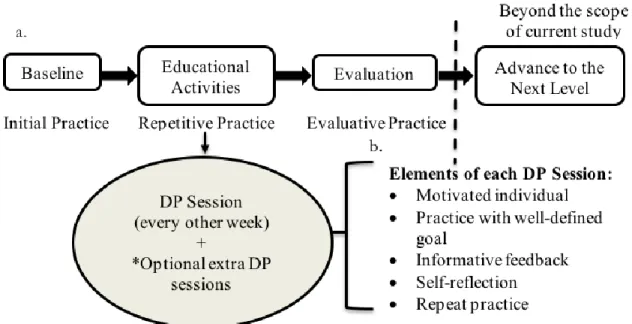
Figure 1.1 presents the conceptual framework used in this study.
Figure 1.1. Conceptual framework of deliberate practice with mastery learning.
Elements of the theoretical framework of (a) mastery learning (Bloom, 1971) with (b) deliberate practice (Ericsson, 1993), as operationalized in the study intervention.
Study Purpose
The overall purpose of this study was to provide learners with a regular opportunity for
DP of an interprofessional communication skill using an online format and to measure their
performance in reporting a critical patient incident using SBAR (IHI, 2017), a standardized
communication tool. The aims for the overall dissertation study were to: 1) design and test an
online DP intervention (regular engagement in online DP) based on both the theoretical
framework of mastery learning and DP, 2) measure the impact of the online DP intervention on
students’ critical incident SBAR reporting performance (target skill), and, 3) evaluate students’
1. What is the association between being in the intervention group (versus the control
group) and meeting the preset mastery level at post-test?
2. What is the difference in the mean changes in students’ skill performance level from
pre- to post-test between students in the intervention and control groups?
3. What is the difference in the mean changes in students’ confidence level from pre- to
post-test between students in the intervention and control groups?
Methods
To address the three aims of the dissertation, the researcher developed the study in three
parts:
• Study Part I - design and test an online DP intervention for learners to engage in regular
practice to report a patient critical incident to another healthcare provider using SBAR;
• Study Part II - conduct a pilot experimental study with a class of pre-licensure nursing
students to measure the impact of the online DP intervention on their performance of the
target skill; and
• Study Part III - explore the learners’ experience in completing the online DP sessions via
an online evaluation survey.
Protection of Human Subjects
The researcher obtained University of North Carolina at Chapel Hill institutional review
board (IRB) approval (exempt) prior to each Part (I, II, and III) of the study that involved
students. All student data were stored in an ID- and password-protected hard drive at the
researcher’s institution. The researcher is the only person who had the ability to link student data
in the online educational platform to individual students. The researcher extracted all student
number. None of the collected data (demographics, experience histories, and audio recordings)
contained identifiable information. Although the three parts of the project were implemented via
two pre-licensure nursing courses, the faculty members who taught the courses were not
involved in the study and therefore could neither determine which students participated in the
study nor identify if they were in the control or intervention group. Participation in the study was
voluntary and did not affect students’ course grades or standing in the courses.
Research Design
Study Part I. Design and test online DP sessions. The online DP intervention was designed based on the theoretical framework of mastery learning (Bloom, 1971) combined with
DP (Ericsson, 1993). The researcher developed the individual online DP sessions using the four
critical components of DP: practice, feedback, self-reflection, and repeat practice. Each DP
session was limited to 45 minutes and was made available online through an online course
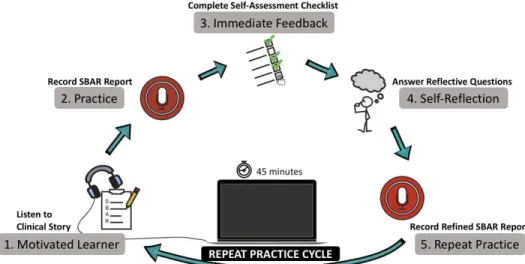
management system. During each DP session, the learners 1) listened to a narrated clinical case
scenario, 2) recorded an SBAR report, 3) completed a self-assessment checklist, 4) answered
guided self-reflective questions, and 5) recorded a refined SBAR report. Figure 1.2 presents the
online DP intervention structure.
For this study, the researcher selected nine audio clinical stories from an online library of
story simulations provided by StoryCare®, Efform, LLC to present clinical situations to study participants. These stories were based on real clinical scenarios and were professionally recorded
by a single narrator and dramatized with background sound effects. Additional patient
information, such as vital signs and medications, was included to supplement each story to help
learners develop their SBAR reports. To ensure accuracy, a nurse practitioner or physician
reviewed the essential elements of each critical patient incident that should be reported.
As the DP sessions were delivered online, the readability and clarity of the instructions
were particularly important. Therefore, the researcher recruited a small group of pre-licensure
nursing students from a senior-level class to test the DP sessions and invited them to participate
in a focus group discussion to obtain feedback on the process. This activity also provided an
estimation of the support that would be needed, particularly information technology support, to
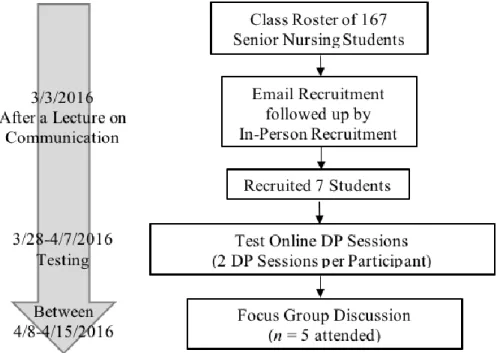
deliver the DP sessions effectively. Figure 1.3 presents the feasibility study (Study Part I) design.
Setting and sample. The researcher conducted the study at a school of nursing in a public research university located in the southeastern United States. The undergraduate nursing program
of this university admits both first- and second-degree students who are not licensed as registered
nurses. For Part I of the study, students were recruited from a class of 167 students who were
enrolled in a required senior-level nursing course offered in spring 2016.With permission of the
course faculty, the researcher sent a recruitment email to students enrolled in the course after a
class lecture on teamwork and communication.
Seven students responded and were included in the feasibility study to test the DP
sessions. The diversity of the sample may have been impacted by the voluntary recruitment plan,
which was a limitation of the study. Students who had less interest in the study topic or were less
familiar with online learning may have been more likely to decline participation and thus may
also differ from those who volunteered in terms of other characteristics.
Study procedure. The researcher met with participating students to review the study procedure and to obtain informed consent from the participants that was necessary before testing
the online DP sessions. Participating students were added to an independent online education
platform (‘DP Site’) that the researcher specifically created to test the DP sessions. Each student
completed two assigned DP sessions over two weeks. At the end of the second week, the
researcher invited all participating students to an in-person focus group discussion. Students who
participated in the focus group also signed an informed consent form at the start of the focus
group. The focus group discussion was audio-recorded, and the recorded focus group feedback
was analyzed and used to modify the DP sessions. One example of the modifications made
provided to students (such as vital signs and medications) into an electronic chart-like patient
profile to provide more realism.
Retention plan. Participants received emails during the study period to remind them to complete the assigned DP sessions. At the end of the study, each participant received a $20 gift
card. The researcher held the focus group discussion according to students’ schedules and
provided food for refreshment.
Data collection and storage. Students’ verbal reports made during Study Part I were
recorded directly onto DP Site with login and password protection. Only the researcher had
access to the responses. Students were assigned a role during the practice sessions as part of a
narrated case scenario; their real names were not recorded, or were deleted if accidentally used.
The focus group discussion was audio recorded. The students did not use each other’s names
when speaking during the discussion to protect each other’s privacy.
Student responses were extracted from DP Site, de-identified, and stored in a
password-protected hard drive. The de-identified aggregated data were shared only with the researcher’s
committee members for the purpose of modifying the intervention.
Study Part II. Pilot test the impact of participating in the online DP intervention on students’ critical incident reporting performance. The pilot study used an experimental
design (Figure 1.4) to determine the impact of regular participation in the online DP sessions on
students’ performance in using SBAR to report a patient critical incident. The study was
designed for the intervention group to complete one DP session every other week with the option
to complete extra sessions over the 10 weeks of the study period. The control group completed
only two DP sessions as part of the course assignment, one at the beginning and one at the end of
Figure 1.4. Study design of the pilot experimental study to examine the impact of the online deliberate practice intervention on students’ critical incident reporting performance.
Setting and Sample. The researcher conducted Part II of the study at the same school of nursing as Part I but recruited students who were enrolled in different courses. The intervention was
included pre-licensure students who were enrolled in a nursing work-study course in summer
2016. In this course, each student was employed as a nursing assistant (NA) at a clinical agency
to complete at least 84 hours of work-study experience. Course enrollment was 81 students. With
a few exceptions, students in this course were rising seniors. The study population was
homogenous in terms of the students’ course histories in nursing but diverse with respect to the
students’ backgrounds (e.g., age, work experience). According to the theoretical framework of
mastery learning, if given optimal quality of instruction and the time needed to attain a
predetermined level of mastery in a skill, the majority of students, despite their individual
differences, should be able to attain the set practice goal.
Recruitment. With permission from the course faculty and the school of nursing, the researcher recruited students enrolled in the summer work-study course to participate in Study
Part II. Students registered in one of two course sections that were identical in format, course
content, and assignments and that were facilitated by two different faculty members who
followed the same modality. The course was delivered primarily online, with the exception of the
face-to-face course orientation. All students were eligible to participate in the study; there were
no exclusion criteria. The researcher explained the study during the course orientation, which
was attended by students from both sections. The course faculty members integrated two online
DP sessions into the course as required, but non-graded, learning activities. Although all students
were required to complete the two DP sessions as part of the course, they could choose not to
participate in the study. Results for the two course-required practice sessions were excluded from
data analysis for any student who chose not to participate in the study. Following the orientation
session, the researcher emailed students an invitation that included an informed consent form
A previous study of entry-level nursing students who engaged in monthly six-minute DP
sessions reported a 12% attrition rate in the treatment group at three months (Oermann et al.,
2011a). Considering that engaging in a DP session every other week would require more time
from participating students in the intervention group, a 30% attrition rate was expected;
therefore, the original plan was to recruit 35 students for each study group.
Power. With no preceding data to draw on, the researcher used (conservatively) the median score (10.8, IQR = 3.6) of 74 BSN students who called a physician using ISBAR
(modified SBAR; ‘I’ refers to the identification of the caller) during a simulated experience after
completing an online module on interprofessional communication (Foronda et al. 2015) as the
control group’s mean score to calculate the expected power using nQuery Advisor® 7.0. With n
= 35 students in each group (control and intervention), if the difference in mean scores of the two
groups was 2 (with SD = 3), the expected statistical power would be 78 percent. Thus, in the
event of a low recruitment rate, the results of this study could still provide useful information for
power estimation in future related studies.
Procedure. After thein-class recruitment for Study Part II during the course orientation, students received an electronic invitation that included a consent form and a link to an online
short demographic survey (using Qualtrics). At the end of the recruitment period, the researcher
first divided the participants by course section and then ordered them by the sequence in which
they consented to participate in the study. The researcher then used this ordering of the
participants to assign each participant a study ID number; thus, Participant #1 was the first
student in course Section I who consented to participate, and Participant #43 was the last student
who consented to participate and was in course Section II. After assigning a study ID number to
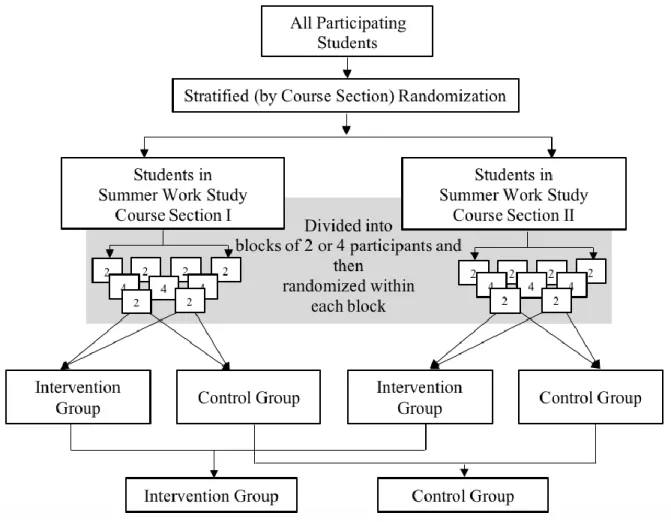
into either a control or intervention group using stratified randomization with a blocking feature.
The participants were stratified by course section to increase the probability of having a balance
of participants in the intervention group and control group within each section. Within each
stratum, block sizes of two or four students allowed control for an equal or nearly equal sample
size in the randomized groups (Figure 1.5). All students enrolled in the class were added to DP
Site on the learning platform used by the school of nursing so that they would be able to gain
access to the DP sessions.
Figure 1.5. Stratified randomization by course section with blocking feature.
All DP sessions were delivered through the online DP Site that was independent of the
groups were required to take the first DP session (which would serve as the pre-test) within the
first two weeks of the summer session. Students in the intervention group continued to complete
three more assigned DP sessions, one every other week, for the following six weeks (Weeks 3 -
8). These three DP sessions were available only to students in the intervention group during the
weeks that they were assigned. Four extra DP sessions were also made available to students in
the intervention group to help them achieve the mastery learning level; students could complete
these extra DP sessions anytime throughout the study period. At the end of the 10-week study
(i.e., during Weeks 9 - 10), all students in the class were required to take another DP session
(which served as the post-test). The researcher also encouraged students to take advantage of
opportunities to practice SBAR in their NA work experiences and to document how they use it.
The control group received a short survey every other week that asked if they had had the
opportunity to practice the targeted skill in the past two weeks. The intervention group answered
the same questions at the beginning of each DP session. After the study ended, all students
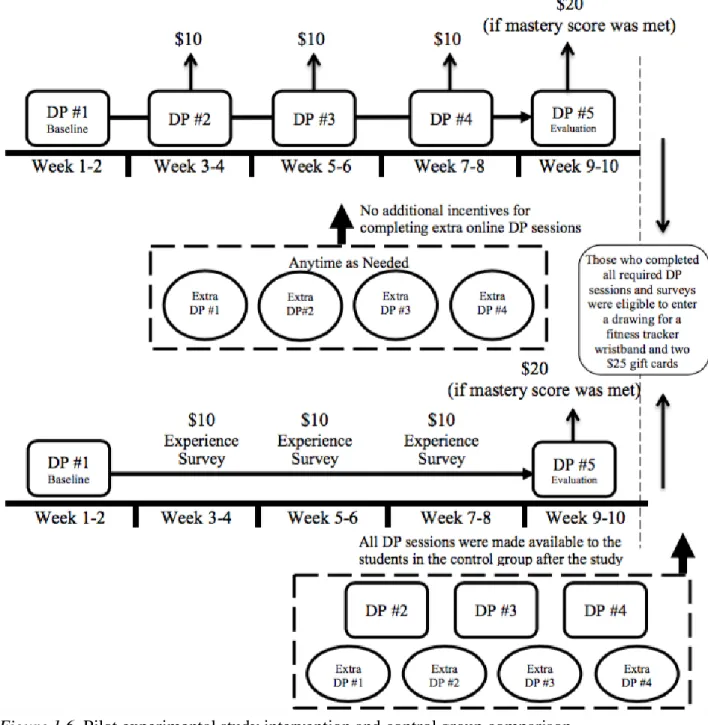
enrolled in the course were given access to all DP sessions (Figure 1.6).
Retention. To motivate students to participate and remain in the study, the researcher employed several retention strategies (see Figure 1.6): a) emails were sent to students reminding
them to complete the DP secessions; b) in the email, students were reminded of the opportunity
to enter a drawing for a fitness tracker wristband and two $25 gift cards for all participants who
completed the requested activities (3 DP sessions or 3 experience surveys); and c) a $10 gift card
was provided to participants in the study (both the control and intervention groups) each time
they completed an assigned DP session or experience survey beyond the two required sessions.
No incentives were given to intervention group participants if they chose to complete extra DP
seek opportunities to practice in real life, the researcher informed them that they would receive a
$20 gift card if they met the preset mastery score on the checklist at the end of the study.
Figure 1.6. Pilot experimental study intervention and control group comparison.
Instrumentation and variables. Checklists adapted from the ISBAR Interprofessional Communication Rubric [IICR] (Foronda & Bauman, unpublished) were the main measurement
IICR’s item content validity index was .83 and its average scale content validity was .91 with the
inter-rater reliability of rs = .79. The IICR is a tool designed to assess nursing students’
thoroughness in presenting an ISBAR report. The additional ‘I: Identification’ in the term ISBAR
emphasizes the importance of identifying the individual who is making the verbal report. The
original SBAR includes this information under ‘S: Situation’ and therefore does not contradict
the ISBAR format. Thus, the researcher and participants continued to use SBAR as the standard terminology when referring to this standardized communication tool throughout the study period.
The original IICR is a 5 x 4 rating table that is composed of five quantitative items, i.e.,
I-S-B-A-R with four rating standards for each item: no credit (0), remediation (1), pass (2), and
exceeds expectation (3). The total score (ranging from 0 lowest to 15 highest) represents poor to
excellent performance (Foronda et al., 2015). Each quantitative item has three sub-items; for
instance, the three sub-items included under the quantitative item ‘Identify’ are: 1) caller name,
2) caller position, and 3) where the call is coming from (Foronda et al., 2015). To help
standardize the rating process, reduce inconsistency among raters, and better identify errors in
the report, the researcher developed adapted IICR checklists for this study. These checklists
provide story-specific information under each sub-item, such as: 1) caller name (Jane Doe), 2)
caller position (RN), and 3) where the call originated (neurology floor, bed 21). Table 1.1
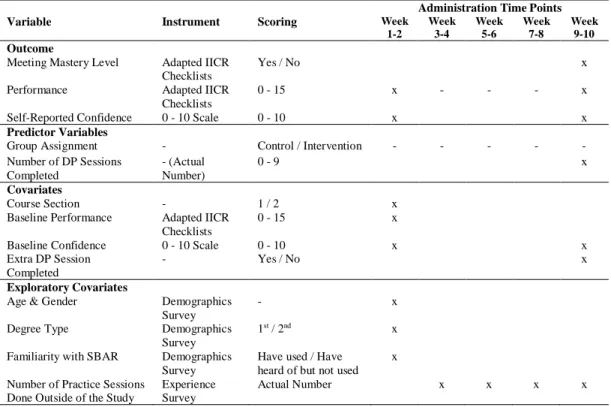
Table 1.1. Instruments Used to Measure/Collect Variables in Study Part II Administration Time Points
Variable Instrument Scoring Week
1-2 Week 3-4 Week 5-6 Week 7-8 Week 9-10 Outcome
Meeting Mastery Level Adapted IICR Checklists
Yes / No x
Performance Adapted IICR Checklists
0 - 15 x - - - x
Self-Reported Confidence 0 - 10 Scale 0 - 10 x x
Predictor Variables
Group Assignment - Control / Intervention - - - - - Number of DP Sessions
Completed
- (Actual Number)
0 - 9 x
Covariates
Course Section - 1 / 2 x
Baseline Performance Adapted IICR Checklists
0 - 15 x
Baseline Confidence 0 - 10 Scale 0 - 10 x x
Extra DP Session Completed
- Yes / No x
Exploratory Covariates
Age & Gender Demographics Survey
- x
Degree Type Demographics Survey
1st / 2nd x Familiarity with SBAR Demographics
Survey
Have used / Have heard of but not used
x Number of Practice Sessions
Done Outside of the Study
Experience Survey
Actual Number x x x x
Note. - = not applicable. x represents time of measurement or data collection.
Data analysis procedures. The variables used to define the study and the plan for statistical analysis are described below. The researcher used SAS® software, Version 9.4. (SAS Institute, Inc.) for all statistical data analysis conducted in this study.
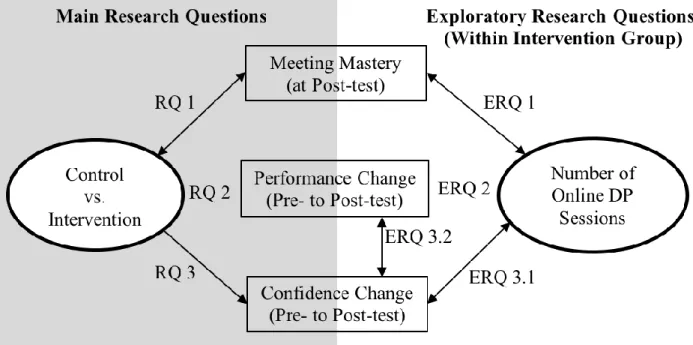
Research questions. The main research questions (RQs) and the exploratory research questions (ERQs) of Study Part II are listed below. Figure 1.7 illustrates the relationships
between the variables that were examined in Study Part II.
• RQ 1: What is the association between being in the intervention group (versus the control
group) and meeting the preset mastery level at post-test?
• RQ 2: What is the difference in the mean changes in students’ skill performance level
• RQ 3: What is the difference in the mean changes in students’ confidence levels from
pre- to post-test between students in the intervention and control groups?
• ERQ 1: Within the intervention group, what is the association between the number of
online DP sessions completed and students’ meeting the mastery level at post-test?
• ERQ 2: Within the intervention group, what is the association between the number of
online DP sessions completed and students’ change in performance level from pre-to
post-test?
• ERQ 3.1: Within the intervention group, what is the association between the number of
online DP sessions completed and students’ change in confidence level from pre- to
post-test?
• ERQ 3.2: Within the intervention group, what is the association between students’ change
in confidence level from pre- to post-test and their change in performance level from pre-
to post-test?
Statistical analysis. Binary logistic regression was used to examine the relationships between the two independent variables, i.e., group assignment and number of online DP sessions
completed, and the dependent variable, i.e., students who had attained the mastery level at
post-test (RQ #1 and ERQ #1). Analysis of covariance (ANCOVA) was used to examine the
differences between the control and intervention groups in terms of changes in mean
performance level and mean confidence level (pre- to post-test) (RQ #2 and RQ #3), controlling
for course section and the respective baseline performance or confidence variables. Multiple
linear regression was used to assess the relationships between the number of online DP sessions
students completed and the students’ changes in 1) performance level and 2) confidence level
from pre- to post-test within the intervention group. The relationships between students’ change
in performance level and confidence level (from pre- to post-test) were also examined using
multiple linear regression.
Course section (Section I or II) and students’ baseline performance and confidence levels
were used as covariates to control for the possible influence of these variables on the students’
performance and confidence levels with respect to the target skill. The theoretical framework of
mastery learning and DP both suggest that individual differences such as age and gender should
not play a key role in the performance outcome; therefore, these variables were analyzed as
exploratory covariates in the three analysis models. Other potential exploratory covariates
examined include students’ degree type, practice opportunity outside of this study, and
familiarity with SBAR.
planned. At the end of the study, the researcher sent an evaluation survey to all students enrolled
in the work-study class to explore their experience in completing the online DP sessions and the
factors that influenced their decision to participate in the study.
Sample and Procedure. All 81 students enrolled in the work-study class were eligible to participate in the study. The researcher emailed an anonymous online Qualtrics survey, approved
by the IRB, to participants listed on the course roster after the course instructors had submitted
grades to the university. Implied consent was assumed when students completed the survey.
Students had two weeks to complete the survey and had the option to enter a drawing for a $25
gift card upon completing the survey. This survey inquired about students’ perceptions of the
online DP sessions’ helpfulness and their satisfaction with the DP sessions, as well as barriers to
completing the DP sessions and participating in Study Part II and recommendations to improve
the DP sessions. Forty-six students completed the survey. The researcher aggregated and
analyzed the survey data using standard descriptive statistical methods.
Outline of Dissertation
This dissertation is presented as three separate but related manuscript papers.
Paper 1 (Chapter 2) presents a systematized review of empirical data-based studies that
used the conceptual framework of DP in educating healthcare profession learners (students or
clinicians) about clinical communication skills. This review sought to present results that were
obtained by examining the following topics of interest and to synthesize the findings: 1) How is
DP defined in healthcare education research? 2) Which clinical communication skills are taught
using a DP approach? 3) How was DP applied in the selected studies? 4) How does the use of
Paper 2 (Chapter 3)is a methodology paper that describes the design of this dissertation
study’s online DP sessions in accordance with the DP framework and presents the results of the
feasibility testing of the online DP sessions. As mentioned previously, upon the completion of
successful feasibility testing, two online DP sessions were implemented in an online nursing
course as non-graded course assignments. This paper also highlights the student responses to the
evaluation survey that was used to explore their experiences in completing the online DP
sessions.
Paper 3 (Chapter 4)reports the original data-based findings from the main pilot
experimental study. In this pilot study, the intervention group completed a minimum of five
online DP sessions over a 10-week study period and the control group completed only two DP
sessions (i.e., the pre- and post-tests). This study examined the group differences in the number
of participants who met the preset mastery standard at the post-test as well as the association
between the group assignment and participants’ changes in performance and confidence levels
from pre- to post-tests. Within the intervention group, the association between the number of DP
sessions that participants completed and their change in performance and confidence levels from
pre- to post-tests also was examined.
The dissertation concludes with a synthesis of the findings across the three manuscripts
and an overall discussion and conclusion (Chapter 5). Implications of the findings for nursing
education, practice, and future research also are discussed in Chapter 5. The results of this
dissertation will help advance the science of using DP in nursing and communication skills
REFERENCES
Arthur, W., Jr, Day, E. A., Bennett, W., Jr, & Portrey, A. M. (2013). Individual and team skill decay: The science and implications for practice. In W. Arthur (Ed.), Series in applied psychology (pp. 68-116). New York: Routledge.
Bartges, M. (2012). Pairing students in clincial assignments to develop collaboration and communication skills. Nurse Educator, 37(1), 17-22.
Berkow, S., Virkstis, K., Stewart, J., & Conway, L. (2009). Assessing new graduate nurse performance. Nurse Educator, 34(1), 17-22. doi: 10.1097/01.nne.0000343405.90362.15 Bloom, B. S. (1971). Mastery learning. In Block, J. H. (Eds.), Mastery Learning Theory and
Practice (pp. 47-63). New York: Holt, Rinehart and Winston, Inc.
Cronenwett, L., Sherwood, G., Barnsteiner, J., Disch, J., Johnson, J., Mitchell, P., . . . Warren, J. (2007). Quality and safety education for nurses. Nursing Outlook, 55(3), 122-131. doi: http://dx.doi.org/10.1016/j.outlook.2007.02.006
Cronenwett, L., Sherwood, G., Gelmon, S. B. (2009). Improving quality and safety education: The QSEN learning collaborative. Nursing Outlook, 57(6), 304-302. doi:
10.1016/j.outlook.2009.09.004.
Doyle, T., & Zakrajsek, T. (2013). The new science of learning: How to learn in harmony with your brain. Sterling, Virginia: Stylus.
Ericsson, K. A. (2008). Deliberate practice and acquisition of expert performance: A general overview. Academic Emergency Medicine, 15(11), 988-994. doi: 10.1111/j.1553-2712.2008.00227.x
Ericsson, K. A., Krampe, R. T., & Tesch-Römer, C. (1993). The role of deliberate practice in the acquisition of expert performance. Psychological Review, 100(3), 363-406. doi:
10.1037/0033-295X.100.3.363
Ericsson, K. A., Whyte, J., IV., & Ward, P. (2007). Expert performance in nursing: Reviewing research on expertise in nursing within the framework of the expert-performance approach. Advances in Nursing Science, 30(1), E58-E71.
Foronda, C. & Bauman, E. (unpublished). ISBAR Interprofessional Communication Rubric. Unpublished rubric.
Goode, C. J., Lynn, M. R., McElroy, D., Bednash, G. D., & Murray, B. (2013). Lessons learned from 10 years of research on a post-baccalaureate nurse residency program. Journal of Nursing Administration, 43(2), 73-79. doi: 10.1097/NNA.0b013e31827f205c
Guhde, J. A. (2014). An evaluation tool to measure interdisciplinary critical incident verbal reports. Nursing Education Perspectives, 35(3), 180-184.
Institute for Healthcare Improvement. (2017). SBAR Toolkit by Kaiser Permanente. Retrieved from http://www.ihi.org/resources/Pages/Tools/sbartoolkit.aspx
Interprofessional Education Collaborative Expert Panel. (2011). Core competencies for
interprofessional collaborative practice: Report of an expert panel. Washington, D.C.: Interprofessional Education Collaborative.
Maatouk-Bürmann, B., Ringel, N., Spang, J., Weiss, C., Moltner, A., Riemann, U., Langewitz, W., Schultz, J., & Junger, J. Improving patient-centered communication: Results of a randomized controlled trial. Patient Education and Counseling, 99(2016), 117-124. McGaghie, W. C., Issenberg, S. B., Cohen, E. R., Barsuk, J. H., & Wayne, D. B. (2011). Does
simulation-based medical education with deliberate practice yield better results than traditional clinical education? A meta-analytic comparative review of the evidence.
Academic Medicine, 86(6), 706-711. doi: 10.1097/ACM.0b013e318217e119
McGaghie, W. C., Siddall, V. J., Mazmanian, P. E., & Myers, J. (2009). Lessons for continuing medical education from simulation research in undergraduate and graduate medical education: Effectiveness of continuing medical education: American College of Chest Physicians Evidence-Based Educational Guidelines. Chest, 135(3_suppl), 62S-68S. doi: 10.1378/chest.08-2521
Oermann, M. H., Kardong-Edgren, S. E., & Odom-Maryon, T. (2011a). Effects of monthly practice on nursing students’ CPR psychomotor skill performance. Resuscitation, 82(4), 447-453. doi: http://dx.doi.org/10.1016/j.resuscitation.2010.11.022
Oermann, M. H., Kardong-Edgren, S., Odom-Maryon, T., Hallmark, B. F., Hurd, D., Rogers, N., . . . Smart, D. A. (2011b). Deliberate practice of motor skills in nursing education: CPR as exemplar. Nursing Education Perspectives, 32(5), 311-315.
Oermann, M. H. & Molloy, M. A. (2015). Use of deliberate practice in teaching in nursing.
Nursing Education Today, 35, 535-536.
Spruit, E. N., Band, G. P., & Hamming, J. F. (2015). Increasing efficiency of surgical training: Effects of spacing practice on skill acquisition and retention in laparoscopy training.
Szmuilowicz E., Neely, K. J., Sharma, R. K., Cohen, E. R., McGaghie, W. C., & Wayne, D. B., (2012). Improving residents’ code status discussion skills: A randomized trial. Journal of Palliative Medicine, 15(7), 768-774. doi: 10.1089/jpm.2011.0446
The Joint Commission. (2017). Sentinel Event Alert: Inadequate Hand-off Communication. Retrieved from https://www.jointcommission.org/assets/1/18/SEA_58_Hand_off_ Comms_9_6_17_FINAL_(1).pdf
Wang, E. E., Quinones, J., Fitch, M. T., Dooley-Hash, S., Griswold-Theodorson, S., Medzon, R., Korley, F., Laack, Torrey, Robinett, A., & Clay Lamont. (2008). Developing technical expertise in emergency medicine: The role of simulation in procedural skill acquisition.
CHAPTER 2:USE OF DELIBERATE PRACTICE IN COMMUNICATION SKILLS DEVELOPMENT IN HEALTHCARE PROFESSION EDUCATION: A
SYSTEMATIZED REVIEW Overview
Background. Interprofessional communication is a critical clinical skill that is often overlooked in healthcare profession education. Studies showed that deliberate practice (DP) is effective in
developing psychomotor skills, but its application in communication skill development is less
reported. This systematized review examined studies that reported outcomes of using DP in
teaching clinical communication skills. Method. Eight major electronic databases in health sciences and education were searched for English-language articles published prior to July 2017
and reported findings of empirical studies using DP to develop clinical communication skills.
The matrix method was used for data extraction. Results. This review included 14 publications. Most of the educational interventions reported focused on developing physician-patient
communication rather than improving communication among providers. Overall the 14 studies
reviewed supported the use of DP in communication skills development; however, the
educational modality, structure of the skills practice that incorporated DP, and evaluation method
differed. Conclusion. The growing application of DP in skills development for learners in the healthcare profession indicates a need for rigorous, comprehensive studies to develop
evidence-based best practices. Its application in nursing education to help students prepare for real-world
practice may help ease the transition as new graduates by developing interprofessional critical
Communication is a critical clinical skill that has a profound impact on patient safety, yet
it is often overlooked in healthcare profession education. Since the introduction of the National
Patient Safety Goals in 2002, the Joint Commission has sought to “improve the effectiveness of
communication among caregivers” as one of its annual priority goals (The Joint Commission,
2017a). Communication is a team effort in healthcare, and providers rely on each other to
provide accurate, timely, and complete sharing of patient information to make evidence-based
care decisions. A recent report by CRICO (2015), a Harvard medical community-owned
insurance program noted for its evidence-based risk and claims management, revealed that about
30% of the medical malpractice cases filed between 2009 and 2013 involved communication
failure. Overall, 57% of the communication errors occurred among healthcare providers; but in
nursing cases, this percentage increased to 72% in cases where nearly half of the patients
involved suffered high-severity injuries or preventable death (CRICO, 2015). Despite the
awareness of the importance of effective communication in healthcare communities, healthcare
profession students spend far less time learning ways to communicate patient information to
another healthcare provider than practicing hands-on clinical skills.
Healthcare professionals have primarily been educated in professional silos with limited
opportunities to practice the communication of patient information outside of their own
discipline. However, treatment delays and patient harm could result when a breakdown in
communication occurs among providers (The Joint Commission, 2017b). Therefore, identifying
evidence-based educational methodologies that enable healthcare professionals and students to
develop the competency to communicate patient information effectively is critical. When
learners are not given sufficient practice opportunities to develop critical communication skills,
has shown that the key to skill acquisition and continued improvement is not the amount of time
that learners spend in practicing a skill, but how they practice it. In short, the key to effective and
continuous skill development is the amount of time learners engage in ‘deliberate practice’ (DP)
of the target skill (Ericsson, Krampe, & Tesch-Romer, 1993). The application of DP may help
healthcare professionals develop critical communication skills that can contribute to patient
safety goals.
This systematized review provides an examination of the studies that have reported
outcomes of DP applications in healthcare profession education that may be useful in guiding the
future of interprofessional communication among healthcare providers.
Applying Deliberate Practice to Develop Clinical Skills
The term ‘deliberate practice’ was coined by Ericsson et al. in The Role of Deliberate
Practice in the Acquisition of Expert Performance as a conceptual model of continuous skills development to optimize improvement (Ericsson et al., 1993). In studying the expert
performance of virtuoso musicians, master chess players, and elite athletes, Ericsson et al.
noticed that the key to continual improvement and the eventual attainment of expertise is not
one’s innate ability or years of experience, but the time spent in DP (Ericsson et al., 1993). In
essence, DP is a highly-structured practice activity that emphasizes the engagement of a
motivated learner in guided repetitive practice. Immediate feedback and time for reflection to
adjust practice goals between practices are essential for learners to make conscientious efforts to
improve performance and resist stagnation (Ericsson, 2008). Deliberate practice has been applied
effectively in healthcare profession education (McGaghie, Issenberg, Cohen, Barsuk, & Wayne,
2011); however, it has been applied primarily to guide learners to develop technical skills, such