LOCAL IMPLEMENTATION OF FEDERAL STRATEGIC PLANS: THE ROLE OF THE HEALTH CARE FOR THE HOMELESS PROGRAM
IN OPENING DOORS
Katherine Fox Nagel
A dissertation submitted to the faculty at the University of North Carolina at Chapel Hill in partial fulfillment of the requirements for the degree of Doctor of Public Health in the Department of Health Policy and Management of the Gillings School of Global Public Health.
Chapel Hill 2013
iii ABSTRACT
Katherine Fox Nagel: Local Implementation of Federal Strategic Plans: The Role of the Health Care for the Homeless Program in Opening Doors
(Under the direction of Thomas C. Ricketts)
Background Care for the homeless coordinated in communities across multiple sectors and services is essential given the complex nature of their problems and environments. Opening Doors is the first comprehensive national strategic plan to prevent and end homelessness at the community level. It is a joint action plan for federal agencies and local and state partners. This study explores factors that drive successful implementation of a federal plan at the local level, specifically focusing on the feasibility of local implementation of Opening Doors and the role of the federal Health Care for the Homeless program.
Methods This study addressed the overarching research question: How best can local communities support implementation of federal public health strategic plans? A systematic literature review was conducted to determine characteristics of successful local community health improvement partnerships. Key informant interviews were also conducted with selected leaders of Health Care for the Homeless organizations and local government homeless services directors. These provided insights into perceptions, programmatic strategies and barriers to community-based collaboration, coordination of homeless services and implementation of Opening Doors.
iv
health improvement. Data suggest that local communities will not support federal plans without required resources or incentives, appropriate alignment and recognition of local priorities and efforts, and/or expected compliance or enforcement.
v
Dedicated to Sean, James and Emerson
vi
ACKNOWLEDGEMENTS
I wish to acknowledge and thank the following faculty, friends, and colleagues for their support and guidance. Without you, this dissertation would not have been possible. Thank you. My chair, Dr. Tom Ricketts, thank you for sticking with me, helping me find my logic,
and teaching me that I am a public health researcher, philosopher, advocate and practitioner
My dissertation committee: Francis Afram-Gyening, Dr. Sue Hobbs, Dr. Darlene Jenkins and Dr. Bryan Weiner
The entire UNC DrPH faculty, especially Dr. Sue Hobbs, Dr. Sandra Greene, Dr. Ned Brooks and Mona Kilany
Cohort 6, the most extraordinary group of people
My support system: Sarah Fee, Roxanne Bain, Kerri Mason and Julie Mitchell My mentors: Jim Friedman, Oliver Henkel and Francis Afram-Gyening
My team: Lindsay Davis, Michael Gierlach, Mary Kate Hannan, Joseph Mueller and Jennifer Kons. A special thank you to Evan Goldstein.
vii
TABLE OF CONTENTS
LIST OF FIGURES ... xi
LIST OF ABBREVIATIONS ... xii
DEFINITION OF TERMS ... xiii
CHAPTER 1: Introduction ... 1
Dissertation Aims and Research Question ... 2
Background ... 4
Conceptual Framework ... 22
CHAPTER 2: Review of the Literature ... 28
Methods and Search Strategy ... 28
Results ... 30
Key Findings ... 36
Limitations and Quality of Results... 42
Implications ... 43
CHAPTER 3: Original Data Collection Methodology ... 45
Study Participants ... 45
Participant Recruitment, Privacy and Consent ... 46
Interview Format ... 49
Data Analysis ... 51
CHAPTER 4: Results ... 55
Key Findings ... 55
viii
Differences between Groups – HCH and Housing, Medium and Large Cities ... 76
CHAPTER 5: Discussion ... 78
Study Step 1 ... 78
Study Step 2 ... 81
Study Step 3 ... 82
Research Question ... 85
Conclusion ... 88
Limitations ... 90
CHAPTER 6: Plan for Change ... 92
Improving the Homeless Response System ... 92
Implementation... 101
Implications ... 102
APPENDIX A. UNC Notice of IRB Exemption ... 105
APPENDIX B. Recruitment Communications ... 106
APPENDIX C. Consent Form ... 107
APPENDIX D. Interview Guide ... 111
ix
LIST OF TABLES
Table 1. The Homeless Population of Ohio ... 7
Table 2. Goals, Themes and Measures of Opening Doors ... 12
Table 3. Opening Doors Logic Model ... 23
Table 4. Dissertation steps to answer the research questions ... 26
Table 5. Literature Review Search Strategy ... 32
Table 6. Included Studies ... 33
Table 7. Determining the Strength of Study ... 35
Table 8. Identified Factors from Included Articles ... 37
Table 9. Framework for Successful Local Community Partnerships ... 38
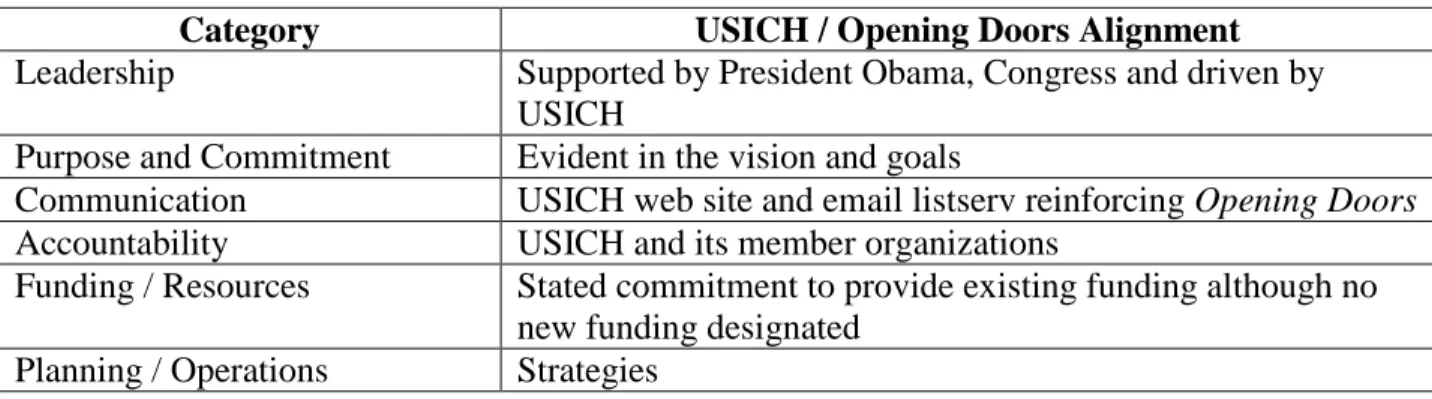
Table 10. Literature Review Framework applied to Opening Doors... 44
Table 11. Key Informant Inclusion Process ... 45
Table 12. Potential Key Informants by City ... 46
Table 13. Key Informant Interview Dates ... 48
Table 14. Selected Opening Doors Content ... 50
Table 15. Final Coding Scheme ... 53
Table 16. Five Key Findings ... 56
Table 17. Key Drivers, Barriers and Lessons Learned from Local Integration Initiatives ... 65
Table 18. Overlap of Key Drivers and Barriers ... 66
x
Table 20. Need from National Council or USICH ... 76
Table 21. Enhanced Framework, following key informant input ... 79
Table 22. Developing the recommendations for Opening Doors ... 94
Table 23. Plan for Change: Opening Doors ... 96
Table 24. Care Alliance Partners ... 99
Table 25. Locally-driven Plan for Change ... 100
xi
LIST OF FIGURES
Figure 1. Chronic Homelessness in Cuyahoga County ... 19
Figure 2. Opening Doors Process ... 24
Figure 3. Conceptual Framework ... 25
Figure 4. Dissertation Process... 27
Figure 5. Model of Action, Figure 1, Shortell et al... 42
Figure 6. Overlap of codes, grouped by interview question topic ... 54
Figure 7. Leadership Qualities Word Cloud ... 63
Figure 8. Barriers to Collaboration Word Cloud ... 64
xii
LIST OF ABBREVIATIONS
ACA Affordable Care Act
AHAR Annual Homeless Assessment Report ARRA American Recovery and Reinvestment Act
CoC Continuum of Care
ED/CEO Executive Director / Chief Executive Officer FQHC Federally Qualified Health Center
GAO Government Accountability Office
HCH Health Care for the Homeless
HEARTH Homeless Emergency Assistance and Rapid Transition to Housing HHS Department of Health and Human Services
HMIS Homeless Management Information System HRSA Health Resources and Services Administration HUD Department of Housing and Urban Development
IRB Institutional Review Board
NACHC National Association of Community Health Centers NEOCH Northeast Ohio Coalition for the Homeless
PCMH Patient Centered Medical Home
PHS Public Health Service
SAMHSA Substance Abuse and Mental Health Services Administration SMI / SPMI Severe Mental Illness / Severe and Persistent Mental Illness USICH United States Interagency Council on Homelessness
xiii
DEFINITION OF TERMS
HEALTH
“Health is a state of complete physical, mental and social well-being, and not merely the absence of disease or infirmity.”1
HOMELESSNESS
As outlined by the National Health Care for the Homeless Council, there is more than one definition of homelessness and different federal agencies use different definitions to determine eligibility, service delivery and funding.2 Health centers funded by the U.S. Department of Health and Human Services (HHS) use the following definition, as does this dissertation:
A homeless individual is defined in section 330(h)(4)(A) as "an individual who lacks housing (without regard to whether the individual is a member of a family), including an individual whose primary residence during the night is a supervised public or private facility (e.g., shelters) that provides temporary living accommodations, and an individual who is a resident in transitional housing." A homeless person is an individual without permanent housing who may live on the streets; stay in a shelter, mission, single room occupancy facilities, abandoned building or vehicle; or in any other unstable or non-permanent situation. [Section 330 of the Public Health Service Act (42 U.S.C., 254b)] An individual may be considered to be homeless if that person is "doubled up," a term that refers to a situation where individuals are unable to maintain their housing situation and are forced to stay with a series of friends and/or extended family members. In
addition, previously homeless individuals who are to be released from a prison or a hospital may be considered homeless if they do not have a stable housing situation to which they can return. A recognition of the instability of an individual's living
1
CHAPTER 1: Introduction
Homelessness is a significant problem affecting the health of urban populations. The Handbook of Urban Health proposes studying urban health both by describing the health of urban populations and understanding how the determinants and characteristics of cities affect health.3 Further, the ecological model of public health focuses on exploring health through the linkages across social, physical and political contexts; the interaction of which is only magnified in urban cities.45 This approach is essential when exploring the health of vulnerable populations, such as the homeless who tend to congregate in the urban core of cities of all sizes; according to the National Coalition for the Homeless, 70% of the nation’s homeless are found in cities.6 Populations living in areas of concentrated poverty experience significant health disparities. The combination of poverty, its concentration, and a lack of services are thought to be the major drivers of health disparities, which further perpetuate poverty.7
Coordinated delivery across the multiple health sectors and services for the homeless within a community is essential given the complex nature of the environment in which they live and the complexity of their problems. From the perspective of a community health center, this set of services includes primary, specialty and emergency medical care; mental health care; social services; and shelter and housing services. The homeless are a vulnerable population with especially poor health outcomes and comorbidities. Homelessness is the “…result of a complex interaction between individual vulnerabilities and the structural forces in the urban
environment.”8
2
population involves seeking care from multiple health care providers. In order to more effectively structure care, these service providers should increase joint planning and communication and examine ways to design systems of care that will direct individuals to appropriate and cost-effective sources of care.”9
Opening Doors, or “the Plan”, is the first comprehensive national strategic plan to
prevent and end homelessness at the community level. It was authored by the United States Interagency Council on Homelessness (USICH), a coalition of 19 federal agencies responsible for coordinating the federal response to homelessness, following a directive from Congress to develop such a plan in the Homeless Emergency Assistance and Rapid Transition to Housing (HEARTH) Act. Opening Doors is structured as a joint action plan for federal agencies and local and state partners concerned with homelessness. The Plan is divided into five themes supporting four goals and the ultimate vision of ending homelessness in the United States.10 USICH
presented the Plan to President Barack Obama and Congress in June 2010.11
According to the National Coalition for the Homeless, “Homelessness results from a complex set of circumstances that require people to choose between food, shelter, and other basic needs. Only a concerted effort to ensure jobs that pay a living wage, adequate support for those who cannot work, affordable housing, and access to health care will bring an end to
homelessness.”12
Dissertation Aims and Research Question
3
Services Administration (HRSA) funded Health Care for the Homeless (HCH) Program, the community health center grantees funded to provide comprehensive care to homeless persons, serving more than 1.1 million in 2012.13 This dissertation focuses on the Plan’s themes and objectives specific to leadership, collaboration and health care (Opening Doors Theme 1 and Theme 4), further narrowed based on relevancy to Care Alliance Health Center, a federally qualified health center (FQHC) providing care to the homeless and those living in and around public housing in the Greater Cleveland community.
Through a systematic literature review and interviews with local homeless service organization leaders, I will answer an overarching research question, How best can local communities support implementation of federal public health strategic plans?, through the following study steps:
1. Review academic literature to determine characteristics of successful local community health improvement partnerships
2. Conduct key informant interviews to outline the status of local implementation of Opening Doors, including perceptions, programmatic strategies and barriers to implementation
3. Define a role and make recommendations for the HCH Program, and specifically outline recommendations for Care Alliance Health Center and the Cleveland community
As the only Cleveland-area health center designated by the federal government to provide health care to the homeless, Care Alliance has an opportunity to make a significant impact on health care utilization for individuals that both complements other proactive local initiatives and can improve residents' health and economic well-being. Locally, there is a push for more
4
comprehensive needs of Cleveland’s homeless population (the largest in Ohio), a state of Ohio initiative to designate community behavioral health providers as ‘Health Homes’ for Medicaid patients by integrating primary care, and the federal emphasis on permanent supportive housing as a solution to ending chronic homelessness. Coordination of health, housing and human services is at the core of the Plan, yet Cleveland has not signed on as an Opening Doors Community; it is an aim of this study to help determine why.
Background
Residents of Cleveland, Ohio's poorest neighborhoods are victims of the “urban health penalty” – a term that describes the greater prevalence of health problems in inner-city areas, particularly among the urban poor.14 Minority populations in urban neighborhoods have significantly higher rates of chronic and fatal diseases, reflecting marked disparities in
community health, socioeconomics, and educational attainment. One large-scale epidemiologic study found that the urban poor in northern cities like Cleveland and Detroit have higher rates of morbidity and mortality than the national average.15 In the greater Cleveland region, for example, life expectancy is 89 years in Lyndhurst, an eastern suburb, versus just 64 years in Hough, an inner-city neighborhood.16 These neighborhoods are 8 miles apart. There are many reasons for this inequity, including limited access to nutritious foods, lack of employment opportunities, and general feelings of hopelessness.17
5
isolated service delivery that fails to integrate the person and their social context into their evaluation and care process. From a patient perspective, it is time consuming and challenging to navigate this landscape of care, even for those with familiarity of the health system. Furthermore, for those who lack education and health knowledge, are uninsured, homeless and may also lack transportation, this environment appears alien and unsupportive.
The deteriorating economic climate during the great recession has affected many
communities across the country and led to an increase in unmet need for affordable health care. The economic recession hit Cleveland especially hard, and recent estimates place poverty levels in the city upwards of 35%. There are roughly 52,000 residents of public housing in Cuyahoga County and an estimated 4,000 individuals experiencing homelessness on any given night in the county.1819 Over the last few years, the local media, namely The Cleveland Plain Dealer, has reported on local health care systems as they shut down or reduce their urban operations and focus their expansion in the suburbs, where more patients are insured (including the county hospital system MetroHealth, the Cleveland Clinic, and University Hospitals). Those hospitals that do remain in urban areas provide care to the uninsured primarily through their Emergency Departments have steep co-pays and often difficult-to-navigate charity care policies or patient financial rating systems. Combined with significant cuts to behavioral health, education, transportation and safety-net services, these factors have increased the strain on the existing capacity of organizations like Care Alliance and pressed the need for creative community partnerships to serve our patient populations effectively.
6
“Despite substantial health need, low-income adults without insurance coverage have less access to primary care and preventive services and greater unmet need due to cost . . . Medical bills can have a significant impact on low-income adults’ financial situations because low-income adults who are uninsured or have Medicaid often experience difficulties paying basic living expenses, which leaves them less able to pay unpredicted health expenses.”21
Primary health care clinics like Care Alliance change this scenario so that individuals can access appropriate, high-quality, affordable health care.
Cuyahoga County’s Homeless Population
Historically, Cuyahoga County, Cleveland’s surrounding county, far outpaces the state in total numbers of general and chronic homeless people. In 2012, of the 2191 homeless persons in Cuyahoga County, 375 were chronically homeless, representing the highest in the state.22 Table 1 describes the homeless population in Ohio comparing the eight urban Continua of Care to the rural, 80-county Balance of State Continuum of Care.23 Despite a consecutive three-year decline (2010-2012), Cuyahoga County has the highest percent of homelessness in Ohio at 16%.
Cuyahoga County’s share of Ohio’s homeless population (16%) is higher than its share of Ohio’s total population (11%).24
7 Table 1. The Homeless Population of Ohio
Continuum of Care Total # of homeless persons
% of Ohio’s homeless population
% of Ohio’s total population
Cuyahoga County 2,191 16% 11%
Hamilton County 1,654 12% 7%
Franklin County 1,434 10% 10%
Montgomery County 1,081 8% 5%
Lucas County 977 7% 4%
Summit County 813 6% 5%
Stark County 482 3% 3%
Mahoning County 224 2% 2%
Balance of State 5,121 37% 53%
Research shows that individuals experiencing homelessness have a life expectancy as low as 41 years, are three to six times more likely to become ill and three to four times more likely to die than individuals with homes.2627 This includes presentation of a wide range of co-occurring and complex illnesses, which are exacerbated by a homeless person’s inability to access care to remedy illness. Preventive health care falls low on a person’s priority list when faced with finding a safe place to sleep, struggling with untreated mental illness or dealing with the fallout from assault or other trauma.
Other barriers to care facing individuals experiencing homelessness include chronic substance abuse and severe mental illness. Cuyahoga County has the highest percentage of individuals who are homeless and severely mentally ill (SMI) or chronic substance abusers, despite a 7% decrease in 2010.28 In 2010 approximately 40% of Cuyahoga County’s homeless population struggled with chronic substance abuse.29 Mental illness may cause people to push away from caregivers, often making it even more difficult for an individual experiencing
8
Research indicates that individuals with severe mental illnesses and individuals with substance abuse disorders experience poor health outcomes. Those with schizophrenia and other psychotic disorders are two to three times more likely to have cardiovascular and metabolic diseases, have a 20% shorter life expectancy and are twice as likely to die earlier than individuals in the general population.3031 Yet, when individuals with these illnesses are able to obtain
supportive housing, their health and stability improve dramatically. One example is the Hospital to Home project in Minneapolis, where participants placed in supportive housing used
emergency rooms less, had fewer inpatient hospital stays and higher ratings of self-sufficiency.32 Common lifestyle factors associated with homelessness are detrimental to the homeless population’s health and can hinder access to care. Lifestyle factors may include prolonged exposure to severe weather, walking great distances to obtain services, living in communal environments and reduced access to care due to a lack of health insurance or personal
identification. As a result, individuals experiencing homelessness are at high risk of contracting or exacerbating serious health conditions, are often treated at later stages of disease, and have higher mortality and chronic morbidity than individuals with access to consistent health care. The Federal Response: The Health Care for the Homeless Program
9
Philadelphia, Phoenix, Saint Louis, San Antonio, Seattle, and Washington DC.33 The
overarching goal of the HCH Demonstration Project was to increase the availability of health care and social services for homeless people through enhanced coordination across street outreach, integrated primary care and behavioral health and social services. Care was delivered in teams comprised of physicians, nurses and social workers. Long-deemed successful, results of the project are documented in peer-reviewed journals and the following books:
Under the Safety Net: The Health and Social Welfare of the Homeless in the United States, Philip W. Brickner et al, eds. New York: United Hospital Fund, 1990.
Address Unknown: The Homeless in America, James D. Wright. New York: Aldine de Gruyter, 1989.
Unfortunately, much of the homeless population in the United States continues to live without governments’ safety net of insurance coverage, mental health benefits, housing assistance programs and social welfare services, mainly due to eligibility criteria, illustrated by the following key findings of the demonstration project:
Poverty is identified as the ultimate cause of homelessness: eliminate poverty, eliminate homelessness
10
then reauthorized in 1996 under section 330(h) of the PHS Act (Health Centers Consolidation Act), and still provides funding for over 200 program grantees today (reauthorized again in 2002, 2008, and most recently with the authorization of the HEARTH Act).36
The National Association of Community Health Centers (NACHC) describes the Health Care for the Homeless program this way: “The HCH program emphasizes a multi-disciplinary approach to delivering care to homeless persons, combining aggressive street outreach with integrated systems of primary care, mental health and substance abuse services, case
management, and client advocacy. Emphasis is placed on coordinating efforts with other community health providers and social service agencies.”37
United States Interagency Council on Homeless and Opening Doors
The 1987 McKinney Act also established the Interagency Council on Homelessness (renamed United States Interagency Council on Homelessness, USICH, in a later
reauthorization), “an ‘independent establishment’ within the executive branch to review the effectiveness of federal activities and programs to assist people experiencing homelessness, promote better coordination among agency programs, and inform state and local governments and public and private sector organizations about the availability of federal homeless
assistance.”38
USICH is comprised of 19 federal agencies responsible for carrying out its mission “…to coordinate the federal response to homelessness and to create a national partnership at every level of government and with the private sector to reduce and end homelessness in the nation while maximizing the effectiveness of the Federal Government in contributing to the end of homelessness.”39
11
called for the development of a strategic plan (Opening Doors), and emphasized the federal government’s support of permanent supportive housing as a key intervention to ending chronic homelessness. This represents a shift from funding individual programs that manage
homelessness to developing coordinated, evidenced-based practices that work to end
homelessness. For those experiencing chronic homelessness—defined as at least one year of continuous homelessness or at least four separate episodes of homelessness over three years and a disabling condition—permanent supportive housing is the proven approach to ending their homelessness and helping them regain their health and stability. This approach is a key strategy of Opening Doors.
The architects of Opening Doors, USICH sought external expertise during the Plan’s development, receiving input from over 750 individuals representing advocates, consumers, researchers and leaders in the homeless field. In addition, public comments were accepted. Input was sought to generate local buy-in from the beginning, as USICH’s goal was to develop a strategic plan that would be incorporated in local responses to ending homelessness. Documentation of the process is catalogued and available on USICH’s web site
(http://usich.gov/opening_doors/building_the_plan/). Following this intensive development phase, Opening Doors was presented to President Barack Obama and Congress in June 2010, and two annual updates have been released.
12 Table 2. Goals, Themes and Measures of Opening Doors
Goals
1. Finish the job of ending chronic homelessness by 2015 2. Prevent and end homelessness among Veterans by 2015
3. Prevent and end homelessness for families, youth, and children by 2020 4. Set a path to ending all types of homelessness
Themes
1. Increase leadership, collaboration, and civic engagement 2. Increase access to stable and affordable housing
3. Increase economic security 4. Improve health and stability
5. Retool the homeless crisis response system
Measure Data Source
Change in the number of individuals experiencing chronic homelessness
HUD Annual Homeless Assessment Report to Congress (AHAR) point-in-time measure Change in the number of Veterans experiencing
homelessness
HUD AHAR point-in-time count Change in the number of households with children
experiencing homelessness
HUD AHAR point-in-time count Change in the total number of people experiencing
homelessness
Department of Education data on homeless school-age children
Data from the Department of Veterans Affairs (VA) on homeless Veterans
Broader economic indicators around poverty and the gap between housing costs, incomes, and available affordable housing
Change in the number of permanent supportive housing units (nationally)
HUD annual housing inventory charts Homeless Assistance Grants Continuum of
Care (CoC) process Change in the number of households exiting
homeless assistance programs with earned income and/or mainstream benefits
HUD grantee Annual Progress Reports HUD Homeless Assistance Grants Participation in Medicaid, Supplemental
13
For the vision and goals of Opening Doors to be realized, local implementation must be achieved. In 2011, USICH established the Opening Doors Across America40 campaign to encourage communities to implement the plan locally. Specifically, USICH recommends communities should:
1. Align local efforts with Opening Doors: Adopt the four goals in Opening Doors.
2. Set targets and measure results: Set incremental targets and use data to measure progress. 3. Act strategically: Collaborate, invest, and act on strategies that are proven to make an
impact.
4. Partner: Convene state and local interagency councils to coordinate activities and
resources and participate with USICH and jurisdictions across the country to collaborate and succeed in ending homelessness.
On the “Resources” section of their web site, USICH has included a number of toolkits to aid local communities. Among these is “Local and Community Strategic Planning”, which calls on communities to align existing planning endeavors and/or develop community strategic plans with the goals and strategies of Opening Doors.41 Also on the web site are examples of how local communities are implementing the Plan. However, despite providing this guidance, there is not a list of participating communities, and it is unclear the number of communities that have either signed on to Opening Doors Across America or are working collaboratively to implement the Plan itself.
While improving health care and health status is a component of the Plan, with the
14
specifically those with the HCH designation; Emergency Departments of hospitals in urban areas; subsistence and social support agencies; and municipal and county government. Stakeholders represent individuals from these organizations, in addition to the urban planning departments, and in a broader sense, the urban area’s external image since perceptions of the aggressiveness of the homeless can negatively impact the image of residents and visitors. The Local Response: Care Alliance Health Center
Care Alliance is a nonprofit, Federally Qualified Health Center (FQHC) focusing on the unique health care needs of the homeless, individuals living in public housing, and the
underserved for over 25 years. Our mission is to provide high-quality, comprehensive medical and dental care, patient advocacy, and related services to people who need them most, regardless of their ability to pay. Supporting individuals to take charge of their health enables them to obtain or maintain stable housing and increases their self-esteem and employability, as witnessed by our track record and success stories.
Care Alliance’s history begins in the mid-1980s in response to a rapidly growing homeless population across the country as one of the original HCH demonstration projects, described above. In 1985, Care Alliance first emerged as “Cleveland Health Care for the
15
Today Care Alliance operates three clinics in Cleveland, one downtown and two within public housing estates on the east and west side of town, and a series of strategically-located outreach clinics. We continue to strive to meet the individual challenges facing our patients with services beyond the scope of primary medical and dental care. When treating patients, we offer supportive resources such as short-term mental health and substance abuse counseling, medical case management, eligibility support, and patient assistance program enrollment. The Care Alliance homeless outreach team provides basic street-level primary care, resources for housing and even simple hygiene items, clothing, and blankets to patients at shelters, treatment centers, and homeless campsites to build trust and develop an entry point to care. Through hard work and dedication to the needs of the Cleveland community, Care Alliance has become a well-respected and integral member of the local system of safety-net providers.
Programs, Services and Patient Needs
16
As our patient data from 2012 suggests, most of our patients do not have the financial means to pay the full cost of the comprehensive services. Care Alliance charges for services on a sliding fee scale based on income, often providing care without any reimbursement. We also assist patients with free or low-cost prescriptions. While our medical department continues to encounter a high demand for services, our dental department in particular has experienced a greater demand than can be met. Oral health continues to be the number one unmet health care need for uninsured Northeastern Ohioans.
Connecting individuals to health care and supportive services is vital to increasing economic stability and independence. The services that Care Alliance provides include primary medical care; preventive, restorative, and rehabilitative dental care; wrap around services such as benefit assistance and pharmaceutical assistance, support for managing chronic illnesses like diabetes and hypertension, and care coordination or medical case management. Most Care Alliance patients have gone years without regular medical care. They may come to the clinic for an illness or pain that can no longer be ignored, only for us to uncover ongoing, unchecked health issues. While Care Alliance clinical staff are adept at treating these conditions, the path to health and stability frequently requires patients learning a new way to obtain medical care while addressing broader social, physical, environmental, and economic factors impacting health. We deliver care through the Patient Centered Medical Home (PCMH) model with an increased emphasis on care coordination to support our patients and address the underlying social determinants of health.
17
coordination and the PCMH model to homeless populations, ensuring patients are in stable housing, have access to food, have personal identification, and are managing their chronic illnesses. Care Alliance has excelled at this application of care coordination, particularly for our homeless patients who are overwhelmingly chronically ill and have little stability in their lives. Growth and Expansion
Over the last year, Care Alliance responded to our patient needs and the changing face of health care by implementing clear and efficient programs and strategies aimed at enhancing and expanding patient-centered care for our patients, culminating in Level III Recognition as a Patient Centered Medical Home by the National Committee for Quality Assurance. Currently, we are engaged in a number of strategic initiatives to ensure holistic and quality care for our patients as we enter a phase of immense growth and expansion.
Care Alliance has made ambitious plans for the future which include constructing a new 30,000 square foot clinic in the Central neighborhood, and renovating our Riverview Tower Clinic in Ohio City. These new sites are poised to add over 60 additional staff and serve over 15,000 new patients. In addition Care Alliance recently implemented an Electronic Dental Record, fully integrated with our existing Electronic Medical Record (EPIC). We are hosting our first residents as part of a partnership with the University Hospitals Case Medical Center
Department of Family Medicine to train the next generation of providers committed to urban health. We continue to build partnerships that support better, more holistic health care such as our primary care-behavioral health integration initiatives with community mental health organizations.
As we are confident that affordable health care will remain a great need in our
18
expansion of our services and builds our capacity with strategic foresight. We are well aware that all these initiatives must synergistically work together or they will compete against one another for valuable time and resources. As such, we launched a strategic planning process in January 2013. Working with nationally-recognized health care consultants John Snow, Inc., Care
Alliance laid out a six-to-nine month process to work through these new initiatives, design a very detailed short-term (1-2 year) action plan, and develop an overarching five-year strategic plan. We are currently in the process of finalizing the deliverables. Three priorities emerged as a part of this process:
1. Stay True to the Homeless Mission 2. Meet Unmet Need
3. Maximize Current Capacity
The Care Alliance strategic planning process focused on long-term sustainability of operations, with contingencies for potential changes in the health care environment. Care Alliance is committed to continuing to identify opportunities to improve efficiency and effectiveness through collaborations with outside organizations, sophisticated use of electronic health records and other emerging health technologies, and the systematic adoption of best practices for chronic disease prevention and management.
Cuyahoga County Housing First Initiative
19
The Housing First Initiative has been very successful—to date, creating 471 permanent supportive housing apartment units with another 105 units under production. The outcomes have been as good as or better than similar programs in other cities, with 73% of residents remaining in their apartments, 25% moving on to other permanent housing in the community and less than 2% returning to homelessness. As further evidence of the Housing First Initiative’s impact, chronic homelessness in Cuyahoga County has decreased by 62% since opening the first
building in 2006, according to Cuyahoga County Point In Time count data, as shown in Figure 1. Figure 1. Chronic Homelessness in Cuyahoga County42
Programs, Services and Resident Needs
The Housing First Initiative creates permanent supportive housing targeted to chronically homeless persons in Cuyahoga County. In Housing First permanent supportive housing, the emphasis is on helping individuals first attain and then maintain housing, including
understanding the rights and responsibilities of tenancy, while providing the intensive services 2269
2185 2242 2236 2278 2262 2191
840
652 698
584 664
398 375
0 500 1000 1500 2000 2500
2006 2007 2008 2009 2010 2011 2012
Total Population Experiencing Homelessness
20
and health care needed to achieve stability and, ideally, independence. Barriers to entry into Housing First are low, focused instead on moving people into housing. On-site housing-based case management services are flexible, client-driven and voluntary. Services offered through permanent supportive housing typically include health care, substance abuse treatment, mental health treatment, employment counseling, connections with mainstream benefits like Medicaid, and many others. Permanent supportive housing is identified as an evidenced-based practice and is actively promoted by HUD, USICH and the Substance Abuse and Mental Health Services Administration (SAMHSA). Research indicates that this combination of long-term housing and wrap around services leads to improved residential stability and reduction in psychiatric
symptoms.43
FrontLine Service (FrontLine), a community behavioral health organization dedicated to serving the homeless, is the lead service provider and coordinator. Other service providers working closely with FrontLine across the Housing First Initiative are the AIDS Taskforce of Greater Cleveland, providing case management and a comprehensive array of services to persons who are HIV-positive or at risk of HIV/AIDS, and the Louis Stokes Cleveland VA Medical Center, providing case management services including crisis intervention, illness and medication management, life skill development and employment services to veterans.
The Housing First Initiative prioritizes those persons with the greatest need for permanent supportive housing as evidenced by the length of time spent in shelters or on the streets and the severity of disability/vulnerability. This is a data-driven, formalized process, using street
21
The assessor works to understand the level of functioning, the illness severity, and the overall vulnerability in order to complete the assessment and obtain the score. Chronically homeless individuals with the highest scores are those who receive priority and are offered the next available unit. The following are the characteristics of current Housing First residents:
Males – 67%
Average Age – 51 years old African-American – 66% Veterans – 19%
Severe and Persistent Mental Illness – 78% Severe Alcohol or other Drug Dependency – 36% Chronic Physical Health Issues – 50%
HIV-positive – 10%
Average Days Homeless Prior to Move-In – 700 days Average Income at Entrance – $294
Employment Rate at Entrance – < 1% Past Criminal Justice Involvement – 70%
According to a March 2012 analysis by Abt Associates, 40% of Housing First residents have Severe and Persistent Mental Illness (SPMI) and are enrolled in Medicaid, 20% of Housing First residents are dually-eligible for Medicaid and Medicare, 15% of Housing First residents have SPMI, are currently eligible for Medicaid but are not yet enrolled, and 25% of Housing First residents have substance use disorder as their primary diagnosis and are not currently eligible for Medicaid.
Partnering for a Healthy Community
22
conditions reach a crisis stage. For three Housing First properties where the data is available, 43 residents had 819 medical encounters over the past 12 months. This is roughly 19 medical encounters per person in one year, demonstrating the severe need for care. Finally, with the June 6, 2012 rule change in the Health Center Program, formerly homeless residents of permanent supportive housing are eligible—for the first time—to receive Health Center services funded under Section 330(h) for an indefinite period.
Over the last two years, the partnership between Care Alliance, FrontLine and Housing First has exploded and now includes the traditional referral partnerships; shared staff; a
SAMHSA funded primary care, behavioral health and housing integration project (FrontLine overseen); and implementing a state-funded mobile clinic (CA overseen). Numerous joint funding proposals have been submitted as have abstracts for conference presentations. Based on the results of this study, this level of community collaboration is a differentiator of the Cleveland community. As we have looked nationally for best practices, we have found few examples of distinct organizations with this level of collaboration.
Conceptual Framework
23 Table 3. Opening Doors Logic Model
Issue
Over 640,000 Americans are homeless on any given night. It is necessary to align housing, health, education, and human services to prevent homelessness. Opening Doors strives to align the homeless community across the country around a core set of goals, themes and measures to ultimately end homelessness.
Inputs Outputs Outcomes – Impact
Federal investment and Leadership
HEARTH Act
USICH/Opening Doors Funding: American
Recovery and Reinvestment Act (ARRA), Annual Administration Budgets, Affordable Care Act (ACA)
Federally-identified key goals and strategies:
Coordinated leadership Strengthened local systems Program coordination and
simplification Comprehensive
interventions
Improved access to services Better understanding of the
barriers to those services
Community innovation and best-practice approaches from State and Local Stakeholders
State and Local Governments
Non-profits, faith-based and community organizations Philanthropy/Foundations Private Sector
Process: Alignment around goals, strategies and objectives of Opening Doors
Mobilize the community (local/state and then with federal)
Harness public-resources Implement cost effective,
community-tested and comprehensive solutions
Measure: Changes in
Individuals experiencing chronic homeless Veterans experiencing
homelessness
Households with children experiencing homelessness Permanent supportive
housing units Households exiting
homeless assistance programs with earned income and or/mainstream benefits
Outcomes for the Community:
Streamlined experimentation
Innovative solutions to scale Improved Data Collection
Outcomes for the Homeless:
Housing Stability
Coordinated service delivery Increased educational
attainment and academic performance
Improved health status – socially, emotionally, and physically
Goals:
End chronic homelessness by 2015
Prevent and end homelessness among Veterans by 2015 Prevent and end
homelessness for families, youth and children by 2020 Set a path to ending all types
24 Narrowing to Health
As mentioned, homelessness is a significant problem affecting the health of urban populations. For those organizations providing health care to the homeless, there are unique needs that must be considered as health falls low on a priority list when you do not know where you will next sleep or eat. Local collaboration of multiple health, social service and municipal entities including law enforcement is key to serving the comprehensive needs of the homeless. Furthermore, addressing the unique needs of the homeless requires coordination of services across local community organizations, especially when providing health-related services.
Effective community partnerships and collaboration are essential to this coordination of services and to efforts to implement Opening Doors at the community level. This collaboration and coordination are important parts of a conceptualization of a solution.
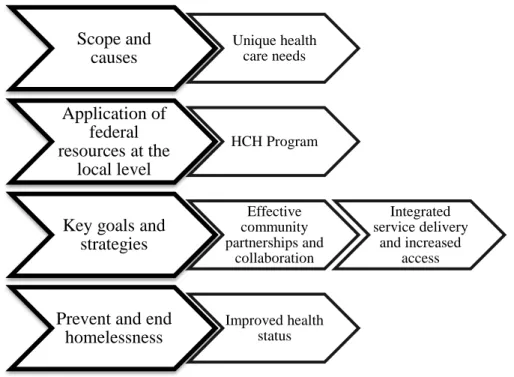
Applying the logic model in Table 3, the following process in Figure 2 is that in which Opening Doors assumes to reach its vision and goals, and includes the collaboration and coordination mentioned above.
Figure 2. Opening Doors Process
Scope and causes of homelessness
Application of federal resources at the
local level
Key goals and strategies
25
Next, to develop the conceptual framework guiding this study, in Figure 3 below, the cycle of health and homeless is integrated with the Figure 2 process.
Figure 3. Conceptual Framework
This conceptual framework (Figure 3) then supports the following research questions: 1. How is this being done in local communities?
2. What are examples of best practices and community-tested interventions?
3. What are barriers that prevent integrated service delivery? Effective collaboration? 4. What are the overarching key goals and strategies for HCH?
5. And finally, how does all of this relate to Opening Doors?
Each step of the dissertation strives to answer these questions while addressing the overall Research Question and related aims, as outlined in Table 4.
Scope and causes
Unique health care needs
Application of federal resources at the
local level
HCH Program
Key goals and strategies
Effective community partnerships and
collaboration
Integrated service delivery
and increased access
Prevent and end homelessness
26
Table 4. Dissertation steps to answer the research questions
Inputs Outputs Outcomes
Tools for effective collaboration on health issues:
Systematic review of academic literature on characteristics associated with successful local collaborations or partnerships. Observations and lessons extracted from resulting articles will
comprise a framework by which to evaluate the potential for
successful local implementation of Opening Doors.
Community innovation and best-practice approaches from Local Stakeholders:
Qualitative interview study, building on the framework established in literature review, to dig deeper into awareness and implementation of Opening Doors in local communities.
o The Executive Director or Chief Executive Officer (or designee) of select health care for the
homeless providers will be interviewed to determine the awareness and relevance of Opening Doors at the local level.
o The local government Office of Homeless Services (or equivalent) in the same city, traditionally responsible for
coordinating the local community’s homeless service response and/or Continuum of Care, will be interviewed to augment the HCH perspective.
1. List of effective ‘tools’ for collaboration
2. Determine awareness of Opening Doors (in general) in select local communities
3. Knowledge of what is being done in local
communities around select themes of Opening Doors 4. Identify barriers to service
integration and/or delivery
27
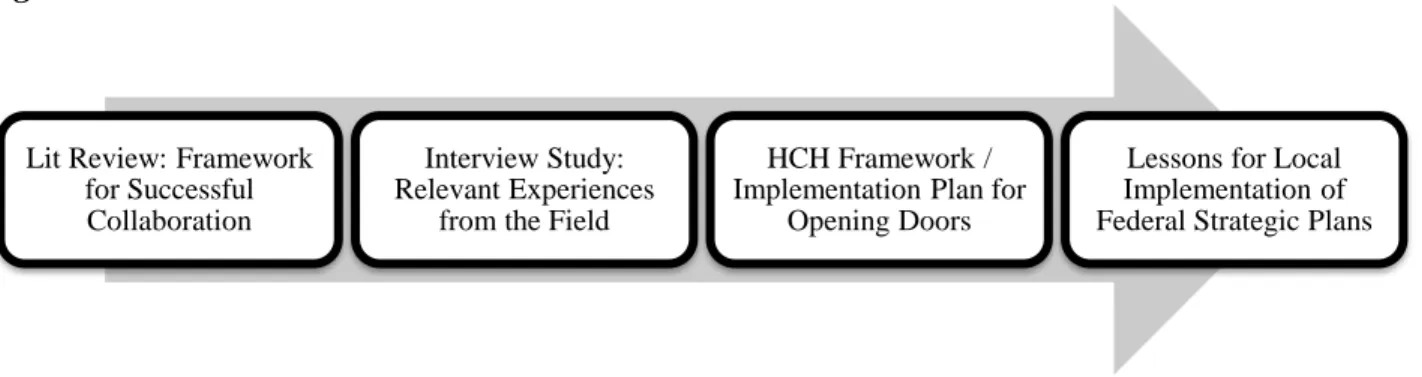
Further, to answer the questions raised for this dissertation, I have identified a four step process, illustrated in Figure 4. This outlines the process and the structure of the dissertation with chapters dedicated to each component.
Figure 4. Dissertation Process
Lit Review: Framework for Successful Collaboration
Interview Study: Relevant Experiences
from the Field
HCH Framework / Implementation Plan for
Opening Doors
28
CHAPTER 2: Review of the Literature
As outlined in Chapter 1, addressing the unique needs of the homeless requires coordination of services across local community organizations, especially when providing health-related services. Effective community partnerships and collaboration are essential to this coordination of services and to efforts to implement Opening Doors at the community level. The first study step of this dissertation will be accomplished through a systematic review of academic literature on characteristics associated with successful local collaborations or partnerships. Observations and lessons extracted from resulting articles will comprise a framework by which to evaluate the potential for successful local implementation of Opening Doors. I have focused on this aspect of the scientific literature in an effort to identify peer-reviewed supported
characteristics that could inform the inner workings of community-based health partnerships to support local implementation of Opening Doors, and ultimately, improve the health of the homeless.
Methods and Search Strategy
29
Partnerships or collaborations (or coalitions, alliances or similar related descriptor, all often used inter-changeably) represents a group of local agencies, organizations and/or individuals working together to improve the health of their community
National strategies or federal strategic plans was expanded to include community partnerships or collaborations working together to address a public health issue of national significance
The goal of this literature search is to build from the characteristics outlined in the literature a framework of essential factors that could help guide the work of community health
improvement-focused partnerships or collaborations.
30
Searches encompassed various search term combinations, including singular and mixed terms, from the following pool: national/federal/U.S. plan/strategy; strategic plan; strategic planning; strategic alliance; collaboration; coordination; local; implementation; success; successful characteristics; non-profit. While general search terms were used initially, results were immediately reviewed for relevance to the health field. The following criteria needed to be met for inclusion in this literature review:
1. U.S.-based and appear in a peer-reviewed journal after 2000 to identify more recent community health improvement efforts
2. Focus on a health topic relevant to the homeless
3. Discuss the experience, plans or strategies implemented by a community partnership at the local level
4. Outline partnership characteristics of success There was a language restriction of English and species human. Results
The search strategy resulted in a total of 78 abstracts reviewed, 31 selected for full article analysis and seven included in the literature review, as outlined in Table 5 below. All search results were first reviewed by title based on a perception of relevance to the research question, and 78 abstracts pulled to review for alignment with inclusion criteria. This process was manual, and again, decisions were made by the author based on a perception of relevance to the literature review’s inclusion criteria, outlined in the list above, primarily the second and third criteria.
Following the abstract review, 31 articles were accessed via the UNC Library System and fully reviewed for inclusion against the criteria, as well as reviewing the article references
31
review. From each selected article, the outlined elements associated with successful local partnerships were recorded. If an included article outlined an evaluation tool or mechanism to measure the partnership, in addition to the key success factors, this was captured as well.
Exclusions were mostly due to the final two criteria – articles did not focus on the work of cross-community partnerships and/or did not outline characteristics of success. Two articles represented the ‘archetype’ article satisfying all inclusion criteria and presenting a discussion of key factors needed for successful community partnerships, Roussos and Fawcett44 and Shortell et al45; both articles are discussed in detail in the Key Findings. Of note, included in the literature review by Roussos and Fawcett, is a useful definition of a collaborative partnership (page 369):
A collaborative partnership in public health is an alliance among people and organizations from multiple sectors working together to improve conditions and outcomes related to the health and well-being of entire communities46
The seven articles selected for inclusion identified factors or characteristics associated with successful partnerships or collaborations focused on public health initiatives. As outlined in Table 6 below, these characteristics were extracted (Factors/Characteristics Column) and
evaluated based on applicability to health-related partnerships in general and then to Opening Doors specifically (Strength of Study Column). The strength of study was determined according to the scale outlined in Table 7.
32
Table 5. Literature Review Search Strategy
Searches
Initial Search Results
Title/Abstract Review
Article Review
Total Included Google Scholar and Tulane SearchAll
“strategic alliance” + “collaboration” + “inter-agency” 556 1 1 1
“strategic alliance” + “collaboration” + “local” 13200 5 4 2
“strategic planning” + “local” OR “non-profit” 354000 4 1 0
“strategic planning” + "local" + "health" 132169 11 5 0
“successful” + “strategic plan” OR “national strategy” + “health” 17100 5 4 0
successful + "strategic plan" + "evaluation" + "health" 42000 7 5 0
Pub Med Search
federal plan + local implementation 44 7 1 0
national plan + local implementation 288 5 1 0
strategic plan + local 396 3 0 0
strategic planning + evaluation 727 11 1 1
Pub Med Search - Reviews Only
successful partnerships 77 7 2 0
federal plan + local implementation 5 0 0 0
national plan + local implementation 20 1 0 0
strategic plan + local 13 0 0 0
aspects + success + partnership 3 0 0 0
PsychInfo Search
federal plan + local implementation 9 0 0 0
national plan + local implementation 31 3 1 0
strategic plan + local 56 4 2 0
strategic planning + characteristics + health 37 1 0 0
successful + collaboration + health 435 3 3 3
33
Table 6. Included Studies
Article (Reference)
Factors / Characteristics Strength of Study
(1) Merrill JA, Deegan M, Wilson RV, Kaushal R, Fredericks K. A system dynamics evaluation model: implementation of health information exchange for public health reporting. J Am Med Inform Assoc 2013;0:1-8.
doi: 10.1136/amiajnl-2012-0001289
1. Do not assume implementation expertise
2. Undiscovered work will emerge in the implementation process
3. Contingency plans are needed to ensure steady progress on multi-stakeholder projects that are interdependent, especially when funding questionable
4. Leadership, consistent champions and communication essential 5. Managing timelines
moderate
(2) Chuang E and Wells R. The role of interagency collaboration in facilitating receipt of behavioral health services for youth involved with child welfare and juvenile justice. Child Youth Serv Rev. 2010 December 1; 32(12): 1814-1822. doi:
10.1016/j.childyouth.2010.08.002
1. Jurisdiction--designation of agency accountability
2. Shared information systems--level of cross-agency access to administrative databases
3. Overall connectivity--number of ties connecting each agency (e.g. discussion and information sharing, development of inter-agency agreements and MOUs, joint planning or policy formulation for service delivery, cross-training of staff, joint budgeting or resource allocation)
strong
(3) Roussos ST and Fawcett SB. A review of collaborative partnerships as a strategy for improving community health. Annu Rev Public Health. 2000. 21:369-402.
1. Having a clear vision and mission
2. Action planning for community and systems change 3. Developing and supporting leadership
4. Documentation and ongoing feedback on progress 5. Technical assistance and support
6. Securing financial resources for the work 7. Making outcomes matter
34
Article (Reference)
Factors / Characteristics Strength of Study
(4) Shortell SM, Zukoski AP, Alexander JA, Bazzoli GJ, Conrad DA, Hasnain-Wynia R, Sofaer S, Chan BY, Casey E, Margolin FS. Evaluating partnerships for community health improvement: tracking the footprints. Journal of Health Politics, Policy and Law, Vol 27, No 1, February 2002.
1. Managing partnership size and diversity 2. Developing multiple approaches to leadership 3. Maintaining focus
4. Managing conflict 5. Recognizing life cycles
6. Redeploying or patching resources
strong
(5) Lee MY, Teater B, Greene GJ, Solovey AD, Grove D, Fraser JS, Washburn P, Hsu KS. Key processes, ingredients and components of successful systems collaboration: working with severely emotionally or behaviorally disturbed children and their families. Adm Policy Ment Health (2012) 39: 394-405. doi 10.1007/s10488-011-0358-8
The following processes and ingredients must be present in order for challenges to be overcome and for collaboration to be successful:
1. Establishing and maintaining trust
2. Agency representatives beings responsive, reliable, consistent and realistic about roles and expectations
3. Delivering effective and realistic treatment outcomes
moderate-strong
(6) Donaldson LP. Collaboration strategies for reforming systems of care: a toolkit for community-based action. International Journal of Mental Health, vol. 34, no 1, Spring 2005, pp.90-102.
Based on research examining the dynamics, operations and outcomes of 40 coalitions, Mizrahi and Rosenthal (ref 8) identified four factors associated with successful coalitions:
1. Competence - knowledge, skill and savvy of coalition leadership 2. Commitment - to the effort
3. Contributions - what members are able and willing to make 4. Conditions - political and economic environments
35
Article (Reference)
Factors / Characteristics Strength of Study
(7) Macy RJ and Goodbourn M. Promoting successful collaborations between domestic violence and substance abuse treatment service sectors: a review of the literature. Trauma Violence Abuse 2012 13: 234 originally published online 16 August 2012. doi: 10.1177/1524838012455874
Effective interagency collaborations require multidimensional strategies at various levels, including the provider, director, agency, and policy levels:
1. cross-training
2. colocation and cross-consultation 3. assigning interagency liaison
4. establishing and maintaining positive, productive working relationships at all agency levels 5. establishing or changing state-level policies to promote collaboration
weak
Table 7. Determining the Strength of Study
Strength of Study Description
Weak Factors had little relevance outside of article
topic and would not apply to Opening Doors
Moderate While the factors were relevant outside the
topic of interest and to public health in general, they would not apply to Opening Doors
Strong Factors were relevant to public health and
36 Key Findings
As mentioned above, the goal of this literature search is to build from the characteristics outlined in the literature a framework of essential factors that could help guide the work of community health improvement-focused partnerships or collaborations. This section details the steps to build this framework from the seven included articles.
Following extraction of the factors from each of the seven articles, all articles were re-checked for inclusion of each factor. This was in an effort to determine importance, based on inclusion across articles, and to identify factors that could be grouped based on similarity into more broadly-defined categories. Once the factors were grouped according to similarity and function, they were then categorized based on an essential strategic planning activity, reflecting the content of the articles reviewed in this literature search. Table 8 depicts the process just described.
37 Table 8. Identified Factors from Included Articles
Factor (grouped) Included Article Categorized
1 2 3 4 5 6 7
Subject matter expertise X X X X X X ALL
Flexibility X X X Purpose and Commitment
Leadership X X X X X X X Leadership
Communication X X X X X Communication
Managing timelines X Leadership
Accountability X X X X Accountability
Shared systems X X X Planning / Operations
Connectivity X X X X X X Purpose and Commitment
Funding / Financial resources X X X X X Funding / Resources
Clear vision and mission X X X Purpose and Commitment
Action planning X X X X Planning / Operations
Documentation / Ongoing
feedback X X Planning / Operations
Technical assistance and support X X Planning / Operations
Outcomes X X X Planning / Operations
Focus X X Purpose and Commitment
Trust and commitment X X X X X Purpose and Commitment Defined roles and
responsibilities X X X X X Accountability
Contributions X X X Funding / Resources
Understanding external
38
Table 9. Framework for Successful Local Community Partnerships
Category Description
Leadership Included in all studies, to be successful, a partnership needs to have a defined leader, supported and recognized both internally and externally. The leadership should have extensive knowledge of the issue and the external environment within which the partnership is working. Purpose and Commitment The purpose and commitment of the partnership includes
both a clear vision and mission (purpose) and the commitment of the partners to that stated purpose given their individual expertise. The purpose provides focus for the partnership as well as a favorable cost-to-benefit ratio ensuring individual members remain connected to one another and to the partnership. This will allow for
flexibility of contributions by the individual members that are focused on the greater good of the partnership and reflective of subject matter expertise of the individual members.
Communication Clear and consistent communication, internally and
externally, of the purpose of the partnership and benefits to the community. Communication helps to establish the partnership as the established subject-matter experts. Accountability Accountability goes hand-in-hand with establishing clearly
defined roles and responsibilities, and includes
accountability of individual members, leadership, and in some instances, the community the partnership serves. Funding / Resources Funding and resources enable the partnership to do the
work. This likely includes pooled financial resources, in kind contributions of members and joint fundraising. Planning / Operations Planning and operations represents the actual work of the
39
In addition to the included articles, there is much academic and theoretical support for the Frameworkcategories.4748495051 The categories are interdependent, and while it is not to be assumed, it is essential that all partnership members bring subject-matter expertise as an underlying factor across the Framework and work of the partnership. Based on this literature review, all of the Framework categories are viewed as necessary to a successful partnership, sustainability of a partnership and overcoming common barriers seen in partnership work. The Framework outlined in Table 9 captures a partnership with committed and knowledgeable leadership and membership who can make necessary changes for the good of the whole in an adaptable environment given change and/or internal or external pressures.
As mentioned above, if included in the article, I noted evaluation tools for assessment or measurements of successful partnerships. One of which, Network Theory, deserves further discussion to emphasize the underlying connectivity needed in a partnership as well as the inter-connectedness of the Framework categories. Chuang and Wells52 explored Network Theory, specifically the level of connectivity between organizations on the likelihood of youth receiving services. While this proved insignificant in this study, and was noted as a limitation, the paper outlines the line of literature in Network Theory that looks at “strong” vs. “weak” ties (or
connections) between people and organizations and the impact on success. Research also looks at “holes” in the network structure formed through the connections. It is the weak connections and holes in the connections that likely lead to breakdowns in communication and productivity, regardless of funding or a strong purpose.
40
the analysis above in establishing the Framework for local community coalitions to emulate in striving for success. The recommendations are quoted here:
Recommendations for Enhancing Practice with Collaborative Partnerships
1. A partnership should frame and communicate a clear vision and mission that is broadly understood (not just by health-related professionals). The mission should define the problem and acceptable solutions in such a manner as to engage (not blame) those community members most affected and not to limit the strategies and environmental changes needed to address the community-identified concern. 2. Ongoing action planning should identify specific community and system changes
to be sought to effect widespread behavior change and community health improvement.
3. The core membership of a partnership should develop widespread leadership, engaging a broad group of members and allies in the work of community organization, mobilization, and change. Important and sustained environmental change is more likely when leaders emerge from and engage multiple community sectors in facilitating change within their own peer group, organizations, and context.
Source: Roussos & Fawcett
Two studies are particularly relevant with regards to the local implementation of Opening Doors. Also included in the Roussos & Fawcett review is a set of recommendations to Set Conditions for Success, quoted below.54 These recommendations should be considered both by organizations like USICH when putting forth a strategic plan such as Opening Doors and by the local
community partnerships responsible for its implementation. Recommendations for Setting Conditions for Success
10.Identification of human and financial support for doing the work of community change and public health improvement should begin early and continue
throughout the life of a partnership. It should support those actions that effect the environmental changes most valued by the local community and those more likely to influence population-level outcomes. When multiple organizations are
represented in a partnership, decisions on allocating human and financial
resources should reflect a sharing of risks, resources, and responsibilities for the common work.
11.A collaborative partnership should have access to support and technical assistance for enhancing the core competencies of its members relevant to different stages of the partnership development (e.g. community assessment, action planning,