viruses
Article
SARS-Like Coronavirus WIV1-CoV Does Not
Replicate in Egyptian Fruit Bats (
Rousettus
aegyptiacus
)
Neeltje van Doremalen1, Alexandra Schäfer2, Vineet D. Menachery2, Michael Letko1, Trenton Bushmaker1, Robert J. Fischer1, Dania M. Figueroa1, Patrick W. Hanley3, Greg Saturday3, Ralph S. Baric2and Vincent J. Munster1,*
1 Laboratory of Virology, National Institute of Allergy and Infectious Diseases, National Institutes of Health, Hamilton, MT 59840, USA; [email protected] (N.v.D.); [email protected] (M.L.); [email protected] (T.B.); [email protected] (R.J.F.); [email protected] (D.M.F.) 2 Department of Epidemiology, University of North Carolina at Chapel Hill, Chapel Hill, NC 27599, USA;
[email protected] (A.S.); [email protected] (V.D.M.); [email protected] (R.S.B.)
3 Rocky Mountain Veterinary Branch, National Institute of Allergy and Infectious Diseases, National Institutes of Health, Hamilton, MT 59840, USA; [email protected] (P.W.H.); [email protected] (G.S.) * Correspondence: [email protected]; Tel.: +1-406-375-7489
Received: 4 December 2018; Accepted: 17 December 2018; Published: 19 December 2018
Abstract:Severe acute respiratory syndrome (SARS)-like WIV1-coronavirus (CoV) was first isolated fromRhinolophus sinicusbats and can use the human angiotensin converting enzyme 2 (ACE2) receptor. In the current study, we investigate the ability of WIV1-CoV to infectRousettus aegyptiacusbats. No clinical signs were observed throughout the experiment. Furthermore, only four oropharyngeal swabs and two respiratory tissues, isolated on day 3 post inoculation, were found positive for viral RNA. Two out of twelve bats showed a modest increase in coronavirus specific antibodies post challenge. In conclusion, WIV1-CoV was unable to cause a robust infection inRousettus aegyptiacusbats.
Keywords:WIV1-CoV; coronavirus; emerging infectious diseases; animal model
1. Introduction
Emerging infectious diseases form a significant threat to the human population. The natural history of viruses in animal reservoirs and their ability to infect the human host is important to predict the risk of spillover events and subsequent epidemics. The World Health Organization has identified a list of top emerging diseases likely to cause major epidemics. The list includes severe acute respiratory syndrome coronavirus (SARS-CoV), which caused a pandemic in 2002–2003 [1]. SARS-CoV is hypothesized to originate fromRhinolophus sinicusbats since several SARS-like viruses have been detected in this host [2,3]. However, most SARS-like viruses from bats do not bind the human receptor, angiotensin-converting enzyme 2 (ACE2). For example, a recombinant virus based on a consensus sequence of SARS-like viruses from bats could not be cultured unless a part of the spike protein was exchanged with SARS-CoV spike protein [4]. This suggests that a substantial portion of the SARS-like viruses circulating in bats cannot infect humans directly.
In 2013, Ge et al. isolated a SARS-like virus from the Chinese horseshoe bat (Rhinolophus sinicus): WIV1-CoV [5], which can use human angiotensin-converting enzyme 2 (ACE2), the receptor for SARS-CoV, in vitro and transgenic mice [6]. This suggests WIV1-CoV may be able to directly transmit from bats to humans. In order to understand the relationship between coronaviruses and their bat hosts, experimental animal models are needed. Unfortunately, most bat species are difficult to obtain for laboratory experiments and most of these species have poorly annotated genomes.
These limitations have posed a challenge in the field and explain a current deficit in the literature. In 2010, one group inoculated Leschenault’s rousette bats (Rousettus leschenaultia) with a homogenate of Betacoronavirus (clade b)-positive intestinal tissues obtained from a lesser short-nosed fruit bat (Cynopterus brachyotis). No clinical signs were observed, but viral RNA was detected in both fecal samples and intestinal tissue [7]. Likewise, no clinical signs were observed following intranasal and intraperitoneal inoculation of Jamaican fruit bats (Artibeus jamaicensis) with Middle East respiratory syndrome (MERS)-CoV. However, shedding of viral RNA was detected in oral and rectal swabs, and a variety of different tissues tested positive for viral RNA [8]. Together, these studies suggest that bats might show limited clinical signs when infected with coronaviruses but will continue to shed the virus.
In this study, we investigate the ability of WIV1-CoV to infect and replicate in Rousettus aegyptiacusbats.
2. Materials and Methods
2.1. Ethics Statement
Animal experiments were approved by the Institutional Animal Care and Use Committee of the Rocky Mountain Laboratories (ASP 2016-021E, 05/2016). Experiments were performed following all guidelines and basic principles of the United States Public Health Service Policy on Humane Care and Use of Laboratory Animals and the Guide for the Care and Use of Laboratory Animals. Experiments with infectious WIV1-CoV under BSL3 conditions was approved by the Institutional Biosafety Committee (IBC). IBC-approved standard operating procedures were followed for inactivation and removal of samples from high containment.
2.2. Virus and Cells
An infectious clone of WIV1-CoV was generated as previously described [6]. Virus propagation was performed in VeroE6 cells in DMEM (Sigma, St. Louis, MO, USA) supplemented with 2% fetal bovine serum (Gibco, Grand Island, NY, USA), 1 mM L-glutamine (Lonza), 50 U/mL penicillin, and 50µg/mL streptomycin (Gibco, Grand Island, NY, USA) (2% DMEM). VeroE6 cells and baby hamster kidney (BHK) cells were maintained in DMEM supplemented with 10% fetal bovine serum, 1 mML-glutamine, 50 U/mL penicillin, and 50µg/mL streptomycin (10% DMEM). The virus was titrated by inoculating VeroE6 cells with tenfold serial dilutions of virus in 2% DMEM. Five days after inoculation, cytopathic effect (CPE) was scored and TCID50was calculated from four replicates using
the method of Spearman-Karber.
2.3. Spike Incorporation into VSV Reporter Particles
Equivalent volumes of VSV reporter particles encoding luciferase and WIV1-spike, MERS-CoV spike or SARS-CoV spike were concentrated over an OptiPrep cushion (10% in PBS; Sigma, St. Louis, MO, USA) at 20,000×gfor 2 h at 4◦C. Particle pellets were resuspended in lysis buffer (1% SDS, 1× ThermoFisher NuPage LDS (Waltham, MA, USA), 1×ThermoFisher NuPage DTT), boiled for 10 min at 100◦C and analyzed for FLAG expression on a 10% Bis-Tris PAGE gel (NuPage; Thermofisher).
2.4. VSV Pseudotype Entry Assay
Pseudotyped luciferase VSV reporter particles were produced as previously described [9]. ACE2-transfected BHK cells were then infected with equal volumes of VSV reporter particles pseudotyped with MERS-CoV, SARS-CoV, or WIV1-CoV spike.
2.5. ACE2-Dependent Replication Kinetics of WIV1
Viruses2018,10, 727 3 of 11
by inoculating cells with a multiplicity of infection (MOI) of 0.01 WIV1-CoV in triplicate 24 h post-transfection. One hour after inoculation, cells were washed twice with PBS, and fresh media was placed on the cells. Supernatants were sampled at 0 and 48 h after inoculation. Virus titers in supernatants were determined as described.
2.6. Animal Experiment
Twelve male adult Egyptian fruit bats (Rousettus aegyptiacus) were obtained from the Catoctin Wildlife Preserve and Zoo in Thurmont, Maryland. All bats were inoculated with 105TCID50 of
WIV1-CoV via the intranasal (25µL per nare), intratracheal (100µL) and intra-esophageal route (100 µL). Exams were performed daily and included measuring body weight and temperature, obtaining oropharyngeal, rectal and urogenital swabs, and scoring for clinical signs of disease. On day 3, 7, and 28, four animals were euthanized and nasal turbinates, larynx, pharynx, trachea, lung, brain, eye, conjunctiva, heart, liver, spleen, kidney, bladder, reproductive organs, stomach, proximal and distal intestinal tract, cervical lymph nodes, adrenal glands, skin, and skeletal muscle were collected for virological and histopathological analyses. Lung weights were measured upon necropsy.
2.7. Viral RNA Detection
Tissues were homogenized in RLT buffer, and RNA was extracted using the RNeasy method on the QIAxtractor (Qiagen, Venlo, The Netherlands) according to the manufacturer’s instructions. RNA was extracted from swab samples using the QiaAmp Viral RNA kit on the QIAxtractor. For one-step real-time qPCR, 5 µL RNA was used in the QuantiFast Probe PCR kit (Qiagen), according to instructions by the manufacturer. Standard dilutions of a virus stock with known titer were run in parallel in each run, to calculate TCID50 equivalents in the samples. Primers and
probe were designed for detection of WIV1-CoV (Forward primer: TCAGGCTGGAAATGCTACAG, reverse primer: GTCCTCCACTTGCTAGGTAATC, probe: TGTGCTTTCCTTCTGTGCCTTTGC). Primers and probes specific for Rousettus aegyptiacus GAPDH and HPRT were designed as extraction controls (GAPDH: forward primer: GGTTGTCTCCTGCGACTTTA, reverse primer: CCTGTTGCTGTAGCCAAAT TC, probe: AAAGTGGTCATTGAGGGCAATGCC. HPRT forward primer: AGATGGTGAAGGTCGCAAG, reverse primer: CCTGAAGTATTCATTATAGTCAAGGG, probe: ACTTTGTTGGATTTGAAATTCCAGACA AGTTTG. All qRT-PCR cycles were as follows: 15 min at 50◦C, 5 min at 95◦C, then 40 cycles of 15 s at 95◦C and 15 s (WIV1) or 30 s (Glyceraldehyde 3-phosphate dehydrogenase (GAPDH) and Hypoxanthine-guanine phosphoribosyltransferase (HPRT)) at 60◦C.
2.8. Hematology
EDTA blood was obtained from bats pre-challenge (D-95 and D-2) and day of necropsy. The total white blood cell, lymphocyte, neutrophil, monocyte, eosinophil, and basophil count were determined with the IDEXX ProCyte DX analyzer (IDEXX Laboratories, Westbrook, ME, USA).
2.9. Histopathology
CA, USA) followed by Discovery ChromoMap DAB kit (Ventana Medical Systems, 760-159, Tucson, AZ, USA).
2.10. Serology and Microneutralization
Enzyme-linked immunosorbent assay (ELISA) was performed by coating SARS-CoV spike S1 or nucleoprotein (N) antigen (NR686 and NR48761, BEI resources, 0.5µg/mL in 50 mM bicarbonate binding buffer (4.41 g KHCO3and 0.75 g Na2CO3in 1 L water)) on to MaxiSorb plates (Nunc, Rochester,
NY, USA). Plates were blocked with 5% non-fat dried milk in PBS-0.1% Tween (5MPT). Serum samples were diluted in 5MPT and incubated on plates for 1 h. Detection of antibodies was performed with HRP-conjugated IgG (H+L) secondary antibody and developing solution (Seracare, Milford, KS, USA) followed by a measurement at 450 nm. Sera was termed seropositive if the optical density (OD) value was higher than 0.2. To determine microneutralization titers, heat-inactivated sera (30 min at 56◦C) was diluted in 2% DMEM, then incubated 1 h at 37◦C and 5% CO2with 100 TCID50of WIV1-CoV.
Serum:virus mixture was added to VeroE6 cells and five days after inoculation, CPE was scored. Neutralizing titer was determined from two replicates.
2.11. Statistical Analysis
Statistical analysis was performed using Student’st-test on Graphpad Prism 7 for Windows. p-values < 0.05 were considered as significant.
3. Results
Viruses2018,10, 727 5 of 11
Viruses 2018, 10, x FOR PEER REVIEW 5 of 12
164
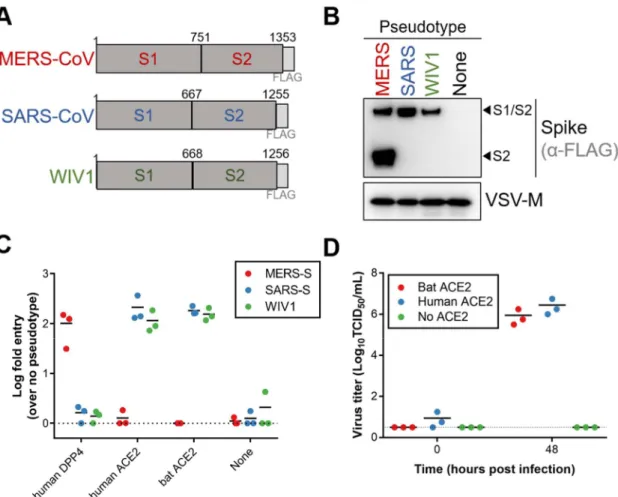
Figure 1. Egyptian fruit bat ACE2 is a suitable receptor for WIV1-CoV. (A) Schematic overview of
165
coronavirus spike proteins. (B) VSV particles pseudotyped with coronavirus spike proteins were
166
concentrated and analyzed for spike incorporation by western blot. (C) BHK cells were transfected
167
with coronavirus receptors and infected with pseudotyped particles in triplicate. (D) BHK cells were
168
transfected with ACE2 plasmids and inoculated with WIV1-CoV at a MOI of 0.01, 24 hours after
169
transfection. Supernatants were harvested at 0 and 48 hpi and viral titers were determined by
170
endpoint titration in quadruplicate in VeroE6 cells.
171
Viruses 2018, 10, x FOR PEER REVIEW 6 of 12
172
Figure 2. ACE2 immunohistochemistry of A) nasal turbinate - 400X, multifocal apical 173
immunoreactivity in ciliated epithelial cells (arrows), B) trachea – 400X, negative immunostaining, C) 174
lung – 400X, multifocal cytoplasmic endothelial cell immunoreactivity (arrowheads), D) kidney - 175
200X, multifocal cytoplasmic endothelial cell immunoreactivity (arrowheads), E) stomach – 400X, 176
multifocal cytoplasmic endothelial cell immunoreactivity (arrowheads), F) intestine – 100X, diffuse 177
immunoreactivity of brush border. 178
Hereafter, twelve Egyptian fruitbats were inoculated via the intranasal, intratracheal and intra-179
esophageal route with 105 TCID50 of WIV1-CoV. Bats were observed for clinical signs daily for 14
180
days and body weight and temperature were measured daily. None of the bats showed signs of 181
disease such as respiratory distress, anorexia or lethargy. No significant body weight losses or 182
changes in body temperature were detected throughout the experiment (Figure 3A and B). 183
Rectal, urogenital and oropharyngeal swabs were taken daily for six days and tested for the 184
presence of viral RNA. Viral RNA could not be detected in rectal or urogenital swabs at any time 185
Figure 2. ACE2 immunohistochemistry of (A) nasal turbinate—400×, multifocal apical immunoreactivity in ciliated epithelial cells (arrows); (B) trachea—400×, negative immunostaining; (C) lung—400×, multifocal cytoplasmic endothelial cell immunoreactivity (arrowheads): (D) kidney—200×, multifocal cytoplasmic endothelial cell immunoreactivity (arrowheads); (E) stomach—400×, multifocal cytoplasmic endothelial cell immunoreactivity (arrowheads): (F) intestine—100×, diffuse immunoreactivity of brush border.
Twelve Egyptian fruit bats were inoculated via the intranasal, intratracheal and intra-esophageal route with 105TCID50of WIV1-CoV. These bats were observed daily for 14 days for any clinical signs.
Their body weight and temperature were measured every day. None of the bats showed signs of disease such as respiratory distress, anorexia or lethargy. No significant body weight loss or changes in body temperature were detected throughout the experiment (Figure3A,B).
Rectal, urogenital and oropharyngeal swabs were taken daily for six days and tested for the presence of viral RNA. Viral RNA could not be detected in rectal or urogenital swabs at any time point. However, on days 1 and 3 post inoculation (dpi) viral RNA was detected in the oropharyngeal swabs of three bats and one bat, respectively (between 100–300 copies/mL, Figure3C).
Viruses2018,10, 727 7 of 11
Multiple organ systems were examined histopathologically and were essentially normal with a few exceptions. All 12 bats had marked severe vacuolar change (glycogen-type) within the liver. The cause of this liver change was not identified but may be related to diet or stress. Six of the bats had minimal–moderate numbers of Kupffer cells in the liver containing a brown granular intracytoplasmic pigment predominately in the portal areas which are positive for Prussian Blue staining and consistent with excessive iron deposition. Seven bats had minimal–moderate numbers of lymphohistiocytic nodules within the pulmonary parenchyma. None of these histopathological changes were associated with coronavirus replication or immunohistochemistry suggesting that this was background pathology.
RNA was extracted from harvested tissues and analyzed for the presence of the host and viral RNA. Host RNA could be detected in all samples. Viral RNA was only detected in tissues obtained from animals necropsied on 3 dpi and was limited to the pharynx (N= 1) and nasal turbinates (N= 1) (Figure3E). Subsequently, the full skull, as well as cervical lymph nodes, lung, spleen, and liver tissue, were stained for WIV1-CoV antigen using a SARS NP-specific antibody. All tissues were negative as determined by immunohistochemistry.Viruses 2018, 10, x FOR PEER REVIEW 8 of 12
206
Figure 3. Disease symptoms, shedding and tissue tropism after inoculation with WIV1-CoV. (A) 207
Relative weight change and (B) body temperature change in Egyptian fruit bats following inoculation 208
with WIV1-CoV. (C) Viral RNA in oropharyngeal, rectal and urogenital swabs obtained daily. (D) 209
Lung:body weight ratio of Egyptian fruit bats at 3, 7, and 28 dpi. (E) Viral RNA load in tissues 210
obtained 3 dpi (N=4 bats). 211
Complete blood cell counts of four bats at each day of necropsy were compared to values 212
obtained pre-challenge (2 values per bat, 23 values total). No abnormal values were detected in the 213
levels of white blood cells, neutrophils, lymphocytes, monocytes, eosinophils or basophils (Figure 4). 214
Complete blood cell counts of four bats on each day of necropsy were compared to values obtained pre-challenge (two values per bat, 23 values in total). No abnormal values were detected in the levels of white blood cells, neutrophils, lymphocytes, monocytes, eosinophils or basophils (Figure4). We hypothesize that the observed lymphopenia is stress-related, and not associated with viral infection. Viruses 2018, 10, x FOR PEER REVIEW 9 of 12
215
Figure 4. Hematology of Egyptian fruit bats inoculated with WIV1-CoV. Pre-challenge values (black)
216
were obtained at D-95 (N=12) and D-2 (N=11). Post-challenge values were obtained at 3 dpi (red), 7
217
dpi (blue), and 28 dpi (green). All values were measured using the IDEXX ProCyte DX Analyzer.
218
Dotted line = average of pre-challenge values.
219
The presence of antibodies was investigated using an ELISA based on SARS-CoV S or N protein 220
and expressed as highest dilution of sera that resulted in an OD>0.2. Interestingly, sera obtained 221
before challenge from several bats showed reactivity with SARS S or N (Figure 5). We compared the 222
ELISA titer in sera obtained before and after challenge. Only two bats (bat #6 and #11) showed a 223
significant increase in ELISA titer. No WIV1-CoV-neutralizing antibodies were detected in the sera 224
as determined via virus neutralization assay. 225
Figure 4.Hematology of Egyptian fruit bats inoculated with WIV1-CoV. Pre-challenge values (black) were obtained at D-95 (N= 12) and D-2 (N= 11). Post-challenge values were obtained at 3 dpi (red), 7 dpi (blue), and 28 dpi (green). All values were measured using the IDEXX ProCyte DX Analyzer. Dotted line = average of pre-challenge values.
Viruses2018,10, 727 9 of 11
Viruses 2018, 10, x FOR PEER REVIEW 10 of 12
226
Figure 5. Serology titers in sera obtained pre- and post-challenge. ELISA assays were performed using
227
SARS-CoV proteins N and S. Bats with an increase in serology titer are shown in bold.
228
4. Discussion
229
In the present study, we investigated whether Egyptian fruit bats (Rousettus aegyptiacus) are 230
susceptible to infection by SARS-like WIV1-CoV, originally detected in Chinese rufous horseshoe 231
bats. The first step in host susceptibility to coronaviruses is associated with the ability to bind to host-232
specific receptors and the availability of these receptors on target organs. SARS-CoV S1 binds less 233
efficiently to murine ACE2 than human ACE2, and thus wildtype mice are a suboptimal SARS-CoV 234
animal model [9]. Upon expression ofEgyptian fruit bat ACE2 on non-susceptible BHK cells, WIV1-235
CoV was able to enter and replicate, demonstrating that ACE2 from Egyptian fruit bats is a suitable 236
receptor. However, while ACE2 was expressed in bat intestine and respiratory tract tissue, similar to 237
humans [10], we observed very limited evidence of virus replication and seroconversion. Taken 238
together, these data demonstrate that WIV1-CoV restriction in the Egyptian fruit bat was not at the 239
receptor level. However, in this study very limited evidence of virus replication or seroconversion 240
was detected. It is currently unclear why WIV1-CoV seems unable to replicate efficiently in Egyptian 241
fruit bats. It is possible that the WIV1-CoV S glycoprotein is not processed by surface or intracellular 242
proteases, which have been shown to be important host restriction factors during coronavirus entry 243
[11, 12]. Furthermore, a specific host factor may be required for virus transcription and replication, 244
which could be lacking in the Egyptian fruit bats [13]. A recent study generated an annotated full 245
genome for Egyptian fruit bats and used this to show greatly expanded natural killer cell receptors, 246
MHC class I genes and type I interferons. It has been hypothesized that these factors allows greater 247
tolerance to viral infection [14], resulting in prolonged infection but limited inflammation which has 248
been described for Egyptian fruit bats inoculated with Marburg virus [15, 16]. However, as we found 249
very limited evidence of viral RNA, it is more likely that either an enhanced antiviral response or an 250
inability of WIV1-CoV to dampen the innate response abrogated viral replication completely. 251
Interestingly, some of the sera collected from bats before challenge contained antibodies which cross-252
reacted against full-length SARS-CoV spike protein as well as nucleoprotein. As most bats were 253
negative for SARS-specific antibodies however and we were unable to detect neutralizing antibodies, 254
this does not directly explain why we did not see extensive viral replication. A small increase in the 255
presence of SARS-CoV-specific antibodies was observed in 2 out of 12 bats; bat #6 showed an increase 256
in N-specific antibodies, bat #11 showed an increase in S-specific antibodies. These findings suggest 257
that some low-level virus replication might have occurred in these bats, resulting in an adaptive 258
immune response. 259
The obtained results suggest that the ability to infect and replicate efficiently is bat species-260
specific, and limited inferences can be made from non-matched host pathogen systems. This has been 261
observed with filoviruses as well; Marburg virus replicates efficiently in Egyptian fruit bats, which 262
are the natural reservoir. However, other filoviruses such as Ebola virus hardly replicate in the 263
Figure 5.Serology titers in sera obtained pre- and post-challenge. ELISA assays were performed using SARS-CoV proteins N and S. Bats with an increase in serology titer are shown in bold.
4. Discussion
In the present study, we investigated whether Egyptian fruit bats (Rousettus aegyptiacus) are susceptible to infection by SARS-like WIV1-CoV, originally detected in Chinese rufous horseshoe bats. The first step in host susceptibility to coronaviruses is associated with the ability to bind to host-specific receptors and the availability of these receptors on target organs. SARS-CoV S1 binds less efficiently to murine ACE2 than human ACE2, and thus wildtype mice are a suboptimal SARS-CoV animal model [10]. Upon expression of Egyptian fruit bat ACE2 on non-susceptible BHK cells, WIV1-CoV was able to enter and replicate, demonstrating that ACE2 from Egyptian fruit bats is a suitable receptor. However, while ACE2 was expressed in bat intestine and respiratory tract tissue, similar to humans [11], we observed very limited evidence of virus replication and seroconversion. Taken together, these data demonstrate that WIV1-CoV restriction in the Egyptian fruit bat was not at the receptor level. However, in this study very limited evidence of virus replication or seroconversion was detected. It is currently unclear why WIV1-CoV seems unable to replicate efficiently in Egyptian fruit bats. It is possible that the WIV1-CoV S glycoprotein is not processed by surface or intracellular proteases, which have been shown to be important host restriction factors during coronavirus entry [12,13]. Furthermore, a specific host factor may be required for virus transcription and replication, which could be lacking in the Egyptian fruit bats [14]. A recent study generated an annotated full genome for Egyptian fruit bats and used this to show greatly expanded natural killer cell receptors, MHC class I genes and type I interferons. It has been hypothesized that these factors allow greater tolerance to viral infection [15], resulting in prolonged infection but limited inflammation which has been described for Egyptian fruit bats inoculated with Marburg virus [16,17]. However, as we found very limited evidence of viral RNA, it is more likely that either an enhanced antiviral response or an inability of WIV1-CoV to dampen the innate response abrogated viral replication completely. Interestingly, some of the sera collected from bats before challenge contained antibodies which cross-reacted against full-length SARS-CoV spike protein as well as nucleoprotein. As most bats were negative for SARS-specific antibodies, we were unable to detect neutralizing antibodies. This does not directly explain why we did not see extensive viral replication. A small increase in the presence of SARS-CoV-specific antibodies was observed in 2 out of 12 bats; bat #6 showed an increase in N-specific antibodies, bat #11 showed an increase in S-specific antibodies. These findings suggest that some low-level virus replication might have occurred in these bats, resulting in an adaptive immune response.
virus-producing cells before virus-cell entry [18], SARS S glycoprotein processing by these convertases is absent or inefficient [19]. Our results suggest that like SARS S glycoprotein, WIV1 S glycoprotein does not get cleaved by host proprotein convertases.
The obtained results suggest that the ability to infect and replicate efficiently is bat species-specific, and limited inferences can be made from non-matched host-pathogen systems. This has been observed with filoviruses as well. Marburg virus replicates efficiently in Egyptian fruit bats, which are the natural reservoir. However, other filoviruses, such as Ebola virus, hardly replicate in the Egyptian fruit bats [16]. Therefore, it would be interesting to perform an experimental inoculation study using Chinese horseshoe bats, from which WIV1-CoV was originally isolated, to investigate if more efficient virus replication and shedding can be observed in these animals.
In conclusion, we were unable to detect efficient replication of WIV1-CoV in Egyptian fruit bats and observed modest seroconversion in 2 out of 12 bats. Our findings add to the current understanding of the intricate relationship between specific bat species and their coronaviruses.
Author Contributions:Conceptualization, N.v.D. and V.D.M.; formal analysis, N.v.D., P.H. and G.S.; methodology, N.v.D., A.S., V.D.M., M.L., T.B., R.J.F., D.M.F., P.W.H., and G.S.; resources, R.S.B.; writing—original draft, N.v.D.; writing—review and editing, V.J.M.
Funding:This work was supported by the Intramural Research Program of the National Institute of Allergy and Infectious Diseases (NIAID), National Institutes of Health (NIH), and a research grant from NIH AID (AI089728).
Acknowledgments:We thank the animal caretakers for their excellent care of the animals, and Rachel LaCasse for purchasing and facilitating the housing of all animals. We thank Emmie de Wit for assistance in experiments. We thank the Catoctin Wildlife Preserve and Zoo in Thurmont, Maryland, for providing the animals. The following reagent was obtained through the NIH Biodefense and Emerging Infections Research Resources Repository, NIAID, NIH: SARS-CoV Nucleocapsid (N) Protein, Recombinant fromEscherichia coli, NR-48761 and SARS-CoV Spike (S) Protein with C-terminal Histidine Tag, Recombinant from Baculovirus, NR-686.
Conflicts of Interest:The authors declare no conflicts of interest.
References
1. De Wit, E.; van Doremalen, N.; Falzarano, D.; Munster, V.J. SARS and MERS: Recent insights into emerging coronaviruses.Nat. Rev. Microbiol.2016,14, 523–534. [CrossRef] [PubMed]
2. Lau, S.K.; Woo, P.C.; Li, K.S.; Huang, Y.; Tsoi, H.W.; Wong, B.H.; Wong, S.S.; Leung, S.Y.; Chan, K.H.; Yuen, K.Y. Severe acute respiratory syndrome coronavirus-like virus in Chinese horseshoe bats.Proc. Natl. Acad. Sci. USA2005,102, 14040–14045. [CrossRef] [PubMed]
3. Li, W.; Shi, Z.; Yu, M.; Ren, W.; Smith, C.; Epstein, J.H.; Wang, H.; Crameri, G.; Hu, Z.; Zhang, H.; et al. Bats are natural reservoirs of SARS-like coronaviruses.Science2005,310, 676–679. [CrossRef] [PubMed] 4. Becker, M.M.; Graham, R.L.; Donaldson, E.F.; Rockx, B.; Sims, A.C.; Sheahan, T.; Pickles, R.J.; Corti, D.;
Johnston, R.E.; Baric, R.S.; et al. Synthetic recombinant bat SARS-like coronavirus is infectious in cultured cells and in mice.Proc. Natl. Acad. Sci. USA2008,105, 19944–19949. [CrossRef] [PubMed]
5. Ge, X.Y.; Li, J.L.; Yang, X.L.; Chmura, A.A.; Zhu, G.; Epstein, J.H.; Mazet, J.K.; Hu, B.; Zhang, W.; Peng, C.; et al. Isolation and characterization of a bat SARS-like coronavirus that uses the ACE2 receptor.Nature2013,503, 535–538. [CrossRef] [PubMed]
6. Menachery, V.D.; Yount, B.L., Jr.; Sims, A.C.; Debbink, K.; Agnihothram, S.S.; Gralinski, L.E.; Graham, R.L.; Scobey, T.; Plante, J.A.; Royal, S.R.; et al. SARS-like WIV1-CoV poised for human emergence.Proc. Natl. Acad. Sci. USA2016,113, 3048–3053. [CrossRef] [PubMed]
7. Watanabe, S.; Masangkay, J.S.; Nagata, N.; Morikawa, S.; Mizutani, T.; Fukushi, S.; Alviola, P.; Omatsu, T.; Ueda, N.; Iha, K.; et al. Bat coronaviruses and experimental infection of bats, the Philippines.Emerg. Infect. Dis.
2010,16, 1217–1223. [CrossRef] [PubMed]
8. Munster, V.J.; Adney, D.R.; van Doremalen, N.; Brown, V.R.; Miazgowicz, K.L.; Milne-Price, S.; Bushmaker, T.; Rosenke, R.; Scott, D.; Hawkinson, A.; et al. Replication and shedding of MERS-CoV in Jamaican fruit bats (Artibeus jamaicensis).Sci. Rep.2016,6, 21878. [CrossRef] [PubMed]
Viruses2018,10, 727 11 of 11
10. Li, W.; Greenough, T.C.; Moore, M.J.; Vasilieva, N.; Somasundaran, M.; Sullivan, J.L.; Farzan, M.; Choe, H. Efficient replication of severe acute respiratory syndrome coronavirus in mouse cells is limited by murine angiotensin-converting enzyme 2.J. Virol.2004,78, 11429–11433. [CrossRef] [PubMed]
11. Hamming, I.; Timens, W.; Bulthuis, M.L.; Lely, A.T.; Navis, G.; van Goor, H. Tissue distribution of ACE2 protein, the functional receptor for SARS coronavirus. A first step in understanding SARS pathogenesis.
J. Pathol.2004,203, 631–637. [CrossRef] [PubMed]
12. Millet, J.K.; Whittaker, G.R. Host cell proteases: Critical determinants of coronavirus tropism and pathogenesis.Virus Res.2015,202, 120–134. [CrossRef] [PubMed]
13. Bertram, S.; Glowacka, I.; Muller, M.A.; Lavender, H.; Gnirss, K.; Nehlmeier, I.; Niemeyer, D.; He, Y.; Simmons, G.; Drosten, C.; et al. Cleavage and activation of the severe acute respiratory syndrome coronavirus spike protein by human airway trypsin-like protease.J. Virol.2011,85, 13363–13372. [CrossRef] [PubMed] 14. Van Hemert, M.J.; van den Worm, S.H.; Knoops, K.; Mommaas, A.M.; Gorbalenya, A.E.; Snijder, E.J.
SARS-coronavirus replication/transcription complexes are membrane-protected and need a host factor for activity in vitro.PLoS Pathog.2008,4, e1000054. [CrossRef] [PubMed]
15. Pavlovich, S.S.; Lovett, S.P.; Koroleva, G.; Guito, J.C.; Arnold, C.E.; Nagle, E.R.; Kulcsar, K.; Lee, A.; Thibaud-Nissen, F.; Hume, A.J.; et al. The Egyptian Rousette Genome Reveals Unexpected Features of Bat Antiviral Immunity.Cell2018,173, 1098–1110. [CrossRef] [PubMed]
16. Jones, M.E.; Schuh, A.J.; Amman, B.R.; Sealy, T.K.; Zaki, S.R.; Nichol, S.T.; Towner, J.S. Experimental Inoculation of Egyptian Rousette Bats (Rousettus aegyptiacus) with Viruses of the Ebolavirus and Marburgvirus Genera.Viruses2015,7, 3420–3442. [CrossRef] [PubMed]
17. Schuh, A.J.; Amman, B.R.; Jones, M.E.; Sealy, T.K.; Uebelhoer, L.S.; Spengler, J.R.; Martin, B.E.; Coleman-McCray, J.A.; Nichol, S.T.; Towner, J.S. Modelling filovirus maintenance in nature by experimental transmission of Marburg virus between Egyptian rousette bats.Nat. Commun.2017,8, 14446. [CrossRef] [PubMed]
18. Gierer, S.; Muller, M.A.; Heurich, A.; Ritz, D.; Springstein, B.L.; Karsten, C.B.; Schendzielorz, A.; Gnirss, K.; Drosten, C.; Pohlmann, S. Inhibition of proprotein convertases abrogates processing of the middle eastern respiratory syndrome coronavirus spike protein in infected cells but does not reduce viral infectivity.
J. Infect. Dis.2015,211, 889–897. [CrossRef] [PubMed]
19. Bergeron, E.; Vincent, M.J.; Wickham, L.; Hamelin, J.; Basak, A.; Nichol, S.T.; Chretien, M.; Seidah, N.G. Implication of proprotein convertases in the processing and spread of severe acute respiratory syndrome coronavirus.Biochem. Biophys. Res. Commun.2005,326, 554–563. [CrossRef] [PubMed]