
273
RELATIONSHIP BETWEEN THE BIOAVAILABILITY AND MOLECULAR PROPERTIES
OF ANGIOTENSIN II RECEPTOR ANTAGONISTS
Jovana B. Trbojević1, Jadranka V. Odović2, Jasna B. Trbojević-Stanković3,4, Dejan M. Nešić5,* and Ratomir M. Jelić6
1 Ivančić i sinovi d.o.o., Palmotićeva 13, 11000 Belgrade, Serbia
2 Department of Analytical Chemistry, University of Belgrade-Faculty of Pharmacy, Belgrade, Serbia 3 School of Medicine, University of Belgrade, Belgrade, Serbia
4 Department of Dialysis, Clinical Hospital Center “Dr Dragiša Mišović”, Belgrade, Serbia 5 Institute of Medical Physiology, School of Medicine, University of Belgrade, Belgrade, Serbia 6 Faculty of Medicinal Science, University of Kragujevac, Kragujevac, Serbia
*Corresponding author: [email protected]; [email protected]
Received: September 15, 2015; Revised: September 28, 2015; Accepted: October 5, 2015; Published online: March 1, 2016
Abstract: In the present study, we investigated the relationships between several molecular properties and bioavailability data for seven of the most commonly prescribed angiotensin II receptor antagonists (also known as angiotensin II recep-tor blockers (ARBs) or sartans), candesartan, eprosartan, irbesartan, losartan, olmesartan, telmisartan and valsartan. The molecular descriptors of ARBs are:, aqueous solubility (logS values), polar surface area (PSA), molecular weight (Mw), volume value (Vol), lipophilicity (logP values) and the acidity descriptor (pKa1). The respective descriptors were calculated using four different software packages. The relevant bioavailability data were obtained from literature. Among calculated molecular descriptors, simple linear regression analysis showed the best correlation between bioavailability data and the lipophilicity descriptor, logP (R2=0.568). Multiple linear regression established good correlations between bioavailability and the lipophilicity descriptor, logP, using the molecular weight, Mw, or the acidity descriptor, pKa1, as an additional, independent variable (with R2=0.661 and 0.682, respectively). Finally, excluding candesartan from the calculations resulted in a very good correlation (R2=0.852) between the remaining ARB bioavailability and molecular descriptors MlogP and Mw as independent variables, determined by multiple linear regression.
Key words: angiotensin II receptor antagonists; lipophilicity; bioavailability; molecular properties
INTRODUCTION
The ARB were introduced into clinical practice three decades ago and today are commonly prescribed for the treatment of hypertension, congestive heart failure and diabetic nephropathy [1]. ARBs are acidic drugs that are mostly ionized at physiological conditions [1]. In contrast to other ARBs, candesartan cilexetil and olmesartan medoxomil are rapidly and completely hydrolyzed in the intestinal wall into their active me-tabolites, candesartan and olmesartan, respectively. Approximately 14% of ingested losartan is oxidized to a more potent metabolite, while other ARBs are not
Molecular properties such as lipophilicity, acidity, molecular weight, molecular volume, polar surface area and water solubility, play an important role in drug absorption, penetration into tissues, degree of distribution, degree of PPB, bioavailability and route of elimination [5-9]. Several authors have investigat-ed the pharmacological properties of ARBs [10-12]. The drugs’ lipophilicity, solubility and absorption were evaluated with computer software based on the drugs’ molecular structure [7-9]. Also, various authors suggested several assays that could be employed in in-vestigating the elimination of different drugs [13-16]. In our recently published paper we assessed the correlation of the degree of PPB and the elimination of a selected ARBs with their molecular properties, mo-lecular weight and volume using multiple regression (MLR) analysis [17,18]. In our previous studies, the cor-relation between ACE inhibitor lipophilicity and PPB data [19,20] or absorption [21] were studied and suitable models were presented. Following on from this work, the aim of our present study was to investigate the rela-tionship between the different molecular properties of seven ARBs, candesartan, eprosartan, irbesartan, losar-tan, olmesarlosar-tan, telmisarlosar-tan, valsarlosar-tan, and their BA.
MATERIALS AND METHODS Software
The seven most frequently prescribed ARB were investigated: candesartan, eprosartan, irbesartan, losartan, olmesartan, telmisartan and valsartan. The software package Molinspiration Depiction Software (Molinspiration Cheminfirmatics) was used for the calculation of the “electronic” descriptors, polar sur-face area (PSA), constitutional parameter, molecular weight (Mw), and the geometric descriptor, volume value (Vol). The ARB lipophilicity descriptors, dif-ferent logP values (AlogPs, AClogP, AB/logP, MilogP, AlogP, MlogP, KOWWINlogP, XLOGP2, XLOGP3), as well as their aqueous solubility data (logS) were cal-culated using the software package Virtual Computa-tional Chemistry Laboratory [http://www.vcclab.org]. Chemdraw ultra 12.0 was used for the calculation of
another lipophilicity parameter, ClogP,while the soft-ware package DrugBank [http: //www.drugbank.ca] was used for the calculation of the acidity descriptor pKa of the selected ARB. Microsoft Excel 2003 and Origin 7.0 PRO (Origin Lab Corporation, USA) were used to perform statistical analysis of regression. The selected molecular descriptors are presented in Table 1; the provided oral bioavailability data were obtained from the relevant literature [2].
RESULTS
According to data from the relevant literature, the de-grees of ARB BA vary from 15% to about 70% (Table 2) and [3]. Eprosartan has the lowest oral BA (15%), while the highest were recorded for telmisartan and irbesartan (about 50% and 70%, respectively). The ARB molecular descriptors PSA, Mw, Vol, logS, logP
and pKavalues, were calculated using four different software packages.
The correlations between ARB oral BA data ob-tained from the literature and all calculated
descrip-Table 1. Data of ARB oral bioavailability collected from relevant literature and calculated molecular descriptors.
ARB BA%* MlogP pKa1 Mw PSA Vol logs
1. Candesartan 15 4.55 2.97 440 119 382 -5.30 2. Eprosartan 15 3.42 3.63 424 92 381 -3.60 3. Irbesartan 70 5.11 7.40 428 87 400 -5.28 4. Losartan 33 4.55 7.40 422 92 374 -4.63 5. Olmesartan 26 4.01 0.91 446 130 403 -4.68 6. Telmisartan 50 5.70 3.65 514 73 475 -5.72 7. Valsartan 25 4.15 4.37 435 112 408 -4.86 *BA values were obtained from the literature [3]
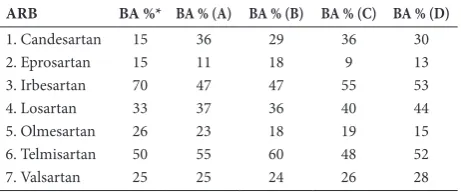
Table 2. Data of ARB oral bioavailability collected from relevant literature (*) and predicted from (A) MlogP and Vol; (B) MlogP
and PSA; (C) MlogP and Mw; (D) MlogP and pKa1 values. ARB BA %* BA % (A) BA % (B) BA % (C) BA % (D)
1. Candesartan 15 36 29 36 30
2. Eprosartan 15 11 18 9 13
3. Irbesartan 70 47 47 55 53
4. Losartan 33 37 36 40 44
5. Olmesartan 26 23 18 19 15
6. Telmisartan 50 55 60 48 52
7. Valsartan 25 25 24 26 28
tors were investigated by simple linear regression. The oral BA data and the ARB molecular descriptors, Vol, Mw, logS and pKa1, displayed low correlations (R2<0.3)
and only PSA had a slightly stronger correlation (R2=0.361) with ARB oral BA data. The relationship
between all ten lipophilicity descriptors, logP values and oral BA data were examined, and mostly pro-vided low correlations (R2<0.3). The strongest, but not
sufficiently high correlation was established between MlogP and oral BE data (R2=0.567).
In the next stage, the relationship between BA data and two different ARB molecular descriptors as inde-pendent variables were investigated with MLR. MlogP
was chosen as the first independent variable since it showed the best correlation with ARB oral BA data in simple linear regression. The solubility data could not be used as the second independent variable since logS pro-vided good correlation with MlogP values (R2=0.805).
Therefore, PSA, Mw, Vol and pKa1 were chosen as pos-sible, secondary independent variables, besides MlogP. The following correlations were obtained:
Eq.1:
BApred(%)=22.43(±11.96)MlogP–0.70(±0.26)
Vol–39.36(±79.01)
(R2=0.574; n=7; S.D.=16.03; F=2.70);
Eq.2:
BApred(%)=16.33(±10.13)MlogP–0.26(±0.38) PSA–13.78(±74.21)
(R2=0.613; n=7; S.D.=15.29; F=3.170);
Eq.3:
BApred(%)=27.80(±10.61)MlogP–0.26(±0.24) Mw–24.45(±85.68)
(R2=0.661; n=7 S.D.=14.30; F=3.90);
Eq.4:
BApred(%)=16.98(±8.05)MlogP+3.07(±2.55)pKa1–
56.26(±34.50)
(R2=0.682; n=7 S.D.=13.85; F=4.29).
The best correlation was established between ARB BA data obtained from the literature and the MlogP
lipophilicity descriptor, using Mw or the acidity de-scriptor pKa1 as additional, independent variables with
R2=0.661 and 0.682, respectively. The obtained results
are presented in Table 2. It can be noticed that among the investigated ARB candesartan’s predicted BA val-ues were twice as high as those found in the avail-able BA data for all obtained calculations. Therefore, it was decided to repeat calculations after excluding candesartan, and a significantly higher correlation was found in the first stage in simple linear regression be-tween ARB BA data and MlogP values with R2=0.702.
Subsequently, MLR analysis also provided a much bet-ter relationship between available BA data for ARB in the literature and all the calculated molecular descrip-tors, PSA, Mw, Vol and pKa1 (R2>0.70). The best MLR
analysis was established with the application of MlogP
and Mw as independent variables: Eq.5:
BApred(%)=29.42(±7.44)MlogP–0.30(±0.17) Mw+39.75(±60.18)
(with R2=0.852; n=6; S.D.=9.98; F=8.63).
The established correlation is presented in Fig.1.
DISCUSSION
Oral BA is one of the most important pharmacologic properties in drug design and development. It is a subcategory of absorption and represents the frac-tion of administered drug dose that reaches systemic circulation. High oral BA reduces the amount of an administered drug needed to achieve the desired pharmacological effect, thereby reducing the risk of side effects and toxicity, while poor oral BA can result in low efficacy and lead to unpredictable response to a drug. BA for intravenously administered drugs is 100%. However, for orally administered drugs, BA usually decreases due to incomplete absorption and first-pass metabolism as well a high degree of plasma protein binding. Various physiological factors may reduce the bioavailability of drugs prior to their en-try into the systemic circulation. Furthermore, drug administration with or without food also affects ab-sorption. Concurrent intake of other drugs may alter absorption and first-pass metabolism, while intestinal motility alters the dissolution and may affect the de-gree of chemical degradation of the drug by intesti-nal microflora. Diseases affecting liver metabolism or gastrointestinal function will also have an effect on BA. A drug’s physical properties (hydrophobicity, acidity, solubility, molecular mass, volume and polar surface area) or its formulation as well as the age and gender of the patients and the dosing scheme also exert important influences on its BA.
Previous studies evaluated the acidity, lipophilic-ity, solubility and absorption of different drugs based on their molecular structure with the application of computer programs [7-9]; they also evaluated the in-fluence of molecular properties on drug BA [22,23], but ARB were not included in these studies. According to the available literature, the ARB pharmacokinet-ics and pharmacodynampharmacokinet-ics, including their effects and duration of action, were investigated by several authors [24-29]. However, most of these methods had certain limitations and a new approach for a fast, easy and reliable evaluation of ARB oral BA was necessary. The central aim of the study was to establish a high throughput approach for evaluating the oral BA
data of selected ARB using simple or multiple linear regression analyses. In the first stage of the study, the relationship between all calculated logP values (ClogP, AlogPs, AClogP, AB/logP, milogP, AlogP, MlogP,
KOWWINlogP, XLOGP2, XLOGP3) and ARB oral BA data were investigated. Of all logP values, only MlogP provided relatively good correlation (R2=0.567)
with ARB oral BA. The methods used for lipophilic-ity descriptor calculation provided ten different logP
values. They can be divided into substructure-based and property-based methods, and the substructure-based methods can be additionally subclassified into fragmental and atom-based [30]. The lipophilicity descriptor MlogP was calculated with the property-based method property-based on topological descriptors [30].
Secondly, the relationship between ARB and BA data and calculated molecular descriptors was in-vestigated using MLR analysis with the application of two independent variables, MlogP and one of the following: PSA, Mw, Vol or pKa. Although the best correlation was established between ARB BA data and the MlogP lipophilicity descriptor, using the molecu-lar weight (R2=0.661) or acidity (R2=0.682) as
inde-pendent variables it was observed that the calculated BA values for candesartan differed notably from its literature available BA values (Table 2). Candesar-tan is actually an active metabolite and its prodrug form is candesartan cilexetil. Candesartan cilexetil is absorbed after oral administration and hydrolyzed during absorption to form candesartan. An absolute bioavailability for candesartan is about 15% following its oral administration. Peak plasma concentration oc-curs after 3 to 4 h. Candesartan has very high degree of plasma protein binding (PPB), higher than 99%. The high values of candesartan’s PPB, together with incomplete absorption and first-pass metabolism may be some of the reasons for its low BA values.
Following this observation, candesartan was ex-cluded from further investigation resulting in much higher correlation (R2=0.702) between ARB BA data
correlations (R2>0.70), the best (R2>0.852) being Mw
as an independent variable, confirming the important influence of ARB molecular properties on their oral BA. The results obtained can be considered as good considering the limited number of compounds and since values of R2 higher than 0.81 are proposed as
very high correlation by Asuero et al. [31].
CONCLUSION
The results of the present paper have confirmed that the molecular properties, especially lipophilicity, acid-ity and molecular weight of angiotensin II receptor blockers, are of considerable importance and that their calculation can be considered as a high-throughput screening for evaluation of the oral bioavailability of the selected compounds. For the selected group of an-giotensin II receptor blockers, simple linear regression analysis provided a correlation (R2=0.568) between the
calculated lipophilicity descriptor and bioavailability data. However, in multiple linear regression, better correlations were established between the bioavail-ability and lipophilicity descriptor, using the molecular weight or the acidity descriptor as additional, indepen-dent variables (with R2=0.661 and 0.682, respectively).
Candesartan exclusion from multiple linear regression analysis resulted in very good correlation (R2=0.852)
between the remaining angiotensin II receptor block-ers’ bioavailability, lipophilicity and molecular weight descriptors as independent variables. Since bioavailabil-ity affects drug action and activbioavailabil-ity and is considerably influenced by molecular properties, the examination of its relationship with computed molecular descriptors can be of great importance, especially in the develop-ment of newly synthesized drugs.
Acknowledgments: This work was supported in part by the Min-istry of Education, Science and Technological Development of the Republic of Serbia as a part of Project TR34031.
Authors’ contributions: Jovana Trbojević, Jadranka Odović and Ratomir Jelić conceived and designed the study and provided the the manuscript draft. Jovana Trbojević and Jasna Trbojević-Stanković and Dejan Nešić collected the literature. Jadranka Odović and Ratomir Jelić made critical revisions to the paper. Jovana Trbojević and Jasna Trbojević-Stanković provided the statistical expertise.
REFERENCES
1. Csaba F. Indications for and utilization of angiotensin recep-tor II blockers in patients at high cardiovascular risk. Vasc Health Risk Manag. 2011;7:605-622.
2. Lemke TL, Williams DA, Roche VF, Zito SW, editors. The Foye’s Principles of Medicinal Chemistry. 6th ed. Philadel-phia: Lippincott Williams & Wilkins; 2008. 1377 p. 3. Stella VJ, Borchardt RT, Hageman MJ, Oliyai R, Maag H,
Tilley JW. Biotechnology: Pharmaceutical Aspects, Prodrugs: Challenges and Rewards. 18th ed. New York: Springer Sci-ence, Business Media; 2007. 1464 p.
4. Sweetman SC. Martindale: The Complete Drug Reference. 36th ed. London: Pharmaceutical Press; 2009. 805 p. 5. Di L, Kernsy EH. Profiling drug - like properties in discovery
research. Curr Opin Chem Biol. 2003;7:402-8.
6. Hartmann T, Schmitt J. Lipophilicity - beyond octanol/water: a short comparison of modern technologies. Drug Discov Today Techn. 2004;1(4):431-9.
7. Remko M, Swart M, Bickelhaupt FM. Theoretical study of structure, pKa, lipophilicity, solubility, absorption and polar surface area of some centrally acting antihypertensives. Bioorg Med Chem. 2006;14:1715-28.
8. Remko M. Acidity, lipophilicity, solubility, absorption, and polar surface area of some ACE inhibitors. Chem Pap. 2007;61(2):133-41.
9. Zhao YH, Le J, Abraham MH, Hersey A, Eddershaw PJ, Luscombe CN, Boutina D, Beck G, Sherbone B, Cooper I, Platts JA. Evaluation of human intestinal absorption data and subsequent derivation of a quantitative structure-activity relationship (QSAR) with the Abraham descriptors. J Pharm Sci. 2001;90:749-84.
10. Cheung BMY. Sartans for hypertension – implications of the Valsartan Antihypertensive Long-term Use Evaluation (VALUE) trial. Hong Kong Med J. 2004;10(5):359. 11. Zwieten van PA. Angiotensin II receptor antagonists (AT1
blockers, ARBs, sartans): similarities and differences. Neth-erlands Heart J. 2006;14(11):381-7.
12. Husain A, Md Mitra SAM, Bhasin PS. A review of pharma-cological and pharmaceutical profile of irbesartan. Pharma-cophore. 2011;2(6):276-86.
13. Hellstern A, Hildebrand M, Humpel M, Hellenbrech D, Saller R, Madetzki C. Minimal biliary excretion and entero-hepatic recirculation of lormetazepam in man as investigated by a new nasobiliary drainage technique. Int J Clin Pharma-col Ther ToxiPharma-col. 1990;28(6):256-61.
14. Kullak-Ublick GA, Becker MB. Regulation of drug and bile salt transporters in liver and intestine. Drug Metab Rev. 2003;35(4):305-17.
17. Odovic J, Trbojevic-Stankovic J. In silico evaluation of angio-tensin II receptor antagonist’s plasma protein binding using computed molecular descriptors. Acta Medica Medianae. 2014;53(1):19-24.
18. Trbojević - Stanković J, Odović J, Jelić R, Nešić D, Stojimirović B. The influence of certain molecular descrip-tors of fecal elimination of angiotensin II receptor antago-nists. Arch Biol Sci. 2015;67(1):103-9.
19. Odovic JV, Markovic BD, Injac RD, Vladimirov SM, Kar-ljikovic-Rajic KD. Correlation between ultra-high perfor-mance liquid chromatography-tandem mass spectrometry and reversed-phase thin-layer chromatography hydropho-bicity data for evaluation of angiotensin-converting enzyme inhibitors absorption. J Chromatogr A. 2012; 1258: 94-100. 20. Trbojević-Stanković J, Odović J, Jelić R, Nešić D, Stojimirović B. The effect of calcium channel blockers’ molecular proper-ties on elimination route. Arch Biol Sci. 2015; 67 (3): 801-6. 21. Odovic J, Trbojevic-Stankovic J. Correlation between
Angio-tensin-converting enzyme inhibitors lipophilicity and pro-tein binding data. Acta Medica Medianae. 2012;51(4):13-8. 22. Veber DF, Johnson SR, Cheng HY, Smith BR, Ward KW,
Kopple KD. Molecular properties that influence the oral bioavailability of drugs candidates. J Med Chem. 2002; 45:2615-23.
23. Turner JV, Glass BD, Agatonovic-Kustrin S. Prediction of drug bioavailability based on molecular structure. Anal Chim Acta. 2003;485: 89-102.
24. Sleem M, Taye A, El-Moselhy MA, Mangoura SA. Combina-tion therapy with losartan and L-carnitine protects against endothelial dysfunction of streptozotocin-induced diabetic rats. Eur J Pharmacol. 2014;744:10-7.
25. Łukawski K, Janowska A, Jakubus T, Raszewski G, Czuczwar SJ. Combined treatment with gabapentin and drugs affecting
the renin–angiotensin system against electroconvulsions in mice. Eur J Pharmacol. 2013;706(1-3):92-7.
26. Toba H, Tojo C, Wang J, Noda K, Kobara M, Nakata T. Telmisartan inhibits vascular dysfunction and inflamma-tion via activainflamma-tion of peroxisome proliferator-activated receptor-γ in subtotal nephrectomized rat. Eur J Pharmacol. 2012; 685(1-3): 91-8.
27. Lacourcière Y, Asmar R. A comparison of the efficacy and duration of action of candesartan cilexetil and losartan as assessed by clinic and ambulatory blood pressure after a missed dose, in truly hypertensive patients: a placebo-con-trolled, forced titration study. Candesartan/Losartan study investigators. Am J Hypertens. 1999; 12(12), 1181-7. 28. Meredith P. Comparative ARB pharmacology. Br J Cardiol.
2010;17(2): s3-s5.
29. Meredith PA, Murray LS, McInnes GT. Comparison of the efficacy of candesartan and losartan: a meta-analysis of trials in the treatment of hypertension. J Hum Hypertens. 2010;24(8):525-31.
30. Mannhold R, Poda GI, Tetko IV. Calculation of molecu-lar lipophilicity: state-of-the-art and comparison of logP methods on more than 96,000 compounds. J Pharm Sci. 2003;98:861-93.
31. Asuero AG, Sayago A, Gonzalez AG. The correlation coef-ficient: An overview. Crit Rev Anal Chem. 2006;36:41-59. 32. Lipinski CA. Drug-like properties and the causes of poor
solubility and poor permeability. J Pharmacol Toxicol Met. 2000;44:235-49.
![Fig. 1. The relationship between ARB oral bioavailability data collected from the literature [3] (Series 1) and predicted in MLR, using MlogP and Mw, after candesartan exclusion (Series 2)](https://thumb-us.123doks.com/thumbv2/123dok_us/7819468.2087333/3.595.309.538.472.632/relationship-bioavailability-collected-literature-predicted-candesartan-exclusion-series.webp)
